Home Blog Page 666

Redungeon is a mobile game that gives new life to a boring genre

0
In Redungeon players are forced to learn about their surroundings through experience. (Image courtesy of Nitrome)

By: Alex Bloom

This 8-bit, retro-style mobile game by Eneminds takes a simple concept and gives it a lot more depth than you would expect. At first glance it seems like another Temple Run re-skin as you play a character that is perpetually running forward to escape an unseen danger, with the goal of making it as far as possible. While the concept may be very similar, Redungeon injects some much-needed fun into the endless-runner genre, and gives it far more replay-ability.

        You play as one of several heroes frantically exploring a dungeon in search of riches. What saves this game from being boring is the complexity and variation of the obstacles. Rather than simply swiping in a direction to avoid a certain kind of danger, the path is divided into squares; you are granted freedom of movement in any direction and must learn quickly to survive. There are various threats placed throughout the dungeon, all of which follow different patterns and require different timing to avoid. There are spike traps, blades, fireballs, living treasure chests, and more, but your main cause of death will surely be falling off the path. Redungeon plays like a mix between an endless-runner and a puzzle game, with multiple ways to solve each problem.

     Both the best and worst feature of Redungeon is the choice of heroes. Each has their own playstyle and playing as a new character keeps the game fresh. The drawback is that you will find yourself grinding for the coins you find throughout the dungeon, whose only purpose is to purchase new characters and to unlock their abilities. Part of the fun of the game is that Pavlovian dopamine rush when you unlock a shiny new ability, but the characters are different enough that you will actually enjoy trying them all out. The starting character is a knight and advanced options range from a teleporting wizard, to Medusa, to a trigger-happy pirate.

     The game is themed after old-school dungeon crawlers (hence the name Redungeon), with graphics and a sound design that set the tone perfectly. While it is most easily categorized as an endless-runner, the game is made far more enjoyable than most that employ the concept simply due to the fact that you are given some time to think about your next move and to take in the randomly generated environment. Another interesting feature is that the game doesn’t walk you through everything; you have to find out how things work by interacting with your environment. It can be frustrating at first, but is rewarding to learn. Overall, it’s not winning game of the year anytime soon, but Redungeon is good of its type. It’s a solid way to waste time, particularly on transit. It also helps that Redungeon is free.

Redungeon is available on both the App Store and Google Play.

Metro Vancouver is neglecting its senior population, says SFU lecturer

0
The senior population in Metro Vancouver outnumbers children under age fourteen for the first time. (Adobe Stock)

By: Elise Burgert


Metro Vancouver’s senior population (aged 65+) has experienced a drastic rise and Vancouver was not built with the new demographic in mind, revealed Andy Yan, director of the City Program at SFU, in a special lecture on January 8 at Harbour Centre.

Yan’s lecture discussed his findings from a 2016 census conducted in Metro Vancouver on ageing. The census found that the senior population in Vancouver has reached 15 per cent, outnumbering the population under the age of fourteen for the first time.

According to Yan, the prevalence of people living into their eighties is not just a result of a baby-boomer generation retiring, but a permanent demographic that will continue to grow due to extraordinary scientific advances in the late 20th and early 21st century which led to massive improvements in medicine.

Even less than a century ago, the population of Vancouver looked very different from how it does today: people were only expected to live until their early sixties, as opposed to the current life expectancy of over 80 years. Consequently, when much of Vancouver was planned in the 1920s and 1930s, consideration of seniors was excluded from crucial documents such as the 1929 Bartholomew plan, which was Vancouver’s first comprehensive town plan covering transportation, street design, zoning, school systems, and parks.

As a result, there is a forgotten demographic in our cities; they were not planned with seniors in mind.

Yan argued that our cities are not serving an important segment of the population. Aside from simply providing seniors with housing and services that they can afford, he urged for the construction of a community that would meet the senior population’s social needs.

During the lecture, Yan spoke about how seniors often face isolation when living alone, with women being particularly vulnerable. He emphasized that building “social capital” must be done on a local level, as higher levels of government are often not flexible enough to build communities. Yan identified this initiative as being difficult to achieve due to the current manner in which the government provides funding for seniors services. Currently, funding is provided at higher levels of government whereas he believes it needs to be provided on the community level.

The census data released not only served to alert the community of the inadequacy of Vancouver’s city planning for the older demographic, but also proposed solutions.

Analyzing different census tracts allows planners to determine which areas have the highest concentrations of seniors. In Metro Vancouver, these areas include White Rock and Southeast False Creek. Based on the results, amenities and funding for seniors can be directed towards these areas.

Yan’s proposals for Vancouver create a vision of an adaptable city. While areas with a high concentration of seniors may not have originally been planned as retirement areas, such communities can be better adapted to meet not just the current generation of seniors, but also those that will follow.


Long story short: a dick pic would’ve been better

0
Image credit Tiffany Chan

By: Winona Young 

I’ve received a lot of horrible texts from dates. Some have been an awkward, like the guy who asked me “Where have you been all my life?” when I referenced one (1) nerdy show. Some have been sleazy, like the time I told a guy I was on my period and he replied that “Every pirate must sail the Red Sea once.” And those examples bypass all kinds of other confusing mindfuckery. Despite all those horrible instances, I received my worst text by far only a month ago.

As it always does, it all began with a guy — let’s call him Will. Will was a graduate student in his early twenties with a tall gangly frame. He had a beard, hipster glasses, and eyes that sunk into his face and made him look like he hadn’t slept in weeks (so, he was exactly my type).

At the end of our second date, Will and I got to the emotional equivalent of third base — which is to say that I cried in front of him. Surprisingly, he was very understanding. After awkwardly rubbing away my tears, we had a long talk about mental health and he opened up about his depression. Being vulnerable in a relationship is scary, but it is essential. Trusting someone new with that kind of vulnerability and intimacy, to me at least, isn’t a decision to be taken lightly. And the fact that he was willing to show me that side of him made me feel special. Over the next few weeks, he reached out to me over text about his bad days and I was always ready to reply with a paragraph-long pep talk.

One night, he and I were having our usual chit-chat over text. He was somewhere in Vancouver and I was in Burnaby, bawling my eyes out and debating whether or not I should bite the proverbial bullet and tell him how I was really feeling. I weighed the pros and cons, and deep down I felt embarrassed to ask for his help and support. Part of me wasn’t sure if I deserved it.

But I am a huge sap at heart, and so hopeful that I could put Gatsby’s thirsty ass to shame. I forcefully reminded myself that asking for comfort and attention is nothing to be ashamed of, but a necessity for us to survive emotionally. I rationalized that reaching out to him would be an opportunity for me to lean on him the way he had leaned on me so much the past few weeks.

So I began typing. I wrote about my history with mental health and how on days like today, I didn’t think I could handle everything around me, and just felt so small . . . My entire story took about three paragraphs to text, and I sent them off with bated breath. A few moments later, the familiar ‘ping’ filled the air, announcing his response. In that moment, I was desperate for any kind of comfort or sympathy — anything at all. So when I opened up to our conversation to hopefully see what would’ve been an empathetic reply, all I saw was the single word: “Yeah.”

I paused and refreshed our messages. I  couldn’t believe that was all he sent. And then a few more texts rushed in, all of them talking about the rest of his day, and what else he had done. I scanned his texts again, but none of them contained a single acknowledgment of what I just said. It was like he didn’t even read it, or like it didn’t even happen.

Now, if I received a lacklustre response like that from a boy again, I would delete his ass from my contacts so fast that he’d get whiplash. But with Will, I was less sure of myself, crying, and afraid that maybe I did ask for too much. So instead, I swallowed down my disappointment, laughed at his jokes, and asked him more about his day.

I used to defend Will saying, “Oh well, he probably didn’t get that I was upset” and laugh it off as some silly dating shenanigan. But the fact of the matter is that he hurt my feelings and I am finally realizing that it stung so hard because everybody, and I mean everybody, can benefit from deep empathy.

When I had eventually called out Will about the conversation in person, I remember with startling clarity the nonchalant response he gave me. He looked at me, and said very matter-of-factly, “Oh. I remember you being upset. I didn’t know what to say so I just kind of ignored it.”

Since then, I have deleted all the conversations Will and I had off my phone. I’d still take unsolicited dick pics over texts like his any day.

Practicing empathy and honesty is emotional work that is too often neglected. In the modern world of dating, texting is a new setting. But I can’t stress the necessity of being emotionally present and actively listening to someone over text enough, despite it being such a detached and impersonal medium. When faced with someone asking for comfort, kind words and compassion are the standard we all should be meeting. While it’s easier to ignore or to not engage, saying nothing at all is worse.


Director’s Spotlight: Patty Jenkins

0
(Photo courtesy of Jason Kempin)

By: Eva Zhu

Patty Jenkins might as well be Wonder Woman herself. Not only is she a fantastic director, she also holds a master’s degree, is a mother, and was one of the runner-ups for TIME’s Person of the Year in 2016.

     She started off her directorial career in 1995, working as a second assistant camera on A Modern Affair, an independent feature film. She went back to school afterwards, obtaining a master’s degree in directing from the American Film Institute (AFI). This was — and still is — a big fucking deal, considering that she is one of the only notable female directors to graduate from this prestigious institute.

      In 2003, she directed her first feature film Monster, which was a hit among critics. Critic Roger Ebert named it the best film of the year when it came out, and Rotten Tomatoes (widely known for being incredibly harsh in its criticism of well-made films) gave it a 7.2/10.

     Jenkins signed on to a few films between 2002 and 2015 that never worked out. Thus, she spent the better part of the decade working in television. One of the shows she directed The Killing, won a Directors Guild of America Award and was nominated for a Primetime Emmy Award for Outstanding Directing.

     She signed on to direct Wonder Woman in 2015, which turned out to be the best move of her career so far. Jenkins holds a couple records for this film: the biggest domestic opening of all time for a female director and the first female to direct a superhero movie made by an American studio. So far, according to Box Office Mojo, Wonder Woman has earned over $821 million in revenue worldwide, and was number one on Rotten Tomatoes’ 50 Best Superhero Movies of All Time list (with a 92% rating, might I add).

Do yourself a favour this week — since it’s still early in the term and school hopefully hasn’t made any of us cry yet — watch some work directed by this boss Patty Jenkins.

SFU sports clubs you may have missed

0
A minimalistic illustration. A few lines and colours are draped from the top of the image, reminiscent of ropes of flags. The center of the photo reads: “Simon Fraser Student Society” and “Clubs Days”
What better way to find people with similar interests to you? Illustration courtesy of the SFSS

By: Eva Zhu

Are you a new (or fifth-year who finally wants to join a club or two) student at Simon Fraser University who is looking for fun sports clubs to join but don’t know where to start? If your answer is ‘yes’, look no further. Below are a list of all the sports clubs at SFU with details on how to get in touch with them.

Badminton

The Badminton Club is accessible to all students, staff, and alumni who are searching for a space to have fun and play some badminton. The club is aimed at improving players’ skills and overall health and well-being. To join, contact: [email protected].

Cheerleading

The Cheerleading Club is aimed at promoting and expanding cheerleading skills at all levels. Students help promote school spirit by cheering at varsity basketball and football games. To join, all you have to is take part in the termly tryouts. Dress in shorts, a T-shirt, and running shoes and go have fun! For other inquiries, a contact form can be found here.

Dance

If you’re a technically trained dancer who wants to be part of a team of equally talented dancers, this club is for you! By being part of the Dance Club, you have the opportunity to choreograph routines for your teammates and perform at athletic events held by SFU. This is great way to make long-term friends while having fun. Membership is by audition. Contact the club at: [email protected].

Fencing

Fencing Club is perfect if you’ve always wanted to learn to fence, but has never gotten around to it. Students do not need to have prior experience to be part of this competitive sports club. It’s led by experienced students and members are given the opportunity to compete at regional and national levels. Students are responsible for purchasing their own equipment and training sessions are held on campus. To get in touch, contact club president Marie-Rose Bruskiewicz at [email protected].

Field Hockey

The Women’s Field Hockey Club is a competitive sports team that competes in Division I of the Vancouver Women’s Field Hockey Association. It’s a great club to join if you’re looking to practice and sharpen your field hockey skills while also making friends. You can either send them an email at [email protected] or fill out a contact form here.

Field lacrosse

SFU’s Men’s Field Lacrosse Club allows students to play collegiate-level lacrosse on the only field lacrosse program in British Columbia. Students compete at the national level as the only Canadian team of the Men’s College Lacrosse Association. If you’re interested, either contact the club at [email protected] or fill out the recruitment form here.

Grappling

If you’ve ever wanted to join either the men’s or women’s wrestling team but don’t have the experience, the Grappling Club might be for you! Members learn techniques and maneuvers to help them gain an upper hand against an opponent. Grappling is used in Judo, Brazilian Jiu-Jitsu, Sambo, wrestling, and catch-wrestling. If any of this sounds exciting, email [email protected].

Ice hockey

Simon Fraser University’s Men’s Hockey Team recruits the highest level junior hockey players to play in the the British Columbia Intercollegiate Hockey League (BCIHL), and competes against BCIHL competition such as UVIC and Trinity Western. If you’re an experienced junior hockey player and you would like to join the team, you can fill out the recruitment questionnaire or send the team an email at [email protected].

Kendo

SFU’s Kendo Club is not just for students, but everyone! People of all skill levels are welcome to come to the practices, so it doesn’t matter if you’ve practiced Kendo and/or Iaidō for years or are just curious. You can contact the club at [email protected].

Quidditch

A wise person probably once asked themselves “how do we create a club that combines Harry Potter and athletics?” They thought about it a little, and in 2013 they created the Quidditch Club. The aim of the club is to be a space for students to have fun and create friendships while playing a collegiate sport. The team competes in national (for the Quidditch National Cup) and international tournaments. If this sounds like your kind of sport, email [email protected].

Rowing

Simon Fraser has one of the top university rowing programs in Canada, helping cultivate athletes that compete at both the provincial and national level. The Rowing Club’s goal is to promote the sport both within the university and in the nearby communities. Due to this not being an official sports team, students are expected to pay their own fees. For more information, contact [email protected].

Rugby

SFU Rugby is the largest sports club with more than 100 students, non-students, and alumni. Men and women of any skill level and age are welcome. Those interested should bring cleats, a mouthguard, a towel, as well as a shirt, pair of shorts, and socks to the first practice. Those interested can contact [email protected].

Tennis

The Tennis Club is a recreational sports club for students of all skill levels. The goal is to have fun while meeting other tennis enthusiasts. It doesn’t matter whether you enjoy playing recreationally or competitively; if you like tennis, this club’s for you. To contact, email [email protected].

Ultimate Frisbee

Students of all skill levels are invited to join the Ultimate Frisbee Club. In the fall and spring terms, men and women’s teams sign up to compete in two to four tournaments. Sportsmanship and fair play are two key aspects of this club. Those interested can email [email protected].

Volleyball

The SFU Volleyball Club is perfect for students who are interested in playing volleyball at a competitive level. There is a separate men and women’s team which are led by individual coaches. The teams compete in college invitationals, club provincial championships, Volleyball BC leagues, and exhibition matches with other collegiate teams. To contact, email [email protected].

Water Polo

The Water Polo Club advertises themselves as a “fun and inclusive” club, that works to give its members a way to meet people and get/stay in good shape. They meet Wednesdays and Sundays from 8–10 p.m. Everybody is welcome, with a range of skill levels from beginner to expert. If water polo interests you, contact the club at [email protected].

Go brand yourself

0
Illustrations by Cora Fu

By: Zoe Vedova

Today’s fast-paced world is packed with Internet celebrities turned instant millionaires. These company-sponsored trendsetters are rapidly changing the structure of our society and it’s our duty to change ourselves to keep up. It is officially no longer enough to gain personal health and happiness through accepting yourself for the virtues and flaws which distinguish you as a unique human being — the last way to stay ahead of conglomerating corporations is to outmaneuver them at their own game of Monopoly. Now, you must become a corporation. Obviously, the first step to legitimacy is to make yourself the brand.

It isn’t nearly as arduous as you might believe — in fact, the journey to converting yourself into a corporation of one can be achieved by all, as long as they use these magnificent branding tricks to guide them along their way.

        1. Do the research

          Every profitable brand sticks to a definable aesthetic; the perfect balance of individuality and amiability is crucial. Whether it’s bohemian socialite, quirky goth, or indie star unappreciated until death, take time to find what aesthetic mould comes to you naturally. Assess your own assets by gathering data on what your close friends and family like about you and take time to iron out any uncalculated imperfections that may be scrutinized on social media. Tailor all personality traits, wardrobe choices, and vocabulary to fit your new brand. If you find yourself lacking a necessary component of personality, indefinitely borrow it from someone else and claim it as your own!                                                                                                                                                                 
        2. Lose that pesky morality

          Put that needless worry of selling out away. When you are your own brand, the only person you can sell out to is yourself! The inconvenient hiccup of “is this right? Is this who I am?” is a cliché struggle in the branding world, only hindering your ascension into marketable greatness. Not everyone is going to appreciate you revamping your entire personhood; prepare to cut a lot of people out of your life when their so called ‘constructive criticism’ starts making you doubt yourself. Morality around who you’re becoming will only slow you down.                                                                                                                              
        3. Exclusion is a powerful tool

          You are an important person now — you have a lifestyle to maintain, consciously filled with people who complement your aesthetic. It only follows that your friends should be important too . . . and everyone should know it. Your old best friend may have been the first person to call you on your birthday and the first person you’d think to call if you were arrested — but if their social media presence couldn’t rally hundreds into shutting down a food truck because their dressing claimed to be vegan but wasn’t, unfortunately, they no longer belong in your life. The stricter the imagined criteria for being your friend is, the more powerful you become.                                                                                                                                                                
        4. Portion-controlled doses of humanity                                                                                                                                                                                                                                                                                                    As a lifestyle influencer, your most important job is to display a life your audience connects with, while maintaining an existence just out of reach. One relatable thing you can do is make a post about the time your hair looked greasy or the time you wore mismatched socks — this way people will know you’re just like them. Your flaws should be timed and manufactured to appear quirky, with only your incredible personal perseverance getting you through. Perhaps the best part of being a brand is that you’re no longer accountable for your own opinions since any pushback can be exonerated with a nice video of you crying.


Remember, the sacrifices you make will be worth it to the new you! Happy branding!


Album Reviews

0

By: Remy Brayshaw and Solomon Etuk

War & Leisure by Miguel

Since establishing himself with his 2010 hip-hop influenced album, All I Want Is You, Miguel has been able to showcase a number of incredible qualities including an admirable vocal range, inventive lyric writing, and skilled musical composition. In his newest album, War & Leisure, Miguel perfectly balances personal and political concepts while accompanying them with a variety of different and inventive backdrops. Through songs such as “Now,” listeners see Miguel beginning to address politics, while also paying subtle tribute to alternative rock music and inspirations, such as the Pixies and Sonic Youth.

     In the album’s pre-released single “Pineapple Skies” he creates a song based around a tropical synth sound, ultimately creating a mood-lifting pop song that is sure to be marveled at. In other tracks, such as “Wolf,” Miguel introduces an entirely new dynamic to the album through the presence of a euphemistic sexuality and an underlying blues influence, allowing him to clearly showcase his range in not only vocals, but also musical style. Though he marked his place in the music industry long ago, War & Leisure is an album that will make his mark permanent. – RB

Offerings by Typhoon

Portland-based band Typhoon is well-known for their room-filling, carefully composed, post-rock-esque sound from their past release White Lighter. Boasting an 11-person lineup, with Kyle Morton being the mastermind behind the writing and composition, Typhoon returns (five years later) with a smaller sound in Offerings.

     Clocking in at one hour and eight minutes long, Offerings takes you on quite the wild, emotive ride. This ride is split into four parts: Floodplains, Flood, Reckoning, and Afterparty. All these parts make up a narrative of a man who is slowly realizing that something is deeply wrong with him — he realizes that he is losing his memories and the listener follows the emotional strife and confusion that he endures throughout the story.

     Compared to White Lighter, which had a bright and hopeful narrative about the future, Offerings is Morton delving into darker themes, both in music and in narrative. Incredibly underrated as a storyteller, Morton strips down the post-rock crescendos of White Lighter in favour of theme, narrative, and story. Morton doesn’t disappoint in this album. Offerings is both a compelling story, and an incredible listening experience. – SE

Pop 2 By Charli XCX

In her latest release, Charli XCX disregards everything known to pop music and succeeds in her newfound freedom and ability to innovate. Though this mixtape is meant to be all about pushing boundaries and stepping away from playing the music industry’s game, Charli is able to keep her music centred around the genre of pop while also embracing her daring side.

     Pop 2 includes features from some of pop music’s strongest voices that are complemented by strong, catchy synth backgrounds which never really settle on a single sound. Charli stated in an interview with Vulture that she may never create a “proper” album again, and will be focusing more on making mixtapes in the future. Charli XCX’s powerful, enchanting voice and her new musical style are the perfect combination in creating an upbeat, positively infectious sound that will be hard to get enough of. – RB

Wrong Creatures by Black Rebel Motorcycle Club

Black Rebel Motorcycle Club (BRMC) is known for being a band that wanted to bring back rock ’n’ roll. They’re known for their bluesy, gritty sound from their past releases Howl and Beat the Devil’s Tattoo. With this new release, BRMC still tries to cling on to the 2000s rock-revival aesthetic while sticking to the staple subtleties they established in their past albums. In “Haunt” and “Echo” we hear twinkly guitar interludes, mixed with the familiar hypnotic, cyclical drum riffs, and sweet, crooning vocals.
BRMC fans will come out of this album a little mixed — although, they will appreciate both a safe return to form and the little experimentation this album brings. – SE


The House of the Spirits shows Chilean history through the lens of magic realism

0
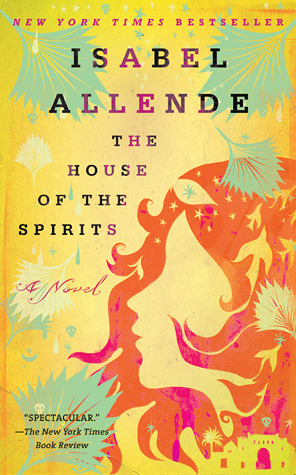
Spanning generations, this story is as much about the Trueba family as it is about the history of a country. (Image courtesy of Dial Press)

By: Annie Bhuiyan

The House of the Spirits is the first novel by Chilean author Isabel Allende (published in 1982). Allende delivers a text rich in reflections and retellings of the political atmosphere of Chile in the mid-20th century, told through the story of a family residing in an unnamed South American country. As the audience follows the tale of the Trueba family, we watch them struggle through their internal familial conflicts and the political chaos that is brewing around them. All of this is tied together with the absurd normalities of magic realism. House tells the story of three generations of the Trueba family, over a timeline that closely resembles Chile’s very own, spanning from post-World War I to an eventual  Pinochet-like coup. The dynasty begins with the union of Clara “the clairvoyant” del Valle, an eccentric character with prophetic capabilities, and Esteban Trueba, a hot-tempered businessman who creates a great fortune for himself.

     Allende takes a feminist, left-wing political stance in House, and that is what made the reading experience interesting to me. Clara, her daughter Blanca, and her granddaughter Alba are all women of different eras, but are unified in their reliance on Esteban Trueba and in their ideological resistances against him and his views. Allende delivers this all masterfully through the medium of magic realism. The absurdities that follow the Trueba family ease the reader into the political stances each character takes in the novel, allowing for comfortable digestion. Although a working knowledge of Chilean history and politics would enrich the reading experience, Allende’s gift for rhetoric and storytelling makes the book appealing for anyone looking for a good read.

From studying politics to living it: my study abroad experience

0
Students protesting in Barcelona, courtesy of The Telegraph.

By: Michelle Gomez

My undergrad at SFU was pretty average, until I studied abroad in a country that was culturally and politically unravelling. Over the last four months, that’s exactly what’s been happening in the region of Catalonia, which has wrestled with the issue of independence from Spain. This unrest has made my semester abroad in Spain interesting, at times challenging, to say the least. When I first arrived in Barcelona at the end of August 2017, I saw Catalan flags and political posters plastered everywhere around the city. While I was aware of the referendum and of a general divide in Catalonia, I did not realize how prominent this issue was going to be throughout my time abroad. For the purpose of clarity, I will attempt to simplify a conflict that is anything but simple.

Catalonia is a region in Spain that has its own language, customs, anthem, culture, and regional government. It was a completely separate state until 1469, when Ferdinand II, king of Aragon (present-day Catalonia), married Queen Isabella of Castile (present-day Spain) in 1469, uniting the regions into what is known as present-day Spain. During the next few tumultuous centuries, Catalonia held onto its unique nationalism despite efforts to repress it, leading us to where we are today.

The referendum in which Catalans voted to either leave or remain in Spain was on October 1, 2017, and was declared illegal by the central Spanish government. Chaos ensued on referendum day when the Spanish national troops resorted to throwing voters out of polling stations and using batons and rubber bullets against the crowds. Ultimately, the result of the referendum was roughly 90% in favour of independence. However, as only 42.3% of the population voted, there is a lot of uncertainty regarding which side holds the majority.

The weeks following the referendum were confusing and tense: Catalan politicians were arrested, and the previously silent pro-Spain countermovement took to the streets for the first time. The Catalan government semi-declared independence, prompting the central Spanish government to demand clarification and deliver an ultimatum: Catalonia would retract any declaration of independence, or Spain would suspend its regional autonomy.

This unclear back-and-forth ended with the Spanish government suspending the regional autonomy of Catalonia and arresting 12 Catalan government officials. On October 30, Carles Puigdemont, Catalan’s president, escaped to Brussels, Belgium along with five former ministers to escape charges of rebellion and misuse of public funds, among others. The regional Catalan elections were set to find a new government on December 21. A coalition of three pro-independence parties outpolled the anti-independence parties, but every individual party failed to win a majority of the popular vote (50% or more). However, they will now try to form a coalition government. Tensions are higher than ever and protests continue in full force.

Everybody from Spain seemed to have a very strong opinion on the question of independence. As an outsider, I did not have enough knowledge on the issue to form an informed opinion and tried to understand both sides, which led to a completely different experience. One girl that I met in my first week in Barcelona was annoyed by the idea of Catalonian independence. She told me that the independence movement was mainly a cultural issue disguising itself with economic jargon, and that Catalonia would not survive without Spain. Many others argued that the separation of Catalonia was nationalistic and would put both the country and the province at an economic disadvantage. However, many Catalans I spoke to felt that their culture was not respected by the central government. They openly declared that Spain would not be able to sustain itself without Catalonia, as the province was unfairly economically supporting Spain.

Despite acting as an impartial observer of this movement, it shook up my life in Barcelona. Accidentally walking into massive demonstrations, having classes cancelled because of protests, and experiencing transit and business strikes were just a few things my fellow exchange students and I experienced on a daily basis. On one occasion, I remember getting caught in a protest on my way home from grocery shopping. It took over an hour to make my way through the crowd of chanting and singing Catalans that extended for at least ten blocks. Another time, my classmates and I showed up to our Spanish class to find the front doors of our school barricaded shut with wooden chairs and plastered with giant banners. A group of students was protesting the arrests of Catalan politicians that had occured the day before, and would not allow anyone inside the building to attend class. Our teacher took one look at the scene and announced that class was cancelled — an incredible relief considering it was 9:00 a.m.

Staying at home, I probably would have learned about this conflict in my international studies and political science courses. I would have read about it, discussed it in class, and maybe even written about it. Although I would have learned the facts, I would have always felt disconnected from this conflict. After being there and experiencing it, I now have a rich knowledge of the political structure of Spain, the history of the region, and the different perspectives of the people living here.

What I have learned goes beyond the facts of this one political conflict. I have experienced a social movement. I have seen how boundaries can be pushed. I can feel the passion from both sides of the conflict when Catalans protest and dance and sing in the streets. I can see their devotion when they miss school and work and use their free time to fight for what they believe in. I witness their unity when they take to the streets with their children and their parents and their friends. While there is tension in the air, there is also the coming together of people with shared beliefs, and mutual respect between the groups. Being from a country where political turmoil is rare, I have never experienced anything like this before, and it has taught me much more than I could have imagined I would gain from my exchange.

To anyone reading this: I would highly recommend studying abroad somewhere that interest you. Get out of SFU for a semester and explore the world. Not only did exchange enhance my university academic experience by allowing me to explore subjects that are not offered at SFU, but moving across the world for a semester improved my ability to adapt to new environments. I encountered a number of obstacles before and during my time abroad that have caused me to develop invaluable life skills: I am a better problem solver, can remain calm in moments of crisis, and can maneuver my way through unfamiliar situations. Once I got past the initial frustration of living in a society that operates differently than what I am used to, I was able to experience new things, learn valuable lessons, and develop a different perspective on the world. For the things I have learned, the experiences I have had, and the friends I have made, I will be forever grateful.

Editor’s note: Want to read more about opportunities abroad for SFU students? Check out our previous pieces: Down and out during Study Abroad, Living abroad, studying abroad, thinking broadly, and Develop your horizons

A new bookstore has rolled onto campus

0
The bookmobile is stationed in front of Cornerstone on Tuesdays and Thursdays.

Written by: Amneet Mann, News Editor


SFU finally has its own bookshop . . . and it’s on wheels.

Iron Dog Books is described by co-owner Hilary Atleo as an “indie mobile bookshop.” Hilary moved into SFU’s residential housing, UniverCity, around a year and a half ago when her husband, Cliff Atleo, joined SFU’s School of Resource and Environmental Management. Having worked in bookstores since 2010, Hilary noted that the campus did not currently have one.

The mobile bookshop concept was born as a solution to the space constraints that didn’t allow Hilary to open a normal, immobile store on campus. “[Cliff and I] always sort of joked about putting a bookshop in a truck,” said Hilary, “and one day in December of 2016, I just said to him ‘what if we actually put it in a truck?’”

The bookmobile’s presence on campus is currently a pilot project running until the end of March to evaluate the unique retail model. As per their agreement with SFU, Iron Dog Books sells in front of Cornerstone every Tuesdays and Thursdays from nine to six. On Saturdays, the bookmobile sells in Port Moody, another area Hilary has identified as lacking proper bookstores, and the mobile shop also makes appearances at festivals on Vancouver Island.

Originally a medical services truck, several adaptations were required to make the vehicle functional as a bookshop.

The shop is co-owned by Hilary and Cliff, with funding from Nuu-chah-nulth Economic Development Corporation, an Indigenous financial institution on Vancouver Island which provides financial assistance to native people to run their own businesses.

The shop sells a mix of new and used books. Customers are also encouraged to bring in used books, either for store credit or as donations. 20% of any profits the shop makes from donated books get donated to rural and remote Indigenous communities to fund their libraries and schools. At the time of the interview, Hilary reported that she was preparing to donate her first $500 to the community of Ahousaht.

When deciding how to stock her 70-square-foot store, Hilary relies on her previous experience working in bookshops, and she also finds herself adapting her selection to suit her new location. “Now that I’m here more regularly, it’s starting to reflect tastes of the general community,” she said. As an example she pointed out her newly installed Nicholas Sparks collection, inspired by a regular SFU customer who is a fan of the author.

The truck that is now Iron Dog Books was originally a medical services truck in California. Hilary enlisted the help of Commodore’s Boats to transform the interior of the vehicle and make it functional as a bookshop.

The metal-racking inside the truck was pulled out to install wooden bookshelves. The bookshelves themselves were built with notches, into which rails could fit that would keep the books from flying off the shelves when Hilary drove the truck. A passive heating system running off the truck’s engine functions to preserve the books when the truck is shut off by keeping the interior of the truck from getting too cold. The only aspect of the truck using extra power is the propane generator running during store hours in the winter.

“One of my main goals for the shop, and one of the reasons why construction on it was so intensive, was that it needed to be completely autonomous,” said Hilary as she showed The Peak the adapted features of the truck.

Hilary commented on how her vision for the bookmobile has expanded since she first opened the shop, “Originally, this was just a way to have a bookshop, but now it’s become a really important thing to me.”

She sees the mobile concept as a tool that can address issues of accessibility, such as in “literary deserts” where the ability to acquire a book is limited to people who are close to a library or a shop or who can drive to one.

Atleo has found that the collection of books are beginning to reflect the tastes of the SFU community.

She also finds herself now advocating for microshops: “I’m passionate about this idea that we can have a tiny shop. It’s a historical model, having these tiny shops, and you do one thing and you do it really well, and it doesn’t use a big amount of space.”

Looking forward, Hilary hopes to take the bookmobile on road trips to festivals around Vancouver Island and the Lower Mainland. She also still hopes to be able to open an immobile bookstore on SFU’s campus in the future.

For now, Hilary commented on the warm reception Iron Dog Books has been receiving on campus so far.

“It’s been really successful, and everybody seems really interested. I think we bring a much needed level of idiosyncrasy,” she laughed.