Home Blog Page 652

SFPIRG signs lease agreement “under duress,” says campaign coordinator

0
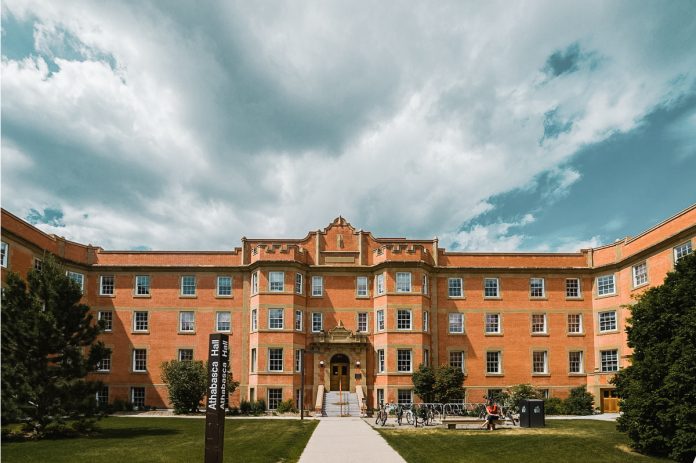
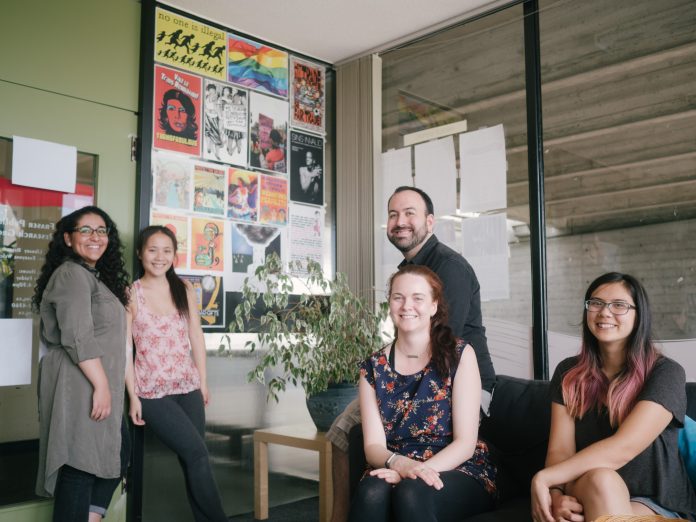
SFPIRG has been located on SFU Burnaby campus since 1981. (Chris Ho / The Peak)

The Simon Fraser Public Interest Research Group (SFPIRG) has signed a lease that allows them to continue inhabiting their current space in the Rotunda until December 14, 2018, after which they will be evicted. The terms of the lease renewal were reached after multiple rounds of negotiations with the Simon Fraser Student Society (SFSS). During the finalization of the agreement, which revoked the previously-standing possibility of SFPIRG leasing space in the Maggie Benston Centre from the SFSS, SFPIRG stated that they were signing the agreement under duress.

In an email interview with The Peak, SFSS president Jas Randhawa responded to the SFPIRG’s statement of duress, writing that “whether or not SFPIRG claimed to sign their lease ‘under duress’ is a matter that SFPIRG can address. We do not believe it is appropriate for SFSS to characterize how SFPIRG was feeling.”

“We believe that they were given more than enough time to review and sign a lease extension,” Randhawa added.

Course of negotiations

In an interview with The Peak, SFPIRG Space Campaign coordinator Teresa Dettling recounted the course of the negotiations that ended in the final lease agreement. According to Dettling, the initial offer to extend SFPIRG’s sublease from its original expiration date in June 2018, came with the requirement that SFPIRG pay a $10,000 “security deposit requirement.”

Dettling called the security deposit “confusing because SFPIRG has been in this space for 20 years and never paid a damage deposit.” According to SFPIRG Director of Communications Craig Pavelich, the organization currently pays one dollar per year for rent — “a nominal amount required by law to create the contract” — as well as $610 per month for operating costs, which are calculated per square foot each year based on a pricing system designed by the University.

“SFPIRG doesn’t have $10,000 laying around,” added Dettling.

According to Dettling, SFPIRG drafted a letter to the SFSS to explain why the organization would not be able to pay the $10,000 to extend the sublease. In return, the SFSS offered SFPIRG a new offer without a damage deposit, but one that they would have to sign in 24 hours, or else the offer would be revoked.

Randhawa provided the SFSS perspective on the negotiations, writing that SFPIRG was provided with its original lease extension offer on April 5 with a deadline for acceptance on April 20. The original lease was offered with a $10,000 security deposit requirement, but the deposit requirement was later removed on April 19 following SFPIRG’s letter. The original deadline was maintained.

“There was no ‘contingency’ expressed by the SFSS,” wrote Randhawa. “We simply dropped the requirement and reminded them that they needed to meet the original deadline.”

“We believed that offering to remove the $10,000 security deposit was a sign of good faith.” – Jas Randhawa, SFSS president

Dettling spoke about how the final lease agreement did not meet all of SFPIRG’s requests, including that there not be an end date on the lease, thus mirroring the lease that the SFSS currently holds with SFU. Until the Student Union Building (SUB) is built, the SFSS, which is currently leasing the Rotunda from SFU, may continue its leases on those spaces.

“For them to give that to us is a compassionate thing to do,” said Dettling. “I don’t think it’s demanding [for us] to say, ‘hey, if this space is still available past December 14, it’s just gonna sit empty anyways. Couldn’t we just have a lease that allows us to stay until your lease ends with SFU.’ And they refused to do that.”

Randhawa responded in a follow-up with The Peak that the strict deadline for SFPIRG’s eviction was due to “the nature of large construction projects like the SUB, [which] means the date of completion is fluid.”

“We feel the most reasonable approach is to provide some certainty, so that they can plan accordingly.”

In the face of the unmet requests and the 24-hour deadline, SFPIRG signed the lease agreement, stating that they were doing so under duress.

“A new pattern of behaviour”

Shortly after the signing of the lease agreement, SFPIRG received an email notification from SFSS that the offer to house the student group in the Maggie Benston Centre following the end of their lease in the Rotunda was no longer on the table.

“I don’t think I’m unreasonable in saying that it was retaliation for us pushing to drop the $10,000,” said Dettling. “Because of the timing of it, and the fact that there was no explanation.

“We feel very bullied,” she said.

Randhawa responded to The Peak, stating that “the offer for MBC space was revoked because we simply cannot continue to dedicate the time, energy and resources to developing an agreement with a group that has consistently expressed that our offers for space are not good enough.”

“We understand that SFPIRG wanted space in the SUB and we understand their disappointment and concern in not being granted such space — we are students ourselves and understand the importance of being housed on campus. [. . .] SFPIRG has consistently rejected our offers and placed unreasonable conditions on accepting them.”

“From our viewpoint, it seems that they are more interested in taking an adversarial stance than they are in working with us to find a solution.” – Jas Randhawa, SFSS president

“We need to spend our time and energy on our student groups, who look to work with us in good faith.”

Dettling sees SFPIRG’s recent experiences as part of a larger trend in the interactions between student groups on campus and SFSS.

“There’s a real problem with how the SFSS is treating SFPIRG and other student groups. It’s not an equitable way to engage in [. . .] relationship-building.” – Teresa Dettling, SFPIRG Space Campaign coordinator

“This is a new pattern of behaviour.”

According to Dettling, the atmosphere for student groups on campus has significantly shifted from the past, when there was “a real camaraderie between all the student groups and societies.”

“That’s changed in the last three years, and it’s changed with the arrival of a CEO,” said Dettling, referring to SFSS CEO Martin Wyant, who joined the society as Executive Director in July 2015. “And with the arrival of the CEO came changes to the SFSS, policy changes,” added Dettling, referring to the SFSS Board Policies, many of which were adopted on September 18, 2015.

“The policy changes that were put in place is [sic] allowing the CEO to conduct himself like this.”

To the above point, Randhawa responded, “The SFSS has undergone some important change in the last three years, and this process is ongoing – but we need to be clear about the nature of this change.” He continued: “The board of the day sought to improve our stakeholder relationships, improve our support for clubs and student unions, ensure our services and operations are relevant and well-run, and to empower the board of directors to govern and engage with the student body. The hiring of our CEO was a critical part of this important, positive change.

“It is important to understand that this has been led and championed by the board of directors, so that we could better serve the student body at SFU. Change may be difficult, and we respect and understand that. However, becoming more professional in our dealings and ensuring our organization is best positioned to support our student groups and our membership is of upmost [sic] importance, and that is the driving principle behind how we conduct ourselves here at the SFSS.”

Emails sent to SFPIRG during the course of their negotiations with the SFSS indicated that Wyant would be reaching out to Pavelich to discuss the issue. “We feel like we have to go through Martin to get to the Board,” said Dettling. “It’s frustrating, it’s confusing, and it’s a little bit scary. “

Dettling stated the SFPIRG’s new strategy moving forward was to continue talks with SFU in the hopes of obtaining space for the organization. “Given the culture at the SFSS right now [. . .] for us to keep fighting [with the SFSS] for space, we don’t think it’s wise,” she said.

Moving forward

SFPIRG is looking forward to upcoming talks with SFU, which the organization hopes will yield positive results. “We’re hopeful that we can convey to SFU that we’re asking for this space for students,” said Dettling.

She mentioned that SFPIRG has been experiencing significant support from students and faculty who utilize the organization’s resources. At the time of this article, SFPIRG’s petition directed towards SFU president Andrew Petter and vice-provost and associate vice-president academic Peter Keller asking for appropriate campus space has obtained 611 signatures.

During her campaigning, Dettling recalled multiple situations where students reached out to her regarding their negative experiences with the SFSS, and she stated SFPIRG’s independence from the student society as another strength of the organization.

According to Dettling, unlike the Women’s Centre and Out on Campus, which as SFSS departments are run by staff that the SFSS CEO supervises and directs, SFPIRG offers “a site of resistance for people who want to disagree with the SFSS and want to change things there.”

“When we seek to eliminate [protests and disagreements] from a situation, we’re making a less democratic existence, and that’s really what’s going on up here.” – Teresa Dettling, SFPIRG Space Campaign coordinator

When The Peak asked if SFPIRG had a plan in case of being denied space on campus by SFU, Dettling did not hesitate to state, “We’re not leaving the campus on December 14.

“We’ll stay, because we have the right to be here,” said Dettling. “I think SFPIRG has earned the right to be here. We’ve been doing work for 35 years on campus [. . .] and in 2018, [. . .] if you look at just what’s going on in our society today, this type of work has to continue.”

“And it won’t continue [on campus] if SFPIRG isn’t allotted space.

“I’m willing to do whatever it takes to keep this place on campus,” concluded Dettling. “And I’m not alone.”

SFYou: Kalarupini Roy dishes out on Veggie Lunches

0
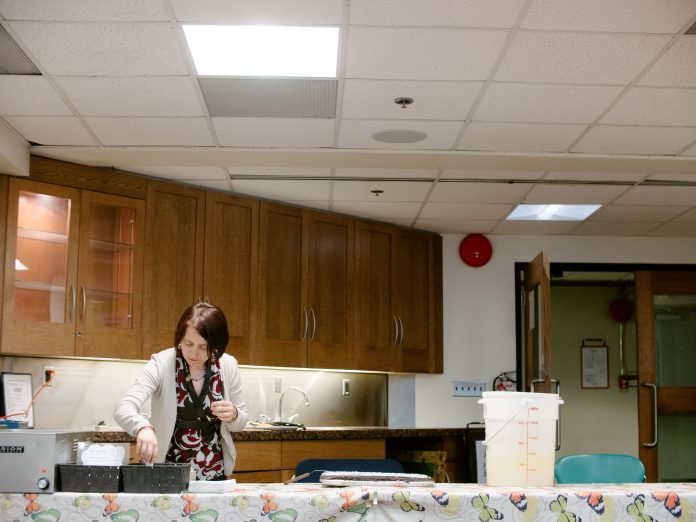
Kalarupini Roy (pictured) has been the main coordinator of Veggie Lunch for the past seven years. (Chris Ho / The Peak)

By: Anindita Gupta 

Fast Facts on Kala

  • Name: Kalarupini Koraljka Roy
  • Pronouns: She/Her/Hers
  • Department affiliation: Roy is one of the only SFYou profilees never to have attended SFU!
  • Business name: Veggie Lunches, Gaura Hari Karma Free Meals, Kirtan Vancouver, independent catering company . . .   
  • Hometown: Roy was born in Croatia and spent time in India before moving to Vancouver.
  • Hobbies: Cooking, of course! She also enjoys yoga.
  • Fun fact: Kalarupini goes by Kala since it’s easier for most people to say.

While crossing Maggie Benston Centre (MBC), you may have seen or missed a small sign that reads “Veggie Lunches,” leading down to Forum Chambers. It’s easy to miss if you have never ventured into the little entrance that leads to a vast room with a piano. However, once you have eaten the food cooked by Kala, the host of Veggie Lunches, you are guaranteed to never miss the sign again! With meals for $6, Veggie Lunches started out as a student’s venture to encourage more people to support a vegetarian option. When it first began, back in 1992, it was run merely as a vegetarian club by a student. Over the years, many names have been associated with the Veggie Lunches program. Since 2011, Kalarupini Roy has been at the head of the ship.

Kalarupini Koraljka Roy, or Kala as she is better known, is of Croatian origin, and has lived in Canada for the past 13 years. At its origins, Veggie Lunches was affiliated with larger institutions like the Hare Krishna Food for Life Organization, run by the International Society for Krishna Consciousness (ISKCON) society. In more recent times, Kala made the decision to separate Veggie Lunches from any religious institutions and run it with the help of a few dedicated students. For Kala, student help is invaluable. Sometimes, student helpers re-register Veggie Lunches as a club, like at its origins, since Kala cannot do it herself.

“It would be nice if anybody wants to volunteer so we can do some things together. We have just managed to survive here at SFU Burnaby for so long even though we are not a part of SFU or SFSS, we are independent. Our profits are directly being used by us and our other endeavours…”

Kala devotes most of her time and energy to the Veggie Lunches program, which not only feeds students but also raises funds for other charities. She is an active member of two large, local, non-profit organizations: Kirtan Vancouver and Gaura Hari Karma Free Meals. Kala is the Organization President of the latter, which has been helping to serve meals to residents in need in downtown Vancouver in 2004, and has even helped to organize meals in India. Beyond SFU students, Kala cooks and feeds many in need all over the city, chiefly in places like Dugout Vancouver, a woman’s shelter, and First United Church.  The other organization that Kala is affiliated with, Kirtan Vancouver, spreads awareness and encourages people to achieve a better, healthier lifestyle through the means of yoga and a non-violent, vegetarian/vegan diet.

Due to the amount of benevolent work Kala is involved with, her days are pretty packed and begin much earlier than the average person’s. She wakes by 5 a.m. every morning and heads to her kitchen, a three-minute walk away from her home. There, she preps, cuts and cooks fresh meals for the day ahead of her — which usually takes until 9 a.m. Kala always has a helper on hand, ready to help load the car with hot boxes full of food, and they try to get to their destination by 11 a.m.

“By 11:30 we start serving and we are here until 2:30 p.m. most of the time, unless we run out of food. . . Sometimes it’s too busy, sometimes it’s slow like today,” Kala said. The summer is a slower time at SFU for Kala, but she hopes that more people will drop by for a meal.

Her days are divided between cooking healthy, “karma-free” vegetarian and vegan meals for SFU Burnaby on Tuesdays, Wednesdays and Thursdays, and cooking for the other charities and soup kitchens she supports on her other days. According to GHKFM’s website, by karma-free, Kala refers to the concept from Eastern philosophy which states that any action involving killing or suffering can earn a person bad karma. Karma-free meals are additionally put through a mantra of meditation, which affects ingredients “in a very positive way and make recipients of such food peaceful, happy, and spiritually elevated.”

Quite miraculously, Kala also has an active catering business on the side, through which she caters food and cakes for birthdays and weddings. Over the past 7 years she has been relentlessly cooking meals for the hungry students of SFU Burnaby all by herself. Her secret? Tweaking the menu just a little bit every other day, to keep things interesting.The rotating items include a curry, a lentil soup, a pasta, and most famously, her vegan mac ‘n’ cheese, which she makes with cheaper, healthier ingredients that vary from yams to coconut milk. Since the Veggie Lunch program is known by a few, recurring customers, she has grown to know them closely and varies her ingredients according to allergies of her ‘regulars’ which also makes the cooking process easier and less monotonous for her.

“It feels like cooking is the only thing I am actually able to do,” Kala laughs. “You know, we all have something that comes to us. And not everything comes to everybody. Some people are really great at math, I am really bad at it, I can…”

Ironically enough, Kala was interrupted by a customer seeking a meal.

When talking about food and cooking, Kala claims that her passion for food was mainly generated by a lack of taste in the food she ate growing up! Back then, in the continental part of Croatia where she grew up, she was exposed to foods cooked with only four spices: salt, pepper, sweet paprika and Vegeta (an all-purpose seasoning made of dehydrated vegetables). She would watch cooking shows and channels and try out recipes that were completely different from what she was used to eating. At 17, Kala chose to become vegetarian and started to cook for herself. It was definitely a healthier choice for her, considering one of the main meats consumed in Croatia is pork, which Kala’s mother considered unhealthy.

That was how Kala was first introduced to Indian cuisine, but later in life, she actually moved to India for a few years and was exposed to the land of spices. Having had much of her formal cooking training in India and in Indian cuisine, Kala discovered the unending varieties and options by which vegetarians live. When she discovered the innumerable vegetables, legumes, grains and lentils she had to choose from should she continue living as a vegetarian, her reaction was simply “wow.”

“Indian cuisine was eye-opening for me,” she says, as she talks about how she has been fortunate enough to have had a few very talented cooks teach her and impart their knowledge of food to her.

For students who have only recently started venturing into working up their skills in the kitchen, she has one main tip: don’t be afraid of mixing spices and trying out combinations, and never be afraid to add in more spices, it just adds to the flavours of your dish. If you’re doubtful about cooking despite the existence of the Internet, she’s even considered starting yet another side business, where she packages spices and adds instructions for students!

Besides health reasons, Kala also made her dietary change due to ethical and environmental reasons.

“I do believe that we have no right to hurt other creatures, because there is so much food available, there is no reason [to eat animals]…” After switching to her current vegan diet, she feels that non-vegetarians are, in fact, the ones that have limited choices.

“Awareness is important,” she says while pointing towards the informative pamphlets that she has placed beside the food that she serves, helping spread this knowledge.

In the future, Kala aims to gather the support of a few more students that can help her connect the rather small Veggie Lunch program to a larger audience by spreading its reach to SFU’s Vancouver and Surrey campuses. She also hopes to slowly but steadily expand into the UBC community as well.

When asked whether she knows what she wants to do with Veggie Lunches, as an independent program without the back-up of any larger religious institution, she smiles and — gleaming with positivity — says that they will be “wherever we are needed and wanted.

“It’s not based as a business. We don’t run this as a business, our purpose is not business, it is to bring awareness and to promote a healthier lifestyle and diet, to more ethical and kinder world. And the best place to start and bring awareness to, is the place that our future is at: the university.”

Photo courtesy of Chris Ho

EnregistrerEnregistrer

If excelling is the goal, then schools should do their part to help

0
Courtesy of the University of Alberta

Written by Eva Zhu, Opinions Editor

Life has been a game of striving for perfection since the beginning of high school. No longer were you allowed to squander your afternoons away playing basketball or skateboarding outside with friends until dinnertime. These precious hours were filled with after-school clubs, tutoring, and countless trips to the library, which were all supposed to lead to one thing: acceptance to university. For many kids, failure was not an option, and if they did fail, they hid their tests and report cards from their parents until it was no longer possible to do so.

What happens when the strive for perfection goes too far? How do we save the depressed and burnt out students who are so afraid of failing they resort to committing suicide? We can’t expect students to suddenly snap out of their burnt out states and be okay again. While progress has been made towards providing counselling services to students in emotional distress and educating students on how to get help from these services, school administrations continue to work within outdated ideas and guidelines in order to maintain a competitive culture that prioritizes achievement while ignoring student health.

This is where the problem lies: schools expect students to pass their classes and keep up a strong GPA, but they are often not willing to reach out to understand why a student may be underperforming. The expectation seems to be that students will work it all out for themselves. If they can’t? Well, then they just weren’t cut out for post-secondary education.

People seem to forget that the transition from high school to university or college can be daunting. Not every student who excelled in the former can do so in the latter. Add to this the pressure of living on your own for the first time and classes like calculus courses that take place at 8 a.m. that are designed to “weed out” any students that aren’t “dedicated enough” to university, and it’s not hard to see why some students crack.

Recently, The New York Times published an article discussing the final days and suicide of a former Hamilton College student. The student was failing three out of four of his classes and felt like “a failure with no life prospects.” Instead of working with other staff to understand why he was failing, his professors collectively sent him four academic warnings. It doesn’t take a genius to know that these warnings were only going to drive him into a deeper depression.

Furthermore, the article mentions that staff are not obliged to contact the parents of any student who appears to be distressed. According to the Family Educational Rights and Privacy Act (FERPA), they are also not required to let parents know that a student may be suicidal. Again, it doesn’t take a genius to predict that staff at universities and colleges don’t want to take responsibility for students’ deteriorating mental health. This particular student’s parents were only notified days after his death.

Are Canadian post-secondary institutions any better at helping students navigate the strive for perfection? Sadly, we’re not much better. Canada Updates reported that in 2017, two University of Waterloo students committed suicide within three months of each other. Four University of Guelph students did the same in the span of seven months. The percentage of post-secondary students who have seriously considered suicide rose to 13.5% in 2017 from 10% in 2016. Of the reasons attributed to the suicides, one of the most common was feeling hopeless.

Schools can’t keep failing their students, especially not to this degree. I know society thinks we shouldn’t keep coddling young adults as they get older, but when we are ingraining in students’ minds that the need to excel is of utmost importance and takes precedence over their own well-being, then schools should be obliged to step in and offer support to those who aren’t able to meet their goals. By this, I don’t mean health and counselling services. In many cases, health and counselling services can only salvage a student’s health, not their grades and goals. Professors should reach out to failing students and figure out the underlying problem, because I can guarantee you, academic warnings will only push them further off the edge.

Q&A with SFU stand-up comedian Sam Gorick

1
Adam Madojemu / The Peak

By: Natasha Tar, Arts Editor

Sam Gorick, a fourth-year communications student, does stand-up comedy as a hobby. The following is our conversation with him.

The Peak: How did you get into stand-up?

Sam Gorick: It was a dare. I was dared by a guy, I think he was running for the SFSS, and I told a joke to him as he was going around promoting and he just said, “My friend owns a bar, why don’t you give it a shot, we have open mics there on Thursdays.” And I went for it. I wrote down some things I put on Facebook and gave it a shot.

     It was this really weird musky bar in Yaletown, and there were people playing pinball, right beside me, loudly. I don’t think anyone heard me, so that was great ‘cause I think I was pretty terrible that night.

P: How would you describe your style of stand-up?

SG: Poor. I don’t think it’s very good. But I do it, and it’s fun. It’s very self-deprecating because a lot of people think that comedy needs a target and some people will go up there and they’ll just trash talk politicians, they’ll trash talk whoever’s in the news that week, but I feel like if you start with a little something about yourself, and you just dig in, everyone gets on your side and then you can open up.

     Last night, I noticed I was breaking out so I went up onstage and I just immediately called it out. I know I kinda dress dorky so I went up there and just said, “Hey I know I look like I listen to Weezer.” And that was all [I] needed.

P: What has been your best experience with stand-up?

SG: We had about 130 people in the room and I made them laugh, but I don’t know. I’ve never really had the self-esteem to say that I’ve done good, but I keep getting asked to come back so that’s a good sign [laughs].

P: What has been your worst experience with stand-up?

SG: My worst experience was pretty recently. [. . .] I’m practicing [because] the big Yuk-Off is coming, and it’s the Vancouver competition were everyone goes up and they all try their best material. The winner gets like five grand. So it’s kind of a big deal to do well on those nights.

     I went up the other night to practice, and it was already a tough crowd. The comics before me were in the back, just bickering and figuring out what to do, and I knew as soon as I went up there, I told one of my tame jokes and the audience was already kinda turning on me. By that point I realized, “OK, I’m not going to come out of this good so I might as well just sink it.” It was still fun, but I didn’t really get the feedback I needed that night.

P: In your opinion, what’s the “joke climate” like right now in terms of taboo subjects, popular jokes, and jokes that are worn out?

SG: The joke climate is kind of bipolar, I’d say. There’s some nights I go up there and I tell jokes that I think are pretty tame, but they just immediately get “oooh.” And then you feel it. But other nights it’s fine, it gets laughs, it’s A-OK.

     It really depends on the room, everyone’s different. But I think the main climate right now [is] it’s better to be clean than vulgar. And I find a lot of comics are cashing in on American politics whereas other comics are realizing that there’s already a big bubble there. Something new, I think, needs to come in because it’s getting a little too stale talking about you-know-who.

P: Which comedians inspire you?

SG: [One of] my favourite comedians of all time [has] always been Steve Martin. I think he changed the game when he showed up. He made the not-funny funny. [. . . ] [I]nstead of just going in and being like, “Oh, my wife” or “Oh, this thing,” he would go up there and act like a goof and it was hilarious to see. I think he really changed the game before he just vanished completely to go do movies and books and now he does banjo music [laughs].

     My other favourite would be Norm Macdonald. Whenever he goes on talk shows he has this technique where he’ll play dead like a possum and be this fool, and it’s hilarious watching the interviewers that don’t know who he is go for the bait. Then it turns out he’s always the smartest guy in the room; he cleans the floor with his comedy, he is hilarious.

P: How does SFU help or hinder your practice?

SG: How does SFU help or hinder is kind of a weird one to say because optimistically, they help 100%, they’re very supportive. But pessimistically, they also don’t really do anything at all.

     When the pub was open, there used to be a stand-up comedy night. There’s still open mics at Club Ilia, but they’re more musical-focused, and I remember one time I did it and the person before me did a loving tribute to a loved one that had passed on. And then of course I go up and I tell jokes about how I wasn’t cool in high school and . . . [it was a] different tone that night. [ . . .] I know there’s the SFU improv club. They’re starting to get their feedback. They kinda had a rough patch there, but it looks like they’re starting to take off.

     But I mean, you can find this with any interest that isn’t a sport [at SFU]: you have to start your own club or find it off-mountain, sadly.

P: Are there any classes at SFU that encourage any kind of stand-up or comedy that you’re interested in or have taken?

SG: I know there’s a really good English course. The prof has been on leave for a while [and] I haven’t seen it [or] looked into it, but it was all about the study of words in comedy.

     Communications is really good at letting you put your own touch on papers, so I always try to make it my own a bit. Other than that, SFU lets you be you, but you are SFU, remember?

P: What’s one of your favourite bits/jokes?

SG: I always love the jokes that you leave feeling angry, the jokes where it’s something so simple and obvious that you don’t even laugh at it, you just sit there like “why did I not think of that, oh my God.”

     I have musician friends who do that too where it’s such a simple riff, why didn’t I think of that, how is this a thing? And all the time, I’ll watch stand-up and it’ll be the most obvious [thing] like Seinfeld. It’s infuriating how funny [Jerry Seinfeld] made everyday life with nothing.

P: Do you have any advice for someone who wants to get into stand-up?

SG: It’s not as scary as it looks. On Facebook, there’s a very great Vancouver stand-up comedy forum. They’re open to anyone joining and they have a post that lists all the shows that are open throughout the night. [. . .] They’re a very welcoming community. There’s a couple bad eggs in there, but you can get around them really easily and find your way.

     I started doing Yuk Yuk’s, Thursday nights, and the crew there is so nice and friendly and welcoming. It’s a really great place to be. It’s a fun time once you finally figure out your footing. It’s fun.

P: Is there anything you’d like to add?

SG: I think if you think you’re funny, I think if you’ve come into Starbucks and you’ve heard me tell a joke and you go, “Oh, I’m better than that,” [. . .] you should do it. I think a lot of people look at [stand-up] and say, “I can never do that.” But once you’re up there and the lights are on you, you can’t even really see anyone. Just write down something that happens, give it a shot. [. . . ] Just try it. You gotta try it, it’s a lot of fun.

Want to learn more about Sam? See our video interview.

Drunk and Sober You: The most important relationship in your life

0
Photo courtesy of Capital Choice Counselling

By: Aaron Richardson

An important part of living a healthy life is maintaining healthy relationships with the people you surround yourself with. When you’re in your early 20s, there are  a lot of important relationships that can impact your life. But the most important relationship that you’ll have is with yourself: your drunk self, I mean.

When you enter university and start partying and drinking, you’ll learn many lessons. One way to survive that time of your life and get through it without too much difficulty is to develop a good relationship with Drunk You. Here are some tips to build trust in that relationship, and ways to heal after it’s been damaged:

  • Know how much you’re drinking. This is on both of you. When you start out the night, Sober You has control, and it’s on them to make sure that you don’t down three shots of 151 at the beginning of the night. But soon Drunk You takes over, and it’s their job to make sure you don’t vomit (which you will anyways, but at least they can try).
  • Drunk text yourself. There’s no better way to wake up in the morning with a splitting headache than to look at your phone and see a long and thoughtful text describing how much you love yourself. When you’re drunk, take this opportunity to apologize to your sober self for all the mistakes you are about to make, and the repercussions that will follow your sober self for the rest of your life.
  • Leave out a glass of water for the next morning. While you’ll be too nauseous to keep down the water for more than a minute, at least you won’t be dry heaving.
  • Don’t fall asleep in the gutter. I really hope I don’t have to explain why . . .
  • When you inevitably vomit, try to keep it off of yourself. Ideally try to keep it off of other people as well. But that’s a difficult one, so don’t strain yourself too much.
  • The most important piece of advice I can give you is to learn how to forgive yourself. Drunk You will make mistakes. This might be hard to accept, but it will happen. It’s natural for Drunk You to call your ex 15 times in half an hour. It’s entirely normal to break an arm jumping off a roof when you’re describing that scene from that one movie you saw a couple weeks ago. If you want to maintain a positive relationship, forgiveness is key. Don’t hold a grudge against Drunk You. Live, learn, and drink again.


Solo: A Star Wars Story is an entertaining space western adventure

1
Image courtesy of Walt Disney Studios Motion Pictures

By: Jonathan Pabico

Attention, Star Wars fans — Han Solo’s past is finally revealed in Solo: A Star Wars Story! The film pays homage to classic westerns, while providing intricate storytelling, fearless characters, and a captivating lead, all of which combine to create an unforgettable narrative.

     Alden Ehrenreich is phenomenal as the young Han Solo. Perhaps best known for his role in Hail, Caesar!, Ehrenreich delivers the most impressive performance in the film. He perfectly captures Solo’s bold charisma as an aspiring outlaw and his hotshot personality as an ace pilot, but Ehrenreich completes the role by making it his own. The film also portrays Solo as a lonely street kid in a society ruled only by crime, violence, and mistrust — an extraordinarily different aspect not seen in Harrison Ford’s performance as the legendary Star Wars character.

     The Da Vinci Code director Ron Howard structures this film as a rollicking entry to the Star Wars franchise. Howard’s use of immense scale and vast set pieces enables us to savour the characters’ journeys across the film’s strange worlds. The story’s wastelands are visually sublime, but deeply foreshadow the treacheries experienced by the film’s characters. Still, Howard offers multiple action sequences that pay homage to the Star Wars mythology. They appeal to fans through their glorious imagery, especially in exciting moments where a more pristine Millennium Falcon outmaneuvers TIE fighters.

     The film’s complex narrative combines traits of western film with heist elements. While the story has an outlaw culture, the movie alludes to bank robbery films through unexpected twists and an elaborate train heist. However, the movie’s humour falls short and the music is not as impassioned as the soundtrack from Rogue One: A Star Wars Story.

     The core aspect of the film revolves around the fateful encounter and friendship between Solo and everyone’s favourite wookiee, Chewbacca. The meeting captivates fans with its nostalgia and honours the legacy of these beloved heroes. Solo also fascinates us with its other engrossing character dynamics. Howard brilliantly sets up Solo’s raw levity with a young Lando Calrissian (Atlanta star Donald Glover). Solo and Lando’s witty dialogue during a poker game is quite entertaining and their edgy interactions are elevated by a background of golden yellows mixed with empty, negative space that evokes an ardent atmosphere similar to the climactic poker game in Casino Royale.

     Emilia Clarke as Qi’ra,  Solo’s love interest, provides understanding and trust that the story’s disordered society copiously lacks. Woody Harrelson portrays a duplicitous character as having a sense of belonging and family through his relationship with Solo as a mentor and father figure — but at the same time, he’s a cunning thief with vested interest at hand. Overall, these actors’ performances strangely romanticize the harsh settings that their characters inhabit.

     Solo: A Star Wars Story is an epic space western with immersive set pieces and lawless environments. With a powerful performance from Ehrenreich, the film is definitely an entertaining origin story that shapes Solo as one of the most memorable characters in the Star Wars franchise.

POLITICAL CORNER: Problems with partisanship

0
Photo Courtesy of Youtube

Written by Nathaniel Tok, Peak Associate

Remember when we voted based on issues rather than party lines? Pepperidge Farm remembers. But seriously, as someone who obsessively follows politics in America, and to a lesser extent the world, I can’t help but be disappointed with how things are turning out.

I believe both political sides have their merits and their failings. Yet every time I turn on the news, some political party or another is accusing the other political party or political figure of failing the country, or even accusing the other side of betraying the country. I mean it’s gotten so bad that sometimes news networks report on and criticize other news networks if the two networks don’t share the same views.

The worst thing is when ordinary people start to buy into the rhetoric. Talking to people on both sides, it seems to me that we are starting to focus less on the actual issues, policies and the nuances and just ranting about the other side. Both sides think the other is the perceived enemy of the people.

Why do we not listen to other side? For those on the right, Abraham Lincoln said “A house divided against itself cannot stand.”  For those on the left, former President Barack Obama stated that “Reconciliation carries more rewards than retribution.”

This partisanship has got to stop. It’s senseless, harmful, and useless. It divides people without reason. Strong and vocal opposing parties with checks and balances are necessary for democracy to flourish, but this has gone too far. It is telling that the current American Secretary of Defence, James Mattis, notably an independent politician, said in an interview when he first got the job that what worried him most in his new position was ‘the lack of political unity in America.’” We would do well to heed that warning.

World News Beat

0
By: Trevor Steele, SFU Student


Venezuelan president wins dubious second term

Venezuelan president Nicolás Maduro has won a second term in office, in an election that involved an opposition boycott and widespread claims of electoral fraud. The election’s result was immediately rejected by the opposition, which boycotted the election after several candidates were jailed and the election date was brought forward. Dismissal of the result was echoed by the European Union and several Latin American nations, who have warned that they will take action against Maduro’s government. Maduro, who took over from the controversial former President Hugo Chavez in 2013, has overseen Venezuela’s plunge into severe economic crisis and food shortages, which have led to mass migration into neighbouring nations.

With files from BBC News and USA Today.


Amazon provides facial recognition technology to police

Amazon has begun to promote and sell facial recognition systems to police in North America, being one of the first major companies to do so. This has led to concern from civil rights groups, including the American Civil Liberties Union, who claimed that Amazon’s software guide “read like a user manual for authoritarian surveillance.” Amazon’s response — “our quality of life would be much worse today if we outlawed new technology because some people could choose to abuse the technology” — has done little to allay fears over privacy. The technology which can be used to identify people in videos and images is already used extensively in countries such as China.

With files from BBC News and The New York Times.


Trump cancels North Korea nuclear summit

A planned summit to discuss North Korean denuclearization was cancelled. Donald Trump cited North Korea’s “tremendous anger and open hostility” as the reason for the abandonment of the talks and promised to toughen sanctions on the regime. However, Trump still suggested that a meeting could take place. The stalling of talks with North Korea is not without precedent. Former President George W. Bush advisor Michael J. Greene suggested that such talks have been initiated by North Korea in the past as a ploy to ease sanctions, and establish recognition of their nuclear threat.

With files from The New York Times and The Economist.


Ireland votes to repeal abortion ban

66% of voters voted to strike down Ireland’s abortion ban in a referendum held on May 25. In a nation where abortion was previously banned even in cases of sexual assault, the result marks a changing of the times. The Catholic Church, which was the main voice against a change to the abortion laws, has seen its influence wane in Irish society after years of child sex abuse scandals. Media focus now shifts to Northern Ireland, which now has the strictest abortion laws in the United Kingdom.With files from Reuters.

WHAT GRINDS OUR GEARS: Construction everywhere, all the time

0
Photo courtesy of Revery Architecture

Written by Courtney Miller, Peak Associate

As a concept, construction is great. It provides jobs, improves infrastructure, and generally leads to improved quality of life. However, when I have to recalculate my route to class to avoid not one, not two, but three or more simultaneous construction projects, present-me doesn’t give two shits about the benefits future-me may or may not see (see: the Student Union Building).

Everywhere I look there’s scaffolding or the largest “straight out of a circus movie montage” white tarps I’ve ever seen. Whenever I arrive at class without a one-inch layer of sawdust coating me, I have to remind myself that life is about those little victories. But that’s not all! There are loud noises during class that my professors apologize for, even though it is precisely 0% their fault!

Like, okay, fine, have a construction project, but SFU, would it kill you to finish one project before starting another?


Dress codes are not up to code

0
Photo courtesy of Mashable

Written by Stefanie Baltasar, SFU Student
       
Some dress codes just make sense, such as chemists having to wear clothes that cover all of their bodies, or construction workers having to wear bright orange vests and hard hats. Those dress codes are practical and necessary for the work environment. Nobody wants to get chemical spills on their bare skin. It’s a safety thing. There are also some dress codes which serve as a casual uniform: sexless, ambiguous, and serving to make people in that store look like employees.

That being said, there are other dress codes which are obsolete and sexist. Sure, heels make a woman’s legs and butt look good, but is that necessary when she’s got a desk job? No accountant or IT expert needs to wear makeup and heels when flats can be professional too. She’s not there to be her male counterpart’s eye candy, she’s there to work. Otherwise I would question as to why she’s been hired in the first place. I’d address men’s dress codes as well, but alas, I am a female with very little knowledge of that. I’m sure there are sometimes unnecessary standards there too, just to a lesser extent than for women. This is because dress codes are often based on the personal aesthetic of the one in charge, and the one in charge tends to be a straight male.

Certain dress codes are needlessly sexy, oddly unambiguous, and serve only the boss’s taste in apparel. That’s an abuse of power that can make women uncomfortable. It’s one thing to choose to wear a short skirt, and another thing altogether to be made to wear a short skirt that can make bending over quite uncomfortable in front of a pervy man.

Then, as I mentioned before, heels. Heels are a bitch to walk in. They are considered “professional,” or business apparel, but again, how professional does one need to dress in front of a computer? I highly doubt anyone can see someone’s feet under their desk. A computer wouldn’t give a damn what the face in front of it looks like.

The same goes for school dress codes. It shouldn’t matter what young girls wear as long as their clothing covers their chest and butt. One can learn just as well in a crop top compared to a full-length sweater. When girls are blamed for their male classmates’ wandering gaze, not only do they feel belittled and shamed, but they also feel as if it’s their fault for distracting boys. In the eyes of a sexist principal or teacher, boys will no longer be distracted if girls cover up their collarbones or shoulders. What they don’t seem to realize, though, is that boys will be distracted no matter what a girl wears.

There can be a balance between what is professional, what is practical, and what is necessary for one’s workplace or school. Realizing what is obsolete appears to be this generation’s main characteristic. A lot of people will argue that this generation is taking things too far, that some things are traditional and should be kept that way, but if nobody tried to change anything, I still wouldn’t be able to vote. To such people, I ask: if we are going too far, then where is far enough? It’s far easier to take it too far and then compromise; be radical and then be moderate, because a discussion can get a lot more done than an argument.