Home Blog Page 648

Beedie MBA grad guides Kanaka Bar Indian Band toward self-sufficiency

0
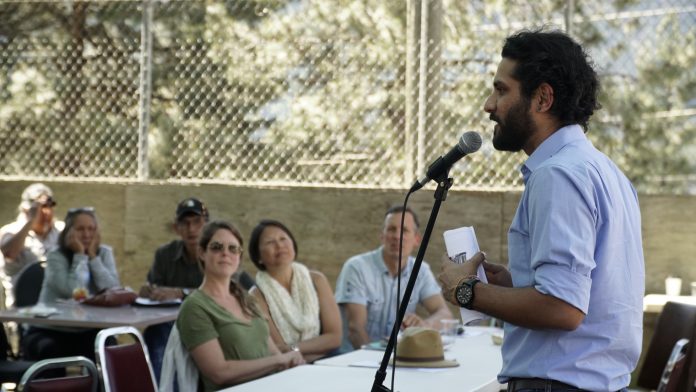
(Photo courtesy of Zain Nayani)
By: Srijani Datta, Assistant News Editor


Zain Nayani, an alumnus of SFU’s Beedie School of Business, is the CEO of economic and business development for the Kanaka Bar Indian Band located near Lytton, northeast of Vancouver. He has been helping the approximately 200 members of the Kanaka Bar move towards self-sufficiency. Nayani described his experience so far and his vision for the Kanaka Bar’s move towards sustainability and self-sufficiency in an email interview with The Peak.

     “At an early age, I saw my mother devoting her time in institutions that developed human capital and intellect in different ways and shape. My father had the same kind of will and volunteered a lot of his time managing public infrastructure where we used to reside. I knew I wanted to use my knowledge and education in a way that benefited the greater public interest, just like my parents,” wrote the former Beedie student.

     Nayani chanced upon a work opportunity with the Kanaka Bar in late summer 2012. Writing about his first experiences working for Kanaka, he mentioned, “We met at an interesting time in both of our lives. Kanaka and I were both at a growth stage. They needed someone to help with the design of sustainable systems and processes pertaining to governance and institution building to serve present and future community needs. And I needed an opportunity to explore myself, learn more about Canada and apply my values, skills, and experiences in a real-life scenario.”

     Starting as an intern in September 2012, Nayani worked with the community on issues around membership, elections, and governance for a period of eight months. As his work progressed, the community moved its attention towards better financial management, the alumnus stated. “This was a priority for the community because they were already a year into construction of the 49.9 MW run-of-river Kwoiek Creek Hydro Project in its traditional territory.”

     He opined that the community was very prudent to start thinking about the financial returns from the project while the project was still being built. At around the same time, the community also asked Nayani to look into their finances. “They asked me to start looking at ways to improve the financial management systems and help design practices, procedures and policies that will essentially see returns from Kwoiek being spent in a way that was transparent, accountable and fair for the entire community,” mentioned the Beedie MBA grad. He explained that this is how his role changed and he was brought in as the CEO.

     When asked why he chose to continue his association with the community, even after his co-op term, Nayani wrote, “I simply wanted to be a part of the resilient movement, forward thinking, community centered, land-aware work happening within Kanaka.”

     Following his internship, Nayani stated that as CEO he sought to guide the community towards financial self-sufficiency. In this direction, they enacted a Financial Administration Law in 2014, Nayani wrote, to aid the financial self-sufficiency of the community. He further mentioned that to provide additional assurance to the community about their financial health, “we worked with the First Nations Financial Management Board (FMB) to secure their Financial Performance certificate for Kanaka.” The CEO also mentioned that these efforts were supported with investments in the technological infrastructure required to manage all information, according to the community’s will.

     Moving towards self-sufficiency, they started working on planning for the community and looked at the land and resources, described Nayani. “We did a thorough analysis of the community’s land, its challenges, and opportunities. The exercise led the community to create its first vision statement, which helped it to use its land and resources in a sustainable, self-sufficient and vibrant manner.” This vision, Nayani mentioned, was then put in a five-year implementation plan, called the Community Economic Development Plan (CEDP).

     The CEDP outlines how the community will become self-sufficient over time by implementing various initiatives and projects around foundational infrastructure and policies, food and energy security, human capital development, and better financial management.

    Nayani reports that Kanaka Bar is in the third year of implementation of its CEDP, and his role has now switched from being CEO of the entire community to being CEO of the new economic and business development arm. He informed The Peak that under his new role he leads and manages five separate business entities. These businesses, he states, “collectively have a mandate to create meaningful work opportunities for people in the community, improve and maintain community infrastructure, and further community’s economic development, while respecting the land and resources.”

    Providing an example of the community’s progress towards self-sufficiency, Nayani stated that “In 2012, we used to have 6 people working for the Band in any given month. But because of proper structuring, visioning, and planning, today we are creating opportunities for at least 30 people each month.”

“The impact of climate change will be most damaging for communities that are vulnerable, rural or remote, unless they move towards becoming entirely self-sufficient on their own land and resources (just the way our pre-colonized ancestors used to live) with modern tools and techniques. At Kanaka, we are doing just that.” – Zain Nayani, CEO of economic and business development, Kanaka Bar Indian Band

    Nayani stated that since the inception of Kanaka’s CEDP, a trust fund for future generations of the community has been established. He stated that they have also introduced the concept of permaculture and growing food in the community, bought more land for future development, and built four small-scale solar projects and a brand new 10-unit apartment complex, on top of renovating/retrofitting all existing homes. The present projects include working towards micro-hydro and small-scale wind energy projects, more affordable housing, and a rest stop area in Fraser Canyon on Highway-1, the CEO reported.

    When asked about his vision for the future with Kanaka, Nayani wrote, “I’m trying to phase myself out of my current role.” He explained that his work with the Band back in 2012 stood at a point where he wanted to see himself completely phased out of each of his roles. “That is the natural evolution of my role, true sustainability for the community, as far as I’m concerned.”

    Apart from his work with the Band, Nayani started his own independent practice, ZN Advisory Services in 2013. He stated that he has worked and learned with various communities and institutions in B.C. and Canada, through his practice. One of his projects involved work with the First Nations Fisheries Council and Department of Fisheries and Oceans Canada. He also mentioned his involvement in some communities in interior B.C. on a project for strengthening the institutions and organizational structures of the communities involved. Outside of work, Nayani strives to live a sustainable life with as little footprint as possible.
 

POLITICAL CORNER: Ontario picks a populist

0
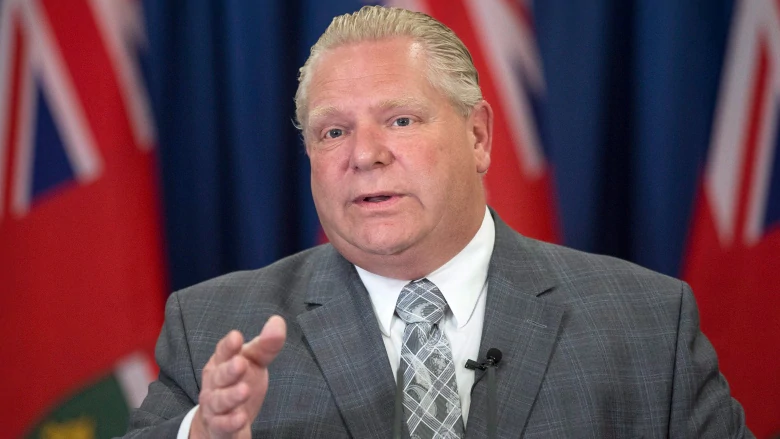
Photo courtesy of CBC

Written by Liam Wilson, Peak Associate

On June 7, 2018, Ontario picked Doug Ford as their next premier. Yes, Doug Ford, the man who insisted his “fiscally responsible” party would balance the budget in a “responsible timeframe,” but has only shown how he plans to increase the province’s deficit. The same man who claimed to be the working man’s candidate, yet has lived a wealthy life and inherited a multi-million dollar business from his father. A man who also stated that the media and the polls were conspiring to try and stop his party from taking power.

He’s not Trump. But people can’t help but notice the parallels.

Why him, Ontario? I mean, I understand that there was no chance that Wynne’s Liberals would be re-elected after driving the province into turmoil. But was Horwath’s NDP really that bad of an option?

While there was an error in their proposed budget, they still had a proper budget plan and would’ve run smaller deficits than Ford’s Conservatives. Horwath would’ve preserved the planned 2019 $15 minimum wage increase for those working low-income jobs and would’ve sought to increase the amount of affordable housing available in Toronto. Her NDP would’ve worked to cut student debt and create more student jobs.

How long will it take people to realize the danger of populist demagogues? I thought that we as Canadians had learned some valuable lessons from observing our neighbours to the south. I guess I was wrong.

SFU mottos through the ages

0
Illustrated by Reslus

By: Natasha Tar

We all know that SFU’s current motto is “nous sommes prêts,” which means “we . . . is . . .” and some other word in French that I’ve forgotten since my last eighth-grade French class. It’s definitely either that or “engaging the world,” but not even SFU is sure which one it is. That confusion aside, you may not know that the university has cycled through a number of mottos over the years.

Je ne sais pas” — September 1966

Suggested a year after the university’s founding, “je ne sais pas” was adopted so SFU students could easily explain to other universities what their motto meant. If anyone asked what the French translated to, an ignorant SFU student could reply, “I don’t know.” They’d be right!

“Toot toot, toot toot!” — November 1986

To commemorate the first bus out of the Burnaby Transit Centre, SFU decided to temporarily adopt the slogan “toot toot, toot toot!” as a nod to the buses’ iconic melodies as they struggled up the mountain. Then-SFU president William Saywell commented that “there [was] no better way to celebrate the faithful chariots that carry our cash cows to our incredible facilities.” Alternate suggestions were “honk honk” and “back door, please!” but they were eventually rejected for being “too coital,” according to Saywell.

“Burnaby Mountain and two other campuses no one cares about” — March 2003

This motto came into existence a little while after SFU’s Surrey campus opened. Frustrated with the lack of events and recognition their campus got, IAT students joined forces with the publishing and dance students of the downtown campuses, and together they stormed the mountain. Unfortunately, the raccoon led administration at the time was too strong. Defeated, the students returned to their respective campuses and adopted this motto out of justified saltiness. To this day, the SFSS avoid Surrey and Vancouver, afraid if they give the campuses even the smallest notice, they will revolt again.

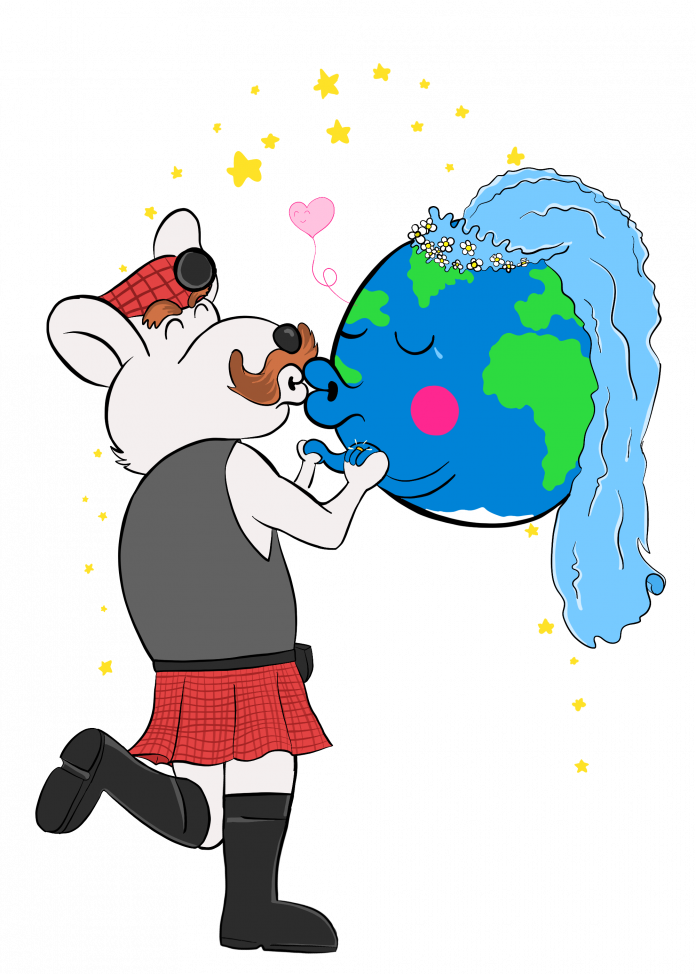
“Marry the World” — April 2017

SFU, acting strangely out of character, finally decided to tie the knot with whomever they were engaged to for so long. Unfortunately, the marriage didn’t last long, as the campuses were having an existential crisis, constantly changing their appearance, and being loud, annoying, and toxic. A blushing Andrew Petter remarked that “there’s no need to change our motto to ‘divorce the world’; SFU has already found someone else.”

“We are worse than UBC” — November 2017

Following the infamous and emotionally charged Meme War of 2017 between SFU and UBC, Wikipedia editor Mufflebuns decided to make a few changes to our beloved Wikipedia page. For a full second, our motto was the above, with Mufflebuns commenting that SFU is “[. . .] one of the most bland universities in Canada, with the quality of their memes really dragging down their position in ”[[Maclean’s]]” annual University Rankings [. . .]”

“Welcome to the North Pole” — Many times over the years

Every time SFU faces a snow-in, the motto is temporarily changed to this gem. Used as a ploy to make the university seem more homely in times of administrative failure, the motto reminds students that they are little more than tireless, unpaid elves.

New SFU classroom policies

0
Illustrated by Cora Fu

By: Tiffany Chang

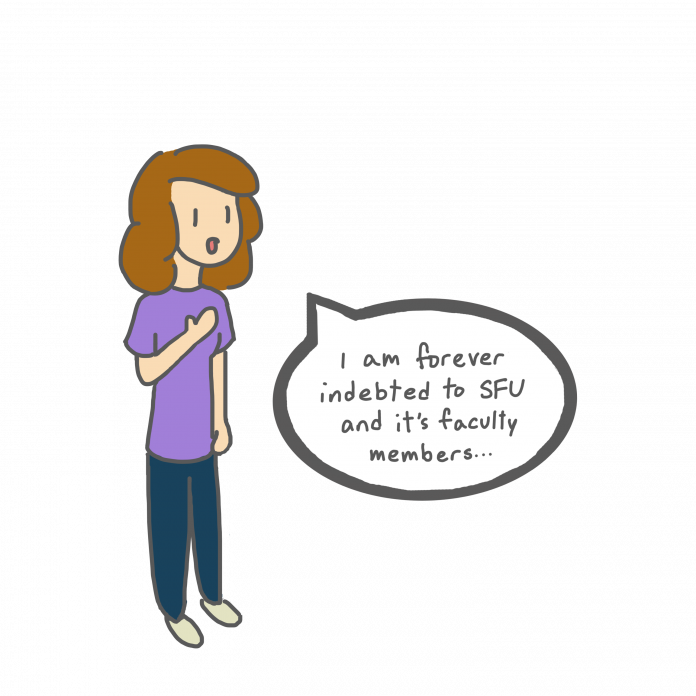
Having to say an oath before starting class: Yup. You read those words right. As of next week, students must pledge allegiance to SFU at the beginning of each class. It’s kind of like the Lord’s prayer. This is done by standing up, putting your hand over your heart, then saying the following  in unison with the other students.

“We are forever indebted to SFU and its faculty members, we will always be happy with the noisy construction around campus, and after I graduate, I shall always look back and remember SFU as fondly as I possibly can. SFU FOREVER!”

Getting rid of windows: We all agree that the Burnaby Campus looks like a maximum security prison. “How is it possible for it to look even more like one?” you might ask. To give an honest, direct answer, picture this: every single window from classrooms on all campuses . . . gone. Zilch. Nada. No more looking outside to daydream while the TA is droning on and on about the week’s readings; no more using the windows as an escape plan. Our contact with the outside world while in class will be eliminated. This is perhaps one of the most devastating changes SFU will ever make. Be sure to bring tissues just in case you start crying in class. In fact, bring extra, in case someone forgets and their snot starts dripping onto their laptop or binders.

Replacing chairs and desks with giant carpets: Awwww. Doesn’t this bring back memories? Remember when we used to sit down on a carpet in kindergarten to listen to our teacher read stories? Well, SFU is about to have us do just that! They’re going to be scrapping the desks and chairs, only to replace them with the same carpets elementary schools use! Students will be sitting on the floor, hunched over while taking notes. People say they can see a million different things that are wrong with the idea. I don’t see any of them.

Painting the walls pitch black: The walls will no longer be white. This is absolutely perfect for those of you who are claustrophobic. Now, the rooms are going to seem smaller than they actually are! It’ll feel like a black hole sucking the life out of us. Now, people have yet another reason to skip class. Hooray for SFU!

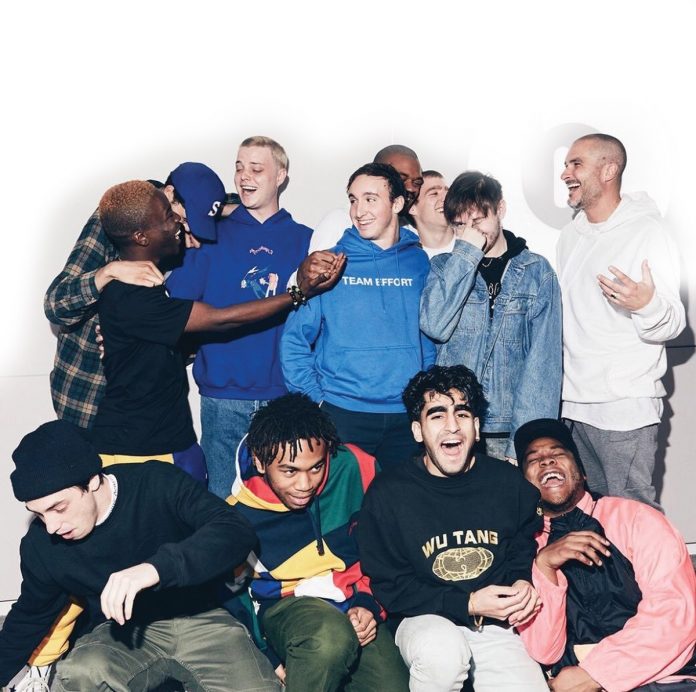
Album versus Album: Brockhampton

2
Photo courtesy of Willamette Week

By: Winona Young

All-American Trash (2016)

Think more Boyz II Men, less OFWGKTA. All-American Trash was Brockhampton’s first mixtape and it’s clear they hadn’t cemented their recognizable sound. The mixtape is overall slower, more seductive, and has an edge of blues with bouts of rap mixed in. It’s clear however that Brockhampton’s strengths lay with their prowess as rappers, rather than too-slow ballads that tended to blend in with one another. While select tracks like the introspective “Breakfast,” the sour-sounding “Poison,” and the dreamy “Palace” stand out, this one-tone mixtape should not be anyone’s first experience of Brockhampton.

Saturation III (2017)

Think more OFWGKTA, much less Boyz II Men (and even a little bit of One Direction). This album being the third of the Saturation series, it’s clear that Brockhampton had by this point found and honed their sound as rappers. Saturation III begins with “BOOGIE,” a bombastic, in-your-face banger, which transitions smoothly to the zany “ZIPPER,” and the tracks get even better. Musically diverse, this album stands as Brockhampton’s finest work so far with its unique instrumentals, solid beats, catchy hooks, and showcases some of the best performances and lines from the group’s members.
Verdict:
There is no need for “the band’s earlier stuff was better” nostalgia here, because albums like Saturation III prove that artists can grow and get better. While All-American Trash is an album I’d recommend and play on my moodier days, Saturation III is an album for anytime, anyplace, and especially for newcomers to the Brockhampton fanclub.

The clothes one wears does not correlate to their level of freedom

0
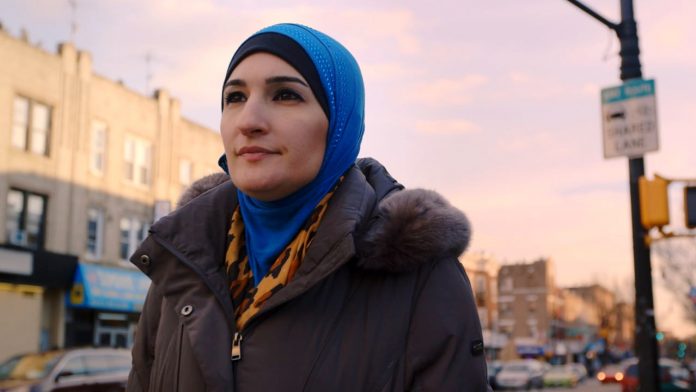
Pictured is Linda Sarsour, a Palestinian-American Civil Rights Activist who co-organized the Women’s March on Washington. (Photo courtesy of Ford Foundation)

Written by Amal Abdullah, Staff Writer

About a year ago, a couple of friends and I put on a bake sale at one of the vendor tables in the Academic Quadrangle (AQ) to raise money for a religious non-profit organization. We mostly staffed the booth in pairs, but for a 10-minute span, one of our volunteers was left alone. During this time, a middle-aged Caucasian man approached the table and asked my friend, a Muslim girl who wore a hijab, why she chose to dress the way she did.

When she began to explain, he interrupted her and told her that it was not her choice, but that she had been indoctrinated into making the decision to wear it. He did not allow her to correct his misjudgements or to explain her rationale. He continued to argue, comparing his assumed reasoning to sexist laws in Saudi Arabia, a country infamous for gender inequality. Again, he did not care to listen when she tried explaining that neither she nor her values or goals had any affiliation with Saudi laws or customs.

We weren’t doing anything controversial we were selling brownies, for Lord’s sake, the equivalent of a little kid setting up a lemonade stand on the sidewalk to earn a few extra bucks. We were just a few kids raising money for a good cause in arguably the most innocent and non-controversial way possible. Yet this random passerby felt that it was his duty to approach my friend and berate her for her personal life choices.                                                                                                                                                                  I’m not crying Islamophobia there are currently much worst cases going on, globally and locally, from the Muslim internment camps in Xinjiang, China, to the local incident where Vancouver resident, Noor Fadel, was verbally, physically, and sexually assaulted on a Skytrain a few months ago. To say this incident of a man who rudely engaged one of us in an ignorant and unempathetic conversation was as emotionally and physically scarring as the above examples would be a little bit self-centered, to say the least.

My beef is with the fact that this man felt that he was some messenger whose purpose was to inform my friend, and by extension all of us who choose to don cultural or religious symbols, that we do not have the capacity to think for ourselves. If we try to prove that it is, in fact, a personal choice that we make for ourselves, then we’re told that we only think it’s our own choice, but it isn’t, because this particular choice is one that contradicts their opinion.

For the sake of argument, let’s say my friend were to stop wearing a hijab because of this negative experience the next time the man would see her, he’d tell her that she is now free and liberated, that she’s made her own free choice out of her own free will. He would only consider her unindoctrinated once her “indoctrination” lined up with his own personal views.

This cyclical discourse is a fairly common phenomenon; if one had been lucky enough not to experience it in real life, it doesn’t take much to find this kind of catch-22 mentality in news media or on the Internet. If we try to tell these kind of people that we’re not oppressed, that no one is forcing us to dress a certain way, that we aren’t enslaved to religion, we are told that we are indoctrinated, that we think we’re free and making our own choices, but we’re actually enslaved to our communities and cultures. In all cases, no matter what we do, we are forced to fit this mold, this preconceived image of an oppressed, backward, primitive person who cannot think for herself.

If we say we do it out of personal choice, then we’re not thinking for ourselves, we only think that we’re thinking for ourselves, but we’re actually indoctrinated. If we claim we do it for for whatever reason they claim it to be, for example, that we were forced into it, (which the good majority of us will never do, simply because it wouldn’t be true), then we have proved their point.

In all cases, our identities, politicized because of today’s highly political climate, are up for someone to debate about — for someone to comment on with their own personal agendas and opinions. We cannot be simply people of our own, free to make our choices and free to claim that our choices are our own, because our identities are inherently politicized. Let’s work against that; let’s accept people for who they are, give them the right to their beliefs and values and judgements, and aim not only for tolerance or inclusivity, but for the liberty and freedom that we are all entitled to as humans.

SFU researchers investigate ecological and human health

0
(Photo courtesy of Florida Sea Grant)
By: Nathaniel Tok, Peak Associate


B.C. coastal waters contain high levels of plastic

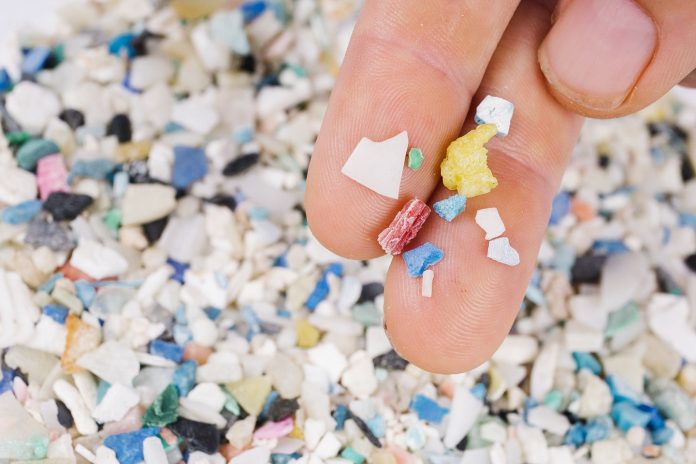
SFU’s Ecotoxicology Research group has found high levels of microplastic in the waters of the Lambert Channel and the Baynes Sound on the coast of Denman Island. The group published a study in the journal PLOS detailing the distribution of the microplastics.

     The team developed their own technique to determine the levels of microbeads and other microplastic fragments in sediment samples taken from different sites around the island. The technique involved sifting, treating, and vacuum filtering the sediment samples to separate the constituent materials, specifically the organic parts from the non-organic.

     Microplastics absorb trace metals, making them a source of toxic metals to organisms that may consume the plastic. Studies have shown that oyster health and reproduction declines as a result of microplastic exposure. The toxic effects may ripple up the food chain and affect other animals higher up, including humans.

     A member of the research team and SFU professor of marine ecology and ecotoxicology Leah Bendell reports that around three to four tonnes of plastic debris are collected from the coastal areas of Baynes Sounds each year. Bendell also says that 90% of the plastics can be traced to shellfish farms.

     The area has around 130 shellfish farms.


SFU computer science professor using data to help oncology patients

SFU computer science professor Dr. Martin Ester, as part of a research team with Dr. Bruce Carleton and Dr. Colin Ross from the B.C. Children’s Hospital, is investigating how genetics influence patient responses to cancer treatment.

     Cancer treatments often cause adverse drug reactions (ADRs) which can lead to disabilities or death. ADRs are more risky in children. “A staggering 75 per cent [sic] of childhood cancer patients develop chronic health conditions and 42 per cent develop disabling or life-threatening ADRs from cancer treatment,” reported Ester to SFU News.

     Ester has collected DNA samples and records of medication use and ADR occurrences to help in looking for relations between genetics characteristics and ADRs. Ester will then use this data to develop predictive models that can help find a patient’s likelihood of having an ADR during cancer treatment.

     Using results from Ester’s research, doctors would be able to check a patient’s likelihood of getting an ADR and come up with personalized treatments to lessen the effects of the adverse reaction.

     The research team hopes to obtain a larger dataset which will fine-tune their predictions for greater accuracy. They are also currently working on the issue of making pharmacogenomic screening more accessible to patients across the country so their findings may be effectively applied in clinical practice across Canada.


Translation guide for comments on your paper

0
Image by Chris Ho

By: Winona Young

The season of returning essays is about to arise, and students will be filled with relief, confusion, and inevitable disappointment . . . but mostly just confusion in response to what their professors wrote on their essay. So, for this issue, The Peak staff is providing an exclusive feature to help SFU undergrads finally decode the intricacies of the labyrinthine critiques and comments professors have used as feedback on students’ essays. The Peak sat down with one of SFU’s professors, who will be unnamed to conceal their identity, and will be (because they very, very insistently told us they wanted to be) referred to as “DeepRaccoon.”

The following are a series of translations provided by DeepRacoon.

    • Unsure what this means?: I have reread your sentence three times, and I sincerely think this was the moment when you fell asleep with Google Docs open on your computer.
    • Thesis needs a little bit of work: You didn’t write a thesis. You wrote a vague observation about this book, with information that I am 40% sure you acquired through reading the Sparknotes “About” page. Of course a book written by a postmodern philosopher shows important characteristics of postmodernism, like, no shit Sherlock! What other Hot Take™ are you going to take on next?
    • There’s a lot to unpack here: When we use this phrase, we actually mean to say “I don’t get paid enough to do this . . .” It can also double as what we in the academic field use as a professional way of saying “YIKES.”
    • Reduce redundancies: I know you needed to reach the 1500-word minimum, but for the love of God, can you please not re-explain your thesis to me for the third time in this body paragraph? You know I have a wife? That I have kids to get home to? And the only thing between me and them is literally you and your half-baked, half-assed, assed-assed 400 words that you threw in to reach the word count, you stupid, smelly, SMELLY student.
    • Good example!: You took this directly from my slides, which proves you looked at them, I think. But this boosts my ego, so good on ya.


  • Lack of transitions: “Firstly,” “Secondly,” and “Lastly” are not enough to tie your body paragraphs together, even though I 100% used them in college too.


  • Excellent work: You did excellent work! Or did you? I may be sincere or be one deeply sarcastic sonofabitch here, you’ll never know 😉

A who’s who of SFU’s honorary degree recipients

0
Image courtesy of SFU News

By: Trevor Steele

An honorary degree is defined as an academic degree granted to recognize a particular achievement or distinction, without the recipient having to fulfill any of the institution’s typical degree requirements. Students can take some comfort in the fact that recipients of honorary degrees can’t use their degrees as a student who worked towards one could, yet the long tradition of honorary degrees still make them a prestigious award.

The practice of handing out honorary degrees originated in the 15th century at Oxford University. They were originally used to honour intellectuals and dignitaries, or as a form of bribery to obtain favour with important officials. At first glance, the criteria has changed somewhat over the years, and honorary degrees are now usually meant to recognize a person’s exceptional contributions to a particular field or to society (although a large donation to an institution, or the chance of a celebrity appearance, still guides the selection process). These practices have led to debates about the existence of the honorary degree — debates which tend to resurface when it comes out that disgraced celebrities like Bill Cosby have been awarded over a hundred honorary degrees.  

SFU has mostly steered clear of the non-academic celebrity path, although Bill Nye did receive one, an honorary doctorate of science, in 2015. According to its website, SFU awards honorary degrees for outstanding scholarly, artistic or scientific achievement, as well as for public service and philanthropy.

SFU awards four types of honorary degrees: Doctorates of Letters (achievement in literature), Science, Fine Arts, and Laws (“outstanding achievement in other areas”). SFU granted five honorary degrees upon its establishment in 1965. These Doctorates of Law were bestowed upon then Premier of BC, W.A.C. Bennett; former British military commander and chief of the Scottish Clan Fraser, Lord Lovat Simon Christopher Joseph Fraser; UBC’s President, John B. Macdonald; the Lieutenant governor of BC, G.R. Pearkes; and the Minister of Education, L.R. Peterson.

Spring convocation, which takes place from June 12–15, will see honorary degrees awarded to six recipients. Fall convocation, which takes place from October 4–5, will see honorary degrees awarded to three recipients. These awards are typically accompanied by speeches from the recipients.


Spring 2018 honorary degree recipients

Michael Francis will receive the title of Doctor of Laws from the Beedie School of Business. Francis is a chartered accountant, and Chair Emeritus (another honorary title) of Simon Fraser University, as well as past director of defunct media company Western International Communications.

Dorothy Grant will receive the title of Doctor of Fine Arts from the Beedie School of Business and the Faculty of Arts and Social Sciences. Grant is a Haida fashion designer who has combined traditional Haida techniques and patterns with contemporary fashion to create her own high-end lines.  

Madeleine Thien will receive the title of Doctor of Letters from the Faculty of Arts and Social Sciences. Thien is a Vancouver-born author who has won many of Canada’s top literary prizes, including the Governor-General’s Literary Award for Fiction for her 2016 novel Do Not Say We Have Nothing. Thien is an SFU alumna, and was the university’s English Department Writer in Residence from 2013–14.

Ashok Khosla will receive the title of Doctor of Laws from the Faculty of Arts and Social Sciences. Khosla is an Indian environmentalist and a pioneer for sustainable development. In the 1970s, he set up and headed India’s first social enterprise for the environment, which also sought to eradicate poverty through innovation and business opportunities. Since then, he has served as chair of numerous environmental organizations, and is currently president of the International Union for the Conservation of Nature (IUCN).

Crystal Pite will receive the title of Doctor of Fine Arts from the Faculty of Communication, Art and Technology. Another BC native, Pite is a successful ballet choreographer and dancer who has produced works for The National Ballet of Canada, among many other companies around the world.

Stanley Zlotkin will receive the title of Doctor of Science from the Faculty of Education and the Faculty of Health Sciences. Zlotkin works as a pediatrician and professor in Toronto. Through his research with UNICEF, he has developed a micronutrient powder, which has helped combat micronutrient malnutrition among infants and children around the world.


Fall 2018 honorary degree recipients

Mariana Mazzucato will receive the title of Doctor of Laws from the Faculty of Applied Sciences, the Faculty of Communication, Art and Technology, and the Faculty of Health Sciences. Mazzucato is the chair of the Economics of Innovation and Public Value at University College London. She serves as a policy advisor to a number of governments and international organizations, and she has also authored multiple successful books on economics and sustainable growth.

Jane Goodall will receive the title of Doctor of Science from the Faculty of Arts and Social Sciences. Goodall is a well-known primatologist and environmentalist, who has observed chimpanzees and worked to promote their conservation. Today, Goodall works primarily as a speaker, and holds the title of UN Messenger of Peace.

Alison Gopnik will receive the title of Doctor of Laws from the Faculty of Education and the Faculty of Environment. Gopnik is a professor at the University of California at Berkeley, and a leading researcher in the field of cognitive science. Her research focuses on childhood learning and development. She pioneered the ‘theory theory’: the theory that children, like small scientists, develop theories about how the world around them works and test them.

Dear SFU students, you’re gonna be okay

0
Illustration credit, Marissa Ouyang

By: Grace Rose, Peak Associate 

When I started university back in 2013, attending class outside of my living room after being homeschooled for 10 years was a little daunting. Yet I learned a lot from my 4.5 years here at SFU most of which was learned outside the classroom, often through trial and error, making mistakes, and sending a bajillion emails. However, there are some things that I wish I had known during university, and I thought I’d share them with you. You may find some of this advice helpful, or you may not, but like any good millennial with a computer and a social media account, I’m going to give it to you anyway.

  • Plan ahead

Let me preface this by saying that I’m very much a Type A personality whose life is practically run by Google Calendar, so I’m definitely a planner. Yet for some, needing to prepare for things long-term is an adjustment. Coming into university, I knew that I wanted to do a semester abroad in the second semester of my third year. Sounds great, right?

Yet I didn’t realize that the process starts almost a year in advance of you going. So when it came time to submit my application, I had only two weeks to complete the entire form (which included a budget and short essay), request a reference, pay the application fee, and submit it all before the deadline . . . I got it done on time, and I ended up going on the exchange, but I know I could’ve had a stronger application if I had planned ahead. Plus, I could’ve saved up more money before heading off, which would’ve helped alleviate a lot of stress. Do your research, cover your bases, take care of your business, look at requirements, et cetera.


  • Ask for help

Sure, we live in the age of the internet, where we can find most of the answers to our questions on Google. However, I don’t care how well you’ve mastered the Art of Google: nothing replaces a person.

The internet can be a good place to start looking for information (it also shares its name with a great band that you should probably look up on Spotify and add to your rotation). However, in a system like SFU that was established before the digital sphere, some things are definitely best addressed in person. Sure, you could email that advisor using the “Contact Us” form to ask about your chances of getting into that waitlisted class. Or you could boss up, put on your grown-folk panties, and go to their drop-in hours to ask about it in person and they might even be able to get you into the class right then and there! (Shout out to Denise in the School of Communication. She helped me get into many a class during my time here and she laughed at my jokes so that’s great.)

So go talk to people. They won’t bite.


  • Don’t forget about self-care

Thanks to university, I now know that my body is capable of surviving on three hours of sleep, two large coffees, and one Tim Hortons donut a day. However, I probably shouldn’t have found that out, because I should’ve been taking care of myself.

Yes, life happens, and sometimes it’s easier to order pizza for the fourth night in a row if you’ve got several assignments all due on the same day because professors don’t realize we’ve all got other classes. Yet if you can’t take care of yourself, how in the heck are you going to take care of something else? Can I get an amen up in here!? So do your best to intentionally prioritize eating, getting good sleep, and maybe even exercising a bit as best as you can.


  • Make your degree yours

When I started university, Justin Bieber was the biggest pop star in the world, Obama was the president of the USA, and Beyonce was getting ready to rock the music industry with the “secret visual album drop.” I also had no exact idea of what I wanted to study in university.

Fast forward 4.5 years, the world looks completely different. I ended up with a perfect degree that I loved, and low-key wish I was still completing. How? Well my dad gave me a great bit of advice after my first semester: bend the arch of your degree towards your interest. Do you love watching National Geographic documentaries about early civilizations? Try anthropology or archeology. Do you think that you could develop an efficient and cost-effective electric car? Take a look at applied sciences! Do you have an unnecessary amount of Beyonce knowledge, and love looking at intersections of race, gender, sexuality, and pop culture? Try communication!

Find creative and unique ways to study what you love. You’ll definitely stand out from your peers and probably bond with a professor over the fact that he saw Beyonce’s Formation Tour in 2016. Or maybe that’s a me thing.


  • You’re going to screw up

What a fun note to end on, right?

But out of everything I said, this is probably the most important one to realize. No matter how much you plan, ask questions, take care of yourself, and try to make your degree completely on-brand for who you are, you are going to make mistakes. You’re probably going to bomb a midterm or two, or forget to do an assignment and have to hand it in after an all-nighter. You’re probably going to forget what a social life is like. However, that’s all a part of going to university. I think mid-2000s fake news pop star Hannah Montana said it best: “Everybody makes mistakes. Everybody has those days. Everybody knows what I’m talkin’ ‘bout. Everybody gets that way.”

or

“Nobody’s Perfect. I gotta work it again and again ‘til I get it right. Nobody’s perfect you live and your learn it and if I mess it up sometimes, nobody’s perfect…”

Either way, the girl’s got a point. The mistakes you make are opportunities for you to learn, and it’s how you recover from them that really makes the difference.