Home Blog Page 643

World News Beats

0
By: Nathaniel Tok, Peak Associate


German football team defeated in opening match of the World Cup

Previous World Cup champion Germany lost 1–0 to Mexico in their opening match of the World Cup after Mexican player Hirving Lozano scored a goal within 35 minutes of play. According to The New York Times’ Chief Soccer Correspondent Rory Smith, the Germans seemed to have been put off by the Mexican team’s initiative, speed, and attack prowess. The Mexican government noticed a small artificial earthquake in the capital due to possible mass jumping after the goal. Three previous World Cup champions have left the tournament after losing in the group stage, but the Germans were defiant, saying they will advance to the next round.

With files from The New York Times.


Climate change affects food nutrition

A study by the London School of Hygiene and Tropical Medicine has found that plants are losing nutritional value. This phenomenon, referred to as the “junk food effect,” is attributed to consequences of climate change, such as reduced water, increased temperature, and higher carbon dioxide concentration, as they lower crop output and take away nutrients from vegetables and legumes. Previous studies had explained this loss of nutrients from plant-based foods as arising from the emphasis on yields over nutrition. Plant consumption is reported to already be low in humans, with the deficit causing around 1.5 million deaths annually.

With files from DW.


Arab states attack key Yemen port city

Active conflict in Hodeidah flared up as alliance of Arab states challenged the Houthi fighters currently occupying the Yemeni port city. The attack aimed to capture the city by seizing the city’s airport, and was successful in securing two entrances. However, coalition forces will now face a dense network of explosives as they attempt to advance into the main airport where Houthi forces are concentrated. The conflict raises severe concerns from the United Nations as it may disrupt the flow of aids to the area. The present conflict in Yemen started in 2015 when the Arab states began fighting to restore the government exiled by the Iranian-allied Houthis.

With files from Reuters.


Drunk text to the prof that I hate

0

By: Tiffany Chang

Railtown Cafe is my everyday buddy

0
Photo courtesy of Jelger and Tanja Photographers

By: Navya Malik

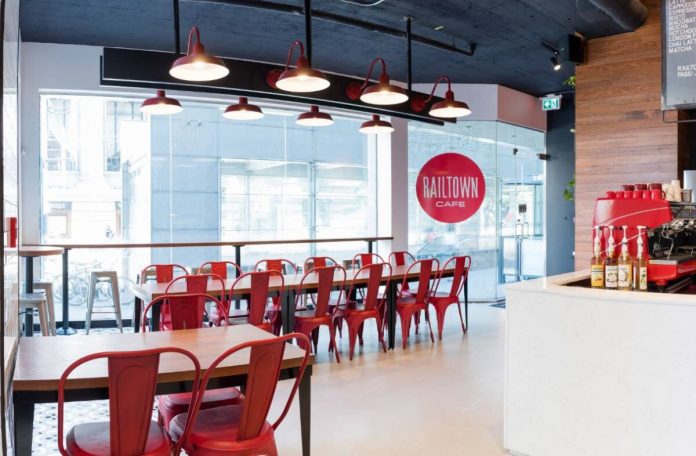
Being students, we are always looking for cheap eats around our SFU campuses. Railtown Cafe is situated a few blocks away from SFU’s Harbour Centre campus. However, it has four different locations to choose from, the closest one to Harbour Centre being at 429 Granville Street. If you’re wondering about its bizarre name, Railtown Cafe got its title from its location, the corner of the historic Railtown District of Vancouver’s Downtown Eastside.

     The place opens at 7:30 a.m., which makes it a perfect choice for students with busy schedules to grab some breakfast to go. The cafe offers healthy breakfast sandwiches, packed with protein and nutrients, for only $6.25. To kick-start your busy day, the place has some handcrafted beverages for as cheap as $2.25. Railtown Cafe focuses on serving healthy, fresh comfort food.

     Isn’t it difficult to stick to a healthy diet when places seem so overpriced? Don’t worry: Railtown Cafe offers healthy sandwiches, salads, soups, and more. You can build your own salad for just under $15, with 10 kinds of fresh veggies, pickles, and beans to choose from. There are also vegan and gluten-free options at the same price as the regular menu item.

     The place incorporates a talented team of chefs and other staff, who infuse passion and love into the cafe, making it sociable and authentic. SFU’s array of clubs might find it useful that Railtown Cafe is a perfect place to hold events, and they have catering services. Not only that, but for those who appreciate French cuisine, Railtown Cafe is an accessible option and a great choice.

     If you have a sweet tooth, there’s no better season to get some house-made ice cream. The cafe is not only your best friend during the day but also good for evening fun. Enjoy some beer or wine starting from $4, together with some mouth-watering pastries, cookies, cakes, and pies. Railtown Cafe has been featured by Daily Hive for its extraordinary goodness. It is surely every student’s next favourite place.

Board Shorts

0
Irene Lo / The Peak

Board negotiates SFSS involvement in Student Experience Initiative with SFU

Vice-president university relations Jackson Freedman presented an update to the Simon Fraser Student Society (SFSS) Board regarding the SFSS’s ongoing negotiations with the university on the Student Experience Initiative (SEI). According to Freedman, the university passed a $9 million fund a couple of years ago for the SEI to help “move the needle” on the student experience. The initiative involves eight working groups centred around increasing student engagement and building a sense of community within the university.

     In negotiations with the university, Freedman reported that the SFSS had expressed a concern regarding the fact that there is only one student appointed per working group, and an interest in increasing SFSS involvement with the initiative: “If you think of some of the names of the working groups, they very much align with some of what we’re doing at the SFSS already. So I think what we wanna do is find ways to further integrate the SFSS [. . .] the fact that there’s one student on each working group doesn’t make a heck of a lot of sense,” he said.  

     The SFSS has reportedly been contacted by the university to begin appointing student representatives to these working groups, but faced difficulties when requesting more money from the university: “When we make the request for money they say, ‘well, the money’s already been committed,’ but it hasn’t been spent yet. So we want to find a way to get more student influence over how that money’s spent.”

     He added, “We’ve made the ask recently for the addition or creation of an entirely new working group with access to budget from the university so that we can eventually lead initiatives of our own.”

     “It’s been a challenge.”

WHAT GRINDS OUR GEARS: Vancouverites constantly complaining about the weather

0
Photo courtesy of Longevity Graphics

Written by Liam Wilson, Peak Associate

I thought that “So, how about the weather?” was just a joke phrase that was overused in entertainment to indicate when somebody has nothing else to say, but damn, Vancouverites showed me the error of my ways. No matter what the weather is outside, you can bet that you’ll hear somebody complaining about it.

Sunny outside? It’s too hot. Overcast? Too dark. A stiff breeze? Too windy. Perpetual rain? How will we ever survive? (Note: You’ll survive the same way you do for the other 300 days of rain you get each year.)

Look, I understand. It snowed half of a micrometre last night and now you can’t get your car out of the driveway. If you go any further east or north in Canada though, you’ll find that most people tend to just suck it up, scrape their windshields, and make sure they get their winter tires put on that week. Yes, though you may not know it, there are tires specifically made for the winter season.

When I talk to people, I love to hear about how they’re doing and what’s up in their lives. But please, if I hear one more time that it’s “never this hot in the summer” or that it’s “never this cold in the winter,” I will probably kill the nearest person. So if you absolutely have to bring up the current state of the sky and how “terrible” it is, just make sure you give me a wide berth.

Sense8’s finale is pure fanservice (and you’ll love every minute of it)

1
Photo courtesy of Netflix

By: Winona Young

Rarely do cancelled shows ever see justice. They either go gently into the night or are mourned by fans, whose cries fall onto the deaf ears of networks. But Sense8 is the rare exception. The show returned to Netflix with a two-and-a-half hour special, concluding the series after it was cancelled in 2017. What unfolds in the episode, Amor Vincit Omnia, is nothing but a loving send-off to the series’ characters, dedicated to its fans.

     By far, what’s most memorable about this episode is the fanservice it delivers, and I consider that a good thing. Not to delve into spoilers, but the storylines and relationships of these characters were honoured with so much love and positivity that it was borderline indulgent. It harkens back to the episode’s title, which means, “love conquers all things.” And in Sense8’s finale, love is the ultimate reason that fuels these characters.

     Yet the finale is never heavy-handed with the amount of sentimentality and romance it delivers to the characters. Instead, Sense8 went all out when it comes to sex, suspense, comedy, romance, and especially, violence. The amount of blood and gun violence was so excessive that I thought the National Rifle Association helped sponsor this episode. With that said, Sense8’s fight sequences are thrilling and well-choreographed.

     Violence aside, this finale is absolutely brimming with poignant performances from both its main and side characters. True to its ensemble nature, every character was given at least one moment to shine (with the exception maybe being Capheus). Jamie Clayton (Nomi), Freema Agyeman (Amanita), Eréndira Ibarra (Daniela), and Purab Kohli (Rajan) were a few actors who gave exceptional performances, ranging from delivering badass one-liners, all the way to developing their characters fully.

     This episode isn’t without flaws, though. For instance, this episode is bursting with information. It attempts to neatly wrap up loose ends in only two-and-a-half hours. Sense8’s complex universe makes this difficult. With so much information on characters, conflicts, and mysteries unravelling and being added, it was easy to get confused. I’d often be dumbfounded, and it was only on my second rewatch that I began to understand the finale as a whole.

     However, Netflix did only allow one episode for the creators to conclude its story. To have given each character arc and plotline the due time needed for a proper ending would have taken hours. Ultimately, while it is important to be critical of its flaws, Sense8’s finale needs to be celebrated for the heartfelt conclusion it dedicated to its fans.

     Sense8 may have had a rushed ending, but for its characters and their relationships, it ended simply: with love, love, love.

     The final episode of Sense8 is now available on Netflix.

Doug Ford’s election teaches us that provincial politics matter too

0
Photo courtesy of Getty/Carlos Osorio

Written by: Gabrielle McLaren

*This article has been changed from the print version to more accurately reflect the intent of the writer. 

Every summer, a Canadian province bursts into flames. Last year, it was literal forest fires in B.C. This summer, Ontario’s politics are moonlighting as an actual garbage-fire. This hyperbole may not be completely serious, but the lessons and consequences from June 9’s election are absolutely so.

Meet the winners: Doug Ford and the Ontarian Conservative Party (PC)

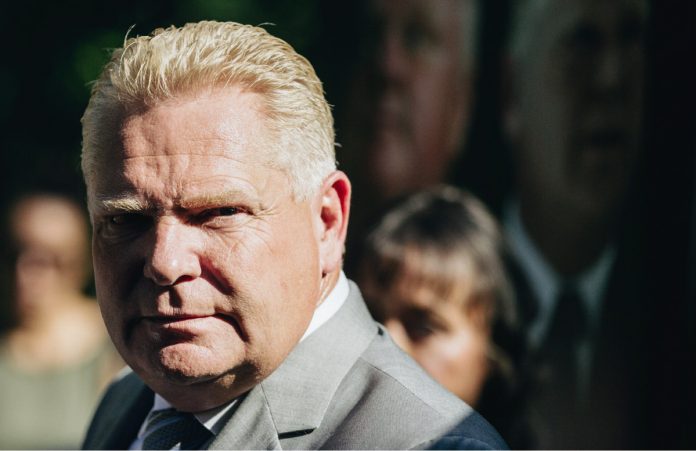
Ford became PC leader in March, with no previous political experience aside from some experience with Toronto’s city council. He’s the brother of the late Rob Ford, former Toronto Mayor. Where his brother was caught smoking crack cocaine in his office, Doug Ford has a history of dealing drugs in Toronto’s wealthy suburbs.

     If you think that picking a new leader four months before the election seems rushed, you’re right — but former PC leader Patrick Brown resigned from his position amid sexual misconduct allegations, and abandoned his second attempt at the leadership race once Ontario’s Integrity Commissioner started looking into his personal finances.

     Ford’s rise from city counsellor to provincial premier seems haphazard. Especially disproportionate is the fact that Ford didn’t win the popular vote in his party’s crazy leadership race, but brought them to an overwhelming majority with 76 of the province’s 124 seats. How did this happen? Party politics, my friends.

     Put simply, party politics are a form of politics where support relies more heavily on the party in question than on its particular decisions or policies. You may always vote for Party X regardless of its new policies, just because it’s Party X and you always vote X. You might disregard Candidate Y in your riding even if they are the most competent or experienced, simply because they are a member of Party Y that you traditionally dislike. While party affiliations themselves aren’t bad, party politics can lead voters to become uncritical.

A quick look at Kathleen Wynne and Andrea Horwath

The Liberals had been in power in Ontario for over a decade, most recently under leader Kathleen Wynne. Their loss was no surprise, not even to Wynne, but the severity of the blow definitely was. The Liberals experienced their biggest losses since 1943 (a loss of 48 seats), leaving them one seat short from the eight seats needed to remain an official party.

     Wynne’s approval ratings dipped to 12% (34% within her own party) despite Ontarians being generally satisfied with her policies. Ontarians were just over her place as party leader despite her qualifications, and threw their hypothetical Liberal baby out with the bathwater. While Wynne has definitely made some unpopular and hard decisions and earned some Ontarians’ distaste, sexism and homophobia may have had a part to play in her demonization.

     If party politics weren’t apparent enough, it’s worth noting that the Liberal and NDP platforms were ultimately quite similar. The NDP, under Andrea Horwath’s leadership, won 40 seats. Her party also became the Official Opposition, and performed better than it had since 1990.

     The rise of party politics has vast implications. For one thing, it encourages strategic voting, as opposed to encouraging candidates to vote for the candidate best suited for their particular riding and its needs. This election, long-time Liberal Members of Provincial Parliament (MPPs) have been unseated, like Jim Bradley, who won’t be in Queen’s Park for the first time in 41 years. When individuals and parties get confused, it means that candidates and leaders can get away with a lot more, protected by their banners. Example: the PC failed to release a full, costed platform before election day.

     A special shout-out goes to Mike Schreiner: not only is he the first Green Party Candidate ever to be elected provincially or federally in Ontario (Guelph), but he led the polls by 24%.


Electoral turnout was just plain sad

A measly 58% of Ontarians went to the polls in 2018, the Windsor-West riding boasting the lowest at 43.83% turnout. That’s about two out of five people voting. It’s 8% lower than the turnout for the 2015 federal elections (used to calculate the national average), which wasn’t so hot either, and 3% lower than B.C.’s 2017 turnout.

     According to Elections Canada, in 2015: “. . . the most common reason reported for not voting was not being interested in politics (31.8%), followed by being too busy (23.5%) … Other frequently mentioned reasons were an illness or disability (12.5%) and being out of town (11.9%).” Age and education are also commonly understood factors in low turnout. In 2014, only 34% of 18-24 year-old Ontarians voted — which was higher than the 24% in the 2011 elections— but historically, voter turnout for the elected party has always been higher when the PC came to power.

     Put simply: we care about this because a high turnout means that more voices are factored into the government’s composition, and our generation tends to slack. In Ontario, three ridings’ results were decided by less than 100 votes. That’s absolutely wild. The lesson here: numbers do show the power of a single vote. I have absolutely zero pity for the Ontarians who didn’t vote this election, and don’t want to hear any of them complain for the next four years.

Fuel to the fire: Questioning the first past the post system

A relic of the British politics from which Canada emerged, the first-past-the-post system has been seriously questioned. First-past-the-post means that small pieces of each province, ridings, each elect one MPP.  Most MPPs represent a party, and the leader of whichever party wins the most seats become Premier. Fair Vote Canada (an organization against first-past-the-post) calls Doug Ford’s victory a “false majority,” and even compare his election to Donald Trump’s rise.

     The numbers are jarring: Doug Ford’s government will have 76 seats after earning 40.49% of the vote while the NDP (the Official Opposition) will have 40 seats after winning 33.57% of the vote. The two parties are only separated by 396 848 votes, but seem worlds apart.

     B.C. will be holding a referendum this fall on the subject of electoral reform, possibly transitioning away from the first-past-the-post system. Broken promises regarding electoral reform are among the biggest catalysts for complaints about Trudeau’s government. The upcoming Ford government will add fuel to that fire. This may be of particular importance in Ontario, where federal and provincial ridings are the same, as far as Trudeau’s hopes for a 2019 re-election are concerned.

With Donald Trump’s horcrux comes populism’s Canadian debut

A history professor once mentioned that comparisons between politicians — especially extremists (she used Trump and Hitler as examples) — are not particularly helpful or productive. She recommended comparing situations and contexts.

      Here’s something that can be said for Ford’s election: for one thing, he did not ride on anti-immigration waves. But he did lie wildly.

     For example, while discussing each political party’s finances, he told journalists that: “We’re the only ones with the proven track record, that did what we said we were going to do, which was save the taxpayers money…” The track record from Ford’s time in Toronto’s City Hall is not as promising: most of this extra money came from the elimination of 1,268 full-time and 271 part-time jobs (despite his claims that “not a single person got laid off”) and he lost Torontonians 200 million dollars in revenue by eliminating the Personal Vehicle Tax.

     Now that he’s on the provincial stage, though he’s the first to complain about Ontario’s debt, his spending plan will add $10 billion to the already existing $11 billion deficit. To quote The Globe and Mail:

“With Mr. Ford, it’s populism with all its worst characteristics and few of its better ones: sloganeering, simplistic nonsense for policy, appeals to base instincts, and the belief that government is the problem, even the enemy of the people’s interests . . . It was only a matter of time before a reaction – or revolt – against ‘identity politics’ arrived in Canada, since it had already manifested itself in other Western democracies. It hit first in this Ontario election; it will hit elsewhere . . .”

     Gaps in voters between multiethnic urban regions and rural ridings are becoming more and more common in provincial politics, which makes Ford and potential copycats a matter of when, not if.

     One of my worries for Ford in particular is actually his Twitter handle: @fordnation. “Ford Nation” was a slogan under which Ford campaigned. With our Premier-designate so well branded to represent his supporters, I’m anxious to see how he’ll transition to represent all Ontarians, including the 59.51% who didn’t vote for him.

Consequences on the horizon

Ford has shown little interest in listening to racialized communities. He has promised to reinstate TAVIS, which one activist called “a racist police division,” and skipped a debate organised by Toronto’s Black community. Indigenous Ontarians are also skeptical.

     Ford will attack legislature that protects women, especially their rights to safe, secure, unharassed abortion . . . Ford has a choppy history with women, calling them shrews, little bitches, mentally unstable, and dismissing other PC leadership candidates by comparing them to “his wives and daughters.”

     Ford has a history of dodging journalists. On the campaign trail, he hired his own private journalist to cover his activity.

     Ford has neglected the province’s Franco-Ontarian minority. The French version of the PC’s official website vanished. Ford was the only party leader not to use French in his victory speech (Wynne’s was bilingual and Horwath gave us a ‘merci beaucoup’). When asked if he would learn French by Radio-Canada (AKA French CBC), Ford answered that he would love to — because that way, he could communicate with Québécers. Unfortunately, they do not make up his voting base.

     The future for Ontario, with Doug Ford at the helm, is uncertain. Keep an eye on the province, but keep its strange politics in mind as the Ford government unfolds.

SFU conspiracies: the ski resort theory

4
Illustrated by Marissa Ouyang

By: Hannah Davis

Does anyone else think it strange that Simon Fraser University is placed right on the top of a mountain? Do you know what mountains are for? They are for climbing, not learning. They are also for staring at, from a distance, while wondering how many bears and cougars live on them. Most importantly, mountains are for skiing.

None of this involves learning. That is why I know that SFU is not a university at all, but a future ski resort, and we, the “students,” are its future staff.

On a cold and snowy day one upcoming winter, there will be a reunion of every SFU student ever. At this reunion, SFU’s president will announce the closure of SFU: Simon Fraser University and announce the opening of UFS: Unbelievable Fun Skiing Resort.

Each part of the university will undergo a makeover to become more hospitable: the residency will turn into hotel rooms, the gym will turn into a ski and snowboard training centre, and the library will become a six-floor equipment rental and repair shop.

They will then announce the true significance of the diplomas that each student received when they graduated. On the back of the diploma, in tiny invisible ink, is a clause stating that in receiving their degree and graduating, all grads are actually agreeing to be a lifelong employee of the future UFS.

The first announcement will be met with confused claps, while the second announcement will be met with screaming and pandemonium. As people try to escape the mountain, we learn that the fake university knew all along that transportation to and from the mountain would be cancelled when the weather got a little snowy, and that students would be stranded on the icy peak.

While ex-students wander bewildered in the ever-falling snow, trying to think of an exit plan, the professors will reveal their true identities as various professional skiers with a passion for hospitality. They will explain one by one that it was their dream to open a luxury ski resort with a team of staff that are unable to quit. With the students trapped on the mountain, they’ll hand everyone their staff uniform, which the new staff will have to pay for, reminiscent of when they graduated and had to pay to rent their gown.

You know the new “student centre” building thing the Simon Fraser Student Society is building that no one cares about? That is going to be the hotel lobby combined with a luxury restaurant. And all the construction on campus? They are really making add-ons for the resort, as well as upgrading existing structures, not for us but for the future guests.

As you probably do not know, SFU actually stands for the Ski Forever Union, a secret group of people wishing to become the largest ski-resort chain in British Columbia and maybe even the world. Their motto is “Ski Forever,” which is both alarming and threatening, because it sounds like a command as well as a bad tattoo. You may think that this theory has no evidence to support it, but think about it. Why else would they build a school on something as inaccessible as a mountain, if not to trap us on it one day?

Adulthood 101: Student recipe box, part 1

1
Illustration credit, Tiffany Chan

By: Alannah Wallace 

We all have those days where we just want to come home and throw together something easy that only involves a few ingredients. Plus, we don’t have time between midterms to be spending hours in the grocery looking for obscure spices we’ve never heard of before. Here are some links for some super simple recipes that don’t sacrifice taste!

Today’s recipe categories: Parent Pleasers, Vegan Dishes, and Easy no-guilt desserts. All recipes have been chosen because they’re easy, affordable, or require few ingredients.


Parent Pleasers

When we leave home to go to university, I’m sure each of our parents has an image in their head of their kid crying in the corner of their dorm room, eating ramen every night for dinner. Well, this might be true some of the time, but let’s show them we can take care of ourselves and eat something with real nutritional content.


Carrot ginger soup

The Ladle at SFU (R.I.P.) used to have this awesome simple carrot ginger soup on a weekly basis. I hadn’t seen it anywhere since their move, so desperate times called for desperate measures: I found my own recipe. This is pretty easy to make, and the ginger will help to fight off the mid-semester sickness that always goes around.


Pork with apple chutney

Even if you aren’t a chutney type of person, you will be after this recipe. Made of simple ingredients, the apple chutney mixed with the spiced pork tastes like an expensive restaurant meal. Your parents seriously won’t believe you made this.


Gordon Ramsay eggs

Are your parents coming from out of town to visit for a few days? Take breakfast as an opportunity to show them you know, not only how to survive, but also how to make uni gourmet. This new way of making scrambled eggs will change your life. They are so soft, fluffy, and creamy that you will never do a normal overcooked scramble ever again. Try adding dried oregano or basil.


Mac n’ cheese

Ignore the disappointment on your parents’ faces when you tell them you are making them mac n’ cheese for dinner. This recipe has more of a sophisticated spin on a classic cheap survival meal for university students. You’re not just getting out a box of 99-cent Kraft Dinner: this recipe has creamy sauce and additional suggestions to add veggies. Without any added flour to the sauce like the boxed kind, it is also easy to make this recipe gluten-free.   


Awesome Vegan Dishes

Below are multiple different dishes that incorporate a vegan’s main source of food, lettuce and carrots. Just kidding. Whether you’re eating vegan for the environment, your health, or ethical reasons, or if you’re just cooking for a friend; there are a ton of creative dishes for vegans out there that surpass the stereotypical meal of carrots and lettuce.


Crispy Spicy Roasted Chickpeas

Instead of reaching for a bag of chips, quickly mix together some salt, pepper, cayenne, cumin and olive oil for your chickpeas and roast them in the oven. These are so crunchy and satisfying, you really won’t miss the chips. This is a good way to snack but also get some protein while you’re at it!


Thai Curry

This is so easy to make, and one of the most filling dishes I’ve made. It doesn’t need any type of meat component to keep you full for hours. Impress your friends by making a sauce from coconut milk instead of using the jar from the grocery store, it’s way better.


Veggie Burgers

Veggie burgers can be hit-or-miss, whether you make them at home or order them in a restaurant. For this recipe, the author took special care to make sure their burgers wouldn’t be soggy in the middle or fall apart, and would be crispy on the outside, soy-free, flavourful, and could be cooked on the frying pan, in the oven, or over the BBQ. There’s a reason why this is a five-star rated recipe.


Spaghetti Squash Pasta

Not only is this dish vegan, but it is also the perfect option for people who are trying to cut down on carbs. Instead of regular pasta, this recipe uses spaghetti squash as its base, and nutritional yeast instead of parmesan.


Healthy No-Guilt Desserts

It’s easy to catch yourself binge eating while studying for an exam, pulling an all-nighter to get that last term paper done, or after waking up from a school-induced sadness nap. Instead of instantly regretting your binge session and spiraling closer to gaining that freshman 15, here are some sweets with a healthy spin on them so you don’t feel quite as guilty.


Coconut Oil Chocolate Peanut Butter Cups

Most of the ingredients for this treat are in its name — it’s that simple. The peanut butter cups you buy from the store have so much extra crap in them and contain ingredients you barely recognize. These are so easy to make: you throw together four ingredients, toss them in the fridge for only 20 minutes, and then you’re done!


Black Bean Brownies

Okay, hear me out for a second. I know it sounds weird, but it doesn’t taste anything like beans, I swear. It tastes great and you don’t have to feel so guilty snacking on these during exam period. It’s a great high protein way to satisfy that sugar craving during library sessions.


Chickpea Peanut Butter Cookies

Yes, I am trying to make you eat more legumes by hiding them in your desserts. These are easy to pack for classes, work, or hikes. Put them in a container and pop one in your mouth anytime you need a little sugar boost. Just make sure not to store them in a ziplock bag or you’ll end up with a bag of cookie-smoosh.


Quinoa Breakfast Cookies

This is another way to incorporate healthy food into sweets. Instead of using wheat flour as a base, quinoa is packed with protein, iron, and other nutrients while still maintaining a flavourful, earthy taste. Bonus: these cookies are filling and can double as a breakfast food.

Diverse casting in media lets people view themselves more positively

0
Photo courtesy of Disney

Written by Stefanie Baltasar, SFU Student

Representation and diversity in media matters. It’s not about being politically correct or about tiptoeing around discourse about racism and sexism. It’s not even about capitalism. It’s about giving people role models and main characters who are like them. Movies such as Black Panther, Coco, Wonder Woman and Star Wars: The Force Awakens don’t star a white male protagonist and instead, showcase more diverse characters. Fully describing how much that matters would take me forever, but here’s
a summary.

These are all examples of media where different people are being given the spotlight. It’s not pandering because these movies are not casually tossing in a stereotypical gay person or person of colour in the background to “diversify” an otherwise all-white cast. These movies give them the spotlight. When you have a protagonist that you can immediately go “this person is like me, this person comes from a similar background, from my background,” it makes a difference in how you view yourself. It’s going to make a difference to kids who will grow up wanting to be like Wonder Woman, Rey, or Black Panther. They now have someone to look up to that they can also instantly relate to.

Using historical figures is another great example. Yes, they were in the background and not the spotlight, but that doesn’t mean that their work was not important. Media doesn’t have to showcase the blatant racism in history to be important. Racism isn’t a part of Coco’s plot, but Coco is also a movie where anyone can relate to a non-white
main character, and that main character is not white. It maintains universality through common themes of growing pains and family fights, and Miguel isn’t a white American or Western European protagonist.

Coco can be considered “just another Disney/Pixar movie” and Wonder Woman “just another superhero movie,” but honestly, that’s not necessarily a bad thing. They stand out because Coco features Mexican characters, and Wonder Woman features a female superhero — but it’s also important to note their similarities to movies featuring non-female, non-Mexican protagonists.

The lack of differences promotes relatability and solidarity. It removes the assumptions that just because someone looks different, they have to be different and foreign to us. Canada is a multicultural community, with people of all different backgrounds living in close proximity to each other. With movies like Coco, Moana, and Black Panther, we get to know a little more about other cultures, about each other. Showing off surroundings that lead to stereotypes, like Coco’s grandma feeding him tamales (i.e. the tough Mexican grandmother “I will feed you” stereotype) and breaking stereotypes are both important.

If all you have taken from this article are some movies for your “to watch” list, then I’m still going to take that as a win. I’m hoping a day will come when we don’t have to make a big fuss about representation. It will just be there, as commonplace as a white
male protagonist.