Home Blog Page 641

SFSS reaches agreement with SFU to secure more seating space for students at Surrey campus

1

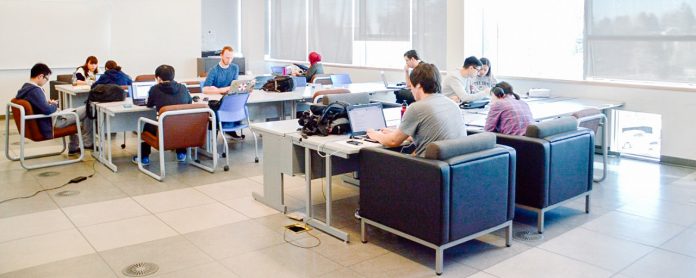
After nearly four years of advocacy for more study spots and after-hours space options at the Surrey campus, the Simon Fraser Student Society (SFSS) Board of Directors and Simon Fraser University administrators have come to a consensus regarding this matter. Beginning this semester and onwards, the university will make it their priority to expand and improve space options for students at the Surrey campus, as well as installing new dedicated rooms for students to do group projects.

     Since summer 2017, the SFSS Board of Directors has been negotiating with SFU administrators to expand space options for students at the Surrey campus. SFU Surrey’s space options are becoming more unsustainable by the year as its student enrolments are exceeding its seating capacity. The majority of the Surrey campus’ classrooms are locked after-hours — as a result of this, a spacing crisis is happening at SFU Surrey.

     “Back in summer, the SFSS indicated a strong need for additional space options at the Surrey campus . . . We began exploring new study and social options for undergraduate students at SFU’s Surrey campus,” said SFSS president Hangue Kim in a press release. “With a petition and survey, we were able to identify the importance of expanding study, multi-purpose, and project work space [sic].”

     In light of the lack of space options for students at the Surrey campus, the SFSS submitted a report to SFU administrators that outlines the scope of the issue and how it affects students’ academic and social life. After reviewing the report extensively, the university has agreed to make some changes to its seating plan at the Surrey campus to better accommodate the students’ needs.

     As part of its agreement with the SFSS, the university will open nine new locations forstudents to study after hours, including new overhead lighting, additional chairs, as well as power outlets in these designated areas, according to the SFSS’s website. This process will take approximately one year to complete and the locations that are included in this renovation are Lounge 332, 312, 432, 412, and many others at the Surrey campus.

     In addition, students will be able to access classrooms after hours as study spaces for the remainder of the spring 2018 semester and onwards. Students will have access to all of the classrooms on Galleria 3 until midnight and all classrooms on Galleria 5 will be available upon request from SFU Surrey Security, according to the student society’s website.

     Moreover, two Galleria classrooms will be reserved for students to work on their group projects. The schedule for this semester’s dedicated Project Rooms can be found on the student society’s website. It is important to note that these reserved rooms will change every semester, therefore students should keep themselves informed of the changes in schedule at the beginning of every semester. SFU Recreational Services will also build new banks of lockers for students to store their projects, and the service will be free of charge, as part of the study space expansion.

     “With the feedback of the SFSS, we’re hoping to make even more improvements,” said Stephen Dooley, executive director of the SFU Surrey campus in a statement. “A few examples of this include working with the North Surrey Recreation Centre (directly across campus) to use their space for club activities and securing a strong student voice at the table for future SFU development projects.”

     SFU and the SFSS hope that this space expansion project will improve the students’ learning and social experience at SFU Surrey. Kim also noted that the university will be covering the costs of the renovation of the study space.

     The Peak also asked Kim if a similar space expansion will be seen at the Vancouver campus, to which Kim replied, “Vancouver is important to us. We will make decisions based on data and continuous feedback from our students.”

     Kim emphasized that this space expansion project was a collective effort between the SFSS Board of Directors as well as the support of student groups. “We made this project one of our top priorities this year based on the results of previous surveys, petitions, and consultations, which indicated a strong need for more student space at the Surrey Campus,” said Kim. “While we are excited for this new development, this is just the beginning and we believe that student involvement should be an important consideration in the decisions for space-related expansions for SFU. We look forward to ensuring that the needs of students are well-considered for future developments,” he concluded.
SFPIRG launches petition for campus space

0

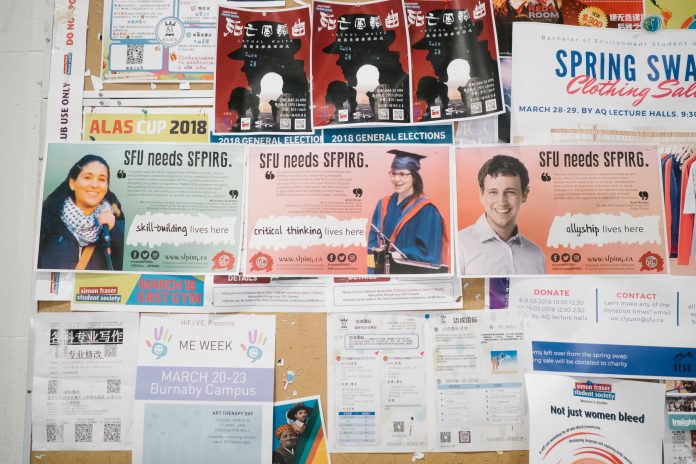
In the face of its impending displacement from campus, the Simon Fraser Public Interest Research Group (SFPIRG) has launched a petition asking SFU and the Simon Fraser Student Society (SFSS) to lease them appropriate campus space.

     The petition, directed towards SFU president Andrew Petter and vice-provost and associate vice-president academic Peter Keller, was launched a week ago and aims to collect as many signatures as possible.

     As described on the petition page, SFPIRG is currently subleasing office space from the  SFSS in the Rotunda; this sublease will expire in June 2018. Once the Student Unions Building (SUB) is built in fall 2018, the SFSS will no longer have its lease on the Rotunda. As of now, SFPIRG has not been offered space in the new SUB.

     The petition is calling for a new lease altogether, but according to SFPIRG director of communications Craig Pavelich, the group’s immediate focus is extending the current sublease to give them more time to address the larger issue.

     “Regardless of where we end up long term, our sublease [with the SFSS] expires at the end of June [. . .] and we are waiting to find out and actually hear from them if they will extend our sublease,” said Pavelich. “As it stands, if nothing changes, SFPIRG is being evicted in three months, and that is a very huge cause for concern.”

     The petition page outlines what qualifies as an “appropriate space” that SFPIRG could lease in the longer term. The space must be “fully accessible to all students on campus,” including students with disabilities. It “must be functionally appropriate for a fully-functioning non-profit organization” and include enough space for the staff, students, and volunteers of the organization. SFPIRG has also made it clear that they will not accept a space that is leased to them by evicting or denying space to another independent student society. “We are not interested in seeing any of our fellow organizations rendered homeless because of institutional inaction or indifference,” reads the petition.

     SFPIRG Space Campaign coordinator and graduate student Teresa Dettling brought up the last point in an interview with The Peak as speaking to the situation SFPIRG is currently experiencing with being offered space in the Forum Chambers and Undergrounds in Maggie Benston Centre. The SFU radio station CJSF is also currently looking at leasing the same spaces.

     “We don’t want to be competing for space with another student society,” said Dettling. “We want everyone to be rehomed. By offering more than one group the same space, [SFU and the SFSS] are pitting us in competition.”

     The petition is part of a larger campaign hosted by SFPIRG called the Space Campaign. Along with posters throughout the university and the online campaign, the organization is in the process of planning an event to increase awareness among students about the issue.

     “The idea from the petition really came from working with our students, including Teresa, trying to find ways that we can simplify the message in order to reach out to students and make them aware of what is a very pressing issue for us at the moment,” said Pavelich.

     Dettling commented on the positivity she has received when approaching SFU students on campus with the petition. “Every single person I’ve talked to has supported this issue,” said Dettling. “Petitioning is not easy, sometimes you get people who disagree with you. That’s not been the case here.”

     She shared a testimony given by one of the students who supported the petition: “I had a student share with me the other day [who] said, ‘SFPIRG was the first place in my life that I felt like I belonged and I felt accepted.’ And that choked me up.”

     When asked how students who want to support SFPIRG’s Space Campaign can do so, Pavelich recommended that students sign the petition, follow up with their elected student government representatives regarding the space issue, and contact [email protected] to get involved with petition signature gathering and outreach.

     The group is currently in contact with SFSS and will meet with SFU next week to discuss the space issue. “SFU is wanting SFPIRG to go through the SFSS, so we’re following both channels,” said Pavelich.

Suya Life: bringing Nigerian street food to Vancouver

0
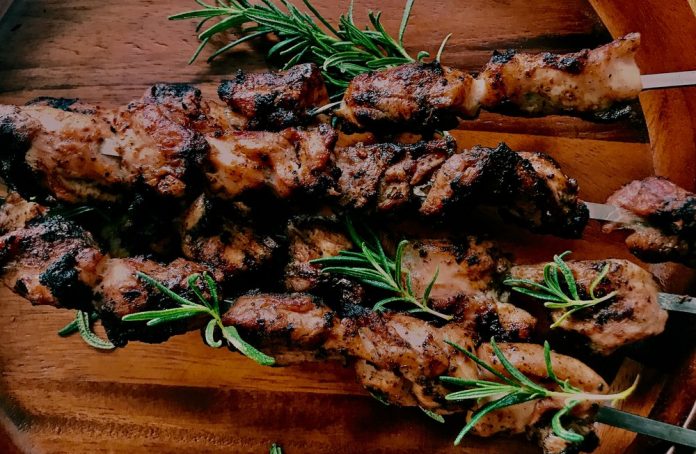
The spice blend for suya is not universally agreed upon, and each cook has their own recipe. (Photo courtesy of Suya Life)

By: Alex Bloom

In March of 2017, Suya Life began. Now, as they celebrate their one-year anniversary, they have plans to expand their services. It started as a simple love of food, and that food was suya.

What is suya?

Suya is a Nigerian food that has been described as “one of the country’s national dishes” by Deutsche Welle. Suya is a kind of meat skewer, typically beef, that is made with a special blend of spices — the exact makeup of which varies. It is popularly eaten as a street food, often served with chopped onions and tomatoes. A passion for this dish was one of the motivations behind starting Suya Life. “Our brand is focused on connecting people who want a little suya in their life, and are not afraid of trying something a bit spicy,” says Kene Esomeju, brand manager of Suya Life.

What is Suya Life?

Suya Life describes itself as a community-based catering service — naturally, they focus on providing events with suya. “Suya Life is a social suya experience,” Esomeju says. The service provides all-you-can-eat suya, and they have started taking booking requests. The project started as an offshoot from Skynation, a brand started by SFU alumnus Kayode Fatoba, which describes itself as “a digitally creative brand intersecting technology, entertainment and design.” As Esomeju explains, part of the goal of Skynation is to “rebrand Africa.” He goes on to say,  “. . . With suya being connected to the Indigenous heritage of members of the company, as well as part of the initial community that had supported the launch of the brand during its early start in 2013, the internal team would pitch this as a potential product to launch and strangely everyone from Skynation was on the same page.”

     The beginnings of the project were humble, and grew with support from the community. Esomeju says, “The actual soft launch of Suya Life was quite small, with a sponsorship from Kara-Kata, one of the more prominent suya chefs, to a visit from Kuzi Mutonga — founder of African Business Forum — and the co-founders from Afro.ditie [Creative] a Vancouver-based African and European apparel company among a few other young professionals.”

     The involvement of other professionals was a large part of what made the event rewarding. As Esomeju recalls, “Seeing a number of people who had never met before make connections to further their projects within the same market inspired the momentum that followed the brand . . . This response motivated the team and Skynation to take the brand a lot more seriously.” The way that the community received Suya Life led them to the philosophy that the service is currently operating under, as Esomeju puts it “The right people were connecting over Suya in an environment that was conducive for a different type of networking and partying experience.”

     Esomeju elaborates on this new direction: “While it might have been easy for the African community to have access to suya, or make it based on how their parents had taught them, Suya Life wanted to focus its brand on the social experience. Infusing Afrobeats and promoting a sense of fashion and professionalism into the movement became part of the brand growth.”

The future of Suya Life

March of 2018 brought with it the one-year anniversary of the initiative’s official launch, and Suya Life plans to expand their services this year. “Since 2017 saw such great interest from the community about getting involved in and collaborating with [Suya Life]. The team at [Suya Life] is working to grow the company,” says Esomeju. Going forward they plan to use their website to put on and promote monthly events and opportunities. They also plan to begin implementing a booking and catering feature through their website this year.

You can visit Suya Life’s website for more information.

Must-see events

0

By: Alex Bloom

rEvolver Theatre Festival (early bird tickets)

rEvolver Festival is a yearly event designed to promote the work of up-and-coming performance artists in Vancouver. As stated on the organizer’s website, the festival offers “the full range of contemporary theatrical practice, from script-based theatre to devised and site-specific works, staged readings of work-in-progress, and in-depth discussions with artists.” The festival itself will take place from May 23 to June 3 at The Cultch, and will be made up of various performances spanning that time period. Some notable mainstage productions for this year’s festival include KITT & JANE: An Interactive Survival Guide to the Near-Post-Apocalyptic Future, The Saddest Girl at the Party, and Macbeth Muet.

     Early bird ticket prices will be on offer until April 15, so get your tickets sooner rather than later. While early bird prices are available, you can purchase a three-show pass for $40 and a six-show pass for $72.

Tickets can be purchased either through Upintheair Theatre or The Cultch’s websites.


Shaping Vancouver 2018: Contested Places

Presented by SFU’s Vancity Office of Community Engagement in collaboration with Heritage Vancouver, Conversation #1: The Complexity Of Places – The Heather Street Lands is the first in a series of discussions aimed at understanding the cultural significance of heritage sites for various peoples, as well as the various different meanings and histories attached to them. As expressed on SFU Woodward’s event page, this event seeks to start answering questions such as: “What are the different ways that this land is viewed and valued by people?” and “What can be done to help resolve conflicting values?” This discussion will take place at the Djavad Mowafaghian World Art Centre in the Goldcorp Centre for the Arts, 149 West Hastings Street on May 10 from 7–9 p.m., and is free to attend.

For more information regarding the event and registration visit their event page.

Your favourite SFU athletes by the numbers

0
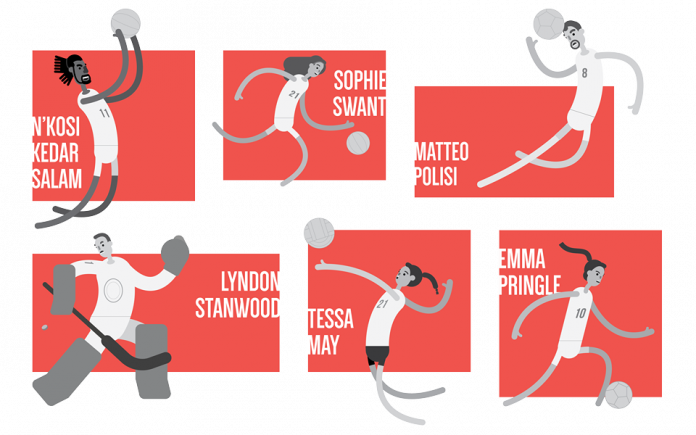
Gabriel Yeung / The Peak

Men’s basketball

N’Kosi Kedar Salam (shooting guard)

N’Kosi Kedar Salam, formally known as Kedar Wright, was a highly touted player transferring from UBC when he first joined the Clan for the beginning of the 2016–17 season. Upon transferring, he immediately shined as a scoring threat for SFU, and provided a great isolation option in late shot clock scenarios.

We always knew he could score, but what really separates his senior season from his first year for the Clan is the efficiency with which he’s put the ball in the basket. This increase in efficiency allowed him to lead the Great Northwest Athletic Conference (GNAC) with 20.4 points per game, becoming the first SFU basketball player to be named to All-GNAC first team.

He shot .488 from the field this year, exactly a 10% increase from the .388 he shot last year, which was second on the Clan for players with over 100 shot attempts. He also shot .414 from behind the arc, up from .333 the season prior, and doubled his made threes to lead the team with 53 on the season.

Another huge improvement was from the free-throw line, where he shot .738 this year, up from .631 last season. Perhaps most importantly, he got to the line a lot more, and more than doubled any teammate with 126 free-throw attempts this year. As can be expected, he led the Clan in scoring in 18/28 games this season. Salam always had the killer instinct to be a dominant scorer, and this year, with the help of an increase in efficiency, he made it happen.

Women’s basketball

Sophie Swant (small forward/power forward)

There was an entirely new starting five for the SFU women’s basketball team this season, and with that, it was clear that somebody would need to step up into a scorer’s role. Sophie Swant was the person to do it, leading the Clan with 14.2 points per game, good for fifth in the GNAC.

For a team that played with seven or eight players for the duration of the season, she was a workhorse, playing 30.4 hard minutes per game. Her tenacity paid off, as she led SFU with 5.7 rebounds per game, as well as 4.7 defensive rebounds per game. She was truly a leader on both sides of the court, as she also led the teams in steals.

Despite all these accolades, perhaps the most impressive was her leading the GNAC in free-throw percentage with an incredible .894 free-throw percentage on 123 attempts. To put this in perspective, James Harden, widely considered one of the best free-throw shooters in the NBA, is shooting .863 from the free-throw line this year in what is likely a MVP season. And yes, the distance of the free-throw line is the same at both levels. This season, Swant showed what hard work and hard playing can do, as she is arguably the grittiest player in her conference, while also excelling in a trait that takes a lot of finesse, confidence, and focus.

Volleyball

Tessa May (middle blocker)

If you are looking for an example of a leader, look no further than Tessa May. There was no question that her teammates and coaching staff looked to her to be an influence on both sides of the ball, and she definitely lived up to the challenge.

Defensively, she excelled, setting the tempo as the first line of defence and leading the Clan with 1.08 blocks per game. She also was a star on the offensive side of the ball, showing the balance in her overall game. While outside hitter Kirsten Pinkney led the team with 3.15 kills per set, as expected, May was right behind her with 2.83 kills per set, and actually led the team with 292 kills on the season.

What set her aside from her counterparts, however, was the efficiency with which she attacked. With a .366 kill percentage, May led SFU, and was second in the GNAC. On top of that, her 3.6 points per set also led the team. This season, May showed how to play the middle blocker position, and was named an All-American Honourable Mention for her efforts.

Women’s soccer

Emma Pringle (striker)

If you are judging players based on the pure value they add to a team, Emma Pringle has a strong case for the MVP of SFU sports for her 2017 season, despite missing a game due to injury. Essentially, when the SFU women’s soccer team was winning, Pringle was scoring, and vice-versa. Pringle either scored or assisted in each of SFU’s wins this year, and in 10 out of her 15 games played overall. In the seven wins the Clan had, Pringle had 11 goals and two assists. In the eight losses she played in, she scored only three goals and had one assist.  Her 3.8 shots per game led SFU, and were fourth in the conference. Most importantly, however, is the efficiency with which she scored. She scored 14 goals on 57 shots this year, good for a .246 goals per shot ratio. Comparatively, Harry Kane, one of the top strikers in Europe Football, has scored 24 goals on 162 shots this season, good for a .149 goals per shot ratio. Of course, the level of competition is vastly different, but this goes to show the level of dominance that Pringle has maintained this year.

She led the GNAC with .93 goals per game, and may have led the conference in overall goals as she was one behind the conference leader with one fewer games played. Her play helped fellow teammates as well, as Jenna-lee Baxter enjoyed a conference-leading 13 assists this season, many of which were to Pringle. Both were selected to the NCAA Division II United Soccer Coaches All-West Region Teams. This season, Pringle showed the impact that one player can have on a eleven-a-side sport, and it was huge.

Men’s soccer

Matteo Polisi (striker)

There are many players to pick from on the dominant SFU men’s soccer team, but perhaps the most exciting one this season was freshman Matteo Polisi. Making the jump from the high school to university level is a difficult step for many athletes, but this did not faze Polisi at all, as he scored SFU’s first goal of the season just two minutes into the first game.

The dream season would continue from there on out, as he led the Clan in goals and points by wide margins. His 10 goals on the season were third in the GNAC, as were his .56 goals per game, 1.33 points game and three shots per game. He also showed composure with his link up play in the striker role, as his four assists were tied for second on SFU and eighth in the conference. Soccer runs in the blood of the Polisi’s, as Matteo and brother Marcello were both named to the All-West Region First Team. In Matteo’s case, leading the front line on the best team in the GNAC and one of the best teams in the nation as a freshman is nothing short of incredible.

SFU hockey

Lyndon Stanwood (goalie)

Like the SFU men’s soccer team, there are many impressive talents on the SFU hockey team to pick from. One of the Clan’s biggest strengths this season was their ability to score from a variety of players. It is therefore that we look between the pipes, where Lyndon Stanwood was unquestionably the man for SFU.

He was SFU’s, and the entire BC Intercollegiate Hockey League’s (BCIHL), workhorse with a league-leading 24 games played and 1,406 total minutes. For comparison, the closest goalie to him was Trinity Western’s Silas Matthys, who played 18 games and 1,033 total minutes, amounting to about three quarters of Stanwood’s workload. So next time you think you’re overdoing it on a group project, look at Stanwood’s stats.

His 16 wins led the conference, but most importantly, he provided a level of stability for the Clan’s defence. Not only did he play A LOT, but he also played at an elite level, with his 2.48 goals against average and .907 save percentage both ranking in the top three for BCIHL goaltenders with over 10 games played. Over his SFU career, Stanwood became the winningest goaltender in SFU BCIHL history with 30 wins. Stanwood and SFU hockey have been synonymous for the past few seasons, and seeing him leave will surely hurt.

World News Beats

0

By: Nathaniel Tok, Peak Associate 


Stephen Hawking dies at age 76

Stephen Hawking, world famous physicist, died peacefully at 76 years of age in the city of Cambridge where his former college honored him with its flag at half mast. Hawking had been diagnosed with wasting motor neurone disease at age 21 and remained wheelchair-bound for the rest of his life. He was involved in research about space, relativity, and sub-molecular quantum theory. Hawking was also known for his bestseller, A Brief History of Time. “He was a great scientist and an extraordinary man whose work and legacy will live on for many years,” said his children in a statement released following his death.

With files from Reuters.


Everest clean-up campaign begins

A clean-up campaign to airlift 100 tonnes of garbage at Mount Everest has begun. On the first day of the campaign, 1,200 kg of rubbish was collected and flown to be recycled in Kathmandu in Nepal. The campaign is focused on items that can be recycled with local guides, or Sherpas collecting the waste and the Sagarmatha Pollution Control Committee coordinating the effort. Much of the garbage consists of empty beer and food containers, old trekking tools, and oxygen bottles. Along with the garbage, clean-up crews will have to deal with human biological waste, which had become a health hazard in 2015. Over 100,000 people visited Everest in 2017.

With files from BBC News.


Canada to send troops to Mali

Canada will deploy soldiers and helicopters to Mali for approximately a year as part of a UN peacekeeping mission. Through a direct request, Germany, the Netherlands, and the UN have asked Canada to send peacekeepers to take over for a German transport and medical team. Up to 162 peacekeepers have been killed in Mali since 2013, making the region the most deadly for peacekeepers. It is not clear how many soldiers Canada will send to Mali, but government officials report that a commitment to rotate Canadian troops out of Mali after a year of service has been guaranteed. Canadian peacekeeping was a key promise made by the Liberal government.

With files from CBC News and Deutsche Welle.


African countries sign huge trade deal

African officials signed the biggest free trade deal since the beginning of the World Trade Organization, which creates an African market of 1.2 billion people involving a gross domestic product of over $3.4 trillion. The aim of the deal was to boost trade within the continent and to decrease the export of commodities which can have volatile market prices. The deal is to be active by the end of 2018, but the number of countries required to make the deal is still undetermined. Concerns remain due to Africa’s largest economies, Nigeria and South Africa, not yet signing the deal, and the possibility of citizens from the poorer nations migrating to the larger economies.

With files from AP News.

Opinions of the Hour

0

Written by Zach Siddiqui, Opinions Editor

Trudeau government’s needless obsession with gender is exhausting” — Christie Blatchford, Vancouver Sun

Here’s an example of an op-ed that is just begging to be dismantled. Blatchford is basically just another person complaining about the political correctness of the Trudeau government. Now, to be fair, Trudeau’s government is cringey, and many of its apparent attempts to be socially aware come off as desperate and shallow. But Blatchford’s particular arguments here are completely ridiculous and fairly transphobic.

She starts off complaining about how awful it is that Service Canada representatives are using gender-neutral pronouns where possible, and asking people which salutation (Mr., Mrs., etc.) to use for them. I’m sorry . . . what, Christie? How does this affect you? Is that extra 15 seconds of asking how to address you such a drain on your life force?

Later, she offers this gem: “It’s not as though women, born or made, in Canada are systematically oppressed or subjugated . . . it’s not as though most people have time or inclination to worry about their pronoun of choice, least of all to demand that they be addressed by it.”

Firstly, there are unfortunate implications to the use of “born or made” as a binary with which to talk about gender. Just because someone did not present as female their entire lives doesn’t mean they just magically switched their gender identity one day. The narrative that non-cisgender women have simply remade themselves to match the category of “female” is blatantly incorrect.

Secondly, let’s not pretend that Canada is free of sexism. We still regularly see stories of women who have been mistreated in professional settings, underpaid, targeted by gendered violence, and more. Trans women and femmes especially face stigma; in particular, they continue to be extremely prominent targets of violent crime. Aside from this, one story related by The Globe and Mail is that of a transgender woman who was denied a job on the grounds that she “would probably be more suited to working in a drag club” with “people like [her].”

Thirdly, as far as people having no “time or inclination” to care how they are addressed: Blatchford, clearly you do care about how people address you, or you wouldn’t be raising a fuss about people asking for your preferred appellation.

More to the point, it’s easy for you to dismiss proper pronoun use, because as a cisgender person, you will never seriously be called a pronoun that you don’t identify with.

March Goodness encourages universities to focus on acts of kindness

1
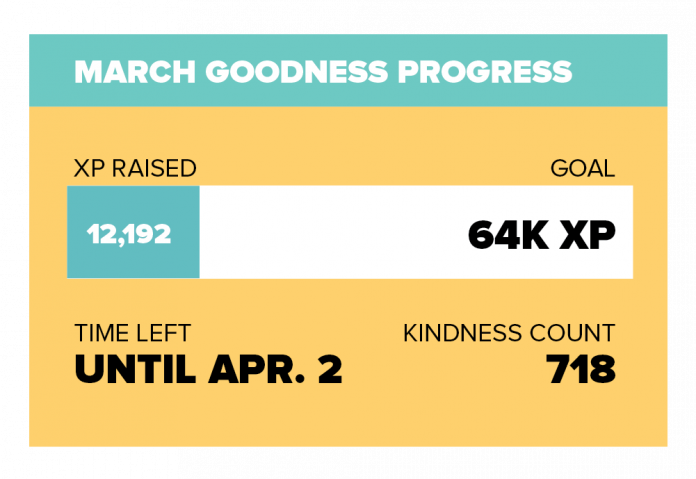
While March Goodness is a competition, it has overarching goals for all the universities. Gabriel Yeung / The Peak

Those who are familiar with basketball will have heard of March Madness, an event where 68 National Collegiate Athletic Association (NCAA) Division I basketball teams play in single-elimination tournaments. The teams compete in seven rounds for the national championship. March Madness started in 1939 with only eight teams, with Oregon beating Ohio State 46–33.

This year, a new kind of tournament has taken over university and college campuses across Canada and the United States called March Goodness. Students, professors, alumni, and people in the community from one campus compete against other campuses by performing good deeds for others. This competitive kindness tournament is a campaign by Derek Anderson’s — former Kentucky Wildcats NCAA champ and Miami Heat NBA champ — Stamina Foundation and xocial (an organization and online community that encourages people to take part in competitive kindness). Schools compete for social good points and the campus with the most points will get a donation to their school and all sorts of prizes as well.

March Goodness is conveniently at the same time as March Madness, which was a purposeful decision. Xocial wanted to have have kindness brackets and encourage students to “dribble” acts of kindness and “slam dunk” on relevant issues. Individual students can also earn scholarships by performing kind acts, such as feeding the homeless, volunteering, donating blood, paying it forward (such as by buying someone else coffee), calling their parents, discussing issues such as gun control, or spending time with their pet. Each type of good deed is worth a different number of xocial points (xp) and students can rack up points by writing about their good deed on xocial.

According to xocial’s Ken Bentham, there are five scholarships, each worth $2,500, that are available to be won by individual students. A student with one of the highest xp scores will win one of the scholarships. The other four will be given to random students who have racked up at least 500 points. The college or university that wins the campaign will be given $2,000 as well.

Xocial wants to dispel the myth that basketball players should “shut up and dribble,” which was said to the Cleveland Cavaliers’ LeBron James by journalist Laura Ingraham after he commented on Donald Trump’s behaviour as president during an interview. They chose to partner with Anderson and his Acts of Kindness movement as he is an example of an athlete who uses his platform and fame to make a difference in the world around him. Him being a former player for the Kentucky Wildcats is cool too, as the team is a recurring March Madness favourite.

Multiple Canadian universities have entered the campaign, with McMaster University, Carleton University, University of Windsor, and Brock University making the xocial 16. Although Simon Fraser University did not make the top 16, Renika Bilin — our campus ambassador — is amazing, in the words of Bentham, and has made such a great effort in being kind and doing good deeds on behalf of SFU. She earned xp by raising money for causes such as HIV/AIDS prevention, Pens for Poverty and women’s groups  as part of a club called Students for Humanity. She is also currently working on a project to raise money for Parkinson’s disease. To help her campaign, she set up booths during peak times at school and worked with other clubs to boost xp. Bilin believes that March Goodness is an awesome way to encourage students to participate in positive social change on university and college campuses. They are having conversations about how to make campus life healthier and a more comfortable environment. To her, and probably many other students, March Goodness is a reminder that positivity can go a long way.

In the midst of March Madness, and life in general, it is always good to see people making a conscious effort to increase positivity. With xocial’s and Anderson’s movement, this is certainly taking place, and is a example of how sports are much more than just athletics.

If you want to get involved, check out the link here: www.marchgoodness.net

Jas Randhawa is the next SFSS president

1
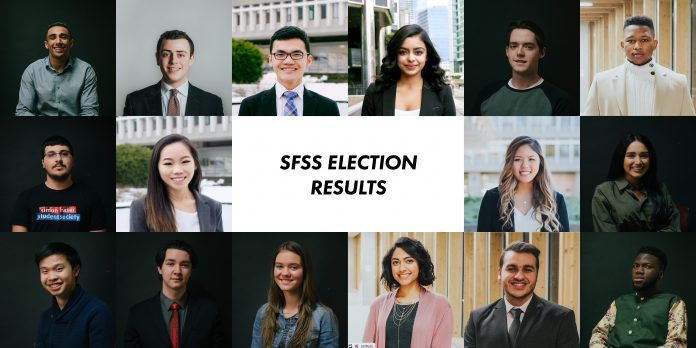
(Chris Ho / The Peak)

This morning, The Peak received the results for the 2018–19 Simon Fraser Student Society (SFSS) Board of Directors elections from the Independent Electoral Commission (IEC). Without further ado, Jaskarn (Jas) Randhawa has been elected as the next SFSS president.

     This year there were two presidential candidates for the 2018–19 SFSS elections, Jas Randhawa and Amar Singh. Randhawa received 1,206 votes, while 952 votes were cast for Singh.

     “I couldn’t be more excited to be the next SFSS president . . . This was a very competitive and intense campaign process, and I want to take this chance to congratulate everyone who ran, regardless of the results. It takes a lot of courage to put your name forward and go through the stress of this campaign, and I hope we’ve all grown a little from it,” said Randhawa. “Right now, my mind is focused on the future . . . there are some really important things on the horizon for the student society, and I look forward to ensuring that the student body is well represented. I can’t wait to get in a room with our new team, meet everyone, and set a positive tone for the year ahead.”

     Moreover, it was a close race for the five other executive positions. Samer Rihani, who was elected as the next vice-president (VP) of student services saw a total 1,061 votes, while his opponent, Simran Sanghera, received 1,024 votes. In the end, it was Rihani who triumphed over Sanghera by a total of 37 votes.

     A similar pattern was seen for the vice-president of finance position. Matthew Chow, who was elected as the next VP finance, received 1,086 votes, while runner-up Vikramaditya Chandhok received 940 votes. Jasdeep Gill, who was elected as the new vice-president of external relations, triumphed over candidate, Livleen Sidhu, with a total of 1,125 votes to 930.  

     In addition, Jackson Freedman and Tawanda Masawi were elected as the new vice-president of university relations and vice-president of student life, respectively.

     The Peak reached out to Rihani to share his thoughts on the elections results, to which he replied, “Firstly, I MUST [sic] say a huge word of gratitude to Simran Sanghera. There is no one who made a better opposition for the role. She was kind, humble, and the entire time we ran against each other, it wasn’t a battle of jabs or insults, but rather a display of who could push hard and truly do the best to represent the role . . . It was a difficult campaign, and a gruelling one to say the least . . . but I’m so blessed to have been elected and want to tell the student body on behalf of the newly elected board that we are ecstatic to work alongside and for the students to create the most positive experience for any student and staff within SFU.”

     Freedman also commented to The Peak, “I’m absolutely thrilled with the victory and I’m so excited for the year ahead. I want to thank everyone for the support I received throughout the process . . . receiving a thousand votes from your fellow students is a really humbling experience. This was a hard-fought campaign, and I’m really proud of everyone who put their name forward to give it a shot and try and make a change here on campus.”

     The Peak reached out to the IEC, but did not receive a response by our print deadline regarding this year’s voter turnout. The Inspire SFU slate was the main winner for this year’s elections as 10 of its members were elected into the 2018–19 SFSS Board of Directors positions.

The worst times to Hulk out

0
Illustrations by Alice Zhang

By: Ahmed Ali

As you all know, constantly turning into a 10-foot-tall Rage Monster when you get angry is never the most convenient superpower. There are times where it will be a minor inconvenience, and there are other times where when going Green is a HUGE inconvenience — here is a list of those awful times.

  1. Sex, blowjobs, and masturbation. 

As you know, Bruce is a pretty thin guy, so we assume his junk is pretty standard — but The Hulk’s junk is going to be massive. This is going to make sex a real gamble because you might end up with a 20-inch-long and 7-inch-wide veiny rod of tissue in one of two orifices . . . neither of which is going to pleasant. On top of that, when the Hulk cums, he’s probably going to blow through you and through the next building over. Going out by an overpowered ejaculation is probably pretty unique, though.


  1. During an exam

When taking an exam, you’re already going through a lot of questions and emotions: “What is the integral of 2sinxcosx?” and “Why didn’t I study this part instead of watching Netflix?” and “If I drop out now can I make minimum wage by rapping about memes on SoundCloud?”

Going through so many emotions is why being the Hulk is a bad power for exams. You start not being able to answer 10 questions, and the next thing you know is that you’ve turned big . . . ripped the paper in half, and smashed through the exam hall, looking for some way to escape the pain.

And the worse part is that the admin will fail you right there instead of helping you.


  1. Bathroom at a party

You’ve had a long day. You’re at a party looking to chill but you gotta go take a S@$t first. When you’re pushing too hard and then — you go Green! You burst through the door and run off in a panic.

The worst parts are 1) everybody has seen your dong and 2) your Hulk dump would make it better to just nuke the house from orbit than even try going back there.


  1. The bus

Buses have a certain type of atmosphere — one that makes you feel like you’re light years from civilization. You’re in this cramped cave like thing with NO air conditioning and cavemen everywhere, and that’s enough to stress anyone out . . . imagine if you were the Hulk.

In this case, at least the bus would be air conditioned once you Hulk out and smash all the windows open (along with, like, half the bus) — trying to flee a place that’s more a prison than the Vault.


  1. Family reunion

You know all those aunts, uncles, cousins, half cousins, and obscure brothers of an uncle’s  sister’s cousin’s brother’s dad’s roommate named Phil? All those random people you might know who all just converge together to talk about random things? Sometimes it’s just meaningless chit chat . . . sometimes it all turns to you: “You’ve gotten taller, did you find a girl yet? How goes your science stuff, how goes your search for a job — and bankruptcy after your arts degree? Why are you getting taller? Why are you getting green? My, how much you have changed in the last 10 seconds?”

Dealing with the military as a giant Green indestructible monster is much easier than dealing with obnoxious relatives. At least the former won’t question your life decisions and passion for theatre.