Home Blog Page 636

Outgoing SFSS President Hangue Kim reflects on his term

0
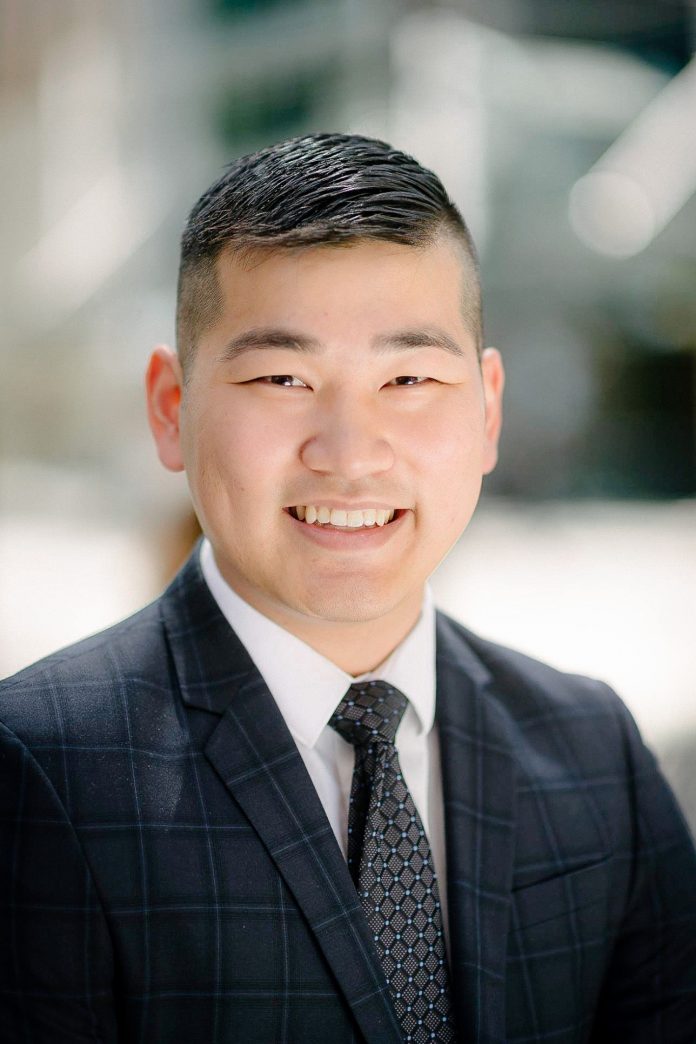
Hangue Kim, SFSS President 2017-8. (Photo courtesy of Hangue Kim)

By: Srijani Datta, Assistant News Editor


Note: Our interview with Kim was conducted via email. All responses have been left unedited.


The Peak: How are you feeling at the end of your term?

Hangue Kim: Proud. I am proud of the team for coming together and working hard for our students. The hours the team put in behind the scenes was inspiring and it motivated me to work harder. We were able build a strong team culture of mutual respect and accomplish almost every goal that we set in the beginning of the year.


P: What was the most rewarding part of the job?

HK: Being trusted with the responsibility for finding solutions to our fellow student’s problems.


P: What was the most challenging aspect of your role?

HK: Prioritizing your time. There is no shortage of work or issues that arise throughout the year and as President, you must dedicate your time wisely.


P: Student health plan administration reports that there’s a significant increase in SFU undergrad mental health visits, how do you see keep.meSAFE student support program benefiting students?

HK: The new SSP is going to benefit students by providing care 24/7 through multiple platforms (phone, chat, app, and web access), on-going short-term counselling support (over phone, video, or in-person), access for students living or studying abroad, specialized support for underserved or vulnerable populations, and the ability to integrate with SFU’s Health and Counselling services.


P: If you had one piece of advice to give to Jas Randhawa, the incoming President, what would it be?

HK: Always remember that our organization is funded by student dollars. We’re funded by students who may be struggling financially, mentally, academically, or socially. Be a strong voice for them and make sure to conduct yourself with the utmost integrity because people are watching us.


P: What’s next on the card for you?

HK: Vacation! As I am writing this, I am at the airport heading to Korea and Thailand.


P: Pie or cake, which do you want in the farewell party?

HK: Cake. More specifically, ice-cream cake.


At the Biltmore Cabaret

0

By: Natasha Tar

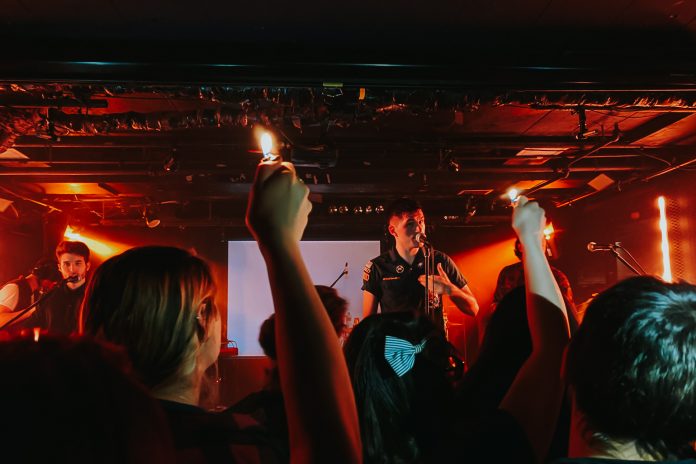
Biltmore Cabaret opens promptly at 7:30 p.m., allowing the early birds in. My friend and I are here to see Hotel Mira, formerly JPNSGRLS, performing for the first time in two years. Needless to say, I’m excited to see them and to explore the Biltmore for the first time.

Ambience: A-

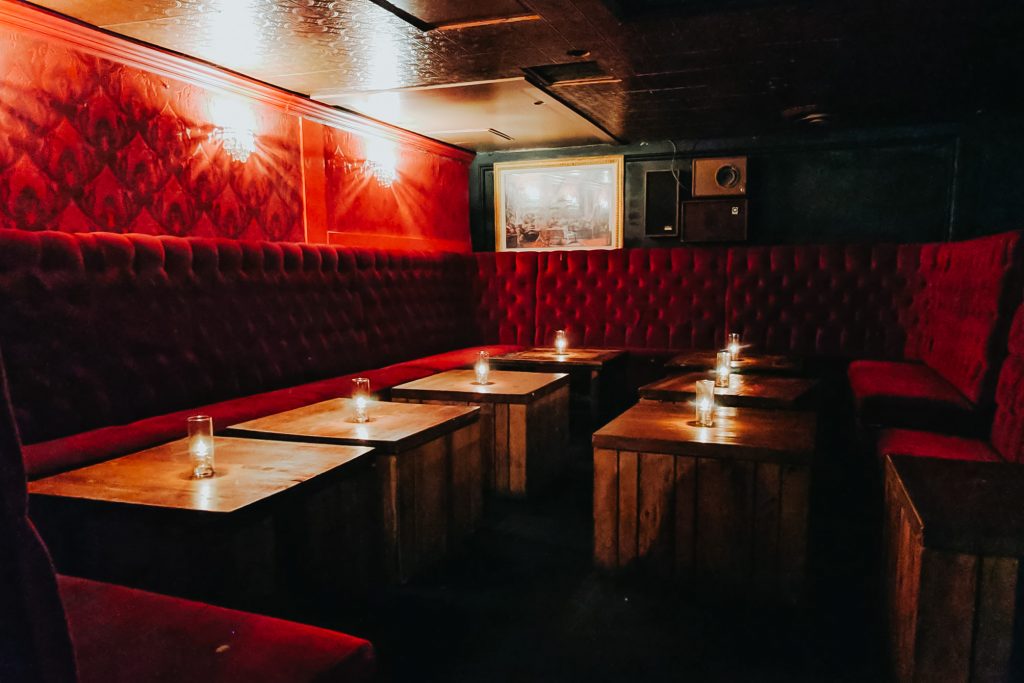
I find myself in what looks like a cross between Dracula’s party lair and a hipster lounge. This isn’t necessarily bad, but it takes some time to get used to the extra dim lighting and stuffed deer heads.

     Most features are red, from the wallpaper to the cushy booths. It’s quiet at first, but steadily grows louder as more people file in and the background music is turned up. Half a disco ball spins above the wooden dance floor. There are a few old-fashioned arcade games beside a photo booth in case you want something to do between sets.

Accessibility: D

There’s no ramp leading down into the venue from the front doors, so a patron in a wheelchair would have to go in another way. The men’s bathroom is clearly labeled “gents,” but the sign for the women’s washroom is so dim that I don’t see it until the end of the night. Both washrooms are clean and the women’s washroom has signage reminding you to take care of yourself and keep the space safe and inclusive (these posters aren’t present in the men’s washroom). As far as my friend and I can tell, there are no gender-neutral washrooms.

Bar service: A

The bar is adorable. Adorned with fairy lights and candles, it gives off a magical feel reflective of the alcoholic elixirs within. The bartender allows my friend to try a few beers before he settles on a citrusy one, and I get a rum and coke. Round two for me is a Long Island, which thankfully isn’t half-full of ice. Service is friendly and quick, but something to note is that they only accept cash and credit.

     Nearby there’s a self-serve water “bar” which consists of a few taps and plastic cups. I think at first that this is a neat idea, but my friend points out that the cups could easily be tampered with. If you want a safe glass, I suggest emptying your own cup and holding onto it for later.

Music: A+

As soon as the first band, Whisper Disco, starts playing, everyone goes to the dance floor. If you’re the kind of person who would rather sit on a bar stool the whole night, you won’t be seeing much of the bands over people’s heads. Whisper Disco starts the night off with some fast songs, only missing a few notes. Their lead vocalist is super cute.

     There’s a short break before Band of Rascals come on stage barefoot. They start with a harmonica solo which throws everyone off. They’re a little extra in general, but play a couple solid songs. It’s entertaining to watch the frontman’s eyes roll back as he drags out his “ooohs.” He breaks a string after the first song and Whisper Disco come to his rescue.

     After they finish, a screen is lowered between the audience and the stage. I’m officially getting excited. A teaser trailer for Hotel Mira’s new lineup plays before the screen rises and they launch into their first song.

     Vocalist Charlie Kerr of Hotel Mira looks as beautiful as ever, and I’m glad my friend and I have made it close to the front. Old fan favourites are sandwiched between new songs, and Kerr dances and sings his heart out, acting out the lyrics so everyone has a sense of what’s being sung. The new members of the band are pretty static next to him, and the drummer is inexplicably shirtless. Nevertheless they easily keep up with Kerr’s energy. When they finish, Kerr comes onto the dance floor and meets fans. Most people have left at this point, and I manage to get a hug from him.

     Overall, Biltmore provided a great time for a $10 cover charge. The venue has issues with accessibility, but features reasonable prices, quirky performances, and a generally comfortable atmosphere. Grade: B+

IEC Elections and Referenda Report offers improvements for SFSS elections

0
The document featured eight issues and recommendations for future SFSS elections.

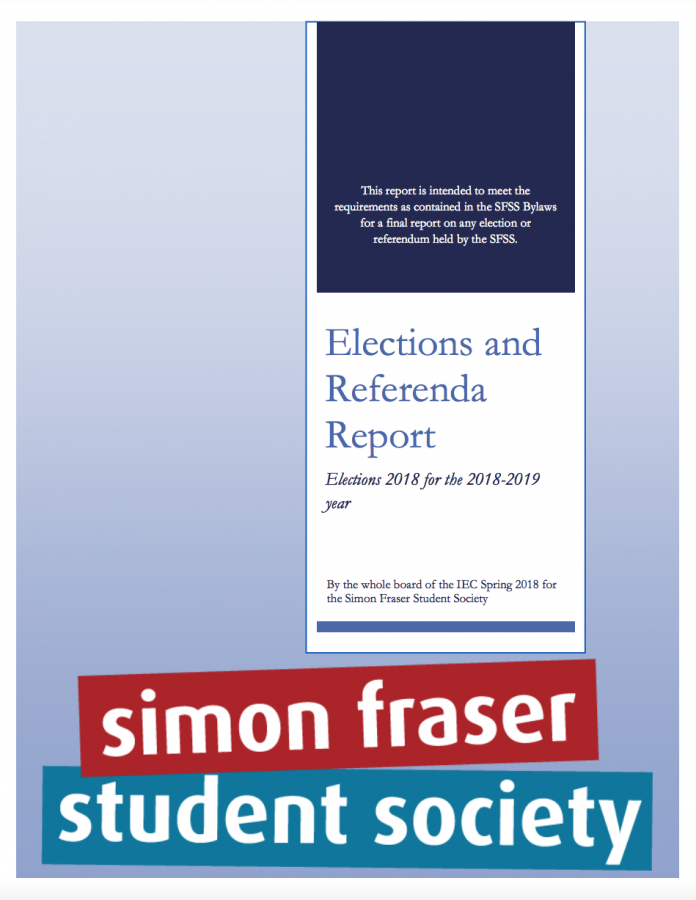
The Simon Fraser Student Society (SFSS) Board of Directors meeting held on April 20 saw the Board reviewing the Elections and Referenda Report submitted by the Independent Electoral Commission (IEC) reviewing the practices of the 2018 SFSS elections.

     According to the SFSS Elections and Referenda Policies, the IEC is composed of one Chief Commissioner and four Electoral Commissioners, and is “responsible for the administration of SFSS elections and referenda that is consistent in a manner consistent with all Society bylaws and regulations.” The IEC in this year’s election was headed by Dee Gorn acting as Chief Commissioner.  

     The document featured eight issues the IEC witnessed during the election cycle, and corresponding recommendations for each issue made by the Commission for future elections held by the Society. The report suggested that the election period relevant to reading week be extended by a week, as outreach work is not effective during the break and that debate booking be done earlier in future elections.

     The report also highlighted job-related difficulties the IEC experienced, which involved excessive work hours, overlapping job responsibilities between the IEC and Communications Officer, and the IEC taking on extra duties such as policing endorsements.

     The issue presented surrounding endorsements read, “Although, highly unethical, endorsements ran amok in the elections cycle. Ranging from external companies to Board members, these were difficult to eliminate without co-operation. Most complaints about candidates and also the IEC’s work revolved around this.”

     The corresponding recommendation from the IEC suggested that, “Endorsements should be ignored as it is not the IEC’s responsibility to protect the reputation of the SFSS. The IEC failed to recognize this.”

     Slates were recommended to be “banned as individuals should be able to campaign for themselves.” The report’s analysis determined that the permittance of slates resulted “a toxic electoral atmosphere.”

     The report also noted that “many conflicts arose among candidates due to anti-social behaviour resulting from harassment to slander. This behaviour has been ongoing and is directed towards candidates, and members of the IEC.

     “Incidents towards candidates include sexual harassment, social bullying, and spreading rumours of criminal activity.”

To address this issue, the IEC recommended “candidates submit 3 academic, work, volunteer or character references which should be checked by the IEC or an SFSS staff member (preferably IEC).”

     The document was met with mixed responses in the Board meeting in which it was discussed.

     The then business representative Gini Kuo commented: “I don’t think this report’s done very responsibly. Like it’s not very good. [. . .] I personally am not comfortable with this being a precedent of what’s an appropriate report for an election.”

     The arts and social sciences representative at the time and current vice-president university relations Jackson Freedman recommended reaching out to all the candidates who ran in the election this year, “to compile a report maybe to complement the IEC report that comes from the people that had the experience is critical because I think they provide a perspective that, frankly, the IEC is not going to be incentivized to provide.”

     SFSS CEO Martin Wyant attributed much of the stress during the election to the compressed nature of the election cycle, the inexperience of some candidates, and “having an IEC that, in many respects, is brand new when they get hired too.”

     “So I think the middle ground that we want to occupy here is one where we can develop a plan to better prepare IECs, make sure they have proper training and support from us as staff people. We need to be very clear that we’re not to play any role in any regard with supporting any particular candidates,” said Wyant.

     Moving forward in the vein of electoral reform, the Board discussed holding consultations with all the candidates of the elections, the Governance Committee, and the Communications Department to obtain a spectrum of perspectives on the electoral process.

     SFSS Campaigns, Research, and Policy Coordinator (CRPC) Pierre Cassidy is currently putting together a report that will need to finalized by the Board before being made public. The report is expected to be finalized around the end of May.

     “As for the IEC report, we will wait until we have all of the reports before commenting,” said outgoing SFSS President Hangue Kim.


The defence of just being a tech company: the fallout of Cambridge Analytica

1
Courtesy of Associated Press

Written by Umer Altaf

Tech giants such as Uber, Amazon, and Facebook are vastly different companies that sell obviously distinct products and services. Yet they and many others like them are increasingly sharing one notable trait in common: the defense of just being a tech company.

Uber has used this excuse whilst operating a worldwide cab service that doesn’t have to abide by the same regulations that all other cab services do. Amazon also claims to just be a tech company whilst building their logistical capacities in excess of most national postal services. Their CTO says “Amazon is a technology company. We just happen to do retail” Even Google — often touted as the most ethical of the lot — claims to be just a tech company whilst building a global media empire through outlets such as Youtube and Google News.

It seems that the message we are meant to hear is that none of these companies do anything other than hire teams of software engineers to make apps and sites for us to use. Putting it another way, none of these companies appear to want to take accountability for their actions. It seems Facebook is no different. Sheryl Sandberg — the company’s chief operating officer — says “at our heart we’re a tech company… we don’t hire journalists”

By now, the news of what happened with Cambridge Analytica, the data analytics company, and the supposed tech company Facebook has made its hundredth round in the news cycle. Recode reports that Cambridge Analytica was given information collected from Facebook users by a third-party app, a personality quiz. By taking this information without express permission from participants, they violated Facebook’s terms and services, which forbides developers from transferring any data collected by their program to another party. Cambridge Analytica used this data to construct targeted psychographic profiles — impacting, among other things, the recent US Presidential elections.

Everyone is asking the same questions about accountability, and everyone seems to have the same opinion, even Facebook CEO Mark Zuckerberg himself. He promises that “Going forward, we’re going to take a more proactive position on this, and do much more regular stock checks and other reviews of apps, as well as increasing the amount of audits that we do.”

This, I would argue, is a line of reasoning that obfuscates the true issue at hand. Namely, that a single private and functionally unregulated organization has the information of over two billion people worldwide, and it is allowed to utilize this information for financial gain by selling the associated metadata to other parties for targeted advertisements.

When one remembers this, it becomes apparent that the issue at hand is not simply that a company like Cambridge Analytica was able to utilize the data of Facebook users, but that Facebook had that data to begin with. The fact is that Facebook alone was responsible for making sure that third parties were not violating any rules, regulations or laws whilst interacting with them.

How can this be considered reasonable? If it hadn’t been for the whistleblowing on Cambridge Analytica, would Facebook have even bothered to come forward with their breach? We cannot know that for sure, but what we do know is that Facebook waited months before coming out. These hardly seem like the actions of a company that ought to be left to its own devices whilst handling the sensitive information of nearly a third of the world’s population.

This brings us back to the red herring of a defense that I cited earlier in this piece: of Facebook not being just a tech company. In all fairness, it isn’t particularly obvious what Facebook really is. Yet that cannot possibly be a defense of having that sort of power with next to no responsibility.

On more than one occasion now, we have been given reason not to trust companies to self-regulate when their ability to act ethically are in conflict with their goals to maximize profit. Whether they be financial conglomerates or oil cartels, we have learned enough lessons from giving corporations undue and unchecked capacities to self-regulate. The tech world, if we may still call it that, is no different.   


World News Beats

0

By: Nathaniel Tok, Peak Associate 


Protests continue in Armenia

Tens of thousands of Armenians have once again turned to public protests, challenging the standing Republican government.

     The public opposition began two weeks ago when Serzh Sargsyan, who served for the past decade as President of the country, was selected to become Prime Minister, even though he had claimed to have no intention of vying for the role in the past.

     After Sargsyan resigned, following the clear public opposition to his rule, talks between Acting Prime Minister Karen Karapetyan and opposition leader Nikol Pashinyan were planned to determine the process of determining future leadership for the country. After disagreements over meeting format, however, the discussion was cancelled and protesters led by Pashinyan flooded the capital again.

With files from BBC News.


Korean leaders aim for removal of nuclear arms and end to war

North and South Korean leaders have agreed to bring a conclusive end to the Korean War by promising to sign a peace treaty, and plan to remove all nuclear weapons from within their borders during this year.

     North Korea heavily pushed for the peace treaty as a requirement for the country to agree to end its nuclear program.The agreement was finalized in the border village of Panmunjom, making it the first known instance of a North Korean leader entering South Korea.

     Many believe that the nature of this negotiation might contribute towards the atmosphere of the future meeting between the U.S. and North Korean leadership.

With files from The New York Times.


A research team announces that Uranus smells like rotten eggs

After decades of study, it turns out that the upper layers of Uranus’ gaseous atmosphere contain high levels of hydrogen sulphide.

     This discovery comes from data gathered by the Gemini North telescope in Hawaii, and suggests that the planet would smell like rotten eggs, which are one of the more commonly-known sources of hydrogen sulphide. The scientists were able to conclude the identity of the gas by studying infrared light from Uranus. Scientists believe that Neptune’s clouds also contain hydrogen sulfide, in contrast to the regions around the clouds of other gas planets — Jupiter and Saturn — which are thought to contain ammonia instead.

     Atmospheric gas composition of planets is useful when hypothesizing about planetary history and formation.

With files from DW.


Israeli teenagers drowned in Dead Sea flood

A flash flood in the Negev desert took the lives of at least nine Israeli teenagers. One more teenager is still missing. A large rescue operation involving military and police assets by the Israeli government was hindered by thunderstorms.

     The teenagers were part of a group of 25 hiking in the region as part of their pre-military training program. North Africa and the Middle East have been hit by heavy rainstorms recently as well, with eight others dying in the region.

With files from DW.

Films to look out for this year at DOXA

0
Image courtesy of DOXA

By: Natasha Tar

Maybe you’re too broke or busy to travel. Thankfully, DOXA is here again to show you the globe.

     DOXA, Vancouver’s documentary film festival, returns this year with unexpected and incredible films from across the world. The festival is turning 17 years old, and will run films from May 3 to May 13 in venues across Vancouver. Good news for students: you get a $2 discount off of any regular ticket. Bad news: you don’t know what to go see! Below are previews of some of the festival’s highlights.

Ethiopiques: Revolt of the Soul

Where? SFU Goldcorp Centre for the Arts

When? May 13, 4:15 p.m.

Did you know that up until the 1960s, there was no Ethiopian music being sold or produced in . . . Ethiopia? Filmmaker Maciej Bochniak compiles interviews with the players involved in first recording Ethiopian music, and outlines the trials they faced to get their then-illegal music to the rest of the world. It’s a film for anyone interested in an absorbing musical backstory.

Dreaming Murakami

Image courtesy of DOXA

Where? The Cinematheque

When? May 13, 6:15 p.m.

The Wind-Up Bird Chronicle, Kafka on the Shore, and 1Q84 are just a few of writer Haruki Murakami’s world-famous works. This film explores the work and habits of Mette Holm, who translates his work in Denmark, and the lengths she goes to in order to capture the essence of Murakami’s books. DOXA’s website calls it an “essential viewing for fans of the novelist and a captivating portrait for anyone who believes in the necessity of art.”

Mr. Gay Syria

Where? SFU Goldcorp Centre for the Arts (May 7) and Vancity Theatre (May 10)

When? May 7, 8:15 p.m. and May 10, 12 p.m.

Director Ayse Toprak follows the story of Husein, a gay refugee who struggles to come out to his family, wife, and child. While he waits for passage from Istanbul to Europe, Husein meets other LGBTQ+ refugees and together they decide to enter the Gay World competition. This film will remind you that even in times of strife, love is an essential part of who we are.

Metamorphosis

Image courtesy of DOXA

Where? SFU Goldcorp Centre for the Arts (May 10) and Vancity Theatre (May 11)

When? May 10, 6 p.m. and May 11, 12 p.m.

A slightly more optimistic look at climate change than other movies, Metamorphosis focuses on human effort to curb climate disasters rather than just the disasters themselves. Filmmakers Velcrow Ripper and Nova Ami portray climate change not only as dire but as a chance for humans to recreate themselves as more self-sufficient beings.

Roller Dreams

Where? Vancity Theatre

When? May 10, 6:15 p.m. and May 13, 7:15 p.m.

If you thought roller skating was only for cut-throat derbies and awkward first dates, guess again. At Venice Beach in the late 1970s, people of colour strapped on roller skates and danced to disco, each with their own flair and style. Roller Dreams follows the stories of dancers then and now, and how their skating utopia eventually crumbled.

The Cleaners

Image courtesy of DOXA

Where? SFU Goldcorp Centre for the Arts (May 9) and Vancity Theatre (May 11)

When? May 9, 6 p.m. and May 11, 9:15 p.m.

We know the Internet is a scary place, but we would never expect to find graphic images of violence, nudity, and gore on our Facebook feeds. Who makes sure that our feeds remain sterile? The answer is examined in The Cleaners, a film that explores the lives and consequences of content moderators, and the haunting implications of their work.

Kusama – Infinity

Where? SFU Goldcorp Centre for the Arts (May 12, first show) and Vancity Theatre (May 12, second show)

When? May 12, 7 p.m. and 9 p.m.

According to DOXA’s website, “Yayoi Kusama is one of the world’s most successful living artists and one of the top-selling female artists in history.” This is an impressive feat, but as Heather Lenz’s film Kusama – Infinity shows us, it wasn’t an easy one. Struggling with racism, poverty, and her own mental health, Kusama created art throughout her life that was often scowled at, but now celebrated.

A Six Dollar Cup of Coffee

Image courtesy of DOXA

Where? SFU Goldcorp Centre for the Arts

When? May 13, 2 p.m.

How well do you know your favourite caffeinated beverage? A Six Dollar Cup of Coffee shows us the processes and emotional costs that come with producing coffee. The film does not intend to tell consumers how to solve the problem, but rather how they can be more aware of the story behind their cup of joe (and why you shouldn’t be surprised to pay a large amount for it!)

Board Shorts

1
Irene Lo / The Peak

SFSS approves a motion to cease to restrict student groups to SFU catering

The Meeting, Event, and Conference Services (MECS) monopoly on SFU student catering services is over. The Simon Fraser Student Society (SFSS) Board of Directors approved a motion to “remove all restrictions on student catering,” after a long period of back-and-forth with MECS about their high prices and depreciating food quality.

SFSS president Hangue Kim stressed that the decision was made neither lightly nor swiftly. The concern about MECS had been germinating “over the course of the year,” and the catering survey the SFSS launched recently served as further evidence that students were dissatisfied with what they were getting.

“This is going to open up the floodgates and allow all student groups to be able to use other types of catering sources,” Kim stated. He anticipates potential “kickback” from the university: “It might be a war where it’s tit for tat. [. . .] They do control a lot of the services that we offer to students. I’m already predicting that there’s going to be a bit of push and pull.”

Some of the Board worried that SFU might try to overrule the change, in the sense that they might claim that regardless of the SFSS’s stance, SFU itself will not permit students to use outside catering. However, it was deemed unlikely that the school could reasonably do this.

“We’ve given them ample opportunity to respond in direct questions on three different occasions regarding whether [they can reference] specific policies that compel us to require student groups to single source,” said SFSS chief executive officer Martin Wyant. “They’ve not provided any, they’ve been given lots of time, so [. . .] you’re reasonably within your purview as a Board.”

The Board approved the motion unanimously.


The SFSS approves new policy for ex camera versus in camera Board meetings

The new policy outlines the reasons that a Simon Fraser Student Society (SFSS) Board meeting may be held in private (in camera). Meetings involving “SFSS HR matters,” “open contract negotiations or competitive processes”, or discussions of “a litigation process” that involves the SFSS or “advice subject to solicitor-client privilege, such as legal counsel” are all sanctioned to be held in private. Also meetings that deal with “subject matter that relates to, or is subject to the Personal Information Protection Act (PIPA)” may also be held in camera.

According to vice-president university relations Erwin Kwok, this policy is “based on the best practices today within other government offices,” particularly at the municipal level in Ontario. “Historically, Board has not had any sort of standard for using closed meetings, so we could just do it if we wanted to,” Kwok stated while explaining the importance of the policy. “We could hold this whole thing today in closed meetings because there’s no standard that tells us not to.”

“I love the policy. I think it’s very transparent,” vice-president student services Jimmy Dhesa commented. “A lot of the time, the membership doesn’t know why we’re going in camera. I don’t think we’ve had bad practice in the past by going in camera, [but] it’s good for members to understand why we’re doing it.”

While the Board may hold in camera sessions for the above reasons, they are still required to release the outcomes of their sessions in their “publicly available meeting minutes.”

Wyant approved of the closed meetings policy as well. “Many of you probably ran [in the most recent SFSS election] on a platform that may have included the need to be more transparent, the need to share more information with students [. . .] That starts to wear off when you get controversial issues, and you’re going to get some. You’re going to have issues come forward where you’ll say, ‘Man, do I really want The Peak to be aware of my position on this while I’m debating it in front of the other 15 Board members?’”

Wyant explained further the importance of keeping in mind the public nature of one’s job. “Having something like [this policy] is a good piece of guidance for the Board. You’re going to be having some conversations that you may wish were in private. But it’s a good reminder that most of what you do is not [private]. When you’re having your debates, talking about important things, remember that The Peak and others will be there to record that and characterize it, and just keep that in mind as you contribute to the conversation.”


SFU offers to recognize time served with the SFSS as co-op credit

According to Kim, after some “back-and-forth” with the university, SFU “is willing to recognize the student society position as a co-op recognized program.”

Although Kim was “fairly indifferent” to the idea, he felt it was important for the Board to discuss it and be sure that it was something the SFSS wanted to accept. “There could be some implications in terms of the work that we do with the university. We’re very at opposites a lot of the time, so us accepting this co-op recognition could make it seem like we’re not at odds.”

Many Board members agreed that there might be complications in allowing Board positions to be assessed as co-op terms; co-op generally involves a level of oversight or supervision from the school, which would clash with the requirement for the SFSS to remain independent.

The Board did not come to a conclusion one way or another. Applied sciences representative Jeffrey Leung suggested that, if there was enough interest, the Board could task someone with engaging SFU in further discussion about the pros, cons, and limitations of the new proposed dynamic, and have the information be brought forward to the incoming Board for further deliberation.


A student approaches the SFSS about their belongings being stolen during an exam

An unnamed student reached out to Kwok about a dispute he had with a professor, who refused to allow him to keep his backpack near him during an exam despite the fact that he was carrying $3,000 worth of valuables at the time. At some point during the class, the backpack was stolen. SFU allegedly denied liability for the theft.

Kwok referred the student to the ombudsperson, and spoke to the Board to see if there was anything that the SFSS could do for them. The amount of power the SFSS has to act in such situations is unclear.

Arts and social sciences representative Jackson Freedman noted that departments generally set the policy about exam procedures: “As unfortunate as it is, what authority do we have as a student society to recuperate this loss? We don’t have any. [. . .] Our scope is not wide enough to address this problem.” Freedman suggested that, aside from the ombudsperson, the student consult with the faculty dean, the department administration, and/or student services.

Vice-president finance Baljinder Bains disagreed that there was nothing the SFSS could do. As the SFSS partially serves to advocate for students, he considered this “something we should look into.” He questioned the general exam procedures much of SFU has in place for personal belongings: “We live in the 21st century. We carry phones, we carry laptops for studying purposes [. . .] We do advise students to put their items in the front of the class; that may not actually be best practice.” Bains disclosed prior to this that he is a teaching assistant himself.

UPDATED: Mysterious disappearances reported after reflecting pond parking lot opens

0
Chris Ho / The Peak

By: Natasha Tar

Update: On March 30, 2018, Magnolia Thresh, a fifth-year kinesiology student, submitted the following story to the Burnaby Police Department:

The walkways of Burnaby campus were quiet and undisturbed. The full moon was out, as I made my way across the Academic Quadrangle courtyard, holding my jacket closed against the breeze. I stopped at the edge of the reflecting pond, despite wanting to get home. My friend once told me that someone removes the koi fish in the winter, but I still peered into the water, hopeful.

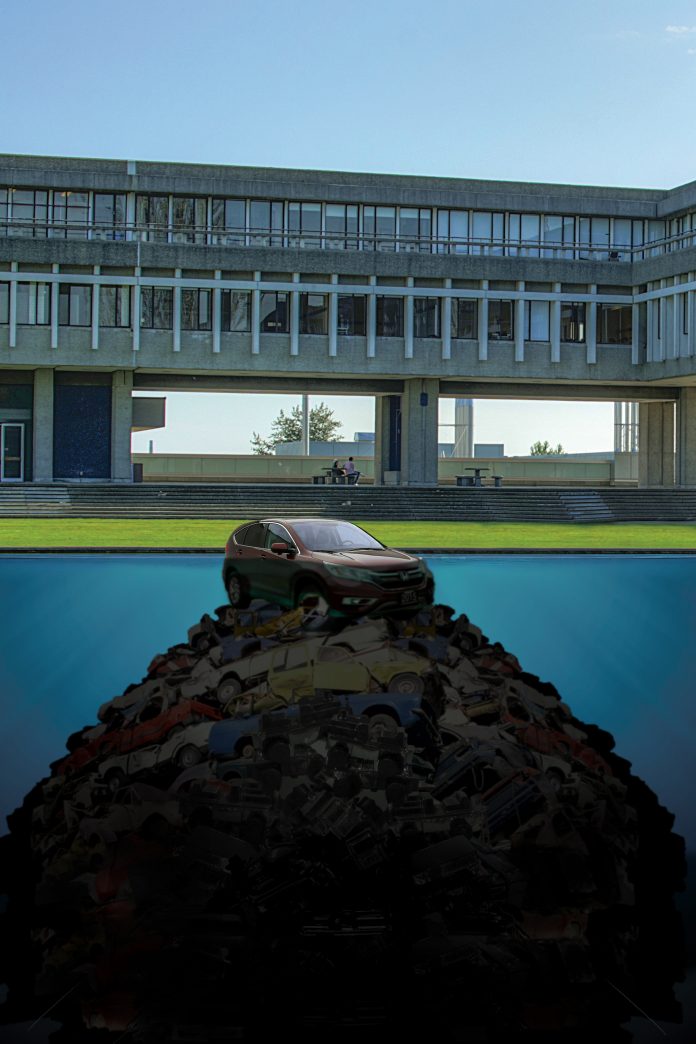
In the moonlight, I could make out bubbles rising in the middle of the pool. I moved across the walkway for a better look before a foreboding shape rose out of the water. It grew until it surpassed my height and eclipsed the moon. From its pale silhouette, I could make out the shapes of wheels, rearview mirrors, and limp hands. What floated before me was a small mountain of cars. No, not a mountain, I thought, casting my eyes to the water once more.

I pulled out my phone and turned on the flashlight. Below the surface, hundreds of vehicles descended into the deep. The light illuminated rotten human heads, some serene and others with looks of terror slashed across their faces. I turned off the flashlight. It was an iceberg. A gruesome iceberg made of frozen cars and people. That was all I remembered before blacking out.

***

In October 2017, a car drove into the AQ reflecting pond. The older man behind the wheel, who asked not to be named, cited unfamiliarity with the area as the cause of his blunder, but later admitted he knew exactly where he was going.

“When I was a student here in ‘67, my brother and I found three Volkswagen Bugs in the surrounding forests of SFU,” he explained. “There were symbols carved all along the insides of the cars. My brother became obsessed with them and spent every moment trying to interpret them. One day, I went into the forest to check on him, but he and one of the cars were gone.”

The man noticed tire tracks near the forest. He followed them until they tapered off right at the edge of the reflecting pond. His brother was never heard from again.

“After that, I became a bit like my brother,” he admitted. “I studied the symbols within the remaining cars for hours, but knew that the key to it all must have been in the third car. I gave up on my brother and the symbols when I graduated.”

Driving his car into the AQ pond was a last-ditch effort at retrieving his brother. “I’m lucky to be alive,” the man commented. “It was a foolish endeavour in a moment of weakness. I can’t even tell this to the police; they’d think I’m a looney.”

Soon after the incident, a local publication picked up the story and made it into a joke about parking availability on campus. The article advertised the reflecting pond as a new parking lot for SFU students who could not get parking anywhere else on Burnaby Mountain. Unfortunately, it became a popular story that attracted the very real, post-ironic attention of desperate students.

Later in the semester, professors began to note an unexplainable decline in turnout for lectures and tutorials. Some students approached campus security about friends who hadn’t turned up for class in weeks, but they were laughed away.

“There was this girl in my humanities tutorial, Samantha or Stefanija or something,” said second-year Shay Ogilvie. “I never got her phone number or anything, but I noticed she hadn’t shown up in a while, which was weird because she’s really smart and usually smart people don’t skip class? I don’t know. Maybe I’m just being paranoid.”

When asked about the article on parking spaces in the AQ pond, Ogilvie replied, “Article? Oh yeah, the girl in my tutorial definitely said she was going to look into that actually. I told her not to listen to anything the paper said, though. It’s all fake news. They have tits on their cover every other week.”

Recently, Burnaby Mountain received below-zero temperatures and heavy snowfall which completely encased the reflecting pond in ice. Some students vowed to send an exploration team into the pond once it has thawed, but weather reports look grim; The Weather Network predicts that the next warm day will be in late March.

Game Night softens the blow of unexpected twists with good comedy

0
(Image courtesy of Warner Bros. Pictures)

By: Yelin Gemma Lee

Calling all murder mystery fanatics and Clue players! Buckle the fuck up for a riot of a movie — everything you didn’t know you wanted, rolled up into one beautiful hour-and-40-minute film reel called Game Night. I didn’t even notice any promotions for this film, but wow am I glad I went to see it.

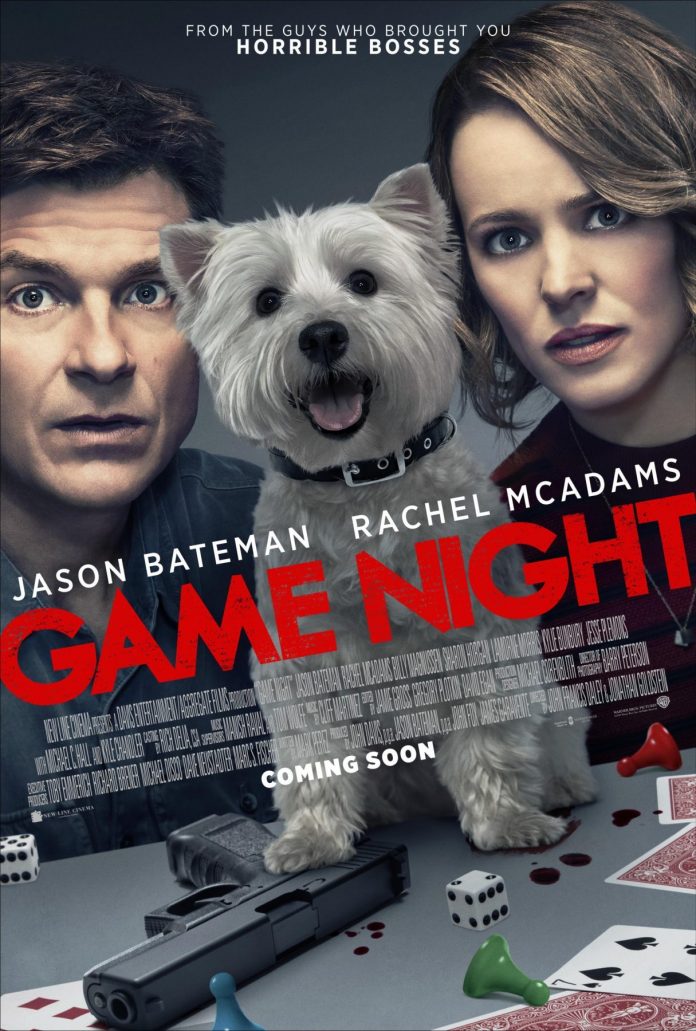
     Jason Bateman and Rachel McAdams play Max and Annie: a charming couple with a competitive obsession for games. Their married life consists of hosting weekly game nights with their friends, but things take a turn when Max’s assbag of a brother, Brooks, comes into town, and hosts a murder mystery party. Quite similar to the game Clue except . . . well . . . paired with actors playing thugs and federal agents. When Brooks legitimately gets kidnapped, the game night crew is put to the test of how they can apply their teamwork skills to find Brooks and not get murdered.

     Max and Annie were couple goals. I loved that throughout all this chaos, their relationship developed and went through all sorts of shit while they were narrowly avoiding death. It was such a tense and awkward contrast, but I loved it because they didn’t let the fast-paced drive of the plot detract from character development.

     The script is incredibly sharp, with a lovable, dynamic group of characters, and truly gasp-for-air laughing humour. John Francis Daley and Jonathan Goldstein did an excellent job of directing, and the end result is a not seamless but cohesive project. The cuts and cinematography are much more innovative than what you would expect from a comedic film.

     As funny as this movie was, it is categorized as a mystery/crime film, which I’m not sure I completely agree with. I would say the film is more of a satire or a parody of your typical mystery/crime film. The movie impressed me, however, with the twists and turns. Just when you think you’ve figured out the plot, they throw another plot twist at you that you didn’t even have time to mentally prepare for. Multiple times my friend Dave and I audibly gasped or looked at each other with gaping fish-out-of-water mouths, or seal-slapped each other on the knee in hysterics.

     I highly recommend this movie because trust me — you don’t know what you’re walking into. This was charisma made into a movie, and so refreshing compared to the awful comedy being released recently. It had me laughing until the credits, and as I walked out of the theatre.