Home Blog Page 635

SFU student examines the murky waters of salmon farming in B.C.

0
(Photo courtesy of Mountain Life Media)

By: Srijani Datta, Assistant News Editor


If you have ever been to a supermarket, chances are you have come across packaged salmon with the words “Farmed Atlantic Salmon” on it. Salmon farming, while quite common on the BC coast, has been at the centre of intense debate due to its ecological impact. Third-year SFU biological sciences student and sustainability peer educator Kris Cu is putting together an audio documentary on the issue to help locales get a sense of the problem.

     The audio documentary is being produced by Cu in partnership with Embark Sustainability and CJSF. The estimated completion date for the project will be mid-May, and it will be featured on the website for the project, Plight of the Coast.

     Cu was inspired to raise awareness about the issue because BC will be deciding in mid-June whether or not the government will renew the tenure for 22 fish farms. He hopes to spread awareness and mobilize public support against open-net cages before the decision is made.

     “The wild salmon are integral to this coast in so many ways and their disappearance will have profound impacts to this province. Given the opportunity to make a difference with Embark and knowing what it’s like to grow up without nature, I knew I had to contribute to the cause,” said Cu.

      Cu explained that while the ill effects of salmon farming are clear and present in BC, there is a lack of popular awareness about it.


What is salmon farming?

Salmon farming is a type of aquaculture where salmons are grown in open-net cages along the coast with no barrier between the farm and its natural surroundings. There are around 137 salmon farm tenures in BC. with roughly 85 farms are active at once. Each farm can house up to 750,000 fish on an area equivalent to four football fields.

    Despite their fairly innocuous appearance, these farms have adversely affected the health of wild salmon, as well as the surrounding environments. “Due to the high density of fish packed in together, the cages become hotspots for diseases,” explained Cu.


Why is it harmful?

The debate surrounding salmon farming is chiefly between the farming industry and environmental conservationists. Science-based charity Watershed Watch, which advocates for the conservation of BC’s wild salmon, relies on peer-reviewed and published scientific work to critique open-net farming. They mention disease transfer between farmed and wild salmon due to the lack of any barrier between the open-net cage and natural surroundings as a major threat.

     Research has indicated that wild salmon have a higher chance of being infected with piscine reovirus (PRV) when exposed to open-net salmon farms.  Other negative impacts of salmon farms come from the increased spread of sea lice to surrounding waters, competition with wild fish from escaped farmed fish, and water pollution from the farms.


What is the way out?

Watershed Watch advocates transitioning from open-net cages to closed containment systems. These systems would address the problems of boundary-free interaction between the farm and its natural surroundings, thus providing a straightforward solution to many of the current problems of salmon farming. Closed containment systems are sustainable and can be land-based.

     According to Cu, “one of the main reasons that the industry does not want to make the transition is because of the high cost. It is not like they did not know about its ill-effects.

     “The Namgis people have shown the industry that land-based salmon farming can be done sustainably if you have the initiative to do it,” he said, referencing the Namgis First Nations who have already successfully implemented this process.

     For individual consumers who want to help address the issue, Cu recommended conscientiously buying wild salmon or sustainably grown salmon. Conservationist efforts, such as one led by First Nations band government Musgamagw Dzawada’enuxw, seek to mobilize locals and, in turn, local governments to push the federal government towards making environmentally sound choices. Individuals can provide support by working with and supporting these groups to bring about change.

     “This story is very similar to that of Kinder Morgan pipeline [sic], where a foreign industry is trying to violate indigenous and environmental rights for their own profit, except it isn’t that evident,” said Cu.


With files from CBC News.

The Symptoms of Senioritis

0

By: Jessica Parsons

Have you been caught staring at a wall for hours, sensing a creeping existential crisis? How about looking at first-years and wondering where those tiny babies’ guardians are? These, among many others, could be symptoms of senioritis.

Senioritis is a serious condition that affects over 86.7% of undergraduate students. In mild cases, symptoms may include, but are not limited to: refusing to go to any class that starts before noon or that posts the lecture slides online, looking at job boards and sobbing, and binging Netflix shows on Friday nights. There have been stronger cases reported where symptoms can get as serious as booking a flight to Europe using student loan money, or repeating the phrase, “Ds get degrees,” over and over.

If any of these persist, you should seek immediate treatment. Unfortunately, doctors have not yet found an immediate cure for senioritis — however, they have found that symptoms usually stop after the phenomenon known as “graduation,” (also known as freedom).

Early detection is very important in curbing the symptoms of senioritis. Therefore, I have listed below the symptoms that those with a higher risk, namely those in their last year of their degree, should look out for:

  • Forgetting things: This may include your passwords, your deadlines, your classroom numbers, or even your will to get out of bed in the morning.
  • Nausea: Often provoked by the thought of finding a full-time job, or having to move back in with your parents.
  • Dizziness: Did you forget to eat today? (See: forgetting things.)
  • Emotional fluctuations: This can manifest as either caring too much, or forgetting what caring even feels like (once again, see: forgetting things).
  • Sudden verbal outbursts: Examples of these may include “I’ll do that LATER,” “Yes, I wore this shirt yesterday, so?” or “No one cares about your A+ research paper, Bethany!”

Senioritis is a serious problem among undergraduate students. While the only foolproof cure is graduation, there have been improvements made to cases through a variety of treatments:

  • A healthy dose of reality – also known as the blinding fear of the PGJH (Post-Grad Job Hunt) disease.
  • Caffeine (coffee, tea, chocolate, energy drinks). Anything to boost your ability to do the single crunch that is getting out of bed in the morning.
  • Zero cares. Giving into the disease may be the best option for treatment. Grab your freezer bags of pizza pops and settle in for the wait until graduation.

Though senioritis can be a serious condition, just know that you are not in it alone. There are no support groups, because most senioritis sufferers don’t give a flip about anyone or anything. So hang on tight and ride the wave until graduation. I, for one, am going back to bed.

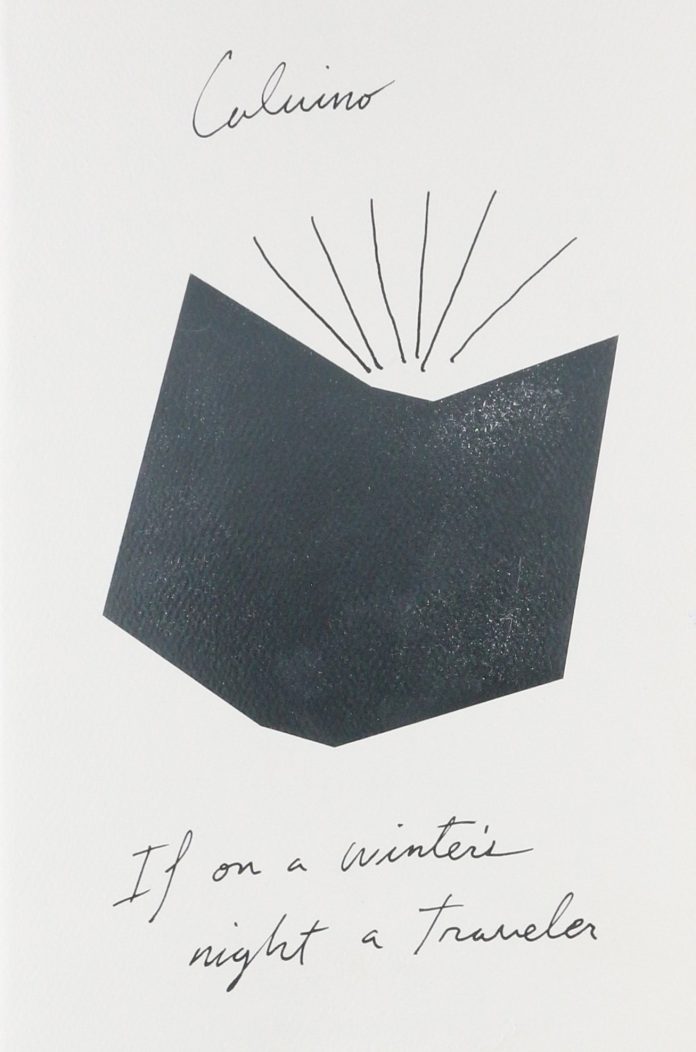
If on a Winter’s Night a Traveler: a book to experience

0
(Image courtesy of Mariner Books.)

By: Maxwell Gawlick

You pick up a new novel, but the pages are out of order. You pick up a new copy, containing only the first chapter, but that chapter makes you desperate for the next. You search for the next chapter and wind up on an adventure to uncover the scattered tale. This is the idea behind Italo Calvino’s If on a Winter’s Night a Traveler.

     Set in the fictional country of Cimmeria between World War I and II, Calvino’s novel is a surreal adventure with a frame-story style that always keeps the story fresh. It’s split into two alternating perspectives. The first follows “you,” the reader, and your search to find the next chapters of the mysterious book If on a Winter’s Night a Traveler. You soon meet the source of the second perspective: another “you,” a woman, who is another reader with the same goal as you. Together you pursue the inescapable story. The other sections explore these chapters themselves, but each chapter is the beginning of a new tale, unrelated to the last. Each chapter ends unresolved, and you constantly yearn for answers.

     Calvino’s writing is descriptive and detailed, but its fluidity prevents it from becoming flowery. The characters feel real, and it’s all too easy to get lost in them and feel like you’re experiencing the adventure yourself. The writing is easy to get into, but it becomes increasingly complex as you read between the lines. It’s the sort of book you lie awake at night considering. It’s impossible to forget, and less a book to read than to experience. Experience it.

Mental health advocacy group experiences diminishing funding for initiatives

0
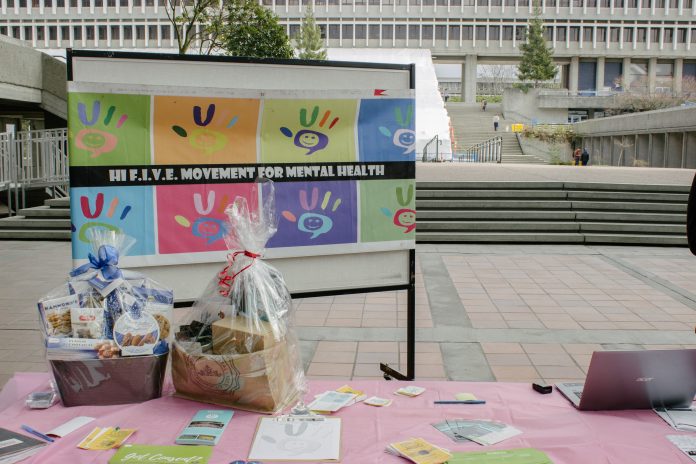
Hi F.I.V.E. has been advocating for mental health on SFU Burnaby campus since 2013. (Amneet Mann / The Peak)

In the 2017-8 academic year, the student-led mental health advocacy group Hi F.I.V.E. experienced a severe lack of funding, hindering their initiatives and presence on Burnaby campus through the year.

     Students involved in Hi F.I.V.E. have been working to eliminate mental health stigma at SFU since 2013. “Basically our mandate is, just try to eliminate stigma and create awareness [around mental health],” summarized Hi F.I.V.E. coordinator Natalie Morin in an interview with The Peak.

     “But recently we’ve kind of changed that a little bit, to something a little bit more revolutionary where we actually want to bring change on campus. Because we believe that students know that mental health is not great here on campus, now we want to create the change.”


A suddenly tighter budget

However, for the past year the group’s numerous requests for funding — specifically those submitted to the Simon Fraser Student Society (SFSS) — have been turned down.

     According to Morin, the decreased funding for the group was first noticed in spring 2017 when the group submitted a proposal for increased funds for ME Week, an annual week-long event held by Hi F.I.V.E. which promotes mental health through activities meant to help students destress.

     “Usually [ME Week is] a week long, but because of funding issues we had to cut it quite a bit,” recalled Morin. She elaborated that shortly before the spring 2017 event, the group’s request for funding was declined by the SFSS, because they were now considered an external group.

     Prior to this refusal, the group had received funding from SFU’s Health and Counselling Services (HCS) as well as the SFSS. “At the beginning of the year, fall 2016, [the SFSS] said yes to the proposal, yes to fund Hi-Five for its organizational costs to split with Health and Counselling Services. So at that point in time we weren’t considered external. But as soon as we put in the proposal for ME Week spring 2017, it was declined and we were called an external group,” said Morin.

     “[Hi F.I.V.E.’s] status has always been unclear,” commented SFSS President Jas Randhawa, in an email interview with The Peak. “Initially the work began as an initiative of SFU’s Health and Counselling department, as a result of the interest and vision of one of the members of the HCS team.

      “Traditionally, students involved with Hi F.I.V.E. have been directly supported by members of HCS staged by the groups, while the SFSS has been asked to provide ongoing financial contributions to pay stipends for students who have been involved with the Hi F.I.V.E. group, in addition to the costs associated with the events that are developed and delivered by the group.”

      According to Morin, when the group followed up on the rejection for funding and asked if there was a funding process for external groups, they were told one did not exist. She stated that in August 2017, she was told that the SFSS was in the process of drafting a process for external groups, but as of this article’s publication date, one has not been formulated.

     The SFSS did not respond to queries about an external grant process.

     “We don’t consider ourselves an external group at all,” said Morin. “We work internally with Health and Counselling Services.” The Hi F.I.V.E coordinator took it upon herself at the beginning of the 2017-8 academic year to find a spot for Hi F.I.V.E. within the SFU community that would allow them to continue working for students. After an initial meeting with previous SFSS president Hangue Kim and SFSS CEO Martin Wyant, the group had expressed that they did not feel Hi F.I.V.E. should be officially assigned a club status. As a club, “we would lose our relationship with Health and Counselling Services, where we actually originated from,” said Morin.  

     According to Morin, the group then spent the next few months discussing the possibility of Hi F.I.V.E. obtaining department status similar to Out on Campus or Women’s Centre. However, on the first day of reading week in 2018, the group was officially offered a club status — should they not accept, the spring 2018 proposals prepared by Morin would be declined. Hi F.I.V.E. declined the offer.

     Concerning the offer made by the SFSS towards Hi F.I.V.E., Randhawa commented, “we value the work that has been done by Hi F.I.V.E., and we believe that it makes more sense for them to be seen as a club, rather than a department of the SFSS.

     “There are a number of clubs that do very good work in many areas, including mental health, for our student body. Being a club provides Hi F.I.V.E. with the opportunity to access room booking, SFSS grants, and other services that are intended to help student groups succeed.

     “If Hi F.I.V.E. is interested in being a department, we don’t think it makes sense to be a department of the SFSS, as we would be duplicating the oversight, expertise, and resources that are already available through SFU’s Health and Counselling,” he wrote.

      ME Week 2018 was funded via the Student Engagement Fund, which provided $1,500 for the group to put on the event, as well as donations from friends and families. To put on a ME Week that would reach enough students, Morin estimated the group would have required approximately $5,000.


Bringing forward the student voice

On the heels of refusals for funding requests and with the risk of Hi F.I.V.E. losing its advocacy ability on campus, the group had one of the strongest showings at the debate held on Burnaby campus for the candidates of the SFSS 2018 election. Several members directed questions at the candidates regarding their promises for mental health reform.

     “We made sure that anyone that included mental health advocacy in their platforms was accountable and not just using it as an electoral buzzword,” Morin said. She recalled that her strategy for voting in the 2017 SFSS Election was supporting candidates who had written mental health advocacy as a priority in their platforms, and then being disappointed with the lack of work done to promote the cause on campus.

     Among other platform promises Hi F.I.V.E. asked about during the debates, the efficiency of online counselling was questioned by the group. “Online therapy has been proven to be [. . .] often not enough for mental health issues and meeting face-to-face is still better when treating people in mental distress,” spoke Tyne Dhillon, member of Hi F.I.V.E.. “In fact, a survey we recently conducted shows that SFU students seek peer counselling over online counselling.”

      Morin cited the debate over online counselling to The Peak as an example of the SFSS allocating funds for projects that may not be the most beneficial for SFU students, doing so without consulting students for their opinion.

     The SFSS recently announced keepme.SAFE, a multi-platform mental health service for SFU students that received a $75,000 contribution from the SFSS. Hi F.I.V.E., as a student group, believes this money would have been spent better if student input had been solicited: “We’ve done actually our own survey and everything and asked whether or not the service would be beneficial to students, and it was actually voted the least helpful,” Morin said.

     For the SFSS, Morin believes it would be beneficial to “include the students in the conversation.

“If you want a larger showing, if you want a better community, an engaged community, on campus, then you need to give the clubs money. You need to ensure that they can do their events and do them successfully and not have to worry about funding.” – Natalie Morin, Hi F.I.V.E. coordinator


     “We want to be a part of the conversation because we have been ripped out of our spot. We basically want to make sure that they know that they shouldn’t be making decisions without the voice of students, and especially those who advocate for mental health and who have been in the mental area for quite some time and have the research to back it up,” she said.


For the unforeseeable future

As for Hi F.I.V.E.’s future, Morin is currently unsure how the group will move forward. “I hate that it comes down to money, but we can’t do anything without money, so we don’t know,” she commented. She hopes that the group can continue negotiating with the SFSS regarding Hi F.I.V.E.’s role in the SFU community, and help the Society serve SFU students.

     Regardless of Hi F.I.V.E.’s fate, however, Morin is committed to continuing to advocate for mental health in the community: “We won’t fade into the back, for sure. We will definitely be present on campus next year, whether it’s under Hi F.I.V.E. or our own thing.”


Best places on campus to openly weep

0

By: Amal Javed Abdullah

The semester might have just started, but it’s never too early to begin crying at the sorry state you will be in sooner rather than later. Here are the four best places to cry on campus.

  1. The quiet section of the library

What better place to cry than the library? Go up to the fourth or fifth floor of Bennett and unleash a high-pitched howl like a werewolf during a full moon. The louder you cry, the louder the echo, and the greater the chances of your plight reaching the SFU heavens.

Ignore any glares you might get from nearby students — they were most likely procrastinating anyway, and you just gave them another excuse to be distracted from their work. Really, they should be thanking you.

  1. By the pond

The idea here is to be as melodramatic as possible. You buried your dreams for theatre to get a crappy degree that won’t get you a good job anyway, so you might as well milk every opportunity to let your dramaturgy shine.

Sit at the edge of the pond at sunset, and weep sorrowfully into your hands, occasionally blowing your nose noisily in an embroidered handkerchief. Stare into the water at your reflection and let a sad teardrop fall on your watery visage, breaking the image and making ripples in the pond — metaphorically, these ripples are the disruption of the waters of your life.

  1. In the middle of a bus

Pretend you’re a super popular singer and the bus is your stage at your own personal concert. At some point, go into your audience of hangry commuters and pull out a pissed-off passenger to cry with you.*

  1. In the middle of a lecture

For this one, you will need to do some prep work. Sneak into the lecture hall before class starts. Hack into the sound system, and hook up your phone as a mic to the speakers, which you will turn on right when you begin to cry. Now, find a seat smack-dab in the middle of the lecture hall, and try to look innocuous, whatever that means. You want to start at the right moment, exactly when your prof is discussing the most boring part of lesson — though it may be debatable which part is the most boring.

Begin softly at a low decibel, and slowly build up like a symphonic one-person orchestra. Develop your pitch and melody with care, and weep from the heart with passion, as if you are front stage at Carnegie Hall. Revel in the sonorous echo of your sorrow as it emanates from the crappy speakers. Bonus points if you can start a flash-mob and get other students to cry with you. Your prof will get enough of an evil laugh out of your afflicted state that they will at least try to mark slightly easier on your midterm… probably. **

*We are not responsible for revoked transit privileges, or any bodily injury that may result from this experiment.

**I’m lying. You’re failing, Bob. Cry harder.

Album Reviews

0

By: Youeal Abera and Natasha Tar

Dirty Computer by Janelle Monáe

Dirty Computer is Janelle Monáe’s third album, and with it, she reveals herself so vulnerably that she has manifested her most bold, beautiful work.
     Songs such as “Take A Byte” and “Pynk” find Monáe freely celebrating her pansexuality, expressing love and liberation for all members of the LGBTQ+ community. On the tracks “Crazy, Classic, Life” and “Americans,” Monáe includes notions of Black empowerment. In “Django Jane,” Monáe proclaims the power that women, particularly women of colour, truly possess.
     Monáe, with the manufacturing of such a bold and refreshing album, has been able to successfully administer a body of work comparable to the legendary albums of our parents’ time. Like Janet Jackson’s Rhythm Nation and Alanis Morissette’s Jagged Little Pill, Monáe’s Dirty Computer is an album that provides both catchy, infectious tunes and empowering records for women.
     Last time I checked, Monáe is Wonder Woman. It’s true. The proof is right in her music. – YA

Vide Noir by Lord Huron

It’s hard to avoid Lord Huron. Their music appears in a variety of TV shows and movies, from 13 Reasons Why to A Walk in the Woods, and are used to elevate nature scenes and back school dances. Vide Noir is definitely a step away from Lord Huron’s regular sound.

     Sure, “Wait By the River” and “When the Night is Over” definitely feel like songs you’d slow dance to, but other than that, Lord Huron gets pretty experimental. A few of their tracks are more rough than I’ve heard them before, and their rock songs are fast and surprising. Some of them work, like “Never Ever” and “Secret of Life.” Unfortunately, other experiments like “Ancient Names (Part I)” and “Ancient Names (Part II)” fall flat for me.

     Altogether, the album is refreshing, but not one that I’d listen to without skipping a few songs. – NT

KOD by J. Cole

Cole dropped his latest album, KOD, on April 20. It’s no coincidence that he released his album on ‘420,’ as his album’s title is an acronym that stands for ‘Kill Our Demons.’ What is one of the demons he discusses? You guessed it: drugs.

The song “Once an Addict” vividly paints a picture of a boy dealing with the detrimental experience of having an alcoholic mother. An excellent attribute of this record is that J. Cole depicts the complex and intricate intersectionality of many Black boys, specifically their pain, anger, and deep despair.
     Through the songs titled “ATM,” “Kevin’s Heart,” and “1985,” Cole discusses the dangers and false power of money, the crippling plight of lust and infidelity, as well as the intoxicating elixir of fame. Cole uses this album to perspicuously inform his listeners that we all eventually experience great pain, and that there are many methods to alleviate it. He explicitly warns us to choose wisely.
     Although KOD is an album that kills sonically, Cole has sincerely concocted one of the most socially aware and conscious rap albums in recent history. – YA

Coachella is a place for LGBTQ+ artists to be loud and proud

0
Courtesy of Getty

Written by Winona Young

Earlier this year, Pitchfork released an article investigating the co-founder of Coachella, Philip Anschutz, and learned that he has donated thousands of dollars to anti-LGBTQ+ organizations. Such accusations sparked protest hashtags such as #BoycottCoachella and #NoChella. Anschutz and Anschutz Entertainment Group (AEG) have released statements proclaiming their innocence and their support for the LGBTQ+ community.

Upon reviewing Coachella’s past lineups, the festival has certainly been no stranger to LGBTQ+ artists. This year’s lineup featured artists like Hayley Kiyoko, Perfume Genius, and St. Vincent. What comes to mind now is whether fans ought to be enraged by Coachella’s problematic ties or continue to go the festival purely for the music. Furthermore, this situation begs the question: is it appropriate for LGBTQ+ artists to perform at Coachella? I would argue that more than ever, LGBTQ+ artists deserve to have a large platform to share their music, and to perform despite Coachella’s co-founder.

Insidious beliefs of homophobes should not be tolerated. As media and art consumers, we need to set higher standards for companies and their employees, especially powerful ones, and assert that bigotry is unacceptable. With that said, until less bigoted companies are brought to the forefront by the media, “the garbage will do,” to quote Rey from Star Wars.

Whatever faults and shortcomings Coachella’s co-founder may have should not be on the conscience of the artists themselves, since they have no part in whatever prejudices he may have. The LGBTQ+ artists who perform at Coachella wield no power in determining where the profits go, and should not feel guilty for contributing to their careers.

While artists face a slight ethical dilemma by walking out onto that stage, at the end of the day, the owners are still handing out microphones and money. By being introduced to an expansive audience, LGBTQ+ artists gain the opportunity to earn even more acclaim and reach an audience starved for LGBTQ+ representation. These artists are able to give that gift of representation, so who are we to judge them for taking a golden opportunity and sharing their art with the world?

With that said, I would like to make an honourable mention of a particular surprisingly relevant and radical performance at Coachella by none other than America’s favourite boy band: Brockhampton. For the uncool and uninformed, Brockhampton is a hip-hop collective of roughly 17 members, that range from producing, to artwork, to rapping, to writing, etc.

What made Brockhampton’s performance at Coachella particularly resonant was their wardrobe choice. In typical boy band fashion, the performers of the group wore matching outfits: white kicks, blue jeans, and black bulletproof vests. Each vest had its own unique label (for example, Joba’s “FIEND” and Merlyn’s “WAKANDA”).

Frontman Kevin Abstract’s vest in particular was emblazoned with the slur “FAGGOT.” Kevin Abstract has unapologetically rapped about his sexuality in verses, so him wearing this slur on his sleeve is nothing new for longtime fans. However, what Abstract accomplished by doing so, on a Coachella main stage, no less, was an act of sheer defiance. Abstract reclaimed a slur that was often thrown at him, and did so proudly.  

While it is unlikely that Abstract did this in response to the allegations against Anschutz, Abstract’s costume choice still stands as a significant artistic choice in owning his sexuality, free of shame. This is not to say that all LGBTQ+ artists need to be as unabashed as Brockhampton, nor that expressing one’s sexuality through performance and song is necessary for an LGBTQ+ artist.

The fact that such costumes and performances appear proudly on a stage as large and loud as Coachella means that such acts deserve attention and applause. For LGBTQ+ artists to perform at Coachella, and to use such an opportunity to be as loud about their sexuality as they want to be, is by all means appropriate and should be encouraged. Besides, what better way to stick it to an alleged homophobe than by singing about your same-sex lover and not letting yourself be censored?

Jas Randhawa looks forward to his term as SFSS President

0
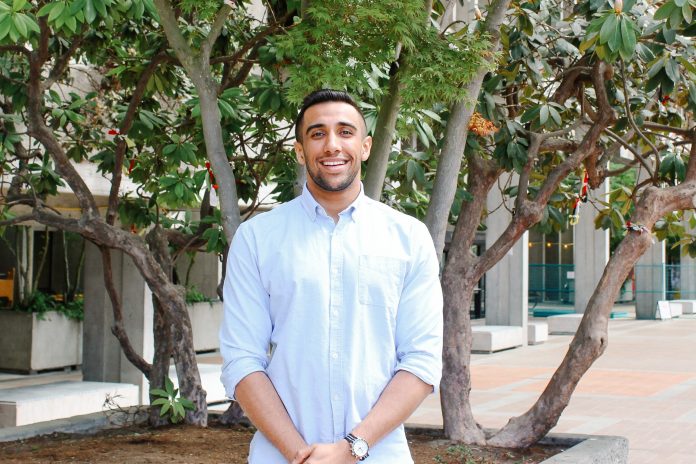
Jas Randhawa, SFSS President 2018-9. (Photo courtesy of Jas Randhawa)

Jas Randhawa is heading into his fourth year as a business major. He prefers Cardi B to Offset, Jay-Z to Beyoncé, Starbucks’ Vanilla Bean Frappuccinos above every other drink, and he will be leading the Simon Fraser Student Society (SFSS) Board of Directors as President for the next year.

     In an interview with The Peak, Randhawa explained how his time at SFU as a student can be split into two different experiences. “When I came to SFU I had a different experience and now I have a different experience,” he said. “When I first came, I felt like I was just here for school and there was not much I could accomplish outside of academics.”

     It was when he joined the Surrey Campus Committee (admittedly only for the volunteer experience at first) that Randhawa began getting involved in the campus community and making connections. The Surrey Campus Committee was where he first met previous SFSS president Hangue Kim and learned about the SFSS Board of Directors.

     As SFSS President, Randhawa hopes to create an SFU community that will allow other students to be able to engage on campus as he did. “I really want to ensure that this campus continues becoming more engaged. That students are provided more opportunities to be involved,” he said.

     Projects he’s looking forward to in the coming year involve the Surrey Space expansion project, transitioning into the Student Union Building, and the new keepme.SAFE mental health program being launched in August.

     This previous year, Randhawa sat on the Board as at-large representative. Within the role, he participated in the Events Committee, the Build SFU Committee, and the Finance and Audit Committee. It was his participation on Board, being able to see and take part in the initiatives carried out during Hangue’s term, that inspired Randhawa to run for the leadership position this year. “I wanted to ensure this continuity continued and that the entire SFSS organization was not restructured in a way that there would be no time left to execute initiatives throughout the year,“ said Randhawa.

     Thus far, he is finding that his experience is already proving valuable as, according to Randhawa, “the transition into the new Board has been much smoother than years in the past.”

     “We have already booked orientation dates early on and we’ve kept communications strong between outgoing and incoming Board members so everyone has a strong grasp on knowledge early on,” he said.

     One of Randhawa’s goals for this upcoming year is to continue setting his fellow Board members up for success throughout the term. “My biggest priority this year is to inspire my team members and make sure that they are actually out there accomplishing some of the goals and initiatives they put forward,” he said.

“I believe as president your job is to be a leader and inspire your team above also setting your own priorities. Those 15 members are going to be the ones out there engaging with students and clubs.” – Jas Randhawa, SFSS President

     For Randhawa, who has run in a total of four student elections at SFU, this year’s election was “the most intense and competitive.” Another one of the projects he is looking to tackle moving forward involves possible electoral reform. “I believe one thing that was really different about this election was the increased use of social media as a campaign tool,” said Randhawa. “And that has rendered the [infractions] policy somewhat out of date and, as a result, I feel like we need to look into updating these policies.”

     However, regardless of the “alleged misconduct,” as Randhawa put it, during the elections regarding individuals and slates, Randhawa is looking forward to the elected team working together to fulfill their initiatives.

     The legacy that Randhawa hopes to leave behind is a better experience for students on campus. “[I want to create] a better, stronger culture for students to come here and want to get involved,” he said. “I want to have more opportunities outside of academics.”


What’s in your bag, SFU?

0

Written and photographed by: Jennifer Low, Peak Associate 

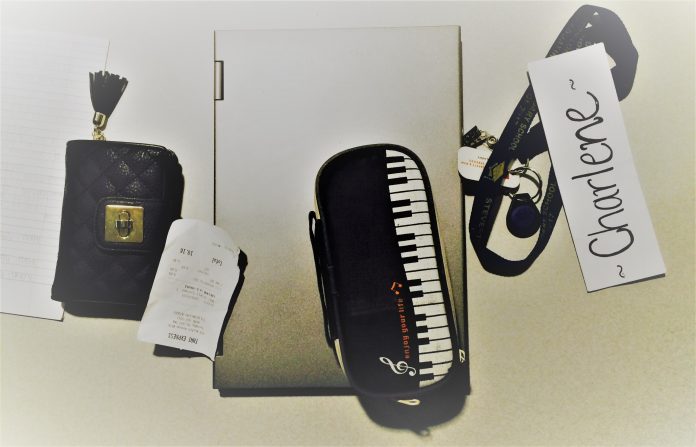
It’s pretty simple. We took a walk around SFU and asked people to tell us about the most interesting thing in their bags. The following piece is adapted from interviews with Charlene Shue, Katie Low, Erica Steward, Alicia Lim, Brandon De Souza, and Christina Lim.

CHARLENE SHUE

“Student life: More receipts than cash”

I don’t think that I have anything that interesting in my bag.

Wallet

This is my wallet. It’s [holding] my fortune and [here’s] a receipt, because I got to eat to survive, you know. It’s a Thai food receipt because dining hall’s rice is really salty, so sometimes I go out and buy Asian food, so I can have, like, a taste of home.

Notebook

This is my blood, sweat and tears. This is my philosophy and accounting [notes]. My two hardest courses are within this notebook. This is my go-to, [required-to-survive] notebook.

Name tag

[This is] my financial accounting name tag. [It is in my bag] because my TA wanted to know our names. [It is fancy and detailed because] I was bored.

Laptop

My laptop is the most important thing because this thing is expensive and, like, all my notes and social media stuff is here. . . My life is on here. If I don’t have this, I’m doomed for university.

Keys

These are my house keys; I live in Richmond, so during rush hour, it can take up to two hours to get [up to SFU].


KATIE LOW

“My backpack is basically a trash can”

You chose the wrong person to ask. There’s actually nothing interesting, but I never realized how much junk I had in my bag until now. You know what? If you caught me in, like, grade seven, I would have given you really interesting stuff. I had everything in my bag. We could probably go camping for, like, a week, and we would survive with that bag.


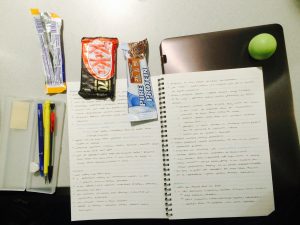
Food

Everything is just food, actually food. Do I have garbage in this thing, or did I clear it out? It’s all crushed at the bottom [of my bag]. [I’ve got] chocolate, dark chocolate — dark like my soul. It’s really old and I always planned on eating it, but I just never did, so that probably proves that I am a pretty big procrastinator. I procrastinate eating food. It’s great.

I ate [this protein bar] on the bus [today], and it’s nutritious because BPK is teaching me I have to eat healthy, because if I don’t, I’m going to get cancer or heart disease or something. This is because I cannot eat in the morning. If I eat in the morning, I get sick, so I keep food with me throughout the day so I don’t starve later. I probably have some kind of digestive issues.

Eraser

This eraser — you know how everyone loses their eraser? This has been with me [since grade 12] and I have written all of my critical exams with this eraser. I have gone through my provincial, my worst nightmare, with this eraser. It’s a high quality eraser we got going on here. [It’s so small that] only my tiny-ass hands can use it.

Laptop

I had a netbook in grade six and I thought it was the cutest thing ever, but it was slow as hell. It was actually the slowest thing in the world, and then I didn’t have a computer after that. So this is, technically, my first laptop that is my own first computer.

I only bought this specifically for university, and I said I wouldn’t game on it, but I do game on it and that’s really bad. It’s probably the most expensive thing I have. I was only able to afford it because of my scholarship. Otherwise, the laptop I would have gotten would have been much cheaper. I saved $20,000 on tuition, so [I thought], “might as well treat yourself to a nice laptop.” All of my studying is on this laptop so I probably spend, like, eight hours a day on it.

*Note: After the interview, Katie finally ate the year-old expired Kit Kat. “I finally achieved my goal!” she laughed, “This is why people shouldn’t procrastinate!”


ERICA STEWARD

“It’s always nice to know the patron saint of travel is in your wallet”

Wallet and Keychain

So this is a little charm I have on my wallet. The charm is of, I believe, Saint Christopher. I think he’s the patron saint of travel. My mom got it for me because, I think, she was going through a rough time, and [she] was like, “everybody needs a saint now,” and I was like “oh, okay.” So she gave me this, and I keep it on my wallet just because whenever I go somewhere, I have my wallet on me. So that way, there’s someone watching over me, or someone making sure I don’t run into trouble or anything. It’s always on my wallet because if I go anywhere, I have everything in my wallet, like my driver’s license, so if I’m driving or busing with my Compass Card or anything, my wallet comes with me.

People don’t usually notice [the charm], but I always notice it, and that way, I can’t lose it, too. [As for] the wallet, I just got [it] for myself for Christmas, because I deserve a Christmas present from me, because I’m amazing LOL.

ALICIA LIM

“When your girlfriend comes to school early just to do your eyebrows #Relationshipgoals”

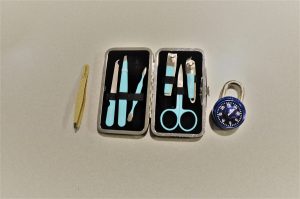
Eyebrow Kit

This is my eyebrow kit. I had it in my backpack because on Saturday, I had training for Friends of Simon, and that’s at 9 a.m. [. . .] so my boyfriend and I always get here early at around 8 a.m. I was planning to do his eyebrows until our training because his eyebrows are… actually really good and super filled and stuff, but I just clean up the middle part and the underneath part. He really likes the way they look [when I do them for him] and he can’t do them himself, so that is why I need to bring my eyebrow kit to do it for him. We never ended up doing them [this time] because his transit was really bad and I had to wait a long time for him.

It’s blue because that’s my favorite colour, and I got these gold tweezers from Target, when Target used to be here. They had a huge sale so I just bought it, even though I already had tweezers. This [pair is] sharper and it gets the more precise hairs.

I actually don’t use [most of the kit] that my mom got for me. The only thing I really use is the scissors in here. Even though I only use two of the tools, the gold tweezers and the scissors, it’s a nice container to hold it all. It looks really pretty and professional too. I don’t even know what half of these tools are for; it looks like a dissection kit!

BRANDON DE SOUZA

“I stole this lock from my brother so others won’t steal from me”

Combination Lock

The object that I pulled out of my bag is a lock, and I use this lock normally when I go to the gym, because I lock up all my valuables such as my clothes and my phone and my wallet. It gives me a sense of security, and it makes me feel comfortable when I’m away from my belongings because I feel like no one’s going to take my stuff, and it gives me a better workout because I don’t always have to keep checking back on my stuff to make sure it’s still there.

I like the colour of it; [it’s] a very nice blue colour. It’s very metallic, and it’s also my girlfriend’s favorite colour. The combination is very easy [to remember]. I actually stole the lock from my brother because he used it for his high school lock. He has other locks though, because it came in a pack of two, and I picked it because of the colour and the easy combo. I started using it around a year ago. Don’t steal my stuff.

CHRISTINA LIM

“My pen exploded”

Pens

I was writing some stuff on my planner in the dark one morning. After I was done, I went to the washroom to wash my face while I was still half-asleep. As I was splashing my face with water, I suddenly realized that the water started turning blue after coming in contact with my face. I was terrified that my face was somehow covered in blue, but when I looked in the mirror, my face looked normal. Then I looked down at my hands and they were covered with blue ink! The pen I had used to write in my planner exploded in my hands without me knowing, and when I put it back in my pencil case, it covered a bunch of other pens in ink too. This is one of the pens that was affected by the ink explosion. 


EnregistrerEnregistrer

EnregistrerEnregistrer

EnregistrerEnregistrer

Avengers: Infinity War is perhaps the best movie out of the Marvel Cinematic Universe

10
How many characters survive this movie? Watch it and find out! (Image courtesy of Marvel Studios.)

By: Jonathan Pabico

Avengers fans, assemble! The long-awaited Avengers: Infinity War is finally here. Taking place after Thor: Ragnarok, the film sets the right tone for the story with its fun crossovers and satisfying battles. Directed by Anthony and Joe Russo (known for directing Captain America: Civil War), the film is a breathtaking instalment that bravely surpasses its predecessors in the Avengers franchise.

     The story’s action sequences are framed by striking colours and Alan Silvestri’s iconic Avengers music. Every battle features the right balance of superheroes showcasing their powers without overwhelming each scene with a plethora of characters. These thrilling showdowns are further enriched by the story’s immersive landscapes and gripping imagery that transcend into an enthralling mythos. Such bouts are only rivalled by the film’s colossal battle at Wakanda that takes epic to a new height.  

     Aside from thrilling action sequences, the movie also benefits from the monumental entrances of Captain America (Chris Evans) and Thor (Chris Hemsworth). Backed by Silvestri’s commanding soundtrack, their entrances during the film’s battles are arguably the most memorable scenes in the whole story that deeply empower the narrative and are worthy of audience applause.

     As for the genocidal despot Thanos, Josh Brolin is a perfect fit for this character. Brolin provides a foreboding performance that truly evokes his character’s cruel stature and ruthless malice. His gruff but chilling voice deeply conveys Thanos’ narcissistic supremacy that overshadows the film’s heroes. And yet, Brolin offers a complicated dimension to his role with his delivery of Thanos’ twisted philosophy on balancing the universe. Moreover, Thanos’ love for Gamora (Zoe Saldana) shockingly humanizes the character, instilling us with mixed reactions towards this seemingly heartless supervillain.

     The film’s crossovers deliver genuine comic relief, with ego clashes between characters, humorous running gags, and other forms of levity that stay with you long after the movie’s conclusion. For instance, Thor’s hilarious encounter with the Guardians of the Galaxy supplies the film with comic relief that sends you reeling from the characters’ laugh-out-loud naïveté. Chris Pratt as Peter Quill elevates the hilarity of this scene with Thor through his immature attitude and awkward banter.

     A welcome surprise is Peter Dinklage, famously known for his work as Tyrion Lannister in Game of Thrones, who ironically appears as the tallest character in the movie. However, some Marvel regulars were missing; Hawkeye and Ant-Man’s absences in this film are not fully justified.

Overall, the film provides heart-wrenching grief as some characters fall while others experience loss. The movie compensates us with intense perils and exciting action sequences that ensure strong pacing for its powerful narrative.

      Avengers: Infinity War is somewhat undermined by its open-ended resolution, leaving us with a baffling cliffhanger that prepares us for the movie’s sequel. While the movie is anti-climatic, Anthony and Joe Russo deliver a captivating film ensemble of superheroes, making it worthy of being called the most massive, action-packed entry of the Avengers franchise.