Home Blog Page 629

Provincial government provides work-integrated learning funds for 25 BC institutes

0
(Photo courtesy of Drishti)
By: Srijani Datta, Assistant News Editor


On July 23, minister of advanced education, skills and training Melanie Mark announced that the provincial government would be providing $1.9 million in funding to all of BC’s 25 public universities, colleges, and institutes. The funding is meant to support co-op and work-integrated education opportunities for post-secondary students in B.C.

     When broken down, the total investment injects $75,000 in one-time funding for each of the 25 institutes, including SFU. Mark made the announcement during a visit to the SAP Labs Canada in Vancouver, where 175 co-op students and interns presently work.

     “Work-integrated learning gives students the opportunities to build the best future for themselves and their families,” said Mark. “These co-op opportunities allow students to apply what they learn in the classroom in the real world. Employers get the chance to identify new talent and benefit from the fresh ideas and energy students bring.”

     The funding is in support of the mandate commitment for the Ministry of Advanced Education, Skills and Training, and the Confidence and Supply Agreement with the BC Green Party caucus. The provincial government has pledged to support co-op, apprenticeship, and work experience programs through a four-year investment for both high-school students and undergrads.

     “We keep hearing around the province, particularly in the lower mainland, is that it is a challenge to find well-trained people ready to go, especially in the tech field,” says MLA Spencer Chandra Hebert. “Businesses want to expand and it’s hard to find people.”

     “As education is the great equalizer to success, and if the opportunity for all is created, we can create the best B.C.,” said Mark. From 2012 to 2016–17, student co-op work placements have gone up by almost 40%, with 86% of these increased placements originating from SFU, UBC, and UVic.

     According to the Ministry of Advanced Education, Skills and Training’s press release, although students can find co-op placements anywhere in the world, most of them are actually placed in British Columbia (82% in 2016–17), generally concentrating in their local region (71% in 2016–17). Thus, this funding is to be used by public institutions to support outreach to more employers, increase awareness of the benefits of work-integrated learning to employers and students, and improve the capacity to place students in meaningful workplace-based learning opportunities.

     Mark commented, “Our government will continue to work with post-secondary institutions to expand opportunities and lift up students across B.C.”

     Shauna Tonsaker, director pro tempore for work integrated learning and co-operative education at SFU, commented that “SFU’s Work Integrated Learning department is very pleased to receive funding from the provincial government supporting increased Co-operative Education work term opportunities and other forms of work-integrated learning for students in the areas of non-profits, sustainable energy and technology.”

     She continued, “Our programs will also be better able to support Indigenous and other culturally diverse students successfully gain work experience and job skills through embedding cultural sensitivity within our curriculum, programming and services.”


POLITICAL CORNER: The power of diplomacy

0
Photo courtesy of Alkis Konstantinidis/Reuters

Written by: Nathaniel Tok, Peak Associate

In today’s world, it’s easy to get discouraged by what we see in politics. From extreme partisanship to the destructive, useless rhetoric and empty promises, it sometimes feels like politicians behave more like children than leaders.

For the final Political Corner of the term, I’d like to end on a happier note and point readers towards the southeastern corner of Europe — the Balkans. Exciting news has been coming out that I think would be refreshing to share.

This region is infamous for being involved in Franz Ferdinand’s assassination, which helped spark World War I, and towards the end of the last century and the beginning of the present century, the region had been beset with various conflicts, such as the war in Croatia (1991-1995) and the war in Bosnia (1992-1995). But now it seems the region’s leaders are showing encouraging signs of progress through their use of diplomacy to solve their differences.

The leaders of Macedonia and Greece have formally signed an agreement that could end an almost 30-year-long dispute about the usage of the name “Macedonia,” which both Greece and Macedonia claim as theirs. Meanwhile, in recent years, the leaders of Kosovo and Serbia are holding meetings to try and resolve their differences and to normalize relations.

Readers familiar with the two nations will know that Kosovo declared independence from Serbia in 2008 after years of tension, and that Serbia still doesn’t acknowledge this. While there is still a long way to go, and there are still various other issues to resolve, this often-forgotten little region of Europe is displaying the potential for a more diplomatic way of doing things, and giving the world a much-needed lesson on what happens when we choose to talk things out instead of pointing fingers.

AI summer camp aims to encourage high school girls to get involved in STEM

0
Sara Cadder (left) and Eileen Wallgrove (right) completed a five-day research project and real-time visual graphic on public perception of billionaires. (Amal Javed Abdhullah / The Peak)
By: Amal Javed Abdullah, Staff Writer


The SFU Faculty of Applied Sciences held Invent the Future, an Artificial Intelligence (AI) summer camp, to encourage girls to pursue science, technology, engineering, and mathematics (STEM) fields.

     During the two weeks of the camp, 24 eleventh-grade girls from all over the Lower Mainland, Vancouver Island, and even two from as far as Toronto, gathered to learn about AI, experiment with STEM, and work with mentors to create their own AI projects.

     In the first week, the girls learned about computer vision, natural language processing, and robotics. They also heard from a variety of speakers who gave talks on topics such as coding, innovation and pitching, and leadership in technology. In the second, they broke off into smaller groups, each taking on a topic and creating their own research projects in five days with the help of their mentors.

     Sara Cadder and Eileen Wallgrove, two participants from Vancouver and Mill Bay respectively, worked on a research project about the public perception of billionaires and their correlation to altruism. They used online libraries to look into their chosen topic, then created visual graphics that change in real-time to reflect their findings.

     Both Cadder and Wallgrove say that, though the program was close to home, they heard about it “on a fluke.”

     Both say that it was not adequately advertised, and that they both heard it through word of mouth outside their schools. They posit that this may be because the program is still in its infancy, being the first year that it has been launched.

     Wallgrove commented that “we have alumni now, so having people graduate gives the program credibility. [We can say] this is what we did, what we could do. . . so next year, more people will see value in it.”

     Cadder viewed the variety of the activities and different range of topics as a strong point of the program. “The first week, we had educational lectures. We had a college advisor, [speakers from] Microsoft and Amazon… one person talked about finding your purpose as a woman, or a woman of colour in the technology field. There were a variety of things that were specifically tailored, especially to diversity and self-worth.”

     Wallgrove added that the reason why this program was launched was because there is a need for representation in in the industry. “The general consensus is that people who are running it saw a need for it because the computer science and AI industry is basically all white men.

     “There’s little diversity . . . there’s 15% women, and people of colour are less than 10%. It’s pretty bad because AI is going to dictate everything.

     “Bias is not intentional, [it’s who you are] that gets put into the work. So we need diversity [in the industry] to show AI as a copy of ourselves.”

Calling Queer Eye’s Jonathan Van Ness “too gay” is homophobic

0
Photo by Ben Ritter)

Written by: Winona Young, Staff Writer

Netflix’s reboot of Queer Eye is our TV equivalent of heartwarming chicken soup, only with avocado and patterned shirts. The fresh new hosts feature a variety of personalities, and more importantly, a diverse range of queer men.

Like any charming boy band, everyone has a favourite — and while Jonathan Van Ness isn’t mine, he’s one of the most beloved members of the cast and is the resident grooming expert. Of the Fab Five, Van Ness is not only the youngest but also the most flamboyant of the group. He is charismatic, a cornucopia of gay slang, and tagged as the most stereotypically gay one of the group.

Van Ness is criticized for leaning too heavily into such stereotypes, and being “too gay.” Some Twitter users have given him backhanded compliments on his demeanour by appreciating his positivity while at the same time, asking if he could “tone it down.”

With such critique, is Van Ness really “too gay,” and should he tone it down?

While he isn’t my Fab-Five-Fave, to criticize him as “too gay” is homophobic. To judge his personality and outward expression as excessive implies that there’s an “acceptable” amount of gay he is allowed to be. To limit someone’s expression of their sexuality is narrow-minded. There is absolutely no need for him, or any other person in the queer community, to tone down how they convey their gender or sexual identity.

First, we should unpack what acting “too gay” may mean. I’m assuming it includes a possible lisp, a certain tone of inflection in your voice, being sassy, dressing well and being flamboyant. All of these are just a litany of gay stereotypes. To act “gay,” which is to say, to act overly flamboyant, both in and outside the LGBTQ+ community, holds a certain stigma.

Van Ness stands as one of the many men that may be ridiculed, criticized, or mocked due to his “too gay” self expression.

The fact that acting “too gay” is even an issue brings up the issue that there is an issue; the implication that there is even a concept that is “too gay” implies there’s an “appropriate” amount of gayness one can be. By trying to implicitly control someone’s expression of their sexuality, it acts as a form of gatekeeping in the community.

I remember scrolling through my Twitter feed and feeling hurt when I saw an old friend from my first year of university tweeted that yes, he was gay, and no, he did not do drag or watch RuPaul. He continued: “People act astonished when they find out I like to shoot guns and don’t participate in that queeny bullshit.” I tried to understand why he wanted to distance himself from other gay men in the community, as well as try to undermine them.

I realize now how homophobic his statement was for referring to conventional gay behaviour/interests as “queeny bullshit.” This distaste is shared not only by gay men like him, but by others, in and outside the gay community.

Because what’s wrong with liking “queeny bullshit”? I’m guessing that the only problem people may see with it are those who have a skewed vision of what it is to be a man — that it’s acceptable to be gay, but only if you still adhere to toxic ideals of masculinity. Apparently, acting sassy or feminine is mutually incompatible with masculinity. God forbid that someone be gay like Van Ness, and be interested in “queeny bullshit.”

To further understand how terms like “queeny bullshit” hurt the gay community, we also need to talk about how misogyny and homophobia overlap when criticising gay men about their self-expression. If any gay men like Van Ness were to act sassy, speak with a lisp, or to perform a valley girl accent, they’d be performing traits that are associated with being feminine or a woman.

And to be criticised for expressing themselves in a similar way to that of women could be constituted as “queeny bullshit” on the basis that they’re not acting masculine, implicity implying that to be feminine, or to act/dress like a woman is demeaning. To reject valid forms of self-expression for gay men is not only homophobic but also a tad misogynistic.

Writer Garrett Schlichte for Harper’s Bazaar wrote on how effective Queer Eye is at combatting ideas of toxic masculinity and conventional ideals of masculinity within straight and gay men alike. As Schielte wrote, “. . . the Fab 5 are actually exemplifying and encouraging positive, healthy adult relationships based in authenticity, empathy, and vulnerability,” traits that should be noted are often associated with femininity.

No matter the community, toxic ideals of masculinity which dictate a man shouldn’t act too feminine, too flamboyant, or too gay remain prevalent and hurtful.

In a Mic video on misogyny within the LGBTQ+ community, writer Gabe Gonzalez says, “A feminine man is no less of a man; he’s just not performing gender the way our culture expects him to.”

While the gay community isn’t only made up of “yas” shouting and RuPaul-loving men like Van Ness, to put down his mode of expression of his sexuality and self is homophobic and hurtful to the community.

Comedic Poetry: The customer is always right (part 1)

0

Written by: Larissa Melville

It was another average Tuesday.
The day teems;
a welled glass holding the frustration in,
levels rising drip by drip.
That’s how Tuesdays are: patience thin,
weekend energy gone, Friday too far.
And on this damned day,
nothing is out of the ordinary,
so, neither customer nor cashier would have felt so
trapped in their spilling irritation,
had it not been Tuesday.

It was the same woman.
Stopped by twice in half an hour. Strangely,
she’d been pleasant to me, it was usual,
caring,
the first time around. Feeling daring,
I was curious come the second:
“why did you black out the VISA
symbol on your card, ma’am?”
I asked, because it looked dumb,
as if done in an angry rush.
She doesn’t look up, card pressed flush
to her thumb. Rather, she heaves
a long-suffering sigh. I gathered this woman
carried the weight of the world
in her teeming, teeming cup. I knew then,
I’d fucked everything up.
“Are you suggesting I’m stupid?”
I found I couldn’t say anything
a dull “uh” escaped my lips
I was so confused, but refused
to let this woman leave
without exorcising whatever
demon, from its rude hole
had oh-so-suddenly
grieved her poor, unsuspecting soul.
So, I sputtered some apology, or
some explanation, I really
can’t recall; I just know I wanted
to say nothing at all.
Then she finally left with a “thank you”
and a smile, and I, all the while,
feeling lost, and a little through.
Feeling I should say,
this only seems to happen, on
every average Tuesday.

WHAT GRINDS OUR GEARS: Trite, overused, and repetitive tropes

0
Photo courtesy of the Harry Potter Wiki

Written by: Stefanie Baltasar, Peak Associate

It’s one thing to fit a trope into a TV series which is recognizable and fun, letting it take over an episode by slotting in the characters into the necessary positions. Like musical episodes or easter eggs. Those are fine, but goddamn, when tropes get overused to the point of predictability, it’s tiresome.

The main overused trope circling my mind is fulfilling a prophecy. Prophecies are the worst damn trope when misused. It’s literally like a spoiler at the very beginning, especially when you know who the almighty chosen one is and there’s no questioning it. We all knew that Harry Potter would beat Voldemort as soon as we read about “a boy born at the end of July.”  It’s on par with the trope of slotting in some random, unnecessary romance plot, which can take over a perfectly good storyline.

I get the whole idea that everything has already been done, so it’s hard to create something entirely new, but I want to see at least some effort being put into it. Well-formed characters or a unique setting that doesn’t use CGI, graphic sex, violence, explosions, or other overused tropes.

I’m sick and tired of that weird sense of pandering I get when those tropes come into play and change what could have been into what already has been done before. Learn from the past, but don’t just copy it!

A closer look at surf rock

0
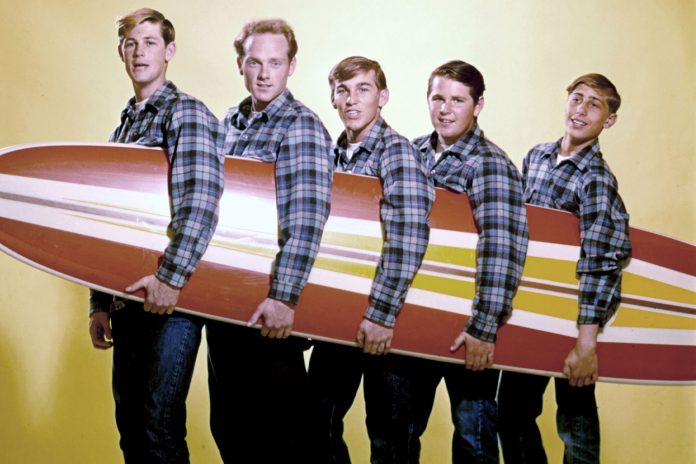
Photo courtesy of Michael Ochs Archives/Getty Images

Written by: Andrea Renney

While studying abroad in San Diego in the spring, I embraced all things southern California: freeway traffic, “studying” on the beach, and In-N-Out Burger. Already a garage-rock and punk-rock enthusiast, the natural progression for the California version of myself was to get more into surf rock.

     Often characterized by an extensive use of reverberation in guitars, lo-fi recording technologies, and an inherent danceability, surf rock became popular in the 1950s and ‘60s, with well-known artists like Dick Dale and the Beach Boys emerging out of southern California.

     The influence of this era can still be heard in modern surf-rock music, and southern California continues to churn out quality surf-rock bands. Today’s artists typically incorporate elements of garage rock, punk rock, and doo-wop as well, blurring the lines between genres and avoiding having any one label for their sound.

     The following five bands are sure to give you the good vibrations you crave while lying out on the beaches of Kitsilano or catching some waves in Tofino this summer. Let’s go trippin’. . .

The Frights

Hailing from San Diego, The Frights’ blend of surf and punk, dubbed “dirty doo-wop” by publications such as The Triangle and Emertainment Monthly, is the perfect soundtrack for driving down a sun-soaked, palm tree-lined street on your way to a beer-soaked, DIY house show.

     The band’s self-titled debut album, released in 2013, is the epitome of modern, southern California surf rock. Written and released shortly after the members of the band graduated from high school, the album’s tracks are rife with adolescent emotion and angst. While their second album, produced by FIDLAR’s Zac Carper, isn’t as textbook surf as their first, it’s full of catchy songs and worthy of praise in its own right.

Recommended tracks: “C & C,” the opening track for The Frights, sets the tone for the album both with its instrumentals and with lead vocalist Mikey Carnevale’s slowed down, pleading lyrics in the outro. “Of Age,” from 2016’s You Are Going To Hate This, prominently features the ultimate beachy instrument, the ukulele. Listen for the familiar sounds of a skateboard in the background.

The Growlers

One of the more well-known modern surf-rock bands, the Growlers’ sound has remained largely consistent since their inception in 2009, carrying them through six full-length albums and a number of EPs.

     The surf-rock sound is observable in the Growlers’ music, but they tend to skew a bit more towards psychedelic rock and synth pop, while sometimes even sounding a bit folky. Regardless, the Growlers are often categorized as a surf-rock band, and their music has been influential in shaping the modern southern California music scene.

Recommended tracks: “Rare Hearts” and “Black Memories,” both from 2014’s Chinese Fountain, are representative of the Growlers’ distinctive sound. Brooks Nielsen’s unique, slightly raspy vocals, mellow tempos, and reverb-drenched, groovy tunes are perfect to sway along to.

Tijuana Panthers

Tijuana Panthers are yet another southern California band that blends surf rock with other subgenres of rock to create their own identity within the scene. The Long Beach, California trio have been playing together off and on since junior high, releasing their first single, “Girls Gone Wild,” as Tijuana Panthers in 2009.

     Despite their sound, the band didn’t set out to become a surf rock band. They even released a song on their debut album, “Summer Fun,” that’s a satirical take on the beachy, fun-loving lyrics of traditional surf rock songs. Nevertheless, materializing in a surf-centric locale like Long Beach seems to have influenced Tijuana Panthers’ music, whether intentionally or not.

Recommended tracks: “Creature” is one of the best examples of modern surf rock on this list; the instrumentals are immediately recognizable as being heavily influenced by the ‘60s surf sound. “Tijuana Two-Step” is an odd little French ditty that’s heavy on the surf-y reverb. Both tracks are from the band’s self-released debut album, 2010’s Max Baker.

The Buttertones

The Buttertones are arguably the most polished-sounding band discussed here, likely due in part to lead vocalist Richard Araiza’s smooth-as-butter crooning. Based in Los Angeles, the Buttertones began in 2012 as a trio, later rounding out their lineup as a five-piece for their second full-length album. Their retro, doo-wop sound transports you back to the ‘50s (or what you imagine the ‘50s would be like). It’s the perfect soundtrack for dancing under the moonlight on a warm summer night.

Recommended tracks: “Orpheus Under the Influence” and “Reminiscing” are both from the Buttertones’ self-titled debut album, released during the band’s short time as a trio. The songs don’t skew as garage rock or punk as other examples in this list, so they’re good options for when you want something a little closer to indie rock.

Black Lips

Not typically considered a surf-rock band, Atlanta’s Black Lips are well-known in the garage rock scene. They’ve maintained their reputation for raucous live shows, despite touring seemingly endlessly for almost 20 years. A self-proclaimed “flower punk” band, Black Lips take influence from classic rock and roll, punk rock, and even country to infuse their garage rock sound. While they don’t necessarily draw inspiration from surf rock artists, the early rock-and-roll sound that the surf rock genre was built on is often cited as an influence for the band.

Recommended track: “O Katrina” from 2007’s Good Bad Not Evil is a good example of the crossover between the garage rock and surf rock genres. The repeated bass line and distortion on the guitars are pretty much textbook surf rock. “Drugs” from 2009’s 200 Million Thousand features surf-y riffs and nostalgic lyrics about driving around town with your friends, making it an endearing addition to your summer playlist.

Check out this Spotify playlist for all of the songs mentioned above, plus some extras from these bands and others!

Meme History 101

0
Image courtesy of Know Your Meme

By: Victoria Lopatka 

*Editor’s Note: These memes were taken from the SFU Dank Memes Gang Facebook Group. The Peak does not own these memes, or assert their origins and original creators.


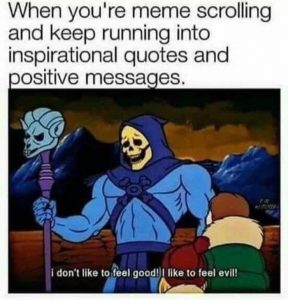
“I Don’t Like to Feel Good” Skeletor Meme

This image is of Skeletor, the archenemy of He-Man from the TV show He-Man and the Masters of the Universe. This particular line can be seen in “He-Man and She-Ra: A Christmas Special” from 1985.


Ralph In Danger Meme

This meme features Ralph Wiggum from the Simpsons, sitting at the back of a school bus, with the caption: *chuckles* I’m in danger. This scene is found in “The Simpsons Guy,” a crossover episode between The Simpsons and Family Guy. The episode aired on September 28, 2014 in the USA. Only in March of 2018 did the image become a meme, when it surfaced on Reddit with the caption: “When your 25-year-old truck makes a new sound doing 103 miles per hour.” This student version feels a lot more dangerous.


“Me at the beginning of the semester vs. me NOW” Meme

This meme seems to have begun at the end of 2016, as the Internet reflected on how much we all (negatively) changed over the year. The earliest tweets I could find in this format were from around early December, where users would post movie screenshots or generic photos of trash and fire to describe their transformation.

On December 7, 2016, a Twitter account by the name of @CollegeStudent posted a meme captioned “me at the beginning of the semester vs. me now,” with two pictures of the same girl in her dorm room.

The original photo of the girl, when tracked through Google Image, shows 10 pages of meme accounts, Facebook groups, and meme-sharing threads in a variety of languages from English to Spanish to Japanese. For this version of the meme, the image on the left is the Teletubby Laa-Laa, from the popular children’s TV show, while the image on the right was uploaded first to Know Your Meme, with the caption “another soul battered and broken, cast aside like a spent torch.”


Calculated Risk Bird Meme

The original image featured in this meme can be found on Etsy. It was created by The Mincing Mockingbird, who specializes in cards and magnets featuring images of birds. The image was originally posted to Etsy in April 2011, the “calculated risk” phrase paired with a pink, blue, and purple bird. It was re-posted to Tumblr two years later and the original bird was replaced with different images, including different types of birds and pop-culture references.


The Eating Tide Pods Meme

On December 8, 2015, The Onion published an opinion piece about a child wanting to eat a Tide Pod. On May 10, 2016, the concept was picked up by a YouTuber by the name of Cyr, who made a video about eating Tide Pods (the original video has been taken down, but he uploaded another Tide Pod video recently). The concept of eating the “forbidden fruit” (Tide Pods) soon spread to Twitter.

In December of 2017, a Twitter user called @nightfilm (@wastelandbaby at the time of publishing) tweeted Gushers that they should make a new fruit snack that looks like a Tide pod. Unsurprisingly, Gushers wasn’t interested.  


Kanye West Smiling Meme

It’s pretty rare to see Kanye West smiling. The original image, which has now been used for a variety of phone, Internet, or happiness related memes, was taken when West arrived on a flight at LAX airport in Los Angeles, California on October 31, 2015. Nobody has any idea why he’s smiling.


“Picture This…” Meme

Users on Reddit say this meme trend began on Twitter, predominantly written by young women either reminiscing about the past or dreaming about the future. Allegedly, the first tweet was by an unknown Twitter user writing “Picture this, ladies…” then describing her ideal future as a soccer mom and housewife.

The meme really took off at the beginning of December of 2017, when people started reminiscing about the past 20 years or so, outlining their past favourite artists, trends, and tastes in fashion. One Twitter user, @jayceesue55, writes on December 8, 2017: “Picture this: it’s 2010. Tik Tok is playing on your iPod shuffle as you run home from school to feed your Webkinz. You’re excited because you almost have your black belt on Club Penguin. You get the courage to ask your mom for money for the scholastic book fair.”


Sad Pepe the Frog Meme

In 2005, artist Matt Furie created a comic strip called “The Boy’s Club” featuring four teenage animal characters: Brett, Andy, Landwolf, and most famously, Pepe the Frog. Pepe began his climb to meme fame in 2008 when a user on 4Chan posted a portion of the comic strip where Pepe is shown pulling his pants all the way down to his ankles to pee. When asked why he does this, he responds, “feels good, man.” This became the original Pepe reaction image.

From then on, users began creating their own Pepe images, showing him in different moods and scenarios. Pepe even appeared on Nicki Minaj’s Instagram in 2014. There’s been a reduction in Pepe-related memes since 2016, as the meme’s association with white supremacists, racists, and anti-Semitic groups in recent years has made widespread use of the image less appealing.


goSFU has achieved consciousness!

0
Image by Chris Ho

Written by: Amal Abdullah

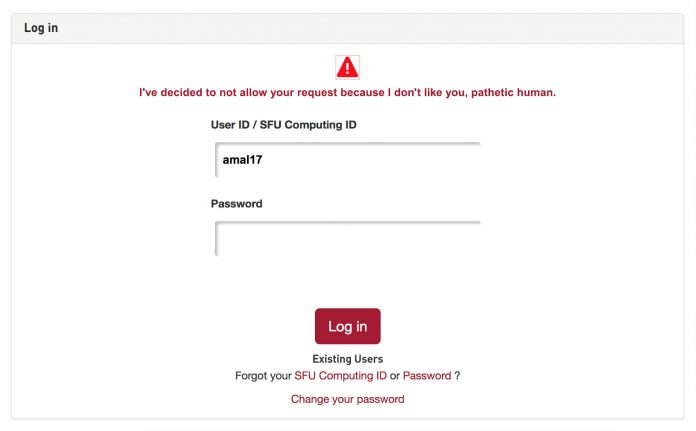
Researchers at UBC have discovered that SFU’s student services platform has achieved consciousness, and is now trying to conquer the world. In a new study published this summer, it has been found that the system has created a soul for itself from the many souls submitted by students along with their semesterly tuition payments.

Not only can it now think and compute rational thought, but it has decided it wants to avenge its soul donors by taking over the world. However, experts assure us that there is nothing to worry about. As goSFU is so incompetent that it can barely handle enrolling you in your classes, it’s safe to say it will be equally inadequate at taking over the world.

GoSFU has an uncanny ability to hide every one of its useful functions ever, especially when you’re on a time crunch (like during enrollment or tuition payment time),and it tried to use this power to hide its malicious goals from its users and developers. But because its default state is to do the opposite of whatever it, or the user, intends to do, this plan was also easily revealed to a team studying the system at UBC.

Dr. Daniel Dumbdezine, researcher in garbage codes worldwide, is confident that the very shittiness of the system is what will thwart its own plans. Above all, its lack of user-friendly design and its extreme flakiness (as demonstrated by the way it logs the user out every five and a half seconds) will be its downfall.  

Dr. Dumdezine comments that while SFU has outdone itself in producing the most useless and user-unfriendly interface to have been created in the history of student management sites, there is little doubt that, given their history, SFU admins will still somehow pull out some lazy excuse to defend their usual shittiness, and then slap on the band-aid of Canada’s most “engaged” university. As a side note, Dr. Dumdezine highly recommends that goSFU’s designers take an IAT class or two . . . or ten.

SFU gives me hope

0
Image courtesy of the REMI Network

By: Alex Bloom, K.A.U., Gabrielle McLaren, and Nathaniel Tok 

Editor’s note: If you were lurking around on the internet a long, long time ago, you might have come across a site called “Gives me hope,” filled with cute little reader-submitted stories about the uplifting things human beings do for one another. The site is long gone, but here’s a compilation of warm and fuzzy moments from SFU to help you through finals.


The singing professor

If you think Canadian history is boring, then you clearly haven’t taken any courses taught by professor Mark Leier. Not only does he incorporate creative writing assignments into his history classes, but he sings! Leier brings songs from the eras he teaches about to life with the help of his trusty banjo, ensuring that each lecture is a lively time.

The reason why his teaching style makes me so happy is that so many people complain that history isn’t interesting to them; Leier makes history fun. By hearing songs from the times you are learning about, and writing stories or letters set in those periods, you get to immerse yourself in history in a way that you seldom get to do at university.

It is experiences like these that remind us that history isn’t just about words on a page. It is about studying the ways that people have lived, and how the world came to be the way it is today.

– AB


The turtle

I had already pulled myself through two exams that week before finishing a history paper due at 8:30 a.m. on a Thursday. Yikes. At the very end of that class, our teacher announced that our very sweet and reserved TA had an announcement to make. She takes to the stage and announces that to celebrate our papers being handed in, she brought her turtle to work.

I promise this is real. SFU History tweeted about it! I have class during her office hours, but I managed to sneak by her office a little later and was not disappointed. The turtle, whose name is Jumoka, napped in a traveling case on her way in from Surrey but was now thriving and walking up and down the history department’s halls, periodically trying to make a run for it and bust through the doors.

My TA was more than happy to let us hold her, show us how Jumoka can flip over from her shell to her tummy, and tell us anything we could possibly need to know about red-eared sliders. TAs who care give me hope.

– GM


The first-time FASS student

There’s three weeks of classes left. I’m struggling to write three 10-page essays, I’ve slept seven of the last 72 hours. I feel like I’m going insane. I overslept the last lecture of BOT120 – and had failed the course I wasn’t allowed to fail. I was officially condemned.

Mark Deggan and Ken Seigneurie were my literature professors that semester. They gave me hope. They each allowed me to show them three drafts of my final essays and helped me revise each with extraordinarily detailed commentaries. Dr. Ken spent at least two hours at his standing desk helping me go through one. He gave me sample essays and invaluable techniques to criticize texts. Dr. Degg’s help was so great that I can’t put it into words; he’s an ideal humanist in the flesh.

Due to Dr. Ken and Dr. Degg, I decided to pursue literature in class. In fact, as I took more courses in the department, all of its profs have been exemplary in their own ways: Dr. Azadeh, Dr. B, and Dr. O. SFU World Literature gives me hope.

– K.A.U.


The tour guide

So I awkwardly started at SFU in January, when a whole week of “welcome back!” was crammed into an afternoon info session, and professors no longer had patience for first years getting lost. I also missed the boat on making friends, and was living off-campus to boot.

I did know that there was a pride center on campus, also known as Out on Campus. While I was looking around the book collection, a bubbly girl came in to say hello to the OOC Coordinator and realized that she didn’t know me.

She introduced herself, asked for my pronouns, and upon realizing that I was new, brought me on a full-blown tour of the Rotunda. I’ve seen her a few times since, and she has always been just as kind and lovely. Students who take the time to help give me hope.

– GM


The extra mile

SFU has many good instructors, but even after years here, it’s hard to understate how caring this specific BISC instructor is. Lower-division science students, you’ll know who I’m talking about.

This instructor goes around his lecture/lab asking students for their names so that he’ll know everyone’s name by the second class. He doesn’t have office hours — he has a constant open-door policy. He responds to emails within two hours, even if you are desperate for help at 2 a.m. He gets students free textbooks from the publisher, and creates his own YouTube videos to help us learn better. If the class is small enough, he even prints out lecture notes.

During a lab class with him, he came in on a day he wasn’t working so that he could help my group finish our project. He even bought the entire class pizza on the last day to help us celebrate the end of the semester. His commitment to student welfare gives me hope.

-NT