Home Blog Page 630

Co-Creators’ themes captivated audiences at DOXA 2018

0
Photo courtesy of DOXA

Written by: Yelin Gemma Lee, Peak Associate

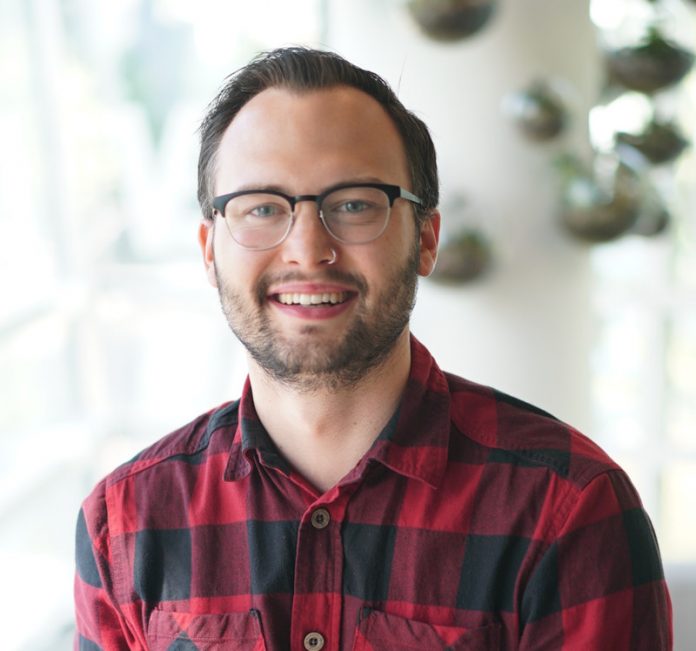
Lonnie Nadler, author of The Dregs has produced a feature film over the course of four years of work. And it is phenomenal.

     The documentary, called Co-Creators: The Rat Queens Story got accepted into Vancouver’s DOXA festival this spring; in other words, Nadler is rapidly becoming an up-and-coming in the local creative scene.

     “I had initially intended to make this film about the world of independent comics in general, and to feature a number of different creators from that world,” Nadler explained. “It was supposed to be an in-depth look at what it’s like to make comic books.”

     “But the more I started to follow Kurtis [Wiebe, the creator of comic series Rat Queens] and the more his book grew in popularity, the more clear it became to me that this was where the story was.”

     “To be completely honest, I didn’t quite know where the film was going for the first two years of filming,” Nadler admitted to The Peak, “I knew there was a story, but I didn’t quite know how to tell it or what the themes would be. It was a long process of working with my very dedicated editor, Torin Chambers, and my associate producer, Zac Thompson.”

     One can only guess that a documentary takes a lot of time, flexibility, and patience to produce and does not come without struggle. For Nadler, this struggle was elevated when one of the co-creators of Rat Queens was arrested for domestic abuse, and his story started to take form in a way that was unexpected.

     “It became something way more intense than I ever could have anticipated,” Nadler said. “[. . .] I didn’t want to gloss over anything or play sides. But at the same time I also had to be respectful of the people involved and make sure I wasn’t exploiting anyone. I tried to be hyper aware of everything I put in the film for that reason.”

     The relationship themes in Co-Creators: The Rat Queens Story are the triumphs of the film. Nadler found a story that has never been told before in this way. It’s a true example of what it’s like to work, play, and live in a creative world where creative relationships are a huge part of everyday lives.

     “I noticed that the relationship between the writer and artist of the book was very similar to a toxic romantic relationship,” Nadler explained. “There were so many ups and downs, and they tried to work through the struggles, but in the end it collapsed because there was too much dishonesty and hidden issues.”

     The documentary is broad at the beginning, but then zeroes in on the specifics with slow progression and then with relentless confidence. I could almost picture the gears working behind the scenes of this feature, and how it was pieced together into what came to be a raw and honest exposé on creative relationships.

     “These themes of relationships kept presenting [themselves] in different ways — between writer and artist, husband and wife, subject and documentarian,” Nadler said. “Once I realized this and had something to work towards, I did a lot of re-shoots and pick-ups near the end to make sure I had enough footage that would help to express these themes.”

     At the end of watching any documentary, I evaluate it on whether or not my mind has expanded to welcome in a new way of looking at the world. Even Nadler himself found himself learning so much over his years of meticulous work on this story.

     “Watching this story unfold certainly made me more aware of how I collaborate with people and how important it is to foster a safe and open working relationship. I just try to be as honest as possible with everyone, online and off now.”

     Nadler explained that making a documentary was so different from his other projects because of the moral decisions you make.

     “You just never know if you’re making the right call or not because you’re dealing with real people,” he said. “I think I just tried to do my best in the editing room to remove any personal bias and to present the story as best and as comprehensively as I could for someone who knew nothing about this story, coming into it for the first time.”

     I would say that Nadler used a truly profound and unique lens to tell this story, and its implications and critique of the creative world lingered in my mind for many days. Co-Creators: The Rat Queens Story was worthy of being told, and thankfully someone like Nadler was there to capture it.

     “The most rewarding part [was] finishing it and getting accepted to premiere at DOXA. I literally cried when they sent my official selection email because it was just this sense of validation that the last four years of my life weren’t a waste of time,” Nadler said.

     “For the first time I felt like maybe I can actually do this. Maybe I actually am a filmmaker.”

SFU students participate in UN sustainability forum

1
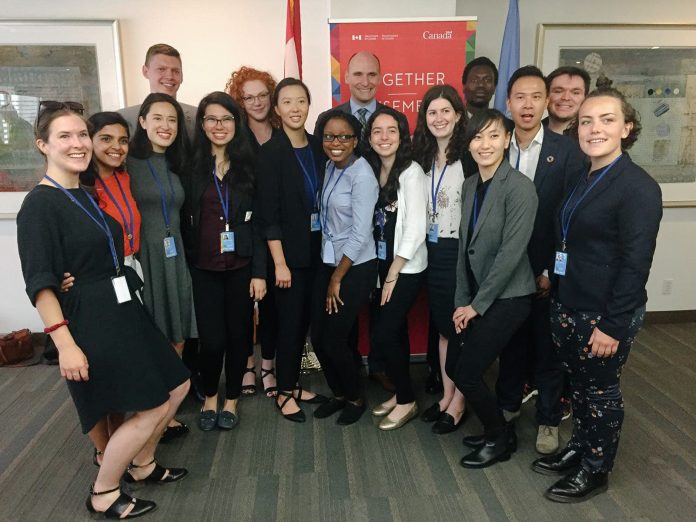
SFU students joined their peers from UBC and UVic to attend the sixth annual UN sustainability conference in New York. (Photo courtesy of Landon Reeves)
By: Srijani Datta, Assistant News Editor


Between July 13 and 18, SFU students participated in the United Nations (UN) High-level Political Forum (HLPF) on Sustainable Development.

     After being established in 2012, the forum is conducted for eight days annually. The need and goals for the forum were outlined in “The Future We Want” outcome document which resulted from the UN Conference on Sustainable Development in 2012 in Rio de Janeiro, Brazil. SFU students Landon Reeves, Dhwani Babla, and Andreea Pirvu attended the forum this year, at New York city, as a part of the unofficial youth delegates of Canada.

     Reeves, Babla, and Pirvu had applied to the forum through B.C. Council For International Cooperation (BCCIC) and were accompanied by students from the UBC and UVic, along with working professionals from around the province

     Reeves, a third year student of Engineering Physics, shared the group’s experience and achievements in HLPF 2018 in an interview with The Peak. He expressed that their learning experience and role as change-makers began right from the application process.


Protesting the official application process

A notable step of action for Reeves and his team was to protest the federal government’s delayed response in selecting the official student delegates from Canada.

     Reeves explained that, as he and his team had applied through BCCIC as self-funded students, they had time to prepare themselves for the forum. “Not all students could afford to fund themselves and being appointed as the official delegates by the government would help them participate, and the delayed selection by the officials created a challenge for those students,” Reeves continued.  

     Reeves mentioned that with the date of the forum nearing, his team was offered the option to be the official Canadian delegates by the federal government. “We rejected the offer to protest the unresponsiveness of the government,” said Reeves.

     “We are pushing for the selection process to be contracted out to external groups, particularly [non-governmental organizations] specializing in youth selection processes so that a more diverse and inclusive team gets to be picked next time, with complete transparency.”


Experiences at the forum

When asked why he chose to participate in the forum, Reeves told The Peak, “In my perception, in the interface of science and policy a lot of decisions are based on political rhetoric. There is a need to incorporate more scientific research into it, and the participation of students from STEM backgrounds in political forums like the HLPF can help bridge the gap.”

     Talking about their experience at the forum, Reeves further mentioned that “we learnt to think more critically.” He explained that “Canada is presented as a world leader in UN’s sustainable Development Goals. However, our experiences and home and at the forum shows that we might be lagging behind a bit.

     “The forum helped us further understand the contrast.”

     The forum was an experiential learning process for Reeves and his team. He and his peers wrote shadow voluntary national reports and participated in additional events. They also met with John Mclaughlin, deputy minister of education and early childhood development New Brunswick, and Antonella Manca-Mangoff,Director of the international unit of the council of ministers of education, to begin work on increasing youth involvement in curriculum development. Reeves stated that he is personally still working on increasing youth engagement with education.

     “The UN is often seen as an opaque institution. Participating in the HLPF 2018 helped us understand a bit more about the inner workings of the institution,” said Reeves, in a statement directed at possible future applicants.

     “I learnt a lot from my experience, and would strongly recommend attending if you get the opportunity.”

Why are Vancouverites so afraid of homeless people?

0
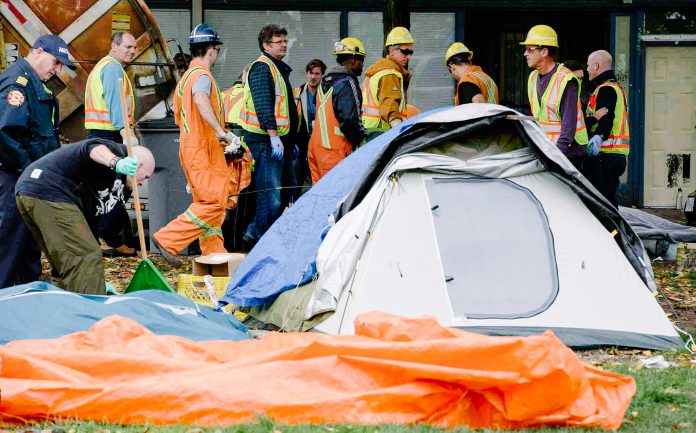
Photo courtesy of Jonathan Hayward/The Canadian Press)

Written by: Amal Javed Abdullah, Staff Writer

At the end of last year, the City of Vancouver faced backlash and protests when one of the locations for its temporary homeless housing project was claimed to be too close to an elementary school. The location in question was 650 West 57th Ave. in Marpole, making it close to Sir Winston Churchill Secondary School and Sir Wilfrid Laurier Elementary School. Distraught parents were protesting with signs that had slogans such as “right idea, wrong location.”

According to CBC News, this spring, a few homeless people have had to decline the offer of a spot at this temporary housing location due to community resistance. At least five people who have lived on the streets for a while have turned down housing units due to public backlash in the area. They were afraid for their safety (as if living on the streets was that much more safer) and the protests that would likely spring up if they were to move in.

It’s no wonder that Vancouver is one of the cities with the most homeless people in the country (a record-breaking 2,181 in 2018), since our residents would rather they stay in the streets of the Downtown Eastside rather than have a roof over their heads. With the current housing crisis and the rising costs of living accomodation, why does homelessness still sit as a nasty disease in the minds of Vancouverites? Why are our city’s most vulnerable still seen as less than human?

This viewpoint holds a number of harmful assumptions that need to be challenged. The parents who went berserk act as if homeless or recently homeless people, by virtue of that homelessness, are dangerous to their children, or that them being in close proximity will cause their plight to spread like an infectious disease.

The negative preconceived notions that people have about the homeless are, more often than not, based on uninformed opinions rather than facts. A count shows that more than half of Vancouver’s homeless have been without a home for less than a year, meaning that the streets are not a permanent home for the majority of the homeless, nor do they want it to be. Most of them end up on the streets as a product of circumstance, rather than malicious intent, laziness, or thoughtlessness. It’s usually because they’ve been laid off or have trouble paying their rent, not because they’ve squandered their savings.

The ignorant parents who want to shelter their kids from the homeless are overlooking the fact that, no matter what, their kids will come across the homeless sooner or later. If they don’t teach them now when they’re open to learning new ideas and accepting different kinds of people, then the kids won’t know how to deal with the reality of their existence later in life.

With the upbringing they’re getting, they’ll more likely be part of the problem than the solution. The attitudes that these parents are displaying are setting them up to hate homeless people, a cycle of hate based on unfounded prejudice.

And if, by chance, they end up homeless themselves — though we do wish the best for them — then they’ll be stuck with the same hatred that they had learned as children, but this time, it’ll be directed at themselves.

If the people in these housing units were actually dangerous in any way, shape, or form, then one could consider that perhaps having homeless housing close to two schools is not a good idea. But that’s not true — I’d trust that if they’ve gone
through enough background checks to receive the housing, then they should be pretty clean. There should be absolutely no reason for anyone to have a problem with this.

Dismissing the homeless as incapable of being close to small children without bringing them harm is a dangerous assumption to make. And by qualifying them by this one feature, the fact that they’re homeless and nothing more, disregards everything else about them that makes them human. It ignores all the many facets that make up the story that led them to the streets in the first place.

What these parents and other discriminatory people need to do is to empathize with them and realize that they’re just trying to get through each day like we are.  If they did, they might have a very different viewpoint on the issue, instead of painting them with such broad strokes, and they might even begin to empathize with their journeys. A roof over a homeless person’s head can be the starting point for them to turn their life around.

Majors in a minute: Health Sciences

0
Illustrated by Carolyn Yip

Written by: Nathaniel Tok

Calling all confused students who like biology but not really! Is MBB too mainstream for you? Are you not sure if you want to be the BP or the K in BPK? Come on down to health sciences (HSCI) where you get to do everything!

There’s no course or area that HSCI students cannot get their greedy hands into. HSCI students study everything from physics to philosophy, statistics to sociology, and biomedicine to bioinformatics. You and your coursework will be pretty much the lost child of every other department in SFU.

Of course, you also get to study health care too. If successful, you’ll graduate with a BSc or BA. This will teach you to debate with others why Canada’s healthcare system could still improve in terms of providing dental surgical outpatient care to rural populations with demographics over 65 in Canada’s far north, all while still having no idea what the words “health sciences” really mean.

With such a wide range of coursework, students get to interact with faculty members and grad students from all over the world from all sorts of disciplines. You’ll also get to meet students with all sorts of aspirations as well, like the one with brown hair who wants to go to med school, the pre-med with grey eyes, the fifth-year honours student who’s applying to UBC for medicine and public health, the pre-med who wants to do medicine and epidemiology . . . Damn it! Oh well, at least you’ll represented by top student leaders from the Health Sciences Undergraduate Student Union (HSUSU) . . . even after you convocate, you’ll still have no idea how to pronounce that.

Be amazed at the HSCI’s home in the beautiful Blusson Hall which is made out of glass to absorb natural light. It also allows students to reflect on their own tearful faces after coming out of ECON exams. Or was it BISC? It doesn’t matter: you’ll get to cry over all of them!

The blessed Blusson Hall is located right outside the bus loop at UniverCity — all the better for you to find food and to be the first to run to the buses after class ends. You can roll to your 8:30 a.m. lab straight from the bus stop instead of running to the South Science Building like those poor souls in MBB. It’s that close!

P.S. We even have microwaves! No need to fight with the peasant students from other departments in the Maggie Benston Building for this exclusive privilege.

Little Fires Everywhere is the perfect, albeit unconventional, summer read

0
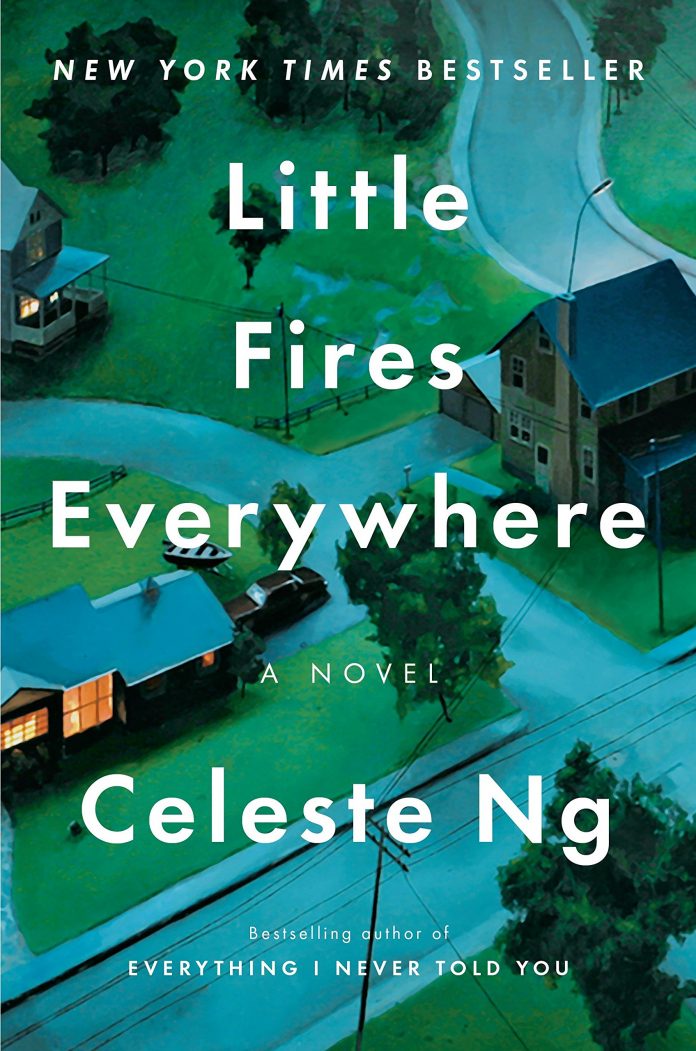
Image courtesy of Penguin Press

Written by:Samantha Manalac

With summer winding down, there’s only a little bit of time left to get the last of your summer reading done. If you’re still looking for a book to fill that void, this might be the one for you. Little Fires Everywhere by Celeste Ng is a character study with a fast-moving plot and a whole lot of depth. Maybe not the summer read you’re used to, but once you start, you won’t want to put it down.

     The book deals with weighty topics like race, class structure, and the true selfishness behind altruism. It keeps you guessing and leaves you with an ending that you’re sure to be thinking about for days after you’ve finished it.

     The story is set in Shaker Heights, a small suburban town in Cleveland that is founded on an obsession with being picture perfect. It follows the lives of two extremely different families that become inexplicably intertwined. The Richardsons are a cookie-cutter example of the ideal family when they meet the Warrens, a single mom with a mysterious past and her beautiful daughter.

     We get a glimpse into several character perspectives throughout the novel, but it never feels contrived. Each person’s perspective arms you with the backstory you need to understand them and their behaviour as the story unfolds.

     This novel doesn’t drag like a story sometimes does when you spend most of the time in the characters’ heads. Instead, the characters are thoroughly fleshed out through a plot filled with twists and turns. This, to me, is the best part of the book. By the end of it, you feel like you’ve spent a year with two families and come to know them yourself.

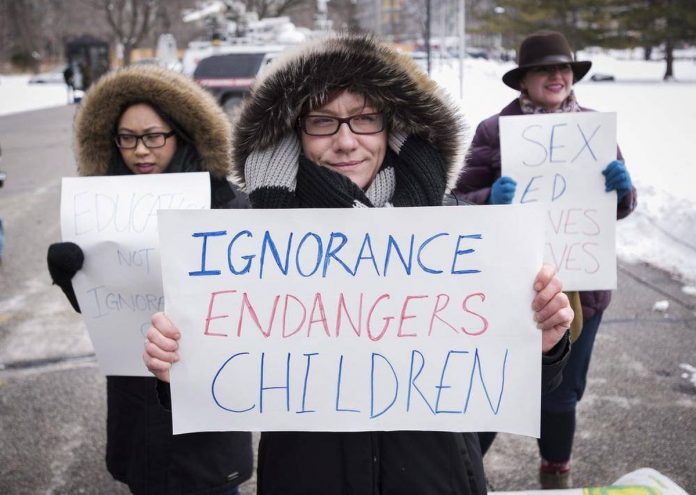
Ontario’s return to its 1998 sex-ed program will only harm students

0
Photo courtesy of Darren Calabrese/The Canadian Press

Written by: Winona Young, Staff Writer

I realized while growing up that sex positivity is a rarity in many places.

I’ve picked up quite a bit of information by hanging around the “cool kids” who dabbled in alcohol, drugs, and sex. However, I felt that the best sex-positive education I got was from my uncomfortably comprehensive high school health classes, with their awkward diagrams, condom-clad bananas, and books about genitalia.

I count myself lucky for receiving such a thorough education, and I’m thankful that holistic sex-ed curricula were accessible to students. This is why I am upset at Doug Ford’s administration.

Lisa Thompson, Ontario’s new education minister, recently cut the 2015 sex education curriculum from schools, effectively reverting to Ontario’s sex-education program from 1998. The Globe and Mail reports that the 1998 program will be missing content on same-sex relationships, sexting, gender identity, and masturbation.

To me, an education that isn’t holistic isn’t a good education at all. To revert to an educational program that is decades old will negatively affect both students’ knowledge of sex and their perspective on it.

Without knowledge or proper intellectual tools, elementary and secondary school students won’t know how to navigate their sexuality. Obviously, this comes with disadvantages that could lead to unpleasant sexual experiences with themselves and their future partner(s).

As CTV News notes, the 1998 program predates Canada’s legalisation of same-sex marriage, Google’s rapid growth, and sexting. With such key components unaccounted for in the 1998 curriculum, Ontario is voluntarily pushing dated ideas and information that are both incorrect and irrelevant.

The newly scrapped 2015 sex-ed program addressed a wide variety of relevant topics to students. The Globe and Mail’s investigative piece on the 2015 program, “Fact or fiction: What’s actually in Ontario’s contentious sex-ed curriculum,” noted that topics on sexually transmitted infections, gender identity, and sexual orientation were covered.

Students now face a future where they may not learn about sexual safety, condoms, consent, and sexually transmitted infections. They would be at risk of unsafe sex, unwanted pregnancy, and misusing contraception. More importantly, by not learning about consent, they may fail to properly communicate with their sexual partner(s) and possibly subject themselves to unwanted sexual contact.

Additionally, by removing a curriculum that is inclusive of both sexual orientation and gender identity, Ontario risks isolating students who are questioning their sexuality and gender. I find it heartbreaking that students may have to learn heteronormative, homophobic and sexist ideals that they may forever internalize.

In a technology-centric landscape, students rely mostly on the media they consume for guidance, which can be helpful or harmful. Therefore, the only thing we as
adults can control is the education they receive. However, if we jeopardize that education in any way, we risk enabling horrible misconceptions about sex and sexuality.

Until education minister Lisa Thompson finishes consulting with parents and creates a new “age appropriate” program, students will be learning a poorly aged sex-ed curriculum, starting this September.

As Lauren Bialstock of the Ontario Institute for Studies in Education said in an interview with CTV News, “Going back to the 1998 [sex-ed curriculum] is just catastrophic.”

The new clothing line that will be the hit thing 10 years from now

0
Illustrated by Emma Wu

Written by: Hannah Davis

Little do we know now, but in ten years, a new fashion icon will emerge and dominate the fashion world, Orange. With humble beginnings as a tech company, Orange will switch from making phones and computers, to making clothing. Get ready for Orange’s brand new line of clothing, with myPants, myBra, myHoodie, myHat, and everything in between filling up clothing outlets across the country.

Orange will first catch the world’s eye with their dazzling launch of myClothes. This fashion line will promise sleek, innovative and user-friendly garments for anyone. The commercials will show people laughing and looking unrealistically happy as they walk down the street. You will think, “that person is just wearing some normal white clothes.” But then you’ll see the notorious Orange logo on the back of every single garment they wear, and think to yourself, “I must have that wardrobe.”

Although the clothes will look great, they will also require updates every two months. If not updated in time, they will physically start to slow you down. You really do not know how Orange does it, but they have seamlessly designed the ways in which the clothes will slow down your every movement if you do not download — sorry, purchase — their newest, sexiest wardrobe updates.

Keeping in tune with the products Orange released as a tech company, these garments will catch fire when you pair them with non-myClothes products. If they don’t completely catch fire, they will spark violently until you remove the intruding article. Your great-grandmother’s necklace from 1901? Sorry honey, your myScarf will burst into flames when it comes into contact with that old accessory! Your mother’s wedding dress? You won’t be able wear that to your wedding without suddenly becoming smoking hot (in a bad way)! Your boring old clothes from before won’t even be able to be stored next to your fancy myClothes because your whole closet will be reduced to some dusty ashes.

The fires aside, sometimes myClothes will just become really hot for no discernible reason. When they overheat, all you will have to do is take them off and put them back on again after you let them cool down on their own — regardless of whether you are in the middle of doing something important.

Also, every time you put your wallet in your myPants pocket, your pants will literally eat all your money. Sure, you have no money now, but at least you have all the newest versions of all your clothes.

Fire, smoke, and toxins: Kinder Morgan and emergency preparedness at SFU

1
Image courtesy of Burnaby Now

By: Cecile Favron, Peak Associate 

After Angela Brooks-Wilson became a professor at Simon Fraser University, her family relocated to a neighbourhood just minutes from campus at the base of Burnaby Mountain. It was supposed to be the house that she and her husband would live in for the rest of their careers and into retirement.

“It seemed really perfect until we got a notice from Kinder Morgan,” recounted Brooks-Wilson, a professor in biomedical physiology and kinesiology. “The notice said that they had applied to expand the tank farm.”

That was when the family began to seriously research the safety of the oil-holding Kinder Morgan tank farm, located just a few hundred metres north of their neighbourhood. What they uncovered forced them to reconsider their plans. When Brooks-Wilson recounted her family’s story during a public forum hosted last month at SFU,  which discussed links between the tank farm and the prospect of a devastating fire on the mountain, she concluded that the long-term risks they felt prompted them to move.    

The potential that a disaster at the neighbouring tank farm might endanger the university campus has also raised alarm among the administration. In 2016, SFU president Andrew Petter said that the risks posed by the tank farm were “significant and deeply concerning” and the university sent a letter to the federal government expressing its objection to the project.

Yet as work gets underway at the Kinder Morgan tank farm, some students and faculty are questioning if the university is doing enough to keep the campus safe.

“President Petter has said the tank farm expansion presents an unacceptable risk to the university, but it is not clear what he is willing or able to do to stop it,” Tim Takaro, an associate dean in the faculty of health sciences, told The Peak in an email interview. “This has not been adequately described to the community nor the media.”

Takaro was the lead organizer of the community-based forum Brooks-Wilson attended. The event was held following a wildfire drill for university personnel earlier in the week to test the new evacuation and shelter-in-place emergency plans.

Despite the recent efforts, many remain concerned that thousands would be put in danger if there were a major fire at the tank farm.

Trapped on the mountain

The Kinder Morgan tank farm borders the intersection of Burnaby Mountain Parkway and Gaglardi Way opposite the entrance to the university. The expansion project, overseen by the subsidiary company Trans Mountain, would double the number of oil storage tanks at the facility, placing the closest tank approximately a kilometer from Convocation Mall, in the centre of campus.

SFU commissioned a report two years ago that found that the expanded tank farm would increase the risk of fire or toxic smoke on or near campus. It also cited a heightened risk that the only evacuation routes from campus would become blocked in the event of an incident at the tank farm, trapping students, faculty, and staff on the mountain.

The concerns echoed a Burnaby Fire Department report released a year earlier which concluded that the tank farm was “not the appropriate location for the expansion.” The report stated that the design for the expanded tank farm, which displayed intent to grow from 13 to 26 storage tanks, could make fires at the facility “inextinguishable due to lack of safe firefighting positions.”

Furthermore, the proposed tanks would be placed closer together and adjacent to the perimeter of the facility, increasing the likelihood that a fire at a single tank would become a multi-tank fire, ignite the surrounding forest, and/or send plumes of toxic smoke into nearby communities.

The expansion project also includes the construction of a second pipeline which would supply heavier crude oils to the tank farm, including bitumen, which is often mixed with natural gas condensate, producing a highly flammable mixture called dilbit.

In the event of an oil spill, the report cited the potential for toxic and flammable vapours to spread beyond the facility and ignite in neighbouring areas after coming into contact with a spark or flame, such as a pilot light.

Additionally, in 2009, Kinder Morgan “failed to notify the community in any matter” about the release of flammable gases when a storage tank was overfilled. The fire department notes that: “The ability or unwillingness to either inform the community or inform City of Burnaby emergency responders does not characterize event management focused on public safety interests as a priority.”

There is also the risk of a rare but devastating event during a tank fire called a boilover, ejecting molten crude oil more than 600 meters, a distance which covers the tank farm, neighbouring communities such as Forest Grove, Meadowood, and Sperling-Duthie, as well as the intersection of Gaglardi Way and Burnaby Mountain Parkway, setting fire to the forest and nearby houses, endangering emergency responders, and blocking off access to SFU.

Kinder Morgan has since attempted to reduce the risk by decreasing the diameter of five of the proposed tanks and increasing the spaces between some of those tanks. A report commissioned by the company last year defined the individual risk as acceptable according to the standards set by the Major Industrial Accidents Council of Canada.

However, the possibility of a catastrophic fire remains. In recent years, there have been major explosions sometimes causing fatal injuries at tank farms in places such as Wisconsin, Washington, Argentina, and the United Kingdom.

In a statement to The Peak, Kinder Morgan subsidiary Trans Mountain said that the company has “detailed emergency response procedures and trained professionals who are prepared to quickly respond to any type of incident anywhere along the pipeline system.”

“It’s also important to note that post-expansion, our Terminals will store the same products, under similar conditions, as we have over the past several years. Trans Mountain has never had a storage tank fire at one of our terminals.”


Preparing for the worst

The university has emphasized that the safety of the campus community is the top priority in regard to the tank farm.

“SFU remains opposed to anything that increases risk to our university community,” said Mark Lalonde, the chief safety officer, in a statement to The Peak. “We continue to advocate our concerns to government and the National Energy Board, and do everything possible to mitigate the risks posed by the tank farm expansion, including pushing for alternative evacuation routes from the Burnaby campus.”

In 2017, shelter-in-place and mass evacuation emergency plans were developed to respond to potential hazards, including those that could arise from the tank farm.

Lalonde was in attendance at the public forum last month to discuss the plans. He informed the audience that the university was overall “very happy” about how the plans held up during the simulation, but added that necessary adjustments were also in progress.

He also responded to audience questions about what would happen if the road to campus was blocked. As previously reported by The Peak, Lalonde noted that the university is only responsible for its property and that the municipality oversees the surrounding roads. Shoulds the roads be blocked in an emergency event, an evacuation may involve the recreational trails going down the mountain.  

“[This] is why our plan is shelter-in-place and mass evacuation,” Lalonde said. “That would be the reality is that we’re going to have to stay here, absolute worst-case scenario‎.”

The City of Burnaby has its own concerns about the challenges of evacuating people from SFU and the adjacent UniverCity neighbourhood. The Peak reached out to Charmaigne Pflugrath, emergency management program coordinator with the city, for comment via email. Pflugrath said that a recent review prompted municipal emergency planners to consider using the trails down the mountain as evacuation routes.

“It is acknowledged that this option will prove challenging, especially for children and persons with disabilities, or for evacuations between dusk and dawn as these trails are unlit,” Pflugrath noted.

Pflugrath added that in the event of an incident where access the the university campus could be compromised she is “confident” first responders “will undertake all activities necessary to protect the road access routes for evacuation purposes in an effort avoid the utilization of the Burnaby Mountain Conservation Area Trail network.”

Trans Mountain would be responsible for the initial response to a fire, or any other emergency, on the tank farm premises and its current emergency plans state that the company would notify SFU. However, evacuation of the surrounding area would fall under the jurisdiction of the city.

SFU must coordinate any efforts to respond to a major emergency situation with outside fire, police, and paramedics. A study by the municipal fire department found that its response times to SFU and UniverCity failed to meet industry standards the vast majority of the time, according to documents obtained by Burnaby Now, leading some to advocate for stationing a permanent fire hall on the mountain.

Lalonde noted that although a scenario where people became trapped on the mountain was unlikely, it is something the university planned for. “This is one of a myriad of concerns I have about the campus here. This is certainly one of the more ‎significant, it has the most catastrophic potential impact,” he concluded.

Calls to action

The numerous challenges associated with responding to an incident on the mountain combined with the increased risk of the expanded tank farm has prompted calls for the university to take action.

Takaro contended that the university is not prepared for worst-case scenarios such as dilbit leaks caused by an earthquake or a large scale wildfire. He added that people on campus need to be more aware of how they should respond in an emergency.

“I don’t think the broader community understand what they will be expected to do in either the mass evacuation nor shelter-in-place responses,” Takaro said.

Jaclyn Parks, a graduate student in health sciences, is also worried that people on campus do not know about the risk of the tank farm or the university emergency procedures. “When people talk about pro- or ‎anti-pipeline they are thinking about a spill along the pipe,” she said, “but not a lot of people have talked about an ‎actual fire.”

“I don’t think the students have any idea that all of this is happening,” she said. “I don’t even have an idea of what happens if there is an alarm . . .”

Takaro called upon the university and the city, both public opponents of the tank farm expansion, to join forces in challenging the expansion project, in addition to undertaking fire risk mitigation measures. At the public forum, he encouraged people to recognize the interconnectedness of climate change, the fire risk, and the tank farm and oppose the pipeline expansion.

‎ “As you now know, we are becoming the owners of Kinder Morgan’s pipeline [now that the Canadian government has bought the pipeline] and it means that ‎our responsibility to stop it is even greater than it has ever been,” Takaro concluded.

 

Eric Lindstrom’s Not If I See You First features a relatable and rule-driven protagonist

0
Image courtesy of Poppy

Written by: Louise Ho

From the cover to its writing, the intriguing book Not If I See You First by Eric Lindstrom takes a spin on how we read and see people, both figuratively and literally. This contemporary young adult novel takes place within the narrative of Parker Grant, who has certain standards for people who interact with her. If anyone goes against her rules, it’s a major faux pas for them in her books.

     Parker is blind, and from this perspective we get to experience a whole other side to the term “reading and understanding people.” Shaken up by her father’s death, and still hurting from events that happened years ago, Parker eventually learns that she must open up and reach out to people without jumping to conclusions about them.

     Typically, the novels I’ve read involve a character that can see, which makes the concept of reading a story that’s from a blind narrator’s perspective very interesting. It presents a whole new way of encountering people, and adds the potential difficulties a person living with a disability may face to the difficulties of being a teenager. I think this is done well in Not If I See You First, despite the fact that Lindstrom is neither blind or a teenager.

     The story feels realistic, and I couldn’t put the book down; the concept of a blind narrator itself is so good because of how rare it is in YA. It’s a bit longer than typical YA novels that I’ve read, but it’s one that doesn’t become uninteresting, as the story uses an engaging plot, where at every turn Parker must face a new challenge. There are some scenes, like in most YA novels, that are cliché, but certain events tie together so well that the cliché moments are forgivable.

     If there’s anything you should take away from this book, it’s that Lindstrom made Parker so darn real. Her realness makes her character far more relatable, and not out of reach like those Mary-Jane and -Sue types. Overall, I would give this book a four out of five.

Album reviews

0

Written by: Courtney Miller

Pray for the Wicked by Panic! at the Disco

Oh, Panic!, Brendon Urie’s vocals always need ample room to wow an audience, and you came so close this time. The latest from one of everyone’s top three favourite emo groups of the 2000s expands upon the success of the previous album, Death of a Bachelor, by continuing to showcase Urie’s Frank Sinatra influences.

     While I would argue Death of a Bachelor did it better, Pray for the Wicked is no slouch. “(Fuck A) Silver Lining” showcases a crazy falsetto and a “fuck it” mentality that I’m sure we’re all feeling as those of us in summer semester classes close in upon finals. I’d recommend this one on repeat to let all those frustrations out, and trying to hit those high notes will tire you right out — not that I’ve tried . . .

     But also, take a shot at the falsetto in “Say Amen (Saturday Night)” which is a lot of fun with a nice pop/rock beat. If you’re looking for something endlessly catchy that will haunt your next few weeks, “Hey Look Ma, I Made It” has a solid melody and great musicality. If you want a deep and yet mildly uncomfortable viewing experience, also check out its music video.

     Panic! has a penchant for ending their albums on a slower, more soulful number, and Pray for the Wicked is no exception. “Dying In LA” is probably the most Sinatra-like offering on the album, but other highlights include “High Hopes,” “Roaring 20s,” “Dancing’s Not A Crime,” “One of the Drunks,” “The Overpass,” “King of the Clouds,” “Old Fashioned.” Oh wait, that’s the whole rest of the tracklist? Hmm.

     PS: Panic! is coming to Vancouver on August 11 if you want to catch a backflip and insane vocals live.

In The Waiting by Kina Grannis

Despite what you may know of Kina Grannis due to her myriad of song covers, her original music is soft, acoustic, and almost whimsical. If you need a soundtrack to a romantic montage in a teen movie, pick almost any song and it will perfectly capture the mood. If that’s not something you’re trying to do, though, you’ll be hard-pressed to find something worth listening to on this album.

     Her songs are well-written and well-executed, but they can generally be categorized as nice. Her voice is nice, the lyrics are nice, the arrangements are nice, and it’s lovely to see her getting out there and putting her own music out. But there’s not a lot, from this album, which is truly exciting. There’s no unique quality to her voice or her composition and I find myself “in the waiting” for something that demands I listen to this record again. I can’t find it.

     Again though, it’s perfectly nice. It’s not a bad way to spend some time. A lot of the songs are drawn out, and feel like they last six or seven minutes instead of the three or four that they actually do. They also kind of run into each other simply because they are so similar in style. But as long as you’re in the mood for a soft and gentle serenade versus a head-banging time, you’ll enjoy yourself. Top picks are definitely “California” and “In The Waiting.”

Less Noise: A Collection of Songs by a Band Called The Maine by The Maine

I had such high expectations, but alas, I find myself slightly disappointed. Don’t get me wrong, it’s an excellent collection of acoustic versions of their songs, which spans their entire discography (two songs from each album thus far). But for a lot of them, the Maine has slowed the tempo right down, taking songs that were a little depressing but high-energy and making them really depressing with powerful yet slow energy.

     There are some standouts, though, notably “Saving Grace,” “Some Days,” “Forever Halloween,” and “How Do You Feel?” “Forever Halloween” doesn’t stray too far from the original, but “Into Your Arms” changed key and went from romantic to melancholy. The shift between “Into Your Arms” and “We’ll All Be” isn’t pronounced, and it took me, a seasoned listener, around 20 seconds to clue-in to the change. (I was making pizza at the time, but still.)

     The songs are well-done, and where major conversions have happened, they’re musically-skilled conversions. Plus, it’s hella cute that they made this for their fans and to show their appreciation of the people who have gotten them this far. Not every band shows that kind of appreciation and dedication to their fan bases, and the fans enjoy the effort.

     I think that if this is your first introduction to the Maine, start somewhere else instead, like Pioneer or American Candy. But if you’re familiar with them, but not too familiar, definitely give this a listen.

Magic by Colin Weeks

Colin Weeks is a local independent musician who now has three EPs under his belt, all of which are available on Spotify. Back in 2016, The Peak interviewed him about his first, and now here we are, following up on his latest while it’s fresh.

     He’s kept a sort of signature style over the years, a guitar-centric melody with enticing vocals, and a precise blend of reggae and Harry Belafonte influence. “Island Double” opens the EP with success, enticing the listener with a catchy beat and relatable lyrics. He released “Magic” before the EP dropped, and it’s a solid track. I do however have a single qualm: when the random pilot comes onto the track to tell you your flight is landing, is it really necessary that he launches into a brief, out-of-the-blue-rap? Methinks not, but rumour has it that I may have been wrong before.

     Every time I listen to Weeks, I feel like I should be kicking back on a beach, sipping something out of a pineapple like so many misguided tourists before me, and “Island Double” is a perfect example of that feeling. “I’m On Your Side,” meanwhile, sounds almost new-country from its introduction, before it mellows into the more measured yet relaxing style Weeks has made his own. It’s a lovely little love song, and serenading your significant other or crush can’t possibly go wrong so long as you use this.