Home Blog Page 610

SFU women’s soccer extend unbeaten streak to five games

0
Jenna-lee Baxter's two goals and two assists now have her at the top of the GNAC in points with 20. (Photo courtesy of SFU Athletics)

By: Sebastian Barreto

The SFU women’s soccer team put on a masterful display Thursday night at Terry Fox Field. As the final whistle blew, they came off the pitch as 5–0 winners in a blockbuster game against Northwest Nazarene University. Coach Annie Hamel has her squad rolling as they improve to 5–1–1 in the Great Northwest Athletic Conference (GNAC).

The excitement levels were high from the start. SFU came close to going ahead, but couldn’t produce a decisive goal in the opening moments until Katelyn Erhardsen stepped up. As we have come to expect from her, Erhardsen produced a top-class move resulting in first blood. The 16th minute saw Erhardsen seize the ball in midfield and embark on a winding run through opposition defenders. NNU were quick to react to Erhardsen storming down the pitch but the midfielder’s graceful feet and tactile balance ensured possession was solely hers. Erhardsen picked a dangerous pass to striker Emma Pringle at the top of the box, who was clinical as ever: one touch to control the ball, and one to knock it in low, hard, and beyond the keeper.

Danae Robillard also contributed with her first goal of the season. Robillard scrambled SFU’s second goal over the line in the 32nd minute, after Jenna-lee Baxter showed great vision from the right wing, swinging a cross into the six-yard box which Robillard met: a memorable moment for the freshmen. Just moments later, Baxter was provider again, delivering a corner kick from the right wing which Emma Pringle headed home. This was Pringle’s eighth goal of the season and her second on the day.

Coach Hamel discussed her team’s thorough dispatching of NNU in a postgame interview, praising her senior players.

“It is not just the skill set. It is the leadership,” said Hamel. “Carli Grosso at centre back — the way that she commands the back line. Jenna-lee Baxter and Emma Pringle’s ability. Jenna can serve it anywhere and Emma will bag it. The twins, Christina and Alyson Dickson — same thing. They are fast and dynamic, and they cover so much of the field. I don’t teach that; they have that.”

With SFU holding a commanding 3–0 lead at half-time, Coach Hamel rotated her bench ensuring every player in the match day squad saw action in the trumping of Northwest Nazarene. It was valuable experience for fresh faces, combined with a sensational showing by SFU’s seniors.

Coach Hamel expressed her satisfaction with the team maintaining intensity levels while making substitutions.

“Trust and confidence were the two words we went into this game with and I thought they really stuck to the game plan. I thought we really exposed them,” said Hamel. “One of the awesome things about today was being able to get every single player on our roster into that game and have the level stay where it was and still dominate.”

The second half featured more of the same as SFU’s defensive game held firm. The rearguard held NNU to just three attempts on goal, none of which were any bother for Nicole Anderson who recorded a clean sheet.

After strong first halves, Erhardsen and Baxter’s influence on the game still grew noticeably. Baxter struck twice in the second half capping off the day with two goals and two assists. Her second was spectacular as Erhardsen found Baxter on the break. Eight minutes before the game ended, Baxter found herself alone against a single defender. She shifted the ball onto her right foot and released a powerful curling effort into the top left corner putting an exclamation mark on the 5–0 win.

After five consecutive games without defeat and tied for second in the GNAC standings, Coach Hamel spoke on her team moving forward. “We have had some misfortunes in the past, but this year, everything seems to be clicking and every game is clicking a little more. Now it’s about realizing how good they [the team] are.”

What’s next:

The SFU women play Montana State University on Saturday afternoon where they will be looking to extend their unbeaten run. You can catch the game at 1 p.m. at Terry Fox Field.

Peak Player of the Game: Jenna-Lee Baxter

Baxter scored twice and had a helping hand in two others. A four-point night for the senior and an all-round impressive performance sees her take the Peak Player of the Game nomination.

 

What If: Every student had free tuition for their first year

0
Photo by Gene Cole / The Peak

Written by: Gene Cole, Opinions Editor

Think back to the days of being fresh out of high school. You never have to see your immature classmates again, you can enjoy the summer air for a few months, and you’ve got your most anticipated step of life on its way — paying several thousand dollars to start figuring out what you’re going to do with your life.

What? No? You actually just want time to find yourself without student fees breathing down your neck?

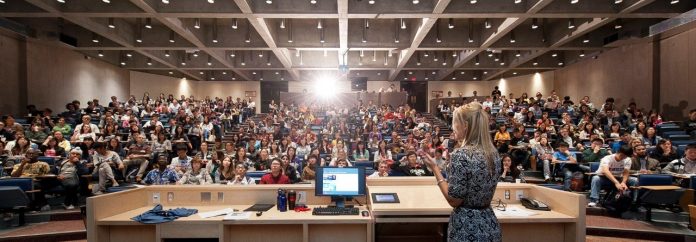
It’s unreasonable to think that a high school student can figure out what they want to do with the rest of their lives. Post-secondary should be a place to figure that stuff out more, instead of us needing to hit the ground running with debt and a life plan. With a free starting year, you can afford to make the time for things you wouldn’t normally do, like take an extra class, work a job, join a club, or even just make some personal time. You’d be able to make as much use of your young adulthood as possible.

Free first years for all those students would cost a huge amount of money of course, and that doesn’t come from nowhere. It’d probably come out of student fees and possibly government taxes, and realistically, some smaller healthcare and administrative fees might have to stick around. But once people have been given a mostly free year to figure out their life more, I’m sure that most of them would want to pay it forward to others.

How mentors are building a sense of community in SFU’s largest faculty

1
Image courtesy of OneClass

By: Michelle Gomez, Staff Writer 

SFU is notorious for being a commuter campus where sad students come to school, attend their lectures, and leave with their heads down. It can be especially daunting to find a place to fit in and make friends during first year. Most students are coming to campus straight from high school, where they have had the same group of friends that they have seen every day for the past few years. Going through such a transition can be stressful, and most incoming students are not used to having to put themselves out there to meet people.

The Faculty of Arts and Social Sciences (FASS) Connections Peer Mentor Program attempts to fill this gap by helping new students meet new people while giving them mentors to count on throughout their first year. The program pairs up new students (mentees) with a more experienced student (mentor) to offer support, resources, or just a friendly face in the halls. It’s been running since Fall 2015.

Brian Fox, student engagement coordinator of FASS and the initiator of this program, explains a bit more about it in an interview with The Peak. For the first three years that the program was running, new students could sign up online and in the first week of school they would be paired up with a mentor who are volunteers that apply, get interviewed, and go through training.

          Having had a difficult first year, I decided to become a mentor in my second year so I could help incoming students avoid my mistakes. It was a very positive experience for me, and I still talk to many of the people I have met through this program, including my mentees and other mentors! I would highly recommend that first years take full advantage of this program, and to return the favor by becoming mentors themselves later on.

Fox notices in particular that a lot of students come back and get involved with the SFU community in different ways after being a mentee. Whether it’s volunteering as a mentor their next year or getting involved in their departmental student union, mentees often return for that sense of community and to give back to the future generations of FASS students.

“There are lots of ways to feel more connected to this place,” Fox sums up. “Giving back will make your experience better.”

During the first few years, each student who signed up would meet their mentee either in a one-on-one meeting or at the welcome event held in September. Fox notes that the problem with this is that since students had to actively sign up for the program, they weren’t reaching as many students as they potentially could be, and they especially weren’t reaching the students who needed it the most.

For the first time this year, all FASS students who attended Welcome Day were automatically paired up with a Welcome Leader, who was also automatically assigned to be their peer mentor for the upcoming year. Students who were unable to attend Welcome Day also had the opportunity to sign up online to be included in the program.

Now that all Welcome Day students are automatically signed up for the peer mentor program, every new student gets to meet their mentor at least once, in a no-pressure environment, and it lets them know that they have someone they can always ask questions or hang out with. The program also hosts many activities throughout the semester that mentees and mentors are encouraged to attend, such as smoothie parties, outdoor movies, dodgeball tournaments, and more.

Fox explains that while all the mentors are trained to help their mentees and to direct them to the appropriate resources, the program is not only about that. A mentor is someone who new students can connect with, build a relationship with, and build a friendship with. It is not only about reaching out when you have a problem or need something, but also to have someone to say hi to in the halls, to meet up with to chat, or to do fun activities with when you’re stressed out. It’s about building a community.

Fox explains that many arts students do not choose a major for their first couple of years, and so it is often hard to find a community when you do not have a specific department to get involved with. It was for this reason that they chose to do one large mentor program for all of FASS, rather than for the individual departments. Not only does the program help orient new students and give them a sense of community, but it allows students to meet others from different departments and explore their academic options.

Fox’s vision is for every arts student to be connected to someone “where they actually feel like they can use this person as a resource and have a connection with them.”

“There are a lot of students who feel isolated and all it would take is to ask for help once or to say yes once. It’s about mental health and that stigma around feeling isolated. It is totally OK to feel isolated here . . . When we are able to connect new students with older students who already have a network at SFU, it provides a sense of community and connectedness. It helps students live in the moment.”

Staying In: The Five

0

By: Jennifer Russell


Best for:

Crime lovers

Amateur investigators


The Five is an intense one-season series comprised of ten episodes, and is a cliffhanger-crazy mystery of a show that will keep you staying up late just so you can watch the finale. Harlan Coben, an American mystery and thriller novelist, is the creator of this British-produced miniseries. The basic premise of the series is as follows: four young friends (Mark, Danny, Slade, and Pru) go into the woods to play, and Mark’s younger brother, Jesse, tries to join them. When Mark convinces Jesse to go home, he never makes it and goes missing. A convicted sex offender claims he killed Jesse, but the body was never found. 20 years later, Jesse’s DNA is found at a crime scene.

     The complex and intelligent storyline not only deals with suspense and mystery, but also heartbreak and trauma. Little details are slowly revealed so the viewer can’t predict anything too far ahead. Even seemingly good characters carry suspicious secrets.

      The show also beautifully flashes back and forth in time as information is revealed. One scene of Jesse as a child reoccurs time and time again, and while I can’t reveal anything else without spoilers; all I can say is this show put in a lot of thought put towards the writing, filming, editing, and all-around production!

The Five is available on Netflix.


We don’t always need media to be good, it just needs to be reliable

0
Image by CW

Written by: Gene Cole, Opinions Editor

Media has gotten better and better over the past few decades. Films budgets are swelling, TV content is way more diverse, and even mainstream video games are made with borderline cinematic graphics and writing. The best of what we can watch, listen, and read is always available for a wider audience than ever.

But quality is exhausting. I’ve started glazing over a lot of people recommending things as being important, and disregarding any sort of awards ceremonies to guide my media diet. I can’t remember the last time I’ve watched an Oscar-nominated movie, or watched a full series without diving into my phone during an episode and a half. It’s not abnormal for people to consume things much more casually, and people shouldn’t think about these things as guilty pleasures.

Something that fills this niche for me is pro-wrestling, particularly Monday Night Raw. This is a terrible television genre in a lot of respects: its entertainment value is often based on people putting themselves in physical danger, it can often be toxically masculine, and its scripted comedy often isn’t entertaining. There are a lot of good matches from incredible athletes to see every week, and instances of very good comedy, but its overall quality is quite low, to say the least.

These are all valid reasons to not watch Monday Night Raw in the first place, but the show has been on the air for 25 years and currently runs three hours of every week. Why? Because we know exactly what we’re getting each time: charismatic athletes trying to entertain a crowd. It doesn’t land every week, but it doesn’t have to, because it’s not the end of the world if a comfort-food show has a few rough episodes.

This is a quality that a lot of the higher-quality shows don’t really have. Netflix series like Stranger Things and HBO series like Westworld run on strict narratives that rely on each episode playing an integral part. Bad episodes hurt a lot harder when every episode is part of what the overall story leans upon. It’s the equivalent of going to a nice steakhouse where you’ve never had a bad meal only to be served an overcooked steak that you can’t get remade. To that end, media can just be junk food sometimes, and there’s no shame in a diet that consists of that most of the time.

As a student, culture is hard to keep up with between work, family, and most importantly school. A lot of the time, taking in a casual Netflix drama during our commute is exactly what we need. The superhero genre has definitely been filling this void for people lately outside of people’s homes, with three Marvel movies every year that all feature a consistent special effects and comical tones. These films rarely tend to be perfect, but thanks to their reputation they draw to the theatres a lot of people who usually just download movies once they’ve been out for a while. They don’t need to be perfect; they just need to be good enough for us to justify spending our time on them.

Of course, like junk food, it isn’t healthy for this to be your only type of media consumption. It’s important to try new things, experiment with other genres, and take in things that are topical. But there’s a reason so many people watch CW shows or play free games like Fortnite all the time: they’re easy to start up and don’t take a lot out of you. You’re allowed to be tired and not aware of what’s going on, and shouldn’t be ashamed to put personal enjoyment over quality.

Director’s Spotlight: Ruben Fleischer

0

By: Jonathan Pabico


Ruben Fleischer is best known for his 2009 horror-comedy, Zombieland. He delivers hilarious satire about the zombie genre by enveloping his characters in chilling environments, only to leave us amused by how these characters dispatch zombies in humorous ways. Fleischer’s direction also amplifies the edgy bravado of the film’s crude jokes, sarcastic wit, and unapologetic banter. Moreover, Fleischer helps shape the story into a laid-back road-trip narrative. He humanizes his characters through the portrayal of the bonds they share in their journey across their post-apocalyptic world.

      Aside from comedy, Fleischer explores the action thriller genre through his 2013 film, Gangster Squad. Like in Zombieland, he elevates the story with a superb ensemble that provides satisfying performances. Fleischer also instills Gangster Squad with riveting action sequences whose brutality and fast-paced thrills reflect the movie’s bleak and violent world. Although the story is similar to Untouchables, Fleischer balances immense set designs with fluid wide shots and panning camera angles to brilliantly show the extravagant lifestyles of the film’s Jazz culture.

       The director often demonstrates his skill through his comedies that offer rollicking adventures which evoke light-hearted tones. He instills relatable relationships between his characters, whose perfect chemistry create memorable stories. Fleischer also maintains exciting atmospheres for his films, regardless of the tensions or thrills that unfold across their narratives.

      Overall, Ruben Fleischer offers a fair variety of films that entertain us with their impressive storytelling. Fleischer’s newest film, Venom, premiered on October 5.  

Pay attention to the unstoppable SFU men’s soccer team

0
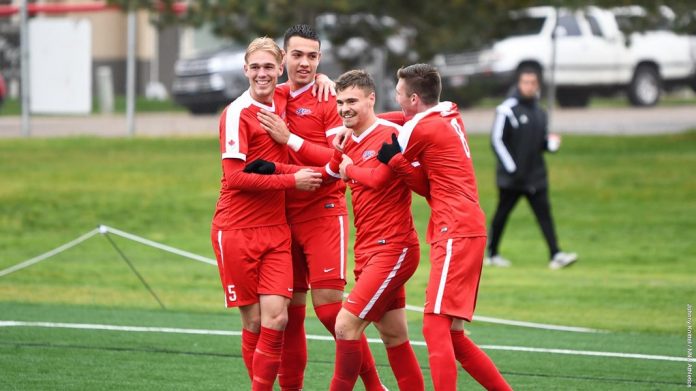
SFU men's soccer kicked off 2018 with 16 straight wins. (Photo courtesy of SFU Athletics)

By: Victor Gouchée

The 2018 season has been an exciting one for SFU men’s soccer so far. They’ve gotten off to a blistering 11–0–0 start, and have outscored their opponents 43–4 in the process. This start has not gone unrecognized, and they are now ranked #1 in the NCAA Div II.

While their talent level is unquestionable, a lot can be said about the team chemistry of this team as well, which began before the season had even started. For the first time in five years, the team began training away from their home on Burnaby mountain. The boys travelled to Norway for 10 action-packed days of training, matches, and team bonding experiences.

When asked how the trip was, senior forward and captain Mamadi Camara said the biggest thing he took from the trip was team bonding. “[We have] a lot of new players, so [meeting] them on the road . . . it forced everyone to have to get to know each other. Usually preseason is so short. Getting so close together off the field means everyone is closer on the field.”  

New members to the SFU coaching staff have also played a huge role in the team’s early success. Nick Dasovic, retired Canadian professional soccer player and current soccer analyst for TSN and the Vancouver Whitecaps, has joined the Clan as an assistant coach. Camara calls Dasovic’s professionalism “a huge bonus” to the entire program.

New signings have made their presence felt on the backline for SFU. Goalkeeper Luciano Trasolini and defenders Eric De Graaf, Joost Mangert, and Florian Langenegger have joined senior Michael North to help SFU keep their opponents off the score sheet.

A new starting goalkeeper and three new additions to the starting back four could have spelled bad news for SFU going into the season. However, as the season has progressed, the Clan have a conference high in shutouts (three) and a conference low in saves (eight) and goals against (two). These Clan recruits have been so valuable that the Clan have only conceded four goals in their 11 matches so far this season (including out-of-conference play).

For the most part, though, it is not the Clan’s defence that is getting the recognition, but rather the attacking four. Sure enough, SFU’s defensive record might be impressive, but their offense is much more dangerous.

The Clan boasts the conference’s top three goalscorers in Matteo Polisi (13), Connor Glennon (12) and Mamadi Camara (seven). Their strength is not just in the goals they score, but also in the chemistry the three have together. These three lead the conference not only in goals, but also in assists (mostly to each other). Camara and Polisi each have 10, while Glennon has seven. After starting the season 11–0–0, Camara says he is looking forward to contributing with more goals, while maintaining his assists.

“I want to reach the Final Four [semi-finals]; anything after that is up for the taking,” said Camara of his goals for the team. “The semi-final and final are much more chaotic than other games. I think everything we’ve done [this season] has helped us have a very good shot to win it all.”

Watch out for the SFU men’s soccer program this season, as they are eyeing up a very realistic chance at winning the elusive national championship. When asked why people should be paying attention to the Clan this season, Camara simply stated: “We’re number one in the whole NCAA DII. We score goals every game, we play a beautiful style of football, and it’s very exciting.”

Goodbye, my love

0
Illustrated by Cora Fu

Written by: Maxwell Gawlick

I have loved you,
And been loved by you.
I have hurt you,
And been hurt by you.
I have given you all,
And yet you ask for more.
I please you, I nurture you,
But you can only bring me pain.

I have sacrificed friendship for you.
I have sacrificed scholarships for you.
I have sacrificed co-op for you.
I have sacrificed all for you.
I have sacrificed years for you,
And you have failed me.

After four years, I am free from you.
After four years, I can finally say,
Goodbye to you, my GPA.

I have loved you,
And been hurt too.
I have given you all,
But you just make me bawl.
For four years we drew apart
But it still breaks my heart.

In the beginning, I got you to four,
But you only wanted more.
You would never again be what you were,
But even as you fell, it was all a blur.
I thought about you all the time,
But you just wouldn’t climb.

I tried to fix it on my own,
But it’s impossible to do alone.
I tried to hide it for a while,
But it was all I could do to smile.
I fought for you, by hammer and blade,
But all you gave me was a passing grade.

Sitting here, at my grad,
There was never a moment I was glad.
But after four years, I can finally say
Goodbye to you, my GPA.

Dress for school however you please

0
Photo by Azat Bayandin / The Peak

Written by: Zach Siddiqui, Copy Editor

As Miranda Priestly told her dismissive new assistant in The Devil Wears Prada, it’s comical how people think they can stay out of the fashion world when they have no choice but to wear its fruits every day. Like it or not, clothes are a social cornerstone.

However, cornerstone though they might be, the rules governing what to wear and when to wear it shouldn’t control you. We’ve handed down and refitted the rules, customs, and expectations of fashion for generations — and for even longer than that, rules have been meant to be broken.

So as useful a tool as fashion might be, I’m here to tell you that just as there are times to observe textile decorum for your own good, there are also times to disregard that crap and do what you consider comfortable. Going to school is one of those times.

From hypercritical elderly folks to innocent lifestyle bloggers, from fashion-related corporations to other Peak writers here at SFU, it’s like everyone’s got an opinion on what you should wear to your classes or whatever other engagements you have at your college or university. But who cares if you wear slides and sandals to lecture? Who cares if you carry a $400 handbag to tutorial? Let’s talk about why forcing everyone to stick to strict scripts of visual style is superbly misguided.

Some of us just have bigger things to stress about

I paid about $2,300 for my three classes this semester, I’m under pressure to perform well in all three, and the fact that half of them start at 8:30 or 9:30 a.m. means that I’ve been a less-than-ideal student since the beginning of the semester as I continue to readjust to early morning existence. On top of doing my course readings, I fact-check and edit about 20–30 articles a week at my job, keep my friends socially satisfied, oh, and I also have to work on getting my compulsive spending problem under control, which probably won’t happen because it’s a by-product of my attempts to use material commodities as replacements for the love which my inner demons regularly try to convince me I don’t receive from myself or others . . .

No, I don’t have time to care what I put on in the morning.

I do care, and make time, because damn these particular inner demons, but I don’t blame anyone who can’t be bothered. We’re busy. Move on. Try a Pumpkin Scone.

Your prof probably doesn’t care what you wear . . . and if they do, what the hell?

Is your professor here to be your friend, your romantic prospect, or your What Not to Wear Stacy/Clinton figure? Nope! I’m pretty sure they’re here to teach you, or lecture at you or something — whatever. Therefore, seeing as how many of them will never learn your name or even your astrology signs, they certainly have no reason to care what clothes you put on your back as long as you do, in fact, put something there.

Any professor who does allow themselves, their conduct, or their grading to be influenced by what a student wears should keep in mind what they’ve been paid to do. We shouldn’t normalize such standards, because . . .

Unwritten dress codes normalize academia as a class gateway

While it’s certainly possible to dress well on a budget, as a general trend, dressing better means spending more on your closet. Not everyone is in a position to do that. When we expect people to dress a certain way for class, we let economic class influence us in a setting where all that should matter is people’s brains.

Snobbishness in academia is not a new phenomenon, and it comes up over stupid things: things like “she’s a girl in a mathematics class”, or “they lecture with ‘way too thick’ of an accent.” It certainly occurs with clothing, too, and that sort of prejudice is even intersectional in a bad way. One study reports that college students are more likely to consider fellow students thuggish or dangerous if they happened to be Black students wearing hoodies.

Many students can’t even get into post-secondary education in the first place because of the associated costs, which in turn means they won’t be able to get the credentials to one day earn a proper salary at a suitable job. If we let what we wear be something we’re judged on, we further the othering of some students while others receive yet another extra, should-be-irrelevant edge.

Luckily, clothes are something people are starting to relax about. It seems like these days, students are more likely to be judged for dressing up than dressing down, like when British law student Paula Ursu was mocked by classmates for wearing nice clothes and heels to lecture. Racked, a fashion blog affiliated with Vox Media, reports that even employers are starting to calm down about clothing, as they’ve noticed the current workforce generation works better in more casual settings.

On the other hand, if you do want to dress cute for school . . . Good! Love yourself!

As I wrap this up, I want to make it clear that I’m certainly not saying you can’t dress well for school. Like I said before, while I don’t think people should be expected to dress any type of standardized way for class, I expect myself to do so sometimes. As much of a pain as it is, it does make me feel pretty nice about myself!

So if clothes accomplish that for you too, then go for it. Even if they are super expensive. It’s not pretentious, unless you’re trying to be pretentious about it, and if you are, then you’ll do that without or without your pricey outfits.

So go on. Put on whatever you want. You get to decide whether or not you care — not anyone else.

Hamish and Jo’s Adventures in France: Welcome to Menton

0
Illustration by Siloam Yeung

By: Hamish Clinton and Jozsef Varga

Imagine heavily armed French border patrol officers chasing you off a train, demanding that you show them your papers . . . Well, we don’t have to! Because that was us only a handful of days ago, on exchange.

We were coming back from a short trip to Italy on one of many trains running between the Italian border town of Ventimiglia and the French border town of Menton. Unfortunately, we hadn’t realized that despite Europe’s open borders, you still need to keep your passport on you. In our ignorance, we thought the best plan of action was to play even more ignorant, assuming the Quebecois and Anglo-Canadian identities of “French-Canadian Passenger #1” and “Jonathon.” After we recited what felt like a painfully long and stupid excuse, the police, accustomed to silly North American tourists, let us go with a warning.

All that aside, the south of France is truly lovely, filled with the scents of lavender, sage, and the aromatic Mediterranean Sea. After the eight-hour plane ride from Ottawa it took to get there, it was all the more beautiful.

We’re part of a program at SFU called the French Cohort Program, and the third year features a mandatory exchange to a French-speaking region of the world: France, Belgium, Switzerland, even Quebec if you want. We went with the first option, and we are now happily attending a school called Sciences Po at its Menton campus.

Menton is a rather small town to the east of Nice, all the way at the bottom of France. There seem to be about twelve people living here, and once tourist season fully dies down, perhaps it’ll drop to three or four . . . Who knows? We’ve heard the town brings in a nice big Ferris wheel during the winter months to encourage a few travel-happy fools to come and give the population some diversity.

It’s a pretty little town with a pretty little school on a pretty little hill looking over a pretty big sea. We like it here. When we first arrived, naturally we completely ignored the chance to get to know our future classmates and went exploring instead — an excellent idea on all accounts.

We started by taking the train west to Nice. This train hugs the coastline for the entire trip, offering stunning views of the rocky beaches, the yachts making the trek from one coastal resort town to another, and the skyscrapers and glitzy wealth of Monaco. When you aren’t treated to a view of something beautiful, it’s because you’re in one of the many tunnels constructed beneath seaside neighbourhoods filled with multimillion-dollar villas and palaces.

Spoiler alert: Nice is nice. Incredibly nice. We saw many a quaint café, sat on a gorgeous beach, and climbed a mountain. (The mountain was really just a hill with a waterfall, a historic fort, and an even nicer view of the city and ocean, but in 30-plus-degree heat, it certainly felt like a mountain.) We only stayed on the summit for a short while, because the sun started to sink, bathing the city with a peaceful glow.

It was late when we made our way back, but we could still make out the many church bell towers scattered throughout the cluster of homes in the “old city,” bathed in the orange lights lining the streets. This was home now.

Heading back to our place means leaving the train station and starting a three-minute trek towards a waterfront casino. If it weren’t for the building across from us, we would be able to see the bright white, well-illuminated casino from where we live . . . well, if it weren’t for the building across from us and the fact that we live in the basement.

Our small underground apartment is in a housing complex off of Avenue de Verdun. This avenue features many cafés and restaurants, along with a large park in the middle of the boulevard. Townspeople frequent the park with their many, many little dogs, and it boasts an impressive number of lemon and orange trees.

Menton has so many lemon trees, in fact, that the lemon is the town’s main export and most important symbol. We’ve never seen so many shops dedicated simply to lemons and their by-products! The town even hosts a lemon festival every February, with large displays made entirely of lemons, and the idea of such a festival is equal parts strange and exciting.

Menton has some cultural influence from ancient Rome, but unlike some other towns in southern France, it doesn’t have a large coliseum or an aqueduct to prove it. Rather, there is a road.

La rue Longue (literally “The Long Road”) runs through the old town and connects its bustling main square to Sciences Po. However, this long road was once even longer, as it belonged to the network of roads that joined Rome to the rest of the sprawling Roman Empire. Long after the empire fell, that Long Road remained, and the Italians eventually founded Menton on it. Now, a century or two after the town became part of France, the two of us use this road every day to go to school.  

On that note, Menton has so much Italian influence. You’re just as likely to hear Italian on the street as French. In fact, Menton is so close to Italy that you can walk from our school to the Italian border in under 10 minutes. Because Italy tends to have cheaper prices than France does, many people cross the border to do their shopping (much like Canadians crossing the border into Bellingham or Sumas to shop and load up on gas). Of course, this means that good Italian food is readily available, and the pizzas we’ve been eating have spoiled us.

Now that we’ve been here for about a month, we’re starting to better understand the southern French lifestyle that we may need to adopt if we want to fit in. This means some seaside lounging, afternoon naps, and general relaxation vibes. All this might sound quite nice, but it isn’t always fun and games. This “carefree” lifestyle can be frustrating to the point of early balding, especially when it is introduced to what seems to be comically intense French bureaucracy.

Despite having gone to the bank our very first day here in France, we still don’t have bank cards, and it’s nearly a month into our exchange. We received our French SIM cards only days ago, and we still do not have Wi-Fi, cable, or a home phone. It can also be frustrating when businesses close between 11:30 a.m. and 1:30 p.m. for lunch, or between 2 p.m. and 4 p.m. for an afternoon break or siesta.

Thankfully, we’re slowly adapting, both in our general day-to-day lives and our day-to-day schooling. At school, we are taking a class taught by premier French international relations professor Bertrand Badie, another class with a focus on political philosophy, and finally a class on international law.

Hopefully, taking all these classes on international society while living internationally will help us focus, and maybe even better appreciate what we are being taught . . . because so far, the hardest assignment we’ve been given in the classroom is to avoid staring out the floor-to-ceiling windows. It’s hard not to look at the bright blue sea glimmering in the sunshine only a few hundred meters away, at its peaceful bathers and tall sailboats floating alongside the warm Mediterranean breeze.