Home Blog Page 6

Club Profile: the Filipino Student Association

0
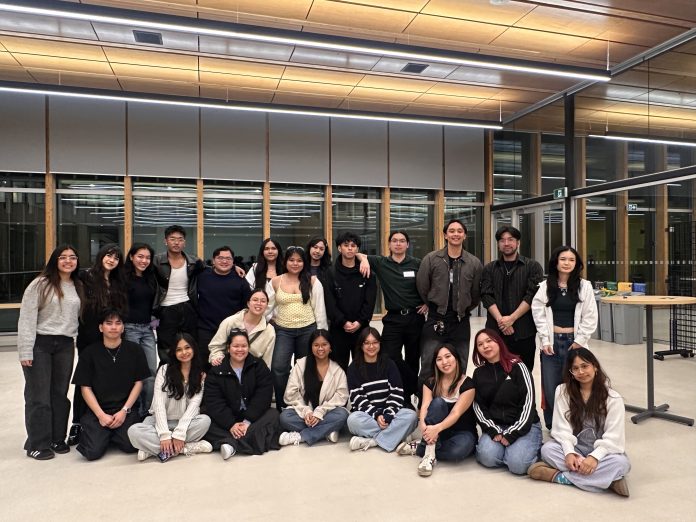
A group photo of the Filipino Student Association members in the SUB Ballroom
PHOTO: Courtesy of Unique Mariano

By: Marie Jen Galilo, Staff Writer

SFU’s Filipino Student Association (FSA) was founded in 2021 by Filipino international students who recognized the need for a community on campus, a space for Filipinos — who make up around 3% of the student body. Off the heels of an eventful spring semester, I spoke with Unique Mariano, the club’s president. 

Mariano joined the FSA when she started her academic journey at SFU, where she studies psychology. “I wanted to find my community,” she said. She started out as a graphic director, back when the club was still “a baby.” She became communications director, then vice-president of communications, before becoming president this summer. 

Her journey included moving to Canada when she was 14, leaving behind many of her family members back home in the Philippines. It wasn’t until university that she decided to start putting herself out there, she tells The Peak. When she joined the FSA, she found a family, and the other members “share that same sentiment.” The FSA was “founded through love” and “the humour is Filipino humour.” 

The club consists of members from different age groups and those who were born and raised here, those who are mixed Filipino, and immigrants from the Philippines. This diverse composition creates learning opportunities which strengthen every member’s connections to the culture. Those who grew up in Canada teach the others about “the other side of the Filipino Canadian community,” while fluent Tagalog speakers teach those who don’t know the language. Mariano gushed over how heartwarming it was to watch members become more comfortable speaking the language, and grow into their Filipino roots.

Throughout the year, the FSA hosts a variety of events, including icebreakers, Christmas parties, and karaoke nights to share Filipino culture with the rest of the campus community. They collaborate with Filipino associations in Langara, Douglas, and UBC and other SFU groups, including the karaoke club SFU Peak Frequency. During these events, the FSA serves Filipino food from Filipino businesses — two of their favourites are Plato Filipino and Pangpanga’s Cuisine. “Filipinos bring their friends who are not Filipino,” she reminisced. “That’s so Pinoy, and it’s so cool that they’re enjoying it.” Pinoy is a slang term for anyone of Filipino descent.

Mariano’s favourite FSA event so far has been Pistang Sari-Sari, which was hosted in the SUB ballroom a couple of years ago. “Pistang” translates into fiesta or festival, while “sari-sari” means variety — local Filipino artisans, business owners, and performers were invited. The event holds a special place in her heart because it was the first event she helped organize. She said the process of planning it felt like a lofty dream. “‘You want to invite more than eight Filipino business owners and bring them to SFU during summer?’ Summer’s very hard for clubs because no one’s at SFU. No one’s going there just to go to a club event,” said Mariano. The event ended up being a massive success with a reward of nearly 100 attendees. 

The FSA will be resting over the summer semester, but they’re planning a variety of events for fall that students can look forward to, including online events on Discord, fundraising events, study sessions, and Tagalog workshops. You can keep an eye out for those on their Instagram, @sfu.fsa or TikTok with the same name.

When asked about her favourite Filipino holidays and traditions, Mariano highlighted “pasko,” or Christmas. In the Philippines, the Christmas celebration is four months long, starting in September because September is the first month ending with “ber.” 

As a second-generation Filipino Canadian, Mariano’s story resonated with me. One of the core values of our culture is the importance of family — loved ones give us the strength to keep going even when confronted with challenges in life. Pasko is also one of my favourite Filipino traditions — I’ve always looked forward to waking up to my family playing Christmas music on September 1. 

There’s always a reason to celebrate in Filipino culture, which Mariano also loves — Filipinos always find a reason to bring family and friends together for even the smallest moments of joy in life. “There’s no dull moment,” Mariano said. “What are we doing inside the house, let’s go karaoke, right? Those are the stuff I really treasure as a Filipino.” 

Mariano’s favourite part about being Filipino is how hospitable Filipinos are, even if it’s your first time meeting. “You just start chatting right away,” she said. She also loves how joyful Filipinos are and how contagious that joy is. “Whenever I hangout with my friends or with the Filipino club, we always laugh,” said Mariano. This is something I couldn’t agree with more — whenever I’m with my Filipino friends and family, everyone ends up smiling, and the harmonies of joyous laughter make the world a brighter place. 

For those who are trying Filipino food for the first time, especially ones that aren’t so mainstream, Mariano recommends dinakdakan, a dish originating from Ilocos. It consists of grilled pork, onions, and chili peppers coated in a tangy calamansi (a native citrus fruit) dressing. “My parents are Ilocano,” she said. “I think that’s one of the best Filipino foods.” She also recommended bicol express, a rich dish consisting of pork simmered in coconut milk, balanced by the spice from chili peppers. For dessert, Mariano enjoys yema, which is a sweet, milky candy made from egg yolks and condensed milk. In regards to shape, “it needs to be triangle,” she specifies. Finally, an honourable mention was the Filipino homestyle peanut butter. “It needs to be the orange lid and it needs to be sold in ‘palengke,’ or Filipino marketplaces,” she said. “It doesn’t have a brand, you don’t know who’s cooking it — it’s just so good.” 

A way that Mariano bridges the geographical distance is by learning about current events happening in the Philippines. “One of my ways to still be connected to my culture is to look and listen, and read articles about the Phillipines, read news,” she said. That includes “Filipino pop culture.”

For students interested in joining, Mariano assured, “Don’t be afraid to reach out to the club. We’re super friendly [ . . . ] If you saw our events in the SFSS SUB ballroom, come in and enjoy.” She continued, “Don’t be afraid, don’t think that you’re not Filipino enough. You are.

“Being Filipino is not just about if you have the blood of a Filipino or if you grew up in the Philippines,” she said.

“If you have a Filipino heart, you’re Filipino.”

— Unique Mariano, president of the Filipino Student Association 
Pinoy Festival 2026 fosters community

0
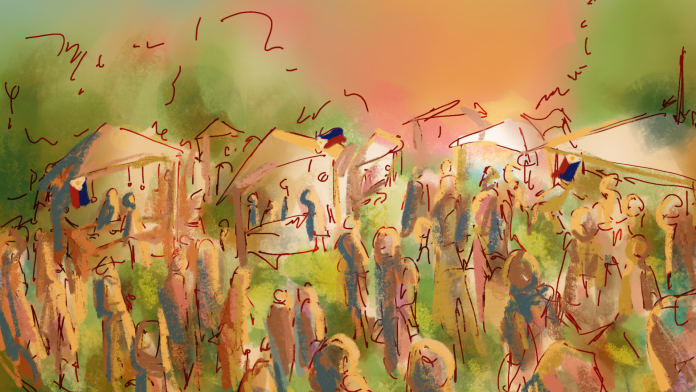
An illustration of the Pinoy festival, with tents, stalls, and flags of the Philippines
ILLUSTRATION: Sonya Janeshewski / The Peak

By: Sia Garg, SFU student

June is Filipino Heritage Month across Canada, and in BC, this year’s community celebration is the 4th annual Pinoy Festival, taking place at Swangard Stadium in Burnaby, on June 20 and 21. The festival’s organizers are connecting their celebration of Filipino culture to the spirit of unity seen on the world stage during this year’s FIFA World Cup summer. The Peak got in touch with Paul Clemente, the chairman behind this year’s festival, to learn more.

At the heart of the festival, we have a focus on the Filipino concept of bayanihan, the tradition of communities coming together to support one another.

As Clemente has put it, that spirit will be reflected throughout the events, being entirely “volunteer-run,” and built through the efforts of local community groups. Many have come together to help each other out and to create something beautiful that showcases the Filipino culture, heritage, and pride. Every feature, ranging “from the art exhibit to the family fun park” has included community groups who spent months preparing booths, performances, and cultural showcases that will fill the festival grounds throughout the weekend.

Kicking off the weekend, the festivities will begin on Saturday with the Solidarity Parade, one of the festival’s signature events. Led by a marching band, the parade features “contingents from Filipino organizations representing different regions, provinces, interests, and associations.” Participants are invited to arrive in traditional attire, carrying communal banners, and performing chants that past participants have described as creating a lively and colorful atmosphere. Other immigrant communities will also march alongside the Filipino community, highlighting the festival’s broader message of solidarity across an array of ethnic and cultural diversity.

The remainder of Saturday includes an opening ceremony, cultural performances, and a Philippine cultural fashion showcase. Later in the evening, the festival will be shifting gears with a DJ show collaborating alongside Tables Tutors DJ Studio, involving 11 DJs, “alongside some breakdancing, and a special performance by Vino [Cuenca], a national Canadian beatboxing champion.”

The following Sunday will be filled with live music, with bands performing throughout the day. Hungry attendees will be glad to hear that across both days, there will be a large selection of many featuring food trucks and stalls serving everything from sizzling street food to classic home-cooked Filipino classics, such as chicharon bulaklak and ginanggang, as well as a Beer Garden, a pop-up marketplace featuring local handmade goods, and interactive community booths, all of which are worth lingering around a little longer.

However, we also got a sneak peek at one feature Clemente is hoping to receive a lot of attention this year: the Arnis showcase! Arnis is the national martial art of the Philippines, and will be demonstrated live by local clubs who will be coming down to offer visitors a chance to experience an important part of Filipino cultural heritage firsthand.

Don’t miss out on this exciting opportunity to celebrate Filipino culture without having to travel a long distance. Gates open at 9:00 a.m. and the celebration runs until 10:00 p.m. for both evenings. Admission is free, which gives visitors many opportunities to celebrate Filipino culture together with family or friends!

Stay up to date with the festival by following their Instagram page @pinoyfestivalca.

Book talk explores the nuances between tradition and modernity in Iran

0
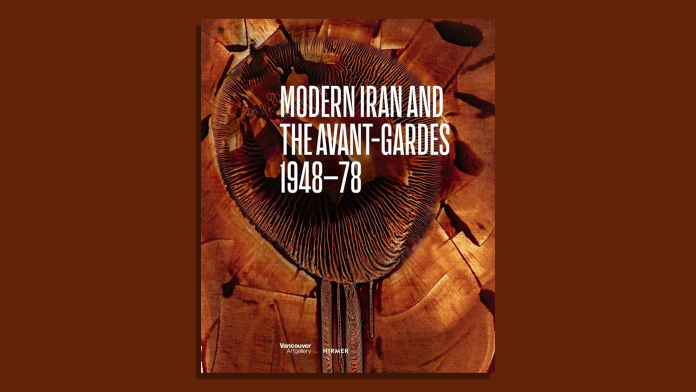
Cover of Modern Iran and the Avant-Gardes: 1948–78
IMAGE: Courtesy of Hirmer Publishers

By: Nejdana Houshyar, Peak Associate

On Friday, May 29, guest curator Pantea Haghighi, along with Iranian architect and artist Hossein Amanat, and scholar Jeff Derksen, came together at the Vancouver Art Gallery to discuss their contributions and the historical backgrounds behind the newly released book, Modern Iran and the Avant-Gardes: 1948–78. The talk focused around Amanat’s design of the Shahyad Tower, or the Azadi Tower, which is widely known as the “Gateway Into Iran,” while Derksen dove into his research on the “dynamic dialogue between tradition and modernism.”

The rise of modernism — the 20th century movement in arts that draws focus on experimentation, subjectivity, and abstract expression — was the main topic of concern when discussing Amanat’s designs. He explains how it was his time at the University of Tehran, where he got to hone in on his studies of architecture and art. He shared, “You have to be an artist first,” when working with architecture, as it is the foundation for impactful and important buildings. It was when he was a college student that he was introduced to modern art and environments, while simultaneously taking inspiration from traditional Iranian villages. That was the moment where the interactions between tradition and modernism became some of the biggest influences of his life. 

Amanat’s blend of tradition and modernity is the staple for the Shahyad tower. For his love of the former, he discussed how he wanted the material used, which was white marble stone, to be “proper for the period.” He acquired the material from a stone worker who knew virtually nothing of the quarries where the stone was found. Then, every stone had to be hand-carved, which was done by men who mostly had no education. He raised this point to reiterate that the creation of the Shahyad tower was done by the ordinary people of Iran, suggesting that, “it talks of a talent that existed in all layers of Iranian society those days.” Additionally, the stunning ribs that run along the sides of the interior and exterior of the tower create arches reminiscent of Islamic architecture.

Derksen was then asked about his take on how the relationship between tradition and modernity changes the role of Iranian culture. He observed that there was a “continual dialogue that was being set up, continual contestations within artistic, architectural, and poetic communities” and “the students who were forced to study outside of Iran.” It was the case that the relationship between tradition and modernity was altered by culture rather than culture altering between them. 

As someone who comes from an Iranian background, it was illuminating to be able to attend this event and learn more about the culture of my homeland.

The move from tradition to modernity through arts and architecture is fascinating, as it shows that art has the ability to change lives and cultures.

Of course, I also found out that this switch was not always perfect, as Amanat explained with the introduction of cars and modern machinery, it became difficult to keep the same traditional beauty of a city, when he was briefly discussing the transformation of Tehran. These new inventions become tools in everyday life, and as Amanat stated, “it helps most of the time, and sometimes it destroys other things.” I found Amanat’s take to be not only true but also identifiable to so many places. That is what makes art revolutionary: when it discusses real-world issues and can speak to anyone at any time in history. 

I encourage anyone who is interested in the rich art and culture of Iran to purchase the book Modern Iran and the Avant-Gardes: 1948–78. It not only provides an in-depth knowledge on Iran’s great poetry, art, and architecture, but also gives insight into how they are created and how modernity can change tradition. Additionally, starting from December 11, 2026, an exhibition for Modern Iran and the Avant-Gardes will be on display at the Vancouver Art Gallery. This will be the first exhibition in Canada to explore how Iran embraced modernism. 


New Artopia lodge Cosmo creatively repurposes industrial space for artistic use

0
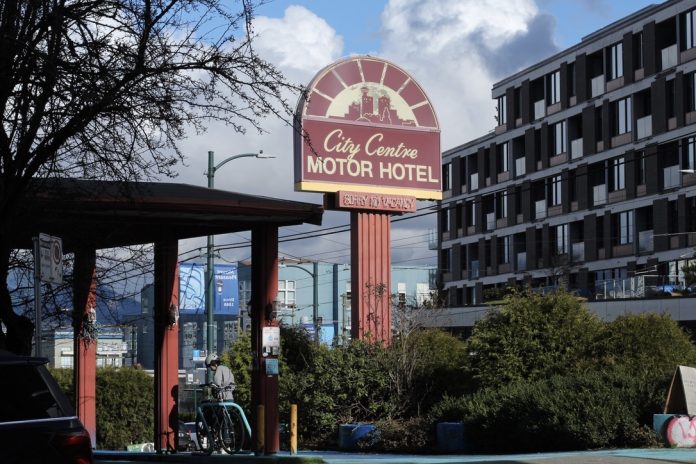
A photo of the Artopia City Centre Lounge
PHOTO: Maya Barillas Mohan / The Peak

By: Maya Barillas Mohan, Staff Writer

Notoriously expensive with an undeniable creative pulse, Vancouver is still able to create affordable working spaces for full-time artists, thanks to David Duprey. In an interview with Duprey, the founder of artist-forward Narrow Group, The Peak learned more about the upcoming artist lodge Cosmo and his philosophy behind affordable spaces for Vancouver’s diverse artists. Mount Pleasant’s newly-opened Cosmo building occupies a former industrial building on West 4th. Duprey doesn’t “change walls or staircases,” he just reads the flow of a particular space. 

“Arts and culture is just fundamental,” Duprey started. “We all have it around us every day. It’s design, it’s stuff we look at online, it’s the soundtrack of our lives.” He is motivated “to create a vibrant and exciting art scene,” from his artistic background as a photographer, which was later combined with his interest in business. He has opened up “affordable places for people to work and thrive” over the past 20 years. Units range from 90 to 968 square ft with prices ranging from $275 a month to over $2,000. These “Artopiaworking spaces are possible because Narrow Group makes “deals with landlords for empty buildings they couldn’t find a use for.” These savings are passed onto the artist so “people can afford to be there and afford to create.” Duprey expressed that there is a “broad reach of what is considered art, but as long as it’s something creative that you’re doing, then you’re in.”

Artopia offers a creative use for empty buildings, but bylaws, zoning, and permits can be “incredibly difficult.” Some buildings from 50 years ago are not “up to today’s building codes,” so finding flexibility in the City of Vancouver’s bylaws is a recurrent challenge. “A staircase 2 cm too small, we should really be letting things like that go,” Duprey reflected. In the spirit of giving artists the “capacity to build their own infrastructure” within Artopia buildings, Duprey uniquely offers freedom that other spaces in Vancouver don’t. Some put restrictions on oil painters or ceramicists due to the precautions required for solvents or kilns, but it’s not a problem for him as long as “it’s up to safety standards.” 

According to Duprey, some cities like Calgary or Victoria support artists by relaxing bylaws in artist-occupied buildings. “I’d love that to happen in Vancouver, where we’re working with the city and the permitting department,” he reflected. Bylaws are different from working around larger projects like the Broadway subway expansion, though. “That’s way above my paygrade,” Duprey laughed. “I do appreciate that nothing lasts forever. I have buildings that have been filled with artists for 20 years, and others that are going to last three or four.” He continued that he will make any space work because “the nature of everything is that it’s change [ . . . ] but we’re going to get value out of it, we’re going to create some stuff, and make it affordable. I think that’s what’s most important.” 

When I went to the Artopia City Centre Artist lodge, I was impressed by the way the space hosts a great variety of artists who were all ready to chat with each other and myself. I believe that it is spaces like these that push artists into the view of the public. It’s inspiring to see what these existing spaces have done and what upcoming spaces will do to continue to serve the city’s arts scene.

Vancouver Youth Choir wins first place at the Cork International Choral Festival

0
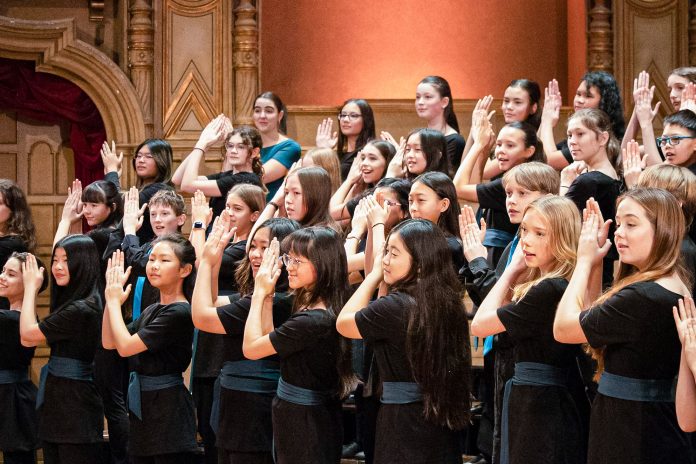
A photo of the VYC mid-performance
PHOTO: Juliana Manalo / The Peak

By: Marie Jen Galilo, Staff Writer

Back in May, the Vancouver Youth Choir (VYC) led by artistic director Carrie Tennant won first place with an impressive score of 95.1% in the Fleischmann International Trophy Competition, one of the many events in the Cork International Choral Festival. The VYC sang a total of four choral pieces in the competition, including “Angelus Domini” by Giovanni Gabrielli, “Fire” by Katerina Gimon, “Õhtul” by Pärt Uusberg, and “O Sapientia” by Tadeja Vulc. Tennant was also awarded the McCurtain and McSwiney Memorial Trophy for expressing her creativity and musical artistry through her choral leadership. In addition to the competition, the festival also has several non-competitive events, such as fringe concerts and pop-up performances, some of which the VYC also participated in. 

The VYC, which was founded in 2013, is now Canada’s largest youth choir consisting of more than “700 singers across 16 ensembles in 8 levels,” between the ages of 5 to 24. The VYC aims to create an environment where singers feel supported as they learn various vocal techniques and grow into their own unique voices. The VYC participates in events at both the national and international level through which they share their passion for music, such as the 2025 Jeju International Choral Symposium.

The Peak spoke with Zayan Kassam, a tenor 2 apprentice section leader in the VYC, to learn more about the festival experience.

When he was first told that the VYC’s application to compete was accepted, Kassam said he was “very excited certainly.” As he reflected, VYC isn’t “exactly a traditional choir per se,” which led him to wonder about how the competition’s judges would receive their entry, but he was nonetheless intrigued about the preparation process that would follow. 

In preparation, Kassam said that the choir did “lots of rehearsals and at-home practicing,” but also collaborated with a “fantastic clinician (guest conductor),” who assisted the choir with several persistent challenges. It was here that Kassam and the VYC learned how to practice “setting intent,” which he described as “thinking about the music, what we want to portray, and focusing on our artistry,” so that “we can put our whole heart into that performance.”

Having the opportunity to visit Cork and be a part of the festival was a truly incredible moment for Kassam and the team, as they shared the stage with hundreds of “musicians of such a high calibre.” Personally, he reflected that, “stepping on stage is something I’ve done many, many times in my life, but I’ve never competed before. That was a really exciting feeling.” 

“Watching an audience see their first VYC performance is always so fun because of how much it transforms people’s perspectives on choral music, and I’m so grateful that I get to be a part of that.”

— Zayan Kassam, VYC Member

After the competition, the VYC — as is customary for the winning team to perform a piece following the announcement of winners — also performed “Kei Wareware i a Tātou” by Margaret Ngaropo Hati, Charles Te Wake-Mathews, and Latoya Leef-Mathews. Following that, at the closing gala, they went on to perform “Quizassa” by Merrill Garbus and “Here Comes the River” by Patrick Watson.

The VYC and choral events like the Cork International Choral Festival show that choral music is more than singing notes on a page — it is a bridge that brings people together, transcending time, space, and language so that the harmonious blend of their voices can bring the notes on sheets of music to life.


What your favourite film director says about you

0
A black-and-white composite image of film directors (from left to right): Abbas Kiarostami, Hirokazu Kore-eda, Hayao Miyazaki, Christopher Nolan, Steven Spielberg, Greta Gerwig, Alice Wu, Hong Sang-soo, and Wong Kar-wai
IMAGE: Abbey Perley / The Peak, with stock courtesy of Flickr and Wikimedia Commons

By: Your Letterboxd account

Abbas Kiarostami: You have a deep appreciation for the mundane and the small beauties of life. Unfortunately you are also deeply melancholic. I’m sorry you’re going through such a difficult time — maybe you need to watch something other than Taste of Cherry to cheer you up.

Hirokazu Kore-eda: You have significant family trauma and you have the urge to vicariously live through Kore-eda’s filmography. The emotional pain of watching his films on a loop gives you catharsis while you’re still looking for that found family

Greta Gerwig: Are you a white feminist? I promise you there are more films about the experience of being a woman than Barbie and Lady Bird. May I direct you towards Kinuyo Tanaka’s filmography

Christopher Nolan: You need to branch out and watch more movies. I’m sorry, but having a non-linear plot and everything composed by Hans Zimmer does not make a masterpiece. If you’re looking for suggestions, start with Park Chan-Wook’s The Handmaiden — now that’s a non-linear king. 

Hayao Miyazaki: Your nervous system is deeply unregulated which is why you always turn to the classic, slow-paced wonders of Miyazaki. You deeply relate to Kiki’s Delivery Service because of its exploration of burnout, and that should be a lesson you take to heart!

Hong Sang-soo: You are very, very socially awkward. However, that’s not the real problem. Just like his pretentious self-insert characters, you believe you are entitled to love, but spend little time considering other people’s emotions.

Ousmane Sembène: You have a deep sense of purpose and originality. Just like a real film lover, you’re aware that Europe is not the centre.

Steven Spielberg: You think film is primarily for entertainment. There’s nothing wrong with that, you’re just a straightforward person. 

Wong Kar-wai: You think you can cure loneliness by travelling to neon-lit cities. Alas, that is not the case. Didn’t you learn anything from Happy Together?

Alice Wu: You are gay with a great sense of humour! Honestly, you’re probably more chill than the rest of the people on this list.


NDP MP Gord Johns introduces motion to increase mental health services

0
PHOTOS: blacksalmon / Unsplash

By: Niveja Assalaarachchi, News Writer

On April 27, New Democratic Party (NDP) member of parliament Gord Johns introduced motion M-31 in the House of Commons focused on mental health services in Canada. This is a private members’ motion: a motion introduced by individual members who are not a part of Cabinet or the Legislative assembly, the law-making committees of the House. M-31 calls to recognize that the country is going through a “a mental health and substance use crisis” wherein “too many Canadians are unable to access mental health or substance use supports in a timely manner.” 

The motion notes that emergency services and general practitioners have been overstrained in this country as a result of increased mental health issues and “lack of access to community-based mental health and substance use services.” Johns’ motion also highlights how Canada’s mental health funding has lagged behind countries like Germany, the United Kingdom, and France.

The motion calls on the government to increase federal spending on mental health services from a reported 6.9% as of 2019, to 12% of the nationwide health-care spending budget. It emphasizes the need to work with provincial governments while reaching this budgetary goal, and the need to present annual reports to parliament concerning this issue.

Concerns regarding mental health remain significant in this country, withone in three people aged 15 years and older [experiencing] a mental illness or substance use disorder during their lifetime,” according to a 2021 report from the federal government. This report points out that the mental health crisis affects different groups disproportionately, highlighting that Indigenous Peoples experience “persistent inequalities” through the ongoing effects of colonization. This ongoing process has a direct impact on the mental health of Indigenous Peoples through “the loss of land, culture, and self-determination,” as well as structural challenges such as “discrimination and a lack of culturally safe services.” 

Federal NDP leader Avi Lewis has also supported the bill, alongside the Canadian Alliance on Mental Illness and Mental Health (CAMIMH), a national policy advocate for mental health in Canada. The Peak reached out to Gord Johns via email, and a media representative shared a recorded press conference held on April 30. At the conference, Lewis noted,

“Mental health is part of your health. It should be part of our publicly funded health-care system.”

— Avi Lewis, Leader of the New Democratic Party of Canada

Lewis further added that Canada was in a moment of “nation building” and that “comprehensive mental health coverage is a nation-building project worthy of the [parliamentary] term.”

Anthony Esposti, co-chair of CAMIMH, highlighted that the issue requires “all parties come together to achieve mental health parity, which will help address the systemic issues that contribute to the deepening mental health and opioid crises in Canada.”

Johns, who has been a Member of Parliament since 2015 representing the Courtenay-Alberni riding, has previously advocated for federal action on mental health. In 2025, he introduced M-20, a motion that aimed to establish a “national strategy for addressing the mental health impacts of emergencies,” including natural disasters and large-scale emergencies that impact communities. However, this motion was never tabled in parliament. Johns also focused on issues such as substance use by introducing the private members’ bill, C-216, in 2021. Among other actions, this bill aimed to amend several federal laws surrounding substance use, including amending the Controlled Drugs and Substances Act to reduce charges of possession of certain narcotics via decriminalization. However, the bill did not progress past its second reading in the House. 

Annual dragon boat festival cancelled due to FIFA World Cup

0
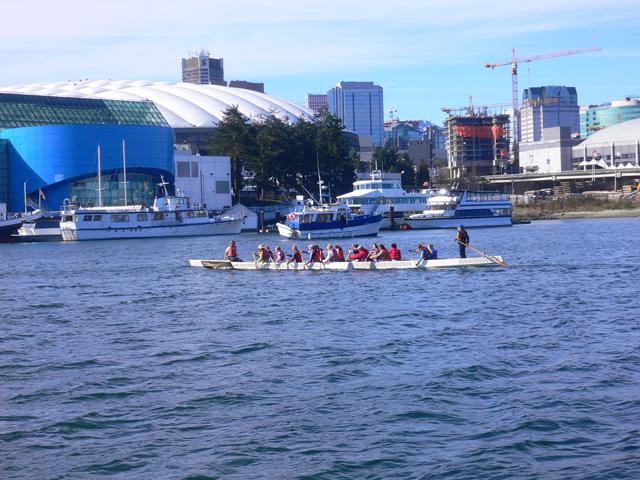
PHOTO: Jsdyson / Wikimedia Commons / Licensed under CC BY-SA 4.0

By: Niveja Assalaarachchi, News Writer

Dragon boating in Vancouver is a significant part of the city’s history, dating back to 1986. The first dragon boat races were held at Expo 86, a celebration of the 100th year of Vancouver’s official colonial formation via the Vancouver Incorporation Act of 1886. The popularity of dragon boating within Chinese communities and beyond at the Expo catapulted the formation of the Canadian International Dragon Boat Festival Society (CIDBFS), who host the annual Concord Pacific Dragon Boat Festival

This year, one historical event will take precedence over another, as the 38th annual Concord Pacific Dragon Boat Festival will be cancelled to make room for the FIFA World Cup games in Vancouver. However, a smaller event, the Concord Pacific Dragon Boat Summer Regatta, will be held on August 22.

The Concord Pacific Dragon Boat Festival is the largest festival of its kind in North America and typically takes place in June over the course of three days. The festival, which is considered “one of the world’s most prestigious [dragon boat] races,” hosted 250 local and international teams, with more than 6,000 dragon boaters competing in the 2024 races alone. The 2024 games reportedly drew an audience of 150,000 people from all over.

The FIFA World Cup, which will be held in Vancouver and 15 other North American cities from June 11 to July 19, requires strict security measures to host matches at BC Place. According to a CBC interview with Dominic Lai, Dragon Boat BC senior director, these security needs conflict with the dragon boat festival, which takes place directly across False Creek.

“When FIFA rolls into town, they have their own security and operational needs . . . there wasn’t really a way that they could fit us into the mix of things.”

— Dominic Lai, Dragon Boat BC senior director

The Peak corresponded with Vancouver’s ministry of tourism, arts, culture, and sport to learn more about this shift. 

“The Concord Pacific Dragon Boat Festival is an important annual event that highlights Vancouver’s natural beauty and cultural diversity. The province has been a strong supporter of the CIDBFS and its events for many years because of the important cultural, tourism, and economic benefits it generates. CIDBFS has received close to $1.8 million in funding from the province since 2018–19,” they shared. 

The dragon boat race’s cancellation is among a slew of historic public events that have faced issues in the city over the past couple of years. The Celebration of Light fireworks festival was cancelled this year, while the Vancouver Pride Parade was forced to downsize last year, both as a result of budget constraints.

Other dragon boat races have been affected, with FreshCo Richmond Dragon Boat Festival being postponed until early September from its usual August timeline in order to accommodate the substitute regatta race. 

The Concord Pacific event organizers emphasized that the relevant changes were a result of “collaborative discussions with public and private partners” and they hope the changes help to show “the best of BC communities, while welcoming participants from around the world.” 

Despite the downsizing of the event this year, the ministry expressed the desire for the festival to return “bigger and more vibrant than ever in 2027.” The minister of tourism, arts, culture and sport, Anne Kang, further added in a press release that “events like these exemplify the culture and spirit of British Columbia, and we are proud to support the organizers who make our communities vibrant and bring people together.”


WGOG: SFU furniture and my poor back

0
A student wearing a red hoodie with a pained lower back while sitting on an uncomfortable plastic chair
ILLUSTRATION: Victoria Lo / The Peak

By: Corbett Gildersleve, Opinions Editor

I’m big, 440 lbs big, and I can’t comfortably sit in/on most SFU classroom chairs and furniture. Even during years where I was in better shape, I still had chronic back pain. Also, I’m old, like old old, as you might have read in my article about my zig-zag life. All of this contributes to my struggle to find a comfortable seat on campus. But SFU’s furniture choices don’t help.

In the fall term, due to a forced class swap, I had six hours of back-to-back seminars on Thursdays. Sitting for that long on the hard plastic and metal chairs caused me so much back and hip pain that it would take a few days of bed rest and medication to recover. It got to the point where I stopped going to class. My professors were understanding, but there was little they could do. 

Last term, it was a bit better with only one three-hour seminar a day. However, a lot of SFU’s commercial furniture doesn’t work for me. Either it’s too firm or there’s no back support, so it doesn’t take long before the pain starts. After spending an hour walking through different buildings in a solo game of musical chairs, I gave up and now head off campus after class. 

Even when I was in much better shape, I still found most of the furniture to be uncomfortable, it’s just worse now. It’s unfortunate that I can no longer stay and enjoy the campus I’ve studied and worked at for over a decade.

Indigenous Peoples shouldn’t be made to fight for their rights again and again

0
Picture of an oil refinery or upgrader with metal piping, smoke or steam rising from exhaust towers, and chainlinked fencing around the perimeter.
PHOTO: Patrick Hendry / Unsplash

By: Corbett Gildersleve, Opinions Editor

The Alberta and BC governments have both experienced setbacks in court on cases brought by First Nations groups due to both government’s lack of seeking consultation with said groups. Each government’s response has been to amend or try to suspend laws or attempt to find a workaround. BC has learned its lesson to not do that due to public pushback from the First Nations Leadership Council, the BC Assembly of First Nations, and members within the New Democratic Party (NDP) caucus. I expect we’ll see the same in Alberta in a few months as their government tries to push forward a fall referendum to help Alberta separatists. When it comes to access and control of natural resources on Indigenous land, the BC and Alberta governments conveniently always forget their promises of reconciliation. Instead of following the lead of Indigenous Peoples, these governments would rather mess with laws to try and get their way. 

Alberta separatism grew in the 1980s during Prime Minister Pierre Trudeau’s second term when he passed the National Energy Program. This program impacted the province’s oil and gas sector, put price caps, new taxes, and supported resource exploration. Separatism shrank over the years as governments and programs changed, but oil and gas, and its exploitation, is part of Alberta’s heritage and culture.

The Alberta separatist group, Stay Free Alberta, independence referendum petition was shut down by Alberta’s Superior Court on May 13. The first version of this separation petition was ruled unconstitutional in a separate case with the judge stating Alberta’s Citizen Initiative Act, which regulates petitions, “did not give citizens the power to initiate a referendum on the question of independence from Canada. The Alberta government responded by changing the act allowing this group to try again. These changes lowered the amount of required signatures, removed the restriction that referendum questions cannot contravene parts of the Canadian constitution, and reduced the power of Alberta’s chief electoral officer.

The Namês Sâkahikan (Sturgeon Lake Cree Nation), the K’ai Tailé Denesųłiné (Athabasca Chipewyan First Nation), and the Siksikaitsitapi (Blackfoot Confederacy, which includes the Aamskapi Pikuni (Blackfeet Nation), the Apatosi Piikani (Peigan Nation), and the Siksika (Blackfoot Nation), and the Kainaiwa (Blood Tribe) sued. They argued successfully that Alberta independence would significantly impact their treaties — signed with the Crown before Alberta existed, and that the government had a constitutional duty to consult them. The judge agreed and stopped the petition from going forward. The Alberta government plans to appeal, and in the meantime will run a fall referendum asking Albertans to vote on if they want to hold a referendum on separation or stay in Canada. In all of this, the Alberta government has used its powers to support the separatist movement. 

December 5, the BC court of appeals affirmed that BC’s Declaration of the Rights of Indigenous Peoples Act (DRIPA) was legally enforceable on BC’s laws. This case was about the intersection of the federal government’s Declaration Act, DRIPA, Indigenous Peoples’ title rights, and BC’s Mineral Tenure Act which allows people to make mineral claims. The government has an automated online registry system that lets anyone stake a claim to mineral rights on Indigenous land without consultation. The first judge recognized that the 30-year old law was inconsistent with DRIPA and ruled that the government needed to update the system to allow for initial consultation. But, they declared that DRIPA was not legally enforceable. The Git Lax M’oon (Gitxaała Nation) and ʔiiḥatisatḥ činax̣int (Ehattesaht First Nation) appealed and won. 

On December 10, Premier David Eby reacted by telling the BC Chamber of Commerce, a group representing over 36,000 businesses in BC, he will amend DRIPA. The First Nations Leadership Council, the BC Assembly of First Nations, and even members of the NDP caucus were against the amendments. Eby changed his mind and instead decided to suspend parts of DRIPA for three years to give his government time to challenge the Court of Appeal’s decision. Eby even tried to make these changes a confidence vote, which if failed, would have caused new elections. By April 19, he would back down again and decided to work with First Nations on a joint approach to address the government’s concerns.

BC’s premier learned the hard way by not respecting Indigenous Peoples’ rights, instead trying to keep our colonialist status quo when a court ruling didn’t go his way.

Now we’ll see how Premier Danielle Smith in Alberta fairs over the next few months. Both failed to take consultation with affected Indigenous nations seriously and have tried to use their political power to sidestep working with these groups just to keep colonial exploitation over resources. Governments, stop messing with laws to get around your responsibilities and instead work with the Peoples who have existed here since time immemorial.