By: Winona Young, Andrea Renney, Kim Regala, Kitty Cheung, and Geron Malbas
We would ideally have 69 tracks on this playlist, but for our Sex, Sexuality, and Gender Issue, we’re hooking you up with these hot tracks ASAP for you and your hot date(s).
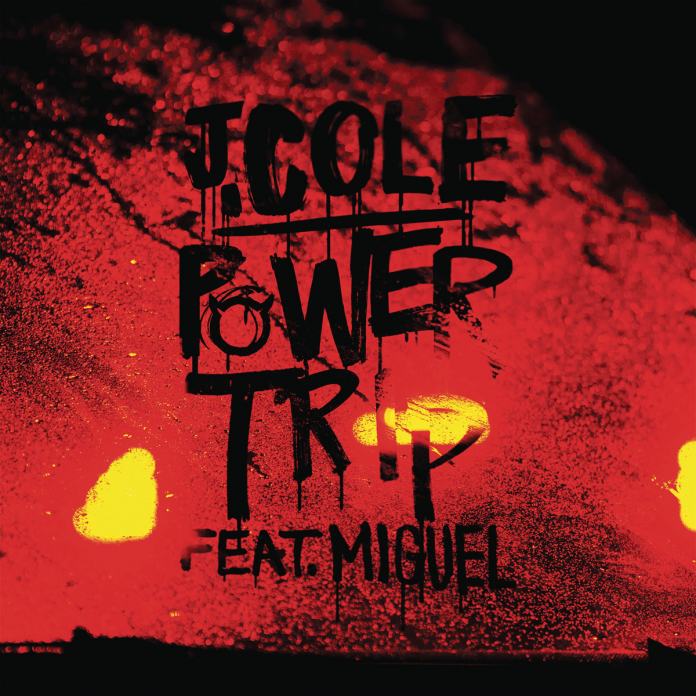
“Power Trip” by J. Cole
Slow, heated, and too easy to get your grind on, “Power Trip” makes for a great hook-up song. It features a solid beat, a smooth pre-chorus with Miguel plus J. Cole’s rhymes. Regardless of if you’re taking it fast or slow, it’s great for any mood as long as it’s sexy. – WY
“Mile High” by James Blake
If you want to take your partner to sky-high pleasure levels, this song will do it for you. Incorporating a Travis Scott trap-beat on top of a sensually smooth James Blake track, you have the perfect rhythm and mood to get those hips thrusting. Extra Air Miles points if you hook up to this song on Burnaby Mountain. – GM
“Sadie’s a Sadist” by The Buttertones
I don’t know who Sadie is, but she sounds like my kind of girl. Richard Araiza’s smooth vocals, the wailing saxophone, and the suggestive lyrics (“As long as she’s on top…”) in this short little banger (no pun intended) make for the perfect soundtrack to a quick and dirty hook up. This song makes me send wink-face emojis to guys at midnight. – AR
“Rocket” by Beyoncé
As a musician known for showcasing her sexuality and empowering listeners to feel sexy, Beyoncé delivers an intimate and visceral song with “Rocket.” This song celebrates sex, evoking deeply amorous imagery with its rocket and waterfall metaphors. The flirtatious vocals and smooth production make an anthem for engaging in glorious pleasure with someone you intimately love. – KC
“Japanese Denim” by Daniel Caesar
The definition of a slow jam, “Japanese Denim” is intimate and stripped down to a steady beat, a smooth guitar, and Daniel Caesar’s crooning vocals. While this track isn’t high energy, it’s the best mood music for a romantic evening with your date. Lower the lights, get cozy, and definitely put on this track. – WY
“Honeymoon (Forever)” by Hellogoodbye
Hellogoodbye takes us on a romantic getaway with “Honeymoon (Forever),” making you feel as if you’ve stepped right into the dreamy world of La La Land. Forrest Kline’s sensuous vocals layered over the brass and strings set the mood perfectly for your next candle-lit dinner — rose petals on the floor and all. – KR
“Special Affair” by The Internet
The bass in this song is enough to ruin your drawers. Layer on lead singer Syd’s seductive melody and you’ve got the embodiment of “sex vibrations.” For your next sexy-time session, groove along with your lover or fly solo, letting Patrick Paige II’s bass take you away on a truly special affair. – KC
“Pet Cemetery” by The Paranoyds
The lyrics to Pet Cemetery might seem a bit spooky for lovemaking, but the fuzzy guitars and synth create a mood that’s eerily sultry and seductive. We’re all a little goth sometimes, right? Just make sure your partner is OK with having your black lipstick smeared all over their face. – AR
“Body” by Syd
Syd celebrates the female body with this evocative panty-dropper. The seductive lyricisms, conveyed with her captivatingly sultry voice, are irresistible as the narrator of this sex jam praises her lover. Syd’s voice sways listeners and lovers to take the time to luxuriate in each other’s bodies. – KC
(Dis)Honourable Mention:
“Piece of Me” by Britney Spears
To the guy who had this on his Fore-Playlist while we hooked up — really? We’re going to bump uglies to this? Really? I’m not sure if you made this mix in middle school but this jam is not going to get me hot, more mildly confused. Definitely swiping left on this song — to the guy though, you’re still cute, so call me back. – WY
I appreciate the initiative of including your name and your pronouns in class introductions. But I am always frozen with fear in this situation.
I also appreciate this momentous phenomenon of creating language that challenges cissexism and that is welcomes and appreciates trans and gender-variant identities. I’m a Gender, Sexuality, and Women’s Studies major and sociology minor also getting my social justice certificate. I know very well that language works to shape knowledge, and further, I understand the need to create new language and conventions to normalize trans genders.
My fear, however, comes from the fact that normalizing trans/gender-variant genders takes lots of work, lots of emotional labor, lots of engaging with oppressive systems in a battle to work within the system to change the system . . . I’m trans non-binary, and my pronouns are the singular they/them/theirs and the neopronoun xe/xem/xyrs. This means that disclosing my pronouns is synonymous with disclosing a trans/gender-variant identity.
When asked for my pronouns, I enter instant panic mode — my brain and heart race: “Is this safe,” ba-boom, “what if people are transphobic,” ba-boom, “am I going to face ridicule? (Micro)Aggression? Discrimination? Be judged? Erased? Isolated?” Boom-boom-boom, “Am I going to be the only person in class who isn’t cis,” ba-BOOM, “Will my pronouns be respected? Should I share them? What if I don’t share them? I guess I have to share them cause everyone else is… Is it safe to share xe/xem/xyrs? Or is it risky enough already to say ‘they/them’,” BOOM-BOOM-BOOM…
I wonder what cisgender people think and feel when asked to share their pronouns. I’m too scared to ask, though, and I don’t foresee being comfortable asking anytime soon. I bet a lot of it is rooted in cis privilege though. I mean, every time a cisgender person has introduced me, they’ve said, “This is Sarah. She uses they/them pronouns.”
Being asked to disclose pronouns in class should be a positive thing for trans folks. But swimming uphill in a sea that is the cissexist/cisnormative/cis privileging systems in which we live translates to an anxious negotiation of safety and comfort. It really shouldn’t be this hard, but my lived experience proves otherwise. Here is some useful information for cis folks to know.
My glossary of (gender-related) terms
The following definitions are a combination of my knowledge from school and mainly my own research over the years. They represent how I think about and understand these terms. However, this list is non-exhaustive. You can check out the website It’s Pronounced Metrosexual for a more expansive glossary. Another impressive glossary can be found on Julia Serano’s website. She is a trans activist, speaker, performer, and writer. Check out her books as well: Whipping Girl, Excluded, and Outspoken!
Cisgender (also shortened to “cis”): An adjective for someone who identifies as the gender assigned to them at birth, i.e. someone who was assigned male at birth (AMAB) identifies as a man; someone who was assigned female at birth (AFAB) identifies as a woman… It operates as a mode of privilege.
Cisnormativity: The assumption that everyone is cisgender (cisgender being society’s default gender identity) and the institutions that maintain this belief.
Cis privilege: Advantages that people have solely for identifying with their sex/gender assigned at birth.
Cissexism: A system of oppression that perpetuates the belief that transgender people are inherently inferior to cisgender people.
Gender binary: The social construction of gender as being two distinct, opposite categories of male/man/boy and female/woman/girl; the idea that there are only two genders and everyone is either one or the other.
Gender essentialism: The belief that gender, gender roles, and gender stereotypes are innate/natural. Assumes that biology is destiny; assumes someone AMAB is a man and masculine while someone AFAB is a woman and feminine; a basis for oppression and violence against trans people.
Gender normative: A term for people whose gender/gender presentation conforms to society’s gendered expectations.
Gender variant: A term for people who do not conform to society’s expectations of gender.
Neopronoun: A newly proposed gender-neutral pronoun.
Non-binary (sometimes shortened to “enby”): A term for a gender identity that falls outside of the social construction of the male/man/boy-female/woman/girl gender binary; gender that is not distinctly/solely male or distinctly/solely female; an umbrella term for genders that do not fit into the gender binary or a gender identity on its own.
Transgender: A term that can be a gender identity on its own or an umbrella term for gender identities that don’t match one’s gender/sex assigned at birth
Transphobia: Prejudice, dislike, hatred, disgust and/or discrimination towards trans people; a system of oppression.
Transmisogyny: An intersection of two forms of oppression: transphobia and misogyny; this is specifically directed to transwomen and transfeminine people.
(Editor’s note: Both ‘transwomen’ and ‘trans women’ are in use, depending on context, literature, and a person’s choice. Always respect the latter, and be mindful of your language.)
Ways to challenge cisnormativity, cissexism, and cis privilege
Gender is a loaded term. Start by understanding the concept of gender. One of my favorite articles explaining gender What is Gender? can be found on Everyday Feminism’s website.
Remember that even though there is a lot to (un)learn, trans and otherwise marginalized folks are not educationaltools at your disposal. Of course, if someone is willing to exert emotional labour and educate you, listen! But remember that you are not entitled to anything. Educating yourself is important and necessary, and Google is free!
Check your privilege. Be aware of the intersections of your identity and how you are advantaged and/or disadvantaged by these intersections. Be aware that privilege comes with power. Further, privilege and power are inherently linked with oppression; where one person/group has privilege, they have power over another who is oppressed.
Be aware of the space you are taking up. Are you speaking over/for trans folks? Is there someone with lived experience who could speak better to the topic? Trans folks are frequently silenced: make sure to listen.
Related to the last point: uplift trans voices, but also respect silence. By this, I mean if you have privilege, use it to help folks who are traditionally and systemically silenced be heard. Simultaneously, don’t force anyone to do or say anything; a situation or topic could be triggering or tiring. Again: no one is entitled to the labour of trans folks.
Respect pronouns. Use the pronouns that you are told belong to a person. If you struggle with using certain pronouns, practice (the website Practice with Pronouns is a handy tool)! If you’re unsure of someone’s pronouns, don’t assume anything, and default to gender-neutral pronouns (i.e. they/them/theirs). Ask for pronouns if you are unsure — and then use these pronouns!
Even (especially) if you’re cis, introduce yourself with your pronouns — this normalizes the practice of introducing oneself with their name and pronouns, and works to establish a more trans-inclusive and positive environment and future.
If you misgender someone: acknowledge your mistake, apologize, correct yourself and move on. It’s okay to make a mistake; what’s not okay is making a big deal out of this and flipping the situation to be about yourself, and about how guilty or bad you feel. Going on about this mistake and making a big deal out of the situation is extremely uncomfortable for the individual who has been misgendered.
I believe that in order to dismantle oppressive systems, we must work within the existing system to change the system. Cis folks, there’s movement on a social level to challenge cissexist norms, now I challenge you to challenge cis privilege within yourselves; it’s not hard to use someone’s correct pronouns, educate yourselves, and check your privilege.
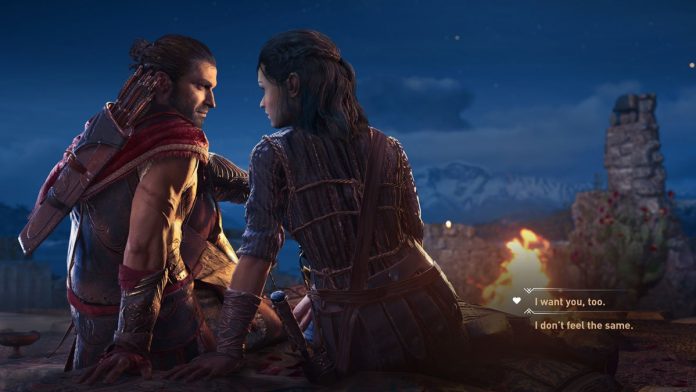
Ubisoft’s recent open-world game, Assassin’s Creed: Odyssey,recently got nominated for a GLAAD media award for Outstanding Video Game for letting you romance any character, regardless of whether you choose a male or female playable character.
This nomination came as a pretty significant surprise, though, as earlier in the month the game released a largely disliked piece of downloadable content (DLC) where your character marries a heterosexually-compatible character in one of the final cutscenes as part of the story. This is the only point in the game where you have no control over your romantic partners, rendering your sexual identity relatively pointless.
I do want to disclose that I come at this as an outsider, being cisgendered, straight, and male. But I’ve certainly experienced more than enough heteronormative relationships in video games for a lifetime, even more so in open-world games. Usually the most representation I see is in giving players the option to romance every LGBTQ21A+ character, which is certainly important in a genre where you’re meant to play however you want.
But if Ubisoft’s DLC and this award has shown anything, though, it’s that there’s a huge void in how sexuality appears in open-world games. The only romance options we’re typically given in this genre are the power to choose, or mandatory heteronormative characters. What we need way more of is an open-world game where you specifically aren’t straight.
This is something I was thinking about when reading GLAAD’s foreword about Odyssey’s nomination: “At worst, this sends the harmful message that sexual orientation can be changed at will and that LGBTQ people can choose to conform to heteronormative expectations in spite of their identities.”
A typical way this is solved in games this is to make sure everycharacter is romantically available to you, but it isn’t inherently wrong to have a game that limits a player to their character’s identity. The problem with Odyssey — and several other open world games with heterosexual characters — isn’t that it forces a relationship on the player. Rather, it pushes an overly common heterosexual one, and erases the player’s queer identity.
This isn’t the only alternative, though, as “open world” doesn’t inherently have to mean “infinite choices.” This is especially true with Assassin’s Creed: Odyssey, as you aren’t playing an avatar of yourself; you’re playing a specific character, either Kassandra or Alexios, with their own history and identity. Others, like Grand Theft Auto, may not include mechanics around romance, but still puts you through the perspective of the cisgendered and straight male playable characters.
It really shouldn’t be so rare for a game to let you explore a world from an LGBTQ21A+ perspective in the same way.
After all, LGBTQ21A+ people don’t have the same experience in the world as the rest of us. Ubisoft has thankfully announced plans to change the ending, but their change is unlikely to make us forget about their original ending. More than that, I doubt it’d be consequential enough to change the problems it still represents in the genre.
I’d guess that the hesitation of developers and publishers is due to fears of marketability to the wider masses, but I have trouble with this idea in seeing the popularity and success of other game genres with greater LGBTQ21A+ playable characters. Story-driven adventure games like Telltale’s The Walking Dead and Life is Strange are fantastic examples of purposefully queer characters. Just the same, there’s been a surge of playable representation in the lore of less story-based games, particularly Overwatch and even League of Legends.
Being able to explore a world from a distinct perspective of a non-straight character is something that we absolutely need more of. For cis and straight people like myself, it’s an opportunity to see through a perspective we can’t experience in the same way from reading books or watching films about queer life. For everyone else, it’s a perspective they ought to see represented in this massive entertainment medium.
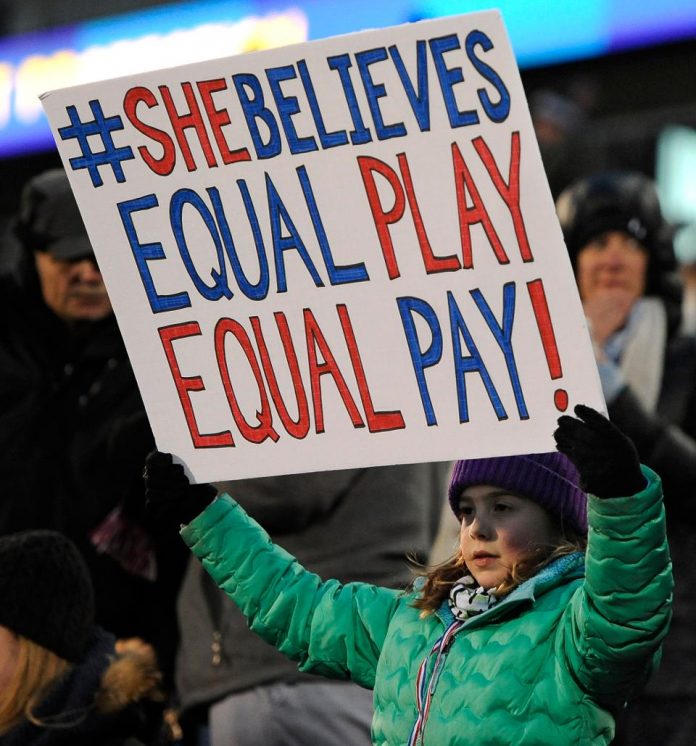
The gender wage gap has been a much-discussed topic for many years now. While there is still a ways to go, many industries have improved in making sure that men and women who hold similar positions are paid equally. One industry that often gets forgotten in this discussion, however, is the one of professional sports.
There are a lot of factors at play, and a lot of opinions on the subject. Nonetheless, there are clear instances in sports where women are not given an equal proportion of league earnings compared to men. We decided to take a deeper look at the gender wage gap in sports, its history, and what can be expected in the future.
History
Discussing the wage gap in sports is not new. For example, the 2017 movie Battle of the Sexes tells the tale of Billie Jean King, who famously fought for the equal pay of female tennis players. As reported by The Guardian, King took home only £750 for winning the 1968 Wimbledon tournament, barely more than a third of what the men’s winner won.
A few years later, King was involved in one of the most famous tennis matches of all time. After 55-year-old Bobby Riggs (who had been the number-one male tennis player in his prime) claimed that he could defeat any female tennis opponent, King swept him 3–0 in 1973. The win was a huge moment for women’s sports and had a positive impact on the Women’s Tennis Association, which had been founded by King a few months prior to the match.
More recently, Venus Williams made strides towards getting equal pay for women in tennis. In 2007, she became the first women champion to make as much as the men’s champion at a major tennis open. Today, tennis is one of the few sports recognized for paying both men and women equally.
The United States women’s national soccer and hockey teams have also made strides towards equal pay in their respective sports. In 2015, the U.S. women’s soccer team won the World Cup championship and was awarded $2 million after playing in the soccer game with the most American viewers ever. The U.S. men’s team, on the other hand, was awarded $8 million for losing in the first knockout round the year before in the men’s World Cup.
That’s right: the men earned four times as much for losing as the women did for being world champions.
After launching a complaint, the women’s team reached a new labour deal in 2017 with U.S. soccer which will see them be given major raises, bigger bonuses, and equal per diems to the men’s team’s.
Similarly, the U.S women’s hockey team has seen an increase in pay in recent years. After threatening to sit out the International Ice Hockey Federation World Championship in 2017, the U.S national women’s hockey team signed a four-year labour agreement with USA Hockey. Details of the agreement were not released, but it likely resembled the $68,000 annual salary that they asked for, as well as benefits like playing in more games, childcare, and maternity leave.
While these are just a few instances, they show that fair increases in pay are possible in women’s sports, and should be expected across all major sports.
Skylar Diggins-Smith is fighting for fair pay in the WNBA. (Photo courtesy of Footwear News)
Today
While there have been some success stories in making sure that women athletes are paid fairly, there is still quite a ways to go.
This is particularly true in professional basketball, where the wage gap is most apparent. For example, the number-one overall pick in the 2018 WNBA draft, A’ja Wilson, will make approximately 1/130 of what the first overall pick in the NBA draft, Deandre Ayton, is set to make–$52,664 compared to $6.8 million. Those who try to point this out, however, are met with arguments based on how much more money the NBA makes compared to the WNBA.
While this would be a valid argument if WNBA players earned a similar cut of their leagues revenues, this is simply not the case. According to an article by Grandstand Central, the NBA pays 50% of its revenues towards player salaries, while the WNBA pays a measly 20% towards its players.
These numbers just don’t add up. WNBA players are unproportionately paid. Plus, the league is growing. The 2017 season saw 1,574,078 people attend a WNBA game, the highest total attendance for the league. Also, 2017 saw an 18% increase in WNBA store purchases from the previous year.
So, while the billionaire owners of the league may complain about “losing money,” the league is showing that it can be profitable. Still, leagues like the NBA should be responsible for promoting their female counterpart.
If you’ve watched sports channels recently, you’ve likely seen the Wealthsimple commercial that features WNBA star Skylar Diggins-Smith. In this commercial, she discusses how an average NBA prospect can make up to 100 times what a superstar makes in the WNBA. This issue is starting to be seen by everybody. WNBA players should expect to earn the 50% of league revenues that NBA players do. Doing so could see up to a 2.5x salary increase for players across the league.
While this case is far from over, hopefully this will go down as another movement towards equal gender pay across professional sports. To ensure that women athletes earn fairer wages, however, they need support. Not just support on Twitter or other social media platforms, but fans who go to their games and buy their merchandise.
The closest professional women’s teams to us are the Seattle Storm (who play in the WNBA) and the Reign FC (who play in the National Women’s Soccer League), and have recently announced a move to Tacoma, Washington. The Storm are the defending WNBA champions and start their season off in May, while Reign FC will begin their season in April.
Gillette recently put out a commercial about their old slogan,“the best a man can get.” The ad talks about how there’s a lot of problems specific to men and traditional masculinity, and how they have real-world consequences. More than that, Gillette took a direct stand against norms of masculinity that let a lot of men get away with violent or cruel behaviour (like “boys will be boys”), and spoke out against the normalized sexual assault being addressed throughout the #MeToo movement.
This backlash indicates a common misunderstanding about toxic masculinity. It’s not that men are inherently evil, it’s that much of traditional masculinity causes serious harm to people of all gender identities — and yes, that includes men. Masculinity doesn’t have to go away, but we absolutely need to take out the toxic elements. From there, we can start encouraging a stronger, healthier, and more positive sense of masculinity, and make a safer world for everyone.
Don’t know what that might look like? Well, here’s a few ideas.
Hold other men accountable and intervene when needed
Chris Ho / The Peak
It’s hard to confront friends or strangers, and I don’t want to say that you need to endanger yourself by getting in the way every time a man is making someone feel unsafe. Intervening isn’t always about getting in the way of things, or putting yourself in unsafe situations: it just means you’re actively doing something to make a better environment, and it stops toxic behaviour from seeping in from around you.
If a friend does something inappropriate or makes you uncomfortable, talk to them privately later if you can’t stop them or be honest in the moment. Touch bases with other friends who are being made uncomfortable by others; giving support and helping them recover from threatening or distressing situations at a bar or party can go a long way. If you do see someone who needs help immediately and you don’t feel you can directly intervene, it helps to find someone who can deal with it, like a club executive at an event on campus or the staff at a restaurant.
At the very least, if you don’t think that someone is going to change or make you feel safe, cut ties. You have no responsibility to force friendship with people who make others unsafe or uncomfortable. Walking away from someone toxic is the most important choice in creating a healthy social circle.
Identify and learn from your own behaviour
Chris Ho / The Peak
Improving yourself means looking at your thoughts and actions critically. It’s possible to do and say harmful things without meaning to, but this doesn’t mean that you can’t learn from the experience afterwards.
For men, this starts by thinking more about where you pick up on certain thoughts and behaviours. Things like sexist commercials, poor parenting, and confusing role models can all subtly influence you in ways that are important to keep track of. Knowing where these influences come from is the first step in deciding if they’re healthy or not.
Most importantly though, learning is about listening to what others have to say. When someone talks to you about something uncomfortable or inappropriate that you did, listen to what they have to say. You might not understand why you did it, but you can recognize the action and learn from it to become a fuller person.
In trying to learn, it’s especially important to listen to people who come from different life experiences and gender identities, particularly women. So much toxic behaviour in men exists solely to harm women, from harassment to condescending language and “mansplaining.” They’ve seen just how horrible certain behaviours are, and how they can affect both themselves and others. Their perspective is important in recognizing where you can improve yourself.
Oh, and don’t treat critiques on all or other men as an attack on you. We’re each on our own personal journey when it comes to our identity. Unless you’re behaving problematically, don’t treat efforts to correct men who are acting toxic as someone trying to hurt you personally.
When someone says they hate men, they are referring to the trends and problems that are unfortunately common, and you should be proud not to be contributing to them (although nobody likes a showoff, so please hold off on your “I’m so much less problematic than this guy” tweets).
Discourage strict masculinity in traditionally masculine activities
Chris Ho / The Peak
One of the biggest misunderstandings I see about toxic masculinity is the idea that something is malicious by default just because it’s traditionally male. This isn’t necessarily the case: hobbies like barbequing, bodybuilding, and watching sports like pro-wrestling are things you should absolutely feel free to enjoy. But it’s important that you go into these things for reasons besides just the constructed manliness of it, and that you partake in them in healthy ways.
Instead, be free to think critically about what you enjoy and why you enjoy it, and it’ll make you enjoy your interests in a healthier and more approachable way. You can enjoy the confidence that comes with bodybuilding while still acknowledging the impossible male body image that is often considered the “goal.” You can watch pro-wrestling and empathize with strong male characters while criticizing sexist storylines or problematic actors.
Liking something purely for its “male-ness” can make traditionally masculine things exclusive, especially for those who don’t abide by a relatively arbitrary definition of manhood. Getting away from that definition gives a lot of opportunities to enjoy and appreciate your interests on a deeper level. This will also make traditionally masculine things more approachable for anyone who would be put off or intimidated by the masculinity blocking the door.
Encourage diverse masculinities, and be open with yours
Chris Ho / The Peak
Everybody has a unique way of defining their gender identity, even if they lie on the same end of the gender spectrum. One of the key parts of a positive masculinity is accepting and supporting anybody who identifies as a man, regardless of non-masculine — and particularly feminine — interests and values. Masculinity doesn’t have to involve exclusively masculine interests and values. Additionally, non-binary folks can also identify with certain elements of masculinity without being gendered as men.
It’s important to support people in their personal definition of their masculinity. Let people make the choices that work for them, and try not question them for not fitting your definition of masculinity. A man who wears a more neutral or feminine satchel is just as much of a man as one who carries a backpack. A man who’s uncomfortable with wearing cosmetics is just as much of a man as one who paints their nails. Men express male identities in various ways, which can take a different form than your own.
And once you let people express themselves, start supporting and taking an interest in them. Be open with your own definition of masculinity. Try something slightly out of your comfort zone, like a bath bomb or a more female-coded colour of clothing. Try foods that don’t fit your normal diet. You might not like or stick with them, but it’s just as important to let others explore as it is to explore yourself.
Conclusion
The toxic masculinity that we’ve held onto this long does nothing but make people unsafe and uncomfortable, and supporting diverse and positive masculinities is an important step in being a safer and healthier person. It wasn’t really all that long ago that “traditional” was the only type of man that anyone thought could exist. Everything from strict fashion to harassment was considered not just normal but also accepted, and for many it still is today. But as time’s gone on, it’s become so much clearer that there’s more to life and masculinity than those arbitrary stereotypes.
Men can be so much more than the harm that they’ve caused.
Editor’s note: Liked this piece? Tune into our podcast episode this week for a discussion on masculinity! See back page for more info.
Our podcast is recorded in collaboration with CJSF, SFU’s campus FM radio station.
By: Kitty Cheung, Beatriz Fernandes, Yelin Gemma Lee, and Winona Young
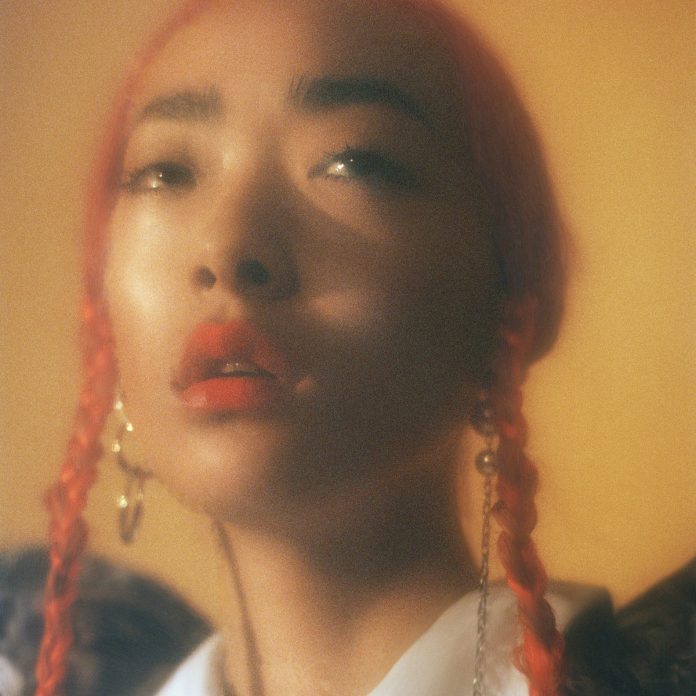
Rina Sawayama
Image courtesy of Damien Fry
Must-know tracks:
“Take Me As I Am”
“Cherry”
“10-20-40″
She’s a former model, she’s a current fan of Kingdom Hearts, and she came out last year as bi/pan — Rina Sawayama’s a name in music you need to know. Born in Japan but raised in London, Sawayama is a music artist putting her fresh take on pop. She released her first E.P., RINA, in 2017, and she’s since made a splash in the world of pop and R&B.
The following year RINA was released, Sawayama debuted her single, “Cherry,” which was Sawayama’s way of coming out as bisexual/pansexual. The song is an anthemic pop ballad about her struggles dealing with biphobia and her sexuality, marking it as a musically pivotal point in her career.
What makes it so easy to be a fan of Sawayama (or a “Pixel” as she lovingly refers to her fans), is the original take she brings to pop music. For instance, her first track off her E.P. is “Ordinary Superstar.” She starts it off with heavy synth and drum tracks, but towards the pre-chorus, comes in with heavy electric guitar. Sawayama has a unique sound that isn’t all R&B, all hip-hop, or all bubblegum pop. Instead, it manages to do a dynamic blend that is both retro and futuristic. – WY
Kim Petras
Image courtsy of Ryan Duffin for PAPER Magazine
Must-know hits:
“I Don’t Want It At All”
“Close Your Eyes”
“Heart to Break”
Kim Petras is a 26-year-old singer-songwriter from Cologne, Germany. Having begun transitioning at a young age, Petra’s fan base has always known her as a transgender icon and an inspiration to the LGBTQ21A+ community.
The artist went viral with her single “I Don’t Want It All” in 2017, and has recently gained popularity, creating a large and very committed fan base. Lovingly referred to as “The Queen of Bops” by fans, Petras’s electro pop sound has made her a favourite amongst the gay clubbing scene, this group representing the majority of her fan base.
Although crucial in representing LGBTQ21A+ folk in the Hollywood industry, Petras has expressed that she does not wish to be sold as a political statement, maintaining that her main focus is on her music, not her identity. Nevertheless, the star does contribute to the ever-growing representation of this community in music. Petras stands as one of the very few transgender artists in the business, and helps build the exposure of LGBTQ21A+ folk altogether. – BF
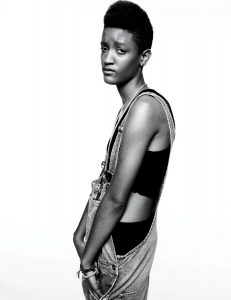
Syd
Image courtesy of Gregory Harris for Interview Magazine
Must-know tracks:
“Got Her Own”
“Insecurities”
“YOU’RE THE ONE” by KAYTRANADA ft. Syd
As an openly gay, Black artist, Syd has avoided being known as the “gay singer” for much of her career. Her roots with Odd Future are of particular interest in her selfhood as an LGBTQ21A+ artist. Having come out before the group’s rise to fame, as well as being its sole female member, Syd wasoften questioned for the homophobic and misogynistic nature of Odd Future content. However, it is clear that for Syd, it was always about the artistry — finding how it is you want to be portrayed as an artist, staying away from the drama of the press, and overall, making music that is individually true to herself.
Syd’s lyricism is enticing, smooth, and dreamy, especially when she sings about experiences with the women in her life, whether inspired by heartbreak, passion, or love. While her songs freely feature her sexuality, Syd’s prime focus has always been to write music that is distinctly her own, with being gay but a single layer to her multidimensional work. Her solo debut album, Fin, is a clear indicator of her evolution from Odd Future days, while she openly romanticizes women and supports the gay community..
Syd has released music as a solo artist, as well as with band The Internet, wooing audiences with her seductive voice and velvety R&B beats. – KC
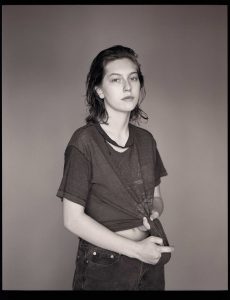
King Princess
Image courtesy of Michael Bailey-Gates for The Cut
Must-know tracks:
“Pussy is God”
“1950”
King Princess is the queer alt-pop singer/producer that emerged straight out of our gayest dreams. The 20-year-old Mikaela Straus is breaking barriers by being outspoken about her queerness through her music and the social media influence that comes with it. In interviews, she is often found expressing her love for queer art and her belief that it is a very powerful and necessary thing.
Straus is one of the most notable rising LGBTQ21A+ artists that are using their art platform to normalize queer love and queer identities. Her newest single is called “Pussy is God,” and it’s a queer game changer. The song starts off strong with the line “Your pussy is God and I love it / Kiss me real hard, make me want it.”
The first song I listened to by King Princess was “1950” which starts with “I hate it when dudes try to chase me but I love it when you try to save me,” and just like that, I was a fan. Then I listened to “Talia”, a song reflecting on an ex-lover, on repeat for nearly a week straight to mend my major breakup feels at the time.
King Princess is on her way to making pop cool again, and she’s going to do it without compromising her LGBTQ21A+ pride. – YGL
Charlotte Day Wilson
Image courtesy of Mathieu Fortin for The Last Magazine
Must-know tracks:
“Work”
“Find You”
“Spent Missing” by Froyo Ma ft. Charlotte Day Wilson
You may have heard this Toronto artist’s soothing voice on features with Daniel Caesar and BADBADNOTGOOD. Identifying as a queer woman, Charlotte Day Wilson prefers to let her music do the talking for her. She infuses pop, R&B, and soul, which blends well with her warm, tender voice conveying thoughtful, nuanced, and vulnerable lyricism. With her artwork, Wilson intertwines her sexuality with love and relationship struggles. Her latest EP, Stone Woman, was written after the end of a long-term relationship, the collection of songs being an emotionally resonant homage to hurt and heartbreak.
A self-taught producer, Wilson writes and produces all of her own music. She dropped out out of university to further work on her art, and has also chosen to remain independent, not taking shit from anybody. Wilson prefers to have full creative control over her music, sometimes producing in the isolation of her home, to have that space to fully deal with her emotions.
This multi-instrumentalist is full of free expression which instills a tenderheartedness to the listener. While her soft voice sings directly to the heart, carrying a quiet power, her determination and badassery make her a humble and inspiring LGBTQ21A+ artist to watch. – KC
By: Beatriz Fernandes, Kim Regala, and Winona Young
Abortion in The Obvious Child
It’s the classic story of boy meets girl, girl gets pregnant, and girl decides to have an abortion within the first 15 minutes of the movie. What’s even more surprising? She doesn’t change her mind, and no one tries to. Starring the lovely Jenny Slate as a struggling comedian, her character Brandy tries to figure out what to do with her life, her comedy, and herself as she tries to dodge the romantic feelings for her one-night-stand baby daddy (Jake Lacy).
What’s most refreshing about this film is that it isn’t simply reduced to “an abortion film.” It’s first and foremost a romantic comedy. While yes, Brandy’s abortion is a key point in the story, her character isn’t centred around that fact. Our protagonist is unabashed, funny, full of heart, and an over-thinker who has all the grace of a conventional rom-com lead.
In the Obvious Child, abortion is not a horror, it’s not a death-sentence — it’s a simple health decision that is treated as unremarkably as any other mundane trip to the doctor’s office. Here, it’s normalised and not at all stigmatised, which makes the budding romance and journey of Jenny Slate’s character even more heartwarming. – WY
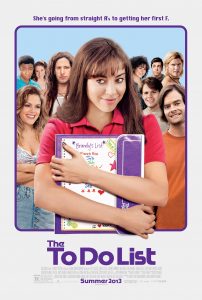
Female masturbation & sexuality in The To-Do List
Embarking on a comedic ride, the To-Do List has provided women the opportunity to follow a young woman’s shameless sexual journey. The main character, Brandy (played by Aubrey Plaza), takes charge of her sexuality whilst flawlessly portraying the confusion and vulnerability most teenagers experience as they begin their sexual lives. This movie is truly progressive, especially in its portrayal of female masturbation. Often considered a myth, taboo, or simply an avoided topic, there is an almost nonchalant attitude towards masturbation in this movie. The film’s normalization of female masturbation helps show that masturbation isn’t done exclusively by men. The To-Do List emphasizes that it isn’t a shameful act, but rather a crucial and primary part of understanding one’s sexuality.
There is much way to be made in films overall when it comes to portraying women as self-sufficient individuals, willing and proud to explore sexually. Under a comedic light, the To-Do List gives a raunchy, rom-com portrayal of a young woman’s sexual journey that you don’t want to miss. – BF
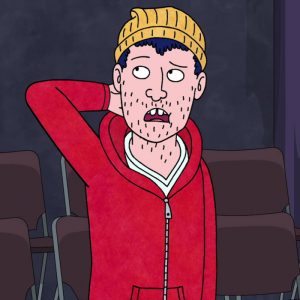
Asexuality in Bojack Horseman
Mainstream television still has a long way to go in the representation of all genders and sexuality. However, when BoJack Horseman revealed that one of their characters, Todd Chavez, was asexual, it was like finding the light at the end of a very dark tunnel. Asexuality is often underrepresented in the media. And I mean, why wouldn’t it be when sex clearly sells? While there are the rare cases that shows do incorporate asexual characters, these individuals are only portrayed as such and nothing more.
However, Todd was never just that asexual guy; instead, he is a main character who, like the others, has a fleshed-out personality. While there are many hints surrounding his sexuality, or rather his lack thereof, it wasn’t until the later seasons when this discovery becomes a narrative of its own. The show doesn’t shy away from the emotional depth in his story arc, as we follow his journey to understanding himself and what it means to be asexual. While it isn’t entirely perfect in its portrayal, BoJack Horseman provides a genuine representation, using Todd to include and validate the experiences and identities of ace people, as opposed to speaking for all those within the ace community. – KR
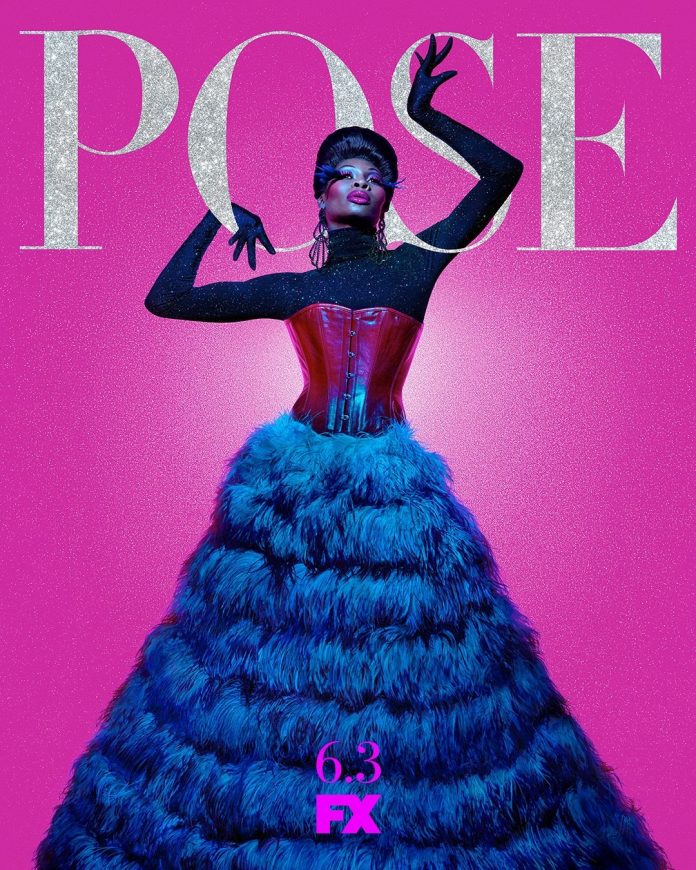
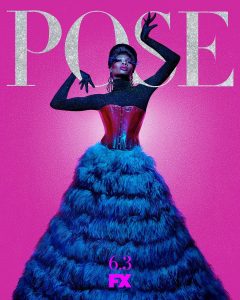
Living with HIV, in Pose
Set in the bumping New York City club scene in the late 80s, Pose is the FX show that is just as diverse as the reality it’s based on. Featuring leading trans* woman (and is played by trans* actress Mj Rodriguez), Blanca Evangelista, the episodes follow her journey (along with five other trans characters!) as she navigates climbing to the drag/club scene in NYC. And on something of a sidenote, Blanca is diagnosed with HIV in the first 20 minutes of the show.
I purposefully mention this as a fact following her main journey because the show treats it as such. While yes, the show does not shy away from the grim reality a diagnosis of HIV was in the 80s, it is not Blanca’s entire character. Hell, Blanca herself makes sure that it isn’t. Even as it already carries such a diverse cast of characters, Pose does not pull back in unabashedly revelling in these character’s struggles, but also their triumphs. Blanca living with HIV is exactly that. She does not condemn herself as a dead woman walking: she focuses on her dreams, on taking care of other characters, and on so much more. The show handles Blanca’s illness with respect, but most importantly, doesn’t dwell on it as a tragedy. – WY
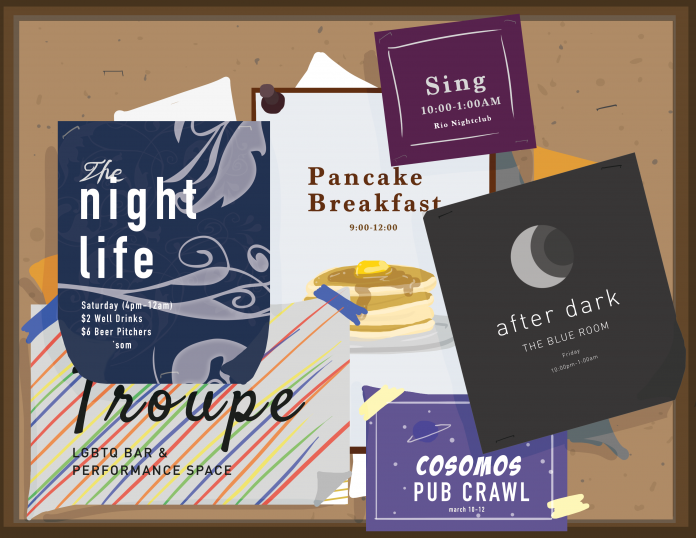
Vancouver’s LGBTQ21A+ community has been fighting for its unified presence for a long time, and now it is considered one of the most LGBTQ21A+-friendly cities in Canada. Although while event organizers like Flygirl Productions, Babes on Babes, and Man Up do an incredible job of locking down the best parties of our lives, Vancouver is seriously lacking in LGBTQ21A+ culture beyond nightlife.
The queer community consists of diverse human beings. Some are private, introverted, socially anxious, asexual, or not down to party all the time. These individuals could feel like they are not able to be an active part of the LGBTQ21A+ community because they are not a certain type of way. Even for people like me, a flaming queer who loves going to these parties and club events, there’s a definite lack of opportunities to have meaningful connection and conversation with my fellow queers.
This isn’t to say LGBTQ21A+-community isn’t right to enjoy its nightlife. Having experienced a lot of it, I can definitely say we throw the best parties. But our events being primarily focused on club events feeds an idea that there’s only only one way to be queer. That way can be about drinking and loud drag shows, but that’s definitely not for everyone.
It’s also just not easy to connect and meet people in these types of events. I’m very lucky to have my two queer roommates, as well as several friends and colleagues who are either queer themselves, or strong allies of the LGBTQ21A+ community. But I connected to a lot of these wonderful people through online spaces like dating apps and social media. I just wish that there were more diverse physical spaces where this could happen, since queer nightlife — friendly and fun as it is — doesn’t usually focus on those things.
If you’re looking for more of these events, they do certainly exist, and I implore you to attend and promote them as much as nightlife. What’s On Queer hosts a lot of low-key events like movie screenings, music shows, arts shows, and more. QMUNITY is a wonderful queer resource that holds meditation sessions, yoga, and community talks. Right at SFU Burnaby, Out On Campus is a great resource that puts on several social events like crafting days, queer topic lectures and speakers, even volunteer opportunities. There’s a lot more that you can find just through searching on Facebook, but there’s absolutely more to queer social life than just the club scene.
The LGBTQ21A+ community has indefinitely reclaimed nightlife and has come a long way, but if we ever want to see the day when we are able to be safely integrated into mainstream society without the fear of erasure or prejudice against our identities, we can’t settle here. LGBTQ21A+ culture can be so much more meaningful and diverse in our day-to-day lives. There’s so many other ways we should get together and express our pride.
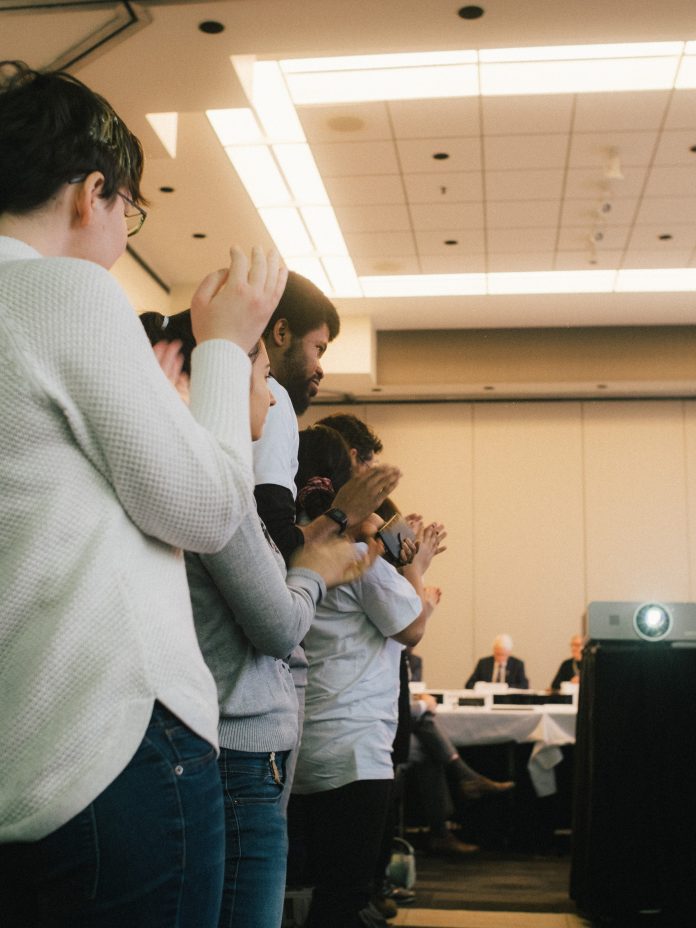
At the SFU Board of Governors meeting on Thursday, January 24, students from the Tuition Freeze Now campaign presented in front of the board.
Tuition Freeze Now seeks to reject SFU’s proposed tuition increases for the 2019–20 academic year, and is supported by the Simon Fraser Student Society (SFSS), the Graduate Student Society (GSS), the Teaching Support Staff Union (TSSU), SFU Left Alternative, and SFU Students of Caribbean and African Ancestry (SOCA).
Undergraduate student Annie Bhuiyan started off the presentation, explaining that Tuition Freeze Now is “a group of students who have come together to challenge SFU’s proposed tuition increases for the coming year,” and that “this can range anywhere from a 2% increase to a 20% increase, which is outrageous.”
Masters student Seamus Grayer expressed disappointment that there was only one student consultation at the Burnaby campus, because “it was extremely inaccessible and inconvenient for a great many students, including those who spend their time at the Vancouver and Surrey campuses, where no public consultation was ever held.” He noted that the consultation was held “in the morning, right in the middle of exams.”
Grayer later told The Peak that vice-president finance and administration Martin Pochurko approached him after the meeting to let him know that there had been consultations at the Vancouver and Surrey campuses.
“What I said was that we had budget consultations in Vancouver and Surrey and that the invites went out to the University Community but not specifically targeted to students,” Pochurko subsequently explained in an email to The Peak.
“In the future, we will be sure to target students in the invite.”
Giovanni Hosang, undergraduate student, explained that Tuition Freeze Now “attempted to put forward a motion for the administration to draft a budget for the 2019-2020 year that does not include a tuition increase.
“We have been told, however, that this cannot be discussed at this particular meeting because budgetary matters are not concerned on the agenda.
“This process is a symbol,” Hosang continued. “A symbol of how hard it is for us to get involved with the Board of Governors’ process and SFU administrative matters.”
Thomas Budd, graduate student member of the board, thanked the students for their presentation, and asked if they had any input on what would make for a better consultation process.
“Mostly just that the budget isn’t already created when the consultation process starts,” responded masters student Kayla Phillips. “You can’t consult on something that has already been created, it has to be collaborative.”
Jill Earthy, order-in-council, also thanked the students. “It’s amazing to hear from the students and it’s really important to us [. . .] when we are around the table, this topic comes up every year,” Earthy said.
“Your voices are heard.”
President Andrew Petter noted that the board would take the views that were expressed in the presentation very seriously.
“Compared to other universities we have a much more open consultation process already, it’s very much informed by students,” Petter said. “That doesn’t mean that we couldn’t do better, we can always do better. I think that the process is there to illicit and provide input and to provide additional opportunity for the board to hear your concerns.”
After the BOG meeting, some of the Tuition Freeze Now members met with The Peak for an interview, in which they outlined their three primary demands.
“First we want a full tuition freeze for the next two academic years, and that is a 0% increase for all students,” explained Jade Ho, PhD student.
“Our second demand is that we can work with SFU students and the student society to lobby the provincial and federal government to address the underfunding of higher education,” said Ho.
Grayson explained their third demand, which is “more information and more of a consultation process.” He added that it was third on their priority list because simply modifying the consultation process is not enough if the university does not make any other changes.
In terms of the consultation process, Grayson noted that “our argument isn’t that they didn’t follow the rules, they did. Our argument is that the rules are bullshit.”
Ho added that “President Petter’s comments about the consultation process [ . . . ] right after a student just said that we think the consultation process was crap [ . . . ] as a student hearing that, I really feel like what we were saying wasn’t heard by our own president.”
Moving forward, Tuition Freeze Now plans to start a letter-writing campaign, continue petitioning, and possibly partnering up with community organizations to plan events. They hope to get students packed into the next board meeting and that all of this will lead up to a big rally in March.
You hold a very special place in my heart, and I can only express this love through gratitude. I want to thank you for this safe haven, including both the All Genders Resource Area and the 24/7 lounge. With this wonderful space, you have supported my health, my education, my creativity, and my self-esteem.
You’ve always known how to help me feel comfortable in my own body. Whether you provided me with tampons and pads when my cycle snuck up on me or bestowed safer-sex supplies for if I ever wanted to get it on… you’re a giver.
Your table laden with safer-sex supplies and consent toolboxes, which caters to a variety of sexual orientations, allowed me to learn without shame or embarrassment about different kinds of sex outside of heteronormative standards — especially through the flipbooks! While the pink did rise to my cheeks to be caught pouring over their animationssuch an animation of two men putting on a condom before making love, you made me feel safe and unjudged with your sex-positive nature. I love how we share similar values, and that you challenge me to open up my perspective.
Perusing your feminist library, I’ve benefited from your knowledge of history, literature, health, art, and so much more. You’ve taught me so much about this world, especially from a women-centric perspective. You’ve introduced me to so many badass, intelligent ladies, empowering me to become the most badass, intelligent version of myself.
Women’s Centre, you’ve supported my education with your consistent generosity. Whether it’s the granola bars on the library coffee table that help fuel me before lecture, the coffee in the kitchen so that I can stay awake during said lecture, or that musty orange armchair that welcomingly envelops me as I do readings, I cherish you.
Thank you for giving me a safe space to take naps between classes, nestled in the arms of your comfy couches and well-loved blankets. Thank you for providing a warm place to spend the night before 8:30 a.m. finals. Being able to avoid over an hour’s worth of transit in the morning is a blessing, doing wonders to both my sleep schedule and study habits. On top of that, you have provided me with a splendid spot to cook on campus, complete with a microwave to warm up my lunches. My leftover dinners would not have tasted so good the next day if not for you.
I love that you also have a garden plot in the Embark Learning Garden outside of TASC II. Our collective planted seeds in that plot, which flourished and grew into fresh vegetables that I remember harvesting and bringing back to your kitchen, for many others to enjoy and to nourish their families.
Don’t even get me started on how active and engaging you are. Whether it was joining in on a community cooking workshop, cuddling with Ezzie the Australian Shepherd, healing with ArtThrive, or knitting with the Creative Collective, the resources and activities that you’ve provided to aid my mental health and student experience are wonderful. Even when there isn’t a specific event happening within your walls, you are free, open, and inclusive. I can always stop by to say hello.
I especially appreciate how supportive and strong you can be in emergency situations. For those of us who may have been impacted by sexual violence or who are struggling with mental health, your crisis referrals and peer support resources make you a blessing for myself and so many others on campus.
Once again, thank you for being here for me and for all of my fellow self-identified women on campus.

 “Power Trip” by J. Cole
 “Mile High” by James Blake
  “Sadie’s a Sadist” by The Buttertones
 “Rocket” by Beyoncé
  “Japanese Denim” by Daniel Caesar
 “Honeymoon (Forever)” by Hellogoodbye
 “Special Affair” by The Internet
  “Pet Cemetery” by The Paranoyds
 “Body” by Syd
 “Piece of Me” by Britney Spears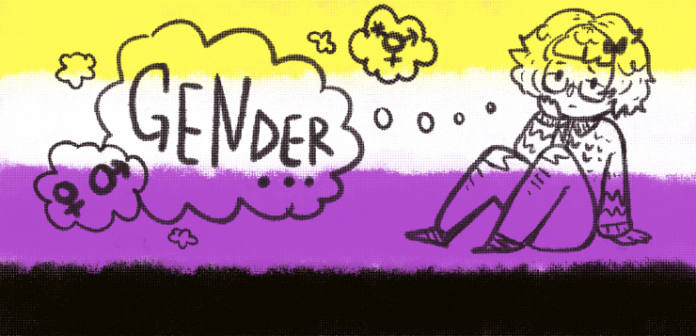





 Abortion in The Obvious Child
  Female masturbation & sexuality in The To-Do List
 Asexuality in Bojack Horseman
 Living with HIV, in Pose