Home Blog Page 536

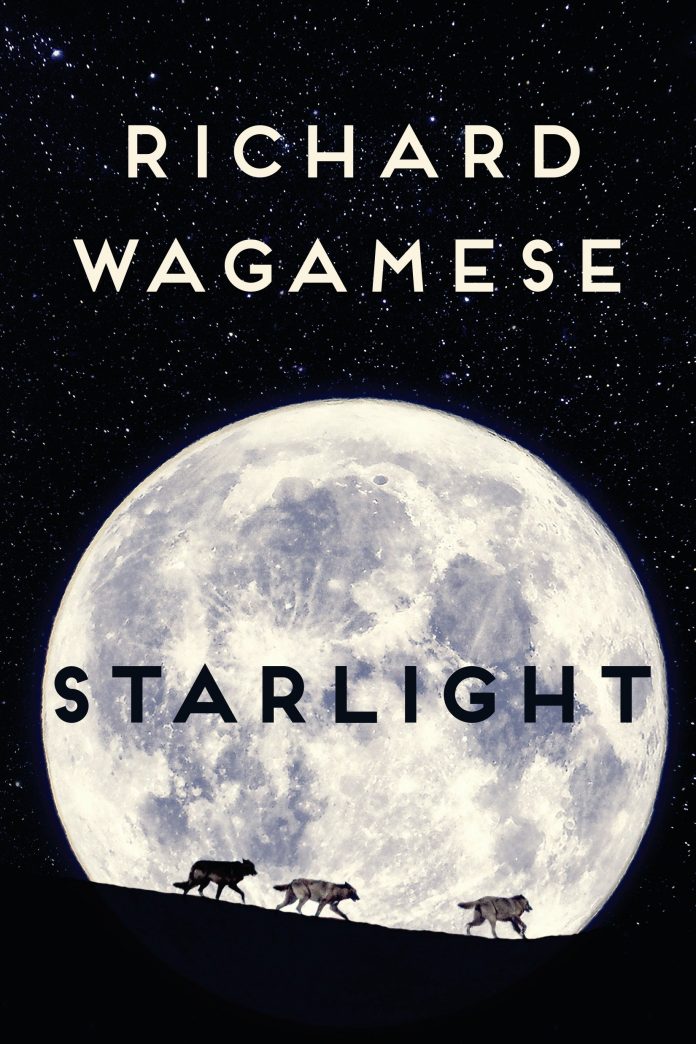
Though Unfinished, Richard Wagamese’s Starlight Deserves a Read

0
Image courtesy of CBC Books

By: Gabrielle McLaren, Editor-in-Chief

The titular character of Richard Wagamese’s swan song Starlight, Frank Starlight, is a quiet rancher living on the land where he was raised, which he knows like the back of his hand. With him is his farmhand turned best friend, Eugene Roth. Their shared lives are flipped when they take in Emmy Strong and her daughter Winnie, who are on the run from an abusive ex and his henchman.

This might sound like a fairly simple story — and in some ways it is. However, as with all of Richard Wagamese’s work, it’s not so much the story as it is how it’s told. Wagamese draws on some very powerful themes in very elegant and straightforward ways. My favourite quote from the novel serves as one example. “‘Home,’ Starlight said. ‘Comes to be a truth you carry in your bones. Figure if I can help someone find that, I’m doin’ a good thing.’”

He also uses some very powerful, carefully selected metaphors and motifs that enhance both his characters and his setting — and honestly, said setting is arguably given enough agency and depth to count as a character in its own right. He describes natural landscapes so richly that you never feel as if you’re in the same forest twice. Wagamese’s attention to detail goes down to the stiffness of a shirt. Overall, Wagamese’s use of imagery creates an incredibly visually engaging book that I would highly recommend for visual readers like myself.

Wagamese passed away in spring 2017 before he could complete the book, and his estate and literary agents were the ones who submitted the manuscript for publishing. Initially, this was a big turn-off for me, as my last similar experience was Harper Lee’s Go Set a Watchman, whose publication was surrounded by allegations of elder abuse. I felt like a voyeur as I struggled through the first chapter before ultimately returning the book, always wondering how a young and healthy Lee would feel about these unfinished pages being distributed.

Starlight was nothing like that. It read like other works of Wagamese’s, and there was a tangible amount of love and thought poured into it. It could, however, have used an editor — obviously something that would have happened had Wagamese completed the novel. Some redundancies in phrasing and dialogue could have been dealt with, and character development and exposition could have been done more smoothly.

Ultimately, I understand the decision to only give the draft “light edits,” as they are characterized in the publisher’s note. I also appreciated their reconstruction of the ending in the epilogue, based off of what Wagamese had discussed with friends and family, and the choice to finish the book with one of Wagamese’s essays to give him the last word. Overall, I am thankful for the chance to have read this book despite Wagamese’s passing.

Content warnings for the book include domestic violence and allusions to child abuse and sexual assault.

In a world of spoilers and more spoilers . . .

0
Photo by Anderson Mancini, via Wiki Commons

By: Ana Staskevich, Staff Writer

Social media is what links us to the world, but when do we call it too much connection? On one hand, you can send memes to someone across the globe. On the other, the excess is such that you quickly fall behind on things that everyone else seems to be posting about.

And then there’s the information you might not even want to see. Yes: we’re talking about spoilers.

The release of Avengers: Endgame, one of this year’s most anticipated movies, created a lot of paranoia around spoilers on social media. How do you moderate them? How do you avoid them?

But these, of course, are hardly fresh queries. Even at the peak of major film franchises like Harry Potter, a single sentence about the death of an old, important character could ruin the films for diehard fans. There is still a running joke in the fanbase that was once considered a friendship-ending spoiler.

This paranoia makes sense. I mean, I would rather experience something myself for the first time than have it be ruined by a Reddit post I saw during my work break. I even go so far as to mute relevant hashtags and keywords. But it’s hard to regulate all flows of information, especially with the anonymity and freedom that the Internet provides.

Of course, the question becomes: how much time must pass before spoilers are no longer spoilers, but actual discussions of film and content between people?

I think an unspoken rule between moviegoers is that the average time before people can talk about the movie is one to two weeks. It’s definitely my personal spoiler countdown. This time frame lets casual fans visit the cinema at their own pace, rather than prioritizing those lucky enough to get into the premiere. It also gives people time to review and reflect on what they just watched so they can form their own opinions before sharing them. Meanwhile, waiting for longer than two weeks to discuss a film can make people either impatient to talk or indifferent to stale details.

As for tips on how to keep yourself spoiler-free, there’s no one easy solution. Even casually browsing social media during the release of a film is a huge risk to take. Some media platforms like Reddit have diligent users who are downvoting and reporting Endgame spoilers in the film’s opening weeks. That, in my mind, shows a sense of solidarity and understanding between fans. Most people know how annoying it is to find out a major plot twist by accident.

That said, you can’t expect all websites to regulate cyber traffic this way. After all, spoilers aren’t exactly criminal, so you can’t flag them as inappropriate content — even if spoiling’s a pretty shitty thing to do according to Internet etiquette. Spoiler-free spaces can therefore be hard to find.

Personally, I would recommend staying off sites like Instagram where “spoilers without context” you’ll see the most. These are memes with quotes or pictures that give away a movie scene only if you know the plot context. Sites like Tumblr and Twitter you can safely browse if you blacklist certain hashtags, so those get a green light from me.

Maybe the best suggestion of all, though, is to abstain from social interaction and hole yourself up in your room — sounds dramatic, but at least it’s guaranteed.

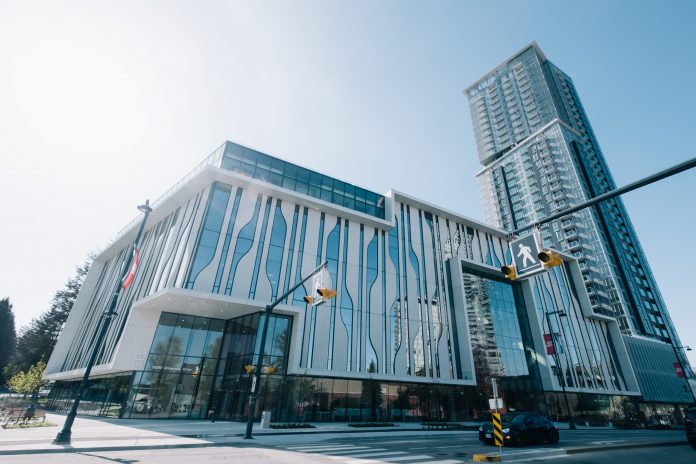
$126-million building is the first phase in Surrey Campus Expansion

0
Chris Ho / The Peak

By: Paul Choptuik, News Editor

With its expansion complete, SFU Surrey celebrated its new building with a grand opening on Thursday, April 25. The $126-million building was first announced in 2016 by Prime Minister Justin Trudeau and then-premier Christy Clark.

Members from all levels of government, including current Premier John Horgan, Member of Parliament Joyce Murray, and Surrey Mayor Doug McCallum joined Indigenous leaders from Kwantlen First Nation and SFU administrators at the opening.

Speaking to the audience who had gathered in the spacious new 400-seat lecture hall, Premier Horgan noted the importance of government funding, but stressed the role the community played in the formation of the school.

“I think we all need to leave this place today with the understanding that it was community activism that created the opportunity for a campus here at SFU [ . . . ] it was the seed of the idea and the enthusiasm of community that planted that seed and allowed it to grow.”

Afterward, media and dignitaries were given a tour of the new building. Live demonstrations of research and projects being done by SFU students, faculty and alumni were set up for viewing, and in some instances, participation.

Premier Horgan tried his hand at recycling with the help of an interactive AI. Created by SFU alumni Hassan Murad and his partner Vivek Vyas, Oscar, their waste-sorting AI assistant, identifies an object held up to its scanner and directs the user where it should be placed. Oscar lets the user know if they’ve initially made a mistake, as it did for Horgan, and commends them when the item is sorted correctly.

According to figures distributed to the media, the 20,458 square-metre facility will be able to accommodate up to 440 student spaces. In addition to providing additional space for SFU’s Mechatronic Systems Engineering (MSE) program, the building will host a new Sustainable Energy Engineering (SEE) program. In a video shown during the opening ceremony the Dean of Applied Sciences, Dr. Eugene Fiume elaborated on the new programs goals.

“The Sustainable Energy Engineering program is intended to be a world-class program in both the education and mentoring of students so that they can have a strong influence on not just the technology of sustainable energy but also work in areas in policy, and environment, and in business,” Flume said.

Applications for internal transfer into the new program for Fall 2019 opened on Wednesday, May 1.

Lack of outdoor public space on campus is a problem

0
Photo by Marcus Blackstock / The Peak

By: Nicole Magas, Opinions Editor

On April 2, SFU hosted its annual volunteer recognition event in a somewhat lacklustre venue: the Strand Hall parking lot. This is a far cry from its previous iteration; the 2018 Volunteer Gala I attended was held with much glitz and glamour at the Vancouver Convention Centre.

Ordinarily, hosting an event like the TRIBUTE Volunteer Appreciation Festival on campus wouldn’t be much of an issue. Our home on Burnaby Mountain is undeniably one of the more picturesque locations of higher learning in B.C. Likewise, there is normally more than enough space to hold larger, street festival-type events on campus (Welcome Week in Convocation Mall, for example).

However, the location of this year’s appreciation event in a parking lot felt flat both because it paled in comparison to its predecessor, and because it reminds students of just how much open public space we’ve lost on campus due to construction.

Before the AQ renovations started last year, the grass field beside the Strand Hall parking lot was paved over to build what looks like a command post for construction crews. This previously unbroken stretch of grass used to be a perfect outdoor leisure area, especially in the summer months when the ground is drier.

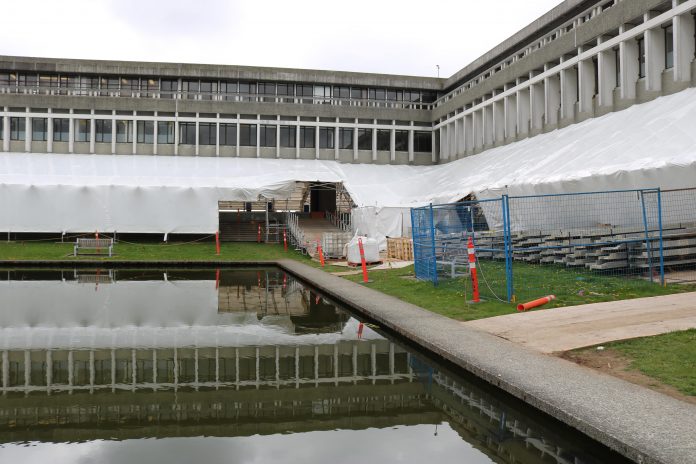
Similarly, the reflection pond, a landmark of SFU Burnaby Mountain built for quiet contemplation, is now contaminated with encroaching construction noise and white tarp. The grass is torn and muddied by the tracks of students trying to navigate out of the AQ.

As for Convocation Mall, the less said about this ever-shifting labyrinth, the better. Now, with construction started on the new stadium project, even the sports field is no reprieve from the ubiquitous clatter, dust, and exhaust plaguing our once beautiful mountain environment.

It’s no better indoors. The AQ’s drilling noises echo loud enough to drown out lectures. Scaffolding and string lighting on the third floor makes the corridor look more like a bunker than a university. Meanwhile, the south AQ skylight renovation project seems as though it will overshoot its completion date of spring 2019, stretching out the associated era of tarps, scaffolding, and boarded-up windows.

Undoubtedly, our aging campus sorely needs these renovations. However, with the start of the summer semester and the return of the sun and warm weather, students will soon be looking for areas outdoors to relax and study between classes. Unfortunately, these outdoor mountain oases are in short supply.

As the volunteer appreciation event highlighted, we have increasingly few options for outdoor spaces in which to enjoy ourselves. Will students be faced with only parking lots and white construction tarps for their few moments of outdoor rejuvenation?

Unless some of the current construction projects wrap up soon, this may well be the case.

An Afternoon of Laughter and Literature with Cherie Dimaline and Eden Robinson

0
courtesy of sfu lib
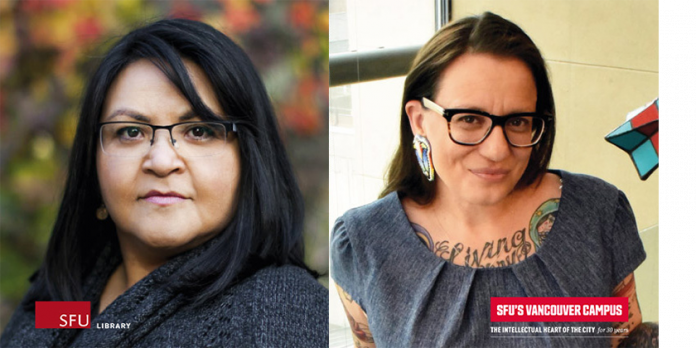
Eden Robinson (left) and Cherie Dimaline (right). Image Courtesy of the SFU Library


By: Isabella Wang, SFU Student

On April 25, One Book One SFU saw a sold out crowd gather to see Eden Robinson and Cherie Dimaline live. One Book One SFU is an annual event committed to bringing together renowned authors, artists, and scholars for dialogue and discourse. In the past, it has featured authors such as Teju Cole, Meggie Nelson, and Ivan Coyote, who introduced Cherie Dimaline as the moderator this year.

Eden Robinson is a Haisla/Heiltsuk author of six books, including the trilogy series Son of a Trickster and Trickster Drift. Cherie is a Métis author and editor whose work has been read and celebrated across the globe. Her bestselling novel The Marrow Thieves won the Governor General’s Award for English-language children’s literature, among others.

Having arrived at the event two hours early, I got a hug from Eden Robinson and front-row seats. For most of the afternoon, the audience members beside me were bent over laughing. So was I. I had tears in my eyes. And as Ivan Coyote later reflected, they had a sore stomach from laughing so hard for three hours.

In their introduction, Ivan begins by sharing an anecdote of how they first met Cherie at an airport departure gate. Both writers were on their way to the same literary festival and, by the time they arrived, Ivan felt as if they had been soulmates since they were eight.

They use this as a way of demonstrating the power of narrative, how stories shape our lives, and how we situate ourselves in relation to the land and each other. Indeed, narrative seems to be what connects all three authors at the event. Cherie knocks back with a cheeky comment of her own, saying that Ivan is such a gentleman and that every time she’s in town, they offer to cook her a chicken.

Thus goes the entire preceding, structured around inside jokes, talk of microdoses and psychedelic mushrooms, and personal narratives as Cherie and Eden share with us their experiences as writers. As Eden laments, there is a certain expectation to be sought whenever the reader reads a text that is dark and humorous, like hers. As a result, she says that people expect dark from her, and they are often disappointed when they see her walk onto stage — the punchline being that in person, she is the most warm, huggable human being to walk the planet, with a very contagious laugh.

On inspiration, Eden recounts how The Trickster Trilogy actually started out as a 10-page story written while she was feeling stuck between projects. She loved hearing stories about tricksters told in her family, so she decided to write one in order to prove to them that you can insert humour into grim and intense stories. On process and revision, Eden shares how she had divided earlier drafts of Son of a Trickster and Monkey Beach into scenes and pinned them all across her apartment suite, adding that she didn’t get the damage deposit back.

Cherie’s first book only took six weeks to write. She confesses to telling that to people at the Giller while leaving out the part about having to write 11 additional drafts afterwards. Wrapping up, Cherie asks Eden what she is currently reading. Eden smiles and says Empire of Wild. It’s Cherie’s newest dystopian sci-fi novel, coming September 2019.

No conversation on writing is ever complete without talk of the paycheque. Both writers reveal what they each did with their first advances. Cherie got $200 and bought beef jerky, the most expensive item she could find at 7/11. She then laughed at herself, bemoaning her meagre advance and splurge, when she found out that Eden went on holiday for six weeks.

It’s a different time now, where money is perhaps not worth what it used to be. The opposite can be said for narrative and, with the rise of Indigenous voices and writers today, these two authors are proof that our words, our stories, hold as much weight as ever.

SFU launches free shuttle service around Burnaby campus

0
Paul Choptuik / The Peak

By: Kelly Chia, Staff Writer

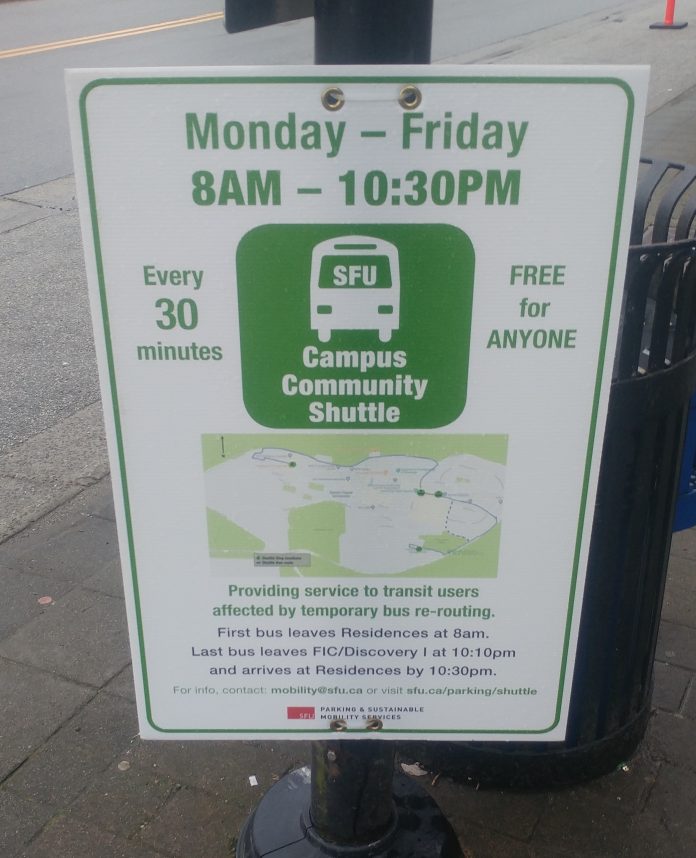
This summer semester, SFU is running a community shuttle going from Fraser International College (FIC) to Residences.

With construction ongoing at SFU Burnaby, this shuttle is meant to make up for the resulting disruptions to the campus’s usual transit routes, letting anyone board from 8 a.m. to 10:30 p.m. The shuttle route starts outside of the Dining Hall and ends at the Discovery 1 building, making stops at Cornerstone and the CentreBlock building.

According to David Agouti, the director of Parking and Sustainable Mobility Services at SFU, the idea of a campus shuttle has been discussed for a few years, but it wasn’t implemented until now.  

“With the Corix District Energy project, and how road closures related to that project impacted transit service on campus, [Parking & Sustainable Mobility Services] suddenly had an opportunity to act.”

When asked about ridership, Agouti commented that throughout the last week of exams, nearly 400 students were using the shuttle. This amount has dropped below 100 per week during the break, though David expects it to pick back up when the semester begins.

In a follow-up email, Agnoti wrote: “As it is a new project, the Parking and Sustainable Mobility Services will be conducting “intercept surveys” — in-person surveys with shuttle riders — to get feedback on the service. Additionally, [I advise] that if people have comments or suggestions, they can either contact [email protected] or speak to someone on the shuttle conducting intercept surveys.”

This project is not expected to run past August, which is when transit routes are projected to return to their usual run.

Need to Know, Need to Go: May 6-12

0
courtesy sfu galleries

By: Alison Wick, Arts Editor

seams — SCA MFA Spring Festival

seams is a 10-day spring festival at SFU Woodward, put on by the School of Contemporary Arts’ Master of Fine Arts students. Centred around the gallery exhibition at SFU’s Audain Gallery, this interdisciplinary showcase explores how different mediums and practices relate to one another, examples including performance, installation, and photography.

Performance A (which featured Kourosh Ghamsari-Esfahani, Casper Leerink, and Meagan Woods) shows May 3 and 4, and Performance B (featuring Luciana Fortes, ilvs strauss, and Tomoyo Yamada) will perform on May 10 and 11. Not to be missed is the free lecture performance at 6 p.m. on May 8, Talking to Strangers, by Lebanese interdisciplinary artist Ghinwa Yassine, whose art explores cultures and people in transition.

The festival and exhibition are on until May 11. Tickets to Performance B are $7 for students and entrance to the Audain Gallery is free.

Image courtesy of SFU School of Contemporary Arts

Sense, Reset — Lief Hall’s MFA Graduating Project

Another graduate project from SFU MFA students, Sense, Reset is an installation work that builds on its artist’s research into media and soundscapes. The piece is created by prolific musician and artist Lief Hall, who has been shown in galleries across Canada and performed internationally. This particular work uses video and vocalizations to look at the ways in which health and spirituality have been incorporated into and shaped by mass media.

The project will be shown in room 4365 at the SFU Goldcorp Centre for the Arts on Thursday May 9 from 6–9 p.m, and on May 10 and 11 from 1–7 p.m. Entrance to see the work is free.

SFU event shows LGBTQ+ movement falls short of full inclusivity

0
Photo by Cecilie Johnsen via Unsplash

06/05/19: This article was corrected from an older version. Ashley was identified as a PhD candidate. He is instead a PhD student.

By: Ashley Moore, Peak Contributor

“Has the LGBTQ+ movement failed?”

This was the provocative question posed to a diverse panel of academics, politicians, activists, and artists during a public event organized by SFU students, held on April 7 at the university’s Harbour Centre. While most panellists noted the hard-earned progress that has benefited the lives of many queer Canadians, some pointed out a number of ways in which the movement might be said to have “failed.”

This conversation was wide-ranging and it would be impossible to do it full justice here. But to speak on it concisely, it touched on how the concerns and wellbeing of trans* folk have been largely neglected, and how most progress has been achieved through, and thus perpetuates, the machinery of ongoing colonialism across these lands we now call Canada. It explored the movement’s increasing complicity with late capitalism and institutions that harm people of colour. It highlighted the danger of Western queer complacency while so many queer people are suffering across the globe.

With palpable emotion, experienced activists in the audience reminded us that we stand on their shoulders, and that to simply dismiss their efforts as “failed” is ignorant at the very least, if not ungrateful and offensive. But while listening to and learning from the discussion, as an applied linguist, it also became apparent to me that a great deal of talk revolved around telling others within the community how they should conduct themselves as LGBTQ+ individuals.

At one point, a panellist implored the audience to shut homophobic and transphobic people out of their lives. An audience member later questioned this approach and instead advocated for engaging in dialogue with such people.

Like a modern-day Harvey Milk, another panellist encouraged everyone to come out. Another audience member, based on their experience with employment discrimination, advised people to stay closeted until they had enough power to stay safe and protect themselves.

Who among us hasn’t similarly mistaken their own experience for that of others? I am as guilty of that as anyone else (apologies to an ex-boyfriend I once pressured to come out to his family). But on the walk home, it occurred to me that these prescriptive edicts, while well-intentioned, were actually symptoms of one of the ways in which the LGBTQ2S+ movement in Canada (and other places) could do better.

We need to remind ourselves of the importance of intersectionality — a teaching, a gift, that Black feminist scholars like Kimberlé Williams Crenshaw and bell hooks first conceptualized, alerting us to the various dimensions along which oppression and privilege shape our lives differently.

For example, the ability to pass — meaning the ability to be accepted within a space without being identified as queer — is a form of privilege and, for many queer people, an impossibility. Likewise, while coming out can be a positive experience with an “it gets better” ending for many, for some it can lead to ostracization, homelessness, and violence.

While I personally try to engage homophobic and transphobic people in dialogue, I do so while reminding myself that I have particular privileges that help me to do so. These privileges might not be available to others who are just coming to terms with their identities, or who are living with depression, or who are simply exhausted from the emotional labour involved in constantly having to explain and defend who they are.

While a growing number of people find shelter and solidarity under the umbrella of the LGBTQ2S+ movement, we should not forget the unique tensions of privilege and oppression that converge upon the particular ground where we each find ourselves.

The irony of advising others not to give advice is not lost on me. At the same time, I offer a suggestion to help us move forward. The LGBTQ2S+ movement here in Canada has not failed. There is merely more work to be done. That work is probably best done through collective, coherent action.

Going forward, rather than advise each other on how to live our best queer lives, we might better spend that time listening attentively and empathetically to each other and learning about the diversity among us.

Ashley Moore is a PhD candidate in the Faculty of Education at UBC.

What Grinds Our Gears: Respect the people around you when you light up, even on 4/20

0
Photo by Luther Bottrill via Unsplash

By: Ruth Leavitt, SFU Student

On 4/20, a group of teenagers lit up their weed on a SkyTrain car. It was late at night, so the car was full but not crowded. I had to flee to the next car to escape the smoke, and I wasn’t alone.

I don’t object to weed. I know people who use it medicinally. But I also experience anxiety symptoms when exposed to it.

Lighting up on SkyTrains is an extreme form of people failing to think about others when they smoke. On a good day, I’m already dodging cigarette smoke at transit exchanges so I don’t spend the next hour with my chest tight and my throat sore. The incident on April 20 was unfortunately another example of this inconsiderate behaviour. It left me with symptoms similar to anger or the start of a panic attack — I couldn’t tell which.

4/20 should not be the St. Patrick’s Day of weed. You don’t get to go out, get high, and get it all over the seat next to you because it’s “just a little fun.” It’s not. Just like alcohol and cigarettes, weed can have unpredictable results for different people, and people have the right to control their exposure. Taking away that right by taking your pot out in spaces that people cannot escape is not just rude but dangerous.

Enjoy your holiday. Take it to the park or your own private space. But don’t bring it out in a place where the person next to you cannot choose to leave. 4/20 should be about the right to choose to use weed or not. Respect that, and keep both options open for others too.

Samer Rihani’s parting thoughts on his time as acting SFSS president

0
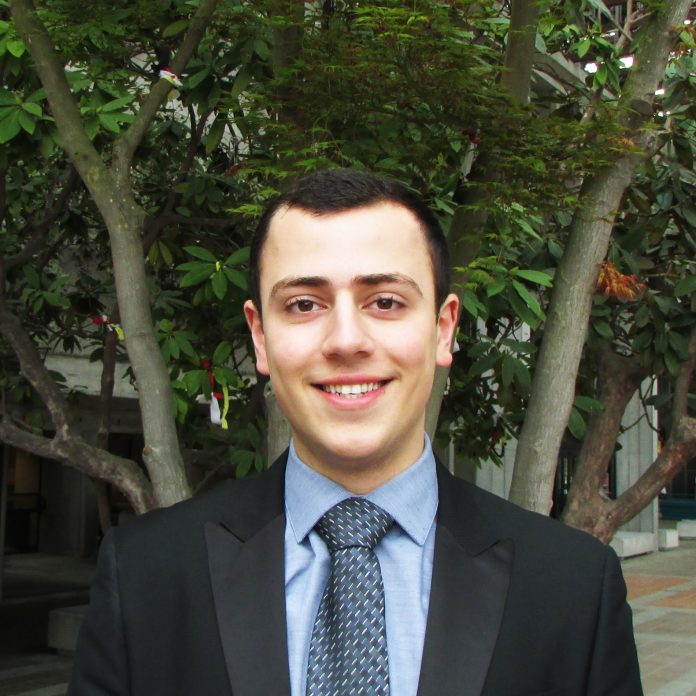
Samer Rihani, Image courtesy of the Simon Fraser Student Society

Written by: Youeal Abera, News Team Member

The Peak: Please introduce yourself, your position within the SFSS, and what your responsibilities were.

Samer Rihani: When I was first elected back in March of 2018, I was elected as the VP for student services. This was kind of to oversee the health and dental plan, services that are available to students [such as the U-Pass], the legal clinic that we provide, and food bank services. As of September 2018, following the presidential impeachment, I took over as the acting president. So, alongside the help of the other VPs, I could of oversaw all of the operations of our directors of the SFSS.

P: Can you list some highlights of your time with the SFSS?

SR: From the beginning of the year, we looked into something called the Reserve Fund, which is an amount of money set aside [ . . . ] any time you need to access it for really expensive medication for life-threatening diseases for specific students, you’ll have a reserve to tap into. We realized that students were putting in too much into the reserve. Our reserve was getting too high and it was unnecessary, so by dropping the prices for students, we saved students over $300,000.00 this year alone.

Just by digging and asking a few simple questions and just looking at the numbers from the audits, you start to realize that there’s really simple changes you can make for students sometimes that makes a big difference at the end of the day.

P: What were some of your biggest challenges in your time with the SFSS?

SR: The infamous thing is we started with 16 members and now we’re at 13 members. We started the year out with everyone filling their roles. Kailyn Ng  was our FASS rep, and she left to go to a different school. Of course, in September we had our notorious impeachment. So, you get to this point now where you’ve never seen anything like this before. The only thing that was pretty similar was in 2006 when the entire executive team of the SFSS got impeached. We kind of had to pick up for things we never really signed up for, but you can’t complain about that. You sign up for a role in the SFSS, you can’t be expected to just do your 9-5 and then go home. There is no hours, no bare minimum for what you can do. You have to pick up some of the slack for other people, and you got to check in.

Ever since I took the acting presidency, my job was less about hunting down everyone to make sure they’re doing their work, but job was more like, “Hey, we’ve had a pretty crazy year. How have you been doing with your mental health? What’s your headspace like? Is there anything I could help you with?” I had to pick up a really interesting leadership role that I never would have seen myself doing.

P: What would you like to see the new SFSS Board or President do within the coming year?

SR: I want to see the new president, specifically, give room for his team to flourish. Often times, what happens is that the president comes in and has trouble asking for help, giving a hand off to his team. What happens is board members who get elected are elected for some reason. People just don’t elect you because of posters. Essentially, what I always tell people is that your job as president is to do the least, because that means your team is functioning and doing their best.

I think one of the problems that we faced specifically this year with our president was that there was a little involvement in things that didn’t need involvement. That became problematic. Jas Randhawa [former SFSS president], for example, had really good intent. He was a hardworking guy, but I would say in the wrong categories. So, if there’s one thing I ask, it’s that a president needs to know that their team is stronger than they are. I want to see a board that’s unified.

With Giovanni [HoSang] coming in now [as the new SFSS president], it’s going to be really interesting perspective. I think, in a way, this is kind of needed. We have an activist in the role of SFSS president, which is something we’ve never really seen. I think, frankly, he can bring a lot of good to the society. However, people need to put aside biases and conflicts. You don’t have to be best friends with everybody on the board, but you should put the work in the students first before any kind of bias or conflict.