
Go back

Need to Know, Need to Go: May 6-12

Two multidisciplinary showcases by SFU grad students that explore what art can be

By: Alison Wick, Arts Editor

seams — SCA MFA Spring Festival

seams is a 10-day spring festival at SFU Woodward, put on by the School of Contemporary Arts’ Master of Fine Arts students. Centred around the gallery exhibition at SFU’s Audain Gallery, this interdisciplinary showcase explores how different mediums and practices relate to one another, examples including performance, installation, and photography.

Performance A (which featured Kourosh Ghamsari-Esfahani, Casper Leerink, and Meagan Woods) shows May 3 and 4, and Performance B (featuring Luciana Fortes, ilvs strauss, and Tomoyo Yamada) will perform on May 10 and 11. Not to be missed is the free lecture performance at 6 p.m. on May 8, Talking to Strangers, by Lebanese interdisciplinary artist Ghinwa Yassine, whose art explores cultures and people in transition.

The festival and exhibition are on until May 11. Tickets to Performance B are $7 for students and entrance to the Audain Gallery is free.
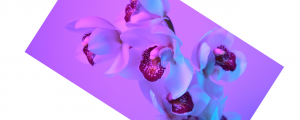
Image courtesy of SFU School of Contemporary Arts

Sense, Reset — Lief Hall’s MFA Graduating Project

Another graduate project from SFU MFA students, Sense, Reset is an installation work that builds on its artist’s research into media and soundscapes. The piece is created by prolific musician and artist Lief Hall, who has been shown in galleries across Canada and performed internationally. This particular work uses video and vocalizations to look at the ways in which health and spirituality have been incorporated into and shaped by mass media.

The project will be shown in room 4365 at the SFU Goldcorp Centre for the Arts on Thursday May 9 from 6–9 p.m, and on May 10 and 11 from 1–7 p.m. Entrance to see the work is free.


Was this article helpful?
0
0

Leave a Reply

Block title

New immunotherapy treatment provides hope for aggressive cancer

By: Lucaiah Smith-Miodownik, News Writer Surgery, chemotherapy, and radiation therapy are often recognized as the three most common forms of cancer treatment. Sometimes, the latter two approaches become no longer effective when cancers become drug resistant, allowing the cells to further spread. At the University of Calgary, however, promising developments in immunotherapy intervention seek to provide alternative treatment when common therapies are not viable.  Cells continually divide to replenish dying cells, but certain gene mutations can create cancer cells, which divide and spread in an uncontrolled manner. The human body naturally defends itself from cancerous cells, though sometimes they can “hide from the immune system and avoid being destroyed,” according to the Canadian Cancer Society. Immunotherapy seeks to help strengthen the ability to recognize and fight...

Read Next

Block title

New immunotherapy treatment provides hope for aggressive cancer

By: Lucaiah Smith-Miodownik, News Writer Surgery, chemotherapy, and radiation therapy are often recognized as the three most common forms of cancer treatment. Sometimes, the latter two approaches become no longer effective when cancers become drug resistant, allowing the cells to further spread. At the University of Calgary, however, promising developments in immunotherapy intervention seek to provide alternative treatment when common therapies are not viable.  Cells continually divide to replenish dying cells, but certain gene mutations can create cancer cells, which divide and spread in an uncontrolled manner. The human body naturally defends itself from cancerous cells, though sometimes they can “hide from the immune system and avoid being destroyed,” according to the Canadian Cancer Society. Immunotherapy seeks to help strengthen the ability to recognize and fight...

Block title

New immunotherapy treatment provides hope for aggressive cancer

By: Lucaiah Smith-Miodownik, News Writer Surgery, chemotherapy, and radiation therapy are often recognized as the three most common forms of cancer treatment. Sometimes, the latter two approaches become no longer effective when cancers become drug resistant, allowing the cells to further spread. At the University of Calgary, however, promising developments in immunotherapy intervention seek to provide alternative treatment when common therapies are not viable.  Cells continually divide to replenish dying cells, but certain gene mutations can create cancer cells, which divide and spread in an uncontrolled manner. The human body naturally defends itself from cancerous cells, though sometimes they can “hide from the immune system and avoid being destroyed,” according to the Canadian Cancer Society. Immunotherapy seeks to help strengthen the ability to recognize and fight...
