Home Blog Page 500

Your weekly SFU horoscopes: September 23–29

0
An illustration of a girl with long flowing hair. Astrological signs and stars shine around her.
ILLUSTRATION: Marissa Ouyang / The Peak

Written by Zach Siddiqui, Humour Editor

Aries — March 21–April 19

Your superiority complex is in full blossom. And you need to manifest it. Irritate your sketchiest, most unstable friend until they lop off your head and impale it on a stick, Lord of the Flies style, looming from the height of SFU’s tallest tower. The entire campus will bear witness to your glory, and you’ll ascend to the blazing throne Satan abdicated when he started sitting in on SFU history seminars.

Taurus — April 20–May 20

September’s ending, you morally besieged belugas. Green Day can’t protect you anymore. Wake up.

Gemini — May 21–June 20

You’ll get lost this week. Google Maps will try to direct you to your destination, so that you don’t find yourself at an active crackhouse like Sunshine Corazon from season 2 of Glee. Don’t listen, though. Like Kanye would say, this is just another fear tactic used to manipulate your free thought.

Cancer — June 21–July 22

People are going to misinterpret your intentions a lot this week. Congratulations: you’ve finally succeeded as a compulsive liar.

Leo — July 23–August 22

You’re mildly insecure this week. Doesn’t that shock you? You think your classroom crush might want a quieter, more reserved bae. Prove to SFU how silent and thirstworthy you can really be. Before their fantasy-sparking eyes, strip down to your socks, “Blow Us All Away” style, and douse yourself in cups of boiling French vanilla from Simon C. The scalding of your newly honeyed supermodel flesh will keep you too distracted to talk. 

Virgo — August 23–September 22

Haters are your motivators. But you don’t have any haters at SFU right now. If you really want to secure the bag, you’ll need to reconnect with your friend’s ex and tell them the real reason they were dumped. The motivation you get outta that will be piping hot.

Libra — September 23–October 22

Sorry . . . you don’t get a horoscope this week. The stars don’t commune with cold-blooded lizards. 

Scorpio — October 23–November 21

Your friends think you’re being jealous and possessive. But I’m sorry to tell you that you’re actually just being possessed. Since it’s far too late for you to enrol in ENGL 383 and ask Buffy the Vampire Slayer for assistance, you have one other option. Craft yourself an amulet out of soil from the Burnaby Mountain woods and stem cells “borrowed” from one of SFU’s biology labs. 

Sagittarius — November 22–December 21

Wanderlust and dissatisfaction lurks in your bone marrow this week. Infiltrate another local post-secondary institution and pretend to be a student there. Maybe there’s someone there who can love and understand you, someone who has the benefit of not knowing your real self.

Capricorn — December 22–January 19

The truth is everywhere you look this week. No one’s facades are safe. For your karma’s sake, babe, use your powers for good. Call a bitch out when the student clogging up the library computers plays it like they’re not just wasting time using the keyboard as a coaster.

Aquarius — January 20–February 18

Dress how you like this week. Even if that means scandalizing your profs with your perfect replica of Lady Gaga’s 2010 meat dress. Don’t let educational class gateways win.

Pisces — February 19–March 20

Your obsession with “________ Reads Thirst Tweets” videos on YouTube either has hit or will hit its climax this week. But are you projecting onto the hot celeb reading the tweets or onto the innumerable fans who’ve been writing the mildly petrifying missives? Spend your next lecture reflecting on that antinomy. 

SFU Sports: The week ahead

0
Photo credit / SFU Athletics

By: Dylan Webb, Sports editor

The SFU athletics schedule intensifies this week, highlighted by home games for football and women’s soccer. Here’s a brief breakdown of all the SFU sports action lined up for the week of September 22–29.

Women’s Soccer:

The SFU Women’s Soccer team will play two games this week, which includes their much anticipated home opener on September 28 at 1 p.m. Despite construction on the new stadium, the game will still be held at Terry Fox Field and will be played against Western Washington University. Before travelling home for the opener, the Clan will stop in at Stanislaus State University for a 2 p.m. kickoff in Turlock, California on September 22 to conclude their season opening road trip. 

Football:

Following their home opener, the Clan hosts Azusa Pacific University for their second consecutive home game to start their 2019 GNAC schedule. Kickoff is at 6 p.m. on September 28 at Swangard stadium. The Clan continues to play home games off-campus while the new stadium is constructed at Terry Fox Field. 

Hockey:

The SFU Men’s Hockey team returned to the ice last weekend for their first game since last years disappointing playoff exit at the hands of the Trinity Western University Spartans. After the UBC Thunderbirds cancelled what would have been the pre-season opener for the Clan, the team started their 2019 season against the same opponent that finished their 2018 season. The Clan will now use a week off to prepare for their cross-continent road trip to Worcester, MA for their final two pre-season games, both against NCAA Division 1 competition. 

Volleyball:

Having kicked off GNAC play with two home games last week, the SFU Volleyball team will travel to Oregon for their first two in-conference, road games of the season. After a visit to Portland to play Concordia University on September 26, the team will move to Monmouth for a contest against Western Oregon University on September 28. 

What Grinds Our Gears: Dorm showers are part science lab, part horror show

0
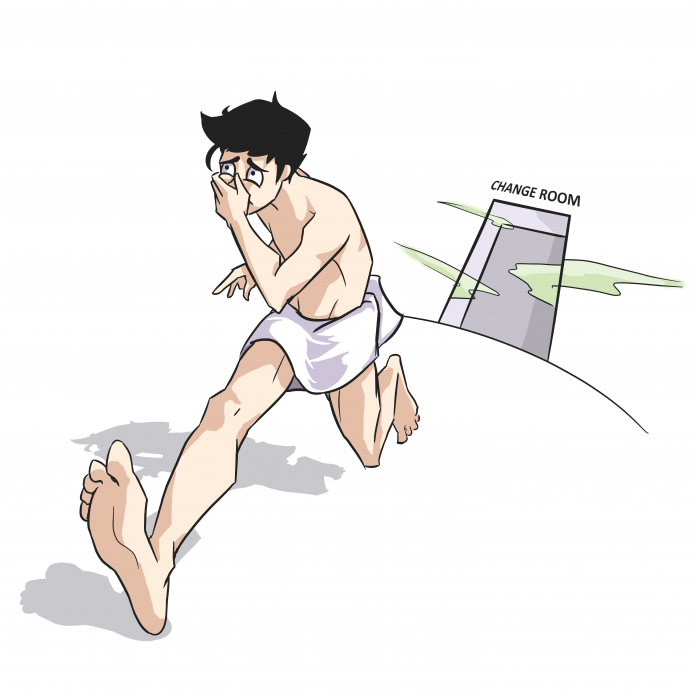
Showers in Towers: What a Soap Opera. Illustration: Anthony Liao/The Peak

By: Paige Riding, News Writer

The Pauline Jewett Tower is where I get to call home this school year. I knew, in theory, that the Towers have shared washrooms for the entire floor to use. What I didn’t know was that, while the co-op showers in these washrooms may only fit one person comfortably, they also contain some extra gifts no one signed up for.

Picture a tastefully placed used condom gracing the floor of the stall. At minimum, three to four spiders and other buggy buddies provide emotional support during crying sessions. At this point, I’m not sure if the fuzzy black contents in the corners are deadly or not.

Combine all these aspects with the horror movie-esque greenish lighting above and a shower transforms from a relaxing time to a race against the giant clump of another person’s hair running down the side of the shower towards the drain and, inevitably, towards your feet. Here’s to hoping shower shoes were packed.

While the washrooms across all three Towers are being renovated, those that have yet to complete construction — more specifically, the washroom nearest to my room — are just dingy. One would think with all these residency fees, a girl could get a shower without water damage threatening to collapse the ceiling. Maybe I’ll head to the gym just to use the showers there. Yeah, right.


Affordable, convenient transportation is possible without the problems of ride-hailing

0
Instead of bringing in Lyft, why not update our current ride-hailing system? Photo: Victor Xok/Unsplash

By: Dylan Webb, Sports Editor

As Vancouver’s public transit system continues to leave transportation needs unmet, private corporations such as Uber and Lyft are looking to fill these gaps. Unfortunately, these services have a history of leaving workers with much less profit than anticipated after operational costs are taken into account. Subsequently, we need to ask ourselves whether or not the labour downsides are worth the increased convenience should Lyft and Uber begin operations in Vancouver.

Uber, the premier ride-sharing company, is actually a ride-hailing technology company. The difference between the two is that ride-sharing is essentially carpooling — sharing a ride with others who have similar departure and destination points. Ride-hailing, on the other hand, entails hiring a paid employee to drive people directly to their destinations. This distinction is key to understanding which parts of the gig ride-hailing model (such as those used by Uber and Lyft) can benefit transportation seekers and workers. It also provides insight into which parts we can and should leave behind if ride-hailing were to come to Vancouver.

For example, Uber’s current business model relies on increasing profits through side-stepping transportation regulations and undercutting driver wages. By presenting themselves to regulators as a communications platform rather than a ride-hailing service like a taxi, Uber is able to avoid costly regulatory protocol and shift most of the operational expenses like fuel, licenses, and vehicle maintenance to the drivers themselves. This reliance on exploitative working conditions is what makes ride-hailing technology services so problematic, and what makes the search for alternatives so necessary.

A lack of transportation that is both affordable and reliable is definitely a problem in Vancouver. As SFU students who need to commute to campus, this is especially frustrating. Having an easy to use, press-of-an-app service to call a ride in an emergency would definitely take some of the pressure off of the already strained system. However, before we jump at the first opportunity to invite problematic ride-hailing services in, it’s worth exploring some alternatives.

Existing taxi companies could, for instance, integrate this technology into their existing systems. In doing so, drivers are still covered under existing labour laws, and private citizens wouldn’t be required to cover the costly expenses of operation — including the class 4 license BC requires for all ride-hailing services. Vancouver commuters could therefore enjoy the benefits of ride-hailing systems that are convenient and potentially create jobs — more jobs that, at the very least, meet minimum employment standards.

In an ideal world, these solutions would supplement a robust, properly funded public transit system. These solutions would allow SFU students to benefit from more convenient and affordable transportation options without the poverty wages and risk for workers that Uber and Lyft’s business model relies on.


Peak Sports Mailbag: Week 4

0
Photo credit / 123rf

By: Grant Simms, SFU student

Hey Peak sports readers,

My name is Grant Simms, and I am your maitre d’ for the football themed Peak Sports Mailbag. Thanks so much to all of our readers for submitting their football-related questions, and my apologies if your question didn’t make it into this week’s edition. Usually, the Mailbag host will only answer three or four questions. Don’t worry though, as all questions submitted count for an entry into the raffle draw whether or not they are addressed in the Mailbag. Now, onto the questions!

Question 1: “Since Canadian and American football have different rules, how do players adapt to the NCAA?” – Gab

Answer: The short answer is: most don’t have to. Although football requires an extreme level of Herculean strength to play, as well as a significant amount of discipline and endurance, it, for most players, does not require them to have mastery of the rules of the game. The skills necessary to catch, to rush the quarterback, or break ankles as a running back, don’t change from league to league. Although the field may be different, and in the NCAA there are more downs, most guys play a position that is relatively unaffected and/or they adjust pretty quickly. 

That being said, the schemes in each league do change. American football is like watching a battle between two cautious WWI sides employing trench warfare, while Canadian football is like watching Scotland and England fight in Braveheart. In other words, Canadian football is a way more offensive style.  Even though the American game has been changing, it’s still, by far, the more defensive of the two. This alters quarterback play, and changes how it’s coached.  Unless a player is just an athletic God, in football, most are only as good as their coaching. If the coach isn’t employing the correct gameplan, the players are pretty much screwed. 

Question 2: “What does the SFU football team need to fix? Can this be the year they finally take a step forward?” – Kyle 

Answer: Not gonna happen mate. At least not while we’re at SFU. That’s coming from a bunch of stories I’ve heard about SFU football; which are usually followed with laughter because they’re frankly pathetic. As much as I’d like to say all we need are some awesome players or our own Vince Lombardi, it’s not gonna happen. Bill Belichik himself could start coaching here and it wouldn’t change a thing. In this case, it all comes down to economics. 

Good sports programs get that way because they can attract the best coaches and players. To do that you have to drop money like Drake at a nightclub. You’ve gotta have ballin’ weight rooms and stadiums fit for kings. Now, SFU has started to put a little more into athletics, with the new stadium being built, but that’s a drop in the bucket compared to what other programs are investing. All you have to do is take a tour of our gym to know our facilities aren’t exactly state-of-the-art. 

Compounding that is the fact that SFU has basically no party culture. Last I checked, that’s the kind of thing athletes enjoy. Now, you may say, “What about soccer? We get good players there.” This is true, but that’s because soccer is a far more popular sport, at least to play, in Canada than in the states – and in Vancouver especially. This makes it easier to find talent close to SFU. Also, nobody’s dropping fat stacks on soccer, so there’s not as much competition there. All in all, unless SFU starts putting more money into the football program, expect losing forecasts to continue.

Question 3: “Who is the most underrated player in the NFL?” – Jacob

Answer: This isn’t actually as easy as I thought it would be to answer. For years, I would have said Russell Wilson, but now, I’m thinking Dak Prescott. Dak was a fourth round pick, he doesn’t have the natural arm talent of a Mahomes, and he doesn’t have the natural athleticism of a Watson. Yet, “All I Do is Win” could be his personal anthem. During the 2017 and 2018 seasons, people began to believe Dak had hit his ceiling. But, during that time, there were three key factors that contributed to his subpar play: the first being the suspensions to Zeke and the injuries to the offensive line; the second was a lack of wide receiver talent, (Dez had caught a dose of “Wideout Delusion”); the third being the lack of a good offensive coordinator.  Despite all that, Dak still managed to have a winning record in both seasons, and even won the division and a playoff game last year. Even Brady needs some weapons, and, with his, Dak has been incredible. We’re now seeing just how precise of a passer he is; he makes great decisions with the football, and he is a superb leader. However, the stigma he picked up will probably stay with him until he wins a Superbowl, which, this year, seems like a strong possibility.

If you would like to participate in future editions of the Peak Sports Mailbag and be entered in a raffle for an end-of-semester prize, here’s what you can send to [email protected]

  • Sports-related questions that our weekly host will answer
  • Weekly theme ideas to guide our questions

Or: sign up to host the Mailbag (and get paid)!

Thanks to all of you SFU sports fans for blowing up my inbox!

Next week’s theme is: NBA Basketball

Next week’s host is: Brandon Braich

Send in your questions to [email protected]

Five films at the Vancouver International Film Festival that you don’t want to miss

0
VIFF’s films span all genres and are shown at multiple locations throughout Vancouver. Image courtesy of Vancouver International Film Festival.

By: Kim Regala, Peak Associate 

My fellow cinephiles, brace yourselves, because the Vancouver International Film Festival (VIFF) is back with quite possibly their best selection of films yet. Showcasing over 200 feature and narrative films, VIFF brings to light the works of various filmmakers spanning all across the globe. I wouldn’t be the first to say that each film in the program is definitely worth a view, but, in the interest of brevity, here are five films that you surely don’t want to miss on the big screen.

Image courtesy of Elevation Pictures / VIFF.

Guest of Honour, directed by Atom Egoyan

Showing September 26 at 7:00 p.m. and September 30 at 6:00 p.m. at The Centre In Vancouver For The Performing Arts

Kicking off the 16-day program at the opening gala is the work of Canadian director Atom Egoyan, with his feature film titled Guest of Honour. While it’s no question that Canadian cinema deserves a lot more recognition than it gets, this compelling work of art serves as a prime example of why. In this character-driven psycho-drama, Toronto health inspector Jim — played by David Thewlis — begins to revisit his regrettable actions towards his daughter as she is wrongfully convicted of a crime, but still insists on serving time. Egoyan explores the complexities of internal conflicts and struggles, manipulating the use of narratives to offer this unique way of storytelling. 

Image courtesy of Fox Searchlight Pictures / VIFF.

Jojo Rabbit, directed by Taika Waititi

Showing October 2 at 6:15 p.m. at The Centre In Vancouver For The Performing Arts

The teaser trailer of Taika Waititi’s latest playful satire alone could bring anyone to tears — from laughter, that is. Inspired by previous portrayals of Adolf Hitler by well-acclaimed comedians Charlie Chaplin and Mel Brooks, Waititi adds his own whimsical twist to the character. While his acting alone is enough to get everyone cracking up in their seats, he is also joined by a renowned group of A-list celebs, such as Scarlett Johansson, Rebel Wilson, and Sam Rockwell. The film combines strong political underlyings with a kind of Wes Anderson-induced aesthetic and quirkiness, two elements that could easily gain this film a couple of nominations come Oscar time.

Image courtesy of VVS Films / VIFF.

The Lighthouse, directed by Robert Eggers

Showing September 28 at 6:00 p.m. at The Centre In Vancouver For The Performing Arts

American director Robert Eggers is most notable for his chilling film The Witch (2015), and all eyes are on him now as he follows up with what is expected to be another memorable take on horror. Set in the 19th century, The Lighthouse follows the downfall and path to insanity of two lighthouse keepers that are stranded off the coast on a lonely and desolate island. Eggers does not shy away from using his background in theatre production, creating a masterpiece that is both theatrical and gothic in style. Rest assured that this stunning black and white thriller, starring Robert Pattinson and Willem Dafoe, will have you gripping your seats for the entirety of the film. 

Image courtesy of Far Sun Film Co. Ltd. / VIFF.

No. 7 Cherry Lane, directed by Yonfan

Showing October 8 at 6:00 p.m. at The Centre In Vancouver For The Performing Arts and October 10 at 3:00 p.m. at the Vancouver Playhouse

Trying his hand at animated films for the first time, Chinese director Yonfan delights us with his heartfelt tale of 1967 Hong Kong, a rough period of political conflict within the country. Similar to how Spider-Man: Into the Spider-Verse (2018) amazed audiences with its inventive take on animation, Yonfan has manifested his own unique and imaginative style with No. 7 Cherry Lane. The visuals, meticulously detailed and drawn, are vividly striking, but what really sets this film apart is the way it is able to bring Hong Kong to life by showcasing its rich history on the big screen.

Image courtesy of MK2 Mile End / VIFF.

La Belle Époque, directed by Nicolas Bedos

Showing twice on October 11 at 6:30 p.m. and 9:30 p.m. (during the closing gala) at The Centre In Vancouver For The Performing Arts

Finishing off this list and closing out VIFF is La Belle Époque, directed by French director Nicolas Bedos. The film revolves around 70s cartoonist Victor — played by Daniel Auteuil — who is met with the opportunity to travel back in time, but not as literally as one may expect. Through a new enterprise called “Time Travellers,” clients are able to relive previous eras and time periods through a realistic immersion experience run by actors and technicians that replicate past events. While the idea of time travel is nothing new to science fiction, Bedos offers this completely new and never-before-seen approach to the genre. An original and entertaining twist to the genre, this film is a celebrated piece that deviates from the expectations of French cinema.

Single tickets, packages, and festival tickets are available for purchase at the VIFF website and at the Vancity Theatre box office. For more information, visit their website at viff.org.

Spotlight: Students of Caribbean and African Ancestry

0

Four things that clubs can do to make joining easier

0
Clubs Days is a good start, but engagement should be an ongoing process. Photo: Gudrun Wai-Gunnarsson/The Peak

By: Feven Ephraim, SFU Student

For many who attend SFU, student life on campus seems nearly nonexistent. One often repeated reason for this is that most students commute to campus and therefore don’t really want to stay longer than they need to. Students who want to be active on campus are told to join clubs, proactively engage with student unions, or volunteer with the school. But this advice ignores the legitimate reasons students may have for not joining — many of which are barriers produced by student groups themselves. The onus is thus on student groups to make volunteering and active participation as easy as possible, so that students who want to join and be active, can.

SFU student groups who engage more with other students benefit themselves, and also the entire university. Here are four things that student groups do that improve their visibility and attractiveness to the student body:

  1. Advertising

From conversations with other students and from personal experience, many of us don’t know what options are actually available for university engagement. Without scrolling through the SFSS website, there is little chance to organically find out what is happening on campus. Facebook updates help a little, but not all student groups are active on social media — and not all students have or actively use a Facebook account. Advertising broadly is a great way to make students aware of what is happening at SFU. This goes beyond just stapling a flyer onto a notice board and hoping someone sees it. Post wide and often, digitally and physically; students today get their information from a lot of different sources.

  1. Be active

It seems that a lot of what goes on with student groups happens out of sight from the rest of the school. Some groups organize and host fun and creative events publicly during the day in the Convocation Mall — this should be done more often. Passersby who are interested may decide to join a group that is visibly active. Not only would this bring in more members, but it would also make the campus atmosphere livelier.

  1. Reach out!

Because students may not know executive members personally, joining a student group out of the blue may feel like intruding on relationships that are already established. It can be hard to insert oneself into a social group without being actively invited, resulting in some students feeling unwelcome before they even join. However, if group members actively reach out to new students themselves, those students may be more likely to join. This is done best when it’s an ongoing effort, not something that just happens during Clubs Days. Current members could hand out flyers to students who they feel could be interested, or have conversations with potential members in class. In addition, introducing new members to group initiatives and current members with a fun event makes a club seem more approachable.

  1. More convenient meeting times

Finally, holding meetings outside of when most students take their classes would be beneficial. Class conflicts can prevent those who want to join a club from attending. Meetings in the evenings during weekdays would be a lot more convenient for students (at least for those who do not also have part-time jobs). Scheduling meetings too early in the morning may discourage students from joining by forcing them to wake up way too early, and meetings late at night may be daunting for students who have to travel by transit.

Student life is an important part of the university experience. Joining student groups matters not only for more lines on a resumé, but also to have social support systems for the student population. This could even lead to better performance academically, as some studies have shown that students who participate in extracurriculars tend to be better students.

It’s up to current leaders and members of SFU student groups to facilitate student participation. While I’ve only listed four suggestions here, there are possibly many other additional ways to improve student engagement. If we come together to implement these ideas, our university will begin to feel a lot more connected.

Research assistants aren’t represented as university employees — here’s why they should be

0
RAs perform essential work for the university and should be given full protections as workers. Illustration: Tiffany Chan/The Peak

By: Alison Wick, Peak Associate

In 2016 SFU created its 2020 Strategic Research Plan, outlining why, where, and how the university intends to grow as a research institution. Part of their plan to achieve these goals is to “strengthen areas of research excellence” — including promoting the research talent of faculty and students.

Unfortunately, research assistants (RAs) have been almost entirely left out of the Strategic Research Plan. Despite their prevalence, research assistants are mentioned in the document just twice and only in reference to the “hands-on training” they allegedly receive in these positions. The reality is that these students — these workers — by and large aren’t receiving any of the special career-boosting training that the Strategic Research Plan purports to offer. Much of the work RAs do is actually quite rudimentary, and involves the fundamental routine experiments or data updating that supervisors need but don’t have time for.

The decision to minimize RAs in the 2020 Strategic Research Plan ignores the invaluable nature of RA work in SFU’s research production. If SFU wants to live up to its reputation as a leading research university, it needs to recognize that research assistants are workers who deserve benefits, dignity, and respect — not simply students supposedly gaining experience.

Despite doing “the most time-consuming work” for a research project, as an RA from the Faculty of Education described, many research assistants are never given the opportunity to be a real member of the project. In these cases, RAs never have “any chance to be involved in a conference presentation or paper writing for the project that [they’ve] been working on for almost two years.”

For over a year and a half I have been an undergrad research assistant in First Nations Studies and, although my job is interesting and my workplace is positive and supportive, I have found that this is not the norm for research assistants across the university. The more I speak to RAs outside of my department, the more aware I am of the precariousness of this work.

Other similar student positions like teaching assistants (TAs) have long been represented by the Teaching Support Staff Union (TSSU) and thus have a collective agreement and consistent, fair, contracts. Without these same protections, RAs can be subject to widely unreliable, unstable, and inconsistent work and working conditions. As it stands, RA research work is not regulated by either SFU or a labour organizing body, meaning the workload of RAs fluctuates and can be both unforeseeable and overwhelming. One RA reported having been given 100 hours of work in one email, despite the fact that the supervisor was aware that they were in school and working another job off-campus.

Safety conditions in the workplace is another issue. When RAs are faced with an unsafe situation, there is often no structural procedure in place to protect them as whistleblowers. Because of their precarious positions, research assistants have no legitimate representation to support them through grievances. Moreover, they have no real power to advocate for themselves or argue with management without fear of losing their job.

University services like the Ombudsperson or Human Rights Office, (who are supposedly in place to help students in difficult situations or those without representation) both explicitly say that they cannot and do not act as advocates for individual students. Their mediator status means that in an issue between an RA and their supervisor, research assistants are on their own while supervisors are backed by the university. Additionally, neither the Ombudsperson nor the Human Rights Office are labour organizations, so they have exceptionally inadequate power in navigating and resolving employee-employer conflict or other workplace issues. Their mandate is to address academic concerns, not labour law.

The way RAs are paid can also vary greatly across the university. Some research assistants are paid an hourly wage and keep personal hour logs they submit to the department, getting paid on a bi-weekly basis. For other students, the wages they receive are sporadic and uncertain. These aren’t reliable wages,rather just lump sums of money sometimes granted at the end of a project directly from a supervisor. This can add stress onto supervisors who are unfamiliar with being in charge of payroll, and may subsequently forget this step in the RA agreement. Both the amount and timing of this money — given for work already completed — is unreliable and often unknown to these RAs ahead of time.

In 2016 the Graduate Student Society (GSS) conducted a survey that found the top three complaints held by research assistants were overwork, lack of union representation, and not being paid on time. Of all the student workers surveyed — including TAs and tutor markers (TMs) — 63% reported having had to rely on savings. Fifty-two percent had to rely on parents, family members, and/or partners for financial support. The unpredictability of RA pay exacerbates the financial stress already felt by student workers to an unfair degree.

Even though my situation as an RA is comparatively good, this is not because of any SFU policy. All of my resources as a worker — from my research to my working conditions — are entirely dependent on the supportiveness, flexibility, and kindness of my co-workers and my supervisor with little input or guidance from SFU. This shouldn’t be the case; the work I do is not just for my supervisor, but for the university as well. In other words, SFU benefits from my labour without having to give a second thought to any of the benefits and recognition that my colleagues and I deserve.

Reflecting on the idea that RAs are students rather than workers, an RA who was berated for reporting safety concerns said this:

“. . . how many papers would be published, how many experiments would be completed, how many discoveries would be made without research assistants [ . . . ] all of those outcomes, papers, experiments, discoveries, require work and research assistants do the bulk of that work, they are workers, who also are students.”

SFU needs to recognize and treat all its research assistants as workers who contribute to the functionality of the university on a fundamental level. The resources are there. SFU boasts $140 million in research income, increasing annually. Research assistants are workers who deserve fair treatment, respect, and recognition from the institution that they, in part, help build.

Undermanned SFU football falls 68–7 to Angelo State

0
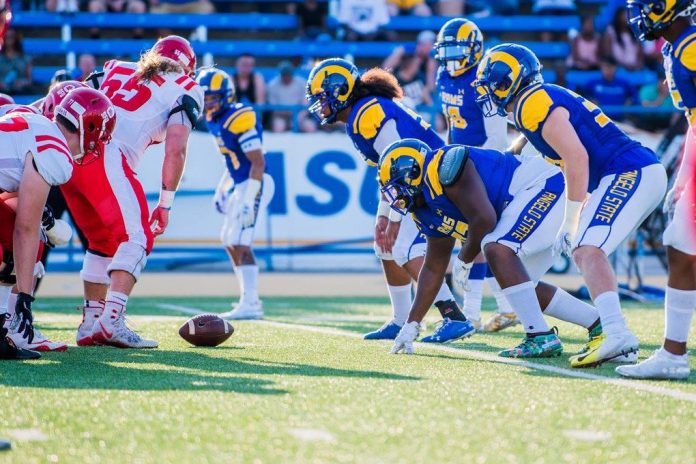
The Clan’s offensive line allowed five sacks in the game - Photo credit / ASU Football

By: Brandon Braich, SFU student

The injury-plagued Clan Football team fell short in Texas last weekend, losing 68–7 to the Angelo State University (ASU) Rams. In front of a crowd of 3,722, the home team dominated the undermanned Clan, who were without five starters including quarterback Justin Seiber. 

After a quick three-and-out for SFU to start the game, ASU gained possession with ideal field positioning at their own 44-yard line. The Rams methodically moved the ball down the field, and, 10 plays later, Lloyd Howard punched it in from the one-yard line to give ASU a lead they would never relinquish. Howard led all rushers in the game with 130 yards on 13 attempts

The Rams scored on their next two possessions, with Austin Landry rushing it in from 10 yards, followed by quarterback Payne Sullins connecting with wideout Alize Thomas for a 21-yard touchdown. Sullins finished with an efficient 17 of 25, passing for 196 yards and 2 touchdowns. The Rams explosive offensive attack racked up nearly 600 total yards on the day. 

ASU defensive end Dagen Dunham also added an 89-yard touchdown off a recovered fumble to close the half, pushing the Rams lead to 51–0 as the teams headed to the locker room. 

SFU’s lone score came towards the end of the third quarter, when freshman quarterback Brandon Niksich hit wide receiver Robert Meadors for a 19-yard touchdown, making the score 54–7. Niksich, making his first collegiate start in place of the injured Seiber, went 16 of 34 for 250 yards and one touchdown. Despite the loss, coach Thomas Ford was pleased with the performance of Niksich.

“Anytime you lose a player like Justin it definitely takes a toll, but I thought Brandon did some really positive things in his debut,” Ford said of Niksich. “He showed some poise, and made some throws down the field.”

Niksich seemed to find early chemistry with junior wideout Ethan Beselt. Beselt caught 8 of Niksich’s 16 completions, totalling 123 yards, including a 30-yard completion that set up Meadors’ score. However, Niksich faced pressure throughout the game and was sacked five times. 

Solomon Hines was SFU’s leading rusher, gaining 40 yards on 9 attempts. Running back KC Kircher also added 30 yards on 11 carries. 

“We ran the football effectively and were moving the line of scrimmage in many situations,” Ford said of the Clan rushing attack. 

On the defensive side of the ball, defensive back Brenden Lowry had a strong game, finishing with 18 tackles. Ford also noted Evan Nolli and Thomas Jackson as two freshmen who stepped up on the defensive line. For Ford, the biggest thing for the team moving forward is gaining experience and getting healthy. 

“We have a lot of freshmen playing and they’re talented, we just need to continue to get them older in a hurry,” he said.

SFU’s next opportunity to get its first win of the season comes in its home opener, as they face the South Dakota School of Mines and Technology at Swangard Stadium on September 21 at 6 p.m. Swangard stadium will be the temporary home of the Clan for the coming season as construction on the new stadium finishes at Terry Fox Field.