Home Blog Page 491

Peak Sports Mailbag: Week 7

1
Photo credit / Pinterest

By: Dylan Webb, Sports Editor

Hello readers of The Peak sports section,

My name is Dylan Webb and I’m this week’s host for the Peak Sports Mailbag. Our topic this week is NHL Hockey. 

Thanks so much to all of our readers for submitting their NHL Hockey-related questions, and my apologies if your question didn’t make it into this week’s edition. Usually, the Mailbag host will only answer three or four questions. Don’t worry though, as all questions submitted count for an entry into the raffle draw whether or not they are addressed in the Mailbag. Now, onto the questions!

Question 1: If you had to make a prediction, what do you think the NHL playoff bracket will look like at the end of this season? – Brad

Answer: I’m more than happy to make an early NHL playoff bracket prediction. For the Atlantic division, I’ve got the Tampa Bay Lightning finishing first, the Toronto Maple Leafs second, and the Boston Bruins third. The Florida Panthers and Montreal Canadiens will be fighting to the end for a wild card spot, and, while this is a tough one to call, I’ve got the Panthers squeaking in. The Buffalo Sabres haven’t improved enough to enter this conversation and the Ottawa Senators and Detroit Red Wings are pretty far away from competing. 

For the Metropolitan division, I also have four teams making the playoffs. The Washington Capitals should have enough to claim the division again, while the Pittsburgh Penguins and New York Rangers will round out the top three. The New York Islanders will fall to a wild card spot and the New Jersey Devils will narrowly miss the playoffs due to goaltending concerns that outweigh the variety of other improvements they’ve made. The Philadelphia Flyers, Columbus Blue Jackets, and Carolina Hurricanes have all failed to improve enough to make the playoffs this season (though at the time of this writing the Hurricanes are off to a scorching hot start and are primed to prove me wrong). 

Over in the Western Conference, I’ve got four playoff teams coming from the Central division. The Nashville Predators, St. Louis Blues, Dallas Stars, and Colorado Avalanche will make the playoffs this year, finishing in that order, with Colorado squeezing in via a wild card spot. The Minnesota Wild and Chicago Blackhawks will narrowly miss the playoffs, while the Winnipeg Jets will crash down to the basement of the Central due to their inadequate defensive pairings. I wanted to pick five teams to make it from this division, but I think the strength of the division will prevent this. 

Finally, in the Pacific division, we’ll see the Vegas Golden Knights claim the division title with no other team coming close to their point total. This division is perhaps the hardest to predict due to its weakness. I’ll take the Calgary Flames to finish in a distant second, after they lost Mike Smith and James Neal, with the Edmonton Oilers and Vancouver Canucks scraping into the last couple playoff spots due to the general weakness of the division. Controversially, I’ve got the San Jose Sharks missing the playoffs alongside the other two Californian teams. The Arizona Coyotes are problematically left out here, and this is probably the most likely error in my predictions here. Yes, I’m a Canucks homer. 

Question 2: Will Jacob Markstrom be the starting goalie for the Canucks over the next few years or do you think the team is eyeing Thatcher Demko for this role? – Devon

Answer: In my opinion, Jacob Markstrom will be a better NHL goaltender than Thatcher Demko. This opinion is based on what I’ve seen of the two goalies over the past couple seasons. I just think that Markstrom has more tools to succeed, both physically and mentally, while I’ve seen a few gaps in Demko’s game. Of course, Demko is younger than Markstrom and can theoretically improve more than Markstrom from this point forward, but I’m sticking to my position that Markstrom has demonstrated the capacity to improve by leaps and bounds whereas Demko has shown some clunkiness in play behind and around the net. Whether or not the Canucks agree with my assessment will be determined by the wealth of analytic and scouting data the organization possesses. I’m sure they’ll make a better decision than I would.  

Question 3: With the Canucks lacking scoring in a big way over their first few games, do you think they will call up Baertschi and Goldobin anytime soon, since they are both skilled players that can score? – Graham 

Answer: I don’t believe we will see Sven Baertschi or Nikolay Goldobin in a Canucks uniform again until there is an injury to a forward from the top three lines. In other words, I don’t see the Canucks continuing to struggle to score enough to encourage the front office to send someone down and call either of these players up. Even if their scoring struggles did continue, I just don’t see either of these players being viewed as the solution by the organization. Having said that, injuries will happen and this is the only circumstance where I can imagine either of these players being recalled this season. We will see both of these players in a Canucks uniform again, but it will more than likely be due to injury more than the minor league performance of either individual. 

If you would like to participate in future editions of the Peak Sports Mailbag and be entered in a raffle for an end-of-semester prize, here’s what you can send to [email protected]

  • Sports-related questions that our weekly host will answer
  • Weekly theme ideas to guide our questions

Or: sign up to host the Mailbag (and get paid)!

Thanks to all of you SFU sports fans for blowing up my inbox!

Next week’s theme is: Volleyball

Next week’s host is: Juztin Bello 

Send in your questions to [email protected]

SFPIRG hosts “Putting Students back in SUB” workshop

0

By: Lubaba Mahmud, Staff Writer

Editor’s Note: This article is a recap of an event that occurred on campus. The discussion that occurred represented one specific point-of-view of events related to Rotunda groups and the SUB. 

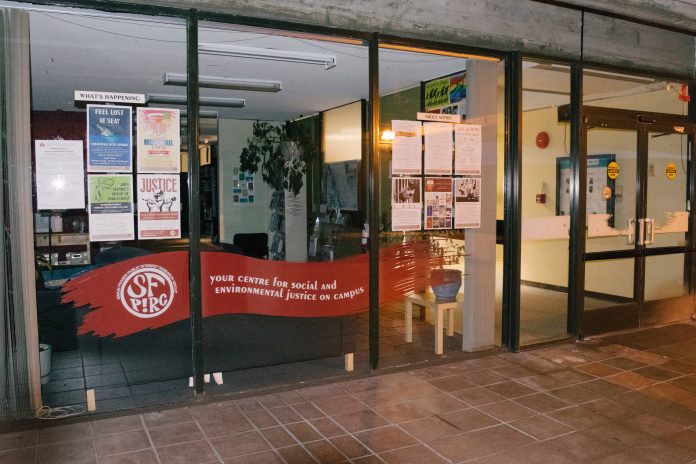
SFU’s long-awaited Student Union Building (SUB) has been the source of much controversy, as previously reported by The Peak. The Simon Fraser Public Interest Research Group (SFPIRG) recently hosted an informational session titled “Putting STUDENTS Back in ‘Student Union Building’” as part of its Dis/Orientation Week 2019 — an alternative orientation week of events intended to offer critical analysis, insight, and research about a range of social and environmental justice issues to the SFU community.

The SFPIRG is a student-funded resource centre dedicated to social and environmental justice. SFPIRG’s Director of Communications, Craig Pavelich, hosted the presentation on Thursday September 19 in the SFPIRG lounge. This event’s aim was to inform guests on the history of the SUB and why multiple student organisations are at risk of displacement from campus. Pavelich, a long-time campus presence, is quick to emphasize that the presentation is his interpretation of events, and should not be seen as the official position of SFPIRG.

Pavelich recounted the following history of the SUB:

In Spring 2012, the Simon Fraser Student Society (SFSS) held a referendum asking students to fund a new Student Union Building and Stadium. After it passed, the SFSS and SFU began working on the $65 million project called ‘BuildSFU.’ BuildSFU invited the Rotunda groups to discuss their organisational needs in the SUB in order to accommodate them accordingly in June of 2014 . The Rotunda groups include SFPIRG, Out On Campus (OOC), The Women’s Centre, The First Nations Student Association (FNSA) and Students of Caribbean & African Ancestry (SOCA). These groups were all subleased their current spaces in the Rotunda by the SFSS Board, to whom SFU leased the rotunda.

He explained that in Spring 2015, the Rotunda head lease between SFU and SFSS was renegotiated, so that the lease’s end date was set in the same time period as the SUB’s initial opening in Fall 2017. This was based on the understanding that Rotunda groups would be housed in the SUB, according to Pavelich. Later, due to various construction delays, SFU extended Rotunda head lease to a month-to-month basis until the SUB was completed. 

However, Pavelich noted with serious disappointment, “[In] November 2017, SFSS management and Board members met with Rotunda groups, telling them that they would not be [given space] in the building. Instead, they would be using a shared space model to give bookable space to clubs and student unions.” 

He adds that the Rotunda groups “asked SFSS to honor what they led everybody to believe over the years — to put everybody in the [Student Union] building.“

However according to Pavelich, there was little dialogue. “[The SFSS] invited groups to attend their board meeting in September 2018 to talk about the space issue. They indicated that they would continue to meet and dialogue with the groups. Despite requests from us to meet, as they said they would, they never replied. . .” He adds that in November 2018, SFPIRG received a message declining the invitation to meet, as they had “come to a decision in terms of space.

“No public discussion or decision about the space had ever occurred. There’s nothing in their minutes, it was all in private.”

Sharing recent updates with the audience, Pavelich said “In Spring 2019 a new Student Society board was elected. In May of this year, their new President, Giovanni HoSang, put forward an alternative shared space model, which would put all Rotunda groups into the SUB. [But] they didn’t have a decision about it yet.” 

He further added, “In Summer ‘19, reps from student society board and management met with Rotunda groups to discuss their space needs. We were told that this was for the new ED’s [Executive Director] benefit so that she could learn what’s going on. We have asked to meet with them to continue that conversation about putting everybody in the space. We have not heard back from them.”

Pavelich expressed serious concern about the precarious housing situation of Rotunda groups. “SFPIRG, CFSF, [and] SOCA are at risk of being pushed off campus.” he said. He encouraged students to be more proactive about Rotunda group’s housing crisis and to voice any concerns to SFSS Board members. 


39th Annual Terry Fox Run connects SFU community

0

By: Paige Riding, News Writer

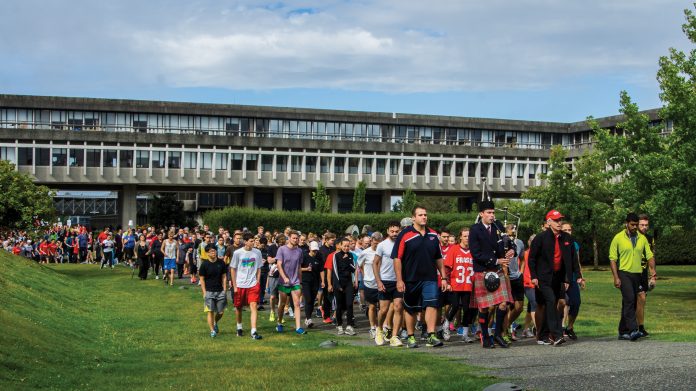
At the 39th Annual Terry Fox Run at the SFU Burnaby campus, Convocation Mall hums with anticipation as a hefty group of runners and walkers stood together to fight against cancer. SFU hosts the event every year in honour of former student Terry Fox, the renowned athlete who became world-famous during his Marathon of Hope. Fox aimed to run across Canada to raise money for cancer research on a prosthetic leg that he was given after his leg was amputated. Though Fox didn’t make it all the way across Canada due to the recurrence of his cancer, his impact on cancer research was much bigger than just that one run — his Marathon of Hope has continued every year since.

SFU president and vice chancellor Andrew Petter says a few words before the run begins. At a podium, Petter reports that over 150 volunteers are involved in the annual run this year. Despite the run conflicting with the Climate Strike, the turnout is impressive. With over $9,000 raised in funds for the 2019 run, SFU community members proved that they do not intend to slow down in the race to beat this devastating disease. 

“I love this event not only because it brings out such great, enthusiastic people, but because it speaks to the spirit of SFU. It really shows that we are Canada’s engaged university, and that we are prepared to come together to raise funds for cancer research,” Petter says. His voice booms from the speakers facing the participants. Sunlight peeks through the bars overhead, promising great weather for the outdoor run.

After the speech, the coveted SFU Terry Fox Gold Medal is awarded.  It includes a plaque, $5,000, and a medal awarded to SFU undergraduate students who “demonstrated those personal qualities of courage in adversity and dedication to society,” according to SFU’s website. Two women, Laura Gutierrez and Anne Peirce, are awarded by Andrew Petter. This is the first year since 2001 that there were two recipients of the award.  

Following the awards, the MCs invite up the SFU cheer team and warm-up leader to get the crowd going. Pop artist Lizzo begins to blare over the speakers, encouraging the crowd to move. Once the warm-up exercises finish up, it’s time to run. The group moves to start by the Terry Fox statue that overlooks the AQ reflection pool. Around 1 p.m., the run starts.

As the group passes by the Autumn trees changing colours all around Burnaby campus, the pleasantly surprising blue sky above and warm weather urges the race along. Runners and walkers old and young followed the route. Some participants brought their furry friends along for the fun. Signs with photos and facts about Fox encouraged the runners along the route. The energy of the diverse group of participants was high as many people from all walks of life gathered for the cause. The run concluded at Terry Fox Field with participants of the event boasting sweat on their brows and smiles on their faces. 

“Even if I don’t finish, we need others to continue. It’s got to keep going without me,” Fox said during the Marathon of Hope back in 1980.

To learn more about the cause and why it matters to run, visit the Terry Fox Foundation website. The Marathon of Hope continues each September as participants carry on the tradition, each for their own reasons. With over $170 million raised by the Terry Fox Foundation, this past SFU student’s legacy lives on through continuous research working towards a cure.


Another new hot spot for food on campus: Taco Cantina

0

By: Jess Dela Cruz, News Writer

“No! Move it up! Swing! To the left!” 

 “Down, down, down! There! Hit it!” 

 “Oh no! You were so close!” 

 Do you remember these voices when you were five years old? You were blindfolded, holding a long, colourful stick. Someone then spun you around three times and told you, “go!” With three chances, luck, and a little bit of peeking, you flung the stick in the air hoping to hit the piñata and be the one to crack it open with the colourful, sweet, and sugary candy falling down to the floor. 

Students were able to relive this wholesome childhood activity this past week when SFU Dining Services yet again opened a new restaurant in James Douglas, Taco Cantina. Though they started serving their food in August, the new Dining Hall Marketing Manager, Carol, says they did not want to interfere with the opening of celebrity chef Vikram Vij’s new restaurant in Mackenzie Café that opened weeks prior. Taco Cantina wanted their own time to celebrate their opening. Furthermore, Carol also pointed out that there is a substantially number of students on campus in the summer, so fall seemed to be the perfect time to open and celebrate Taco Cantina – which replaced Junction 66, a fast food restaurant which served burgers and poutine.

To celebrate their grand opening, Taco Cantina offered prizes and activities for students in attendance. They decorated the restaurant with hanging piñatas, banners, and balloons. From 10:30 a.m. to 2:30 p.m., they offered chances to win $50 worth of Dining Dollars which can be used at any food spots on campus. Locations where Dining Dollars can be used include Tim Hortons, the Dining Hall, Mackenzie Café, and Taco Cantina itself.  

Taco Cantina also provided three piñata parties throughout the day where students passing by or studying in the cafeteria can participate in taking a chance to break the piñata. And as the piñata received hits, Nerds, Rockets, lollipops, and other candy fell on the floor, where anyone was welcome to grab as much candy as they could. Like Charlie in a taco factory, one lucky kid could find the special piece of candy that tells you how to claim their Dining Dollar prize. 

The sound of the plastic ticker on the prize wheel hitting the pegs rang throughout the day, while students enjoyed free samples of Taco Cantina’s food. One prize winner said they’ll use their dining dollars to buy, “coffee, coffee, and more coffee.” 

With inspiration from Mexican culture, Taco Cantina offers taco salad, crudo nachos, tortilla soup, rice pudding, mini churros, Mexican coffee, and jarritos. From beverage drinks to food items, the price ranges from $1.69 to $9.99. Offering vegetarian and gluten-free options, Taco Cantina made an effort to include dietary options for students on campus. 

Say goodbye to Old el Paso, and say hello to Taco Cantina which is open Monday-Thursday from 9 a.m.–6 p.m., Friday from 9 a.m.–4 p.m., and closed on the weekends. 


SFU students in the Global Climate Strike

1

By: Kelly Chia, Staff Writer

Body to body, jostling, jampacked, and barely enough room to move. It’s warm, despite it not actually being a warm day, and you can feel the hot breath of the person behind you, quite literally breathing down your neck. But, then again, you’re doing it to the person in front of you. Endless crowds of people as far as the eye could see fill Downtown Vancouver. It’s Friday September 27, in the afternoon. You should be at school or work, but instead you pound the pavement with hordes of others, chanting along to “WHOSE STREETS?! OUR STREETS!” 

And why are you out here on a school day? It’s damn hot and uncomfortable, but the Earth is burning anyway and you give a shit. Hundreds of thousands do. My name is Kelly Chia, but today I have no name. I subsumed my individual identity to the collective mass of people who hit the streets because they give a crap, taking a scorched earth, set-fire-to-the-sky approach to the scorched Earth and the burning skies. The Global Climate Strike took a fierce group of many thousands from Vancouver City Hall after a 3km march across Cambie Street Bridge to West Georgia and Hamilton street

Many SFU students gathered to join the Strike on Friday, however SFU did not grant blanket academic amnesty to students like some other schools did. SFU President Andrew Petter made a statement on the strike on September 20, saying that SFU “supports members of the university community engaging in activities related to climate change [ . . . ] Thus while the university will maintain regular operations throughout this period, we encourage faculty members and academic units to make accommodations for those who wish to engage in Strike activities.” Following this, SFSS made a statement that they reached out to all department chairs, requesting them to not penalize students. SFU 350, a club pushing for climate action, also wrote an open letter to SFU urging them to follow in Emily Carr University’s footsteps and grant academic amnesty, allowing faculty and TA’s to join.

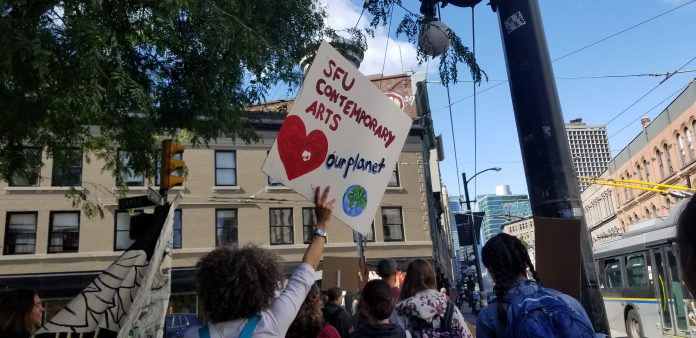
In the SFU Goldcorp building, a group of contemporary arts students gathered, organized by Laura Marks and Ed Biddle, professors at the School of Contemporary Arts. Earlier in the week, Marks had previously done a lecture about streaming media’s impact on the environment in her “Teach-in for Global Climate Strike Week.” Before the strike, Biddle, Marks and their students got together to make signs. The Peak spoke to Marks and some of the students that had joined to ask them what the strike meant to them. 

“I hate it when people from my generation say the youth environmental movement gives them hope. It’s so unfair. We need to do our own activism and create reasons for the young people to hope that the climate will survive, including things young people can’t do, like making sure our pension funds are not invested in fossil fuels. That said, I love that we professors can make a framework for our brilliant and angry students to do creative activism,” Marks said, on the impact of her activism as a professor. An hour before we left for the strike, students were sprawled on the floor or on the tables to finish their signs. 

The room pulsed with the urgent creative energy that only arts students can generate. Yet, as Marks pointed out, the energy was channeled towards productive solidarity. This was true with the students I spoke with.

Sage, an SFU student, said, “For me, I grew up in a small town in rural Alberta, and I think that a lot of the argument was whether climate change was real or not . . . and I feel at this point in my life, it doesn’t matter if people don’t believe in the science, it’s just important to take action right now. The dominant paradigm in Alberta right now is that it’s not something that’s important to us, we’d rather care about the economy.”

For some students, being in such a large group is empowering. The group at Goldcorp not only consisted of SFU students, but some high school students who had come in support of the Strike. 

“This strike will be a very good way for us to show everyone just how much the climate means to us,” said Riley, a grade 11 student from Cariboo Hill Secondary. “Maybe it’ll show more adults [. . .] how much this matters to us [. . .] I think this many people coming together to show just how much it means will affect everything.” 

Altogether, Marks estimates that the Contemporary Arts group had 75 people. Embark Sustainability, a non-profit student group at SFU, had coordinated a meet up for SFU before their march to City Hall. They estimated about 500 students, staff, and faculty had met up to join the Strike. The Facebook page for the Global Climate Strike estimated 11,000 attendees would join the march. As the day drew on, that number grew to 80,000, then over 100,000. On the street, the numbers didn’t matter though. It felt like an ocean of people with the energy of a tidal wave that could topple governments, and the current moving fast towards a more sustainable just world.

As the group prepared to leave, we decided on a collective chant: “We want you to panic! Help save the planet!” Among signs that read, “Will you fight with us? Or lay down and die?” and “There is no Planet B,” our group marched forward to Waterfront station, then rounded the block before going to City Hall.

“Just the spirit of people coming together, and voicing their concerns. I’d feel complacent if I didn’t join and it [feels] really good to be vocal on the streets,” said one attendee Meghan Hill, of the feeling in the air that day. 

As we turned the corner, our excitement grew as our little group joined and became just one of the many in the jostling and screaming masses of people gathered today, all demanding justice and a sustainable future. I was one of them. 

My name is Kelly Chia. But today I have no name, for I was one of the many, the faceless masses demanding justice for the scorched Mother Earth and the burning Father Sky.


Seven furious notebook scribbles from the SFSS federal election debate

0
Three candidates appeared at the October 3 debate. Image: /Simon Fraser Student Society

By: Nicole Magas, Opinions Editor

Earlier this month the Simon Fraser Student Society hosted a debate for three of the candidates running in the Burnaby North-Seymour riding. I think it’s fair to say that the event was far more entertaining for those who attended than anyone expected — especially for local politics. 

New Democratic Party candidate and clear fan favourite Svend Robinson came to the debate with both charm and proverbial knives, while incumbent Terry Beech fought a losing battle to defend the honour of the Liberal Party. Meanwhile, Green Party candidate Amita Kuttner bonded with the audience over post-grad trauma. Recently disavowed Conservative candidate Heather Leung didn’t show up at all. What follows are some of my witty observations, interpreted from the mad scribbles in my notebook.

  1. Terry Beech starts strong by telling a room full of university students that they can’t have free tuition. This was perhaps the boldest gamble of the night and it did not play well. Credit given to the audience for not slinging any tomatoes; who can afford to waste good produce? But even if they had, Beech probably would have shielded himself with his economics degree. I understand that fiscal responsibility is something that politicians have to keep in mind when campaigning, but it probably wasn’t the best idea to tell a group of students who just lost a hard-fought battle against tuition increases that if everyone could attend university for free, their degrees would become worthless.
    Honestly, the fact that many employers now demand a four-year degree at minimum speaks to the insane ways that society both privileges and maintains wealth at the very top. I’m sure if we somehow managed to help anyone who wanted a degree to get one we could also come up with a way to make sure everyone has a good job. We as a society forget sometimes that these economic barriers are human made, and can therefore be changed by human initiative. 
  2. Svend Robinson shivs his opponents and the crowd goes wild. The fact that Robinson is a seasoned politician was starkly obvious next to Kuttner who, while having several attractive policies, lacked the experienced political rhetoric to really make them shine. However, Robinson reserved his most cutting verbal attacks for the embattled Liberal MP, calling out Beech and the ruling Liberal government as though the debate would be won by the candidate who landed the sickest burn. This sort of old school political bombardment had the potential to grow old quick with a crowd saturated by the vitriol leaking out of the political scene to the south; however Robinson saved himself by confidently laying out his policies in contrast to those of the Liberals — policies that were undeniably well-received by the audience.

  3. Beech casually name-drops Oxford and Harvard and suggests that an SFU degree can get you there too! After his comment implying that the value of university degrees should be preserved by enforcing financial barriers, this just smacked of such privileged elitism that even the audience didn’t know what to do — and so defaulted to polite applause. In the background, the sound of Robinson gleefully sharpening his knives could be heard. 
  4. Amita Kuttner calls for the dramatic overthrow of capitalism and colonialism (sorry not sorry). Aside from the heartfelt stories they shared about their struggles throughout their post-secondary experience, by far Kuttner’s biggest and most successful talking points were about the necessity of rethinking our relationship to both our economic system and our settler-colonial history and society. Unsurprisingly, coming from the Green Party platform, Kuttner based these policies on the urgent need to address the climate crisis, with special emphasis on the historic role of Indigenous peoples as the stewards and protectors of the land. Personally, if Kuttner is leading the way for a complete overthrow of our political and economic order in order to buy us a few more years of breathable air and clean water, I’m here for it. 
  5. Business, economics, and the natural sciences are the only majors worth talking about, apparently. All right, this critique might be a bit unfair given that the candidates (Beech and Kuttner specifically) were speaking out of their own educational experience, but as someone studying in the social sciences, it always rankles a little to feel as though my study field is undervalued. This is neither the time nor place to launch an impassioned defence for the arts, humanities, and social sciences, however it would have been nice to hear the candidates talk about the holistic value of the university, and not speak as though only a handful of majors actually even exist here. 
  6. Heather Leung’s absence starts to feel like a strategic move for Conservatives. Setting aside the anti-LGBTQ2+ rhetoric that got Leung kicked out of the Conservative party (and which likely played a large part in her refusal to attend the debate) her absence definitely hurt the Liberals more than the Conservatives. Without a candidate sitting to the political right of Beech, the Liberal MP limped through the debates dragging the baggage of the entire Liberal Party behind him. Coupled with the debate taking place at a predominantly left-leaning university, Beech ended up looking like the furthest right candidate on stage by a large margin. Given that the Liberals are the biggest competition of the Conservative Party at the moment, Leung’s absence was definitely a net-win for the Conservatives. 
  7. The pipeline was a big mistake, no contest. Both Robinson and Kuttner pounced on Beech over Justin Trudeau’s decision to purchase and subsequently approve the Trans Mountain pipeline for $4.5 billion in almost the same breath as calling a national climate emergency. While the audience waited on baited breath for the ensuing bloodbath, Beech countered with his own record challenging the prime minister on the issue of the pipeline. For all the rest of his hiccups that evening, Beech still managed to successfully stand on his commitment to listen to and bring forward the concerns of his constituents. For that, neither the NDP nor the Green candidates were able to take him down.

Overall, the debates brought up several issues deeply important to many students studying at SFU. The audience was engaged, and the candidates thoughtfully and respectfully responded to the questions, and to each other. Political engagement is important for a healthy democracy. It was nice to see so many students had come to be a part of the event, and that the candidates took the time to listen to our concerns and considered them seriously.

Life after film school: an interview with SFU alumna Emily Bayrock

0
Virgo Rising is about a young woman’s experience with an unknown medical condition. Image courtesy of Emily Bayrock / Virgo Rising.

By: Alison Wick, Peak Associate

2019 graduates of the SFU School of Contemporary Arts’ film program showcased their graduating films back in May, which The Peak had the opportunity to attend and cover. Four months later, The Peak caught up with alumna Emily Bayrock to talk about her grad film Virgo Rising and her future plans for both the film and herself. The film is a short “hybrid-fiction” that follows a narrative story about a young woman coming to terms with unknown chronic pain later identified as vulvodynia and layers it with interview testimonials about real women’s experiences with the condition. Emily discusses the affliction, the power of community to fight silence and build strength, and the power of film to do both.

The Peak: Can you talk a bit about the film and how it began? Was this a project you had wanted to make for a while or did you kind of happen upon the idea? For those who don’t know, would you explain what vulvodynia is and why you think people know/talk so little about it? I myself had never heard of it until I watched your film.

Emily Bayrock: About two years ago I was diagnosed with vulvodynia, which is basically a chronic vaginal pain condition. About 16% of people with vaginas experience chronic pain in their vulvar area. No one knows how it starts or how to cure it simply because there’s not enough funding designated to explicit[ly] research on this condition. At first I had a lot of trouble dealing with it, simply because there was so little information available. Like you, I had never heard of vulvodyina before, and everything I researched made me really scared for my future. I even had doctors tell me I would never have a normal sex life and I would never be able to wear jeans comfortably again. Eventually, I was admitted into the Multidisciplinary Vulvodynia Program at [Vancouver General Hospital] and got to meet a cohort of women going through the same things I was going through. This clinic coincided with the beginning of my fourth year in the film program at SFU, so I thought making a film about my experience as my thesis project could help other women going through the same thing.

P: You describe your film as “hybrid-fiction” as it weaves together narrative and documentary storytelling. Can you talk about this choice of style and genre for this film/subject? What, for you, is the advantage or purpose of this kind of storytelling?

EB: I’ve always been interested in narrative storytelling. [For] as long as I can remember I’ve been writing short stories, performing in plays, and making films. However, when I started university I decided to minor in anthropology and took courses in documentary filmmaking that really broadened my idea of what exactly a narrative film is. I originally wrote the script for Virgo Rising as a narrative piece, but it felt a little too staged. I really wanted the concepts being expressed in this film to remain true to life and for audiences to know that this is a real condition that people experience every day. 

I was drawn to and inspired by other hybrid-fiction, ethnographic, and explicitly feminine works from filmmakers such as Sophy Romvari, Trinh T. Minh-ha, Catherine Breillat, and Stanley Kwan (specifically his 1991 film Center Stage). I think the docufiction style opens the film up to allow some breathing room and grounding in reality. Plus, it’s an interesting genre to see in a short film. Merging styles is typically something reserved for longer works, but there’s no reason you can’t push those same stylistic conventions in a short.

P: What do you wish for people to take away from the film? How do you want viewers and audience members to interact with the film?

EB: More than anything I want people who watch this film to feel like they’re not alone. When you have intimate pain it can be so overwhelming, especially since it’s not something people talk about. Had I seen a film about vulvodynia, maybe I would have gone to the doctor sooner because I would have known that sex wasn’t supposed to be that painful yep, that punch [scene in the film] is a true story or maybe I would have felt like I wasn’t tackling all of this on my own. I want to bring that sense of community and empathy to others. I think there’s something in this film for everyone, whether you’re dealing with vulvodynia, know someone who is, or just want to watch a movie about what it’s like to be a young woman. I also really like teen movies. I think they’re fun and heartfelt and I want to bring that trend back.

P: What are your plans for the film now after graduation? Are you hoping to bring the film to festival circuits or are you intending for people to see it in a more local setting (i.e. using it for conversations and education about vulvodynia, in schools or small community screenings)?

EB: Right now the film is in consideration on the festival circuit, but we haven’t had our premiere yet. That being said, Virgo Rising has done exceptionally well in competitions. It won awards from both the Accolade Competition and the Impact Docs Award; it won Best Student Film and was a runner-up for Best Screenplay at Festigious; and it was just selected as a semi-finalist at the Los Angeles CineFest.

Also, Maria Yanagisawa, who plays Tina in the film, was just nominated for a Joey Award for her performance! It’s been really exciting to see this film recognized, as it’s definitely a hard one to place in a festival lineup. We’ve had our fair share of rejections, but that’s all part of the process. 

I would love to see this film used as part of education! That’s something I hadn’t considered and will definitely be looking into once the festival circuit comes to a close.

P: How do you think film functions as education and discussion, as opposed to just entertainment? Do you feel this is an important distinction to make as a filmmaker, or do you feel the art of film is more fluid than this?

EB: I hope that Virgo Rising functions as both! I definitely wanted this film to be more than just a documentary on vaginal health. I love documentary filmmaking and I would love to do more of it, but when dealing with subject matter like this I felt it was important not to isolate the audience. Oftentimes documentary films aren’t accessible to all moviegoers. People are scared that they won’t understand the subject matter or that the film will be boring. I think the benefit of using a hybrid style for this film is that it functions very clearly as a story following a character. That being said, in opening the film up from a straight narrative piece, the audience is given a little bit of breathing room as well as a chance to understand that vulvodynia is a condition affecting real women in their lives. I think that’s an important message for not only people with vaginas, but for their partners as well. 

P: I have to ask about the title of the film — is it a reference to the character’s rising sign or a reference, more generally, to her resiliency and the ways she responds to her situation?

EB: Haha — I get this question a lot. No one has ever asked about my sign more than since this film came out. The title Virgo Rising originally came from a play on the word virgin. In the film, Tina is still a virgin in her twenties and feels like she’s falling behind from the rest of her peers. The rising comes from her trying to catch up and eventually achieving personal and emotional growth. 

However, Tina is a Virgo rising that’s why Brenda’s boyfriend pegs her as a Virgo immediately. My best friend is an Aries sun with a Virgo rising, and the driven-yet-careful and meticulous personality traits I see in her I included in Tina. I truly think the astrology scene is the funniest thing I’ve ever written.

P: What are your plans for yourself and your career after graduation? Are you interested in continuing to use film as an entry point for critical discussion and awareness, or are you looking to work in other areas of film and on other kinds of projects?

EB: Oh man, the classic question for new grads. I definitely want to continue on the path of hybrid-fiction and ethnographic filmmaking. Anthropology had such an effect on me as I was completing my minor that I know it’s something I want to explore further. Right now I’m participating in the 2019 VIFF Mentorship Program and I’m really excited to learn from and work with other emerging artists and figure out where exactly to go next. I’m also finding myself heading back to my roots in theatre by helping facilitate some new works premiering in Vancouver. I’m really just taking things one step at a time! Making more films is definitely part of the plan.

P: Finally, where can people see the film?

EB: We haven’t had our premiere yet! So if any festival programmers are reading this . . . 

As of right now, everyone can view the full trailer online and we hope to be screening somewhere soon!

Emily Bayrock will be officially premiering Virgo Rising at the Chilliwack Independent Film Festival on November 23 and 24. Check out emilybayrock.com for more information on her work.

SFU soccer’s offense shines in 5–1 win in first conference game of 2019

0
Connor Glennon on the pitch at Terry Fox Field - Photo credit / SFU Athletics

By: Keveren Guillou, Peak Associate

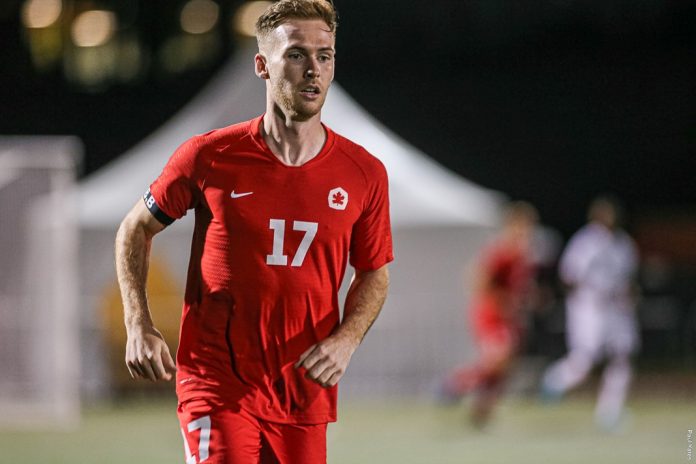
SFU’s Men’s Soccer team kicked off their 2019 GNAC season on Thursday night by crushing the St. Martin’s University (SMU) Saints at Terry Fox Field. The match gave fans a taste of what to expect this season, as the Clan are once again favourites to win their conference.

Both teams started off fairly well, with chances on both ends of the pitch in the opening 15 minutes. This was largely a result of midfielders on either side doing a tremendous job of transitioning quickly into the attack. SFU’s attack consisted mostly of long balls sent straight down the field by captain Marcello Polisi. The Clan really started to take charge later in the first half, smothering any momentum that the Saints had managed to build up.

This momentum the Clan built was finally rewarded on what appeared to be a seemingly harmless throw-in, which found its way over to midfielder Quinn Dawson. In a moment of brilliance, Dawson decided to whip the ball over the top of Saint Martin’s defense, finding SFU forward Matteo Polisi, who managed to head the ball into the center of the net. The goal was a testament to the Clan’s impressive agility and their ability to create space on the attack. 

With roughly 15 minutes left in the half, SFU was pushing hard for a second goal. An impressive slide tackle from Quinn Dawson allowed forward Connor Glennon to send a brilliant ball down-field to Matteo Polisi. 

Polisi attempted to round the keeper in the box, but was clipped in the process, causing him to fall on the pitch as the ball rolled out of play. Despite the referee refraining from calling a foul, the replay suggested that SMU’s keeper did, in fact, foul Polisi, and thus, the Clan should’ve been awarded a penalty. 

The referee later redeemed his mistake by awarding a penalty kick to SFU after Glennon was tackled near the top-right corner of the box. The Saints were livid about this call, arguing that the defender had managed to regain possession in his tackle, and they did have a basis for their argument. However, the referee was in a perfect position to see the play unfold, and not giving a penalty would have been harsh, as there was definitely knee-to-knee contact on the play. Matteo Polisi stepped up to take the penalty and managed to convert it, albeit with a bit of luck, as the keeper could’ve done a lot better job of handling the shot.

SMU would manage to get themselves on the scoresheet before half time, as Saints forward Brandon Madsen did a fantastic job of somehow getting himself into the side of SFU’s penalty area uncontested. His short cross was deflected by Clan defender Eric de Graaf, which threw off keeper Aidan Bain. The ball then reached St Martin’s forward Jason Fairhurst, who volleyed the ball into the empty net.

All in all, both teams had a very strong first half, with SFU focusing their attack on long balls from their backline and midfield. Despite trailing by one goal, SMU was leading in terms of shots, giving them hope for the remainder of the match.

The Clan looked refreshed coming out for the second half, as captain Marcello Polisi showed his skill both defensively and offensively. The entire midfield had a standout performance, stopping numerous attacks before they became too dangerous, and quickly launching lightning-fast counter-attacks. 

SFU would quickly deal another blow as Sidrit Vukaj did a great job of finding William Rapahel on the run, and played a perfectly weighted ball right into his feet. Williams, who was in a decent position to score, unselfishly played the ball across the face of goal, where Glennon tapped in his first of the season.  

Glennon found himself on the scoresheet for a second time just 10 minutes later, after SMU’s keeper misjudged a corner kick, leaving Glennon open to knock home a header at the back post. However, upon further review, it was difficult to tell whether Glennon was the one who actually scored the goal, or if it was off the head of a Saints defender. Nonetheless, Glennon did a great job of getting into scoring position.

With 15 minutes to go before the final whistle, SFU was awarded their second penalty kick of the match — this time with much less protest from the opposition. A poor giveaway by SMU in their own half allowed Glennon to find his way into the Saints penalty box, where he was tripped from behind. It was an easy call for the referee to make and gave the culprit a yellow card. Matteo Polisi sent the keeper the wrong way to claim his hat-trick on the ensuing penalty kick. This reassured fans that Polisi does not appear to be slowing down after his league leading 18 goals last season.  

The Clan sat back for most of the remainder of the game, with the midfield and defense regaining possession quickly when necessary. Ultimately, the Clan ended the game leading in shots, most of which came in the second half. While both teams started off well, the Clan, for the most part, were able to keep the Saints quiet and capitalize on their opponent’s mistakes. 

Man of the match: Matteo Polisi

While some may point out that two of his goals were penalties, Polisi was undoubtedly the Clan’s most potent attacker. He made multiple clever runs for his teammates, and got himself into dangerous scoring positions on multiple occasions. He also took the corner kick that led to Glennon’s second goal of the game. 

Oh, The Places You’ll Go (Before and After you Convocate)

0

Written by Jennifer Chou, SFU Student

Oh, the places you’ll go!

(Unless there is snow.)

. . . 

Congratulations on gradu-waiting,

it only took you six years.

From construction that’s deteriorating

and destroying your ears,

to crowded lines at the 145.

(When will the gondola arrive?)


There are some things you won’t miss,

Like Beedie-branded bottles

and staring into the abyss.


What about April Fools’ Day,

when we farted in Convo Mall and walked away?

Or those posters about some Club Crawl,

and Naruto-running to class in the AQ hall?


Don’t forget searching for microwaves on campus,

and bros dropping loud weights at the fitness centre.

Or finally breaking a sweat to make the bus,

only to be forbidden to enter.


But other things you don’t mind,

like earning tons of likes and shares on a meme,

and raccoons eating all the trash they can find

(AKA the piece of paper you call your degree).


Oh, the places you’ll go!

(But don’t visit the avocado.)

From the shuttle to the SUB,

and don’t forget the Anime Club,

SFU does many things to engage —

remember that when you cross the stage.

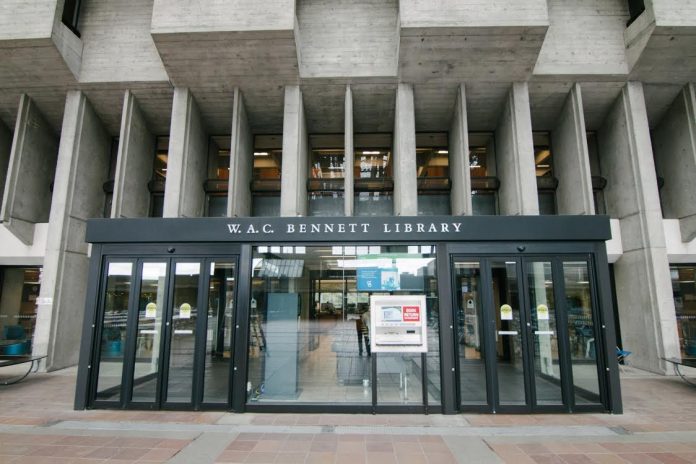
19-year-old male with toy gun arrested at W.A.C. Bennett Library

0
SFU's Bennett Library was the site of a police incident on Tuesday October 8. / Peak Archives

By: Gurpreet Kambo, News Editor

Suspicions of a potential gun threat brought Burnaby RCMP to campus on October 8, though the object in question was later found to be a squirt gun and not a functioning firearm. The incident resulted in the arrest of a 19-year-old man at the W.A.C. Bennett Library, though at this time charges have not been laid. 

According to the Burnaby RCMP’s report, police were called to campus just before 2 p.m. to respond to sightings of a male in possession of a gun in the 8800 block of University Drive. Additionally, the individual was allegedly wearing clothing with what appeared to be an RCMP crest. 

Further details in the report state the potential threat necessitated a large-scale police response that included “General Duty, Community Response Team, Bike Unit, Prolific Offender Suppression Team, Strike Force and Traffic Unit [providing] an integrated response along with RCMP Air Services, members from the Combined Forces Special Enforcement Unit and the Lower Mainland Integrated Police Dog Services.” 

The campus residence buildings, Barbara Rae and Shadbolt, were also evacuated around 2 p.m., according to reports to The Peak by students which reflect the RCMP’s statement. Later, according to student reports received by The Peak, the main floor of the library was evacuated. 

SFU issued a statement on Twitter at 4:06 p.m., two hours after the incident began, reading: “SFU is aware of Burnaby RCMP’s presence on campus. Everyone is safe and the situation is resolved. For information contact @BCRCMP.” 

The situation prompted numerous responses on Twitter. One student, Nadine Schick (@nadineschick), was in the class where the student was arrested. She tweeted a photo of the gun in question sitting on a desk.


During a phone interview with The Peak, Schick reported being in Room 3008 on the ground floor of the W.A.C. Bennett Library. She claimed that the student, who was sitting next to her, brought several items to class as a joke of sorts, including a guitar, the squirt gun, and “a bunch of random stuff.” When asked what the purpose of these items were, she stated: “I have no idea. I think he was just joking, I don’t think he thought anything of it, which [he] probably should’ve.” She added that he was pointing it at people in the class, but everyone in the class knew that it was a toy. “Another guy in the class was telling him that he should probably stop. I think he just wasn’t thinking at all.”

During a break in the class, she said that the student went outside the library, where she “saw him point it at a couple girls, and they kinda got spooked.”

A short time after the class regrouped, Schick said that a team of 5–10 police officers, with dogs, entered the classroom and surrounded the table where she and the student sat. 

Schick continued: “Basically they surrounded him, and they told him to put his hands up and get on the floor. They were yelling to everyone to get out. It took me a second to get out because they were surrounding me because I was right next to him. One of the cops told me that I could get up and leave, so I did.” Schick added that the main floor of the library was evacuated, and she saw helicopters and more police outside. She did not see anything after the evacuation from the library.

“I thought it would be good to let people know what happened,” Schick noted. “I know there were a lot of people who were scared there was an actual gun and there was a real shooter on campus.”

Some members of the SFU community expressed anger at the delay in notifying members of people on campus. 

@taylajae1 tweeted:

Another response to the incident by @serena_bains stated:

https://twitter.com/serena_bains/status/1181727134219296768

@longlivetheboss said:

https://twitter.com/longlivtheboss/status/1181709567601696772

SFU sent a message on behalf of its Chief Safety Officer Mark Lalonde to students at 8:49 p.m. confirming the event, linking students to the RCMP’s report, and emphasizing SFU Safety & Risk Services’ supportive role during police interventions on campuses. 

Lalonde wrote: “As a situation evolves details are not always clear. We try to share information as it is confirmed, and when and where it is appropriate and safe to do so. When a campus wide notification is needed I want to assure you that we have notification systems in place, but it is also important to note that it is not always safe to send out an alert as a situation is in progress. 

 We are relieved that the situation today was resolved peacefully, and we are thankful for the support of the Burnaby RCMP and our Campus Public Safety officers. As these types of incidents are not common, I acknowledge the fears it may have raised. For more information about campus safety and resources, please refer to our SFU Personal Safety Guides.” 

The Peak will continue covering this issue in further pieces.