Home Blog Page 490

Election rundown: Which party leaders participated in the climate strikes and why does it matter?

0
Justin Trudeau’s trouble climate history isn’t mitigated by his attendance at the climate strike. Photo: /CBC

By: Kelly Grounds, Peak Associate

On September 27, climate strikes were held across Canada as part of the larger global movement inspired by Greta Thunberg. Environmental policy has also become increasingly central in the Canadian federal election campaigns. Because of this, it is important to not just look at the platforms of the parties, but also the actions that they have taken prior to the election — including their participation in the climate strikes.

Elizabeth May of the Green Party attended the Montreal climate strike, publicly calling on the other major leaders to work together to develop a bipartisan response to the crisis. This went hand-in-hand with her party’s platform which discusses utilizing all government branches  to transition into a greener economy — including intergovernmental agreements to allow for new, greener jobs.

Justin Trudeau also attended the Montreal strikes after meeting privately with Greta Thunberg. Thunberg later spoke at a press conference saying that Trudeau’s government was “not doing enough.” Her disappointment rings true in light of the Liberal failure on climate change since 2015, which has seen Trudeau going back on many campaign promises and buying the Trans-Mountain Pipeline. While the 2019 platform lists climate change as one of their top issues, the lack of adherence to these principles after 2015 should be remembered going forward.

Jagmeet Singh, leader of the NDP party, attended the Victoria climate strike. Singh choose to walk through the crowds, speak one-on-one with the students, and keep the focus on them. He also discussed protecting our coasts, fitting with the NDP’s platform message.

Andrew Scheer chose not to attend any climate strike, despite being in Vancouver during the city’s 100,000 person event. Aside from opening himself to criticism by not joining in, Scheer’s absence has also raised new questions from voters and non-Party MPs alike about the supposed Conservative commitment to reversing climate change. 

Considering the fact that Scheer could be the next prime minister, it is important to know where he stands on such a critical issue. Climate change is going to be one of the biggest issues going forward. The Conservatives already have a small environmental platform, so having a leader who ignores public outcry on this issue is only hurting the party further. As we get closer to the election, important decisions like this could be enough to not only determine who becomes prime minister, but also how parties find themselves represented in the House of Commons. 

With a minority government appearing more and more likely, both the Liberal and Conservative parties may be looking to the NDP and Green party to allow them to create majority coalitions. Choices like avoiding the climate strike may cause both Singh and May to think twice before choosing what party to align with.


H.R. MacMillan Space Centre showcases starry nights and sci-fi films

0
Georges Méliès’ A Trip to the Moon was one of the first science fiction films. Image courtesy of Image Entertainment / IntoFilm.org.

By: Marco Ovies, Staff Writer

Watching Georges Méliès’ films on the dome of the Planetarium Star Theatre at the H.R. MacMillan Space Centre was an immersive experience. The backdrop of the stars behind the screening of these films, alongside the ambient electronic score by Owen Connell, created a dreamlike landscape that left everyone in the audience mesmerized. Each short film transported us all out of our seats and into the space voyage alongside the characters.

This screening is only one in a long line of similar events that the H.R. MacMillan Space Centre has hosted. The films were accompanied by commentary from film historian Michael Van Den Bos and members of the centre’s astronomy education team to explain the cosmic significance of every film. Each person gave us an elevated understanding of each film in an easy-to-understand way. It was a unique way of bringing together two very different disciplines — film and astronomy — and combining them into an enjoyable and educational experience. 

The evening opened with The Impossible Voyage, which Van Den Bos described as a “drunk adventure.” Its plot centers around a team of people who travel to the sun on a flying train and are able to walk on its surface. Though the film might seem like it was written by a crazy person, it’s important to keep in mind that Méliès was a pioneer of science fiction and had nothing to base his work off of. He paved the way for cult favourite films like Star Wars, Star Trek, Interstellar, and nearly every sci-fi film ever made. This first film was contrasted with Thomas Edison’s film A Trip to Mars, which was not-so-subtly based off of Méliès’ work. Finally, we saw the classic film A Trip to the Moon, which was the main event of the night. It featured a rocket that smashes into the eye of the moon and the astronauts’ subsequent contact with the aliens that live there. 

The commentary from both the astronomer and the film historian enhanced my experience for each film screening. It gave the films a place in history and explained the significance of each to the scientific community. While it was a bit disappointing that the films played on just a square of the dome ceiling of the planetarium, rather than taking up the entire dome, the event was both informational and extremely entertaining.

Check out the H.R. MacMillan Space Centre’s website for more space-related events, including lectures, presentations, and film screenings.

What grinds our gears: Do us all a favour and stay home if you’re sick

0
You and your are cough harbingers of death! Illustration: Sabrina Kedzior/The Peak

By: Nicole Magas, Opinions Editor

Dear Typhoid Mary,

You know who you are. You’re the one who comes into class with a red nose and black-rimmed eyes, sits down, and immediately starts producing the deepest, wettest series of coughs that would make even a plague doctor cringe. To you, Typhoid Mary, I have only two words:

Stay. Home.

The world is not going to end if you miss one week of class. Think about it — half of your peers vanish at week four only to be seen briefly again on exam days, and they somehow manage to pass. If they can miss whole months and be fine, I’m sure your GPA can take a single week’s absence.

I’m going to let you in on a secret, Typhoid Mary: some of us actually can’t snap back as quickly from seasonal illnesses as you can. Some of us have compromised immune systems, and that cold of yours that could be solved with a day of bedrest and Netflix can mean serious and lengthy complications for us.

So with the deepest sympathy to your long-suffering work ethic, please stay home when you have the sniffles. Stay home if you have a fever. Consider grabbing a flu vaccine to avoid having to make these oh-so-tough decisions in the future. No one wants what you have, and you don’t want to be that kid in class everyone hates for spreading H1N1 v2.0.


SFU Football falls in blowout loss to Western Oregon University

0
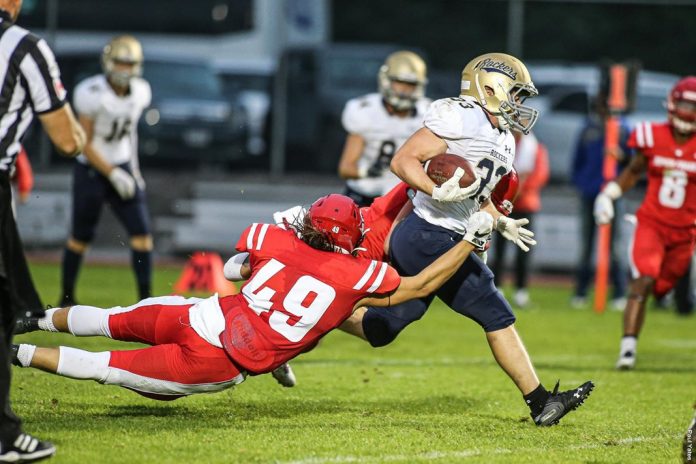
Despite the loss, the Clan did manage to score 14 points - Photo credit / SFU Athletics

By: Brandon Braich, Peak Associate

SFU continued its road trip last weekend with a visit to Western Oregon University (WOU). The Clan were looking for their first win of the year but were, once again, unable to break their losing streak. However, their defence was left at the border, and the Wolves eventually broke the game open and dismantled the Clan in a 51–14 blowout. 

WOU began the contest by establishing the running game, which culminated in a 1-yard touchdown rush by Nico Jackson. Jackson rushed for 59 yards on 12 carries. 

SFU looked to respond on their next drive, with quarterback Brandon Niksich completing several passes down the field, moving the Clan deep into the Wolves’ territory. The Wolves’ defence tightened, however, which forced a fourth down at their 25-yard line. Unfortunately, the Clan’s field goal struggles continued when Curtis Anderson blocked the ensuing attempt by David Eisenkraft, keeping the Clan scoreless.

The Clan found themselves in trouble again after a short punt by Kees Metselaar gave the Wolves excellent field position at SFU’s 32-yard line. Quarterback Ty Currie hit Marquis Sampson for a short reception that set up the Wolves with first and goal, leading to another short touchdown by Jackson.

The Wolves added another touchdown late in the quarter, sending the teams to the half with Western Oregon leading 20–0. 

The Clan defence gave the team a spark with a quick three and out to start the half, turning the ball over to the SFU offence with time left to mount a comeback. 

Niksich came out aggressively, hitting Rysen John for a 9-yard completion to start the drive, before connecting with running back Mason Glover for a 17-yard gain to move the chains. Back-to-back completions to Ethan Beselt moved the Clan back into the Wolves territory and pushed their defence on its heels. 

After running back Solomon Hines scampered for another first down, Niksich dropped back, but had his pass deflected into the air, right into the hands of WOU linebacker Jaylin Parnell. The Wolves quickly converted on the turnover when Currie connected with wideout Shaw Jerome for a 47-yard touchdown pass. 

The interception reflected Niksich’s overall night as he struggled against the tough Western Oregon defence. Niksich finished the game completing just 16 of 34 passes for 210 yards and an interception. He was also sacked four times. 

The Clan struggled on the ground as well, gaining only one and a half yards per carry. Mason Glover led the way with 30 yards on 12 carries. 

After the Wolves had built up a 44–0 lead, SFU finally got on the board after a long reception by Gavin Cobb set up a 4-yard rushing touchdown for Hines. An extra point by Eisenkraft cut the lead to 44–7, but the game was already well out of reach. 

Senior quarterback Mihai Lapuste relieved Niksich on the final drive and led an impressive ten play scoring drive that ended in a 10-yard strike to John. The touchdown brought the score to 51–14. 

With the loss, SFU drops to 0–2 in conference play and 0–5 on the season. Next week, they will look to get on track against Dixie State University when they visit Trailblazer Stadium in St. George, Utah. 

Election rundown: The NDP have little chance of winning a majority and should focus on a coalition instead

0
NDP leader Jagmeet Singh has had to overcome a lot this election season. Photo: Adrian Wyld/The Canadian Press

By: Connor Stephenson, SFU Student

Jagmeet Singh and his New Democratic Party are riding the perpetual struggle bus. The troubles for the NDP initially began with difficulty attempting to nominating candidates across the country, and continues in the form of a crippling deficit that makes running a successful campaign much more difficult. The party’s $1.4 million dollar deficit for 2018 is not a good look for Singh and his party, as they claim to be competent enough to balance the national budget and run Canada’s economy. However, I suppose a lack of appeal is an inherent quality of the NDP more generally, being that they have never won a federal election

Given that the NDP have done a relatively poor job at managing their finances, they have had to modify their strategy and budget what resources they have available. For example, the federal NDP campaign (which launched out of Ontario) has had to rent a plane by the hour instead of purchasing one, as is standard. Their financial dilemma, in addition to making it more difficult to travel, has also forced Singh and his campaign to depend on more creative and nuanced outreach approaches, such as running more targeted digital advertisements to disseminate their message to Canadians. 

As for their initial struggle to nominate candidates, the NDP cited equal representation and a rigorous vetting process as their reasons. This is a valid point as the vetting process has undoubtedly been made a much more arduous task, given the ubiquity of social media and the long-term effects that negative content could have on potential candidates’ political careers. The necessity of equal representation within the party is also unequivocally important. However, although the NDP struggled to secure candidates in the beginning, they have now managed, surprisingly, to fill all of the ridings across Canada.

Clearly, the results of their campaign strategies have not manifested in a positive way as they are not making marked advancements in the polls; they have been hovering around 14% since mid-June. This is in part due to the fact that they aren’t really doing anything out of the norm in terms of marketing themselves. They are simply spending less money on travel and advertisement — the NDP spent approximately $130,500 on Facebook advertisements, compared with the Liberal’s $692,600, and the Conservative’s $438,500. 

What is evident from their standing in the polls is that the NDP are having a difficult time competing in this election cycle. The NDP’s struggle to nominate candidates in the months leading up to the campaign and their financial woes have made their objective to win a majority government seem rather unlikely. 

Nevertheless, they are very much still in the game if there is an opportunity to form a coalition government. This should be Singh’s objective instead. Rather than going at it alone, as he has previously expressed, Singh would be in a better position if he were to demonstrate that his party’s platform could mesh well with the Green and/or Liberal parties. Although they differ on some issues, relative to the Conservatives, the Liberals, Greens, and NDP are more alike than they are different. 

Discover opportunities to play men’s and women’s rugby at SFU

0
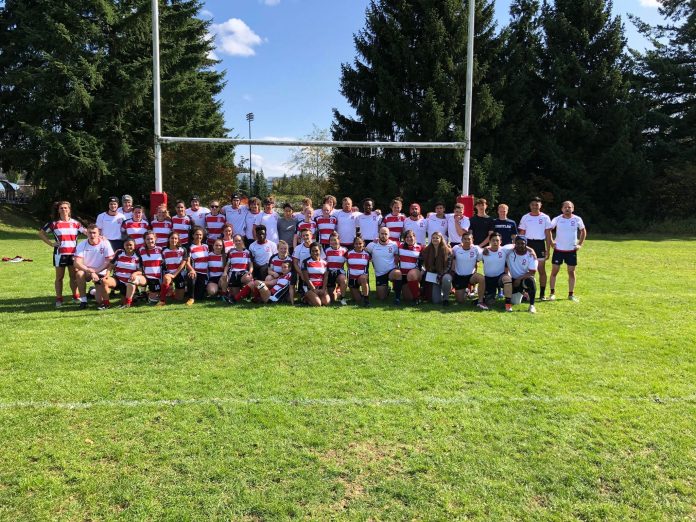
The two SFU Rugby teams on the field together - Photo credit / SFU Rugby

By: Talor Mykle-Winkler, SFU Rugby University Liaison

Editor’s note: Talor Mykle-Winkler is the SFU Rugby University Liaison, a new position created to help keep SFU students connected to SFU Rugby.

During university, there are several choices a student makes. Which courses to take, what major to pursue, whether or not to apply for co-op, and so many more that can affect a university experience. One decision that students have been making for over 50 years has been to join the SFU Rugby Club. 

Established in 1965, the SFU Rugby Club is the university’s longest running sports club. It has evolved into a club with a strong foundation of players and alumni that continue to support it. The club is home to a first division women’s team and a second division men’s team, playing in the BC Rugby Union against teams from all over the Greater Vancouver Area, Seattle, Kelowna, and Vancouver Island. Many members have come to SFU Rugby with little to no experience, and, over time, have developed into players with a competitive edge and a love for the game. SFU Rugby players have gone on to compete at both the provincial and national levels.

December Woodward, a member of the women’s team, first joined in 2011 when she moved from Calgary to attend SFU. Having already played rugby in Calgary, she signed up during Clubs Days and hasn’t looked back since. “As someone brand new to the city, being able to join this team was so incredibly helpful. It gave me a whole group of friends that I didn’t have before,” she said. Woodward continues to play with the team, even after graduation, and credits the club culture as a major factor in her continued commitment to playing rugby. She has also represented the Fraser Valley team and has played for BC on the senior women’s team at national competitions.  

When asked why he chose to come play for the SFU Rugby Club when he moved to Canada from Australia back in 2017, Benji Wilson noted that it was a combination of hearing about SFU Rugby on a previous trip to Canada and his sister-in-law bringing him to a practice one night. 

“Straight away, I was welcomed and felt like I had been a part of the team for a long time,” Wilson said about his first practice with SFU Rugby. “It was the team and the players that made me want to stay. . . I love the family bond SFU Rugby has, because when I came to Canada I had left all my friends and family back home in Australia.” 

Wilson now plays a leadership role in continuing to grow and develop the team as more new players join.

With over 50 current players between the men’s and women’s team’s, and countless dedicated alumni from throughout the years, SFU Rugby has definitely grown into a big family that cares for and supports each other. They hold many social events, such as Family Day, Halloween, and an annual Year End Banquet to welcome new players, engage alumni, support the club culture, and have a good time with the team. Having a team that feels like a family has played a major role in the club’s growing success for all these years. 

“We are also a social club [who] love to do things as a team outside of the rugby environment and I love that,” remarked Wilson when asked why he, along with many other players, have stuck around. “Catching up, going out, playing in summer tournaments together, that all appeals to me and made me want to stay,” he added.

The club also supports members by offering bursaries, which are generously donated by alumni and given to student athletes so that they can continue their dedication to the sport alongside their education. The club also participates in Clubs Days each semester to let students know that there is always a place for them on the rugby team.

For those interested, the rugby season is currently underway and you can keep up to date with the team’s schedule and results by following their Instagram @sfurugby or by finding them on Facebook

The women’s team is currently 1–1 and the men’s team stands at 1–2. Practices are held Tuesdays and Thursdays at Terry Fox Field from 7:15 p.m. to 9 p.m. If you’re interested in playing rugby, bring your boots and join the family. Rugby experience is not required. 

Dear grad admissions board: my failed courses are non-canon to my personal narrative

0

To Whom It May Concern,

It is my great honour to recommend myself, Jake Jacksonian, for SFU’s Graduate Program in the Department of English. Yes, I know you already have my personal statement, which described at length my research interest in the rhetorical devices of the “why you always lying” Vine. Yes, I also recognize that submitting your own self as a reference for these applications is a little #quirky. But after knowing and working with myself for 26 years, no one could be more qualified than me to explain — again — why I deserve to be here. 

Looking for generic platitudes about my work ethic, my class participation, or my bubbly disposition? Read my other two reference letters, the ones I so lovingly schmoozed out of my sessionals through weekly SFU Mail correspondence that was one-way for most of last semester. No, this reference letter is to offer you insight into a very particular slice of my life — a close reading, if you will, of the semester where I achieved a 0.0 GPA.

To unpack, my refusal to attend any lectures that tragic autumn was hard to grapple with. My total disregard for my early morning tutorials, start times ranging from 8:30 a.m. to 3:30 p.m., was difficult to field. The emotional deficiencies that led me to skip every exam and ignore my kindly professors’ concerned emails? Truly rude. 

But I’m better now. Because those five failed courses? I’ve declared them to be NON-CANON to my personal narrative.

You see, after a long self-structured programme of inspirational YouTube videos and Lululemon commercials (as a BC resident, it was my most fiscally responsible therapy option), I realized that Susan C. Young and 30 knockoff Medium articles were right. I really WAS the author of my own life story. And if I learned anything from J.K. Rowling, it’s that authors can totally go back and rewrite the details of their story universe however they see fit. 

And so, you can rest easy: I’ve decided that the 2015–2016 chapters of my life, controversially bad grades and all, have no bearing on the greater Jake Jacksonian timeline. All the character backstory explained there that doesn’t align with the personal work/school timeline I outlined on my CV? Retconned to Westeros and back. The out-of-character behaviour? Blame that on the tight publication schedule and my terrible editor (thank you, general academic advising!). The traumas that should have had a lasting effect on my psyche but which were never addressed or mentioned again? Those are actually still around, but any English professor would agree that, as an author, I’m not here to spoon-feed the answers to you.

I’m sure some of you will now take to Reddit, a fanfiction.net reviews section, or some backwater forum, where you will go on to debate this non-canonicity revelation with complete strangers and post nostalgic fanart of an empty seat in C9001. I give you my blessing on that. (Wouldn’t such a gracious individual be a wonderful addition to your program?) 

But after that, I hope you’ll take some time to admire the artful, canonical self-identity I’ve cultivated for myself. The immaculate 2.005 GPA. The adorable plastic-wrapped bullet journal I have carried unused in my bag for three years. The contributions to my SFU community which I’m so very passionate about, like my on-and-off job as a Supreme Marshmallow Roasting Educator. 

I have a deep respect for myself and my scholarship, and I am confident that I will be a thriving asset to your department. I highly recommend myself to your program. Please feel free to contact me about any points of clarification you may have; I promise to respond to you much faster than my other references ever could, that’s for sure.

Kind regards,

Jake Jacksonian

Written by Zach Siddiqui, Humour Editor

Vancouver Writers Fest dives into narratives about sex work, mental illness, belonging, and economic disparity

0
Vancouver Writers Fest runs October 21 to 27 this year. Image courtesy of Vancouver Writers Fest.

By: Amneet Mann, Peak Associate

For the past 30 years, the Vancouver Writers Fest has been organizing award-winning storytellers, both local and international, to lead discussions on the world around us and the stories within us. This year, the festival will be occurring from October 21–27, with 120 authors speaking in various panels and discussing their written works.

The following five authors will be speaking at different venues during the festival about their areas of work, their diverse backgrounds, and their experiences as writers. 

Tash Aw

Image courtesy of Andrew Whittuck / 4th Estate.

Appearing at:

International Showcase: October 22 @ 8 p.m. (The Revue Stage). Tickets: $20.00/$15.00 (youth under 30).

Tash Aw in Conversation with Eleanor Wachtel: October 23 @ 7:30 p.m. (Waterfront Theatre). Tickets: $26.00/$15.00 (youth under 30).

Tash Aw writes novels to cut through the cultural perception of “rich Asians,” bringing to light the true nature of changing Asian societies and the disparity between economic classes. 

In his writing, which explores generational and economic gaps in Asia, Aw aims to center Asian voices in the narrative, rather than structuring his stories either in service of, or in reaction to, Western narratives. It’s a perspective that Aw has found missing in English literature, and one that resonates with his own life experiences.

Aw’s parents were both raised in rural Malaysia, and he recalls feeling a sense of isolation and non-belonging when he moved from the country to study law in Cambridge, and then again when he returned home later. 

Billy-Ray Belcourt

Image courtesy of Vancouver Writers Fest.

Appearing at:

The Poetry Bash: October 25 @ 8 p.m. (Performance Works). Tickets: $26.00/$15.00 (youth under 30).

Best Canadian Poetry: October 26 @ 2 p.m. (Waterfront Theatre). Tickets: free/pay what you can.

Poets Talking: October 27 @ 2 p.m. (Waterfront Centre). Tickets: $20.00/$15.00 (youth under 30).

“Not only am I a weird-looking writer, I am also a writer who is queer and NDN [Native Indian]. What could be queerer and more NDN right now than the act of writing a novel?” asks Billy-Ray Belcourt in his fiction piece What If I Never Write a Novel?

While the Cree academic has yet to write a novel, he has received numerous awards for his books of poetry The Wound is a World and NDN Coping Mechanisms: Notes from the Field.

Informed by “a desire for native freedom,” Belcourt works at the edge of language and genres to explore Indigeneity, Indigenous bodies, queerness, violence, grief, and colonialism in his work.

Cassandra Blanchard

Image courtesy of Vancouver Writers Fest.

Appearing at:

On Belonging: Indigenous Strength and Hope in the Wake of Genocide: October 26 @ 4 p.m. (Djavad Mowafaghian Cinema, SFU Goldcorp Centre for the Arts). Tickets: free/pay what you can.

“On Hastings there’s a black market of sorts,” begins Cassandra Blanchard’s poem “Market and Metal.” The poem, written in a stream of consciousness form, is part of Blanchard’s debut collection Fresh Pack of Smokes. From Blanchard: “For Fresh Pack of Smokes I wrote down the poems in exactly the way I thought of them, from sentence to sentence.”

Blanchard, a member of the Selkirk Nation, writes about her time spent living in Vancouver’s Downtown Eastside and her experiences with drug addiction, sex work, jail, and rehab. She also includes seven different iterations of a poem called “Love” in her collection.

Anosh Irani

Image courtesy of Boman Irani.

Appearing at:

Buzzworthy Books: October 25 @ 10:15 a.m. (Performance Works). Tickets: $20.00/$15.00 (youth under 30).

Big Stories, Small Packages: October 25 @ 1 p.m. (Performance Works). Tickets: $20.00/$15.00 (youth under 30).

Novelist and playwright Anosh Irani has published four best-selling novels and currently teaches creative writing at SFU, where he is the writer in residence for the World Literature program.

Irani was born in Bombay and moved to Vancouver 20 years ago, vowing not to return until he was a successful artist. Much like Irani himself, his protagonists struggle with finding home and a sense of belonging. While Irani doesn’t quite call Vancouver “home,” he notes that the city gave him the perspective to write stories set in Bombay in a unique light. 

Anna Mehler Paperny

Image courtesy of Vancouver Writers Fest.

Appearing at:

Truth-Telling: October 22 @ 6 p.m. (Waterfront Centre). Tickets: $20.00/$15.00 (youth under 30).

Anna Mehler Paperny is a powerhouse reporter for Reuters, tackling topics ranging from Guantanamo Bay to the opioid crisis. The same courage and willingness to dig for hard truths that makes Paperny an award-winning journalist shows up in her debut book, Hello I Want To Die Please Fix Me

In her frankly-titled work, Paperny outlines the stigma and mishandling of mental illness in society today. She also includes her personal struggles with debilitating depression and her experience navigating the healthcare system with her diagnosis. “Why does the pain of crazy people carry less weight than the pain of those who are not?” she asks at one point in her book.

Tickets for individual events during the festival can be purchased separately on TheatreWire.

SFU should follow in Oregon’s footsteps and grant mental health absences to students

0
Basic activities can be a struggle for students suffering from poor mental health. Photo: Dmitry Schemelev/Unsplash

By: Lubaba Mahmud, Staff Writer

For students suffering with mental illnesses such as anxiety and depression, university — and life in general — can be extremely overwhelming. As someone with an anxiety disorder, there have been multiple days when I wished that time would just stop so that I could breathe for a minute. For students like myself who find they also need a much needed break, school-sponsored mental health days can help. 

A new state law passed in Oregon allows students “up to five excused absences within a three-month period” for mental health-related reasons. Rather than simply skipping school and potentially facing grade-lowering sanctions, students in Oregon now have the option to make up assignments at a later date. While students may use this as a free pass to cut class, it’s no different than cutting class on the pretext of physical illness — something students do now, anyway. 

BC should absolutely follow Oregon’s lead. Having the option to take an excused absence would mean that students wouldn’t have to drag themselves through an unproductive school day when their mental health is in a poor state.  As of 2016, 20% of post-secondary students in Canada deal with anxiety, depression, and other mental health issues. Students suffering from adverse mental health need to be assured that their struggles are taken just as seriously as coughs and fevers already are.

Studies have shown that pushing through classes when dealing with mental health concerns can be detrimental and in fact counterproductive. Everything needed for success at university, from energy to cognition, can be greatly decreased when students are not in the healthiest headspace. Decreases in performance due to the symptoms of poor mental health can lead to lower GPAs and subsequent decisions to drop out of school or take lengthy absences. In allowing sanctioned days off to recuperate their mental health, students may be able to avoid some of these hardships. 

Treating mental illnesses requires multiple supportive measures, and while current services like My SSP are appreciated, they are not enough to adequately address the issue for many students. It is necessary to take legislative steps in order to ensure their continued well-being. Taking care of students’ mental health is just as important as taking care of their physical health.  

However, it’s important for students to remember as well that these days off cannot act as a substitute for professional help if chronic mental health issues are interfering with their lives.

The week ahead in SFU Sports: October 13–20

0
Photo credit / SFU athletics

By: Dylan Webb, Sports Editor

While most of SFU’s sports teams are away this week, Clan fans can still cheer on their hockey team at home this weekend. Here’s a brief breakdown of some of the SFU sports action lined up for the week of October 13–20.

Hockey:

The SFU Hockey team will continue their lengthy season-opening homestand this weekend with a double header against their two Vancouver Island-based rivals. On Friday October 18, the team will host the Vancouver Island University Mariners for the second straight week after the two teams opened the regular season schedule the week before. The following night, October 19, the Clan will host the University of Victoria Vikes. Puck drop for both games is 7 p.m. at the Bill Copeland Sports Centre. 

Volleyball:

After a relatively successful first few weeks of their 2019 season, the SFU Volleyball team will travel to Alaska for games in Anchorage and Fairbanks. The Clan will take on the University of Alaska-Anchorage on October 17 before heading to Fairbanks to complete the road trip on October 19. Tip off for both games is 8 p.m.

Men’s Soccer: 

With the team officially on a roll, having won their first two conference games of the season, men’s soccer will travel to Idaho and Montana brimming with confidence. After a visit to Northwest Nazarene University on October 17, the Clan will head to Yellowjacket Soccer Field to take on Montana State University on October 19. Kick off is scheduled for 6:30 p.m on October 17 and 2:30 p.m on October 19.  

Women’s Soccer:

The SFU Women’s Soccer team will visit Washington State for the second week in a row. This time, the ladies will take on both Central and Western Washington University, in that order. The first game is on October 17 at 3 p.m., followed by a 7 p.m. kickoff on October 19

Football:

For the second time this season, the Clan will take on Azusa Pacific University. The team is still in search of their first win of the season as they travel to Glendora, California for the road portion of the two game season series. This in-conference affair takes place on October 19 at 6:30 p.m. at Citrus Stadium.