
Your weekly SFU horoscopes: November 5–11

Written by Zach Siddiqui, Humour Editor
Aries — March 21–April 19
You could participate in NaNoWriMo this year. But why write a rushed novel when your whole life is basically a rushed novel? Complete with contrived misfortunes, an arbitrary plot structure, and too much Times New Roman font when all you lust after is Papyrus.
Taurus — April 20–May 20
The TransLink strike action could still be ongoing. Or it could resolve itself. Either way, expect some travel disruptions, and expect to be sad about it. After all, there are only two places you could find yourself trapped: in Cloverdale, and not in Cloverdale. And the latter is only slightly less ratchet than the former.
Gemini — May 21–June 20
Congratulations — daylight savings time has officially ended, granting you a single extra hour! Budget this hour carefully. Twenty-five minutes for your next bursary application. Fifteen minutes for squeezing out another negativistic business email. And bank the last 20 for a doctor’s appointment where you and your stress migraine will probably be prescribed crystal healing or alternative love therapy.
Cancer — June 21–July 22
This week, you’ll have trouble with the cold. To be more specific, there won’t be enough of it to keep your heart safely refrigerated, guarded from melting after one devil-may-care glance from your SFU Security crush.
Leo — July 23–August 22
Black Friday may not be until November 29, but get shopping early. Every day is Black Friday when your cute smile and your confidence in discussing your oral fixation enrapture retail workers at an 80% success rate.
Virgo — August 23–September 22
Stop moping over your dissatisfaction with your academic performance this week. Your performance is dissatisfying every week. Now you have to face that instead of distracting yourself with strange alpaca videos.
Libra — September 23–October 22
Don’t let people judge you when they find out you didn’t vote. You have a right to indecisiveness. Just like the United Kingdom.
Scorpio — October 23–November 21
You’ve gotten way too powerful with #SCORPSZN settling over Vancouver. Take advantage of this. Live out your deepest fantasy: swallowing a live octopus and waiting to see whether or not it suctions itself to your airway and kills you.
Sagittarius — November 22–December 21
You’ve been letting yourself lean on others lately. What a shocker. But don’t get too comfortable. Your support system is as fragile as a bodybuilding influencer’s ego and may collapse at any time. That’s what you get for assembling your social circle out of milksops and Battlestar Galactica players.
Capricorn — December 22–January 19
You may find yourself fretting this week. Your best outfits will always have just one key component drifting in the laundry and unusable. But stop worrying about it. You only have one worthwhile date to look forward to, anyway: enrolment.
Aquarius — January 20–February 18
You are a S’Well bottle of creativity, but catering to your followers on social media has drained you dry. There’s no fighting back. You are, after all, totally plastic and incapable of anger or any other feeling. Just acknowledge quietly that emptiness is the new Instagrammable.
Pisces — February 19–March 20
Pain and failure surrounds you. But you may thrive this week in unexpected ways. You’ve absorbed everyone else’s powers, and now only you will make it through the tuberculosis outbreak known as existing.
Overly friendly professor destroys students’ lives for forgetting to call him by first name

Written by Nathaniel Tok, Peak Associate
Assistant professor Michael McManfred, a recent hire for the Department of Legal, Ethical, and General Investigative Technology (LEGIT), has been censured by the university for destroying the well-being of his first year LEGIT 105 students. Reportedly, the LEGIT professor’s tyranny started after several of his students accidentally called him “Professor McManfred,” instead of “Mike,” as he had so benevolently urged them to do at the start of the year.
According to Parker Anders, one of McManfred’s TAs, the problem started last Monday — the day of the midterm. As volleys of students sent desperate emails in the early 11:46 a.m. hours of the morning, begging to know “what to expect” from the exam, McManfred was “unnerved and hurt” that some of them had addressed him by his formal title.
Later, McManfred allegedly called all of his TAs into his office. Anders described the room as “decked out like a war movie,” complete with blown-up maps of Saywell Hall on the walls and miniatures of students haphazardly scattered across the tables.
“It was . . . super frightening,” Anders continued. “He pulled up the midterm on Google Docs and started rewriting all the questions, all while gesturing at his maps and ranting about how the first years were conspiring to make him feel uncool, unloved, and much too respected.”
Anders also produced a copy of the revised exam, whose questions included “Describe in 4–5 sentences why you aren’t obsessed with Mike” and “Why does Mike deserve a 5/5 for all three categories on Rate My Prof? Explain in 1,000 words or more.”
The LEGIT 105 students, meanwhile, were mostly confused about McManfred’s reaction.
“Well, he never records his lectures ‘cos he wants us to come to class to get to know him in person — as if anyone is going to walk all the way to Blusson Hall,” explained Reema Eternal, one of McManfred’s LEGIT 105 students. “So I never found out he wants us to call him Mike.
“What’s the big deal, anyway? I thought the whole and entire reason people got PhDs was so that everyone else has to call them ‘Doctor.’”
In an interview with McManfred in his hidden lab in the depths of Robert C. Brown, he explained that after meeting with his TAs, he had taken a couple of days to reflect on the situation.
“I lied in bed for a while listening to Selena Gomez’s Revival (2015) on repeat while ugly-heaving,” says McManfred. “And I was really struck by that one song, ‘Kill Em with Kindness.’
“I realized then that the only way to love my students, guarantee their success, and earn love from them in return was, in fact, to kill them — academically.”
Appropriately for this revelation, McManfred outlined his new plan to destroy his students, Codename: TOUGH LOVE.
1. “Emails sent past 3 p.m. on weekdays, or any time on weekends, will be ignored. My unspoken rejection will break the students’ hearts, and then they’ll have to take those evenings and weekends off to relax and not think about school.”
2. “Assignment requirements will be extremely vague. By denying the class all semblance of guidance or fair evaluation, I can assertively encourage them to think creatively and liberate themselves from arbitrary boundaries!”
3. “All grades will be scaled to a C-. Near-failure will encourage students to try their hardest; that’s when they will learn the most!”
“That will teach them to think before referring to me as if I were my father,” McManfred concluded, “especially when they won’t even treat me like the cool dad.”
Hot, budget-friendly tips for fighting the flu

By: Lubaba Mahmud, Staff Writer
The reign of flu season has begun. Your favourite symptoms — fever, stuffy nose, sore throat, cough, and body aches — are back and ready to attack. Since my friends and I have been taken hostage by some particularly nasty flus before, I’ve learned how to tackle them over the years with tried-and-true techniques. If you’re unfortunate enough to get reacquainted with the autumn sickness, you may be looking for a cure. Taking medicine (hoard night-time flu tablets, cough drops, and nasal sticks) and having plenty of rest and fluids are most important. To add to these, here are a bunch of grandma-approved home remedies that you can try to help quicken the recovery process:
- Unleash the magic of vapor rub
Vapor rub is the mentholated potion that fights hard against flu monsters. Massage the ointment a couple of times a day on your chest, neck, and back for soothing relief. However, if you have any conditions that affect your breathing or airways such as asthma, medical advice should be obtained before using vapor rubs. Common brands include Vicks VapoRub and Tiger Balm. - Steam yo’ face
Steam inhalation is a common way of clearing nasal passages. The moisture from steam helps to thin the mucus so that you can temporarily get rid of that annoying stuffy nose. To undertake steam therapy, pour boiling water into a bowl, and drape a towel over the back of your head. Inhale the steam from about 8–12 inches away from the bowl, keeping your eyes closed. Inhale it for 5–10 minutes, and repeat it for a couple times throughout the day. Since I’m a true fan of vapor rub, I add it to the water when it’s still hot but not boiling anymore.
My mom swears by this honey lemon ginger tea, so it’s been a go-to in our house for years. The ingredients, which have anti-inflammatory and antioxidant properties, make it a great homemade remedy. For an extra punch, try adding turmeric to the tea.
- Gargle like you’re a gargling goblin, girl
To alleviate a sore throat, add half a teaspoon of salt to warm water and gargle the water at the back of your throat for a few minutes. Do this frequently to flush out bacteria and reduce chances of oral infection.
- Who needs a bae when you have a hot bag
For some comforting warmth, I put a hot bag/pack on my chest. It reduces shivering and helps with body aches. If you’re not getting enough bed rest, these help especially for strained muscles. Secure that bag and place it on yourself for 15–20 minutes.
- Eat super soup-er foods
Soups are the ultimate food for when you’re sick (check out The Peak’s article for some student-friendly soup recipes). Since I always suffer from a lack of appetite when going through the flu, I’ve found that fruits, such as oranges, act as a good snack and help me to regain appetite. Also, spicy foods can help to clear sinuses and be another appetite booster.
If your flu symptoms don’t improve within two weeks, it’s a good idea to go to the doctor as soon as possible. You can make an appointment with SFU Health and Counselling by contacting them at the phone numbers listed below. The SFU Burnaby and Vancouver clinics are open from 9:00 a.m. to 4:30 p.m., Monday to Friday, whereas the SFU Surrey clinics are appointment-dependent. Otherwise, students can use Medimap, which shows users nearby available walk-in health clinics and their wait times.
Burnaby clinic: 778.782.4615
Surrey and Vancouver clinics: 778.782.5200
Everything you need to know about SFU’s sexual assault resources

By: Winona Young, Features Editor
CW: Mentions of sexual assault
It’s been roughly two months since two SFU students were assaulted on Burnaby campus. With this in mind, care and sensitivity is still needed to address sexual assault in university campuses. For students looking for the necessary support, places like the Sexual Violence Support and Prevention Office (SVSPO) are integral. Although the SVSPO has been open for roughly a year, this small office located at the Diamond Hall Alumni Centre is hidden away from most of SFU Burnaby. This week, The Peak interviewed one of the SVSPO to one of the office’s Case Managers, Julie Glazier, via email asking her a few questions about what help the SVSPO can provide to university students, how their process works, and more.
The Peak: If I want/need to talk someone at the Sexual Violence Support and Prevention Office, where do I start?
Julie Glazier: If you are looking to speak to someone in the Sexual Violence Support & Prevention Office (SVSPO), we have a variety of options available for connecting with us. Contact information for all staff can be found on our webpage, with options to connect by phone, text, email, during drop-in hours or by appointment and of course SFU community members are welcome to come to our office and visit anytime.
P: Am I allowed to go to the SVSPO if I’m a guy/Indigenous/unsure what happened/just want to talk to someone once, etc.?
JG: Absolutely anyone who is a member of the SFU university community can come to the SVSPO for supports and services. We are happy to meet you at a time and location of your choice, and want to make our services as accessible to the entire university community as we possibly can. The SVSPO is here for you regardless of who you are, or how you’ve been impacted and when the incident/s [sic] occurred. Even if you are unsure how to describe your experience, meeting with a Case Manager is a good way to begin that discussion.
P: How much personal information do I need to disclose?
JG: Anyone seeking assistance from this office will only need to disclose the amount of information they are comfortable sharing. Some Clients wish to disclose their entire experience, while others prefer to provide general information needed for us to provide them with relevant support. Regardless of what you wish to share, we can find options to assist you.
P: Would I need to give my SFU/FIC ID?
While we do need to identify Clients when providing some streamlined services between departments on campus or external agencies, there is no need to identify yourself to seek general information, options, and supports. If identifying yourself is a barrier to you receiving service, please let us know, and we will respect that decision.
P: What if I want to only talk to someone on the phone?
JG: Connecting by phone is a great option! You can call our Case Managers at our office line at (778)-782-7233, or you can connect directly with one of our Case Managers on their cell phones (published on our website on the Contact Us page). If you prefer to text, Case Managers are happy to do that as well.
P: What if I wanna see someone in person?
JG: If you wish to see a Case Manager in person, you can make an appointment directly with the Case Managers by emailing, calling or texting them. Otherwise you can stop by during drop-in hours, if you would prefer not to make an appointment directly.
P: How do I get to the office? And why is it so in the middle of nowhere?
JG: The office is located in the lower level of the Diamond Hall Alumni Centre, room 014. Our main entrance is within the lower level of the building, and we have a more discreet side entrance accessed by stairs outside of the building. We have provided a wayfinding video on how to access the office, on our webpage. The location of the office was determined not only by [the] available space on campus, but also with the thought that the location offered privacy to those attending the space regardless of their role [within] the university, student, faculty or staff.
If the location of the office is a barrier for anyone, please know that we also meet clients at the Surrey and Vancouver campuses. We are also willing to meet at an alternate location of your choice, either on or off campus. Just let us know how we can best connect with you!
P: How long would I need to wait for an in-person meeting?
JG: We do our best to see all students immediately. If that is not possible, expect to be seen [sic] same day or next day.
P: I got an appointment! What should I expect to happen?
JG: If you have made an appointment with a Case Manager, you should expect to be treated with care and respect. Our Case Managers will provide you with information and resources specific to your situation, so that you can make informed choices on the best options for yourself. Case Managers will then assist you to help streamline access to those resources and options.
Depending on your situation, you may wish to receive information and/or assistance with medical care, reporting options, counselling services, or a variety of other matters. The appointment is very much tailored to your specific needs. We follow your pace, and you are in control of the process. We are here to support you.
P: Would I need to pay for any of these services provided?
JG: All services at the SVSPO are free of charge and confidential.
P: What kind of help could I get?
JG: A wide variety of assistance is available, including support, information and advice. We provide personalized safety planning, referrals to other on or off campus supports and resources, transportation options for medical or other emergency service visits, information packages for yourself or a friend, academic and workplace accommodations, and much more. Whether you have been directly impacted by sexual violence, or are supporting someone who has been, we are here to help.
P: Is there anything else I should know about the SVSPO?
JG: The SVSPO’s supports and services are available to you regardless of when or where the incident/s took place. We know how difficult it can be to reach out, and we acknowledge and honour the strength it takes to come forward and make an initial connection.
SFU Hockey veteran Arjan Cheema talks grades and on-ice expectations with The Peak

By: Michael Lenko, Peak Associate
Coming off of a solid rookie season, in which he put up 11 points in 23 games, second year business student Arjan Cheema will return to the SFU Hockey team with a bigger role and expectations for the 2019–20 British Columbia Intercollegiate Hockey League (BCIHL) season. On the ice, Cheema will be relied upon to help lead the new-look defensive unit for the Clan. Off the ice, Cheema expects himself to maintain a strong GPA while balancing work, school, and hockey. The Surrey, BC native sat down with The Peak to discuss his championship experience and his expectations for this season on the ice and at school.
Given his status as a second year member of the team, The Peak asked Cheema about some of the things he feels the Clan can build on from last season, to which he pointed to the necessity of “sticking to the systems that [Head Coach] Mark [Coletta] implements.”
Pressed further about his personal expectations for the team this season, Cheema said that “Knowing the calibre of our team, I feel like it’s championship or bust. We have a group of guys that can compete at a high level, and I feel like expectations are to win a championship.”
On the topic of championships, Cheema was a member of the Aldergrove Kodiaks when they won the Pacific Junior Hockey League (PJHL) championship in 2016–17. When asked how significant that experience might be for the Clan in its pursuit of a BCIHL Championship, Cheema emphasized the importance of the achievement.
“I think its huge,” he said. “Just taking things from that championship run and sharing it with the guys. Telling them what worked and what didn’t work. Just letting them know what it takes to get there and just motivating the guys more.”
Interestingly, on the topic of motivation, when asked how he hopes to help the new players on the team with adjusting to the balancing act of attending SFU while playing hockey, Cheema had some unique advice.
“I’ve been letting them know to just stay in the moment, so they don’t get overwhelmed. To take one step at a time and to just make sure that they’re on top of everything. Being a student athlete takes a lot of sacrifice and you have to stay disciplined.”
For himself this season, Cheema is driven not just to survive as a student athlete, but to thrive. “Off the ice, I want to maintain a good GPA. On the ice, I just want to do my job as a defenceman, stop pucks from going in [our net] and just help my team get some more wins.”
With only three returning defenceman on the roster, Cheema’s experience will be relied on heavily this year. Fans of SFU Hockey will be able to see Cheema and the rest of the Clan in action at the Bill Copeland Sports Centre many times this month as the team’s BCIHL season kicks into high gear with seven games in November.
The Adventure Zone returns for another season of collaborative storytelling and gameplay

By: Gabrielle McLaren, Editor-in-Chief
It’s a little strange that my favourite podcast started off as filler content for another podcast’s paternity leave. I’m not sure why brothers Travis, Griffin, and Justin McElroy decided to teach each other and their dad (Clint) how to play Dungeons & Dragons . . . but since that first foray into tabletop role-playing games in 2014, the McElroys have developed a blend of storytelling and comedy unique to their family dynamic.
Since The Adventure Zone’s 2014 debut with a simple pre-written story, the McElroys have created a high-fantasy epic campaign (TAZ: Balance), an Appalachian sci-fi arc using the Monster of the Week game system (TAZ: Amnesty), and fun one-shots playing with Lasers & Feelings and Oh Dang! Bigfoot Stole My Car With My Friend’s Birthday Present Inside. Now that the McElroys are circling back to D&D with The Adventure Zone: Graduation, which premiered October 31, it’s the perfect time to hop on the TAZ Train.
I can promise you laughs; they’re all hilarious. They’re silly, crass, witty, pun-tastic, and their repertoire of references is wild. It’s the perfect blend of fart jokes and wordplay, in this economy. But this show is about more than trying to fuck plants.
Notably, the McElroys make genuine efforts to educate themselves and make their show diverse: they consulted their trans viewers on how to best incorporate a trans character into Balance, they normalize queer romances, and they admit their own shortcomings. It’s a breath of fresh air for this queer female fantasy fan, as is seeing the McElroys actively work against the myths that political correctness and inclusivity “hurt” comedy.
What I like about TAZ is not just the stories you get to listen to, but the collaborative nature of the storytelling behind it all. The McElroys’ characters grow with and thanks to each other as the stories go on — and those stories are as wild as they are entertaining, touching, and complex.
While Griffin usually lays the infrastructure and sets the scene, his family members live through it and affect it. Sharing your created worlds, characters, and plots like this takes trust, and this mutual growth and collage takes an openness and an attunement to one another that I haven’t gotten from other D&D podcasts. Their experiences as individuals and as a family — struggling with body image, chronic anxiety, fatherhood, masculinity, and the loss of their mother — build this closeness, and translate into the harmonious and holistic incorporation of themes like loss, grief, survivor’s guilt, creation, and hope in their stories.
The McElroys both embrace the uncertainties of their game and revel in the ways they constantly surprise each other. Their pride as creators is heartwarming, and watching them take on new storytelling positions, create more and more interesting characters, explore new themes, and even delve into music production keeps me coming back for more.
Political Corner: The withdrawal of US troops from Syria aids only ISIS
By: Kelly Grounds, Peak Associate
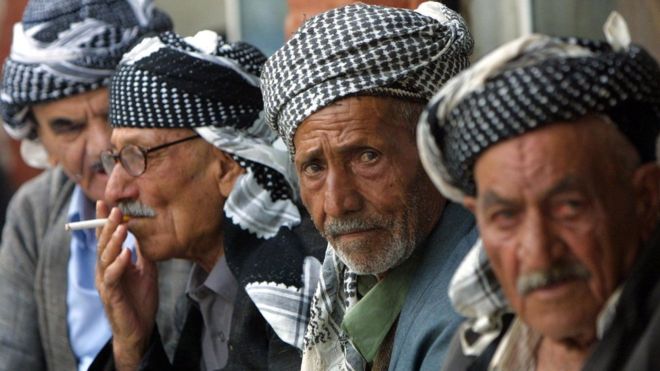
Since the beginning of October, US troops have been pulled from the northeast area of Syria. They were in the area providing support to the Syrian Kurds who have been fighting as part of the Global Coalition to Defeat ISIS. Aside from helping push back the terrorist organization and defeating ISIS’s caliphate, the Kurds have also been guarding approximately 11,000 captured ISIS fighters and their families. This was critical in order to ensure that these fighters not regroup and reform ISIS.
Having the US as allies allowed the Kurds to be successful. The sudden withdrawal has left a gap in support that had been critical for the Kurds while they were acting in part for US interests in the region. The US has tried to close this gap in negotiations with Turkey in October. It was President Trump’s hope that Turkey would take over in the region.
The problem with this decision is that since 1984, the Turks have been fighting against a Kurdish autonomous state within their borders proposed by the Kurdistan Workers’ Party (PKK). Turkey, the European Union, and the United Nations have designated the PKK as a terrorist organization. The Turks believe that the People’s Protection Unit (YPG) — which was the group allied with the US against ISIS fighters in Syria — is an extension of the PKK. Because of this, since entering the region following the withdrawal of the US, the Turks have begun a bombing campaign targeting the northeastern area of Syria where the Kurds are located.
In anticipation of the arrival of the Turks, thousands of Syrian Kurds have fled towards Iraq. The main fear propelling this mass migration is the risk of an ethnic cleansing against the Kurds.
In the wake of their exit, there is also a new fear: ISIS fighters escaping from the abandoned prisons. Approximately 1,000 reported ISIS-related prisoners have escaped since the US began their withdrawal.
Aside from the fact that this troop withdrawal could lead to a resurgence of ISIS, it is fundamentally unfair to the US’s Kurdish allies. The Kurds have supported the US militarily countless times from WWII to the Gulf war. Syria is no different. Kurdish support meant that the US could keep its troops away from the fighting while the Kurds were in the line of fire.
In the end, while the Kurds lost their support, the rest of the world was placed in a more dangerous place. Without the US presence in the region, ISIS may feel emboldened and attempt to restart their caliphate. There is also a greater fear that the frequency of terror attacks across the region and in Europe may increase as well. All in all, it appears that the US has left all of their allies in a more precarious position than they were in at the beginning of October.
Asking students to pay to volunteer is fundamentally unfair

By: Jessica Garcia, SFU Student
One of the benefits of being a university student is building relationships within the institution — especially for students with academic aspirations. However, as neoliberal austerity claws further into all facets of our lives, everyday living expenses, the rising costs of tuition, and the subsequent necessity to engage in the precarious labour necessary to even remain in university — much less attend its events and opportunities — are making it increasingly difficult for students to balance the books.
Which is why I was so dismayed by an email calling for student volunteers for the annual Canadian Anthropology Society (CASCA) conferences. The event, held in Vancouver this year jointly with the American Anthropological Association, is quite a big deal within the discipline, and purportedly a good opportunity for students.
However, a detail in the call for volunteers struck me. Students wanting to volunteer were first asked to become CASCA members for the student rate of $25. They would then have to pay the student rate to attend the conference, an additional $80. For those keeping track: in order to volunteer for this conference, students had to pay $105 up front. Students who agreed to work two four-hour shifts (eight hours) would have the $80 conference fee reimbursed. This, however, effectively makes the position less of a volunteer gig, and more of a paid freelance opportunity — one that is notably paying less than the legal minimum wage, at $10 per hour.
When asked by The Peak why students were required to pay in order to volunteer at the event, one of the conference co-chairs, Dr. Pamela Downe, explained that CASCA “is a non-profit organization” that “invest[s] monies generated by [conferences] directly into . . . organizational activities that are overseen by a series of academic networks as well as an Executive Committee, all of which are run by volunteers who tend to hold university faculty or postdoctoral appointments.” Downe went on to say that CASCA also provides “generous provision of travel bursaries and . . . work[s] to facilitate ride- and accommodation-shares” to students who want an opportunity to attend.
While I understand the financial difficulties of running large-scale events as a non-profit organization, there are a few things that I would like to point out from a student’s perspective.
First of all, being an unpaid volunteer as a university faculty member is arguably less of a financial burden than as a student. After all, faculty members integrated in the workforce already invest a great deal of time in paid employment, making it easier to donate time. However, students, particularly full-time students, devote much less of our time to paid employment. Instead, the bulk of our time is invested in activities that already require us to pay large sums of money. Students are arguably in greater need of being paid for the work that we do.
Secondly, if budgets do not allow an organization to pay students for their time, they should at least not ask students to pay to volunteer — especially not $105. Even if a significant amount of that money will be reimbursed based on hours worked, many students do not have $105 of disposable income available at any given time. Even as a full-time student with a decent paying job, surprise expenses of even $100 can be the deciding factor in how many meals I can eat in a week.
Finally, anyone with any sort of economic ties to the art world is familiar with the phrase “I can’t eat exposure, Brenda.” This is a critique of labour being requested for the love of it. However, if one’s labour is valuable enough to request it, then it’s valuable enough to pay for. In the current economic system we live in, doing something “for experience” is beginning to take on the same connotations.
Free labour is a particularly difficult situation for students, but it’s not unique to us. While I have suggested that it is easier for working adults to shoulder the costs of unpaid volunteer labour, the overall experience of selling one’s labour in the capitalist system doesn’t change just because one exists in a slightly higher income bracket. We are all being squeezed by the disparity between stagnant wages and the rising cost of living. This unfortunate reality means that fewer people are able to afford to give their time to unpaid labour — we can’t eat our exposure, and neither can we pay our rent in experience. Capitalism has essentially made volunteering untenable for many people.
The irony in all of this is that an education within the department of sociology and anthropology gives students the tools with which to critique these practices. Students shouldn’t be asked to pay to volunteer at conferences, especially those that may provide valuable experiences for later employment opportunities. But more broadly, as a society we must all be more willing to challenge the economic system that demands people work for less, pay more, and donate their time in unpaid labour to have a slightly better opportunity to claw ahead of our peers.
The idiosyncrasies of sport: Part 1

By: Grant Simms, SFU Student
I love sports for a variety of reasons. The intensity of competition, the extraordinary range of athletic abilities on display, and the unpredictability are just some of the reasons sports are so popular. But, as fantastic as they are, there are bound to be some ugly patches. Like anything beautiful, sports has its imperfections. Some things that athletes and team managers partake in make no sense, yet, for whatever reason, these traditions and practices haven’t gone away (yet). Here’s a list of five annoying, pointless and/or irritating elements of sports.
- Fighting in hockey
Why? Just, why? How this still happens in a league with such an otherwise high professional standard baffles me. Fighting adds absolutely nothing to the sport, and makes hockey players look like a bunch of immature idiots who need to go back to kindergarten. But, then again, it’s not just the players — it’s also the league that sanctions this behaviour. While many other sports move to decrease physicality and contact, preferring an increased emphasis on agility and athleticism, hockey continues to have refs stand in a circle around a couple of guys while they engage in a bare-knuckle fight for zero competitive advantage. If I wanted to see that, I’d be watching boxing. It’s not just the pointlessness of the fighting that grinds my gears either. There’s also the arguably racist double standard that allows this to occur in hockey without a second thought, but once something similar happens in the NBA, suddenly, they’re a league of criminals.
- Throwing at hitters in baseball
If you want to teach little kids how to be sore losers, then have them watch baseball. Why do pitchers intentionally throw at relatively defenseless batters, risking serious injury or death? What, because he hit a home run off of you? He flipped his bat? Made you feel embarrassed, and, because you have the emotional control of a petulant child, you decide you’re going to try to seriously injure or kill him? Many careers have ended due batters being hit by pitches. I firmly believe that any baseball player who engages in pegging should be banned for life. There’s simply no place for this in sports. It’s basically the equivalent of Cobra Kai sweeping Daniel Larusso’s leg in Karate Kid.
- Paying running backs (a lot) in football
The league has changed. It’s a relatively simple development — the analytics show that passing more is generally beneficial and rushers are needed to supplement the pass. That’s going to hold true as long as teams keep winning Super Bowls without employing top running backs. All paying a running back big money does, at this point, is show that you don’t understand how team building works, and that you’re too lazy or ineffective to scout the nine viable backs that come out of college each year ready and able to play in the league.
- Giving league titles value in soccer
Are we done giving Manchester City plaudits because they beat lower tier teams like Huddersfield year after year? For a variety of reasons, such as budget and reputation, they’re supposed to, but it doesn’t mean that they’re any better than the other clubs around the world who do the same in their own leagues. Credit should be given for winning the biggest games against the best teams in the world, not for beating a bunch of teams whose transfer budget is a tenth of your own.
- The average team in NBA basketball
If you’re an NBA team that’s not in New York, Chicago, Boston, LA, Miami, or San Francisco, you’re not getting free agents without already having a star player. To teams like Indiana, San Antonio, and others: thanks for playing, but unless you’ve got a Zion that will help you attract free agents like moths to a flame, you’d be better off tanking with the aim of drafting a superstar that can attract other high level talent.


