Home Blog Page 452

CONFESSIONALS: I’m the OG Karen

1
Illustration of a closed envelope, with the text, “Confessionals”
ILLUSTRATION: Marissa Ouyang /The Peak

Written by Lubaba Mahmud, Staff Writer

I don’t know if you’re ready for my confession, SFU. Frankly, I don’t know if I am ready. But it’s time you know just who walks amongst you, ready to harass yet another UniverCity employee; it’s time you understand how truly powerful I am.I’m Karen — the FIRST Karen. That’s right: I’m immortal. 

When I was first placed on Earth, I was obviously not impressed. Who would be? Starbucks, Pinterest, and Target didn’t exist yet. There was just one other person created at this point — I guess his name was Adam or something, and he was the epitome of boredom. So naturally, I asked for the Earth’s manager: God.

Boy, did He take a long time to get back to me, and He wasn’t much help initially, either. He told me it was my duty to serve Adam . . . As if I, the great Karen, would bow down to anyone. I was already beginning to mentally draft a customer service complaint, but later decided not to, because we struck a deal of a lifetime.

You see, after one look at Adam, I figured out that humanity would be doomed if I didn’t take matters into my own hands. I couldn’t let everyone turn into kind (ugh), selfless (SNOOZE), management-fearing people. So I pretended to fall in love with him, and after we had a couple of kids, I divorced him. He cried on God’s shoulders and kept saying, “Karen took the kids.” 

God had mercy on him for some reason, and asked me to come back to Adam, as if I too had no self-esteem. I gave Him the idea of creating another “first woman” on Earth — that way, no one in the future would have to know that the very first man on Earth failed to do the only job he had. I mean, it would be pretty embarrassing for everyone to know that God’s first creation was a total loser. I promised never to tell anyone about this secret deal, as long as I got to run away and raise Karen II and Karen III on my own. 

Since then, I’ve been working hard to set our bloodline apart from everyone else, like the Adams and Eves traipsing around. Century after century, I’ve guided my children, the long lineage of Karens. Thanks to me, every generation has known how to spark controversy, has known how to survive the collapse of a multi-level marketing scheme and start fresh. Harsh blonde angular hairstyles and “live, love, laugh” decor would never have been done right without my input, would they now?

I guess I’m breaking my secret deal with God by writing this public confessional. But VVVIPs like me don’t give a damn. SFU, the true Karen has finally #Snapped.

I’ve successfully sent Karens to every corner of the world. Maybe our anti-vax campaign has slowed down our expanding empire a little, but hey, I’ve helped to elect a male Karen as the US president, so, you know, quality over quantity. My job here is done. And as I finally rest after this eternity of shaping the future, slipping into the Bed Bath & Beyond cotton set I haggled out of a rude, entitled young cashier last Thursday, my young Karens will continue my legacy.

And they’ll be coming for you too, SFU.

Your weekly SFU horoscopes: February 24–March 1

0
An illustration of a girl with long flowing hair. Astrological signs and stars shine around her.
ILLUSTRATION: Marissa Ouyang / The Peak

Written by Zach Siddiqui, Humour Editor

Aries — March 21–April 19

This week, you may find answers to your introspective queries in pop songs from the 2000s, so long ago. Katy Perry’s Hot N Cold was never about one of Katy Perry’s relationships; it was always about your own relationship with fresh-out-the-toaster S’Mores Pop Tarts.

Taurus — April 20–May 20

Don’t get yourself down because people have accused you of being old and boring these days. Your personality is not “boring,” it’s “utilitarian design.” It’s not your fault that people need to graduate UBC with an art history degree to understand you.

Gemini — May 21–June 20

Stop settling for less this week. Your university life deserves to be season 1 of Community, not season 4.

Cancer — June 21–July 22

Your advanced age is starting to get to you. Every time a gondola-related event happens on campus, the crow’s feet around your eyes deepen. If only that $197 million price tag could pay for something that would actually benefit society, like a lot of vitamin B12.

Leo — July 23–August 22

Your entitlement and false faith in your own inborn supremacy over others is getting out of hand this week. You should be alarmed, but not surprised. This was bound to happen at some point, given that your horoscope sign sounds like it was named by two slices of Superstore baguette who plan to enrol their baby constellation in little-league lacrosse.

Virgo — August 23–September 22

Green is your lucky colour this week. It represents your envy of the concrete at the upper and lower bus loops, for getting to be walked on by you. Truly a pleasure your classmates are ungrateful for. 

Libra — September 23–October 22

Deconstruct your heart this week. There’s too much acidic feeling built up in there now. Better to lack a functioning circulatory system than to have a screwed-up pH balance.

Scorpio — October 23–November 21

Wear mourning attire this week. Somewhere, someplace, the batteries on your Tamagotchi have finally run dry. Confused because you never owned a Tamagotchi? You may not have, but your soul knew the connection — knew too much, in fact.

Sagittarius — November 22–December 21

Pray this week. Pray for the strength to accept the unfair marking systems you cannot change, the courage to complain to the department head about the unfair marking systems you can, and the wisdom to know the difference. 

Capricorn — December 22–January 19

Capricorn? More like Napricorn. Good night, sweet angel. The melatonin will empower you face that unread, foreboding Canvas message in the A.M.

Aquarius — January 20–February 18

Feel feeble lately? Your body is conserving power for when Daylight Savings steals another hour from us. You should be thankful that even your bones know that your conscious mind cannot be trusted to budget anything.

Pisces — February 19–March 20

Stop texting back this week. You will not find love with American Eagle, Bluenotes, or whatever other retailer you gave your phone number to that one time for the 10% discount, only to have them perpetually spam you with fake sales and false excitement.

DEAR PEAKIE: Food, friends, and falling into time distortion

0
Chris Ho

Written by Zach Siddiqui, Humour Editor

Dear Peakie, 

How can I get a better enrolment date?

From, MG

*

Dear MG,

Hmm . . . this is a toughie. Try slipping on those unforgiving concrete stairs on campus and hitting your head! No, the goal isn’t to wake up in an alternate timeline with better course availability, like some made-for-TV rom-com. No, you want to awaken to a good case of cerebellar ataxia, just serious enough to distort your sense of time! Your enrollment date can’t be bad if your newfound dyschronometria has released you from the fetters of monochronic scheduling and culture. 

Love, Peakie

*

Dear Peakie,

How can I make friends at SFU?

From, Looking for the Friendzone

*

Dear Looking for the Friendzone,

Making friends is all about opening up your boundaries and putting yourself out there. I think you should consider clubs! There’s no better way to befriend someone and show off your personality than by whacking them over the head with a nice strong oak club. 

Love, Peakie

*

Dear Peakie,

How can I eat at SFU on a budget?

From, Garlic 

*

Dear Garlic,

Always be on the lookout for free edibles. Did you know? Every paper handout your professors give you is plant-based and contains 0.00106 calories. Eco-friendly and good for a lean build. Delightful. 

Love, Peakie


Sustainable bathroom swaps: Just plain gross or worth a try?

0
Photo: Wikimedia Commons

By: Bethany Williamson, SFU Student

You remember to bring your own shopping bags and have ditched the plastic wrap. Looking for ideas on what to do next? I suggest moving onto the bathroom.

My own eco-friendly journey probably started a couple of years ago while deep diving YouTube. Who would have known that there were masses of people out there reviewing natural deodorants, shower essentials, menstrual cups, and period underwear? I was initially disgusted, but also intrigued. Many of these videos were brutally honest about bodily functions, fluids, and smells. Everything seemed inconvenient, unsanitary, expensive, and honestly smelly — but I kept on watching. Why were these people willing to ditch conventional hygiene products for these nasty alternatives? The longer I thought about these YouTubers, the more I realized that I had to try these things or die curious. After all, I cared about the environment, too, right?

In the years since I started trying all of these ideas and products, I have found some genuinely good ones, as well as some that didn’t quite live up to expectations. Some of my friends have also started to express some curiosity about it, much to my delight. And so, without further ado, here are some of the easiest ways to make your bathroom routine more eco-friendly, and some of my favourite products you can try:

1) Try solid shampoo, conditioner, and body wash: 

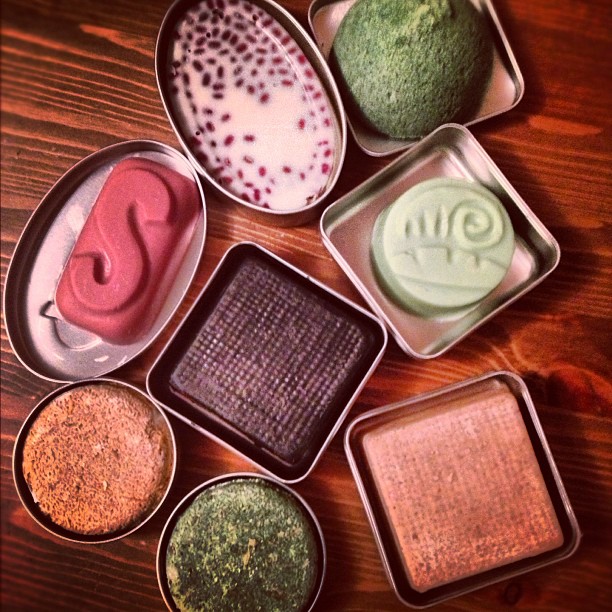
This one is pretty trendy, so there’s a good chance you’ve already tried these, but switching to bars instead of bottles is a solid way to reduce your plastic waste. It seems that every craft fair or farmer’s market has someone selling these, so you may be able to support local businesses in your switch as well. If not, then chain stores such as Lush offer many vegetarian and vegan options. One of my favourites is their Jason And The Argan Oil shampoo bar, which has a nice rose scent.

Solids just not for you? Try to buy your bottles from stores that use recycled packaging, don’t test on animals, and use fair trade and sustainably harvested ingredients. Again, it is always good to support local stores, but we can turn to large-chain stores for some ethical options. For example, The Body Shop uses 75% recycled plastic in many of their products’ packaging and runs a recycling program where you can return your empty containers.  

2) Use washcloths instead of disposable makeup wipes, cotton pads, and plastic loofahs:

This one is also pretty easy, unless you ask my family that adores disposable wipes. Using disposable wipes or cotton pads for makeup removal is expensive and wasteful. And those plastic shower loofahs? Have you heard how often you’re supposed to replace those? A set of regular old washcloths or facecloths can do the job just as well. If you’re worried about stains, you can get them in a dark colour. And, if you’re crafty, you can even try to sew them yourself out of old clothing or other fabric items.

3) Try using a safety razor instead of a disposable one:

Now I’ll admit that this one really has its pros and cons: the main one being that a good safety razor is going to cost you a few bucks. I own a cheap one that I got on Amazon, and I will admit that it does not shave as well or as close as a disposable razor does — but it gets the job done. They seem to have a bit of a learning curve, and they don’t have the fancy heads that bend to go around your knees or other hard to shave areas. Nevertheless, even if you get an expensive one, it will save you money in the long run because you will only need to replace the blade, instead of the whole thing, for essentially the rest of your life. 

4) Try a natural deodorant:

If you are a naturally smelly person or someone who exercises a lot, then this one might be tough. But if you are completely sedentary like me, then this one shouldn’t be so bad. I have tried three different natural deodorants in my life, and only one of them has impressed me: Routine Natural Deodorant

My favourite scent so far is the “Bonita Applebom,” which is a sort of spicy apple-pie-like scent. I also like that these deodorants are made with basic and understandable ingredients like coconut oil, clay, and baking soda. The only downside is that the lids of the containers I’ve purchased seem to be a combination of metal and plastic, and so I haven’t figured out how to recycle them yet. The website listings say that it will last you three to six months, but if you put it on twice a day like I do (once after showering at night, once in the morning), then you can expect it to last about two to three months. 

Another thing to keep in mind is that when people say that natural deodorants have an adjustment period, they are NOT lying. You will probably smell pretty bad in the second week because your body will produce more smelly bacteria initially as your body is adjusting to not using a normal antiperspirant. This means that your body would produce more smelly bacteria initially. In my experience, natural deodorants also tend not to have the same level of antiperspirant qualities as conventional deodorant, so don’t expect it! I still recommend trying them, though.

5) Try some reusable period products:

My true eco-friendly passion! There are many options out there such as menstrual cups, cloth pads and pantyliners, and period underwear.

First of all, they’re not as gross as you’d think. Yes, you will touch some blood, but it’s YOUR blood. The menstrual cup can be cleaned with a mild, unscented soap, and/or boiled in a pot of water on the stove for a more thorough cleaning. I try to boil mine once a month. 

There are about a million different cloth pad and period underwear cleaning tips and tutorials out there. I choose to just keep my used ones in a bucket under the bathroom sink, let them build up for a couple of days, soak them in cold water with a stain remover for a couple of hours, rinse them, wring them out, spot treat any stains with a stain removing treatment, and then wash with my regular laundry. Some cloth pads have a plastic layer and therefore should not go in the dryer or be washed in hot water, but if you are concerned about bacteria or fungus, then you can easily buy ones without the plastic layer so you can subject them to hotter temperatures. 

Think about it though: they’re not really any grosser than anything you’ve ever accidentally gotten blood on, and the cleaning is pretty thorough. A lot of stuff goes near and/or in vaginas. I’d bet that a good deal of it doesn’t get cleaned as well as reusable period products do. Just saying.

HOWEVER, there are a lot of things to think about before trying these things. I lucked out with the DivaCup working for me, but while the size/shape of that one might not be right for you another brand could be perfect. The same thing goes for cloth pads. I suggest getting ones with an absorbency and length that is similar to whatever disposable ones you like. One of my favourite companies, Yurtcraft, allows you to choose the top fabric for your pads, the absorbency, the length, and the backing fabric. Other companies, such as Lunapads, a local Vancouver company, allow you to add inserts to your pad or underwear to increase the absorbency.

Ultimately,

I’m not claiming that these products or ideas are going to make your life a million times easier like some other articles on eco-friendly products do. In fact, I’ve learned in my eco-friendly journey that some of these ideas and products are LESS convenient than conventional alternatives. For example, I don’t find the DivaCup convenient to take out and empty in a public washroom, but with some attention to your schedule you probably won’t need to do this. Also, the washcloths will add to your laundry load. The bar shampoo switch might mean that you can never use your favourite type of shampoo again. But really, I think that we can all handle a little more inconvenience to save the environment, don’t you? I’m here to tell you that if you make the switch to eco-friendly alternatives, you will not only get used to it, but will even wondering how you ever used conventional products before.


 

Political Corner: Irish border negotiations need to be handled more delicately than Brexit was

0
The Irish border issue is older than Johnson’s petty politics. Photo Illustration: Brianna Quan/The Peak

By: Kelly Grounds, Peak Associate

Three years and two prime ministers later, the United Kingdom successfully left the European Union on January 31. The rest of the year is going to be filled with UK-EU free trade talks. These talks are going to determine the future of the UK’s relationship with the Union and are taking place against the backdrop of the UK’s transition period out of the EU.

The goal of the talks will be to negotiate a free trade deal to protect the UK’s economy once they finally leave the EU. At the same time, there are also going to be additional discussions taking place between the UK and various other world countries, since the UK will no longer be included under blanket EU agreements.

Unfortunately, Prime Minister Boris Johnson has added an extra layer of complexity to the talks. He removed the clause previously negotiated by Theresa May that would have helped solve the border issue between the Republic of Ireland (part of the EU) and Northern Ireland (part of the UK). Following The Troubles — a period of ethno-nationalist violence in Northern Ireland in the late 19th century — the two countries struck an agreement that ensured the border between them would be open and allow for easy movement. 

Without the benefit of the open borders characterizing the EU, the UK now has to find a way to create a more substantial border between the two Irelands. This is an issue with no clear answer, having caused numerous problems since Brexit began. The popular fear is that if the UK cannot negotiate a deal by the end of the year, old tensions will be reignited on the Irish border, leading to renewed violence.

Even if all talks go perfectly, the timetable will still be tight. The UK has less than 11 months to meet all of its goals and find solutions to extremely complex problems. This job would be nearly impossible even without the added complexity of Ireland. The UK would most likely get an extension if they asked yet the prime minister has refused to consider it. Essentially, Prime Minister Johnson has chosen to put a political win ahead of finding a workable solution to a complex issue, and the consequences of this may not be fully understood for months. Simply put, they need more time.

First Nations Student Association marks Missing and Murdered Indigenous Women Week at SFU

0
Photo: Chris Ho / The Peak

Written by: Gurpreet Kambo, News Editor

Photos: Chris Ho, Photo Editor

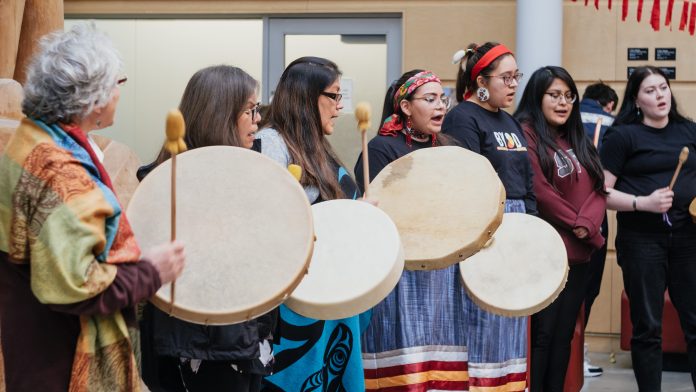
The First Nations Student Association (FNSA) hosted the third annual Missing and Murdered Indigenous Women Awareness (MMIW) week from February 10 to 13. The event included a vigil display in the Saywell atrium throughout the whole week with photos in remembrance of Indigenous persons who were lost, as well as poetry, flowers and a sign stating “No more stolen sisters, no more stolen youth.”

On February 13, the Saywell atrium was the site of a performance by the FNSA Drum Group. From 1–2 p.m., the group drummed and sang songs in remembrance of the Missing and Murdered Indigenous Women, interspersed with speakers who spoke passionately about the reasons why this event was held.  

In an email interview with The Peak, Amelia Boissoneau, an FNSA member and Indigenous Business student, said, “The MMIW vigil is not an easy event to hold. It brings up a lot of heavy feelings knowing that our mothers, sisters, daughters are missing or murdered. My involvement was done through supporting my friends who were directly involved in setting up the space. Our Indigenous community focuses on supporting one another in the best way possible.” 

FNSA Board member Matt told The Peak, “We started organizing it because we wanted to bring more awareness on campus, so that people [ . . . ] would be able to go down to the memorial march happening on the Downtown Eastside every February 14 at Main and Hastings. 

Matt emphasized that violence against Indigenous peoples is deeply rooted in Canada’s history. 

“This isn’t just something that’s recently been happening. This has been happening since colonialism has been present here [ . . . ] Since first contact, Indigenous women, youth [and] men, have been taken from us. Since contact.”

Boissoneau added, “I have no choice on whether I am involved or not. The MMIW vigil at SFU isn’t just an annual event for me. I don’t have the privilege of seeing it as an event I have to live through it. It is my responsibility to honour those who have been murdered or gone missing. To support and uplift my relations who have been directly affected.”

She continued, “What was to be addressed is that it isn’t just an event week to honour those lost in the past, this is still happening right now. In this moment women are being murdered and going missing. MMIW needs to have awareness brought upon it every day.” 


Coming Up at SFU: February 24–March 1

0
Photo: Courtesy of SFU

Written by: Harvin Bhathal, News Writer

Thank You Black Women for Saving America

February 24 | 12 p.m.2 p.m. | AQ 6106, Burnaby | Free

Guest speaker Nadia E. Brown, professor at Purdue University, will be speaking on the role Black women play in saving America and democracy itself. Attendees will be treated to a light lunch.

Change and continuity in the Congo: A discussion around violence, youth movements, and opportunities for reform

February 24 | 5:30 p.m.7:30 p.m. | SFU Harbour Centre, Segal Conference Room 1400, Vancouver | Free | Registration required

This talk will look at the ongoing political climate in the Democratic Republic of the Congo. There has been a humanitarian crisis in the country, with many being displaced due to warfare. The talk will address the ongoing struggle for political reform in the country, particularly in relation to the 2018 elections, which, according to the event description, “provided a chance for transformational change.”

The event will have a panel of scholars from the Congo Research Group and the BC based non-profit, Voice of Ituri, including Jason Stearns, assistant professor of International Studies at SFU, and King Solomon Kabagamba, SFU student and founder of Voice of Ituri. Although the event is free, donations to Voice of Ituri are encouraged. Since space is limited, interested participants are encouraged to register (which can be done through the event’s page).

A Neuroengineering Lens into Treatment of Youth Mental Health and Addiction

February 25 | 6 p.m.7:30 p.m. | SFU Sustainable Energy Building, Theatre, Room 1002, Surrey | Free | Registration required

This event is part of SFU’s President’s Faculty Lecture Series, and features SFU’s Dr. Faranak Farzan, Chair in Technology Innovations for Youth Addiction Recovery and Mental Health at the School of Mechatronic Systems Engineering. Dr. Farzan will discuss how the unique approach of combining the disciplines of engineering and neuroscience to help in combating mental illness in youth across Canada. 

According to the event page, if there’s a high turnout, registration will not guarantee entry and will be available on a first-come first-served basis.

Standing Together: Human-Animal Encounters in Istanbul and Athens

February 27 | 6 p.m.7:30 p.m. | SFU Harbour Centre, Room 7000, Vancouver | Free | Registration required

Dr. Hande Gurses, visiting assistant professor from University College London will discuss and analyze two documentaries about stray animals in Athens and Istanbul. The event’s description states that the two documentaries and the related talk seek to shed light on “the politics of urban life,” and its effects on both animals and humans. Since space is limited, interested participants are encouraged to register (which can be done through the event’s page).

The Beauty of Being Black”: A Geneaology of Black Muslim Fashion in the United States

February 28 | 5 p.m.7 p.m. | SFU Harbour Centre, Room 7000, Vancouver | Free | Registration required

Dr. Kayla Renée Wheeler, an assistant professor of Area & Global Studies and Digital Studies at Grand Valley State University, will discuss the history of fashion in Black Muslim communities. As stated in the event description, Wheeler argues that for Black Muslim women, “dress is a form of ‘embodied resistance’ which challenges what gets counted as ‘Islamic’ and reveals how this labelling is often racialized.” Since space is limited, interested participants are encouraged to register (which can be done through the event’s page).

Professor Mark Jaccard’s lecture on climate emergency emphasizes the importance of sincerity and citizen action

0
Photo: Madeleine Chen / The Peak

Written by: Madeleine Chan

Mark Jaccard, SFU Distinguished Professor and Director of the School of Resource and Environmental Management, gave a talk about climate action at SFU’s Harbour Centre last week. He is also one of the four SFU experts recently recruited to the newly established Canadian Institute for Climate Choices.

The lecture was based on his new book The Citizen’s Guide to Climate Success: Overcoming Myths that Hinder Progress, which details actions against climate change in relation to citizen efforts. 

Jaccard began the talk to a lecture hall almost filled to capacity with an invitation and reminder to the audience to think critically about their own biases. 

He then went on to list his common myths surrounding climate change: fossil fuels, global agreements, and domestic policies. He concluded that global decarbonization, or the elimination of fossil fuel use, is a difficult process.

Jaccard then showed how the path to successfully lowering carbon is relatively “simple.” He explained that our key actions should be to “rapidly phase-out the burning of coal, oil, and most uses of natural gas” and implement compulsory policies for this.

Jaccard also described some of the factors that are holding the world back from this “simple” path. This included the promotion of climate myths, rigid pro/con views, “wishful-thinking” biases, biases that further our agendas, and climate sincere or insincere politicians. 

Throughout the entire talk, Jaccard heavily emphasized the importance of not having views that one is unwilling to change. 

“I’m not saying that you cannot be pro or con [ . . . ] but I invite you to think about how rigid you should be in your views [ . . . ] Don’t let perfection be the enemy of good.”

Matt Horne, the City of Vancouver’s Climate Policy Manager, was also there as the respondent to comment on the city’s plans for climate success.

He noted that the city of Vancouver’s emissions largely come from two main sources: buildings and transportation.   

Horne emphasized that “it comes down to [a] simple set of six or seven solutions at a local level, like more walking, more cycling, more transit, more electric vehicles, [electric] heat pumps, renewable gas. It’s not a long list of what we have to transition from today.”

A busy and passionate Q&A session followed, with questions from the audience ranging from clarification about the speakers’ points to oppositional views on their stances. 

When asked how the average, climate-concerned citizen can make the most of their time, Jaccard suggested that supporting certain political parties that champion climate action and are vocal about the issue’s importance through civic action are the best ways.

Horne added to this that local Vancouver politicians are “very accessible” and are willing to meet with climate-concerned citizens. 

This talk is the second of four in the Faculty of Environment’s 2020 Dean’s Lecture Series. The series of free talks are in celebration of the Faculty’s tenth anniversary and, according to the event page, features “scholars and practitioners who explore some of the pressing social and ecological challenges we face.”

The next and last talk in the Dean’s Lecture series is called “Navigating towards ecologically safe and socially just fisheries” and will be held on March 12 at SFU’s Harbour Centre in room 1900 at 7:00 p.m. Jaccard’s lecture was also streamed live  and is available to watch on the SFU IT Services website through a link on the event page.

Graduate Student Society’s 2020 AGM features record attendance and by-law amendments

2
Photo: Matt Mcdonald

Written by: Jess Dela Cruz

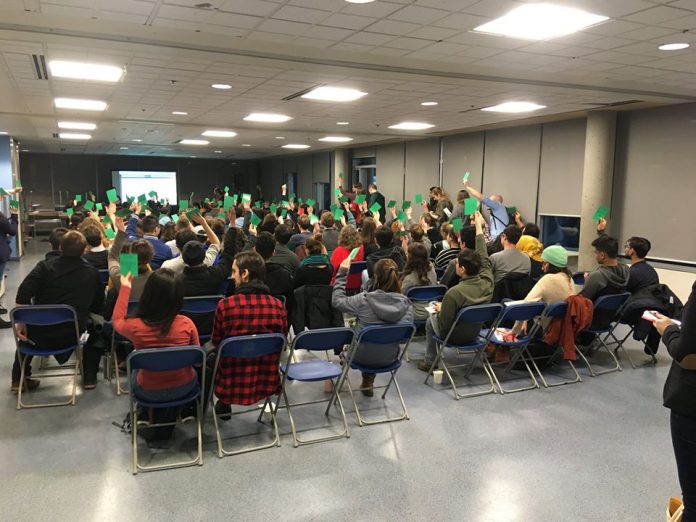
On February 11, the Graduate Student Society (GSS) held their Annual General Meeting (AGM) in which members voted on changes to their by-laws — the society’s top governing documents.

The meeting began with an overview of the 2020 Agenda, and the Statement of Financial Position for the 2018/2019 year, in which the auditor stated, “in our opinion, the accompanying financial statements present fairly, in all material respects, the financial position of the society.”

After the AGM attendees reviewed and accepted the Statement of Financial Position, the proposed-By-Law changes were presented and voted on.

The first proposed amendment covered By-Law 1. The amendment intended to address the use of pronouns throughout the by-laws. Attendees voted in favour of amending the by-laws to include the gender-neutral pronoun “they and them,” rather than language that suggests any gender. 

Another proposed amendment was to Section 19, under By-Law VI, which covered the electoral terms of the GSS’s elected representatives. The by-law originally stipulated that “half of the Directors” would be elected in the months of February or March, and that half would be elected in October or November. This was amended to establish periods from January through April and September through December, respectively.

Luciana Fortes, Director of Internal Relations, explained that this was to have a longer campaign and nomination period, so as to increase the amount of time for members to submit their nominations.

Several other amendments revolved around procedures related to proceedings of Council meetings and wording changes to existing by-laws.

On the subject of attendance at the AGM, Matt McDonald, Director of External Relations, was pleased. 

With 211 graduate students present, this year’s Annual General Meeting had by far the highest attendance since the formation of the GSS in 2007.

“There was a real energy in the room and at the social held afterward, and along with the last election’s historically high voter turnout, we are getting a sense of how excited graduate students at SFU are to get involved,” he said. “We hope to build on this success in the future and continue to strengthen the graduate student community.”

The U-pass got renewed; let’s not take it for granted

0
Students would pay three times as much on transit if it weren’t for the U-pass. Photo: Chris Ho/The Peak

By: Helen Williams, SFU student

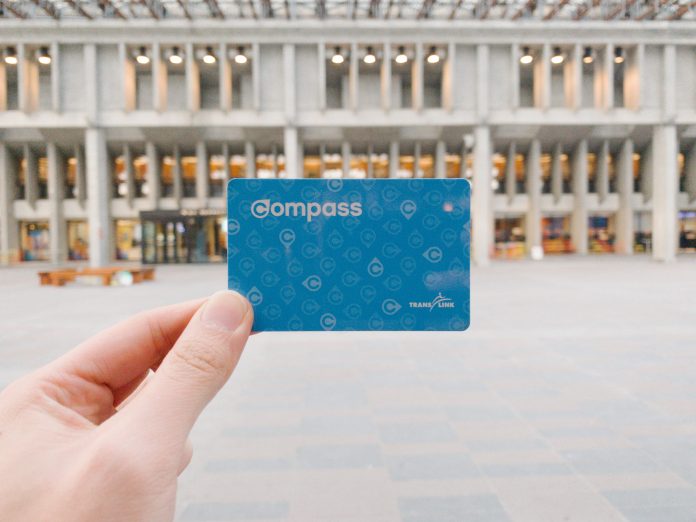
In a recent vote by students at participating universities, the U-pass has been extended until 2025 with a 2% increase yearly starting May 1. Our current U-pass program agreement, which started in 2010, is coming to an end and its $41 monthly rate will go up to $42.50. The referendum to vote on the continuation of the pass happens every five years. While this seems like a given for students, it is important that we keep fighting to have this program renewed every time it comes up in a referendum.

Public transit is integral to the life of most students. Students of commuter schools especially depend on the trains and buses to get to school, to work, and their leisure activities. Sure there are alternatives, like driving or biking around, but for many students, owning a car is a bigger expense than they can afford. And let’s not forget that the majority of the Lower Mainland doesn’t have the infrastructure to support wide-spread bicycle use. Public transit is the only viable option for lots of university students, and having a cheap monthly pass to rely on is a godsend. Honestly, the fact that we have to keep voting to retain the pass, and not just recognize it for the fundamental necessity that it is, is baffling.

Don’t get me wrong, we’re lucky that the recent vote agreed to keep the U-pass for another five years. But that wasn’t necessarily a forgone conclusion, and we shouldn’t take it for granted. Remember that currently, the amount that students pay for per semester (a three month pass) is slightly less than a one month, three-zone pass for the general public. Agreeing to keep this valuable program not only keeps the cost of transit lower for cash-strapped students, but it also makes increases predictably infrequent — unlike the general public who have to deal with annual fee hikes

Another reason the U-pass is so important is its positive impact on the environment. U-pass users account for 13% of transit use in Vancouver. This has helped with decreasing the amount of greenhouse gas emissions that get released every month by reducing the number of individual vehicles on the road. 

The vote to keep the U-pass for another five years shows just how much students value and support this program, despite the monthly price. Currently, 10 schools and 140,000 students depend on the U-pass. Even if the price continues to rise, hopefully the U-pass will keep pulling through so that it will be one less expense students have to worry about. Let’s make sure we never stop fighting for this valuable service.