Home Blog Page 443

SFSS election candidate accuses other candidates of breaking campaign rules

0
Photo/ Peak Archives

Written by: Michelle Gomez, Assistant News Editor

A candidate running for At-Large Representative in the 2020 SFSS elections publicly accused multiple other candidates of breaking campaign rules. 

In a Facebook post, Geetanjli Sharma accused a number of candidates of running as a slate, or an electoral group with a common platform, which has not been permitted for the 2020 elections. Sharma referred to this slate as both the “purple and yellow slate” and the “progressive slate.” She further accused this group of collecting student contact information for the purpose of campaigning as far back as December 2019. 

Sharma also noted that this campaigning was with the assistance of Giovanni HoSang, the current SFSS President. 

Osob Mohamed, who is the current Health Sciences Representative and candidate for President made a Facebook post in response to the accusations, which included a response from one of the VP Student Services candidates, Matthew Provost. 

In the response, Provost wrote, “I have been diligent around asking the IEC for all interpretations of every rule and to ensure that I do everything to the books as much as possible in relation to this campaign.”

HoSang said in a statement to The Peak,it is clear who I endorsed during this election, just as it is clear who other Board members endorsed. Providing help to students is not against the rules and is a common occurrence by incumbent Board members and has been seen since forever.” 

It is unfortunate that students who may not have been prepared to run in the SFSS elections try to smear other candidates who were prepared,” HoSang added. 

Mohamed said in an email interview with The Peak,I have been running my campaign well within the rules set by the IEC. I would also like to note that Geetanjli’s post was made on the last day of voting, which was certainly a campaigning tactic and attempt to smear and sway public opinion of a number of candidates rather than bring[ing] her concerns to IEC.”

Although the voting period ended on March 19, results for the election were delayed, and not announced until March 26. 

In an email to The Peak regarding the delayed election results, the Independent Electoral Commissioner Alicen Lange said that there have been “a number of complaints about the manner in which certain members were campaigning.” 

This story is developing and will be updated as new information becomes available. 

How faculty and students at SFU are responding to the transition to online classes

0

By: Harvin Bhathal, News Writer

Disclaimer: For the purpose of job security, The Peak has granted anonymity to SFU faculty members who have commented

SFU’s transition to online classes due to the COVID-19 pandemic has affected students and faculty alike. Though much of SFU’s public communications has focused on the effect on students, SFU’s teaching staff are experiencing uncertainty as well. With many students and their accompanying assignments, essays, and emails to respond to and account for, educators are facing the task of reconfiguring their syllabi to fit the constraints of the global pandemic.

The Peak contacted faculty and students at SFU to get a sense of how they’re transitioning their courses online and how that process was going. Students responded to The Peak’s post in the SFU Must Knows for Courses Facebook group on March 21.

One professor responded to let The Peak know that they are unable to give feedback due to the increased duties as a result of this transition. Many others did not respond at all.

According to one SFU professor, the transition to online classes “happened far too slowly,” compared to the dozens of universities that had already done so by the time SFU announced the switch. “It should have been very obvious to SFU [ . . . ] that we needed to be proactive.”

Another professor stated that SFU handled the transition “as well as could be expected.” On the topic of the increased workload related to shifting to online teaching, they stated: “Much of the labour of course delivery is now focused on the basic problem of how we will all make contact and interact, taking away time and energy that could be spent on learning.” 

They added, “Not all students have the same digital access or the same bandwidth, and many see remote/digital meeting alternatives as very thin in comparison [to] the actual, in-person course that they thought they were enrolled in.” 

Several professors stated that they have shifted to Blackboard Collaborate Ultra (a virtual classroom feature on Canvas), Zoom (a video conferencing and webinar app), and pre-recorded lectures.

For others, the shift has simply been students doing the readings and looking over the slides or a professor’s hand-written notes on their own time, which requires more focus than lectures, said SFU student Sharon Lam. 

“I have one class with recorded lectures. I’ve noticed that’s the only class where I can pay attention and process the material,” she added.

Lam continued, “Most of my [professors] aren’t doing video or recorded lectures [ . . . ] I have one class with recorded lectures [and] I’ve noticed that’s the only class where I can pay attention and actually process the material.”

Another SFU student, Rubab Ahluwalia, asked: “Are we here to learn, or simply give exams for courses that we pay for?”

Other changes include one SFU professor creating an optional discussion forum for students to post COVID-19-related memes and content for a one-point bonus to their final grade. In a similarly lighthearted manner, another professor is offering their students a five-minute dance party during the break of their class to keep spirits up. 

In spite of these attempts to rectify the awkward transition, students still have complaints about the impact the shift has had on their learning. 

“The obviously understandable unpreparedness of professors to shift completely online has resulted in the semester seeming slowed,” said SFU student Travis McLellan on Facebook.

Students referenced a lack of motivation and focus for their classes, as well as being overwhelmed by their loss of income due to workplaces shutting down. Furthermore, students with children are facing issues of balancing their child’s home-school education and their own.

While students may have their complaints, many have acknowledged the difficulties that the decision to transition to online courses placed onto faculty as well. 

SFU student Chris Mitchell said, “[Faculty] are trying so hard but how are they supposed to keep focused if [students] cannot. This is a bad time for everyone and it shows.” 

“I do sympathize with professors though because they’ve had to make a transition they weren’t planned on and I imagine they’re also stressed,” added SFU student Brianna Malott.

Similarly, a professor who responded to The Peak’s email inquiry noted that their experience has been easier due to their course load this semester, but admitted: “It’’s harder for my colleagues who teach huge classes, or who teach dance, theatre, visual art, etc.”

In response to The Peak’s interview request, one of the professors wanted to convey a message to students: 

Please don’t feel like you have to produce your best work as if the pandemic didn’t exist. This isn’t on you,” they said. “If you are in a situation where it’s hard to get work done, reach out to your professors — we try but we don’t always know what it’s like for thousands of different students. Bring your pets to the webcam.”

They reiterated, “Many professors and admins have never done this before. This

will be a wake up call on just how complicated online learning is, and how it does not work for many kinds of people and many kinds of learning.”

Another stated, “This is a great chance for us to find out how adaptable we can be in the face of difficult circumstances, and to learn how to work in fundamentally new ways [ . . . ] Some advice I’d give is to try to manage your schedule the same way as you would in regular classes, and to figure out a place in your home where you can be relatively productive and set aside a few hours each day to get work done from that space.

That same professor added, “I am particularly sad that my most recent in-person class [was] my last opportunity to see my students in person, but that I didn’t know it at the time. Teaching brings me a lot of joy and I regret not being able to say goodbye. It’s been an emotional transition, to say the least.”


SFSS 2020 Board of Directors election results announced

0
Image courtesy of the SFSS

Written by: Michelle Gomez, Assistant News Editor

Last week, students voted to elect SFSS Board members, and the results have finally been announced! 

Votes were extremely close in some cases. The Education Representative Emerly Liu has been elected with a difference of four votes. The Health Sciences Representative Nafoni Modi has been elected by a margin of two votes. 

Your 20202021 Board of Director members are listed below:

President: Osob Mohamed

VP Student Services: Matthew Provost

VP University Relations: Gabe Liosis

VP Finance: Corbett Gildersleve

VP External Relations: Samad Raza

VP Student Life: Jennifer (Meme Queen) Chou 

At Large Representatives: Balqees Jama and Phum Luckkid

Applied Sciences Representative: Harry Preet Singh

Arts and Social Sciences Representative: Sude Guvendik

Business Representative: Mehtaab Gill

Communication, Arts, and Technology Representative: Haider Masood

Education Representative: Emerly Liu

Environment Representative: Anuki Karunajeewa

Health Sciences Representative: Nafoni Modi

Sciences Representative: WeiChun Kua

The referendum question to increase student fees for the World University Services Canada SFU (WUSC SFU) was passed, meaning students will now pay $5.00 per semester to WUSC SFU, and $2.50 per semester for students taking 3 credits or fewer. This is double what the prior fees were. 

The referendum question to increase student fees for Simon Fraser Public Interest Research Group (SFPIRG) did not pass by a margin of 93 votes; semesterly student fees for SFPIRG will thus not be increased. 

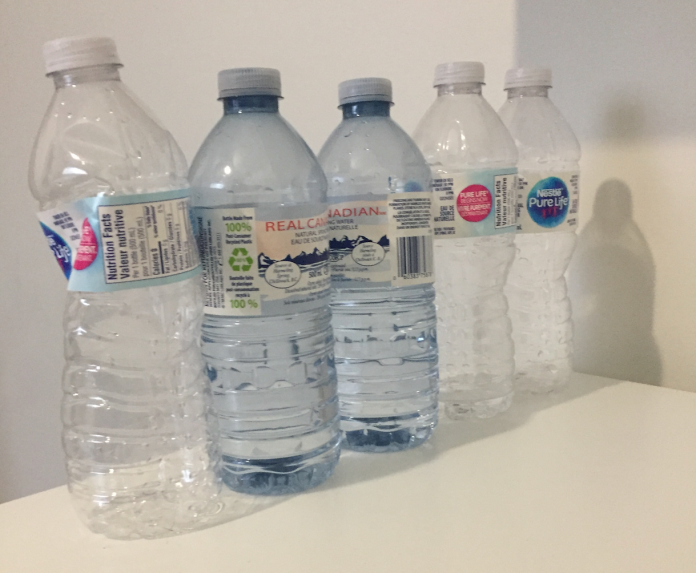
Art Exhibit Reviews Of This Random Person’s Line-Up of Half-Emptied Water Bottles

0

By: Zach Siddiqui, Humour Editor

“The diversity in water level between each clear, carefully crinkled bottle reflects the exposure of hidden privilege, the invisible becoming visible through shared, systemically inflicted pain. Like these bottles, the modern individual is filled, packaged en masse, circulated, and sucked dry once more by the hungering consumer. Power in society as a shaper of economics and the human experience transubstantiates through this display.”

 – Malissa Jocey, The Abstraconomist

“This exhibit iconicizes the transition of the site of art from the constructed material to the body. The subject exists in a daily power struggle with the melted microplastics that any parent would warn their sons and daughters about. God bless Medicare and the invention of the MRI.”

 – Brock Bernard, Some Paper Or Another

“Thanks for reading. I hope you enjoy this exhibit as much as I did! Bring a friend — you’ll definitely enjoy snorting together.”

 – Selena Spalk, Seems To Have Wandered Into The Washroom And Accidentally Reviewed The Wrong “Line” 

“The plasticality of the piece perfectly portrays the kenodoxy of the Anthropocene, the HuMan so obsessed with his Image that he Wastes bottle after bottle until he Becomes the Bottle HimSelf. Unfeeling, but pliant, disappearing into the long procession of good men lost to A Pretentious Patriarchy that I totally Am Not A Part Of Because I Love Art And Wear Denim And Jeans With Earth-Toned Blazers.”

 – Ben Curnem, G24/7

“Exceeds expectations; hard-working, insightful, and socially responsible. A pleasure to have in class.”

 – Roger Heidi, Your Grade 8 Report Card

Community is as funny now as it was back when it aired in 2009

0
Courtesy of Sony Pictures Television

by James Conn, Peak Associate

I knew of popular sitcom Community for a few years prior to actually watching it, mainly because I am a massive fan of the creator and producer of the show – Dan Harmon (best known for Rick and Morty). Additionally, the fact that I was already a fan of some of the cast members such as Ken Jeong and Donald Glover really spiked my interest. But for some reason it took me so long to actually watch it and WOW, I absolutely loved it. Now, years after the show’s finale, rumours of a movie are circulating more and more. The cast have said they are interested, Dan Harmon is pushing to make it happen, and according to one of the show’s producers, Chris McKenna, the script is already written. There has never been a better time to start watching (or rewatching) this beloved series. 

The series is set at the fictional Greendale Community College and revolves around seven students in a study group navigating their way through post-secondary. Joel McHale plays Jeff Winger, a disbarred lawyer who is forced to attend Greendale to get his degree. He lies about being a Spanish tutor in the hopes of sleeping with his classmate Britta Perry (played by Gillian Jacobs). However, she invites Abed Nadir (played by Danny Pudi) who then invites four of their other classmates to the study session: Troy Barnes (played by Donald Glover), Annie Edison (played by Alison Brie), Shirley Bennett (played by Yvette Nicole Brown), and Pierce Hawthorne (played by Chevy Chase). Together they make up a “study group.” 

Additional characters take up supporting roles such as Craig Pelton (Jim Rash), the Dean of Greendale, and Señor Ben Chang (Ken Jeong), the study groups’ Spanish professor. 

At first glance, it may seem like just another generic school-based sitcom — which would be a fair assessment after watching the first few episodes of season one. However, once you get further into the show, Community subverts audiences’ expectations by satirizing sitcom tropes, deconstructing genres, and parodying popular culture. The show will often completely change the established format of sitcoms by paying homage to another TV show or movie. These episodes add great variety to the conventional genre of sitcoms. 

Furthermore, Community has some of the smartest and efficient storytelling told within a sitcom format. Each episode is meticulous in setting up story points then paying them off later, so you never feel disappointed. 

We are all probably aware of Ken Jeong’s pervasive “HA GAYYYYYYY!” moment on the show. It has been reused and repurposed into a massively popular meme, which is the type of crude humour I was expecting from the show. However, Community is by far the smartest, wittiest, funniest, and engaging sitcom series I have ever watched, and I have watched a lot of sitcoms over the years. 

I believe one of the main reasons this show resonates with me so much is that the characters do not feel like characters. They feel like real people. . . but not just any people, they feel like your best friends — friends that you know inside and out. People that you grow close with over the course of the show’s six-season run.

I have watched other sitcoms Parks and Rec and The Office many times and they are great, but the emotional response I get from Community is so unique. All the meta humour mainly revolving around Abed and his seeming awareness that they are in a TV show is amazing. Also, all the pop-culture references to other shows and movies are great. I was genuinely sad when I finished the last episode because it felt like the end of an era, even though I had only spent about two weeks binging the entire series. Simply put, Community is different from any other sitcom out there and you should definitely check it out.

History department’s annual book club turns into a love letter to Maria Campbell

0
Courtesy of Penguin Random House Canada

by Gabrielle McLaren, Editor-in-Chief

Content note: This article includes discussion of sexual violence against Indigenous women and girls. 

Some attendees came to SFU History Reads 2020 clutching brand-new or well-worn copies of Maria Campbell’s Halfbreed, described as “An unflinchingly honest memoir of her experience as a Métis woman in Canada [. . . depicting] the realities that she endured and, above all, overcame.” While the Department of History invited all prospective members of its annual book club to read Campbell’s book in advance, curiosity was more than enough.

The event was reimagined from its original moderated panel discussion given two panelists’ illness. Moderator Roxanne Panchasi (who started SFU History Reads three years ago and teaches modern French history) was honest about the event’s recalibration and was determined to make it work. Chairs were rearranged in a circle to allow for a more intimate discussion setting. Ultimately, I think this allowed for an engaging and emotional exchange. Attendees who self-identified as First Nations, Métis, and settlers spoke to the importance of Halfbreed not only in the grand scheme of Canadian and Indigenous literary history, but also to them as individuals. A particular emotional topic was Campbell’s use of the often pejorative term ‘halfbreed’ as a title, and the importance of reconciling the slur with Métis history, heritage, and pride. 

Dr Mary-Ellen Kelm, a panelist and SFU history professor whose work focuses on Indigenous history, women’s history, and medical history, remembers Halfbreed being recommended to her when she moved to Vancouver and was caught off-guard by her lack of knowledge on Indigenous history. 

“It was one of those books that made a lot of things make sense,” Kelm said. She spoke to the tremendous impact of Campbell’s activism and voice as a Métis woman. Especially in 1973 when the book was first published, Campbell was “opening a door to Indigenous women’s reality.”

Panchasi chose to moderate our discussion of Halfbreed by close reading a passage in Campbell’s introduction: “I write this for all of you to tell you what it’s like to be a half-breed woman in this country . . .” 

This constant refocusing on Campbell’s words felt especially powerful and relevant given Halfbreed’s complicated and painful publication history. Alixe Shield, a Department of English PhD candidate and panelist, explained how Halfbreed’s original publisher omitted Campbell’s account of being raped by RCMP members. Campbell was, for all intents and purposes, the last to know about this editorial change. 

This erasure stood for the first 47 years of printing and has only been recently reintegrated into the text’s latest edition. Shield discussed her experience as a settler scholar, finding the missing pages in a McMaster University archive where they had been kept — unbeknownst to Campbell. 

The discussion ebbed and flowed throughout the night, but attendees frequently evoked current issues regarding Missing and Murdered Indigenous Women and Girls and the work of Wet’suwet’en land defenders.  

I left the book club meeting thinking about epistemological violence — a long word that refers to violence through knowledge or information. While we often think of knowledge as power, the violence done by publishers onto Campbell’s experience and work is a reminder that the dissemination and sharing of knowledge is another locus of power. Shield noted that Campbell’s choice to return to her original publisher to reprint the entirety of Halfbreed in 2019 made “an important statement about the ways that publishers can repair relationships with Indigenous authors.” 

We also discussed how little influence Campbell had on the covers of her book, including ones she openly detested, and how unusual but crucial the crash course on Métis history with which Campbell starts her autobiography is. Shield suggested that those who hadn’t read the book yet listen to its audiobook version, as it is narrated by Campbell herself. 

Additionally, ignorance was a consistent theme throughout the evening. The Coast Salish Anthem and land acknowledgement which began the event contrasted with Panchasi’s introduction and frank admission that until she was well into adulthood, she had been taught little to nothing about Indigenous history — something many audience members echoed. Attendees who chose to speak often began by explaining whose land they had been born, raised, or educated on. Many of us had to admit that we didn’t know. Many of us admitted that we had never been taught or thought to ask. 

This is a kind of violence that I think events like SFU History Reads, which blend literature and lived experience to show how the past bleeds into the present, are well-placed to address. Getting past the violence of ignorance and dismantling it is one of the things Halfbreed allows us to do. 

Watching Makoto Shinkai’s Weathering With You feels like sunshine on a cold day

0
Courtesy of GKIDS Films

by Kelly Chia, Features Editor

Having watched Makoto Shinkai’s last acclaimed movie, Your Name, I was excited to see Weathering with You. Both the soundtrack and the animation of Your Name were breathtaking, and the story was so captivating that I chose to watch it a few times to really absorb what it made me feel. It was as emotionally complicated as it was beautiful. 

With those in mind, I was prepared for how stunning this film would be, but I didn’t realize how nostalgic it would make me feel. The film’s premise is that a boy in high school, Hodaka Morishima, runs away from home to Tokyo. Hodaka barely manages to scrape by until he meets Hina Amano, who is able to change the weather, a so-called “sunshine girl,” and offers sunshine to a constantly drenched Tokyo.

We are no strangers to rain in Vancouver, obviously, so it was somewhat funny to see weather warnings one after the other for constant, heavy rain. Still, Shinkai makes a particular choice in how he depicts weather in the film. In an interview after the Cineplex showing of the film, Shinkay says that he had “depicted the weather in [his] previous films, but [he] depicted it as something beautiful and emotional [ . . . ] contrary to [his] previous films, this film depicts the weather as something aggressive, and a bit violent.” 

Having the rain appear aggressively and at points of intensity in the film made me appreciate the calm of Hina’s gift as she reigns in the sunshine for the Tokyo citizens that seek it. Shinkai hits the warm note within our hearts perfectly when we see a burst of sunshine after a long season of rain. Weather is a driving point in this film, and it’s a poignant one. It definitely made me empathize with Hodaka’s admiration and budding love for Hina.

I knew that Shinkai’s films focused on romantic relationships; Your Name showed romance slowly building up during an impossible love story. For this film, I’d say that Hina and Hodaka’s bond grows extremely quickly. This made them easier for me to relate to — Hina and Hodaka’s relationship felt extremely juvenile, but also really pure. Their love is high stakes, but their relationship still grows naturally, which makes it easy to understand. At some point, I’ve definitely felt that all-consuming infatuation that makes you feel like you can do anything for your person, and that made the film hit even closer to home.

Another point I have to praise the film for is how well-integrated the soundtrack is. The music by RADWIMPS flows perfectly from one scene to another and drives the full emotion of the scene. For example, at the film’s climax, I remember being moved to tears with the hopeful reprise of the lyrics, “I need to know / Is there still anything love can do?” I find that sometimes with films in different languages, there aren’t always subtitles for the songs. I appreciated that in this case, they were subtitled, as they really completed each scene.

At the end of the day, despite the somewhat fantastical premise, Weathering With You felt incredibly familiar and human. The animation alone makes this film a worthwhile watch, but the story makes the often hasty, awkward adolescence something to feel proud of.  

Meet Bryan, the hero who watched your stuff for two minutes

0
Photo: Izat Zubayer / The Peak

By: Rodolfo Boskovic, Peak Associate

In life, it’s hard to find the extraordinary. Some of us go through life without seeing anything that makes us believe in a higher power or that anything that we do really matters. If we are lucky, however, someone so incredible — so out of the ordinary — comes by, and we can’t help but be left in awe at their majesty. 

At SFU, we are blessed enough to have Bryan for that. Bryan, the guy who took two entire minutes to watch a fellow classmate’s “stuff” for two minutes while they got up to use the washroom. 

Bryan was humble enough to sit down with The Peak and walk us through his heroics.

The Peak: First of all, I would like to speak on behalf of the whole student body to thank you for your services. You’re an inspiration. 

Bryan: Oh, thank you. Really, what I did wasn’t that impressive. To be honest, I’m not sure why I’m—

The Peak: Please! Would you mind walking us through the heroics you performed on campus?

Bryan: Well, I had an exam coming up — political science — and there were a lot of terms I had to memorize. My brain was already pudding. Anyway, this girl asked me to watch her stuff.

The Peak: Stacy?

Bryan: Yeah, Stacy. I think. 

The Peak: And what was that like?

Bryan: Boring. Not much there for her to worry about, really. Altogether, her stuff wouldn’t have sold for a transit ticket. But she had to go to the washroom, I guess.

The Peak: Whoa.

Bryan: Yeah.

The Peak: Whoa. 

Bryan: I know. I guess everyone does poop. And I always say, pooping is like dying. When it happens, try as you might, you just can’t take any of it with you. 

The Peak: Ugh. The lived wisdom of a mature student. Now, the whole time you were watching her bag, did you manage to get any studying done?

Bryan: Not really. 

The Peak: So even though you had an important exam coming up — an exam that could very well determine your future — you took time out to help a fellow student? Would that be a fair characterization?

Bryan: Er, I guess. Like I said, my brain was pudding. I couldn’t have done much studying anyway—

The Peak: You really are too humble, Bryan! I suppose humility and heroics do go hand-in-hand!

Bryan: Sure.

The Peak: Before we leave, just one last question, Bryan. This might be a little too personal, so I hope you can forgive the intrusion, but . . . What were you doing before you enrolled at SFU? Where were you, Bryan? We all want to know where you learned all the great qualities you brought with you.

Bryan: Prison.

The Peak:  I beg your pardon?

Bryan: Prison. I was in prison before enrolling here.

The Peak: Whatever for? What could you have possibly done to deserve that?

Bryan: Second-degree murder. Plus or minus some breaking-and-entering charges.

The Peak: Uh . . . that has to be a mistake. A set-up! 

Bryan: I think so too, yeah.

The Peak: Aha! 

Bryan: Y’see, I was breaking into this house to steal their stuff, and no one was supposed to be home. 

The Peak: Oh. Oh no—

Bryan: Then, you know, right when I’m in the middle of pulling the TV off the wall, this guy comes out of the bedroom and I—

The Peak: Unfortunately, this is all the time we have! It was great to have you here with us, Bryan. To our readers out there: be sure of who’s around when you leave your stuff unattended. You never know who could be around.

Bryan: Don’t worry. I’ll be around.

SFSS election results delayed due to complaints on campaigning

0
Image courtesy of sfss.ca

By: Gurpreet Kambo, News Editor

According to the Chief Commissioner of the Independent Electoral Commission Alicen Lange, the results of the 2020 Simon Fraser Student Society election has been delayed. 

According to Lange, who spoke to The Peak via email, the Independent Elections Commission “learned of a number of complaints about the manner in which certain members were campaigning. To protect the integrity of the election process, the IEC will be conducting an investigation to further understand the nature of these complaints. 

“As a result, at this time the election results will not be announced,” she further added.

The voting period ended on March 19. 

STEM students complain that variables still won’t self-isolate

0
Photo: Antoine Dautry / Unsplash

By: Zach Siddiqui, Humour Editor

Classes have only been cancelled for a few days, but hundreds of SFU students have already emailed complaints to the school about possible COVID-19 exposure caused by math assignments.

“It’s like, every single equation, the X-variable refuses to isolate itself,” says Donny Madden, second year engineering. “They all expect me to isolate them. Yeah, um, not falling for that one.”

Like Madden, many STEM students have been reluctant to interact with their homework, and professors have been reluctant to assign it. “The selfishness is unreal,” says Misty Marter, a physics major in her third year: “Forget infection, how dare my assignments not complete themselves in these troubling times? Disrespectful.”

In the meantime, practicing “solution distancing” has quickly become the new normal. However, these measures might not stand up to these variables’ effervescent social lives, according to PHIL 105 student Crystal Thibault — who urges STEM majors to remember that other people have to do math too. 

“Just last week, I read in my textbook that Ben and Abby were planning to go out for dinner with friends. I needed to work out the statistics on how likely her peanut allergy was to kick in,” said Thibault. “And all I could think was, Abby, Ben, get back in the house, you brainless social climbers. Your Saturday night crew will still be around, shallow, and codependent eight months from now, I promise.”

No variables from any of SFU’s latest mathematics and computing science quizzes were available for comment — which should alarm you, considering that 90% of the country is supposed to be soft-quarantined and left with literally nothing to do but watch their email inboxes.