Home Blog Page 441

Underwater hockey: Do hold your breath

1
The sticks are much shorter in underwater hockey. — Photo: ESPN

By: Madeleine Chan, Staff Writer

You’ve heard of ice hockey, you’ve heard of field hockey, but get ready for . . . underwater hockey? Yes, the ice has melted and hockey has gone subaquatic with this variation of Canadians’ beloved sport.

Originating in 1954 in Portsmouth, England, underwater hockey was conceived by professional diver Alan Blake, who wanted a way for him and his diving club to stay active during the colder months. Initially, the game was called Octopush because the rules called for eight players per team. Blake and his team even called the equipment by cute, cephalopod-themed names like squid for the puck and cuttle for the net. Unfortunately, much of this terminology is lost as standard hockey nomenclature has now taken over. However, the essence of how the game is played has remained largely untouched except for the reduction of players per team from eight to five. 

On this note, the rules are generally the same as ice or field hockey, but the one main difference is that there is no forceful contact allowed. Because of this, you won’t see overly-aggressive men punching each other in the nose until they bleed, much like you would in ice hockey. This doesn’t mean that players can’t get injured, though, as they have to twist, dodge, and propel themselves to both vie for the puck and avoid getting obstructed by other competitors. Players even have to wear thick gloves and bulky goggles to avoid injury from unwanted, incidental contact. 

Another notable difference between underwater hockey and its traditional counterparts is that it’s played in a pool that is between two and four metres deep. The depth is significant enough that players have to leave the battle for control of the puck to come up for air, making this a game centered on strategy and teamwork. Add on the fact that there are no goalies to protect the net, and you’ve got a sport that requires highly coordinated team play. 

As far as obscure sports go, underwater hockey is definitely on the less obscure end of the spectrum given that it is played in more than 40 countries, with many different championships being held annually. There’s even a team here in Vancouver that plays casually, as well as a national Canadian team that participates in competitions like the CMAS Underwater Hockey World Championships

I think underwater hockey would be a cool, innovative sport to bring to SFU. The SFU Burnaby campus has a pool large enough for underwater hockey, so I don’t see why we couldn’t start a team of our own. We just need to drum up interest, start a social media campaign, put up posters, start recruiting from the existing hockey team, and forcefully dunk their heads in buckets of water to test their breathing. Ok, maybe not that last one . . . but otherwise, we would be all set.

All in all, underwater hockey is intriguing because it offers a wetter, and more affordable (since you don’t need pricey ice hockey equipment), way to play a Canadian classic. Plus, it’s a great way to dive into a unique and challenging physical activity. Why don’t we have this sport at SFU yet? 

Hobbyhorsing: make your own horse — then, ride it

0
Three of the pioneers of the hobbyhorsing revolution. — Photo: CBC

By: Meera Eragoda, Staff Writer

Who else is obsessed with Bob’s Burgers and remembers the episode where Tina goes to horse camp and doesn’t bond with her real horse, so she decides to ride her imaginary one? Well, did you know this was a real sport? It’s called hobbyhorsing, and instead of imaginary horses, participants ride stick horses around a ring. It’s a little reminiscent of quidditch, but much more wholesome.

The growth in popularity of hobbyhorsing originates in Finland, and it entered the mainstream because of a documentary called Hobbyhorsing Revolution. Prior to that, it existed underground, undetected by much of the adult population. It’s also a very girl-focused sport and creates an empowering space where they don’t have to deal with boys bossing them around.

Girls, generally aged 10–18, compete in areas such as dressage and showjumping. Part of the appeal of hobbyhorsing is the DIY element. Participants often make their own stick horses and are able to customize them with patterns and colours. The can-do, DIY-aesthetic aspect of this sport makes it very Riot grrrl-esque. Just subtract the punk rock, and add more horses.

I have to admit, when I heard about hobbyhorsing, I automatically deemed it as frivolous. However, after further investigation and thought, I realized that I was reiterating society’s biases that devalue most things young girls do. I now realize that I could not have been more wrong. Watching videos of these hobbyhorsing competitions, I’m struck by how much skill these girls have. They’re trying to jump like horses and they go HIGH! I could never in a million years do that. Have you seen a horse jump? These girls are skilled.

Another nice thing about this sport is that it is one of the most economically accessible sports out there. There are a lot of young girls that are seriously horse-obsessed, but unless they’re born incredibly privileged, most won’t be able to afford the cost of a horse, riding lessons, barn storage, feed, etc. Hobbyhorsing eliminates all those concerns, as participants can create their own horses and ride them anywhere.

Hobbyhorsing is growing too. It has now spread to Russia, Sweden, and the Netherlands, and I have no doubt it’ll spread further. Prince William’s children, George and Charlotte, were even gifted hobbyhorses  created by one of the pioneers of the sport, Alisa Aarniomaki, by the Finnish government.

The sport, thus far, seems to be exclusive to those assigned female at birth. Despite this, given that it’s supposed to help empower young girls, I hope that as it grows, it ensures the inclusion of everyone that identifies as a girl. I also hope it manages to retain its DIY, wholesome roots, and that the capitalist drive to create new markets doesn’t completely ruin this entertaining, creative, and kind of badass sport.

Much respect to these young innovators and pioneers for breaking down barriers and creating new ways to enjoy the things they love. I’m sure Tina would be over the moon to meet the hobby-horsing community.

Damian Lilliard: more than just a great basketball player

0
Lilliard drains a buzzer beater to secure a win over Oklahoma City. — Photo: Bruce Ely/The Oregonian

By: Nathan Washington, SFU Student

When the greatest NBA players are discussed, more so than in other major sports, the principle of loyalty between player and organization is often a determining factor. Whether it’s Reggie Miller with the Pacers or Larry Bird with the Celtics, great players that demonstrate a long-term commitment to pursuing a championship with a single organization are often elevated beyond greatness to legendary status. This is what differentiates  Damian Lilliard of the Portland Trail Blazers from other superstar-caliber players, as Lilliard works his way up the list of all-time great NBA players while attempting to bring championship glory to the state of Oregon.

Lilliard was drafted sixth overall to the Portland Trail Blazers in the 2012 NBA draft. Portland, one of the smallest markets in the league, invested in Lilliard early by making him a starter in his first season, which resulted in him winning the NBA Rookie of the Year Award. Lilliard and the Blazers have been loyal to each other ever since — a rare bond between a superstar player and a small market team. 

In the 2019–20 season, Lilliard has been showing his value, demonstrating nightly why he is one of the premier players in the league. Despite the Blazers’ slow start, the team had a mid-season resurgence on Lilliard’s back, which was highlighted by a stretch of six games from January 20 to February 2 in which the team had five wins and one loss. During the streak, Lilliard averaged 48.8 points, 10.2 assists and 7.2 rebounds per game, numbers that are almost unheard of. The difference between Lilliard and the other players of his caliber in today’s NBA, such as Kawhi Leonard and James Harden, is his unwavering loyalty to Portland and his determination to win a championship as a Trail Blazer. 

Lilliard has not only stayed with the Blazers, he has also been outspoken about the mutual trust he has with the organization and city, and the goals he has for the team. In a 2019 interview with Complex, Lilliard said, “I wanna be the one, the star that wants to be here, I wanna be the one that embodies all of those things and then be a part of the rise from ‘we haven’t won since 77,’ and now we won, and Dame’s everything to our city.”

Further to this organizational commitment, Damian Lilliard truly marches to the beat of his own drum and does not listen to the uninformed criticism around him. Despite facing backlash for avoiding the NBA Superstar off-season norms of workout clips and scrimmage highlights on Instagram and YouTube, Lilliard uses his off-season downtime to further his rap career as “Dame D.O.L.L.A.” He has released three studio albums and four singles. He claims that the work-life balance his musical pursuits have created have allowed him to be a much more effective basketball player — a claim backed up by his improved statistical performance since his musical debut. 

Lilliard’s on-court play is continuing to move him up the list of best point guards to ever play in the NBA, but it is the pairing of his professional success with his loyalty to Portland and the Trailblazers that is cementing his legacy in Oregon, and beyond, for years to come.

Four ways to stay active during a pandemic

2
Maybe the dog will join your home workout. — Photo: ubiquonol.org

By: Molly Lorette, SFU Student

Due to current circumstances, I can’t imagine that going to the gym would be a particularly wise decision at the moment. In fact, here at SFU, all recreation facilities are closed indefinitely. With cancelled classes and workplaces shutting down, many students can find themselves cooped up at home for an indefinite amount of time. Even though social distancing is vital during these times, physical activity is still crucial for our mental and physical health, even if it’s done at home. Of course, everyone’s housing situation is unique, and the amount of space one has at their disposal for the purposes of working out can be quite different. Even if space is limited, I think most of us can find an activity that will suit our need to stay active and happy. Just because the world is seemingly going downhill, doesn’t mean that you can’t at least stay fit! Below are a few ideas for staying active while you’re stuck at home. 

At Home Workouts

At times, it’s easy to rely on equipment when going to the gym frequently — I know that I’m certainly very guilty of this — but a lack of equipment access shouldn’t limit fitness options. Over the past few weeks, several fitness bloggers, trainers, and article writers have uploaded helpful routines that document methods of exercising that don’t require the risk of exposing yourself to a gym environment. Best of all? Working out at home is way cheaper than a membership to your local gym! Personally, I enjoyed Rachel Trotta’s blog post on the subject, but with the multitude of workout styles out there, I’m certain that anyone can find something unique to fit their circumstances. The glory of the internet is that it’s ever-giving.

Yoga

For those of us who enjoy a lighter intensity workout, yoga might be a perfect option. Best of all, yoga requires very little space and can be done with no equipment. No need to visit a studio that could harbor germs when YouTube provides multiple yoga routines for your enjoyment. For a few years now, I’ve enjoyed Yoga with Adriene for those days when I couldn’t make it out to a class. Don’t underestimate the value of yoga either — I frequently find myself winded after a higher intensity session. Nama-stay, at home!

Fitness Apps

Definitely don’t hesitate to take advantage of the multitude of free fitness apps out there. There’s an endless stream of apps to choose from, like C25K, Daily Yoga, and Blogilates, so don’t be afraid to shop around. While I can’t speak for everyone, my phone came with Samsung Health, which I find to be more than adequate for what I need on a day-to-day basis. Download a few apps and try them out! 

Jogging

I’m pretty lucky to live close to a bunch of trails, so I know that this definitely isn’t something that everyone can do. However, if you’re in a quiet neighborhood or near some hiking trails, go for a jog. It’s pretty easy to maintain social distancing this way, plus it will get you out of the house if you’re in quarantine. If you’re hooked on the treadmill, don’t be afraid to take a step outside of your comfort zone and get out for an outside run every few days. Just because we’re all keeping distance from each other, doesn’t mean you can’t go outside at all. 

Anyhow, I hope that during this difficult time we don’t all just stay cooped up in bed all day with our online courses. It can be pretty easy to be lazy when the pandemic has taken away structure and routine from life, but taking the time to care for yourself is invaluable during this period of indefinite social isolation. Stay active SFU!

Myths and realities of being a camgirl, told by a camgirl

1
Photo: pickpix

By: Corvus, SFU Student

If you’re an adult with internet, you’ve seen porn on the internet. If you’re a human with a sex drive (or a pulse on North American internet culture and clinical sense of scientific curiosity), you probably know that the internet offers a dizzying variety of porn that caters to every available medium, orientation, and personal fetish. This endless supply of X-rated material includes thousands of live webcam feeds where performers strip, use sex toys, or masturbate for an audience, seeking payment from viewers who want to see more. This work is generally referred to as camming, and performers are referred to by all sorts of names — from the safe-for-work ‘cam model’ to the more pejorative ‘cam whore.’ I generally refer to myself as a camgirl. In a broad sense, cam performers can also be called sex workers, as a part of the sex industry.

I paid for my first two years’ worth of tuition at SFU by pulling all-nighters as a camgirl — while studying full-time and working a weekend retail job that covered my rent. These days, I work a day job to pay tuition and rent. I use camming as a side hustle that pays for extras like sex toys and taking my friends out to dinner. Camming can be a lot of fun, and I’ve learned a lot about people and sexuality from the nights I’ve spent rolling around in front of my webcam, shaking my ass. 

There are a lot of myths around sex work in general, and people are often afraid to ask questions because of social stigma. There are many kinds of sex work, and I can only speak about the small portion of the industry where I found myself. Here, I’ve collected some of the most frequent myths and misconceptions I’ve encountered with regard to cam workers, and provided some realities based on my experiences.


Myths

  1. Camming is quick, easy money. Making money as a cam model depends on how many people in my chat room are willing to pay, which means every night is a gamble. After building up a reliable set of clients, I can plan private calls with customers, but my income is still dependent on my clients’ interest in seeing me and their own finances. Building up a collection of clients is a process that lasts months, in which creeps and scammers have to be filtered out. In the meantime, I’m at the mercy of the chat room. Some nights it’s a hundred bucks in half an hour, some nights it’s six (unpaid) hours of being asked to pleeeeeease take my shirt off by anonymous viewers with no intention of getting their credit cards out. Camming can be good money, but it’s not easy and it’s not quick.

  2. We do it because we don’t want “real” work. Dismissing sex work as illegitimate is a tradition as old as sex work itself, and it applies to online sex work too. Camming can pay as well as serving tables, but I can’t work a day job and cam in the evenings without juggling two different work schedules. If I get bored or it’s a slow night, I can end my show early, wipe off some lube, and go straight to sleep. Many people imagine that cam work is turning on a camera, getting off, and collecting a pay cheque, but it’s worth keeping in mind that most cam workers perform for hours, engaging with their viewers and planning activities and campaigns to increase interest and tipping. When I was more active as a camgirl, I would begin my shows at 5 p.m. so that viewers all across North America would be going to bed and using their computers while I was on-screen – and I’d stay up until 3 a.m. to cover every time zone. I frequently say “sex work is real work” for two reasons: first, because my work is just as valid as anyone else’s, and second, because many people are truly unaware that camming and performing requires, well, work.

  3. Sex workers are jaded and callous because of the industry. Hollywood portrayals of sex workers tend to generalize all sex workers into jaded, thick-skinned pros and exploited, waifish victims. While camming has taught me a lot about the brutality of anonymous chat rooms and the entitlement of clients who think payment is power, I also discovered a world of kindness, support, and protection amongst sex workers. When I once participated in a three-way private show with a client and a professional online dominatrix, she contacted me privately to give me tips on how to plan my private shows, and told me to triple my rates because I was undercharging my clients. There’s an irreverent sense of humour that pervades conversation between sex workers who market themselves as submissives, and an ironclad camaraderie against abusive clients, scammers, and “bad dates.” On the other hand, camming is a largely independent activity. MyFreeCams, for instance, has a rule against two-person performances as they complicate the payment process. I tend to think of my fellow sex workers as industry friends, not coworkers. Sex work can be lonely due to stigmatization, but sex workers are not heartless or numb — we’re just at work. This leads me to another myth . . .

  4. Sex workers have “dead eyes.” I hear this about camgirls, strippers, and every other type of sex worker. However, I personally feel a lot more dead and listless when I work my retail job than when I’m in front of a camera. If I’m not looking straight at the camera and smiling, it’s because I’m trying to adjust my underwear and I don’t want to make it obvious. When an exotic dancer is staring into space as she turns around the pole, she’s just as likely to be thinking about the fact that she needs to do laundry as any tragic and profound reflection on exploitation.

  5. Cam models are sex experts. Why do people ask me for sex tips after I tell them I take off my clothes in front of a camera? The whole point of camming is that I’m by myself, not with a partner. I can give you advice about what kind of lube can stand up to six-hour action with a silicone toy, and I can help you make your butt look nice on-screen, but in-person work is a whole different arena. Plus, if you want industry secrets, you’ll need to pay up.


Truths

  1. Working independently is risky. As formalized sex work can be outright illegal, semi-criminalized, or heavily regulated, most cam models work independently through sites like MyFreeCams or Chaturbate (though some experienced, established performers host their own websites). These websites take on the risk and stigma surrounding the sex industry, and this does not make them great employers. MyFreeCams takes a whopping 50% of a model’s tips, but it’s also the most popular site. Cam work is self-directed, dependent on tips, and not well-regulated. Your employer doesn’t pay you hourly, so if you don’t snag some viewers who want to pay, you don’t get paid. Camming fits into the realm of precarious, gig-economy labour like driving for Uber or delivering for DoorDash — except people keep their clothes on when delivering Thai food. I made a year’s worth of tuition money in a few months by getting naked on the internet at night, but some nights I got paid 26 cents for four hours of posing and chatting with viewers — which is why my main income has always been from a daytime job.

  2. Speaking of precarious labour: camgirls know when you’re broke. There’s no point trying to hide the fact that you don’t intend on paying for a show or tip, because it’s pretty obvious who in the chat room’s got cash in hand and who’s just visiting. I have no hard feelings against viewers who don’t pay — in a chat room, non-paying users can keep the conversation going and make the experience more engaging for everyone. However, the non-client who pretends they’re just about to tip or pay for a private show is an annoying waste of time. Whining for me to take my shirt off for free is the easiest way to get banned from my chat room for life.

  3. People who pay for sex aren’t creeps. There’s a lot of stigma around people who pay for sex, but anyone on the selling end of the industry will tell you that people’s reasons for paying for sex are highly varied and largely . . . pretty boring. I can’t speak for sex workers in other industries, but as a camgirl I often got paid to chat with clients who were lonely, isolated, or simply too busy to engage in in-person relationships. One of my favourite clients was a military man who was stationed in a remote area where he couldn’t easily meet people. He found it convenient to spend money on a camgirl, but only about half of our private shows were sexual in nature. We would talk for hours about his family back home (who he cared for greatly), his aspirations to move his career forward, and how his life differed from mine in Canada. We had running jokes about Canadian slang, and he once mailed me a sex toy and added a note that said “git r done!” Another customer was a recently divorced man who was very busy rebuilding his life, and wanted to satisfy his kinks without disrupting his daily routine. Of course, we also talked about superhero comics and recommended music to each other. Before I became a camgirl, I had no idea how many people need this kind of companionship in their lives. People combine their loneliness and their sexual desire in all sorts of ways.

  4. People’s kinks are weird . . . but not that weird. People are often curious about what exactly clients pay to see on camera, hoping to hear wild tales of bondage hoods, diapered adult men sucking on pacifiers, or some other “extreme” fetish that doesn’t usually make it to the front page of their favourite porn websites. I think people want to hear that their own fantasies aren’t so weird after all. My experience with kinks and fetishes is constrained by the fact that, at the end of the day, camming is a one-person activity.

  5. Camming puts me in a position of control. People can’t physically do things to me when I cam, and I can’t physically do things to them —  I am being paid to do things to myself, and say things about myself or about my client that will get them off. However, anyone can tell you that distance and difficulty don’t matter when you’re horny. While there’s a huge market for sex workers who are paid to dominate their clients (on cam and in person), I marketed myself as a submissive, letting people tell me what to do. This worked out in my favour, as clients would buy items they wanted to see me try out, and each toy or skimpy outfit would become part of my regular camming collection. A client paid me to try out different butt plugs he had purchased for me, working up to bigger toys. Another client paid me to drink glasses of warm water and time how long I could hold my bladder until I had to pee. Yet another client was really into the sight of saliva and spit, and would have me put a clothespin on my tongue so I was forced to drool while we had a private show. The best part about being a cam model? If someone demands that I do something I won’t do, I can just reach out and shut off the webcam.

Start your own hiking adventures with these tips from a fellow hiker

0
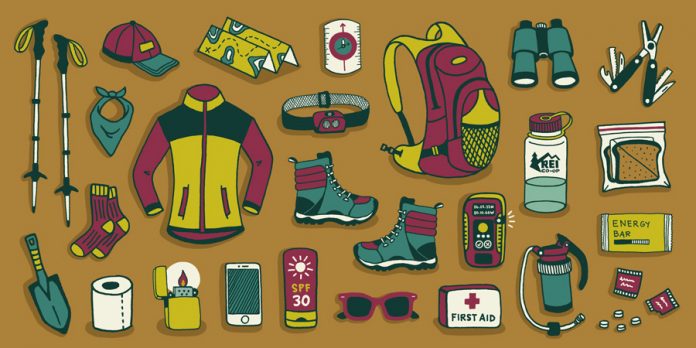
Some of the equipment you need to enjoy your hike. — Photo: REI Co-op

By: Kim Regala, Staff Writer

It’s important that we continue to take care of both our physical and mental health in light of the recent COVID-19 developments. One of the ways I’ve managed to maintain my sanity throughout all of this is by going on weekly hikes. It’s a great way to stay active, avoid large social gatherings, and keep in touch with nature. If you’re someone who has never embarked on a hike, as winter comes to an end and Vancouver welcomes the sun, now, more than ever, is the perfect time to do so. I’ve only been hiking for a few years now, but here are a few tips I’ve picked up that may help if you’re looking to explore a little bit of British Columbia’s vast wilderness. 


  • Always bring food and water.


One of the biggest mistakes I made as a beginner hiker was embarking on a trip without food and water. I once recklessly hiked Garibaldi Lake — a five-hour hike on an 18-kilometre trail — without packing myself anything to eat or drink. I still remember hiking back down feeling as if I was hallucinating the whole thing. I’m sure most of you would not be as irresponsible as I was, but it can be easy to think that you won’t need to pack much, especially if you’re doing a much shorter hike. In any case, it’s important to refuel your body as you partake in any physical activity. Regardless of whether or not you’re thirsty, taking a water break is a good way to stay hydrated and energized. As for packing snacks, my go-to’s are fresh fruit and protein-filled granola bars. 


  • Wear the appropriate shoes and clothing.


On my most recent hike, I passed by an individual who was having a lot of trouble making his way down the path. He began to complain to his hiking partner, crying out that “these Balenciaga shoes were NOT made for hiking!” Trust me, I definitely understand the hustle of putting on a nice, Instagrammable outfit to match your equally Instagrammable view. However, as even the most beginner of trails may take at least an hour, it’s important to feel comfortable throughout the whole trip. Wearing clothes that you can move freely in and putting on a good pair of runners or hiking boots makes all the difference. Not only will you feel the most at ease, you will also ensure that you are keeping your feet and body safe and in good condition.


  • Remember that it’s all about the journey, not the destination.


This last tip is possibly one of the most overused cliches, not just in hiking but in life in general, but it could not be more relevant. In my earlier hiking days, I would get so frustrated and impatient with having to travel for such long distances just to see a nice view. However, it wasn’t until I began to focus more on my surroundings, rather than the length of the trail, that I started to see hiking in a new light. Of course, the views can be the most rewarding part of the experience. However, there is a lot of beauty to be witnessed during the trek itself. One of my favourite hikes is the Elk Mountain trail. While it boasts an incredible mountain view, walking past fields of flowers and being surrounded by the mist and tall trees on the way there was what really engrossed me. Now, I find it much easier to hike for countless hours, as I can enjoy passing the time by soaking in the journey along the way.

Pandemic-appropriate meals inspired by my friend’s #covidmeals

0
Screenshot via Facebook courtesy of Lauren Wallace

By: Gabrielle McLaren, Editor-in-Chief, and Lauren Wallace, SFU alumna

In the sea of social media posts about pandemic-related panic-buying and supply-hoarding, sometimes you see people doing their best to help and uplift one another. That’s what my friend Lauren Wallace, a World Literature alumna, has been doing with #covidmeal. 

Lauren writes on her recipes that: “#covidmeals are [ . . . ] intended to use mainly canned, dried or frozen goods and are meant for cooks with only a basic level of skill.” When we chatted about the hashtag, she emphasized that this project was really about “giving those who don’t normally cook and now have limited supplies an alternative to just eating straight from a can.” 

Lauren’s got two recipes up for the world to see, but plans to keep going and expanding. She accepted that we reprint them here for students to enjoy. Enjoy them along with a few additions: 

Easy rice pilaf 

NEED

-Rice, at least 2 cups

-At least 2 cups of stock (veggie, chicken, in a can, in a tetra pack, from bouillon)

-Oil or butter for the pan (olive oil recommended)


FLEXIBLE

-Some form of protein. I like sausages in my pilaf.

-¼ cup onion

-2 teaspoon minced garlic (I have a jar of preserved garlic I made that I used)

-½ cup frozen veggies (I did frozen peas, but carrots or chopped beans work great, whatever you have around)


SEASONINGS

-Parsley (however much you want I use about 3 tablespoons chopped fresh)

-Cracked pepper, to taste (¼ teaspoon ground if fresh isn’t available)

-¼ cup white wine, for yum.

– If you are using no-sodium stock, add salt. Most stocks are very salty so I left it out of mine.

Steps:

  1. If you’re using weird rice, adjust the water to rice ratio accordingly. I used rice with a 2-to-1 ratio of liquid to rice (2 cups rice, 4 cups liquid).
  2. Add stock into a pot with 2 cups of water, on medium high heat. Let heat-up while you do steps 3 and 4.
  3. Heat olive oil in a pan over medium heat. Add rice when hot and stir, toasting rice. It’ll pop and start to brown (2–4 minutes).
  4. As rice browns, add garlic and stir. Add seasonings.
  5. Pour your liquid over rice or your rice into your liquid, depending on what cooking vessel you can cover. Add wine, cover, turn to low and LEAVE ALONE for 20 minutes (again, if using weird rice, adjust accordingly).
  6. When rice gets to 20 minutes, add frozen vegetables and leave alone for 5 minutes. 

Turn heat off but leave covered for 5 more minutes before fluffing.

  1. Cook your protein. We fried the sausages and then sliced them into bite-sized pieces. We then added them into the rice.
  2. Serve!

Note: This is a great base for anything, and is a good alternative to plain rice.

—Lauren Wallace 


Chickpea and pumpkin (if you have it) curry  

NEED

  • 2 tsp of cooking oil (olive, canola, etc) 
  • 1 ½ cups of coconut milk 
  • 1 ½ cups of chickpeas (or dump in one big can) 

FLEXIBLE

  • Either 1 chopped chili pepper, or add chili powder into the pot to taste 
  • 3 garlic cloves, which could be replaced by garlic powder if need be
  • 1 chopped green onion, cooking onion, shallot, or other onion family member

OPTIONAL EXTRAS 

  • Toss in a crown of broccoli or some kale if you have veggies laying around
  • Lime juice tops this up nicely 
  • ½ cups of pumpkin puree (the original recipe calls for it and most stores stock it even outside of Thanksgiving; if you omit keep an eye on your curry’s texture; you may need to give it longer to thicken up) 

SEASONING

  • 3 tbsp of Thai red curry paste 
  • ½ tsp of cumin 
  • ½ tsp of cinnamon 
  • ¼ tsp of turmeric 
  • 1tsp of ginger 
  1. Heat the olive oil in a pot over medium heat. Brown your onion (3–5 minutes). 
  2. Add ginger, garlic, and chili. Cook for 30 seconds. 
  3. Add cinnamon, cumin, and turmeric with a pinch of salt. Cook for another 30 seconds. 
  4. Stir in Thai red curry paste and cook ( 2–3 minutes). 
  5. Stir in all your canned ingredients. Reduce the heat, throw in any veggies you may have, and cover the pan. Cook for another 10 minutes. 
  6. Serve with rice or bread or on its own. 

Note: This is a hacked version of a recipe from “yup . . . it’s vegan!” that this broke student hacked years ago.

—Gab

One pot/crockpot tuna casserole

NEED:

  • 1 can condensed cream of celery (284 ml)
  • 2 cans tuna (flaked preferably, if solid, flake it apart with a fork) (170 g)

FLEXIBLE INGREDIENTS:

  • Starch — you will want a starch, recommended 2 cups of sturdy dry noodles (egg noodles, rigatoni, farfalle), but this can be poured over rice if needed. 
  • ¼ cup Milk — can substitute for veggie stock or water.
  • 1 248 ml can condensed cream of mushroom soup for flavour (potato also works, this is your preference, I do not recommend cream of chicken for this) 

OPTIONAL EXTRAS 

  • ⅓ cup frozen peas or other small frozen vegetable 
  • ⅓ cup toasted breadcrumbs or crumbled crackers for topping
  • ¼ cup finely diced onion

SEASONINGS 

  • ¼ tsp mustard powder (dijon or hot mustard works too)
  • Lots of fresh ground pepper (or a ¼ tsp of the small ground store bought stuff)
  • I find there is normally enough salt in canned soup to not futz with it
  1. Cook your noods most of the way in salted boiling water, just before they’re al dente unless you like very, very soft noodles. If cooking in one pot instead of a crockpot, do al dente. Strain noods.
  2. Crockpot users, set crockpot to high. Pot users, set your pot on a burner on medium heat.
  3. Add in onion and stir until golden before doing the following in your pot or crockpot:
  4. Combine cream of celery, cream of mushroom and milk. Stir to combine or blend with hand blender (I do this to remove mushroom chunks for my partner who has texture preferences).
  5. Add in mustard powder.
  6. Add in your noods. Stir around. Add in a can of tuna (with or without juice, depends on how fishy you want it).
  7. Add in vegetables, from frozen, stir to combine.
  8. Crack in a lot of pepper, stir again.
  9. Leave to thicken in crockpot for about 1.5 hours. In pot turn to low and cover, stirring occasionally to keep from burning, abouting 20 minutes
  10. Add topping and eaaaat.

—Lauren 

5-ingredient black bean soup 

NEED

  • 3 15 oz cans of black beans
  • 1 lb of salsa (the larger containers you’ll see in grocery stores are good enough!) 

OPTIONAL

  • ½ cup of cilantro, to taste 

SEASONING

  • 2 tsp of ground cumin 
  • 1 tsp of garlic powder (or more to taste)
  1. Dump everything in a pan and let it heat over medium-high until it simmers.
  2. Lower heat to medium-low and give it another 10 minutes, stirring every now and then.
  3. Serve soup as is, or blend it if you prefer a smooth texture. The more cilantro you top this off with, the more joy you get.  

Note: This recipe is from “Gimme Some Oven”

—Gab


Comforting chili 

NEED

  • 1 can of kidney beans 
  • 1 can of whole kernel corn 
  • 1 (28 oz) can of tomatoes 
  • 1 can of black beans 

OPTIONAL

  • 1 cup chopped onion would go a long way here, but don’t discard this recipe just because you don’t have it kicking around the house. 
  • Throw in as many vegetables as you can to beef up this boy: mushrooms, carrots, celery, peppers, etc.
  • You can dress this up with cheese, sour cream, hot sauce, cilantro, etc.  

SEASONING

  • 3 garlic cloves, minced (preserved, fresh, or replaced by 3 tsp of garlic powder) 
  • 1 tbsp ground cumin 
  • 1 ½ tbsp chili powder 
  • 1 ½ tsp dried oregano 
  • 1 tsp of paprika (I usually throw in more because our household is literally full of paprika) 
  • Salt and pepper to taste
  1. If you have fresh veggies involved in your chili (first off, congratulations, then), sauté until soft in your saucepan with a tablespoon of vegetable oil. 
  2. Stir in everything from your cans, including the liquids, and toss in your seasoning. Cover and let everything simmer for 20 minutes. 

—Gab 

Chickpea nuggets 

NEED

  • 1 ½ cups of breadcrumbs (pro-tip: 3 slices of bread left to toast in the oven can crumble down to 1 cup) 
  • ½ cup rolled oats (flour would also work for this recipe if you’re short, but it may be less filling) 
  • 1 15 oz can of garbanzo beans

FLEXIBLE

  • Some sort of dipping sauce for your new nugget children (may I suggest mixing mayo and sriracha if you happen to have both?) 

SEASONING

  • ½ tsp garlic powder
  • ½ tsp onion powder
  • I’d recommend adding a tsp of smoked paprika, and taste-test as you cook to see if you want to kick your nuggets up with additional seasoning, such as cayenne.
  1. Preheat oven to 375°F. 
  2. Turn your rolled oats into a fine powder through a food processor. Set aside your newly created oat flour. 
  3. Drain your beans and save the liquid. Add the beans and ¼ cup of liquid into the food processor with your seasonings and pulse until everything is crumbly. 
  4. Whisk ¼ cup of the liquid from your beans until it gets foamy; add that and your oat flour into the food processor and blend some more. 
  5. Divide the mixture into nuggets, and bake for 15–20 minutes or until they brown. 

Note: This recipe is from Kitchn.

Three-bean salad

NEED

  • 1 can black beans
  • 1 can kidney beans
  • 1 can red beans 

FLEXIBLE

  • You’re going to need some sort of dressing. Mint leaves and a squeeze of lemon juice is a good go-to; olive oil, salt and pepper will do. Balsamic vinegar is another good fallback. 

OPTIONAL

  • Chopped cucumber, green onion, tomatoes, and all your other favourite veggies fit into this salad like a charm. Luckily, the beans are what will really fill you up. 

SEASONING

  • Salt and pepper to taste
  1. Open and drain cans. Rinse and dry your beans in cold water and dry them off.
  2. Mix all your beans together and toss with whatever dressing or vinaigrette you manage to pull off. 

Sesame peanut butter noodles

NEED

  • One packet of ramen noodles (save the flavour packet for later), or 6 oz of another type of noodle
  • 2 tbsp sesame oil 
  • 1 ½ tbsp of peanut butter

FLEXIBLE

  • 2 tbsp of honey; can be replaced with straight sugar or omitted 
  • 1 ½ tbsp of rice vinegar; while non-ideal apple cider vinegar would work
  • 1 garlic clove or 1 tsp of garlic powder

OPTIONAL

  • Green onion or sesame seed to garnish

SEASONING

  • ½ tsp ginger
  1. Cook noodles as per package instructions.
  2. Whisk all your non-noodle ingredient together to make a sauce. Make sure that the peanut butter breaks down completely.
  3. Pour sauce over hot, drained noodles and toss to coat. 

Note: This recipe is originally from The Wholesome Dish 


Resources for food insecure students:

  • COVID-19 Coming Together (Vancouver) is a Facebook community dedicated to connecting people with resources to people who could use a hand, where users can ask for or offer help.
  • Greater Vancouver Food Bank

SFSS election candidate accuses other candidates of breaking campaign rules

0
Photo/ Peak Archives

Written by: Michelle Gomez, Assistant News Editor

A candidate running for At-Large Representative in the 2020 SFSS elections publicly accused multiple other candidates of breaking campaign rules. 

In a Facebook post, Geetanjli Sharma accused a number of candidates of running as a slate, or an electoral group with a common platform, which has not been permitted for the 2020 elections. Sharma referred to this slate as both the “purple and yellow slate” and the “progressive slate.” She further accused this group of collecting student contact information for the purpose of campaigning as far back as December 2019. 

Sharma also noted that this campaigning was with the assistance of Giovanni HoSang, the current SFSS President. 

Osob Mohamed, who is the current Health Sciences Representative and candidate for President made a Facebook post in response to the accusations, which included a response from one of the VP Student Services candidates, Matthew Provost. 

In the response, Provost wrote, “I have been diligent around asking the IEC for all interpretations of every rule and to ensure that I do everything to the books as much as possible in relation to this campaign.”

HoSang said in a statement to The Peak,it is clear who I endorsed during this election, just as it is clear who other Board members endorsed. Providing help to students is not against the rules and is a common occurrence by incumbent Board members and has been seen since forever.” 

It is unfortunate that students who may not have been prepared to run in the SFSS elections try to smear other candidates who were prepared,” HoSang added. 

Mohamed said in an email interview with The Peak,I have been running my campaign well within the rules set by the IEC. I would also like to note that Geetanjli’s post was made on the last day of voting, which was certainly a campaigning tactic and attempt to smear and sway public opinion of a number of candidates rather than bring[ing] her concerns to IEC.”

Although the voting period ended on March 19, results for the election were delayed, and not announced until March 26. 

In an email to The Peak regarding the delayed election results, the Independent Electoral Commissioner Alicen Lange said that there have been “a number of complaints about the manner in which certain members were campaigning.” 

This story is developing and will be updated as new information becomes available. 

How faculty and students at SFU are responding to the transition to online classes

0

By: Harvin Bhathal, News Writer

Disclaimer: For the purpose of job security, The Peak has granted anonymity to SFU faculty members who have commented

SFU’s transition to online classes due to the COVID-19 pandemic has affected students and faculty alike. Though much of SFU’s public communications has focused on the effect on students, SFU’s teaching staff are experiencing uncertainty as well. With many students and their accompanying assignments, essays, and emails to respond to and account for, educators are facing the task of reconfiguring their syllabi to fit the constraints of the global pandemic.

The Peak contacted faculty and students at SFU to get a sense of how they’re transitioning their courses online and how that process was going. Students responded to The Peak’s post in the SFU Must Knows for Courses Facebook group on March 21.

One professor responded to let The Peak know that they are unable to give feedback due to the increased duties as a result of this transition. Many others did not respond at all.

According to one SFU professor, the transition to online classes “happened far too slowly,” compared to the dozens of universities that had already done so by the time SFU announced the switch. “It should have been very obvious to SFU [ . . . ] that we needed to be proactive.”

Another professor stated that SFU handled the transition “as well as could be expected.” On the topic of the increased workload related to shifting to online teaching, they stated: “Much of the labour of course delivery is now focused on the basic problem of how we will all make contact and interact, taking away time and energy that could be spent on learning.” 

They added, “Not all students have the same digital access or the same bandwidth, and many see remote/digital meeting alternatives as very thin in comparison [to] the actual, in-person course that they thought they were enrolled in.” 

Several professors stated that they have shifted to Blackboard Collaborate Ultra (a virtual classroom feature on Canvas), Zoom (a video conferencing and webinar app), and pre-recorded lectures.

For others, the shift has simply been students doing the readings and looking over the slides or a professor’s hand-written notes on their own time, which requires more focus than lectures, said SFU student Sharon Lam. 

“I have one class with recorded lectures. I’ve noticed that’s the only class where I can pay attention and process the material,” she added.

Lam continued, “Most of my [professors] aren’t doing video or recorded lectures [ . . . ] I have one class with recorded lectures [and] I’ve noticed that’s the only class where I can pay attention and actually process the material.”

Another SFU student, Rubab Ahluwalia, asked: “Are we here to learn, or simply give exams for courses that we pay for?”

Other changes include one SFU professor creating an optional discussion forum for students to post COVID-19-related memes and content for a one-point bonus to their final grade. In a similarly lighthearted manner, another professor is offering their students a five-minute dance party during the break of their class to keep spirits up. 

In spite of these attempts to rectify the awkward transition, students still have complaints about the impact the shift has had on their learning. 

“The obviously understandable unpreparedness of professors to shift completely online has resulted in the semester seeming slowed,” said SFU student Travis McLellan on Facebook.

Students referenced a lack of motivation and focus for their classes, as well as being overwhelmed by their loss of income due to workplaces shutting down. Furthermore, students with children are facing issues of balancing their child’s home-school education and their own.

While students may have their complaints, many have acknowledged the difficulties that the decision to transition to online courses placed onto faculty as well. 

SFU student Chris Mitchell said, “[Faculty] are trying so hard but how are they supposed to keep focused if [students] cannot. This is a bad time for everyone and it shows.” 

“I do sympathize with professors though because they’ve had to make a transition they weren’t planned on and I imagine they’re also stressed,” added SFU student Brianna Malott.

Similarly, a professor who responded to The Peak’s email inquiry noted that their experience has been easier due to their course load this semester, but admitted: “It’’s harder for my colleagues who teach huge classes, or who teach dance, theatre, visual art, etc.”

In response to The Peak’s interview request, one of the professors wanted to convey a message to students: 

Please don’t feel like you have to produce your best work as if the pandemic didn’t exist. This isn’t on you,” they said. “If you are in a situation where it’s hard to get work done, reach out to your professors — we try but we don’t always know what it’s like for thousands of different students. Bring your pets to the webcam.”

They reiterated, “Many professors and admins have never done this before. This

will be a wake up call on just how complicated online learning is, and how it does not work for many kinds of people and many kinds of learning.”

Another stated, “This is a great chance for us to find out how adaptable we can be in the face of difficult circumstances, and to learn how to work in fundamentally new ways [ . . . ] Some advice I’d give is to try to manage your schedule the same way as you would in regular classes, and to figure out a place in your home where you can be relatively productive and set aside a few hours each day to get work done from that space.

That same professor added, “I am particularly sad that my most recent in-person class [was] my last opportunity to see my students in person, but that I didn’t know it at the time. Teaching brings me a lot of joy and I regret not being able to say goodbye. It’s been an emotional transition, to say the least.”

SFSS 2020 Board of Directors election results announced

0
Image courtesy of the SFSS

Written by: Michelle Gomez, Assistant News Editor

Last week, students voted to elect SFSS Board members, and the results have finally been announced! 

Votes were extremely close in some cases. The Education Representative Emerly Liu has been elected with a difference of four votes. The Health Sciences Representative Nafoni Modi has been elected by a margin of two votes. 

Your 20202021 Board of Director members are listed below:

President: Osob Mohamed

VP Student Services: Matthew Provost

VP University Relations: Gabe Liosis

VP Finance: Corbett Gildersleve

VP External Relations: Samad Raza

VP Student Life: Jennifer (Meme Queen) Chou 

At Large Representatives: Balqees Jama and Phum Luckkid

Applied Sciences Representative: Harry Preet Singh

Arts and Social Sciences Representative: Sude Guvendik

Business Representative: Mehtaab Gill

Communication, Arts, and Technology Representative: Haider Masood

Education Representative: Emerly Liu

Environment Representative: Anuki Karunajeewa

Health Sciences Representative: Nafoni Modi

Sciences Representative: WeiChun Kua

The referendum question to increase student fees for the World University Services Canada SFU (WUSC SFU) was passed, meaning students will now pay $5.00 per semester to WUSC SFU, and $2.50 per semester for students taking 3 credits or fewer. This is double what the prior fees were. 

The referendum question to increase student fees for Simon Fraser Public Interest Research Group (SFPIRG) did not pass by a margin of 93 votes; semesterly student fees for SFPIRG will thus not be increased.