Home Blog Page 412

Political Corner: Trudeau’s stubbornness in the Wanzhou extradition case is an incredible failure of duty

1
Chinese and Canadian relations are being jeopardized over an American trade dispute. Image: Maxwell Gawlick, with photos via Wikimedia Commons

By: Connor Stephenson, Peak Associate

Our prime minister, Justin Trudeau, has shown clear negligence in his responsibilities as our leader in the mishandling of Huawei’s Chief Financial Officer (CFO) Meng Wanzhou’s extradition case. Despite a clear pattern of behaviour in Chinese retaliation to Canadian criminal intervention, and Trudeau’s own loose affiliation with judicial proceedings, the prime minister has insisted on upholding the rule of law in this case. This carelessness has led to unimaginable harm for two Canadians detained abroad.

On December 1, 2018 the RCMP arrested Wanzhou, who is a Chinese national. Wanzhou has been accused of violating US sanctions on Iran, and bank fraud. The arrest was made on behalf of the US Department of Justice in compliance with the Canadian and US extradition treaty. Subsequently, China summarily detained two Canadians, Michael Kovrig and Michael Spavor on purported espionage charges in an apparent response to the arrest of Wanzhou in Vancouver.

Prior to Wanzhou’s arrest, the Canadian Security Intelligence Service warned the PM about the potential for retaliatory action taken by China if an arrest were to be made. In the past, China has acted similarly, detaining a pair of Canadians in 2014 after a Chinese citizen was arrested in BC over allegedly hacking into US government systems and stealing military secrets. Trudeau and his advisors seem to have failed to consider this past behaviour when dealing with Wanzhou. 

What is significant is that pertinent evidence implying the possible consequences of arresting a Chinese citizen in Canada was not considered by the prime minister in the first place. Yet he continues to appeal to the dangers of precedent and the probability of future harm to Canadians as justification for detaining Wanzhou.

Trudeau has said that abandoning the case against Wenzhou — as the Green Party of Canada has recently demanded he do — would set a dangerous precedent. Paul Manly, the foreign affairs critic for the Green Party argues that the extradition request by the US was motivated by the trade tensions between President Trump and China. 

Trudeau claims that orchestrating the release of Kovrig and Spavor as a form of mutual hostage negotiation would pose some existential threat to all Canadians, if it allows China to believe that it can respond to perceived injustices by detaining a Canadian as leverage. However the only existential threat posed to Canadians is the policy decisions made by Trudeau and his advisors. What’s more, the foolish comments made by Trudeau in stating that Canada is a nation of laws in opposing the release of the CFO is almost comical if we consider Trudeau’s selective application of the law in past judicial proceedings, and his sketchy attitude towards the ethics of governing.

Ultimately, it might not be reasonable to hope that China would release Kovrig and Spavor even if Canada were to throw out the case against Wanzhou. Yet Trudeau could move forward on the possibility of applying economic pressure, alternative trading options, or reconsider whether or not to permit Huawei’s 5G network in Canada as a solution to a perpetual tit-for-tat detention scheme with China. Any of the above would act as a means of establishing a more formidable approach to dealing with China’s habit of bullying other countries into submission. Regardless of the action taken, inaction is synonymous with failure. 

 

SFU Residence Dining Hall continues operating during the pandemic

0
Photo courtesy of SFU Dining Services

Written by: Paige Riding, News Writer

Located directly beside the Residence and Housing buildings on Burnaby campus, the Dining Hall feeds all students on meal plans and those in the Towers who do not have access to a kitchen. As an essential service, those in charge of the food service have made changes to how the building — normally a cafeteria-style eatery offering eat-in only — operates. 

The Peak reached out to various staff that make the Dining Hall run smoothly to answer some questions on what has changed due to new restrictions.

“Dining Hall has continued to provide meals to students in residences and the campus community on a daily basis throughout the pandemic,” explained Dan Traviss, the Director of Dining Services, in an email.

“Dining Hall is now cashless, with social distancing and enhanced safety and sanitation measures in place. Dining Hall continues to offer a variety of food options including chef-inspired exhibition cooking and special theme meals.” 

The email noted that Dining Hall offers take-out service only, with food being prepared and served by dining staff, as opposed to their previous buffet style. 

In such a precarious time, those feeding the residents at SFU have worked together to alleviate some stress around food for students and the SFU community. Manager of Marketing and Sustainability of SFU’s Ancillary Services Taylor Assion elaborated on one of these efforts coordinated with Ancillary Services, the Student Experience Initiative, Residence and Housing, and the SFU Office of Community Engagement.

These groups “launched a food security program to support students in Burnaby and Vancouver residences experiencing food insecurity as a result of COVID-19 challenges over the term break,” said Assion via email. 

“The food security program, which ran until the end of the Spring 2020 exam period, [provided] three meals per week at zero-cost to students through Dining Hall on Burnaby campus or at Nemesis Coffee in Gastown for students living in the Charles Chang Innovation Centre.”

Kelly Contreras, Resident District Manager of SFU Dining, elaborated on the impact the pandemic has had on the SFU community and those working at the dining services at the university.

COVID-19 has had a significant impact on the student community and on our dining services on campus. Our first priority is and has always been the safety of all students and our associates,” Contreras began.

Contreras also noted that as a result of the SFU Dining Hall staying open throughout the pandemic, many of their associates were able to remain employed. 

Contreras said that with the new school year, full-service and take-out as well as social distancing precautions will continue to be enforced. They will “continue to work with the provincial and federal governments” through the next school year.

“SFU Dining is committed to the health and wellbeing of our associates,” said Contreras.

SFU researchers to map COVID-19 vulnerability throughout BC

0
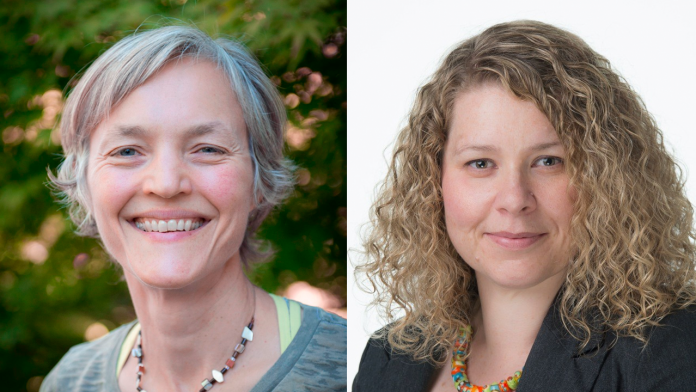
Nadine Schuurman (left) and Valorie Crooks (right). Photo courtesy of SFU News.

Written by: Zach Siddiqui, Humour Editor

An SFU-based research team of professors and graduate students will be looking at the communities in BC most vulnerable to COVID-19. Headed by Dr. Valorie Crooks and Dr. Nadine Schuurman, this project will visually map these communities to offer key information in a clear way for policy and decision makers. 

In an interview with The Peak, Crooks discussed the mapping project’s origins, structure, and purposes.

“Our instinct as researchers is to understand things that we see happening around us in the world, and I started to think: What can I do, or [what can] myself and colleagues who I work with do, to support our understanding of what’s going on?” said Crooks, a trained health geographer. From there, she reached out to Schuurman; the two have worked together many times over the past 10 years on projects combining Crooks’ qualitative research skills with Schuurman’s expertise in geographic information systems.

Crooks outlined three main “scenarios” of vulnerable communities to be mapped: spaces with more frequent COVID-19 cases, places with less ICU capacity and fewer resources with which to weather a possible outbreak, and areas where people are facing the consequential health effects of a pandemic — such as financial struggle, lost housing, and exacerbated depression and stress. 

As an example of what kinds of information might be conveyed, Crooks offered residential facilities, where workers may be at higher risk for contracting COVID-19, and their surrounding communities.

“Within 30 kilometres of, for example, a large prison, we might see that that’s the area in which many of the people who work there are located. And so that’s an area that we might view as having a particular kind of vulnerability.”

With these maps, the team hopes to provide a resource for decision-makers in BC, such as health authorities and members of government.

“The goal isn’t for [a decision-maker] to pick up a map and go, ‘a-ha! I know the solution. I know the answer,’” says Crooks. “We want our maps to be used as part of a decision-making process, to go in conjunction with the epidemiological information that’s coming up, the statistical information, the popular pushes that are coming on social media and coming from the media.”

Crooks also emphasized that the maps they make will be “beautiful” in terms of design while communicating complex information. Elaborating on this, she explained that maps, as a highly public medium, are uniquely ideal methods to convey pandemic information. 

“As members of the public, we’re not unfamiliar with seeing maps and getting meaning from them — whether that meaning is giving us a spatial sense of proximity — I’m here, that’s there — or, for example, [population] density,” she said. “Because of our popular use of maps, maps can also be this really interesting way of conveying really powerful information in the decision-making context. And that’s because it’s a tool people have some familiarity with.”

Besides Crooks and Schuurman, the research team includes Leah Rosenkratz and Jessica Tate, both graduate students, and Dr. Melissa Giesbrecht, the research coordinator. The team plans to develop and refine their maps through an “iterative loop” of research steps, says Crooks. Starting with modelling the data they will display, they will go on to survey medical authorities on variables to consider, draft the maps themselves, and interview decision-makers on what parts of the maps are or are not useful. In repeating this process, the researchers can refine their findings until they are fit to be more publicly shared.

Ultimately, Crooks emphasized the importance of this constant consultation throughout the process.

“It’s so important to come back to the end-user and decision-maker community and, say, ‘OK, is this useful for you? Is this the way that you would want to see it?’” 

As the project continues, Crooks invites anyone interested in asking questions to email her or to follow her Twitter at @ValorieCrooks for updates; she expects that the maps, once completed, will be shared publicly.

Former MP Svend Robinson appointed as SFU’s J.S. Woodsworth Resident Scholar

1
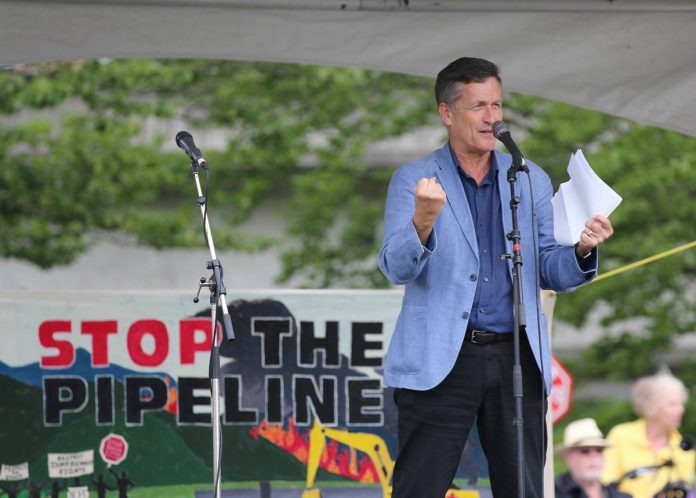
Robinson speaking during the 2019 federal election campaign. Photo courtesy of the Georgia Straight.

Written by: Paige Riding, News Writer

Civil activist and former Member of Parliament (MP) Svend Robinson has been named the J.S. Woodsworth Resident Scholar in the SFU humanities department. This is for a one-year term beginning September 1, 2020, during which Robinson will teach a seminar and partake in community outreach events, according to SFU News.

Robinson served as MP for the New Democratic Party (NDP) in Burnaby from 1979 to 2004, serving seven consecutive terms. 

The Peak spoke with Robinson in a phone interview about what this new role means to him and how he believes his experiences as an activist and politician will lend themselves to an educating role.

“I’m really excited and looking forward to joining SFU as the J.S. Woodsworth Resident Scholar. I’ve never been an academic. I’ve only been an activist, and in the last 10 years a diplomat working internationally. So this is a new role for me,” Robinson began. 

“I had the honour of representing SFU for a little over 25 years as a Member of Parliament and worked closely with many different folks in the SFU community, be it teachers, students, staff, and now it’s great to be part of the community in a new role.”

When asked about the namesake of the position, Robinson noted how humbling it is to fill a role of a civil rights pioneer.

Woodsworth was the cofounder of the Cooperative Commonwealth Federation, a social-democratic party established in 1931 and dissolved in 1961. His political impact resonates today through the benefits available to Canadians, including Employment Insurance and the Canada Pension Plan. This party was the predecessor of the NDP, the party for which Robinson represented.

“Woodsworth was a progressive activist in the best sense. He fought hard for the rights of working people, for labour, he was active during the Winnipeg General Strike. He actually did time in prison for his activism during the Winnipeg General Strike. We have something in common.”

Indeed, Robinson served time for civil disobedience from Clayoquot Sound in the 90s. Robinson’s activism led to his adoption into the Haida Nation amongst other acknowledgments. It is this shared history of activism that solidifies Robinson’s position as the J.S. Woodsworth Resident Scholar.

“I’m really looking forward to learning a lot myself at SFU,” he continued. “Obviously, I look forward to sharing with students and faculty and staff many of the experiences I had during my little of a quarter-century as a Member of Parliament.”

Robinson wishes to share some of his interests and experiences with the SFU community, including environmental concerns, Indigenous rights, the journey to equality for the LGBTQ2+ community, international human rights issues, and more. 

“I look forward to sharing those, but also to learning from the SFU community. It’s going to be a two-way street.”

Itaewon Class stuns international audiences with a powerful message of acceptance

0
Netflix's Itaewon Class is re-imagining what a Korean drama can be. Courtesy of Netflix

By: Yelin Gemma Lee, Peak Associate

Itaewon Class, a Netflix show based on a webtoon by Jo Kwang Jin, has been steadily gaining popularity since the release of its pilot episode on January 31. I was intrigued to find that friends who have never seen a Korean drama before, as well as people like myself who are typically not a fan of them, were equally absorbed and obsessed with Itaewon Class. I believe the main reason for its success is due to the heart clenching story full of compassion and grit. 

The story follows Se-ro-yi Park, a determined character who refuses to take the easy way out of any situation if it means compromising his core values and beliefs. As a result of this, he becomes subject to many ill circumstances and unjust treatment, eventually becoming a target of a powerful family who runs the most successful pub franchise in the country. The story continues as Se-ro-yi is released from jail and begins his revenge-driven plan: opening up a pub in the vibrant city of Itaewon even with the label of ‘ex-convict’ tagged on his back. He goes on to slowly employ and put together a loyal team of societal misfits he connects with along the way, and together they work towards making his ambitious dreams for the pub a reality. 

Se-ro-yi is a protagonist that you can’t help but respect and root for from beginning to end, and a character that inspires and moves the hearts of people who are discriminated against by society. The characters that join Se-ro-yi’s side include a transgender chef aspiring to be the best in Korea, a retired gang member, a talented sociopath, a Black-Korean character searching for his estranged Korean father, and even the harmless second son of his nemesis. The show’s intolerance for discrimination is made clear through Se-ro-yi’s compassion shown in deeply moving scenes with each of the characters. 

Credit for the quality of the story goes to Jin who quite rarely also wrote the script for the show. As a non-binary, queer South Korean, I never thought I’d see the day when I would be able to watch a Korean drama like this. Not only is it well done, but it’s popularity amongst the citizens of South Korea shows that South Korea is slowly but surely changing, and that the younger generation are starting to demand more equity in representation. I personally felt proud and deeply moved by this show.  

Itaewon Class not only boasts an incredible story, but is pure excellence as a whole. The cast is phenomenal and I was especially impressed with Park Seo-Joon who played the protagonist perfectly, even with its many challengingly emotional and tense scenes. The action shots were engaging, especially contrasted against the everyday scenes showing the vibrancy of Itaewon, and the soundtrack is brilliant. 

The show as a whole is a remarkable masterpiece that should be celebrated not only within the genre of Korean dramas or foreign/subbed shows, but in the realm of shows in general. It holds everything that you could want from watching a show: complex, lovable, flawed characters with compelling personal stories, raw emotion-packed acting, and beautiful cinematography and directing. Above all, this is the first time a show carrying a progressive message has been not only widely accepted and praised in South Korea, but in many other countries around the world as well. Itaewon Class is beautiful, powerful, hopeful, and I’ve never seen anything like it before — it’s an absolute must watch for anyone.

It is not an insult to call people racist when they are being racist

0
The NDP leader’s comment was a far cry from the ways MPs have addressed each other in the past.

By: Nicole Magas, Opinions Editor, and Manisha Sharma, Peak Associate

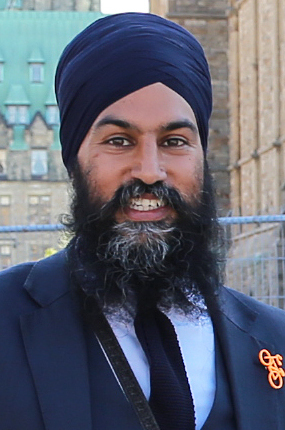
On June 17, the leader of the NDP party, Jagmeet Singh, was kicked out of Parliament over not apologizing for calling Alain Therrien, a Quebecois MP, a racist. The underlying reason for his expulsion was that his use of the word “racist” was considered “unparliamentary language,” and that he refused to apologize for saying it. 

It seems that those in Parliament would much rather dismiss racist ideologies and systems than acknowledge racism is still alive and well in Canadian politics. To them, the word “‘racist”’ is considered unparliamentary language when hurled at others. The obvious deficiency in this logic is that when Parliament punishes a member for calling another member racist, but does not punish members who are promoting racist policies or rhetoric, it endorses one behaviour over the other. The message that this sends to broader society is that it is more acceptable to be a racist than it is to “impolitely” point out when someone is being racist. We need to start normalizing the stigmatization of ideologies and actions that are obviously detrimental to society, rather than insisting on polite and silent complacence with their existence.  

What is interesting about this specific case is that MPs have a long history of using vulgar language in Parliament; insults much stronger than the word “racist” have been used several times to describe fellow MPs. Of course, these MPs, like Singh, have been asked to apologize for their unparliamentary behaviour. But more to the point, calling someone a racist shouldn’t be viewed as an insult as if born of personal disagreement or emotional tension. Rather, it should be viewed as a point of fact when people are behaving as racists.

If we were to stop pussy-footing around the feelings of racists and actually call them what they are, then perhaps we could introduce some real civility into our politics, and not just pay lip service in a way that allows some people to espouse views that negatively impact a significant portion of our population. I understand that if Singh were to have used actual derogatory language along with his remark that he would and should have been condemned. But he didn’t. He simply called out a racist for being racist. 

Systemic racism doesn’t require racists to accept that they are racist. By its nature, systemic racism operates invisibly as part of a broadly accepted system of beliefs and practices that ultimately harms certain people based on arbitrary physical characteristics. The panicked pearl-clutching at the idea that someone might call a racist a racist is absolutely a part of that harmful system. It’s a novel idea, but perhaps if Therrien doesn’t desire to be called a racist, he should stop acting in a way that is clearly racist — such as refusing to condemn systemic racism within the RCMP.

It is cowardly to punish those who are pointing out the truths of injustices in our system. What is so bad about Singh calling Therrien a racist for failing to accept and agree that change within the RCMP is necessary in order to prevent further discrimination and violence against racialized people? What’s more, why is the moral refusal to defer to the decorum of authority more socially unacceptable than actually being a racist? Sounds like Singh knows what he’s talking about. 

The first step in addressing systemic racism in government is acknowledging that it is still present and alive in our systems of government, and it is not okay that it exists there. The second step is to not be afraid to call out politicians for condoning racist or discriminatory policies. The third step, don’t kick out members of Parliament when they call others what they are — a racist.


It’s best to finish WQB courses as early as possible

0
Get your WQBs done with early — you’ll be happier for it. Illustration by Maple Sukontasukkul/The Peak

By: Michelle Young, Staff Writer

Writing, breadth, and quantitative (WQB) requirements are sometimes pushed to the end of a student’s degree due to scheduling conflicts and looming dread. These courses can be intimidating because they force students to explore outside their departments, and will often require students to utilize skills in areas they haven’t yet refined — for instance, thesis and proposal writing skills in writing-intensive courses. However, completing these requirements first has some benefits over leaving them until the very end, and can be ultimately beneficial for students’ overall education. 

As mentioned, students are exposed to different departments and subject areas other than their primary field of study through these requirements. While this can be daunting, it can also be a boon for those who aren’t sure about their major, or have undeclared majors. Students can pursue and explore subjects that they may not know they are passionate about, earlier in their degree, thus saving them from a costly change in major or, worse yet, sticking to a comparatively undesirable major due to sunk cost. It will also ensure that such exploration will count towards the ultimate completion of a degree, as it’s fulfilling a requirement.

Doing this sort of exploration work is important because not every student knows what they are truly interested in studying when they first start post-secondary education. I completed my WQB requirements before transferring to SFU, taking psychology, biology, and history courses. I had always been fascinated with evolutionary biology before taking these courses, but my interest in pursuing biology stopped there. Taking a B-sci biology course showed me that I truly despise anything to do with heavy memorization or the human body at the cellular level. Considering that I wanted to go into marine biology in high school, I’m glad I took this course early because it killed my curiosity for any biology-related courses or career choices and showed me that there was nothing more I wanted to pursue than writing. 

Both instances — whether students find their passion with WQB courses or WQB courses point students toward their desired majors — allow for consideration of what students want to study and make the possibility of changing majors later on less likely. 

Another great benefit of completing WQB courses early is that it equips students with a range of basic skills to apply to whatever major they eventually end up committing to. Part of what it means to go to an “engaged university” is the ability to apply a broad range of knowledge into one’s field of study. The more experience students have with different ideas early on, the easier it is to make these sorts of connections. For example, quantitative courses can aid students who pursue statistics later on, or if the courses teeter on the analytical side, they can help with any kind of argumentative or logical aspect needed for critical thinking in the humanities. 

Finally, planning to take WQB courses earlier rather than later creates some wiggle room for students to be flexible if their schedule doesn’t go as planned. Some classes that are notorious for filling up quickly will force students to look for alternatives if they’re planning to graduate soon. There’s nothing worse than looking at your last year and worrying whether or not you’ll be able to beat the waitlist to get into courses that aren’t a part of your major.

Taking WQB requirements early can take a load off students’ chests and comes with a variety of benefits. It will allow them to explore different subjects early on, apply the knowledge and skills they’ve learned from these courses in their chosen majors, and provides students with flexibility later on into their degrees. 

So what are you waiting for? Have you finished your WQBs yet?


Black people are not your guinea pigs

2
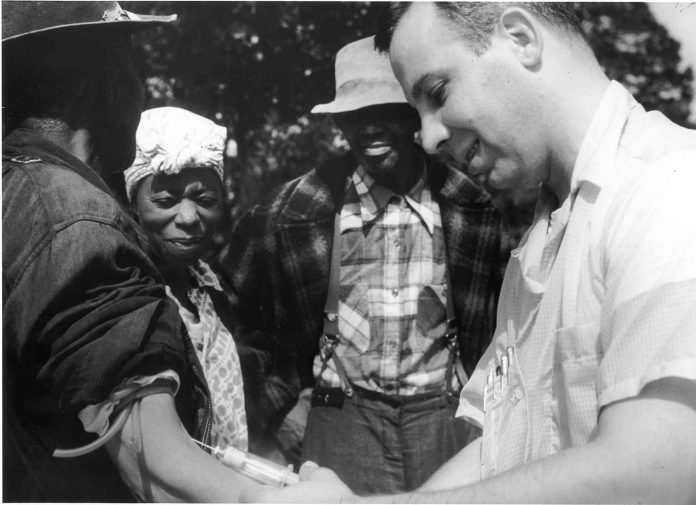
There are many examples of unethical medical experimentation, like Tuskegee pictured above, on Black bodies throughout history. Photo courtesy of National Archives Atlanta, GA, via Wikimedia Commons.

By: Idara L. Udonya, SFU student

All over the world researchers, epidemiologists, and other health experts are working around the clock on a vaccine for COVID-19. The race for a vaccine, however, presents some concern considering the histories of medicine in which Black bodies are undervalued and subjected to experimentation. In light of this, vaccine testing that is specifically targeted at Africans and Black bodies is particularly worrying. 

During an interview on French national television, Dr. Jean-Paul Mira, head of ICU services at the Cochin Hospital in Paris, and Dr. Camille Locht, research director for France’s National Institute of Health and Medical Research, made explicit mention to how the testing of a potential vaccine should be done in Africa. The vaccine in question is an existing treatment for tuberculosis. The doctors’ reasoning is that Africa lacks the infrastructure to effectively treat COVID-19 on its own, and therefore trials should be done there. Mira likened the trials to AIDS studies performed on prostitutes because they are “highly exposed and they don’t protect themselves.” Not only is this argument incredibly reductive in its colonial assumptions that the entire continent of Africa is defined by poor public health and poverty, but it ignores the real impacts COVID-19 is having on other global populations. 

At the time of writing, the World Health Organization estimates infections for the Americas at over 7.3 million, and Europe at over 3 million. Africa on the other hand doesn’t even top 600,000 cases. Yet no one is suggesting that vaccine tests be performed in the Americas just because US Americans have poor public health compliance and corrupt, incompitent leadership. Why are some health experts pushing for vaccine testing to be focused in Africa?

Medical advancement has a storied history in Black pain. A systemic disregard for Black lives and a desensitization to Black suffering has existed for hundreds of years and has worked to maintain the state of Black undervaluation. Notable examples of this included the Tuskegee syphilis study, where 600 Black American men were subject to uninformed testing of a new syphilis drug and prevented from receiving treatment for the actual disease, even after an effective treatment was discovered. Another is the AZT HIV/Aids transmission preventative drug testing in Zimbabwe in 1994 where infected women were not properly informed about the experiment, and some were given placebos which led to the transition of the virus to 1,000 babies. Illegal meningitis treatments were performed in Nigeria, where testing was done without governmental approval and led to many child deaths, blindness, and brain damage. These are only a few examples out of a plethora where medicine, through experimentation on Black peoples, acts as a form of science racism. 

The idea that Black bodies are tougher and able to withstand experimentation is racist and incorrect, and has been disproven multiple times. Yet many medical personnel still hold onto it, thus engaging in racist assumptions that deny the humanity of Black people. As a result, Black lives are seen as expendable in the service of medicine, causing an internalisation of anti-Blackness, which alongside other discriminatory practices, blocks access to efficient medical care resulting in an increase in health issues. 

And direct medical racism isn’t the only way that anti-Blackness harms the health of Black people. Systematic poverty due to a history of racist policies keeps Black people in highly polluted areas with little to no infrastructure. Distrust in the systems of the oppressors translates into distrust of the entire medical system, leading Black people to seek care less frequently — if they even have the resources to access care in the first place.

COVID-19 is a global problem that demands global solutions. But the medical community cannot be allowed to exploit Black bodies in order to get there. Black people are as deserving of care as any other race — medical ethics need not be applied to only white bodies. Black health matters; it always has, and it always should.


Cancel culture gives voice and power to those who need it most

0
Public figures are accountable to their audiences for their behaviour. Illustration by: Tiffany Chan/The Peak

By: Kelly Chia, Features Editor

There’s no question that the internet has brought us intimately close with many of our favourite artists and content creators. Unfortunately, this also means that we now have a front-row seat to all of their flaws and problematic worldviews. In response to some very public comments made by public figures in recent years, so-called “cancel culture” has arisen as a community-driven means of unseating creators from their public platforms, revoking their celebrity status, and in some cases, punishing them financially. In general, cancel cultures aims to force public figures to acknowledge the mistakes they’ve made.

Cancel culture has the potential to be disastrous for those in the public eye by encouraging people to stop supporting them when their words or actions harm other people. While the intent isn’t always necessarily to end careers, it’s often used to impose consequences on problematic creators who otherwise would continue to benefit from positions of influence — and from those positions, disseminate hurtful worldviews. This can take the form of demanding a creator be taken off of their platforms, be dropped by publishers, or a call for fans to stop supporting problematic creators. 

These call-to-actions make cancel culture a very potent but also necessary tool for socially conscious consumers, especially since an absence of consequences for harmful behaviour signals a societal acceptance and tacit agreement with said behaviour.  

Recently, Harper’s Magazine published an open letter decrying cancel culture. The letter, signed by several high-profile creators and academics, takes issue with how morally absolute cancel culture is. Cancel culture labels content either problematic or not problematic, with no room for nuance or personal growth. According to the signatories, the consequences are too heavy compared to the mistakes an individual has made, and are more limiting than they are good. 

People make mistakes, and it is understandable when they are made in ignorance. But if creators have hurt people with their mistakes, they must also own up and properly make amends. They have to show a willingness to learn from the voices of those they’ve hurt. If they don’t, if they continue to be hurtful to people who have called them out multiple times — such as signatory J.K. Rowling has done — then they deserve to be abandoned by their fans, and to have their influence diminished. 

Harper’s’ letter minimizes the people who have been hurt when it says that these are just clumsy mistakes that don’t deserve the consequences that cancel culture imposes. They point to examples like researchers being fired for sharing certain academic papers as a reason why society should be more lenient with problematic viewpoints. 

I’m not saying that we should always operate on a black and white morality scale of mob rule. Some people such as researchers do occasionally have to take risks with their work. Think of what happened at SFU in the late 60s when the conservative administration fired professors and broke up an entire department over fears of openly Marxist views and research. Cancel culture should only be deployed when words or actions of public figures are consistently and unapologetically made at the expense of marginalized communities. If it hurts those communities, then those communities deserve to speak up about it and demand that creators do better. 

Content creators today have so much potential to influence their audience into believing that they do no wrong. If content creators are racist, homophobic, or have otherwise been hurtful to minority groups, their audiences deserve to be able to turn their backs and wallets away from them. Some content creators may grow out of this behaviour with or without listening to their audience’s concerns. However, by collectively taking action against areas where the content creators themselves will feel the effects — as cancel culture does — it allows those who were wronged an avenue for justice where they are so often powerless to enact change in other ways.

Ultimately, cancel culture doesn’t always seek a punishment, but rather a forced recognition: if you have hurt people with your actions, what will you do next? Will you ignore their hurt, or will you apologize and do better for yourself, your work, and your audience? 


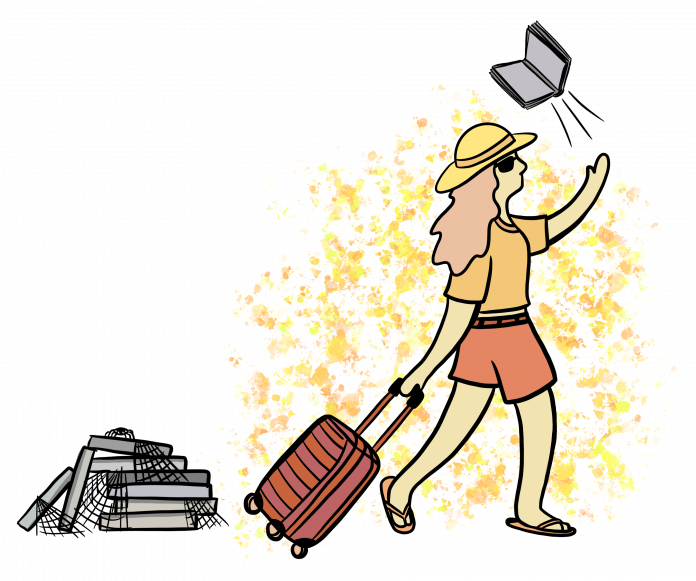
Think twice about taking a gap year during the COVID-19 pandemic

0
Ditching school in a pandemic won’t give students a dream vacation. Illustrated by Alex Vanderput/The Peak

By: Nathan Tok, Peak Associate

I am going to just straight up say it at the start: unless you have a well-thought-out, rock-solid plan, it is probably not a good idea to take a gap year from school just because of remote learning.

What does one do in a gap year, anyway? Gap years are usually about taking a break from formal academic work and trying to better ourselves in some other regard outside of school opportunities. This includes travelling, volunteering, or working. But taking a gap year to avoid the pain of remote learning during the pandemic is only going to waste students’ time and provide no additional benefit. 

None of the reasons one might usually have for taking a gap year are great options during a pandemic. Consider travelling for world experience, for example. It’s still a bad idea to travel right now even if non-essential or vacation travel was “socially acceptable” as some countries still struggle to get viral case numbers down. Not to mention the difficulties and restrictions visitors might have when visiting another country, such as quarantine periods and different ideas about pandemic safety. So any kind of “find yourself” situation isn’t going to be a fun or feasible way to spend a gap year.

These difficulties apply to overseas working or volunteering too. Sure, students might be able to find one or two opportunities, but is it wise or fair to people living in those areas to accept an outsider into their community during a pandemic? Besides that, unless you work in essential services, working nowadays is a lot like school: remote, if at all. Students won’t be able to easily make those all-important workplace connections and truly take advantage of the experience in an industry or job over Zoom. You might as well stay in school at that point.

It might be tempting to leave school temporarily to wait the pandemic out, but consider this:  we are already used to school. In difficult times, doing something we are already mostly used to doing is going to be much easier than starting something brand new — especially in an environment of lean opportunities. 

Of course, if you feel inspired to do something new, just learn a new skill at home. If you need some time to yourself to relax, please go for it.Continuing to work on their minds, interests, and skills during the pandemic are probably the best things students can do for themselves when confined to their homes. But we don’t need to take a year off school to do that. Just because school is harder remotely doesn’t mean we need to throw the towel in altogether. 

So although remote schooling is not the greatest experience a student could have, the alternatives we could potentially do in a gap year probably aren’t better, if they are even possible at all. We need to dig deep and find those reserves to keep working on ourselves and on the goals we’ve already committed to, in order to be ready for when the world finally reopens.