Home Blog Page 404

Why we should be moving towards mindful thrifting

4
Kim Regala / The Peak

by Alex Masse, Peak Associate

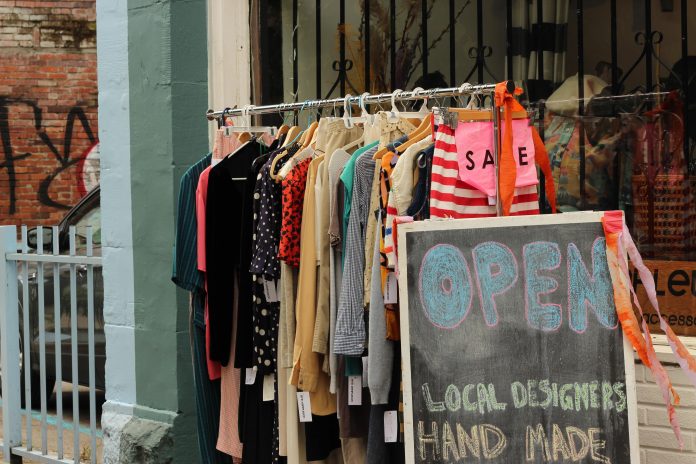
I’ve thrifted all my life, my mom got me into it. I always loved going to Value Village as a kid, and was thrilled at any excuse to go into Vancouver. I still remember my first find: a pair of floral-print converse I literally wore to death. 

Before quarantine, I thrifted on the regular. Last month, I went to my first thrift shop in six months, and it felt like coming home. I got a Tchaikovsky vinyl and some delightfully weird clothing, including a sailor-style dress that was $20. 

But is thrifting really the harmless hobby many see it as? These are valuable things at low prices, and oftentimes, that affordability is the main appeal. When I was younger, thrifting was looked down upon. It was one of those things poor people did. 

And like many things poor people did and were mocked for, eventually rich people did it and suddenly it was cool. 

There are definitely points against thrifting if you don’t have to. For example, you’re not only taking resources from the less fortunate, but potentially ruining the industry for them. As stated in a Varsity article, many worry about thrift stores being gentrified, and having their prices go up. 

“I’ve seen a big difference especially in their stores, like jackets used to be $7.99. And no-name brands are nowadays 17 dollars,” student Meghan Garvida stated in the 2018 piece. 

To many, it’s an open-and-shut case: if you have the means, you should buy elsewhere. If you have money and you want to fight fast fashion, buy a sustainable brand instead of taking from a wholesome local resource that does nothing but give to the community. 

But it’s never that simple. 

First of all, many thrift chains have issues. Value Village was accused last year of deceptive advertising, and the Salvation Army is still struggling to move past its allegations of homophobia. Not to mention they’re huge companies that probably don’t need the extra money. 

On the other hand, local foundations, like the volunteer-run Peace Arch Hospice Society Thrift Store, are quite transparent and need all the help they can get. 

Of course, this doesn’t mean you can do whatever you want in thrift stores. There’s a reason prices are going up. One common suspect? Thrift-flippers. 

For those not in the know, thrift-flipping is the act of thrifting something cheap and reselling it at a higher price. It’s very popular right now, with many flipping full-time. I’d say if anyone’s to blame for thrift store prices going up, it’s the people buying stuff for $10 and selling it for $60. Stores realize they could be making more off what they sell, and act accordingly. 

There’s no way to know for sure that’s what’s going on, but it wouldn’t surprise me. Not to mention the unfortunate implications of taking things from a public resource that many rely on just to make a profit.

In short, no one’s saying you need to stop thrifting forever. But it’s important to remember any privileges you may have and try to partake in thrifting mindfully. 


Sustainable Thrifting Tips:

  • Don’t buy winter clothing or accessories if you can help it. Priority should go to those who otherwise can’t afford to keep warm. 
  • Don’t buy plus-size clothing if you’re skinny. Larger people already have limited buying options. 
  • Don’t buy baby clothes, strollers, or anything that one might need in childcare. 
  • Try to support local, genuine thrift stores over the chains.

Pivot 2020 to inform post-COVID-19 urban recovery

0

Written by: Charlene Aviles, SFU Student

Pivot 2020 has partnered with SFU Morris J. Wosk Centre for Dialogue, Canadian Council for Youth Prosperity, Canadian Urban Institute, INM (Institut de Nouveau Monde), Tamarack Institute, and Youthful Cities to conduct remote research on 27 Canadian cities. 

During the COVID-19 pandemic, youth are experiencing unemployment and “massive interruptions to social connection and support services,” according to Pivot’s homepage. By “surveying youth, interviewing community members, and collecting benchmark information,” Pivot’s interdisciplinary team will collect data on their respective cities. Their research will study “education, employment, entrepreneurship, financial access, [and] gender equity.”

In addition to providing youth with employment, Pivot also plans to “develop an open and accessible web-based information hub that centers youth informed data, priorities and opportunities with cities, organizations, leaders to inform Canada’s post-pandemic urban recovery.

“The findings will populate an open and accessible database grounded in priorities and opportunities by youth that can be used by planners, organizations, governments and more.”

When asked about how Pivot 2020 intends to ensure their research sample is representative of the Canadian population, Program Director Aakanksha John explained that Pivot has “gone through extensive ethics reviews and EDI (equity, diversity, and inclusion) audits.”

Data from their city profiles will also include demographics for each city, which will inform their surveys, interviews, and indexes.

As stated by Pivot’s Communication Manager Rachel Wong, by hiring youth researchers to conduct research on their local cities, Pivot aims to ensure that the project recruits a diverse team and that their research sample is representative of the Canadian population.

According to John, “Pivot is also focused on what youth are going to do after they finish the program, so [they’ve] been working really closely with [their] wonderful program partner, the Canadian Council of Youth and Prosperity, to ensure that youth that are doing this work with us are really well-supported in terms of virtual success and workforce strategy.” 

Dr. Marianne Ignace named into the Royal Society of Canada

0
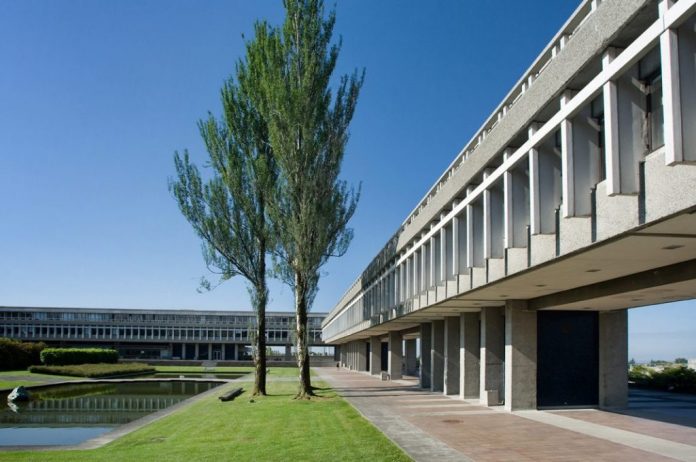
Image Courtesy of Simon Fraser University via SFU News

By Karissa Ketter, News Writer

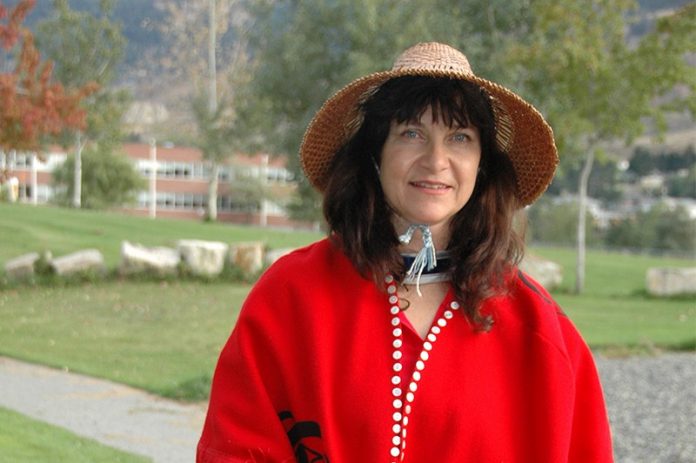
SFU professor Dr. Marianne Ignace was named a fellow in the Royal Society of Canada (RSC), a national academy that promotes research in arts, humanities, and sciences. Dr. Ignace is a leading scholar in Indigenous studies and linguistics in BC, working to revitalize and preserve Indigenous languages. 

In 2017, she and her husband, Chief Dr. Ronald Ignace, co-authored the book Secwépemc People, Land, and Laws. In an interview with The Peak, she explained the book discusses the Secwépemc people’s “10,000 year existence on the land and expresses Secwépemc Indigenous laws through stories.” She noted that they’re currently working to create “a follow up of a collection of stories [that they] have reclaimed into [their] language.”

Dr. Ignace also received a grant from the Social Sciences and Humanities Research Council of Canada, to collaborate with over 20 Indigenous organizations that encompass various languages in BC, Southeast Alaska, and the Yukon. Ignace’s aim is to conduct “language documentation projects,” amongst other research projects, where she strives to produce “new learners of Indigenous languages.”

For the last three years, Dr. Ignace has worked in the Secwépemc Nation with a group of adults learning their language. She said she aims “to raise a new generation of adults into the language.” When asked about the effects of her work, Dr. Ignace noted that she’s “seen some really good progress” in students’ language fluency. Dr. Ignace said that with hard work, she feels it’s possible to “turn the decline of languages around.” 

In addition to Dr. Ignace’s area of study, her work is connected to the “[field] of Indigenous ethnoecology and ethnobiology.” Part of her research centres around how Indigenous communities “[interact] with plants and animals on the land” in connection with their language.

Her research in ethnoecology and it’s relationship with language traces back to the 1980s when Dr. Ignace recorded the Secwépemc and Haida elders’ stories and narratives. These records were the foundation for her and Chief Dr. Ronald Ignace’s book. 

Dr. Ignace stated that the way in which Indigenous communities “express [their] thoughts about the world, about the environment, about social relations, [and about] the land” share a relationship. “The languages and the cultures are inseparably connected, deep down [ . . . ] that’s kind of why language revitalization is so important, to not lose that thread to ancestors, to the land, to the wisdom.”

Scaling the wall of toxic masculinity and rediscovering sports as an adult

0
Image courtesy of Tiffany Chan.

By Gurpreet Kambo, Peak Associate

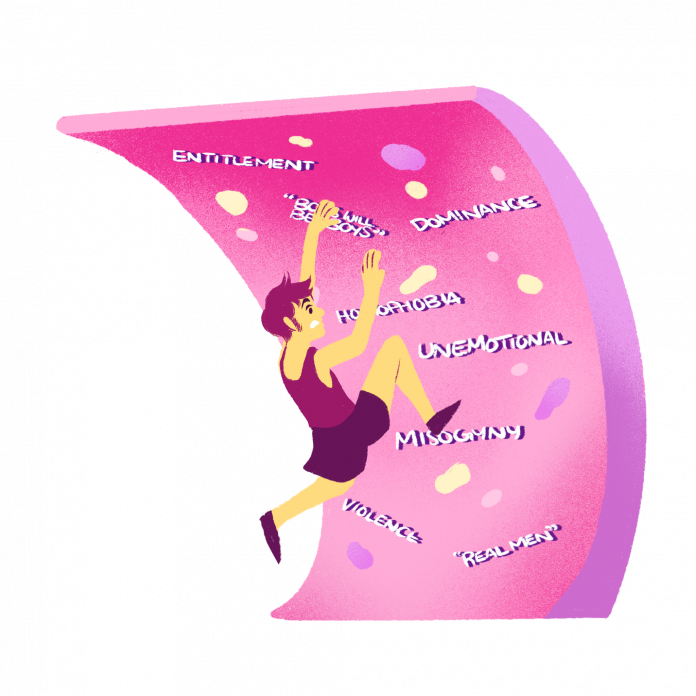
I’m just about at the top of an indoor rock climbing wall. There’s a red and black machine a couple feet above my head, and it has a bungee-cord-like thing hooked into the harness at my waist. It’s supposed to support my weight and bring me down gently, should I fall. There’s a few rocks above me I could still climb up on, and I consider it. I think to myself that rock climbing is like a timed jigsaw puzzle, in which the piece that you are currently trying to place is your own body, and the time element is your diminishing stamina. Rather than trying to climb the last few rocks though, I reach up and put my hand on the machine, as that’s as good of an end goal as any on this climb. 

It’s my second time ever going rock climbing, and it took me three tries to get to the top of the beginner route. Through all the struggles I’ve had of academic work, of mental health, of the tribulations of living life, this was hard but it wasn’t complicated. It was a clear, unqualified, unambiguous accomplishment — unlike so many other things in my life. I feel great for a second, then I realize I’m clinging to coloured pieces of plastic 30 feet in the air, and I have to actually let go for the machine to catch me and bring me down.

I’ve had a weird relationship with sports. I watched wrestling, basketball, and hockey, and played basketball and hockey. But as I grew into my teenage years, I fit in less with my peers, and like many ‘nerd’ or ‘uncool’ types in high school, I cultivated an identity that was oppositional and condescending to the things that were appreciated by the ‘in-crowd.’ This included disavowing sports, being a film snob rather than watching mainstream action blockbusters, and (ironically) getting into classic rock like the Beatles and Pink Floyd rather than the rap music that was popular at the time (though I completely missed the irony in cultivating an ‘alternative’ identity around listening to dad-rock). In hindsight, a part of the reason for this was that much of the popular culture (and especially sports) was, and continues to be, suffused with the kind of toxic masculinity that many of us who didn’t fit in found traumatizing.

From a more mature perspective, I have found that while I’ve retained my appreciation for things that have a niche appeal, that there is craft, skill, artistry, and pleasure in things that are popular or mainstream as well, including the sports I originally cast aside. Moreover, the things that I found appealing in niche cultural products can also be found in mainstream culture if you’re looking. Not only that they could be found, but that they were just as beguiling, just as spiritually enlightening or artistically fulfilling as the entertainment I consumed when I considered myself more ‘enlightened.’ 

This was my way back to taking an interest in sports. I always loved hearing and telling stories, so naturally I gravitated towards reading and film. When I took an interest in writing, many writers and storytellers I admired expressed that some of the best writing and journalism that’s ever been produced has been in sports journalism. The reason for this is that professional, amateur, and recreational sports are amazing conduits for great storytelling and expressions of humanity, and in more ways and through more lenses than you might think. Of course there are the typical lenses, such as how your favourite team did in the playoffs this year, what team won the Stanley Cup, the Super Bowl, or whether LeBron James is better than Michael Jordan. 

I think those are certainly great, if overanalyzed and overexposed stories about modern sports. However, I believe that sports and sports fandom says so much about our culture, society, and who we are as people. There are so many stories to explore that cut across an incredibly broad swathe of related topics. 

For example:

Civil Rights, Vietnam War: Muhammad Ali was not only the greatest boxer of his time, but also one of the most important civil rights activists and perhaps the most high-profile person to resist the Vietnam War draft. At this time, Ali was one of the most famous people in the world, and the government saw his open defiance as a threat that could (and did) galvanize others, thus they tried to make an example of him. In my eyes, the fact that he was stripped of his boxing license and convicted of draft evasion at the height of his fame and career makes him one of the most interesting, complex individuals of the 20th century. Journalist William Rhoden wrote, “Ali’s actions changed my standard of what constituted an athlete’s greatness. Possessing a killer jump shot or the ability to stop on a dime was no longer enough. What were you doing for the liberation of your people? What were you doing to help your country live up to the covenant of its founding principles?”

Body shaming, racism, sexism: While Serena Williams has by far dominated the sport of women’s tennis, through much of her career she has not actually been the highest paid player, due to fewer endorsements. The reason for this according to many articles, including on Slate and The Atlantic, is that, aside from being Black in a sport with far more white women, Williams has developed a muscular physique that has helped her steamroll over her opponents. It is a physique that is less ‘marketable’ and ‘feminine,’ for companies looking to endorse athletes. Despite her unprecedented dominance of the sport, Williams has endured much body-shaming in the media. The implication here is that, in a sport where much of the media focus is on the female athlete’s looks, her outfits, and where the presiding organization once tried to ban women from ‘grunting’ while playing, Williams’ has prioritized pure sport and athleticism over so-called ‘femininity,’ marketability or money — whereas her peers have done the opposite. 

Urban infrastructure, poverty, government spending priorities: The ongoing stories talk about how sports intersect with inner city culture, with many seeing sports as a way out of poverty (as portrayed in the Oscar-winning documentary Hoop Dreams). Other notable discussions include the controversies related to governments pouring millions into constructing stadiums for professional sports teams, money that some say is better spent in other areas.

Physics and psychology: In the 1970s, when NBA player Rick Barry pioneered an underhanded free throw shot (also known as a ‘granny shot’), it was found, according to a physicist interviewed by the Washington Post, that it was objectively superior to the more standard overhand shot. This was due to fewer variables in the angle and direction one can throw in. Barry was one of the NBA’s greatest free throw shooters ever, ranking 7th all-time in free throw percentage (89.31%). However, few players adopted his method despite Barry’s success, with Hall of Fame member Wilt Chamberlain dropping it because he looked too ‘sissy.’ In this case, Chamberlain is doing something that he knows is inferior, because of social pressures, ie. the machismo (strong or aggressively masculine) culture and toxic masculinity that pervades sports, something that Barry had no concern for.

Sports are an amazing engine for meaningful stories about our culture and society. Unfortunately, the machismo culture that often surrounds sports sucks up all of the air in the room, leaving little space for discussion about the endlessly fascinating micro-narratives arising from it. It is also important to acknowledge that many of us have traumatizing memories of high school gym class, where we were forced to participate in activities that we had little natural ability in, and the bigger, stronger kids had sway. I believe this culture of machismo and toxic masculinity embedded within sports is actually harmful to its most powerful expressions and applications. It certainly harmed me. I was fairly athletic and pretty decent at most sports, but due to not fitting in with the jock/machismo culture that surrounded it, I didn’t get to explore my athletic ability to its full potential.

Where this leaves me now is that I am trying to reimagine a relationship with watching and playing sports that casts aside both the trauma of toxic masculinity and the misguided condescending attitude that I developed as a survival mechanism. But this is still a challenge because of the harm that toxic masculinity does to our psyches.

Here in the present, I’m still hanging in the air, clinging to the bright plastic rocks a little too long, and using up the little stamina I have left. I feel good, but I’m getting butterflies, more and more as the seconds tick by. I can’t help but reflect on the journey I’ve had, and how powerful sports narratives have brought me here. I haven’t had the nerve to (re)try team sports as an adult, however I’ve enjoyed the communal, but still solo, nature of rock climbing. I’ve particularly enjoyed this micro-narrative of me finally getting to the top of the beginner’s route on my third try, in a sense scaling the wall of toxic masculinity. I take a deep breath to calm my nerves, close my eyes, and let go of the wall.

Monday Music: A Late Night Folk-Pop Balm for Anxious Minds

0
"Monday Music" in giant yellow block letters with a red background
Monday Music: your weekly themed playlist. Image courtesy of The Peak.

By: Emma Jean, Staff Writer

Light some candles, listen to the rain, and put on this mellow mix of warm, gentle songs. With a focus on artists who are Canadian, queer, and/or Black, this playlist is perfect for a night where everything else needs to be put aside for now and all that’s needed is to find some peace. Unclench your jaw, drop your shoulders, and take a deep breath; it’s gonna be alright. 

“So It Goes” – Buckman Coe

Courtesy of Tonic Records

Tranquil, meditative, and almost magically calming, this song sounds like a quiet walk through the trees. East Vancouver musician Buckman Coe offers this gentle, earthy song with a steady rhythmic guitar and poetic lyrics about devotion and comfort from his 2018 album, Alter (from which almost any song would also fit this mood). “So It Goes” is perfect for easing into a quiet moment whenever you need it most.


“Piebwa” – Mélissa Laveaux

Courtesy of No Format

This track by Montreal artist Mélissa Laveaux features a minimal guitar and percussion that allows their measured, hypnotic vocals to shine through, with Haitian Creole lyrics over a swirling melody. This song feels full of quiet intrigue and curiosity. If you’re a fan of Sting’s “Shape of My Heart” (very dated reference but another gorgeous song), you’ll be just as drawn in to this.


“Josephine” – Brandi Carlile

Courtesy of Sony BMG Music Entertainment

A guitar ballad on the comfort of an old relationship that isn’t working but is too familiar to leave, Carlile’s warm vocals, met with gentle harmonies and an acoustic guitar, feel like leaning against an old friend and drifting to sleep around a campfire. The comfort of the music distracts from the melancholic lyrics, and the aching disappointment that Carlile had to cancel her appearance at the Burnaby Blues + Roots Festival this August. Bygones.


“Heaven’s Only Wishful” – MorMor

Courtesy of Don’t Guess

A mellow jam by Toronto indie pop artist MorMor, this is about as upbeat as this playlist gets. A gentle electronic groove beneath MorMor’s smooth vocals provide a soundtrack to a late night drive. The verses get it moving, reaching a more urgent sound, until it returns to its smooth, serene chorus which brings it down to Earth each time. Vibe along to wake yourself up a bit and appreciate the gorgeous timbre of MorMor’s voice.


“Stay High” – Brittany Howard

Courtesy of ATO Records, LLC

Alabama Shakes frontwoman Brittany Howard’s first solo single captures the feeling of being content with where you are and finding home in something or someone. Her stellar vocals soar over simple drums and piano riffs that portray a grounded but overwhelming optimism for the present. Listening to her testament to acknowledging pain in the past and finding contentment in the present, it’s hard not to find yourself in that place with her, even if you haven’t found it yet. 

If you want to keep the vibe going, I recommend: 

The Only Living Boy in New York – Simon and Garfunkel

Slow Burn – Kacey Musgraves

Moon River – Frank Ocean

Murder in the City – Avett Brothers

Invisible String – Taylor Swift

Heaven (Live) – Talking Heads

Both Sides Now (1969) – Joni Mitchell


Board Shorts — September 18, 2020

0
Image: Irene Lo

Written by: Mahdi Dialden, News Writer

The refund and course drop deadline 

According to SFSS President Osob Mohamed, students had complaints regarding confusion around the date for refund and course drop deadlines. 

VP of University Relations Gabe Liosis said that “this isn’t the first time this happen[ed], and it is frustrating for students who are scrambling to withdraw from their class or are just unaware of these types of deadlines.” 

Some students did not get a chance to attend their first lecture due to technical issues with recording and posting lectures or the Scholar Strike protest, but were expected to drop their courses by September 15 for a full refund. 

Mohamed added, “Giving students one week to figure out if they are going to be successful in that course is not nearly enough time.”

The Board will discuss this further at the Joint Operations Group meeting and hopes to extend the deadline for future semesters. 

SFU Esports presents the gaming lounge in the Student Union Building (SUB)

SFU Esports, a student-led club that hosts social events, tournaments, and viewing parties for a variety of games, joined the meeting to discuss future proposals and plans for the gaming lounge in the SUB. 

They discussed the high student engagement they’ve been resonating with since the switch to remote learning. For instance, tournaments ranged from 80 participants to 256. 

The Board asked about the plans to avoid sexual harassment and ensuring safety in the lounge. According to SFU Esports, hiring a part-time lounge manager is a potential option, as well as having volunteers from SFU Esports to ensure the safety of students and equipment in the lounge. 

It was discussed that a working group, led by VP Finance Corbett Gildersleve, would be formed to work closely with SFU Esports to discuss budgeting, equipment, and hiring options. 

Potential event to keep students updated about the SFSS

The Board spoke about an event informing and engaging members of the student body about the SFSS and what’s going on. This event will differ from SFSS Board meetings and would present what the SFSS is working on, how to get involved, and would include an “interactive portion where students can ask questions.” 

A potential semesterly event is in the discussion and would entail a Facebook event or a Zoom presentation. 

There was no decision made regarding the topic, but will be followed up within future meetings. 

The next SFSS Board Meeting is scheduled to take place on October 2, 2020. 


Need to Know, Need to Go September 28 to October 4

0
Illustration of a blue calendar, with "Need to Know, Need to Go" written on top
Arts & Culture events to catch around the city. Image courtesy of Brianna Quan

By: Ahad Ghani, SFU Student

Shot of Scotch Vancouver with Discover Dance! (online) | September 24October 8 | Cost: Free

The Dance Centre’s Discover Dance! series, which showcases a wide range of dance genres, is set to feature an online presentation from the Scottish Highland dance organization Shot of Scotch Vancouver. Its performances are popular for incorporating contemporary dance pieces into the long-standing artform of Highland dance.

The performance, which is set to last approximately 40 minutes, is available to stream online at thedancecentre.ca starting September 24.

Surrey Art Gallery | Open Tuesday to Sunday | 13750 88 Avenue | Cost: Free  

The Surrey Art Gallery is Metro Vancouver’s second largest public art museum. It houses art by a variety of local, national, and international artists. It also showcases a range of exhibitions, and admission is free. Current exhibitions opening in September include Searching for Surrey, a display of some of Surrey’s most popular architecture and landscapes, and Varvara and Mar: We Are the Clouds, an interactive outdoor artwork that has participants record themselves on-site and be transformed into moving clouds. 

To learn more about their ongoing exhibitions, go to surrey.ca/arts-culture/surrey-art-gallery

Vancouver Flea Market | October 3–4 | 703 Terminal Avenue Cost: | $1.50 Entry  

The Vancouver Flea Market, the largest covered market in the lower mainland, is the ideal place for bargains on all kinds of things from collectibles to household items. The market has a wide variety of clothes, jewelry, electronics, art, tools, books, toys, music, vintage pieces, and much more to offer. Be sure to set aside a couple of hours to browse the entire market because the volume of offerings can be overwhelming. The market offers an on-site cafeteria to grab a quick meal as well.

The Vancouver Flea Market is open over the weekend from 9 a.m. to 5 p.m. with physical distancing and sanitizing measures in place. 

Vancouver International Film Festival (Online) | September 24October 7 | Cost: starts at $9

The Vancouver International Film Festival (VIFF) is still running until October 7 with over 100 films and events this year via VIFF Connect, VIFF’s new online streaming platform. Limited selections are also playing at Vancity Theatre and the Cinematheque.

The full line-up for the festival can be found at viff.org, along with a detailed breakdown of ticket and subscription information.

Senate Report: September 14, 2020

0
Photo from Peak archives

Written by: Serena Bains, Staff Writer

President Johnson states her priorities for the term

President Joy Johnson spoke on the priorities for the Fall 2020 term: maintaining student engagement, the well-being of the SFU community, and equity, diversity, and inclusion work. Johnson stated that her ultimate goal is ensuring SFU “is a resilient and adaptive institution that can thrive despite some of the challenges” the community is facing.

First Nations programs renamed to Indigenous programs 

Both motions were moved by Vice-President, Academic and Provost pro tem Jonathan Driver, where the first motion recommended that the Board of Governors approve the “full proposal for a certificate in business administration in Indigenous business leadership.” The program would begin in Fall 2021. There was also a motion to pass a similar program at the graduate level. Both passed unanimously.

The second motion was the name changes of First Nations programs to Indigenous, to ensure inclusivity. This motion follows the name change of the department of First Nations studies to the department of Indigenous studies.

Spring 2020 report on grade inflation 

The Spring 2020 grades report showed a substantial inflation of grades for the term due to the implementation of pass/fail with the onset of the pandemic. Where some faculties experienced significant inflation, others remained similar to previous terms. According to Senator Zareen Naqvi, there is an ongoing project to have grade reports for each term instead of an annual report. This would allow for the comparison of the Spring 2020 term to Summer and Fall.

Senator Daniel Leznoff discussed the issue of the uneven grade increase across faculties in relation to scholarships. This question will be passed onto the Senate Policy Committee on Scholarships, Awards & Bursaries. Senator Colin Percival stated that the consensus amongst the committee is to avoid penalizing students for the inflation of their GPA and to ensure the students that deserve their scholarships receive them.

The passing of Dr. Ali Dastmalchian

Driver also spoke to the impact of the life of Dr. Ali Dastmalchian, the dean of the Beedie School of Business, who passed away August 13.

Senator Driver said, “He was well known for his ability to create positive transformational change brought about through [ . . . ] strong consultation processes [ . . . ] he was a humble man, who believed strongly that success came from strong teams rather than individual leaders.”

The next senate meeting is planned to occur on Monday October 5.

Wildlife to move into Beedie student’s forest tattoo sleeve following increase in campus construction

0
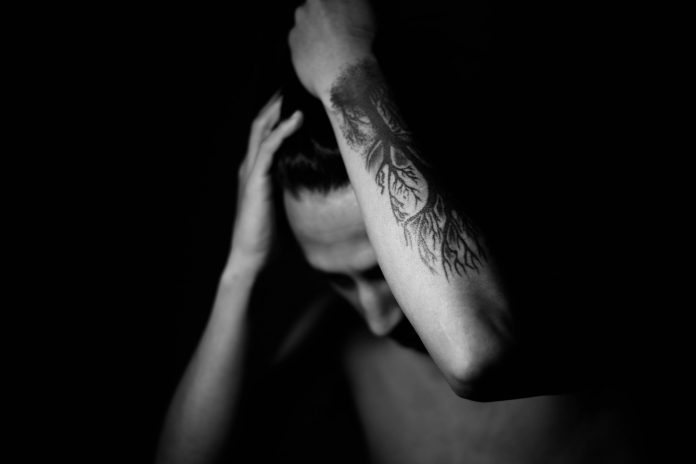
PHOTO: Deepal Tamang / Unsplash

By: Paige Riding, Humour Editor

Dear SFU,

I know that with all those new stunning, only entirely gentrified cinder blocks you call your new Residence buildings are taking a toll on the wildlife and their habitats. But who can blame you? Supply and demand, baby. I know all about it. I learned it in that one ECON class I took before I realized there was basic math in it and dipped. I thought I could just wear a suit and call it a day.

Well, that aside, these animals really should have thought about SFU’s construction when their great-great-great (imagine I added a couple greats there. Animals bang like crazy) grandparents settled near a university. I mean, yeah, maybe the people building the university could have considered the reverse of that and built their uni away from a forested mountain providing a crucial area amongst a major city that already claimed much of their habitat. But anyways . . .

I was thinking — now, bear with me here (HA yeah you catch that one? Fist bump) — what if I make use of this absolute chick magnet tatted on my arm, my black and grey forest half sleeve, for the greater good? (The greatest good is getting that puss, but the greater good is doing things that help me get said puss.) I could maybe like, house them in here for a while until you guys are done absolutely obliterating their homes. Ladies love a guy who recycles. Imagine if I save a whole forest, bro. 

I could fit so many caribou in here. I even have a little moon tatted in the sky. The wolves would love that. (There are wolves around Burnaby Mountain, right? Doesn’t matter.) My bulging tendons would house it all.

Think of the Tinder opening lines I could make after they all move in. Picture something like, “I saved the deer on Burnaby campus, can I save you a seat on my face?” or maybe “these coyotes aren’t the only thing that’s packing.” The possibilities are endless.

Don’t worry about the technicalities of it all, man. I can move them in somehow. Things always seem to work out for me. Is it because I’m a straight man? Maybe. But that’s just how the cards fall. Now, it’s time for me to save Burnaby Mountain’s animals for the sake of making women fall for me. I have Mother Nature in mind. Really, I do.

What’s that saying? Reproduce, reuse, recycle? Yeah, something like that. I live by that shit.

Think about it. Can’t wait to hear back from you.

Your man,

Chadley Bradley, fourth-year Beedie student

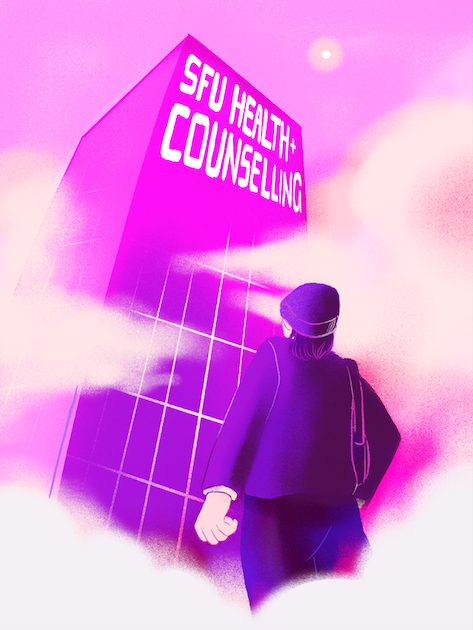
How I lost a year of my life (and almost so much more) using SFU Health and Counselling Services

1
Illustration courtesy of Tiffany Chan.

By Anonymous

Growing up as an American-Canadian dual citizen, I came to Canada excited for the accessible health care I’d always heard about that was just out of reach. On my second day on campus, I found SFU’s Health & Counselling Services and made my first appointments, ready to take some big steps on my mental health journey. What I didn’t know at the time was that I was about to take some big steps backwards in the process.

While I was enthusiastic about the Health & Counselling Services the first time I walked in last year, these days I am wary as I chat with their staff. I am grateful for the positive support and diagnoses I’ve received, but the general outcomes of my time spent with SFU Health & Counselling Services have been incredibly damaging.

From the beginning, I noticed and understood that SFU had no idea how to work with transgender students, but it became even more apparent over time. Rather than treating me the way a cisgender student would be treated, my non-binary identity was both brushed off and considered a reason behind my mental illnesses.

It took several visits before reception had figured out how to use my preferred name on file and not misgender me in the short moments we had together. It took weeks before my counsellor learned which name to call me, even with my preferred name on file and in their notes. For my doctor, it took weeks before they remembered that my preferred name in the file is what I wanted to be called. Even when I informed SFU workers of my transgender identity when relevant, I had to take the initiative to explain what it meant — as though they have never encountered a transgender person before. 

A close friend of mine, who sought assistance from the same SFU doctor I did, reported that they put down his hormone replacement therapy as the reason for his health symptoms, when it was medically impossible for that to play any role. Like my friend’s experience, the same doctor questioned me about whether I’d been taking “transgender medications,” a vague and informal term, as though hormone replacement therapy would have any correlation to psychotic symptoms. 

This troubled me because there’s no way that being transgender, whether medically transitioning or not, would cause the kinds of mood swings I had been having. Ignorance about transgender issues and our mental health is common in health care, and it is just another systemic issue that SFU’s doctors are complacent in. 

After only three 30-minute appointments, my doctor prescribed the first medication in early November. This was barely enough time to confirm my OCD, anxiety, and depression — the first of which would soon be ignored by my doctor. Already I was encouraged to start taking a drug, even without trying therapy as a first treatment option. The plan was to try it out and see how I was after a few weeks. 

The drug had negative side effects that made it unsafe for me to even walk from my dorm to my lectures. Even after I had adjusted to a standard dosage, I still felt worse than before I was prescribed the medication. After informing my doctor that I was having an increase in suicidal ideation, they decided to keep me on the medication. In fact, they decided to keep increasing dosage in hopes that double or more of the medication would start to treat a different disorder I have. As we kept increasing the dosage, most of the side effects unmonitored, I continued expressing that I was having serious physical side effects and suicidal thoughts, but on we went. 

By this time, it was January and I was at four times the initial dosage. On January 12, I had a failed suicide attempt. We stuck to the medication, just to be sure it wouldn’t still have positive future effects. On February 24, a friend took me to the ER for active intent to attempt suicide. On March 2, I returned to the ER for active intent to attempt suicide. At this point, my friends would not leave me with more than a few day’s dosage in my room at a time, because they knew I would otherwise try to overdose on it.

By this time, the SFU doctor finally decided it would be time to lower the dosage, but they also decided that I would add a new medication to my daily mix of drugs. They knew I was still trying to cope with changes from the medications given to me by the ER doctors, and would be dealing with side effects from changing dosages of the first medication. Needless to say, the cocktail of drugs left my physical health in a state of disrepair, unable to complete coursework and physically incapable of going to my classes. 

It only took a few minutes in the ER for the doctors to recognize that my symptoms that were initially recognized as typical anxiety and depression were treatment-resistant, and perhaps even a misdiagnosis because they were so hastily accepted and medicated.

After the trip to the ER, the final two months of the Spring 2020 semester were full of medication changes, never giving me a break to catch my breath before something else would change. I was agitated, hallucinating, paranoid, completely dissociating, and of course, brushed off by my SFU doctor. 

In between finals, I was seeking help outside of SFU. The first psychiatrist and first doctor I saw agreed that my mood swings clearly looked like bipolar disorder, and likely also borderline personality disorder. 

This psychiatrist immediately recognized my emotional regulation issues, and that I was in a state of hypomania. For me, hypomania consisted of restlessness, lack of sleep, mind racing, inability to concentrate on anything while starting a handful of new projects, bouts of reckless behaviour, paranoia, and delusional thoughts. 

The recognition of hypomania suggested bipolar disorder, while my SFU doctor of months had brushed off unusual mood changes as just part of medication side effects. This psychiatrist also suggested at first that the symptoms were caused by my transgender identity, like my SFU doctor, which speaks to broader issues in health care.

The primary issue that SFU doctors, and general practitioners as a whole, deal with is to accommodate people with mental illnesses. Suggesting that my transgender identity was the source behind my emotional regulation issues was oversimplifying complex issues. 

Furthermore, it appeared to me that my gender transition had been treated as a mental health concern to be fixed, rather than acknowledging the social complexities that accompany gender dysphoria and the trauma that can come with transphobic experiences.

Mental health conditions remain stigmatized, and as a result, they may not keep up to date on how to treat disorders — especially when there are comorbidities and the patient is of a marginalized or historically oppressed group. 

Still, I continued to see my SFU doctor as I did not have the financial stability to move to private specialists, or knew any better at the time to make the switch. As late April came, they let me go away unmonitored for the following four months with an antipsychotic medication that normally requires regular monitoring and blood tests, initially suggested by them and then prescribed by my psychiatrist. 

I wasn’t even given so much as a warning about its side effects, and after just three days, I knew my nervous system had a severe reaction to it. After those three days, I had to stop taking it because I knew if I listened to the medical advice I was given, it could kill me over the summer.

I spent months describing my mood swings and emotional dysregulation to an SFU doctor, and instead of any kind of therapy, referrals to a psychiatrist, or deeper looks into the causes of my mood swings, all I got was a dangerous mix of drugs.

The SFU doctor I went to for help lost the trust I’d normally give a medical professional. Having lost nearly a year of my life to mistreatment, they left me with medical trauma that I am still struggling to make sense of. Looking back on all of this, their negligence could have killed me, and I am still surprised that I am alive to be writing this article.