Home Blog Page 365

SFU student politics has failed us

0
PHOTO: Gudrun Wai-Gunnarsson / The Peak

by Justin Smith, SFU Student

Despite changes the ongoing COVID-19 pandemic has brought to SFU, some things have remained consistent: nonsensical Canvas pages, wallet-crushing tuition, and bullshit student politics. For a university that advertises itself as “one of Canada’s most community-engaged research universities,” this isn’t the best our school can do for us. As a former president of a department student union (DSU) and current disgruntled fifth year student, I have realized that the institutions designed to represent us instead stifle and suppress student involvement.

Even prior to the pandemic, student morale was at a low. The Simon Fraser Student Society (SFSS) and university repeatedly failed its students by making no moves to raise it. Whether it be through the continuous bungling of the Fall Kickoff concert (a cancellation in 2018 and a massive deficit in 2019), an inability to complete construction of the long overdue Student Union Building, or a complete lack of transparency on tuition increases, both the SFSS and SFU seem content with gaslighting their students. It’s almost like COVID-19 hasn’t just killed in person classes, it’s also delivered a fatal blow to an already weak and disconnected student community.

Consider the last few student elections, both for the SFSS Board and the SFU Senate. Each year, students form de-facto slates (names that groups of candidates run under) that are not officially recognized by these governing bodies. From here, elections devolve into substanceless popularity contests where different parties promise some variation of “Fall reading break” or “better representation” without the foresight to consider how to accomplish these things.

Immediately, this presents issues. The establishment of slates makes it incredibly difficult for independent students to run and win positions. This means that those well connected and visible at SFU have a clear path to power. In addition, representatives regularly double dip, with members of the SFSS Board of Governors also running and winning seats within the SFU Senate. Currently, six of the 13 members on the SFSS Board of Directors also serve on the SFU Senate. How can we get more students involved if the same small group of students runs and wins every year solely due to name recognition?

Our student community deserves governance that can unite and empower us, instead of ignoring or dividing us.

Frankly, we can’t. This mismanagement of student politics spreads far beyond the many issues in the Maggie Benson building (which houses the SFSS) and into every aspect of student engagement. The self-important attitude of a small group of students poisons nearly every aspect of running these groups. 

For example, in my experience as president of the Political Science Student Union, we were able to rebuild the union from a single member, run a successful career night, and participate in valuable department events. Still, we were barely able to access our own money due to bureaucratic nonsense from the SFSS, struggled to connect with students due to a lack of manpower, and completely imploded due to inadequate election infrastructure that was fronted by the SFSS. Seriously, if the political science students can’t figure out how to run a small student government, there’s an issue. 

A particularly atrocious moment was when the SFSS reached out to union presidents asking for input on the student union building; specifically, we were asked to apply for permanent space for our unions within the building. Later, we found out that no DSU would have permanent space, but the SFSS would have an awesome setup. Regardless of building delays, our students were left without a space to consistently reach and communicate with their student unions in the literal student union building.

Considering this, can we blame students for running to half-baked and semi-banned fraternities and sororities for human connection when student-funded clubs and unions can barely throw together a pizza night? This doesn’t even consider the fact that DSUs face systemic issues accessing core funding, stringent restrictions on what funding can be spent on, and a paralyzing lack of support promoting events.

Even without this inside knowledge, students should seriously ask themselves what student government has ever done for them. For the vast majority of students, the answer is likely nothing and I wouldn’t blame them for not knowing who the SFSS’ current president is. SFU used to be a campus with radical activism, with protests that put UBC to shame. Our student community deserves governance that can unite and empower us, instead of ignoring or dividing us.

To overhaul years of inadequate representation, I recommend that we permanently ban the forming of SFSS slates and political parties. If students want to represent us, they should do so based on their ideas, not popularity. The SFSS should also increase funding to and decrease restrictions on DSUs. A student’s departmental student union should have the biggest impact on their university experience and shouldn’t have trouble functioning. SFU should also work to disallow students from double dipping between the SFSS and other on-campus governments. We need to know our representatives are focused on representing students, not preparing for another endless election cycle.

SFSS and SFU, it’s too late for me, but please, clean yourselves up and do better for the students of today and tomorrow.
“A Seat at the Table”: A living exhibition that grows on the stories of Chinese migrants

1
Connect with Vancouver's Chinese history like never before. Image: Brianna Quan / The Peak

By: Kelly Chia, Peak Associate

While the first Chinese-Canadian museum in Canada has yet to find a home in BC, A Seat at the Table, its inaugural exhibition, is open to the public in Chinatown’s Hon Hsing building. Founded in 1939, Hon Hsing is a volunteer organization dedicated to nurturing Chinese culture and history for future generations, through traditional physical activities like Choy Lee Fut, a style of martial arts. 

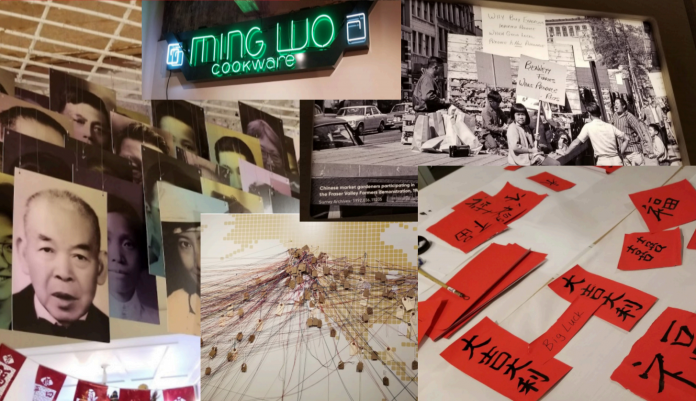
As I entered the exhibition, I was greeted at the front door with a red pocket for Lunar New Year. After being handed a sanitized stylus to interact with the exhibits, I was off. I walked into an exhibit with lots of video screens, and smaller screens with videos that visitors could select with their stylus and watch. Everything in the museum was written in English, simplified Chinese, and traditional Chinese.

To minimize contact, the speakers were located on the ceilings with cups that projected down to the viewer. Many exhibits showed photos and plaques of restaurants that used to line Pender Street, like Hong Kong Cafe, which closed in 1992. The plaque explained that it was known for its fresh, handmade apple tarts and for serving the many bachelors off the streets of Chinatown. Also on display were signs and bowls from the old Pender Street restaurants. Seeing this made me feel nostalgic for the days I spent around Chinatown food shops with my parents; food has always felt central to telling stories about budding Chinese communities.

I set my eyes on one exhibit with a video titled “Radicalizing Intimacy.” This one stood out to me, in particular, because it was a video with Chinese-Canadian youths discussing their relationships with their queer identities. It’s not often that I get to see Chinese LGBTQ2+ stories alongside cultural artifacts and historical photos, so it made me quite happy to see it lovingly acknowledged as a part of the Chinese-Canadian story. 

Then, Patrick, an exhibit helper, showed me the VR portion of the exhibition. Visitors could see Kaiping, a city in Guangdong, China, where many of the first Chinese migrants who entered Canada had lived. As I looked at the tall towers and preserved homes of Kaiping, Patrick told me that Western architectural trends were brought home by these Chinese migrants, and could be seen in the roofing and tiling of the towers. We shared some banter over our own immigration stories — he told me he still has relatives in Kaiping, and I told him that my grandparents migrated from Guangdong. 

Our conversation reminded me that the goal of this exhibition is to hold a space for our histories and ongoing stories. To that effect, visitors could leave notes or record stories about the cultural customs they wanted to learn about or their favourite Lunar New Year memories. These stories, and a map showing where visitors had migrated from, were prominently displayed on the walls of the exhibition. 

In the back of the room, there was another interactive exhibit where visitors could practice their calligraphy, as well as shadow puppetry displaying the stories told throughout A Seat at the Table. The exhibition helpers informed me that in the afternoons before 3 p.m., a calligrapher who has practiced for 60 years is usually there to help or write something for visitors definitely something to check out.

There are so many other parts of the exhibition that make it worth a visit; the exhibit panels in the activism section talking about the history of protests in Chinatown and the head tax were especially intriguing. One story that fascinated me was Gim Wong’s, an 82-year-old war veteran who rode his motorbike from Victoria to Ottawa to demand the government to apologize and provide compensation for the head tax. Although it appeared that he failed when he arrived, Stephen Harper apologized and offered compensation a year later in 2005. His campaign, called Ride for Redress, is described as the turning point for the Chinese-Canadian community to rally together, and it was heartening to read about him. The section also reviews five different eras of Chinatown activism. 

Altogether, the experience felt like a loving dedication to both the history of Chinese-Canadian migrants in BC and their resilience as they continue to build communities here. 

Located on 27 E. Pender Street, the exhibition will be open Fridays to Sundays from 10 a.m. to 3 p.m. throughout the spring season. For those who’d rather stay at home, a virtual tour has been uploaded on YouTube.

“The Apu Trilogy” offers a beautiful and timeless expression of humanity

0
Good things come in threes and these films are no exception. Image courtesy of The Indian Express

By: Subaig Bindra, SFU Student

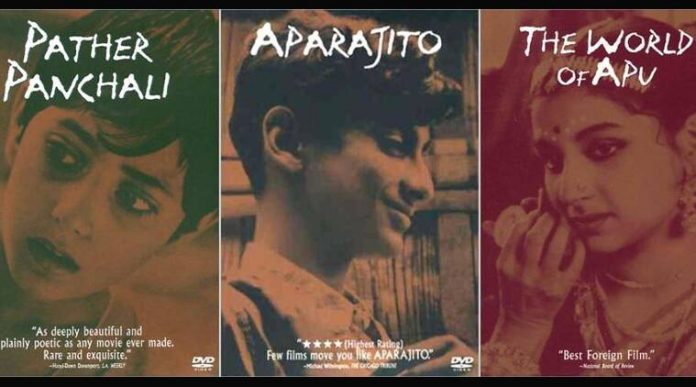
Satyajit Ray’s The Apu Trilogy is often considered one of the greatest film trilogies ever made. They comprise three Bengali films that are part of an alternative cinema movement that started in the 1950s. During this time of remote get-togethers, my sister and I decided to watch the trilogy together. Viewing these movies allowed the two of us to revisit our childhood and tackle the weight of the world. 

Since the days when content began being downloaded faster than could be consumed, a bootleg HD copy of The Apu Trilogy had rested in my hard drive. I had always thought of those movies as important, even though ordinary life had stopped me from taking the time to watch the trilogy until now. 

The films portray the story of protagonist Apu, born and raised in rural Bengal. In the first film, Pather Panchali (or Song of the Little Road as it’s known in English), he and his sister, Durga, try to make the most of life as their family struggles to get by. My first impression of the 1955 film was that I had never seen anything like it. The cinematography expressed serenity with close-up shots of the characters casting a spell that seemed like poetry in motion. Ravi Shankar’s sitar compositions were incredibly endearing, evoking what now feel like distant memories of early-life innocence. The soundtrack only magnified what was already transcendent. I could keep talking about the music, but we have two more films to cover. 

In the second film, Aparajito/The Unvanquished (1956), Apu is in his teenage years, striving to get a formal education, when he finds a teacher to help broaden his intellect. Something particularly striking in the film was the bittersweet portrayal of his relationship with his mother, especially during Apu’s college years. I was surprised at being able to relate personally. Decades had passed, yet I was able to connect with the story. It goes to show that art remains timeless if one can appreciate it.

The third and final film Apur Sansar/The World of Apu (1959), follows Apu in adulthood. He is an aspiring writer who stumbles upon an arrangement that changes his life in drastic and unimaginable ways. The trilogy ends with Apu accepting the truths of his life, embracing reality as it is. 

My sister and I watched all three movies over a week or so. We live in different time zones, so it was quite the endeavour trying to find empty pockets of opportunity. However, it paid off and I found the experience of watching The Apu Trilogy with my sister incredibly satisfying and profound, as it allowed us to re-connect both with each other and with our culture. 

The films were exquisite and meticulously framed with brilliant performances by the characters. That said, they require attention, so they may not be for everyone. If you’re willing to appreciate undiscovered art that makes you feel new things, you are in for a life-affirming experience — or at least, a cinematic treat. 

I believe art has the sole purpose of acting as reminders for humanity. Satyajit Ray may not be around anymore, but, like many great works of art, his films remain immortal. 

Even language isn’t much of a barrier to express emotion as I barely know any Bengali. Sometimes the sound of incomprehensible words strikes a different chord, like a very intricate idea — and there are always subtitles, you know!

In the last moments, before it ended, I wished to stay with the discovery a little longer, and after it ended — as all good things do —  I wanted to bask in the afterglow.

Four films and TV series that celebrate Black stories

0
These stories are made by Black writers, producers, directors, and actors. Image: Sara Wong / The Peak

By: Jaymee Salisi, News Writer

Black stories are beautiful, in both their excellence and normalcy. Yet, Hollywood has a history of wedging white saviours into Black stories. Movies such as The Help and The Blind Side, specifically, have been criticized for doing so. In these stories, minorities are not given proper humanity, and credit is often given where it is not due. 

Additionally, many representations of Black history are overwhelmingly centred around Black trauma, such as graphic enslavement or depictions of brutality against Black people. Although such stories may be meant to educate other groups, they might also be triggering and harmful to Black people. 

Black stories should not need to have whiteness at its core or present a traumatic narrative in order to be worth telling. Their stories deserve to be told in celebration of the people that they’re about, as they are. In no specific order, here is a non-exhaustive list of films and tv series that do just that.

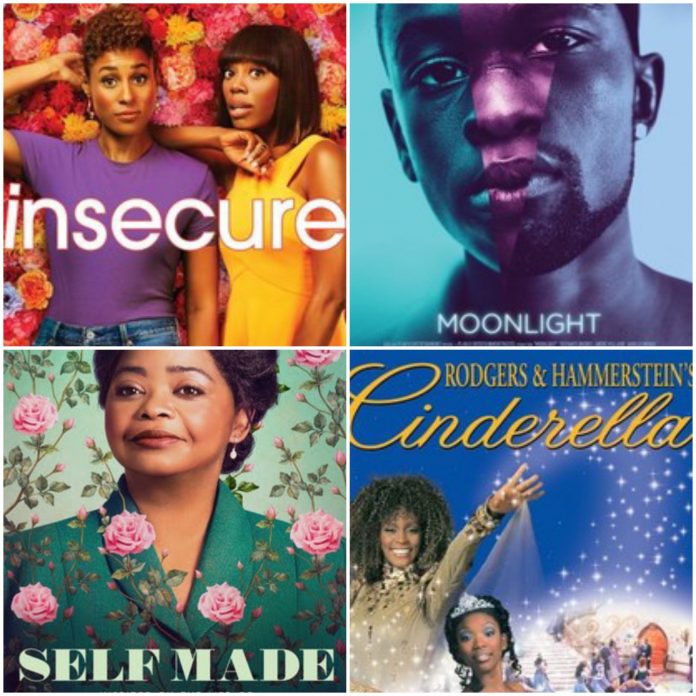
Insecure

This series touches on everything from relationship problems and career struggles, to online dating and gossip. The main characters, Issa and Molly, kill it every episode with their outfits. But as you start to find out more about Issa’s financial situation, you start to wonder how she’s able to afford such an expensive sense of style . . . I’m not mad at it though. And the soundtrack filled with the best of The Internet, Leikeli47, GoldLink, SZA, and many more, keeps you vibing without fail.

Moonlight

Set in the 1980s, this film focuses on the story of a man growing up Black, gay, and poor during the crack epidemic. The plot is presented in a simple way, but it is a complex and dynamic story delivered with beautiful vulnerability. The Oscar-winning film explores three distinct stages in the main character, Chiron’s, life. Throughout these stages, we see the struggles that Chiron faces growing up, as well as the anger and consequences that these experiences manifest.

Self Made: Inspired by the Life of Madam C.J. Walker

This four part Netflix series, starring Octavia Spencer, tells the story of the first female self-made millionaire in America. The writers do not claim complete historical accuracy to Madam C.J. Walker’s real life, but we follow her character’s journey as she starts a company selling hair growth products to African-American women. The series also explores colourism’s impacts and celebrates Blackness independently.

Cinderella (1997)

Rodgers and Hammerstein’s version of Cinderella includes an interracial cast, with Brandy, Whoopi Goldberg, and Whitney Houston. Impacting the lives of many young people who resonate with the representation in the story, this film intentionally celebrates Black people and people of colour in the classic fairytale.

Top Ten things that have changed since lockdown one

0
Very calm, very cool. Nothing wrong here. Illustration: Siloam Yeung / The Peak

By: Juztin Bello, SFU Alumnus

  1. Your need for people

Early lockdown saw you lamenting over missing friends and enthusiastically speeding through Zoom calls like your ex from high school who, since dating you, speeds through frequent relationships (what’s up with that?). Nowadays, your friends would be lucky to have you open their message or even glance at your phone (other than for YouTube videos that become significantly more interesting past 1 a.m.). Just remember to keep enough people around for when lockdown ends; your dwindling social skills won’t lend themselves well to meeting and subsequently mistreating new people.

  1. Toilet paper hoarding

Can you believe that there was a time in our lives where people treated toilet paper like fucking gold? Seriously, what was up with that? Did people think that catching COVID-19 was going to induce around-the-clock shitting? No amount of ply in the world could save those cheeks from the virus, and yet here people were, literally suplexing one another just for that good TP. We should just be lucky that those Charmin bears who love wiping their asses don’t actually exist, ‘cause it would’ve been over for us all.

  1. Your hair colour

Like a mood ring that’s a more obvious cry for help, lockdown saw people go through the trials and tribulations of different hair journeys. People went from “optimistic that this will end soon” blonde, to “concerts are cancelled, I feel nothing” black, to “maybe looking like a big titty anime girl will fulfill my emptiness” blue, to the ever-popular “sus” red. And with COVID-19 still prominent a year later, the next hot hair trend to represent people’s emotions toward this is obvious: fully scalped.

  1. SFU Athletics’ team name

Remember when SFU Athletics finally changed their name from “The Cl*n”? What a victory that decision was! One that the department definitely came to in a timely manner, fully on their own accord, with no repeated pressure needed from the public at all, whatsoever. Maybe the next social justice movement during a pandemic SFU will do something about Health & Counselling Services! . . . Sorry, I’ll try MySSP before judging. I’ve heard great things.

  1. The United States’ presidency

When lockdown started, the United States were governed by an old white man. Now, however, they are governed by an old white man. You might be thinking: “wait, that doesn’t seem that different?” You’d be right to question this, yes: I was merely replicating the mentality of someone privileged to not see the difference between the current president (who actually seems to know that COVID-19 is dangerous) and that racist monster from Home Alone 2.

  1. Social media tolerance

What once was a lifeline, social media has now become the source of triggering many people’s life alert. This alert goes off when they see people who need to get a life or people who cause psychological harm to one’s own life. Between constant contest taggers on Instagram (who definitely will never win), mascformasc gays partying together who clearly aren’t maskformasc, and Facebook relatives sharing problematic yet sexy Minion pictures, it’s understandable why people have turned lockdown into blockdown.  

  1. How you perceive certain celebrities

Remember when people liked Ellen Degeneres? Yeah, me either. One of the beauties of lockdown is how many “problematic faves” have simply become problematic — faves no more. Poor politics? Suck a poli-dick. Anti-masker? Uh, we’re gonna have to (m)ask you to leave. And anyone into cannibalism? Yeah, big mis-steak. Yeah, I said it.

  1. Your sense of space

For a brief second, picture someone standing next to you — not doing anything, just standing there. Now picture shaking someone’s hand when you don’t know the last time they sanitized. OK, now picture a stranger putting their tongue down your throat and licking the entire inside of your mouth. Did any of this make you cringe? This is your sign: you’re forever changed now.

  1. Activism™ (and the more popular model Activism Lite™)

While COVID-19 looked to separate us, one thing that united us all was change. And that’s exactly what many people did: change(d their online personas to fit whatever opportunistic human rights issue was trending to make them seem woke). Whether it was bravely posting a black square and never mentioning the BLM movement again, or advocating for mental health with #BellLetsTalk in between commenting on videos of unsuspecting people filmed for comedy, y’all really got out there and let your morally ambiguous voices be heard.

  1. You 🙂 

Hey, you. Remember when lockdown started back in March? Almost exactly a year ago? Just think of the shameful, horrendous person you were back then: poor mental health you refused to take care of, no fashion sense, awful to be around, boring, and generally just a garbage human. But a year later, look at you now! You kind of dress better!

How Dungeons and Dragons got me through 2020

0
ILLUSTRATION: Tiffany Chan / The Peak

Written by: Alex Masse, Staff Writer

Dungeons and Dragons (D&D) is no stranger to popular culture, especially following a renaissance of sorts in the 2010s. Shows like Stranger Things referenced it eagerly, and actual play series like The Adventure Zone and Critical Role brought the tabletop game to new heights, with a graphic novel adaptation of the former topping the New York Times best seller list. 

I dabbled a bit in the game back then, but quickly found myself overwhelmed by the amount of actions possible. It’s more or less fantasy improv with a bit of math: you play a character you create, and just about every action has some sort of number work involved, including casting a spell, swinging a weapon, and even just persuading someone to hear your side of a story. Games are run by a Dungeon Master (DM), who creates worlds and plots and characters for players to interact with. 

I also had a hard time escaping reality and fully immersing myself in embodying a fictional being. I love writing and fantasy, but the idea of improvised storytelling in someone else’s world stressed me out. I was scared of being awkward, missing a social clue, or accidentally breaking the rules. 

Besides that, I was a high school senior doing my best to get by and D&D was quickly overshadowed by homework and band practice. I gave it another try in university, but I was even busier. Before long, I was resigned to never finishing a game in my life. I was too busy, and also just too much of a nervous wreck. 

But then the COVID-19 pandemic began and all of a sudden, everyone had more free time than they knew what to do with. 

With the pandemic raging on, one of my friends suggested we pull up an old campaign and play a couple of times to get our minds off all of the chaos outside. With all my plans cancelled, I figured, “Why not?” I dusted off my old player character (for the curious: Ritza Miller, a tiefling fighter who likes baking and throwing axes at things) and dove in.

For the uninitiated, although D&D is technically a tabletop game, there are plenty of ways to play it online. I’ve used a combination of platforms but my go-to options are Roll20 and DNDBeyond, and we usually set up a group call as well. Thanks to sites like these, we can make characters, maps, and all kinds of other things. 

Truth be told, D&D has done me a lot of good in these strange, stressful times. There’s a lot of merit to playing pretend with your closest friends. 

For starters, D&D keeps your brain busy. Playing in character, you’re constantly improvising everything from conversations to combat. You’re also making rolls, adding or subtracting modifiers, and keeping track of your health. There’s a reason you fill out character sheets: there’s so much you can do. 

Besides that, the tabletop is an inherently social experience — one that’s all but guaranteed to get you out of your shell. You interact with your DM and your fellow players, both in and out of character, and teamwork is key, whether you’re fighting an evil demon lord or trying to solve a murder mystery. 

Additionally, storytelling gets you to think not only creatively but sometimes, philosophically. When a game runs on for a while, you have the chance to ponder your character’s motivations, backstories, and overall arcs. It makes you think about yourself and others. 

But just as important, D&D can be a whole lot of fun. Some of the best laughs I’ve had were with my friends at the (metaphorical) table, whether it was a bad pun or a terrible dice roll. 

Between all the laughter and tears, it’s one hell of a bonding experience. When you spend a few hours every week engaging in collaborative storytelling with others, it’s hard not to become close. When you’re as lonely as many of us have been during the pandemic, it can be a great escape. In the face of COVID-19, the idea of defeating vampires or collecting powerful spell books becomes less daunting.

I’m not the only one who feels like this. To drive the point home, I asked some friends I’ve played with to share their own stories. 

“D&D has helped me immensely,” said my friend Nixie. “It’s helped me grow as a storyteller, [and] I DM multiple games right now, each with a different feeling and players. D&D has helped me become close with some of the closest friends I have, and it continues to help me grow close with new people.” 

My friend Aeron, who’s been playing pretty much all his life, adds another key reason D&D is so valuable: at the end of the day, it’s for the love of it. 

“I would say [what] is most important to me about D&D is that I have no urge to commodify it,” he told me. “I [usually] feel the urge to be good at things, to create finished products that I can show to other people in a polished, complete, final form. I don’t feel that pressure playing D&D with my friends. The stories we tell are more creative than that, and they don’t all have perfect endings, because we are the arbiters who decide when we feel closure.”

Years of playing also brought forth plenty of charming anecdotes. Nixie told me about a character of hers, Marshpepper, who could only speak in repeating what she heard, yet was also the smartest in the group. 

“I had to, as a player, figure out how to talk to the people around me in a whole new way,” Nixie said, “And it helped me grow closer to not only the characters, but the players themselves!” 

Aeron, meanwhile, spun a tale about how a one-off mention of an abandoned laser tag place became a whole interaction completely on a whim, because his players wanted to play a few rounds. 

“I improvised a minigame, and at the end, I rewarded them with a clue to that episode’s mystery to try and advance the plot,” he explained. “It was meant to be a throwaway comment. I should have known better, honestly.”

Even SFU knows about the benefits with SFU Health & Counselling offering “Dungeons and Worry Dragons.”

“Tabletop role-playing games (such as Dungeons & Dragons) can increase confidence, creativity, and problem solving skills – all while having fun playing as powerful adventurers in a fantasy world,” reads the webpage. 

It’s no real surprise to me that D&D has the new popularity it does, especially with the ability to play from home. 

“D&D may seem hard to get into at first, but finding the right group who lets you vibe in the right ways can do wonders for confidence around storytelling and roleplaying,” said Nixie. “It really will change how you connect with your friends.” 

It’s a sentiment you see in players everywhere.

“You really don’t need to know anything about the lore to play D&D, so don’t let the idea of greasy, gatekeeping gamers keep you away from playing,” Aeron said. “It’s fun to learn, but it’s also fun to come up with your own canon entirely. It’s your world to reinvent as you chose!” 

And in times like this, who doesn’t want to be immersed in a world where you can go on  adventures with your friends?

Panelists elicit hope for the future of university-community engagement

0
Photo courtesy of SFU Engage.

How are universities responding to the needs of students among the pandemic? How are universities ensuring they remain engaged with the community? These are just a couple of the questions that After the Pandemic: The Future of University-Community Engagement tried to answer.

The geographic range of the panelists mainly spanned Canada, with panelists from Vancouver, Calgary, and Ottawa, but also included a panelist from Ohio. Having this kind of regional diversity allowed for a variety of perspectives to nourish an understanding of complex issues. Each panelist had a unique background and approach to the topic of community engagement.

Hailing from the University of Calgary, senior director for strategic initiatives in community engagement Susan Mide Kiss touched upon a broad stroke of key issues. She emphasized the importance of the various organizations at the University of Calgary being open to learning from one another, and the wider university community. She reminded us of all the various challenges that students, staff, and other community members have been facing due to the pandemic. 

“Home offices were designed, we navigated how to take care of our young children, our teams, ourselves, professors and instructors had to learn how to deliver remote teaching and learning opportunities for thousands who were impacted. We [had] students who couldn’t get home, international students who were scared and away from their families.”

In addition to these factors were the precarious financial situations of many students, as well as an overburdening amount of stress. The event highlighted the importance of acknowledging these issues as they ultimately affect our ability to work, learn, and live no matter how much we try and push through them. Having someone such as Mide Kiss validate issues that so many of us are still experiencing was an important step in the direction of cultivating a caring response to the pandemic. 

As an example of this care, Mide Kiss pointed to University of Calgary’s Taylor Institute offering online teaching tools and courses to help staff navigate the transition to remote learning. Mide Kiss also discussed the strides taken for the financial stability of students, “We also secured $9 million in funding through the student work placement program [ . . . ] this is helping support [our] Calgary students through the country in paid work placements.”

Not only does this help students hone valuable job skills and monetary stability, but it helps stabilize the economy through supporting companies and organizations with financial support. 

From the Nisga’a and Kwakwaka’wakw Nations, Ginger Gosnell-Myers highlighted the importance of trying to find a “truthful narrative” in the COVID-19 pandemic and in the lives of Indigenous peoples in cities. How the story is told and whose voices are heard are very well going to influence the response at all levels. 

“Day lighting” truths is key to answering the larger question of what kind of country we want to live in. Essentially this means facing our storied history and acknowledging that our current situation is a direct result of this history. Honesty, acceptance, and responsibility are qualities that universities, governments (of all levels), corporations, and individuals should aspire for. These values collectively make up how we live and handle traumas on a daily basis. 

According to Gosnell-Myers, “Indigenous peoples really do see community engagement as a tool for self-determination.” Such dialogue should include answers to the questions of  “who you are now and where you are now.” 

This made me reflect on the necessity of valuing the input of Indigenous peoples and understanding their experiences. They are important knowledge holders who want to be heard, recognized, and appreciated, not to be “conveniently [ . . . ] erase[d]”  to fit the larger colonial identity. 

Namiko Kunimoto brought an insightful Japanese-American perspective to the discussion on community engagement. Sensationalized, American headlines bombard news media in Canada, and this leaves little room for local scale issues. Kunimoto pointed out challenges she faced within her department. 

“This [COVID-19 pandemic] really lays bare the disparities because for example, in my department [ . . . ] I am the only person with a child in the public school system. Many, many other faculty take their children elsewhere.” Since the issue of child care did not affect others in her department to the same extent, it was not exactly on the forefront of department challenges. 

As a researcher for the National Association of Friendship Centres , Gaelle Mushyirahamwe brought a very coherent opinion forward. She directly answered the panel questions presented with thorough and thoughtful input. 

Most prominently, she discussed the continued need for community engaged research that is conducted in a manner that is “ethical, consistent, and respectful.” Mushyirahamwe provided a clear cut list of tangible things that can be provided to communities at this time such as “securing funding [ . . . ] distributing protective personal gear, securing funding for tutors and laptops for remote learning.” 

Proper and thoughtful research methods, along with the necessary tools for learning, are essential for the people in university communities to thrive during and after the pandemic. In concert with Gosnell-Myers, Mushyirahamwe emphasized the importance of Indigenous communities being able to participate in community engagement processes in a way that is meaningful to them. While this point has been echoed time and time again, I’ve noticed it often falls through the cracks in the ivory towers. What is the point of community engagement that communities are not included in or cannot understand? More efforts to engage with Indigenous communities are necessary. 

Providing a perspective from Ottawa, Magda Goemans demonstrated a multi-faceted approach to COVID-19 issues in the university community. She discussed the knowledge-sharing university community that was an ongoing project. 

“We’re essentially fostering a process of social learning among community engaged peers.”  This went hand in hand with the importance of social learning that Mide Kiss shared. Goemans’ ongoing project includes “regional scale discussions [ . . . ] cross Canada discussions,” and “post web workshop webinar and discussion sessions theories.” 

I believe such conversations would be effective if student feedback was heard and incorporated in a reasonable fashion. Goemans’ commitment to learning and growing from one another through the process of community engagement was an illuminating force of institutional support. 

Community engagement comes in a variety of shapes and sizes. From conducting academic research to hosting online workshops, there are many ways to learn and grow from one another. With the incorporation of student feedback, the future of university-community engagement will be in a good position going forward.

What about Blackness?

0
Illustration courtesy of Canadian Federation of Students.

Written by: Linda Kanyamuna, SFU Student

What about Black Students? 

“What about Blackness? What about Blackness? What about Blackness?” repeats Bilan Arte, a Black-Muslim feminist and Canadian Labour Congress’ representative for human rights. She was one of three empowering and incredibly decorated panelists to start off the Black Student Experience in Canada panel on February 4. 

Hosted by the National Black Students’ Caucus of the Canadian Federation of Students, The Black Student Experience in Canada consisted of four main events touching on topics from solidarity between movements to organizing and taking action as Black students. The day-long virtual event aimed to celebrate Black excellence, amplify Black narratives, and cultivate a sense of community between students across the country. 

It interlinked our experiences of navigating the Canadian education system and offered perspective to those who may not undergo those same experiences. The beauty, authenticity, and brilliance that flowed through these conversations bestowed equal room for revealing the insecurities, trauma, and underlying chaos of being a Black student in Canada. 

The event evoked memories of my experiences navigating education systems as a young Black girl, and brought to light some common challenges that I am now able to digest from a more constructive perspective.

Opening up my laptop and seeing four Black women on my screen, I already knew this was going to be an endearing and meaningful panel, especially for me. As a Black-Filipina-Canadian who has undergone all my schooling thus far in British Columbia, I’ve yet to see this much Black women representation regarding Canadian education. Like many young Black students in Canada, particularly where I grew up in Burnaby, I was often the only Black kid in my classes, and my siblings and I were among the only Black kids in our school from K-12. 

Growing up biracial has been a constant identity crisis for me. I’m not in touch with my African family, and was raised in the Filipino community for the most part. It was only when I came to school that I was defined as a Black girl, solely for how I looked. Before that, I had never defined myself based on looks, nor did I question my skin tone or categorize my worth because of it. 

At school, I was constantly reminded, through subtle microaggressions, that I was Black, almost as if I were forced to play a role that others had chosen for me. The problem of othering Black students in Canadian school systems is so prominent that it becomes necessary to adapt to microaggressions because the issue is too large to combat alone.  

Representation Matters 

Looking back on my primary and secondary school experiences, I always wonder how much more supported and protected I would’ve felt having someone to help me navigate the underlying alienation and confusion I was feeling – someone who would’ve understood my experiences.” I also think about how no child should even be feeling such things.

Representation is a great start towards combatting this. Having people that look like you in positions of power within your community, having Black teachers to look up to and share experiences with (or even to simply feel protected) can positively impact and empower so many youth. 

My childhood dream was to become a teacher and ironically, I’ve yet to be taught by a Black teacher in my whole academic career. Instead of being empowered by a teacher, my motivation has come from the lack of representation throughout my life and a desire to change that in another child’s life. Feeling empowered is what fuels passion and nurtures curiosity in learning. The way I felt coming to this panel, seeing women like myself — that excitement, passion, and empowerment — is the way each of us deserve to feel when we are learning. 

Increasing Black representation in the Canadian educational system was strongly emphasized throughout the panel, along with addressing the lack of knowledge surrounding Black and Black-Indigenous history in Canada.

“How can we do better if we don’t know our history? If we don’t know what the past had looked like?” questioned another panelist, Eternity Martis, award-winning journalist and university professor.

Martis pointed out that in her experience as a teacher, she’s encountered students who weren’t even aware that there was Black slavery in Canada. I was never introduced to Black History Month until high school, reinforcing the idea that younger students are too sensitive and unconcerned about Black history in Canada — a past they deserve to understand and create historical connections with. This leads us to question when Canadians will be taught Canada’s true history: that this country is not innocent, and reconciliation is still lacking in many areas of our nation. 

We, as students, deserve the right to a transparent education, to understand our history and the secrets that were swept under the rug in favour of the lie of equality. Doing so can help us cultivate the proper tools to navigate life outside the classroom, and mold ourselves into the future leaders we know we need. There is a lack of a celebration and education for Black Canadian history, as well as a lack of anti-racism intitiatives and actions for recognizing and preventing racial discrimination. It’s not only the curriculum that requires anti-racism efforts, but all aspects of the education system need to be reevaluated, from the ministry, hiring, training, and down to the classroom. 

Finding Solidarity in Community

As the dust from 2020 settles, it’s safe to say we’ve all learned a thing or two about what solidarity means for Black justice movements. With the entire world going remote, social justice advocacy has shifted into a new state — one where we are able to participate in change, fight for human rights, and show solidarity, all from our phones. Solidarity is a powerful tool not only used in change, but in healing, and is achieved in unity and diversity. 

With the Black Lives Matter events last summer, and the misrepresentation of the protests, Black people either didn’t know what to feel, or could not feel at all. Emotions ran rampant, like a contagion of fear, rage, and anxiety, leading some to feel numb to the pressure of it all. Once again, we were thrown into an experience that was all too familiar: mourning people who could have been our parents and siblings. We are living in a time where children are fighting for their lives to matter and they don’t even know why; a time where we are becoming desensitized to racism and police brutality, and schools boards are as performative as a reposted Instagram story. If you said “Black Lives Matter” in 2020, you have some work to do. 

Black people lead the battles that we have the capacity to lead, but it’s not up to us to finish the fight every time. For once we need to uphold Black mental health in our schools. It shouldn’t be the responsibility of Black students to fight against a system that they didn’t create. 

In one of her essays, A Burst Of Light, revolutionary Black feminist poet, Audre Lorde wrote, “Caring for myself is not self-indulgence, it is self-preservation, and that is an act of political warfare.”

Self-preservation is something that I never knew was an option until I had to practice it for my own well-being. I am proud of myself for being so much more unapologetic than I was before since I first began university. I’ve developed an unwillingness to apologize for myself and my place in society, and learned how to be fair to myself and respect my self-worth. 

My advice to other Black students is to find strength through community, whatever that means to you. If you are burnt out, you can take a break. I know this is not easy. In fact, it’s exhausting. Often, we as Black students feel the need to prove our worth to the detriment of our mental health. It doesn’t help that we’re stereotyped to uphold an idea of strength and be tireless. But it’s not worth it to be in a yelling match with Karen; grab your receipts and go a different route. Black mental health is more important. 

You are possible.

It’s important to know that Canadian institutions are inherently racist, anti-Black, as well as rife with misogynoir (misogyny toward Black women). These systems were not built for Black students, therefore, our success is not prioritized. Being supported by these institutions has never been something that we receive unless we not only ask, but demand it. 

A Black student’s experience is to tolerate and navigate constant conflict, and negotiate values. Throughout this event, I came to understand that what I’ve experienced throughout my childhood has been a shared experience that many others can relate to: the shared experience of not feeling protected and having the focus be on our features, not on our creativity or our gifted minds. 

In school, we are forced to fight against the notion that “people like us” aren’t meant to experience higher education. These negative connotations mean that, whether or not we succeed as Black students, the institutions we’re in may not be spaces where we, as Black people, are valued. This event taught me the importance of divorcing myself from this idea.

As an action item to Canadian schools and institutions, accountability is very important. This looks like listening to student leaders, reflecting the student body, and implementing programs designed to support and protect Black students. 

An apology in a mass email that won’t be read by half of the student body is not enough. It’s easy to speak on all sorts of repercussions and promise to make amends, but what we need to have addressed by our institutions is the root: the deep cultivation of injustice and discimination that is inflicted on Black students across the country. It is necessary for institutions to tackle the problem head on, by reflecting on where issues derive systemically, clearly acknowledging how these circumstances are being handled ethically, and offering constructive steps towards change. 

To any fellow Black student reading this, don’t be afraid to speak truth to power, because power needs to be forced to change. You are central, you are possible, and you are worthy in all spaces.

There are alternatives to traditional sex during a pandemic

0
Sex toys and virtual masturbation are a few alternatives to close-contact sex during a pandemic. PHOTO: Chris Ho / The Peak

by Dev Petrovic, Staff Writer

It’s been 10 months since Canada declared a state of emergency to combat the spread of COVID-19. These 10 months have been a time of utmost social deprivation: no hugging friends, going on dates, and no sex — for those following COVID-19 guidelines, of course. Look, I get it, we are all touch-starved and lonely. But the truth is that we are still in this pandemic because these guidelines have not and are still not being strictly followed. I am absolutely sick and tired of hearing about people still going through with Tinder hookups when people are dying of COVID-19. If you’re going to engage in sexual activity, use alternatives to direct human contact so you aren’t putting people’s lives at risk. 

This past summer, the BC Centre for Disease Control (BCCDC) put out pandemic sex guidelines to help alleviate this risk. Among other suggestions, the guidelines mentioned glory holes as a means of safe sexual contact. This was met with a plethora of memes about how ridiculous the concept seemed. However, it isn’t something to joke about. This is a serious situation and engaging in any sort of risky contact — especially sex — is dangerous and completely unnecessary. Using glory holes as an alternative to conventional sex is not ridiculous as it actually minimizes the human contact during sex. While it is still so much safer to save any close-contact sex for after the pandemic, taking precautions for the good of the community should be everyone’s priority. 

While the virus can’t be contracted genitally, it can be contracted through the sharing of saliva — which can be given during sex. Even though experts have recommended wearing a mask during intercourse, this precaution does not take away the risks that come with not socially distancing. Essentially, now is not the time to be looking for loopholes for having sex when there are significant consequences for breaking the pandemic guidelines. 

I understand that sex isn’t going to stop with a pandemic. After all, it is a natural human need for some folks. I also understand that personal pleasure (for example, masturbation) cannot be as fulfilling as engaging with another person. But I urge those who aren’t in the same household or bubble as their partner(s), to actively practice COVID-safe sex and to explore alternatives for the good of the public’s health. 

The BCCDC outlined that masturbation and virtual sex are the absolute safest ways to go about sexual contact. Instead of hooking up with a stranger off of a dating app, perhaps try virtual, mutual masturbation, sexting, or a video date. As unconventional as these alternatives may feel, virtual means of interaction have become the new normal in several other aspects of daily life. There’s no reason that this should not apply to sex as well. 

These guidelines are not just suggestions, they are restrictions recommended by medical professionals and are based on scientific fact. No one is special or immune from transmitting COVID-19 via sex, so don’t be an asshole and skip that Tinder sex date. The innovation of technology means that you can have just as much fun from the comfort of your own home.

Local sex shop sees incline in business due to COVID-19

0
PHOTO: Anna Shvets / Pexels

by Karissa Ketter, News Writer

The COVID-19 pandemic has brought financial challenges to many small businesses. It has also created an unexpected rise in sales for some sectors of self-care. A manager of a local Vancouver sex shop — who asked to remain anonymous — reported that online sales have risen due to COVID-19. However, they noted that there has been a drop in in-person sales.

In an interview with The Peak, the manager commented that the increase in online sales can be explained by the many people who “got bored and didn’t have anything else to do while they were in quarantine.” They added that this could also be attributed to people who may not have wanted to physically shop in-stores.

When asked their opinion on the increase in sales, they responded, “I think it’s incredible. [Sex toys are] a really good way of self love and self caring. And I think people really need to get into that during the pandemic.” They added they were happy with the idea of people giving themselves pleasure and trying new things. The store noted that strap-ons and harnesses are particularly best sellers. 

These findings come after Global News reported in April 2020 that sales for sex shops in Canada were rapidly increasing due to the initial lockdown. Naughty North’s sales went up 142% last February. 

Similar results were found by CBC. Venus Envy Ottawa’s floor manager, Julia Bueneman has recently noticed an increase in sales to first-time adult toy buyers. “I always recommend exploring [new toys] by yourself first to really get comfortable with it,” said Bueneman. Venus Envy has seen online orders spike up to three times as much as they were before the pandemic.