Home Blog Page 361

A look into the practices of visual art students and the upcoming Audain shows

0
Photo couresty of Singulart.

Written by: Kaila Bhullar, Peak Associate

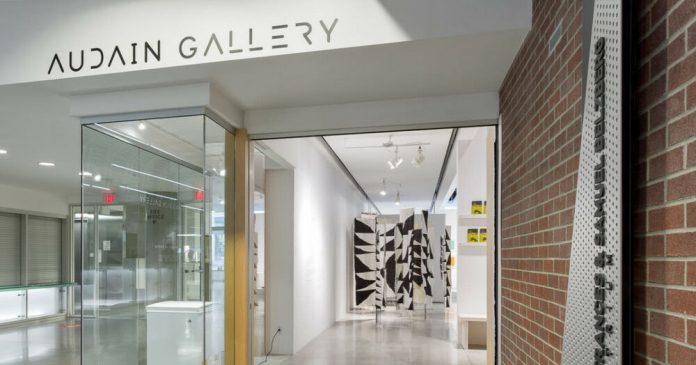
For visual art students, the year-end art shows at the Audain Gallery are a culmination of their hard work. With the shows for 3rd and 4th year students approaching, The Peak sat down (virtually) with 3rd year student Paige Smith and 4th year student Vitória Monteiro to get a few teasers on what we can expect to see in both shows. 

Their responses have been edited for clarity.

Paige Smith (she/her)

Photo courtesy of Paige Smtih.

Paige Smith is an experimental filmmaker and visual artist based in the stolen territories of the Coast Salish peoples, including the Musqueam, Squamish, and Tsleil-Waututh Nations, also known as Vancouver, Canada. Paige received her BFA in film in 2018, and is back at SFU completing a Post Baccalaureate Diploma in Visual Art. 

She is interested in the crossover between visual art and the world of cinema, and exploring how the two interact and influence each other. This can be observed thematically throughout her work. Paige describes her projects as an integration of both film and visual art, and is particularly interested in the materiality of mediums. The Peak spoke with Paige to dive into her mind and get some insight on her creative practices

The Peak: Tell us a bit about your work. 

Smith: My artwork has been presented in a variety of venues, from cinemas to art galleries, including the Dawson City International Short Film Festival (2020), Vines Art Festival (2019), Richmond World Festival with Cinevolution’s Digital Carnival (2019), and the Victoria Shorts Film Festival (2019). My most recent short film Watching Us is currently being distributed by Video Out Distribution

P: What initially drew you to art?

Smith: I’ve always found it easier to communicate my ideas through visuals than through written or spoken language. At a young age, I found drawing, painting, and photography, and they each quickly clicked in my brain. I am dyslexic, which affects the areas of my brain that process language, and growing up, I often struggled to express myself or get my ideas across to others. I think creating art visually has helped me find alternative ways of communicating and expressing myself in a way that works better with how my brain functions. 

P: How would you describe your artistic style? 

Smith: My artwork uses reflexive techniques while investigating viewer perceptions and interactions with art. I ground my work in research, and have particular interests in ecology, sexuality, and antiquated technologies. My artwork is experimental, often the result of hypothetical questions I had about the medium based on my research. 

I often structure my work after the scientific model: beginning with a question, a hypothesis, conducting an experiment, and then recording my results. As my work continues to expand beyond the theatre space of the cinema, it’s begun to explore more questions related to the agency of artwork and how artwork can reflect societal truths to its viewers. 

P: Can you describe what your creative process looks like?

Smith: I often have thoughts ruminating for a while — like a seed — and I can’t quite pin them down. My ideas usually come to me as visual images. The ones I can’t get out of my head are the ones I usually make into artwork. From there, I do research and keep my eyes open for new connections. I try to take in a lot of different types of art during this time. I like to call making the artwork, making soup. Somehow, it really feels like that. Throwing in all the different ingredients, tasting it as it goes, making something yummy that you share with others. Like a warm feeling.

P: What are your preferred mediums? 

Smith: I love to create images in any way possible, usually by drawing, painting, photographing, and filmmaking. I originally attended university to study film, primarily working with digital filmmaking tools. After graduating, I began to explore a combination of installation and video art. I’m particularly interested in CRT TVs, and have been using them both within my films and as the material itself of the art piece. 

P: I read on your website that you completed your BFA in film at SFU in 2018, and are now back pursuing a Post Baccalaureate Diploma in Visual Art, can you expand on this? Did this shape, evolve, or influence your craft at all? 

Smith: My undergrad degree in film has distinctly shaped my craft and how I think about artmaking. I was introduced to a lot of different types of filmmakers that I still reference and who continue to inspire me today. Some of my favourites include Tsai Ming-Liang, Satoshi Kon, Chantal Akerman, and Marlon Riggs. My artwork will always be influenced by cinema and my love for it. I love the light of the projector, the communal experience of feeling artwork with an audience, the big screen. The farther away my artwork goes from traditional filmmaking, the more I learn to appreciate the magic of the cinema and film in general.


P: What themes do you explore in your work, and what about them interests you? 

Smith: My artwork explores a variety of themes, but one thing that ties them together is my fascination with using reflexive techniques to investigate viewer perceptions and interactions with images. For example, my short film Watching Us examines the power viewers have to change what images are created and seen, specifically in relation to pornographic images. I wanted to examine the cyclical nature of image consumption; how our desires feed into what images we produce, and how the images we produce, in return, shape our desires.

The themes I tackle are often related to my personal curiosities and concerns: topics such as voyeurism, the climate crisis, feral cows, or depth perception. My artwork is my form of research and communication. I attempt to situate myself and reflect back my findings to my viewers.

P: For the upcoming Audian shows, can we expect to see a similar style of work? Will it reflect some of the concepts you’ve worked with in the past? 

Smith: Our cohort is currently studying with artist Heba Y. Amin. We are working with her to create a broad overarching theme that will frame each of our artworks within the exhibition. As a class, we have been looking at a variety of topics and artists whose works relate to image agency, politics, colonization, and surveillance.

I’m planning on expanding previous research I’ve completed about sensitive ecosystems within the Lower Mainland of Vancouver, which connects to my concerns about the global climate crisis. I plan to use some materials I’ve previously worked with before, such as CRT TVs, and will continue to push the viewer to question their interaction with the artwork. I’m interested in the crossover between technology and ecology. I want to repurpose antiquated technologies to reconnect viewers with the ecological moment. 

P: As a final word on art, if you could go back in time and give yourself some advice pertaining to your art, what would you say?

Smith: Don’t allow perfectionism to stop you from creating. Don’t compare yourself to your peers, instead learn from them and collaborate with them. Measure your artistic success by your own growth and happiness as an artist.

Vitória Monteiro (they/them/she/her)

Photo courtesy of Vitória Monteiro.

Vitória Monteiro is an interdisciplinary artist whose practice focuses on experimentation and materiality, with an emphasis on repurposing. Their works explore a number of vast concepts that are linked through a desire to better understand the nature of knowledge and the self. 

In our interview with Vitória, they open up about their academic journey and personal struggles, which we can see directly influences their process and style. Vitória is preparing for their cohort’s approaching grad show, and to get a bit of insight, we asked them about their creative process. 

P: What initially drew you to art?

Monteiro: I was originally majoring in gender, sexuality, and women’s studies (GSWS) at SFU, which I really enjoyed, but I’ve always been involved in the fine arts. I’ve explored theater, art, and music for my whole life, so it felt unfair to myself to not take my passions seriously and invest in a fine arts education. 

I nearly dropped out of university in my second year, I have a severe learning disability, and at the time, I had undiagnosed ADHD. I’ve always struggled with school, and by then I was doing really poorly in my classes. I used to think that the transition to art from GSWS came out of necessity, but I think I was always meant to go to art school and never allowed myself to. I’ve been diagnosed and am getting treatment for my ADHD, which makes the academic side of my courses less of a burden. I am grateful for how it all happened because going to art school is the best decision I have made. 

P: How would you describe your artistic style? 

Monteiro: I try to approach my work with curiosity and a process-based methodology. Deeply examining the material I’m working with is [central in my work] because my relationship to the material is the driving force. This experimental approach makes the process really exciting for me because I don’t get bored trying to recreate something I see in my head, but rather allow the material I work with to grow and guide me. 

P: Do you like presenting concrete ideas in your work, or do you prefer keeping it more abstract and open to subjective interpretation? 

Monteiro: It depends! In my first few years of art school, I really focused on audio-visual works that conveyed a strong point of view. I wanted a reaction from them, or a confrontation of some sort. These days I really value the ambiguous quality that art can have. Since I moved into a more material practice, I find myself feeling less entitled to impose my own ideas, because it feels like a collaboration with the materials. 

P: Can you describe what your creative process looks like?

Monteiro: My process these days is messy. When I make paper pulp out of recycled paper, I usually cook the paper down to really break it down, and then I blend it in batches to make a [substance] that I either pour into a big vat of water and pull sheets from, or I strain the pulp and take out most of the water, add liquid glue, and make a paste that I can use to make sculptures. 

For plant fiber paper, I bike down to the beach and harvest beach grass. Then bike home and clean the grass, and cook it in a huge pot with water and baking soda for the fiber to break down (usually about 8–10 hours of cook time). Then I beat the fiber with a meat tenderizer for about 15 minutes. Finally, I blend it to make a versatile pulp. It’s a long process!

P: What are your preferred mediums? How did you initially discover/become interested in these mediums?

Monteiro: My focus lastly has been on handmade paper. I’ve been deep diving into its different processes, since there are a lot. My initial draw to it was how process-based it is. There are many steps involved in making a single sheet of paper. I was craving a practice that I could do with my hands/body. It’s such a fascinating material because there is so much you can do with it. I never really saw myself as a sculptor before, but the process clicks so well with my brain. 

Before I started working with paper, I primarily worked with audio, visual, and projection art, but I was really missing the mess and remanence that working with physical materials gives you. I didn’t like the lack of paper trail, since I couldn’t look back on my process. This is not to say that audio/visual art isn’t about process, but rather the way I was approaching it was very product/outcome based, and I felt like something was missing. 

P: What concepts do you explore in your work? What about them interest you?  

Monteiro: A theme I’m working with right now is how material can be acting as something it is not, much like humans do. Since a lot of my work uses recycled paper, such as old readings, texts, shopping lists, my work explores themes of indexicality, translation, and citation and in doing so proposes a new way of reading. Working with pulpy materiality provides a new realm for knowledge to inhabit. 

This space is silent, inarticulate, abstract, and is an archive of words that no longer can be interpreted in the traditional way. We have to imagine correlations in order to form new images, thoughts, and ideas. Since they no longer present themselves before us physically. But like the words that exist in the pulp, these images remain conceptual. 

This [abstract form of] reading is achieved through the intermingling of various texts which range from assigned theoretical readings, artistic manifestos, and academic books, to shopping lists, personal photographs, and letters. I try to combine words, ideas, and thoughts that may not have come into contact with each other without my intervention. 

P: What inspires you as an artist? 

Monteiro: Working with something that would have been thrown away otherwise and giving old paper a second life is awesome. Also engaging with academic texts (like class readings) — as someone with learning disabilities — reading is hard for me. So taking these institutional forms of knowledge and blending it all up into an abstract realm, feels like a cheeky way of engaging with academic text. 

The Peak: For the upcoming Audian shows, can we expect to see a similar style of work? Will it reflect some of the same themes you’ve worked with in the past? 

Monteiro: Yes! I’m really trying to deepen these themes and concepts, and further explore how the work I make acts as a storage system, or as an archive of the recycled texts that exists within it. I’m very excited for the show, it’s the first time me and my cohort will have the opportunity to show our work at the Audain in person, so this really means a lot to us.  

P: As a final word on art: if you could go back in time and give yourself some advice pertaining to your art, what would you say?

Monteiro: Trust yourself. I was so scared deciding to switch to visual art from an academic focused discipline. Taking yourself seriously as an artist is so hard to do, and it involves a lot of inner work to be honest. My imposter syndrome kicks into high gear when I start talking about my own work, so I need to continuously remind myself that the work that I do is important. Art is so unbelievably valuable for emotional processing, activism, and connecting with others — it really is an act of love. When we take that love seriously and give it the respect it deserves, we are not only respecting ourselves, but also setting an example for other creatives around us to do the same, and I think that’s pretty sweet. 

Audain Shows

To see more of Paige’s work check out her website: https://www.paigesmithfilm.com/. For more of Vitória, check out their art instagram @vetosea. Be sure to keep an eye out for some of their artworks in the year end Audian shows. The 3rd year show (Paige) is March 18–25, and the 4th year/grad show (Vitória) is April 15–25.

To read the full interviews, be sure to visit www.the-peak.ca.

Annual Coastal Dance Festival celebrates the legacy of Indigenous elders

0
Coastal Dance Festival returns remotely for 2021. Photo: Amanda Siebert / The Georgia Straight

By: Dev Petrovic, Staff Writer

After a year of endless event cancellations, the Coastal Dance Festival decided the show must go on. Brought together by the Dancers of Damelahamid, the event will be occurring virtually this March. Every year, the festival celebrates the art of Indigenous dance — with guest performers from all over the Northwest Coast of Canada, as well as from Indigenous communities around the world, including South America, Norway, New Zealand, and Australia. The Peak had the opportunity to speak to Artistic & Executive Director of the Coastal Dance Festival, Margaret Grenier, about what to expect with this year’s showcase. 

Providing some background on the festival’s origins first, Grenier explained that “it originally started because of the cultural olympia that led up to the 2010 Olympic Games.” The event was initially intended to create space for traditional Indigenous dance, as several already established dance festivals had a contemporary style focus. “But, I think that the festival has in itself shifted in many ways,” she said. “Having the ability to define what is traditional, what is contemporary, or what is needed to be shared at the festival [for our artists to represent themselves], has become a little more open.” 

This year’s event is also particularly monumental and meaningful to the Dancers of Damelahamid. “Our family hosts the festival each year and we’ve had some loss with our elders — in particular my mother, Margaret Harris, passed last summer,” noted Grenier. She said this year they wanted to mark the legacy of Elder Margaret Harris, as well as the legacy of that generation. Grenier explained that “after the Potlatch ban had been lifted, there was decades of work that went into revitalisation, and that generation made it possible for us to have the dances that we have today.” 

Considering the challenges that have arisen with the COVID-19 pandemic, the context of this year’s performance has also shifted. Grenier explained that many of the dancers have not had the opportunity to share their art during lockdown and many of the performers have not even had the chance to wear their regalia since last spring. Still, she said, “it really is a festival with a focus on sharing, on resiliency, and on how we’re finding our ways to practice this.” Grenier added the performance as a whole this year is focused on allowing their artists “to share in whatever capacity they are comfortable to, and that they can, given all the restrictions that we are under right now.”

Grenier said the practice of cultural sharing in Indigenous communities has been greatly impacted by the pandemic, as so many gatherings and events have been cancelled. She explained artists have been trying to adapt to the circumstances by continuing to connect with others in any way that they can, like through the sharing of songs. “Also a really big focus seems to be on language, like finding ways for language practice to help working with elders and language carriers — just finding different ways to practice for when we can actually gather in person,” she added. 

This year’s event will be hosted on the Dancers of Damelahamid website and a list of images and biographies of the artists participating in the festival will be made available, from which the corresponding performances will be linked. While the festival will be running on a much smaller scale than usual, there are aspects of this year’s performances that are particularly sentimental because of the virtual circumstances. “What will be shared is really coming from the communities of our artists,” Grenier said. “The artists who won’t be travelling to Vancouver [will] be able to share some spaces that they couldn’t normally bring to [the festival].” Audiences this year will be able to see the connection Indigenous communities around the world have with the land — an opportunity that otherwise would not have been available.

When asked what the SFU community can do to support this year’s dance festival, Grenier said there are opportunities for donations. But she also noted that they aren’t asking for much as they’ve already arranged for the festival to happen without relying on ticket sales. She said, “Just taking the time to sort of be with the artists to see what they are sharing” would be the best way to support them. Grenier also shared some words of encouragement for all audiences watching from home: “have an open mind and an open heart that we’re all in this together this year and we’re all finding a way to move forward.”

The event will be running from March 12—18 and does not require tickets. To stay tuned on where to view the festival, check out the Dancers of Damelahamid website.

Vancouver’s overdose crisis amidst COVID-19

0
PHOTO: Jonathan Hayward / The Canadian Press.

Written by: Nancy La, SFU Student

As vaccinations become available for Vancouver, the grim battle against COVID-19 begins to look more hopeful. The days of self-isolation now have a clearer finish line, and normalcy is coming closer and closer. Yet in Vancouver, a part of the normalcy we all wish for contains in itself another health crisis — one that faded from the limelight when cases of COVID-19 surged in B.C. 

Lurking in the background of the pandemic is the overdose crisis that was declared a health crisis by the government in 2016, five years before the pandemic made its way into Canada. 

My interview with BC’s Health Minister gave insight into the complexity of addiction, along with government actions during the pandemic in response to the overdose crisis during the pandemic.

Additionally, Burnaby’s Overdose Crisis Zoom Town Hall with BC NDP MLAs (and other advocates) in the Burnaby areas provided an even greater understanding of the overdose crisis. 

My Involvement

In an attempt to stave off feelings of helplessness, I joined SUCCESS’ Youth Leadership Millenium (YLM) program where workshops on self-improvement and career development take place once every week on Zoom. An important part of YLM is giving back to the community and in order to successfully graduate from the program, members must take part in a capstone project called Community Leadership Initiative (CLI). 

A question often asked in our brainstorming groups was “What is one thing that your community is struggling with?” My group identified the overdose crisis as an issue that not only affects the Downtown Eastside (DTES), but also has a ripple effect across communities both urban and suburban. My group then launched an educational platform on social media to spread awareness about the crisis and to reduce the social stigma on addiction. 

As a part of the project, we interviewed BC Health Minister Adrain Dix for more details on how the crisis came to be, the actions taken by the government, and the effects of COVID-19 on the crisis, along with the steps taken in response to those effects. 

Prescription Painkillers

To better understand the overdose crisis as it is today, we need to understand how it all started. The issue began in the early 2000s in Canada with the increase of prescriptions for medical grade opioids for patients whose pain level did not require such a high level of a painkiller (i.e. taking OxyContin for non-chronic pain, such as headaches or post-surgery pain management).

This excess of prescriptions led to a large population of Canadians becoming increasingly opioid reliant. In fact, the BC government recently (along with many other governments) sued pharmaceutical companies for their misleading marketing to doctors and their roles in starting the overdose crisis in North America. The government soon realized that opioids were becoming a health concern and started to cut off the medical (and legal) supply of opioids, but the damage had already been done by that time. 

During the City of Burnaby’s Overdose Crisis Zoom Town Hall, Janet Routledge, Burnaby North MLA, shared some personal connections she had with the overdose crisis.

“In thinking about the men that I know in my life [ . . . ] the vast majority of opioid deaths are men who are alone in their homes, who suffered from chronic pain, either from sports or work injuries or botched surgeries.” 

The medical supply of opioids was dwindling, yet the number of people who were reliant on opioids was growing, causing a sharp increase in demand in the market for illicit synthetic opioids such as fentanyl and its analogues. Considering that fentanyl is much deadlier than conventional opioids, the health crisis was only going to get worse. 

Government Action

With over 1716 deaths related to illicit drugs in 2020 — a 76% increase from 2019’s 984 deaths — BC has yet to control the overdose crisis. 

During the interview, we raised questions about the nature of how BC is coping with the effects of the crisis. Dix responded by commenting on the complex nature of addiction, along with some other barriers the government faces when dealing with the crisis.

“The cumulative effect [of the overdose crisis] on people, the trauma of addiction, and people requiring long term care [after surviving], are all elements of the overdose crisis” said Dix. “At its core, the issue of addiction — which is linked to other issues in society — is one of chronic disease. The overdose crisis, and addiction issues, in many respects, [are] a lifetime issue.” 

Dix also commented on one of the most challenging aspects of the overdose crisis saying, “We can get better, but it requires support for long periods of time, and can sometimes get expensive.”

Rehabilitation is amongst the most difficult aspects of the overdose crisis as long term care requires massive amounts of investments — both in time and money — from the federal and provincial government. Throughout the hour-long interview, Dix drew parallels between his diabetic diagnosis to help us understand how, for chronic illnesses such as addiction, mental health problems, and diabetes, recovery is the goal instead of a cure. 

With an understanding that addiction (and the overdose crisis) is a complex problem with many social determinants, Dix explained strategies the provincial government is implementing. 

These strategies include “significant investments in housing,” as housing spaces during the pandemic (such as hotels) are not a long term solution because they “group people who are dealing with the same issues in the same space.” He added, “there are two temporary modular housing projects in my riding for those who are struggling with addiction [which] provide hundreds of bed spaces for the homeless.” 

Regarding the community acceptance of these projects, Dix said,“A lot of people want housing for people suffering from addiction and mental health issues to be self-contained [ . . . ] but to be successful, it has to be integrated into the neighbourhood.”

The City of Vancouver also recently purchased the Days Inn Motel to provide 65 housing units for homeless people, including wraparound services and other support. They anticipate people moving in this November before the worst of winter arrives.   

However, it does not end with just housing support. 

“If people are dealing with genuine addiction issues and are unbelievably vulnerable, you have to have support and care that isn’t just housing. That’s why we have primary care networks to provide those services,” said Dix. 

Primary care networks are health service centres spanning across the province that provide team-based health care for the community that it is located in. The networks currently include Burnaby, Fraser Northwest, Ridge-Meadows, Prince George, Comox, South Okanagan-Similkameen, Kootenay-Boundary, Vancouver, Richmond, and South Island. 

“It’s not just doctors,” Dix explained regarding the team-based approach needed to address mental health and addiction issues. “You also need people who are professionals in addiction and mental health, nurse practitioners, nurses, health science professionals, social workers, the whole team in the community to provide help.” 

COVID-19 and the Overdose Crisis

One of the most devastating aspects about the COVID-19 pandemic is its effect on health care systems worldwide, such as with surgeries being delayed. This brings up one of the main points of my interview with Dix: how did the pandemic affect the ongoing overdose crisis?

 “We’re in two public health emergencies. The steps taken to deal with COVID-19 involves some form of social isolation, and that has been catastrophic for the overdose crisis. We were making progress [with the overdose crisis] back in February 2019, and then the COVID-19 crisis hit, and then we got one of the highest numbers of overdose deaths in May and June. This is not an ‘either or’ question, but an ‘and’ situation, where we have to deal with COVID-19 and the overdose crisis.”

Dix also elaborated on how social isolation, a crucial aspect of COVID-19 prevention, is a deadly thing when it comes to the overdose crisis.

 “You have people in isolation, people can’t get access to care, and [are] also using alone more — the most dangerous thing you can do — and the drug supply [is] becoming increasingly toxic. The consequences have been serious.” 

Along with challenges, however, come solutions. Dix pointed out some of the strategies the provincial government has put into action since March to mitigate the effects of COVID-19 on the overdose crisis. These include “access to prescription alternatives like hydromorphone” and “changes to allow nurse practitioners under specific circumstances to prescribe alternatives to illicit drugs.”

On the topic of prescription substitutes, Mae Burrows, advocate for worker’s rights and mental health and addiction reform, elaborated on what should be included in the safe supply for people who use drugs.

“The black market is far more deadly than any of these drugs could ever be [ . . . ] we can eliminate a lot of those social ills with a safe supply. We also need to include the drugs that people need [ . . . ] As of right now, heroin is not on the list, and yet a lot of people need it, especially after all the fentanyl, they cannot manage with the drugs that Pharmacare lists.”

This interview happened in November last year and since then, there have been further actions and news regarding the overdose crisis from the government. Days after the interview with Dix, the city of Vancouver unanimously voted for the motion to seek decriminalization of drug possessions. 

If approved by the federal government, Vancouver will become the first city to decriminalize drug possession in Canada. Decriminalization was also a heavily emphasized point of discussion for the Overdose Crisis Town Hall, as panelists called for involvement of federal actions regarding the decriminalization and de-stigmatization for drug users. 

As Russell Maynard, former Senior Manager for Vancouver’s Insite, North America’s first supervised injection site, put it, “Our problem is the drug policies that are based on stigma and not science. We cannot address stigma when personal drug use is illegal. They are a huge barrier and a driver of stigma.” 

At the time of this article, registered and psychiatric nurses now have authorization from the Ministry of Health to prescribe prescription alternatives to illicit street drugs in an effort to broaden the scope of care for those who need it. 

The Path to Recovery

The pandemic is a difficult time for all of us, especially those who are already struggling with addiction and mental health issues. The question now becomes “what can I do to help?” 

Well, if you’re an individual who has been self-isolating and following provincial health guidelines, just keep going. The only way to really reduce the effect of COVID-19 on the overdose crisis is to prevent cases from climbing, and we can only do that by staying at home and following health guidelines. 

We cannot expect things to go back to normal if we do not work together to get there.

“WandaVision” pays homage to classic television with a refreshing feminist twist

0
Wanda Maximoff and Vision are no longer underrated characters. Image courtesy of Disney+

By: Emma Best, SFU Student

What do you get when you put a dead synthezoid and a sorceress into a sitcom in suburban New Jersey? Miraculously, you get a romantic, emotional, and haunting look at two of Marvel Studios’ most underused characters. WandaVision is the first of several Marvel Disney+ shows to release this year, and the first Marvel TV show to directly connect with the blockbuster counterparts. The series is a smart way to reintroduce fans to the Marvel Cinematic Universe and utilizes all the great aspects of television storytelling — but that wasn’t Marvel’s original plan.

Back in April of 2019, Marvel Studios president Kevin Feige announced Marvel’s phase four slate, which included twelve films and television series. At first, they were going to start with the much-anticipated Black Widow solo movie and The Falcon and the Winter Soldier series, set to release in 2020. However, with the COVID-19 pandemic, all film releases were pushed back — Marvel being determined to debut them in theatres — and filming on projects including The Falcon and The Winter Soldier were cut short. This forced Marvel Studios to completely rethink their release order and fully take advantage of the Disney+ streaming service. With the blockbuster films pushed to the side for the time being, the television series needed to fill that gap, especially with fans having no Marvel content for over a year.

Originally planned or not, WandaVision is the perfect Marvel release to not only welcome fans back to the universe, but to introduce them to the television format. The show follows former Avengers, Wanda Maximoff (Elizabeth Olsen) and Vision (Paul Bettany), as they navigate an idealized suburban lifestyle that is not exactly as it seems. Nearly each episode takes place with the backdrop of a classic family sitcom throughout the decades, from The Dick Van Dyke Show and Bewitched in the 60s, to Malcolm in the Middle and Modern Family in the 2000s. 

By parodying theme songs and borrowing set designs and storytelling techniques from the aforementioned shows, the story being told through these sitcom episodes could not be told in a movie format. However, at the core of these stylistic sitcom episodes is still a familiar Marvel movie feel. With returning side characters including, but not limited to, Jimmy Woo (Randall Park) from Ant Man and the Wasp and Dr. Darcy Lewis (Kat Dennings) from Thor, there is still a clear connection and grounding in the pre-existing universe. It has also been confirmed that the events of this show will connect to the events of the second Doctor Strange film, Doctor Strange in the Multiverse of Madness, which Elizabeth Olsen is set to co-star in. 

While Marvel has often been criticized for its portrayals of female heroes  — such as Black Widow calling herself a “monster” because she’s infertile, or the way it took almost ten years to get a female-led film — WandaVision is taking a step in the right direction. For starters, it has a female showrunner, Jac Schaffaer. When Wanda was first introduced to audiences in Avengers: Age of Ultron, there was very little done to explain the origins or capabilities of her powers. However, in Schaffaer’s WandaVision, Wanda is at her strongest, demonstrating the extent of her reality warping powers. 

Simultaneously, Wanda is shown at her lowest, explicitly dealing with her grief. Having lost so much in just the four movies she’s been a part of, this is an aspect of her character that is important to explore — especially with her being a prominent female character. So much of the show highlights Wanda’s unique experiences through her powers and her own mind, and that makes her character even more powerful than it was in the films. 

WandaVision acts as a stepping stone between the previous Marvel films and the ones soon to come, and it also demonstrates how the Disney+ TV series can expand the universe in ways the movies can’t. It’s clear that WandaVision is an important piece in the greater Marvel Cinematic Universe puzzle. For any Marvel fan, this show is essential viewing.

The season finale of WandaVision airs today and is available only on Disney+.

Matthias Danninger named Tier 2 Canada Research Chair in experimental particle physics

0
PHOTO: Josh Gordon / Unsplash

Written by: Alex Masse, Staff Writer

Matthias Danninger is one of several new Canada Research Chairs elected in 2020 from SFU, who will receive funding for their ongoing work. Danninger’s official title is Tier 2 Canada Research Chair in experimental particle physics, where he partakes in the ongoing ATLAS experiments at the Large Hadron Collider (LHC). 

Through the ATLAS experiments, Danninger and his colleagues hope to look into the past of our universe, with a particular focus on “why matter prevailed over antimatter in the early universe, or what exactly dark matter is.” This includes looking for signals of long-lived particles and other “unconventional exotic signals.”  

The process involves taking protons, energizing them, and forcing them to collide. Through these experiments, “unprecedented” levels of energy are created. These collisions are then analyzed in hopes of finding particles that can be studied, particles that “poke holes into that standard model” of particle physics used today, in hopes of finding new particles beyond it. Through these collisions, the LHC creates environments similar to the early universe, in hopes of recreating the particles that existed at that time.

“We are trying to understand nature, we try to understand the building blocks of nature and that is just fascinating,” Danninger said. 

Danninger’s academic journey, as he put it, “is a long one.” His studies began in Munich in general physics, with a final undergraduate course highlighting neutrino physics. “The way the course was taught was a little bit less traditional,” he said. “The assignment was you [giving] a one-hour long seminar about one specific special topic.” Danninger chose the IceCube Neutrino Observatory, where he ended up working for his Masters and PhD. 

The IceCube Neutrino Observatory is an Antarctic telescope that hopes to detect neutrinos, known as “ghost particles” for their low interaction rate, which makes them hard to track. The IceCube is the largest neutrino detector ever built. 

“IceCube was such a bizarre experiment — let’s call it — to be at the South Pole,” he said.

“I was always interested in particle physics, and maybe nuclear physics.” He added, “This kind of flipped the coin by itself, sort of. I just got excited, and I thought ‘man, [studying this] would be amazing, to build an experiment at the South Pole.’” 

While there are four current experiments underway at the LHC, the ATLAS detector experiment is “even bigger,” according to Danninger. It is one of the collider’s two major experiments, employing approximately 3,000 scientists. Danninger started at SFU for his postdoctorate, and continues to teach at the university.

“For me it’s a job, it’s kind of if you’re doing your hobby, what you’re excited about, and trying to understand the universe, the origins of the universe [ . . . ] we are able to study this, and I am able to do this as my job.” 

The SFSS Council campaigns for student union meeting spaces following eviction notice

0
PHOTO: Gudrun Wai-Gunnarsson / The Peak

by Kyla Dowling, Staff Writer

The Simon Fraser Student Society (SFSS) Council launched a campaign to ensure student unions have accessible and permanent access to designated common areas. In an interview with The Peak, WeiChun Kua, SFSS Science Representative, explained that the SFSS Council is advocating for students’ rights to space, without fear of future evictions.

The campaign comes after the Environmental Science Student Union (EVSCSU) and Bachelor of Environment Student Union (BESU) received an eviction notice from the School of Environmental Science in October. Their common room was to be turned into a laboratory space by the end of the Fall semester, and neither student union was warned of the eviction. Despite plans to convert the room, the EVSCSU and BESU have not moved out, as their intended storage space is under renovation.

While the student unions are not facing any pressure to move out just yet, the evictions pose a unique problem, according to Kua. “They’re getting evicted in the middle of a pandemic when students are not able to be physically on campus to reclaim their space,” Kua said.

Though this is not the first eviction — Kua outlined the 1988 repurposing of English, archaeology, philosophy, and economics common rooms in his campaign — the SFSS aims for the EVSCSU and BESU eviction to be the last.

The SFSS Council is planning to write a letter signed by all faculty student unions (FSUs) and department student unions (DSUs) to send to all faculties and departments. That way, all FSUs and DSUs can set clear expectations about accessibility, security, and longevity of their common spaces.

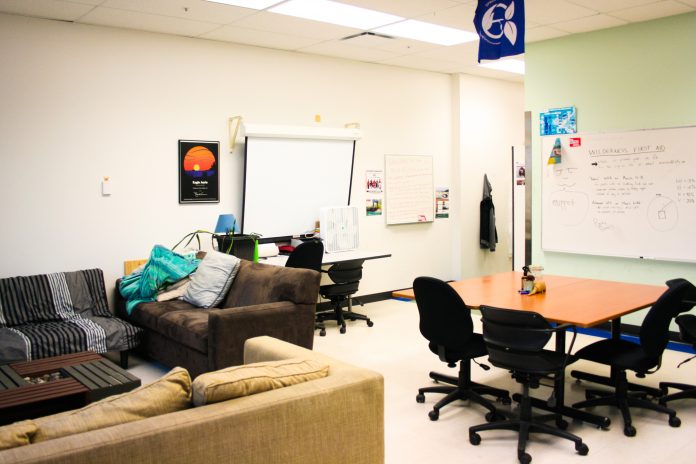
“Common space is where students get together, get support from student unions, make new friends, kind of build a community around people who have similar majors and [are] in the same department.” Kua added that common rooms are necessary to “foster collaborative spaces outside the classrooms.”

In a statement sent to The Peak, BESU president Nathan Zemp explained BESU’s position on the matter. While they believe students deserve space, they do acknowledge that “the brusqueness of the initial eviction was mainly due to a lack of communication and knowledge regarding how we use our space” and its importance.

According to Kua, the letter awaits approval from the Council. It outlines clauses regarding permanency to ensure common rooms stay close to their respective departments and that student unions cannot be evicted. In the meantime, his recommendation to students who want to get involved is to contact their student union.


A lack of inter-provincial travel restrictions in BC is exhausting

0
PHOTO: BC NDP / Flickr

by Marisa Rizzo, SFU Student

Since the initial COVID-19 shutdown, the federal government has encouraged us not to engage in non-essential travel outside of Canada, and to limit travel between provinces. However, in BC, recent reports from Whistler show that many of their guests are visiting from both Ontario and Quebec. Because BC’s inter-provincial travel restrictions are so inconsistent with a good portion of Canada, mere suggestions of staying put are not enough to sway everybody. BC needs to make these more uniform with the rest of Canada to strengthen the fight against COVID-19.

Many other provinces have strict inter-provincial travel restrictions. Manitoba recently updated the province’s Public Health Act to mandate self-isolation for 14 days after arriving from another Canadian province or territory. Maritime provinces such as Nova Scotia make it clear that staying isolated for 14 days is necessary to curb further spreading. Even the Northwest Territories has put a self-isolation plan into effect for travellers to monitor potential symptoms.

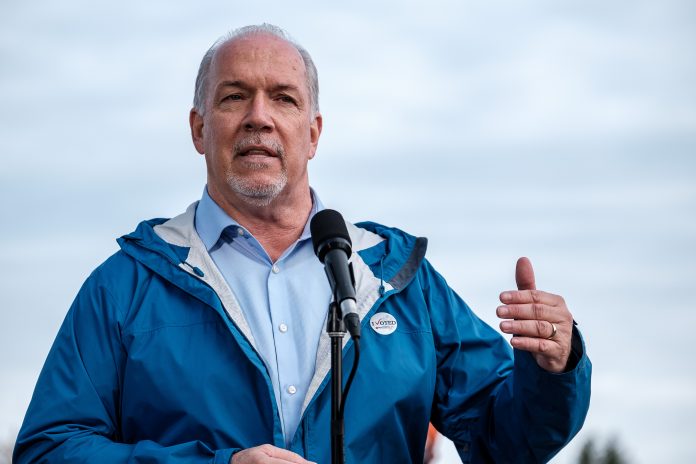
However, in BC, Premier John Horgan recently stated that they are not implementing an inter-provincial travel ban because it is not in their “legal options.” He appears to be unperturbed by the notion of people travelling to the province and believes that his simple advice for them to not do so is being taken into consideration. If many of the other provinces in the country have been able to implement some form of restriction, then why can’t BC do the same? The province shouldn’t wait for numbers to rise exponentially to implement stricter measures.

One survey done by Research Co. said that 80% of Canadians would like to have an inter-provincial travel ban in place. The desire to have greater travel restrictions is certainly present across the country, yet Canadian citizens from other provinces and territories can still easily fly into BC and roam around.

People who travel essentially for work and important jobs have a valid reason to move around; it is the vacation goers that my concern lies with. Many of us in BC have been hunkered down for months, making it frustrating to see others engage in non-essential travel. Of course, I would love to go on vacation, but now is not the time for a trip — especially since I help my grandmother who is over 90-years-old (and is still not vaccinated). I feel defeated and alone. If BC were to sanction mandatory isolation for inter-provincial travel, it would demonstrate how the province is willing to take precautions more seriously, and would ease this common frustration. 

With new variants of COVID-19 entering the province, we need to implement new restrictions as soon as possible. All it would take is one person to come in with the variant to potentially skyrocket both the case and hospital numbers. More travel negligence, more super-spreader potential, more cases. It is not difficult to comprehend, but it is unfortunately easy to ignore.

Vaccines have begun to rollout, but we are just getting started with any kind of progression to normalcy. Aligning with other provinces’ 14-day quarantine restrictions would bring more certainty to the notion that the virus will not spread. BC already has these kinds of restrictions with international travel, and even implemented a new rule requiring international travellers to stay in a government-approved hotel. If inter-provincial travel restrictions were given as much attention, then maybe the country could finally be cohesive in its travelling rules.

Is Victoria haunted? A paranormal look at Point Ellice House

0
Be on the lookout for ghosts at this BC museum. Photo courtesy of Victoria News

By: Emma Jean, Staff Writer

When it comes to the paranormal, X-File like behaviour, I tend to be more of a Scully than a Mulder, and not just because I also can’t settle on a shade of red hair dye. I’ve never been one to believe in ghosts or spirits, which was part of the reason why I was intrigued by Beyond Belief Paranormal Events’ presentation on Point Ellice House, a heritage museum home (and childhood obsession of mine) near the inner harbour in Victoria, British Columbia. 

Co-hosted by Point Ellice House’s executive director Dr. Kelly Black, the two-hour live stream presented an “evidence review” of the substantial amount of paranormal investigation done in the house. 

The history of the house was summarized by Dr. Black to the on-screen panel of investigators, and the 20 Facebook Live viewers who faithfully stayed well past the scheduled time. He told the story of the Wallace family who built the property on their farm in 1862, the affluent settler O’Reilly family who lived there until they sold the property to the British Columbian government in 1975, and the many servants and staff who maintained their property and lifestyle. 

It was also adjacent to the Point Ellice Bridge disaster of 1896, in which 55 people were killed when a transit bus fell, along with the bridge itself, into the ocean. The incident remains one of the most lethal transit accidents in Canadian history. In the aftermath, the house was turned into a makeshift morgue. Needless to say, Dr. Black concluded, there’s plenty of reasons to believe Point Ellice House could be haunted. 

As the investigators laid out the evidence they had gathered in the two years they have been working in Point Ellice House, it seemed clear there were even more reasons to believe the house hosts paranormal residents. Using devices like the Paramid, the team captured movement in areas where video confirmed there were no people. 

More evidence was presented, this time during what appeared to be a conversation with a spirit via a motion detector. After a series of staccato, abrupt beeps indicating detection, and attempts by the investigator to make sense of them, they made a request. “If someone’s in the kitchen, can you beep again but for a long time?” After a moment’s pause, the beep became a sustained, long note. Seemingly, an answer. 

With little frame of reference myself, it was hard to judge how these techniques and findings fare next to most paranormal investigations, but the presentation suggested it was legitimately done. As each piece of evidence was presented, it wasn’t with any editorialization; just as statements of fact. “Does this mean it’s paranormal?” posed one presenter after playing audio evidence. “Not necessarily, but it’s correlating and it’s interesting.” 

Even as the evidence steered into campy territory, it was still presented with an unflashy conviction that was almost more convincing than the evidence itself. During a public EVP session, or Electronic Voice Phenomenon in which questions are asked of a potential spirit and recorded for analysis, a response out of a B-film was found. “Are you in pain?” asks a member of the public to the open air. In real life, the paranormal guides say no response was audibly heard, but on the tape of the session, a growly low voice whispers: “pain. . .” 

In the moment, listening to that tape felt chilling and unsettling, with the same sentiment reflected in the responses from the viewers and panelists. As I repeated it to a friend later, however, it sounded like a kids’ campfire ghost story that someone’s jerk older brother would make up.

What do I make of all of this? I think that Point Ellice House represents an interesting and historic era of west coast history, and that any efforts, paranormal or otherwise, that support its upkeep are good. I still don’t know how to judge the paranormal evidence presented; in fact, I’m inclined to avoid judging it at all. Was there really a ghost in the kitchen, or was the alarm set off by some other factor? I really don’t know. I don’t think that anyone does! What I do know is the curiosity to find out keeps people engaged and interested in the world around them, and helps places like the Point Ellice House survive. 

SFU associate professor Jiguo Cao renewed as Tier 2 Canada Research Chair

0
PHOTO: National Cancer Institute / Unsplash

by Jaymee Salisi, News Writer

Initially nominated in 2015 for Tier 1 of the program, Jiguo Cao was renewed as a Tier 2 Canada Research Chair in data science. With this title, Cao takes on the responsibility of promoting and leading research within his area.

Cao told The Peak in an interview that this position is meant to provide leadership to new researchers in their careers by conducting research in areas such as the prevention of Alzheimer’s disease and the advancement of artificial intelligence. 

Data science involves extracting information through statistics to gain insights on a subject. It is an interdisciplinary field, according to Cao, so he works with collaborators from various countries to gather and analyze data in his research areas. 

“I serve as the bridge between the data and the application problem we want to solve,” Cao said. He explained that researchers from different application areas provide him with data and he looks for the association between the circumstances and the complication. 

Cao currently studies how healthcare systems in different countries affect the COVID-19 death rate, as well as the survival time of breast cancer. “One central role in statistics is to try to answer the questions based on the data,” he said. Cao explained that this area of research involves the analysis of mammogram images provided by researchers of subjects with and without breast cancer. Comparing the image data helps him predict cancer survival.

Experienced as a statistics and actuarial science associate professor at SFU, Cao is also an associate editor of multiple publications including the Canadian Journal of Statistics and the Journal of Agricultural, Biological, and Environmental Statistics

He expressed that holding a position as a Canada Research Chair for data science is a prestigious title, as there are only 10 Chairs across Canada in the statistics department. 33 Chairs are currently appointed at SFU. 

The Canada Research Chair Program “invests approximately $259 million per year” to support  program members and make Canada a top country in research and development. Chairholders exist in a range of areas including engineering, health sciences, and humanities. Each Tier 2 Chair receives $100,000 towards their research annually for five years.

To all the showers I’ve cried in before

0
PHOTO: Gudrun Wai-Gunnarsson / The Peak

By: Kyla Dowling, Staff Writer

Shower crying. You’ve done it, I’ve done it, Archie Andrews did it on Riverdale when his dad got shot and then suddenly stopped crying to fuck his girlfriend in the shower. Either way, it’s a universal experience. But if you’re like me — someone who makes bad life choices and is weirdly emotionally sensitive for a Capricorn moon — you’ve cried in many a shower. Here is a second-person retelling of my stories so you can share my soap scum-filled pain.

  1. The house of an unfortunate hookup 

It’s 9 a.m., you have a White Claw-induced hangover, and you’ve just woken up after spending the night having very mediocre sex with a guy whose idea of kinky is doing it doggy-style. There is nothing you want more than to take a shower immediately because you’re pretty sure he hasn’t washed his sheets in over a month. Why did you even spend the night, goof? 

You get up off his floor mattress and go inside the bathroom only to find that there is one bottle in the shower. The label on the bottle reads: 36-in-1. Shampoo, conditioner, body wash, shaving cream, lube, chip dip, cat food, Dasani water — the list goes on. You weep for 30 straight minutes. He proudly texts you a week later that he got a noise complaint, but you know it’s from your cheeks being wet after sobbing, not anything else being wet.

  1. Your beach-themed bathroom in your childhood home 

If you haven’t reverted to your 16-year-old self after returning to your childhood home for unforeseen circumstances, there’s something wrong with you. Maybe it’s just me, but there’s something about that beach-themed bathroom that brings back high school trauma. You don’t remember your assignment due dates or how you hit like on a Tinder match’s Instagram photo from 2013. 

Underneath the shell-shaped lights, as you hang your blue towel on a starfish hook and step into the shower, you revert back to your greasy high school self who listened exclusively to My Chemical Romance and thought that you looked like Hayley Williams when you dyed your hair orange. (Spoiler alert: you looked like a rejected Weasley). The shower’s stained with that Splat hair dye to this day, you heathen.

  1. Barbara Rae House, 4th floor 

Allow me to transport you to the fourth floor showers of Barbara Rae House washrooms in October 2019. There’s hair clinging to the wall that you’re pretty sure doesn’t belong to anyone on your floor — unless their curtains don’t match their drapes. Someone left a cloth on the floor that likely moonlighted as a cum rag. 

And yet, as you sob in the freezing shower about how your RA took the last of the Dining Hall chicken nuggets, you have never felt more alive. Why? Because Tanner— dear, sweet dad-jokes-and-Hawaiian-print-shirts Tanner, unironically-says-broski Tanner, does not recognize that you are in the shower. He thinks that he is alone. As he meticulously grooms his three-hair mustache, you are treated to him singing along to “Truth Hurts” by Lizzo. Trust me when I say it’s the best crying background music since “Ribs” by Lorde.

Honourable mention: McTaggert-Cowan Hall 

There’s something special about the bathrooms of McTaggart-Cowan Hall. Sure, the Google reviews for this residence building might refer to it as having “a strong odor of marijuana” (sorry, my bad) and ideal for “dual monitor productivity” (which implies the existence of gamer boys in there). The showers are isolated, so you don’t have to listen to someone listening to Kanye and/or jacking off right next to you. The elegance and privacy of these showers are probably the last good thing SFU has ever done for students, and the residence was built in the 80s.