Home Blog Page 351

SFYou: Dr. Lesley Schimanski

0
Photo courtesy of Dr. Lesley Schimanski

By: Katarina Chui, SFU Student

Name: Lesley Schimanski
Pronouns: she/her/hers
Departmental Affiliation: Department of Psychology
Hometown: Pincher Creek, Alberta
Occupation: Sessional Instructor, Psychology and Cognitive Sciences

Among students, Dr. Lesley Schimanski is known for three things: living on the Sunshine Coast (and thus having a long commute to SFU), her unwavering kindness, and her dedication to students. A single glance at the Facebook page Must Knows for Courses at SFU attests to these traits. Countless students recommend their peers to take classes with her, often mentioning their experience with her or her personality in the comments.

Dr. Schimanski (or Dr. S., as most students refer to her) came to SFU as a sessional instructor in 2017. Her resume is impressive: before SFU, she taught for over a decade at the University of Alberta and in multiple schools in Arizona. In addition to teaching at the University of Arizona, she studied rat brains in mazes there with Dr Carol A Barnes, a prominent neuroscientist. Since coming to SFU, she has taught a multitude of classes, such as introductory psychology, data and research methods in psychology, cognitive, and neuroscience courses. 

Similar to how she teaches, Dr. Schimanski exhibited a quiet, calm demeanour in the interview, preferring to pause before answering and carefully crafting out her next sentences. She acknowledged this, saying, “I’m pretty quiet, generally. And in real life, I’m not a big talker, really, socially.” 

Our conversation shifted easily from one topic to another as we swapped stories about our experiences and interests, her openness and the ease she shared stories about herself evident.

“I grew up in Pincher Creek, a small town in southern Alberta. It’s this [rural, conservative] town right outside the Rocky Mountains. We could see the mountains from my backyard,” she recalled fondly. 

Her childhood filled with nature influenced her life-long passion for the environment, and gave her an appreciation for aesthetics — something she captures with photography. 

“It’s [the only] way for me to be artistic that I have enough patience for,” Dr. Schimanski added with a laugh, explaining that she usually abandons arts-and-crafts projects a quarter of the way through. “I can’t do repetitive things! I just can’t. It drives me crazy. Photography does not require too much patience; it’s almost instant gratification. My [mother and grandmother are] probably totally embarrassed by me [as] they are knitters, crocheters, stitchers, [and] seamstresses.”

As an adult, she and her family eat a mainly plant-based diet. When asked about her favourite food, she said, “I can’t pick a favourite [food], I like food. [ . . ] Chocolate. Pizza. Pie. Cake. I’m gluten-free so this has become more challenging; many of my favourite foods are not compatible with my dietary restrictions these days.

Dr. Schimanski also does freelance photography of people and animals. She is a big believer in animal rights and against animal cruelty. On the side, she does volunteer freelance photography for animal rescue shelters, such as SPCA. 

“If I [can] use my talents to help [the animals], I want to help,” she told me. 

Her love of neuroscience began in high school, when she took an IB class on the brain and genetics. This sparked her interest in neuroscience and psychology, inspiring her to enrol in pre-medicine at the University of Lethbridge. She wanted to help others and decided that the best way to do so would be in the medical field. However, there was one catch. 

“I’m a very empathetic person,” said Dr. Schimanski. “I figured I wasn’t cut out for this life-and-death stuff; I didn’t trust that I could leave [the things I saw] at work.” Remembering her love for the brain and genetics from IB, she transferred to a neuroscience program in her second year of university.

When asked about her favourite subjects, she said “biology, math, and writing [ . . . ] three things that make up a lot of neuroscience/psychology research, actually.”

She taught in Arizona for five years, but eventually moved back to Canada, settling with her family on the Sunshine Coast. She attributes her decision of living outside of Vancouver to her childhood: “When you [grow] up living under the Rocky Mountains, [ . . . ] you miss that when you leave.”

Her lecturing style says a lot about her personality and interests; she carries herself with a quiet demeanour, is empathetic toward her students, and frequently mentions her dog, Jake. 

“I see my role as a facilitator to help each person achieve their best,” she said. “It’s difficult with the way university is structured, but I don’t want my [students comparing] themselves to everyone else. It’s my goal to make things interesting, accessible, and to provide whatever support I can so that everyone can achieve their best.” She believes everyone brings different things to class and strives to make psychology personalizable for her students to individually relate to the material in some way.

She has been focusing on improving her craft and her teaching methods since she began teaching in Arizona. “It was really scary!” she exclaimed, recalling the first time she taught. “I was really young, maybe 23 or 24 at the time. I have no doubt that a bunch of my students were older than me. [ . . . ] I wasn’t a particularly confident person at that time [and] I didn’t have much experience speaking [at the time].” Dr. Schimanski added that she was really worried about being accurate and “knowing [her] stuff.” 

So how did Dr. Schimanski. become the confident teacher she is today? She credited her students. 

“I’ve [probably learnt] just as much from my students as they have from me.” She sees her students as individuals, acknowledging that every single one of them has different skills, talents, different methods of understanding and relating to the material, and different strengths and weaknesses. 

Dr. Schimanski tries her best to find a middle ground so everyone can feel like an equal participant in her classes. This is one of the things she enjoys most about teaching, she told me. 

“My job [is] to assist other people in furthering their knowledge as best I can. It’s not my place to judge; it’s not my place to have any particular expectation on anyone other than what they are able to give at that point. That being said, I ask a lot [of my students] [ . . . ] because I want them to do their best. As I’ve learned, the more I ask for, the more I can push people to achieve their best without asking. They may not realize their potential.”

She noted her teaching style was influenced by her own experiences as an undergraduate student. 

“I was afraid to talk in class,” she revealed. “[So now,] I’m mindful of that when I design what we’re doing in class. [ . . . ] I want to be [someone] my students are okay with approaching. I don’t want to be [the] scary person up in the scary office. I want them to come to me if they’re having a problem or if they need help with something.” 

Something people may not know about Dr. Schimanski is that “[she] enjoy[s] listening to classic rock a lot and [her] favourite author is non-fiction novelist Eckhart Tolle.”

As our interview came to a close, I asked Dr. Schimanski one more question: what four words would you use to describe yourself? 

“Empathetic, approachable, kind,” she said. “And determined,” she added after a while, acknowledging that that last one can also be a weakness as she is “ambitious to a fault.”


What’s Going On: Indian Farmers Protests

1
PHOTO: Varan Nm / Pexels

Written by: Sharon K. Malhi, SFU Student 

For over three months, millions of farmers have been protesting in India over new agriculture laws. Three bills were passed by Indian parliament in September and signed into law by prime minister Narendra Modi. The government is being accused of defying parliamentary procedure by passing the bills and not allowing deliberation. 

The bills loosen regulations concerned with sale pricing and storage of farm produce. 

The first bill, Farmers’ Produce Trade and Commerce (Promotion and Facilitation) Act, allows farmers to sell produce outside of government sanctioned markets. This means corporations can now directly buy from farmers at mutually agreed prices and there will no longer be any mandi tax — a fee for the purchase and sale of agricultural produce

The second bill, The Farmers (Empowerment and Protection) Agreement of Price Assurance and Farm Services Act, reiterates farmers can now “do contract farming and market their produces freely.” 

The last bill, The Essential Commodities (Amendment) Act, is “an amendment to the existing Essential Commodities Act. This law now frees up [previously limited] items such as foodgrains, pulses, edible oils, and onions for trade.” 

The government argues the bills provide more freedom and opportunity for farmers so they can earn more money for their produce. Modi claims the laws are necessary reforms for the country’s agriculture industry. “We need to move forward, not backward. We need to give these reforms a chance,” he said.

Farmers say by getting rid of the current regulated markets and consequently minimum support price (MSP), they will no longer have control over prices set by private buyers — leaving them vulnerable to exploitation.

Across India, roads have been barricaded by police in an attempt to stop protesters who are against the bills. 

Individuals who’ve attempted to advance past barricades have been met with tear gas shells and water cannons. Protestors have been held on criminal charges. Indian police continue to cut food and fresh water supply to protest sites. 

While these events unfold in New Delhi, farmers are complaining pro-government media fails to fully report them. 

Further, if the protests are covered, they are misconstrued, misinterpreted, and politicized against them, they say. In response to this, protest participants and supporters have turned to social media platforms to share their dissent by sharing footage of the events. 

The government has ordered multiple internet shutdowns at protests sites, taken down activist social media accounts, attempted to censor trending hashtags, and arrested journalists and activists for sharing information and news.

Raminder Hayre, a practicing lawyer in Vancouver and social media activist told The Peak, “The government and the Indian media [have] tried to focus on censorship, but [also] creating backlash on those in the west [ . . . ] creating that negativity so the energy shifts towards that rather than looking at the problem on hand.” 

Hayre said when compared to the previous tactics used by police at the protests sites, “[censorship] is more dangerous because the goal in censorship is manipulating what can be in the media so they are not exposed.” As a result, citizens and protestors are unaware of the tactics being used against them.

“It’s scary to see how their system is so subjective,” Hayre said. 

“What they’re doing is not what you do in a democracy [ . . . ] they are tarnishing the reputation of a democracy by undergoing these acts, the right to a democracy means you have the right to a peaceful protest [and] freedom of expression.

“[They] have a right to be heard, and these farmers were not heard in the first place,” she added.  

Members of Indian diaspora have been holding protests worldwide. 

According to Global News, dozens participated in a sleep out at the Vancouver Art Gallery Saturday night. Kisaan Sleep-Out organizer Navjot Mannan said, “We just feel like we owe it to our roots and our ancestors and our relatives [ . . . ] that are still in India to speak up for them, because they don’t have a voice in their government right now.” 

“The fear of a genocide is real right now — we’re at about eight out of ten steps of a genocide. The only that are left are the actual killing of individuals and the concealing of it. That’s scary when you can see how they’ve already tried to classify and demonize the farmers,” Hayre said.

Rogers’ acquisition of Shaw shouldn’t be able to happen

0
Rogers - one of the big three - shouldn’t get even bigger. Photo courtesy of Rowanlovescars via Wikimedia Commons

by Emma Jean, Staff Writer

On March 15, it was reported that Rogers Communications had signed a deal to purchase Shaw Communications for a whopping $26 billion. That not only leaves three national cellular providers in Canada —  Bell, Telus, and Rogers —  but less than 10% of the country using any other provider. Unless the perspective comes from a high-stakes investor with financial gain from this big merger, this is bad for everyone. 

As it is, Canadian consumers pay some of the highest prices in the world for their cell phones, internet, and television; in other words, their telecommunications. Compared to almost all countries across Asia, Africa, Europe and North America, Canadians pay the most for all of the above. This coverage leaves many rural areas with minimal or non-existent coverage. Because these three companies only compete with each other, there’s no need to lower their prices or spend more to expand their coverage if they all can raise their profit margins as a result. To stop these kinds of deals from happening, there are three things that need to be done in the short, intermediate, and long term. 

In the short term, action can be taken to stop this merger from taking place at all. This deal only passes if the Competition Bureau, which regulates Canada’s antitrust laws, allows it to. While it’s hard to say whether they will allow it, conventional wisdom suggests that Rogers and Shaw wouldn’t have signed the deals if they thought it would be shot down. However, as the consumers who will be affected by this, that doesn’t mean that we can’t fight like hell to stop them. Writing a complaint to the competition board insisting that the increased prices, poor coverage for rural areas, and horrible precedent is not something we need could be key to stopping this deal from happening. It could be a long shot but, if done in large numbers, it also could be the best shot. 

Looking at the intermediate picture, it’s important to consider how to prevent a deal like this from happening again. If this purchase goes through, it’s because the current laws that prevent the domination of a few companies and collusion in the private market are inadequate. Each time any attempt to break up the big three telecommunication companies happens, the same consolidation happens over and over again — like a never ending game of Pac-Man. As several independent cellular providers entered the market in a government-backed attempt at competition in 2008, each one was bought up by either Telus, Rogers, or Bell. The only exception in this case is Freedom Mobile who was bought by Shaw, but they may now be bought by Rogers. It’s a scary Russian nesting doll game of who’s going to be raising cell prices and cutting Will Arnett’s advertisement checks next. 

No matter what action private telecommunications businesses take to create more competition, it’s just going to end up like this again and again — unless Canada creates stronger federal antitrust laws. These would stop only a handful of companies from running essential services, but would actually be enforced by the competition bureau. If stopping the Rogers/Shaw merger is the battle, changing and enforcing antitrust laws is part of the larger war. 

If appealing to the Competition Bureau and stepping up Canada’s antitrust dealings are the small and intermediate solutions, it’s time for the big. What if Canada created a nationalized cell provider? It would be owned by the federal government and operated using cellular infrastructure already built and publicly owned, offer accessible plans for anyone who wishes to use them, and actually reach all of Canada. It’s an idea that puts a lot of (likely naive) faith in the federal government to do what it promises, and do it well. But it’s one that would create an unbuyable competitor that would force private companies to compete with truly affordable prices. It would also acknowledge telecommunication services as a crucial part of daily life, consistent with the COVID-19 guidelines that declare it an essential service. It’s an idea that’s picked up steam in academic circles — sometimes suggesting that all telecommunications be nationalized — and it’s one worth taking seriously and fighting for when the time for policy formation comes. 

Some would argue that the best solution here is to allow American telecommunication giants to compete with Canadian ones. But the last thing we need is for huge companies to get even larger. That’s part of what got us into this problem in the first place. 

Rogers buying Shaw is awful for almost everyone and is a symptom of a much larger cause. Let’s start treating it by making some serious changes to what the telecommunication industry can legally do to ensure it doesn’t happen again.

What Grinds Our Gears: Professors who don’t update their syllabi

0
Copy and paste shouldn’t happen with syllabi. ILLUSTRATION: Shaheen Virk / The Peak

by Alesha Garcha, SFU Student

I am tired of professors at SFU thinking their tenure means they do not have to adjust their syllabus, especially when their course’s failure rate is incredibly high.

Students pay a premium dollar to learn, not to have an unreceptive professor. They should be keen to support us in achieving all learning outcomes. A failed class or a low mark could frighten students and deter us from studying subjects we are passionate about. Professors should work to improve their syllabi and adjust how concepts are learned to avoid this fear.

I am experiencing this firsthand, as I left a pesky breadth science requirement for my last semester. I am enrolled in a 100 level class that my friends had informed me was the least hellish option. But every time assignment grades are released, the mean is exceptionally low. I was told in previous semesters that this professor never made an effort to re-evaluate their syllabus, but I guess I got lucky because I was given a chance to blow off steam in a web survey. However, despite all this data, the professor assumed that because the mean had moved from 40% to 50%, everyone experienced a “learning curve” in the course. The professor also thought 10 extra minutes on an exam would fix a midterm average of 53% — hooray, a majority of us are now barely scraping by!

Dear SFU professors, re-evaluate your syllabi. Failing marks are not because the masses are unintelligent. It’s usually because you are doing something wrong.

Joy Johnson can’t save us

0
Johnson isn’t a total joy to the world when she promotes faulty health resources. Photo courtesy of Simon Fraser University via Facebook

by Madeleine Chan, Opinions Editor

Last year when Joy Johnson was announced as SFU’s new president, leaving Andrew Petter to the dust, it seemed like a win. Petter, who preached self-important politics, had relative inaction on social and student issues, and staunch bureaucracy, was leaving, we were getting someone who said their first priority was students, and she’s a woman! Surely that girlboss power would deter at least some of the sexismrelated and otherwise prejudiced problems that SFU has hosted over the past decade. 

At the time, anything seemed better than Petter. But over a year after she was announced as his successor, I’ve come to realize that she isn’t all that great. In fact, any new president SFU receives from now on won’t be so revolutionary either.

I want to be crystal clear that I don’t hate Johnson. She seems like a perfectly nice, well-intentioned person and I don’t think she, personally, has deserved any dislike. But her actions so far and position as president do raise some concerns. 

Johnson started her tenure last fall, hot off the heels of Petter’s commitment to SFU Athletics’ name change, and smack in the middle of the pandemic. Her long-preached commitments to equity, diversity, and inclusion were at the forefront of her introduction, and seemed to be an apt amplification of Petter’s final actions. Since then she’s doubled down on her words, making four commitments to act on this sentiment, including creating a vice-president people, inclusion, and diversity position. 

It really seems like Johnson has the best intentions with spearheading the formation of this new role, but it so easily seems like it’ll lead to another administrative figurehead whose job is to only exude SFU’s good graces. It’s the same with her writing a Burnaby Now article on why we need a gondola. Why choose to write on that when Trans Mountain is preparing to drill a reconciliation-shattering pipeline expansion through Burnaby mountain right now? Especially when reconciliation is one of her top three priorities entering the role. She also seems sincere in her words to act on the suggestions in the final report on the December 11 arrest, but I can’t believe her. 

She does all of these things that sound great, but can easily be written off as performative despite any legitimate good intention — and there lies the problem. Her hierarchical role as someone bureaucratically restrained to expressing her thoughts with polished statements and vague sentiments does not, and cannot, make her intentions true. After all, what is a university’s president if not someone whose job is to make the school look good?

These past two semesters she really has tried to prove herself to students. But promoting resources like MySSP and SFU’s Health and Counselling that students have expressed don’t work shows the disconnect she has with students. It’s obvious she means well in sharing “inspiring” social media messages and nice photos of the campus at springtime, but it just feels so oblivious to the fact that students are suffering — from the lack of true action she has taken thus far to support them, no less. 

This distanced thinking comes from the fact that she’s in a position of extreme power and affluence — something that students can only dare to experience in movies and magazines. How can someone who makes an assumed $443,850 a year truly relate to the people she is supposed to serve — who are barely keeping up with tuition increases and surviving on limited income as it is?

Just her position as someone so much higher on the social chain, she’s hierarchically removed from students. She literally lives atop Burnaby mountain in a penthouse suite, one which the school fervently fought to have air conditioning for, despite it violating the strata’s bylaws. They even seemed reluctant to pay a couple hundred dollars in fines for something they brought upon themselves. Living in the lap of luxury and having this much influential support means she can’t truly relate to and serve students, no matter how hard she tries. 

Considering these circumstances of presidency, if I, for example, were to somehow become SFU’s president, would I be able to make the comprehensive changes to our education system, faculty, and overall institution that I would want? I don’t think so. Unless the conditions around how the institution’s president is supposed to act, express opinions, and how they are positioned in power is changed, no future president will actually be able to fully enact the changes their words seek, or will be able to be the change that students want to see. 

I want to be proven wrong about SFU’s president. I want to be shown that she’s going to be the drastic change that the school desperately needs, that someone in her position can actually prioritize students, and that all of her successors would continue that trajectory. But considering how the position works and what she’s done so far, I highly doubt that’s going to happen. For now, we’ll have to wait to see over these five years what her girlboss cred can accomplish.

Spring semester confessionals

0
Illustration of a closed envelope, with the text, “Confessionals”
ILLUSTRATION: Marissa Ouyang /The Peak

By: Nancy La, Alex Masse, and Jacob Mattie

Attention, adulation, and validation

By: Alex Masse

The mortifying ordeal of being known, am I right? And through a shoddy, washed-out webcam by a bunch of strangers all at once? Yeah, really not my scene. I got tired of people I’ll probably never meet in-person seeing me mid-quarantine around the end of last semester. I do not want to be perceived in my pyjamas.

But, see, I had a dilemma: I love attention, adulation, and validation. 

It’s probably because I’m a Leo. I mean, I can’t help that the stars made me the way they did. 

Anyway, I made a little compromise with myself: I only turn my camera on when I know I’m right about something or have a good, insightful question to ask. Why am I like this? I don’t know, but if people are going to see me, they’re going to see me being productive. And hey, in recorded lectures, I’ll be immortalized as someone who vaguely knew what they were talking about.

Zoom class gives “on fire” a new meaning

By: Nancy La

The ability to focus on a task without getting distracted was something I had to learn in a snap as we all moved to online learning last year. Yet one day, I found out that my ability to focus has already reached the level of a Yoda master. I sailed through an in-class writing assignment while I evacuated from my apartment complex that was on fire. 

The key to such laser-sharp focus? Noise-cancelling headphones, and a very strong desire to pass your Q-course.

I am online learning’s unstoppable force and immovable object. I proved I can churn out a paper on the various functions of logarithms in my daily life while my home is in danger of being burnt down. The fire alarm’s incessant blaring did not phase me. Nothing will ever phase me again.

From that day onwards, I am known to the neighbours as “the one kid who went to class while her building was on fire” and to be honest, that’s a badge I will wear with honour.

Loneliness is a pet peeve

By: Jacob Mattie

This semester has been rough. 

Lockdown has been going on for a year, and combined with the cold isolation of winter, I’ve found myself with a need for companionship that challenges even the comforting presence of Celestial Seasonings Sleepytime Tea bear.

Now, I don’t have any pets, and I’m not sure that I’m at a place in life where I’m even able to adopt one in good faith. But every so often, late at night, my eyes grow heavy and I find myself once again researching low-maintenance pets. While I have yet to cave to the temptation, there seems to be an endless list of increasingly odd things I could adopt without much trouble.

Did you know that quail make great pets? Not only are they easy to take care of, but are curious, tame, and also lay eggs that would surely step up my breakfast game — I hadn’t realized I wanted to eat a 15-egg omelette, but life is often full of surprises.

Or perhaps a giant isopod. With the right water pressure, they only need feeding once every couple years. Velvet worms! Snakes! Hermit crabs! 

In my lowest of lows, I even thought about an ant farm. Thank goodness that one passed.

New Horizons, Old habits

By: Alex Masse

Yes, almost a year later, I’m still playing Animal Crossing: New Horizons like my life depends on it. I have almost all of my favourite villagers, my town has hit five stars, and I’m just paying off the last loans on my house. Be jealous. 

Hey, imagine if I was saying that last part in real life. Imagine a university student being able to afford a house. Haha. Imagine.

I played a little bit of Animal Crossing while watching movies for film studies. I needed something for my idle hands. It was either that or sewing, and you can only stab yourself with a needle so many goddamn times before realizing, “hey, I can either sew or watch subtitled films, but probably not both.” 

But the one class where I actually paid attention, computer studies, I bombed. I spent hours doing homework with help from TAs, watched and rewatched lectures, and then when the practice midterm came along, I came out with a shiny 20. Not 20 marks. 20%.

I wonder if the powers that be know they can’t strike me down in arts classes where I did play, so they decided to hit me where it hurts. All I know now is Animal Crossing gardening studies are more my style than computer studies. Also, I probably shouldn’t play during class.

Kiran Bhumber and Nancy Lee’s post-apocalyptic UNION is grounded in current world issues

0
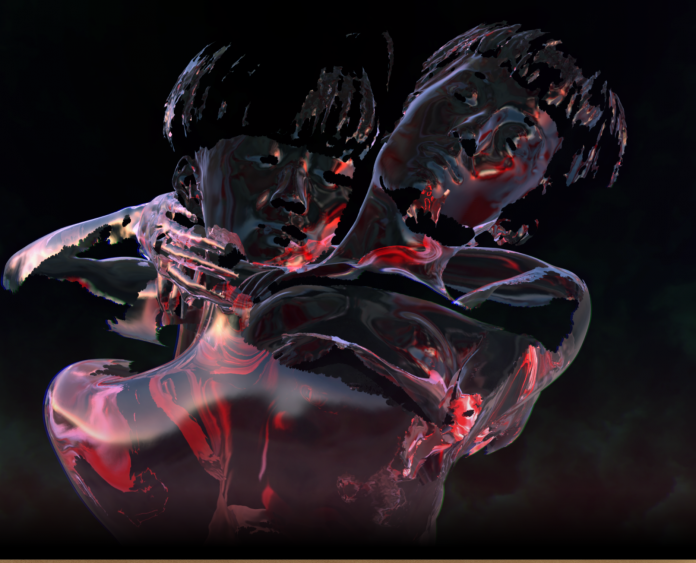
The exhibit has a significant theme of searching for connections. Screenshot courtesy of UNION

By: Gurleen Aujla, Peak Associate

The year is 3000. You’re in a post-apocalyptic universe, where cultural memories have been eradicated and humans live in physical isolation, connected only through a new cyberworld. That is the story of UNION, the headline exhibit of Cinevolution’s Digital Carnival Z.  

The Peak had the opportunity to sit down with the exhibit’s co-creators Kiran Bhumber ਕਿਰਨਦੀਪ ਕੌਰ ਭੰਬਰ and Nancy Lee 李南屏,  to explore the narrative and intentions behind their creation. 

Both Bhumber and Lee are interdisciplinary media artists. They met at one of Lee’s electronic music events, where Lee saw Bhumber swinging on one of the outdoor swing sets. Bhumber was interested in advancing the art piece by adding an interactive projection piece and from there, their relationship flourished. 

Bhumber, an Indo-Canadian artist, focuses her work on the linkage between activating memories and the use of interactive technologies. Her art installations have utilized elements of projection, sound, performance, and touch. Lee is a Taiwanese-Canadian artist that centres their work around the inescapable interconnectedness we have with our surroundings. They are an award-winning filmmaker, curator, and WebVR instructor, working in the DIY underground music community and utilizing choreography and a range of technologies in their work. 

Kiran Bhumber. Photo courtesy of Ashley Sandu
Nancy Lee. Photo courtesy of Chris Reed

The dystopian world of UNION is structured so that, in order to succeed and live life to the fullest in this world, humans must give up their memories and information — the more they relinquish, the more currency they earn. Cultural memories are only retrievable when “accessed through [the] sacred ritual of spiritual union, such as weddings, and physical intimacy,” but touch is forbidden. The exhibit follows “two beings discovering their ancestral memories through the longing for touch, and rituals practiced in their post-apocalyptic wedding ceremony.” 

UNION is a deeply personal work for Bhumber and Lee, specifically regarding the role of wedding dresses in our society. As self-proclaimed “queer diasporic subjects,” they understand the impacts of homophobia and sexism on wedding rituals and the rite of passage that comes from them. 

In addition to the focus on weddings and cultural performativity, Lee wanted to explore the manifestation of queerness in our society and understand the deeply embedded influence of patriarchal systems that continue to this day. Weddings with queer people still occur under the guise of a patriarchal structure that “gives permission for these wedding [and] cultural rituals [to happen].” For them, and for so many others, the wedding dress goes beyond being just a garment and instead is yet another tool for the perpetuation of patriarchal ideals, combined with harmful capitalistic practices and xenophobia. In an artist statement, they explain that the wedding dress “compels compliance with oppressive gender norms and social expectations.”

Another element was the commentary on environmental degradation and “what a world 1000 years from now would look like [ . . . ] where air is no longer something that is bountiful,” said Lee.

Bhumber wanted to look into “cultural longing and cultural loss when it relates to the memory and the practice of tradition.” She explained, “Every time a tradition is performed, with the bodies that it is performed with, we see a transition of that fixed tradition.” UNION considers what the tradition of getting married really means for a culture and how diasporic and queer people fit into that. 

Bhumber and Lee began working on the exhibit in late 2018 and were hit with the impacts of the COVID-19 pandemic, both on their artistic processes and having to “reimagine the way the story [would] take form.” Attendees will now engage in a series of experiences — from 3D printed sculptures, two futuristic wedding dresses, propaganda messages, and a 16-channel interactive sound and projection map that operates through tracking the movements of attendees.

The themes they focus on were heightened by the pandemic and led to an increased “awareness and connection.” They felt “even more grounded in the structure and story of UNION

“We’re living through this extraordinary time [and] the current world we live in puts an indent on our work; the work looks the way it does because the process is what archived this moment in time,” they said.

When working on UNION, Bhumber and Lee consulted with elders on cultural heritage and were focused on figuring out a respectful and “proper” way to include queerness and diaspora into their work. However, they were faced with the question, “Why are you so worried about the respect of your culture when your culture has never respected you?” 

This was an empowering moment for them and created a fundamental shift in their artwork. They realized that they couldn’t “keep subscribing to the norms that are in place” in an attempt to feel a connection to their culture when there is already such a disconnect. They understood that they “had the agency to change the meaning of [their] culture.”

UNION encompasses the role of mass-mediated technology, surveillance capitalism, and the “perceived agency” that individuals have, as well as the commodification of an individual’s identity and experience in the digital landscape. 

Digital Carnival Z is running as a hybrid festival, where UNION will be showcased at the Richmond Art Gallery while seven other exhibits will be available for viewing online. This event runs from April 21 to June 5 and is free for all.

What Grinds Our Gears: Email formalities

0
We really don’t need to bother with all of this bullshit. ILLUSTRATION: Kitty Cheung / The Peak

by Nancy La, Peak Associate

To Whom It May Concern,

I hope this email finds you well. I am writing to propose the elimination of formalities in everyday correspondence via electronic mail. 

Allow me to preface this argument by acknowledging that email formalities have their own benefits, such as creating an atmosphere of professionalism and a general feeling of respect for the recipient. My proposal pertains to the perversion of incredibly trivial email etiquette. Formalities to the point where I am triple proof-reading an email with a peer and editing said email to death. Or, contemplating whether I should place an exclamation point to show that I am, in fact, a cheery human being and not an emotionless robot! But would the other person think that I am too cheery and therefore think that I am intellectually inferior? 

The only solution seems to be spacing out my exclamation every two sentences so that I do not come off too strong. This entire process takes approximately 1520 minutes, not including the peer editing part! 

So what would be a better alternative to such an exhausting procedure? I suggest the removal of the expectation that every single email must have all the grammar, formatting, and vocabulary of a stuffy academic in their 60s. Maybe we can even sprinkle in an emoji or two. A picture is worth a thousand words and ultimately we are trying to save time here, people. 

Thank you for your time!

Regards,

Nancy La

Dear Peakie: Toddlers, takeout, and terrible fates

0
PHOTO: Kyla Dowling / The Peak

By: Kyla Dowling, Staff Writer

Dear Peakie,

This pandemic has allowed me to really embrace my introvertedness. Not having to interact with anyone outside of my house most days has been very comfortable but I’m worried my social skills are irreparably damaged. Do you have any advice on how to slowly wade back into the world of socialization?

Sincerely,

Lonli Bitchell

Dear Lonli Bitchell, 

The best advice I can give you is this: take baby steps. And I mean literal baby steps. Find your way to your nearest daycare and, in the least-creepy way, have a conversation with some six-month-olds. You’ll find that their vocabulary of “hungry!” and “waaaah” is eerily similar to your speaking style during quarantine. 

Once you’ve struck up a good conversation there, move onto toddlers. They can fully form sentences and there’s no better socialization practice than playing “Mommy and Baby” in which you are Baby and they are Mommy and they forcibly shove you into a corner while they snort Pixy Stix. This will prepare you for anything. I mean anything.

Love, Peakie

~

Dear Peakie, 

How do you get out of bed in the morning?

 – Snooz Dogg

Dear Snooz Dogg, 

Of course! As an extraordinary advice-giver at The Peak and a bonafide influencer™ (yes I have 50 followers on Twitter, no I will not be signing autographs), I know a lot about staying motivated and productive. Your first step, of course, is to own a bed. Your next step is to get all comfy in said bed, so you have something to look forward to after you rise and grind. Then, you’re going to want to master meal prep like me to start your day right. I UberEats whenever I need food. And no, I don’t get out of bed to get the food. 

That’s right! I’m this successful despite never moving from bed. I simply seduce the UberEats drivers into hand-delivering my six chicken McNuggets every evening. One of them, Cecil, has actually stuck around for a few days now. He’s like a cat, if a cat sleeps in the bathtub and throws out your empty takeout containers in exchange for the year-old peanut butter jar in your pantry. So yeah. Don’t get out of bed. I’m sure Cecil has a friend I can set you up with.

Love, 

Peakie 

~

Dear Peakie,

I’m becoming increasingly overwhelmed with this main character role I’ve been assigned. I feel exhausted with all of these character development arcs and general sexiness of which I am in charge. Please help. 

Sincerely yours, Protagonist-chan

Dear Protagonist-chan, 

Wait— protagonist-chan? Am I speaking to a weeb? Of course I am— what else do SFU students do besides watch decades-old anime via Discord and cry? 

Anyways, let’s look at your allegedly sexy main character-ness through an anime lens. According to my research, the vast majority of anime protagonists lead miserable lives (that has to be true for you, given that you go to this school) in which they lose things such as their families, their powers, and sometimes their memories in a weird Riverdale-ish twist. (At least they don’t talk about the epic highs and lows of high school football). Additionally, anime protagonists tend to die in the end. So don’t worry a bit! You’ll either ask a class of children to kill you or you’ll go on a murder spree because you think you’re God and then suffer the consequences. Either way, there’s no character development after you kick the bucket . . .  unless you’re the protagonist of Angel Beats. Have fun in perpetual afterlife SFU. 

Love,

Peakie

BC alters legislations to recognize gender diversity

0
PHOTO: Delia Giandeini / Unsplash

Written by: Karissa Ketter, News Writer

The BC provincial government reported on March 10, 2021 that 600 instances of gendered language across 15 ministries had been rewritten to “ensure that all British Columbians have equal access to government services no matter their sexual orientation, gender identity, race, or cultural beliefs.” 

Provincial minister of jobs, economic recovery, and innovation Hon. Ravi Kahlon told The Peak in an interview, “Government leads. If the government is not taking action, if we are not reflecting that change, then how can we expect society to do so? We have a responsibility in government to [ . . . ] make sure that everything we do is open and accessible.”

Examples such as “sister” and “brother” have been changed to “sibling,” Kahlon reported to The Tyee. Similarly, “husband” and “wife” have been rewritten to “spouse.” There are also instances of “man made” which have become “human made.”

He understands “we’re the first government to do something like this in Canada.” Kahlon hopes the federal government and other provinces will follow because “as a country we have a lot to do, we have a long way to go.”

Part of Kahlon’s focus is understanding how gendered language affects government and economic recovery through the COVID-19 pandemic. He said, “We put a gendered lens on all policies we bring in to see the impacts.” This includes budget reports, legislation, and policies. 

“There’s a lot more work to be done — this looked at all regulations but we know that there’s still going to be more legislations or laws that maybe go further back [ . . . ] so we’re going to continue that work,” said Kahlon.

In 2017, Kahlon was asked by premier John Horgan to report on human rights commissions in BC. Through this process, Kahlon heard stories from British Columbians about the importance of how we are asked to identify on passports and driver’s licenses. He heard it disenfranchised people’s identity. At that point, Kahlon began this project. 

“If you’ve ever faced discrimination, then you understand why this is important,” said Kahlon. “If you haven’t, perhaps you don’t know because your privileges don’t allow you to see that — for us this is front and center. Human rights is critically important.

“Anyone that can find criticism in efforts to make government more accessible to everybody in BC is missing the value of what government means.”