Home Blog Page 341

Opinions in Dialogue: Are local businesses good?

0
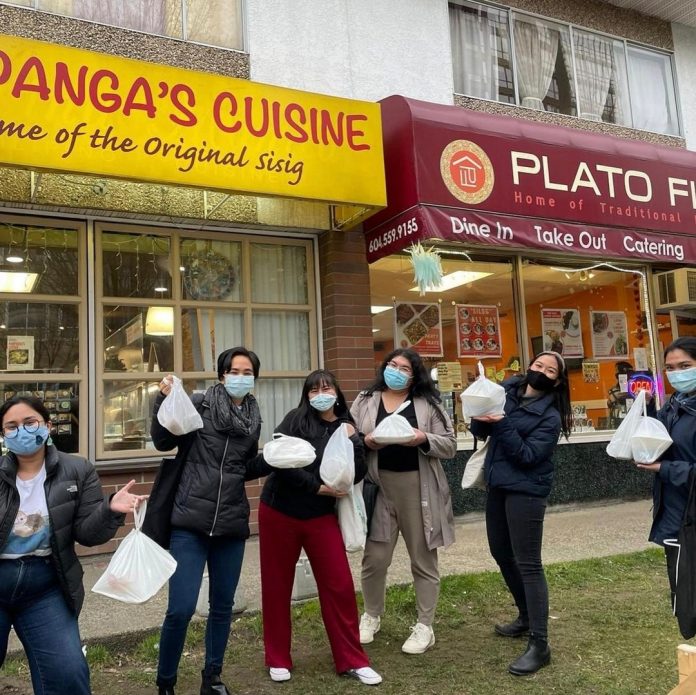
Vancouver’s urban areas are seeing more small businesses pop up. Photo courtesy of Joe Mabel via Wikimedia Commons

by Meera Eragoda, Sara Wong, with introduction by Madeleine Chan

Small and local businesses have been hit hard during this pandemic, increasing rally cries to support them. But are answering these calls the solution? Students Sara Wong and Meera Eragoda discuss the intricacies of this topic.

Sara: To start off, buying local can be expensive. But if you have the budget to purchase a latte from Starbucks daily, I don’t see why you can’t support an independent coffee shop instead. This “support local” message can also be directed at people who spend a lot of money on beauty products, home accessories (like candles), and fast food items.

Meera: There are many local businesses that I support, and I do still think they’re a much better alternative than buying from places like Amazon and Starbucks, if people can afford it. Your point about how expensive local businesses are is a good one, but the conversation around small business often leaves out that they can be gentrifying forces. Often, small businesses set up in working class neighbourhoods because rent is cheaper. This ends up increasing the value of those neighbourhoods and pushing out working class residents who rely on the cheaper living cost. The influx of places like Downlow Chicken, Umaluma, and even Moja (one of my favourites) are undoubtedly contributing to the gentrification of  Commercial Drive and the Downtown Eastside.

Additionally, I’ve noticed how the “support local” message that has been especially pervasive during COVID-19 flattens any real activism, and posits the solutions to crises as “buy more.”

Sara: You’re absolutely right about how small businesses can contribute to gentrification. The last time I was in Chinatown, I noticed a DALINA — a high end café. I’m more mad about Tim Hortons being in the area though. At least with small businesses, they care about the community they’re a part of. Sticking to the Downtown Eastside, there’s one coffee shop I really love, Coastal Eden Café, that provides job opportunities for folks who have had trouble finding work due to past struggles with addictions. Tim Hortons, meanwhile, has a history of discrimination, such as racially profiling Indigenous customers and refusing to serve people with disabilities.

Also, there are many ways to support local that don’t involve spending money! You can write nice reviews, promote small businesses’ activities (e.g. new takeout menus or special product launches) on social media, or connect with industry-led organizations.

Meera: I do think you’re right about small businesses tending to care more about their community than large businesses or chains. The troubling thing about that is often their care only goes as far as what doesn’t hurt their bottom line because ultimately, even though they’re small capitalists, they’re still capitalists. Small businesses have less money which makes them less likely to provide their employees with proper benefits, safe working conditions, and appropriate wages. Focusing the conversation on small businesses takes it away from worker rights.

On the point about addiction, I’m glad to hear that Coastal Eden Café provides those opportunities and I would love to see more small businesses implementing policies like these. But on the whole, small businesses are more likely to align themselves along pro-police and anti-crime lines. Most Business Improvement Areas in Vancouver and elsewhere rely on the police, which not only contributes to gentrification but is also detrimental to unhoused people, BIPOC, and drug users. With the Strathcona tent city, for example, the Strathcona Business Improvement Association (BIA) was a huge voice advocating for NIMBYism (not in my backyard) and city intervention. This means that even though they support the ideals of housing for everyone, they don’t want unhoused people in their neighbourhood. 

Sara: Sadly, this is the first I’m hearing about the Strathcona BIA’s NIMBYism. It’s disheartening, especially after reading their president’s statement about wanting to build “lasting connections between the often disparate groups that make up a community like Strathcona.” Analyzing the Strathcona BIA even more, I noticed that a majority of its staff members are visibly white and none own or operate small businesses like the ones we’ve been discussing. With these points in mind, I think the overarching issue is a lack of representation. 

I’m also glad you brought up workers’ rights. Although I see more has been done in recent years to make working in a restaurant environment more inclusive — like having values-based hiring practices, clear commitments to diversity, and gender-neutral spaces — I wouldn’t say the industry has been revolutionized yet. I’m not sure I agree with you about the “support local” movement taking away from the fight for workers’ rights though. My takeaway is that we need to pay closer attention to the practices of small businesses and hold them accountable when they do not uphold social responsibilities. 

Meera: Yes! That’s it exactly. I’m not against small businesses but I do think it’s important to be aware of how they operate within capitalism and hold them accountable not on an individual basis, but across the board. For Strathcona BIA, I don’t think they’re the exception to the rule, unfortunately. As The Tyee reported, “The Canadian Federation of Independent Businesses represents more than 100,000 members who operate small businesses across Canada [ . . . ] In recent years, the CFIB has lobbied against increasing the minimum wage and against guaranteed personal leave for workers, among other causes.” 

Because of their precarious position, they are often the ones who run ideological cover for big business, fighting for conservative policies that place workers in precarious positions. For organizations like the Strathcona BIA, I agree that representation is important, but it can also turn into tokenism — which includes hiring people of colour who will uphold conservative ideals.

You make a fair point about how conversations about worker and small business rights can happen in tandem. Sadly, the conversations that were happening in the beginning of the pandemic about mutual aid have been mostly flattened due to highly circulated social media graphics about small businesses to support.

Sara: Again, you’ve brought up some excellent points that I haven’t considered before. I think it goes to show that supporting local in the long term will require much more than spending money or re-posting a cute infographic. But while the pandemic is ongoing, small businesses need all the help they can get. These businesses, as previously discussed by Saman Dara at The Peak regarding a lecture by Jeremy Stone, “provide people with the ability to grow, learn skills, and experience successful mentorship, all the while serving different demographics, trades, and geographic communities.” If they disappear, it will be that much harder to improve things such as workers’ rights and fair representation. 

Meera: Small businesses need help to get through the pandemic, and we should support them (especially BIPOC-owned ones). As I mentioned earlier though, more times that we’d like to think, small businesses are at the forefront of eroding workers’ rights. I think what’s needed generally is for conversations surrounding unions and legislation to be much more prominent than they are right now. 

Small businesses are a far better alternative to big business and I love supporting the creativity of locals. But it’s also important to remember that they are far from perfect and to reiterate a point you made, we need to hold them accountable.

Council Meeting — March 17, 2021

1
Image: Irene Lo

Written by: Jaymee Salisi, News Writer

Student cybersecurity

Following the data breaches in February 2021 and March 2020, molecular biology and biochemistry representative Kyle Newcomb brought forward a discussion item regarding student cybersecurity. 

Newcomb emphasized the Board’s responsibility to pressure SFU to treat student information with more care saying, “The fact that we even have to worry about data breaches going forward is just unacceptable.” 

Simon Fraser Student Society (SFSS) president Osob Mohamed said she plans to meet with IT services to discuss the effects of the data breach. 

“This is not something that’s not going to be handled in a single discussion in Council,” Newcomb said. 

Faculty of science representative WeiChun Kua notified Council that a lawsuit has been filed against SFU for the cyberattacks, “If this is won, the defendant, which is SFU, shall offer credit protection to each member affected for a period of five years.” 

Members discussed possible outcomes that might come from this action, but did not come to any conclusions.

Supporting the Black Caucus statement

Disability and neurodiversity alliance representative Serena Bains brought forward the motion to sign the Black Caucus’ response to the release of the MacKay Report, which was an external review of the December 11, 2020 arrest of the Black alumnus. 

Commissioned by SFU, the MacKay report concluded that racial profiling did not occur, and recommended SFU clarify its definition of a “community member.” 16 current and former SFU students and representatives were interviewed for the review. The Black alumnus was not interviewed. 

“[SFU] didn’t really address any of the underlying causes or any of the reasons why the violence took place against the Black alumnus,” Bains said. They emphasized the importance of Council to fulfil their commitment to stand in solidarity with the Black community by supporting the Black Caucus’ response to the report. 

Newcomb suggested Council focus their efforts on requesting a full release of the report because “we don’t know how [the investigator] came to these conclusions.”

Mohamed clarified the SFSS’ response does demand more details of the summary and advised students to consider the accuracy of details announced by the university.

Bains said, “I think it might be naive to assume that if we receive the full report that the conclusions will be different.” 

The motion passed with 24 votes in favour, 8 abstentions, and 4 votes against.

Budget consultation

With consideration for the extra work predicted to arise from the merger of the SFSS Board of Directors and Council into one entity, Gildersleve proposed the incoming Summer 2021 Board increase their stipend pay. 

In May 2021, the new SFSS Council will have an executive committee of seven, one representative from each recognized departmental and faculty student union, constituency group, and affiliated student group. 

With the same wage since 2008, members currently work for 120 hours, earning stipends estimated to be $14.50 per hour ($1,750 per month). Once minimum wage in BC increases to $15.20 per hour in June 2021, Council member payment will be 70 cents less than minimum wage while carrying more responsibilities, said Gildersleve. 

To determine the updated stipend, Gildersleve recommended using the living wage model, which adjusts for inflation and accommodates the cost of housing, clothing, food, transportation, child care, and medical expenses. 

With these considerations, Gildersleve said the stipend for 2021 would amount to $17.96 per hour. Using the living wage model would impact tuition and cost students around $15.20 per year in 2021/2022, and $16.90 per year in 2022/2023.

Student union representative chair and science undergraduate society representative Zaid Lari advised Council members to review the report and come to the next discussion with questions prepared to make further decisions about the budget adjustment.

Five non-Marvel and DC superhero comics to cleanse your palate

0
Commanders in Crisis: “The Avengers and Justice League have nothing on this team.” IMAGE: Courtesy of The Nerdy Basement

By: Madeleine Chan, Opinions Editor

Superhero comics published by Marvel and DC are great . . . sometimes. Don’t get me wrong, there are stellar comics that these companies produce, but they are still rife with inconsistent storytelling and prejudice, among a host of profit-over-people industry practices. Indie publishers aren’t wholly free from these discretions, but they do have a wide range of the most exquisite superhero stories and art that I’ve seen. Whether to help you wait for the next superhero blockbuster or broaden your superhero media consumption, take a look at five of my favourite fictional fables.

Moth and Whisper (2019)

Image courtesy of Aftershock Comics

It is difficult to summarize the lengths to which I adore this book written by Ted Anderson and illustrated by Jen Hickman. The story follows Niki — a genderqueer, Robin Hood-type thief in a near surveillance-state future — whose parents have recently disapeared. They use both of their parents’ thief monikers, Moth and Whisper, interchangeably, diving into the city’s criminal underbelly to find them. The art melds colour and story perfectly to convey Niki’s changing feelings about themself. But instead of revolving around Niki’s gender identity, the story simply embraces it as a part of the overarching theme of identity, family, and choice. Every time I re-read this book I discover something new in its incredible craftsmanship and I’m reminded why I fell in love with the comic medium. 

Peter Cannon: Thunderbolt (2019)

Image courtesy of Dynamite Entertainment

A reimagining of Peter Cannon’s questionable past, this is an encapsulating myriad of fourth-wall breaking and emotional existentialism. Kieron Gillen tells the tale of super-genius Peter Cannon, aka Thunderbolt, who realizes alternative versions of himself are trying to destroy (and befriend) him. Not only are the art and colours by Caspar Wijngaard and Mary Safro, respectively, so stunningly complementary to the story, the panels themselves are also used to tell the story. This is how panels should be used in comics, rather than to simply hold images. At its core, Peter Cannon’s story is about embracing change and accepting events as they play out, and I cannot think of a better way that this could have been told.

Doctor Mirage (2019)

Image courtesy of Valiant Entertainment

Magdalene Visaggio writes a beautiful tale about life and death in this book filled with supernatural magic. The story follows Doctor Shan Fong Mirage, who has recently lost her ability to see ghosts, as she tries to bring her late husband back to life. Nick Robles, one of my favourite comic book artists, brings the story to life with visuals that make you feel like you’re experiencing Shan’s grief alongside her. And colourist Jordie Bellaire helps breathe intrigue and vivacity into the fantastical, and sometimes hellish, landscapes Shan finds herself in. Doctor Mirage is a true treat from cover to cover.

Commanders in Crisis (2020)

Image courtesy of Image Comics

The Avengers and Justice League have nothing on this team. Steve Orlando pens a story painfully familiar in today’s time of seemingly rampant hate, apathy, and pessimism. A team of five super-powered people discover that someone is stealing empathy itself, amidst growing political turmoil in the US. Commanders in Crisis is halfway through its 12-issue mini series release and Orlando does an incredible job at fleshing out characters and building the world in what little space he has, and I can’t wait to see where it goes next. 

Rise of the White Phoenix (2019)

Image courtesy of Lisa LaRose Art

Written and illustrated by Vancouver-based artist Lisa LaRose, this self-published comic takes no prisoners, but it might steal your heart. Starring Luisa, a young girl who dreams of becoming a luchadora (Mexican wrestler), this story is about the trials and tribulations with family, society, and corruption. At the same time, Luisa wrestles with herself as she strives to achieve that dream. Even if you know nothing about wrestling (like me), the art and story are engaging enough to make you want to. You can read the prologue and buy the first book at luchacomic.com.

All other comics can be found at your local book or comic shop, or digitally at comixology.com.

Top Ten things me and the boys are gonna do after we’re vaccinated

0
Very calm, very cool. Nothing wrong here. Illustration: Siloam Yeung / The Peak

By: Juztin Bello, SFU Alumnus

  1. Loiter at the mall

If there’s one thing me and the boys missed doing, it’s wandering around the mall. We’d go into stores like Lids and Sport Chek and refuse to buy anything or put anything back despite trying an absurd amount of shit on. We’ll probably hit with some classic goofs like putting the girly hat on Trave and watch him freak out, or go through the bra section of Walmart so that Becker can finally see what a bra looks like (fucking virgin).

2. Do keg stands from the same pump

If there’s one thing COVID took from us, it was the freedom to shove an object in our mouths that our bro had in his. But, watch out, ‘cause we’re getting that back. That’s right, we’re gonna go from vaccine stands to keg stands. You might be thinking: “are you guys a Frat?” Yeah, you’d think that if you’re an IDIOT. We don’t associate with those dinks (and not just because we all tried to rush and got denied instantly). Those Frat fuckers are Kappa Omega-LOSERS, and they can Alpha Ligma nuts.

3. Nut-tap on the reg

I’m looking forward to physical contact again. No, I’m not talking about fooling around with the ladies. And no, it’s not because Jhenipher ghosted me. I’m talking nut taps on the buds, baby — that satisfying sneak attack on the homies’ coin purse. And if you think I’m washing my hands after delivering an expert tap, you’re out of your mind. That sweat, the remnants of a successful tap, will be worn on the back of my hand like a badge of honour.

4. Absolutely dominate the bars

You wanna know how me and the boys are celebrating our shots? Doing some shots. We’re pretty notorious at our local bar; people know us as “those guys” or “get out and don’t ever come back” or “sir, I’ve tried every card at this table and somehow every single one was declined.” When we get back in there, oh baby, watch out. We’re talking grinding on hot moms, absolutely demolishing billiards, and hitting on chicks we knew from high school because everyone from high school has nothing better to do in their adulthood than go to the same shitty bar every weekend.

5. Grow out those crotch warmers

Masks were annoying as fuck, I’ll say it. Worst part about them was that they hid the beauty of a man’s beard, suffocating those epic hairs and forcing us to shave away our babies. But not anymore. I’m growing my beard out to the floor. First thing I’m doing with my beard is (tr)eating my girl right. I want her to feel like [redacted by The Peak] and I’m [redacted by The Peak] while her mom [redacted by The Peak] for breakfast.

6. Play touch at the park

Kyle, who also goes by Slyle, bets on his life that he’s an untouchable QB, but if there’s anyone who’s good at flinging themselves at a burly guy and getting a masterful sack, it’s me. Will any of us remember to keep score? Never. Will we laugh when Yackary cries after Langston accidentally breaks his arm? Fuck yeah we will. Hopefully next time we play we won’t accidentally make both teams skins again. That was kinda weird.

7. A circle jerk (but like, as a joke to see who’s the most gay)

Me and the boys are close. Those are my bros for life, you know? So sometimes you gotta do shit that’ll prove your closeness, while also seeing which bro is the gayest. This is classic tough-guy behaviour, trust me. Honestly, I bet Topher is gonna be the one to cave first. Not that I’d wanna see that . . . I just . . . think it’d be him . . . that’s fucking gay bro . . .

8. Turn a bus into a party bus

Buses are an underrated good time, if you ask me and the fellas. Finally being able to crowd a small space again is something we’re really looking forward to. You get up in that back section, crack some bevvies while suits and skirts shoot you looks (jealousy, probably), and just ride. The best part about it too is that none of the boys have to be DD (designated dbuzzkill) while we check out some DD’s struttin’ down the street. Nice.

9. Push and shove each other for no reason

Some friends show affection to one another by hugging, or holding hands, or, you know, being there for you when your parents announce their divorce which absolutely shakes your family to the core and sends you on a downward spiral of questioning everything you know. Not me and the boys. We aren’t into any of that weak shit. First thing I’m doing when I see those fuckers after the vax drops is giving them a classic shove. Maybe after we’ll spontaneously race, or point at one another and say “this guy!” and then laugh in a circle while we hold beers and bump fists. That’s friendship.

10. Your mom

Ha, get absolutely fucked, loser.

SFSS announces 2021 Woman of the Year Award recipients

0
Image courtesy of the Simon Fraser Student Society.

Written by: Alex Masse, Staff Writer

At the midpoint of Women’s History month, the Simon Fraser Student Society (SFSS) announced the winners of its annual Women of the Year Awards. The award honours “self-identified women who have demonstrated leadership and advocated for positive change.” The nominations included trans, nonbinary, and cis women. 

“We encourage members of our community to continue to learn about and talk about gender inequality and the role that oppressive, misogynistic, and patriarchal systems continue to play in our lives.” The nominee page included several links to resources on intersectionality, feminism, and on-campus equality groups. 

Nominees were separated by SFU faculty. The voting period closed March 12, 2021, with the winners revealed on March 15. 

The winners are: 

Applied Sciences — Yasmin Dibai 

A student of SFU’s Sustainable Energy Engineering program, Dibai is working towards her Leadership in Energy and Environmental Design GA certification. 

“I’m honoured to receive this award from SFU and SFSS and to have been in the same category as the other diligent nominees!” Dibai said.

Alongside her studies, she is the president of Women in Clean Tech (WiCT) and vice-president at the Sustainable Energy Engineering Student Society (SEESS). At SEESS, she runs social media and merchandise, alongside planning and moderating events. 

“The [title] feels incredibly rewarding and motivates me to continue advocating for women and aim for bigger goals in my career.” 

Arts and Social Sciences —  Zeynep Ekin Buran 

Buran is a fifth-year student from Turkey studying criminology with a minor in psychology.

She’s led collaborative panels with UBC on accessing education as a newcomer to Canada, and currently runs career workshops for young refugees and newcomers.

“Now that I am in my very last semester, when I look back to my university life, I am proud to say that I came a long way,” Buran said. 

“I would like to thank everyone who believed in me and helped me to reach this [far]. I am grateful to be surrounded by so many positive, empowering, inspirational, and strong women from all around the world. I will always continue to work to make the world a better place [ . . . ] My goal is to not only seek for more opportunities but to create opportunities for others.” 

Business — Molly MacLeay 

MacLeay has worked as a TA and mentor to first year students. During her time at SFU JDC West, she helped raise $8,000 for charity partners facing hardships during the pandemic and brought the group the 2021 School of the Year award. 

“At the beginning of my degree four years ago, I never saw myself as a leader, but the incredible female role models in my life showed me that I could be. To have my efforts recognized is an honour and inspires me to continue giving back. Thank you to everyone that has supported me along the way, and congratulations to all the other recipients!” said MacLeay.

Communication, Art & Technology — Sara Milosavic

“As a woman in STEM, this award means a lot to me, as it means that all my hard work is being recognized,” Milosavic said. 

She recently took part in a U of T case competition which focused on making studying abroad accessible to all students, including low-income, marginalized, Indigenous, and disabled students. This aimed to  “bring the study abroad experiences to the home university.” This would “[allow] students with disabilities and others in marginalized communities to filter and find experiences that better suit their personal needs.”

“With anything I do, I strive to create change and fill in the gaps for those who may not always have a voice. I am truly grateful to receive this award and have my name alongside many other strong and successful women. Congratulations to all the winners!”

Environment — Zoya Khan 

Alongside her degree in Global Environmental Systems and certificate in Geographic Information Science, Khan is the director-at-large at Embark Sustainability, where she works in director development, governance, and strategic planning. Through these roles, she helps plan Embark’s future learning, policies, and finance. 

“I am truly grateful to be recognized alongside such beautiful and strong women working towards making a change,” Khan said. “Through my work, I have learned the importance of standing together and I feel honoured that those around me view me as someone who stands with them.” 

Health Sciences — Qudrat Aujla 

Aujla is finishing her degree in health sciences and a minor in Gerontology. She is the co-chair at SFU’s Pre-Med Society, and has been a peer mentor to incoming students during remote learning. She also works at the BC Children’s Hospital as a research assistant, where she focuses on childhood cancers and solid organ transplants.

“It’s an honor to be nominated amongst such amazing women,” said Aujla. “During my time at SFU, I’m so grateful to be part of a community with such inspirational women that have empowered me to pursue my goals. I want to thank each person who took the time to vote, it’s truly an honor [accepting] this award!”

Sciences — Marie Haddad 

Haddad is a student activist and organizer; she co-organized the SFU team name change, has worked on the SFSS BIPOC committee, and is the upcoming SFSS vice-president equity and sustainability. 

“This is such a humbling experience and an incredible honor to even be considered [woman] of the year,” Haddad said. 

“I’ve had the privilege of seeing women like my mother and grandmother who had to fight with systems and societies and still come back home to hold community together.

“This award is not about me, but it’s about the non-complicit, non-silent, disrupting women who are continuously doing the work to dismantle violent systems of oppression and supremacy —  we represent the powerful forces of change that are challenging the imbedded systems of racism, and heteropatriarchy within our discourse, society and institutions. 

“We are the collective piece of history that refuses to be erased. We are the collective resistance in front or behind every movement. Know us, know Black women, know Indigenous women, know POC women — because, without us, radical change could not be possible.”

The COVID-19 vaccine isn’t our saviour

0
Students can’t expect the vaccine to solve the pandemic. Photo courtesy of U.S. Secretary of Defence via Wikimedia Commons

by Kyla Dowling, Staff Writer

The COVID-19 vaccines have been touted as a Hail Mary after a long year of distancing, protocols, and anxiety — the end seems near. Despite the slow negotiations that led to a shortage of vaccines, the government intends for all Canadians to be vaccinated by September of this year. The vaccines seem like the light at the end of the tunnel; however, the pandemic won’t go away when people get vaccinated. Given that vaccinated people can still carry the virus and that transmissible variants are growing in number, the vaccines don’t mean we should abandon all other safety protocols. Because of this, if we have a full return to in-person learning in the fall, it will not necessarily be a safe scenario. 

Moderna and Pfizer vaccines are said to be 95% effective, with AstraZeneca and Johnson & Johnson at 76% and 66% efficacy respectively. Though these numbers are strong, nothing is guaranteed. A number of people who have received the vaccine still got COVID-19. While the vaccines highly limit the chance of getting a severe case of the illness or having to be hospitalized, it is not an immunity badge, and shouldn’t be treated as such. 

Not only do the vaccines not guarantee a COVID-19-free life, but they also don’t prevent the virus from being transmitted to others. There is evidence that the vaccines hamper transmission, but it can still happen — whether fully or partially vaccinated. This is why the CDC recommends that only people who have been fully vaccinated (and have waited two weeks after the final dose) gather together without masks or distancing.

However, in BC, these types of gatherings won’t happen any time soon. As per BC’s vaccination plan, the majority of university students (who fall in the 18–24 age range) are not scheduled to get their first dose until June. Additionally, due to the number of vaccine shortages, a panel of vaccine experts recommended that doses for the Moderna, Pfizer, and AstraZeneca vaccines be administered four months apart to streamline partial vaccinations. They also advise that partially vaccinated people to still wear masks and social distance around those outside their household. As such, university students may not receive their second dose of the vaccine until October — meaning a full return to campus life without any precautions will not be possible. 

Students from other provinces are also an issue. In Ontario, university students will not be eligible for their first dose of the vaccine until July. Given that all adults aged 59 or younger will become eligible at the same time, it is not likely that all students will be able to get the vaccine within the month of July. 

Even when the majority of the population is fully vaccinated, this will not be the end of the pandemic. There are people who are unable to get vaccinated due to medical conditions, and they will only be able to safely stop wearing a mask when we reach herd immunity — or if we reach herd immunity. 

As if all of this isn’t enough, there are still multiple variants of the virus, the ones prevalent in Brazil, the United Kingdom, and South Africa being at the forefront of the news cycle. The vaccines notably do not provide as much protection against the variants than they do the original virus. This is a concern, especially because B.1.1.7 (the UK variant) is both more transmissible and more lethal than the original. Having partially or fully vaccinated people move around as if they are invincible is bad enough without the variant. But with it? It spells disaster. 

Being vaccinated doesn’t mean that concerts and clubs will come back full force. It doesn’t mean that when we return to campus in the fall, we can hug our friends and ditch our masks. It doesn’t mean that you’re safe, or that anyone else is. It is vital to continue wearing masks, physically distancing, and listening to governmental guidelines. When you get your first dose of the vaccine, your life may not be at risk anymore — but other peoples’ lives still are.

COVID Bingo

0
Layout: Siloam Yeung / The Peak

By: Kyla Dowling, Staff Writer

Your weekly SFU Horoscopes: March 29–April 4

0
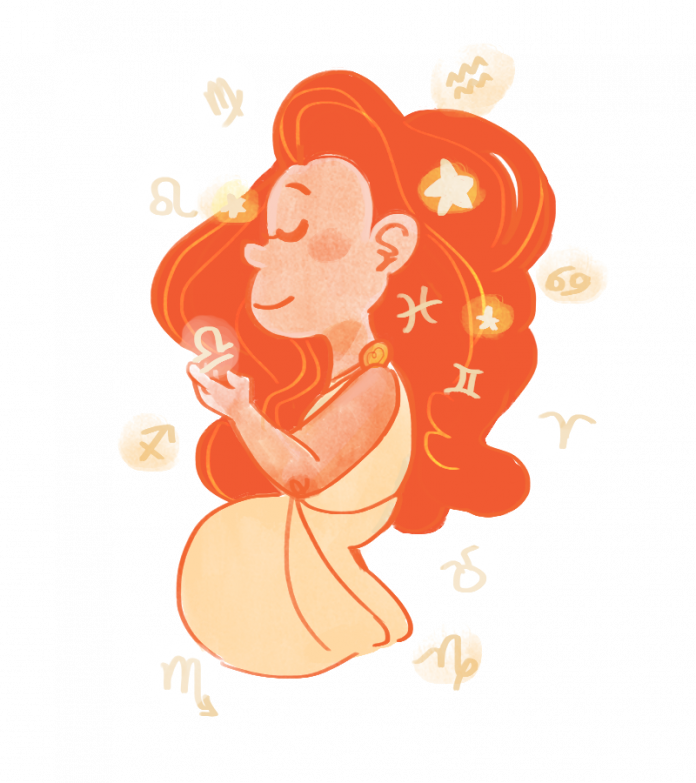
An illustration of a girl with long flowing hair. Astrological signs and stars shine around her.
ILLUSTRATION: Marissa Ouyang / The Peak

By: Charlotte Gravert, Peak Associate

As spring arrives, the animals are waking up from hibernation! Who, you wonder, is your mammalian lookalike? The stars hold the answers . . .

ARIES: Imagine this: you are walking in the park minding your own business, when a rampaging Canadian goose starts chasing you. What the hell? you might think. But have you ever seen yourself typing that email to your TA complaining about a half-point missing? You’re soulmates.

TAURUS: You are the teddy bear of our childhood, always there to comfort us when times get rough. But on the odd day out, when life is pulling on your fluffy ear one too many times, you turn into the scariest of the creatures. Never, ever poke the bear. 

GEMINI: Somewhere between an adrenaline hunter and someone bad at self-preservation, you somehow manage to constantly put yourself in both emotional and physical danger, like a squirrel running over a bustling street. I don’t want to run you over, so it’s on you if I send my car off the road, jerk!

CANCER: You’ve heard it all before: you’re a hermit crab, the home bod, the crustacean who’s hiding in their shell. From here on out, pinch those comments in the butt! There’s nothing wrong with being an introvert. Let them come to you for advice on everything: love, life, how to prepare crab legs . . .

LEO: I haven’t seen a lion in real life, but I have seen fluffy dogs pulling their overwhelmed owners all through Stanley Park. They know they are worth the money. They know they are hypoallergenic. They know they are the first choice of the Baracks, a previous presidential family. You, friend, are a purebred doodle. 

VIRGO: You listen to ASMR videos when you are stressed. You probably get a similar sensation from watching oddly satisfying TikToks, too. Like a spider following an imaginary perfect pattern, symmetry just makes you feel good. Too bad your pretty webs catch all kinds of things, even the unsolicited dick pics. 

LIBRA: Dear God, send me a Libra. Like otters floating through the ocean, you can’t help but put a smile on others’ faces. You hold hands with your partner so you don’t drift apart at night, for goodness’ sake. Make sure your hands don’t get too clammy overnight, though.

SCORPIO: Based on looks, it’s hard not to fall in love with you. With your adorable stripes, we might mistake you for a cat, but unlike a cuddly kitty, you roam the streets at night. If someone crosses you, that would be a rotten situation for them. Got it yet? No? That stinks.

SAGITTARIUS: You love being the class clown, but somehow, you always take the joke too far. When you dropped your phone in the trash, did you really have to smack the whole thing over and spread its content across the sidewalk? At least you’re used to wearing a mask, though, raccoon.

CAPRICORN: Which animal do you think has a retirement plan set up while still in college? A beaver. No other critter is so meticulous about their homestead. I bet they even pay taxes the day they get their T4 slips. We bow to your work ethic. It’s a DAMning responsibility.

AQUARIUS: Have you ever seen a seagull steal a half swallowed starfish from another? They’re ruthless. You are ruthless. If you want it, you get it. If that means getting creative, you will reinvent the wheel. Or just steal from hoomans; it turns out their food is even tastier. 

PISCES: What is the number one Disney movie to make you cry? Correct, it’s Bambi. But do you know why it hurts so bad? Because his mother was selfless. We know you’d catch a grenade for us, throw your hand on a blade for us. Jump in the middle of the forest clearing for us . . .

Looser COVID-19 restrictions don’t override personal security

1
Even if the government says you can go outside, you don’t have to. PHOTO: Gudrun Wai-Gunnarson / The Peak

by Alex Masse, Staff Writer

BC recently loosened COVID-19 restrictions to allow outdoor gatherings of up to 10 people, following a ban that began back in November. Many people I know are celebrating this change and making plans in their yards or nearby parks. They see it as another step towards this whole pandemic being a thing of the past, right alongside BC’s updated vaccination schedule claiming that everyone will have their first dose by the end of June. 

This lifting of restrictions makes me nervous, and I’m not the only one. Some health experts think it’s a bit too soon, even if outdoor settings are safer when it comes to virus spread. These lifts also come at a time where we’re still seeing an influx of new cases in BC — on March 22 it was reported that there were almost 2,000 over three days. Because of this, I highly doubt this minor change in restrictions will be properly followed, and people have every right to be uncomfortable.

Let’s be real here: when it comes to COVID-19 restrictions, some people love to push the envelope. Between the pandemic’s start and October of 2020, 77 fines were issued to those who broke quarantine rules. Just this month, two citizens were arrested for hosting a party in their Vancouver condo. These few examples happened before the restriction lift, and are proof people push boundaries. 

The COVID-19 virus has a tendency to squeeze through any crack it can. Even when everything is done right, there’s still a slight risk. My father got it from a coworker while outdoors, without ever removing his mask. He then gave it to me the day before his coworker told him he’d tested positive. Cases like these are definitely rare, but for a lot of people, it isn’t worth the risk —  especially more vulnerable groups such as the immunocompromised. One of my close friends has asthma, and he hasn’t seen any of his friends in over a year because he can’t afford to get sick.

I’m not saying this for the sake of scaring people. I’m saying that it’s okay to feel hesitant about seeing other people right now. You’re allowed to have your own comfort level and stand by it. Don’t let others, or the government’s loosening of restrictions, pressure you into something that feels unsafe. This’ll all be over someday, but in the meantime, your health and comfort should be the priority.

Monday Music: You’re the protagonist of a dark academia novel

0
"Monday Music" in giant yellow block letters with a red background
Monday Music: your weekly themed playlist. Image courtesy of The Peak.

By: Kyla Dowling, Staff Writer and Alliteration Aficionado

If you’re anything like me (and for your sake, I really hope you’re not), the only thing getting you through university is pretending that you’re the main character of a dark academia novel. Yes, I may have spent an extraordinary amount of money on blouses and houndstooth skirts to fit the aesthetic, and yes, my roommate does have to physically drag me away from old bookstores whenever we go for a walk downtown. However, all you truly need to get in the dark academia zone is music (and coffee, probably).

“Rival” by Ruelle

Image courtesy of Ruelle Music / Tone Tree Music

The only thing nearly as enchanting as Ruelle’s expressive voice is the amount of control she has over it. Her voice lingers at the top of her range before sultrily slinking down to a gorgeous alto. Both the lyrics and the production are sparse, yet haunting. Ruelle hums along to the piano melody between verses, her voice giving weight to the song. She sings, over and over: “My only rival is within.” These lyrics encourage you to stop comparing yourself against others, and to compete only with yourself. It speaks to both the solitary and intelligent aspects of the dark academia aesthetic, telling you that your goals are the ones you must aim to beat. 

“Achilles Come Down” by Gang of Youths 

Image courtesy of Mosy Recordings

 Look, the dark academia aesthetic is deeply Eurocentric and many novels in that genre rely heavily on Greek mythology as the “be all, end-all” of education, but I do maintain that this song, based on the myth of Achilles, is a brilliant piece of art. The song packs an emotional journey, an existential crisis, and a candid discussion of nihilism into a whopping seven minutes. The vocalist urges Achilles to find meaning in his life after the death of his beloved, pleading: “See how the most dangerous thing is to love / How you will heal and you’ll rise above.” With a symphony of strings, French musings on death, and battling voices pushing Achilles in different directions, this song is beautifully unique.

“Coffee Cups and Cigarettes” by Tomo 

Image courtesy of Tomo

Listening to this song feels like living in an apartment complex with incredibly thin walls. Everything sounds just a little far away, as if your neighbour is baring his soul, armed with a guitar. With lyrics referencing addiction, philosophy, and unrequited feelings, Tomo expresses vulnerability in a way that makes the listener feel like they’re intruding. The song is miserable and uncomfortable in all the best ways. The lyrics encapsulate the tragedy of being dependent, whether it be on a lover, like Tomo is, or on substances, like his lover is. Next time you’re having an existential crisis and mourning the fact that you ever allowed yourself to be attached to anything, just listen to this song. It might make your crisis worse, but it’ll help cement your brooding dark academia vibes that match perfectly with the themes of unrequited love and addiction. 

“The Secret History” by The Chamber Orchestra of London

Image courtesy of Kerry Muzzey

Do you really have a dark academia aesthetic if you don’t listen to orchestral music? Yes, absolutely, because I refuse to be elitist, but I do highly recommend this piece. With a title synonymous with one of the most popular dark academia novels of all time — Donna Tartt’s The Secret History — this song has made itself onto many studying and dark academia playlists. The piece, described as a blend between a film score and a contemporary classical work, has a mysterious yet thrilling energy to it. At the 2:40 mark, the score grows in passion, evoking a sense of careful urgency as the violin soars above the rest of the orchestra with a gripping harmony. If you’ve ever wanted to feel like the main character as you write an essay, exhausted yet energized by the sheer beauty of learning, this is the piece for you.