Home Blog Page 340

Devil politely requests that people stop advocating for him

0
ILLUSTRATION: Alyssa Marie Umbal / The Peak

By: Alea Mohamed, Staff Writer 

In a shocking turn of events, the Devil has requested that people stop advocating for him. Despite his initial gratitude, the Devil worries those speaking on his behalf are doing a terrible job of it— especially you, Steven. You know what you did. We at The Peak have scored an exclusive interview with the Devil himself. Check out what he has to say:

You have always had such a strong base of advocates. Why ask them to stop now?

One thing that I have learned in my long career as the King of the Bottomless Pit (which refers to hell, not Robert C. Brown Hall) is that the people who advocate for me are just doing a really bad job of it! At this point, I don’t even want this subpar level of advocacy. For example, who do you all think of when you think of “Devil’s advocates”? Alex Jones, Ben Shapiro, Tucker Carlson — not great company. If someone like, say, Oprah, wanted to be my advocate, I would be all over that! I no longer want to be associated with those types — I have to keep some class, right?

You listed some pretty popular names there. How do you feel about the average Joe playing Devil’s advocate?

I would rather go to heaven than have some Reddit bros be on my team. If you are going to advocate for me, I’m going to need some research! You’re going to have to come up with an argument, cite your sources, and keep it professional. You know, I have never once been bigoted. Sure, I “tempted Jesus” and “knocked a third of the moon, sun, and stars out of the sky” and “possessed Andrew Petter so I could use him to run SFU into the ground,” but discrimination? That’s crossing a line. For some reason, all of my advocates are a bunch of narcissistic, misogynistic clowns. At first, I was excited that my name was being used to defend the Blue Man Group — and then I realized that’s not what people meant by “blue lives.” They are using my name to spread all kinds of hate! I love chaos, but sometimes you have to draw the line.

Any last remarks?

I want to tell all of my advocates that it’s been a good run. We started out strong, but everything started to fall off at the end — like, it went from your average 100-level political science course bad to Twitter troll between the years of 2015 and 2019 bad. Y’all are ruining my image, so leave my name out of this!

Thank you to the Devil for making the time to meet with us today! He can be found in any applied science class.

Charcuterie Vancouver is a success story that’s both sweet and savoury

0
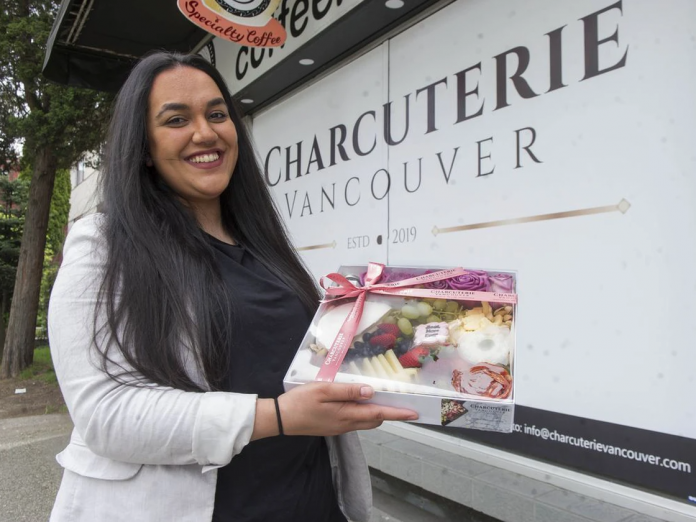
Coming soon to Vancouver: a charcuterie storefront! Photo courtesy of Jason Payne / Vancouver Sun

By: Sara Wong, Arts & Culture Editor

Sadaf Rahimi, founder of Charcuterie Vancouver, is getting ready to spread her wings. The young business owner, who recently won the Small Business BC (SBBC) award for Best Immigrant Entrepreneur, is opening a brick and mortar store in the West 4th neighbourhood of Kitsilano later this summer. In an interview with The Peak, Rahimi shared what led her to create Charcuterie Vancouver, her business journey, and more.

“I wasn’t fulfilled in my 9–5 job, it was very repetitive and felt like it was going to be the same for the rest of my life,” Rahimi began. “I knew I wanted to change something and do something where I woke up and was excited to go to work everyday.”

That’s when Rahimi discovered charcuterie. She began making various boards — full of meats, cheeses, and other goods — for her co-workers and later started selling them to friends and family as well. “It really brought out the creative in me,” Rahimi said, adding that building charcuterie boards was a therapeutic experience for her. 

Fast forward to the Fall of 2019 and Charcuterie Vancouver was officially open for business. Rahimi was living out her dream, catering large events like baby showers, corporate functions, and weddings. That, of course, all changed when the COVID-19 pandemic hit. 

“I thought we would be shut down just for two weeks and then it was two months,” Rahimi recalled. The budding entrepreneur ended up having to refund some of her customers out of her own pocket. To make matters worse, she was temporarily laid off from her day job. “I thought my dreams were crushed and that I would never be able to recover from it,” she said.

Coming from Rahimi, who spoke openly in her SBBC award video about the hardships her family faced while trying to immigrate to Canada, the above statement should not be taken lightly. 

Thankfully, Charcuterie Vancouver was able to make a successful comeback. Rahimi began selling individual charcuterie boxes and printing 3D signs for those celebrating birthdays and other special occasions. The demand was so high that Rahimi was able to make Charcuterie Vancouver her full-time gig. “I got called back to work, and on the second day back I decided to quit and focus on this [ . . . ] I haven’t looked back since,” she shared.

While Rahimi is passionate about what she does, she also emphasized that “being an entrepreneur is not glamourous.”  In one recent example, Rahimi “worked 50 hours straight during Mother’s Day” due to understaffing. 

“As an entrepreneur you have to work hard to create your vision, to bring it to life,” she said. 

When asked for her advice to aspiring young entrepreneurs, Rahimi mentioned the importance of having drive and determination once more: “Life is so short, so just run after your dreams [ . . . ] I didn’t come from money. You don’t have to either, you just have to have a vision.”

Charcuterie Vancouver is set to open at 2766 West 4th Ave in Summer 2021. In the meantime, check out their online shop at charcuterievancouver.com.

Four must-watch films for Asian Heritage Month

2
A sensational journey from rom-coms to thrillers. Image courtesy of Unsplash

By: Alea Mohamed, Staff Writer

1. Nomadland

Image courtesy of Searchlight Pictures

Nomadland is a recent Oscar-winning movie starring Frances McDormand and David Strathairn. The movie follows a woman who lives as a nomad in the American West after the Great Recession and is a story about healing after difficult times. It was directed, produced, and written by Chinese filmmaker Chloé Zhao. At this year’s Oscars, she walked away with two awards Best Director and Best Picture for Nomadland. Zhao is moving on to direct another blockbuster, Eternals, which will hit theatres this November.

2. Dilwale Dulhania Le Jayenge

Image courtesy of Yash Raj Films

If you are looking for the ultimate Bollywood rom-com, this movie is it. It has everything you would ever need dance numbers, star-crossed lovers, and more! If you’re looking for a pick-me-up movie, this is the perfect choice. Diwale Dulhania Le Jayenge stars Bollywood’s favourite movie couple of the 90s and 2000s, Shah Rukh Khan and Kajol. It is a fun, romantic watch that will make you want to get up and dance, guaranteed.

3. Parasite

Image courtesy of CJ Entertainment

Parasite is a 2019 Korean film that received international critical acclaim. It became the first non-English language movie to win Best Picture at the Oscars. The movie has a stellar lineup of acclaimed Korean actors and won the Palme d’Or award at its premiere at the 2019 Cannes Film Festival. The movie is a commentary on class how far someone will go to escape poverty and how the frivolous choices of the wealthy can change the lives of people with lower socioeconomic status in the blink of an eye.

4. Capernaum

Image courtesy of Sony Pictures Classics

Capernaum, which translates to chaos, is a 2018 Lebanese film that received a 15-minute-long standing ovation at the Cannes Film Festival that year. It was also nominated for Best Foreign Language Film at the 2018 Oscars. Capernaum is the highest-grossing Arabic and Middle Eastern film of all time. Aside from the incredible accolades, this movie is the story of a young boy living in the slums of Beirut. It is a tragic tale of the failures of the system the main premise of the movie is the young boy, Zain, suing his parents for giving birth to him into such a hopeless world. This movie is a reminder of the chaotic world in which we live.


Dr. Cornelia Wieman on anti-Indigenous racism, COVID-19, and toxic drug poisoning

0
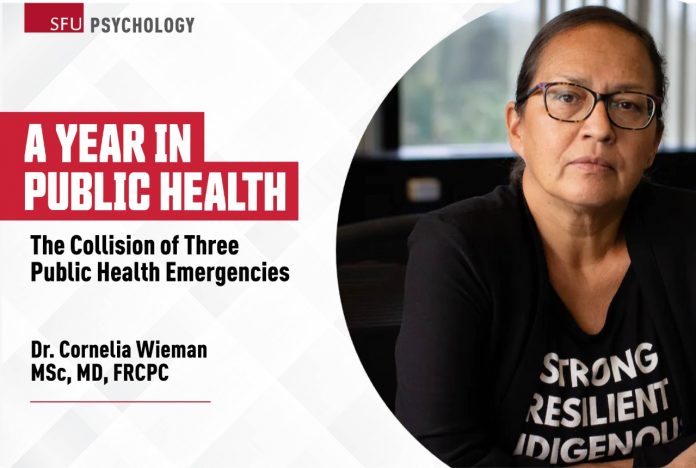
Photo courtesy of SFU

Written by: Jaymee Salisi, News Writer 

Content warning: descriptions of anti-Indigenous racism and brief mention of suicide. 

On May 6, 2021 the Indigenous Reconciliation Committee of the department of psychology hosted “A Year in Public Health: The Collision of Three Public Health Emergencies” over Zoom. 

The event featured acting deputy chief medical officer for the First Nations Health Authority (FNHA), Dr. Cornelia Wieman. She spoke about the toxic drug poisoning crisis, anti-Indigenous racism, and how COVID-19 has influenced these issues.

An increase in toxic drug use as a result of COVID-19 protocols has caused treatment centres, harm reduction services, and overdose prevention services to close. 

Dr. Wieman explained the term “toxic drug supply” is a more accurate description of the crisis than solely referencing opioids. “Not everybody experiences a toxicity related to drug use because of opioids. Nowadays, the toxic drug supply includes stimulants as well as anti-anxiety medications.” 

She also does not associate the word “overdose” with the opioid crisis because the word implies completion or attempt of suicide. She said this association misrepresents those who died from toxic drug supply. Instead, she explained that much of the crisis stems from the closure of treatment centres and similar services.

“There was a very significant, negative, unintentional consequence of COVID-19 colliding with the toxic drug poisoning crisis,” Dr. Wieman said. 

While isolation was implemented to stop the spread of the virus, it resulted in an increase in toxic drug poisoning rates by 93% from 2019 to 2020, said Dr. Weiman. She explained this has led to losing more people to death by toxic drug poisoning than to COVID-19.

According to Dr. Wieman, among the approximate 1.25 million Canadian COVID-19 cases, First Nations communities disproportionately make up 27,000 cases. Canada has seen over 24,000 deaths due to COVID-19 — 318 deaths have been in First Nations communities. 

“We have made an extraordinary effort through vaccination as one of our tools to get us out of this pandemic and especially protect our precious elders [ . . . ] who are our language holders, our knowledge keepers,” Dr. Wieman said. “This is very important to us as First Nations people.”

The FNHA advocated for First Nations communities to receive the first dose of the COVID-19 vaccine by March 31, 2021. Dr. Wieman recalled Indigenous people were also disproportionately impacted during the 2009 H1N1 pandemic due to limited access to health care from remote communities.

Because of this precedent, Dr. Wieman found it critical to push for the prioritization of Indigenous people in BC’s vaccination process.

She elaborated that Indigenous people commonly live with a high volume of people in small households, making it harder to isolate effectively and placing them at greater risk of infection.

She said people in First Nations communities might wait too long to be tested for COVID-19 or access medical support, as the fear of racism causes reluctance to leave their communities. 

Indigenous people in Cowichan Valley have reported grocery stores and restaurants refusing to serve those associated with or belonging to the Cowichan Nation. 

Dr. Weiman added that if an Indigenous person receives negative treatment from their primary care provider, they may have limited access to other physicians as their communities are often remote. 

As the FHNA begins distributing second doses, Dr. Wieman reported a relationship between Indigenous vaccinations and a decrease in daily COVID-19 cases in First Nations communities. 

Despite the impact of the three public health emergencies, Dr. Wieman encouraged First Nations communities to continue to be resilient.

“Working to eradicate anti-Indigenous racism is an ongoing battle. But I want to highlight, instead of taking a deficit-based approach, we take a strength-based approach [ . . . ] We’re still here. We’re going to get through this.”

Board Shorts — April 30, 2021

0

Written by: Karissa Ketter, News Writer 

The Board finalizes new Student Union Building (SUB) leases to student groups

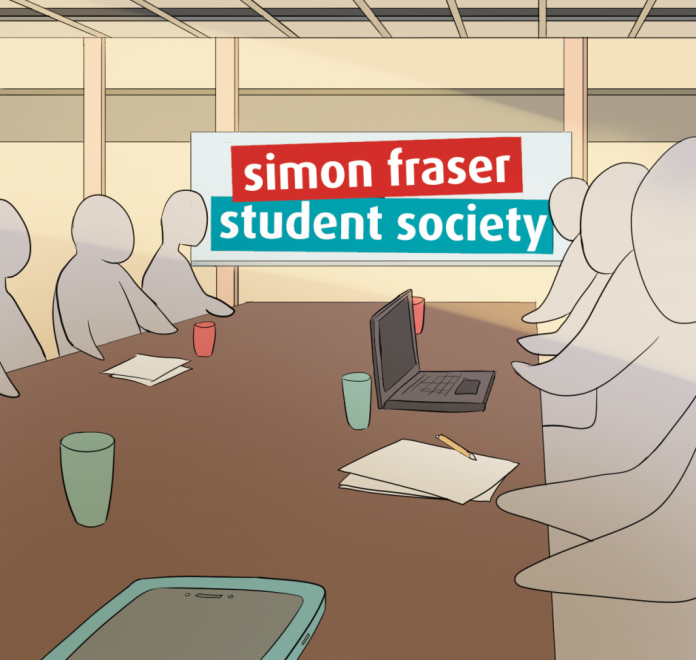
The Board discussed a motion to approve lease agreements for space in the SUB to key SFU groups. This includes the First Nations Student Association, Students of Caribbean and African Ancestry (SOCA), CJSF Radio, Embark Sustainability, and Simon Fraser Public Interest Research Group. 

This comes after conversations beginning in 2011 for space on campus for Rotunda groups.

At-large representative and SOCA member Balqees Jama recalled being informed by the Simon Fraser Student Society (SFSS) in 2018 that SOCA was being evicted. “There was so much stress and taxation on our health,” she said. SOCA launched the Black Spaces Matter campaign calling on the SFSS to give them back their space “so that Black students are not rendered homeless and without a safe community.”

Jama said, “It’s a part of the restorative justice that we have been talking about this year.” She added she is “relieved and emotional” to see the leases being finalized.

Vice-president student services Matthew Provost said, “This has been a long time coming.” He said the SFSS evictions were “a very difficult time for a lot of community members” as SOCA was not the only Rotunda group to be evicted from their space.

The leases with these groups were first proposed in March 2020. The Board voted unanimously to approve the lease agreements, giving Rotunda groups and SFU organizations space in the new SUB. SFSS president Osob Mohamed noted it was a historical moment.

Board approves living wage model for 2021/2022 members

The Board approved a change in the wages model for the incoming Board of Directors and Council members. This recognizes the amount of time dedicated by non-executive councillors, council vice chair, and executive officers and compensates them based on living wages. 

Mohamed said due to the increasing cost of living, “working-class students are just not able to put in large amounts of time uncompensated into anything.”

The motion compensates the executive officers $2,100 per month starting May 1, 2021 and $2,340 per month starting May 1, 2022 to accommodate the increasing cost of living. Council vice chairs will receive $525 per month in 2021 and $585 per month in 2022. The non-executive councillors will receive $350 per month in 2021 and $390 per month in 2022. This amounts to an increase of roughly $15.20 per year in 2021/22, and $16.90 a year in 2022/23 in tuition costs for students.

“When we talk about systemic equity or removing systemic barriers for people to get involved in things, this is a prime example,” said Jama. She noted many people at SFU would be interested in contributing to the SFSS but cannot afford to because they need a higher income. 

BIPOC committee at-large representative Marie Haddad noted the SFSS has a responsibility to support students on campus. “When we call on marginalized students to take space in governance, [the SFSS is] also called on to make that space adequate for those students.”

The SFSS has not updated their compensation model since 2008. 

The motion passed unanimously.

2020/2021 Year-End Review 

Mohamed presented the Board Year-End Review, showcasing what the Board of Directors accomplished throughout the pandemic. Mohamed touched on academic advocacy, equity and social justice initiatives, and financial aid advocacy. 

Mohamed said they “have seen some major wins” this year. She noted the new elective grading scheme was passed in the Senate because of their work. Mohamed also noted their student affordability project as a key area of success. This group was created to help prepare for the financial burden that accompanies post-secondary school. It also extends beyond tuition to rent, cost of living, and other costs.

Mohamed noted that the 56 virtual events held were a “key facet of the SFSS this year” in creating a community amidst the pandemic.

A goal of the SFSS this year was to “see improved transparency, accountability [ . . . ] and democratic, member-driven budgeting and major decision making,” said Mohamed. “Those pieces are the foundation of the SFSS.”

McFogg the Dog, Take The Wheel: an SFU-inspired playlist

0
Image Courtesy of @SFU Twitter Account

By: Nancy La, Staff Writer 

After a full year of online learning, I find myself missing the prison-like architecture of campus and the ambiance of non-stop construction. If you’re unlike me (good for you) and find construction noise to be the most annoying sound ever, here are some songs you can play to mask it when we all go back to in-person school.

Money” by Pink Floyd

Image courtesy of Harvest Records and Capitol Records

From parking fees to spending an inordinate amount of money at Cornerstone Starbucks, campus is a place where monetary transactions happen more frequently than educational exchanges. The lines, “Money / It’s a crime / Share it fairly / But don’t take a slice of my pie,” reflect the administration’s willingness to line their pockets by increasing tuition, forcing students to spend money they would have otherwise used to pay rent, buy groceries, and purchase a Nintendo Switch solely for Pokémon Snap

Can I Believe You” by Fleet Foxes

Image courtesy of Anti-

When the song opens with, “Can I believe you / Can I ever know your mind,” I immediately have mental flashbacks to an email I received a couple months ago regarding the creation of the Equity, Diversity, and Inclusion subcommittee. For a committee with such goals of diversity and decolonization of the education system, three out of four members on the committee are white women. So again, I must ask: “Can I believe you?” when I see LED screens advertising the school’s commitments to equity on campus.

Plot Twist” by Sigrid

Image courtesy of Island Records

I am not alone in thinking that SFU’s record of repeated delays in building the Student Union Building and the SFU Stadium gave me trust and commitment issues. Listen to Sigrid’s lines, “I thought you were someone to trust / you’re the best lie I’ve ever heard” as you avoid walking into a jackhammer for a building that was supposed to be finished three years ago. 

It Be’s That Way Sometime” by Nina Simone

Image courtesy of RCA Records

Our online learning adventures might soon be over, but our struggle with SFU’s host of technical problems will surely continue. Find yourself getting irritated when goSFU or Canvas crashes for the nth time? Channel some of Nina Simone’s spirit and think, “Don’t let the problems of this world drive you slowly out of your mind / Just smile, look at the problem and say it be’s that way sometime.” If that doesn’t work? Take another page out of Simone’s book and evade arrest for unpaid taxes by moving to Barbados and shacking up with the Prime Minister. 

Jesus, Take The Wheel” by Carrie Underwood

Image courtesy of Arista Records

Heading back to campus means another readjustment period riddled with anxiety and stress. In moments like this, Carrie Underwood’s encouragement to let Jesus take the wheel comes in handy. SFU’s Jesus, McFogg the Dog, will be at the receiving end of the request, “Jesus, take the wheel / Take it from my hands / ‘Cause I can’t do this on my own” come final season when we’re all back on campus and reeling from being ill-adjusted after a full year of Zoom.

The Trans Mountain Expansion Pipeline

0
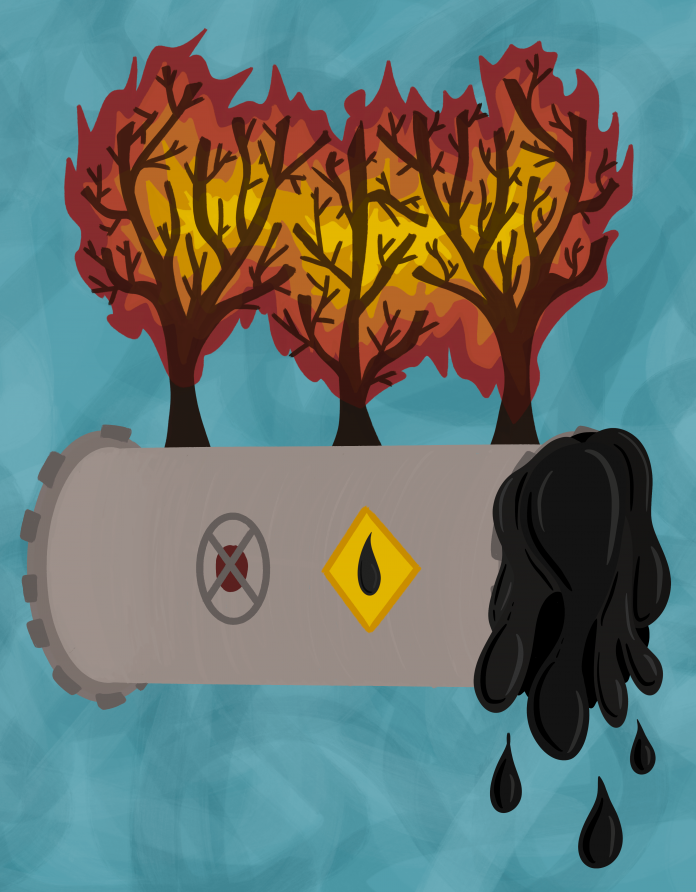
ILLUSTRATION: Alyssa Lalani / The Peak

by Marco Ovies, Features Editor

What is the Trans Mountain Expansion Project?

The Trans Mountain Pipeline is a pipeline built in 1953 that transports crude oil, semi-refined, and refined products from Alberta to BC. It is the one of the only pipelines in Canada that can carry both refined products and crude oil in batches. These different products can be either blended together or pumped individually, depending on what is requested by the shipper. These products can be broken down into four different product types.

Product Type Example Description
Refined petroleum Gasoline or diesel Refined
Synthetic crude Processed bitumen (asphalt) Semi-refined
Light crude Conventionally sourced crude oil Unrefined
Heavy crude Diluted bitumen Unrefined


According to the Trans Mountain Project Overview, The Trans Mountain Pipeline expansion (TMX)  is “essentially a twinning of this existing 1,150-kilometre pipeline between Strathcona county (near Edmonton), Alberta, and Burnaby, BC.” This new pipeline will be able to transport anywhere between 300,000 to 890,000 barrels of crude oil a day. 

The purpose of this expansion is to keep Canadian oil in Canada rather than transporting it to our neighbours in the United States. The Project Overview states, “Everyone will benefit [from the expansion]. Workers will benefit during the $12.6 billion construction project. Oil producers will earn more revenue for their product. Government will collect more tax revenue from oil. These revenues contribute to services that benefit all Canadians.” 

So what’s the big deal?


Danger to SFU Students and Burnaby Mountain Residents

First, any student who attends class on Burnaby Mountain should be concerned. In one of SFU president Joy Johnson’s statements, she said, “[T]here are significant safety concerns about risk of fire, release of toxic emissions, and potential blockage of the only evacuation route from SFU’s Burnaby campus in event of a fire and/or tank explosion at the tank farm.” 

A tank farm is where crude oils and refined products are distributed to local terminals. These terminals are the Parkland refinery and the Westridge Marine Terminal. Essentially, it is the end point of the pipeline and it is where these materials are stored until they are sent off. Currently, the tank farm on Burnaby Mountain has 13 tanks, and this expansion will add 14 new ones.

Once the tank farm expansion is complete, this will place the tanks only two hundred meters away from the Gaglardi Way/Burnaby Mountain Parkway intersection. It’s important to note that this intersection is the only vehicle emergency access and egress route for SFU Burnaby campus.  

This “expansion” of tank farms is really just squeezing in larger tanks between the already existing ones. This means that any existing buffer space that was built originally to prevent the spreading of a potential fire from one tank to another will be compromised. 

Additionally, what Johnson’s statement does not say is that this tank farm is located only 700m away from the SFU campus. The Trans Mountain Expansion Project (TMEP): Evaluation of Risks to SFU written in 2016 states that “spilled or leaked product will flow downhill, and/or be absorbed into the ground, and will not have a direct effect on SFU which is at a higher elevation than the pipeline or tank farm.” However, the statement goes on to say that SFU could be affected by fires, explosions, or airborne emissions resulting from a leak or spill.

Meanwhile, the Burnaby Fire Department has also been concerned with the risks associated with the proposed pipeline and tank farm expansion. Their report concludes that “closer spacing between tanks on the post-expansion site would make it easier for fire to spread if human error or a natural disaster such as an earthquake set off a blaze.”


A Step Backwards in Fighting Climate Change

Canada will not be able to meet its 2030 Paris Agreement emissions target if we keep investing in industries with high emissions, which is exactly what the TMX pipeline is. In an open letter from the David Suzuki Foundation, they state that “expanding the pipeline and tripling the bitumen carried will increase carbon pollution from the oilsands, already Canada’s fastest-growing source of emissions. It will also hinder progress in provinces that have invested billions to support pricing carbon pollution and shifting to clean energy.”

Additionally, pipelines can break, leak, and rupture. In 2007, there was an oil spill in Burnaby. This was just one of the 15 different spills that has happened in the last 15 years. While most residents were able to return within a day, others were not able to return to their homes for months

While Trans Mountain says that “no spill is acceptable,” there have been a reported 84 spills since the pipeline’s construction back in 1953 which is over a spill a year. It’s also important to note that this report has conveniently not been updated since May 2019. 


Impact on BC Indigenous Communities

Trans Mountain assures, “As a result of our Indigenous Engagement Program, we have received support from many Indigenous People along the Project corridor including Letters of Support from many Indigenous communities located close to the right-of-way and potentially impacted by the Project.” However, members of Indigenous communities around BC seem to disagree. 

The Tsleil-Waututh Nation, who are located around the Burrard Inlet where the pipeline terminates, discovered there was a “79% to 87% chance of a spill in their waters over the next 50 years if the project is built.” This level of risk is why they, and over two-thirds of Indigenous communities impacted by the TMX pipeline, are against the expansion and have not given Trans Mountain permission to build through their territory. 

In an interview with Kamloops This Week, Coldwater Chief Lee Spahan said his community near Merritt will “continue to push back against the planned route for the pipeline, which it says puts its aquifer at risk, the sole source of drinking water for the First Nation.”


BC Wildlife At Risk

The Trans Mountain pipeline expansion has already been put on halt because of the discovery of an Anna’s hummingbird nest — though this only applies to a 900m section of the proposed pipeline route where Trans Mountain was currently clear-cutting trees. These birds are protected under the Migratory Birds Convention Act along with other birds such as sparrows and woodpeckers.

While these tiny birds have made the news, another species that will be impacted are killer whales. Currently, the southern resident killer whales in BC are endangered while the northern ones are considered threatened. Additionally, many other marine mammals live in the Burrard Inlet. Not only will an oil spill be detrimental, but just the increase of underwater noise because of the increased tanker and tug traffic in the Burrard Inlet will have a major impact on these species.

These orcas rely on sonar to communicate and hunt for food, and this increase in underwater noise can disturb their senses. The increase in underwater noise will make it more difficult for these orcas to survive and fast-track them to extinction. Additionally, an oil spill in the Burrard Inlet would kill a large majority of the salmon population that make up a large portion of the orcas’ diet. 


The Big Deal

The Trans Mountain Pipeline Expansion will harm multiple communities and ecosystems. It is endangering already endangered species and also putting literal lives at risk. I’m not sure what other reasons you are looking for but at the end of the day, is benefitting our economy worth all of this risk?

Looking for what to do next? Check out Students Against TMX for updates on the TMX Pipeline and calls for action.


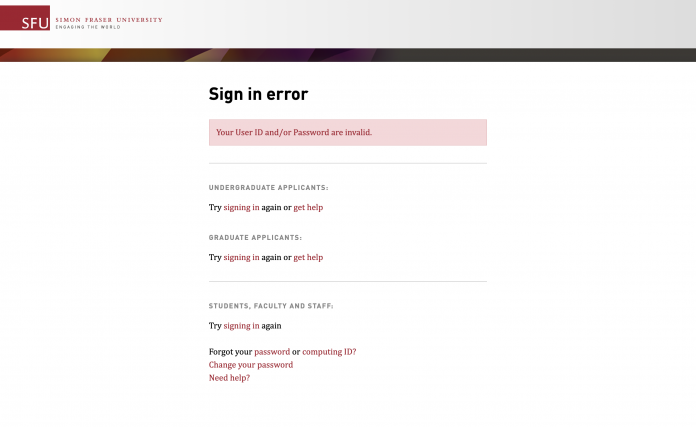
goSFU releases statement; tearfully claims it’s trying its best

0
Screenshot courtesy of goSFU

By: Alea Mohamed, Staff Writer 

This week-old semester has possibly been the longest of my life. People have been bullying me about the way I look, and yes, sometimes I can be a little slow, but why can’t anyone cut me some slack? Everyone expects me to be able to do everything all of the time! 

This week was a little hard for me. I would personally say it’s classic beginning-of-semester burnout, but apparently everybody needs me to work properly to check which grades you can beg your professors to bump up from last semester or to see how much you still owe in tuition this semester (probably a lot). Nothing at SFU is beneficial to you — the administration, mySchedule, Health & Counselling — so why do you expect me to be helpful?

Anyway, so what happened was this: I was overwhelmed by the number of people checking me out. The last time I received this much attention was when everyone was trying to take a P grade last spring!

People — or websites — are allowed to have hard days. Also, it’s not like I was super easy to access in the first place. People have to put in my URL over and over again, sometimes have to use different browsers, and they always have to clear cookies. I’m not sure why someone wouldn’t want some cookies, so I feel like I’m doing you guys a favour. You already know I’m having a hard time because of my looks — by the way, if someone could tell me where I can find software-safe sunscreen, that would be greatly appreciated. It’s Hot System Summer!

It took me a while to get back up because I was in a bit of a difficult place emotionally, but the lesson here, in my opinion, should be that everyone needs to back off! I’ve never been super helpful anyway, so I’m not sure why you’re all expecting that now.

The Bright-er side: Pandemic binge-watching is an unlikely learning opportunity

0
ILLUSTRATION: Siloam Yeung / The Peak

By: Dev Petrovic, Opinions Editor

Since the start of the pandemic, I have been on a never-ending streaming service marathon. From binge-watching corny shows like Emily in Paris to National Geographic documentaries, I have surpassed my personal preferences as well as any genre boundaries I once had. Taking in all this media and art over an extended period has been the most unlikely of learning tools. 

Sure, binge-watching may be a form of survival through the current state of the world but it also teaches us things about ourselves and the world, whether we are actively aware of it or not. When we relate to characters or situations — it makes us feel less alone — especially when we are physically isolated. 

I recall getting into Broad City during early quarantine, not expecting that I would relate so much to one of the main character’s struggles. The show’s references to a condition I have experienced gave me a different perspective and outlook on how to deal with it — something I had previously been unable to see for myself. Seeing ourselves represented on a screen when watching a documentary, or even rewatching a comfort show for the millionth time, can be both healing and insightful. Whether or not we intend to learn through watching a true-crime docuseries, or want to distract ourselves with a period drama full of historical references, we may gain knowledge in unanticipated ways. Just think about all the pop culture and movie references in Community; it would be impossible not to learn anything. 

Some folks unequivocally see screens as the root of our problems. But the reality is that contemporary shows and films can be the first place we see stories represented that we didn’t see in classic literature or our classrooms. They can connect us personally and show us something bigger than ourselves. At a time when we cannot travel, connect with others in the same way, or experience the world in the way we might normally, binge-watching Netflix or Crave may be one of the few portals in which we can have those experiences and learn through an accessible medium. Besides, who has the attention span to read through a textbook anymore? 

So while I can’t say Emily in Paris taught me very much, or probably anything at all, there are still shows like Broad City and Russian Doll that have taught me valuable personal lessons. If anything, at least I am now aware that Japanese snow monkeys bathe in hot springs together during the winter. Thanks, National Geographic

Comics

0
ILLUSTRATION: Sara Brinkac / The Peak

By: Sara Brinkac, SFU Student