Home Blog Page 337

Kula Kitchen’s Asha Wheeldon reflects on the importance of sharing resources in a community

0
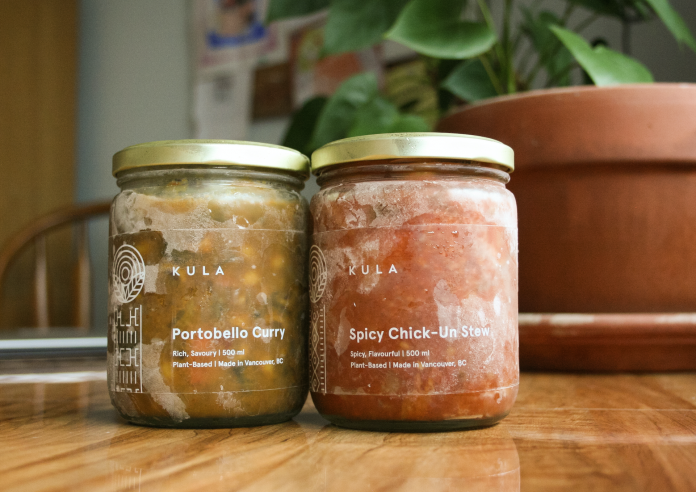
Kula Kitchen meals are delicious and nutritious. Photo: Gudrun Wai-Gunnarsson / The Peak

By: Yelin Gemma Lee, Peak Associate

Kula Kitchen, an online food service business that offers Afro-centric plant-based foods, has kept me nourished throughout the long semesters of COVID-19. Much more affordable than frequenting the UberEats app, Kula’s nourishing foods were delivered to my door each Saturday. They helped me out a lot with the struggle of cooking three times a day as a busy student. Beyond that, their Instagram page and shop collaborates with and highlights women-owned and BIPOC businesses frequently. On May 18, 2021, Kula Kitchen celebrated three years of operations. The Peak sat down with founder Asha Wheeldon to talk about her journey. 

Wheeldon grew up in the small town of Isiolo, Kenya. “As a child I really got connected around the community [ . . . ] Not much technology, quite frankly, so there was a lot of resource sharing within our community,” she explained. “There was a lot of value system around the process of consumption, in terms of growing your own crops as a community and finding ways to use what you have.”

When she was 11, Wheeldon migrated to Toronto, where her values became even further rooted in community and sharing. It was in Toronto’s diverse neighbourhoods that she was introduced to West African, Carribean, and Middle Eastern cuisine and culture, all of which influence the way she cooks today.

“I use food as a way of building community for myself,” Wheeldon explained. “Kula means eat, which is quite literal, but it’s beyond just consuming — it’s how you eat. It translates into different forms, whether you’re eating or actually sharing resources, sharing space [ . . . ] it really speaks to the central parts of who I am.” 

Wheeldon emphasized how her mother always made sure she knew about the diversity around her and taught her to honour these rich cultural differences. Wheeldon, now a mother herself, carries this torch of compassion and community by using her platform to spread messages of solidarity through BIPOC hardship and excellence. 

Called to action by the 2020 Black Lives Matter protests, Kula Kitchen compiled a resource list of Black-led organizations in the Vancouver area for the community to access and help edit. Their Instagram page also features a Story highlight labelled “Kitchen,” which is a must-watch. It’s a compilation of videos showing a diverse kitchen staff working while dancing and laughing with each other: a genuine embodiment of community and indicator of the joy that stems from working with like-minded people. 

“As people of color we have that lens [of what] we want to see for our future,”  Wheeldon said. “I have children. I want to see a different world for them; I want them to experience equity, inclusion, and beyond [ . . . ] I want them to be able to walk into a room and not necessarily be outed based on their identities.” 

Kula Kitchen operates out of one of three Coho Commissary locations, at a shared kitchen on East Georgia St. that houses over 23 small businesses. Most of these businesses are BIPOC-led and have the same collaborative mindset as Wheeldon. In fact, Kula Kitchen’s online shop carries many plant-based products from other Strathcona Coho Commissary businesses, like Elbo Patties and Van Suya. The model of shared kitchens offers a brilliant sustainable option, both financially and environmentally. That was an important factor in the survival of these businesses. 

“Collaborating is literally what keeps us going,” Wheeldon said. “It goes back to community and being able to share resources.” 

Although Wheeldon experienced many COVID-19 challenges as a food service provider, she said operating out of a shared space was helpful in bouncing back from the initial dip in sales. Wheeldon went from being a one-woman-operation — bringing her kitchen knife from home — to building a permanent team for online ordering and delivery services. When asked about what the next three years have in store for Kula Kitchen, Wheeldon expressed she would like Kula to transition from a mainly virtual space to a physical space. 

“I would love to have a space, and I’d like to be able to introduce our food and products to different markets,” she said, mentioning Nova Scotia and Toronto as options. “I still think a shared component will be happening. Now that I’ve experienced this [ . . . ] it’s just amazing to be able to work with others.” 

Monday Music: Empowering anthems by queer artists

0
"Monday Music" in giant yellow block letters with a red background
Monday Music: your weekly themed playlist. Image courtesy of The Peak.

By: Kyla Dowling, Humour Editor

As Pride Month starts to wind down, it’s important for those of us in the LGBTQIA2S+ community to continue celebrating our resilience and courage. These songs, all by artists who identify as queer, are anthems about loving yourself and loving your community.

“Technicolour” by Montaigne 

Image courtesy of Montaigne

“Technicolour,” otherwise known as the song that should have won Eurovision, is a bona fide bop. The artist aptly describes the song as a piece that “makes you want to cry, makes you want to dance, [and] makes you want to take on a malignant corporate power.” Upbeat and energetic, the song touches on Montaigne’s frustration with the world before subverting it. No matter how fast things are moving or how hard things are, she knows that “if we stand together, we can do whatever.” With powerful production and spectacular vocal control, Montaigne acknowledges her vulnerability while still standing her ground. Though this song isn’t explicitly about queerness, its message of community and solidarity is sure to resonate with members of the LGBTQIA2S+ community.

“Cherry” by Rina Sawayama 

Image courtesy of Different Recordings

Rina Sawayama is unquestionably the future of pop. “Cherry,” which served as a precursor to her critically acclaimed album SAWAYAMA, speaks to her tremendous talent. “Cherry” acts not only as Sawayama’s coming out, but as a striking encapsulation of what it feels like to discover you’re queer. Against a glittery synthpop background, Sawayama sings about “holding onto feelings / I’m not used to feeling / ‘cause oh, they make me feel alive.” It’s all about the realization that you’ve been pretending to be something you’re not, and even if you’re not ready to come out to others, you don’t have to pretend to yourself anymore. Plus, the song was inspired by a brief moment of eye contact with a woman on the subway, and if that doesn’t speak to the queer experience, I don’t know what does.

“Body Was Made” by Ezra Furman

Image courtesy of Bella Union

If you’ve watched the Netflix hit Sex Education, you’ve heard Ezra Furman’s honest lyrics and unique voice. Furman, whose songs are frequently centred around queerness, worked on the soundtrack for Sex Education and even made a cameo as the singer at the school dance in season one. “Body Was Made”— a shameless, saxophone-filled serenade — was featured in the fifth episode of the first season. The lyrics are genuine and transparent, and Furman sings them with unashamed joy. She concludes the song with the gentle reminder that “your body is yours at the end of the day / and don’t let the hateful try and take it away.” It’s about accepting yourself the way you are and allowing your gender identity and your relationship with your body be unmarked by the views of a bigoted world.

“Queen” by Perfume Genius 

Image courtesy of Matador Records

“Don’t you know your queen?” is the constant refrain in this bold, riveting song by Mike Hadraes, otherwise known as Perfume Genius. That line, which opens the song before the reverberating piano chords begin, is a clever play on words. Hadraes is not only referring to himself as a “queen” — a term commonly used to refer to flamboyant gay men, but is expecting the audience to mishear the line as “don’t you know you’re queer?” In this biting song, Hadreas plays around with the perception of the LGBTQIA2S+ community while calling back to vital history. The drums, grunting, and whistling contribute to a thrilling, uneasy feeling. This sense is also evoked by the juxtaposition of blooming flowers and diseased skin in the lyrics. If you’re uncomfortable, you’re meant to be. While this song has a campy chorus, it is a stark reminder of the public perception of queerness. It asks you to relish in making others uncomfortable with your unconventionality and to be proud of yourself in a “fuck you” kind of way. 

Need to Know, Need to Go: June 14–20

0
Illustration of a blue calendar, with "Need to Know, Need to Go" written on top
Arts & Culture events to catch around the city. Image courtesy of Brianna Quan

By: Gurleen Aujla, Peak Associate

2021 Sundance Institute’s Indigenous Short Film Tour | Runs until June 30 | FREE | Online 

This year’s seven-film virtual program will feature the work of Indigenous filmmakers, totalling 85 minutes. Films range in genre including animation, documentary, fiction, and more. The seven directors are: Christopher Auchter, Sky Hopinka, Lisa Jackson, Ciara Lacy, Alexandra Lazarowich, Alisi Telengut, and Erica Tremblay. This event explores the talents and creative processes of the directors and provides a large platform for Indigenous cinema. The event is free and can be accessed online

Sound of the City: Vancouver | Ongoing | FREE | Online 

Ever wonder about the musical talents flourishing in our own backyard? Every week, the City of Vancouver and Stir magazine spotlight Vancouver artists, focusing on BIPOC and under-represented artists. Each feature includes a Spotify playlist with the artist’s favourite songs and a short interview published online. Previously featured artists included Crack Cloud, DJ O Show, Loscil, and NADUH. Take the time to explore the work of local artists at your own pace.

Abundance | Ongoing | Pay what you can | Online 

Amber Phillips presents a three-part short film that jarringly reveals the experience of identity and its limitations and possibilities for Black women and femmes. Abundance is a juxtaposition between Phillips’ personal life and “culturally significant socio-political moments like the 2020 Black Lives Matter protests.” Phillips’ intention is to try and “make sense” of the world that consumes one’s humanity and identity, and to pave a new path forward for collective liberation. Abundance is available for viewing online at a “pay what you can” rate.

Bright-er Side: Social distancing helped me find myself

1
ILLUSTRATION: Danielle Ragas / The Peak

By: Marco Ovies, Features Editor

Before COVID-19 and social distancing, I was filled with social anxiety constantly. I always thought that everyone around me was silently judging me and that I had to try to be as “normal” as possible. I would cycle through the same three outfits (that consisted of jeans and a T-shirt) so I would not stand out. I would walk around SFU’s halls with my headphones in and head down to avoid drawing attention to myself. I would even make sure to wear shoes with a soft sole so I wouldn’t make too much noise walking down an empty hallway. 

But with the new social distancing orders from our lord and saviour Dr. Bonnie Henry, all these anxiety-inducing social situations disappeared. So with no one to judge me, what was stopping me from doing what I wanted?

My wardrobe quickly expanded from just a few articles of bland clothing to clothes I felt good in. Greys were switched with mustard yellows and black for bright green. Instead of pretending I wasn’t a huge Pokémon nerd (though I’ll admit, I don’t think I did a great job hiding it), I ran with it. My obsession with Dungeons & Dragons podcasts was no longer something I had to hide in shame because no one was there to judge me for it. And the more I started to get into it, the more these interests started to slowly pop up in the few social interactions I had.

Gradually I would talk to friends online or coworkers over Slack about the things I was interested in. The more I did this, the more I realized that other people are into the same things as me. Hell, some people are even nerdier than me (can you believe it?). 

It felt like a weight off my shoulders; I finally didn’t have to pretend to be someone else. I could finally be the plant-loving, Pokémon-obsessed, Minecraft amateur I was destined to be. 

Now that COVID-19 restrictions are being gradually lifted, I know that I will be coming back into the world as myself. 


Food for Thought: It’s time to change our negative attitude towards MSG

0
The magical flavour crystal is more common than you think. Illustration: Alyssa Marie Umbal / The Peak

By: Nancy La, Staff Writer

My relationship with MSG is a complicated one. It all started when I was working my first kitchen job at 17. A customer complained about getting headaches after eating and said it must be because of the MSG in the food. Our kitchen manager sneered, “We cook real food here, not chemicals.” 

In this conversation, MSG was pronounced like a dirty word. That stopped me in my tracks and my mind flooded with questions. Chemicals? Aren’t all the foods we eat made out of chemicals? What’s wrong with MSG? Can a person even be allergic to it? These questions led me down a research rabbit hole. 

MSG stands for monosodium glutamate, a salt found in glutamic acid. It’s the chemical that gives food its savoury taste — umami, if you will — and you can find it in products like cheese and tomatoes. It’s commonly used in Chinese (and in my experience, Vietnamese) cuisines as a flavour booster. MSG’s Chinese name, weijing (味精) means “essence of flavour,” proving its importance in Chinese cooking. But it is not exclusive to Asian foods. Think about how you would grate Parmesan cheese on top of pastas — that’s also adding glutamates into a dish.

Controversies regarding the use of MSG began in the late ‘60s. In a 1969 medical report, a researcher made connections between MSG and “Chinese restaurant syndrome” — where people reported experiencing “burning sensations, facial pressure, and chest pain” after consuming food at Chinese restaurants. From then on, the negative attitude the West maintained towards MSG has never really gone away, despite scientists being unable to prove a connection between these symptoms and MSG. The little flavour crystal is forever vilified in the food and health industries.

The late Anthony Bourdain, a popular chef and travel documentarian, once discussed his opinion on MSG and quickly pointed out the reason behind MSG and “Chinese restaurant syndrome.” 

“You know what causesChinese restaurant syndrome? Racism,” he said. 

For all the hate and complaints that MSG receives, its presence in the cooking scene cannot be avoided. Have a look at any chicken bouillon powder ingredient list and the second thing you see is MSG. I even saw a container of umami seasoning from Trader Joe’s that claims its flavour-boosting properties come from dried mushrooms. In other words, it’s MSG crystals but brown. In the end, all of these products are cousins, if not siblings, of the iconic white crystals found in plastic pouches. 

Efforts are being made to reclaim MSG within the Chinese community and globally. For instance, take a look at Uncle Roger and his hilarious videos where he sprinkles everything with MSG, including fried rice. While showering half a bag of MSG into a wok is not the way to go (it’s way too salty), this comedic take on MSG takes away some of the negative connotations associated with using it. 

The next time you wonder if it is possible to elevate a savoury dish, I would recommend trying out a little sprinkle of the flavour crystal yourself. It’s one of the most delicious ways to fight a heavy aspect of Asian discrimination, right in your kitchen.

“Made in Canada: an agricultural podcast” covers migrant worker issues in Canada

0
Chamale: a groundbreaking SFU alum. Image courtesy of Stir

By: Kelly Chia, Staff Writer

Made in Canada: an agricultural podcast delves into the issues migrant workers face in Canada. Written and narrated by Pedro Chamale, SFU alum and co-director of rice & beans theatre, the podcast offers first-and-second-hand accounts of the injustices workers experience. I spoke with Chamale to learn about what inspired the podcast and what listeners can take away from it.

Chamale was inspired to create Made in Canada by a play he worked on with Derek Chan, his company partner. The play mentioned migrant workers, and hearing about their experiences in the show made Chamale curious about migrant workers locally. He learned many of them were Mexican, which made him more invested in the topic. “It’s been a reinvestigation of my identity as a Latinx person, having grown up in northern BC, separated from Latinx culture,” he said in his podcast. 

In the first episode, Chamale explained there are only about 60,000 seasonal agricultural workers from the Seasonal Agricultural Workers’ Program in Canada that we depend on for our food supply. “Last spring, when food supply lines were front of mind for many countries, we all started to hear maybe for the first time about migrant workers and all kinds of things that might be wrong with the program,” he said.

Talking to Chamale, I was shocked at how much migrant workers were expected to support themselves for things they should be able to rely on the government for. 

The government should [have] more regulations, or even just [provide] permanent residency upon arrival,” Chamale said. “They’re here to work on Canadian farms, so they should just be granted permanent residency as soon as they arrive here so that they have the exact same rights and freedoms we do as Canadians.” 

The pandemic especially affected the workers. Chamale said many seasonal agricultural workers in Canada lived in small quarters in the same house. “Some workers had died, a bunch had been sick, many more were ignoring symptoms because they didn’t want to lose work because they didn’t want to be sent home,” he reported.

Worse yet, Chamale said when the vaccines started rolling out, none of the workers knew if they were eligible for it because they weren’t Canadian citizens or in Mexico. Workers had to find “no questions asked” vaccine clinics by word of mouth.

Chamale said the community of migrant workers has immense trust in each other. He had difficulty reaching out to them because they were scared of being blacklisted by farmers or governments for talking about their experiences. “One worker told us that even though there aren’t supposed to be blacklists, they know farmers can choose who they bring back.” He said farms could make excuses for delaying their workers’ paperwork. 

Another worker said they were left without work after getting really sick last year. Their boss said the company was waiting for paperwork, but other workers said they were not rehired for fear of them getting sick again. 

When asked about organizations supporting migrant workers, Chamale recommended Sanctuary Health in Vancouver and the Migrant Rights Network. He also emphasized that everyone has the ability to write to their local MPs to support better rights for migrant workers. 

Listen to Made in Canada: an agricultural podcast on Apple Podcasts, Spotify, and other platforms. Also check out the companion album, Made in Canada: an agricultural song cycle. For more resources to support migrant workers, go to the Made in Canada website, https://www.micsongcycle.ca/stay-informed.

Crespi Laboratory develops new endometriosis theory

0
Professor Bernard Crespi. Graduate student Natalie Dinsdale made the correlation between early development and testosterone levels. Photo courtesy of SFU.

Written by: Jaymee Salisi, News Writer

Endometriosis is a disease that causes endometrial tissue to grow outside of the uterus rather than inside. As a result, the body treats the displaced tissue growth like an infection, causing individuals with the disease to experience high pain sensitivity and inflammation in their abdominal area. According to research, up to 10% of cisgender women of childbearing age have this disease.

Based on research and independent studies — primarily done on cisgender women — on early development, hormone production, and reproductive-system physiology, researchers in the Crespi Laboratory found a connection between testosterone development and endometriosis.

According to the new theory, endometriosis is an early developmental disorder stemming from prenatal low testosterone development. The condition begins when the fetus is in the womb, and the effects are felt when the individual begins their first menstrual cycle.

“When your 12- or 16-week-old fetus is in the womb, there’s a sensitive period when the development of the reproductive system is taking place and the whole system is getting programmed,” evolutionary biologist Bernard Crespi told The Peak in an interview.

“Graduate student Natalie Dinsdale took the findings and realized this could be the key to understanding the disease as a whole,” Crespi said.

Though mainly diagnosed among people 25–35 years of age, endometriosis has also been found in cisgender girls as young as 11 years old. The theory can contribute to the treatment of pregnant people early in their first trimester and can aid new forms of treatment for those with the disease.

The main set of supporting evidence for the theory is the opposite levels of testosterone shown in endometriosis and polycystic ovarian syndrome (PCOS). According to Crespi, an excess in prenatal testosterone correlates with PCOS. In contrast, those with endometriosis may experience lower levels of testosterone development. These new findings may help identify endometriosis at an early stage. 

“There is good evidence from the literature that women who are relatively [ . . . ] low in weight tend to have higher rates of endometriosis. The reverse is true of PCOS,” Crespi said. 

He emphasized these are observed associations but not facts, as there are various factors that go into a person’s body size or shape. “It’s not something you can use in a predictive way.”

In terms of treatment for endometriosis, Crespi said there are “lots of little tweaks one can do to the endocrine system to bring it more in balance.” 

For instance, an individual can receive treatments to make their testosterone receptors more sensitive. This could support hormonal production by bringing it “closer to a typical range,” which can be 15–70 nanograms per deciliter of blood.

Crespi said pregnant people can try to avoid endocrine-disrupting chemicals which appear in bottled water and plastics to prevent hormone disruption for the fetus.

However, prevention is difficult because it is “hazardous to try to do anything pharmacologically with a first trimester fetus. They are very sensitive to disruption of any kind.”

More information on findings from Crespi’s research team can be found in their two research papers, The evolutionary biology of endometriosis and Endometriosis and polycystic ovary syndrome are diametric disorders

SFU professor launches study to protect monarch butterfly population

0
PHOTO: C Watts / Flickr

Written by: Karissa Ketter, News Writer 

PhD candidate Rodrigo Solis-Sosa and his team have launched conservation efforts to primarily  protect the eastern monarch butterfly species on North America’s east coast.

Their research focuses on testing different types of milkweed plant restoration along key migration patterns. They’ve found that restoring milkweed growth along the midwest of the United States is the most effective for encouraging population growth, as monarchs are bred in that area. This is to prevent the eastern population from declining as much as its western counterpart.

“The monarch only can lay eggs on [milkweed], so if we lose that plant, the monarch has no place to go,” said Solis-Sosa in an interview with The Peak. 

Solis-Sosa explained the biggest threats to milkweed growth are GMOs (genetically modified organisms) used in crops and herbicides across the midwest.

Solis-Sosa noted that the western monarch population had previously been affected by the intense use of GMOs in California, droughts, and wildfires — all destructive to western milkweed growth. “The GMOs on the agricultural industry were destroying milkweed in farmland.” Because of that, came fire and droughts — which negatively impacted the western population,  said Solis-Sosa. 

Another threat is illegal logging in Mexico. Monarch butterflies “gather in some very specific patches of forest. So, if there is logging on that forest, the protection that monarchs get from the forest — from winter storms — gets degraded, so their mortality increases,” said Solis-Sosa. 

Solis-Sosa’s study reported that to conserve the population, they need an additional 1.2 to 1.6 billion milkweed stems planted. The butterflies contribute to the ecosystem by pollinating wildflowers.

This paper may lead to more research, studying its compatibility to blend with different kinds of conservation strategies. “Ideally we want to give this a platform for more research to grow from,” said Solis-Sosa. 

Solis-Sosa has recently participated in workshops with the Commission for Environmental Cooperation — the environmental branch of the North American Free Trade Agreement — to discuss his findings. This allowed him and his team to work with the leading body on monarch conservation strategies.

He described his research as a part of “social ecological conservation.” A key aspect of what his team works on is calling on the general public to engage with monarch conservation. He explained that “we need to understand society to make our policies come true.” 

Their team’s website offers a variety of informational resources regarding monarch conservation strategies.

Senate Report: May 25, 2021

0
Photo from Peak archives

Written by: Jaymee Salisi, News Writer

Return to campus update

Vice president academic and provost Catherine Dauvergne said SFU is aiming for a “70–80% return to in-person teaching, research, and engagement activities. 

“There are some parts of our campus where that will be more like 100% and other parts where it will be struggling to get to 70%.” This plan is set to begin in September 2021.

She said the university’s plan follows the BC provincial government’s recently announced restart plan, which is based on projections for up to 70% of the population to be vaccinated with the first dose by September 7, 2021.

According to president Joy Johnson, vaccinations will not be required for any SFU members to return to campus.

She added, “I’m not going to entertain a lot of questions on this topic,” but allowed computing science professor Lyn Bartram to express concerns.

“With no guarantee that there is a safe level of vaccination among the university population, how are we expected to go back to what cannot be guaranteed a safe workplace?” Bartram asked. She added that professors and their families may be immunocompromised. 

Johnson responded that for those who might have health reasons against returning to campus, “there is a legal requirement for us to make sure there is appropriate accommodation [ . . . ] We will make plans to accommodate people as required. 

“The safest thing you can do is get yourself vaccinated. That’s the best way you can protect yourself and those around you, your family, and your community.”

She said the university understands there are concerns and they are planning for a safe return to campus.

Program proposal for a Master of Arts in Indigenous Languages and Linguistics

Chair of senate graduate studies committee Jeff Derksen proposed the implementation of a Master of Arts in Indigenous Languages and Linguistics program within the Faculty of Arts and Social Sciences by Fall 2022.

Taking place at all three SFU campuses, the program will be delivered in collaboration with Indigenous communities. 

The motion read, “These principles were developed in collaboration with Elders, language teachers, and community language coordinators in our various partner communities, and in consultation with the local universities, school districts, and First Nations organizations who employ our students.” 

The program proposal comes from the concerns of Indigenous communities in BC and the Yukon who face a “rapid decline in the number of first language speakers.”

This motion was carried.

SFU professor to lead national infectious disease modelling network

0

Written by: Karissa Ketter, News Writer

Caroline Colijn has been selected to lead a multidisciplinary team of researchers in a new modelling network program of infectious diseases. The Canadian Network for Modelling Infectious Disease (CANMOD) “is one of five multidisciplinary infectious disease modelling networks receiving a total of $10 million” and is a piece of Justin Trudeau’s $1 billion COVID-19 support plan.

The government of Canada reported this network aims to strengthen the relationships between the public, industry, and academic sectors in Canada. This intends to ensure Canada can better respond to public health threats or infectious disease outbreaks in the future.

In an email statement to The Peak, Colijn outlined the areas of research within the project. 

“There are several themes: evolution and genomics for SARS-CoV-2, the role of testing in the current and future pandemics/emerging infectious diseases, vaccination, heterogeneity, and syndemics,” said Colijn. 

According to the BC Medical Journal, syndemics as a concept recognizes that “pandemics occur in the context of preexisting social and health conditions.” It said “that some epidemics or pandemics would not occur [ . . . ] on a population if the public’s social and biological vulnerabilities to infections were reduced.”

Colijn said, “We hope to have better data integration and sharing, a strong infectious disease modelling, and estimation community standing ready with close ties to public health labs and institutions across the country.”

Colijn’s team is made of epidemiologists, modellers, and statisticians who will work with the Canadian public health sector and public health institutions.

Throughout the COVID-19 pandemic, “Infectious disease modelling has been a crucial part of the pandemic response,” said Colijn. This data can be used to understand how the disease spreads and mutates across communities.

Some of the team members were integral parts of modelling in British Columbia. That data was used to support decisions around “vaccine rollout including the dosing strategy and the prioritization of essential workers and high-risk neighbourhoods,” said Colijn. 

According to Colijn, this team has committed to equitable and inclusive hiring. “EDI is important because diverse voices and viewpoints help us frame better questions and help bring a diversity of expertise and perspectives to the work we do,” said Colijn.

The network within the public, industry, and health sectors will be coordinated through the Public Health Agency of Canada and the Natural Sciences and Engineering Research Council.