Home Blog Page 308

Theresa Hanson’s extensive sports management career

0
SFU Senior Director of Athletics and Recreation Theresa Hanson poses on the field for the camera.
Hanson has worn many hats over her 25+ years of experience. Image courtesy of SFU Athletics

By: Isabella Urbani, Sports Editor

Theresa Hanson became the first woman Senior Director of Athletics and Recreation at SFU on October 26, 2015. But she was no stranger to SFU or making history. In an interview with The Peak, she revealed her long standing history with SFU and her battle to bring Canadian athletics to the NCAA.

Hanson was hired as the assistant coach of the women’s basketball team in 1988 by “legendary” coach Allision McNeil, who she met while playing summer basketball at SFU. During her two years at SFU, Hanson also met her future husband in former assistant of SFU’s men’s basketball team,  Kevin Hanson — the current UBC head coach. 

SFU’s 1990 women’s basketball team was the first to qualify for a national championship tournament. “It was such a great experience — with an extraordinary recruiting class that would go on to do amazing things on the court and off,” said Hanson.

Born and raised in Trail, BC, Hanson credited her father and senior boys basketball coach for her involvement in sports. 

“We were encouraged to get involved in sport and extracurricular activities. Swimming, gymnastics, track and field, softball, baseball, and basketball —  I was offered incredible opportunities.” 

Hanson eventually narrowed down her athletic prowess to basketball and track and field. She eventually landed on LC State College in Idaho, where she was offered a varsity scholarship. In 1994, she became the Director of Athletics at Langara College. 

In 2005, Hanson was hired as the Associate Director at UBC. Over the years, her title grew to Director of Athletics, Operations and Student-Athlete Services.

“I was responsible for the day to day operation and management of the varsity sport program, 29 varsity sports, athlete services, eligibility and compliances, marketing and communications, game management and training services.” 

However, one of her tallest tasks during her time at UBC was lobbying the NCAA to open its doors to Canadian institutions. Hanson was present in 2008 when the decision was made to welcome the membership. UBC declined to participate. 

Hanson expressed her close ties with SFU which predated UBC, and her “extensive work to lay the groundwork for SFU to seek membership” to the NCAA motivated her to apply for Senior Director of Athletics and Recreation in 2015. 

As the current director, some of Hanson’s responsibilities involve the “strategic direction of management.” She said, “The best part of my job is the interaction with people, from our excellent staff and amazing student athletes.

“It takes a community and a will to be moving in the same direction — we have a great community here at SFU and continue to improve what we do every day.”

Hanson’s accomplishments don’t stop there. In 2014, she was inducted into the Greater Trail Home of Champions Registry in 2014. Her father, who Hanson described as “a true prillar of the community,” handed the award to her. 

“It truly was one of the proudest and most rewarding times in my life,” she said. 

Hanson’s latest milestone includes being named to the Great Northwest Athletic Conference Division II Management Council. The team is responsible for “recommending administrative policy and regulations that govern the division.” Hanson believes having SFU present on the council is a great benefit as the only Canadian school a part of the NCAA program. She will begin serving her four year term in January 2023.

 

A new era of hockey in Abbotsford

0
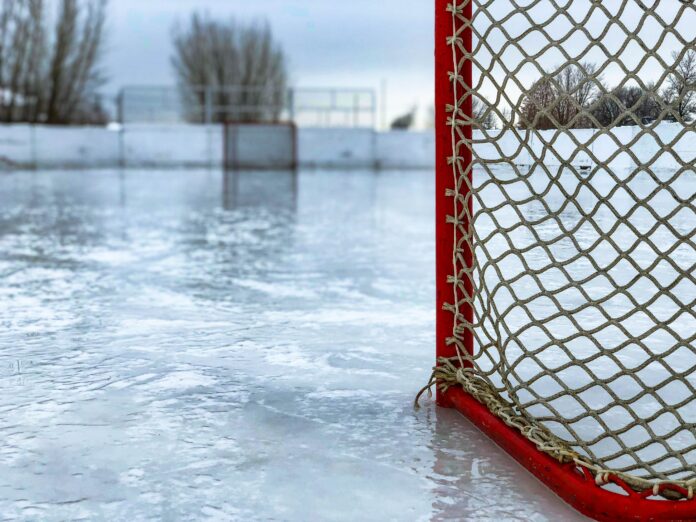
A close up shot of the back of a net on an outdoor hockey rink.
Homebound: Vancouver relocates its AHL team to Abbotsford after seven seasons in Utica, New York. Photo: Chris Liverani / Unsplash

By: Greg Makarov, SFU Student

On July 14, 2021, the ownership of the Vancouver Canucks finally decided to move their affiliate team to the city of Abbotsford

The Canucks were previously associated with their affiliate team, the Utica Comets (New York), between 2013–21. However there were some issues, one being logistics, that led to the clubs parting ways. As Utica is very far away from Vancouver, whenever prospects needed to be brought up, it could take up to a week. 

With the addition of Abbotsford, each of the 32 NHL teams (minus the Seattle Kraken), have their own affiliate team in the American Hockey League (AHL). Similarly to the NHL, the AHL season ends with a quest to win the cup. An AHL team serves multiple functions for the NHL team and the local region it’s placed in. 

For any up-and-coming prospect, it’s best to play in both leagues: they can practice certain skills in the AHL and then challenge themselves in the NHL. The long distance between the Canucks and the Comets disrupted that process significantly, as players would either be left in the AHL for too long or play in the NHL for longer than they should. 

Sometimes players suit the AHL better if they face difficulties adapting to a faster and much more physical pace. Roster spots can open up on NHL teams due to injuries, management decisions, or to shake up the roster for offense. In this case, players are called up from the AHL to play for the big club. 

The relocation has also provided a passionate local market with a hockey team that hopefully will be successful with the many additions that have been made in the 2021 offseason.

The Abbotsford Canucks have been in the middle of the pack this season, sporting a (4–4–2) record to put them in sixth in the Pacific division. However, they took their biggest hit in a loss against divisional rival San Jose Barracuda. Having lost a few games in a row, some frustration was on display as some questionable hits were thrown, leaving player Joel Kellman (San Jose) to be stretchered off the ice at the Abbotsford Centre. The disastrous start for its parent organization — the Vancouver Canucks — has also put a bit of strain on the Abbotsford Canucks team chemistry with constant call ups. Hopefully they can start to get some more wins under their belt, starting with the Tucson Roadrunners on November 26.

AHL teams allow prospects to play in different game type situations to better prepare them for the big leagues. It’s a crucial aspect of a franchise and the reason behind the annual NHL Draft each year. Having a player drafted in a team’s system allows management to assist a player in their growth and have them situated with the city, management, and fans before they play under the big lights. After all, not everyone can play in the NHL at 18. 


How to get the most out of your Athletic & Recreation fee

0
A person walking with an umbrella in the pouring rain downtown.
Stay out of the rain and play some indoor badminton instead. Photo: Osman Rana / Unsplash

By: Marco Ovies, Features Editor

One of the major downfalls to living in the Lower Mainland is the amount of rain that keeps you inside. While it can be tempting to cocoon yourself in a blanket and eat a whole plate of lasagna instead of going for a run in the rain, SFU offers some great indoor alternatives to help you stay active during these rainy months. Since you’re already paying $81.64 for this in your student fees, you might as well take advantage of it. 

SFU offers drop-in sports for Fraser International College students, SFU staff and faculty, and anyone who has a Burnaby Recreation membership, which is included in undergraduate student fees and graduate student fees (if you are enrolled in at least three credits). You can access your membership by going through go.sfu.ca and completing your SFU Athletics & Recreation Waiver. In 24–48 hours you’ll be ready to go. 

With this membership, you now gain access to facilities like the fitness centre, aquatic centre, climbing wall, drop-in sports, intramural leagues, and the squash, racquetball, and tennis courts. The fitness centre offers plenty of weight-lifting and cardio equipment and is open from:

  • 7:00 a.m. to 9:00 p.m. Monday to Friday
  • 8:30 a.m. to 5:00 p.m. Saturday and Sunday (8:30 a.m. to 10:00 a.m. on Saturday are reserved for women only). 
  • The aquatic centre offers lane swim from 8:00 a.m. to 6:00 p.m. on weekdays (with reduced hours on weekends). 

Before COVID-19, you were able to drop into the fitness and aquatic centres whenever. But now you are required to book a session in advance through the SFU Rec Member Portal. After booking your session, you will receive a confirmation email and you have until 30 minutes before your time slot to cancel. Each time slot is reserved for one hour. When showing up to your session, you must bring your student ID to check-in. Reservations open up 48 hours before each time slot and close 15 minutes before the said time. Be sure to arrive on time so you can get your full workout in. 

Unfortunately, Intramural leagues are not being offered this semester, due to COVID-19 restrictions. However, the most appealing to me is the drop-in sports that SFU offers. You can partake in activities such as badminton, basketball, volleyball, and spikeball to name a few. These sports are open to people of all skill levels. You must register for all drop-in sports through the Athletics & Recreation website up to seven days in advance and you can cancel one hour before your allotted time. Each registration gives you an hour of playtime and you have the opportunity to sign up for multiple slots. So if you’re looking to play a casual game with some friends or hone your skills, this is the perfect place for both. 

Is going in-person to these fitness centres not your thing? Well, you’re in luck! You also have access to numerous different fitness videos that you can participate in at home. Activities include yoga, meditation, and boot camp classes and are all available on YouTube or through the Simon Fraser Recreation website

So if you’re looking for some good indoor activities to keep you active during the gloomy rainy months, I strongly recommend you make the most out of your Athletics & Recreation fee. With so many different activities available, there is bound to be something you’ll love. 

A peak inside basketball season

0
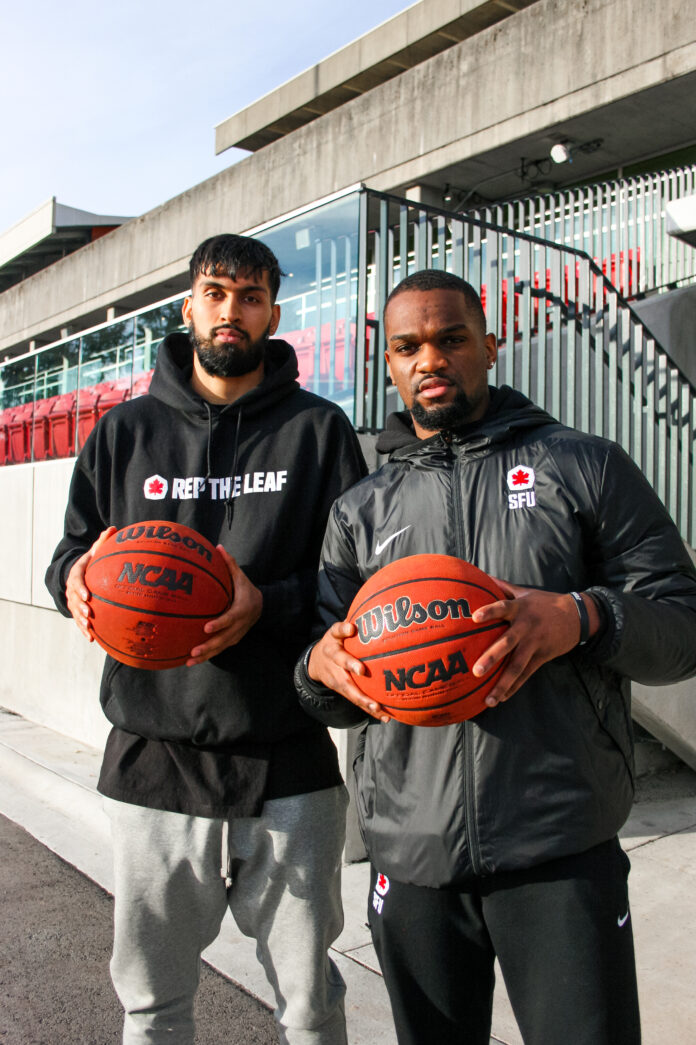
SFU basketball players Jas Singh and Wilfried Balata stand in front of the camera posing with a basketball in their hands.
Singh and Balata are unphased by SFU’s seventh place preseason ranking, ready to make a difference where it counts. Photo: Gudrun Wai-Gunnarsson / The Peak

By: Isabella Urbani, Sports Editor & Charlene Aviles, Staff Writer

It’s been one year since the SFU men’s basketball team played a game, after opting out of the 2020–21 season. The Peak interviewed two key contributors to the success of the men’s basketball team: Jas Singh and Wilfried Balata before their tournament in LA on November 12. The two shared about their personal basketball journey, their expectations on the season, and the resumption of unfinished rivalries. 

While basketball teams’ ratings may shift over time, Singh and Balata cautioned against relying only on their seventh place ranking in the 2021–22 Great Northwest Athletic Conference (GNAC) Preseason Coaches Poll. “We know what we are capable of and what we can accomplish. We don’t let outside noise like rankings define us as a team,” said Balata. On the other hand Singh said, “I was offended by being ranked seventh, I know that we are better than that. At the end of the day it’s just a preseason ranking and it doesn’t carry much weight once the season tips off.” 

Following LA, SFU returned home to play in the SFU Showcase against Central Washington and UBC — a longtime rival. In order to secure two wins, Singh reckons the team will need to recover, and play to their strength of dealing with tight turnarounds. Balata also emphasized the team’s “recovery from travel and preparation” for the upcoming games.

Both Singh and Balata are looking forward to the UBC Showdown. 

“That [game] is definitely circled,” said Singh, “Their assistant coach used to be an assistant for us, there are siblings that will be playing against each other and a lot of local BC talent that hasn’t played against each other in a long time.” 

The ever composed Balata pointed out it’s just another game for the team. 

Heading into the season these two fierce competitors will look to set the record straight and get SFU off to an electric start, and they have the strengths and skills to back it up. 


Jas Singh 

Position: Forward

Singh is a senior on the men’s basketball team. Despite not playing last season, he was unanimously selected for the 202122 GNAC Preseason All-Conference Team. This was based on his team leading 16.1 point average from the 2019–20 season. 

When asked about being included in the elite team of 15 players, he looked at it as a future teaching point. “I hope I can be a good example for some kids, not many Indo Canadians get a chance to play post-secondary basketball, let alone NCAA basketball.” Singh made the transition to SFU after playing for Northwest University in Seattle, Washington. 

Heading into the season, the team will have to make do with a packed schedule that sees them playing in back-to-back tournaments. As a senior, Singh holds himself accountable for the team’s performance. “Our coaching staff expects a lot out of me, whether that’s scoring, facilitating, initiating the offence — I’m ready for whatever they throw my way [ . . . ] we have young guys on the team and I challenge them a lot in practice.”

In an interview with SFU Athletics, SFU headcoach Steve Hanson spoke about his pride over the star forward’s humbleness over his personal accolades. “Jas doesn’t care about the personal accolades. He wants to do what is right for his team to win. In response, Singh mentioned his coach’s trust as a big indicator of his upward game play at SFU. 


Wilfried Balata

Position: Shooting/point guard 

Balata is a junior on the men’s basketball team. At the start of his university basketball career, he began achieving milestones by placing 12th in the GNAC scoring, with an average of 13.6 points per game.

Balata explained when you’re fully dedicated to basketball, you make time for practice. As part of his pre-game routine, he eats a light meal, stretches, and listens to New York rap music. “Reminds me of humble beginnings, and goals I’m trying to reach,” he said.

After Balata received basketball advice from his prep school coaches to work hard, basketball transitioned from his hobby to a goal. His motto is “the amount of work that you put into the game will never fail you.” His motivation comes from his dream of being a professional basketball player. 

Through basketball, Balata has learned the importance of teamwork. He learned to adapt to different situations by treating his teammates with empathy. “Communication is the key to almost everything in life, I’d say. Being able to take in criticism and give some.” 

Mark your calendars! You can see Singh and Balata in action at home on Tuesday, December 7 against Douglas College. Until then, the team will be playing a series of away games starting off in Colorado with the Thanksgiving Classic. 


Mason Glover shares his the ingredients for football success

0
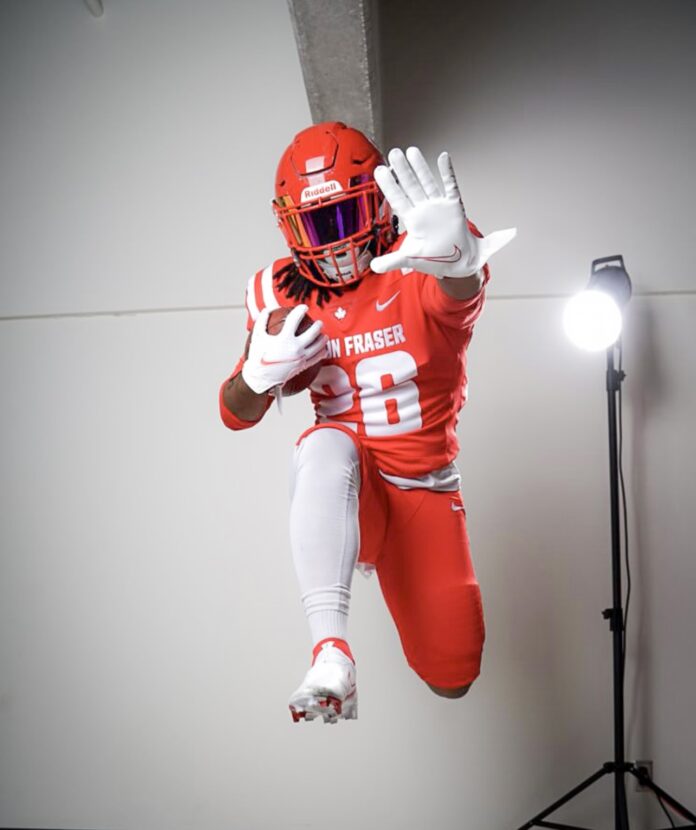
A photo of SFU football player Mason Glover in his gear jumping in the air with a football in one hand and the other being held up to the camera.
Mason Glover’s love for his family motivates his pre-game routine. Image courtesy of SFU Athletics

By: Charlene Aviles, Staff Writer

Name: Mason Glover

Major: Business, fourth year

Position: Running back, #26

Favourite football players: Marshall Faulk and Russell Wilson

Mason Glover’s transition from soccer to football at age seven eventually led him to SFU. In an interview with The Peak, Glover reflected on his football journey and the importance of being a well-rounded athlete.

He explained that his family — especially his dad — passed on their love of football to him. His dad first realized his potential during his soccer games.

“It started when I was playing soccer at age six and I would run kids over. My dad was like, ‘Huh. Okay. That’s not even soccer, but I guess he could play football,’” said Glover.

In 2018, he chose to sign with SFU because it offered the complete package. Despite receiving offers from other universities, SFU’s great location, academics, and football team drew him to Burnaby.

Glover stays true to his Washington roots by keeping in touch with his family. As part of his pre-game routine, he sends a selfie to them. Then, he prepares himself by imagining possible game scenarios and their subsequent solutions.

Growth is an important value of the running back’s journey as an athlete. His goals aren’t limited to improving his speed and strength. He acknowledged technique as an equally important factor in success. 

According to Glover, “My dad always says, ‘The game’s always 80% mental, 20% physical.” He added, “You can be strong and as fast as you want, but if your opponent is smarter than you, then really you have no shot.”

A good football player consistently sets goals and seeks feedback, he said. “[Find] out ways where you can kind of get an edge on your opponents and not be complacent.”

Glover recognized stellar players are assets to the team because they go out of their way to prioritize the team’s needs. Athletes shouldn’t limit their success to the field. Instead, they recognize their responsibilities as leaders, both on and off the field, by “engaging and inspiring the other guys who are out there.” For example, they keep tabs on other players’ academic and home life, especially those struggling with homesickness.

Reflecting on this year’s 1–7 record, Glover explained this season revealed to the team they lacked maturity. He is hoping the team focuses on player retention by keeping them on the team for future seasons.

This season’s first football game stood out to him the most. Despite scoring a touchdown, he identified other areas of improvement. The game is “a roller coaster ride. When you try to stay on the highs, sometimes things happen where you get hit back. And then, you’re on the low. And that’s the growth part of the game.” 

Through football, Glover has learned valuable lessons he applies both on and off the field. He realized the best football advice he received was from his grandmother about prioritizing his physical and mental health. His grandmother reminds him to be honest with himself, he said. “Like ‘Hey, am I okay?’ That’s what not a lot of football players do for themselves. 

“It’s a violent sport. And it takes a toll on your mental health as well. And when you’re not honest with yourself, that’s when it really starts to take a toll,” said Glover.

His grandmother’s advice about checking in on his mental health continues to resonate with him and shape his approach to football.

“Now I can kind of carry that on. If I go into coaching or if I go have my own children, I’m gonna pass that to them.”

Scorching season start for SFU hockey

0
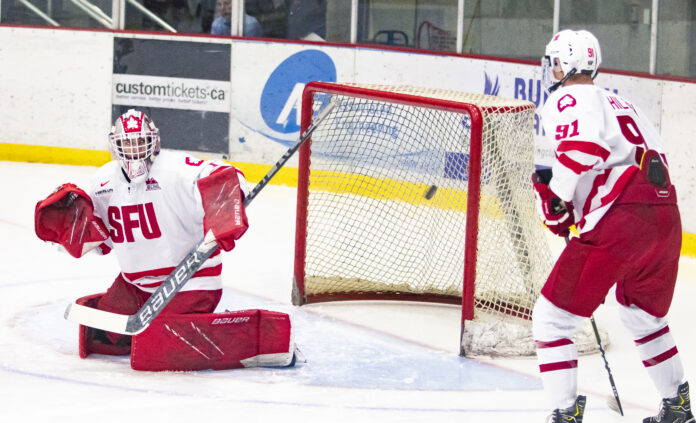
A photo of SFU goaltender Michael Lenko making a blocker save during warmups.
Matheiu Jallabert, newly named assistant captain, has two goals through three games. Photo: Krystal Chan / The Peak

By: Greg Makarov, SFU Student

It’s been a great first three games for SFU’s hockey team who confidently beat their opponents, the Okanagan Lakers and the Vancouver Island Mariners (VIU). In a strong start to the season, they were able to create some separation in the standings with two points and one game in hand over their closest opponent. Through the first three games, the team scored more goals and conceded less than any other opponent, sporting a stellar +10 goal differential. 

The structure of the team relies on offensive minded defensemen to jump in and pass the puck down low to forwards to keep possession. This allows speedy forwards such as Kyle Bergh, BC’s Intercollegiate Hockey League Player of the Week, to fly into the offensive zone. It also enables creativity and constant puck movement. This strategy has paid off so far, as half of the team’s defense is above 0.7 points per game. Meanwhile, the other half of the defensive core is able to focus on their own zone and properly manage the puck out of dangerous situations. 

During their game on Sunday against the hard hitting VIU, effective passing in tight areas created space and time for players in the offensive zone. When SFU was down a player in their own zone, the penalty kill came through. The team did not concede any power play goals and was confident in their zone, leaving no room for scrambles for the puck at the front of the net.

Wondering how they were able to implement this strategy, I asked assistant captain and one of the penalty killing forwards Mathieu Jallabert. He told me, push the opponent to the outside, capitalize on bobbled pucks, and send it down the length of the ice. 

This team oriented plan worked well for Jallabert who had a couple rush chances and two good stick plays on the penalty kill. 

Of course, not all systems are perfect but when one might fail, there was always a brick wall in the net to stop the puck. SFU goaltenders Michael Lenko and Cale Dolan have been lights out, stopping virtually any shot thrown their way. Lenko is sporting a shiny league leading save percentage of 0.963% while rookie Cale Dolan has started off with a bang, allowing one goal on 26 shots with a 0.962% save percentage. 

It was a blast to go and see an exciting team that was creative, fast, hard working, and not afraid to take a hit for a powerplay opportunity. Oh, and if you’re not intrigued yet, then look no further than the attempt at the famous Michigan goal by Takato Cox, who almost tucked it in while pivoting around the back of the net with the puck on the blade of his stick.

The competitiveness and depth shown by the squad gives them a legitimate chance at a championship banner, something SFU has not seen in a decade

Olivia Willett leads women’s cross country team to first regional championship since 2014

0
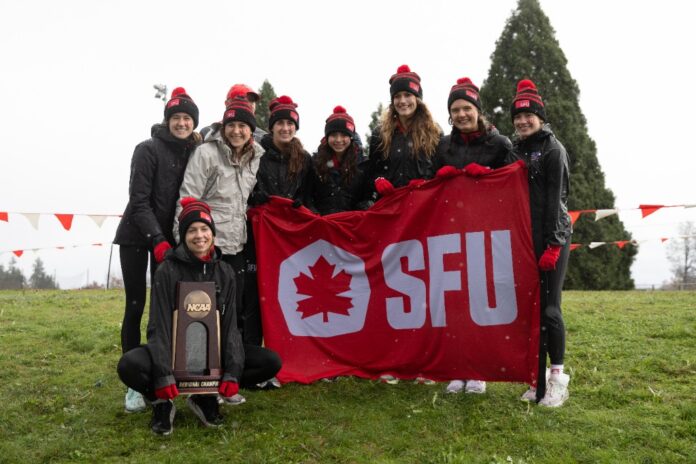
A photo of the women's SFU cross country team holding an SFU banner and Championship after winning Regionals.
Willett’s second place finish punched the team’s ticket to the NCAA Championship in Florida on November 20. Image courtesy of SFU Athletics

By: Isabella Urbani, Sports Editor

Heading into the season, the No. 2 ranked women’s cross country team and No.11 ranked NCAA Division II team had high expectations for a winning season, even after not racing for a year. It’s safe to say the women didn’t miss a beat. On the back of senior Olivia Willett, the team has shattered expectations with their perfect regular season record and two post season tournament wins

In an interview with The Peak, Willet said, “Seeing all of our hard work paying off through these victories has been very rewarding.” 

The women won the Great Northwest Athletic Conference (GNAC) title on October 23, after all five of the 6km racers placed in the top 10 of their individual races. This was the first title for the team since 2014, and the best score in the GNAC Championships since 2017

SFU built off their win by adding the regional championship to their historic season portfolio. With a time of 21:19.7, Olivia Willett finished second behind Keala Dishion, the Canadian Collegiate Athletic Association (CAA) individual champion. Willett and freshman Kate Cameron’s 13ᵗʰ place finish earned All-West Region honours. All of SFU’s women’s team finished in the top 30, beating their previous second place finish at regionals in 2018.

When asked about her incredible senior run, Olivia Willett directed the spotlight to her teammates and the coaching staff. “These girls define what a team means to me. We have formed a really tight knit group this year where we can lean on each other and feel supported no matter how we perform.” 

Coming into her regional performance, Willett was aware that CAA Champion Stanislaus State was going to come hard out of the gate. Determined to not let a gap form, Willett didn’t let herself slip from the lead pack. SFU’s 75 points toppled that of second place Stanislaus State and third place finisher Chico State whose 12 year CAA Championship streak was broken last month.

With the stage set for the women’s NCAA Championship this weekend against experienced opponents, will SFU’s winning season give them the boost they need or distract them from the task at hand? On the preparation leading up to the big day, Willet said, “Heading into training we want to maintain our physical and mental health. Going into nationals without a loss definitely reminds us of what we are capable of.”  

The newly improved No. 8 women’s team will look to improve their best 6ᵗʰ place finish at the NCAA Championship in 2016. For senior Olivia Willet, this has been a journey well traveled. Her season will come to a close this Saturday as she attempts to go for the gold and complete her trio of championships this season. 


Escape into the woods of Minnekhada Park

0
A photo of a collection of tall trees on a steep hill on Minnekhada Park.
Who knew the other side could be so green? Photo: Kelly Chia / The Peak

By: Kelly Chia, Staff Writer 

I’ve never hiked and living in BC makes this feel like a waste. I always admired Instagram photos from afar, but was too scared to give it a shot. I worried about all sorts of things: heights, the cost of hiking boots, and how “easy” an easy hike would be. Recently, I found Minnekhada Park, a two hour trail in Port Coquitlam that weaves its way through Pitt Meadows and Maple Ridge. I didn’t know what to expect of the 4.7 km hike but knowing all new adventures warrant a buddy, I asked a friend to accompany me.

On a mid-October evening, wearing comfortable clothes and sneakers, I approached the trail. My friend wore hiking boots, which proved to be useful as some parts of the trail were muddy and slippery from rain. The beginning of the trail was marked with a map of different routes to take and caution signs for bears in the area. The sign cautioned guests to leash any dogs, and to stay calm and back away from any bears on the path. 

Since we wanted to get a good view of the upper and lower marshes, we took the High Knoll path, which would take us about two hours to finish. 

Before we started walking, we texted our emergency contacts to let them know which path we were taking, and what time we expected to leave. Our cell reception faded as we hiked, so this turned out to be a good precaution. We also made sure to chat at a decent volume to drive bears away while we walked.

The path started with an easygoing, smooth trail littered with autumn leaves. It was peaceful watching trees of various shades of green and orange blend into each other. My friend pointed out that some trees were nursing trees — newer trees growing out of older ones. We began our hike around 4:00 p.m., so there was plenty of daylight to wade through the leaves and admire our surroundings. We admired everything, from the sloping hill tops crested with pine trees to the vibrant ferns that feathered us as we walked past. 

About 40 minutes in, signs informed us that our path would get steeper and more uneven. And boy, did it get steeper. We didn’t read the part of the brochure that said the hike would have a near 200 ft. elevation gain! 

The walk was still manageable, but it had broken up into tree roots and rocks to climb. I say climb, because I’d sometimes go on all fours to get a bit lower to the ground, but that was more for my peace of mind than anything. Some of the steps became slippery as it started to rain, but not enough to make our walk dangerous. Inevitably, the path went down. My brave friend went ahead of me to stake out which tree roots could be stable footholds. I mouthed “thank you” to the tree roots that had formed into steps while I crawled across them. 

Then, it was just a matter of making it back to the start. The path was still rocky, but more approachable than the middle of the hike had been. We grinned when we saw the parking lot, knowing we had made it all the way around. 

My friend and I were awed by the things we saw, and were thoroughly humbled by this “easy” hike, which was more challenging than we expected. Even then, I could see the charm of hiking. Being within the trees is comforting and sublime, especially in the fall, when the ground looks like it’s decorated in gold.  

If you are also looking to hike for the first time and you aren’t sure where to start, Minnekhada Park is a beautiful and relatively approachable walk. I’d recommend going when it’s not projected to rain to avoid run-off water from the rain along the steeper parts of the trail.

The Sports Peakbox: swimming

0
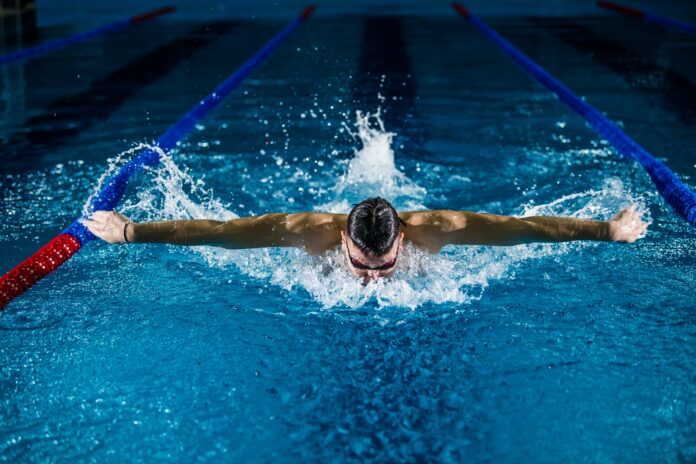
A shot of a swimmer heading back into the water after taking a moment to come up to the surface during a butterfly stroke.
Your water-related questions, answered! Photo: Gentrit Sylejmani / Unsplash

By: Sara Wong, Arts & Culture Editor

Welcome to The PeakBox. My name’s Sara, aspiring mermaid and your host for this week.  In this segment, The Peak answers student submitted questions about sports at SFU. This week, we focused on swimming.

1) How is SFU doing so far this season?

SFU’s swim team has been very successful so far. At the Logger Relays, which took place last month in Washington state, the team won first overall. Out of nine races each, the men won five and the women emerged victorious in every event. The Logger Relays also marked head coach Demone Tissira’s debut with the SFU team, making their first place finish even more special. 

2) What kind of races can swimmers compete in?

The cornerstones of competitive swimming are backstroke, breaststroke, butterfly, and freestyle. Backstroke involves swimming on — you guessed it — your back, with a flutter kick and alternating arm movements. Meanwhile, breaststroke and butterfly are swum facedown. In the former, you move your arms in a semicircle motion while your legs perform a frog kick. The latter uses a dolphin kick as you simultaneously throw your arms forward out of the water. Freestyle allows competitors to choose what stroke they want to swim.

A combination of the aforementioned four strokes is called a medley. Swimmers participate in these categories either as individuals or in teams during relay events. For each style, the length varies between 50–10,000m

3) How do swim meets operate in the NCAA?

In addition to the race events listed above, the NCAA has categories for the following:

  • Backstroke, breaststroke, and butterfly: 50m
  • Individual medley: 100m
  • Freestyle and medley relays: 4×50m

There are also events measured in yards instead. “In USA swimming competitions, swimmers compete in yards during the school year and meters in the summer.” The former is often referred to as a short course season, where the pools are 25 yards in width. This is the standard in NCAA swimming competitions. 

4) What are some swimming records at SFU?

On the SFU Athletics swimming and diving website, you can find a list of the top five fastest swim times, broken down by category and gender binary (men and women). The most recent number one records were achieved in 2020 by Collyn Gagne and Antonio Morino of the men’s team. Gagne completed the 400 yard individual medley in 3:47.36 and Morino swam the 200 short course metre breaststroke in 2:12.98. 

Meanwhile, the longest-held record so far is in the women’s 200 yard freestyle relay, which was won in 1995 by Karen Chow, Ala Ferguson, Sharon Turner, and Diana Ureche with a time of 1:35.18. Also of note are Jessie Gibson (11) and Adrian VanderHelm (10), who hold the most individual records.

5) Have any SFU swimmers competed in international competitions (Olympics, etc.)?

A handful of SFU swimmers have competed at the Olympic level! One of them, Bruce Robertson, was the first medalist from SFU. He won silver in the 100m butterfly and bronze in a 4×100m medley relay at the 1972 games in Munich. Freestyle swimmer Gary Macdonald added to the total with his silver medal during the 1976 Olympics. Other Olympic competitors include Doug Martin (1976) and Diana Ureche (1992).

SFU swimmers have also placed well in the Pan American Games. In 2003, Kathleen Stoody earned three medals — one silver and two bronze — competing in the 4×100m medley relay and the 100 and 200m breaststroke. 

6) Can students go swimming in the leisure complex pool?

Yes, SFU and FIC students can use the Aquatic Centre. However, you have to reserve a slot online first. This also means your recreation membership must be active. Instructions on how to register for both can be found online. The Aquatic Centre is open until 7:00 p.m. on weekdays, 3:00 p.m. on Saturdays, and 3:30 p.m. on Sundays. Some of the sessions are for women only. For more details, and to learn more about SFU Recreation’s health and safety protocols, visit their website

Breaking down the men’s cross country GNAC Championship with Aaron Ahl

0
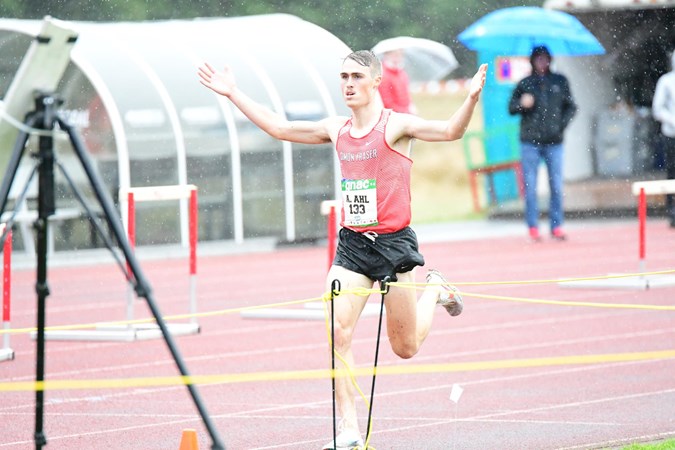
A photo of SFU cross country runner Aaron Ahl with his hands outreached above his head as he approaches the finish line in the pouring rain.
A fight to the finish: Ahl pulled a way in the last km to win the race. Image courtesy of SFU Athletics Twitter

By: Isabella Urbani, Sports Editor 

Oct 23, 2021 was a “picture-perfect” day for SFU’s cross country team who won both of the Great Northwest Athletic Conference Championships (GNAC) — one stop before the NCAA Championship

The Peak had an opportunity to interview senior runner and GNAC’s Athlete of the Year Aaron Ahl about the historic milestone.

It was a Cinderella story for Ahl, who finished first in the men’s 8km race, blowing his 19ᵗʰ place finish at the 2019 Championships out of the water. The men’s cross country team tasted defeat last season, finishing second behind Western Washington University.

When asked about clinching a win with the men’s team, Ahl said, “It feels great, almost a relief in a sense. We have been so close in the past and it stings when you miss it every year by such a small margin. Being a senior this year and leading the team to the win made it extra special.”

Ahl, alongside freshman Scott Arndt and Charlie Dannatt, piggybacked the men’s team to a victory. SFU defeated the reigning champions, in the third closest competition in men’s history. 

When asked if edging out the previous champions made the victory any sweeter, Ahl admitted he didn’t know SFU had won until he saw the scores. “In the end, getting the win in such a tight race feels more rewarding than winning by a blowout because you know it took everything you had to hold off the other team.” 

Ahl had high praise for Arndt and Dannatt who placed alongside him in the top 10. He credited Arndt, his training partner, for being a contributor to the team’s success. In terms of Dannatt’s performance, Ahl sees “him leading the SFU team in the future [ . . . ] The core of our team is very young and they have exceeded expectations.” 

Ahl’s first place victory seemed inevitable after his terrific finishes throughout the season. He started the season with a first place finish before capturing third in his last two regular season meets. Leading up to the GNAC Championships, it looked like Ahl was going to have a breakout performance. But the race didn’t start like that for the quick starting runner. 

Instead, his original game plan of leading the pack fell to the wayside when two runners from the Alaska Anchorage team came out of the gate, pushing the pace of the race. Luckily, Ahl was able to outrun the pair. Alaska Anchorage’s freshman Cole Nash proved to be a little tougher as the race went to its final km. Ahl’s finishing kick allowed him to wrap up his first GNAC win. Ahl said he looks forward to racing Nash at the NCAA Championships. 

On the other side, fellow senior Olivia Willett led the women with her first place finish. Willett has also had a sensational season, placing in the top two for each of her meets. She is an “exceptional athlete and did a great job of leading the women’s team,” said Ahl, “In athletics, I think the best way to lead is by example and she’s done that.”

All that’s left for SFU’s cross country teams is to officially close out the season with the NCAA Championships on November 6. After their GNAC win, the men’s team will be coming in with their heads held high. You can read about SFU’s performance at the NCAA Championships next week.