This athlete recently signed on as a sports broadcaster for Turner Network Television. Pixabay / Pexels
By: Greg Makarov, Sports Writer
This will be the hardest set of questions you have ever had to answer. If you answer them correctly, it will lead you to unimaginable treasure: our mystery athlete of the week.
There is a wine brand named after this athlete.
They were an active player from 1979–1999.
This athlete holds a whopping 61 records throughout the regular season and playoffs.
They were the captain of all four of the NHL teams they played on.
If you take away all the goals this player has scored, they would still have the most points of all time based on assists.
They were once the head coach of the Phoenix Coyotes.
They hold the record for most points by brothers in the NHL with their younger brother.
Their jersey number, 99, has been retired by all teams in the NHL.
This athlete is most remembered for their time as an Edmonton Oiler.
This athlete said the famous quote, “You miss 100% of the shots you don’t take.”
Did you figure it out?
If you guessed Wayne Gretzky, then you’re correct! A truly baffling hockey player whose numbers and records are timeless, while his career resume is good enough to place him in the discussion for the best athlete of all time.
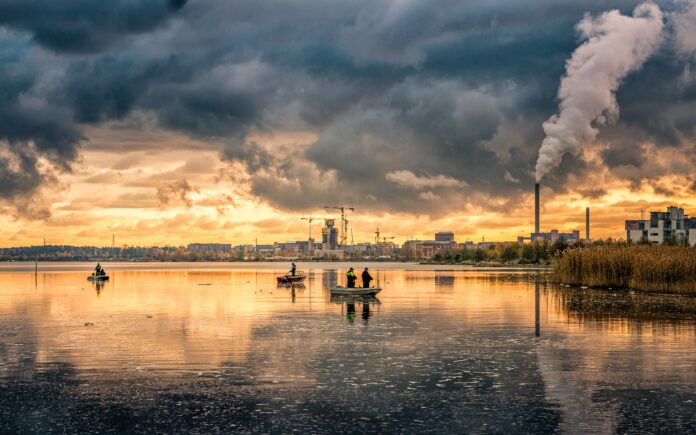
Every ton of CO2 in the atmosphere contributes to making the ocean more acidic. PHOTO: Carlos "Grury" Santos / Unsplash
By: Luke Faulks, Staff Writer
Oceans are one of the planet’s largest carbon repositories, after forests. Largely thanks to phytoplankton, oceans absorb roughly a quarter of CO2 emissions every year. However, excess emissions caused by the burning of fossil fuels are changing the chemical make-up of the seas. This “ocean acidification” is an issue that’s occurring out of sight and mostly out of the public’s attention. That needs to change.
Ocean acidification is a process making oceans more acidic, due to the absorption of CO2 into water. Since 1850, the ocean has become 26% more acidic; a shift so fast and so substantial, its rate of change exceeds that of any time in the last 55 million years. The result is an increasingly uninhabitable ocean, particularly for bivalve shellfish and coral whose shells and skeletons begin to dissolve.
Shellfish like oysters, clams, and mussels play an important role in filtering out sediment and disease from ocean waters. The reduction in bacteria benefits the fish and marine mammals in nearby waters, and the decreased sediment allows light to reach plants on the seafloor, helping grow a better habitat for local fauna.
Reefs act to reduce the effects of extreme weather events and flooding due to sea level rise. It’s estimated that nearly 200 million people depend on coral reefs to keep their homes, business, and lives free of the worst storm surges and waves. All that goes out the window if coral reefs die off.
While species like algae and seagrass may benefit from an ocean that’s more saturated with carbon, scientists agree that the vast majority of impacts will be detrimental. Harmful algae blooms in particular are more prone to occur with an acidic ocean, contaminating farmed seafood and disrupting the environmental food chain. It’s now been shown that juvenile fish and crabs may have trouble adapting to increasingly acidic oceans, further unbalancing the food chain.
Ecological impacts aside, there are also economic concerns. With much of the Canadian East coast being employed by the fish industry, detriments to ocean health translate directly into tens of thousands of jobs lost. It’s naive, at best, to believe a change in the ocean’s pH and food chain would leave the fishing industry unaffected. According to a 2013 study, changes in the ocean’s pH could result in a sharp decline in the mollusk, echinoderm, and coral population, which in turn would prompt a loss of habitat and food for fish of all sizes. Whether you’re more concerned for the well-being of the environment or for your end-of-year tax return, you should be paying attention to ocean acidification.
While acidification has generally been an issue that people have struggled to connect with, it’s starting to show up in our daily lives. Shoreline flooding, seafood scarcity, and dirtier oceans are issues that aren’t going to get any better. It’s time to start looking harder at ocean acidification as an unfolding environmental catastrophe rivaling land-based climate impacts.
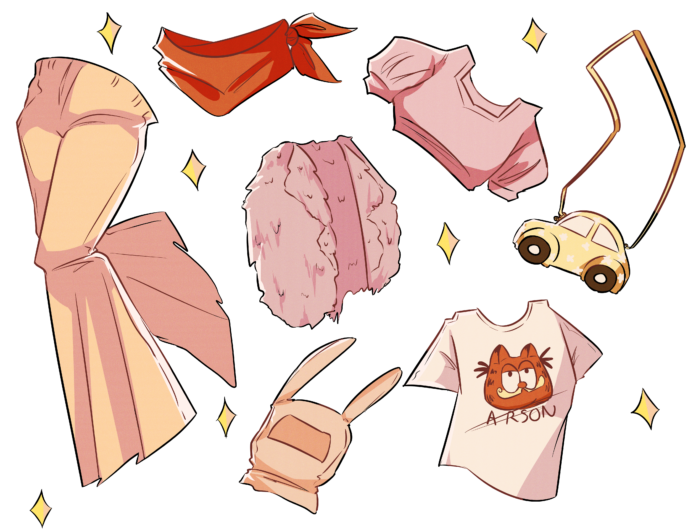
Your newest threads. ILLUSTRATION: Jiamin Bai / The Peak
By: Kelly Chia, Staff Writer
Hello my little seeds,
Have you longed for the perfect type of clothing for your flesh vessel? Be not afraid. I am Sylvia XVII. I have descended directly from my plane to your simple world to deliver one message: you could be better. And I’m going to tell you how.
My little cosmologicalquiz will reveal everything. Are you ready for your absolute truth, my children?
What lyrics resonate with you most?
“My heart will go on” — “My Heart will Go On,” by Celine Dion. Classic human, so sentimental.
“I need my golden crown of sorrow, my bloody sword to swing / My empty halls to echo with grand self-mythology” — “King,” by Florence + the Machine. Oh, you and your hero moments.
“I place my legs in a cage of spandex” — “Tight Pants,” by Leslie Hall. You are so transcendent, darling. Unique!
When you think of style, what comes to mind?
“An old-fashioned roller rink, holographics, and a spicy little tweed sweater.” You smell stuffy, but interesting!
“Anime posters, mom jeans, and at least two studded belts.” Wow you love yourself a 90’s trend don’t you?
“Style as a whole is too broad to be limited to one answer in a three-answer multiple choice.” A bit insulting, but I am a benevolent being.
What, in your opinion, is the perfect afternoon snack?
“Tangerines cut neatly with no trace of their skin, paired with a light cheese and some pomegranate seeds.” You have class.
“An unacceptable amount of cheese puffs shared intermittently with the ephemeral raccoon sitting on your apartment steps.” You, too, have class.
“ . . .” Silence? Really? If I had nerves you’d be getting on them . . .
Let’s get personal, my little featherless doves. Do you believe in life after love?
“I can feel something inside me say, I really don’t think you’re strong enough, no~!” Beautiful.
“Honestly, I don’t know. Love can be difficult, and no one tells you that being vulnerable is so odd.” Oddly introspective.
“Blergh. Stranger danger.” How dare you, I have known you since the dawn of creation. I will know you far afte — don’t you dare start reading the next question!
Sigh. Be honest, children, do you like Sylvia XVII’s quiz? Is it too proto-millenial?
“No, it’s genius!” Oh, dearie, I know.
“No, I feel like we’ve really gotten to know each other.” For all eternity!
[redacted.] Being difficult will not stop me from reading your essence in a five question quiz, villain.
If you answered mostly A’s, I’ve assigned you the perfect style for your soul: Discotheque Academic
Ah, you old-fashioned soul. You dream of 80’s songs and spandex in a time that’s actually brought back every decade from my observations. This is the perfect style for you, my friend. You just like to be a little old guy with your boxy black glasses, leg warmers, and your giant corduroy blazer, don’t you? Of course you do, newspaper reader.
If you answered mostly B’s, I know this style will resonate with you to the core of your being: Anime Mom
There is no easy way to say this. You embody an animated character’s mother with your very essence. It’s time you wear a side braid, some loose mom jeans, and a graphic tee that says, “Live, Laugh, Love” with the face of Carla Yeager. Also, start practising your face of shock as you receive a letter about your supposed anime child as they achieve hero status, or face great tragedy. You never know. That’s the exciting thing about being the Anime Mom aesthetic!
If you answered mostly C’s,you’re no fun and I don’t like you. But I am merciful, so this is what style you suit best: Egg Abomination
So you’re one of those people that just like to pick the spicy answer just to see what happens, huh? Well, let me tell you, egg abomination. Sylvia XVII, and those before them, have never seen such complete disrespect. So your style is both nothing and everything: you are the yolk of the universe, and incredibly dull. As an ovum you can be made in so many different ways if you accept my guidance. But you choose to stay a contrarian egg nonetheless.
Wait, what do you mean you’re here to stop my quiz based fashion intervention? AGH, NO! One can’t defeat me and the toxic cyclical relationship of fast fashion and its accompanying trends!
You will not slow me forever! I will be back, and you will be fashionable, you egg!
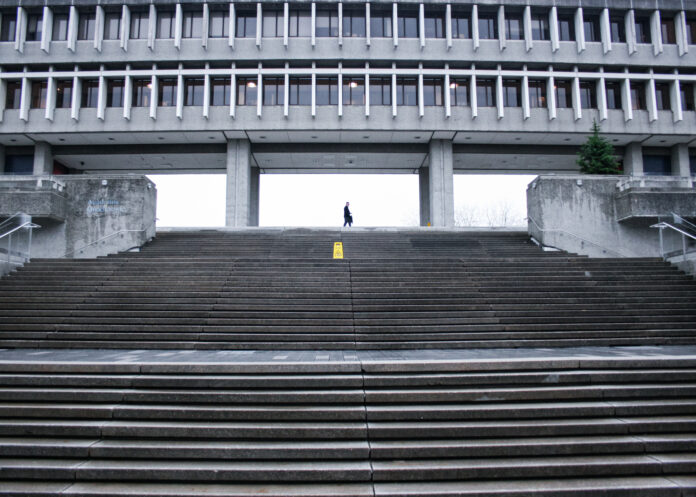
They know their phrases, do you? PHOTO: Gudrun Wai-Gunnarsson / The Peak
By: Hannah Kazemi, Peak Associate
1. “Do you think it’ll bite me if I pet it?”
Going to school on a mountain means there’s a lot of wildlife around, and perhaps the most iconic animal that roams the halls of SFU Burnaby is the majestic raccoon. Don’t get too close though — they may look like they want a hug, but try to pet one and your right hand will no longer exist as part of your body.
2. “I think you’re missing the point.”
This phrase is most used with a slowly concerned hand raise in response to that guy in your poli-sci class volunteering to “play devil’s advocate.” The devil doesn’t need an advocate, Nathan. Leave it alone.
3. “I’m never going to financially recover from this.”
Is this a Joe Exotic meme or an actual concern most of us have had? The answer: both. You went to BierCraft with your friends to celebrate #midtermszn being over but you forgot something important: your wallet. Or rather, you forgot that your wallet is empty and that the balance of your chequing account is struggling to catch up to the 13 venti Starbucks coffees you bought last week to keep yourself alive during #midtermszn.
4. “Are classes cancelled today?”
Classes are never cancelled today. But that doesn’t seem to stop everyone and their motherfrom hopping on a Facebook group and asking this question after it snows. Throw on your Super Puff, put on your Blundstones, and get your ass to class. The mountain is calling.
5. “It’s just a false alarm.”
I was sitting in the AQ the first time I heard a fire alarm go off at SFU and the only thing running through my mind was, “Shouldn’t we evacuate?” No one around me seemed phased. I wasn’t even sure that anyone else had heard the alarm. So I stayed there, confused and slightly concerned. I soon came to realize that I, too, would become so desensitized to the ear-piercing sound of the fire alarm blaring that I don’t even blink when it happens anymore.
6. “Does this schedule look manageable?”
No.
7. “Fuck, I’m out of shape.”
Walking up the Saywell Hall stairs and having to hide the fact that you’re so painfully out of breath should be an Olympic sport on its own. Even worse? Having to walk from WMC to Saywell in the 10 minutes between your classes. As you reach the top, you’re breathing so heavily it sounds like you just inhaled three milkshakes, a pack of cigarettes, and ran a casual 50k.
8. “I should have gone to UBC.”
Be honest — you’ve definitely said this before. Or at the very least, the thought has slipped into your consciousness while you were standing squished on the 145 rattling up the mountain on the coldest, rainiest Thursday morning in November there ever was to exist. I didn’t even apply to UBC and the thought still crosses my mind.
9. “You know the avocado? Yeah, I heard people have sex there.”
This is a phrase that every single SFU student has said (or heard) at least once. And to be honest, we’re starting to sound like a real avocado sex cult to new students. It would be hilarious if it’s true, but I just can’t seem to figure out how it’s logistically possible. Most people aren’t that flexible. The math just isn’t mathing. Besides, I know there are better places to fuck at SFU than the inside of a concrete avocado.
10. “No thoughts head empty”
You text this to your group chat after you stayed up until 3:00 a.m. studying for an 8:30 a.m. midterm and nothing feels real anymore. Coffee no longer has an effect and you can’t remember the last time you showered. This thought also applies when you’re cold-called in the middle of tutorial and you have to quickly pretend that you were paying enough attention to know what the question was — not checking Kanye’s Instagram to see what he’s done this time.
By: Sara Brinkac, Humour Editor, Interstellar combatant
Aries
You should go kick a tree this week. There have been whispers in the wind lately and they have been awful. I don’t even want to repeat what they’ve been saying about you, but man, should you go kick a tree, hard.
Taurus
Venus thinks it would be funny if you pinched a tomato. Like, how funny would that be? If you just pinched a tomato? It would be so random. It would be hilarious. Venus would love that.
Gemini
The stars want you to slap a seaweed silly. Not dried either. Take some initiative. Go rent SCUBA equipment head down to the sea floor, and really show that seaweed what’s what. The stars say it will help with your . . . cosmic vibrations?
Cancer
Backhand a flower. More specifically, a daisy. There are some negative vibes moving through the daisy chain at the moment and it’s time you set them straight. Love me or love me not, I’m right.
Leo
Get in touch with your sign this week and give a lion a really hard poke. I mean just really wind that finger up and absolutely give that lion the poke of its life. I can’t speak to the consequences of your actions and don’t know if I totally agree with the stars on this one but, sleep on it maybe?
Virgo
Go drop kick a strawberry. The prices for strawberries are ridiculous right now and it’s your cosmic destiny to set the economy straight one mushy strawberry at a time. Bless you, star child.
Libra
You should shoulder check a big rock. No one sassily shoulder checks anymore and Jupiter misses it. The planet thinks it would be funny if you shoulder checked a big rock because “I don’t know, it would just be funny, don’t ask me why Carl.”
Scorpio
Hey, Scorpio, you should kiss a blade of grass. Really show them they’re appreciated. You’re always stepping on grass Scoripo, always, it’s high time you show those blades some love.
Sagittarius
Bite an apple this week. But not in a nice eating way, in like an aggressive, “you suck, you friggin’ apple” kind of way. As Mercury is currently in a turf war with apples, it has agreed to go into retrograde for fewer days depending on how hard you bite the apple.
Capricorn
Go yank a bush tomorrow. You don’t have to tear out any leaves or seriously harm it, but give the bush a good yank. It knows what it did.
Aquarius
We strongly recommend punching a cloud today. You’ve always got your head down, working hard and the clouds are getting catty about your bald spot. It’s time to hold that head up high and get your fist in the clouds.
Pisces
Whack a perennial flower. They’ve been getting so cocky lately, going on and on about how they never die. The stars are pissed. It’s time you choose the right side in this battle and use your cosmic power to be mean to a flower.
With koi as fresh as they are ordered and a seasonal menu based on the best ingredients available each week, AQ Koi is the pinnacle of culinary artistry at SFU. I have reviewed this restaurant since 1983 and while I have never been disappointed, I have never been able to award the restaurant my full five star approval — until now. My readers will trust, of course, that I take this responsibility very seriously and place my entire reputation as this era’s most esteemed food critic on the line when making this claim. But for this restaurant, I gladly will.
What I have always appreciated about AQ Koi is its dedication to fresh, seasonal ingredients. Each menu is prepared a week in advance and the restaurant is open once a week in order to keep the koi population in control. Unlike restaurants such as the abominable Chilcotin 16, AQ Koi is a restaurant that makes the logistics and scheduling of food service an art form.
The meal began with an absolutely delectable pond weed salad — a staple dish of the winter menu. What makes this salad so unique is that the pondweed itself is marinated its entire life in the dressing that is the AQ waters before serving. While this creates a unique taste, for many years I felt the salad was lacking substance. However, now that the AQ pond has reached a bacteria level that is more external droppings than actual water, it has created a one of a kind taste that will only continue to improve with time. The salad proved a promising start to my evening.
The main course which remains the best entrée I have ever had and the namesake of the restaurant, was a beautiful, caught to order, AQ Koi. As the koi took its last breaths, it was placed in my paws and glazed with the finest waste bin juice sourced from Biercraft just hours before dining. While some chefs may stop here, it is the pure creativity and passion for food that pushes AQ Koi head chef Procyon Lotor to take it one step further. The dish is perfectly topped with lemon, capers and a sprig of rosemary boldly retrieved from the DAC.
Finally, the dessert. A masterfully made, and incredibly light plain cheesecake topped with winter berries. I begged Chef Lotor to reveal his sources for what I dare claim is his best dessert to date, but alas, some chefs do not dare part with their proudest secrets.
With the culinary world slipping into the clutches of the vile temptress that is instantaneous gratification, valuing trends over craft, it is easy for an epicurean such as I to fall into deep despair. But it is nights like these I remember why I have dedicated my life to the wonder of cooking and the pleasure of dining. To the wonderful, dedicated, and impassioned staff at AQ Koi, I thank you and look forward to dining with you all for years to come. Five out of five stars. Delicious.
Why should commentaries on one conflict be any different than another? PHOTO: Efrem Efre / Pexels
By: Kelly Chia, Staff Writer
On February 25, 2022, CBS news reporter Charlie D’Agata said, “This is a relatively civilized, relatively European — I have to choose those words carefully, too — city where you wouldn’t expect that or hope that it’s going to happen.” This was in response to Ukrainian citizens fleeing their country. D’Agata also said that Ukraine wasn’t a place like Iraq or Afghanistan with decades of conflict.
Despite D’Agata’s apology, this is only one example of how comparisons to the Middle East have highlighted biases on the type of refugee people should feel sorry for. The kind with “blue eyes and blonde hair,” as a Deputy Chief Prosecutor on BBC put it. Disturbingly, Daniel Hannan on The Telegraphwrote, “War is no longer something visited upon impoverished and remote populations. It can happen to anyone.” These aren’t commentators from right-wing networks like Fox News. These are mainstream sources confidently revealing their biases against non-white, non-European people.
It is aggravating for these commentators to suggest any nation should expect conflict. It reinforces harmful stereotypes that war and tragedy are normal in some nations. It is dehumanizing for refugees’ experiences with war to be weighed against each other — war is unjustified no matter where it happens.
I want to be clear that this isn’t to detract from condemnations of Russia’s invasion of Ukraine, despite the Kremlin’s best attempts. War and occupation should be condemned for its horrors, and Ukrainian citizens deserve our full sympathy and support. But it enrages me that Western commentators feel the need to justify why they can empathize with Ukrainian refugees by standardizing conflict in other nations. Why can’t they simply express their sympathy without delegitimizing the struggle of racialized peoples in the process?
It is especially hypocritical that Western commentators talk about war as a baseline in the Middle East, considering that American-led intervention has played a key role in destabilizing the area for the past few decades. It has largely been the actions of the Western military that have killed civilians and destroyed critical infrastructure.
In my lifetime, I’ve never seen war covered to this extent in Western media. The level of nearly 24-hour coverage has not been present for other populations that have suffered occupation. Our lack of similar reactions for Syria or Palestine highlight our biases.
To say the least, newsrooms need more cultural nuance and training with how they approach and comment on war. The Arab and Middle Eastern Journalists Association wrote, “This type of commentary reflects the pervasive mentality in Western journalism of normalizing tragedy in parts of the world such as the Middle East, South Asia, and Latin America.” When the media has this much influence on public perception, this is especially true.
The difference in coverage of this conflict is disheartening, too. More care and investment is needed in international reporting. Disproportionate coverage can push comparison between conflicts by treating one with far more importance. What hurts about these biased comments is that it reveals Western media was always capable of this kind of sympathy. It turns out they do understand how horrid occupation is for civilians. It’s just not extended to people who don’t look like them.
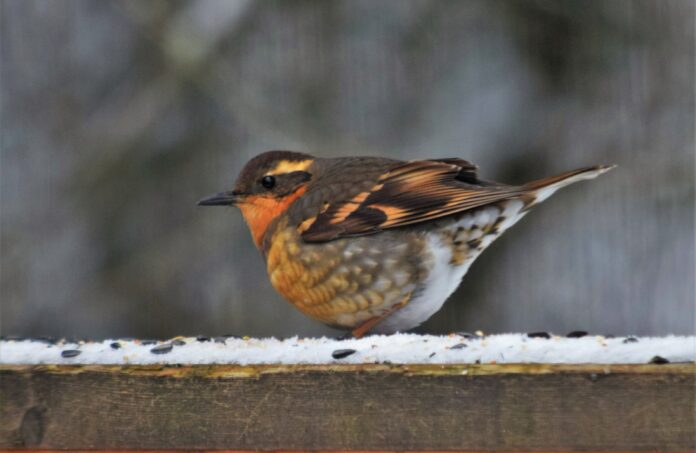
This bird is not too beautiful to be above criticism. PHOTO: Jennifer Uppendahl
By: Michelle Young, Copy Editor
I’m sleeping soundly in my bed, feeling toasty under the blankets. Then, the sound of a whistle. Not once, not twice, but from the early morning to early evening — at irregular increments. It is the varied thrush: a tiny bird with an extremely loud and annoying call. The first time I heard it, I thought it was some kind of traffic whistle. It rings for hours and hours and it’s inconsistent. It disturbs my sleep, it disturbs my work, it disturbs my peace.
Why must this small bird scream for so many hours of the day? Why can’t it be satisfied with a few “caws” like a crow and be done? Why does the varied thrush insist on singing randomly with no rhythm, no grace? Does it not get tired?
Every time I hear this call, I am filled with deep annoyance, anger, and a headache. It’s just loud enough to notice it, it pauses long enough to forget about it, and then it begins whistling again. I’m not sure what this bird is doing in the suburbs to begin with — its habitat is in thick forests near the coast. Please, go there instead, and annoy the other forest animals to your heart’s content.
Image courtesy of @inspiringindigenous via Instagram
Since opening in September 2021, Massy Arts has hosted artist talks, book launches, exhibits, and more. The gallery is located in the former Ming Wo Chinatown building. Reflective of the community they’re a part of, Massy Arts is dedicated to representing BIPOC and LGBTQIA2S+ artists.
Currently on display is the work of Nevada Christianson, a Métis portrait artist. Christianson’s portraits honour influential members of the Métis community, such as fellow artist Logan Howard (pictured above) and activist Brittney Bertrand. This exhibit is meant to inspire Indigenous youth to explore their cultures and communities. In an artist’s statement, Christianson said her collection of Métis portraits “is by no means meant to be exhaustive.” She added, “I could spend lifetimes recording their histories through portraiture. Indeed, I hope I do get that opportunity!”
In addition to the exhibit at Massy Arts, images of Christianson’s work will be featured in a new softcover book. This is being published by Hemlock Printers, a local, carbon neutral company.
Richmond Art Gallery | NOURISH | By donation | On until April 3
Image courtesy of Richmond Art Gallery
This municipal gallery showcases contemporary art from local and international artists. Through exhibits and programs, Richmond Art Gallery aims to create engaging conversations about current issues and ideas.
NOURISHis a multimedia collaboration between Vancouver-based duo Mizzonk (Roger Chen and Wan-Yi Lin) and Seattleite Jane Wong. Their work addresses mental health and food insecurity, among other things. Mizzonk’s installation, Six Acres, is a series of animated watercolour paper drawings representing their home sanctuary. Through interactive poetry, Wong’s piece recalls her family’s history surviving China’s Great Leap Forward. To read Wong’s work, viewers must walk around a large dining table — where, resting on top, the poem is printed in fragments inside Chinese ceramic bowls.
Western Front | Broadcasts from Here | Free | On until April 16
Image courtesy of Western Front
Western Front is a multidisciplinary arts centre uplifting audiovisual creatives. It has a history of supporting countercultural work in Vancouver, from the 1974 Mr. Peanut campaign — where artist Vincent Trasov satirically ran for mayor — to weekly meetings of the improv music group New Orchestra Workshop Society (1979–2020). The non-profit space continues to be artist-run.
Featuring the work of campy artists Lex Brown and Geo Wyeth, Broadcasts from Herewill transport you to fictional worlds that challenge speculative narratives. In Brown’s film Communication, a media conglomerate called Omnesia attempts to control the lives of consumer-citizens. Brown plays multiple characters, including “a gen-something girlboss” and “an impassive and sentient AI.” Meanwhile, Wyeth’s Muck Studies Dept. “merges inherited Black Atlantic American funk and folk poetics with techniques of investigative journalism” to explore a nameless municipal agency.
Burnaby Art Gallery | Unsettled Histories | By donation | On until April 17
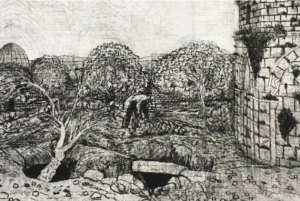
Image courtesy of Dan Starling
Located inside a heritage building, Burnaby Art Gallery (BAG) stands out as “the only public art museum in Canada dedicated to works of art on paper.” Legend has it the gallery is haunted too, so there’s something for print and paranormal enthusiasts alike.
BAG’s current exhibit highlights 40 drypoint prints made by local artist Dan Starling. Starling put together this series by taking an image of the hills outside Jerusalem’s walls and continuously embellishing and erasing parts of it. In doing so, Starling confronts the perception that Western art is timeless. Unsettled Histories is influenced by Rembrandt’s experimental process creating Christ Crucified Between Two Thieves: The Three Crosses. However, Starling’s work “questions the legitimacy of colonial histories, prodding at the foundations of settler-occupied cultural narratives,” particularly in the context of the Israeli-Palestinian conflict.
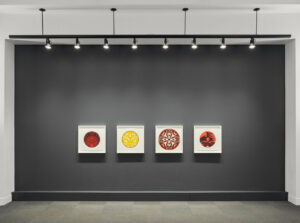
Teck Gallery | Salish Modern/Tradition | Free | On until September 25
Image courtesy of SFU Galleries
One of three SFU galleries, the Teck Gallery is part of the Harbour Centre campus. Framed by a large window overlooking North Vancouver, this informal gallery serves as a space to commemorate “artistic innovation within the university.”
lessLIE is a Coast Salish artist whose work explores “the relationship between written English and the visual symbols of his culture.” In Salish Modern/Tradition, seven acrylic paintings provide timely warnings about capitalist greed and climate change. The works feature bright colours and juxtapose positive and negative space. These are inspired by Coast Salish spindle whorls, tools used for weaving textiles that also holds significance for cultural communication.
For more information about COVID-19 safety guidelines, check out each gallery’s website.