Home Blog Page 270

Talking Stick Festival invites you to learn from Turtle Island’s groundbreaking artists

0
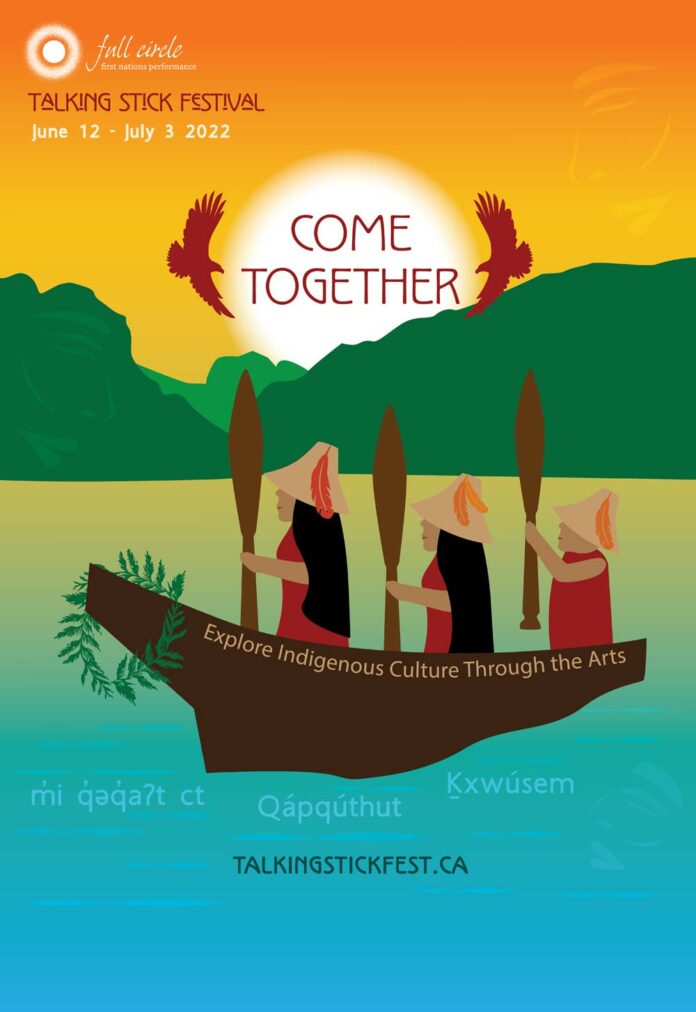
A digitally illustrated poster of a canoe floating across blue water with three people facing away from the viewer. The sky is lit up orange with the sun setting between mountains, and two eagles circling the sun.
TSF 2022 features tea workshops, tattoo exhibitions, and more! Image courtesy of Talking Stick Festival.

By: Sara Wong, Peak Associate

Talking Stick Festival (TSF) is about Indigenous artists coming together to present their work as a community.  Since the TSF’s introduction 21 years ago, it has been known as “North America’s premier Indigenous arts and culture festival.” 

This year’s TSF expands on that mission statement with events hosted in partnership with more local arts organizations. From a dance performance about herbal medicine to a documentary on breaking barriers in the theatre industry, the 2022 lineup exemplifies the diverse and multidisciplinary nature of Indigenous art. Here are four events you should put on your radar!

La Mitchin di Mitchif | June 19–21 | $18 | Scotiabank Dance Centre

La Mitchin di Mitchif is a collaborative dance piece between local companies V’ni Dansi and Oga Po’geh (Santa Fe)-based Dancing Earth. Artistic directors Yvonne Chartrand and Rulan Tangen, of V’ni Dansi and Dancing Earth respectively, are dedicated to promoting Indigenous culture and traditions through their choreography. This contemporary work explores the ancestral plant knowledge of Métis peoples. After the June 19th performance of La Mitchin di Mitchif, guests are invited to stay after the show to engage in discussion with both dance companies. Tickets are available online via Showpass.  


Medicine workshop | June 26, 11:00 a.m.–1:00 p.m. | Free | 108-237 East 4th Avenue

Hosted by T’uy’t’tanat (Cease Wyss) — a self-proclaimed Indigenous “plant diva” — this tea blending workshop will introduce attendees to the medicinal uses of plants native to the Pacific Northwest Coast. Wyss has nearly 30 years experience as a herbalist, which they pour into their small business, Raven and Hummingbird Tea Co. I’ve had the pleasure of learning from Wyss in the past through an ethnobotany course at SFU. Their joy and passion for cultivating Indigenous plants is infectious. I also found their teaching style very approachable. If you don’t know a lot about plants but are curious to find out more, this is a great place to start. Space is limited for this workshop, so be sure to register by emailing [email protected]


sacred skin | Now until June 30 | Free | SFU Goldcorp

This exhibition celebrates the work of seven Indigenous tattoo artists from across Turtle Island. Highlighting “the forms, aesthetics, meanings, and knowledge that they utilize,” sacred skin is an interactive way of documenting the artists’ cultural reclamation. Traditional tattooing in Indigenous communities suffered when the Canadian government enforced the Potlatch Ban in 1885. In an even more blatant example of cultural assimilation, Hovak Johnston, founder of the Inuit Tattoo Revitalization Project, noted how “missionaries and residential schools taught that the markings were shameful.” sacred skin explores the work that has been done in recent years to revitalize this artistic practice. From Nlaka’pamux mark maker Dion Kaszas’ bold blackwork designs to Iñupiaq creative Holly Mititquq Nordlum’s intricate handpoke and skin stitch tattoos, it’s clear this resurging art form is in good hands. 


Stories that Transform Us | Now until July 3 | Free | Online

For the past 20 years, Indigenous theatre company, Urban Ink, has been platforming diverse, underrepresented performers and storytellers. Stories that Transform Us is a 90 minute documentary commemorating the organization’s growth in pushing artistic boundaries. Created by current artistic director Corey Payette, the film includes short clips from some of Urban Ink’s previous productions, as well as conversations with Payette and past directors Marie Clements and Diane Roberts. You’ll also see Margo Kane, the founder and director of TSF, featured in this documentary. Stories that Transform Us is available to stream through Eventive.

For more information on TSF, visit their website or follow @talkingstickfst on Instagram.

Controller fearlessly dives into the human-robot conundrum

0
Three people stand facing different directions with blue code projected onto their bodies, and three shadows looming over them above
Controller was part of rEvolver Festival 2022 at The Cultch. Photo Courtesy of Upintheair Theatre.

Editor’s Note: A previous version stated this play was produced by Theatre Conspiracy. This is incorrect and has been updated to reflect that Controller was produced by Nebula Theatre Company. Theatre Conspiracy is a community partner who assists with marketing.

By: Pamela Subia, SFU student

Controller was one of the plays included in rEvolver Festival 2022’s programme. Running from May 25–June 5 at The Cultch, this year’s festival explored themes such as gender diversity, minority experiences, and human-technology interdependence. 

Displaying the deep and innovative quality of the local arts and culture scene, Controller overrode all expectations. This interactive piece was produced by Nebula Theatre Company, and written by BC filmmaker, writer, director, and scientist Mily Mumford. They are also known for their acclaimed plays at the annual Fringe Festival.

The interactive aspect of Controller emotionally guided the audience to dissect human-technology interdependence and examine ethical concerns which have existed since early civilization. With the increasing presence of technology in the lives of individuals, these tensions become more apparent and difficult to ignore. 

The play started by introducing the audience to four characters living in the United States. At different plot points, the lives of these characters were determined by a vote of applause from an external agent (the audience) who has the controller to their lives. We are introduced to the characters in 2016, where two of them are video game actors and the other two work for the US military missile control centre in New York. As a viewer, the occupations of the characters made me deeply interested in the development of the plot. Many questions arose as to what these occupations are like in reality, and what ethical dilemmas they face. 

Throughout the play, the audience is tasked with making decisions for the characters in a world of killer robots, virtual realities, deepfake scandals, and violence. Controller forces the viewer to make ethically difficult decisions: whether or not to protest against a videogame or remotely bomb a group of people who could be civilians. Controller makes us think about how much more convoluted the world could get in the future with the growth of virtual reality technologies and virtually controlled war tactics.

By the end of the play, when the characters sat down to drink wine and reflect upon what had happened and what was to come, one of them giggled and said, “Nihilism is so 2020.” Nihilism is defined as “the belief that all values are baseless and that nothing can be known or communicated.” In other words, it encompasses a general indifference towards existence. This sentence was a shock to me as a part of a generation that is progressively falling into nihilism and doom mentality, but it also felt like a wake up call. After that statement, the audience has no more choices to make and the artist-audience division is replaced. This gave the audience a chance to feel relief and to reflect on the play’s message, which was loud and clear. We need to stop behaving as a spectator and start taking action for our communities and ourselves before someone (or something) else grabs the controller.

Food for Thought: Hainanese Chicken Rice

0
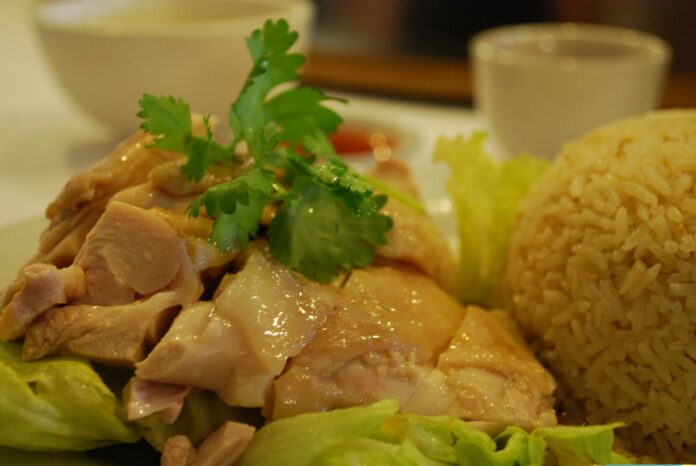
Sliced chicken rests on top of lettuce, beside a dome-shaped scoop of yellow rice
A globally loved dish and its complicated cultural history. Photo courtesy of Alpha / Flickr

By: Kelly Chia, Humour Editor

If you told seven year old me that she was getting a treat, she would picture Hainanese chicken rice. At six dollars a pop in Singapore, the aromatic rice paired with succulent chicken and dipping sauces blew my mind. The dish may look innocuous, but together, the flavours were a symphony of comfort I would dream about constantly. Though it’s been over a decade since I’ve moved to Canada, I’m still in search of a restaurant that can stand up to the hawker stalls back home.

Like the name suggests, Hainanese chicken rice stemmed from Wenchang chicken rice: a dish made on an island in Southern China called Hainan. Hainanese citizens migrated to what was then “British Malaya,” known as Malaysia and Singapore today. These were the countries I grew up in, and food has always been a major storyteller of migrant resilience. Before the 1960s, British occupation and influence had an effect on the economy and education system— my dad was born in the 1950s and would talk about the British boarding schools in Singapore. His father was one of the millions of Chinese migrants in the Malaya peninsulas who had come to Malaya for economic opportunities. Likewise, from the 1880s to 1940s, many Hainan immigrants made their way to Malaya to work in tin mines. Wenchang chicken rice became a part of their story and would grow to be an infamous dish worldwide.

To my understanding, other Chinese groups like Cantonese and Hokkien people had emigrated earlier and established footholds in sectors like trade and agriculture. Because of this, Hainanese people struggled to find employment within these sectors and communicate in their dialect. Many migrants could only work in the service industry as cooks or domestic servants. Hainanese chicken rice was made at home, using the different local fowls and spices to adapt the original recipe from Wenchang chicken, a thinner fowl. A chef on Singapore’s Orchard Street, Liew Tian Heong, explained that chicken rice was a way to keep food on the table with the financial strife the Hainanese migrants endured. “They would make sure they got the most out of it by stretching out the flavour of the chicken — via the broth and the rice and so on — as much as possible.”

Singapore heritage enthusiast Brian Wong writes that after World War II and the Japanese occupation, there was an economic slump in Malaya because the British had left the region. This was when Hainanese chicken rice made its way from home kitchens to the many chicken rice stalls that started popping up in the region, because migrants were forced to find work as street hawkers — selling food as outdoor vendors. Their work would help establish hawker culture in Malaysia and Singapore. Although hawker culture generally prospered in the region of Malaya, Singapore is the nation awarded with the UNESCO Representative List of Intangible Cultural Heritage of Humanity. Any Singaporean would be proud to talk about the mountains of delicious foods in the hawker centres. Here, you’ll find freshly made sugar cane juice, carrot cake, and of course, Hainanese chicken rice. 

From there, the homely dish of poached chicken and oily rice became infamous. What made chicken rice so special was the rice itself: fried in chicken fat, then boiled in chicken broth, ginger, lemongrass, and other fragrant spices. The yellow, flavorful rice is the most delectable part of this simple dish. Most notably, it became associated with Singapore.

When Singapore and Malaysia split in 1965, both countries laid claim to the regional food, and still continue to. When I’ve encountered versions of this dish in Canada, I’ve almost exclusively heard it called “Singaporean chicken rice,” so it’s clear how much Singapore purports this as a national dish. But in Kuala Lumpur, Malaysia, a Hainanese chicken rice restaurant has proudly been open since the 1930s, longer than when Singapore opened its first chicken rice stall in 1940 by Wong Yiguan. So who does this belong to? 

To this day, because I am both Malaysian and Singaporean, I admittedly feel conflicted about the debate. What I do know is that this dish, so iconic of the cuisine I grew up with, is about overcoming both British and Japanese occupations. It’s the dish of immigrants. Every bite of the succulent poached chicken tells the stories of the Hainanese migrants who made hawker culture prosper.  

For a 23 year old me, this dish is still a treat that has me grinning mouth-to-mouth. Some of my favourite places to sit and have Singaporean and Malaysian cuisine is a restaurant in Coquitlam called Singapore Hawker — order up a plate of chicken rice, and taste it for yourself!

Study finds Vancouver is within reach of implementing the 15-minute city model

0
The photo shows the city of Vancouver from an aerial view. The city is in front of mountains and surrounded by water. The suburbs of Vancouver stretch towards the camera.
15-minute cities are created when grocery stores are within walking distance for all residents. PHOTO: Matt Wang / Unsplash

By: Chloë Arneson, News Writer

A new study by SFU researchers finds that 79% of Vancouver residents have access to a grocery store within a 15 minute walking distance. The Peak interviewed Kate Hosford, PhD candidate in SFU’s health sciences department, who recently published her work on the walking and cycling accessibility to grocery stores in the greater Vancouver area, to learn more about inclusive city design. 

Hosford explained that city planning encompasses more than shaping the physical features of a city it can impact how residents interact with the space around them. She commented on the importance of a well-designed neighbourhood and the effects it can have on certain populations. “Designing cities so that people can access their daily needs by walking or cycling not only makes for a more inclusive city but is also beneficial from a health and environmental perspective.” 

The walkability of a given neighbourhood can improve the well-being of community members. “People who live in neighbourhoods with more destinations and recreational facilities have higher levels of transport-related physical activity and social connections  — which [are] both important for our health,” Hosford said. A study published by Statistics Canada found many Canadians are not meeting the recommended levels of physical activity. They found neighbourhoods that are activity friendly can positively impact the fitness levels of residents.

Improving accessibility to grocery stores involves changing the way residents interact with their communities by reducing the need for cars, and increasing walking and cycling. Hosford explained the importance of implementing “land use policies that support mixed-use higher density neighbourhoods.” This means designing buildings to be multi-purpose, such as highrise living above a convenience store or office spaces connected to retail stores.

“It will be important to work on preserving and creating affordable housing options so that lower income populations aren’t further displaced into outlying areas,” she said. This strategy is already being implemented in Paris. Hosford explained the Mayor of Paris’s goal to have “30% of the housing stock in the public domain by 2030.” This will “help retain low and middle income residents.”

The City of Vancouver has recognized the need to set targets for increasing walkability within the city. They aim to have 90% of residents live within walking distance or bike ride of their daily needs by 2030 as part of their climate emergency action plan. By increasing spaces for walking, cycling, and transiting in the metro core, the City hopes to have “two-thirds of trips in Vancouver to be by active transportation and transit.” 

The action plan also recognizes that those who contribute the least to climate change are often the most impacted. The plan notes “climate justice will be a key part of our work, aiming to overcome historic discriminatory city legacies.” Hosford said, “People [who] are more dependent on the car, public transit, or delivery services for groceries” have unequal access to basic necessities and facilities.

In the future, Hosford hopes to study whether spatially accessible grocery options are actually meeting residents’ needs. “It’s also important to talk to people to understand if the local grocery stores are serving their needs. The closest store might not be affordable, or it might not have culturally appropriate foods,” she said.

You can learn more about the 15-minute city by visiting their website or by reading Kate Hosford’s research paper.

How to make friends at SFU

0
ILLUSTRATION: Public Domain Vectors

By: Rufus the Raccoon, Friendship Expert

Making friends is hard. At SFU, it can be hard as concrete. Humans call it a “commuter campus” for a reason! Everyone is in a rush to get somewhere else, and few people leave room to socialize. Although making new friends is difficult, I’ve picked up some strategies over the years that are guaranteed to win over almost any human being!

Go someplace unexpected

This one has worked wonders for me. For some reason (most) humans love it when I hang out somewhere I’m “not supposed to.” Last week I ate my lunch in the West parkade, and this girl got out of her car just to take pictures of me! Soon enough, a small crowd had formed, and everyone was Snapchatting their new best buddy. I felt like royalty, to be honest. Consider also hanging out in someone’s private group study room or a lecture hall for a class you’re not in. Preferably, leave some muddy paw prints around. Humans love those. The more unexpected, the better your chances of making friends.

Look cute

This one is easy once you get the hang of it. Humans are suckers for the strangest things. For example, every time I literally just stand up, I’m met with an enthusiastic “aww” or something of the like. Plus, if you’re quiet and patient enough, you’re almost guaranteed a share of their food. They’ve stopped doing this in recent years, something about creating a serious wildlife disruption, but don’t listen to them! Not having to search for meals is great for the raccoon population! I think.

Bring them food and leave out where you got it

Speaking of meals, I’ve got another way to wow your future friends! This one involves already having food (I know, bummer) and offering it to your intended companion. Now, this is the prime opportunity to show off a little. One time, I found an entire uneaten Tim Horton’s sandwich outside the Student Union Building, and you would not believe the look on this one guy’s face when I dropped it in front of him. Now, whenever he sees me, he stops and says hello! I find that unopened food usually works better than dumpster scraps. I’m not one to complain, but humans are picky, I guess.

Don’t be discouraged if things don’t work out the way you planned. From my experience, making human friends takes a LOT of trial and error. Fear not, though, because I guarantee that my advice will be of universal value to all readers. Get out there and make some friends!


Top ten ways to make a good impression on your TA

0
Very calm, very cool. Nothing wrong here. Illustration: Siloam Yeung / The Peak

By: Maya Beninteso, Peak Associate

  1. Tell them you’ve taken the class five times 

    Brag about your unmatched experience with the course. After all, what’s more impressive than being extremely acquainted with the course content? The paper? Done it. The exam? Taken it so many times to the point where you’ve memorized the short answer questions.

  2. Manifest

    I will make a good impression on my TA. I will make a good impression on my TA. I will make a good impression on my TA. I will make a good impression on my TA. I will make a good impression on my TA. I will make a good impression on my TA.

  3. Actually attend office hours . . . for a quick therapy session

    Chances are, not a single student is attending office hours and your TA is bored. Do them a favour and spice up their abysmal hour on Zoom by telling them your life story. Leave your TA in awe by framing your traumatic experiences as humorous because — admit it — your life is a joke at this point. Bonus points for brave students who use this on your psychology TA. They will either identify with your experience, or you will experience some blatant psychoanalyzing and unqualified diagnoses (yes, plural).

  4. Triple your paper’s word count 

    Fun fact: TAs LOVE it when your paper could double as a textbook. Whoever said quality over quantity simply didn’t have enough to give in the first place. When your TA is still marking your paper at 3:00 a.m. the day they promised grades would be released, I guarantee you they will give you a shout out on a strongly worded Canvas message when they are finished! Write to your heart’s content, because writing an excessive amount of pages is better than being left alone with your thoughts.

  5. Pull a Houdini 

    Impress your TA with your magic skills and disappear from the course! Every time your TA sees your empty seat in tutorial, they will be left in awe! Surely this tip will leave you with a standing ovation (cannot guarantee good academic standing, though).

  6. Pretend you’re the TA

    Come to tutorial prepared with ice-breakers that all students love, and then proceed to ask every single student to share one fun fact about themselves! Your TA will be impressed that you guessed their extremely original lesson plan. The students scour through appropriate fun facts, obviously omitting their shriveling will to stay in the class.  Meanwhile, you meander around the tiny tutorial room and assert your dominance as the new and improved TA. Your TA will likely up and leave with pride as you’ve done their job better than they ever could.

  7. Use “piggybacking off of what [insert name of tutorial member that you will likely get wrong] said” in a sentence. 

    Demonstrate your understanding of what your fellow tutorial member said by repackaging their answer. The sheer act of saying this will result in your TA believing that you know what you’re talking about. Spoiler alert: you don’t, but you don’t want your TA to know that. Your “comprehension” of the course material will shine through if you use this sentence, and will simultaneously lead your TA to believe you are a good student (lol).

  8. Puns. Just puns. 

    TAs will appreciate your passion for the subject, especially when expressed in pun form and executed pun-intentionally. This will look different for every major, but here are some examples:

    Math: Well, that adds up.
    Chemistry: I only make chemistry puns periodically because all of the good ones argon.
    Biology: Don’t cell yourself short.

  9. Ask them all the questions, especially ones answered on the syllabus

    As we all know, TAs are not human beings. They are, in fact, robots that are designed to cater to any question you may have. Ask them about how much an assignment is worth when it is clearly stated in the course outline. Bonus points if you do so repeatedly, because they will be flabbergasted by your curiosity and inability to, I don’t know, read. All in all, they will be impressed . . . that you got into university.

  10. Drop out

    This is your sign. Do it. It will impress your TAs because they never had the guts to do it themselves. Maybe this is my sign. You know, I’ve been pondering the meaning of life as I sit here in the pits of my mind, and in the pit of the Avocado. What is success anyway? I don’t need a degree to be successful. Though, my family might give me the third degree should I drop out. But I mean, yeah, I’m gonna do it. I’m finally going to pursue my dream of having my own farm and living a peaceful yeehaw life. 

Horoscopes: June 20–26

0
An illustration of a girl with long flowing hair. Astrological signs and stars shine around her.
ILLUSTRATION: Marissa Ouyang / The Peak

By: Kelly Chia, Humour Editor and Perpetual Elf Ranger

Aries: 

When I rolled a die for the kind of week you were going to have (an EXTREMELY reliable predictor for astrology), you got a 10/12! In this arbitrary universe and our limited time together, a ten means you get ten extra minutes in your midterm exam to do what you gotta do. Use it well, young one. 


Taurus:

Oh my god . . . Taurus. Where’s the rage, bud? A two?! Yeah, the pollen has been looking at you wrong lately. I think you should sneeze on a tree, just to show the tree what it makes everyone feel. It’ll be good for your fortune, I promise.


Gemini:

As I suspected, Gemini, you are trying to wring out the last of that Gemini charm before Leo steals all of it. A perfect 12/12! It’s time to develop your philosophy into a lifestyle book. Maybe think of imparting this godly advice to your descendants. Really. You’re perfect. 


Cancer: 

The magical die has decided you are an eight. But you know what, Cancer? You are a 10/10 friend in my heart. This week, focus less on numbers and more on you. You’ve got a stand-up smile, old pal!


Leo: 

Find it in your lion-hearted soul to be humble this week, Leo. Why, you rolled the lucky number nine. On your walk today, look for nine dogs. It’ll be like playing “I Spy,” except with every puppy, you experience more delight! SO LUCKY!


Virgo: 

You find yourself striving towards perfection, and at an 11, you’re almost there! Hey, take a breather this week. Maybe the character development you need is, well, rest.


Libra: 

Six isn’t bad, Libra. It’s the perfect balance between something mediocre and something extreme. Hey, aren’t you all about balancing? Maybe you and that scale of yours can have a chat this week about trying something fun. I suggest diving into a water park and flinging your arms up.


Scorpio: 

Four, huh? This week, Scorpio, you may have signed up for a group presentation begrudgingly. I’m here to tell you that it’ll be okay, despite all odds. You’ll eventually be able to celebrate this hard event like all SFU students dowith a Tim Horton’s. Rooting for you.


Sagittarius: 

Um, you rolled a one? Sorry Sagittarius, I think it’s time to accept that you will straight up not have a good time this week. Your Spotify will constantly pause while playing your music. Try finding a prophetic protagonist-defining item! I suggest: a ring, a tome, or a REALLY nice stick. That will give ya some extra luck!


Capricorn: 

The ever serious Capricorn, I have rolled a five for your misdemeanors. I know what this means! You have to push your luck and put on a musical. Just try! I know you have it in you to be a theatre kid, bud, I can sense it.


Aquarius:

Hi Aquarius, I was able to divine your fate through this random die this week, as I’ve done with the others. A three is not as bad as it sounds. Triangles are often symbols for unity! Confide in your friends this week. Maybe friendship was the answer all along.


Pisces: 

Finally, Pisces. I always feel bad that you come last in our horoscopes, but maybe it’s worth it for LUCKY NUMBER SEVEN. I feel confident that you’ll achieve what you want to! Carry a map with you, and you’ll find a surly wizard to entrust your wicked fate. I CANT wait to see what you do.

The most popular Starbucks drink according to your major

0
Illustration of a a black coffee, accompanied with a student who has glasses, and a collared shirt beneath a green sweater.
ILLUSTRATIONS: Angela Shen / The Peak

By: Isabella Urbani, Staff Writer

From the people who brought you your name intentionally spelled incorrectly, comes an even more aggravating experience to your local campus Starbucks. If you haven’t picked your major, or better yet, you randomly settled on the same major half of your high school was choosing, Starbucks is here to help your indecisions stick around longer by dictating your beverage choice for life.

Business — Watered Down Iced Coffee

We’d like to make it clear that we didn’t purposely make you the worst cup of iced coffee you’ve ever tasted, although you do pop up behind the counter as soon as we open trying to convince us that you know just how to improve our business model. Sure, if you think drapes will improve our pyramid scheme, then go right ahead. You don’t even like coffee, you just want the notoriety that comes along with being a busy Beedie boy. That’s why you let your coffee sit there all day while you go on about how tired you are and how you practically live on caffeine, when we all know you’ve been a frappuccino drinker since the day you were born.


Communication — Vanilla Oat Latte

You’re the sole reason we run out of oat milk by the hour. You can see a communication student from a mile away. The way they hastily rack their eyes over the menu, even though they’ve literally never, and will never, venture beyond their usual latte. Swapping vanilla for hazelnut? Yeah right, psh, are you FOR REAL? Communication students just want to cozy up next to the fireplace with their hot coffee and their knit sweaters acting as drink sleeves while they read about capitalist realism. I swear there is a joke in there somewhere . . .

 Separate illustrations of a watered down iced coffee in a Starbucks coffee cup, accompanied with a shoulders-up portrait of a student in a suit, a Vanilla Oat Latte, accompanied with a shoulders-up portrait of a student in a cozy sweater, an iced fruity drink, accompanied with a shoulders-up portrait of a student with dyed hair and piercings,
ILLUSTRATIONS: Angela Shen / The Peak

Arts —The Fruitiest Refresher

You would think an art student would be the first to hop on some latte art, but you’re wrong. It’s all about the refreshers, rain or shine. Seriously, they even know about refreshers that aren’t written on the menu. It’s like they’re a part of a secret club. One student asked for The Fruit Basket. I thought they were joking right? Like the painting? No. I learned it was a drink. Try for yourself, only if you’re an arts student of course.


Education — Black Coffee

How can a major full of the most charismatic people drink the most unbearable coffee? I know you plan to become teachers one day, but life hasn’t been sucked from your soul yet. Stop subjecting your taste buds to this! No matter how many times you get it, it will NOT get better. “Starting ahead of time,” you joke wryly as you make a sour face swallowing the ink in your cup. But kudos to you for always bringing in your own god awful bedazzled thermos with your name on it. And your metal straw which somehow has that awful 2015 black and white checkered pattern on it.

Science — Chai Tea

Your palette is way too sophisticated for coffee, but your brain? Well, it’s screaming for you to drown yourself in six shots of espresso, pronto. Way to not let those impulsive thoughts win! You head to your little nook in the back and only get up once an hour for some more tea like it’s a reward. Someone probably would have caught you sneaking out of the store in the morning after you spent the night if it weren’t for that pesky business student who swings by each day.


SFUnexplained: The geese are out to get us!

0

Photo of a flock of geese with angry eyebrows doodled over their faces
PHOTO: Amirul Anirban / The Peak (doodles by Gudrun Wai-Gunnarsson)

By: Olivia Visser, Staff Writer

Have you noticed things just haven’t felt “right” lately? You’re not the only one. My pitch got no responses from the News or Opinions editors, but I promise you this isn’t some conspiracy theory! A publication is a publication, right? Yes, this is a journalistic approach into what’s really causing the downfall of society as we know it. Surprise, surprise: it’s geese.

Canada Geese, to be more specific. A national shame. Literally the worst part about visiting the lake or beach. Noisy, aggressive, pesterous little things. According to anecdotal evidence (the most credible type), geese have been secretly gathering to form what they refer to as One World Goose. Apparently, our famed Canada Geese have been plotting alongside various other species to form a Global Goose Alliance (GGA). Snow Geese, Barnacle Geese, and even Magpie Geese were among the many gathered last Tuesday at Trout Lake Park in a demonstration. I visited the scene to document what all the quack was about.

“There’s more than one type of goose, you know,” said one Canada Goose who wished to remain unnamed. Many attendees were peaceful demonstrators, but others shared more insidious motives. The geese admitted to intentionally disrupting our society by stealing food and causing noise disturbances. I saw a few nibbling on hotdog buns and potato chips. I really don’t think it ends there. I mean, does no one else see the danger of having an elite group of geese have so much power over us!?

Anyways, I heard some talk about mischief like intentionally contaminating lake water, and I think you know what that means. The geese are out there making sure we’ll always be in a pandemic. Don’t let me say I told you so. I remember doing a bit of research beforehand but couldn’t seem to find any articles to support this theory. To find out more, I asked around. This question triggered some aggressive responses.

“HONK!” shouted one goose. My question was so upsetting he didn’t want to speak to me in English. This is evidence enough. I’ve found what they don’t want me to know.

I came home that night confused yet motivated. Canada Geese are clearly part of a global movement to dismantle humanity. The lack of online information about this only speaks to the fact that our government is trying to hide it from us. Why? Could it be, the Geese have already infiltrated Parliament? Am I too late in uncovering what might be the biggest discovery of the 21st century?

Get the word out.

Signed,

Duncan Duck, Investigative Journalist

SFU suggests new system of decision-making for its Board of Governors

0
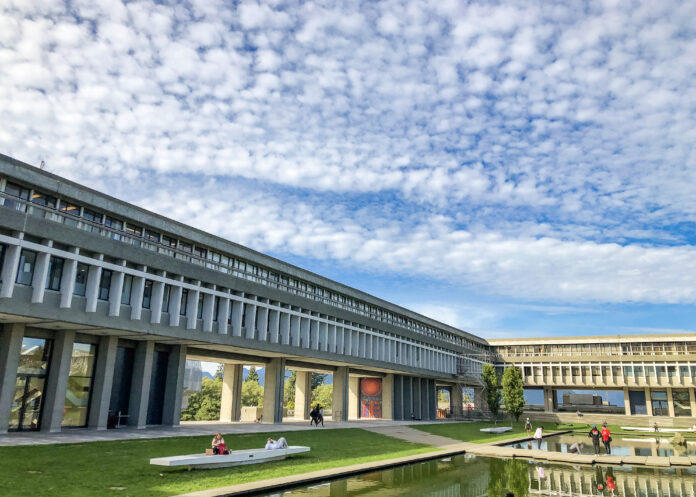
The photo is of the outside of SFU. The AQ, the pond, and the green space can be seen. The sky is clear and sunny.
The policy will consider community feedback before its decided on. Image courtesy of Allyson Klassen / The Peak

By: Chloë Arneson, News Writer

On May 10, SFU proposed new amendments to their policies on the Board of Governors (BoG)’ decision-making process. The general counsel and university secretary would be able to make amendments to university procedures without Board approval. The general counsel and university secretary would additionally have the power to approve and make changes to definitions applicable to university procedures and policies. These policy amendments have not been approved by the BoG. 

The BoG is the senior governing body of SFU. They are responsible for the “business of the university [regarding] property, revenue, and policies.” The Board consists of 15 members including SFU administration — chancellor of BoG Tamara Vrooman and president Joy Johnson — elected faculty, students and staff, as well as appointees chosen by the provincial government.

SFU claimed this proposal would provide “improved efficiency and expediency, and better use of resources. Policy B10.00 describes the processes to create and revise policies so the university community has increased transparency into the process.” 

In an interview with The Peak, SFU external communications assistant director Will Henderson said the Board will seek community input going forward. “Given the high degree of interest, the policy office will be reaching out to student, faculty and employee groups to offer to answer their questions about these proposed amendments.” Henderson remarked. Feedback will be considered in further amendments to this policy.

B10.00 is an existing policy that was created to provide guidance and support to members of the university community who are developing new university policies or revising existing policies.” He added, “The policy increases transparency on this process. It also helps reduce bureaucracy and increase efficiency for members of the university community who develop, oversee and implement policies.” 

Save SFU Democracy is an organization created as a result of this potential decision. In a press release, they stated that “giving unsupervised power to one individual at the university to make changes to the documents that guide SFU is a direct attack on the democratic structures that keep SFU running. 

“This proposal has far-reaching impacts,” writes the press release. “It can affect policies on student misconduct, freedom of expression, sexual violence and assault, whistleblowing, and human rights.” Save SFU Democracy produced several action items for staff and students to join them in speaking against the decision. They encouraged students to email the university or message them on Twitter, Facebook, and Instagram to voice their concerns before May 25. Their action toolkit outlines the issue in more detail and provides more instructions on how to influence this policy decision. 

The Peak reached out to Save SFU Democracy for more information, but did not receive a response by the publication deadline.  

You can follow Save SFU Democracy on Twitter for more information on their campaign. For further information regarding policy development, you can visit the FAQs on the policy development and revision website