Home Blog Page 260

Need to Know, Need to Go: August

0
Blue and white calendar illustration on dark grey background with block text “Need to Know, Need to Go”
Summer isn’t over yet! Go show these community-based events some love!

By: Yelin Gemma Lee, Arts & Culture Editor

Are you also feeling like July is always the month of events and the August calendar looks a little boring? I don’t think this is fair, considering August is when students in summer courses are wrapping up and finally looking to enjoy their summer. Thankfully, I have three awesome events for you to buff up your summer and help you enjoy your break to the fullest! 

Set it Off

Vancouver Black Therapy and Advocacy Foundation is hosting their first fundraiser event! This local grassroots initiative is one I like to support on a continuing basis. They raise funds to make “Black mental health support more accessible to Black community members in the Vancouver Lower Mainland.” The event will include a flea market, merchandise and raffle ticket sales, food, and live music! This fundraiser follows a statement of truth released on their Instagram page about how their community funding has drastically decreased as the Black Lives Matter virality has died down. Connect with the community and learn about creative ways to support this amazing cause on a meaningful basis. 

Where: August 13, 2:00 p.m.–7:00 p.m.  

When: Progress Lab 1422, 1422 Williams Street, Vancouver


Vancouver Queer Film Festival 2022

The Vancouver Queer Film Festival is returning both online and in-person from August 11–21. Their programme is diverse and vibrant this year, with many films exploring intersectional narratives in the queer community. They’ve incorporated a virtual watch platform this year to keep the festival accessible for people with disabilities and immunocompromised people. Through their watch platform, you can access the films with the “virtual” option indicated on them. The festival pass is $175 with full access to both virtual and in-person films, and an access pass of $145 for those who need financial support. The digital pass is $100 and allows you full access to all virtual films to watch at your leisure, in your jammies. Individual tickets are on a sliding scale between $5–21, depending on access needs. 

Where: Virtual and varying in-person venues

When: August 11–21, times vary


SFU Summer Festival 

After last year’s Twitch-streamed summer festival, SFU Anime Club is returning this year to host their 10th annual summer festival in-person! The festival aims to give locals “the opportunity to experience a Japanese ‘Matsuri’ style festival.” Matsuri festivals in Japan are held to celebrate seasons, religious ceremonies, and historical events. They often feature yukatas, street food, and traditional games. The summer festival at SFU is inspired by this model and includes games, an artist alley, food vendors, and a main stage featuring performances, panels, and a cosplay contest. Wear your culturally-respectful cosplays and go appreciate a summer festival that feels like it’s right out of your favourite shoujo anime.

Where: Convocation Mall, SFU Burnaby

When: August 27, 1:00 p.m.–late
Rogers is so “sowwy” about nationwide shortage!

0
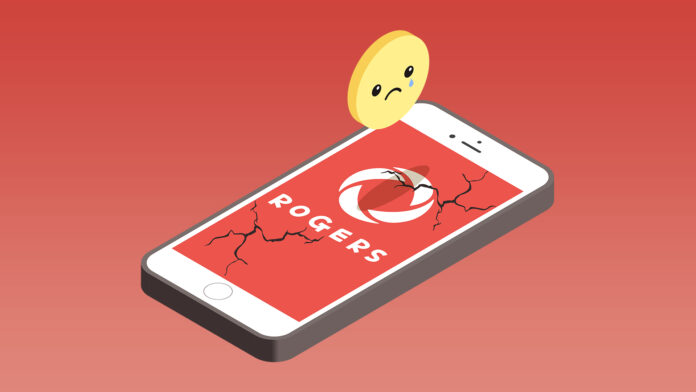
An illustration of a smartphone with the Rogers logo. The screen is cracked, revealing a LED sad face.
There is no God, only monopolies. ILLUSTRATION: Alyssa Umbal / The Peak

By: Kelly Chia, Humour Editor

Oh noOoOoO!!!

Hey Canada, we’re besties for-eve-sies, right? So itty bitty me is so sowwy you felt like I let you down! fiddles with tiny fingers You guys are using big scary words like “blackout,” “outage,” and “we shouldn’t let telecommunications companies have a monopoly for this very reason,” and it’s all making me so upset! Pooey!

Here’s what happened, okay? You want my full side of the story, right? I took a teensy, wittle, shmittle vacation this summer, you guys! Yeah, I really needed a break from being your number one so I can keep things fresh. Just how you guys liked me when you signed up for that two-year phone contract. Yeah, remember when you signed up for my services? We even got a cute dog together. Don’t you remember those very excellent times?

I’ve always got your back and just the sweetest, loveliest marketing skills. That’s why I think you should accept my timely marriage with Shaw. You see, when mommy Rogers and stepdaddy Shaw love each other very much, they form what’s called a harmonious marriage! In other words, a monopoly! It’ll be all me, all the time. You’ll love it!

I mean, what happened was just an itsy-bitsy slip-up! It’s just so endearingly human of me, which I must remind all of you that we all make mistakes. It’s not like there were any real emergencies, were there? You just weren’t able to communicate with your friends and family, use your debit card, or access emergency services, and go about relaxing in your day-to-day lives!

It’s like . . . oooh, what do you call it . . . like a break from your phones! You’re always telling me how you need to put your phone away, and I helped, didn’t I? Because I’m your fwiend? See, I actually don’t like the word consequences, it’s so permanent. I’m your fwiend, and fwiends don’t break each other’s hearts, right? Come on, sign another two-year contract with me! It’ll be so fun!

Oh, oh, I know! I can help! Because I’m the smartest, best, and only network in the world, I can give you just humongous credit. So much compensation you’ll nearly forget that this is a problem, which it’s not! Are you prepared?! I don’t think you are.

Because you’re my very good friend, I’m prepared to offer you a grand total of ten cents!! YAY!!!!

But . . . if you want to walk away, I’ll understand. Really, I do. Even though you’re my most loyal friend, I’ll do you right. I’ll make sure you only get two hours of hold music as opposed to the usual six, okay? I want to make sure you feel treasured as my one and only custom— I mean, friend.

Long Story Long: What I learned from my four empty glasses of water

0
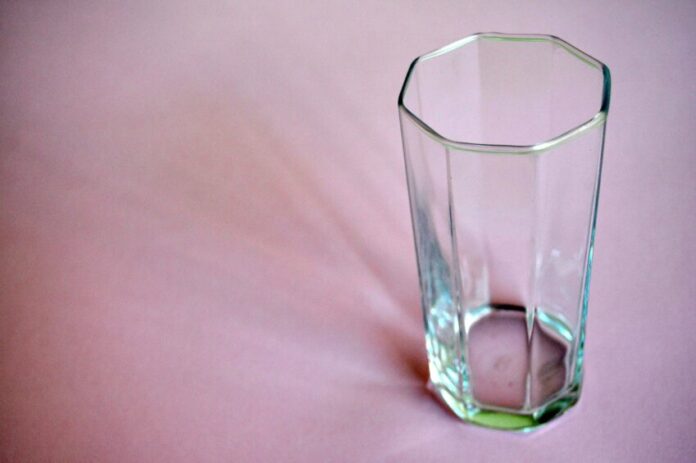
A photo of an empty glass on a pink bedsheet
My life is changed, and my table is not. PHOTO: Pixnio

By: Kelly Chia, Humour Editor

Dear readers,

I’ve had an epiphany so devastating, so special, so simply metamorphic that I must share it with you immediately. We often have small moments in life that feel much bigger than they actually are, almost as though they were extended to force a poetic metaphor through. Well, I can assure you that this realization is not that. It was profound, life-changing, and truly so unique that if I didn’t share it with you now, I would feel guilty. Well, here it is: my life was changed by the wisdom stored in my liquid-storing accoutrement — cups, mugs, glasses — on a humble July afternoon.

Sure, you can laugh, I hear you.“Oh, this is just another long-winded narrative about how a simple event can make you appreciate life!” But this is so much better than that! It’s about appreciating the little things in life, not the big . . . living part. That’s what makes my piece better. Yeah.

Well, let me tell you about the moment, and then you’ll really be able to picture the revelation: I walked into my room to sit down to study, I turned to my right, and I saw my cups. That’s right. They all stored different volumes of liquids, telling different stories. My mug containing a day’s old worth of Earl Grey? That was the story of an attempt to make my hydration habits a bit more classy. Yes, it had been steeped in the wisdom of my attempt to try. Why, only the most noble thing a human being can do. What’s classier than that, you ask?

Take a look at my glass that’s been fully drained. That’s my glass that has water for when I wake up at three in the morning. To me, that represents how I adore myself so much that I make the effort to have the glass available for when I want water, but not so much that I constantly have water in the glass available for when I need it. See, I’m still trying.

Next, you may even be curious enough to peruse my IKEA glasses. Those are cool because they are tinted a turquoise green and a cool blue. They represent my desire for a trip to the beach far away, where I can pour more water on my face.

So you see, it’s not that I’m forgetful. My cups, mugs, and glasses tell a beautiful story: they reveal my desires, my efforts, even my dreams of frolicking at White Rock. I was so thoughtful when it came to myself, I realized. But I also realized how I needed to love myself enough to take them downstairs. Nasty.


Horoscopes: July 25–31

0
An illustration of a girl with long flowing hair. Astrological signs and stars shine around her.
ILLUSTRATION: Marissa Ouyang / The Peak

By: Hannah Kazemi, Peak Associate

Aries

You go to enroll and all of your courses are full except for one, so you choose three alternate courses that are not at all anything that you’re interested in. You suffer all semester, and end up with an even shittier enrollment date for the next one. Sucks to suck. Have fun in MACM 101!


Taurus

Somehow you always manage to get every class you want without having to waitlist, which by SFU standards, is magic.


Gemini

The stars are unsympathetic to your need to graduate. You come up with three possible schedules two weeks before your enrollment date, all of which are made up of different courses, but still somehow have to pick two replacements because most of your alternates are already full.


Cancer

You’re used to being hurt. You just know that you’re going to pull the short straw by the time your enrollment date comes around, so you already start emailing profs and advisors to ask for permission to enrol in courses a week before you even can. They all say no.


Leo

Enrollment is a breeze for you, Leo. You’re one of the lucky ones. But don’t get too comfortable — your luck will probably run out by the time next semester’s enrollment comes around.


Virgo

Hahahahaha, oh, Virgo. Nothing matters anymore. Are schedules even real? Is there even any point in trying to plan your classes ahead of time?! There should be a class called “The Secret To Course Enrollment At SFU” where all they teach you is that there isn’t one and it’s all a trap.


Libra

No issues to report for you, Libra. Easy, breezy, beautiful, Covergirl.


Scorpio

Your friends ask you what classes you’ve enrolled in because your enrollment date was days ago. You tell them you haven’t looked yet, and that you’re sure PSYC 300W will have spots left. Do you even go here??


Sagittarius

You register in all of the courses you want, but that means you’re on Burnaby Mountain once a week, Vancouver once a week (on the same day you’re in Burnaby!), and Surrey twice a week as well. The courses may be interesting, but seriously, is the commute really worth it? And why does SFU schedule stuff this way??!!


Capricorn

You are the single most unlucky person when it comes to course enrollment. Like ever. The one (one!!!) class you need to take to graduate had one (one!!!) spot left ✨literally✨ten minutes before your enrolment appointment, but when you went to enrol somehow that spot had been taken and two people were already on the waitlist. Seriously, it’s a cruel joke.


Aquarius

Aquarius, you are yet another lucky one. You only have to waitlist for one course, but you’re second in line and the rest of your courses have you on campus twice a week. Life is sweet for you, babe.


Pisces

How is it that all of your upper level seminars are full and enrollment isn’t even halfway over?? You give up after three semesters of trying to take the same four courses and register in a completely distance education schedule. Fuck it.

Cooling centres are not a solution to climate change

0
Flooded traffic sign
We are watching the world burn from the comfort of a cooling centre. PHOTO: Kelly Sikkema, Unsplash

By: C Icart, Peak Associate

Are you ready for an extreme heat wave? Last year’s heat dome made many British Columbians painfully aware that they weren’t. Upwards of 600 people died in what was deemed “the deadliest weather event” in Canadian history. As a response, cooling centres began to pop up around the Lower Mainland. That those centres are so necessary is hugely dispiriting. They’re a sign that we’ve accepted warming as a factor in our day-to-day lives, and have resigned ourselves to middling strategies aimed at making the summer season livable. 

Projections show that temperatures rising above 30°C will only become more and more common in the coming decades. The latest Intergovernmental Panel on Climate Change report also warned the rate of warming is outpacing our response. What this means is we won’t be able to adapt our lives and infrastructure quickly enough to prevent climate change from dramatically changing the ways we live our lives. In essence, cooling centres will not save us from climate catastrophe. And while they’re an important initiative that will save countless lives, they’re still flawed for reasons outside of climate action.

Not everyone is at the same risk during warmer weather. People with pre-existing health conditions, limited mobility or other disabilities, and people who are poorly housed are among the most at risk from extreme heat. For these people and others, cooling centres aren’t the silver bullet. A 2022 report to the BC Climate Action Secretariat on the need for mitigation strategies isolated a number of hurdles to cooling centres’ effectiveness. These barriers to the service include poor awareness of the facilities, limited accessibility, worries about discrimination, and a lack of guarantee that visitors could bring belongings and pets with them. Cooling centres, far from being a climate solution, aren’t even widely deployable enough to protect the most vulnerable.

If we’re resigning ourselves to climate catastrophe, there are some mitigation strategies that could be more effective than cooling centres. Preventing buildings from overheating needs to be considered in the design stage. For instance, using lighter coloured materials helps reflect the heat off buildings. Ensuring that trees surround buildings also helps reduce in-building temperatures. The restoration of urban tree canopies helps improve heat resiliency. Air conditioning will save lives in the short term. Still, it will significantly increase greenhouse gas emissions and contribute to climate change, ironically increasing the frequency of extreme heat events. These are just the beginning of cooling alternatives that should be applied across the province.

Members of our communities are dying, and the longer our governments remain inactive, the more it signals that the most vulnerable members of our communities are disposable. The City of Vancouver recommends frequently checking on “older adults, people with chronic illness, people living alone, and vulnerable neighbours” to ensure they are safe in the summer heat. I will follow those recommendations; however, like cooling centres, it’s the tip of the iceberg when it comes to climate adaptation, and a call to action to address the more pressing and critically necessary task of mitigation. We don’t have to resign ourselves to a future where cooling centres are the only things keeping a large contingent of the population from dying. We can, and should, demand better.

Women’s Center organizes solidarity rally for Roe v. Wade

0
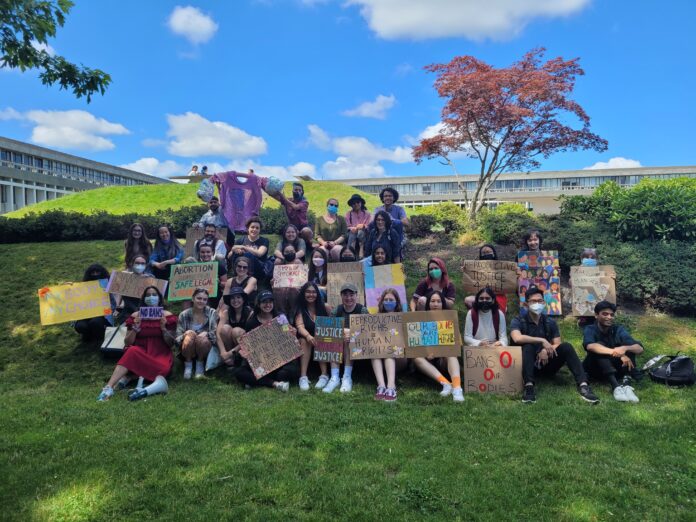
Roughly 35 students sit on the grassy hill at the SFU Burnaby Campus. They are collected, smiling for the camera. They hold signs that read, “No Bans,” Reproductive Justice for all,” “Reproductive Rights are human rights,” and more.
The rally took place around the Burnaby campus from Convocation Mall to Cornerstone. PHOTO: Pranjali J Mann / The Peak

By: Pranjali J Mann, News Writer

On July 13, the Simon Fraser Student Society (SFSS) Women’s Center organized Bans Off Our Bodies, a solidarity rally in the wake of  the US Supreme Court’s (SCOTUS) verdict to overturn Roe v. Wade. The verdict overturned this precedent set in 1973 which constitutionally protected the right to abortions in the US.

This rally stood in support for those who do not have access to safe and legal abortions worldwide. It ran from 11:30 p.m.–1:00 p.m., followed by refreshments and food at the Women’s Center in the Student Union Building (SUB). 

Nimrit Basra, Women’s Center Collective Council representative, opened the march by saying SCOTUS’ decision “is steeped in gendered, economic, and racialized oppression, and those from historically excluded and marginalized communities will face the brunt of this oppressive legislation.” 

As mentioned in the rally’s press release, 24 countries completely prohibit abortion and over 90 countries only allow abortion in case of health risk to the mother or medical complications.

The rally route began at Convocation Mall and marched throughout the campus until ending at the Terry Fox statue at the Reflection Pond. This was accompanied by march chants such as, “Our body, our choice.” 

Various community organizers and student led committee heads gave speeches at the end of the rally. This included a speech from SFSS president Helen Sofia Pahou. She noted prejudices on abortions “got us a male-dominated and patriarchal-infused stack of US Supreme Court justices who cannot separate their politics from the goodwill of accessing safe and legal abortions.”

She emphasized the overturning of Roe v. Wade is a “systematic oppression and invasion against the bodies, the rights, the choices [ . . . ] perpetuated by the state.” 

She continued, “The SFSS upholds the precedence in our issues policies that support anyone seeking access to abortion and their reproductive rights and condemns any entity that chooses to intimidate anyone from utilizing their rights. Anyone who enters our SUB building and goes to our Women’s Centre in need of safe space — please know that you are always welcomed.” 

Nebula Shen, a Board member of Simon Fraser Public Interest Research Group and member of the Out on Campus collective, discussed the importance of having bodily autonomy. Critiquing current policies in place, they stated, “Colonially known as BC, Canada, there are politicians in this province who are against abortion [ . . . ] But it’s not OK for them to ever force that on anyone else’s body.”

Allyson Soriano, organizer for SFU350, laid a direct link between climate change and reproductive justice. She asked, “What does it mean if anyone with a uterus will be forced to bear [a] child when we are experiencing unprecedented heatwaves, floods, landslides, and forest fires?” She added, “Indigenous, Black, and brown peoples’ homes are being used as sites for dumping toxic waste. Many Indigenous communities across Turtle Island still live without access to clean running water [ . . . ] Are these the conditions that we should be raising children in?” 

To find out more on the organization of the rally, The Peak interviewed Basra from the Women’s Centre. 

She shared the planning and creation of the rally started in late May. “There was unanimous support [ . . . ] every single committee in our collective stepped up and did their part [ . . . ] because we were frustrated and we were upset, and we had to channel that frustration into something.” She quoted Mariame Kaba: “Let this radicalize you rather than lead you to despair.”

Basra was inspired and grateful to see the turnout and support from attendees in creating a space with shared solidarity. She reported 50 people attended the rally. 

Highlighting the goals of the initiative, she noted that while the issue seems distant from home, it is present for people around the world, “including here at home.” Through the rally, they aimed “to really give folks a space to channel their passion and their anger and their hurt.” 

She added, “Even during our speeches, it was a circle. It was really important to us that everybody was looking at each other and everybody was able to see each other and hold that space with each other.” 

Through this solidarity rally, she hoped to signify that people are “not alone in this fight, and they’re not alone in how they’re feeling right now.

“This is something that is worth fighting for, and it’s something we need to fight for, not only for ourselves, but for others as well,” she said

Basra reiterated this is a collective and ongoing effort. She noted events and information sessions will be held moving forward. “This is something that we’re going to be working on and fighting for and keeping the momentum going.” 

Women’s issues shouldn’t just matter to women

0
Man distracted from women talking
Why suffer alone when we could make others suffer with us? ILLUSTRATION: Angela Shen, The Peak

By: Hannah Kazemi, Peak Associate

I was laying half-naked on a crinkly white sheet of paper with my legs spread, waiting to get a little T-shaped plastic device put into my uterus, when I opened Instagram and learned that Roe v. Wade was overturned. There I was, getting a particularly invasive procedure done to help regulate my irregular hormones — which I treat with hormonal birth control — when the right to get an abortion was stripped from people in the US. They said that birth control could be next. The irony, right?

“Reading this shit makes me feel sick,” wrote my boyfriend as I laid there with my feet in cold metal stirrups. I appreciated the sentiment. 

Normalising discussions about “women’s issues” and making those issues matter to men is a thought that has been percolating in my brain for a while. I’ve made sure to be really open with the men in my life about my experiences. I’m grateful that I’ve been consistently met with support and genuine curiosity from them about the challenges I’ve experienced — but I know many women who have not been so lucky.

Since my boyfriend and I started dating I’ve always been very open and honest about what I’ve been feeling and experiencing. Painful periods, mood swings, changing birth control, hormonal issues, the list goes on. He knows it all. Most recently, those conversations have included how nervous I was to get an IUD, how the procedure went, and how I felt in the days following. 

I don’t tell him these things to make him feel bad or to guilt him for being a man; I tell him these things because he’s in a relationship with a woman, and living in a society where issues that affect women are predominantly seen as only our own does not often allow men to be exposed to these things.

Reproductive health affects men as much as it affects women. While pregnant people will bear the physical impact, there is an emotional toll an abortion can have on both partners. The same goes for contraceptives. Using birth control is a shared responsibility. If the condom breaks or the pill fails, the blame is often placed on women despite the fact that sex is something that both partners have to consent to — not to mention the body-altering, life-long implications pregnancy has on someone’s life.

And traditionally gendered concerns don’t stop with reproductive health. Last year saw the Canadian gender wage gap, measured by comparing average hourly wages earned by women and men, increase from 10.9% in 2020 to 11.1% in 2021. Articulating this disparity against it helps male partners recognize their role in perpetuating an oppressive system. As an ally fully informed of the wage gap, they can help to make change in the workplace — or at the very least, they can be understanding towards a pervasive gendered problem. 

The impact of tackling “women’s issues” is positively felt by men, too. A 2020 World Health Organization study found that gender inequalities are tied to worse health outcomes to everyone. That’s because efforts to address gender inequality, including greater funding for social services like education and family planning, contribute to men’s success. Without efforts to combat gender inequality, men have poorer health and live shorter lives. Not confronting “women’s issues” by ensuring gender equality is quite literally killing men. Beyond wanting to be a good partner, men have a vested interest in ameliorating traditionally gendered issues. 

Men should be part of these conversations, even if they are not in a relationship with a woman. Of course, the onus should not rest solely upon women to educate their friends and family members on the issues and challenges that we face, though many women do take on that responsibility and feel like it is up to them to teach others about their struggles. The simple truth is that society doesn’t care to make “women’s issues” matter to anyone other than women themselves, so the responsibility ends up falling onto us.

Women should not be made to feel like they’re alone in their struggles. Partly because a positive relationship means both parties support one another, and partly because the importance of “women’s issues” actually transcends gender.

The default male

0
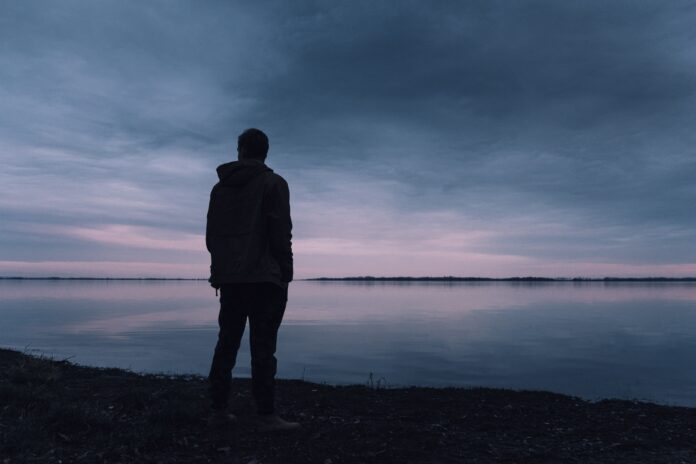
A silhouette of a cis man looking out over a lake.
The world is built for men and it’s resulting in some serious consequences for everyone else. PHOTO: Lukas Rychvalsky / Pexels

By: Yasmin Vejs Simsek, Staff Writer

The “default male” is a term that describes males as the norm in our society and in data collection. This results in research being done only on cis male bodies with effects on other bodies not even being considered. You might have heard about the standard office temperature being set for a male metabolic resting rate and therefore being five degrees too cold for cis women. And this, quite frankly, is the least of it.

Caroline Criado Perez has written an incredible, informative book called Invisible Women that explores the gender gap — how society systemically ignores over half of its population, makes us invisible and ultimately how we live in a cis man’s world. It’s also important to note most of the data is focused on cis men and cis women, and while I recognize that we need more research on cis women, the need is even greater for inclusion of non-binary and trans folks.

I recently had a discussion with a cis man. Let’s call him Bo. He argued that cis, white, straight men have it harder in today’s society, due to quotas and the push for representation. One of my many arguments against this bizarre statement was the “default male.” His response — with a victorious look on his face — was that the “default male” also discriminated against cis men, by making kitchen counter tops a more appropriate height for women than cis men so his back hurt when he was in the kitchen. Confused by the fact that this person unknowingly had started arguing my cause by emphasizing the idea that women belong in the kitchen, I said, “Well that’s part of the problem, isn’t it?”

Yes, kitchens have been standardized to fit women bodies — but a supposedly standardized woman body at 5’7”. The average Canadian woman is 5’4”. So even though the sexist intention was there to create a better workspace for the person who is expected to spend most of their time working in the kitchen, it well and truly failed.

I also gave Bo the example of how cis women are more likely to die in car crashes than cis men. Even though cis men are more likely to be involved in a car crash, women are 47% more likely to be harmed in one and a whopping 17% more likely to die in one. When testing out cars with dummies, the US has, since 2003, been considerate enough to also use female testing dummies — in the passenger seat only. The obvious problem with this is it doesn’t reveal the impact of a car crash on women if they are in the driver seat, where there is both a wheel to protect from forward momentum and more control of the situation. Also, female testing dummies are not a replicate of cis women’s bodies, simply a smaller version of the cis male dummy. To top it all off, seatbelts are not effective on pregnant people and no one has bothered coming up with a solution. 

The car is not the only place women are more likely to die than men. The same goes for heart attacks. Research on heart attacks has always been done on cis men even though some of the symptoms can differ from cis men and women. In fact, only one in eight women feel the infamous chest pain associated with heart attacks, but they can feel pain in many other places instead, such as their jaw and back. This results in women receiving worse care, getting poorer aftercare and, in the UK, being 50% more likely to be misdiagnosed. 

The “default male” doesn’t just impact health care but also everyday inconveniences, down to cis women having a harder time reaching every corner of their smartphone. That’s right, smartphones are also designed for the cis male, generally larger hand, so that is why our faithful devices keeps getting bigger. And don’t even get me started on how voice control is 70% more likely to recognize a male voice.

The world is inherently male-focused and a lot of us are working to change our own internalized perspective. I spoke to a man in Nepal in 2016 who posed the question: “Who won the last soccer World Cup?” I cockily answered Germany, and he just shook his head and said, “No, that was in 2014, but the US women’s team won the World Cup in 2015.” I’ve been taught to think that the world is by default male.

There is a war on trans folks, non-binary people, and women. But the gender gap resulting in the default male is probably not some supervillain masterplan to bring down all women. It’s likely that whoever is in charge has simply not thought that it was necessary to include women — if the thought even went that far. Ultimately, it’s the result of a society that has suffered under the patriarchy for way too long. The simple solution is to collect both sex and gender-separated data. To ensure that medicine works the same way on everyone, that cars are safe for everyone, that symptoms are being distinguished between sexes and genders and yes, Bo, also that kitchen counters are a suitable height for cis men.

Army of Lovers celebrates the histories of local lesbian feminists

0
The photo is taken in the hallway of the SFU Vancouver Harbour Centre building. There are three boards that have biographies of Christopher Moore, Nora Randall, and Nancy Pollack.
The exhibit is being held at Vancouver Harbour Centre until August 21. PHOTO: Gudrun Wai-Gunnarsson / The Peak

By: Olivia Visser, Staff Writer

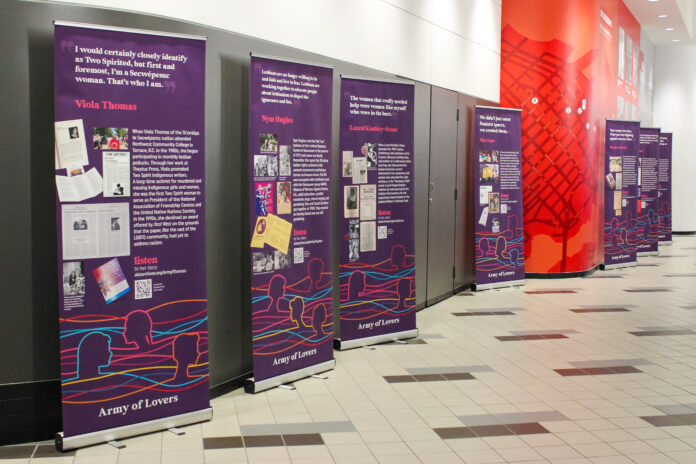
Army of Lovers: Lesbian, Bisexual, Two Spirit, and Queer Women, 1970s and 80s is an oral and visual archival exhibit taking place at SFU’s Harbour Center campus. Running from July 14–August 21, the exhibit focuses on interviews conducted by students in professor El Chenier’s oral history class. 

Chenier explained those who participated in the feminist and lesbian communities in the ’70s and ’80s “have a lot of hard-earned wisdom to share,” and created this project as a two-way conversation between young and old generations. 

The archive itself is a trans-inclusive representation of the narratives that shaped Canada’s early queer and feminist movements. Its in-person component consists of posters lining the halls of Harbour Center, which include short biographies of prominent queer figures and quotations from interviews conducted by students. The content is available in its entirety on the Army of Lovers website, which includes audio recordings taken from the interviews. 

The in-person exhibit included other activists who were engaged with feminism and LGBTQIA2S+ activism. On its opening night, Chenier hosted a panel featuring the stories of Cyndia Cole, Pat Hogan, and barbara findlay. All three are heavily involved in BC’s lesbian and feminist movements, and have made significant cultural and systemic contributions.

Cyndia Cole is a “published writer, an educator, a feminist, an activist, and an artist.” During the Vietnam War, Cole came to Canada as a war resister. She “worked closely with women’s studies founder Maggie Benston” during her time as a SFU student. During the panel, she described her story as interesting because she “became a feminist first” before realizing she was a lesbian. 

Despite being involved in the feminist movement and feeling an urge to participate in the lesbian feminist movement, Cole didn’t believe she belonged in it. She realized she was a lesbian after having a dream about one of her friends, and subsequently sharing a kiss with her after explaining the dream. 

After a lesbian couple was kicked out of Vancouver’s Joe’s Café for kissing in 1990, Pat Hogan opened up Josephine’s Cappuccino Bar for the lesbian community. In addition, she founded the feminist business, Sounds & Furies Productions, as well as BOLDFest Bold, old(er) Lesbians and Dykes. Hogan recounted being involved in the British Columbia Federation of Women, where she was surrounded by lesbians for the first time in her life. She explained that a lesbian caucus formed within the federation because at the time many feminists were in support of women’s rights, but not lesbian rights. 

“Lesbians are no longer willing to lie and hide and live in fear,” read a quote from Nym Hughes, one of the activists featured at the exhibit.

barbara findlay is a queer feminist lawyer who became an activist after her “forced incarceration in a mental health institution for being a lesbian.” After falling in love with a woman for the first time, she “didn’t know that [they] weren’t the only ones.” She emphasized to the younger generations in the audience it was terrifying to “live from one day to the next” when she grew up. People would make educated guesses on others’ sexuality or speak in code, asking questions that referred to queer culture, such as, “Do you know Jane Rule?” Like Hogan, findlay also remembered dealing with homophobia from straight feminists. 

Despite the barriers faced by lesbians in the early feminist movement, the panellists agreed that the lesbian experience still comes with its own joys. Cole and Hogan fondly recalled attending lesbian dances in their communities, while findlay said, “It’s not sex that first comes to mind,” when thinking about the pleasures of being a lesbian. 

“The biggest thing was all of a sudden I had a mirror in which I was reflected,” said findlay. 

Still platformed: You’re not cancelled enough if I’m still subjected to you whining about it

0
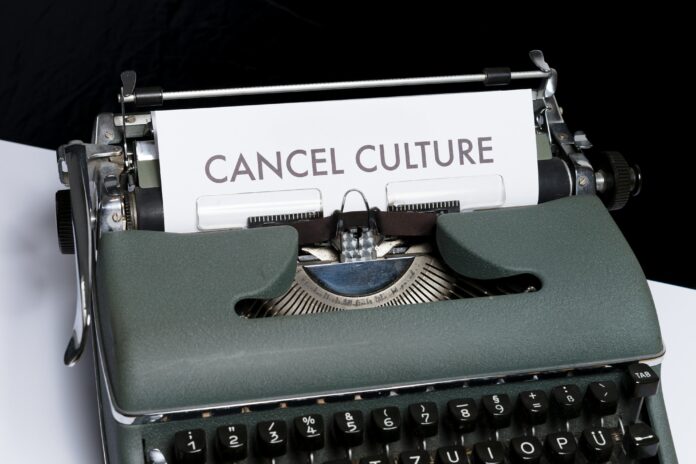
"cancel culture" on typewriter
“Cancelled” people usually end up keeping their platforms. PHOTO: Markus Winkler / Unplash

By C Icart, Peak Associate

It’s long past time we stop indulging right-wing pundits and problematic celebrities by pretending cancel culture is real. Reactionaries vehemently condemning cancel culture makes it sound like there is, in fact, an epidemic of liberal Gen Zs ending people’s careers over political correctness. There isn’t. The fact that we keep having to hear problematic influencers and right-wingers complain about being cancelled proves they still have a platform. 

What is cancel culture? Do we need it? Does it work? Is it real? Politicians, commentators, influencers, and celebrities are some of the most outspoken critics of cancel culture. But the fact that we keep hearing their outbursts means that “cancellation” isn’t the calamitous event it’s made out to be. 

The actual act of cancellation refers to the public shaming that happens after a person or company says or does something offensive. It can occur years after the events, often when someone’s old social media posts are uncovered. It can cost people their job or further career opportunities. Being cancelled is also associated with receiving large amounts of hate, mainly online.

The problem is that the term “cancelled” makes it sound like there is no recovery from it; it is the death of that person’s career or social status. But this is rarely the case when it comes to the rich, the privileged, and the powerful. They often find themselves to be even more popular afterwards, as in the case of Joe Rogan. It’s not uncommon for “problematic” celebrities to even claim they’ve been “cancelled” multiple times which of course shouldn’t be possible if the cancellation had the permanent, long-term impact it’s often implied to have. 

So, why are the rich and powerful critical of cancel culture? Because they don’t want their offensive actions being brought up. If you did something to harm someone, we can and should talk about it. Forgiveness and support should be secondary to addressing the hurt and comforting the victim. Receiving criticism and suffering the consequences for your actions is not a bad thing. We need to be able to identify when people are using the phrase “cancel culture” to delegitimize criticism. In part, because the people being silenced are often marginalized citizens trying to speak about oppression

Censorship is a real issue. But if you’re dedicating a comedy special to joking about it, you’re not experiencing it. As of February 14, there were 177 anti-LGBTQIA2S+ bills proposed in the US. These bills propose, in part, bans on books and conversations about LGBTQIA2S+ issues. This should be at the center of discussions about free speech and cancel culture, not Mr. Potato Head

Overemphasizing the need to condemn cancel culture or calling for an endless reservoir of compassion for people who are “learning” only feeds into the rhetoric that the left is too sensitive and this generation can’t take a joke. It also implies that the people negatively affected by offensive jokes or violent behaviour must prioritize the perpetrator’s feelings and well-being and contribute to their “rehabilitation.” 

Sure, Dave Chappelle’s show was moved to another venue due to the “impact” of his performance. However, he still sold out a show and performed, which proves that being transphobic will not end your career. Indulging in cancel culture debates distracts us from whose free speech is really under attack. You can complain about “not being able to say anything these days” all you want. As long as hate is still being perpetrated, we will not shut up.