Home Blog Page 23

The queer agenda is solidarity

0

By: Noeka Nimmervoll, Staff Writer and Zainab Salam, Opinions Editor

Like many other communities, the queer community experiences marginalization that intersects with various social issues. Some of those issues are related to mental health, poverty, race, and physical ability. Because systems of oppression politicize queer and trans existence, the community’s activism must be rooted in a broader fight for justice. 

The term “queer agenda” has been used for fearmongering to deepen distrust of queer and trans folk, and spread the idea that the goal of the 2SLGBTQIA+ community is to coerce people into joining their so-called “deviant” lifestyles. However, the real queer agenda is a powerful commitment to social justice: dismantling systems that harm all marginalized people. This commitment is strongly mirrored in queer advocacy for Palestine: queer people on Turtle Island and in occupied Palestinian territories unite to fight for a future where people don’t experience inhumanity, and all humans are treated with respect.

Political engagement from the 2SLGBTQIA+ community is not born from luxury but need. For sidelined communities, it’s not a choice but a necessity that drives involvement in politics. If proposed policies threaten your rights or deprive you of them, you’re more incentivized to speak up because your welfare is on the line. The fight for 2SLGBTQIA+ rights in Canada has been long, and it’s not over. It was only 20 years ago when gay marriage was legalized. Since then, the community has witnessed increased positive representation in the media, leading to a boom in visibility, followed by some public acceptance. However, even today, 2SLGBTQIA+ individuals are still more vulnerable to issues such as workplace harassment, poverty, and houselessness.

People everywhere deserve to live in safety and dignity. Pro-Palestinian queer activists understand that their activism cannot come at the expense of other marginalized communities. For example, during Pride this year, there were multiple calls to boycott Pride parades across the country and their sponsors due to concerns over their complicity in funding Israel’s genocide against Palestinians. The mission for human rights is furthered by Queers in Palestine, a coalition of queer groups in occupied Palestinian territories, sharing their voices, and advocating for solidarity stances from others around the world. With the ongoing genocide, Queers 4 Palestine Toronto rallies in solidarity for the freedom of the Palestinian people who face ethnic cleansing at the hands of a settler-colonial regime. The struggles of the two communities may look different, but they overlap in many places. 

There are some critical voices that accuse queer solidarity with Palestinians of being contradictory, but such critiques miss the point of true justice-based activism. The claim that it’s hypocritical for the 2SLGBTQIA+ community to be advocating for Palestinians due to the homophobia there is incredibly illogical. The dismissal of queer solidarity with Palestinians on the basis of Palestinian homophobia is a clear attempt at pinkwashing. The unfortunate reality is that queer individuals face discrimination in most spaces worldwide. And the advocacy for queer rights and protection is only furthered in the fight for a better world. The argument also disregards the lives of queer Palestinians that are jeopardized through Israeli violence. It’s clear that pinkwashing erases queerness in Palestinian spaces, while using queer lives and rights as a tool to further settler-colonial violence on stolen land.   

“Queer solidarity is grounded in the recognition of shared struggle and an unwavering commitment to human rights.”

This sentiment of human rights demonstrates that the 2SLGBTQIA+ community knows what privileges they have gained and the ones that remain barred from them; and just as importantly, they know when others don’t have the rights they deserve.

The 2SLGBTQIA+ community has long been present in occupied Palestinian territories, and queer individuals are strong activists for equality because they know what it means to live without it. The fight for equality does not end when all 2SLGBTQIA+ issues have been solved and they are treated as equal — it ends when all people are treated as equal. Solidarity is not about shared identities, but shared values. Liberation for one means liberation for all. 

Strong voices emerge from the queer and trans communities that urge for the use of whatever privilege one possesses to uplift other marginalized communities — to continue their mission of a just world. Ultimately, queer liberation is inseparable from the liberation of all oppressed peoples. Queer rights are Palestinian rights are human rights — and until all humans are seen and treated as equal, there is work to be done.
 

TransLink’s new service expansion boosts bus connectivity to SFU

0
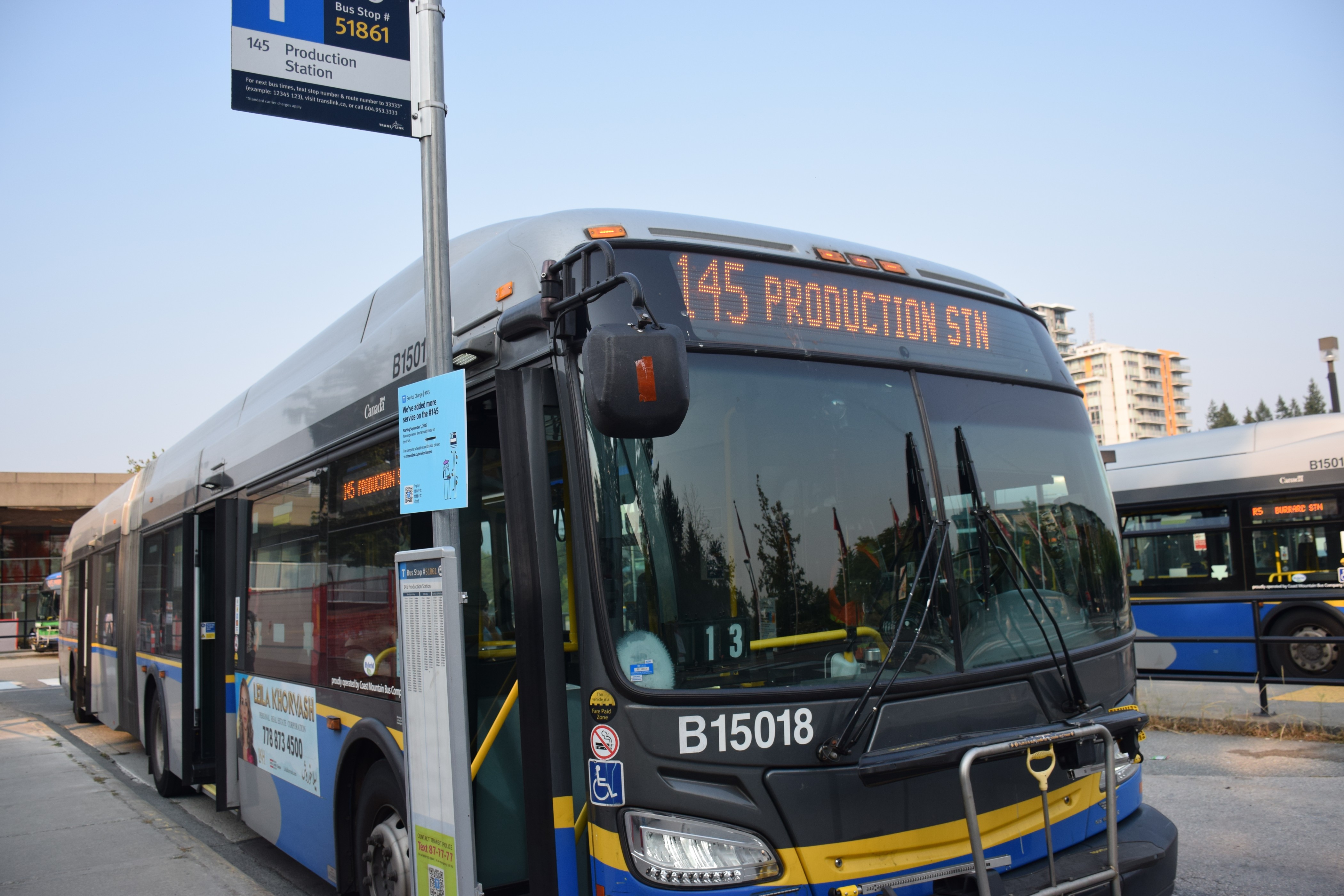
PHOTO: Audrey Safikhani / The peak

By: Niveja Assalaarachchi, News Writer

On August 18, TransLink announced its latest round of service adjustments for fall 2025. As of September 1, bus service was increased for 53 routes throughout Metro Vancouver.

These adjustments were made possible by TransLink’s new investment plan, which represents the most significant increase in bus service since 2018. In a press release, TransLink noted that the service changes were primarily aimed at reducing overcrowding and wait times in the region, which had been a concern for several years

The investment plan passed in April of this year also aims to lay the groundwork for Bus Rapid Transit (BRT) in the region. The BRT program would eventually involve nine routes throughout Metro Vancouver, with “dedicated lanes, transit signal priority at intersections, and weather-protected stations.” The plan is largely funded by increases to transit fees, property taxes, and $312 million of direct financial aid from the provincial government.

TransLink spokesperson Dan Mountain told The Peak that

The service changes and investment plan are “really huge for the region because even just a few months ago, we were facing potential cuts to service due to financial constraints.

So the fact that we were able to begin the largest expansion to bus service in nearly a decade is really momentous.”

The company faced a yearly $600 million gap in funding until the provincial government intervened with the aforementioned investment plan. This financial situation, largely attributed to the ongoing effects of the COVID-19 pandemic, has been driven by a collapse in transit users. In addition, the decline of alternative revenue streams, such as a gas tax imposed on motor vehicles, has presented a major problem for TransLink’s finances. 

Among the bus routes affected, the 143 and 145 going to SFU’s Burnaby campus will see additional service on weekdays, with the 145 also seeing service increases on Sundays and holidays. The 321, 329, 335, 373, 393, 501, and 503 servicing Surrey Central station near SFU’s Surrey campus will also see more buses added to their schedule. The focus on improving bus routes near post-secondary institutions is directly part of the service change plan. In their press release, TransLink emphasized improved bus connectivity to 25 routes serving post-secondary institutions like SFU, UBC, and Langara. 

Mountain highlighted the importance that students play in route adjustment decisions. He cited TransLink’s regular communication with student associations and leadership groups at SFU as an example. The Peak followed up with Mountain for more information on who was contacted and what was discussed, but did not receive a response by the publication deadline.

He added that the company is interested in feedback and is creating new engagement opportunities to hear critiques. For one, Mountain referenced a booth at the PNE, where transit users can express their opinions. He also emphasized TransLink’s feedback form, which helps the company capture crowding metrics and region-wide boarding statistics. These numbers  ultimately help TransLink decide on where to implement quarterly service changes, as revealed by Mountain.

Transit projects, such as the Burnaby Mountain Gondola, have also failed to get off the ground. The investment plan itself only has enough funds until the end of 2027, raising concerns about the long-term viability of TransLink’s service increases. 

Mountain said TransLink “will continue to advocate for transit funding through a new investment plan, which will keep service levels increasing in the future. This is what we want to see and hopefully see some big projects coming out of the region moving forward as well.” 

On the Burnaby Mountain Gondola specifically, he revealed, “We are currently working on the planning work for the Burnaby Mountain Gondola, but the next steps would be to complete the business case and then to secure funding.

“We’re continuing to engage with SFU, we’re continuing to work on that planning work, and we’re hoping to see a funding commitment from senior governments in our next investment plan.”

A letter to first-year students, from a nearly graduated one

0
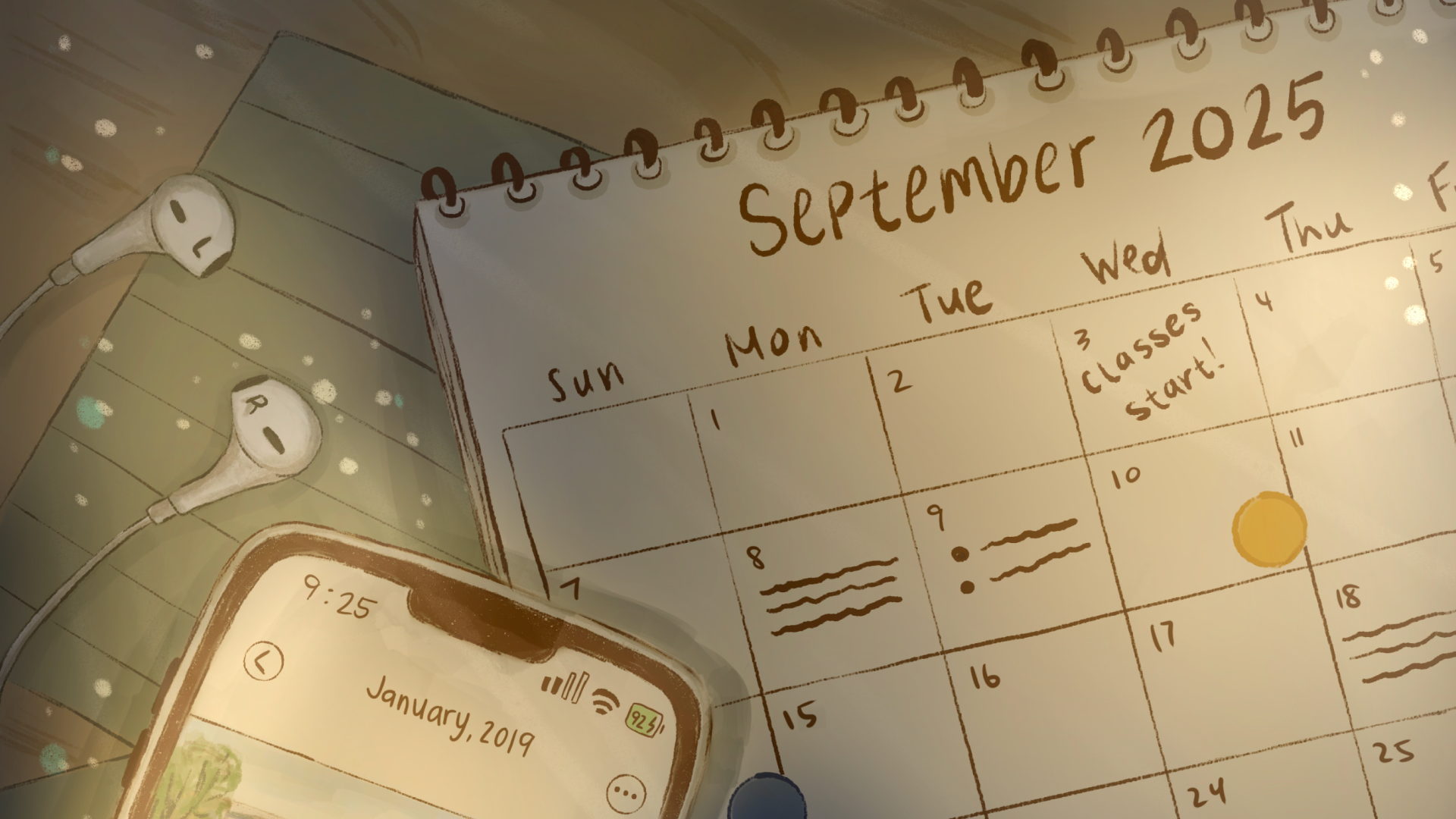
An illustration of a calendar in a planner open to September 2025. A phone is resting on top of the calendar open to the photo app with the date “January 2019” written.
ILLUSTRATION: Victoria Xi / The Peak

By: Petra Chase, Features Editor

Dear first-year students,

You might have a concept of what you want your time at SFU to look like, or maybe you have no idea. Maybe you have friends by your side, or a sibling who’s shown you the ropes. Or maybe you’re completely new to the country, and know no one, in which case, my younger self probably would relate to you most. Maybe you’re lost in the Robert C. Brown Hall and you stumbled upon our newsstand, desperate for some words of encouragement (good luck). Wherever you are, I hope to impart some of the lessons I’ve learned as you navigate new waters. 

As the eldest child, I never had anyone whose footsteps could lead me into adulthood, no one to walk through spiderwebs in my path. So, in January 2019, after half a gap year to settle in Vancouver, I braved a tough façade as I entered campus for the first time. Riddled with anxiety but trying to seem cool and collected, I felt like I was navigating a fog (at times, I literally was). Maybe you can relate, or perhaps you’re calculating how many years I’ve been here, thinking, “Why would I take advice from someone who took this long to graduate?” Well, four years might be a perfect timeline for some people, but learning isn’t a race. I know that sounds like something your kindergarten teacher told you after reading The Tortoise and the Hare, but it’s true!

It took me a while to accept that four courses in a semester would never be manageable for me. Actually, two courses a semester is my ideal course load. There were many times when the readings and assignments were so interesting, but it felt impossible to absorb the material and put in the effort required on top of the week-to-week deadlines of multiple courses, work, and personal life. Finding shortcuts becomes an unspoken expectation in classrooms; skimming, cramming, and now that ChatGPT is in the picture, it’s easier than ever for students to bypass intentional, deep work and studying. But what good is a degree, and the expenses and time that come with it, without learning and enjoying the experience? 

“The value of a degree and the job market can change. Of course, it’s good to set long-term goals, but make sure the joy and satisfaction of learning is one of them. Be prepared to revisit and change your goals with time.”

I used to say I “wasted my time” trying to pursue an English and publishing minor during my earlier years. However, just because I decided not to go forward with either of those options, doesn’t mean the courses I took weren’t valuable. I read and discussed literature that has inspired me as a writer. I also designed, printed, and bound a book all on my own (PUB 131) that I now proudly display on my shelf, and I had fun! 

Engaging in learning also increases neuroplasticity in the brain, which strengthens things like memory, critical thinking, and resilience as you get older. Don’t underestimate the process of taking notes during lectures, for example, rather than scrolling away and thinking you can reference the slides later. I highly recommend COGS 110 if you want to learn how to study and learn effectively. I still remember most of what I learned because we used physical flashcards that we practiced with every week. The same goes for BPK110 (Human Nutrition), because I applied the same approach to studying and saw that I was able to be disciplined. These are just some of the interesting electives to choose from in your journey of self discovery!

If you have a full schedule this semester, don’t worry. Usually first-year courses are more manageable, and this is your time to find out what works for you. I also realize being able to take my time and limit courseload has been a luxury. There are all kinds of pressures that may prevent this, from parents, scholarships, and even internal pressure to follow a timeline you set. But do not feel pressured by comparison.

This was something I struggled with. I would see others juggling four to five courses, multiple extracurriculars, making the honour roll, seemingly balancing it all, and think I wasn’t as capable as them. Academic achievements are worth celebrating, but don’t forget everyone is facing unique obstacles and circumstances that we don’t often see or celebrate. I, for one, never had the privilege of not having to work full time to pay rent and afford food (and of course my little daily $7–8 beverages). If I didn’t have to work, then maybe I could’ve balanced a lot more academically. There are so many factors that affect someone’s experience — language barriers, disability, even something like having to commute to campus versus living in residence, can take hours off of one’s day that would’ve been spent studying. Comparing yourself to others is futile, and leaves you feeling inadequate

Making friends was never easy for me, and it took me a few years to start making lasting connections. Though I am from Vancouver, my family moved around overseas for the second half of my life. You’d think this would make me adaptable, but social anxiety and self doubt have always lingered. I was technically not an international student, but also couldn’t really relate to the ones who grew up here. It didn’t help that someone laughed at my answer to a professor’s question after courageously raising my hand in lecture (don’t laugh at people!) If I had been less guarded during those early years, and realized I wasn’t alone in feeling alone, I would have had a much easier time. Know that you are not alone, and people are more focused on themselves anyway. Letting go of caring about what others think isn’t easy, but it comes with experience.

I’d get intimidated by a tutorial room where you can hear a pin drop, everyone swiping through their homescreens, avoiding eye contact. Being the first person to say, “Hi, how do you guys feel about this course?” is so easy, and it can really clear cold air. Ask someone when they’re on campus and if they’d like to meet up or study after class. I’d also recommend moving around the classrooms and lecture halls to sit next to and gain familiarity with different people. This isn’t assigned seating and you won’t offend anyone by moving seats! (Was I just the biggest overthinker?) Some people will just be class friends, who you’ll never see or hear from again, and that’s OK. Although, I would highly recommend exchanging numbers rather than social media to start, unless you want to finish your degree with a bunch of ghosts in the Instagram panopticon (can you tell I’m a communication student?).

I met one of my best friends during quarantine in an online class, who we ended up connecting by just talking over Zoom and eventually meeting up. I also met a lot of people in clubs and working at The Peak. That’s another reason why I took my time to graduate — I got practical work experience doing co-op, and working for the student paper. I learned so many skills that I’m not only graduating with a degree, but multiple work experiences in the field I want to pursue. There are tons of ways to get involved and meet people. Go to welcome day, attend an event, get involved outside of courses. 

A few final tips: ask for extensions! Even if your professor says no, there’s no harm in asking. Don’t be too intimidated by your profs and TAs either, as they are usually approachable (unless they aren’t — don’t take it personally). The Burnaby Mountain, and Vancouver in general, can be gloomy, so make sure you prioritize connection with others, vitamin D, and take care of yourself. Also, meet and get curious about people who have different experiences and backgrounds from you. There are international students here from all over the world who may not know anyone here, and their lived experiences are unique — not branching out from a closed, familiar circle is boring and a missed opportunity.

As I enter my final semester (fingers crossed), I’m grateful I was able to take the time to grow into the person I wanted to be when I graduated. I feel confident in myself, well educated, and I have fully explored the different avenues available to me to figure out what I wanted. The most exciting part of being a first-year student is the endless possibilities — you get to make the experience yours. So as you enter this next chapter, know that you won’t have it all figured out on day one, but if you trust the process and dim your light out of fear of being judged, you’ll be just fine.


Council Chats: Support for Palestine and science Week of Welcome

0
This is a red and blue graphic of two speech bubbles on the left and the words “Council Chats” in the middle right.
ILLUSTRATION: Andrea Choi / The Peak

By: Lucaiah Smith-Miodownik, News Writer

As a new semester begins and summer slowly fades to fall, the Simon Fraser Student Society (SFSS) Council continues to convene for bi-weekly meetings. For those new to campus life, Council serves as the governing body for the student society and holds the “responsibility to represent and work in the best interests of all SFU undergraduate students.” The group includes executive officers and student group representatives. The Peak attended the meeting on August 27 via Zoom to kick off the semester.

Support for Palestine 

The meeting opened with an acknowledgment of the SFSS’ 2022 IP-10 policy, “which commits the SFSS to supporting Palestinian liberation, self-determination, and the global Boycott, Divestment, and Sanctions movement.” Councillors also noted the SFSS’ endorsement of the apartheid-free communities pledge, “a coalition of communities who pledge to work together to end Israeli apartheid.” The SFSS formally expressed their desire that the federal government enact a two-way arms embargo, halting “both the import and export of military goods and technology” to and from Israel. 

The Peak followed up with SFSS president Landy Liu for more information. Liu said that IP-10 “remains an active policy that guides how the SFSS approaches activism in line with undergraduate student interests. In this sense, its mention tied directly to the recent call for an arms embargo.” He also said, “As for the letter to government, my understanding is that our vice-president equity intends to bring this forward and follow up with the Equity Committee. However, that step has not yet happened.”

Science Week of Welcome

Next, the Science Undergraduate Society (SUS) presented a grant proposal for their Week of Welcome from September 22–27, an event designed to welcome first-year students into the field. SUS represents over 4,000 students, with nine departmental student unions participating in this year’s event. The society requested a budget of $5,640.87, a decrease from last year’s $6,234.83. Individually, the highest ticket item was t-shirts, with an estimated cost of $1,505.28.

SUS emphasized that the event’s importance lies in community and academia. Incoming students have the opportunity to develop relationships with peers, while also networking with faculty and older students. Each day of the weeklong gathering will be tailored to specific departments, like chemistry or physics, with the last day being a day-long event for all science students. Activities include games, crafts, and t-shirt decorating. For the 2025 iteration, the society expressed a goal of 100 attendees.

Discussion ensued regarding cost specifics and the possibility of decreasing the proposal budget. Councillors inquired if costs could be reduced through removing an iPad as a prize or eliminating t-shirts, and asked questions regarding the sourcing of merchandise. After some back-and-forth discussion and failed motions seeking to adjust the budget, the original motion was ultimately passed with one vote of dissent.


Meet the BC Green Party leadership candidates

0
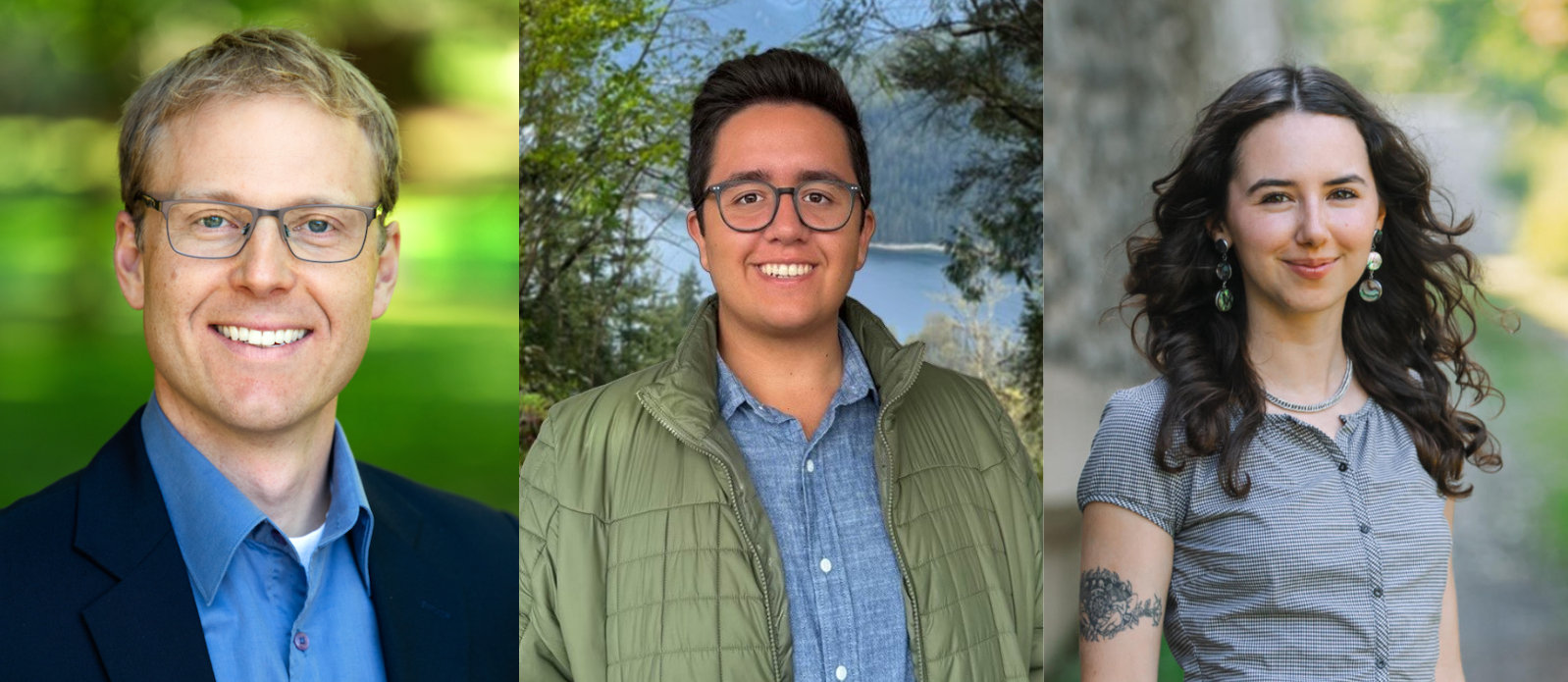
This is a photo of all three candidates’ headshots side-by-side. From left to right: Bremner-Akins has short blonde hair, wears square glasses, and a blazer with a blue button up shirt; Kerr has short, dark brown hair, wears rounded glasses, and has a blue button-up shirt on with a thin, light green puffer jacket on; and Lowan has medium-length dark brown curly hair, long circular earrings, and a button up short sleeve shirt. All three photos are green and/or have nature in the background.

By:  Lucaiah Smith-Miodownik, News Writer

The BC Greens are slated to elect new leadership this month. After losing her seat in the provincial election in October 2024, former party head Sonia Furstenau stepped down in January 2025. Now, three candidates are vying for the position. Adam Bremner-Akins, Jonathan Kerr, and Emily Lowan will appear on the ballot from September 13–23. The Peak spoke with the three contenders for more information on their outlooks and campaigns.

Bremner-Akins

Bremner-Akins has rooted his political movement around four key tenets — affordability, climate, mobility, and health. “The main focus of my campaign has been dealing with my frustrations on how the province is being handled, and that is cost of living, and that’s lack of environmental action, and on housing affordability, healthcare, and transit,” he said. “I have lived experience with all of these, and as an SFU student who cannot afford to live in the community that I grew up in, or frankly anywhere out in the lower mainland, I really felt motivated to put myself forward.” 

The SFU political science student in his early 20s explained that he has run before: “I’ve run twice for MLA with the BC Greens, and I’m the only candidate who has held internal leadership positions. I was the party’s counsellor at large for three years, and then I was the party secretary for another year after that.

“I really come with the background of knowing the organizations and understanding what the Greens have been doing for the last five/six years, and I want to continue that, but I also want to bring bold new policy,” he expressed. According to his campaign site, such policies include a four-day work week, a windfall tax for gas and oil, making public transit for ages 0–19 free, and more.

When it comes to problems facing British Columbians, the Greens are not looking to “band-aid issues,” Bremner-Akins said. “We’re looking to fundamentally fix them, work from the ground up to ensure that we have systems that are sustainable and work for people.” 

Kerr

Kerr’s platform revolves around climate, reconciliation, health, sustainable economy, and more. The candidate is a family doctor and draws motivation for leadership from his own children: “I really want to make sure that they have a future [with a]great quality of life, that’s affordable, and that the planet’s still around,” he expressed.

The Greens will always “have the best platform for the planet,” Kerr said. “But we’re also going to have the best platform for other really important issues like affordable housing, cost of living, the economy,” and “creating well-paying jobs in our province.” In addition to focusing on the environment, he explained that appealing to voters as “the job party, economy party, housing party,” and “healthcare [party]”  would help the Greens win more seats in the next election. 

For the current leadership race, Kerr wants to provide added support for the Youth Climate Corp, build on the BC First Nations Zero Waste Program in rural areas, create more accessible rental housing, and more. He has twice represented the Green Party in the Comox district as a city councillor. He also serves as the vice chair of the regional district, working on issues like sewer, water, recreation, and transit. “We’re going to really have to have someone that has a track record of speaking with ministers on a regular basis, like I do in my role as a regional director and vice chair,” Kerr said, noting this as the main difference between him and other candidates. 

“Who sets us up with a better chance to win, who sets us up with a better chance to have real credibility with the electorate? And at this point, given the three of us, I think that I’d be the best choice going into the next election.”

Lowan

Lowan has built a campaign around the slogan “fight the oligarchs, fund our future.” “We’re building a people-powered movement to force our government to directly confront corporate interests — so we can invest in a future that works for everyone,” she told The Peak. “We need to tax billionaires out of existence, to have a healthy democracy, planet, and society.”

On a policy level, this looks like incorporating “corporate and individual tax increases on BC’s richest corporations and the 1%,” as well as banning “data centers in BC from burning fossil fuels for power, in order to reduce climate pollution, protect air quality, and public health in BC communities.” Lowan’s platform additionally centres Indigenous rights, climate action, solidarity with Palestine, and more.

“I have a decade of experience as a climate organizer and policy researcher,” Lowan added, in her early 20s. “I’ve worked as a strategist at Canada’s leading coalition organization, Climate Action Network Canada, and the Canadian Centre for Policy Alternatives’ Corporate Mapping Project.” Lowan also noted that she has received campaign endorsements from Dr. Gabor Maté, Grand Chief Stewart Phillip, and activists Severn Cullis-Suzuki and Tzeporah Berman.

“One candidate, Jonathan Kerr, believes that the BC Greens should court the centre to gain more seats,” Lowan also claimed. “This is a complete misread of our potential and pathway to regain relevance. Any seasoned politician will tell you that the centre belongs to the party in power — the BC NDP. The centre is satisfied with the status quo.” She expressed, “While others are fighting over a shrinking slice of pie, we’re (Lowan’s team) expanding that pie with droves of youth and disillusioned non-voters across the province.”

Why should students care about the Greens?

In separate conversations, both Kerr and Bremner-Akins expressed that they believe the Greens are the only party truly looking forward. “The Green Party, for me as a student, was the only one that was being genuine about wanting to improve living conditions for us,” Bremner-Akins said. 

For Kerr, “there’s only one party that’s talking about the future.” 

“We are creating a campaign in our own image: one made of renters, young people, and the disaffected,” Lowan said. “There are 726,000 people between the ages of 20–30 in BC. The BC NDP only won with 900,000 votes in the last election, our generation could truly turn the tide.” 

Those who were registered Green Party members on August 10, 2025, and who have verified their identity will receive a ballot.

Lorena Alvarado explores memory in Lost Chapters

0
A woman standing in front of a mosaic
Courtesy of Lorena Alvarado

By: Michelle Young, Co-Editor-in-Chief

Lost Chapters
(or Los capítulos perdidos) is a quiet and tender documentary/fiction hybrid set in Caracas, Venezuela. The film follows Ena, who is searching for “forgotten writer” Rafael Bolívar Coronado across the city. Lost Chapters will be premiering at the Vancouver Latin American Film Festival on September 5. I had the wonderful opportunity to sit down with director Lorena Alvarado to learn more.

This interview has been condensed for concision and clarity.  

Tell me about how your life influenced the film. 

“I considered it sort of an auto-fiction film so it’s a mix of real things of my life and my childhood. The character of my sister is a hybrid of her and me, she’s kind of this character that’s playing herself but I’m also living vicariously through her in the film. So the film is very inspired by my life but the fiction component kind of carries the film.” 

I found that the film has an overarching theme of memory and loss. There’s the loss of memory, lost books, lost business, and so on. Can you speak to what these themes mean to you and their importance in the film? 

“The core of the film I would say is memory loss, and it’s explored in different ways through the characters. With Ena, it’s coming back home after being abroad for a long time and feeling this loss of when you leave and come back — that’s a very universal feeling of having these holes in what your life was and what you are now. She’s trying to reconnect with her sense of home and her family and coming to terms with the fact that things are different but they’re also kind of the same, so this bittersweet feeling of change. 

“There’s the grandmother character who explores memory loss in a very literal way, like she has dementia, and she’s literally losing her memory. 

“The third character, the bookseller father, he’s trying to safeguard the memory of a country that has had so much massive [emigration] and so many people have left, and libraries are left behind. His work as a bookseller has become to recover these books that people leave behind and he’s becoming a keeper of heritage of Venezuelan books. All of them are dealing with memory and trying to deal with memory, and trying to hold onto memory, even though it’s kind of a futile desire. Ultimately, we all die and we all lose the things we love so it’s this beautiful and futile endeavour that we all have as humans to hold onto the things that we love and care about but ultimately they get lost.” 

A grandmother in a rocking chair
Courtesy of Lorena Alvarado

While the film is set in Caracas, and features small references to Venezuela’s current situation (such as the power outages and disputed election results), the main focus is on daily moments in life. Can you talk about your decision to keep Venezuela’s political and economic situation in the background? 

“That was a big question I had throughout the entire process of making the film, how present I wanted the political and social crisis to be in the film — whether I wanted it to be at the forefront. And you know, most of the films I see in Venezuela are about the crisis and for me that was a little bit exhausting as a filmmaker and as a viewer — of only seeing the country through crisis. Just growing up, all my life I’ve heard of Venezuela in negative terms and always bad things. Despite it being a country that has gone through so much turmoil, I had a beautiful childhood. I wanted to reconnect with my childhood and my memories in a way that wasn’t mediated through politics. So that’s when I gave myself the agency to be like, ‘this is going to be a story about a family and not about the situation in Venezuela.’ I didn’t want the protagonist to be Venezuela.

“I wanted to make the film as subtle as possible. So there is mention of the things you said — the electricity shortages, people who have emigrated, the elections, but I wanted to present it in a very quiet whisper and not have it be smacked into people’s face.” 

In the film, it’s this journey following this writer, Rafael Bolívar Coronado, who may have written on Venezuelan oil. I find that many people, when they think about Venezuela, they think about oil as being tied to our national identity. What was the reason you chose this author to lead the narrative? 

“Even as Venezuelans, I think we see our national identity very connected to oil because it’s what’s caused so much richness and also the crisis we have now. I think oil is inextricable to the reality of Venezuela. But again, so many things I see about Venezuela are about oil and again, I was exhausted by that unidimensional exploration of the country. Like oil and the crisis. So I did want to mention it somewhere, but have it be this very soft whisper. 

“Ena finds this postcard that mentions an author that actually wrote this book called Elvia, that is the first novel that mentions oil. The postcard suggests [the book] might be written by Bolívar Coronado, so it’s a possibility. So then Ena kind of embarks on this search to find the book to confirm if it might be written by this author. 

“The search becomes about the book and also about him. So there’s this effort to learn more about Venezuelan history and dig into things that aren’t the first thing that people know about Venezuela.” 

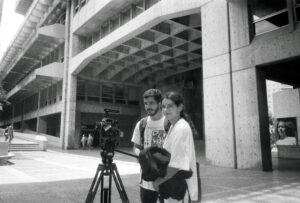
Lorena and Jose filming Lost Chapters
Courtesy of Lorena Alvarado

Tell me about the filmmaking process and your own cinematic influences.  

“It’s a very small film. It was self-funded and most of it was shot by myself and with one other person. A very small part of the film — the scenes which were outside — was shot with a small crew. I think that intimacy shows through the film and you can see that it was filmed by very few people because there’s this sense of intimacy and tenderness that would have not been possible if it had been a big production. And also the actors aren’t professional actors, they’re real people. 

“I love Matías Piñeiro, Nicolás Pereda, and Abbas Kiarostami. His films are just so tender and about universal human emotions. I read a book called Lessons with Kiarostami and it’s this collection of workshops that he did with filmmakers and I found it really inspiring. He talked a lot about seeing a film as a poem, rather than entertainment. 

Is there anything else you would like to add? 

“Stress the importance of seeing the film as a poem. We often aren’t used to seeing films that aren’t very clear cut or have a bad guy and a good guy, and a resolution and this film is very much not like that. So that’s why I see it as a poem: as something that moves you, and you might not necessarily know why. You might finish the film and not be able to pinpoint what it’s about. I love that feeling. I think art is the best when it makes you feel that way and it lingers with you. 

“I see it as a poem: as something that moves you, and you might not necessarily know why.”

“There’s a poem in the film that’s at the core of the film and Ena is trying to get her grandmother to learn the poem by heart and she’s trying to recite it with her. I think for me, the closure of the film is when Ena realizes her grandmother won’t be able to learn it by heart and accepts that she’s losing her memory, so Ena starts learning the poem herself. That’s her way of keeping her grandmother inside of her. I wanted to stress how important poetry is for me in the film.” 

SFYou: Costume designer Ash Currie

0
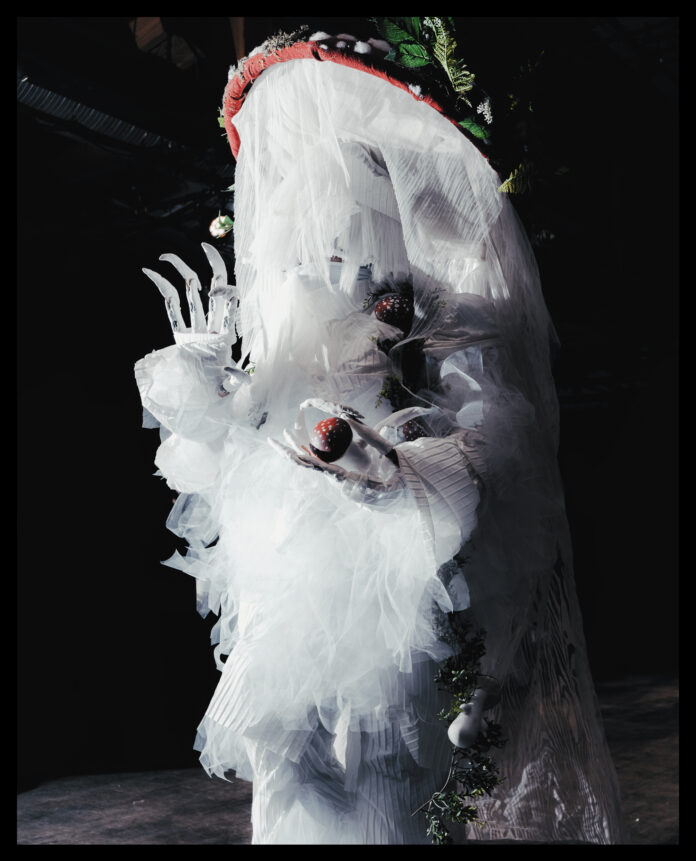
Ash Currie walking in the Bizarre category at the 2023 Supernatural kiki ball in Vancouver wearing an ethereal red and white mushroom costume. They’re holding a smaller red and white mushroom in their hand.
PHOTO: Courtesy of Danielle Lastres

By: C Icart, Co-Editor-in-Chief

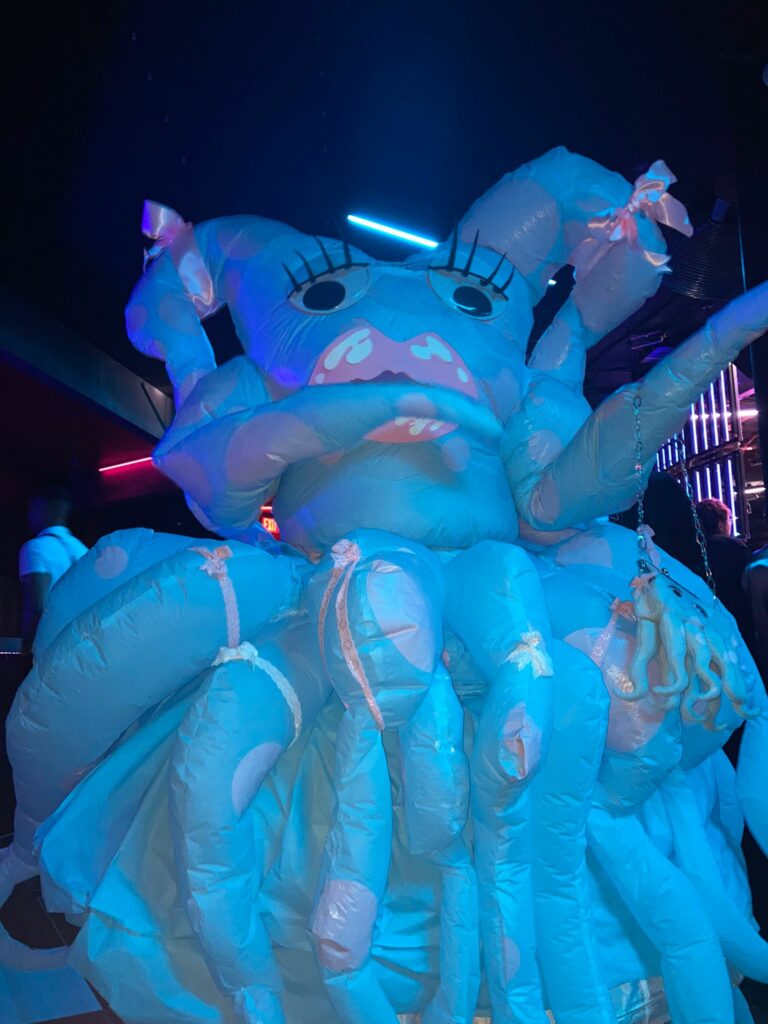
Ash Currie is a master’s student in the department of political science. When they’re not acing their coursework, they can be found getting their 10s at a local ball. Their costumes are elaborate and unique, and their passion for creating is infectious: they’ve embodied an ethereal red and white mushroom and a larger-than-life inflatable octopus inspired by Lady Gaga. I sat down with them to learn more about their work and the vibrant queer subculture that is Ballroom.

What is Ballroom? 

Currie importantly points out that “​​you shouldn’t talk about Ballroom without going into the history of it.” House Ballroom culture emerged as a response to the racial bias against Black contestants in drag balls, which are pageant-style competitions where queer and trans contestants defied laws against wearing clothing associated with the opposite gender. In an effort to create a space where Black queens were celebrated, the House of LaBeija hosted the first “Black initiated ball which has now become the foundation for the Ballroom scene we are familiar with today.” In Ballroom culture, houses are essentially chosen families led by “mothers” and “fathers” and provide a safe space for 2SLGBTQIA+ individuals who, in some cases, have been estranged from their family. The House of LaBeija, for instance, was founded by Crystal LaBeija, a “pioneer of civil rights, equality, and integration of pageants.” 

Currie and I first learned about the history of Ballroom through Paris is Burning, a documentary about queer, trans, Black, and Latinx people competing in balls in 1980s New York. It lets the viewer into a subculture which has shaped queer culture and mainstream pop culture. Words like “mother,” “reading,” and “shade” all originate from the Ballroom scene and are defined and explained in the film. 

What do balls look like now? 

“​​The way that I’ve heard it described is like a queer party with competition elements. There’s fashion categories, there’s vanity categories like ‘Face’ and ‘Body.’” Currie explained that marginalized people would often walk in these categories to see whether or not they could make it in the modelling industry. Participants first walk individually in front of the judges for approval. If they receive their 10s, they battle against each other until one person is left and wins the category. 

“One other category as well is ‘Realness,’ which is a really interesting category because it’s really about safety. It’s about passing as a cishet person. And some people can have conflicted feelings about ‘Realness,’ especially nowadays when queerness has become more accepted in the general public. But ‘Realness’ really serves as a place for trans people, but also queer people of all backgrounds to come and be like, ‘Will I be safe if I’m going to present like this in front of cishet people? Am I going to be able to safely blend in?’ And for trans people, it may not just be about safety. It could also just be celebrating the progress you’ve made to actually pass as who you are.”

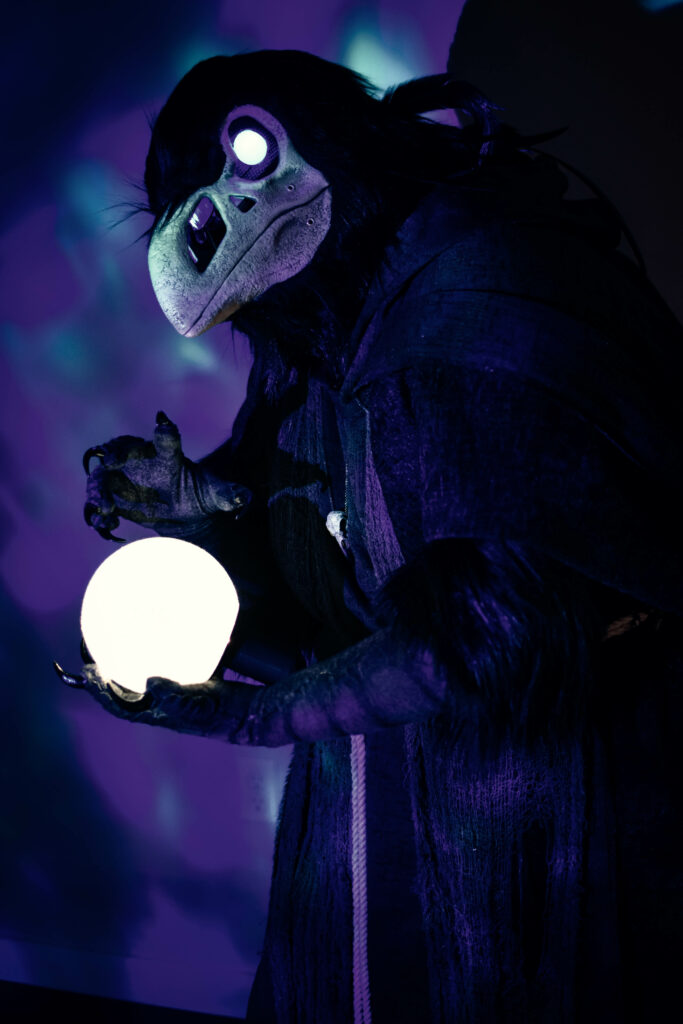
Ash Currie wearing a grim reaper raven costume. They are holding a glowing orb. This was their 2022 Halloween costume and the first costume they ever made.
PHOTO: Courtesy of Ash Currie

Which category do you walk in?

When it comes to fashion categories, “we have ‘Runway,’ which is more typical, like runway walking, and then we have a little bit more inventive categories, like the one that I do is ‘Bizarre,’ which is more of making really big, extravagant avant-garde costumes.” 

I knew this category would showcase their skills right away because in October 2022, Currie showed me a grim reaper raven costume they had made for Halloween, which happened to also fit the description of a ball that was happening at The Birdhouse. While I don’t remember this, Currie insists I was a person who had encouraged them to walk. Although they didn’t win the “Bizarre” category that night, Ivy Andromeda, a mother from a local house, took note of their talent and cheered them on to continue walking. 

“It is such a fun, high energy . . . It’s just a great place to go to have fun, see local talent  and to uplift the queer community.”

Currie then attended a “Bizarre” workshop taught by Mother Ivy Andromeda, and the rest is history. 

Tell me about your house. 

“I am in the house of Andromeda. It is run by Mother Ivy Andromeda.” They’re “a ‘Bizarre’ walker who’s been walking for at least seven years, like to the very start of the Ballroom scene in Vancouver, because the Ballroom scene is fairly young in Vancouver compared to a lot of other places.” 

“We’re a very DIY punk house, and I think that a lot of that is because of Ivy. There’s not a lot of ‘Bizarre’ walkers, period. On an international scale, ‘Bizarre’ is one of the least-walked categories because of the amount of effort that goes into it. You’re expected to completely hide any element of humanity and make these very big, larger than life costumes, and sometimes balls are only announced with two weeks’ notice. So, you have very little time to put something together.”

Ash Currie wearing a baby blue and blush pink inflatable octopus costume named Dottie. It was their Bizarre look from the 2024 Platinum Pride Ball in Toronto based on a latex inflatable outfit worn by Lady Gaga.
PHOTO: Courtesy of Ash Currie

What’s your process for designing a costume for a ball?   

“When a ball is announced, they have an effect [costumes, appearance, theatrics, presentation] description. And so it’s kind of like what the judges are looking for for your effect.” Currie explained. “So I’ll just try and sit and think of a concept. Then, I will sketch it out as an aside.” 

During this process Currie asks themselves, “What would make sense for my body to wear?” and “What could I make? What kind of materials do I have access to?” For materials, they typically turn to FABCYCLE, a social enterprise that prevents textile waste from getting sent to landfill by selling it to artists and designers to be reused. During the building process they turn to other members of the House of Andromeda for feedback. 

Finishing with a day or two to spare can be incredibly beneficial because “‘Bizarre’ isn’t just about the costume itself, you will need to be able to perform in whatever you’re wearing” (remember the battles I mentioned earlier?). “​​There have been times where either I’ve lost a battle or other people have been chopped [disqualified, the opposite of receiving your 10s] because they weren’t performing. They were just there on the stage, or they didn’t look confident in it, or they weren’t embodying whatever it is. So, being able to get the look done in time to have at least a day before the ball, to actually put it on and try to embody whatever it is that you made is really important to actually doing well in the category as well.”

All this talk makes me want to go to more balls! 

“Ballroom really, is this really vast culture that I want more people to [ . . . ] participate in, especially if they’re queer, Black, Latine. I want them to participate, and I want more people to come, spectate, and buy tickets and cheer for people that come.” Currie said. “It is such a fun, high energy . . . It’s just a great place to go to have fun, see local talent  and to uplift the queer community.”

Want to be in the loop for the next ball? Check out:

Van Vogue Jam: vanvoguejam.com and @vanvoguejam on Instagram

Vancouver Kiki Ballroom Alliance: @vankikiballroomalliance on Instagram

Brighter Side: The joy of grimdark

0
A photo of a city, with decay all around. There are buildings that have slightly deteriorated. Along with a rusty ship that is situated on the ground. The scene is bleak.
PHOTO: Nat / Unsplash

By: Corbett Gildersleve, News Writer

The world is not in a good place right now. Between the ongoing genocide in Palestine, the ICE kidnappings in the US, and Canada’s new legislation sidestepping Indigenous rights and environmental protections, it’s hard to feel joyful. So, what do I do when things get me down? I watch hours-long lore videos about fictional grimdark universes — worlds somehow worse than ours. 

Grimdark settings are often bleak, dystopian universes where even the rare good things come at a cost. I have been listening to Warhammer 40K lore videos for over a year now — often as a sleep aid. This grimdark sci-fi universe is set 40,000 years in the future, where humanity has spread across the galaxy. 

Everyone is at war with each other, there are no “good guys,” and everything is turned up to 11.  

So, why do I watch these videos? Because even in moments of horror, there are stories of heroism, sacrifice, and determination. I see echoes of these qualities in everyday activism and resistance from communities organizing to stop or delay ICE raids, to people pushing back against religiously-motivated book bans, and in First Nations groups taking legal action against the Ontario and federal governments.  

In a strange way, these grimdark tales remind me that even in the bleakest of worlds — real or imagined — people still find ways to fight back. And when the real world feels like too much, returning to those stories of defiance helps me hold onto hope. If you’re feeling overwhelmed or discouraged, take a moment to listen to a short story of heroic defiance in a world far worse than our own.     

People with psychosis must be supported

0
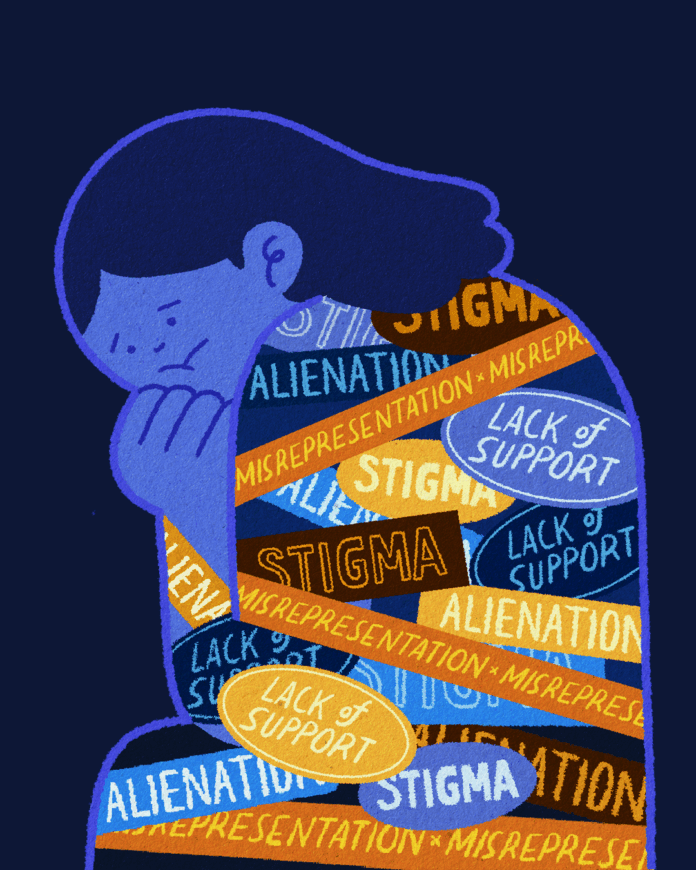
An illustration of a person sitting with their hand beneath their chin. They are covered in label stickers. The label stickers have the following written across them: “stigma”, “misrepresentation”, “lack of support”, and “alienation”.
ILLUSTRATION: Cassandra Nguyen / The Peak

By: Zahra Khan, SFU Student and Zainab Salam, Opinions Editor

Psychosis is a mental health condition that affects a person’s perception of reality. It can occur at any time and is increasingly common. The Centre for Addiction and Mental Health estimates that 3% of people will face an episode of psychosis one or more times in their life. Despite this prevalence, psychotic people are pushed to the margins — and remain profoundly unsupported. Those who experience psychosis are sidelined in favour of maintaining the status quo of neurotypical thinking. Psychotic people need support in university settings and outside of them. 

It is important to establish that psychosis is not just an internal experience. It affects how others perceive individuals with psychosis, whether or not they disclose it. The way psychotic people experience psychosis leads to being persistently labelled for their experiences, whether they want to be or not. This could mean that admitting that you experience psychosis can help to remove public and private stigma behind the disorder. 

Public stigma remains a powerful barrier to support and inclusion. Public stigma could emerge from the perceived social support received by someone in psychosis, or with persistent psychosis. Psychotic people are depicted in the media as wholly antisocial beings or as killers, which in turn alienates psychotic people from their peers, institutions, and care systems even further. 

Moreover, stigma is entrenched into history and institutions. The diagnosis of psychosis has a fraught history. Even now, many people hesitate to seek help. Students battle the perception that disclosing mental illness may lead to judgment, and lost opportunities. Both public perceptions and self-perceptions of psychiatric disorder have negative effects on the possibility of a sufferer seeking help.

True support means choice, compassion, and believing that psychotic people belong.

Recognizing and even celebrating psychotic experiences is essential to fight public stigma and psychosocial disability. Our inner realities are not distortions — they are valid, complex, and worthy of recognition. 

Early intervention in the case of psychosis looks like psychiatric help on the advent of delusion — or at least, that’s what it looks like currently. Methods of early intervention can involve support groups, reconnection with family, and equal access to accommodations like exam re-takes or assignment extensions. Furthermore, time off from studies may put students back on track. And psychiatric help is available if such an avenue for healing is one that they wish to pursue. But really, there is no one-size-fits all solution. What is important is the implementation of compassion.

True support means choice, compassion, and believing that psychotic people belong. The truth is not all people facing psychosis will benefit from the straight and narrows of psychiatric help. I think that the best way to support a student in crisis is offering different avenues of support, and above all, an understanding that their experiences matter. Without pathologizing and medicalizing psychosis as something that can be treated by psychiatry alone. I hope that psychotic people can be made to feel like they belong. Belonging means more than surviving — it means having the right to exist, and to access community, care, and dignity on our own terms.

Quiz: Who said it? Andrew Cuomo, Zohran Mamdani, or a DNC insider?

0
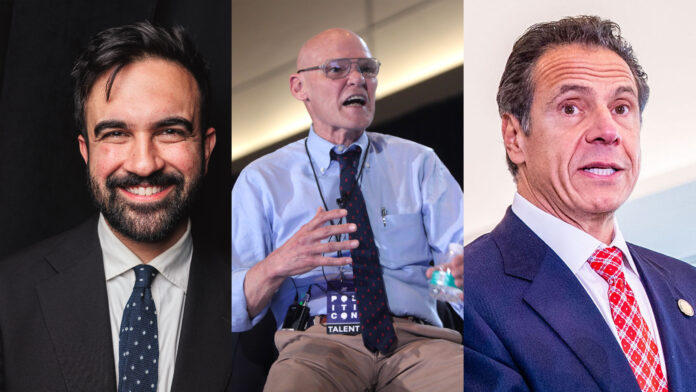
Three photos in a composite format. Zohran Mamdani, Andrew Cuomo, and James Carville.
IMAGES: Dmitryshein / Wikimedia Commons (Zohran), Gage Skidmore / Flickr (James), and Delta News Hub / Wikimedia Commons (Andrew)

By: Mason Mattu, Humour Editor and Corbett Gildersleve, News Writer

Congratulations, you’ve survived 13 weeks of classes — pop quiz time! The Peak has gathered only the finest quotes from two well-known individuals and James Carville. You need to figure out who said what before I do! It’s a race. 

In one corner, we have New York’s former governor, harassment allegations collector, and NYC mayor democratic primary sore loser Andrew Cuomo. In the other corner we have the NYC mayor democratic primary winner, democratic socialist, and someone who’s been betrayed by his own party, Zohran Mamdani. Mamdani, a democratic socialist, won the city’s democratic primary with a whopping 50% of the vote. 

In the third corner, we have uncle James Carville, a democrat insider and strategist for over thirty years. He represents the part of an anti-Mamdani wing of the party that believes that Mamdani is going to tax everyone into obliteration (AKA their rich buddies).. They’d rather vote for a creepy Italian dude (Cuomo), who is once again a fucking sore loser and is going to be running as an independent, than support their party’s chosen candidate . . . what a great way to show unity against the republicans

And finally, in the fourth corner we have . . . no one, there is no fourth corner, it’s always been a triangular ring! And I’m gonna beat you by guessing who said it before you do. Shut up! Let’s get on with it! 

    1. Public transit should be reliable, safe and universally accessible.” Couldn’t agree more, Mamdani. 
    2. I don’t think that we should have billionaires because, frankly, it is so much money in a moment of such inequality, and ultimately, what we need more of is equality across our city and across our state and across our country.” Real. This is something I could get behind. Whoever said this must have a lot of common sense. Only hot, progressive, and wise people could say this. Thus, this is also a MamDADDY quote.  
    3. A suspicion of mine is that there are too many preachy females . . . don’t drink beer, don’t watch football, don’t eat hamburgers, this is not good for you.” What the fuck does this even mean? How do I respond to this? This definitely gives massive Carville energy.  
    4. The message is too feminine: ‘Everything you’re doing is destroying the planet. You’ve got to eat your peas.’” Let them eat peas, I guess? This sounds like something an elitist democrat would say . . .  James Carville? Is that you? AGAIN?   
    5. With no clear leader to voice our opposition and no control in any branch of government, it’s time for Democrats to embark on the most daring political maneuver in the history of our party: roll over and play dead.” Woof, woof. I’m a dog, can’t you tell? This has indeed been the democratic party strategy after the 2024 presidential election. Just pretend like it didn’t happen! Once again, I think this is James.  
    6. People go into politics because they want the affirmation, and they want the applause.” As they should. Honestly, this is definitely Cuomo. He’s got the ego the size of the Statue of Liberty, compensating for his small —
    7.  Charities should not fund war crimes — it’s that simple. The stated U.S. foreign policy is that settlements are illegal — this bill seeks to bring New York state policy in line with that goal.” This sounds like common sense . . . I feel Mamdani energy from this. Basically anything that is common sense here is Mamdani. Are you beating me so far? No. You’re pathetic. I’m winning. 
    8. “A life of dignity should not be reserved for a fortunate few. It should be [a life] that city government guarantees for each and every New Yorker.” This is getting me hyped!!!! Doesn’t sound radical to me, but then again — in America, even healthcare is radical. Mamdani for sure.   
    9. ‘Hello, I’m applying for the job of the mayor of the City of New York.’ ‘OK, do you have management experience?’ ‘No.’ ‘Have you managed 100 people before?’ ‘No.’ ‘Have you managed 50 people before?’ ‘No, I have no management experience.’” Sigh, I distinctly remember this quote — definitely a Cuomo one. The only place where Cuomo has managed this many people since he resigned as governor is probably at the Wendy’s drive-thru. No, your customers are not your employees, Andrew.   

Oh, you’re looking for the answers? I already gave them to you. That’s right, I win. Go cry about it.