Home Blog Page 203

SFU professor challenging health inequities for communities affected by HIV

0
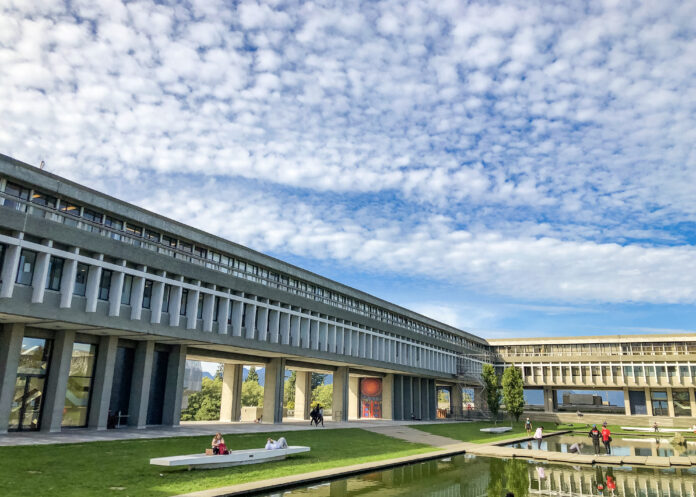
This is a photo of the Academic Quadrangle at the SFU Burnaby campus. Outside of the building, its a sunny day and there are students sitting on benches.
PHOTO: Allyson Klassen / The Peak

By: Natalie Cooke, News Writer

SFU’s health science associate professor, Angela Kaida, is leading a global research program that investigates health inequities experienced by women and youth affected by HIV. In regards to treatment access, Kaida found “HIV and the clinical features of the virus often play a smaller role in influencing sexual and reproductive health compared with other social determinants of health, including the impacts of socio-structural environments and political decision making.” 

Kaida has a personal understanding of the effects of HIV. She was born in Kenya, and saw the impacts HIV had on her family members across East Africa. Kaida explained to the Canadian Association for HIV Research, “In my family, I saw some of the ways in which HIV-related stigma played out — fear of accessing care, and of disclosing one’s status.” Kaida explained she was “really confused that an infectious agent could yield this sort of shame within a very loving and tight family.” As well, she noted that if people have shame about having HIV, they will not test, which will prevent their ability to receive treatment. 

Kaida will join the Institute of Gender and Health at Canadian Institutes of Health Research as their scientific director. Kaida said, “I am deeply honoured to help shape the Canadian health research [by] embracing a sex and gender-based analysis+  approach inclusive of racial identity and experience, gender diversity, sexual orientation, and other intersecting identities.” 

Joy Johnson, SFU president, told SFU News, “Dr. Kaida’s work at SFU has made an incredible impact on our students and community, and I am excited for her to continue advancing gender and health research in this new role.”

Kaida has previously conducted research analyzing data of people who are living or affected by HIV in Canada, the United States, Uganda, and South Africa. 

Her current contributions to global health research include: HIV prevention, sexual health, sexual health for those living with HIV, and safer contraceptive methods. Kaida told the Canadian Association for Global Health she is committed to the “greater and meaningful involvement of women living with HIV/AIDS.” According to SFU News, she has worked with the Peer Research Associates “who are women living with HIV with research training.” 

For more information on Kaida’s work, visit the Government of Canada’s website.

SFU releases “best” college admission essay to help incoming students

0
PHOTO: pxhere

By: Isabella Urbani, Sports Editor

To prospective SFU students: Please use this essay submission as a reference of a successful applicant. The prompt was “Why is SFU the best fit for you?” Please note especially our excellent legacy of being the best university in North America. 

Merriam Webster defines “best” as “offering or producing the greatest advantage.” It would be an understatement to say that I was born to go to SFU. Since the dawn of time, it was written in the stars for me to attend this esteemed institution, and it is my obligation to make that dream a reality. There isn’t another university out there that comes close to rivaling SFU in my mind. As for what it is about SFU that sets itself apart from the rest. Well, that’s a terrific question, and one that I’m more than eager to answer. First, SFU is “engaging the world.” No, not only the students, not the province nor the country, but the entire sphere with a mass of 5.972 x 1024 kg. Unparalleled. Exceptional. Beyond comparison. 

Any way you slice the pie, SFU is the ooey gooey center, the premium helping that human beings set one’s heart on. It’s no coincidence that the hardened exterior of pies — crusts — is the ground on which the fresh fruit lay nestled under that academic pastry dough. SFU is the crust. For the next four years of my life, the next 1,460 days, my unharnessed nectar will rise under the protection and safewatching within the palpable material of this establishment. 

I will be watched like a hawk by the finest maestros along the way until I’m equipped to be of service to the world. It is a fantasy. And almost a reality. So now that we have established that SFU takes it upon themselves to go above and beyond to prepare their graduates to be able to properly set out and change the world, we need to address the perks unique to SFU students. 

As referenced in my last sentence, not only does SFU make it their mission to cater to the 7.9 billion individuals calling this planet home, they still manage to keep their students at the forefront of their mind. What a daunting task president Joy Johnson has been bestowed with, and one she does a cut above the rest. How? Just take a quick look at SFU’s pristine track record. No flaws I can think of. BCIT and UBC? Who even knows if you’ll have a career going to those no-name universities. They don’t even have a deadly pipeline being built right next to them. Coming up on nearly 57 years of 100% complete perfection, and I haven’t even mentioned the perks yet. The campus speaks for itself. With a view like that, sitting on top of a mountain, SFU clearly didn’t spare any expense to give its students — the next generation —  a chance to detox at any second. I would be remiss not to include the fact that SFU was improved to have its own gondola. Life-changing.

In conclusion, although there are many fishes in the sea, or should I say univer-SEA-ties, SFU is the only place I want to spend the next chapter of my life. The care for their students is first-class. I will leave you with this quote, on brand with the paragraph’s ocean theme, “Be the change you wish to see in the world.” SFU is living proof of that statement with the way they carry themselves, and I would want nothing more than to be a small sliver of that sentiment.

Freshman swimmer Marcus Mak brings childhood passion to NCAA stage

0
Photo of Marcus Mak in the pool during competition.
PHOTO: Garrett James / SFU Athletics

By: Simran Sarai, Sports Writer

For Marcus Mak, swimming is second nature. But this year offers a unique challenge for the freshman from Victoria, BC: adjusting to life in the National Collegiate Athletic Association (NCAA). Mak looked back at his natural gravitation to swimming, path to SFU, and how he rewinds outside of the pool in an interview with The Peak. 

“Everything started with swim lessons,” said Mak about his journey to becoming an NCAA athlete. “I was fortunate enough [that] swimming was not a financial burden for my parents.”

Since joining his local swim club at 10-years-old, Mak has been no stranger to hard work, practicing six–eight times a week. He credited his sister — who is now a swim coach — to getting him into the sport. Mak’s younger brother, in grade 11, also swims competitively. 

Like most student-athletes, Mak was drawn to SFU as Canada’s sole NCAA school. “I think the combination of staying in Canada and swimming in the NCAA led me to pick SFU to continue my swimming career,” he shared.

As a freshman, Mak has jumped into the deep end of his studies — juggling a full, 12-credit course load while competing in a lengthy NCAA season that runs from October–March. He has complimented his academic pursuits with standout results in his first season as a Red Leaf. His latest accomplishment includes a win in the 200m backstroke at the Husky Invitational in December. In November, Mak also qualified for the NCAA Division II Swimming & Diving Championships in the 200m individual medley during the Winter Collegiate Invitational. He previously competed at the 2022 Fédération Internationale de Natation Swimming World Cup in the 50m and 100m freestyle, the 100m and 200m backstroke, and the 200m individual medley races.

While taking to the pool comes naturally for Mak, adjusting to “the pace of classes” as a university student has been an “eye-opening” experience. Although competing requires student-athletes to be attentive with their class schedules, life on the road “travelling, training, and competing with teammates away from SFU” has been a unique and rewarding experience for Mak. When he’s not in the pool or the classroom, he likes to “spend downtime just relaxing, preferably with friends whether that’s in person or online.” 

Accepting the highs and lows of the university student experience usually involves a steep learning curve for most first-year students, athletics aside. But Mak takes it all in stride: “I just try to enjoy what I’m doing in the moment.”

Make a splash on SFU’s rowing team

0
Photo of members of the SFU rowing club posing on the shore.
PHOTO: SFU Rowing website

By: Saije Rusimovici, Staff Writer

SFU sports clubs are organized and entirely student-led, motivated by a common interest in participating in athletic activity. Not only is joining a sports club beneficial for both your mental and physical health, but it also reduces stress levels, expands your social circle, and provides a sense of value and belonging to participants. 

Rowing brings a competitive edge to SFU as one of Canada’s top university rowing programs. Members of the rowing club have gone on to compete at both the national and provincial levels. If you’re interested in challenging yourself physically and learning something new, this is the team for you.

Not sure where to start? Current member of the SFU rowing team Mercedes Turner breaks down rowing, her experiences, and how to join the team. 

Turner described rowing as “a strength-endurance sport that consists of repetitive movements over short or long periods of time.” The sport involves using an oar to propel a specific type of racing boat in a team of one, two, four, or eight people. Rowers sit facing the opposite direction of the boat’s course.

“Rowing to me is a sport that accentuates the beauty of being synced with your teammates and pushing yourself past your limits,” Turner said. “It’s a sport that is so mentally challenging [ . . . ] whether you’re focusing on your power, form, breathing, or making sure you’re in time with the person in front of you.”

There is no need for previous experience to join the team, just an enthusiastic attitude, willingness, and commitment to learn! Newcomers are, however, required to attend a tryout session to assess their fitness level. The tryout consists of a timed run and ERG testing — a device that measures your strength ability —  in order to learn a bit more about your upside and capabilities. Nervous? Turner said the “amazing” coaches and team members are present to support and guide you throughout the process.  

Practices are held at Burnaby Lake, with indoor training and meetings held at the SFU Fitness Centre depending on the time of year. “The beauty about rowing as a sport is that you can be training at all times of the year; therefore, our club runs all year round,” said Turner. Meaning the team can practice early in the morning and on however many days they choose. Right now, practices happen four days a week from 6:00 a.m.–8:00 a.m. 

Since the rowing team is considered a club and not a varsity sport, most of their support from SFU goes towards operational fees. Any equipment or travel expense has to come out of pocket. You can support the rowing team by bringing your recyclables to any Return-It express station and providing the number “8888687121,” or by open donations through their website. 

“Every penny counts,” said Turner. “We don’t get much funding from SFU, and if the team wants to go out and race, it can get really costly.” Money also goes towards hosting “awesome events for people in the community.” 

You can find more information about SFU Rowing by checking out their Instagram and website for information on tryouts and upcoming events.

Meet Angela Sterritt: SFU Library’s 2023 non-fiction writer in residence

0
Closeup headshot of Angela Sterritt in front of blurred-out trees and buildings in the background.
PHOTO: Maggie McPherson

By: Anna Kazi, SFU Student

SFU recently welcomed Angela Sterritt, writer and “award-winning investigative journalist” as their 2023 writer in residence. Sterritt is part of the Gitanmaax community of the Gitxsan Nation and Bell Island Newfoundland. With over a decade of experience covering powerful stories, Sterritt is releasing her first book, Unbroken, this May. It is “part memoir and part investigative into the missing and murdered Indigenous women.”

Sterritt began writing about her experiences while completing her William Southam Journalism Fellowship at the University of Toronto. “When you’re writing about your trauma, you have to be ready, and only you know when you’re ready, and I wasn’t ready at that point [ . . . ] It took me seven years to write this book because it was traumatic for me to write about my experiences.”

For Sterritt, writing this book is about inspiring Indigenous youth and building a stronger relationship between Indigenous and non-Indigenous communities. Sterritt wants “to inspire, especially young Indigenous girls, in particular the Gitxsan Nation girls, that they can do anything they want,” said Sterritt. She plans on writing a book that teaches journalists to be “trauma-informed when working with Indigenous communities. 

“There are many Indigenous ways of viewing the truth, and there are many sides of the truth. And that’s something that Indigenous people haven’t been afforded, as our truth has been oppressed. [ . . . ] My purpose in life has always been to utilise the truth and to use the power of storytelling to help Indigenous people heal.” 

Sterritt also spoke on maintaining a healthy work-life balance while working full-time as a host and journalist: “I want people to recognize that it’s okay to take sick days, it’s okay to move slowly. It’s okay to tell your boss ‘this is a super traumatic story, so I’m going to take a week to do it,’” she said. “For people of colour and Indigenous people, we are often treated as resources to extract and mine.”

Another key takeaway from Sterritt’s experience was realizing that sharing a story as an Indigenous person is not easy. “I was told by my journalism community that I couldn’t have friends, I couldn’t talk to my elders when things were hard at work. I wasn’t allowed to talk to anybody. Journalism as an Indigenous person is very different because you’re told you’re biased,” said Sterritt.

What helped Sterritt face barriers and continue her journalism and writing journey was support from her mentors, elders, and publisher, Greystone Books.

As Sterritt begins her residency, she shared how valued and honoured she feels being part of SFU. “People were excited to bring my ideas to the table. I felt like people were also willing to have a conversation that’s not just based on somebody extracting from an Indigenous person, but somebody coming to the table with the same skills, the same knowledge, and willing to have a reciprocal exchange of ideas based on mutual respect, ” she said. “The residency that I am going to do at SFU is going to be groundbreaking.”

You can pre-order Sherritt’s book, Unbroken, via Amazon.

We don’t need a day to commemorate Sir John A. Macdonald

0
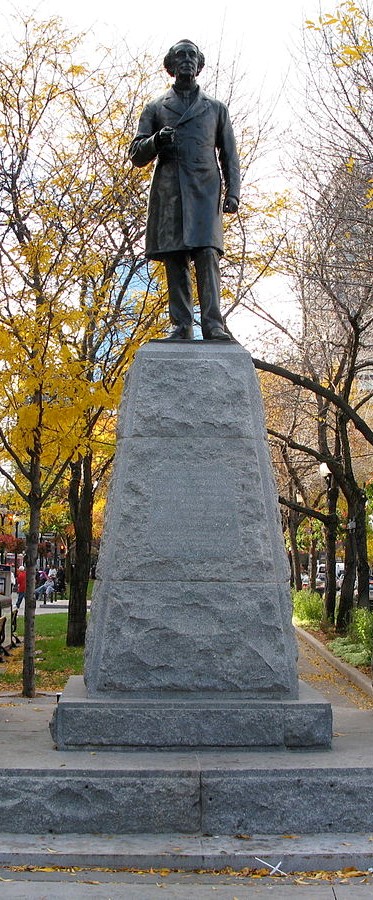
PHOTO: Saforrest/ Wikimedia Commons

By: C Icart, Staff Writer

Content warning: Mentions of racism, colonialism, and violence against Indigenous peoples

“The executions of the Indians . . . ought to convince the Red Man that the White Man governs,” — Sir John A. Macdonald

A Chinaman gives us his labour and gets his money, but that money does not fructify in Canada; he does not invest it here, but takes it with him and returns to China . . . he has no British instincts or British feelings or aspirations, and therefore ought not to have a vote.” — Sir John A. Macdonald

January 11 was Sir John A. Macdonald day. He was “the first Prime Minister of Canada and one of the architects of the Confederation.” He is an important figure that played a key role in some of the worst parts of Canadian history. So, why is there a day to commemorate him? Or statues that glorify him?

People have been defacing his statues for decades, and many are calling for them to be removed. This has been done in municipalities like Charlottetown, Kingston, Regina, and Victoria. In other cases, a different strategy has been adopted to deal with historical sites related to Sir John A. Macdonald. In Kingston, the Bellevue House where he lived with his family is currently looking to include Indigenous art to the attraction as a way to incorporate different perspectives on his “complex legacy.”

He’s not the only one though. The passing of Queen Elizabeth II has caused many Canadians to rethink their ties to the monarchy. In fact, over half of the population “would support severing our ties with a monarchy.” In Quebec, 79% of people are in support. The sentiment is so strong that the provincehas passed a law making an oath of allegiance to the monarch optional for members of the legislature.”

In Kitchener, Ontario, a statue of Queen Victoria has a plaque in front of it acknowledging the colonial harm that the statue is continuing to cause in 2021. This has not stopped activists from vandalizing it with red paint multiple times in 2022. Amy Smoke, co-founder of Land Back Camp has said, “We’re idolizing these colonial figures that built this country off of the backs and blood of Indigenous people and Black folks as well.” They are calling for the statue to be removed and for the park it is in (Victoria Park) to also be renamed. 

In Edmonton, many are rethinking the fact that so many things are named after Frank Oliver, Alberta’s first member of parliament, guilty of “pushing First Nations like Papaschase off their lands, and lobbying to keep African Americans out of Canada.” In 2021, a statue of Egerton Ryerson — “an architect of Canada’s residential school system” — was covered in red paint, beheaded, and put into a lake. Since, the university that it was once displayed on has been renamed as well. 

What is even more absurd is that in some cases, the statues, schools, and other signage commemorating these figures are relatively recent. Last year, people marched in protest of the Sir John A. Macdonald Parkway and called for it to be renamed. Up until 2012, that parkway was named the Ottawa River Parkway. The National Capital Commission announced that changing the signs cost $60,000

At the same time, “54% of Canadians believe the removal of statues of colonial figures is an attack on Canadian history.” It’s not. Refusing to commemorate colonial figures is not the same as forgetting. The same way that commemorating them is not the same as learning about their legacy. 

Even this year, the Government of Canada encourages Canadians to celebrate Sir John A. Macdonald and claims that “teachers and youth leaders often use this day as an opportunity to teach young people about our first Prime Minister and the founding of our country.” This implies that even today at a time of so-called truth and reconciliation, students are being taught to think positively about Sir John A. Macdonald’s legacy. This is not surprising because public schools have played a huge role in teaching students to support settler colonialism. We must decolonize education.

Anishinaabe artist Scott Benesiinaabandan argues that colonial monuments have a harmful impact as they normalize colonial violence. To combat this, he created monumentalisms, an art installation that includes “3D-printed sculptures, digital prints, and a virtual-reality installation using more than 600 photographs of three monument sites” to represent the reality that is either hidden or imposed by these monuments. 

Commemorating these figures through monuments and official days is often an act of rewriting who they were. When the government calls for us to celebrate Sir John A. Macdonald — Which part are they referring to? When he “created the Indian Act and Indian Residential Schools”? When he “had Métis leader Louis Riel executed for treason despite objections from French Canadians”?

Those who are opposed to these renaming projects often claim that those in favour are “politically correct historical revisionists.” But as Brenda Macdougall  Chair of Métis Research at the University of Ottawa so eloquently puts it, “Canada is one long renaming project. Every location in this country had an Indigenous name in an Indigenous language, and colonial authorities, deeming those names irrelevant, renamed them in their own language and [ . . . . ]  bastardized the original names in a manner that obliterated the Indigenous perspectives and sense of place.” Renaming streets and schools and taking down statues does not erase anyone’s colonial legacy. If it did, we’d be doing it faster. 

Decolonization in so-called Canada is not just about adding days like the National Day for Truth and Reconciliation. We cannot unpack and oppose colonialism on one day and celebrate colonizers on other days. That doesn’t make any sense and it calls into question how sincere the Canadian government is when it comes to reconciliation. 

Despite what is written on the official calendars, January 11 was not Sir John A. Macdonald Day. It was just another Wednesday where the government failed to make any progress on the “​​94 calls to action outlined by the Truth and Reconciliation Commission,” putting the country on pace to only meet all of them in 2065. Maybe they could speed it up if they spent less time commemorating colonial figures. 

WGOG: The expectation to enjoy staple foods

0
stack of oranges
PHOTO: Pixabay, Pexels

By: Michelle Young, Editor-in-Chief

Orange juice is commonly thought to be a breakfast staple. There is an interesting history behind this, which ultimately boils down to marketing and vitamins. The problem is that oranges, and orange juice by extension, are both disgusting. Orange juice with pulp feels like there are tiny little hairs tickling your mouth, whereas orange juice without pulp feels too sour to swallow. Oranges themselves are an ordeal. Peeling off their skin leaves a disgusting disaster and their papery flesh is too much for me to swallow.

If you like oranges, good for you — I’m glad you can happily partake in the consumption of a fruit that is beneficial to your health. My issue is with those who seem to expect me to like orange juice because it’s a common food. Upon discovering I don’t, they label me as a childish and overly picky eater. 

There are tons of food I like that others may not like, but people make faces when they find out I like these things. Olives, sardines, and pickles are among my favourite snacks. I’m not going to force you to eat them, but what is this double standard where you get to wrinkle your nose at my food, but when I say I hate oranges it’s suddenly unthinkable? And don’t tell me about how my food is stinky, because while I try to not eat strong smelling foods in public, your hot dogs smell gross. 

Much of these expectations are grounded in arbitrary American food standards, and I don’t want these ideals forced onto my palate. What may be seen as a staple in one part of the world, may not be the case in another. In my family, beans with plantains and rice is a staple meal (but I will never eat beans, sorry mami). I will keep putting vinegar on my fries and I don’t need to hear what you have to say about it. 

Rea Chatterjee speaks on resignation

0
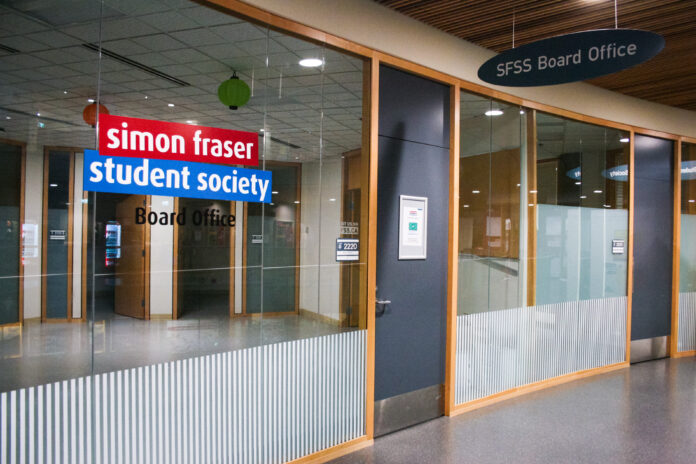
This is a photo of the SFSS office. On their window is the SFSS logo in big print.
PHOTO: Gudrun Wai-Gunnarsson / The Peak

By: Chloë Arneson, Peak Associate and Karissa Ketter, News Editor

Editor’s Note: Previously, The Peak had reported that Eshana Baran was censured. However, she was not officially under censure proceedings, but was reprimanded by councillors. 

After months of conflict with the SFSS, former vice-president equity and sustainability Rea Chatterjee officially resigned on August 17. Council had been in the process of voting over a request for Chatterjee’s resignation, but postponed the decision indefinitely during their July 27 Council meeting. A few months ago, The Peak spoke with Chatterjee to learn more about their decision and how their time with the SFSS has impacted them. 

Chatterjee explained their decision to resign from the SFSS was due to the “toxic and dysfunctional” executive team and the emotional distress their term has caused. “Since the beginning of my term I’ve experienced so much,” Chatterjee told The Peak. “To list just a few — being verbally harassed and belittled by another executive, objectified by another councillor, left out of meetings and important decisions relating to equity which fall under my portfolio, [being] shut down and ignored during discussions, [and] been mocked when bringing up concerns.”

Former president Helen Sofia Pahou called an emergency meeting on July 27 to censure Chatterjee and request their resignation due to an ongoing internal investigation that involved “multiple equity-seeking groups” on campus. Chatterjee cites this investigation as their “breaking point.” They said, “I truly started to feel unsafe in my position as a queer, disabled, femme-presenting person of colour.” 

Despite facing harassment throughout their campaign, Chatterjee said they did not expect their term to be so difficult. “I didn’t think [ . . . ] I would feel unsafe coming into my office, and could physically not do my work without throwing up and would have to step down in three months.”

During the previous executive term, groups on campus began a complaint process to SFU admin. Chatterjee did not elaborate on the contents of the letter. Among the groups that signed were the Graduate Student Society, SFU350, Students of Caribbean and African Ancestry, and the Disability and Neurodiversity Alliance. Chatterjee cited that this letter was labelled “slanderous” and “other signatories and other individuals from the GSS or SFSS [were] not offered an opportunity to meet.” They added someone anonymously leaked the full letter, “which was confidential and highly sensitive,” to Council and framed it like it was Chatterjee who did so. “None of the other signatories sent it and only SFSS Executives had access to the letter. 

 “This whole investigation was weaponizing the confidentiality policy against me once for when I stood with the equity seeking groups and unions in the complaints process,” Chatterjee explained. As the vice president equity, this is a key part of their role. “I will never apologize for standing with the other equity seeking groups to hold SFU admin accountable.” 

Chatterjee believes the investigation was a “waste of student resources,” and distracted members from doing their jobs advocating for students. Chatterjee stated they “believe that the students deserve a full report of the amount of hours that has gone into this investigation, hours that were spent with the society lawyer, time used in Council meetings for every single councillor, added all up and calculated in dollar amount.” 

Several SFU student groups stood in solidarity with Chatterjee, including TSSU and SFU350 — who released a letter to show their support. SFU350 wrote, “Operations within the SFSS are needlessly complicated. Council meetings run hours over their allotted time, students sometimes aren’t given time to speak at council meetings, meeting minutes are complicated, council wastes time and resources on unnecessary investigations, and motions and policies passed or amended aren’t accessible to the public. This demonstrates the SFSS’s current practices do not favor transparency or democracy.” 

Chatterjee stated the other executives’ lack of commitment to building relationships with unions and equity-seeking groups played a large role in their decision to resign. “Marginalized students come into these positions to further equitable practices and make space for other marginalized students to be involved,” Chatterjee explained. “I have had no support system and there is no accountability process. As much as I have tried, this work cannot happen unless there is a true and genuine commitment from everyone to centre equity and truly listen to and amplify the most marginalized voices on your team.”

When the vice-president equity position was vacant, Chatterjee expressed concerns regarding the future relations between SFSS and various minority student groups. “Since the beginning of this term, relationships between the SFSS and the other unions and equity seeking groups have drastically been impacted,” they said. The vice-president external Eshana Baran, who also plays a large role in maintaining these relationships, was also reprimanded by councillors in discussions alongside Rea Cheatterjee, while not under official censure proceedings. “I sadly do not have any faith or trust in the majority of this executive committee to further the legacy of student activism and advocacy that has existed at SFU since its conception,” Chatterjee stated.

The problems that have arised within the first few months of the executives’ term may continue to affect the SFSS, Chatterjee claims. “As execs and Council increase in-camera sessions and fail to debrief membership ex-camera on non-confidential matters which were discussed, the more secrecy will build. All the executives ran on transparency — but I’m failing to see them follow through on that campaign promise,” they said.  

Now that they have stepped down from their position as vice president equity and sustainability, Chatterjee noted their work is far from over. “I’ve learned and grown so much in the past few months and met the most amazing and inspiring people through my work collaborating with organizers from various equity-seeking groups and other unions on campus,” they said. “Although I will be organizing from outside the SFSS, I hope that there is a future soon where people like me can come into these roles and be able to do good work without being put at risk.”

The Peak requested an interview with Helen Sofia Pahou, who was SFSS president at the time, but she did not respond by the deadline. At the time of publication, the vice-president equity and sustainability role has been filled by Sunghyun Choi.

SFU professor says Vancouver is unprepared for winter conditions

0
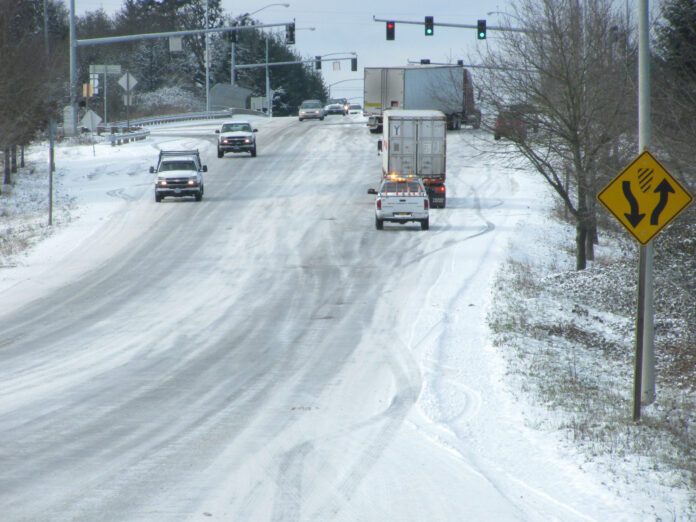
This photo is of snow covering the roads on a hill. A few cars are driving on the road and appear to be slipping on the road.
PHOTO: Oregon Department of Transportation / Flickr

By: Natalie Cooke, News Writer

The effects of climate change led to severe winter conditions at the end of 2022. It was reported there were at least 30 highway closures due to the winter conditions and accidents. Zafar Adeel, a professor for the School of Sustainable Energy at SFU, said other Canadian cities “tend to be much better equipped and prepared for snow storms.” 

Many people are led to believe that such extreme winter weather conditions are occurring due to climate change. “The winter pattern in the 2022/23 season is impacted by prevailing La Niña conditions, in which the eastern Pacific Ocean sea-surface is cooler than normal,” explained Adeel. “This La Niña pattern affects winter weather events across Canada, but particularly results in cooler and stormier conditions across the Pacific Northwest. In general, climate change has intensified the El Niño Southern Oscillation (ENSO) cycle, of which La Niña is a part of. However, it is difficult to pin the prevailing winter weather conditions on climate change.”

Adeel emphasized BC’s infrastructure is not ready for drastic weather conditions, “as we have observed in the ‘atmospheric river’ event in November 2021.” The 2021 flood caused damages to the road and surrounding infrastructure. Adeel noted repair “to the road infrastructure alone will likely exceed a billion dollars, including re-design to make it more resilient.” 

According to Adeel, these conditions are likely going to worsen over the coming years. “There is a need to closely look at the level of vulnerability in overall infrastructure and make some strategic investments.” 

The ministry of transportation and infrastructure said to Vancouver is Awesome they are investing in more highway maintenance and making improvements towards maintenance contracts. A ministry spokesperson also explained they are raising their standards to have “a more proactive approach” to sudden weather conditions. This approach includes ensuring Class A highways — such as Highway 1, 3, and 97— are cleared from snow within 24 hours of a snow storm. 

Canada and BC are investing $29.5 million into 11 BC projects to ensure that communities are resilient against natural disasters. The minister of intergovernmental affairs, infrastructure, and communities, Dominic LeBlanc, said to BC Government News, “Improvements to natural infrastructure and effective flood prevention measures help protect people, property, and livelihoods. These projects [ . . . ] will create jobs, improve critical infrastructure across BC, and help communities withstand natural disasters.”

A hate letter to snow

0
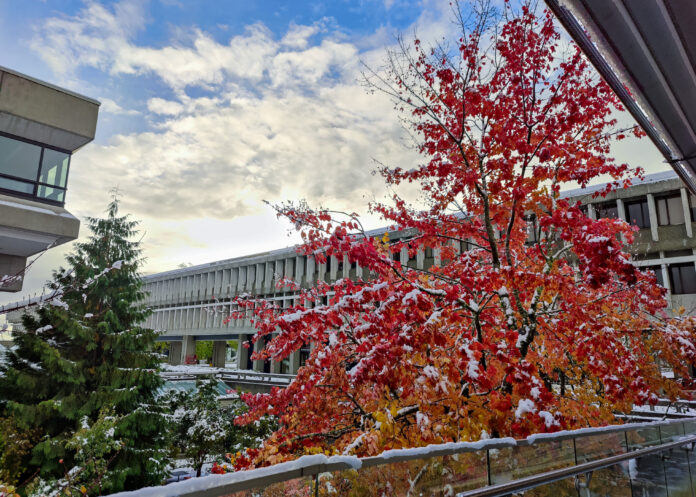
Snow covering SFU
PHOTO: Kriti Monga / The Peak

By: Hannah Kazemi, Staff Writer

I’m a hater of just a few things — but near the top of the list is snow. I remember a time when I used to look forward to seeing snow fall from the sky; it meant a potential snow day, drinking hot chocolate, and the opportunity to make snowmen until it got dark.

But as I got older and took on more responsibilities, namely ones that required me to leave my house, I became a hater of all things snow and winter. I hate wiping the snow off my car and scraping the ice off of my windshield, only to have it covered minutes later with fresh powder. And in the rare event that the roads have been cleared, I dread having to go driving after scores of Metro Vancouverites thoughtlessly toss the snow from their walks into the street. I become the most aggressively petty person when there’s snow in the forecast and it actually comes to fruition.

There are people that claim they like snow — children, mainly. I’m convinced that people who ski and snowboard, spending hours on the mountain “shredding pow” or whatever, are the only ones that truly love snow. I am definitely not one of those people.

Leaving the house to go literally anywhere when there’s snow on the ground becomes a whole production that feels like a risk to your safety. Not to mention the fact that drivers in Vancouver (read: the entire Lower Mainland) act like they’ve never seen a single snowflake in their entire lives and struggle to understand the concept of adjusting their speed for the conditions. Or clearing their car of snow. Or appropriately switching over to snow tires.

When we had all that snow this past November and December, it was like the entire province went into chaos mode. YVR essentially shut down, disrupting holiday plans for thousands of travelers. Ferry sailings were cancelled left and right, stranding people on the island or the mainland. Sections of major highways went unplowed for days, resulting in stranded vehicles, wildly unsafe conditions, and the closure of the Port Mann and Alex Fraser bridges. I’m so thankful I didn’t have to leave my house more than once in the middle of that mess because no one would have heard the end of it from me otherwise.

Vancouver’s transit system also saw countless cancellations and delays, including buses stuck at stops, frozen SkyTrain doors, and hours-long waits for a bus to arrive. This affects everybody; people are either late for work or get snowed in completely and forced to either lose a day of pay or frantically find child care. Not to mention the major barriers that people with mobility aids face in these situations: if sidewalks aren’t cleared, how are people in wheelchairs supposed to get to the bus stop in the first place? The city struggled across the entire system.

Some of the worst conditions during this winter’s heavy snowfall were on the highways and bridges. Highway 1 was a fucking mess for days as it has been during past snowfalls — the roads turn into ice sheets and driving anywhere is a game of “am I even in a lane?” Never mind the fact that drivers themselves lack the common sense to think of buying snow tires for their cars.

Compared to major cities in Eastern Canada, Vancouver’s snow removal budget is meager. Montreal’s $187 million snow removal budget pays for constant snow plowing and melting. Vancouver’s annual budget? Just $4 million. Our city’s snow removal budget needs to reflect the challenges and disruptions whenever there’s more than 5 cm of snow on the ground. As climate change continues to contribute to snowier winters and extreme weather events, we need to get our shit together.