Home Blog Page 200

SFU alum addresses the opioid crisis with new life-saving technology

0
This is a photo of the downtown Vancouver streets. The streets are filled with people and cars.
PHOTO: Andrea Cau / Unsplash

By: Eden Chipperfield, News Writer

Content warning: substance abuse and death caused by drug overdose. 

Alex McGovern, a SFU alum, is building a new device that will change the climate of the opioid crisis with harm-reduction solutions. With a degree in applied sciences, McGovern founded ODEN Health Solutions. He is researching and creating new ways to tackle the ongoing opioid crisis in Canada. Since 2016, it has been the cause of over 30,000 lost lives. In 2022 alone, 2,272 individuals died from substance-related overdoses in BC. 

ODEN has developed a wristband that can alert emergency medical services if signs of overdose are detected, leading paramedics to the individual’s location. The wristband is currently in its final phase of testing, overviewed by LifeGuard Digital Health. This organization is dedicated to digital health solutions such as the LifeGuard app, available on iOS and Android. This app notifies responders if users have come unconscious or are unable to function in the event of an overdose, using geo-targeted notifications. Another essential aspect of LifeGuard’s mission is to remove the barriers of requiring a cell phone, so more people can access overdose prevention. 

McGovern describes many factors that pushed him to start ODEN: “The idea came from an intersection of my experience and the world we’re in today.” Particularly, he drew from his experience in the biomedical engineering program for his undergraduate at SFU. McGovern is now LifeGuards’ director of technology development. He is in discussion with social housing programs and single-room occupancy management to make the ODEN wearable products accessible. He plans to make the products available in occupants’ rooms. 

The business’s main mantra is that “life-saving care is available to all Canadians, no matter economic situation, social situation or geographical location.” 

LifeGuard Connect has successfully connected 65 individuals to first responders. “I can’t wait to see this number rise as we make products accessible to more and more people,” exclaimed Jeff Hardy, founder and CEO of LifeGuard Digital Health. 

Currently, ODEN technology is entering beta trials and is awaiting feedback. In 2022, ODEN won Top Venture at SFU’S annual Coast Capital Venture Prize.

Top ten ways to cancel a subscription

0
Person running after a “cancel” button
ILLUSTRATION: Alyssa Umbal / The Peak

By: Hana Hoffman, Peak Associate

Everything follows a subscription model nowadays. Check your credit card statement; you’re probably paying for something you forgot to cancel after the free trial! I suspect this is what these greedy companies want; us unknowingly giving them money every month. But this stops here! Here’s how to cancel subscriptions no matter how sneaky the fine print is (looking at you, Miss Fenty).

  1. Empty out your bank account so there’s nothing to take. Withdraw all your money and destroy their hopes of getting income every time someone subscribes and enters their debit card information. Can’t scam me, hehe.
  2. Reverse the system. Think of this tip as transforming a fan into a vacuum cleaner. All you have to do is hack into their website, do some code maneuvering, then publish your changes. After that, when you subscribe with your card information, it should send YOU the monthly payment instead of taking it from you.
  3. Make a deal with the owner. Contact the organization directly and come up with a formal agreement. Tell them youll only sign up for the free trial if they agree to give you their car if your card isn’t automatically unsubscribed by the end of the free trial. Seriously, marketers will do absolutely anything to get people to subscribe.
  4. Become your own lawyer. Go to law school so you can represent yourself in court. Tell the judge your story of how emotionally damaging it was to have been lied to, thinking you would spend $0 when really you were receiving nightmare emails titled “Payment Successful.” The only thing that can repay your stress while trying to cancel this subscription is $2,000,000, an all-inclusive vacation to Bora Bora, and a $5,000 Starbucks gift card for all the coffees you bought during your years at law school. 
  5. Use someone else’s credit card because you come first. Sign up with a random credit card number. When the actual owner of that numbered card realizes their card is subscribed, they will do the work and cancel the subscription for you. So you can just sit back, relax, and enjoy the free trial.
  6. Become their employee. Quickly apply to work at the company offering the subscription so that once you get hired, they’ll automatically cancel your subscription and let you have it for free. Choose your subscriptions wisely because three subscriptions mean three jobs. But hey! No pain, no gain!
  7. Crash the site as fast as an airplane! Overwhelm the website by randomly spam-clicking every button until it just can’t take it anymore. Make the website stop working, forcing them to shut down their subscription until their online service gets fixed. This is going real badass mode.
  8. Cause a big “natural” disaster that wipes out all internet data so all subscriptions in the world become nonexistent. Some scientifically proven and well-tested ways to do this: Plug in 100 fans all in one place at full blast and start a tornado, write a note to some nearby aliens asking them to destroy the internet, or put the letter in a balloon filled with helium and send it away to outer space.
  9. Work on self-improvement. Write a thousand-word essay to yourself explaining why you should make better decisions from now on. This means you shouldn’t subscribe to a free trial if you know you’ll forget to cancel the subscription before it charges your card. At least you’ll get a learning lesson out of accidentally falling into this trap.
  10. Bribe the company. Request a full refund for the processed order you didn’t want after your free trial expired. Bribe them with Melona bars. I’m sure they can’t resist.

BONUS: Pretend to be a celebrity. Come on, will they really not offer a famous person complimentary membership? Dress up as a celebrity you look similar to, wear sunglasses, get a fake ID made, and reach out to the company to negotiate. They’ll probably even offer to pay you to be in their advertisements.

Children Who Dance in the Rain highlights privilege as a “double-edged sword”

0
Susan Justice and child reading a the Children in the Rain book on a grass lawn with wide smiles.
PHOTO: Deep Singh

By: Saije Rusimovici, Staff Writer

Content warning: mention of sexual abuse, sexual abuse by family member.

It’s been several years since I’ve been as moved by an illustrated book as I was turning through the pages of Children Who Dance in the Rain, a children’s book written by children’s legal advocate and award-winning author Susan Justice

Justice decided to pursue a career in law driven by her passion to make a difference and speak up for those who are often silenced. As co-founder of South Asians Against Childhood Abuse, her aim is to create a culture where candid conversations can be had about the traumas of sexual abuse in Southeast Asian communities. 

In an interview with The Peak, Justice explained abuse is often inflicted by a family member. She explained, too often, “when brave children summon the courage to disclose their traumas to a trusted adult, they are met with denial or chastisement,” and as a result, do not seek justice against their abuser. 

An estimated one in three girls and one in four boys are sexually abused, the perpetrator a family member 91% of the time. Because of the stigma that surrounds sexual matters in many South Asian communities, people are often afraid to confront their trauma for fear of retribution from their abusers, financial burden, or ostracization. South Asians Against Childhood Abuse aims to break the cycle of abuse by offering education, resources, and support for sexual abuse survivors.

“The damaging ripple effects of childhood abuse echo into adulthood, shaking survivors to their very core. Many carry the misguided burden of guilt, believing they were somehow at fault for the atrocities committed against them,” she said. “The pathway to break this cycle and prevent the pattern from perpetuating lies in shattering the silence.”

Children Who Dance in the Rain is a “resource that would entertain and inspire children to take action to help others.” The beautifully illustrated book written by Justice speaks to the concepts of privilege and equity in a way that is accessible for children. The story follows young Sophie, a picky eater glued to her tablet who travels to India with her parents from her home in Canada. She meets a group of orphaned children living together in a “mud colony.” She can’t believe they’re unable to go to school because they have to work in order to get access to basic necessities, like food and medical care. Through her interactions with them, Sophie begins to learn about her own privilege. When she returns home, she becomes grateful for the things she has and is determined to dedicate her life to making a difference in the lives of others. 

Through vivid storytelling, Justice instills a sense of responsibility to use one’s privilege as a tool for “individuals to educate themselves, seek new experiences, and broaden their perspectives” in order to “bridge the gap” of the inequities in our society. Justice recognizes that “privilege can be an uncomfortable topic for some but it’s vital to discuss, particularly with children.”

By reflecting on our privilege, we begin to understand the “distribution of resources and opportunities in our society” are not always equitable. Justice emphasized the ultimate objective of the book is to “inspire children to leverage their privilege to champion marginalized communities.”

“My objective went beyond simply educating children about the world’s disparities. I wanted to ignite empathy within them,” she said. “At its core, the book is about the magic that lies in the act of giving, conveying to children that even their smallest gestures of kindness can ripple out.”

Justice cautions that “privilege can also be a double-edged sword. If misused or left unchecked, it can perpetuate systemic injustices and reinforce existing power imbalances.” For this reason, she hopes the book will not only teach children how to use their privilege for good, but prevent the misuse of power.

“We all benefit from different degrees of privilege, and by acknowledging it, we can contribute to dismantling systemic inequalities,” Justice said. “The aim is to help children grasp inequality and foster a passion for making a difference.” 

Children Who Dance in the Rain will be available in bookstores across Canada as of June 15, 2023 and the Kindle edition is currently available on Amazon.

Running out of time

0
PHOTO: Ante Hamersmit / Unsplash

By: Daniel Salcedo Rubio, Features Editor

It’s been over a year since I left my home country, and since then I’ve only seen my parents in-person two times. This past week I had the fortune of having my parents visit me here, in this new city I call home. While it was lovely being able to show them around town, my heart feels heavier than usual. This feeling goes beyond the fact that our time together has come to an end — I miss them, but I know what I’m feeling is not their absence, it’s the realization of the little amount of time we have left.

I don’t intend to sound overly dramatic, nor am I assuming the worst — both of my parents are in good health, hell, my dad even refers to himself as a bull. Still, it’s impossible to shake off the feeling that our time together is running out. During our trip back from Vancouver Island, my dad asked my mom, “How many years do you think we have left to keep traveling?” “I’m not sure, perhaps ten?” Ten years left of visits . . . I know it’s my anxiety talking; I shouldn’t hyperfocus on an uncertain future, and I know chances are I’ll get to see them more than I currently predict. Nonetheless, I can’t stop myself from spiralling down this train of thought. There are still so many things left for me to know, so many stories left untold, so many thoughts I need to write down, to preserve in a place my memory will not lose.  

To you, I might sound a bit too dramatic, like I’m exaggerating our lack of remaining time, but I come from a culture where family sticks together tightly, and it’s rare for families to physically grow apart. The distance has only fed my anxiety. Despite being so close, there are so many things I willingly shut down — conversations I killed well before they were even thoughts. Growing up knowing I’m not straight was a bit paradoxical for me. I grew up with the idea that my family would always be the pillar to support me when needed, yet, I found myself building a back-up just in case the main pillar crumbled at the news of my sexuality. I know I did it to protect myself, because, even if it was the tiniest part of me, I thought there would come a day where I would have to part ways with my parents. Now that they’re reaching out, I can’t help but feel regret at the amount of time I wasted.

I’ve always known they’ve done everything for my own good, or at least for their version of my own good. I don’t say this in a bitter way they truly did their best with the tools they had at their disposal and for that I’m eternally grateful. Despite their good intentions, I still ended up distancing myself from them. Now, I find myself wanting to let them into all aspects of my life, and want to treasure every moment I’ll ever have with them even the things I used to find annoying just a couple years ago. I miss hearing my dad’s outrageous laugh from the other side of the house, and I miss seeing him at my door ready to throw a pillow at my face. I miss hearing my mom’s rants about her everyday life, and how she would obsessively stroke my hair no matter how many times I asked her to stop.

I’m well aware that the majority of time I’ll ever get to spend with my parents has passed, but in this mix of grief and anxiety I’ve come to find a deeper appreciation for any moment I spend with them. I’ll gladly accompany my mom to the market at 7:00 a.m, and help my dad with his English whenever he’s struggling. I’ll rewatch Shrek for the hundredth time just to hear my parents laugh at the same jokes every time.

This piece is not meant to tell you to mend things with your parents, to try to have the best possible relationship with them, or ignore any pain they might have caused. I actually don’t want to give any tips. But, despite me not wanting to give any form of advice — in part because I doubt I have anything meaningful to give — I do wish you a deeper sense of awareness on how fleeting relationships can be. One year you’re used to seeing someone every day and planning activities together every other week, but the next year you may only get to hear their voice through your phone and see their faces through a video call. Do whatever feels right for you, but don’t take the time you have left for granted.

SFU needs better long-term mental health supports for students

0
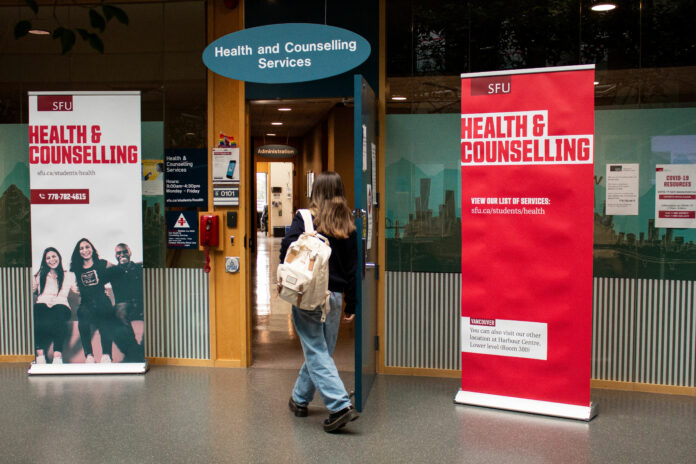
A student standing at the doors of SFU Health and Counselling
PHOTO: Krystal Chan / The Peak

By: Cynthia Piña, SFU Student

Content warning: mentions of anxiety, depression, suicidal thoughts, and transphobia. 

For the past three hours, I’ve been rocking back and forth in my chair trying to figure out how to start writing. Every notification that goes off on my phone brings me anxiety, and I can’t fathom responding to any texts in the next few days. Occasionally standing up and pacing the room, I only feel impending doom. I feel no motivation for anything — eating, reading, or engaging in life. I just want to fall asleep and never wake up, but it’s impossible to fall asleep. I spend hours rolling around in bed until I decide that writing this piece will serve as my therapeutic outlet. It was these frequent episodes of anxiety, dread, and intrusive thoughts that made me reach out for long-term therapy. But SFU’s convoluted counselling system only made me feel worse. It doesn’t have to be this way, but until SFU makes substantial changes, students are only going to be forced to turn to expensive options if they want meaningful mental health support. 

When SFU opened in-person counselling again, I figured it was the perfect time to reach out for support under the guise of going to class. However after my initial consultation, I was referred to a doctor who expressed frustration at my appointment with her, asked me intrusive questions, and minimized my health. I ultimately left the appointment even more distressed than I was when I came in. 

I didn’t even get past the initial consultation, but my experience set me back in trying to find support through other avenues. I’m not the only one. Multiple threads on social media point to access issues with SFU Health and Counselling. From rude receptionists, to poor telephone communication, and invalidating experiences — SFU needs to step it up. At SFU Surrey, the waitlist is closed, and won’t be opening up again until August 2024 at the earliest. This leaves students with even less options and discourages them from seeking care. Students are paying a hefty tuition and shouldn’t need to battle with this institution for a service they’ve already paid for. Even worse, SFU Health and Counselling has previously received criticism for being untrained in serving LGBTQIA2S+ students: from deadnaming and misgendering, to having a poor understanding of transgender health, it’s clear this institution lacks support for students. 

In spite of this, I tried to push through the system, but was told I needed to be enrolled in classes to book sessions. I wasn’t sure if I’d be taking courses since I was waitlisted and not enrolled. This is another one of my gripes with SFU Health and Counselling. 

So much of the SFU experience already revolves around not being able to get the courses you need, so lots of students are forced to delay their graduations. As students, we should be able to take advantage of the services available to us, especially during off-semesters when we’re less overwhelmed from assignments and heavy course loads. In a semester where someone may take a full course load, and is already struggling with school, it feels counterproductive to gatekeep counselling sessions from unenrolled students. Once availability opens up, we’re no longer able to book a session. 

I enrolled in a course and alerted Health and Counselling. I was sent an appointment date and time and asked to confirm. However, emails give me anxiety, so I stalled. I agonized over whether to take the appointment and knew I would likely lose it due to lack of response. I received a follow-up message about how “it would seem that [I’m] not in need of service at this time.” I actually was in need of service, but became so overwhelmed I could barely respond. This assumption felt needlessly judgemental. 

I politely requested to be put back on the waitlist. I didn’t expect to be able to snag a session right away, I was OK with waiting. I desperately wished I could use an online scheduling form to look at the delivery formats and available times. It would have made the process much smoother. The answer I got in response was, “Just so you know – we have over 150 people waiting for service, so if you’re not prompt in responding to a message . . .” At that point I stopped reading because it felt unnecessarily shameful and passive aggressive. I had delayed seeking any kind of mental health service for years and I didn’t feel like I was being met with basic compassion. 

Do you know what the symptoms of depression are? “Having no motivation or interest in things, finding it difficult to make decisions, and feeling anxious.” You would think a service set up to help these very people would acknowledge these symptoms and extend some kind of flexibility or understanding. I wasn’t demanding to be seen urgently — I just asked to be put back on the waitlist. I was willing to wait however long I needed, but this response deflated me. 

This is pushing students away from SFU services, and forcing those with the financial means to look elsewhere for sufficient mental health support. It shouldn’t be this way. Students already have enough expenses, and the aim of SFU Health and Counselling is to alleviate financial and emotional burdens. A very simple solution to some of these issues is to allow students to forgo calling and emailing, and set up an online waitlist that allows us to book appointments through our SFU login and avoid human interaction altogether. That could alleviate some of the stress of taking the first steps. 

It shouldn’t stop there though. SFU should be hiring more therapists for marginalized groups. While their roster seems to have improved over the years, roughly 65% of SFU’s counselling roster is white, with only one queer, one disabled, and one Black counsellor. As far as I can tell from the website, there is no one on the team that shares intersecting identities. Many SFU students will experience life through the lens of multiple identities, and it can be important for students to have those they confide in come from a place of lived experiences too. 

The SFSS previously tried to bring forward a motion to “to open avenues for increased mental health services,” but it failed to meet quorum — meaning not enough people voted. While this would have been through StudentCare for external support, it could have been a step in the right direction for students’ mental health. 

Battling with your mental health is already challenging — it doesn’t need to be made more difficult by blocking access to services or making the process harder than it needs to be. SFU Health and Counselling will require some major restructuring for these issues to be addressed, but the work needs to be put in for students. 

Courtyard residence unveiled at SFU Burnaby campus

0
This is a picture of the outside of a residency building at the SFU Burnaby campus.
PHOTO: Afsaneh Keivanshekouh / The Peak

By: Isabella Urbani, Staff Writer

Editor’s Note: A correction was made to this article on June 12, 2023 to note that room prices are $3,920, regardless of room type.

On May 19, SFU announced the opening of its newest residency on Burnaby campus. Courtyard, created primarily for first-year and some second-year students, is named after its courtyard hub which will feature “swings, ping pong tables, and open-air gathering spaces.” It will also be home to the SFU residence and housing main building. The building’s garden — the Madge Hogarth Sensory Garden — will pay tribute to the namesake of SFU’s first ever residency building, the Madge Hogarth House, where the courtyard residency is located upon.  

Although the new building will be equipped with utilities like a laundry room and wifi, it will not include individual cooking facilities in rooms, meaning students will need to be on the campus meal plan. 

In addition to the residency buildings, the courtyard residence will also have 17 short-term stay suites. “SFU has guest accommodations for short-term stays to guests travelling alone, in groups, or as part of our SFU community,” said Zoe Woods, director of residence and housing, in an interview with The Peak

These suites, known as The Simon, were previously located at another residency building: the Shadbolt House. With their relocation to the courtyard residence, the 14 short-term stay suites at the Shadbolt House will now become homes which can be moved into starting this fall. This will increase the new student residency next semester from 369 to 383 students

“Increasing student housing reduces pressure on the local housing market,” said Woods, adding that creating spaces for students to live on campus amid the ongoing housing crisis in Vancouver “helps to alleviate worry for students in finding a place to live so they can focus on their studies.” 

With the completion of the building, SFU is officially on stage three of their five-stage Residence and Housing plan established in 2015. Also a part of the second stage was the expanded dining commons in August of 2022, with 500 seats and 10 new culinary stations. 

By 2035, SFU plans to provide housing for 10% of the student population. The Burnaby campus currently has more than 2,450 beds out of their projected 3,250. Prior to the courtyard residence, SFU built residency halls in June 2021 and one and two-bedroom apartments for graduate students and students with a common-law partner or child in September 2022. Housing for third and fourth-year students, including four-bedroom and studio apartments, will be introduced in the third stage and has not yet been given a launch date.

In total, $113-million was spent on financing the courtyard residence — $73-million provided by the provincial government. SFU revealed in their press release about the courtyard residence’s grand opening that the space is “designed to reflect Indigenous culture in the region. 

“Engagement and consultation were conducted during the design process to ensure culturally relevant design materials and layouts were included in the project,” explained Woods. The residency is “intended to support Indigenous learners by providing a community gathering space within the building and an outdoor space that connects to nature.” 

According to Woods, Gabriel George, a traditional speaker and singer from the Tsleil-Waututh Nation, was also present to open with a ceremony for the courtyard residency’s opening on May 19. 

In Fall 2023, the starting cost for a semester in the courtyard residency will be $3,920.

More information can be found at the SFU residence and housing website.

Have a splash with another Dear Peakie

0
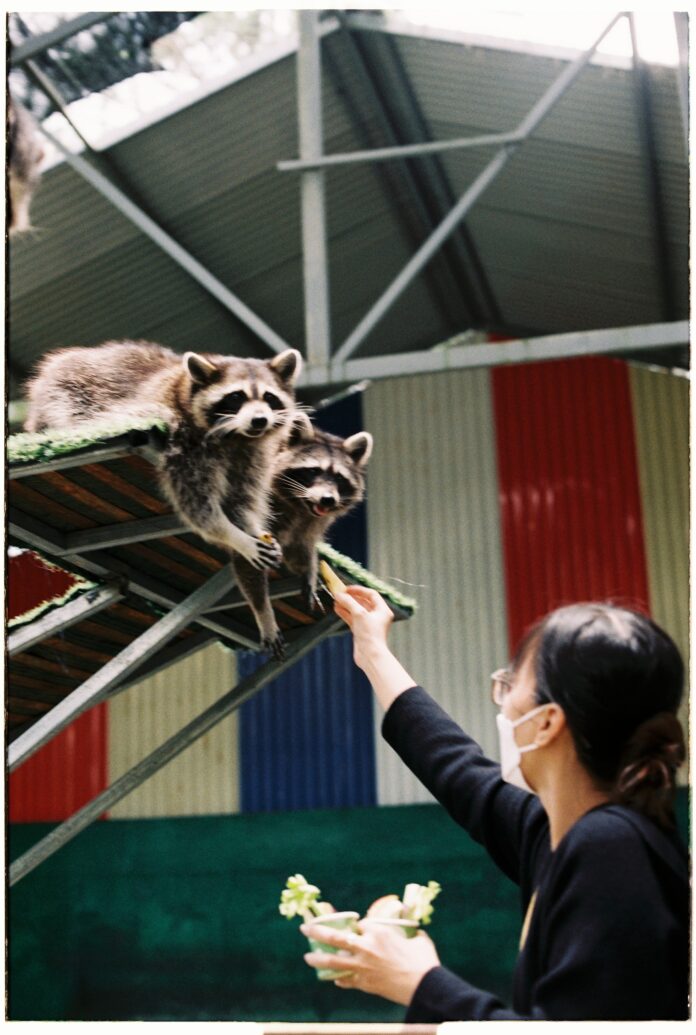
Woman handing food to two racoons
PHOTO: Vinh Lâm / Pexels

By: Maya Beninteso, Peak Associate and C Icart, Humour Editor

Dear Peakie, 

I used to be terrified of raccoons. So, I subscribed to Raccoon Whisperers YouTube channel to overcome my fear. It worked tremendously! But now, I’ve followed in James’ (Raccoon Whisperer) footsteps and fed the raccoons in my neighbourhood. My boyfriend is upset because 50 raccoons came to our house yesterday for dinner. How do I explain to him that the raccoons are part of my cottagecore fantasy?

Sincerely, 
Raccoon Whisperer #2

Dear Raccoon Whisperer #2,

Firstly, amazing use of systematic desensitization to overcome your fear of our beloved trash pandas #HealingQueen. Secondly, what is a boyfriend, if not someone who’s supposed to support your dreams? You might’ve desensitized yourself to raccoons, but don’t you dare desensitize yourself to your boyfriend’s atrocious behaviour. You can have your raccoons and eat with them too, and don’t let anyone tell you otherwise. Let him know that he can become Raccoon Whisperer #3, or all his precious belongings can end up in a tree. <3

Take the trash out,
Peakie

Dear Peakie, 

I’ve been using a fake name at my local coffee shop because Big Brother is always watching. However, I recently learned I have mutual friends with my barista. Long story short, today, my barista asked me why I used a fake name for coffee. So naturally, I told them I was a part of the princess protection program. How do I edit myself into videos of King Charles’ coronation to provide evidence?

Royally,
Wannabe Princess 

Your Highness,

There is only one viable solution. Move. Pack up your bags and move somewhere else because you’ve clearly ruined your chances — and reputation — in your area. You might as well get a shirt with “I’m a liar” on it because NO ONE would voluntarily provide a mutual friend with such “sensitive information.” On another note, Big Brother is always watching, and I’m pretty sure you’re not falling under any radar, considering that you’re writing on a public forum. I don’t mean to reign on your parade (that you’re cordially not invited to, you fraud).

I am always watching,
Peakie

Dear Peakie, 

I’m a fashion icon. As you know, that comes with a lot of haters. Recently, a classmate complained about my outfit to our philosophy professor. I know it’s because he’s jealous, even though he claims it’s because my “giant whale costume is distracting as it sprays water and makes whale sounds.” How do I stand up for my right to express myself through my outfits? 

Sincerely, 
THE fashionista 

THE fashionista,

While I am known for my thirst for vengeance, I will be singing a different tune today. Here is my advice: kill your classmate . . . with kindness. It sounds like he’s not having a whale of a good time, so show him one. Make him have a splash and remind him there are more pressing issues in the sea (like, I don’t know, climate change or the policing of women’s bodies or WHEN TAYLOR SWIFT IS GOING TO ANNOUNCE INTERNATIONAL TOUR DATES). Alternatively, you could apply your learning from philosophy class and have a spirited debate (but we both know that’s not going to happen because who on earth willingly does that). 

Just keep swimming,
Peakie

SFU Residence and Housing presents: The Magic Treehouse

0
Treehouse for rent on top of a mountain with a “perfect applicants only” sign in front of it.
ILLUSTRATION: Christina Cao / The Peak

By: Izzy Cheung, Staff writer

Attention all SFU students! 

We are speeding up construction of our newest housing structure, The Magic Treehouse. As a result, we have begun accepting resident applications for this revolutionary housing concept. It combines edgy and contemporary designs for a unique housing experience. 

The Magic Treehouse seeks to provide the comfort of the forest while maintaining the downtown glamour of city skyscrapers. Our new building is constructed from raw, tree-sourced wood and stainless steel. The result is an ambitious attempt at a colossal treehouse residence space. Time travel devices are not included in this residence’s amenities, but it still provides magic, we promise. 

This residence will surely become your new favourite building on Burnaby Mountain. We provide various services that you’re unlikely to find anywhere else. Located at the top of The Magic Treehouse is our vine-swinging service, which allows residents to swing — via vine — all the way down from Burnaby Mountain. With this innovative amenity, there’s no more need for a gondola!

Situated in the heart of Burnaby’s portion of the Trans Canada Trail, The Magic Treehouse grants residents unlimited access to the beauty of SFU Burnaby’s nature. Residents will never feel lonely as each room has glassless windows, allowing wild animals to come in and out of the rooms at any given moment. You’ll see various animals, including squirrels, bears, and maybe even a certain Scottish Terrier with a fabulous mustache. Think of this as an innovative way to enjoy the company of animals that aren’t stuffed with cotton in your own personal space. 

Rooms in The Magic Treehouse are well-stocked for all residents to enjoy. Each non-private single room has a high-quality Hoverbrella, Avocado On A Stick, and SunShaders. For a small price, your dormitory can also include a mattress. We also provide a faulty microwave, bottle opener, and a dustpan with a large hole in it. Electricity, broom, desk, bookshelves, and storage drawers are not included. You’ll also all be sharing one bathroom! 

Applying is as easy as one, two, three! We have two different term plans for you to choose from. You can now apply for housing in the Fall 2024 semester — applications are due by June 6, 2023. We’ll be opening applications for the Spring 2025 semester from July 17–18 of the same year. 

The ideal housing candidate for The Magic Treehouse is a driven, determined individual with lots of experience living in residence. You’ll be sharing a floor (and occasionally a room) with many other students and animals, which can be intimidating for a first-time renter! Please keep this in mind when applying, as you’ll only have ten minutes to accept your housing offer if this is extended to you. The initial application fee is $2,000 and does not count toward the final payment. 

We have a few small requirements for all successful applicants. You must: 

  1. Be a student (SFU, CapU, Langara, KPU, TWU, UVIC, or any elementary, middle, or secondary schools — UBC students are not permitted). 
  2. Be over 5’4” and under 5’11”. 
  3. Be born on a Monday, Thursday, or Sunday — those born on Tuesdays are prohibited. UBC students born on a Tuesday attempting to apply will be pulled in for further questioning. 
  4. Have a Netflix subscription. 
  5. Have finished grade six with a minimum GPA of 3.75. 

What are you waiting for? Apply for residence at The Magic Treehouse today! 

Rooted brings Indigenous cuisine to SFU dining hall

0
A large white bowl with bison bourguignon, a stew with chunks of meat, carrot, and vegetable garnish. On the side, on a plate, is a loaf of bread and carrots.
PHOTO: Gudrun Wai-Gunnarsson / The Peak

By: Saije Rusimovici, Staff Writer

Rooted is a new program bringing traditional Indigenous ingredients and flavours to the SFU Dining Commons. Curated in collaboration with Steph Baryluk, a Teetl’it Gwich’in chef from Teetl’it Zheh in the Northwest Territories, the menu features over 15 unique dishes with fresh BC produce and game meats. Ingredients are chosen to reflect Indigenous traditions from a light and refreshing sweetgrass-tossed spinach salad to hearty plates like elk pot pie and braised rabbit with fresh sage.

Inspired by her grandmothers, Baryluk told SFU, ​“Both my parents are residential school survivors, so today, as I have the freedom to practice my culture and traditions, I will be loud and proud.”

“The Teetl’it Gwich’in people still continue to live off the land respectfully harvesting game meats and plants for medicine,” Baryluk said. “Hunting, fishing and trapping remain important both culturally and economically, with caribou, moose, whitefish, being staples of our diet.” 

Colonization has contributed to the loss of traditional knowledge of Indigenous ingredients and recipes. Indigenous food traditions are often criticized as a result of colonial narratives. Rooted is a small step toward unravelling these narratives. 

I had the opportunity to taste three uniquely crafted dishes. Many of the ingredients, while being nutritious, also have medicinal properties. I was eager to experience these new flavours paired with familiar and unfamiliar ingredients.

Venison sausage penne pasta

Coming from an Italian background, I was curious and excited to see this combination of flavours in a tomato-based pasta dish come together. The venison sausage, which usually refers to deer or elk meat, was cooked perfectly. This offers a rich flavour to the dish without overpowering the other ingredients. Traditionally, venison is often preserved by being cut into thin slices to be dried or smoked into beef jerky. 

“Hunting is an important part of Indigenous culture, and so is respect,” Baryluk commented. “When a deer, elk, or any animal is hunted, we are sure to use everything, nose to tail.” The bones of the animal are often crafted into tools and the hide can be salvaged for sewing and drum making. The dandelion leaf garnish not only offers a hint of sweetness to the dish, but is a rich source of Vitamin A, B, C, & D.

Bison bourguignon

A flavourful stew composed of large chunks of bison, carrot, and local BC mushrooms, this was my favourite dish. The meat was cooked perfectly, tasting similar to beef but offering notes of sweetness to break up a rich umami flavour. Making stew is “a great way to use up your ingredients and feed a big family,” said Baryluk. “As Indigenous people we like to use what we have, what’s around us. 

Growing up, stew was something my mom made frequently but I never tasted the combination of bison and mushrooms before. This dish is so comforting; I wish they would serve it in the dining hall more often. It would be a perfect addition to the menu, especially in the colder winter months. 

Bannock donut holes

I was excited to try bannock for the first time, especially paired with the sweet wild blueberry sauce served alongside the donut holes. Bannock can be baked, fried, or cooked on the stove top, and can traditionally be made from nut meal or corn. Blueberries are often used in both sweet and savoury recipes. Not only do blueberries make yummy additions to recipes, but they’re often used to preserve meat or for medicinal remedies. I had always considered bannock something to eat alongside a savoury dish, so I was looking forward to trying it with the sweet and slightly tart blueberries. They were so delicious, I found myself wanting to get up and fill my plate with more (and maybe sneak one or two in my pockets for later)! 

Two Rooted dishes are served every second Friday in the SFU Dining Hall. To learn more about each item on the Rooted menu and to see what is being served visit the Rooted website. 

SFU dining commons serving up more than just breakfast, lunch, and dinner

0
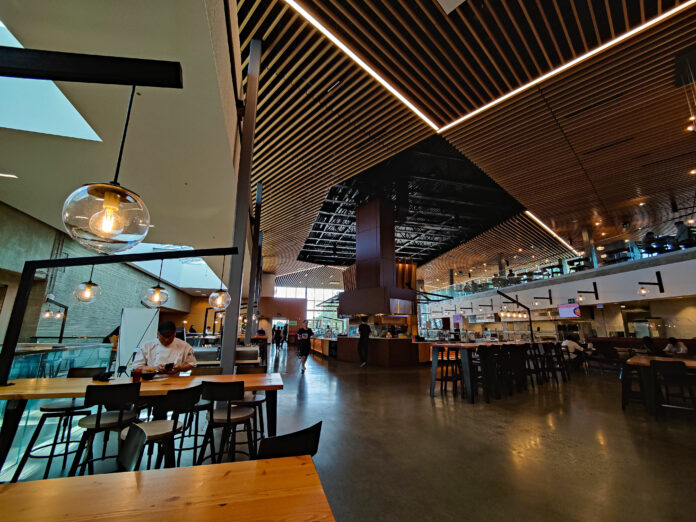
This is a photo of the SFU Dining Hall. People are buying food and walking around the space.
PHOTO: Kriti Monga / The Peak

By: Eden Chipperfield, News Writer

In September 2022, a new dining experience became available to the SFU community. The Dining Commons area is not just a place to enjoy a meal but a way to foster connections with new friends, study, and indulge in new culinary experiences. Since the Dining Commons opened, students have had the opportunity to taste different cooking styles, learn to make their own dishes, and connect further with their peers. 

The Peak spoke to chief commercial service officer Mark McLaughlin to discuss how the Dining Commons has been received from the community since its opening. “This new dining commons is very much about offering a really high variety of international flavours [for] meeting students’ dietary requirements, but it’s also very much about creating a social space for students, a place where students can just, you know, hang out, chill, study [ . . . ] Students on the meal plan can come and go as they please,”  McLaughlin said. 

The Dining Commons is open 24/7 during the regular academic term. However, for summer hours, visitors can frequent the Dining Commons from 7:00 a.m.–10:00 p.m. McLaughlin elaborated how the 24/7 hours of operation accommodate students on all types of schedules that are “not on the administration schedule,” including athletes up early for practice or hungry students after a late night exam. 

McLaughlin proceeded to detail the food options available for individuals at the Dining Commons, including gluten-free, vegetarian, vegan, and halal options. Diners can inform the cashiers of their nutritional restrictions, and they will be pointed in the right direction. Among the variety of food for dietary restrictions, any student can explore international food options such as chicken shawarma pita. McLaughlin noted this may provide comfort to international students.

The Peak also spoke to students regarding their own dining hall experiences. “It’s nice being able to just take my laptop and attempt to study,” one student responded who has been a frequenter of the space throughout their time at SFU. They also noted their enjoyment of the Indonesian curry thats served as part of the international flavours station. 

One of the newest additions to the Dining Commons is the Indigenous culinary experience, Rooted. It offers students the chance to try Indigenous cuisine: “It’s really important, to sort of daylight Indigenous cuisine and methods. We have a lot to learn from Indigenous people, from their culture.” McLaughlin stated, “We were delighted that we could bring it to light that we offer these Indigenous meals.” Indigenous food available at Rooted includes a barbecue blueberry salmon bowl, maple glazed trout salad, elk pot pie, and bannock doughnut holes prepared by Chef Steph Baryluk, who is Teetl’it Gwich’in and from Teetl’it Zheh. 

Another significant feature of the Dining Commons that students should be aware of is the My Pantry station, where students can cook their own meals. They are overseen by staff members who encourage people to try new techniques or ingredients. “We’ve got about, I think, five burners there, five stations where students can cook what they’re making,” McLaughlin noted. 

The Dining Commons has achieved Gold Status as a LEED building, meaning 40% of the ingredients are locally grown or processed in British Columbia. “We’re also one of the few facilities at SFU that’s air-conditioned,”  McLaughlin remarked.  

To learn more about the Dining Commons and the foods available, visit their website at www.sfu.ca/food/dining-commons.html