By: Heidi Kwok, Staff Writer
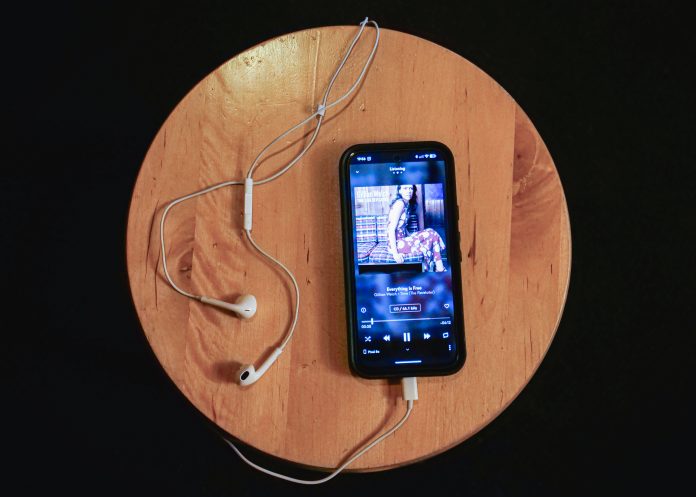
The onset of the 2000s ushered in the birth of online streaming, driven by small tech startups who would become the exploitative media monopolies we have today. An unsettling prediction of this grim dystopia is Gillian Welch’s 2001 song “Everything is Free,” which expresses her despair towards what the internet would mean for musicians’ livelihoods. 25 years later, Welch couldn’t have been more on the mark. Spotify, the global music streaming giant with over 700 million monthly users, is perhaps the worst culprit, underpaying artists with skimpy royalties that vary between $0.003 and $0.004 USD per stream. This abysmally low rate makes them among some of the lowest-paying music streaming platforms available out there, right next to Apple Music.
In April 2024, Spotify came under further controversy, requiring tracks to exceed 1,000 streams before being eligible for royalty payments, to the detriment of independent artists with smaller audiences. Royalties that should have gone to their rightful creators instead end up in the pockets of former CEO Daniel Ek, who accumulated $345 million in one year. These earnings surpassed those of even the most-streamed artists on the platform. Worse yet, in 2025, Ek’s venture capital firm invested $600 million euros in AI weapons systems company Helsing. Spotify also reportedly donated $150,000 USD to President Donald Trump’s inauguration ceremony.
With Spotify’s extensive rap sheet, many have called for their boycott. Sharing the same sentiment, I’ve decided to explore three music listening alternatives with more equitable compensation models, whether you’re streaming or owning.
Tidal
Tidal is an “artist-first, fan-centered music streaming platform that delivers over 110 million songs” — 10% more than Spotify. This streaming contender offers one of the highest artist payouts at $0.013 USD per stream, far outpacing competitors like Amazon Music and Apple Music. In terms of pricing, individual plans run for $10.99 per month, with student plans being half the price. A unique feature of Tidal’s paid plans is subscribers can choose to opt in for a DJ Extension at an additional monthly cost of $9. This add-on allows users to access and mix Tidal’s music catalogue via integrations with professional DJ software such as rekordbox and serato.
Upon creating an account and a free 30-day trial, I was immediately given the option to transfer my music (including artists and playlists) from other streaming platforms, including Spotify, Apple Music, iTunes, Amazon Music, and YouTube Music, to Tidal using a third-party service called TuneMyMusic. A one-time fee is charged for transfers of over 500 tracks. If you only need a one-time transfer, you must buy a monthly premium plan (at $7.60 CAD), then immediately cancel the subscription once you’ve conducted all necessary transfers.
Playing around with the audio options and selecting the highest sound quality (HiRes FLAC) flooded my ears with a rich and crystal-clear tone.
For years, I attributed Spotify’s poor audio quality to my cheap, crappy headphones, but the truth is that Spotify’s audio quality is just embarrassingly bad.
Exploring the platform, I quickly noticed Tidal’s proactivity when it came to giving credit where it’s due. Have you ever wondered who were the instrumentalists and sound engineers responsible for your favourite track? Tidal sets album credits front and center with a simple click of the album cover art (Spotify, in contrast, tends to sweep the credits behind a long-winded navigation path).
Tidal also presents a significant departure from Spotify’s emphasis on popularity ranking. On Tidal, listening statistics (or “plays”) are eliminated from artists’ profile pages, whereas Spotify displays artists’ “monthly listeners” metric, as if being top of the charts was more important than artistic merit.
Bandcamp
Bandcamp is an online music store that connects artists with fans with the mission of supporting “artists equitably so that they can keep making music.” While Bandcamp does not release public financial reports, the store claims that an average of 82% of fan payments goes back to the artists and their labels. For all sales on physical and digital items, Bandcamp charges a revenue fee of 10% to 15%, respectively, in addition to a payment processor fee that varies between 4% and 6%.
Bandcamp offers a unique browsing experience with personalized pages for each artist and label, where fans can purchase entire music catalogues, limited merchandise such as vinyls and apparel, and engage with community board messages posted by artists. Users can listen to tracks for free — although some artists stick to short previews as samples — before deciding to make a purchase. Once a purchase is made, customers can download their music in audio formats such as MP3, or for those who are more attuned to the obscure world of sound mixing and production: FLAC, ALAC, AAC, Ogg Vorbis, WAV, and AIFF formats.
With the rise of AI-generated music and algorithms, Bandcamp’s anti-AI stance is refreshing. “Bandcamp is not built to break you as an artist,” general manager Dan Melnick told MusicTech. “I think our business model is very well positioned for the age of AI. If the streaming world gets flooded with AI music, then it reduces the pie for living musicians.”
In an era where subscriptions reign supreme, and consumers have scarce opportunity to truly “own” their favourite media, Bandcamp is great for those who want full control and permanent ownership over their music. It can also be a more accessible way of owning than traditional CDs and vinyl records. Keep in mind that purchased music can be accessed through Bandcamp’s app (which includes a feature for offline listening), but cannot be added “directly to Apple’s Music app due to limitations imposed by Apple.”
Radiooooo
Radiooooo — alternatively known as the “musical time machine” — is an app that takes listeners across both space and time. Well . . . not literally, of course, but through a worldwide radio platform livestreaming tracks from countries around the globe and spanning multiple decades of the 20th and 21st centuries. Launched in 2013, the platform began as a passion project created by a group of music-loving friends. At its core, Radiooooo is a collaborative, user-curated music player driven by discovery rather than algorithms. An unpaid account only gives you listening access to ten countries and four decades, so for full access, you’d want to consider opting-in for a premium plan at $6.90 CAD per month.
Radiooooo’s user interface can best be described as a blend between Google Earth’s interactive globe and retrofuturistic design elements, featuring clunky yet charming analog-style buttons set against a backdrop of bold primary colours. Unlike the sleek, minimalist UI of platforms like Spotify or Tidal, Radiooooo deliberately rejects overly sterile neofuturistic designs. Instead, it embraces an analog aesthetic that evokes the nostalgia and optimism associated with the space-age cultural movement of the mid-1950s to early 1970s — a period when faith in technology and visions of a utopian future were widespread. The result is a highly immersive listening experience centred around the unexpected.
After comparing three Spotify alternatives, how do you ultimately decide which service aligns best with your listening habitats and values? Here’s my final verdict: Tidal is best for those seeking familiarity, with an interface nearly identical to Spotify’s, though it may not suit those who prefer listening to podcasts, as Tidal appears to be purely music-focused for now. Bandcamp is perfect for supporting artists directly through the purchase of physical or digital music, though the selection is not as large as Tidal or Spotify. Conversely, Radiooooo is your go-to for those eager to step outside their comfort zone and expand their musical horizons. There are also other music streaming options out there, like Qobuz and Deezer, which I did not get the chance to review but are worth checking out.