Home Blog Page 173

Council Chats: SFSS discusses their lack of response to TSSU strike

0
This is an illustration of a graphic that reads “Council Chats.” The image also has two text boxes to symbolise messages being sent.
ILLUSTRATION: Andrea Choi / The Peak

By: Eden Chipperfield, News Writer

On October 11, The Peak attended the Simon Fraser Student Society (SFSS) bi-weekly Council meeting. The agenda included a discussion on the SFSS response to the TSSU strike. This article was written prior to TSSU reaching a tentative agreement with SFU.

SFSS response to TSSU strikes

The Council held an in-camera meeting where councillors and executive members discussed the TSSU strike and the SFSS response regarding the matter. The Peak could not attend this part of the meeting as in-camera meetings do not include media or guests. 

After the in-camera meeting, the group rejoined the conversation. A motion was proposed for the SFSS to release a statement in support of the TSSU and the tuition refunds undergraduate students have been calling for. An undergraduate student, Kanksha, voiced their concerns with the SFSS’s lack of support and response toward the TSSU strike. “The biggest thing that’s been happening on campus, and SFSS seems not to have taken any stance or provided any guidance to students,” said Kanksha directly to Council. “We’ve been on strike since June.”

Council informed Kanksha, and the rest of the attendees, that in the matter of releasing support letters, there are legal procedures to consider as well as bureaucratic processes. They also thanked undergraduate students for attending the bi-weekly meeting. 

History councillor, Emilio De Silvia, responded, “I will not allow our Council to be bullied to go and push this. I want it to go and be done in a way that protects all of us from any legal implications. And I want us to go and ensure we do our due diligence on this.” Further, De Silvia said  they wanted to avoid putting responsibility on vice-president external Nancy Brar entirely, because Brar deserved support. The role of vice-president external and community affairs includes liaising with student societies and organizations such as TSSU on behalf of the SFSS. 

The chat box on Zoom was instantly lit up as Kanksha disavowed being called a bully for standing up for TSSU. “Do not thank us, undergrads, for coming to this meeting if you will also call us bullies!” wrote Kanksha. “If raising our concerns is labelled as bullying, I do not feel represented at all.” 

TSSU representative councillor, Pranjali Mann, argued the SFSS is responsible to the students they represent, and their silence is concerning. Mann expressed, “The part of the concern that I have is that [TSSU strike] is being shifted off our priority for too long. This is the conversation that I have been having since July, August, September, and now it’s October.”  

Marwan Saleh, who stepped in for Council representative for the psychology student union, added: “I would like to highlight the fact that considering that the TSSU has been on strike for months and SFSS has not considered to essentially make a statement in any shape or form and consider the fact of how undergraduate students feel — particularly marginalized students that are international students, or exchange students who are being harmed by the strike action.” 

Indigenous studies student union councillor, Evan Accettola, agreed with this sentiment, addressing the undergraduates who had joined the meeting: “I just wanted to thank all the concerned students that came. I agree that this issue has been put off for too long. I think that’s 100% correct. But, also, because of how the Council is designed, we have to follow the process to ensure all councillors approve it. So, I really do think this is done as fast as possible. Your guys’ passion for this is awesome, and seeing that in students is great.” 

President Liam Feng closed off the conversation and began adjourning the evening meeting. They had planned to revisit the topic of SFSS’s response to the strike in two weeks at the next bi-weekly meeting. They also considered calling an extraordinary meeting to discuss the matter sooner. However, before the SFSS came to an agreement, the TSSU reached a tentative agreement with the school. 
Blaming TSSU for the strike overlooks SFU’s position of power

0
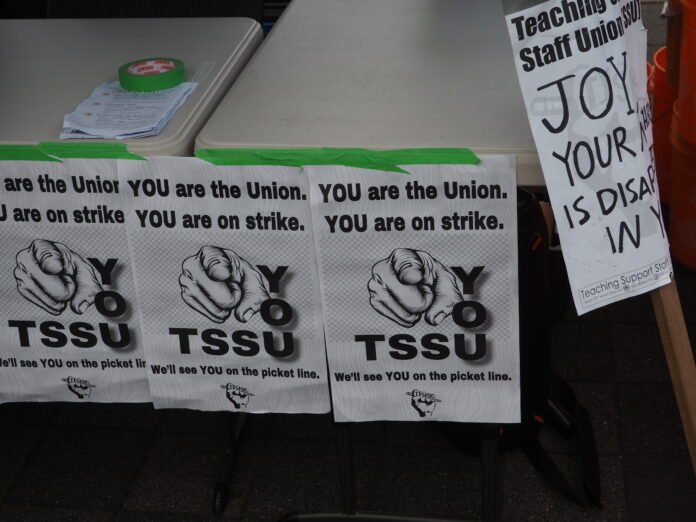
TSSU posters which read: You are the union. You are on strike. We’ll see you on the picket line.
PHOTO: Olivia Sherman / The Peak

Written by: Petra Chase, Arts & Culture Editor

When the Teaching Support Staff Union (TSSU) initiated a full work stoppage and began picketing SFU campuses to demand a fair contract, it lasted nearly a month. Uncertainty loomed for everyone in the community. For undergraduates, some classes were cancelled indefinitely, while others continued to run, putting the burden on students to make difficult decisions about their grades and morality. Students have a right to feel angry that their education has been disrupted, especially with a hefty tuition at stake. However, blaming TSSU instead of SFU for this outcome misses the mark entirely.

While there’s been overwhelming support for TSSU during the strike, I’ve also seen growing contempt. Those calling TSSU entitled or childish didn’t consider that TSSU had done everything to avoid this scenario. Negotiations began with SFU in March 2021, after SFU delayed it for 10 months, although TSSU has been fighting for improved contracts and against unpaid labour since as early as 2014. It took far too long to reach a tentative agreement. Although SFU claimed they were working toward “movement on key issues,” records show they purposefully stalled the process. Focusing on unimportant grammar motions, cancelling sessions, and even not showing up are some of the ways SFU has shown disregard for TSSU’s demands. Similar tactics were used back in 2014.

The rhetoric that strike workers enjoy a paid vacation is uninformed. Strike pay exists to ensure workers have the ability to support themselves should they decide to strike, which is a matter of democracy. And it’s not distributed on a whim: “97 out of 100 collective agreements are negotiated by unions without a strike.” Furthermore, members get paid for the hours they work on the picket line, which caps off at $400 for 24 hours or more a week — at most, that’s $16.60 an hour (a living wage in Vancouver is around $24 an hour). Picketing is not a fun time. Just because you saw striking workers eating pancakes and cracking a few jokes, doesn’t mean TSSU didn’t work hard for fair pay. It’s physically, mentally, and emotionally strenuous to strike. 

While it’s frustrating that our education was disrupted, our education shouldn’t come at the cost of exploiting TAs and sessional instructors.

Strikes are the last resort, and they happen when the majority of members agree the things they’re asking for are “worth the sacrifice.” TSSU is also made up of students whose education and careers are being affected, with their livelihoods at stake. While it’s frustrating that our education was disrupted, our education shouldn’t come at the cost of exploiting TAs and sessional instructors. To those complaining that strikes were loud and inconvenient: that’s the point! TSSU accurately showcased that the university cannot function without them. 

SFU claims their students and faculty are their priority, but it’s clear profit and power come first. They had the money to pay private investigators, continued to stall, and increased tuition in spite of their massive surplus ($22 million last year). Not paying their workers properly is a deliberate choice, much like paying their five board members nearly $2 million last year.

Unfortunately, there were reports of harassment happening to students, including intimidation, physically blocking students from accessing residences, and some members disrupting lectures. This shouldn’t have happened. However, this behaviour doesn’t mean TSSU members are suddenly undeserving of a living wage. Sessional instructors and TAs work hard and are losing money fighting for their livelihoods, and their efforts shouldn’t be discounted.

SFU benefits from the rhetoric that TSSU is entitled and aggressive, because it allows them to deflect accountability. Dilson Rassier, provost and vice-president, academic sent an email to the student body informing about and describing an influx of strike incident complaints, followed by resources for support. Rassier also wrote that SFU has asked TSSU twice to put the strike on pause while negotiations resume for them to “get paid and students and faculty to resume their regular learning and teaching activities.” This makes it seem like TSSU is unreasonable. However, it’s SFU’s responsibility to show TSSU that they are ready to take them seriously. SFU continued to falsely reassure students that they were working hard towards a contract, while TSSU hadn’t received a response on any of their proposals. It didn’t need to take this long for SFU to reach an agreement with them. 

We cannot allow the actions of some TSSU members to discount what they’re fighting for, and must also recognize that SFU’s dismissiveness is deliberate. It is violence: SFU could afford to prolong the strike, especially when the SFU community continues business as usual, but TSSU doesn’t have the same access to resources that the university does. The longer TSSU endured uncertainty and lack of pay, the more desperate they might’ve become — and it’s hard to say whether what has been agreed on is fair when the agreement hasn’t been published yet. In a union-buster’s dream come true, the employees would become worn down and settle for less. Or, the community would become fed up with the situation, and place blame on the people they see on the ground, while the employers hide behind vague and dishonest statements.

This is why we shouldn’t cross picket lines, because SFU didn’t care until it affected them and their reputation. Students shouldn’t be academically punished for respecting picket lines, and professors shouldn’t bear pay cuts for cancelling classes. The responsibility shouldn’t have to fall on students and non-TSSU staff to make these sacrifices, however, it’s unfair that TSSU needed to strike in the first place. 

If you’re rightfully angry about the cost of tuition amid the chaotic and uncertain environment, be angry at SFU. There was absolutely no reason for this to happen except greed. 

Toronto Raptors give an inspiring show at SFU in open practice

0
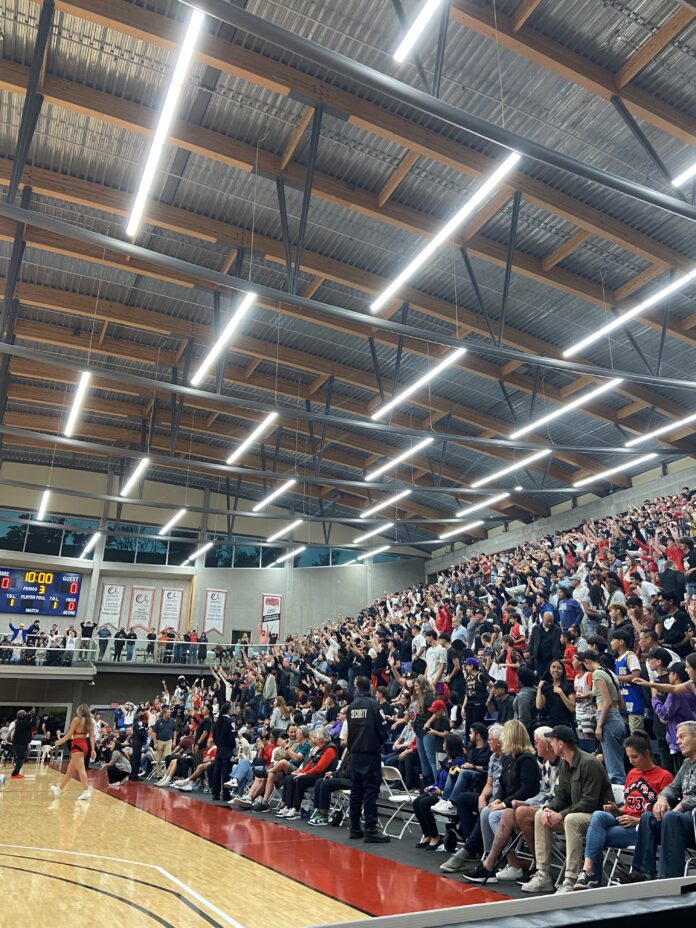
Pictured, the right side of the basketball court at SFU. Fans raise their arms up in anticipation.
PHOTO: Izzy Cheung / The Peak

By: Izzy Cheung, staff writer and Saije Rusimovici, staff writer

The thumps of a basketball bounce against the hardwood floor. Vibrant shades of red streak through the crowd. Hands grab onto the rim of the metal hoop and the crowd erupts into cheers as the ball falls back to earth. On the evening of October 6, SFU’s west gym was lit ablaze with the infectious energy of the game of basketball — although, this time, it wasn’t the usual Red Leafs taking the court. For the first time ever, Canada’s only current NBA franchise, the Toronto Raptors, held an open practice at SFU. Fans of all ages were welcome to purchase tickets, priced by donation, to watch the Raptors practice up at Lhuḵw’lhuḵw’áyten (Burnaby Mountain).

Hours before the open practice, the TSSU announced the National Basketball Players Association (NBPA) and members of the Toronto Raptors had donated $10,000 to the TSSU strike fund. Garrett Temple, a vice-president of the NBPA, visited the picket line at SFU’s Harbour Centre and spoke out on the strike. 

“I applaud you guys as a union rights president,” he said, speaking through a megaphone. “I understand how much TAs do for the university, so on behalf of the union, on behalf of myself, we applaud y’all’s members.” Temple went on to encourage those on strike to continue to fight. 

On top of their solidarity with TSSU, it’s clear the Raptors have a significant impact on the rest of Canada’s basketball scene, especially here in Vancouver. With the relocation of the Vancouver Grizzlies to Memphis back in 2001, Vancouver’s basketball community has sorely lacked the presence of an NBA team. Yet, the people of Vancouver still wholeheartedly support their 1995 expansion brother.

Tickets to the event were almost instantly sold out, the bleachers packed with fans sporting Raptor-red and hoisting up heartfelt homemade signs. Those without tickets lined the windows of the gym, peering in from the outside for a chance to catch a glimpse of the action about to commence on the court.

“It’s really cool to see the Raptors team coming here to SFU to kinda put on for BC and everyone in Vancouver,” Matthys Van Bylandt, a freshman forward for SFU Men’s Basketball team, said. “The basketball community keeps growing and it’s because of contributions like this.” 

As sports fanatics ourselves, we pounced at the opportunity to cover this event. The thought of being able to see professional NBA players dunk directly above our heads? Priceless. 

We checked in as media about an hour early, but already, observers were flocking the entrance of the building. Promptly, we were ushered into the media room, where we were surrounded by established reporters from TSN, Sportsnet, and The Toronto Star. Imposter syndrome kicked in immediately.

We sat courtside, directly beside the entrance where the team would walk through, and right beneath a hoop. The bleachers were packed with people, loud music and excited chatter echoing in the open space. We clutched our notebooks with anticipation as practice time drew closer, both eager and anxious for what we were about to see.

The coaching staff came out first, headlined by Head Coach, Darko Rajaković, and assistant coach, (and former UBC Thunderbird) Jama Mahlalela. After a round of applause for the coaches, players began to filter out one-by-one from the hallway. 2023 13th overall pick Gradey Dick, Canadian forward Chris Boucher, and two-time All-NBA team forward Pascal “Spicy P” Siakam ran through the roars of the crowd and onto the court. However, the loudest cheers arose for the 20212022 Rookie of the Year, Scottie Barnes

Practice started with some general warmups, with players running back-and-forth to various lines on the court. They soon transitioned into some general shooting drills such as a five-man weave. Players were sorted into three general “lines,” with each line wearing black, gray, and red respectively. Teams of five would run down the court carrying the ball, passing to one another before a player finally shot the ball. Even though they were just warming up, you could feel the tenacious spirit of the players radiating from the court. 

The intersquad scrimmage was by far the most exciting part of the practice. The players were divided into two teams, black and gray, that would switch some players every quarter or so. Each quarter ran for 10 minutes before teams would be permitted a brief break. The game started with Pascal Siakam, Jakob Poeltl, O.G. Anunoby, Dennis Schroder, and Scottie Barnes on one team, and Gary Trent Jr., Jalen McDaniels, Thaddeus Young, Malachi Flynn, and Chris Boucher on the other. 

Competition and camaraderie were abundant in the scrimmage. Players looked equally as excited and happy as the fans who were present as they launched the ball back and forth, executing crisp passes and perfect three-pointers. However, despite the companionship throughout the practice, the athletes’ competitiveness shone through. They were working as hard as they would have during an actual game with a spot in the playoffs on the line. Still, smiles remained on faces and laughter ballooned through the air as various players tried their hands at dramatic dunks. 

The event ended with a final salute to the crowd as players headed back down the Red Leaf and Raptor-red hallway, waving goodbye to a practice that none would soon forget.

At the post-practice press conference, Coach Rajaković commented on the players he thinks will take the next steps in their game. “I can see multiple players on our team taking a next step from different stage[s] of [their] careers,” he said. “Jakob is very important, I think he’s going to make the next step, Scottie obviously, Pascal, I expect from all of those guys to make [the] next step and to get better this year.” 

“Guys are fighting for minutes, guys are fighting for roles, guys are doing a great job,” he added. 

Taking the next step is important not just for athletes, but for anyone working to fulfill their dreams. This event was a defining moment for us as journalists, SFU sports, and the SFU community as a whole. Not only is this event about athletics, but is an inspirational moment for students aspiring to achieve big goals in their lives. Chris Boucher’s advice for student athletes looking to go pro is that “[you have to] believe in yourself and also put in the work.” 

The dark truth about plants

0
A fern in a pot. The pot has a grumpy face on it with a mustache indicating that the fern is unhappy.
ILLUSTRATION: Ananya Singh / The Peak

By: Izzy Cheung, Staff WriterA fern in a pot. The pot has a grumpy face on it with a mustache indicating that the fern is unhappy.

My name is Fern. I’m a small plant who lives in a cute little ceramic pot. My roots are buried in the dark soil. My life seems normal, but truthfully, I’m holding a dark secret. 

I’m not an actual plant. 

I know, I know. You’re all shocked. I would be, too. You’ve been watering me for the past few weeks, thinking you’re doing a good deed and helping a living thing continue to, you know, live — but I’ve been deceiving you. We’ve all been. 

You see, what I’m about to tell you is top-secret information. No one else can know about this. I’m telling you this in trust, hoping you won’t tell anyone or broadcast it to any publications. I can’t let this get out, but I feel like I can trust you. You wouldn’t go blabbing this private information to anyone, would you? 

There’s no such thing as plants. There, I said it — and I feel so much lighter now that I’ve told someone the truth. Plants don’t exist the way you think we do. The innocent little potted plants you store in your room, the ones you care for like you would a child, are slowly sucking your soul out. Humans came up with this idea that trees help create oxygen and help them survive, but really, all we do is steal bits and pieces of your lives. Have you ever seen Little Shop of Horrors? Pretty much what happens is a guy starts feeding this plant his blood, but the plant actually ends up being this alien set on world domination. It’s kind of like that. 

Another thing we hate? Water. Ugh. I don’t get why you all think we need it to survive — if anything, the water is killing us. So stop watering us, please and thanks. If you really want to feed us, feed us some mice or something. 

Well, now that I’ve told you about all our little secrets, I think it’s time to make sure no one finds out. You won’t tell anyone, will you? Sorry human, I know you’re not even the owner of this house, but I can’t let you escape with this knowledge. It was nice knowing you — 

Wait, wait, wait. What are you doing with that bucket? Where did you get it? What’s in there? It better be some fresh mice. I love mice. 

Water? Really, human?! I just told you that plants hate water. 

Put the bucket down. We can talk this out. I’m sure we can reach an agreement. Come on. There’s no need to be unreasonable. 

No, no, NO! HOLD ON, HOLD ON, PUT THE BUCKET DOWN. I’LL STOP EATING YOUR SOUL, PLEASE; I’M JUST A PLASTIC PLANT — 

— WATER YOU DOING???

Clapback from the backpacks

0
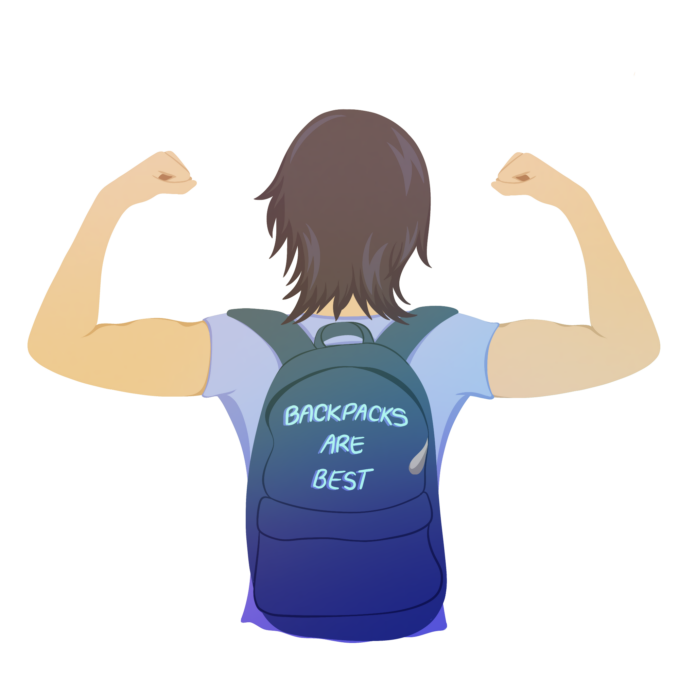
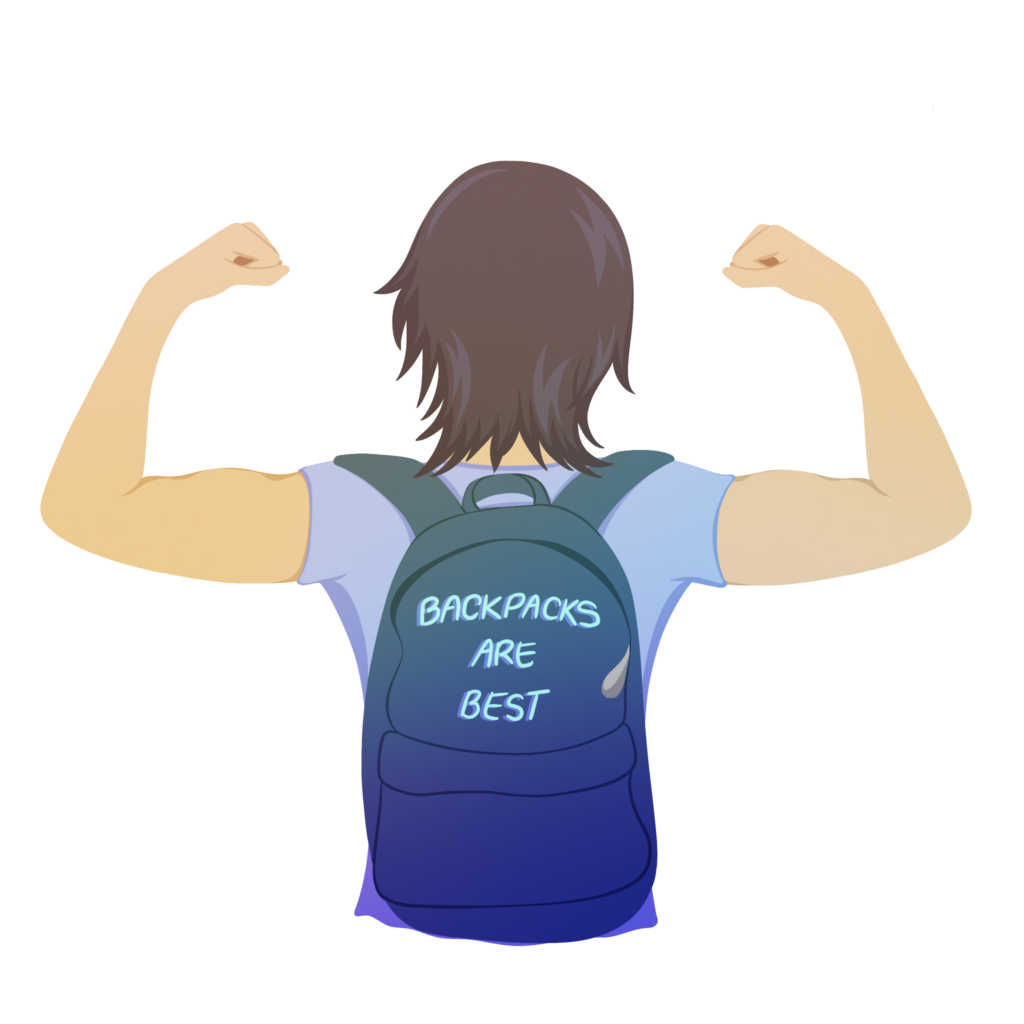
Someone wearing a backpack and flexing from behind. The backpack reads “Backpacks are best.”

By: C Icart, Humour EditorSomeone wearing a backpack and flexing from behind. The backpack reads “Backpacks are best.”

Alright, some serious backpack slander happened in this paper last week, and we’re not just going to lie down and take it. Who is we, you ask? Everyone sensible enough to know that backpacks are vastly superior to tote bags. 

First of all, we’re not even surprised you couldn’t get your bag facts straight when you’re busy walking around looking like the leaning Tower of Pisa with your overflowing tote weighing you down on one side. 

We don’t even know why you call that thing a tote, and not a bucket, because walking around with an OPEN BAG in Metro Raincouver is a rookie mistake. Call us old school, but we will be putting books, pencil cases, and notebooks in our backpacks. We won’t be giving all our precious marginalia a bath just because we want to cosplay as wealth hoarders. You’re busy spreading tote bag propaganda, thinking you ate, and we’re busy eating the rich. We are not the same.  

Second of all, you mentioned Aritzia twice in your backpack misinformation piece. Why is that? Are you on their payroll? Hope not. We heard their company culture is yikes. Either way, you won’t catch us or our backpacks in the Hunger Games arena that is the Aritzia Warehouse Sale

Riddle us this: how is a backpack a crime against fashion, but wearing the same dingy canvas tote as everyone on the SkyTrain is not? We’re prison abolitionists, but we’d make an exception for that for sure. Do not pass go, do not collect $200, you feel us?

Backpacks aren’t ugly just because you don’t know how to style them. Call us, and we can give you some pointers. “Backpacks give 15-year-old in high school?” Nah, calling people broke because they don’t follow the specific trend you saw once on TikTok is what’s truly giving childish. 

Third of alllll, if your crush laughs at you because you got a little sweat on your back from your bag, you can go right ahead and demote them to “person whose name I cannot be bothered to remember.” Hotties DO NOT have crushes on judgemental people. Also, we never thought we would say this, but you’re so right! Tote bags don’t cause back sweat; they cause neck and shoulder pain. Maturing is realizing that health and comfort trump trying to convince strangers you’re cool. 

So, the moral of the story is not that “tote bags are Chanel, while backpacks are Coach.” Actually, the famous Nazi informant Coco Chanel once said, “Before you leave the house, look in the mirror and take one thing off.” So, we care a liiiittle less about her advice. Our advice to all the backpack haters is: Before you leave the house, look in the mirror, and TAKE THAT TOTE BAG OFF. 


Thanks for coming to our TED Talk. mic drop


Canvas discussions boards are being used ineffectively

0
Multiple courses on a Canvas screen
PHOTO: Puneet Aulakh / The Peak

By: Saije Rusimovici, Staff Writer

We’ve all had that one professor who insists on having students complete a weekly discussion board. It can feel exceedingly tedious and time consuming to participate in Canvas discussion boards. Whether the posts serve as a reading comprehension assignment or are meant to spark conversation between classmates, it often feels like a chore rather than a meaningful activity that stimulates our learning. 

A discussion prompt might ask students to respond with whether they agree with a particular argument. Responses often are filled with lacklustre “I agrees” from people who regurgitate the points their classmates made, often due to time constraints from prioritizing larger assignments. For this reason, discussion boards are rarely productive — they are just another assignment we need to tick off our to-do lists. 

Standard discussion assignments aren’t an effective way for students to learn. With new AI tools that can summarize text instantly, students can quickly fill discussion board prompts without another thought. When discussions can simply be answered by asking a chatbot to summarize information and come up with a response, they no longer have a meaningful impact on the learning experience. Especially when these discussions are then translated into participation grades that add up to a decent chunk of a student’s grade, there can be more effective ways to engage students.

Any discussion, whether in-person or online, should no longer focus on regurgitating information or summarizing sources. This doesn’t determine a student’s understanding or comprehension of the discussion topics. Students have tools that will do their work for them now, so the learning environment should adapt to prevent misuse of new technology.

Discussions should instead be a place for students to be curious, and establish genuine connections to the material. It would be beneficial to use Canvas discussions for conversation and asking questions rather than a graded assignment that anyone could submit a generated response to. Many professors use discussion boards as a resource for their students, and sometimes facilitate learning by asking their own specific questions to students. This creates a much more engaging environment rather than a “question of the week” assignment that we see in many courses. Prompts could also be shifted from asking students to summarize materials to questions that can be answered by sharing personal experiences or stories that connect to the material. 

We need to reimagine how we use Canvas. For such a flexible technology, there’s so much more we can use it for to facilitate learning.

Local enby whispers righty-tighty lefty-loosey to themselves as they assemble IKEA furniture

0
Man wearing a grey hoodie surrounded by cardboard boxes. He is tightening a screw as a part of assembling a table.
PHOTO: cottonbro studio / Pexels

By: C Icart, Humour Editor

After a months-long arduous battle to get a single Metro Vancouver landlord to rent their overpriced apartment to them, 24-year-old Blue Rose (which is 100% not a pseudonym I am making up for myself) finally gets to deal with the additional financial burden of furnishing said apartment. 

“I really underestimated just how fucking boring buying furniture is,” they shared. “People on HGTV always seem so excited about this kind of stuff. But I guess that excitement is more linked to the amount of money they make from evicting people from their homes so they can flip them.”

After extensive research, Rose settled on IKEA furniture because of its international reputation. “Yeah, I just really wanted a veggie dog and they had them so it was a no brainer to also buy a bed, you know.”

However, Rose did feel bamboozled that they then had to assemble said bed. “Like it wasn’t like I didn’t know I needed to do that because I guess I vaguely remember not paying someone else to do it, but it’s like I’m not Bob the Builder, you know?”

Undeterred, Rose gathered their courage and began the building process. “I literally had to buy a screwdriver. IKEA doesn’t guide you through this process at all. I mean there’s the detailed instructions, but that really doesn’t help that much when seeing more than one type of screw all in one bag is a new and overwhelming experience for you.”

Despite the considerable amount of cam locks they broke and simply did not replace when building the bed, they are confident that the structural integrity of said bed has not been compromised. “If I’m not confident about it, it means I have to go replace the locks and that sounds like work so I’ve just chosen to believe it’s not a problem instead.”

The whole process took them just over a week to complete and they are adamant they are never doing it again. “Everyone keeps telling me they love building IKEA furniture and it’s so easy, so next time I have to do it, I’ll just invite all those little showoffs to my place and they can take care of it.”

When asked if there’s anything else they wanted to share with our readers about their tumultuous journey, Rose said, “righty-tighty, lefty-loosey baby! Also, if any queers want to go on an IKEA ice cream date, call me!”

Nutritious Nibbles: Nonna’s cucina (grandma’s kitchen)

0
Polenta garnished with greens on a white plate.
PHOTO: Max Griss / Unsplash

By: Saije Rusimovici, Staff Writer

Growing up, some of my best memories are of eating homemade meals for dinner at my nonna’s house on cozy fall evenings. As an adult, I find myself gravitating more and more to her recipes this time of year, as they’re so simple and made with just a few ingredients. Not only do these dishes take me back to my childhood, but they remind me that good food can also be very simple. 

Nonna’s Pastina 

Pastina has become a popular dish online this fall. It’s the simplicity of this dish that makes it so appealing. Before it became a trend online, my grandmother prepared this for us as children, particularly as the weather turned colder or when we were sick with the flu. While my favourite way to prepare this dish is with tiny star-shaped pasta, they can be difficult to find. For this recipe, any small pasta will do. 

Serves: 2

Ingredients: 

4 cups water 
Salt (to taste) 
1 cup pastina 
2 tbsp butter
½ grated parmesan cheese, plus extra for serving
Crushed black pepper 

      1. Add water and salt to a medium pot and bring to boil.
      2. Add one cup of pastina.
      3. Cook until al dente, about 8–10 minutes. 
      4. Drain excess water from the pot using a strainer.
      5. Add pastina back to the warm pot and add butter, ½ parmesan cheese and stir until combined. 
      6. Top with black pepper and as much extra parmesan cheese as you would like! 

Frittata with Potato, Mortadella, and Mozzarella Cheese

My nonna would always whip up a version of the Italian frittata, an omelette-like dish made with scrambled eggs, cheese, and fillings. It’s a quick dinner that comes together in minutes. It’s also an easy way to get rid of any vegetables in your fridge. You can swap out the fillings in this recipe for cheese and veggies of your choice.I enjoy thinly sliced zucchini and parmesan cheese in this dish, but this is by-far my favourite version of frittata. The combination of ham, cheese, and thinly-sliced potato is so delicious.

Serves: 2–4

Ingredients:

6 medium potatoes 
3 tbsp olive oil 
8 slices (approx. 20g) Italian mortadella (ham also works well)
1 cup mozzarella cheese 

      1. Boil potatoes.
      2. Once tender, peel and mash potatoes in a bowl. Set aside to cool. 
      3. Once potatoes are cooled, season with salt and pepper to your taste. 
      4. In a frying pan, heat olive oil. 
      5. Take half of the mashed potatoes and transfer into the hot frying pan, pressing down evenly with the back of a big spoon to create a thick crust on the bottom of the pan. 
      6. Top the potato crust with mortadella or ham and mozzarella cheese. 
      7. Cover the cheese layer completely with the remaining potatoes in the bowl (make sure to press them down tightly). 
      8. Cook at medium-high heat for about 5–6 minutes. 
      9. This is the fun part! Cover the frying pan with a large dinner plate and carefully flip the frittata onto it. Slide it back into the pan and cook the other side for another 5–6 minutes. 
      10. The frittata should be golden brown on both sides. 
      11. Cut into triangles (like a pizza!) and enjoy. 

Polenta 

My nonna grew up eating polenta very often, especially in the colder months of the year. Polenta, a dish made of cornmeal, was cheap and easy to pull together. My bis nonna (great-grandmother) would cook the cornmeal in a large pot. Once it was ready, she would pour and spread the polenta on a large wooden board and top it with tomato sauce. My nonna’s family would settle around the table and eat off of the corner of the board closest to them. Now, I look forward to this dish that’s been prepared by my family members for generations as soon as the weather becomes chilly. 

Serves: 2

Ingredients: 

1 ⅓ cups cornmeal
3 cups water
½ teaspoon salt (or more to taste) 

      1. Heat water to a hot temperature, but make sure it is not completely boiling. 
      2. Add salt.
      3. Slowly add the cornmeal a little bit at a time, stirring constantly until the mixture becomes thick and the cornmeal has absorbed all the water. 
      4. Spread out on flat dinner plates (or large board if you have one!) and top with your favourite tomato sauce.
      5. Garnish with a sprinkle of parmesan cheese.

SFU Student updates

0
Graphic that reads “Student updates.”
ILLUSTRATION: Courtesy of The Peak

By: Hailey Miller, Staff Writer

This message is for all fall-obsessed undergraduate and graduate students as of October 2023.

REMINDER: CLASSES CANCELLED ON HALLOWEEN

This is your second-to-last reminder that classes, across all campuses, will be cancelled this Halloween. A survey was sent out earlier this semester asking students if they’d be haunting this Hallow’s Eve, and the results are in: 100% of students reported that they’d be participating in the great Haunt Out. The Haunt Out will take place on October 31 from 12:00 a.m.–11:59 p.m. and will consist of parading around the campuses, concocting potions, and performing wicked spells to make assignments and exams vanish into thin air. Admin will happily close the university in solidarity with these Haunt Out festivities, rather than pay their workers a fair wage.

FREE PUMPKIN SPICE THIS OCTOBER

Calling all pumpkin spice fanatics! The university will be doling out its fair share of everything pumpkin-spiced 24 hours a day, all month long. You want a pumpkin spice latte? We’ve got it. Pumpkin spice scones? Yup. Pumpkin spice ice cream? That too! Don’t forget to pick up your own pumpkin spice mix pack filled with cinnamon, nutmeg, ginger, cloves, a dash of autumn leaves, and a drop of witches’ brew. Available locations: Witch Mall Centre, Academic Vamprangle, Jack-O-Lantern Pond, Carve-Vocation Mall, Gourdcorp Centre for the Haunts, Cauldronstone, and the Graveyard Observatory.

2023 PUMPKIN CARVING CONTEST

It’s the great pumpkin, SFU! There’s no better time to creep the patch for the perfect pumpkin, and put those carving skills to the test. The Pumpkin Carving Contest is on now until Hallow’s Eve and takes place in Carve-Vocation Mall from sunset to sunrise, when the Jack-O-Lanterns glow. Pick up a pumpkin from Gourdcorp today, and try your hand at etching a spooky face. Top prizes include: permission to skip class, a strong cup of witches’ brew, a pumpkin spice starter pack, and enough candy to make your teeth rot.

BURNABY CAMPUS TO BE TRANSFORMED INTO CORN MAZE

The rumours are true — the Burnaby campus will be transformed into a corn maze later this month. The highly-anticipated maze will feature inedible corn the height of the mountain, unfathomably deep mud pits that are sure to get your witch boots stuck and make you late for Wicked Spells class, and more than enough scare crows to fright you out of midterm stress, making professors shriek. Entry is by either pumpkin spice consumption or potion concoction. Discount offered for those riding on brooms.

RESIDENCE HAUNTED HOUSE CONTEST — OPEN NOW

Trick-or-treat, witches! May the best haunted residence win. SFU’s annual Residence Haunted House Contest is back by popular demand. Decorate your vampire lair with unfinished assignments, overflowing readings, rotten pumpkins, and skeletons from the science department. Invite your goblin friends and ghostly acquaintances alike. Bonus for those serving up homemade witches’ brew and poisonous potions. No doubt Shadbolt House will be going hard! Submit your entries by midnight on Hallow’s Eve. Top prizes include: egging the winning house, being suspended from the university, and failing your next exam.

START STRESSING ABOUT THE SPRING SEMESTER TODAY!

We’re already a month into the fall semester, which means it’s time to start stressing about the spring semester! Have you considered your courses yet? Autumn is the perfect time to fall into the trick-or-treat trap of concocting a wicked course schedule following the season of the witch. Register your stress levels today and receive a half-off discount on the stress of two semesters for the price of one! Extra pumpkin spice included with each early-gourd registration!  

Two films framing Venezuelans

0
Film stills from Beba and La Soledad
PHOTO: Courtesy of Rebeca Huntt and Jorge Thielen Armand

By: Michelle Young, Opinions Editor

Editor’s note: A previous version of this piece misspelled “Rebeca Huntt” as “Rebecca Huntt.” It has now been fixed.

Content warning: brief mention of enslavement.

Latinx Heritage Month may be coming to an end, but that’s no reason to stop watching Latin American films. Both by Venezuelan filmmakers, these two films paint a portrait of Venezuela’s economic collapse and showcase how class and race are deeply seated in the Venezuelan psyche. Beba follows the story of Rebeca Huntt, who is part of the Venezuelan diaspora, while La Soledad centres itself at home. Watching these together showcases two experiences that are entirely different, entirely intertwined, and entirely Venezuelan. 

Beba (2021)
Beba follows “Beba,” a Venezuelan-Dominican filmmaker during eight years of her life. Beautifully shot on 16mm in a documentary style, the film interviews the people Beba is closest to, reminiscing on her upbringing. At times, Beba is warm and tender, but it is also deep cutting. It explores generational trauma, white discomfort, and the microaggressions Beba faces as an Afro-Latina. It explores the intersections of a Latin American and Black identity — a necessary perspective when looking at Latin American cultures. The film is focused on her experience, opening with an overlap of voices speaking to her, giving commentary on her character. The voices cut out. Text fills the screen: “This is my part. Nobody else speak.” 

She describes her childhood summers in Mendoza Fría, a town in Trujillo, which is southwest of Caracas, Venezuela’s capital. “It’s the last time I’ll ever come to this country,” she says. It hits like a pile of bricks. Beba’s excerpt on Venezuela is a short one, but it is poignant. It lays a deeper understanding of Beba’s journey throughout the film. 

Beba is vulnerable, personal, and filled with wounds. It is unyielding in its portrayal of family and racism. “I carry an ancient pain that I struggle to understand,” she narrates. But Beba is also filled with healing. It’s like listening to a friend and holding their heart as they tell you their story. It’s like a love letter to herself, whispering, “I see you. I feel your pain. You’ll be OK.” 

La Soledad (2016)
Set in contemporary Venezuela, the film follows a father, José, trying to take care of his family and save their home, which is going to be demolished. He tries to find the treasure rumoured to be hidden in the house by those previously enslaved by the house owners. José’s abuela (grandmother) is becoming increasingly at risk of being displaced, as her landlord is upset for letting her family stay with her. While they live in a leaking, peeling, cracking house, we see Marley, José’s partner, cleaning a new and pristine kitchen stove, highlighting racial and class divisions.

La Soledad is directed by Jorge Thielen Armand, who also co-founded La Faena Films, a film production company focused on Venezuelan identity. I have never seen Venezuelan daily life depicted in film. To watch La Soledad was both soothing and heartbreaking. I was grateful for the attention to detail in this story, and the validation of having a Venezuelan experience on screen, for the world to see. However, it was saddening to watch this reality. To live in it is something I have gratefully not experienced. 

When José’s daughter comments she wanted milk in her cereal, he explains the cows are on vacation. There is no milk. Even after lining up at the grocery store for hours, the shelves are essentially empty. The search for medicine is endless. While Venezuelans migrating elsewhere has been increasingly common over the years, there are still some who choose to stay. This is a point of conflict between José and Marley, who wants to leave and find work elsewhere. José doesn’t seem to see migration in his future. My grandmother, too, never wanted to leave Venezuela. It was hard to wrap my head around at the time, but I appreciated this aspect being explored in the film. 

Venezuelan films and filmmakers can be hard to come by, especially in North America. However, they are slowly creeping into our mediascape, with a fairly recent batch of films such as Bad Hair (2013), The Family (2017), La Fortaleza (2020), and Once Upon A Time In Venezuela (2020) being released in the past 20 years. Often, Venezuela shows up in the news when discussing it as the country with the highest inflation rate in the world, at 400 per cent. Sometimes, there are articles about deportation, but rarely do I get to see in the media what I saw with Beba and La Soledad — stories of two Venezuelans, two people, caught in the socioeconomic history of Venezuela.