Home Blog Page 16

Life and growth are never linear

0
Craggy-faced old man with an unkempt beard and hair
PHOTO: Donald Teel / Unsplash

By: Corbett Gildersleve, Opinions Editor

Who am I? I’m old. I was a mature student when I started my first degree. My journey has taken many turns since starting at SFU in the mid 2000s when I worked as a security guard and later as a service clerk at the Vancouver campus. In early 2009, I started through the SFU-Zhejiang University dual degree program, spending two years studying computing science in China. It wasn’t easy: I was studying in another language and was 10 years older than my classmates. I struggled with completing my degree because I realized very late that it was the wrong program for me. But, I felt I was too far along to change or drop it. I crawled over the finish line in 2017 and crossed the stage that summer. For me, life and personal growth have never been linear or easy.

Being a mature student has its ups and downs. It was always funny walking into class and everyone thought you were the professor or teaching assistant. But, your pop culture references are dated, and there’s so much new slang to learn. I still don’t fully understand what “based” means. It’s probably why I often got along better with my instructors than my classmates, at least for the first few years. However, being a “mature” student has its perks: I bring knowledge, life experience, and history to my classes. I am able to distinguish between what I want and don’t want and I find myself being more in charge of my life choices.  

The real question that everyone should ask themselves is whether their educational path serves them in a way that fits their goals. Sometimes even when there is something that you believe is a strong fit for your future, it doesn’t mean it’s actually your passion. So, what do you do? You shift direction and apply what you learned. When looking back at my first degree, I really enjoyed classes that revolved around design, be it graphic design, software, or UI. I loved reorganizing the Computing Science Student Society that I was the president of in 2014. When I served on the Board of the Simon Fraser Student Society (SFSS) in 2015, and we changed the governance structure and policies, I realized there was a strong overlap between software and policy design. Both are about creating rules, processes, and structure to solve a real-world problem, but just in different domains. It was also during that time I realized I wanted to work on “people” issues instead of computer ones. So, in 2018, I enrolled in the post-baccalaureate diploma program in social policy through the sociology and anthropology department. 

The SFSS is full of “people” issues to solve, and my knowledge were useful in helping the Simon Fraser Public Interest Research Group, CJSF Radio, and the Students of Caribbean and African Ancestry during the student space campaign in 2019. Working with these student groups helped me understand collective strategizing and decisionmaking. Computing science trained me to see part of the SFSS as a system of rules, bylaws, and policies that could be broken down, analysed, and fixed. A few successful election campaigns later, and I was serving with my team as an executive in the SFSS. I’m proud of the changes we made in and outside the SFSS, but it came with a cost. I paused my diploma program after 2022 and have struggled to maintain a full-time job due to lingering mental health impacts from my time as an executive. 

All of this to say that one doesn’t need to linger where they don’t find themselves motivated. Yes, life is hard — and we have bills to pay — but there is a merit in pursuing a life that is your own. Pave a path for yourself. This path doesn’t have to look like anyone else’s.  

Why did I come back? I wanted to finish my program but I’ve been struggling academically to the point that it’s hard to know if I’ll be able to complete it. I’m exploring options through the Centre of Accessible Learning, and from what I’ve read, the experience is not always positive. But, I’m not giving up because as I’ve said, life and personal growth are not linear or easy.


SFYou: Kyle Newcomb of Setiaputra Lab

0
A headshot of Kyle Newcomb.
PHOTO: Yoona Charland / The Peak

By: Nitya Khanna, SFU Student

Editor’s note: scientific terms followed by an asterisk (*) are defined in the glossary section.

Researchers in SFU’s Setiaputra Lab study how cells repair damaged DNA, a process that is essential for maintaining genome stability* and preventing diseases such as cancer. The lab is led by principal investigator Dr. Dheva Setiaputra, who completed his undergraduate and PhD at UBC and now studies the molecular mechanisms that determine how cells choose different DNA repair pathways.

Master of science student Kyle Newcomb is part of the research team, working to understand how these repair systems function and how they may contribute to drug resistance. He also mentors undergrad students involved in the lab. Newcomb shared what a typical day in the lab looks like and what students should know about getting involved in similar research.

The following interview has been edited for concision.

The Peak: When you walk into the lab in the morning, what’s the very first thing you usually do?

Newcomb: I usually come in around 8:00 a.m. We’re very lucky in this lab because we have a lot of space compared to others, so I can do a lot of different types of experiments. I check my cells to see if they’re ready to be split or passaged*, and go over my plans and experiments for the day.

The Peak: What’s something you do every day that people would never guess is part of being a scientist?

Newcomb: The most unexpected thing about molecular biology in general is that we work with actual human tissues. For ethical reasons, we can’t work with human patients, and even mice and other organisms have their own considerations. But, the fact that we work with cells that were originally derived from human patients and we’ve immortalized* so we can continue using them as model systems. The main cell line I work with is retinal pigment epithelial cells, or RPE cells. Other people in the lab work with cancer-derived cell lines. 

The Peak: How do you acquire those cells?

Newcomb: We buy them, freeze them, and then scale them up in the lab. Some cells, like cancer cells, naturally keep expanding, and they’re biologically immortal. So from a small stock, you can get a large amount.

The Peak: What does a busy day in the lab look like versus a slow day?

Newcomb: A busy day could mean I’m busy with classes or TAing where I’m jumping in and out of the lab. That’s busy in a different way than, say, I’m running a lot of experiments, which means I’m doing multiple things at the same time. For example, a western blot* has long incubation* times, and during those periods, I might check the tissue culture, prepare something else, or jump in and out between multiple experiments.

A normal day might just involve a few experiments done sequentially. An easy day would be more so just looking at data, updating my lab notebook, reading papers, or general organizing around the lab.

The Peak: How much of your time is spent doing experiments versus planning or analysing?

Newcomb: For myself, when I’m in the lab I like to focus on experiments. Actual reading happens mostly outside of the lab. Especially because I’m relatively early in my graduate career, I want to get experiments done to make sure the project I’m working on has legs to run with, as opposed to focusing too much on the auxiliary research in the field.

The Peak: What would you tell someone who’s interested in pursuing similar research as you? 

Newcomb: I deal with the field of breast cancer. Obviously it affects a lot of people. It’s affected people in my family, so there is that looming existentialism of progressing towards a cure. If you want to focus on cancer specifically, when the research doesn’t go well, you must remind yourself that there’s a lot of people working together and even your small results can help build towards a cure. Otherwise, the weight of finding a cure and solving these real world problems falls onto you. For undergraduate students especially — because you’re acting on such a small piece of the puzzle, it can be very easy to burnout. But just remember even the small little baby steps help push us forward. 

The Peak: How does one adjust to managing experiments in the lab like this?

Newcomb: It’s definitely a learning curve. For undergrads, whether it’s co-op, honours, or volunteering, have the opportunity to take charge of a project on your own so you can feel the failures as well. That was the biggest learning curve for me when I did my honours research. There was a whole summer where most of my experiments failed. At the time it was frustrating, but looking back, it was a good learning experience.

My thesis was just me talking about what I tried, what I expected to happen, and what I would do differently.

Being able to reflect on experiments and troubleshoot them is a huge part of doing science.”

— Kyle Newcomb, master’s student and lab researcher, Setiaputra Lab

Even now, with some of my experiments, nothing happens, so I have to re-do them.

The Peak: Looking ahead, what are your career goals or the kind of impact you hope your work will have?

Newcomb: Dr. Setiaputra is a relatively new professor, and I’m his first graduate student, so we’re trying to figure out what mark we want to make in the scientific field and bring about results other people can build on. My research focuses on a protein complex* called Shieldin, which is connected to DNA repair and breast cancer research.

There are drugs called PARP inhibitors that are used to treat certain cancers, but sometimes resistance develops. Loss of Shieldin has been seen in a small number of samples. One goal is to understand the mechanism behind that resistance and what role Shieldin might play.

The Peak: Any final thoughts you’d like to share with The Peak’s readership?

Newcomb: If students want to get involved in research, be open but also understand your worst enemy is timing. For right now, we’re very full and Dr. Setiaputra is busy, so we’re not looking to take on more undergraduates. But look for opportunities where you can and get your name out there. 

Glossary

Cell splitting/passaging: As cells multiply, cell splitting, also known as cell passaging, ensures the cells do not overcrowd by transferring a group of new cells to a different medium. This process creates a new subculture and must be done regularly as cell cultures rapidly expand. Overcrowding of cells in one culture can lead to the buildup of toxic waste and nutrient depletion.

Genome stability: A biochemical process that involves the DNA’s ability to remain intact and repair damage in order to maintain health and prevent disease.

Immortalized: Immortalized cells are cells which continue to divide therefore the cell culture expands indefinitely. Some cells with finite lifespans can be made immortal through scientific techniques.

Incubation: In this context, incubation is the process in which an antibody is introduced in a solution with the target protein. The researcher then observes how the antibody acts on and produces symptoms in the protein.

Protein complex: A group of proteins within a single molecule that function to perform biological processes, such as cellular transport around the body.

Western blot: A technique in which cells are separated by size and specific desired proteins are therefore identified and can be extracted.

Visit the Setiaputra Lab website for the latest news, research, or to get involved at setiaputra-lab.org.

Monday Music: An escape into the many lenses of shoegaze

0
A photo of a music band playing amid a thick smoke
PHOTO: Dariusz Grosa / Pexels

By: Nejdana Houshyar, SFU Student

Shoegaze is defined as “melodic rock music typically characterized by heavily processed electric guitar and indistinct, often distant-sounding vocals.” Shoegaze works well because of the emotions — like sadness and melancholy — poured into the songs. These intense emotions are what listeners resonate with the most and what gave shoegaze its cult following. The genre peaked in the ‘90s with notable bands such as Slowdive, Lush, and My Bloody Valentine. This playlist is my choice of three songs, from the 1990s to the 2020s, that bring out those comforting, sad feelings.

2 by Dean Blunt and Inga Copeland

This dreamy, surreal track highlights the longing and romance of shoegaze. “2” feels like a frustrating dance between two people in a relationship — where one is in love and the other is not. Copeland’s vocals and lyrics represent one half of the couple who are so in love and infatuated: “It’s so good when I’m near you.” Blunt’s dream-like production uses static sounds to produce a nostalgic feel and represents the other individual who masks their sadness for a love that once existed. Blunt composes an echoing effect on Copeland’s vocals that makes her feel as if she were fading out of the song as the static and the beat gradually get louder. Together, they create a song that feels like a glimpse into an intimate yet dying relationship.

My Baby’s Got It Out For Me by a.s.o. and Alias Error

If you have ever wanted a song that joins Portishead and Massive Attack, “My Baby’s Got It Out For Me” by a.s.o. and Alias Error is your answer. The track is aware of its predecessors but still manages to create a song that feels fresh and alive. The sensual vocals from Error mixed with the trip-hop (a blend of slow-tempo hip-hop and experimental sounds) beats gives the song a dark, electronic atmosphere. Where the influence of shoegaze shines in this track is in its bass and guitar. While played softly, the synthesized bass creates a deep underlayer of rock and roll, and the electric guitar delivers texture with reverb/delay.

City Moon by Love Spirals Downwards

Perhaps the most ethereal/dream-like song on this list, “City Moon” creates an atmosphere reminiscent of an otherworldly, mysterious city. The lyrics “And yellow time is overhead / Unchanging things imprinted / Can it all be clear?” represent a melancholic longing for the past. The “city moon” is the only constant figure in these twisted times. The imagery and the soft vocals create the collective sadness shoegaze embodies. The track uses multiple techniques in its production to pull from a variety of genres, such as trip-hop, dream-pop (a form of alternative rock that combines rock music with elements of synths and reverberated guitars), and shoegaze. The drums, guitar, and bass are all synthesized and reverbed, and they almost drown out the already soft and airy vocals. I strongly suggest listening to this song on a late night drive — you will feel like you’re in a David Lynch film.

Get to know Greek mythology through Homer’s The Odyssey and its counterparts

0
A collage of all four books recommended by Nijjar
IMAGES: Courtesy of Penguin Classics (The Odyssey), Orbit (The Last Song of Penelope), Harper (A Thousand Ships), and Nicholas Brealey (Epic Continent)

By: Julia Nijjar, SFU Student

There is nothing better than sitting by the seaside while indulging in literature that captures the essence of summer along the coast. My favourite piece of literature to read by the ocean is Homer’s Odyssey. I adore being perched by the sea watching ships pass by in the distance, imagining it’s Odysseus and his remaining troops travelling back home to his wife Queen Penelope in Ithaca, Greece, after fighting for 10 years in the Trojan War and voyaging home for another 10.  

In the poem, the cunning and clever protagonist Odysseus undergoes many misfortunes after his departure from Troy. From shipwrecks to monsters and a sorceress, he endures his destiny condemned by the Fates and tainted by the Greek gods. The Odyssey is a tragically beautiful read enriched with melancholic passages and deep nostalgia. The visual aesthetics of the tale possess sensationally powerful prose and description of ancient Greece during the Mycenaean Age, combined with mythology and fantastical imagery. This read encapsulates the richness of ancient Greek culture through character interactions demonstrated by acts of hospitality, connection, and longing for family.

There is no better time than now to read the epic than this summer, as all-time favourite director of mine Christopher Nolan is releasing his adaption of The Odyssey on July 17. I have no doubt that the film will be an incredible hit. Not to mention that the skillful and beloved composer Ludwig Göransson — well-known for his contributions to blockbusters like Black Panther and Sinners — is in charge of the film score for this project.

While I look forward to watching The Odyssey on the big screen, I cannot help but urge others to read the epic before visiting your nearest cinema. It’s important to understand the very core of ancient Greek culture and storytelling embedded within the epic before enjoying the story unfold through the lens of film. I notice that oftentimes components such as religion and societal values can be lost in translation or undermined in big blockbuster movies.

The best way to enjoy the movie to the fullest is to go into the theatre with prior knowledge of Bronze Age Greece as depicted in Homer’s epic.

For those who have avoided reading Homer’s The Odyssey for its potentially complex terminology and vocabulary, I strongly recommend starting with Emily Wilson’s translation. She does an incredible job of simplifying the content of the tale while still maintaining the poetic charm of the epic through her writing style. Wilson also remains revolutionary for translating The Odyssey without misogynistic renderings of women. It’s a monumental change from other translations which tended to either sanitize or misrepresent how women slaves were spoken about and treated in ancient Greece.

There are also various less well-known Greek mythology-based fiction set during the events of The Odyssey like the Songs of Penelope trilogy by author Claire North. Through North’s feminist retellings, readers are given the opportunity to be acquainted with the Queen of Ithaca. The trilogy discusses themes of patriarchy, power struggles, and survival of ancient Greek women who suffered amidst a society dominated by men during the era of the Trojan War. 

A Thousand Ships by Natalie Haynes is another fantastic feminist work that explores the time period through multiple perspectives of the women who experienced great losses and tragedies on the opposite side of the war, in the city of Troy. It’s a perfect read for those who seek stories with powerful women combined with gorgeously written imagery. 

For non-fiction readers, try Epic Continent by award-winning traveller Nicholas Jubber. His work covers his journey across Europe where he explored various destinations visited in Homer’s The Odyssey. Many of those places have forgone the names they possessed during the Bronze Age, but it is still fascinating nonetheless to read about the places that inspired the myths and retellings we revisit today.

Nico-meets-stereolab: a review of MEMORIALS’ All Clouds Bring Not Rain

0
A portrait photo of Verity Susman and Matthew Simms
PHOTO: David Masters

By: Jonah Lazar, Staff Writer

Formed by Verity Susman and Matthew Simms, MEMORIALS is an art-pop duo out of Canterbury, England. Their debut record, Memorial Waterslides, won the group a modest following, and from this success they have been on a tour across Europe and North America since the start of this year. The duo released their sophomore album on March 27, titled All Clouds Bring Not Rain

All Clouds Bring Not Rain begins with “Life Could Be A Cloud,” a song that feels like a Stereolab reimagining of The Velvet Underground’s indie anthem “After Hours.” “Life Could Be a Cloud” opens with lead singer Verity Susman’s isolated vocals, but quickly builds into an uplifted and joyous buzz of drums, vocal harmonies, and reed instruments. This energy builds into the following track, “Cut Glass Hammer.” Recurring metaphors drawing on cosmic bodies followed by the repetition of the lyric, “nothing is exactly how it feels” gives an impression of a surreal, psychedelic love, untethered from reality.  

But this synthetic energy soon cuts out, replaced by slow strums of a guitar, or perhaps even a mandolin, with Susman’s distinctive vocal taking centre stage in the third track of the album, “I Can’t See a Rainbow.” Through metaphors of being stranded out at sea layered with raw vocals, this song sends a message of hopelessness and emotional vacancy. 

The next few tracks return to the eccentric pace set out by “Cut Glass Hammer,” with frenzied combinations of vocal harmonies, asymmetrical drum loops, and even more synths than before, keeping you on your toes. Right when this energy culminates to an almost unbearable point, they take the foot off the gas and return to the lazed whimsy found earlier in the album, with “Reimagined River.”

This is followed by what I consider the strongest track of the album, “Mediocre Demon,” which defines itself through a funky bassline, brassy, big-band overtones, and drums reminiscent of something by TV Girl. All of this is cut through by a hypnotic vocal drawing on the recurring themes of the ocean, the sky, and the heavenly bodies which are also recurrently present throughout the album.

All Clouds Bring Not Rain was recorded in a barn in the south of France. The rustic, echoed tone produced as a result of this bleeds through in Susman’s vocals in the following few tracks, especially in the second last song of the album, “Wildly Remote.” This track is very reminiscent of Nico, with that characteristically fuzzy production and low-register, droning vocal. The other songs at the tail-end of this album, in particular “Lemon Trees” and “Holy Invisible,” also employ this fuzzy, textured vocal to great effect by splicing it with some of the more experimental sounds from the first few songs of the album.

Overall, the duo’s creative songwriting and Susman’s smooth vocals in All Clouds Bring Not Rain make it a record that you can listen to repeatedly. 

MEMORIALS performed All Clouds Bring Not Rain at The Pearl in Vancouver on May 8, but their tour didn’t stop there. They’ll be on the road in the US, Germany, Italy, and a few stops in between over the next few months. All Clouds Bring Not Rain can also be found on all major streaming platforms.

Nutritious Nibbles: Pouding chômeur

0
PHOTO: Courtesy of @pardonyourfrench / Instagram

By: Rehana Hayat, SFU Student

Pouding chômeur is a delightful dessert that my family enjoys during all four seasons of the year! The title of this dessert in French translates to “pudding of the unemployed.” The dish originated during mass unemployment in Québec caused by the global oil crisis in the 1970s. In their quest to find meals with low-cost ingredients for their members, a workers’ union from Québec wrote about it in a contemporary cookbook.

While the pudding’s sauce base was made with brown sugar and water in its original recipe, as maple syrup became more affordable by the 2000s, it became a part of the sauce. Here is how I usually like to make pouding chômeur!

Ingredients:

  • 1 cup flour
  • ⅓ cup granulated sugar 
  • ¾ cup milk
  • 1 teaspoon baking powder
  • ¼ teaspoon salt
  • ½ teaspoon vanilla extract
  • ½  cup brown sugar
  • ½ cup water
  • ¾ cup maple syrup

Notes: 

1) The ingredients and instructions here describe how to make two servings for this recipe, though you may experiment with making more or less servings.

2) I suggest you make the solid portion and sauce separately. 

Instructions:

  1. First work on the solid portion, starting by adding a cup of flour into a mixing bowl.
  2. Then, add in ⅓ cup of granulated sugar that is followed by a teaspoon of baking powder.
  3. Next, put in a ¼ teaspoon of salt, followed by adding in a ¾ cup of milk and half a teaspoon of vanilla extract.
  4. To make the sauce, bring out another mixing bowl. Then, add in half a cup of brown sugar and half a cup of water.
  5. Add in a ¾ cup of maple syrup for the sauce. 
  6. Bring out a larger baking tray, then place in the solid portion followed by the sauce on top.
  7. Pre-heat the oven to 350 degrees, then place this tray into the oven. Let it bake for about 30 minutes or until the batter has fully solidified.
  8. Let the resulting dessert cool down for at least 10 minutes before serving.

Hopefully making this recipe turns out great for you. Remember, it is also important to stay patient for the cooking and baking process. Personally, I usually fast for 21 hours on Mondays during the summer, and it does take me a lot of time to cook a healthy meal for myself, so I must remain patient throughout. In the end though, my favourite dessert is still pouding chômeur!


I went on a Scientology speedrun . . . this is what happened

0
ILLUSTRATION: Jackie Peng / The Peak

By: Micah True, The Masked Writer

Every great voyage is in some ways destined to fail. Did the ill-fated explorer Ernest Shackleton ever expect to return? What about Chris McCandless? Or even the indomitable George Mallory? Each of these geographically challenged men ventured into the void, never to return, and such was the fate I anticipated when I stood shaking with nervous anticipation on the corner of Hastings and Homer last Saturday afternoon.

Standing before me, in all of its glory, stood my Everest, the Church of Scientology of Vancouver.

On the outside, the building strangely resembles the 4th and Arbutus CIBC branch, but on the inside, I expected to find vaults full of secrets that only those in a secret society would ever dare to hold. 

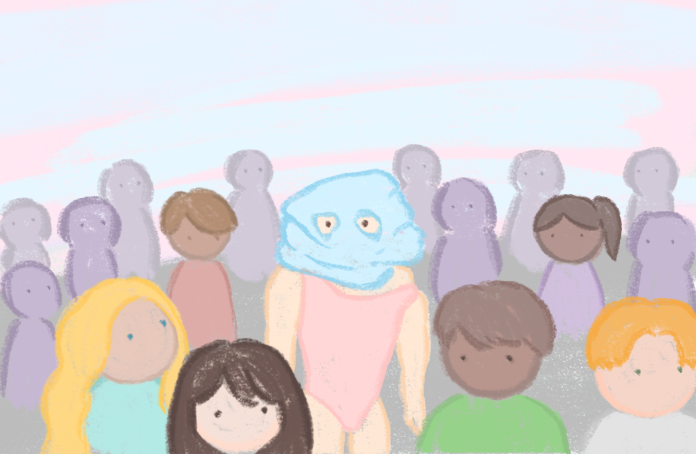
Dressed in my sister’s gymnastics leotard and wearing a makeshift mask made out of a comforter I’d found in the basement, I blended in perfectly with the pulsating hooded and masked masses who were quickly emerging from every sidestreet and corner to join the growing crowd. 

Having started the day feeling so fearful at the thought of the challenge ahead of me, a sudden calmness descended over me as our planned meeting time ticked closer. I heard of  the rendezvous via Craigslist (I was looking for a new fish tank) and was unsurprised to find that this ragtag group of basement dwellers and layabouts weren’t prepared to start our speedrun until a tawdry 3:00 p.m. Don’t the youth of today, and by that I mean anyone outside of my school year, not realize that some of us have errands to run? Truthfully, the later start just left me with more time to turn my nerves to shreds, but I let everyone within earshot know that the old adage “the early bird catches the worm” carries weight for a reason! One scrawny attendee with a really bad perm stifled a yawn and told me to zip it, and coincidentally ended up being the only member of our crew to find himself in cuffs at the end of the day. Funny how the world works when your brother is a police officer . . .

As I not so subtly alluded to, our dreams of tearing through the Church were short-lived. With 10 minutes to go until tee time, our growing congregation had caught the attention of a number of elderly bystanders. Sensing our excitement, and noting that the current cost of living crisis offers no reason for anyone without a trust fund to break into a smile, suspicions were raised and the police were called. Most fled the scene, but a few of the hardiest folks, including myself, stood our ground. Slowly, a strikingly handsome man emerged from a squad car, and as he cautiously approached, he started whispering indecipherably in tongues. Step-by-step, he inched closer, until standing mere meters away from me, he took off his hat and looked straight into my eyes. Stretching out his hand as if he was taming a lion, he purred softly, “I’m Operating Thetan Cruise, but you can call me Tom.” Then, he kicked me in the balls. 

Sorry folks, no look inside the Church of Scientology. This was all clickbait. 

I attended a cultural book club filled with white women so you don’t have to

0
PHOTO: Polina Lavor / Unsplash

By: M. Escritora

With some free-time on my hands, I decided to join an “empathy-forward” book club hosted at my local Bed Bath and Beyond location. I was ecstatic that we would be discussing a book narrated in first-person by a second-generation immigrant like myself. I Am Not Your Perfect Mexican Daughter by Erika Sanchez showed the rift between how immigrant parents compose their new life and how their kids actually get to live. Novels that cast open the terrors of adjustment and alienation always spoke to me. Literature should be uncomfortable to be powerful, right? I really related to the protagonist in this one; the character’s struggle with extremely strict parents reminded me of how ostracized I felt growing up. She was locked away from the city her parents were wary of and vilified. 

Five minutes early is late, or so I thought. When I arrived, towers of militantly-folded bath towels obscured any signs of human life. Maybe I was just plain late and missed the book club? Venturing deeper into the carpeted alcove, I realized the book club participants were initially camouflaged as shoppers among the wheat and cream coloured linens. A lady, presumably the leader (because she had the freshest bleach-and-tone), pulled from her trendy purse the novel I’d been reading in slips. “Let’s get started. Did anyone else seriously crrrrrrrrave carrrrrrrne asada after reading this?” I cringe as she dramatically rrolls her Rrrrrs, a flash of embarrassment singing in my temples. I used to pray my parents wouldn’t give away their newness to English with those same R’s, and here, some white lady is acting like it’s appreciation?

I listened intently. It almost seemed like tears were welling up in some speakers’ eyes. “It must have been so hard to migrate to North America,” an effusive blonde gushes. “I am very lucky my family has been here for generations to what was previously ‘barren land.’ Migration sounds like a struggle — I just can’t imagine having to walk more than a few hundred meters to the grocery store —” here, she pauses for a shudder, “Let alone kilometers through a desert just to cross the border, like the protagonist’s parents.” 

Another participant chimes in about the unwelcome, harsh conditions depicted in the novel, citing how grateful the contrast to the fictionalized Mexican village made her remember “the little things, like magazines, return policies at the mall, and our hockey team.” Belonging goes so deep for some they can’t even imagine life without the complete Maslow’s hierarchy. Hello, self-actualization. 

I hear a lot of “the main character’s so brave,” and “she’s so strong,” pitter-pattering through the room. My personal favorite: “The imagery of the landlord berating the family for cooking traditional Latino food was devastating. I am a nice landlord, I only ask them to keep their window open.” I chew on the end of my pencil, thinking about how my P.E. teachers never accepted that I couldn’t participate in contact sports because I couldn’t see moving targets, not to mention didn’t grow up playing “pickleball” or “flag football.” The book club members seem so close to understanding that celebrating differences welds together a diverse society, but the point woozes right over their head like a dodgeball. Latino acceptance goes as deep as mall food court quesadillas. 

“I did not see that plot twist coming.” Because stereotypes make up your literary forecasts. 

This book club experience felt weirdly like gossip rather than criticism as we discussed marginalized realities from the periphery. A novel puts you at a safe distance from a life that isn’t your own, but grievance isn’t action. As I fumbled to exit that bland and liminal department store, I knocked loose a display of dish towels. Product of Guatemala. Go figure.

In the headlines: Bowen Island campus, data centres, and so much more!

0

By: Tomos Land, Staff Writer

The BC New Democratic Party and BC Conservatives to write joint-manifesto for 2028 election as part of cost-cutting measures

KPMG awarded $20 million contract by Vancouver City Council to increase shareholder value in Downtown Eastside

Richmond Night Market announces expansion plans amidst refreshments increase at triple the rate of inflation 

TMX “probably not that harmful” to human health, says Alberta-based business consortium 

Millenium Line Wi-Fi dead spot linked with momentary boost in happiness, finds ministry of health

Mount Pleasant residents consider strike action amidst tote bag shortage

SFU Board of Governors proposes new Bowen Island campus to improve sense of community

Temporary closure of SFU pool probably won’t last much longer, finds TransLink’s Burnaby Mountain gondola consultant   

Government officials say data centers will aid climate change efforts by reducing human water consumption

Mining company says tax credits, provincial subsidies, and taxpayer funding is not enough to ensure “competitiveness” at Whistler retreat with NDP ministers

Vancouver landlords forced to increase rents just to afford FIFA World Cup tickets

MBA programs to offer classes in price-gouging and surveillance pricing in bid to modernize curriculum

“Repulsive, degrading, and disgraceful” — BC Premier lashes out against water-based hot chocolate

BC universities increase domestic tuition rates, citing executive pay squeeze

Academic quadrangle not that hard to navigate, claims sixth-year PhD student

New littering regulations come into effect at SFU, angering raccoon lobby

Grass not always greener, finds ex-lawyer turned landscaper

Hunting lobby dismisses potential benefits of wind energy, citing bird collision concerns

Builders association pretty certain lack of housing stock fueling affordability crisis

Brave lieutenant general forced to rearrange speaking engagements following exposure to Nanaimo bar on ferry crossing

GSS and SFSS express concern over heating conditions in student residences

0
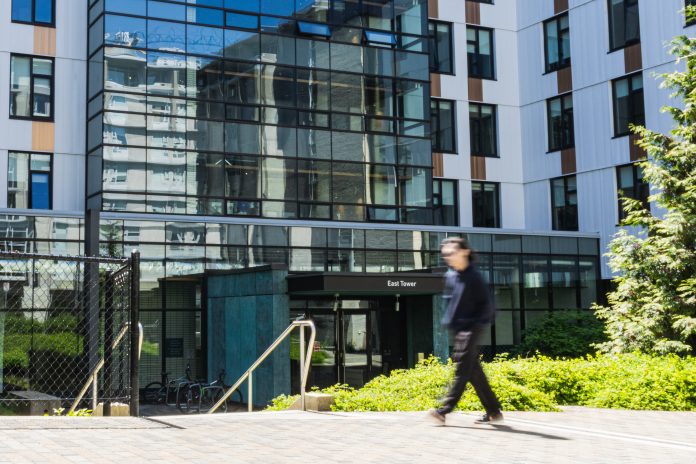
Photo of a SFU residential building on a sunny day.
PHOTO: J.J. Jang / The Peak

By: Niveja Assalaarachchi, News Writer

On April 27, the Graduate Student Society (GSS) and Simon Fraser Student Society (SFSS) issued a joint letter to SFU Residence and Housing regarding concerns over heating and cooling facilities in student residences. The letter alleged that inadequate student housing cooling facilities created a dangerous environment for students to study and live in. This letter was shared with The Peak

The Peak reached out to Kody Sider, the director of external relations at the GSS, as well as Hyago Santana Moreira, the SFSS vice-president university and academic affairs. Sider alleged that students were regularly suffering through temperatures above 26, which is the province’s legal limit for living spaces according to subsection 9.33.2 of the BC building code

“The university has done little to handle heat in the residencies that they manage. Students regularly have to sleep and live in heat upwards of 32.” said Sider. SFU has a ban on air-conditioning (AC) units for safety reasons. They cite “potential damage to the property, electrical load limits, and liability,” in addition to “water leakage” and “increased humidity leading to mold growth” as potential concerns. Sider said despite this ban, the university doesn’t provide a suitable replacement for residents. “Students regularly talk [to us] about how when they reach out to housing, housing tells them to just buy a fan or open the window . . . Almost every student that I know who lives in housing already owns at least one fan.” said Sider. “The university’s recommendations are based on the individual, treating it as an individualist issue, even though it’s a systemic issue.” The Peak reached out to SFU for comment, who noted that “students who are concerned about heat in residence are strongly encouraged to reach out to Residence and Housing staff for advice on options and tools to reduce the impact of heat in their unit.”

Moreira added that the university’s accessibility plan has made commitments to accessibility for campus residencies, sharing that “cooling facilities are a matter of medical accommodation.” He said, “SFU has a lot of commitments and they should be looking at our asks not as extraordinary asks, but as part of their own duty in respect to what Senate and what governance has already decided would be good for students, how they should prioritize the well-being of students.”

Sider expressed that the university administration advocates for climate resilient housing, but don’t implement the measures.

“They fail to practice what they preach internally, where they allow students to effectively be baked in their own apartments and then just telling students to get a fan or just not respond to students at all.”

— Kody Sider, director of external affairs at SFU Graduate Student Society

The student societies introduced four recommendations to improve housing conditions on campus in their letter. The first recommendation called for the university to lift the ban on air conditioners. As air conditioners are costly, the university should accommodate vulnerable students and “immediately streamline the process for priority students with medical conditions to install portable, high-efficiency cooling units.” Sider said this process does not currently exist, and different needs should be evaluated individually.  

The letter’s second proposal lists additional short-term measures designed to help students. They suggest the establishment of designated temporary cooling centres at every student residence, supplying air coolers and cooling kits to students. 

The letter’s final two proposals focus on long-term aspects of student housing development at SFU. The student societies call for the university to launch an independent building performance audit to analyze the climate and energy capabilities of each SFU building. Additionally, they propose the university publish a roadmap for thermal infrastructure in a three-year timespan, and install AC infrastructure in places where it is feasible. 

In a statement to The Peak, the director of SFU Housing and Residence Zoe Woods said that arrangements were underway “to prepare for the possibility of a hot summer ahead.” She stated that the preparations were being undertaken in coordination with different SFU departments to support residents at the Vancouver and Burnaby campuses. Woods said that SFU Housing and Residence’s preparations were “accompanied by outreach from the GSS and SFSS” and thanked them “for sharing their concerns.” 

The Peak also corresponded with the SFU Residence Hall Association (RHA), the primary organization that represents students living on campus, about the letter. Outgoing RHA president Vinisha Kadyan said in an email statement that “while the proposals raised by the GSS and SFSS provide a constructive starting point, it is important to consider whether they are sufficient to fully address the problem.” She noted that “some of these solutions may take time to implement and may not provide immediate relief for those currently affected.” 

Additionally, she said her organization believes Residence and Housing should be more concrete and communicative in their approach to cooling residencies by implementing short-term solutions such as “arranging temporary relocation options within cooler residence buildings when indoor temperatures exceed safe limits” while long-term structural changes are undergoing improvements.

Kadyan revealed that the GSS and SFSS did not include the RHA in the joint letter. She noted that “a collaborative approach between student organizations could have strengthened advocacy efforts, and created a more unified response before moving directly to a public joint letter.” She noted that the RHA had been discussing these heat concerns with the university as a “part of broader conversations about student living conditions.”

Moreira said, “At the time when the letter was sent, we would [have] liked to partner with Residence, but they are at a time of transition” and there was confusion surrounding whether they were fully a part of SFU and what decisions they could make. However, Moreira added, “I bet that the students and the RHA will agree with us that changes are needed.”