Home Blog Page 155

Top five back-to-school tips *potty edition*

0
Sparkling toilet with a spotlight on it
ILLUSTRATION: Jill Baccay / The Peak

By: Cam Darting, SFU Student

We’ve all had those days when you’re attending a lecture, and BOOM, you feel your stomach brewing up a storm. I get it. It’s uncomfortable. These five tips will save you in these times, allowing you to easily deal with that brown situation.

1) Sorry, no cow juice for you
Cheese, ice cream, yogurt, oh, it all sounds amazing, doesn’t it? But you know what doesn’t? Explosive diarrhea, cramps, the sweat dripping down your forehead as you struggle to clench your buttocks to keep your number two caged in. To avoid these unfavourable circumstances, I recommend one thing: AVOID DAIRY. Now, this may not apply to everyone (lucky you), but for those of us who aren’t so blessed, AVOID. 

2) The flush lever = your new best friend
Don’t you hate it when your number two is so loud? When you’re using the washrooms on the library’s second floor, you can’t help but be worried if the people outside the bathroom can hear you blowing up the toilet. If you have this fear, do not worry, as I am here. Right before you make your big doo, you’ll want to flush, masking the orchestra that is your bowel movements. If you want to go above this, try coughing simultaneously. With the sound of the toilet flushing, this will surely hide the noises. Genius, no? I recommend doing this in one go because you don’t want to waste too much water! #EcoFriendly

3) Find your version of heaven on earth, or in this case, on campus.
I get it. We all have those devilish poops that ruin our day and need to come out. In situations like these, it’s important to find yourself a sanctuary on campus where you can let it rip in peace. Now, I obviously won’t share my go-to spot, but a close second is the bathrooms on the first floor of the SUB, right under the cafeteria. Not only are there multiple single stalls, but they are usually clean and very cozy. If you ever see me come out of one of those stalls, don’t go in after me.

4) What is that smell?
Sometimes, when you use one of the many one-stall bathrooms on campus (accessible and gender-neutral? Slay), you leave it smelling like a porta potty that’s never been cleaned. Let’s be real; most of the time, you don’t care, and you walk out of that bathroom like you just conquered a war. But sometimes, there’s a line waiting outside, and you get  embarrassed (especially if you don’t actually need an accessible stall). So, I recommend carrying around a travel-sized perfume with you at all times. Spray that in the air and, bam, leave the bathroom smelling like Bath & Body Works for the next victim.

5) Thank God I got rejected from UBC
What is great about the Burnaby campus is that most buildings are connected. No matter where you go, a washroom will always be near you. If you were at UBC, you’d have to walk for who knows how long to find the nearest bathroom. This one isn’t really a tip but more so a reminder of how lucky we are to be surrounded by a toilet 24/7. Hell on Burnaby Mountain-1, beautiful garden campus in Vancouver-0.

Productivity is a trap

0
A white ceramic mug holding a liquid inside. A book is besided the mug, all resting on textiles.
PHOTO: Toa Heftibe / Unsplash

By: Olivia Visser, Copy Editor

Content warning: mentions of car accidents and brain injuries.

The other day, I made a post on my Instagram story saying that your productivity isn’t defined by how many activities you do each summer. The amount of friends who replied telling me they needed to hear this was equal parts disheartening and uplifting. Most of us are aware that social media is often a curation of the best moments from everyone else’s lives. Despite how many people have highlighted the impact this has on our self-image, we still find ourselves wrapped up in feelings of inadequacy. I know this because my own Instagram account is a snapshot into some of my favourite days — summit shots from mountain climbs, homely staycations, and progress photos from my work-outs. I’m well aware this isn’t an accurate reflection of my day-to-day life, and I hope my followers are, too. Yet, it wasn’t until I lost all these things that I realized I needed to do some serious self-reflection. 

Earlier this year, I was in a car accident that resulted in a sizable brain injury. Since I’ve navigated my entire adult life with chronic illness, I naïvely figured healing from a concussion would be inconveniencing yet manageable. I didn’t expect my final undergraduate semester to be one of my hardest endeavours, even though the content was relatively easy. For the first few weeks following my accident, I was too dizzy and out of it to do anything besides melt into my bed and watch the days pass. I didn’t feel like myself at all. Once I was capable of getting out of the house, I began attending multiple rehabilitation sessions a week. It was difficult to accept that a mere physiotherapy session was all I could handle in a day, and would leave me feeling sick for the rest of the evening. Every time I tried to push myself in hopes of feeling better, I got worse. 

I’ve always been a relatively active and passionate person, and others have pointed out my idea of fun is very “type 2” according to the “fun scale” developed in the ‘80s by geologist and mountaineer Rainer Newberry. Type 2 falls into the category of high effort, high reward outings. Outdoor adventures (and particularly type 2 excursions) make for very Instagram-worthy photos, which can paint an unrealistic picture of what someone’s life is like. Realistically, these moments make up such a small percentage of my daily activities. Between work, school, and caring for myself in general, I’m not out hiking every other day like my social media profiles may suggest. Don’t get me wrong: I think it’s great to collect memories in the form of photographs, and exhilarating moments are great ones to immortalize. There’s nothing inherently wrong with sharing our best moments on social media, but we also can’t ignore the ways in which we may contribute to a culture of Fear of Missing Out (FOMO). Or worse, trap ourselves in a shame-driven cycle of perpetual “productivity.”

Social media leads us to believe that productivity is defined by how many activities you can squeeze into your schedule, rather than your personal progress — whatever that may look like. This year, I was quite literally hit in the face with the fact that I was conflating my personal goals with my expectations. I had an entire summer of exciting plans ahead of me, and was hoping to progress in my alpine climbing skills. Beyond that, I wanted to give my all and finish strong in my last semester. These weren’t just goals — they were things I expected of myself, which led me to believe that failing to achieve these things constituted personal failure. Who was I without the ability to pursue my dreams and hobbies? 

It’s not just adventure photos that lead people to feel like they’re doing nothing with their lives, either — it can be discouraging to see friends go out for drinks every weekend or lounge at the beach, all while you’re stuck at home or work. I desperately wanted to catch up with old and new friends, but found myself barely capable of even responding to messages over the summer. And you don’t need to go through a life-changing injury to feel inadequate — capitalism, disability, personal stressors, and the general business of life make it difficult for many to find time for themselves. My solution? Separate your goals from your expectations, and give yourself the grace you deserve. Because of my brain fog, I still struggle to keep up with conversations like I used to, but I’ve learned to let go of my old expectations. There are always going to be things in life you can’t easily change, so why hold yourself to unrealistic standards that overlook your individual situation?

It’s great to have big dreams, but it’s also important to leave room for the mundane. Over the last few months, I regained my ability to take joy in simplicity. I reveled in the progress I made walking to the end of my block and back, to gentle forest walks. I spent more time with my family than I had over the last year altogether, and made peace with the whole “C’s get degrees” mantra. My morning coffee and book are now a highlight of my day. I haven’t given up on my goals, but I’ve given myself permission to slow down and enjoy the ride — and you should, too. 

The best decision I’ve made this year was to disengage from my phone during memorable moments; going for hikes, climbs, and coffee dates without posting to my story. There is liberation in knowing that it doesn’t matter one bit if people don’t know what you’re up to. Now and then I’ll send my friends something neat that reminds me of them, an intentional gesture that’s much more personable than an Instagram story. And if I snap a particularly nice photo that I’d like to share with the world, that’s cool, too. Engage with social media in a way that works for you, but remember — pictures aren’t alive, you are. 

Ranking the six sporting arenas I visited this year

0
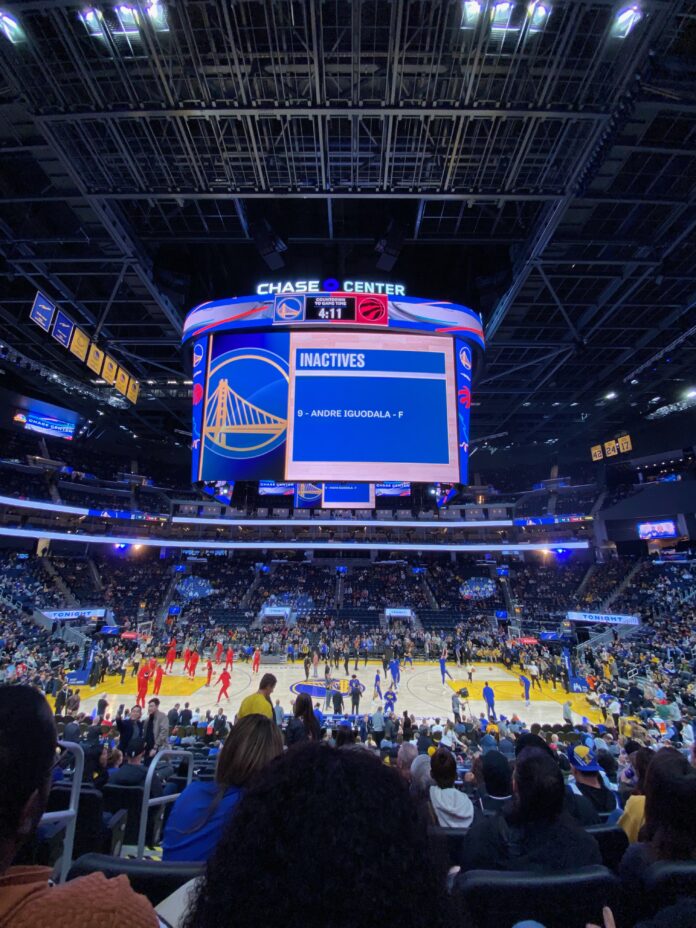
A photo of the jumbotron at Chase Center
PHOTO: Izzy Cheung

By: Izzy Cheung, Staff Writer

This year, I’ve had the privilege of visiting six major sporting arenas across North America. I watched a Colorado Avalanche playoff game in Ball Arena, saw Pitbull (Mr. Worldwide himself) in concert at the Saddledome, took a tour of the world-renowned Madison Square Garden, and saw Aaron Judge, Elias Pettersson, and Steph Curry play their respective sports in their home arenas. I’ve ranked each of these arenas based on five different categories — concession, historical background, efficiency, aesthetic, and my overall preference.

  1. Scotiabank Saddledome 

Home of the National Hockey League’s (NHL) Calgary Flames, and National Lacrosse League’s (NLL) Calgary Roughnecks. 

While I’m a firm Calgary Flames hater, this ranking is completely unbiased. It’s no secret that the Saddledome is in need of some repairs, and luckily, those will be coming soon. A new arena is coming to cowtown, financed in part by the Flames.

My visit to the Scotiabank Saddledome was to see Pitbull, who was headlining one of the first nights of the Calgary Stampede. Before going to Calgary, I’d been warned plenty of times about the rough shape the Saddledome was in, and in this regard, my visit didn’t disappoint. The concourse was relatively outdated, the stands didn’t feel particularly safe, and the only food options available were burgers, pizza, and other variations of typical festival fare. Overall, this venue did what it was asked to — hosting a concert — but didn’t particularly wow me. Kind of like NHL’er Jonathan Huberdeau this past season (if you know, you know).

My favourite part: watching Pitbull put on a cowboy hat for “Timber.”

  1. Rogers Arena

Home of the NHL’s Vancouver Canucks, and NLL’s Vancouver Warriors.

Rogers Arena is the perfect definition of “mid” for me. It’s not terrible, but it could definitely be better. The arena made a few changes over the summer, making improvements to the scoreboard and adding a new dining area that allows visitors to watch players take the ice at the beginning of each period. Of all the arenas on this list, Rogers is the one I’m most familiar with, so it’s hard to really review it from one specific experience. However, after visiting some of the other arenas across North America, I’d have to say it takes a backseat to some of the wonders provided by the others. In a way, Rogers Arena is the same spot as its home team — middling about in mediocrity.

My favourite part: Cin City mini donuts.

  1. Ball Arena

Home of the NHL’s Colorado Avalanche, National Basketball Association’s (NBA) Denver Nuggets, and NLL’s Colorado Mammoth

If this were a biased review, this arena would be at number one. As mentioned, my visit to Ball Arena was to watch the Colorado Avalanche in a playoff game. While they did eventually end up losing that game (as well as the series, unfortunately), the energy and excitement of playoffs was unlike any other. But this is an arena review — not an “experience” review — so review the arena, I shall.

Ball Arena was okay. It was large, clean, and had a decent selection when it came to food. I ate tacos while taking in warmups. I could tell that the arena itself was on the older side, but the design and layout of the jumbotron made me reconsider that for a second. One of the cooler parts of this arena was the main entryway, which had a large, hanging sculpture depicting various sports.

My favourite part: pom poms on each seat to celebrate Avalanche goals. 

  1. Yankee Stadium

Home of Major League Baseball’s New York Yankees.

This stadium gets its ranking largely due to the history associated with it. I know next to nothing about baseball, but upon arriving at Yankee Stadium, I could quite literally feel the importance of the franchise in the air. Seeing the large, gold “Yankee Stadium” signage above the gate made me feel like I was Percy Jackson coming to return the lightning bolt to Olympus in Rick Riordan’s The Lightning Thief (which is an interesting comparison, I know — but it just makes sense).

Options for concession were alright — nothing to phone home about, but also not completely devoid of options — and the stadium itself was clean. We got seats in the grandstand, so we could see pretty much everything on the field that needed to be seen. As a sports fan, the allure of this stadium came from the various signs and old logos that served as a reminder of how important the Yankees are to sports culture.

My favourite part: golden hour occurring in the background of the game.

  1. Madison Square Garden

Home of the NHL’s New York Rangers, and NBA’s New York Knicks

You know an arena is important when people are paying good money to go on tours of it (guilty as charged). Madison Square Garden is one of, if not the most famous arena in the world. While I didn’t get to see a performance or sporting event here, doing so is definitely on my bucket list. The arena is massive, with a capacity of around 20,789. Level 100 is stippled with various athletes’ memorabilia and placards of important events that have occurred within its walls.

My favourite part: seeing at least 20 banners hanging from the rafters. As a sports fan, it’s surreal seeing all those names and knowing everything that’s occurred in this very arena. 

  1. Chase Center

Home of the NBA’s Golden State Warriors

As great as each arena on this list was, Chase Center was on a different level. Ball Arena was about the playoff experience, Yankee Stadium and Madison Square Garden were centered around history — but Chase Center checked all of my boxes. The exterior of the arena was a sleek, modern white, with a couple of sit-down restaurants and a stair-like seating area out front.

If I could describe this arena in one term, it’d be high-tech. The walls and floor were all as white as polished enamel, and concession stands were clean, hosting a variety of foods. I grabbed tacos (yes, again) and sat down to watch the Golden State Warriors warm up. The jumbotron was, well, jumbo — and the bright lights made the arena appear much more modern.

My favourite part: fan interactions, bright lights, and not having to wait in a long line to go to the bathroom.

Disabled people in BC need marriage equality

0
A couple, one in a wheelchair, on the beach
PHOTO: Mikhail Nilov / Pexels

By: Hailey Miller, Staff Writer

Many disabled people in BC rely on Persons With Disabilities (PWD) benefits — monthly income assistance from the provincial government. Though some income assistance is better than nothing, these benefits are not nearly enough to sustain people with today’s cost of living. Such benefits are so minimal that many people still cannot afford daily living expenses, let alone added medical expenses of uninsured assistive devices, appointments, and medications. Moreover, if a person on PWD enters a “marriage-like” relationship with someone who does not receive these benefits, the disabled person’s monthly PWD assistance is removed. This includes serious common-law, spousal, or marital relationships that last a minimum length of 12 months.

While this only applies if the relationship becomes known to the government, and the partner makes over $18,000 a year, the province assumes a disabled individual’s expenses can be covered by their partner. This forces those who are disabled to rely on someone else’s income, or lose other financial support. This should not be the case, especially considering the outrageous expenses of today’s housing market

As of August 2023, the monthly PWD amounts are typically up to an estimate of $1,480, including the allocation of a $52 transportation supplement, and a measly $375 for rent. The remainder is designated as support expenses to cover other monthly costs. Aside from this, an excess unearned income deduction — noted on someone’s PWD account — is factored in based on how much income an individual declares per month. And, yes, filling out monthly reports is expected in order to receive designated benefits each time, which can be an exhausting process for a variety of disabilities. Disability income assistance rates are different for relationships where both individuals receive PWD, if someone or the couple has a child, or if multiple family members receive these benefits.

Evidently, these amounts are not enough to cover everyday costs, let alone medical or unexpected expenses. Today, the average person spends between $2,000$3,000 per month on rent in the Lower Mainland. Pair that with about $360 in groceries and your monthly expenses are already through the roof. 

It’s difficult enough to manage as an individual without a disability in today’s market. For those of us with disabilities who rely on monthly income assistance just to get by, it’s disheartening to know that our benefits are essentially eliminated if and when we enter a relationship that becomes known to the government. This leaves minimal options and a lack of income security for those of us on PWD who want to save for a house or car, start a family, factor in appointment costs, and personal expenses such as travel and going out.

The elimination of these benefits leads to unfortunate options for a couple: not declaring their relationship and risking lying to the government, living in the same household but pretending to be roommates so it doesn’t seem like they’re together, or not getting married to preserve these benefits. The lack of marriage equality in BC for disabled people forces a choice between receiving income assistance or pursuing a relationship. In other words, we must choose between love and survival among modern-day inflation. 

It is completely unacceptable to remove benefits that are awfully minimal to begin with. Removing these benefits restricts disabled peoples’ independence and increases the risk of potentially entering or getting stuck in abusive relationships out of necessity for financial assistance. 

To safely and securely manage financially within a relationship or cohabitation between an interabled couple, marriage equality for disabled people must be implemented for equity, financial security, and basic human rights. PWD should allow people with disabilities to enjoy relationships with their partner without falling into debt or poverty, and perhaps even expand the minimal benefits they offer. PWD support should allow individuals to live their life independently, without relying on their relationships for financial care.

Council approves student back to school froshes

0
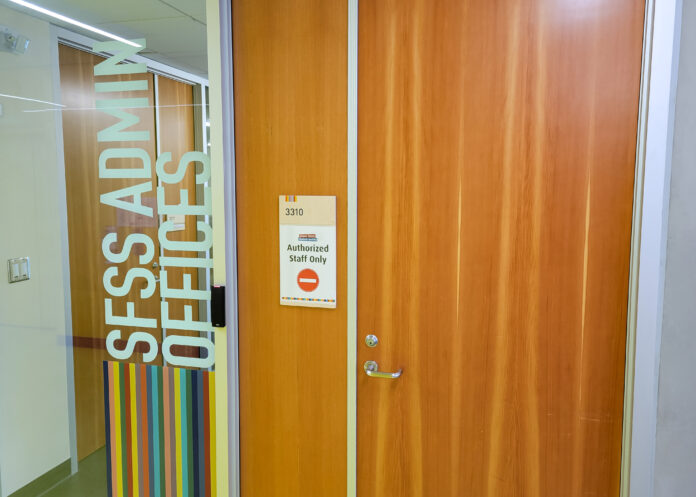
This is a photo of the outside of the SFSS offices in the Student Union Building. On the window there is a sign that reads “SFSS Admin Offices, authorised staff only.”
PHOTO: Amirul Anirban / The Peak

By: Olivia Sherman, News Writer

Editor’s note: The Peak would like to acknowledge that Josh Ralla, one of our staff members, was previously an executive director of TEDxSFU, but had no involvement in writing this article. 

On August 30, The Peak attended the bi-weekly Simon Fraser Student Society (SFSS) council meeting. Despite the SFSS meeting being cut short when quorum was lost, many topics, grants, and proposals were settled. Topics included grants for SFU student society froshes and multiple nominations for Council elections. 

Student Societies Pitch Frosh Grant Funding 

The Engineering Science Student Society (ESSS) proposed their welcome event for new engineering students this fall. The engineering student councillor noted this orientation, spanning from September 11–15, is a tradition dating back more than 20 years. This year’s frosh will host nearly 200 new engineering students. The ESSS requested $5,700 in grant funding, most of which would go toward food for the week-long event. 

John Walsh, facilities manager for the SFSS, suggested the event be subsidized through ticket sales. SFSS president, Liam Feng, noted the reason the cost is abnormally high is due to the sheer number of people who will be in attendance, and the fact the event spans multiple days. Evan Accettola, Indigenous studies students union councillor, noted the requested sum for food added up to an estimated $15 per person, which he deemed “near impossible,” to feed that many people on such a small budget. 

Feng noted that this was the tightest the budget could stretch, and the motion for grant funding for the ESSS frosh was passed. 

The Science Undergrad Society (SUS) also proposed their frosh for incoming students, requesting $10,414.25. 

SUS councillor, Catherine Ho, presented an amended proposal for the event of $8,169.70. This funding would go toward food and merchandise for an estimated 150 attendees. Merchandise included t-shirts and tote bags for 175 people. The motion to pass the amended proposal was passed unanimously. 

FASS on a Boat 

The Faculty of Arts and Social Sciences (FASS) proposed their “long-awaited annual event,” FASS on a Boat. The event is a three-hour cruise of Vancouver’s landmarks along Sen̓áḵw land (False Creek). FASS requested $8,000 for the event for an estimated 200 attendees. 

Last year was the first time the event had run in three years due to a hiatus caused by the COVID-19 pandemic. Councillors noted the price for a boat rental and hired security guards has risen in that period of time.

The requested grant fund of $8,000 is no longer accurate, and councillors agreed to table the discussion until the next SFSS meeting. 

TEDxSFU

TEDxSFU is a series of conferences, organized by SFU students and alumni to “foster conversations and community.” Representative Josh Ralla gave a brief presentation on TEDxSFU and proposed a permanent space in the Student Union Building (SUB) at SFU’s Burnaby campus. The multi-purpose space would serve as a meeting place, office, and studio. 

Walsh noted that, despite the SUB being a large building, there is very little room to be permanently allocated. “We don’t really have a lot of space in the SUB, in particular we don’t have a lot of space to be allocated. It’s a bit of a misconception because the building is actually quite large, the building itself is 113,000 square feet. But in terms of actual event spaces or rooms, we don’t actually have quite a lot.”

The motion was tabled until the next meeting. 

SFSS Community Guidelines 

Walsh proposed a renewal of community guidelines to maintain peaceful and respectful SFSS spaces. Items include refraining from harassment and bullying, avoiding smoking near entrances and exits, refraining from loud disturbances such as loud music and shouting, and staying mindful of others in quiet study spaces. The motion was postponed until the next SFSS meeting. 

The quorum for the meeting was lost by 6:00 p.m., meaning not enough councillors were present to continue with the meeting. After a brief recess, the meeting was officially adjourned at 6:35 p.m. 

Eight ridiculous font names that will make you laugh

0
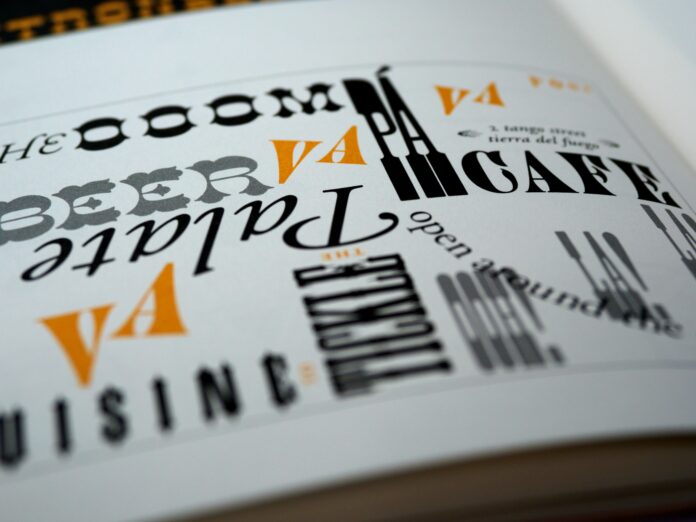
Orange, black, and grey words written on a page in all sorts of fonts.
PHOTO: Brett Jordan / Unsplash

By: Saije Rusimovici, Staff Writer

After some well-deserved time away, we’re kicking off the semester in full swing. As a Communication student, I’ll be spending most of my time with my best friend, Canva. Sifting through templates and scrolling through the seemingly endless list of font choices gives me as much euphoria as the iconic Adobe Flash dress up games of my childhood. As a Criminology minor, my eye for style is criminally underutilized (must . . . use . . . Arial). But who comes up with these font names, anyway? They must be related to whoever picks the nail polish names. Quick! Guess what colour Alpaca My Bags is. Time’s up! Blue. Now that we’re adequately warmed up, let’s kick off back-to-school season with some of the most ridiculous font names. I advise you to use them with your own discretion. 

  1. TAN Meringue

This font looks like it should be used to write a fairytale. But I have questions about where this name came from. Is it a cookie? A confection? Can I eat it?? No, I guess not, but it sure looks pretty. It’s as whimsical as though Hansel and Gretel themselves came up with it after fleeing that creepy old woman’s candy house. 

2. Architype Bayer-Type 

I know what my archetype is (the Lover), and this font isn’t it. Kinda cute, though, if you like something modern. Based on “Herbert Bayer’s 1931 universal, modern serif alphabet,” this font is business in the front and artsy in the back.

3. Knockout Welterweight 

Did this font win the WBA Championship or something? I don’t know if it’s just me, but I don’t think this font could even remotely knock anyone out. The standard OpenType font is startlingly simple, and does not live up to its name. According to Free Fonts, it’s been downloaded a whopping 398 times at the time of writing this. In my opinion, this font has struck out in all ways other than the absurdity of its name.

4. Special Elite

I feel important using this font. The typewriter style makes me feel like a 1940s typist sending a telegram in a secret spy organization. Catch me typing up agent reports for fun. Don’t worry, I’m not a spy (or am I?). 

5. Asap 

Asap’s name fits its uses, as the font was quite literally developed to save time when changing font styles without changing the flow of the text body, so that all of the lines stay the same length. Quirky name, useful font — bravo. But the real question is, will using this font help me finish my essays quicker? 

6. Ribeye 

Of all the Google fonts, this is the first to make me hungry. “Reminiscent of a cartoon tattoo style of lettering,” Ribeye is a playful type that can be used for newsletters and graphics. I only have one request. Can I get a side of fries with it? Or better yet, buttery mashed potatoes.

7. Text Me One 

Use this when writing one of those “Is it possible to get an extension?” emails to your TA. According to Google Fonts, this font is playful with just a “hint of pop” and is used best for large lettering or continuous body text. Personally, I would write every email in this font. TTYL!

8. Arial Nova Condensed 

Not the Arial the assignment guidelines are referring to. 

Under the radar sports

0
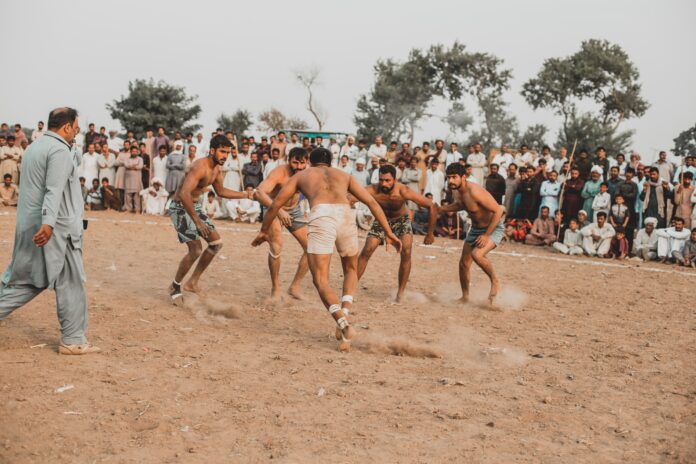
photo of a game of Kabaddi.
PHOTO: Tehmasip Khan / Pexels

By: Saije Rusimovici, Staff Writer

  1. Bossaball: volleyball on a trampoline 

This relatively new sport originating in Brazil requires tons of athleticism and a love for trampolines. Founded in Spain by Belgian entrepreneur Filip Eyckmans, bossaball combines the technical and physical skills of soccer, gymnastics, and volleyball. Inspired by the Afro-Brazilian capoeira (a form of dancing), Eyckmans created a sport that is “a fusion of different body techniques.” The former pro tennis player-turned-band manager combined music and sport into a game that is played on a massive inflatable field. Players on teams of three–five attempt to score points by getting the ball to drop on the opposition’s side, just like in volleyball. However, the players do this by jumping to kick or hit the ball with any part of their body. Because of the change in gravity and the bounceback given by the trampoline that is safe to land on, players can do really cool tricks that would be impossible on solid ground.  

2. Bo-taoshi: vertical tug-of-war 

Translating to “bring the pole down,” this game is played by cadets of Japan’s National Defense Academy. The goal of the game is to get the opposing team’s pole to an angle of at least 35 degrees from the ground with physical force. The poles are extremely large, and therefore the teams must be too. Each team consists of 75 people, divided into different offensive or defensive roles such as pole support (who keeps the pole stationary), interference (who defends against attacks), ninjas (who are the sole team members at the very top of the pole), and pole attackers (who try to knock off the ninjas), among various other positions. This game is incredibly difficult and requires both strength and strategy. 

  1. Kabaddi: capture-the-flag, minus the flag

Kabaddi originated in ancient India and requires seven players for each team. The goal of the game is to score the most points by sending one player into the opposition’s side. The player can score points by touching members of the opposition, sending them out of the game. When defending, players can also score points by capturing the single “raider” of the opposition’s team before the time is up, forcing them to retreat back to their side. Raiders can earn bonus points by reaching the opposition’s bonus line without getting caught. Players must be strategic, strong, and agile in order to win the game. A great thing about this game is that a field can be created anywhere simply by measuring out a space and drawing a line down the middle to divide two sides. 

Brother is an intimately woven story of grief

0
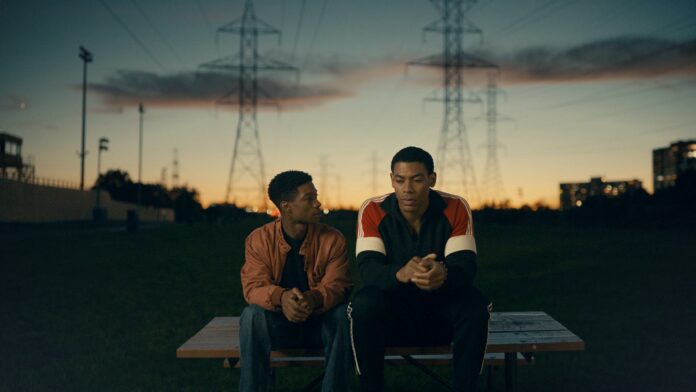
Two brothers, Black young men, sit on a bench outside in front of power lines. The sun is setting and the sky is tinted orange.
PHOTO: Courtesy of Elevation Pictures

By: Petra Chase, Arts & Culture Editor

Content warning: mentions of police brutality and racism.

I read Brother in my first year at SFU, after taking ENGL 112W instructed by the author, David Chariandy. As soon as I found out about the film adaptation directed by Clement Virgo, I was eager to see it play out on screen. Through new senses, I gained a renewed appreciation for this intimate portrait of Scarborough, Ontario — a place I’ve never been but have visited through Chariandy’s illusive storytelling and Virgo’s intentional cinematography.

Michael (Lamar Johnson) grows up under the guidance, and at times, shadow, of his confident older brother, Francis (Aaron Pierre). Their single mother, (Marsha Stephanie Blake), is a Trinidadian immigrant who works multiple jobs. Moving through different time periods in the ‘80s and ‘90s, the story explores how race, masculinity, and class compound how they fit into the world; Francis teaches Michael to have a tough exterior to survive under unfair conditions.

Intruding on their coming-of-age experiences is the persistent police presence in their neighbourhood. It’s a constant reminder that racialized communities, and especially Black men, are over-surveilled. In the novel, Michael describes how quickly his neighbourhood is transformed into a crime scene, and how even his own community members see young Black boys as “scoundrels.” Michael describes hypervisibility in that moment as “being studied unfavourably. When you’re being watched but also trying to see.”

Brother is Chariandy’s second book — both books are set in his hometown, Scarborough. Chariandy said he was “discomforted by the negative stories of Scarborough” from those who didn’t know the area very well. He also said the book helped him process the “vulnerability” he felt growing up about “the possibility that life would take an ugly turn.”

This spoke to Virgo on a “visceral level.” In what’s described as his most personal film yet, the brothers’ mother, Ruth, is from Jamaica rather than Trinidad like in the novel, as this is where Virgo’s mother was born. “Clement could infuse the home and other settings with sounds, images, and overall references that he himself could recall from childhood,” Chariandy told The Peak.

The phenomenal cast embodied Chariandy’s fleshed-out characters fully. The trust and love between mother and sons, and the weight each character carries, all felt extremely real.

Johnson, who plays Michael, told CBC News, “it was important for Black Canadian kids to see themselves  represented on screen.” As a “first-generation Canadian raised by a single mom from Jamaica,” Lamar said, it felt similar to his childhood. 

Visually, the film is a feast for the eyes, with moody shadowing and colour palettes, and nostalgic set and costume design. It premiered at the Toronto International Film Festival in 2022 and won 14 awards, including Best Motion Picture at the Canadian Screen Awards. 

Whether you decide to read the book or watch the novel, you can expect a satisfying balance of dialogue and action, each detail moving you deeper into the characters and setting. The film inspired me to re-read the book, finding new slivers of meaning in every line, which is something I asked Chariandy about.

“In art, I think we feel that something is ‘real’ when we observe details — either details that appear directly relevant to the main actions of the scene or plot, or, paradoxically, details that are minor or even ‘irrelevant,’ and thereby signify the complex over-abundancy of life,” he said.

A pungent shattered pickle jar, onions hitting hot oil, and the distant dribble of a basketball on asphalt are some of the details Chariandy etched into my memory, and caught my attention throughout the film. Details breathe life into the memorable settings that make up Scarborough, like the library where Michael and his friend Aisha (Kiana Madeira) get close, or the Rouge Valley, a sliver of wilderness that offers sanctuary from the concrete jungle. 

And then there’s Desirea’s, a barbershop, and so much more. It’s there where Francis and his friends, and later Michael and Aisha, hang out and listen to music. An ode to Toronto hip-hop and its Black influences, Desirea’s demonstrates the importance of belonging, especially among children of immigrants, who come from different cultural backgrounds yet share the “second-generation experience of being racialized and Black in Canada.”

Above all, Brother is a story about complicated grief, and how the stuckness of it impacts a family and community; there’s the grief of childhood dreams being shattered by the cold realization that your identities limit your opportunities. There’s the grief of longing for a safe community that’s not overpoliced, and the grief of the loved ones lost due to police brutality. And there’s migratory grief, in which Michael and Francis are disconnected from the place and culture where they were born, and their mother is reluctant to talk about her hometown. 

That is until Aisha, who grows up alongside Michael, comes back to visit after travelling abroad and visiting her father’s hometown. Madeira brings gentleness and warmth to her on-screen character, including the poise to throw a rock at a police car. “In that moment, Aisha just feels that the world is against them, and that includes the systems that are in charge of their life,” the actor explained at a Q&A. It’s beautiful and cathartic to see how she brings healing to the heartbroken characters by encouraging conversation around grief. 

There’s something so special about a story that moves you the way Brother does, and it certainly has to do with the “respect and familiarity” that everyone brought to telling it, from the novelist to the screenwriter and director, as well as the actors. Brother will pull you into its world and stick with you. 

Rent Brother on YouTube, Crave, CBC, and other streaming platforms. Buy the novel online at Massy Books or any local independent bookstore.

BC’s first annual clean air festival promotes immunocompromised accessibility

0
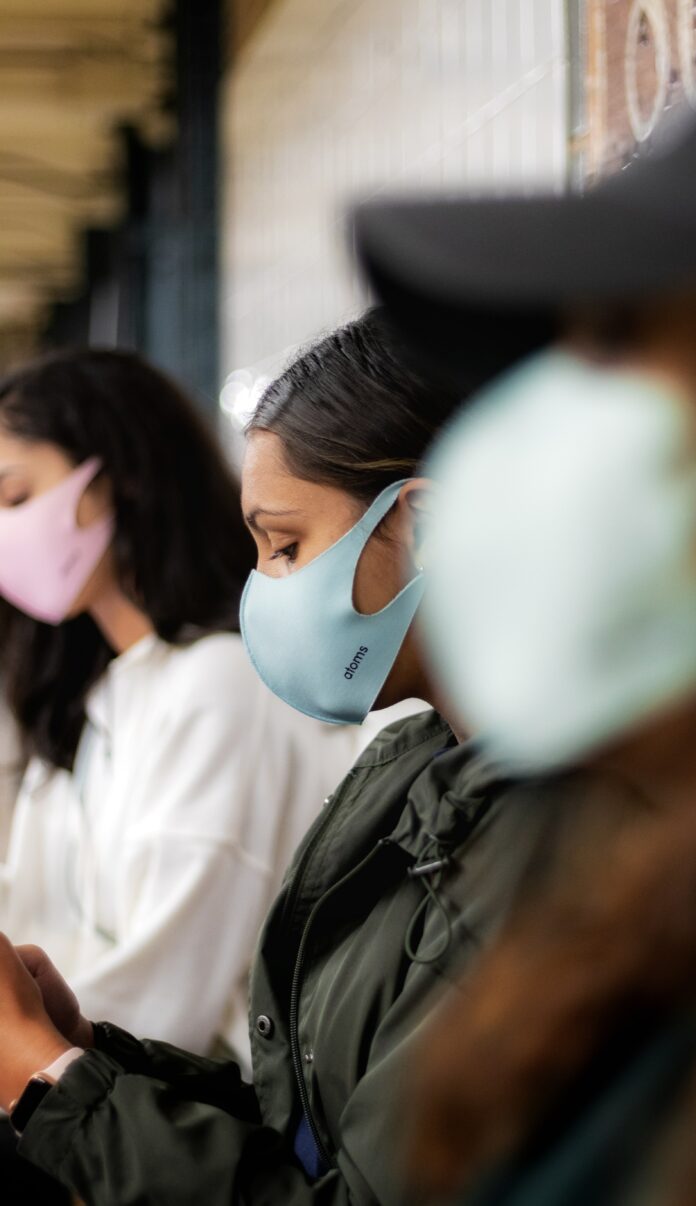
This is a photo of an individual on a bus wearing a mask. The two people next to them are also wearing masks.
PHOTO: Brian Asare / Unsplash

By: Eden Chipperfield, News Writer

On September 2, BC’s first annual Clean Air Festival occurred at Trout Lake in East Vancouver. The event is supported by Protect Our Province, Safe Schools Coalition BC, Masks4EastVan, and Do No Harm BC. It promoted an accessible space where immunocompromised individuals can find sanctuary among peers who relate to ongoing concerns around airborne pathogens, like COVID-19, and pollutants that significantly affect air quality. 

To learn more about the event’s significance, The Peak connected with festival supporter and organizer, Dr. Karina Zeidler, who believes everyone has the right to clean air, similar to access to safe drinking water. 

Zeidler explained the enthusiasm for the festival began during the height of the COVID-19 pandemic when anti-maskers opposed gatherings that enforced protective cautions like wearing masks. The festival sparked the idea that protecting each other should be considered a celebration, rather than what anti-maskers consider a “killjoy” movement, according to Zeidler. She continued by saying now is the perfect time to hold this festival as we are transforming into a culture that cares about one another and safety, bringing together a community. 

Zeidler also elaborated on her comments regarding the “right to clean air.” She asked, “Isn’t it strange that we’re here, almost four years into the pandemic, asking for people to be permitted to breathe clean air? That we have to ask for that, for our children in schools? That it’s not a priority for the government?” The push for the Clean Air Festival is to encourage the government to acknowledge the right for clean air. Simultaneously, they want to let people know they are not alone in their air quality concerns and that gathering in a safe way can still be a fun time, especially when there is music and food provided.

Among the festival activities, there were opportunities for festival-goers to participate in DIY workshops to make air filters, decorate masks, and write postcards to encourage that masks be brought back into healthcare environments, a mandate which was ended in April of this year. The reasoning for the chosen activities at the festival is to “push for the right to clean air, for proper ventilation and sensible mask protection, to live our lives free of COVID-19 and the health impacts of worsening climate emergencies such as wildfire smoke,” said Zeidler.  

The festival was initially scheduled to take place on August 20; however, with the worsening smoke conditions from the wildfires, organizers decided to postpone the festival to September 2. 

“The fact that our governments are pretending to act to fight the climate emergency, while in fact, they are frantically expanding fossil fuel subsidies, is so similar to the way governments have pretended to ‘end’ the pandemic,” commented Dr. Zeidler. “In both cases, we see that the proof is in the pudding. If those in power care about clean air, why does it make our children and elders choke and cough to go outside? If the pandemic is over, why are so many people getting sick and not recovering?” 

Postponing the festival was an important decision for Zeidler. It showed that health and safety is a priority, so they can continue to spread the message of an accessible event where people can breathe freely and fight for the right to clean air. “Building this festival has been amazing in the way it’s helped grow the COVID-safe community,” she remarked.

“We hope listeners out there will start wearing a proper N95 mask and that people will demand clean air, including mask protections, air filters, proper ventilation, and CO2 monitors in their classrooms and workplaces.” 

Mastering the Basics: Ultimate Frisbee

0
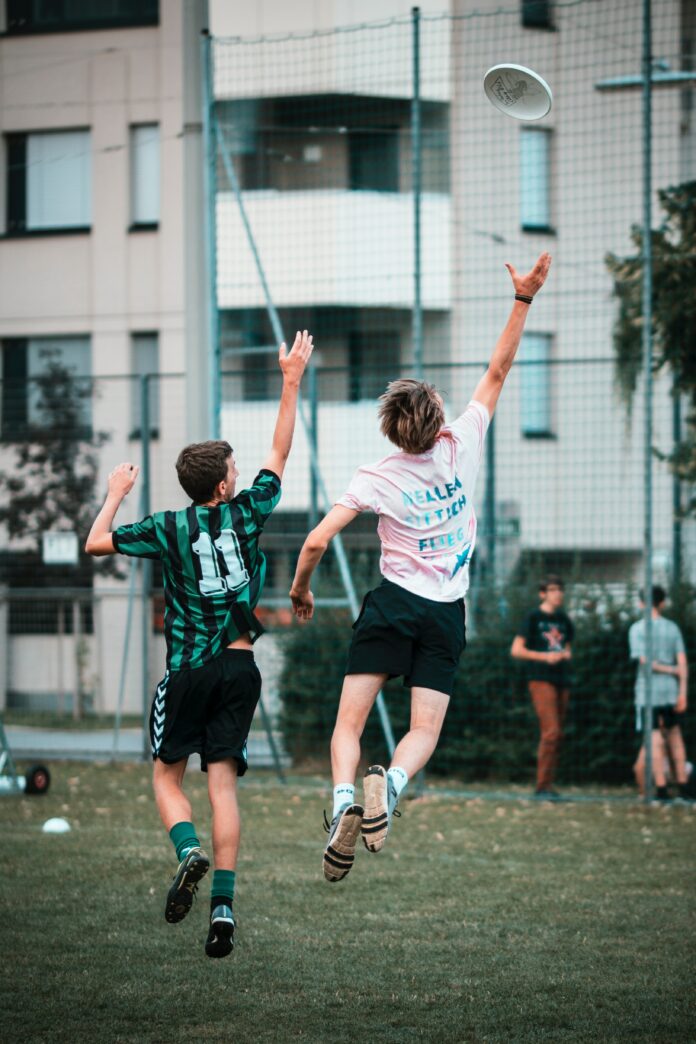
Photo of two people jumping in the air to catch a frisbee
PHOTO: Raphael Nast / Unsplash

By: Izzy Cheung, Staff Writer

Editor’s note: Some answers were edited for clarity.

With endless sheets of ice, blacktop basketball courts, and baseball diamonds, Vancouver has plenty of sports to play or watch. However, ultimate frisbee doesn’t often make its way around Vancouver’s tabletop chatter, even though a game contains just as much action as basketball or hockey. The Peak talked to Viktoria Abanos, a player who is part of Strawberry Vancouver Ultimate League’s Wednesday night Division 3 Champions to understand some of the basics of the game. 

Q: How many people make up a team? 

A: Roster sizes are typically 20–25 people, with seven players required on the field at a time. 

Q: How are games divided (rounds, quarters, periods, etc.)? 

A: Games can be divided into halves, though halftime breaks aren’t always taken. Lower-level games tend to be around 80 minutes. 

Q: Can you describe what a typical game looks like? 

A: A typical half consists of teams taking their turn trying to earn points with only breaks for substitutions. After the initial pull (the first throw of the game), points are played out until either the allotted time or scoring cap (the amount of points needed to win) is reached. 

In addition to the start of each game and half, pulls are executed by the team that scores. A player on the scoring team throws the frisbee to the opposing team. Possession changes with each point that is scored (with the disc going to the team that was scored on). Turnovers occur when a pass is intercepted, knocked down, or lands out of bounds. 

Q: How are points awarded? 

A: A point is awarded when the disc is caught in the opposing team’s endzone. Since a player can’t move when holding the disc, in order to score a point, a different player must catch the disc in the endzone for the point to count. Each catch in an opposing team’s endzone counts for one point — after a point is scored, possession goes back to the team that was scored on. 

Q: How does a team win a game? 

A: The game concludes when a team reaches the maximum amount of points (generally 15 for 80-minute games). If the game time concludes before the point cap is reached, the team with the most points wins. 

Q: What are some of the positions? 

A: Offensive positions include: 

  • handler (“two or three people that tend to touch the disc the most, pretty much equivalent to a quarterback in American football”).
  • cutter (“‘cuts’ into the middle of the field, closer to the handler to get the disc passed to them as a way of moving the frisbee past the opposing team’s defensive line.”)
  • wing (“runs up and down the side of the sideline they are responsible for.”)
  • deep (“stays in the middle as deep and close to the endzone as possible depending on the handler’s throwing ability — and waits for a huck [long distance throw])”. 

Q: How are fouls/misdemeanours regulated? 

A: Ultimate is largely self-refereed and operates on an honour system. Opposing team members can call fouls. If a call is contested, the disc is brought back to the player who last had possession and the point restarts from there (the other players on the field should ideally try to get in the same positions they were when the throw first happened). If the call is uncontested, the foul stands, and possession changes to the opposing team.

Q: What are some examples of common violations? 

A: When the disc or disc-holding hand are touched by an opposing player before leaving the current player’s hand; travelling (taking more than three steps with the disc), or interfering with the other team’s player(s) during the air battle (when players jump in the air to catch the disc). 

Q: How do players determine shift lengths/substitutions? 

A: There are two methods for substitutions. Players either change every two points, which is common at lower levels. Or they are split into an offensive “O-line” (which goes on the field to try to score points) or a defensive “D-line” (which goes on the field to try to stop the opposition from scoring).