Home Blog Page 154

Mexican Gothic reimagines colonial horror stories

0
Cover of Mexican gothic
PHOTO: Courtesy of Random House Worlds

By: Saije Rusimovici, Staff Writer

Content warning: brief mention of eugenics and colonialism.

Mexican Gothic by Silvia Moreno-Garcia will leave you unsettled, frightened, and absolutely horrified. Just thinking about it sends a chill down my spine. Halloween may be over, but this horrifying gothic mystery will definitely be the scariest thing I’ve read this year.

The novel is set in 1950s Mexico, and begins by depicting the lavish lifestyle of debutante Noemí Taboada in Mexico City. After returning from a night out one evening, her distraught father presents her with a frantic and incomprehensible letter from her newly-wedded cousin, Catalina. Determined to figure out what’s wrong with her cousin, Noemí sets off to High Place, a property owned by Catalina’s English husband, Virgil Doyle, where the rest of his family also resides. 

It isn’t long before Noemí starts to realize there are strange things happening at High Place. Harsh rules, servants that refuse to speak, and mouldy books are just a few peculiarities in the poorly-maintained but grand manor. Catalina is bedridden and delirious, supposedly having succumbed to a terrible illness according to the family doctor. But with the help of the youngest Doyle, Francis, Noemí soon discovers it isn’t tuberculosis that’s making Catalina sick at all, and hatches a plan to escape. 

Fans of the Brontë sisters will appreciate the mysteriousness of the story’s setting: a creepy English manor pasted into the mountainous regions of the Mexican countryside. Those who were captivated by Jordan Peele’s Get Out will be both equally terrified and revolted by the metaphorical hints at the horrifying beliefs rooted in eugenics and colonialism. Taking a genre that’s traditionally been used to reinforce ideas of the “other,” Mexican Gothic flips this around, exploring how colonialism and eugenics play a role in objectifying Mexican women. 

Reading this book was uncomfortable. Although a work of fiction, the uncanny similarities with real-world ideologies is what makes it truly horrifying. There were numerous occasions where I had to set it down and take a break, thinking things to myself like who would do this? and I can’t believe this is happening, terrified I’d start seeing things emerge from the shadows in the middle of the night. While the book was sprinkled with elements of fantasy and the supernatural, the ties to biology and botany added additional allure.

Noemí’s voice was strong and passionate. By the end of the book, I felt as though I knew her as a friend. The way she navigated the brutalities of High Place demonstrated her bravery and power as a woman. I appreciated the imagery Morena-Garcia created through Noemí’s eyes, something that often gets lost to dialogue and the characters inner thoughts when a book is written in first person. 

Upon finishing the book, I was left satisfied yet unnerved. Moreno-Garcia gives readers the closure they need, but this doesn’t distract from the horrifying plot leading up to the conclusion. I would recommend this book to readers who enjoy a blend of mystery, historical fiction, and horror, but it’s definitely a book that you might have to hide in your closet after reading (yeah, it’s that scary). 

Silvia Moreno-Garcia was born in Mexico and lives in Vancouver. She is the author of several other novels including bestseller The Daughter of Doctor Moreau. Her latest novel, Silver Nitrate, blends Mexican horror movies and occultism. Learn more about her work at https://silviamoreno-garcia.com/.


We need more BIPOC women in publishing

0
A Black woman reading a book
PHOTO: Tima Miroshnichenko / Pexels

By: Saije Rusimovici, Staff Writer

Books written by Black, Indigenous, and other people of colour (BIPOC) offer important stories, perspectives, and voices that reflect the diverse experiences of people of colour. Not only is it important for readers to have books they identify with, but it’s essential for those outside these communities to read beyond the colonial perspectives depicted in mainstream novels. This should begin with BIPOC women being featured in the classroom at early ages, but the larger issue is a sheer lack of representation in the publishing industry. While movements like Black Lives Matter have propped up more Black authors, publishers need to work towards platforming BIPOC voices regardless of the news cycle. The stories BIPOC women have to share are so much more than just what’s in the headlines. 

Almost every book we read in Canadian elementary schools consists of a cast of white heroes and heroines. Books like Hatchet and The Outsiders offer narratives composed of stories from the perspective of white men. Looking back at my childhood, this is more than a little unsettling as my school’s population was predominantly composed of people of colour. Many of my classmates didn’t speak English as their first language, as they had newly arrived in Canada. The stories in our curriculum lacked the cultural diversity needed to represent the multiculturalism in our school. 

The books we read should reflect the diversity we see around us every day. A big part of connecting to literature is being able to relate to the characters in the books you are reading. However, when predominately white publishers decide white is the default “relatable” story — what does that tell us about their efforts to connect with people of colour? Our learning is shaped by the stories we are exposed to. There needs to be representation and access to diverse books because people of colour deserve to see themselves in the stories they read.

Despite the impression that many BIPOC authors are climbing the bestseller charts, research from a sample of published books demonstrates that a stunning 95% of published authors are still white. The bestselling BIPOC authors we tend to see featured at bookstores are written by celebrities, politicians, and athletes of colour, giving the illusion that there are more BIPOC authors being published than there actually are. In reality, only 22 out of 220 authors on the fiction bestseller list were people of colour in 2020. The less famous, mid-list authors are “overwhelmingly white.” This sends a message about what kind of status is needed to make it as a BIPOC writer. 

Those who work in publishing directly influence the representation we see in books. According to a survey from 2019, 85% of people “who acquire and edit books” are white. Literary agent and former editor Marie Dutton Brown said there is “fluctuation in publishers’ support for Black writers to the news cycle, which periodically directs the nation’s attention to acts of brutality against Black people.” Because of this, Dutton Brown also notes that “many white editors are not exposed to Black life beyond the headlines.” 

It can be exceedingly difficult for BIPOC women to get their books published and pursue careers in the publishing industry. Women of colour who work in publishing have described it as a “very white, very privileged industry.” Despite over half of the people working in publishing being women, only 7% of these women are Asian, 6% are Latinx, and 5% are Black. Because few women of colour are in the publishing industry, fighting for inclusivity can be exhausting when they are so overwhelmingly underrepresented. A Career in Books by Kate Gavino is an exceptional example that illustrates what it’s like to be a BIPOC woman in publishing.

The internal dynamics of major publishing houses must be changed to uplift and showcase content written by women of colour. A big part of this is having mentors for women of colour coming in at entry-level positions that have similar backgrounds and experiences. It is extremely important that publishers “hire, promote, and listen to people who they have historically sidelined” to ensure that BIPOC stories are celebrated and shared on a regular basis, not just when they’re relevant to the news cycle.

Exploring the shift from whale oil to palm oil and its impacts on orangutans

0
This is a photo of two orangutans. One baby orangutan is sitting close to its supposed parent.
PHOTO: Dan Dennis / Unsplash

By: Andreea Barbu, SFU Student

On October 23, Akamine Jun, a professor at the Graduate School of Social Sciences, Hitotsubashi University in Tokyo, presented findings from his research at a lecture in the SFU David Lam Centre. His research interests focus on maritime Asian studies and ethnography of food. Professor Jun’s presentation aimed to show how the end of whaling for whale oil in the 1960s indirectly resulted in the death of orangutans. 

Jun began by recalling a visit he took to the Singapore Zoo many years ago, which had over 40 orangutans at that time. Singapore is located between Indonesia and Malaysia, countries in which palm oil plantations are rapidly expanding. The large expansion of palm oil plantations caused Jun to be interested in the history of edible oil, and to examine the shift from heavy whale oil consumption to the current use of palm oil. 

In the early to mid-20th century, Japan was heavily involved in the commercial whaling of both coastal and Antarctic whales. These factory ships would then go to London or Amsterdam to sell the oil. According to Jun, “World production of edible fats and oils around 1930s is estimated at approximately 21 million tons.” Jun explained whale oil was important in the European market. In the 1930s, countries such as the UK and Germany especially needed whale oil for the production of margarine. During this time there were no restrictions as to how many whales could be hunted. Antarctic whaling for producing oil prospered before World War II. Around 1946-1949, Japan suffered from a severe food shortage, and it was this shortage that contributed to a shift from whaling for oil, to whaling for meat. Notably, this was still done with few restrictions. 

However, the establishment of the International Whaling Commission (IWC) in 1946 changed this. One of its first steps included the adoption of the Blue Whale Unit (BWU), a management tool that was based on the amount of oil that could be produced by one blue whale. The IWC agreed on a maximum of 16,000 BWU for the whaling season. Quotas for each whale species were introduced in 1972, where most whale species were banned with few exceptions. 

Jun presented a graph from 2016, showing that palm oil was the most consumed oil at this time, standing at 35%. He compared this to a 1955 graph, where whale oil accounted for 2.7% of consumption. This figure presents a profound transformation when viewed in the context of today’s oil consumption, where the inclusion of whale oil is non-existent in these graphs. 

Jun attributes the stark contrast to expanding palm oil plantations in West Africa and Southeast Asia. Because palm oil needs to be collected all at once to be considered profitable, Jun pointed out that a plantation that is “20,000 hectares is very common and it is just one company’s plot. Normally similar plantations lay side by side.” This exploitation of the land inevitably results in the loss of habitats for the orangutans, rendering them a critically endangered species. 

Steps to protect species have been taken, such as Sabah, a Malaysian state, proposing that 30% of the state’s biodiverse forests would be protected by the state government. However, Jun notes that the right side of the bank can continue to be developed. While development occurs and displaces wildlife, Sabah has committed to providing a safe alternative to house these animals. Namely, the world-renowned orangutan conservation facility, the Sepilok Orangutan Rehabilitation Centre, dedicated to protecting orangutans. 

The two main orangutan species, Bornean and Sumatran, are both in sharp decline. According to the World Wildlife Foundation, “A century ago there were probably more than 230,000 orangutans in total, but the Bornean orangutan is now estimated at about 104,700” and the Sumatran population has become critically endangered at 7,500.

Jun said, “It was vegetable oil that replaced whale oil in the 1960s, even though the amount of whale oil at that time was already small, but still 2.7% in the 50s. As long as one needs edible oils such as margarine or bar soap, exploitation of the earth is inevitable.” Palm oil is used most commonly for food, soaps, and cosmetics. 

To conclude, Jun asked, “How can we increase food production [ . . . ] while we conserve biodiversity? [ . . . ] It is not a simple question we could easily judge with a good or bad. Many issues lie in the gray zone between black and white.”

Discussing BC’s new drug decriminalization bill

0
This is a photo of the outside of the Provincial Court of British Columbia. The plain concrete building has a large sign with the name outside.
PHOTO: Aria Amirmoini / The Peak

By: Eden Chipperfield, News Writer

Content warning: mentions of substance-use and related deaths.  

In January of this year, Health Canada announced an exemption to the Controlled Drugs and Substances Act. The Controlled Drugs and Substances Act aims to address the ongoing epidemic of toxic drug deaths within BC and reduce stigma around substance use. The exemption ruled that adults in BC will not be criminally charged if they are found in possession of specific quantities (up to a combined total of 2.5 grams or less) of illegal drugs, such as fentanyl, heroin, cocaine, methamphetamine, and ecstasy. This exemption will be in place until January 2026 and is meant to help aid drug decriminalization. 

Bill 34 was proposed this October, 10 months after the BC government announced the original exemption. The newly proposed legislation is called the Restructuring Public Consumption of Illegal Substances Act, and restricts the consumption of drugs in many public spaces. The bill was read by public safety minister Mike Farnworth. The proposal is that Bill 34 will aid BC residents with the “want to feel safe as they move around their communities and to use and enjoy recreational spaces free from drug use.” The concern around the proposal is that those who use substances within public areas such as parks will have less space to use narcotics and other substances safely. 

To further understand concerns around Bill 34, The Peak reached out to Michael Crawford, president of the BC Association of Social Workers (BCASW). 

“We expressed concerns leading up to the introduction of decriminalization regarding the 2.5 gram possession limit,” said Crawford. He explained, “Some users use considerably more than 2.5 grams per day and the limit meant they either needed to carry more than the limit, putting them at risk for arrest, or make multiple drug purchases daily, which increases the threat of receiving potentially toxically laced drugs.” 

“BC requested a 4.5 gram limit. However, the federal government only granted the 2.5 gram exemption,” said Crawford. 

Crawford expressed that the BCASW has concerns with the exemption and its limitations, as it did not include a strategy for “providing users with a safe supply of drugs” nor a “plan to significantly increase services such as safe injection/inhalation sites, overdose prevention sites, detox beds, treatment follow up, support programs, and secure housing.

“We accurately predicted that decriminalization would not reduce the number of poison drug deaths. Safe supply and increased services are essential components of a harm-reduction approach,” according to Crawford.

The primary concern BCASW has with the introduction of Bill 34 is how it symbolizes the government’s lack of commitment to serving people who use drugs. The goal of the original act was to cease arresting and charging those who use drugs in public spaces. At the same time, Bill 34 reverses that responsibility, authorizing arrests without the need for a warrant for those above the allotted quantities. 

“The BC government committed to reducing stigma, and Bill 34, by significantly reducing public space where drug use is permitted, will drive users into dark lanes, riverbanks, and into private residences where users are more likely to use alone, without someone available to respond to an overdose or poisoning,” said Crawford. Though the BC government has attempted to position themselves as finding resources to address the public health issue, the introduction of Bill 34 juxtaposes the intent by “increasing stigma, criminalization, and death.” 

BC chief coroner Lisa Lapointe has stated that access to a safe supply of drugs is essential to save lives throughout the health emergency the province is experiencing. From January to August this year, over 1,455 overdose deaths occurred due to illicit drugs containing deadly substances. 

In response to the government’s Bill 34 debut, Crawford has expressed that the message is “politically expedient” rather than based on research. “There is divisive political posturing with increased pressure on progressive governments to step back from harm-reduction approaches. The federal Conservative leader has called for stopping the funding for safe supply programs, including a motion to that effect in the House of Commons.” Crawford put forth an excerpt from his work for the BCASW: “We appreciate that it takes political courage to stay the course on harm-reduction. However, there is growing evidence that safe supply ‘reduces accidental drug toxicity deaths, decreases emergency department visits and hospital admissions, and improves health and well-being.’” 

The BCSAW has presented their research and solutions to the Select Standing Committee on Health, which discussed addiction and the BC government’s response. The organization has also expressed their thoughts and ideas with the minister of mental health and addiction and the senior direction of decriminalization at the BC ministry. 

Q&A with SFU soccer and volleyball teams

0
photo of an SFU player rushing up the field with the ball.
PHOTO: SFU Athletics

By: Hailey Miller, Staff Writer

Editor’s Note: Some responses have been edited for clarity. 

The Peak asked members of SFU’s women’s volleyball team and men’s soccer team to share their thoughts on the highs and lows of games, and how their outcomes impact both individual and team mindsets.

Q: What impact does a loss have on your team’s confidence, and how do you and your teammates learn from this and go into the next game more prepared?

A: It’s definitely a challenge not to let a loss have an impact on our team’s confidence. The rule on our team is we can all take one full day to be upset, but after 24 hours, we have to move forward together. We discuss together with our coaches what went wrong and what we will do differently next time, and this helps us start preparing for our next game.

Brooke Dexter, women’s volleyball 

A: A loss can have a positive impact but also a negative impact on individuals, and as a collective. Personally, I tend to use losses as fuel for the next game because it is something that I want to prevent from happening in a game. For preparation, we’re always ready for our opponents. Our coaching staff does a great job at having us mentally and physically ready for every match.

Devin O’Hea, men’s soccer 

Q: How frustrating is it when things don’t go as planned and you still want to turn things around for future games?

A: It’s incredibly frustrating when things don’t go to plan, but it happens every year. Things are always going to happen that are out of our control — injuries, the way our opponents play. The best thing we can do is stay patient and keep working hard. At this point in the season, it’s absolutely vital that we channel our frustration into training harder rather than burning out. Our conference is always competitive, but this year is especially unpredictable. Every team is strong and wants a win, so we have to make sure we’re working harder than everyone else, both in practice and in games.

Brooke Dexter, women’s volleyball 

A: It can be extremely frustrating but once a plan comes together, it’s worth all the hard work.

— Devin O’Hea, men’s soccer 

Q: Does losing a game you should’ve won take away from the team’s accomplishments?

A: No, losing a game we should have won does not take away from the team’s accomplishments. One loss does not make a season. In the conference we are in, we have many strong teams and we know that the game can go either way. We have to show up the most prepared and ready as we can possibly be every single game, no matter who we play. We can have a good or bad day, but any loss does not take away from our accomplishments. We learn and become stronger over obstacles we face, including losses.

Jocelyn Sherman, women’s volleyball 

A: I wouldn’t say it takes away from our goals, but it does sting knowing that a game you thought you should’ve won doesn’t go your way. But, that’s sports sometimes.

— Devin O’Hea, men’s soccer 

Q: In what ways do you feel the team could better prepare for games after a loss?

A: Every person handles a loss differently. As a team, it’s important to acknowledge our losses, examine them, discuss them, and most importantly, learn from them to change things as quickly as possible for the next game.

— Jocelyn Sherman, women’s volleyball 

A: Don’t dwell on the past too much. Most importantly, use a loss as fuel to better prepare to stay mentally and physically focused on the next opponent, so you can do everything in your power to win the next one.

— Devin O’Hea, men’s soccer 

SFU hockey’s new two-team sports model

0
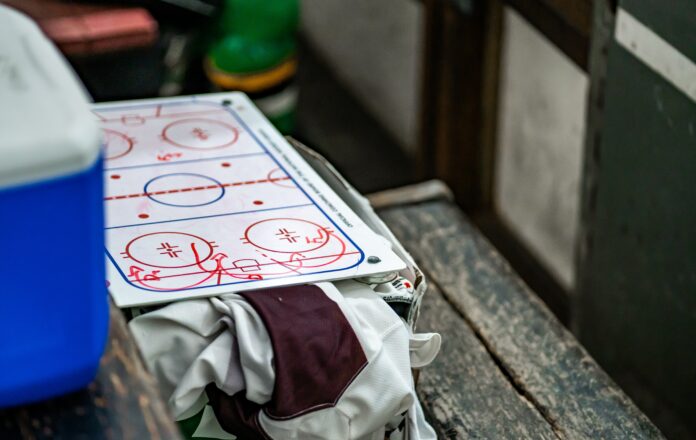
photo of a hockey clipboard laying on top of a jersey on the bench.
PHOTO: Chris Robert / Unsplash

By: Kaja Antic, Sports Writer

Entering the 2023–24 season, SFU hockey announced the introduction of a separate non-conference roster in addition to their roster that plays in the BC Intercollegiate Hockey League (BCIHL). 

The non-conference roster competes in exhibition games against teams in various collegiate leagues in Canada and the US beyond the BCHIL, including UBC (USports), and the University of Michigan (NCAA). The BCIHL roster plays against the other four BCIHL teams in 20 regular season games, along with pre-season and playoff action within the province. 

This separate team comes after years of one SFU roster playing both the BCIHL regular season, as well as exhibition games against other collegiate league teams. Prior to the beginning of the 2022–23 BCIHL season, the Red Leafs travelled to Alaska on September 24, 2022, and earned the program’s first win against an NCAA team, defeating the University of Alaska, Anchorage 1–0, with a late goal in the third period.

“The biggest difference is the competition level,” the team’s coach, Mark Coletta, said in an interview. “It’s a different animal.”

The exhibition series for SFU hockey’s newest team began on September 8, with a 5–3 loss against UBC. Coletta’s group earned their first win in this new era,  5–1, on September 22 against Briercrest College, before defeating them again, 3–2, the next day.

“We’re always trying to elevate and give our student-athletes the best opportunity and best competition,” Coletta remarked about creating the two-roster system. “Instead of doing two or three exhibition games, why not do close to 20 and elevate the talent pool?” Coletta suggests giving players tougher competition for more games will push them to find a new standard to play to. 

The BCIHL team system remains the same, playing games against the UVIC Vikes, the VIU Mariners, the Okanagan Lakers, and the Logan Lake Miners. Coletta touched on the importance of keeping the BCIHL team along with the program’s new addition. “We didn’t want to give players a non-option. We felt that there are some players that are at the BCIHL level, and taking a team away would give them no place to play.”

SFU hockey differs from a lot of the other sports teams at SFU, as it’s completely separate from the overall athletics program that has the NCAA affiliation. The program is privately funded and supported by donors and alumni. The two teams now run parallel, with two separate rosters and two separate coaching staff, funded by the independent SFU hockey support system.

“It just seemed like it was the right thing to do,” Coletta explained. “The talent pool here is definitely there for us to compete. It’s just a matter of growing and building that and getting to where we want to be.”

The Red Leafs non-conference team faced off against one of NCAA’s most formidable forces, the University of Michigan Wolverines. Current Vancouver Canucks captain Quinn Hughes played for the team prior to arriving in Vancouver, and the current Wolverines roster boasts many potential NHL draftees. The Red Leafs fell to the Wolverines 8–1, with Coletta speaking of the victors. “All their sports are top notch [ . . . ] When you’re at that level, everything becomes a mini-pro kind of atmosphere. 

“There’s a definite jump in the standard of play and everything they do on and off the ice.”

So what’s coming in the future for the program? “We’re just trying to push the envelope and give our student-athletes a competitive playground to play at. And who knows where it can go.” 

Coletta added that he wasn’t “sure if teams in a conference or teams already in a league would jump out and do what [SFU’s] doing this year with this hybrid kind of schedule.” However, “just knowing that [SFU] can attract talent and quality people into the administration and hockey program is a pretty unique kind of thing.”

Nutritious Nibbles: Chai cookies (Tian’s Version)

0
An illustration of a person with baking mitts holding a tray of cookies that are steaming.
ILLUSTRATION: Alyssa Umbal / The Peak

By: Tian Davidson, SFU Student

In celebration of the release of 1989 (Taylor’s Version), I decided to make Taylor Swift’s viral chai cookies, an old recipe she shared on Instagram and Tumblr that fans revived from the vault. I wanted to put my own spin on them by changing the dough ingredients to be slightly more chewy by using more butter and less oil. True to Taylor’s Version, this recipe involves the iconic frosting and masala chai bags. So cozy up, get into your cardigans and your gowns shaped like pastries, and get baking while listening to the new record. 

Prep time: 30 minutes
Bake time: 10 minutes
Total time: 40 minutes
Yields: 18 cookies

Ingredients:

For the cookie dough:  
1 cup unsalted room-temp butter
1 cup brown sugar
1 cup granulated sugar
2 eggs
2 tsp vanilla extract
1 tsp baking soda
½ tsp salt
4 cups all-purpose flour
2 masala chai tea bags

For the glaze:
1 ½ cups powdered sugar
3 tbsp milk
¼ tsp nutmeg

Optional: You can substitute the milk for eggnog or dairy-free milk, and add cinnamon instead of nutmeg.

Equipment:

Oven
Baking pan
Mixing bowls
Parchment paper
Stand mixer or hand mixer*

*Optional, but makes creaming the butter easier.

Instructions:

      1. Preheat the oven to 350 °F.
      2. In a large mixing bowl or standmixer, cream softened butter for about 5 minutes or until fluffy.
      3. Stop mixing when fluffy, then add brown sugar and granulated sugar. Continue creaming for 5 more minutes, or until fully incorporated.
      4. Add 2 eggs to butter and sugar mixture, and mix until fully incorporated, then add vanilla extract.
      5. In a separate bowl, add flour, baking powder, and salt and mix.
      6. Take 2 tea bags, cut open, crush them into a fine powder, and pour the contents into the flour mixture.
      7. Mix dry mixture with wet until fully incorporated.
      8. Roll cookie dough into 1.5 inch balls and bake for 10 minutes. Let cookies cool before adding glaze.
      9. For the glaze, mix all the ingredients in a bowl and add onto cooled cookies. 
      10. Enjoy!

Vancouver high schooler leads community upcycling event

0
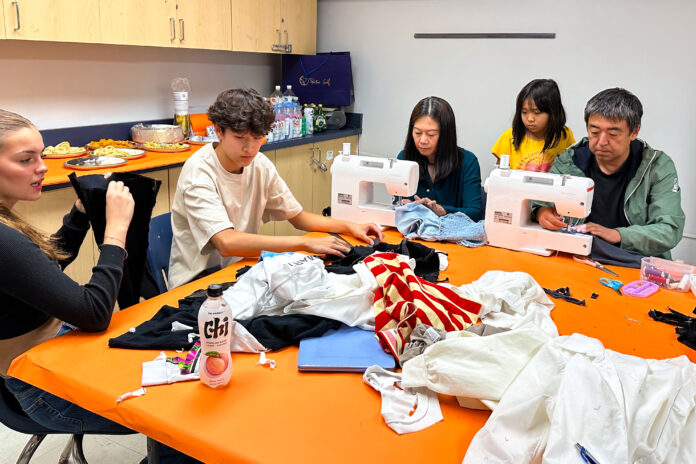
People sitting at a table cutting fabric in front of sewing machines.
PHOTO: Courtesy of Ivy Huang

By: Petra Chase, Arts & Culture Editor

Ivy Huang is a 16-year-old from Vancouver with a passion for sustainable fashion. She started EcoChic Threads with a mentor to engage her community, specifically other teenagers, in upcycling. Their first event, which took place on September 15 at Kerrisdale Community Centre, brought a group of like-minded teens and adults together to talk about their shared interests in sustainable fashion, and upcycle together.

EcoChic Threads was created for “repurposing and extending the life of garments” in a way that’s financially accessible for teenagers. Their aim is to provide online upcycling classes, upcycling services for customers, and organize events like their successful workshop and networking event last month. They’re hoping to plan more events, including speaking events. While the team is still constructing their website and expanding their team, they’ve been eager to start making a difference. 

Equipped with sewing machines, Huang led the workshop in transforming T-shirts or jeans, which participants brought from home, into handbags. “As each participant has different skills, artistic taste, and clothes material, we encourage them to try out,” Huang said. They learned various techniques like “adding embellishments” and “exploring sustainable dyeing methods.” The goal was for people to leave with skills they can apply to continue to repurpose their clothing. People also brought pre-loved clothing for a clothing swap, and anything not taken was donated to local charities.

Huang’s interest in fashion began in grade 2, when she joined a club about the basics of clothing sketching and sewing. Her grandmother also taught her how to fix clothes for her family members. In middle school, she took a visual arts class and incorporated sewing and threading in her project. As a teenager, Huang started looking into the production process of clothing brands like H&M and Zara and learned about fast fashion. That’s when she was inspired to take action.

Huang shared some staggering statistics: according to theroundup.org, up to 100 billion new garments are produced globally every year. 87% of this material will end up in incinerators or landfills. “Only 1% of clothes will be recycled into new garments.”

There are a slew of ethical and environmental concerns along the fast fashion supply chain, from the toxic contamination of water from textile dyes, to the energy-intensive processes draining the earth’s finite materials, and the atrocious conditions for underpaid workers, who are often children or forced workers, just to keep production costs low.

She touched on the phenomenon of “wardrobe panic”: the feeling of not knowing what to wear. According to a study by Trunk Club, 28% “of the items in the average person’s closet have never been worn or have gone untouched for over a year.”

“Fast fashion pushes people to keep buying new clothing, but its value is short,” Huang said. “Even going through the recycling process is harmful to the environment. Reuse is the only solution that allows customers to have the freedom of not only following the fashion trends, but also to make their own style and new fashion.”

Ecochic Threads are “instigators of sustainable dialogues and facilitators of interactions amongst individuals with shared ecological and creative passions.”

Find out more about Ecochic Threads at their website, ivyhh1689.wixsite.com/ecochic-threads. For inquiries or to get involved, email Ivy at [email protected]

Food for Thought: Tabbouleh

0

A plate of tabbouleh.
PHOTO: Amirul Anirban / The Peak

By: Omar Nsouli

Tabbouleh is a magical salad. No, I’m not talking about the kind with cucumber and quinoa. I’m talking about a fresh and summery salad usually shared over a warm moment with our loved ones. Tabbouleh is the kind of salad that makes you knock your fists on the table in euphoria or start dancing around your house. The tasty appetizer is commonly known to be from Lebanon and Syria and is usually made with parsley, mint, tomato, and onion. It’s perfectly garnished with fresh lemon juice, salt, olive oil, and bulgur (cracked wheat) in the perfect marriage of flavours. 

My family is from Beirut, the energetic capital of Lebanon, where locals find the poetry within the pandemonium. Car horns and wholesome balcony banter are the soundtracks of our day-to-day routines. Family and food are core values. In Lebanese culture, everyone cherishes a lovely meal with family. 

In my family, the dish never had a concrete recipe with distinct measurements, therefore the one who could eyeball it the best on the first try is considered to be unrivaled in the kitchen. I would like to highlight two resilient and strong women in my family who stepped up to the tabbouleh plate and succeeded. They are my grandmother, Amina, as well as my older sister, Mina, whose salad reflects them and their personalities precisely. 

Amina Fathallah, the teacher

When my grandmother was young, she debated whether she wanted to be a school teacher in a small village or go back to the buzzing Beirut and start a family. After some thought, she eventually chose the latter. Later in life, she always wondered what could’ve been. She was always an educator to our family. She was an excellent cooking teacher, giving handmade recipe cards to each of her children to bestow upon the coming generations. Her kitchen, stuck in a quaint ‘60s timewarp, was her classroom, and like many teachers, she provided care, attention, and love to her students. Her tabbouleh truly reflected her personality with the effort and love she invested into all of our relationships amid many hardships in her life like war, loss, and illness. 

Amina “Mina” Nsouli, the fashionista

My sister is multifaceted; a woman with many talents. She is an exceptional accountant, stylist, and meticulous cleaner. However, I personally believe she’s the new culinary genius in the family tree. Sorry mum and dad, but the culinary gene seems to skip a generation. Born in Calgary, but has lived all over the world, Mina’s well-traveled taste is highly reflected in her cuisine. She mirrors her impeccable fashion sense in her cooking with her attention to detail. From intricate sushi rolls to a spaghetti bolognese copycat of a five-star restaurant dish, she pulls from the latest trends with creative juxtapositions. Mina takes a ‘90s Calvin Klein approach to Lebanese food keeping it chic yet minimal, acknowledging the traditions of the past. Her tabbouleh is a masterclass in salads; she buys everything with an organic stamp of approval for the highest quality, giving her the title of the “modern classic” chef of our family. 

Though both Aminas may be different, they both have taught me something through their love of cooking. They taught me that it’s indispensable to show love and generosity. In return, I shall receive it back through the many delicious dishes they have made. They have also taught me to stay dedicated to my passions no matter the external circumstances that may be in the way, just like they did with their elevated cooking surmounting many hardships. In retrospect, I acknowledge these two strong and courageous Arab women who’ve inspired me with their wisdom, care, and ingenuity. 

What Grinds Our Gears: Stepping on leaves that don’t crunch

0
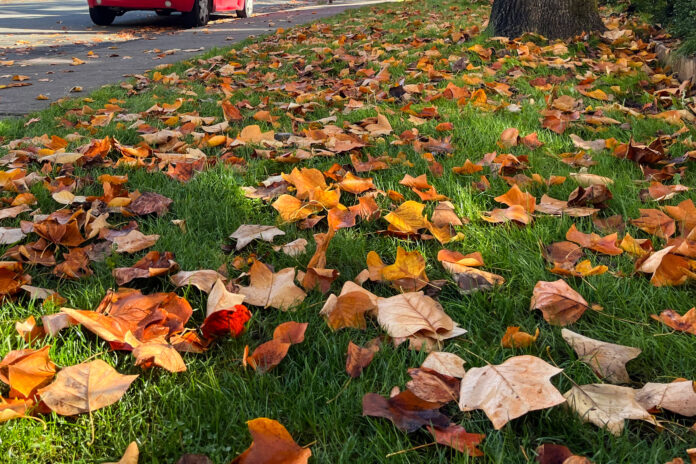
Autumn leaves on the ground
PHOTO: Jonadan Cheun / The Peak

By: Sam Wong, SFU Student

It’s fall: the season of dying leaves and see-saw temperatures. I’m already running late to my class before I see a leaf, brown and all curled up. The perfect leaf. I expect it to be crispy, to crumble like fresh toast. But no. It just flattens under my foot without a single sound. Not even a small crinkle. My day is ruined.

First of all, I’m already freezing my ass off out here in this six-degree weather for this. My lips are chapped. My fingers are numb. Yet, I go out of my way and risk getting hypothermia to experience a satisfying leaf crunch. But instead of leaving with a sense of satisfaction, I leave with the sense that I’ve wasted my precious time on nothing. Now I’m cold, disappointed, and still late for class.

Second of all, I’m upset that I’ve been deceived by the leaf’s appearance. It’s decaying, rolled up, and has cracks in it. It looks like it’s been roasted in an oven. You’d be pissed off too if you took a bite of golden-brown fries that turned out to be soggy. If it looks crunchy, it should sound crunchy. It should even taste crunchy (but I wouldn’t try that with sidewalk leaves).

Point is, I’m tired of soggy leaves. How hard is it to just get a simple, satisfying crackle from stepping on a leaf? I don’t care if it’s dry or wet outside. I just want it to crunch.