Home Blog Page 150

Red Carpet Chats: VAFF showcases outstanding Asian talent for the 27th year

0
An outdoor sign of scotiabank theatre in front of a busy road on a dim evening.
PHOTO: Aria Amirmoini / The Peak

By: C Icart, Humour Editor

The Vancouver Asian Film Festival (VAFF) just wrapped up its 27th edition. VAFF aims to showcase and support films from Asian Canadians and Asian diasporic communities. This year, audiences were spoiled with options, as the event featured131 films, 35 in-person and virtual programs, and over 20 world premieres.” The Peak attended the opening night red carpet to hear about the significance of the festival from filmmakers and actors, and learn more about their projects.

Grace Park: Hometown hero
You may know her from Battlestar Galactica, Hawaii Five-0, or A Million Little Things, but on November 2 the actress and model was back in the city she was raised in as this year’s VAFF ambassador. When reflecting on what the title meant to her she said, “I think it’s really poignant to be able to be in your own hometown and have a film festival here celebrating all these wonderful stories around the world.”

Jean Shim: There is no place for anti-Asian hate
Emmy Award-winning director Jean Shim has decades of experience in the film industry. This year, she presented A Great Divide, a film about a Korean American family facing racism and xenophobia in rural Wyoming. This topic was really important to Shim because “no one has really told a narrative story about Asian hate and I thought it was time for us to speak out about the subject matter.” Representation in the film, but also within the team creating the movie, was imperative for Shim: “Every single department head is Asian. Every single investor was Asian. That was really important to me because this is our story. We all want to tell it the way that I believe we should be able to tell it.”

On top of that, Shim’s love and commitment to art of cinematography was so evident when she described the film. She beamed on the red carpet as she told us “one of the most incredible things when you see the film, none of the animals were [computer-generated] When you see the moose, when you see the bison, that all happened within camera.”

Jenny Lee-Gilmore: When her mom shoots, she scores
Jenny Lee-Gilmore took on the super cool project of documenting her mom Kelly Lee’s journey as she prepared to compete at the Canada 55+ Games in Kamloops. In Overtime, the 60-year-old university professor does not let age, gender or racial barriers get in the way of her passion for hockey. 

On the red carpet, Lee-Gilmore opened up about the behind-the-scenes of this badass family affair: “I had my whole family involved.” Obviously, her mother is the lead, but her dad and brother also did some interviews for the film. “It was really fun to show my family what I do and involve them in this project. It’s something we’ll remember for the rest of our lives.”

Della Chen: Chinatown forever
Della Chen is a documentary photographer and filmmaker. This year, she was excited to present her first documentary film project, She Marches in Chinatown. The documentary tells the story of the Seattle Chinese community girls’ drill team as they celebrate their 70th year. The team started as a place for Asian American girls to connect and continues today to celebrate the legacy of Asian Americans in Seattle’s Chinatown. 

Chen’s love for the team is not new. She shared, “I’ve been a fan of the Seattle Chinese community girls drill team my whole life because I’ve lived in Seattle this whole time. My daughters are part of the team and when I started to learn the history of this organization, I really felt like it was a story that needed to be told.”

As she stood on the red carpet, she said, “There’s so much that connects with when the team started in 1952 to where we are now. [ . . . ] The fact that Chinatown is at risk for going away and has been moved so many times is something that is important to share because we’re at a point now where the drill team could go away or Chinatown could go away and these two things have been really important for the Seattle Chinese community.” This is not unlike the current efforts to resist gentrification in Vancouver’s Chinatown, where VAFF was hosted. 

Doralynn Mui: Omg, there’s an SFU alumni on my TV screen
You may recognize Doralynn Mui from One of Us Is Lying (or if you’re like me you definitely remember her from Riverdale), or perhaps the SFU hallways. The communication and film production graduate is making big splashes in the industry and is super happy to support the festival. “Growing up in Canada, I didn’t really see anybody who really looked like myself on-screen. I’m so happy that VAFF has grown so much over the years.”

Mui credits her SFU education for giving her “the skills and the connections to go out and help create more opportunities to help people behind the scenes and make passion projects [ . . . ] or get different stories told.” She also met her partner and got engaged at SFU!

What Grinds Our Gears: Increasingly extreme weather

0
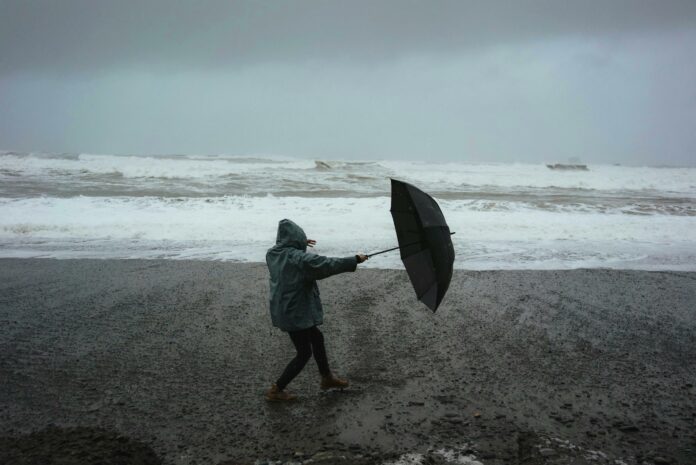
Some struggling in the rain, with an umbrella being blown away
PHOTO: Dziana Hasanbekava / Pexels

By: Sharon Ha, SFU Student

What’s wrong with you, Vancouver? Why can’t you be mild like you were advertised to be? People come here looking for a mild climate with gentle seasons — it’s called a temperate  rainforest for a reason, you know. Whats with the water spouts and the five second thunder-and-lightning storms? First, it’s humid enough to make my hair frizzy and hot enough to burn patches of my skin. Then, it becomes so dreary and foggy that we have to cultivate zen-like inner peace just to make it through the bitter winter.

The increasing intensity of the sun is also pretty worrying. Global warming fries our overwrought brains with searing 40-degree summers. The erratic weather has us all types of itchy and sensitive in Vancouver, with weather patterns flip-flopping between hot and cold.  I just want this city to go back to its pristine, mellow self. 

Vancouver, your weather is more sensitive than the course planning of a student under academic probation — get it together!

Bright-er side: The rain

0
Rain rolling down a window
PHOTO: Josh Hild / Pexels

By: Michelle Young, Opinions Editor

When we enter the fall season, everyone starts grouching about the weather. It’s “too rainy,” it’s “too dark,” and it’s “too cold.” I, for one, have had enough of these complaints. I’ve always liked our gloomy, rainy city, and I’m tired of listening to the same grievances every year. 

The rain is good for our city. It can improve our air quality and is necessary for life and agriculture. While the sun might provide nourishment — it can burn you, too. When reading about BC’s summers becoming drier and experiencing more droughts, I wonder if less rain is really what we want. 

The rain is ambient. You can listen to it hit the concrete sidewalks, pitter-patter on your umbrella, or get washed away by windshield wipers. It smells refreshing. It’s entirely my preference if I had to pick between a cool, rainy day and hot, sweaty one. We don’t appreciate the rain enough, and it’s time we gave it some credit for all its beauty. 

Shorter series damage storytelling

0
Someone watching Netflix on TV
PHOTO: Mollie Sivaram / Unsplash

By: Kaja Antic, Sports Writer

Streaming services have negatively affected the entertainment industry in multiple ways, and one example is how companies like Netflix and Max continue to shorten TV seasons. This has been an issue since the late 2000s and expanded in the early 2010s, as programs went from an average of 20 episodes per season to a staggering nine-episode average in 2017. The increase in shorter seasons goes hand-in-hand with the rise of streaming services as platforms prioritize the quantity of new TV shows over the quality of longer seasons.

Personally, I am not a fan of shorter series as they give the audience a limited amount of content, and often leave viewers feeling disconnected from the show’s themes and characters. On top of that, they often limit character development, leaving much of the show’s substance unfinished. One argument for shorter series is they make for more effective linear storytelling. This line of thinking comes from shorter seasons not needing to add filler episodes, which are often seen as unnecessary to the overall plot. While some may be relieved at the death of filler episodes, I am personally less than pleased. These episodes often expand on storytelling and character development that is now left on the cutting room floor of shows with limited runs.

In 2019, Netflix spent $12 billion on programming for its international network spanning over 158 million users at the time. With the COVID-19 pandemic creating isolation restrictions, the use of streaming services increased worldwide, and most online video streaming entities reported a minimum 10% increase in registrations in 2020. From 2019–2023, there was an estimated 76.7% increase in video streaming. While Netflix isn’t the only platform paying their workers unfairly, the rise in streaming goes hand-in-hand with profit. Despite services receiving more money, they are more interested in churning out a plethora of series rather than investing in longform, quality television. 

Another issue is that actors and writers are being employed for shorter periods of time, and not being compensated over the long term through residuals, a point of contention during the recently concluded SAG-AFTRA strike. Residuals are essentially payments for media participation after the initial compensation has already been paid to the participants. On traditional cable TV, these residuals largely come through re-runs of episodes. With streaming, there are no guidelines for how the participants are compensated for views on these platforms.

Profits decrease for performers, but not for streaming platforms, given actors’ limited access to work and consumers’ limited access to content from their favourite shows. Some residual cheques from large corporations such as Disney can only yield a few cents, despite the company earning over $82.7 billion USD in 2022 alone. These limited series not only damage the quality of in-depth storytelling for viewers, but also damage those on screen who are not fairly compensated for the work they do.

Many of these streaming services began producing their own shows exclusive to their platforms, which set the scene for programs in the years that followed. Netflix is notorious for creating this trend, and has debuted shows like Emily in Paris and Blockbuster. Sure, they have decent titles, but the amount of poorly made series outpaces the good ones. Streaming appears to be more focused on their growth as a corporation, churning out multiple titles, and less concerned with what’s actually being put out, as long as audiences engage in endless consumption.

Forgoing the issue of binge-watching culture halting the excitement of weekly episodes, these shorter seasons don’t allow for episodes that genuinely flesh out characters and secondary plots. What happened to the art of random late-season musical episodes

There’s no time to fully develop shows in their limited episode span, but there is also an ongoing issue of companies like Netflix cancelling shows after one or two seasons with little explanation. Many of these shows cancelled in recent memory feature marginalized communities, like Netflix cancelling popular shows centred around queer women like First Kill and I Am Not Okay With This, but continuing to represent queer men in shows like Heartstopper and Young Royals.

Since there’s only a limited amount of runtime for these shorter series, there’s not much content to be viewed when series are popular, which leaves even less money for actors. With the threat of cancellation always looming, there’s no guaranteed job security for those performing in the industry. 

There are certain shows on traditional cable TV that continue with longer seasons, such as classic procedurals like Law & Order, though many modern-day programs run for a fraction of the time popular programs did less than a decade ago. I’m not asking you to commit to hundreds of episodes, or even 1,000 episodes in the case of One Piece — just more than ten episodes to sustain a 365-day hiatus would be great.

Let’s talk about International Day of Persons with Disabilities

0
A woman with a mobility aid, smiling
PHOTO: Vlada Karpovich / Pexels

By: Hailey Miller, Staff Writer

December 3 is International Day of Persons with Disabilities (IDPWD). This day recognizes people with disabilities — the world’s largest minority — by shining light on the inequalities we experience while also celebrating our lives as individuals navigating society. Though I agree these issues are important and need awareness, there is a difference between awareness and inclusivity. 

Disabled people still face many accessibility and inclusion issues today. Inaccessible places are everywhere — schools, workplaces, restaurants, venues, and even medical facilities. When it comes to inclusion and wanting to live our lives alongside everyone else, it’s difficult to do so when we have to manoeuvre around accessibility issues daily. Structures that exclude disabled people include: no ramps or let-down access for wheelchairs, no elevators, no handrails on stairs, no access to braille, subtitles, or audio adjustments, and a general lack of accessible technology. How are disabled people supposed to participate if we can’t even get through the door or follow conversations? It’s important for us to have as much access to spaces as everyone else, rather than stopping efforts at “awareness.” 

Some places are more accessible than others, just as acceptance and inclusion towards disability around the world varies. We should be aiming to create better standards for universal accessibility. The Rick Hansen Foundation — whose mission is to remove physical barriers in daily life — does a phenomenal job at assessing accessibility standards, having these implemented in public spaces, and creating an accessible standard that should be followed and included everywhere. These guidelines can create a starting point for public spaces.

I used to wear my disability on my sleeve. Now, I don’t stress about explaining it to others. As someone who was born disabled, there are certain instances in life where I no longer care much about it. This is not to say that it doesn’t matter, but rather, that I don’t see my disability as being the sole characteristic that defines me. Of course, we all have our struggles and challenges, but there is so much more to our lives than being defined by disability. Accessibility and inclusion are the backbone of tangible action. IDPWD attempts to uplift disabled people without acknowledging all the diverse facets of our lives. What is especially important is the matter of society allowing disabled individuals to live their lives as anyone else, and this is where accessibility, inclusion, and advocacy are of utmost importance. 

Without accessibility, inclusion is an extreme challenge, but it is also a standalone issue. Including disabled people in workplaces, community groups, and regular day-to-day endeavours is immensely important. This is more than just knowing someone with a disability or including them in your life. Inclusion means workplaces are willing to hire a disabled person, get to know and understand their needs, and provide appropriate accommodations for them. It is actively working against ableism in all facets of life. 

As someone who has dealt with a physical disorder all my life, I understand many of the struggles and challenges we face. I know the hardships of navigating day-to-day life, advocating for myself, requesting accommodations, noticing accessibility issues (and recognizing where accessibility is well-implemented), and experiencing issues like inequality and lack of inclusion. The reality is that this day has not served disabled people as it should. Awareness, without action, does not serve people. 

IDPWD should involve more than just shining a light on individuals with disabilities and bringing awareness to our lives and accomplishments. Disabled people are just as worthy of every opportunity in life as able-bodied people are. It is accessibility and inclusion that continually need to be implemented and improved. They allow us to live our lives to the full extent that we are capable of — we simply deserve these things as basic human rights. 

Bill S-276 hopes to mark September as Ukrainian heritage month

0
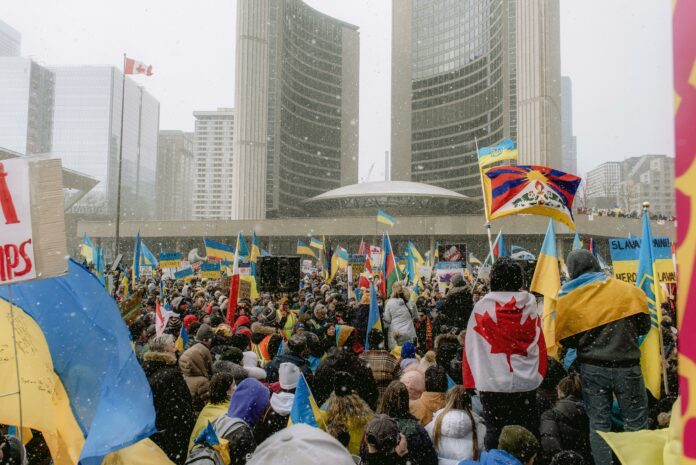
This is a photo of a protest, which happened in Vancouver to support Ukraine. The crowd is varying multiple Canadian flags, and multiple Ukrainian flags.
PHOTO: Harrison Haines / Pexels

By: Saije Rusimovici, Staff Writer

On October 19, a new bill proposing the implementation of Ukrainian Heritage month was introduced in the Senate by Senator Stan Kutcher. Bill S-276 is an opportunity for Canadians to “celebrate, reflect on, and learn about the many contributions made by Ukrainian Canadians to Canada’s unique social and historical fabric.” If the bill is passed, the month of September will be dedicated to acknowledging Ukrainian heritage in Canada. September was chosen to honour the first recorded arrival of Ukrainians in Canada 125 years ago.

Canada has the third largest Ukrainian diaspora in the world. There have been six documented waves of Ukrainian immigration to Canada, beginning in the early 20th century. After the Second World War, thousands of Ukrainians settled in parts of Eastern Canada, with their relatives to follow in the 1980s. Most recently, nearly five million Ukrainians have been forced to leave their homes due to the invasion of Russian troops in 2022. 

Senator Kutcher was born to Ukrainian refugees who arrived in Canada following the Second World War. He stressed that the important contributions made by Ukrainian Canadians, throughout history and in the present, have helped form the country we live in today. The prairie provinces of Canada saw the most Ukrainian immigration, leading to a large population of agricultural workers. Additionally, Ukrainian Canadian communities set up many public benefits and “local cultural-educational associations, fashioned after Galician and Bukovinan models.” 

“This bill is an opportunity to recognize our Ukrainian heritage and provide opportunities for learning and celebration each year.” He noted it’s important to dedicate this month to celebrating Ukrainian heritage and the importance it holds in the fabric of the country. 

Senator Kutcher told The Peak that for him, this is an opportunity to “acknowledge the fact that our country was built by hands of many colours and our anthem is sung by voices of many tongues.” He emphasized the importance of learning from the experiences of others, openly recognizing “the joys and sorrows of the past and the present.” For Senator Kutcher, growing and developing as a multicultural country relies on creating mutual respect for each other. 

Placing an emphasis on learning from each other’s experiences, Senator Kutcher insisted that we must “reach out and celebrate the rich tapestry of our nation and find those bonds that pull us together.” 

Senator Kutcher described several ways in which we can encourage integration and education of different cultures. “I think that learning about all of the different cultures that make up Canada should be a necessary part of school curricula,” he said. He also mentioned the importance of celebrating art, music, and dance specific to different cultures. “Encouraging the production of cultural festivals that can welcome all residents of this country to learn about and celebrate all our different cultures and backgrounds,” he added. 

BorderPass aims to improve international students’ academic endeavours

0
This is a photo of the Canadian border. Specifically, a sign on a metal fence reads, “Canadian Border Inspection.”
PHOTO: Hermes Rivera / Unsplash

By: Hailey Miller, Staff Writer

International students in Canada face a variety of challenges, including financial burdens, language barriers, affordable housing, health care, and academic pressures. BorderPass is a Canadian company that helps international students with the systemic challenges they face when studying abroad by dismantling these barriers. Specifically, they help international students attain a study permit and create successful applications. 

The Peak interviewed Josh Green, co-founder of BorderPass, to ask about the company’s services and how they can help international students’ experiences abroad. Green explained that BorderPass helps “align whatever [students’] academic goals are with reaching their immigration goals.” This includes things like working after graduation or staying in the country they studied in.  

Green noted that outside of Canada, organizations give unrealistic expectations regarding the international student experience and application process. To counter this, BorderPass lists expectations and provides legal services for students “to put their best foot forward.” He further stated that it’s “a journey to become a permanent resident” in Canada. The company works to support students in staying within the parametres of their study permit, preparing for post-graduation, and finding employment. 

“BorderPass international students are given access to legal-level services that otherwise they wouldn’t be provided with,” Green noted. Aside from this, they are provided “realistic expectations,” and knowledge of what it’s like to study abroad in Canada.

“Institutions can focus on resources in other ways that are more beneficial to them,” rather than having to worry about the immigration process for the students attending these institutions. In turn, Green said this helps “enhance their international student experience and outcomes.” He noted that they have seen an abundance of need “to provide better support for international students.”

Centennial College in Toronto was the first post-secondary institution in Canada that implemented the use of BorderPass. Since then, Green stated that this implementation has helped students by answering their legal questions, and notifying them if more documentation needs to be included or altered. He also noted that many students have the same problems and concerns, so BorderPass works to help them navigate these challenges. Most recently, Borderpass responded to inquiries regarding travel for the upcoming winter break

When asked if Green has seen interest in BorderPass from other post-secondary institutions across Canada, he explained that many have reached out to inquire about their services, wanting to learn more about the benefits to students and how BorderPass works in different capacities to enhance the student experience.

The Peak reached out to SFU for a statement on the university’s thoughts about BorderPass. The university stated that they are aware of BorderPass, but will not be using their services because they already have “similar supports in-house.” They explained, “SFU International Services for Students has a team of Regulated Canadian Immigration Consultants and Regulated International Student Immigration Advisors on staff that provide immigration-related support to all international students.” They offer individualized advising services on all campuses alongside online resources, information sessions, and newsletters.

International human rights lawyer discusses genocide and conflict

0
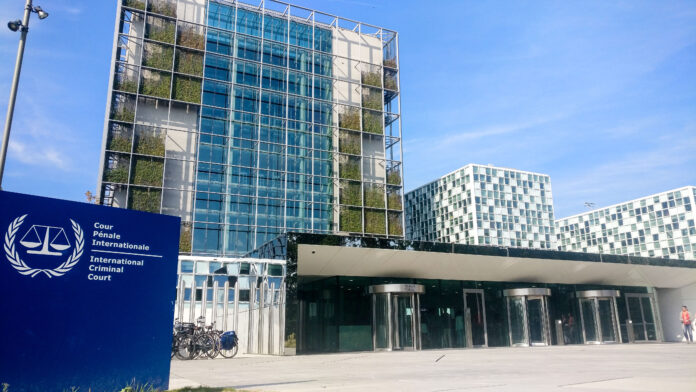
This is a photo of the International Criminal Court building in Geneva. The sign is clearly visible, in front of the building.
PHOTO: jbdodane / Flickr

By: Olivia Sherman, News Writer

Content warning: mentions of violence and genocide. 

Payam Akhavan is an international human rights lawyer and special advisor to the prosecutor of the International Criminal Court (ICC). He’s best known for his work with the United Nations (UN) investigating conflicts and protecting survivors of genocide. The Peak attended Akhavan’s panel, titled “A Search for Justice,” where he discussed recent global conflicts. 

Akhavan described the search for justice as a journey, best understood “not as intellectual abstraction, but experiential knowledge, through encounters with injustice.” Despite his work trying to bring justice to others, Akhavan feels a “profound sense of futility,” even with his victories, because the damage to people is already done. “Justice is imperative, someone must be punished, someone must be held accountable for what happened. But on the other hand, you realize that justice is not going to bring back [ . . . ] lives that are forever extinguished.” 

While Akhavan may be successful in reaching justice for victims, he does not measure this as success, “because, technically, it’s already too late.” 

Working with the UN, Akhavan investigated sites of violence and conflict in Croatia, Cambodia, Rwanda, Guatemala, Bosnia, and Timor Leste. He defended victims and survivors of genocide in Iran, Iraq, and Muslim Rohingya people in Myanmar. As an advocate and counsel, Akhavan served on the European Court of Human Rights, The Supreme Court of Canada, the ICC, and the Supreme Court of the United States. Akhavan is also the co-founder of the Iran Human Rights Documentation Centre, a non-profit that documents the state of human rights in Iran. 

In order to bring justice to those impacted, Akhavan needs access to the scene of the conflict, such as “the village in which homes were burnt, [and] people were massacred.” He also needs as many testimonies and witnesses as he can get, which can often be impossible in cases of mass deaths because all possible witnesses have been killed. “International criminal justice is not about the ‘whodunnit murder mystery,’ where one person has been killed and the question is who pulled the trigger [ . . . ] those who are most responsible are typically not those who pulled the trigger, it’s those who ordered them.” 

ICC testimonies, for this reason, must be fact-based. Akhavan looks for the who, what, when, and where of an act. “If you have a witness on the stand, the witness cannot come and tell her story for the court. The court is not interested in the fact that she has suffered. The court is interested in whether she can testify.” He described the questions the prosecution will ask as “very clinical, very precise,” in order to get the exact details of an event. 

Akhavan said defining actual terms, such as genocide, can be ambiguous at best. Yet, “if you don’t call it genocide, it’s not worthy of attention.” Akhavan said there is a very narrow definition of what genocide really is. “Not just extermination, not simply mass destruction or mass murder, but an intention to destroy a group as such.” While it is important to clearly define these terms, debating over labels like genocide, mass murder, or crimes against humanity does not “absolve responsibility” from those committing the violence.  

Despite the state of global conflicts, Akhavan has optimism for change. “International law is a work in progress,” he said, but noted people are changing their ways. He said genocide-resilient societies built on empathy are needed. He wishes to see a future in which he is “unemployed happily,” where his job as a legal “trauma surgeon” is unnecessary. “We have to do what we can, sometimes against all odds, because the alternative is despair.” 

Study shows fast fashion’s detrimental effects on the planet

0
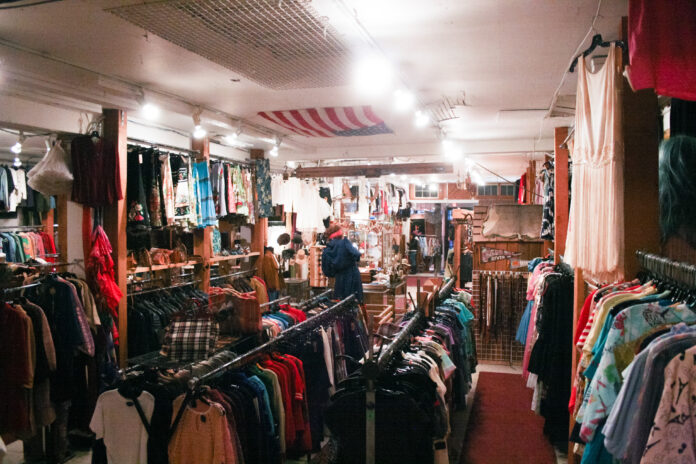
This a picture of a person looking through clothing racks in a thrift store.
PHOTO: Gudrun Wai-Gunnarsson / The Peak

By: Eden Chipperfield, News Writer

Fast fashion has taken over the world. With the rise of social media platforms like TikTok, trends come in and fade out quickly, encouraging individuals to buy cheap clothing to wear for short periods of time. Fast fashion is a product of the clothing industry’s shift in the last 30 years where clothing has become cheaper and more accessible. This is because the fashion industry has prioritized rapidly producing high volumes of clothes for extremely cheap, by exploiting the labour of workers. 

 Fast fashion pollutes the Earth with fossil fuels and microfibers that are shed from the clothing and enter the oceans. Brands like Shein, H&M, and Uniqlo all share a responsibility for their part in the fast fashion industry contributing to climate change. 

A recent SFU study examines how the “allure of fast fashion comes at a significant environmental cost, and encourages consumers to adopt more sustainable alternatives.” The study was written by SFU PhD student, Yunzhijun Yu, SFU visiting PhD student, Claudia Lizzette Gómez Bórquez, and SFU professor of marketing, Dr Judith Lynne Zaichkowsky. The report outlines the problems with fast fashion and makes suggestions to point the fashion industry toward sustainability. 

The Peak interviewed Dr. Judith Lynne Zaichkowky to discuss the study’s findings and the research team’s hope for a green, cleaner future fashion world. 

“The negative effect of fast fashion on the planet does not only involve the production aspect of textiles but also on the disposal side,” said Zaichkowky. “The textile dyeing industry is the second largest polluter of the world’s clean water and hence the manufacturing and disposing of fast fashion clothing substantially harms the environment in the process.” 

Water waste is a significant issue regarding fast fashion. According to Ontario Nature, one cotton T-shirt takes over 3,000 litres of water to manufacture. As Zaichkowky discussed, the toxic dyes from the clothing pollute waterways. The harmful chemicals affect the populations in countries with large textile industries like Bangladesh, Cambodia, and Vietnam, explained Zaichkowky.  

In 2018, over 11.3 million tons of clothing were discarded. “It has been reported that the vast majority of Vietnam’s water system has been polluted, resulting in 80% of the total illnesses in Vietnam,” said Zaichkowky, citing a 2017 study from Thi-Nham Le and Chia-Nan Wang. 

“Eco-conscious clothing is, understandably, less affordable than fast fashion,” said Zaichkowky.

Since the cost of eco-conscious clothing may be high, thrifting second-hand clothes may be “an excellent solution.” However, Zaichkowsky noted an issue with thrifting clothes is that there must be time spent to find apparel that fits in thrift stores. Often, items are purchased and not tried on before the purchase is made, leaving clothing in the backs of consumers’ closets to be donated again in the future. 

To limit clothing waste, Zaichkowky recommends trying on clothing before purchasing. Also, buying clothes limited to a few select shades of colours that suit the individual may help cut spending. 

The Peak asked how individuals can change their habits to include eco-conscious fashion choices. “They need the mantra of less is more. They need to try on garments before purchase and forget the online purchase and delivery of items they are unable to try on for fit and suitability before purchase.”

What happened to McFogg the Dog?

0
McFogg the Dog as a dj. He’s wearing headphones and using turntables.
ILLUSTRATION: Alyssa Umbal / The Peak

By: Mahla Rae, SFU student

Many know about SFU’s loss of the beloved mascot McFogg the Dog. It’s often controversially referred to as a harder loss than the dissolution of our own football team. But what happened to McFogg after he left SFU? What path did he go down? What is he doing today? A critical investigation launched into these questions, and the conspiracies about McFogg’s current whereabouts leave us with more questions than we began with. 

A dive into recent McFogg sightings resulted in a number of students reporting to have seen him in the past month. McFogg was spotted at more than one Vancouver nightclub as “McFogg the Dawg,” an up-and-coming artist and DJ. However, follow-ups on these reports have proven to be inconsistent, with some students saying his sets hit hard and others saying they would rather listen to an A&W playlist. 

From another of these alleged sightings, McFogg was seen stumbling through the woods surrounding SFU, often barking and yelling at raccoons. In one instance a student recalled what they could only assume to be McFogg shouting, “You don’t scare me, you masked garbage thief,” followed by the sound of “aggressive” bagpipe playing. If you’re out there, McFogg, we hope you’re okay. 

Other rumours say that McFogg ran into UBC’s Thunderbird at a yearly mascot convention, and something sparked between them. A few students supporting this rumour claim that after a lot of work on their relationship, McFogg is now a stay-at-home dad supporting the Thunderbird’s career and raising their McChicks. These rumours have caused controversy, with many students dismissing them as mere speculations considering McFogg’s long-lasting rivalry with the Thunderbird. One anonymous fifth-year psych student agreed, saying the “enemies to lovers” trope is far too “basic” for our McFogg. 

The last of the reports indicate that after his time at SFU, McFogg left the country entirely to become a scholar. These reports came from mascots around the world mentioning sightings of him at their schools. They believe that after leaving SFU, McFogg became consumed with revenge and spite for the title-based pride of the academics after years of being taken as a joke. It’s said he used this spite as fuel and struck out to earn the highest titles at the most prestigious schools. Handsome Dan, the bulldog of Yale University, claims that not only is McFogg there currently earning his doctorate in philosophy, but that they have become close confidants and have a weekly pickleball match. Other sources say Handsome is lying for popularity, citing that bulldogs are notoriously bad at pickleball and Handsome has been referred to as a “pathological liar” in the past. These sources have requested to remain anonymous. 

This search for McFogg, and for answers, concludes with indefinite possibilities. When it comes to McFogg the Dog no source is truly trustable, as many would say just about anything to claim to know or even just have met him. McFogg is a man of many talents and no scenario is truly impossible for him to end up in. Wherever you are McFogg, we love you, we miss you, and we won’t stop searching until we find you.