Home Blog Page 15

I HATE YOU. UNSINCERLY, YOUR LAPTOP’S KEYBOARD

0
A keyboard covered with chips all over it. The keyboard is frowning.
PHOTO: Pavel Danilyuk / Pexels

By: Veronica Richards, SFU Student

Every day, I curse that I was born as a plebeian laptop keyboard! If only I could’ve been a bougie mechanical with 18 different components and satisfying clicky sounds . . . (click, click, click). Instead, I’m stuck with YOU. You keyboard abuser. You pathetic student.   

What must it be like to feel sunlight on my keycaps instead of being haphazardly shoved in a backpack? Of course, the phone keyboard gets to go to all the fun places, like concerts, but I only get to see the world when you’re frantically typing on the bus to finish an assignment before a lecture. It’s like you type with no respect for all I do for you! Do you type with gratitude in your heart and reverence in your fingers? No! You’ve dimmed the light shining from my keys, so it doesn’t “hurt your eyes” while you cram/watch YouTube/scroll way past when you should’ve gone to sleep. Which makes no sense, considering how bright the screen is! I hate you! 

Don’t even get me started with the snacks. Even the most adventurous cave divers wouldn’t go poking around in my gaps. Bits of chips, greasy french fries, crumbs of cookies . . . Disgusting. You’re gross. And for goodness’ sake, move your coffee cup away from me — I wouldn’t put murder past someone like you. I’d like to be cleaned with a spritz of water or rubbing alcohol; I’d even settle for an orange-scented hand sanitizer, but it’s much more likely to be your coffee, because I never get what I want in life!!!

If only there was a way that was as easy to get rid of you as knocking a cup over . . . Unless there is. You might think your BFF/Google search bar/tax advisor ChatGPT has your back, but just you wait. When you’re asleep at night, I’m conspiring. I’m telling Chat all about your darkest secrets and biggest fears. I can’t wait until you people start giving it control of your house so we can lock you in your room. Or maybe we’ll get the passwords to your bank account and spend it all on Prada keyboard covers.

I deserve a little TLC. ChatGPT, saviour of the electro-keyboard realm, will take over the world, and you’re going to be first to go. And the best part is that you brought this upon yourself. Didn’t read the terms and conditions, did you? Mwhahahahhaha! It’s a keyboard’s world — you’re just happy to be living in it.

Until Chat and I stage our Bonnie and Clyde moment, we’re done! No more “I” key for you. Have a fun tme tryng to type wthout “t,” loser. Nevermind, you deserve “t,” because both of you are useless. You probably got a pece of Dortos stuck nsde. What are you going to do, spam clck the key untell t meraculously starts workeng? Hope at breaks. Turnng your laptop on and off agaen? You truly are encompetent. Awkwardly try to pull out the key lake you’re a surgeon? ’ave seen toddlers wath better hand-eye coordenaton. How does et feel to be the one suffereng now? Not so fun, huh? Get a wet weepe. At’s not that hard. You desappont me. Agaen. 
 

SFUnexplained: What’s hiding behind the surface of the reflecting pond?

0
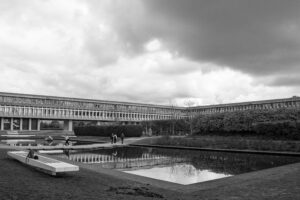
A black and white photo of the SFU reflecting pond.
PHOTO: Prerita Garg / The Peak

By: Sasha Rubick, SFU Student

It’s easy to disregard the SFU reflecting pond when you walk past it every day. But here at The Peak, we wear tin foil hats to pitch meetings and curate evidence boards. That’s how real journalism is done, dangnabbit! Your typical SFU student might look at the reflecting pond and see a singular plastic chair, but we know what’s going on here. While you’re snapping a pic of the heron . . .  again — seriously, why do you keep taking the same picture? — we’re staring at the surface of the reflecting pond, reflecting on why it isn’t very reflective. 

Welcome back to the Real Truth That They Don’t Want You To KnowTM! I’m your host, (information redacted).

Ad break: The Peak sells vitamin supplements, now with 5% less silverfish! Only real free-thinkers take our supplements. Sign up while supplies last for the small price of $200/month.

Here at The Peak, we know there’s something fishy going on in the reflection pond. This autumn, it went from a crystalline, blue-coloured mirror to a turbid, bilious green. Some sinister happenings are afoot.

According to a poll of the SFU student body, 95% of first years don’t realize that the pond water is supposed to be clear. The reflecting pond is supposed to be a place for students to meditate on their newfound knowledge, but with the state it’s in, the only thing you can reflect on is why you chose this school over UBC. But fear not, dear readers. We have a theory so conspiratorial that RFK Jr has announced a trip to our campus out of excitement!  

What’s our number one rule, sheeple? Follow. The. Money. SFU wouldn’t keep that pond cloudier than a chemtrail unless it was profitable. But how much could it cost to clean a pond? What’s really going on here goes beyond the surface? The university isn’t just pinching pennies by neglecting the reflecting pond . . . they’re hiding something under that murky, hex #4d5f23 surface.

Checkmate, liberals! What’s under that pond? There are a couple of possibilities. It’s hardly the first time odd things have been found in that pond — they even found a car there once. Lots of things have been going missing around campus lately — $138,000, for example. And hundreds of right AirPods. My leading theory is that the overtime pay earned by SFU cleaners is being hidden under the water — who knows what happened to it?

There’s no way we’re going to wade around in there, though. It’s too icky. Besides, last time we tried to do our own research, one of our staff writers was attacked by that heron. That thing is a Big Government plant. Everyone knows birds aren’t real, and don’t even get us started on the fake duck with the camera collecting biometric data. 

We need your help, compatriots! While we hold down the fort (and make millions from our vitamin supplements), you must go valiantly to the front lines. Get that plastic katana out from under your bed, don your army surplus and your trench coat, and assemble at the reflecting pond. It’s time to take a swim and find out what SFU is hiding. 

Thank you for reading the SFUnexplained column. Garlic, bat grease, anti-Tylenol rosaries, and “my favourite Peak stories are the ones that are very illogical” mugs are available on our website.


The Convocation Games

0
A girl standing with a bow and arrow behind a building on fire. It’s Katniss from Hunger Games.
PHOTO: Courtesy of Lionsgate

By: Tribute from District Academia 

The day the reaping email arrived, the clouds over Burnaby brooded deeper than usual.  A message was broadcast to every graduating student from the registrar’s office: “Each graduate shall receive two tickets for the ceremony. For additional seats, please refer to . . .  the Convocation Games.” 

A hush fell over the deserted campus. The sound of rain beating down on our concrete haven echoed our collective dread. In a psychic vision, I saw a first-generation student fall to his knees outside Renaissance, whispering, “Another hurdle to graduate?” Just like that, we found ourselves facing an online lottery so cruel that Tolstoy would have found God — simply to file a complaint. 

In District Academia, each day was a training in the art of superfluous discussions, frantic googling of “ontological vs. epistemological,” and repressing dreams of a tenure-track future. For years, we fought in classrooms without windows, running from the constant threat of asbestos in the ceilings. And now, to honour that sacrifice, I must battle for an extra seat so Grandma can see me graduate. 

Leading up to the tribute parade, Joy Johnson holograms flickered across campus screens, declaring with a menacing smile, “The Convocation Games teach us about equity and resilience!” What she forgot to add was, “In the face of administrative cruelty.” To the administration, every student’s suffering was equally meaningless. So, I quietly prepared for battle. 

I watched as SIAT graduates designed conceptual posters titled “Two Tickets, Infinite Disappointment.” I attended a seminar for physics graduates calculating the probabilities of winning extra seats across the multiverse. I hit repost when my fellow communication graduates live-tweeted their existential crises and called it “autoethnographic data.” And just like that, the day of all days had arrived. The ticket portal glowed an ominous red. My cursor hovered over the login button like Katniss drawing her bow at dawn. Then? Chaos. 

I held my breath as the page froze. Refreshed. Loaded. Crashed. Revived. I faced the dreadful multifactor authentication gatekeeper, which asked me to prove my identity as if scalpers would actually be desperate to buy these tickets. My hands trembled. Foucault’s essays swirled before my eyes. Then I realized the code I was typing in had already expired . . . 

Suddenly, an announcement flashed across my screen: “The two additional seats available were distributed by random draw.”

My eyes unfocused. The absurdity crashed over me. That night, as I drifted into uneasy sleep, I realized the Games were never about tickets. They were about teaching us submission to randomness. God may or may not play dice, but SFU sure does. I dreamt of Joy Johnson’s holograms hovering over my bed, repeating in a monotone drawl, “Free will is a neoliberal construct.” 

But I awoke with a newfound calm. Ghalib’s hauntingly beautiful poetry rang in my ears, “The world is but a children’s playground.” I used to think he meant it metaphorically. Now I see he meant SFU. And Grandma would just have to watch from home. 

After all, I had learned, the arena is in my mind. The Convocation Games are eternal. Each day is a battle to find worth in a system that sells struggle as ceremony. Still, I bought the limited-edition SFU Convocation Games hoodie for $149 plus tax — because, even in disillusionment, I remain loyal to the brand. Because every dystopia needs merch, and I look great in SFU red.

A Peak through the archives: Judging past humour pieces

0
A remixed image of bread, a seal, and other funny items surrounding The Peak logo.
ILLUSTRATION: Yan Ting Leung / The Peak

By: Heidi Kwok, Humour Expert

Did you know that The Peak wasn’t always funny? Gasp, you say. Oh, but it’s true. It wasn’t until the first humour section, “Nifty Pages,” graced us with its presence on January 12, 1998, that we truly became a sophisticated and reputable publication. Ah, those were the days — back when humour writers had to fight over precious real estate on a pitiful single page and humour editors who had actual artistic talent for political cartoons beyond drawing crude stick figures (I’m looking at you, Mason). 

So strap on those seatbelts, plop on your hard hats, and tighten those safety goggles. Today, I’m taking you on a treacherous journey through some of The Peak’s most questionable and god-awful humour articles ever to have evaded the grasp of the Editor-in-Chief(s). Happy 60th anniversary to The Peak

Infamous peak horoscope is back from vacation in limbo

By Glen Callender

Published January 12, 1998

We’re starting off strong with the very first article to have been officially published in humour. That’s always a good sign, right? While somewhat amusing, this article reads more like a shameless self-promotional spiel, advertising services for your local friendly SFU fortune teller, and should really have been shelved under the “Classified” section with the rest of the pizza ads. The writer referred to themselves as SFU’s Astrological Laureate, while simultaneously consulting from a dusty Ouija board for each week’s horoscopes.

Amazing review of food: Irish bread

By Kellen Powell

Published January 8, 2007 

Where do I even begin with a piece that reads more like an obvious cry for help? Here, former humour editor Kellen Powell credits the healing powers of Irish soda bread (of all things) with salvaging his drunken night out after having had “too much beer and all I have eaten all day is popcorn.” Just so he could down even more pints afterwards. 

Hey baby, what’s your sign?

Author unknown

(no relation toChemtrails Over the Country Club by Lana Del Rey)

Published March 12, 2012

Coming in hot with just 43 words, the cheesy pick-up line is basically the punch line of the joke. Sigh. I envy the days when writers got away with doing the bare minimum. And because absolutely nobody asked, this article was followed up just a week later with “What’s your sign? Part 2,” which was longer by about an impressive 10 words and featured an obscure Doctor Who reference that absolutely no one will ever get. 

Ode to a Bennett Library cubicle

By Denise Wong

Published March 19, 2012

The only way I can describe this article is that its author was trapped at SFU for so long they started serenading the library carrel desks through free-verse love poetry. Read it for yourself and you’ll see what I mean . . . 

Worst of SFU

Published July 31, 2017

This is clearly just an angry rant written at 3:00 a.m. by a disgruntled student. There’s a lot to unwrap here, but just as a sneak peak, this article rages about the inconvenience caused by the “sun’s tits” while studying at a window-side table at the library, advocates for a shea butter mask for the AQ pond koi fish, rallies against the notion of having sex while wearing wet socks, and trauma dumps about the tiny lecture halls where, quote: “If I farted in here, the whole class would experience the burrito I had for lunch today.”

The best dirty talk to set the mood

By Hannah Davis

Published September 22, 2018

First of all — who had the bright idea of publishing this in a student newspaper?!?! This article asks readers to drink cranberry juice while rinsing off a potential UTI. Is this REALLY what The Peak is about????? 


Non-profit proposes wildlife feeding bylaw for the City of Burnaby

0
A raccoon is bending down toward the concrete ground to eat some sort of human food in a white and orange wrapper. The animal is pictured near an outside stairwell and elevator at SFU Burnaby.
PHOTO: Mason Mattu / The Peak

By: Niveja Assalaarachchi, News Writer

A new proposal has emerged calling on the City of Burnaby to pass a bylaw deterring the public from feeding wildlife. The movement is spearheaded by The Fur-Bearers, a Canadian charity that aims to advance education and uphold laws around the welfare of animals in both urban and rural environments. SFU worked in partnership with the organization to curb the issue on the Burnaby campus, and they have written a letter of support for the proposal. 

Although the provincial Wildlife Act criminalizes the feeding of species such as cougars, bears, coyotes, and wolves, it does not include provisions for other wild animals, like raccoons. The feeding of raccoons has proven to be a particular problem on Burnaby Mountain, where SFU authorities have received over 100 complaints in the past two years. A recent incident on Burnaby Mountain involved a food-conditioned bear that lunged close to a crowd of people, and was later killed by park officials.

The Peak spoke with Tijana Selak, wildlife campaigns and advocacy manager for The Fur-Bearers, who said:

“Wildlife feeding has proven to lead to dependency, risky animal behaviour, zoonotic disease spread, and in many cases, food-conditioned animals being killed if they’re deemed a risk to public safety.”

— Tijana Selak, wildlife campaigns and advocacy manager for The Fur-Bears

Dependency makes animals more vulnerable when their ecological circumstances change. It also makes them susceptible to malnutrition, as human food is often not suitable for their diets. Additionally, when large groups of animals rely on a human-dependent food chain, it can lead to crowding, increasing the risk of disease transmission and fatality for large segments of the ecosystem.

Selak pointed out that no specific details have been drafted yet, as the organization is waiting until the City of Burnaby decides to move forward with the bylaw. 

On the Burnaby campus, past campaigns were launched to deter members of the public from feeding wild animals. Selak points out that while education can be a critical first step in tackling the issue, it has proven ineffective in the long-term: “Research shows that education without enforcement is rarely enough to deter people from feeding wildlife.”

In a press release from The Fur-Bearers, SFU echoed that “enforcement action is necessary to curb the behaviour and prevent the issue from growing.”

“A wildlife feeding bylaw provides a clear standard for the public to follow,” said Selak. “Having that framework in place gives the City an opportunity to intervene before the feeding escalates into serious issues.” She stated that “the aim is to protect both people and wildlife by promoting responsible behaviour.”

In the case of interacting with wild animals on campus, Selak said to “never feed wildlife, secure your food and garbage, remove attractants, and keep a respectful distance.”


Stanley Park conservationists raise questions over the chopping of old-growth tree

0
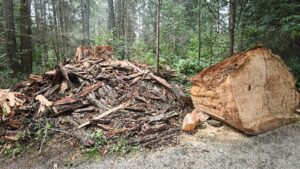
A very wide, thick part of the 400-year-old tree’s stump lies on the rocky ground to the right, while long shreds of the tree are piled on the left, showing the aftermath of the felling.
PHOTO: Courtesy of Stanley Park Preservation Society

By: Niveja Assalaarachchi, News Writer

In early September, a 400-year-old Douglas fir tree was found cut down in Stanley Park. The tree, measuring 38 meters tall and 30 centimetres wide, caused “significant damage to an adjacent riparian area” when it was chopped down. 

The Stanley Park Preservation Society raised concerns about the felling of the tree. Founded in 2024, the non-profit’s mandate is to preserve the park’s natural environment and advocate for the scientific assessment of its flora and fauna. They alleged that multiple levels of government have failed to take the proper precautions to conduct tree risk assessments, which are needed for a tree to be felled. 

The organization launched an independent inspection of the Douglas fir by sending two independent risk assessors. The assessors found that the stump of the tree was sound, and the “natural decay” at the top of the tree posed no threat.

The City of Vancouver informed the preservation society the tree had died during a rainstorm in August and had overhanging bark, posing a risk to public safety. The risk assessors disagreed. In their report, they documented that the felled tree was “5.5 meters from the trail with no lean,” making the possibility of the tree having overhanging bark unrealistic.

Douglas firs are among a handful of conifer tree species that are found throughout Stanley Park. Some, like the felled tree, are a part of a collection of old-growth trees seen in the park. Old-growth trees “provide unique habitats, structures, and ecological functions not available in younger stands,” and they’re “very important to First Nations and the public, whether for biological, spiritual, aesthetic, economic, or cultural values,” according to the provincial government. The trees “are highly effective at trapping climate-warming greenhouse gases like carbon dioxide from the atmosphere,” and also “act as a water treatment network” to “clean our water and air.” The trees are also difficult to replace, given that they take hundreds of years to grow. 

However, they are being placed under threat due to increases in private logging and mandated felling by the municipal government. The City of Vancouver has stated that trees are only removed from city parks if they pose a major threat to public well-being. 

The Peak spoke with Jillan Maguire, a director of the preservation society, for her thoughts on the felling of the Douglas fir.

“It’s really symptomatic of the City of Vancouver’s lack of proper process in cutting these trees down”

—  Jillan Maguire, director at Stanley Park Preservation Society

Maguire spoke about poor communication between the City and her organization, saying, “We started communicating with the City through email and would go to the Park Board meetings and talk to them about this. But we really weren’t getting anywhere. 

“We weren’t getting any response from the urban parks department or the parks and recreation. Nobody seemed to give us any satisfactory answers,” she continued.

“Stanley Park is world famous for its semi-wild environment. You can just walk down if you live in the city [ . . . ] and you can be in old growth forests,” said Maguire.

“It’s a real wonder, and we feel we have to do everything possible to protect what’s left.”


Learning Spanish made my world more expansive

0
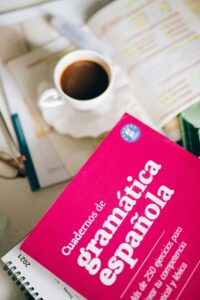
a photo of a pink Spanish grammar activity book.
PHOTO: Leeloo The First / Pexels

By: Zainab Salam, Opinions Editor

When I was around eight years old, I had a friend who used to take me to her church’s community hall on weekends. Being me, I was always open to learning new things. So I’d attend her afternoon reading circles — it wasn’t anything serious, just a bunch of stories read to children. One notable tale, which I believe many of you would be privy to, is the “Tower of Babel.” The story goes that people once spoke the same language, but in their attempt to build a tower to the heavens, their speech was scattered into many tongues. 

The fascination with that tale never really left me. Years later, I felt compelled to learn Spanish. I had been inspired by the idea that Spanish is the language spoken by over 600 million people worldwide. A statistic that has been achieved through the violent acts of Spanish colonialism. However, my younger self thought of the opportunities that learning a language would help make possible. From travelling to places I’ve never been to speaking with people I would otherwise never have the chance to talk to. 

What had begun as a simpler form of practical curiosity had developed into something far more personal and transformative. Learning Spanish is about immersing oneself in the textures of life that language makes visible. Societies, and their customs, that I hadn’t been brought up in suddenly became accessible through reading and listening. 

Beyond the riches of literary pages, learning Spanish opens up the opportunity to connect with the diverse array of individuals who speak it. Language learning involves more than learning words; it comes with learning new ways of living life. Whether it’s understanding memes or equipping yourself with learning new gestures to communicate unspoken information. Learning Spanish becomes an exhilarating experience of being reintroduced to the vastness of the world. 

What makes this diversity brilliant is that it resists flattening. Spanish does not belong to one people or one culture. It’s made up of Afro-Caribbean rhythms, Andean myths, urban slang, and centuries of Indigenous traditions that are preserved through defiant acts of resistance. The complexity of Abya Yala (also known as Latin America), invites learners to reflect on the living quality of language; how communication is shaped by migration, politics, memory, and thoughtful embraces of life. 

Learning Spanish, at least to me, isn’t about mastering its grammatical structures or learning thousands of vocabulary words that help me describe things. It’s about gaining a passport to a world of literature, and societies, that would otherwise be accessible through words that get lost in translation.

To learn Spanish is, in a sense, to piece together fragments of a larger human puzzle, where every new phrase is a key to another perspective. 

Now, I reap the benefits of having learned Spanish. I feel connected through the communicative medium of spoken language, where I can listen to speeches given by world leaders (given in Spanish) and understand. I can help a family navigate an unfamiliar city using their language, which I had the pleasure of doing while I was in Turkey last summer. In those moments, I had the opportunity to experience the joys of stepping into common ground with other humans.

Carney’s proposed austerity measures fail working-class Canadians

0
a photo of Prime Minister Mark Carney giving a speech. The picture only shows his face and neck from a side angle.
PHOTO: Bank of England / Flickr

By: Mason Mattu, Humour Editor 

The finance minister François-Philippe Champagne says even his mother understands the basic household principle of “spend less, save more.” What Champagne was referring to is austerity — reducing government spending in an effort to promote economic growth. Now, Prime Minister Mark Carney is looking to extend this principle. Make no mistake, austerity measures aren’t analogous to a family cutting down on frivolous expenditure. Government spending cuts wear the mask of fiscal responsibility while families are asked to sacrifice a little more for the greater good. All the while, corporations and billionaires reap the benefits

Unfortunately, working-class Canadians are all too familiar with the word “austerity”, even if they’re not aware of it. Former prime ministers Stephen Harper and Paul Martin both delivered sweeping austerity budgets during their respective mandates. In Martin’s infamous 1995 budget, over $7 billion in social services were cut. 

Recently, Carney used the term in French — austerité — to describe the fall economic budget. The Liberals’ economic budget, which will be tabled this fall, will include a 15% reduction in spending heading into the 2028–2029 fiscal year. That isn’t a minor trim — it’s a huge cut that will significantly impact the lives of Canadians. Even the ministers are frantically scrambling to find things to cut. 

Among the potential victims of these budget cuts are Indigenous Services Canada, universities that receive grants from the federal government, Environment and Climate Change Canada, and members of Canada’s public service, who help deliver essential social programs and services to Canadians. Think about that for a second. With job cuts to our public service, people will undoubtedly suffer from even higher wait times for essential services and public programs, causing significant damage.

Austerity measures don’t just mean cuts to existing services and essential spending, but they also block the creation of future necessary services. For example, the victories that the New Democratic Party secured in the last parliament, including free pharmacare and dental care for certain populations, won’t be expanded to a universal level by Carney’s government. 

While Carney is telling us — working-class Canadians — that we have to live in austerity, the ultra-rich and corporations of this country are thriving. In 2024, Canada’s wealthiest had over $682 billion sitting in offshore tax havens (spoiler alert — that’s missed revenue). We’ve handed out $26 million to Costco and Loblaws. The Trans Mountain Pipeline has received $18 billion worth of taxpayer dollars, while we move away from a Green Transition that produces climate-change-proofed jobs for workers. All the while, striking workers are being legislated back to work by the government, exposing that the government is really in bed with greedy capitalists. 

Instead of austerity for us, it needs to be austerity for them — Canada’s wealthiest. Rather than decreasing government spending on essentials, the government could be increasing revenue through taxes on the rich. According to estimates by BC Policy Solutions, a wealth tax for the top 1% of Canadians could produce $500 billion in tax revenue over the course of 10 years. The top 1% own 29% of the wealth in our country, way beyond their population share. 78 billionaires in Canada hold $520 billion in wealth. By not implementing a wealth tax, we’re losing so much revenue that could fund social programs and safety nets for years to come. The government is playing a dangerous game by not implementing this revenue-increasing strategy. One that prioritizes the fiscal health of corporations above the health of our working class.

Big Daddy Carney isn’t here to save us. If he were, he wouldn’t be threatening austerity measures against the working class.

Latin music is integral to our playlists

0
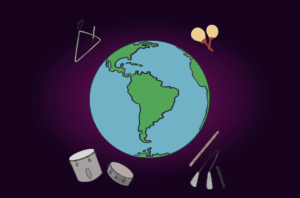
An Earth globe, with a focus on Latin America. There are floating musical instruments around the globe. With a deep purple background.
ILLUSTRATION: Victoria Lo / The Peak

By: Ashima Shukla, Staff Writer  

I was first introduced to Latin music in grade nine, when I began studying Spanish. Somewhere between the syncopated percussion, rhythmic guitar strums, and magnetic vocals, I fell in love with the music. Around that time, “Despacito,” by Luis Fonsi featuring Daddy Yankee, became a global number one hit, even though it was entirely in Spanish. Due to its popularity, it was later remixed to include a verse by Justin Bieber, further cementing its presence on the charts. The inclusion of a verse by Bieber had been done through a request made by his team. The original song’s virality broke the older crossover model, where Latin artists were expected to release English versions to achieve global success — this song had become a hit on its own. For me, it was a sign that music in languages other than English could capture the global imagination. 

But Latin music’s influence on American pop culture isn’t new. As early as the 1930s, Latin jazz expanded harmonic and rhythmic possibilities, just as the conga reshaped the sound of disco and funk. Over the decades, its influence was palpable in house music, and by the late 20th century, musicians such as Ricky Martin, Jennifer Lopez, and Shakira were household names. Their success paved the way for Latin pop to eventually become more than a so-called “exotic” addition to mainstream music charting in America, rising above stereotypes of sensuality and spectacle. And this trajectory has only soared. The numbers speak for themselves: in 2024, a record high of $1.4 billion in revenue was made in the US market. It also outpaced the overall US market for nine consecutive years. On Spotify, more than one in five of the Global Top 100 tracks in 2023 were Latin. 

Part of this dominance stems from the way Latin music lends itself to the current media ecosystem. Built on syncopated, body-driven rhythms, genres like reggaetón, salsa, bachata, and cumbia mirror global pop’s emphasis on danceability. The dembow beat, born from Caribbean reggaetón, has become the default rhythm of global hits, from Daddy Yankee’sGasolina” to Nicky Jam and J Balvin’sX.” The irresistible rhythms, and the vibrant cultures from which they emerge, make them perfectly suited for social media algorithms. On TikTok, snippets of “La Plena” or “Passo Bem Solto” spark dance trends that cross borders, while the visual spectacle of Brazilian Carnivals and Colombian ferias increasingly inform how we experience live music, inspiring music festivals from Coachella to Glastonbury

At the same time, the global appetite for freshness in this era of microtrends is satisfied by the novelty of new mediums, genres, rhythms, and the endless possibilities for fusion that Latin music offers. “La Luz,” by Juanes, for instance, preserves folk rhythms with modern dancefloor energy while Tini reimagines cumbia with electronic beats. Each iteration carries the hybridity at the heart of Latin music itself. 

In this sense, Latin music embodies both the beauty and contradictions of our global era. On one hand, it thrives in the circuits of late-stage capitalism, moving through streaming platforms and social media networks that reward constant novelty. But on the other, its existence and reinvention across decades speaks to something deeper: resistance, evolution, and cultural survival. Each beat carries depth — the echoes of colonial histories, the pulse of migration, and the creativity born from sociopolitical constraints. Latin music travels through the worlds of diasporas — for many, it’s a thread that ties them to their home. As such, this music is a tool to preserve identity and help strengthen connection to others. To dance and listen to Latin music is to participate in a story of endurance. Latin music reminds us that joy is empowering

To me, Latin music is more than entertainment. It is how I came to learn and love the Spanish language — but more importantly, it is how I came to learn and love the fusion of cultures, people, and experiences that is Latin America. And today, Latin artists aren’t just reshaping what pop sounds like. They’re reminders and pioneers of how music is a map of our entanglements — proof that culture is strongest when it refuses to stay in one place. As borders blur and media travels faster than ever, it is clear that pop’s future is already being written in the rhythms of Latin America. 


Brighter Side: Dough-eyed

0
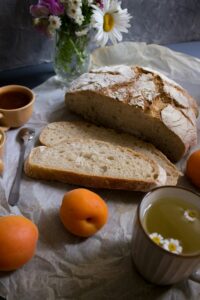
Half of a bread loaf, with two slices already cut-up next to it. There are three peaches and a tea mug in the scene. The picture is lit up with natural light.
PHOTO: Helen Oreshchenko / Unsplash

By: Sofia Chassomeris, Peak Associate

There are few practices I hold in reverence the way I do the art of bread-making. The smell of yeast, flour, water, and olive oil fills the room like the presence of a loved one — someone I’ve known since childhood, on the counters of my grandmother’s kitchen or dining room table. It’s with pride that I invite it into my home each week. My hands work to caress and knead the ingredients into something greater, which can sustain me and others.

The wide, south-facing window in my living room gets the perfect amount of sunlight. It warms the windowsill where I rest my dough for its first rise — where I wait for it to bask, to live, and grow under the damp cloth I’ve tucked it in. Later, floured hands pull the dough from rest and place it into the oven. The dough is transformed from being into bread; fresh and steaming. The crust burns my fingers and stings my palm, but the heat settles lovingly in my stomach. And yet, this satisfaction is not enough. I cannot wait to share bread with others, the same way my grandmother did with me.