Home Blog Page 148

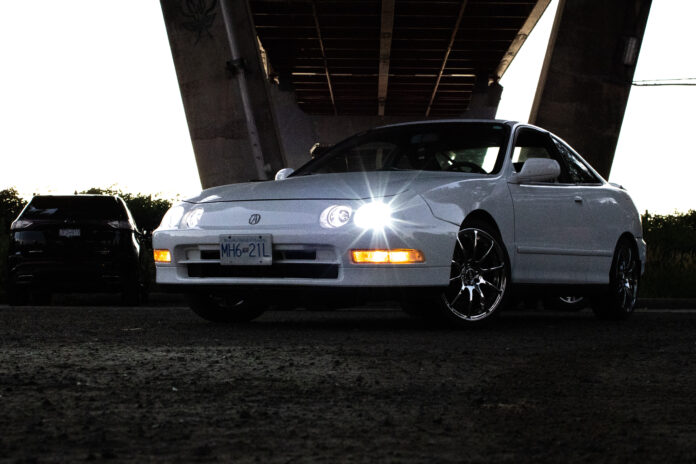
Horribly installed illegal headlights

0
A car with an extremely bright headlight
PHOTO: Harsahil Dhillon / The Peak

By: Olivia Visser, Copy Editor

What’s with all the blazing car headlights in recent years? Many of us have noticed, newspapers have written about it, and, shocker, people have crashed as a result of them. For the longest time, I thought half the drivers during my nighttime highway commutes bizarrely had their high beams on. Nope — just illegal headlights, baby!

There are laws about the maximum wattage allowed for headlights, but no one seems to care these days. And the problem isn’t just LEDs — xenon bulbs are much brighter, have a glaring blue tone, and half the time they’re installed incorrectly. Headlights are supposed to be aligned in such a way that illuminates the road, not the car in front of you. I am personally judging every single person who doesn’t know how to properly install headlights, yet insists on doing it themselves anyway.

Tell me, why do you feel the need to install these humorous yet hazardous bulbs? Do you think it makes you look snazzy? I thought that’s what your demon eye headlights were for, but now I can’t even see those, either. Bummer. Your sick lifted F-150 is a mere white smear in my rearview mirror, and don’t even get me started on oncoming traffic. At this point, I simply avert my gaze and pray for the best, lest be subjected to lingering splotches in my vision that are just wonderful when you’re driving at night. 

I’ll be honest, I pity these folks a little. I mean, it’s pretty sad that I can get around perfectly fine at night with 25-year-old halogens, while others feel the need to install military-grade spotlights on their cars. There’s nothing wrong with being afraid of the dark, but please don’t punish other road users with your ridiculous beacons.

Horoscopes: November 27–December 1

0
An illustration of a girl, stars and astrological signs strewn in her hair.
ILLUSTRATION: Marissa Ouyang / The Peak

By: Hailey Miller, Staff Writer

With the winter solstice fast approaching, you better bundle up, get your skookum snow shovel out, and prepare to dive into the holiday chaos that’s about to ensue. 

Aries: March 21–April 19

Winter camping is your jam. By that, I mean staying inside with a warm blanket, a tasty snack, and an eau de pine. Who wants to be surrounded by the forest in frigid degrees, anyway? Forget s’mores and busting your butt chopping firewood; put on the TV fire log instead.

Taurus: April 20–May 21 

Ice, ice, baby! It’s time to skate the Robson Rink in a pair of skates that are either two sizes too big or too small (there’s no in-between). No one’s more prepared for the slick, black ice-covered sidewalks than you. Show ‘em what you’ve got and slip-slide around town like the robbers from Home Alone.

Gemini: May 22–June 20

Nothing excites you more during the holiday season than a tangled rats nest of lights. What better way to waste your time than attempting to untangle a bundled mess of bulbs that never worked in the first place? When one bulb goes out, they all follow suit. What a way to celebrate the non-existent glistening cheer!

Cancer: June 21–July 23

You hate the cold. Actually, you despise it. The summer baby in you can handle the heat, but the frigid, cold weather is just not your cup of tea. So, make some tea to soothe your fiery soul before it turns to ice when the clock strikes midnight on winter solstice night. 

Leo: July 24–August 23

You also hate the cold, but you prefer a cup of joe to warm your bones. Nothing but peppermint mochas and gingerbread lattes for you, fine coffee connoisseur! Cold winter mornings pair perfectly with caffeinated cheer alongside icicle-covered rooftops.

Virgo: August 24–September 22

It’s time to cozy up by the over-run furnace and wait out the snowstorm. The brisk winter breeze is no match for your chilly-fighting tactics. The heat machine has kicked into overdrive, and your oven is begging to be used to thaw out the last of the bitter cold.

Libra: September 23–October 23

Gingerbread spice is the next best thing to pumpkin spice (psst, it’s the same thing), and you know you’re gonna get a boatload of the spicy mix to add some pizzazz to your holiday coffees. Livin’ on nutmeg, cinnamon, and ginger is the ultimate winter dream.

Scorpio: October 24–November 21

Shovelling snow is your favourite pastime. As if shivering isn’t enough of a workout, shovelling six feet of snow just to get out your front door (forget going to work) will give you all the cardio you need.

Sagittarius: November 22–December 21

You were born for this. Literally. You thrive in the cold and you’re a night owl at heart. Born around the longest night of the year, you’re best friends with the winter darkness and practically live in the snow. 

Capricorn: December 22–January 20 

It’s snow season, and you’re so ready for it. You’re an icicle queen. Decked out in the season’s trendiest gloves, toque, scarf, vegan puffer coat, knee-high snow boots, and double-insulated pants, you’re the picture of frigid cold fashion.

Aquarius: January 21–February 18

Love is in the air this holiday season. Do you feel it? Mistletoe is most certainly not the rage. Your true love is heated blankets, freshly baked goods, and fuzzy socks as you watch the first few snowflakes drop.

Pisces: February 19–March 20

The winter solstice signals the stressor of finalizing your spring schedule and paying your tuition fees. Let’s face it, you’d rather be partaking in some retail therapy and stocking up on the warmest jackets and toques you can find, but a girl’s gotta save up for those chilling scholarly fees.

Why aren’t you answering my texts?

0
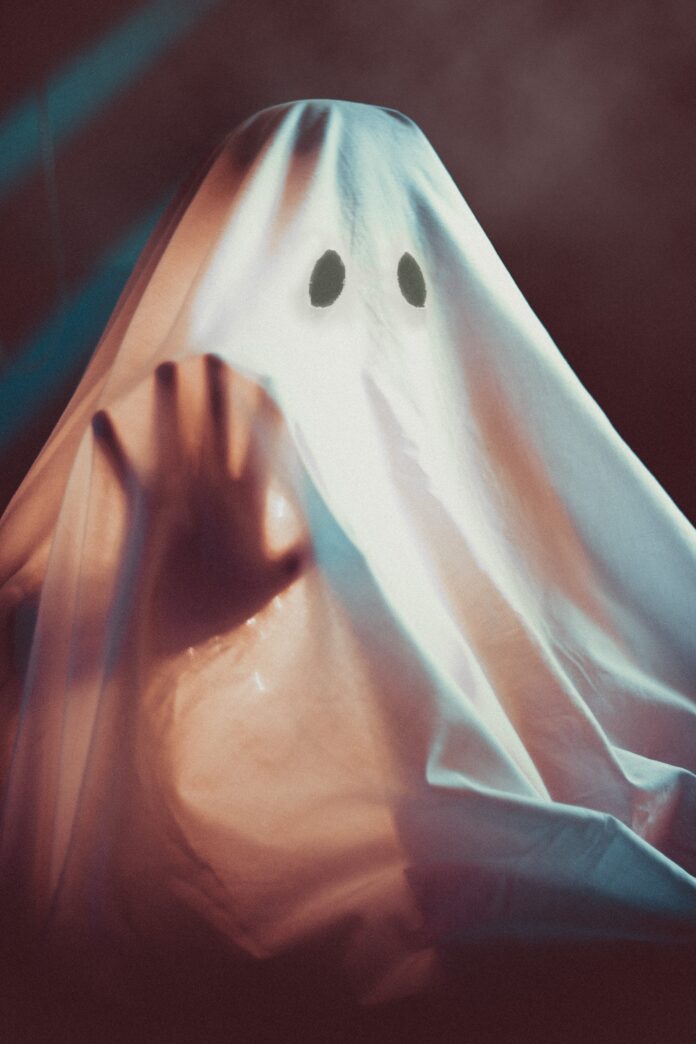
Someone dressed up as a ghost.
PHOTO: Ryan Miguel Capili / Pexels

By: Sharon Ha, SFU student

Dear ghoster, 

Decades and centuries ago, all someone could do was cut you off in-person. Now they can leave you on read, delete the message thread, block you . . . But that’s not the issue here, right? So these are some things I speculate you — the person ghosting me — might be doing behind my back, ranging from worst-case scenarios to best.

1. The cold case 
This is the ultimate worst-case situation, and if the following things continue to happen, I will consider this a wake-up call!

  • The ghosting has been going on for a considerable time, ranging from weeks to months.
  • The person ghosting does not answer other social media invitations to chat.
  • Your roommate, whom I pleaded for answers, initially pretended not to understand English. When I called them out, they told me you were either dead or had moved to a different country. This means I’m not only ghosted but have been put in a coffin buried and there is nary a grave marker to indicate where my poor bones have been interred. Yes, ladies and gentlemen, I will never see my date again.

2. The negligent boyfriend 
You’ve seen my text, you’ve been fantasizing about me, you’ve written notes worth of drafts on your iPhone 13 regarding what you’ll reply back until, in a bout of despair, you’ve come to the conclusion that I’m WAY out of your league and decided to leave things blank. And then there’s the case of the “negligent boyfriend.” Negligent boyfriends are notoriously busy — usually with games or talking to other friends — they don’t have this need to connect all the time. If this is the case, no need to worry! I’ll just work on my posture and myself — I’ve GOT this.

3. I’M ghosting YOU
Hello? I need to check my phone more, that’s all. You messaged me 30 days ago, right after I sent you a message, but I scrolled past or deleted the notification. Doubtful? Check right now. See? I was right. You are in the palm of my hand —  in fact, you’re following my social media a TON. You are down bad. Or the equivalent of being down bad for someone in a professional or friendly capacity. 

4. You’re seriously into Halloween
Not only are you more interested in watching Saw, Hereditary, Midsommar, IT, and other horror movies than speaking with me, but you’ve made your whole persona about the spooky season. Therefore, in the interest of being worthy of the word “ghosting,” you’re ignoring me and everyone else in your contact list. In this case, I’ll either do as you do — amp up the costumery and join the forces of evil with you, our “boo” — or I make a heel-face turn and find companionship with someone less . . . spooky.

Sincerely, 
The ghosted

City of Burnaby becomes first municipality in Canada to call for Gaza ceasefire

0
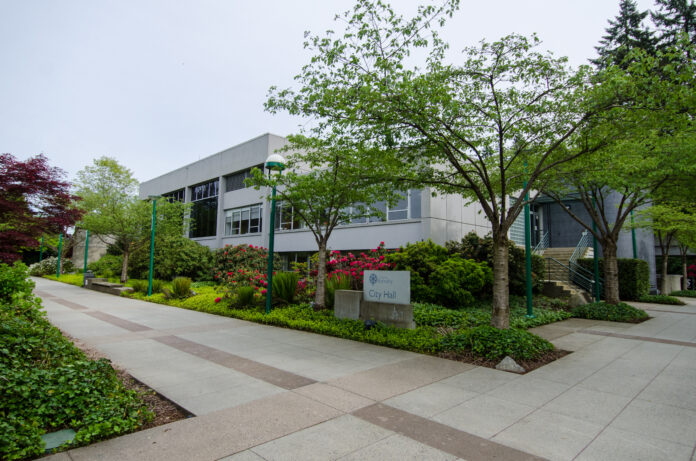
This is a photo of the outside of SFU Burnaby’s city hall. The building has a lot of plants and trees around it.
PHOTO: Jeff Hitchcock / Unsplash

By: Eden Chipperfield, News Writer

Content warning: mentions of genocide and war. 

At the Burnaby City Council meeting on November 6, the Council Chamber unanimously voted to call for a ceasefire in Gaza in support of Palestine during the ongoing genocide. 

The decision came from listening to public criticism on the Canadian government’s lack of action. The City of Burnaby has reportedly become the first Canadian city to call for a ceasefire in Gaza, which is currently occupied by Israeli forces. Since then, Burnaby’s actions have gained traction across Canada, including other municipalities such as Saskatoon, Maple Ridge, Brampton, and many more in BC

The decision dictates that Burnaby mayor Mike Hurley will write a letter to Prime Minister Justin Trudeau to “request that the federal government call for an immediate ceasefire in Gaza, release of all hostages, and flow of humanitarian aid.” Furthermore, the Council and mayor of Burnaby are condemning “all acts of anti-Semitism, anti-Palestine racism, and Islamophobia in our communities which have risen since the escalation of violence in the past month.” At the time of publication, Israel voted for a four day truce, but Israeli Prime Minister Benjamin Netanyahu says that the Israeli offensive will resume. This comes after the Euro-Med Human Rights Monitor said Israel has “dropped more than 25,000 tons of explosives” over the Gaza strip, which is equivalent to the force of over two nuclear bombs. Some publications also report that Israel has already violated ceasefire by shooting at Palestinians, including those injured, returning north of Gaza. 

Councillor Daniel Terault, who is Jewish and introduced the motion on November 6, delivered a speech after expressing his support for the movement. He cited the climbing number of people who have died in Gaza — which the United Nations reported to be as high as 20,000. “When my grandparents spoke of this time as survivors of concentration camps, they always said, ‘Never again. Never again can we allow this to happen to anyone,’” expressed Tetrault. The phrase “never again” is now being used by many to highlight the violence against Palestinians.

Since October, the National Council of Canadian Muslims has advocated for a ceasefire and commended Burnaby for taking actionable steps to call for action. The BC Muslim Association released a letter on October 30 written to Prime Minister Trudeau about the Gazan citizens who are facing extreme crises such as a lack of food, security, freshwater, and overwhelmed hospitals. “As Canadians, we have a proud history of advocating for peace, justice, and human rights globally,” the letter said. Muhammed Asad Gondal, president of BCMA, said, “I implore you, Hon. Prime Minister, to use your influence and partner with another world leader to urge all parties to agree to an immediate ceasefire.” 

Since the calls for a ceasefire began, Prime Minister Trudeau has not addressed the demands for ceasefire. Canada has donated $60 million for humanitarian assistance to Gaza while continuing to sell military weapons to Israel. 

How much do teammates think alike?

0
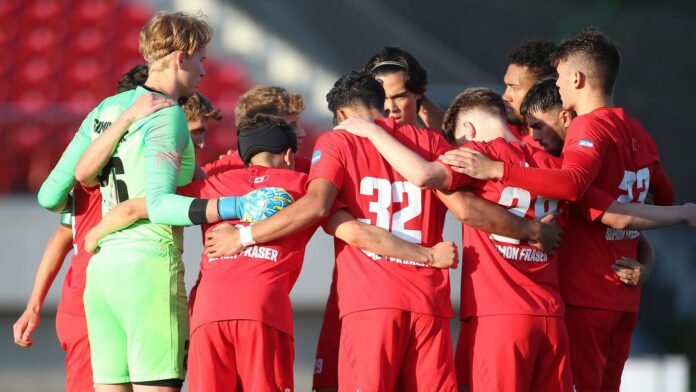
photo of the men’s soccer team in the middle of a huddle.
PHOTO: Paul Yates / SFU Athletics

By: Kaja Antic, Sports Writer

Editor’s note: some answers have been edited for clarity. 

Between travelling, training, and playing together, teammates spend a lot of time with one another — but do they think alike? The Peak asked midfielder Justus Meier, forward Devin O’Hea, and goalkeepers Jordan Thorsen and Eitan Waisfeld, to see just how in sync the players are about their choices on and off the pitch. 

Any specific pre-game routines or superstitions?

Justus Meier (JM): I’ve been wearing shin guards with a picture of my siblings on them for two years. They give me a feeling of extra energy and I couldn’t imagine playing with any other shin guards.

Devin O’Hea (DO): One thing I must have before my games is my shin pad sleeves and a certain pair of shin pads. 

We’ve got a match! While shin pads seem to be the common denominator for the forwards,  goalkeeper Thorsen is a believer in routine rather than superstition. 

Jordan Thorsen (JT): I always make sure to touch the crossbar before the game kicks off but that’s about it. I am fully aware it does absolutely nothing for my performance, but it’s nice to have a pre-game routine.

And Waisfeld likes his version of an “energy” drink — tea.

Eitan Waisfeld (EW): I think routines are actually really important for game days. I personally drink yerba mate before a game. It’s tea; I drink it almost every day anyway. But I always drink it before a game.

Who was your favourite player/club growing up?

JM: My favourite club growing up was definitely Borussia Dortmund and my favourite player was Marco Reus

DO: Growing up, I was a Chelsea fan because my favourite player was Didier Drogba. He played the same position as me, and is someone I try to mimic my play to. 

JT: Peter Schmeichel was my favourite player growing up. I really admired his confidence and leadership, but he was an amazing goalkeeper in general.

Unlike Thorsen, Waisfeld’s favourite player growing up wasn’t a goalkeeper, but a fellow Argentinian. 

EW: My favourite player is Lionel Messi. I actually have a tattoo of Messi. I was raised in Argentina, so I grew up loving him. He kind of got me into the sport, and I always supported him. I support a team in Argentina — Belgrano. It’s local to where my family is and I grew up only a kilometre away from the stadium.

Do you prefer playing on turf or real grass?

JM: Definitely real grass. My joints don’t hurt as much and it’s easier to do a good slide tackle.

DO: Definitely grass because it has more give and my body isn’t as sore after playing on grass compared to turf. 

JT: I would rather play on bad turf than bad grass, but I would rather play on good grass than good turf, so it really depends.

EW: I personally prefer grass because good grass is better than anything else. It’s so much easier to play on. You don’t get turf burn. The ball moves quicker — it’s better that way. I would say that good grass is better than good turf, but bad turf is better than bad grass. 

We’ve heard straight from the source: grass is, in fact, better than turf. 

Who is better: Messi or Cristiano Ronaldo?

JM: I would say Messi. He can decide a game on his own without the help of others. I think Ronaldo needs more support from his teammates than Messi does.

DO: 100% Messi, all day. Because he has more Ballon d’Ors (for player of the year), and he makes everyone around him better. I also like his style of play, his awareness on the field, and that he isn’t the flashiest of players. 

JT: For me, it’s Messi, but there’s room for both!

While Thorsen’s up for debate on the topic, Waisfeld is more set on his answer. 

EW: Messi. 

What hundred-to-one chance is better: scoring off a corner kick, or scoring from your side of the pitch?

JM: Corner kick. It’s closer to the goal and the probability is, therefore, higher. 

DO: Personally, I would say scoring off a corner kick. You have more defenders and teammates in your box, so it’s harder to score directly from the corner flag without anyone touching it.

JT: Scoring from beyond half is definitely more appealing, but scoring a goal from a corner is way more likely. 

EW: I would say scoring from your own side of the pitch. I think to score from a corner, you rely on the keeper messing up in some wayeven if your shot is really good. But if you score from your own half, then that takes creativity because you have to be able to see that the keeper is off their line to score. 

What I’m really hearing is that no one can bend it like Beckham

Do you prefer to play during the daytime or nighttime?

JM: In games where we are the favourite, I definitely prefer to play during the day. From my own feelings and experience, games are more likely to end in a fight when it’s dark than when it’s nice and bright. So darkness can make it more difficult to win games. However, if we’re not the favourite, I would rather play in the evening/nighttime.

DO: I like having daytime games because I’m an early riser, so I like starting my day early and not waiting around to play a game at night.

JT: Daytime. It’s always nice to have earlier games so you’re not nervously anticipating them all day. Also, floodlights can make it tough to see balls in the air, which can complicate things as a goalkeeper.

EW: I like the nighttime more. I really like building up to the game and having the day to prepare. I also feel like if you have it during the day, you kind of lose the rest of your day because you’re just going to be so tired from the game. I like having a full day that ends with a game. Also, it’s cooler at night. Obviously, I grew up in the heat, so playing under the sun always kind of killed me. But here, it’s not as much of an issue, but I definitely still prefer nighttime overall.

Mixed feelings — both among the players and Meier’s insight.

What kind of music do you listen to before games?

JM: Viva La Vida” by Coldplay.

DO: I have a wide range of music that I listen to, but the main genre I listen to is rap and the artist is Drake. 

JT: I typically listen to music I enjoy. For me, that means country music, which is an unpopular choice among my teammates.

EW: I almost exclusively listen to Spanish music, so I really like Myke Towers, Fey, and Rels B. But for the team in general, we all like to play Fred Again in the locker room. 

0/4 on this question, if you don’t count the team’s universal disdain for Thorsen’s country music. 

Are there non-soccer athletes you look up to?

JM: I find Dirk Nowitzki a very exciting athlete who, despite his outstanding achievements, has never lost his modesty and honesty.

DO: LeBron James. I would say for what he does on and off the court, how he holds himself as a leader, and how he makes other people around him better. 

JT: Kirk Cousins. I think he is a great leader, a great person, and is super underrated. It’s hard to find someone that doesn’t like Kirk.

EW: Kobe Bryant. He was exceptional in his dedication and commitment to the sport. It’s definitely something that has inspired me sometimes when I’m just like, “Hey, he would do this. He would wake up hours before everybody so he could go train. I should do that as well.”

Thorsen goes outside of the box, picking the only non-NBA player as his favourite athlete.

Do you prefer using your right or left foot on the ball? What about the inside or outside of your foot on the ball?

JM: I definitely prefer my right foot.

DO: I prefer using my right foot cause I am more comfortable with it and it’s my more dominant foot. Also, I like using the inside of my foot more because it feels the most comfortable. 

JT: My left foot sucks so definitely my right! There’s a time and a place for using both sides of my foot. I play the vast majority of passes with the inside of my foot, but hitting a perfect pass with the outside of my foot is more satisfying.

EW: I prefer using my right foot and I prefer using the inside of my foot, so I have more control over the ball than trying to use the outside of my foot.

Right and inside wins it clean. 

Which do you prefer: deflecting a shot with a header or deflecting with your legs?

JM: The best way is with your legs. This hurts the least.

DO: I would say legs because it hurts less.

JT: As a goalkeeper, I usually try to make saves without having to employ my wonderfully handsome face, so I’d say kick saves are more satisfying and definitely less painful.

EW: I think for my own sanity, I would say with my feet, legs, or anything. Kind of hurts when it hits you in the head. 

Once again, the forward and goalkeeper energy is very palpable in these answers. 

Would you rather play a game in the rain or snow?

JM: Rain. It’s easier to play in the rain and the ball does not stop as it rolls.

DO: Definitely the rain. It’s very hard to play in the snow. 

JT: Definitely the rain. Sliding around on a wet surface as a goalkeeper is a ton of fun and snow would be way too cold for a player that doesn’t do a ton of running throughout the match.

EW: Rain. Can’t do the snow. I’m not good with it because I was raised in Argentina, but I moved to Miami when I was nine. I lived in Miami for 10 years, so I basically grew up playing footy there and we never really got snow. I’m more used to playing in the rain.

One of the few times rain is considered a luxury in Vancouver. 

Do you prefer to practice inside or outside?

JM: Outside. Soccer is played outside. That’s how it should be. 

DO: Outside for sure. Playing indoors doesn’t give you the same feeling as playing on an outdoor pitch.

JT: Really depends. If the weather is relatively mild then outside always. If it’s cold and pouring, then I’d happily take the session inside.

EW:  I would say outside. I just grew up playing outside and never really played indoors growing up, so not really as used to it. I think football is an outdoor game, so I definitely prefer playing outside.

Certainly some strong outdoor feelings, some stronger than others.

Three physical activities to enjoy this winter season

0
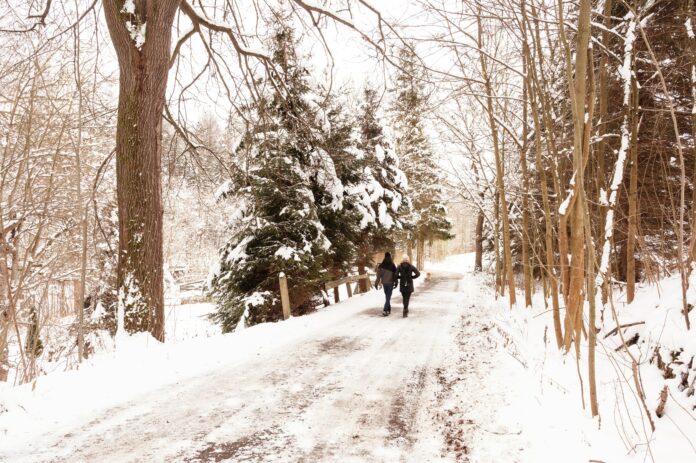
photo of a pair walking through a frosty forest.
PHOTO: Elke Karin Lugert / Unsplash

By: Saije Rusimovici, Staff Writer

There’s a winter chill in the air, and it somehow seems like all of our favourite outdoor fitness activities are coming to an end. The outdoor pools are closed for the season, and the tennis courts are vacant. But just because the weather is getting colder, that doesn’t mean that your exercise routine must consist of boring, repetitive gym sessions or quick mid afternoon runs you rush home from work to make before it gets dark. There are plenty of outdoor activities absolutely perfect for winter (that aren’t as expensive or daunting as skiing or snowboarding), and they’ll not only keep you active, but get you in the festive mood. 

Outdoor ice skating

This activity looks effortless, but it actually requires a lot of leg strength and coordination. Choose from one of the many indoor and outdoor open skate slots across the Metro Vancouver area and gather a group of friends for this super fun (and physically challenging) activity. Many places allow you to rent your skates upon arrival and are included in the cost of the skate itself. Beyond being  good for your physical health, skating also gives you an excuse to get together with friends for much needed stress-relief at this time of year. Never learned how to skate? This is the winter to challenge yourself! Don’t worry about looking silly; just focus on moving your body and having fun!

Cozy pilates at home

Pilates is one of my favourite winter workouts that can be done at any time of day, right from your living room. All you need is a yoga mat or a towel, and the weight of your own body. This is a great activity to work on your balance, core strength, and even your endurance. If you’re a beginner, find a credible online source that outlines the basics of the exercise so you don’t hurt yourself. Once you’ve got the basics down, find yourself a good playlist on Spotify and follow a Youtube tutorial while you do your workout. It will help you feel super refreshed and strong, and you don’t even have to leave the comfort of your home or brace the chilly weather! 

Winter wonderland walks

Have the morning to yourself? Get your boots and puffy jacket on, and take a walk outside. One of my favourite things to do in the winter is go for a walk in nature, whether that be my local suburbs or a trail on campus or at a park. Walking boasts benefits for both your cardiovascular health and mental health. Walking is a great way to de-stress. I personally enjoy listening to podcasts while I walk, but you can put on some Christmas music or call a friend to catch up. I also enjoy walking along brightly-lit boulevards such as Columbia Street in New Westminster or Hastings Street in Burnaby to do some window shopping. You never know what cool local boutiques you may find on your stroll!

A review of The Hundred Years War on Palestine by Rashid Khalidi

0
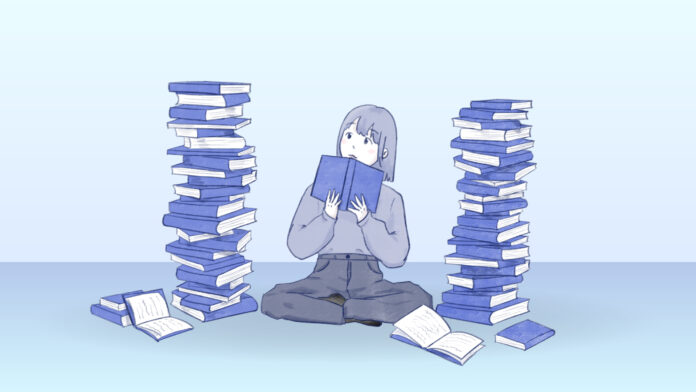
ILLUSTRATION: Emily Xu / The Peak

By: Sude Guvendik

Content warning: discussions of genocide.

Rashid Khalidi’s book, The Hundred Years’ War on Palestine, is an essential read if you want to understand the history of Palestine. The notion that this history is too complicated to understand is often used as a means to dismiss Palestinian voices and stifle meaningful dialogue with Palestinian narratives. Khalidi’s work dismantles this, offering a clear and accessible account that underscores colonialism’s role in shaping the history of Palestine. Drawing not only from his academic expertise but also personal experiences, Khalidi weaves together a compelling narrative that places significant responsibility on the British, Americans, and other western nations for the ongoing displacement and violent colonization of Palestine. He tells the story in a way that connects the past to what’s happening right now.

The book is organized into six periods, commencing with the Balfour Declaration from 1917–1939, marking the initial geopolitical tensions in the region. It then delves into the “Deal of the Century,” a series of so-called “peace” proposals introduced by the US, notably under the Trump administration, aimed at enforcing Israeli occupation of Palestine in 2020. The narrative explores the intricacies of these historical milestones and clarifies their relevance clearly within the broader context of Palestine’s ongoing struggles.

Khalidi starts in 1917 with the Balfour Declaration, when the British supported Israel colonizing Palestinian territory, explaining how it set the stage for the years of oppression to come. He emphasizes that the occupation is rooted in colonialism, with each new phase building on the injustices of the previous ones. Khalidi unveils the British bias in favor of Jewish Zionists during this time, highlighting that Great Britain supported Jewish Zionists and systematically denied the existence of the Palestinian people and their nationalism. He argues that while settler colonialism was ending in other parts of the world, it was just beginning in Palestine.

Khalidi doesn’t just focus on the political big-picture; he also looks at the daily lives and cultures of the people involved. He argues against ideas that simplify the conflict into a land dispute or a religious fight, showing how it’s more multifaceted than that. The second declaration of war focuses on the Nakba of 1947–48, where Khalidi exposes the complicity of the Western world and specific Arab regimes, such as King Abdullah I of Jordan, in denying Palestinian nationalism. 

One strong point in the book is how Khalidi doesn’t shy away from criticizing the mistakes and divisions among Palestinian leaders, which adds depth to the story. He exposes how the Arab league actively undermined the Palestinian national movement. The book also looks at how western and American powers supported the Zionist project which is the idea of creating a Jewish state. Khalidi explains without this outside support, the project would not have succeeded.

When Khalidi talks about moving forward, he suggests the solution must be grounded in justice and entail a thorough analysis of settler colonialism, power imbalances, and inequality. He calls for equal rights for everyone, on personal, political, and national levels. 

The book concludes with an analysis of the first and second intifadas. “Intifada” is an Arabic term that translates to “uprising” or “shaking off,” referring to the periods of Palestinian resistance against Israeli occupation and oppressive policies. Khalidi praises the relatively unarmed 1987 uprising and criticizes the second intifada of 2000 for misusing the public relations gains made during the first uprising. Even though Khalidi’s suggestions might make some people uncomfortable — especially those who support Israel — he provides a substantive and contemplative approach to address the political, humanitarian, and socioeconomic challenges stemming from the 1947 United Nations partition. Khalidi skillfully bridges the intellectual and emotional aspects of the wars in Palestine, integrating academic rigor with personal narratives often overlooked in global discussions. 

The book’s profound examination leads to the sobering analysis that the hundred-year war is far from over. Khalidi’s honest assessment suggests that Israel, a potent settler-colonial force backed by the West, prioritizes financial interests — exploiting oil, resources, and land — over human lives, delaying the acknowledgment of the rights and justice owed to the resilient Palestinian people.

This week at SFU

0
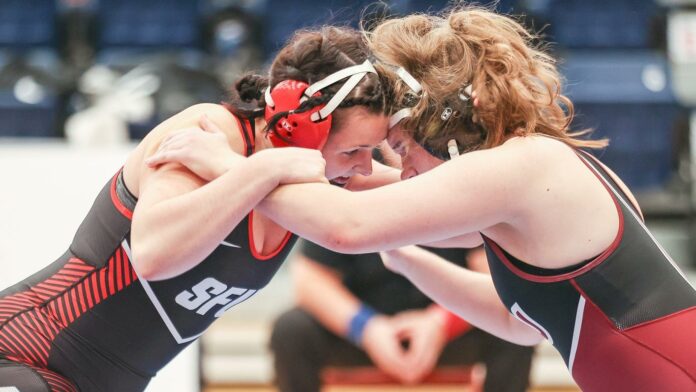
photo of an SFU wrestler in a headlock with an opponent.
PHOTO: Paul Yates / SFU Athletics

By: Isabella Urbani, Sports Editor

Home Games 

Tuesday, November 28: women’s basketball vs. Biola (California) at West Gym at 7:00 p.m. 

  • The women’s team are riding a three-game winning streak with victories against California State East Bay and Stanislaus State at a tournament, and Minnesota State Moorhead at home. 

Away Games 

Friday, December 1Saturday, December 2: wrestling vs. the University of Providence (Montana) at the Battle of the Rockies. 

  • The men’s team will part ways to go to Arizona for the Minnesota State Cactus Duals, while the women’s team will head to Nevada for the Wartburg College Desert Duals following this competition. 

Friday December 1Sunday, December 3: swimming at the Logger Invitational in Tacoma, Washington. 

  • The men’s team finished first and the women’s team finished fifth at their last swim meet in California. Sophomore swimmer Marcus Mak led SFU with two race victories in the 200-yard individual medley and 400-yard medley relay. He was followed closely behind his 400-yard medley relay, freshman teammate Thomas Caruso, who finished second in the 200-yard individual medley. 

Saturday, December 2: men’s basketball vs. Western Washington at 3:00 p.m. 

  • The men’s team lost both games against Western Washington last season. 

Saturday, December 2: women’s basketball vs Western Washington at 7:00 p.m. 

  • The women’s team lost both games last season to No. 12 and 13 ranked, Western Washington. 

$33,000 for lentils, rice, and resilience for Palestine

0
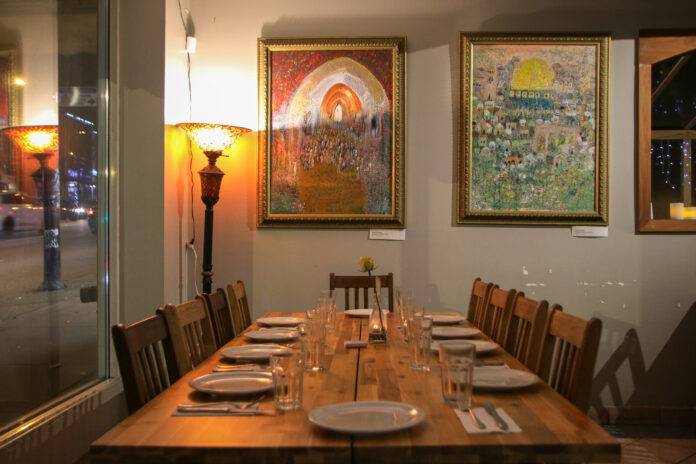
A long wooden table set with empty dishes in front of a moody amber light and acrylic paintings with golden frames on the wall. The window outside shows it is dark out.
PHOTO: Brigitte Buck / The Peak

By: Brigitte Buck, SFU Student

Content warning: mentions of genocide.

Cuisine changes, evolves, and is constantly reinvented. The same goes for people, cultures, politics, and perhaps even history. Often, we can gain something positive from change, but not always. While Sobhi Al-Zobaidi’s dishes at his Palestinian restaurant Tamam are based on old traditions and have only changed for the better in recent years, this is not the case for the place he calls home: Palestine.

Israel’s violent siege on Gaza has continually devastated Palestinian lands. Restaurant owner Al-Zobaidi has made it his mission to create a space of listening and understanding.

This common space is consolidated in his East Vancouver restaurant, Tamam. Sohbi’s restaurant bustles behind floor-to-ceiling windows and minimalist wooden tables in front of acrylic paintings. Tiled mosaic lamps adorn the room.

Creamy consistencies and cultural compatibility 

The heart of the restaurant is the extensive range of delicious dishes on the menu. Starters include creamy muttabal: a mix of yogurt, eggplant, sesame paste, and fresh tabbouleh, a Middle Eastern salad with herbs and bulgur. The main dishes include mouth-watering slow-baked chicken, lamb as tender as a baby’s cheek, and for dessert — sweet and spongy nammourah, a Middle Eastern cake baked with semolina. Tamam, Al-Zobaidi’s wife and namesake of the restaurant, spends her time in the kitchen and seasons each dish to perfection. 

One of them, which is particularly close to their hearts, is mujadara. A fairly straightforward dish made from lentils, rice, caramelized onions, and olive oil. It is “one of the simplest, most humble dishes you can find,” Al-Zobaidi told CBC News

Al-Zobaidi is also a filmmaker, artist, and scholar. For him, mujadara is another form of cultural expression. “People, when they love your food, they become humble. They are more willing to listen to your stories that are associated with the food that you serve them.”

A simple dish for a bigger cause 

At the end of October, the two started a fundraiser for Gaza, selling mujadara to the community and raising over $13,000. A week later, on the following Sunday, they held another one and raised over $20,000 — a total of $34,000 was raised. “This is an amazing show of love and support,” Al-Zobaidi announced. “At dark moments like these, only love can heal, no amount of money can do what love does to a child who has just lost his entire family. Continue to love Gaza and all the oppressed people wherever, whoever they [may be].” Sobhi and Tamam are in contact with friends from home. Their aim is to donate the money to the organizations most able to provide help. 

Their third fundraiser will take place on Sunday, December 3, from 1:00–5:00 p.m. at their restaurant on 2616 East Hastings Street. What should you bring besides money to donate? Solidarity.

“Raise your voice at every occasion, let politicians know that you disagree, that you are disgusted to be watching genocide unfolding live,” Al-Zobaidi wrote in an Instagram post. “Tell Canadian politicians that instead of exporting arms to Israel, Canada should be exporting its experience in dealing with postcolonial realities.

“The only just solution for Palestine is one democratic state for all the people living on the land, just like here, and Canada can lead this conversation worldwide.”

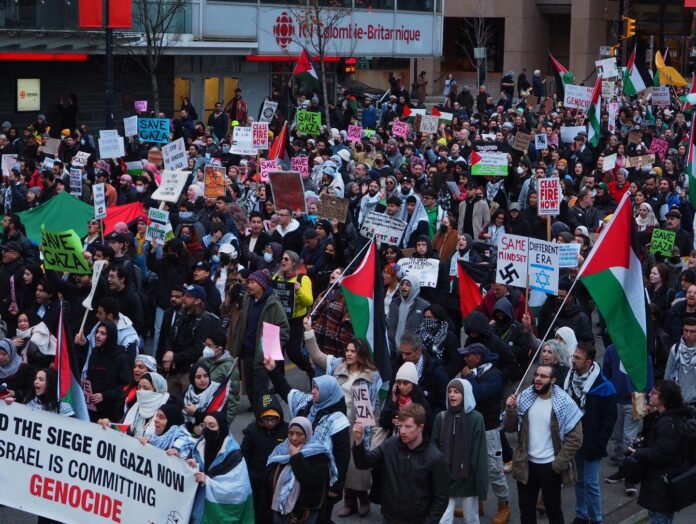
Thousands gather in Vancouver in solidarity with Palestine

0
This is a photo of the protests at the Vancouver Art Gallery for Palestine. The crowd of people is walking down the street. They are holding Palestinian flags and signs that say, “Israel is committing genocide,” and “ceasefire now.”
PHOTO: Olivia Sherman / The Peak

By: Olivia Sherman, News Writer

Editor’s Note: The implications of the juxtaposition of the Swastika and the Star of David in this image is not a message authored by The Peak. The organizers probably did not control the signage that protestors brought. The photo was included to capture the event as is, as documentation of the protest taking place. For the record, here at The Peak, we are careful not to condone any message we judge to be antisemitic.

Content warning: mentions of genocide, displacement, and war crimes 

Over 1,000 protestors gathered at the Vancouver Art Gallery on November 18 in solidarity with Palestine. They called upon Canadian politicians, particularly Prime Minister Justin Trudeau, to demand that Canada back a ceasefire. Protestors also participated in a march across downtown Vancouver and called for boycotts on companies investing in or supporting Israel’s actions. Although Israel called for a four-day truce at the time of writing, BBC and PBS have reported that Palestinians returning north of the Gaza Strip have been shot at by Israeli forces.

The State of Israel was created after the Nakba in 1948 — the Arabic word for catastrophe — when 300,000 Palestinians were violently dispossessed from their land and 15,000 were massacred. Palestine has been illegally occupied by Israel since the 1967 war. However, the process of ethnic cleansing began earlier, with the forceful expulsion of Palestinians. After the militant group Hamas attacked Israel on October 7, Israel retaliated with nonstop bombardments on Gaza and neighbouring cities, resulting in mass death and destruction. Israel has cut off water, electricity, communications, and food supplies to Gaza. At the time of publication, roughly 1,400 Israelis and an estimated 20,000 Palestinians have been killed. Around half of Palestinian deaths are children under the age of 18. “Any child born before 2009 has now survived five wars,” said a protestor at the Vancouver rally, who is an activist working with the United Nations’ agency for relief in Palestine. The Peak was unable to verify their name. 

“Like you, I’d been sold the myth that Israel is a liberal democracy. I did not see evidence of that,” they continued. “I saw families in the West Bank strangled by a 30-foot wall, illegal settlements built on stolen land. I witnessed bulldozers guarded by soldiers, literally pushing children out of their homes.” 

While the Israeli occupation was exacerbated by the events of October 7, it did not begin there. Palestine has been subject to settler colonization, bombardments, apartheid, and killings for over 75 years. Zionism is an ideology that holds the belief Palestine is inherently Jewish land, and Israel has the right to Palestinian land. This ideology provided justification for settlers to expand further into Palestinian land, resulting in millions being displaced and crammed into refugee camps. Palestinians have always been Indigenous to that land, before the League of Nations declared Palestine a “national home for the Jewish people” after WWI.

“I am extremely mindful of the long history of pogroms and genocide and ethnic cleansing against my people. But that is precisely why I am against what the modern Zionist movement has done in Palestine,” said Jason, a Jewish anti-Zionist educator. The phrase “never again” has commonly been used by Jewish activists to symbolize that Jewish people will not allow the events of the Holocaust to be repeated — against Jewish or Palestinian people. “Because ‘never again’ means ‘never again’ for anyone,” said Jason. 

Jason continued, “When I oppose these actions, I think I’m staying truer to the idea of ‘never again’ than those who refuse to see these things because it’s Israel. See, I am anti-Zionist, not in spite of my Jewish identity and knowledge of our tortured past. I am anti-Zionist because of it.” 

Many believe the Israeli Defence Force (IDF) has been using excessive and disproportionate amounts of force. The IDF has targeted medics, journalists, and civilians in neighbourhoods and refugee camps — in addition to using white phosphorus in populated areas, which can severely burn civilians down to the bone.  

Activists have criticized Prime Minister Justin Trudeau for not calling for a ceasefire in Occupied Palestinian Territories. Trudeau condemned the killing on both sides of the conflict, and has requested Israeli Prime Minister Benjamin Netanyahu exercise “maximum restraint,” to which Netanyahu replied: “It is Hamas, not Israel, that should be held accountable.” He added, “Israel is doing everything to keep civilians out of harm’s way.” 

Saturday’s rally comes just days after hundreds of protestors swarmed Trudeau while he was having dinner at a restaurant in Vancouver. Protestors reportedly chanted “ceasefire” at Trudeau, for his lack of action. Two people were arrested — one for “assault” and another for “obstructing police” — and Trudeau was escorted away. 

“When our government refuses to condemn war crimes, or even call for a ceasefire,” our hands become “drenched in blood, and our government becomes full architect of, and complicit in, war crimes,” said a protestor at the Vancouver Art Gallery. 

The petition e-4661 is an ongoing petition to the House of Commons calling for the sanction of Israel for violating international laws in Gaza and to “condemn the ongoing war crimes.”