Home Blog Page 1186

Know the snow before you go

0

WEB-avalanche-flickr-USDAgov

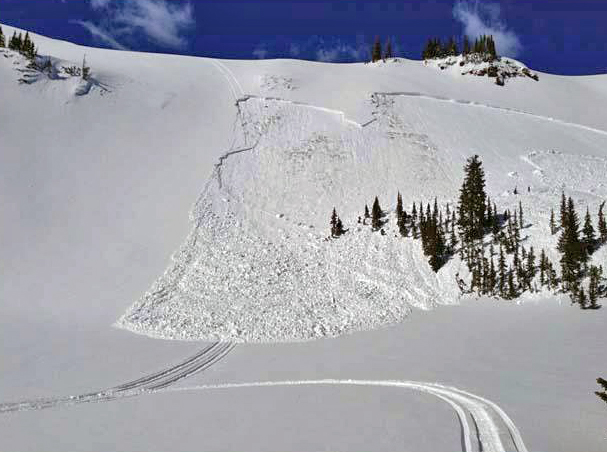
In light of a recent fatality that occurred when a snowmobiler was caught in an avalanche near Valemount, BC, an avalanche safety information bulletin was released by the BC Coroners Service (BCCS) in conjunction with the Canadian Avalanche Center (CAC), earlier this month.

This is the second avalanche-related death to occur in BC over the last two months, the first being a 29-year old snowboarder who perished on Dec. 20 in the backcountry near Golden, BC.

According to Pascal Haegeli, SFU adjunct professor and avalanche safety researcher, the safety bulletin was issued due to a temporary increase in avalanche risk after a destabilization of BC’s snowpack due to recent drastic weather changes.

“Early in January, we had some massive storms come through that gave us a lot of snow all at once, and that, of course, creates avalanche hazards,” said Haegeli, who was quick to point out that the snowpack has since had time to settle. “Avalanche conditions really change day to day,” he cautioned, advising that outdoor enthusiasts should check CAC’s website for daily updates on avalanche risk before heading out into the snow.

“The best way to survive an avalanche is to not get into one in the first place,” Haegeli said. He advises that students who enjoy outdoor winter sports not enter avalanche territory alone, and says that “open communication is very important for safe travelling in the back country.” A game plan for the day with which all members of the group are comfortable is key to staying out of trouble.

Avalanche safety equipment such as a transceiver to send and receive GPS locations, a long metal rod for probing deep into the snow, and a shovel are crucial to have in the event of an emergency. The ability to locate someone buried in an avalanche quickly is very important: “If you get buried in an avalanche, your chances of surviving are pretty high for the first 10 to 15 minutes — then they drop off very quickly,” Haegeli warned.

In the event that an avalanche occurs, Haegeli suggests travelling out of the area before the snow stops moving. Once caught in a snow slide, he advises trying to get rid of all recreational equipment such as skis and ski poles, “as they will act as anchors within the avalanche that will actually pull you down to the bottom.” Fighting to stay near the surface of the snow greatly improves the chances that a victim will be recovered quickly.

As the avalanche slows to a halt, attempt to make an air pocket for your face. According to Haegeli, running out of oxygen is the number one concern for people trapped under the snow. If you are buried, he advises attempting to make a connection with the surface: “If you are buried fairly shallow, you can try to scream, or maybe push an arm up to the surface so people can immediately see where you are.”

If these methods fail, Haegeli suggests trying to stay calm, preserving as much oxygen and energy as you can, and trusting that your friends will find you.


Political party promises that all of their promises are in fact lies

0

OTTAWA – The CCP (Completely Corrupt Party), who share no affiliation with the Chinese Communist Party or the Confederacion Campesina del Peru, has announced its promise to only promise lies, and states that all previous promises have been lies.

Analysts are calling this a groundbreaking promise that could change the way politics is done forever.

“Imagine, if you will, that instead of forcing you to read between the lines, instead of making you have to think about it’s and come to the conclusion that it’s too good to be true, they just tell you that it’s straight up is a lie,” explained political pundit, Harold Tritz. “It’s a way more efficient way of lying, it doesn’t have to be so secretive anymore.”

Despite this initial enthusiasm, many other experts are skeptical. The CCP was only founded two weeks ago, and as such has not even made a promise that they could break.

“It’s pretty easy to make a promise like this if you have no promises to break,”explained ex-fringe party politician Harvey Bess, “but really, maybe you will have a lie per three promises or maybe even a 76 per cent lie rate, but 100 per cent? Those are bold words from a rookie.”

“If he promises that all his promises are lies, then this promise in effect must be a lie, thus creating a paradox,” stated a former professor of philosophy. “If I were a betting man, and in a science fiction movie, and this involved time travel, I would bet on a time-space paradox that would kill us all, or at least prevent Marty McFly from ever being born.”

Ukrainian Olympians concerned about having families live in Ukraine

0

KIEV — While being selected to participate in the Olympic Games is the realization of lifelong dreams for most athletes, for some Ukrainian team members, it could also fulfill their more recent dream of getting away from their dangerous, unstable country.

Many of Ukraine’s biggest winter sports stars have come out saying that due to ‘security concerns’ almost everywhere within a metre-radius of them, they will definitely be trying to bring their families with them to Sochi.

“It’s just not worth the risk for my family to continue living in Ukraine,” explained Alpine skier, Oleksander Kluka. “For their safety, I just think it’s better that they come with me to a nice, peaceful resort town like Sochi.”

Kluka’s feelings were echoed by teammate Demyan Dmytro who said the decision was difficult but that it will leave him with more peace of mind not leaving his family in their home country.

“Sure, I’d love them to stay home and not have them distract me as I try and concentrate on winning a sporting event,” Dmytro said. “But I decided that human life is a little more important than skiing, just a little though, I’ll be honest it’s really close.”

Other athletes, like snowboarder Roman Vsevolod, have faith in the safety precautions of Ukraine’s violent protesters and riot police and have decided to go to Sochi solo.

“I’m sure it’ll be fine, the two weeks I’m in Russia will definately somehow be the first days there aren’t massive bouts of violence at home,”  Vsevolod said. “Anyway, I’m sure everything will be better once the games start, I mean, how could anyone ever get violent from watching a sporting event?”

Clan clinch playoff spot

0

The Simon Fraser University men’s hockey team took a big step towards their goal of capturing the 2014 BC Intercollegiate Hockey League Championship. Over the weekend of Jan. 24, the Clan beat the Thompson Rivers University Wolfpack twice in order to clinch a playoff spot.

A key storyline heading into the back-to-back games at Kamloops was the goaltending situation for each team. Clan netminder Andrew Parent made his fourth and fifth straight starts as SFU’s new number one after Graham Gordon abruptly left the team. TRU was also making a reluctant switch in net as Chris Solecki took over for previous starter Stephen Wolff, who was suspended for the remainder of the season for academic issues.

Despite the clouds hanging over the Clan’s crease, SFU was able to win both games due in large part to their forecheck and dominating cycle down low in TRU’s zone.

The first game showed the Wolfpack what they were in store for as SFU created multiple chances off of their relentless pressure. TRU scored first, however, on a tip in goal on a powerplay giving them their only lead over the course of the two games.

SFU answered TRU’s opening marker with two goals of their own. Clan defenceman Colton Schock wired home a victorious faceoff to get the visitors on the board, and Graham Smerek found some open space in front of the net and fired home a great feed that came off of a relentless Clan cycle down low.

Simon Fraser kept applying pressure in the second period, but to no avail. The lone goal of the frame belonged to the Wolfpack’s Anthony Delong, which evened the contest at two goals apiece.

As the third period got under way, the lack of goals, despite throwing a heavy quantity of rubber at Solecki’s net, did not discourage the Clan. Jono Ceci scored the eventual game winning goal just 1:32 into the final frame as a result of another dominant cycle.

Just 3:08 after Ceci’s marker, BCIHL player of the week Jared Eng rushed the puck end to end, cycled the puck around TRU’s defensive zone, and found Trevor Milner, who fired home the Clan’s fourth and final goal of the night, giving SFU a 4–2 victory.

The final game of the weekend series didn’t feature a whole lot of goals, but did offer quite a few penalties, making special teams the deciding factor.

SFU went one-for-four on their power play, while TRU was blanked on three attempts.  Newly acquired defenceman Scott Brkich scored SFU’s game winner on a second period power play, giving SFU the eventual 1–0 victory.

TRU’s Solecki was awarded first start in each game and rightfully so, as SFU fired 86 shots towards the TRU netminder over the two games, while his Wolfpack teammates could only muster 46.

Solecki’s heroics do not diminish the dominating effort put forth by the Clan, especially in their forecheck and suffocating cycle.

SFU will look to keep the momentum going as they face Trinity Western University for a home and home series next weekend. The two games give SFU ample opportunity to further
distance themselves atop the BCIHL standings.

Say “no” to coyote fur

0

WEB-coyote-Jess Findlay

“Authentic, iconic, Canadian” are words used by the Canadian brand Canada Goose, and words with which we love to identify. But would we continue to do so if they were stained by a connection to inhumane, unnecessary killing?

On the first Saturday of February, a group of animal activists from Ontario known as The Kitchener Ontario Animal Liberation Alliance (KOALA) held a protest outside of Channer’s Apparel store for men in Waterloo.

They were opposing the unnecessary use of coyote fur on the hoods of premium jackets made by the company Canada Goose, stating that the company uses inhumane practices to catch the coyotes with foot traps.

Malcolm Klimowicz, a member of KOALA told The Cord that once the coyote is trapped “they could be out there for weeks sometimes,” which means they either, “freeze or starve to death.” There is also a high risk of the injured animals chewing off their own legs to escape, he said, or being painfully “eaten by other animals.” Either way, death by trap probably results in a coyote’s suffering and torment.

Yet, this torture leaves many unfazed. An employee of Channer’s, Bill Townsend, ignorantly stated that the fur “is acquired in a humane fashion,” as it is done through a “managed process.” He continued, “This fur trade is providing jobs for people and it is creating commerce.”

As if we haven’t heard this argument before. A well thought-out and perfectly rational reason for murdering animals — the economy.

In this situation, though, the one to blame for such cruelty is not Townsend, his fellow employees, or the customers buying the fur. It is the president of Canada Goose, Dani Reiss. He is the person of power choosing to build a business that incorporates unnecessary death into its product.

I’m convinced that the company would still thrive without killing coyotes.

Nevertheless, Canada Goose does offer another reasonable explanation for the presence of the coyote fur: Reiss explains that the fur, “provides warmth around the face in a way that no synthetic fabric can.” Their website also states that coyote fur “doesn’t freeze, doesn’t hold moisture, retains heat and is biodegradable.”

All of these qualities are absolutely positive. However, there are alternatives that provide similar if not the exact same qualities such as cruelty-free versions of wool, for example. Even if other materials do not compare to real fur, there still needs to be an aspect of tolerance that we carry with us. Warmth or comfort doesn’t have to come at such a high price.

We need to ask ourselves whether these animals are being killed for survival or adornment. We no longer live in a world where high status is determined by whether our clothing was once able to walk.

As Klimowicz points out, “the majority of people who wear these things live in southern Ontario where it’s really not that cold.” Compare this to southern British Columbia, and wearing fur for warmth is simply ludicrous.

We as consumers can display our knowledge of the fur industry’s cruel origins and opt to buy non-fur coats in general, or at least Canada Goose jackets that do not use coyote fur. Better yet, we can invest in a good pair of long johns and a rain coat, clothes that actually suit our West Coast climate.

University Briefs

0

mars_JordanDumba-1100x728
TRU students support sweatshop-free campus

The TRU student union is moving forward with their lobbying campaign for the university to join the Worker Rights Consortium, an NGO investigating working conditions in factories around the globe.

Having reached the 3,000 signature target it set internally, the student union moved to gain support from affiliated Canadian universities, such as the University of Toronto and Queens. The TRUSU will present the notice to the board of governors on Feb. 14, for the administrators to decide upon.

Although they have not yet received support letters, Leif Douglass, TRUSU vice president external, is confident in their proposal saying: “There is clearly a lot of campus support.”

With files from The Omega


U of S student may boldly go where none have gone before

A U of S student has made the 1,028 person shortlist to be on the first human expedition to Mars.

Andrew Cooper, a third year political studies major, explained his motivations behind applying to The Sheaf: “I thought the idea of travelling to another planet on behalf of humankind would be a noble venture. It’s not only an inevitability, but it’s one of the most important things we can do,” Cooper said. “And aside from that, space is awesome.”

The first scheduled flight would take off in 2024 with a team of four astronauts, to land 210 days later on the red planet. The next stage of the selection process will take place in April, with the final 24 candidates to be chosen in 2015.

With files from The Sheaf


Concordia takes the stand against Quebec Values Charter

Concordia defended its opposition to the controversial proposed Quebec Values Charter on Jan. 23, arguing that “universities have always, and should now continue to, promote inclusion and open mindedness.”

The bill, proposed last September, would restrict public sector employees from wearing or displaying conspicuous religious symbols.

“We’re not comfortable with denying access of education because of the way people dress,” said Concordia Provost Benoit-Antoine Bacon.

With files from The Concordian

Students to build homes, memories, in Zambia

0

web-zambia

Twelve SFU students, along with their residence advisors and staff, will be partaking in SFU’s first volunteer-based international trip to Zambia this May.

This is the first university-approved trip of its kind and will see students working on various projects, including building homes with Habitat for Humanity, spending time at the University of Zambia, and helping out with the day-to-day activities of a girls’ HIV/AIDS orphanage.

“There is a lot of justification for doing something that is linked to volunteerism and community service,” said Micaela Roughton, one of the residence life coordinators leading the trip. “SFU has a number of great international opportunities for students, but they are all linked to academics.”

This trip is the brainchild of residence and housing program coordinator, Brandon Chapman, who worked alongside Roughton and fellow residence life coordinator, Patrick Bourke, to create an international opportunity for students living in residence that wasn’t “purely academic,” though they hope to offer the option of academic credit for future trips. The team hopes to offer a variety of domestic and international opportunities to students living in residence at SFU in future years.

According to Bourke, university students are at a critical point in their lives, a time during which they are still “deciding their futures,” and this unique perspective allows them to bring an element of curiosity to the experience that people of other generations may not have.

“It is a great time for them to have this kind of worldly introspection and to learn about this type of experience,” said Bourke.

While the trip emphasizes community service and volunteerism, the organizers stress that they are not trying to “save” the Zambians in any sort of neo-colonial context. It’s described by Roughton as more of a system of “mutually beneficial learning,” with SFU students being able to experience Zambian culture and life by lending a hand in the community.

This trip will also allow the students to experience the day-to-day activities in a girls’ orphanage, a unique experience that is only possible due to Roughton’s personal relationship with the facility. Roughton has spent a significant amount of time working with the sisters in charge of the orphanage in order to secure funds and keep the orphanage running smoothly.

“This is an awesome opportunity because generally orphanages are hesitant to let people they don’t know in,” explained Roughton.

The participants will be leaving for Zambia on May 2, where they will spend two weeks working with Habitat for Humanity and experiencing Zambian culture. Chapman has been overwhelmed by the progress they’ve made, and the level of passion that has been displayed by all supporters.

“It’s surreal to see that it’s actually happening, and that in three short months we’ll be in Zambia,” Chapman told The Peak.

Here’s the scoop

0

If you’ve ever taken the bus up the hill for an 8:30 a.m. class, you’ve probably seen the SFU lacrosse team running plays on Terry Fox Field.

The early hours might seem a bit much, but they’ve paid off historically for the SFU Clan, entering their 19th season in the Pacific Northwest Collegiate Lacrosse League (PNCLL), the northwest conference of the Men’s Collegiate lacrosse Association (MCLA), the largest collegiate-level lacrosse league in the world.

With over 200 teams across 10 conferences and two divisions, the Simon Fraser Clan is the only Canadian team in the American league and has seen an enormous amount of success in its 19-year history. With eight PNCLL Championships and nine MCLA National Championship appearances (including a 2nd place finish in 2010), the 2014 Clan, ranked 17th in the MCLA going into the season, are looking to continue the tradition of success.

At the helm are 12th-year head coach Brent Hoskins — himself an ’02 SFU grad — and third-year assistant coach Chris Fox calling the shots from the sidelines.

Senior Riley Wanzer and juniors Bayne Bosquet, Sam Clare, and Mark Hilker lead the team on the field. Clare, a midfielder, is coming off a 2013 season that saw him earn 2nd team All-American honours, while defencemen Wanzer and Hilker both had 1st team All-Conference seasons. Meanwhile, their fellow defenceman Alex Thompson earned 2nd team All-Conference honours.

The Clan has a challenging season ahead of them this year, with five of their 18 games against other nationally ranked opponents: #3 Arizona State, #4 BYU, #8 Oregon, #13 Texas, #19 Oregon State, and #23 Arizona.  The Clan have just five home games on Terry Fox Field this season, the most-anticipated being the matchup against PNCLL rival Oregon. The Clan opens their season this weekend with a double header at home against Western Washington on Feb. 8 and Portland State on Feb. 9.

Despite the tough schedule, Hoskins still says this is one of the best teams he’s had the privilege of coaching in some time, with speed, athleticism, and an overall maturity that make this team a contender. He says another PNCLL conference title and a trip to the national tournament could very well be in the team’s future, as SFU lacrosse continues the strong tradition of Canada’s official summer sport on the West Coast.

BoG-GLED

0

WEB-boggled-flickr-KOMUnews

Environment program changes

The University Relations Committee brought proposed program changes related to the Faculties of Environment and Earth Sciences from Senate to board for approval. Changes include the dissolution of the Forestry Geoscience Certificate in the Department of Earth Sciences, as well as full program proposals for a Bachelor of Environment, an Environmental Resource Management major, a Global Environmental Systems major, and a Bachelor of Business Admin/Bachelor of Environment joint major in Sustainable Business.

In 2011, eight per cent of 5000 SFU undergraduate students surveyed were very interested in a possible Bachelor of Environment. The program would also reflect US environmental job market data, which reveals a growing demand for professionals in this industry.


Build SFU Crossroads site officially approved

Based on the recommendation of Build SFU, board approved the Crossroads site as the location of the new student union building, the construction of which is set to begin in April 2015.

The board once again brought up the issue of financing, as the university is not able to act as guarantor for the project. The decision was made several years ago upon the advice of the auditor general to bring universities into the government reporting entity.

“What this means is that any debt we incur as a university becomes the debt of the government in the eyes of the auditor general, and governments obviously don’t like to be seen accumulating debt,” explained President Andrew Petter. Therefore, this issue has stemmed from government worries surrounding debt accumulation that would result from the university financing this project.

Vice-president of finance and administration Pat Hibbitts reported that a bank has nonetheless come forward to provide the financial support. Hibbitts also stated that the SFU team will continue to look for “creative solutions” to this problem.


Mortgage subsidy policy

Upon the recommendation of the Governance and Nominating Committee, board voted to amend the Mortgage Interest Subsidy Policy to increase the annual amount from $5000 per year to $7500 per year for new and existing participants. This change would also allow participants to apply to the program up to seven years after the start date, to be increased from the current three year limit. The subsidy would last five years.

Petter spoke to the importance of this subsidy in aiding faculty and staff to purchase a home in the competitive Vancouver market. “Very often people who want to come to SFU are discouraged by the price of housing in the Greater Vancouver market. This provides some small instrument to try to assist them in transferring into what is very often a much higher price system than the one they are in.”

Hibbitts added, “I can’t emphasize [enough] the difficulty we have in recruitment with regard to housing issues in Vancouver. [In filling] many senior positions, we’ve really been restricted to a Vancouver market.”

Tippy Top Ten: Sochi Olympics

0

Tippy Top Ten Reasons You Aren’t Competing in the 2014 Sochi Winter Olympics

10. Couldn’t find a fourth for your bobsleigh team

9. No one wants to see you in spandex

8. Missed introductory sexual orientation

7. It didn’t matchup with your week at the Sochi timeshare

6. Have a prior engagement to a member of the same gender

5. They still won’t recognize snacking as an official event

4. You have no athletic abilities and find curling boring

3. Too busy watching the Olympics

2. Apparently, javelins aren’t allowed in the Winter Olympics

1. You were disqualified for being a dope