Home Blog Page 1168

Skylor Davis qualifies for NCAA Div II Championships

0

Clan wrestler Skylor Davis will return to the NCAA National Championships in his senior season, as the sole SFU athlete to qualify for the event.

Davis finished second in the 125-pound weight class at the NCAA West Regional Championships, punching his ticket to his final NCAA Championship. He entered the regionals ranked second overall, and finished in the same position after falling in the final 9–6 by decision to California Baptist’s Bryden Lazaro.

Davis will be looking to better his third-place finish from 2013 where he fell in the national semi-final, but still left on a high note as the Clan’s first NCAA All-American in wrestling.

Davis, still ranked second in the nation in his weight class, has been focusing his efforts towards his final appearance in the NCAA this season. He will likely have to face Lazaro again at the championships as the West Region champion is the number one seed heading into the event.

Davis’ coach, Justin Abdou, explained that there were several calls that favoured Lazaro in the West Region final, but that Davis had an excellent show against the top 125-pound wrestler in the country.

Davis has earned over 40 wins in his senior season, many of which have been won by fal l and in very fast times. Davis has been a dominant athlete for SFU since joining the Clan in 2010, and will look to close his career on top of the NCAA Division II championships beginning March 14, in Cleveland, OH.

Whose Life is it Anyway? tackles disability in the theatre

0

Whose Life

Sometimes art and life imitate each other a little too well. During the research process for his new show, Whose Life is it Anyway? James Sanders fell ill and had to spend some time in the hospital. Since the play’s protagonist, a sculptor who has become paralysed, spends the whole show in a hospital bed, this experience provided actor Bob Frazer with a real life research opportunity.

Having been good friends with Sanders since their theatre school days, Frazer was at the hospital almost daily, observing the environment and forming relationships with doctors and nurses.

Sanders, artistic director of Realwheels Theatre, stumbled upon this play in his third semester of theatre school, after his own spinal injury. “As an able-bodied actor it’s difficult enough to get work. I wasn’t sure if I wanted to continue on that path, and I wanted to see what was out there.” He saw the film version starring Richard Dryfus: “I was 21 years old and was a bit too young to play the character, so I waited.”

After producing Spine during the Cultural Olympiad in 2010, Sanders thought the time was right to begin work on Whose Life is it Anyway? “I succumbed to health issues in August 2011, and they’re still not resolved. I had thought I was going to be performing the role, but we decided that we’d cast another actor and share the role, and now I’m not able to perform at all.”

He cast Frazer, who had directed Spine and also worked on another of his shows, Skydive. They worked closely to shape the role, and Sanders is glad Frazer has taken it on as he can incorporate his personal knowledge of Sanders into his performance.

“As an able-bodied actor it’s difficult enough to get work. I wasn’t sure if I wanted to continue on that path.”

James Sanders, artistic director of Realwheels Theatre

“We’ve been friends for 25 years,” said Sanders, “we met in theatre school before my injury, in the fall of ’89. Both of our families have gotten to know each other really well.” A proud alumnus of SFU, Sanders also cherishes the memory of meeting his wife at convocation. “I was the valedictorian for Arts in the morning, and Barb Wiesler was the valedictorian for the Sciences in the afternoon. We met at the reception at the Diamond Alumni Centre and got a married a year later in the same spot.” That was in 1998, and they are still happily married with a son.

“The program at SFU really encouraged students to create their own work and identity,” said Sanders, “I didn’t wait around for people to hire me.” He explained that it’s difficult with a disability to get work in mainstream theatre or television. To overcome this, he started his own theatre company which embraces disability and presents it as a normal part of life.

Sanders said his goal is to show “disability not as an issue, but as part of the landscape where other issues can be discussed.” In this way, he said it’s up to the audience to make up their own minds.

In Whose Life is it Anyway? the issue is whether or not someone should have the right to choose to end their own life, but instead of presenting a case for one side or the other, Sanders said he hopes the play will allow audiences to start a dialogue with family and friends.

“I hope they leave feeling like they’ve seen a great piece of theatre, feeling good about their night in the theatre, and coming away talking — opening up the discussion for things they maybe haven’t been able to address,” he said.

With a sparse set of just a hospital bed and the story’s protagonist, Ken Harrison, on stage the entire time, the show is an intense study of one man’s struggle. “He’ll be on stage all the time — from when you walk in until the last scene,” said Sanders. “It’s a fast moving show with no breaks between scenes.”

The common thread running through all of his works is the desire to subconsciously change the public’s perception of disability. “I want to bring the audience closer to understanding the disability experience, so that they see it as not something foreign, but natural. I want to bring society into a place of acceptance.”

Whose Life is it Anyway? will be presented at The Cultch from March 11 – 22.

Change starts with you

0

WEB-loretta saunders-facebook
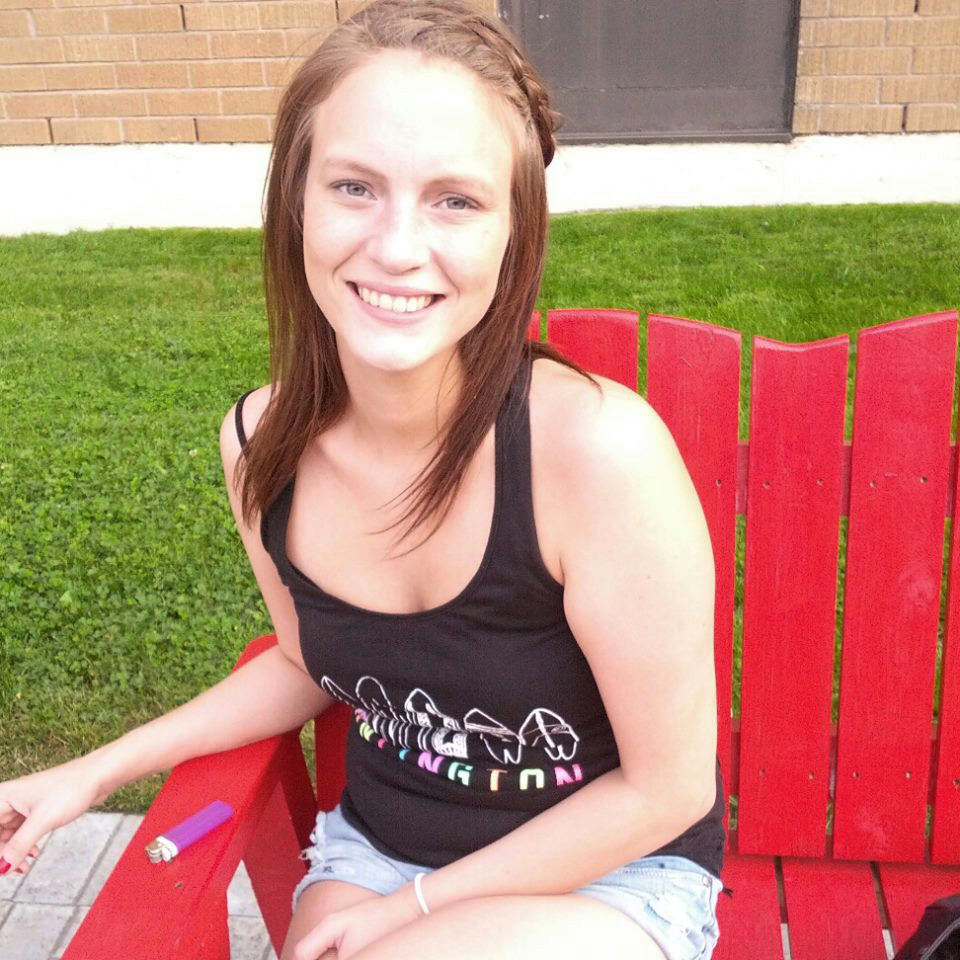
Loretta Saunders was a 26-year old Inuk woman. She was a criminology major brave enough to work on a thesis about missing and murdered Aboriginal women. She was a daughter, and a soon-to-be mother. She had blonde hair, blue eyes, and a radiant smile.

She was recently killed in New Brunswick, and found on the side of the highway. Darryl Leroux, her thesis advisor, wrote in a public statement to CBC that “she was aware of being a product of a Canadian society intent on destroying and eliminating indigenous peoples.”

The fact that you may have heard her story already means that demand for inquiry into the missing mothers and daughters across our country is finally being acknowledged by big media and policy-makers.

For years, human-rights advocates and First Nations groups have been calling on our government to acknowledge the ways in which colonialism has led to sexual and aggravated violence towards indigenous groups in Canada.

We need to call people out on sexism and racism, and speak up in our own circles.

Estimates vary, but Amnesty International estimates that Aboriginal women in Canada are at least five to seventimes more likely than non-Aboriginal women to be murdered or go missing. The Canadian federal government has been mostly silent on this issue.

Loretta Saunders’s death may have finally broken the silence and garnered enough international attention to our missing sisters that the federal government will finally have to act.

The United Nations, the premiers of all 13 provinces and territories, and both opposition parties in Ottawa have all called on the federal government to launch a national inquiry on missing and murdered Aboriginal women.

Even if this does occur, a federal inquiry is not nearly enough to prevent this kind of violence. Together, you and I have to work on decolonizing our language, our ways of living, our concept of “other,” and work together to build a healthy environment where indigenous communities are not continually marginalized and segregated.

We need to see the social and economic implications of the choices we all make, including environmental and land rights, as we learn at SFU, an institution located on unceded Coast Salish territory.

There are countless beautiful humans working on these issues already, but our culture needs to change fundamentally in order to make a difference in our rates of violence. We need to call people out on sexism and racism, and speak up in our own circles to demand justice for those that have already passed.

We need to be brave. We need to acknowledge our own privilege, and stop running away from traumatic stories. We need to work on healing our culture so that we stop losing the folks we love.

We need to be a little bit more like Loretta Saunders, and we need to honour her story by sharing it.

University Briefs

0

Cuppa kindness: paying it forward


The coffee-drinking student population of the Memorial University of Newfoundland has started a new trend — paying it forward by buying coffee for a complete stranger.

The movement entails generous students spending a couple extra dollars to purchase a second coffee “on reserve” for the next person in line.

Although coffee shop employees at the university notice the trend picks up around Christmas and “Kindness Day,” they remarked that many of the students don’t need a special occasion to brighten someone else’s day.


With files from The Muse


Kwantlen opens student brewery


Kwantlen Polytechnic University is introducing a new program hoping to engage students in a growing Canadian industry. A brand new brewery-lab has been constructed at the Langley campus, for the inauguration of KPU’s brewing program.

The two-year brewing diploma program will begin this September, with a total of 35 spots available. The courses will equip students with science and business skills, and hands on experience essential for success in the brewing industry.

SFU also adopted a new science of brewing course just last year and its brewing club, S.F.Brew, went on to win the Home Brew Showdown against brUBC last October.


With files from CUP Newswire


Student officials resign due to facebook scandal


Following a major uproar, four elected student officials have stepped down from their executive positions within the Student Federation of the University of Ottawa (SFUO) after a sexually explicit Facebook conversation was published online on February 28.

The subject of the conversation was the SFUO president, Anne-Marie Roy. The five men involved suggested and encouraged each other — in a very light-hearted manner —  to engage in various sexually violent activities with Roy.

One of the men suggested that they “punish her with their shaft,” and they accused Roy of having STIs. Students and staff alike openly condemned their outrageous behaviour, prompting their eventual resignations.


With files from The Fulcrum

SFU dances for those who can’t

0

WEB-Dance Marathon-Mark Burnham

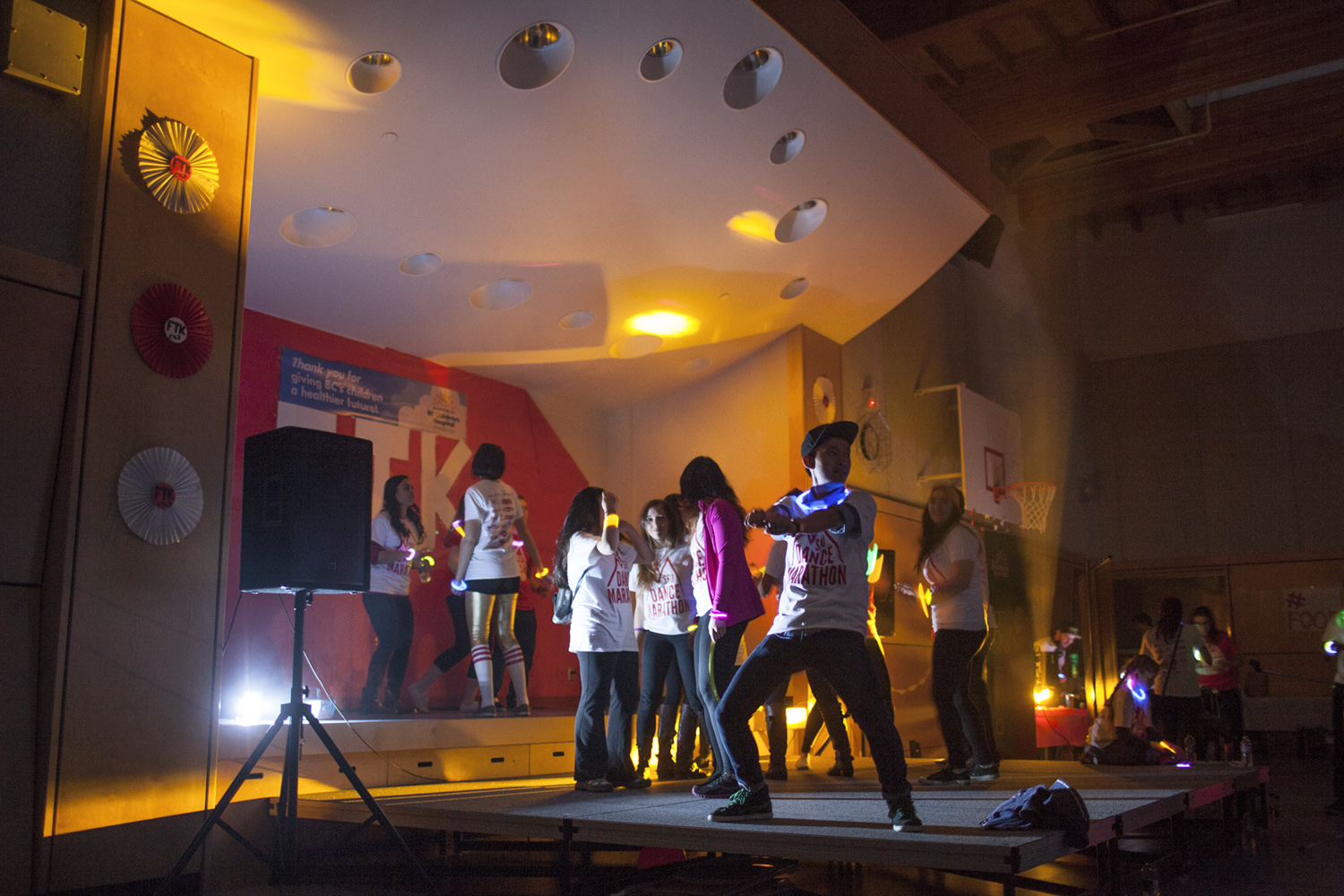
When Phi Delta Epsilon’s (PDE) president, Jordan Yao, received a call about potentially developing SFU’s first Dance Marathon — and, in doing so, being the first Canadian university to participate — he immediately accepted.

On Mar. 1, SFU students gathered to dance for six hours, raising money for BC Children’s Charity. The day’s goal was to raise $10,000 — 10 times the chapter’s annual goal.

“This is a big increase, but we know that universities in the States raise as much as two million dollars!” Gurleen Gill, Dance Marathon event co-chair and senior member of the Phi Delta Epsilon Canada Beta chapter, explained on the Children’s Miracle Network blog.

Yao told The Peak that he saw how “huge this event was in the United States,” where most of the Phi Delta Epsilon chapters either participated in or hosted their own dance marathons.

The trend began in 1991, when students at Indiana University founded Dance Marathon in the memory of a fellow student. The program is now an international phenomenon, and has raised over $62 million in the US.

While the day was filled with smiling faces, Blake Hudie, dance relation chair, remarked that they were extremely fortunate that everything came together. He explained that “the timing was not in [our] favor as [we] were faced with the difficulty of competing with other charities like Balding for Dollars and Relay For Life.”

“I think it should be [ . . . ] executed annually and on a bigger scale.” 

– Kelly Furey, public relations chair, Kappa Beta Gamma

Despite midterms, many students arrived at 11 a.m. to dance the day away. The turnout included members of UNICEF, Alpha Kappa Psi, the SFSS Power Rangers, and elementary and university students.

“I think this is a really great opportunity [ . . . ] for the greater community to come together as a whole for such a worthy cause,” said Kelly Furey, public relations chair, Kappa Beta Gamma. “I think it should be     [ . . . ] executed annually and on a bigger scale.”

According to Valeriya Zaborska, PDE’s activity chair, the team’s creativity and ability to think on their feet was what “drove the event’s success.” While the team mentioned a few hiccups here and there, such as difficulties with booking equipment or the use of Simon Fraser Elementary’s gym rather than a space at the university, everyone was content with the cozy environment.

Close to the end of the event, the fraternity revealed the final fundraising figure to the audience; it read $10,707.84.

Zaborska had a few last words of inspiration for The Peak at the end of the day: “If you’re looking to take initiative and develop something new at SFU, take a chance. Split up the responsibilities, don’t be afraid to make mistakes. You’ll learn and know where to improve on and make the future one much better.”

Woohoo, boohoo

0

Woohoo: Jimmy Fallon

Now, I’ve given Fallon his fair share of flack over the years. As Tracy Morgan once famously complained, he pretty much ruined every SNL sketch he was in by laughing uncontrollably at every joke. The only difference now is that giggle fits and character breaks actually make for entertaining late night talk show antics. Imagine that!

As soon as Fallon found his way into the Late Night slot, it became plainly obvious that this is where he was meant to be: his magnetic energy and baby-faced charm is a perfect fit for talk show interviews, cutesy monologues, and insta-viral Justin Timberlake sketches. It’s this same quality that makes him an infinitely better host than Jay Leno.

Fallon is no Johnny Carson, that’s for sure, but after a couple weeks in the chair, The Tonight Show is already the funniest (and most watchable) it’s been in years, and we’ve got Jimmy Fallon to thank for that.

Boohoo: Jimmy Kimmel

Seriously, Jimmy Kimmel? Grilling Rob Ford on his many media screw-ups while he’s a guest on your show is pretty much the dictionary definition of shooting fish in a barrell. After 11 years on the late night circuit, you’d think Kimmel would have something better up his sleeve. But no! He spent 45 minutes ridiculing a man who does more than a good enough job of ridiculing himself — not unlike his infamous Kanye West sketch, which was about as clever.

To top it off, Kimmel pretty much broke the Internet when he posted a fake viral video of a girl twerking her way into a living room table, sucking all the fun out of home video hijinks forever and ensuring that no media outlet — or any of his viewers — will ever trust him again. And the countless other video pranks that he’s pulled have never been as funny or “edgy” as he thinks they are.

Way to go, Jimmy Kimmel. Kanye was right: Sarah Silverman is funnier than you.

Cave-dweller surprisingly well informed

0

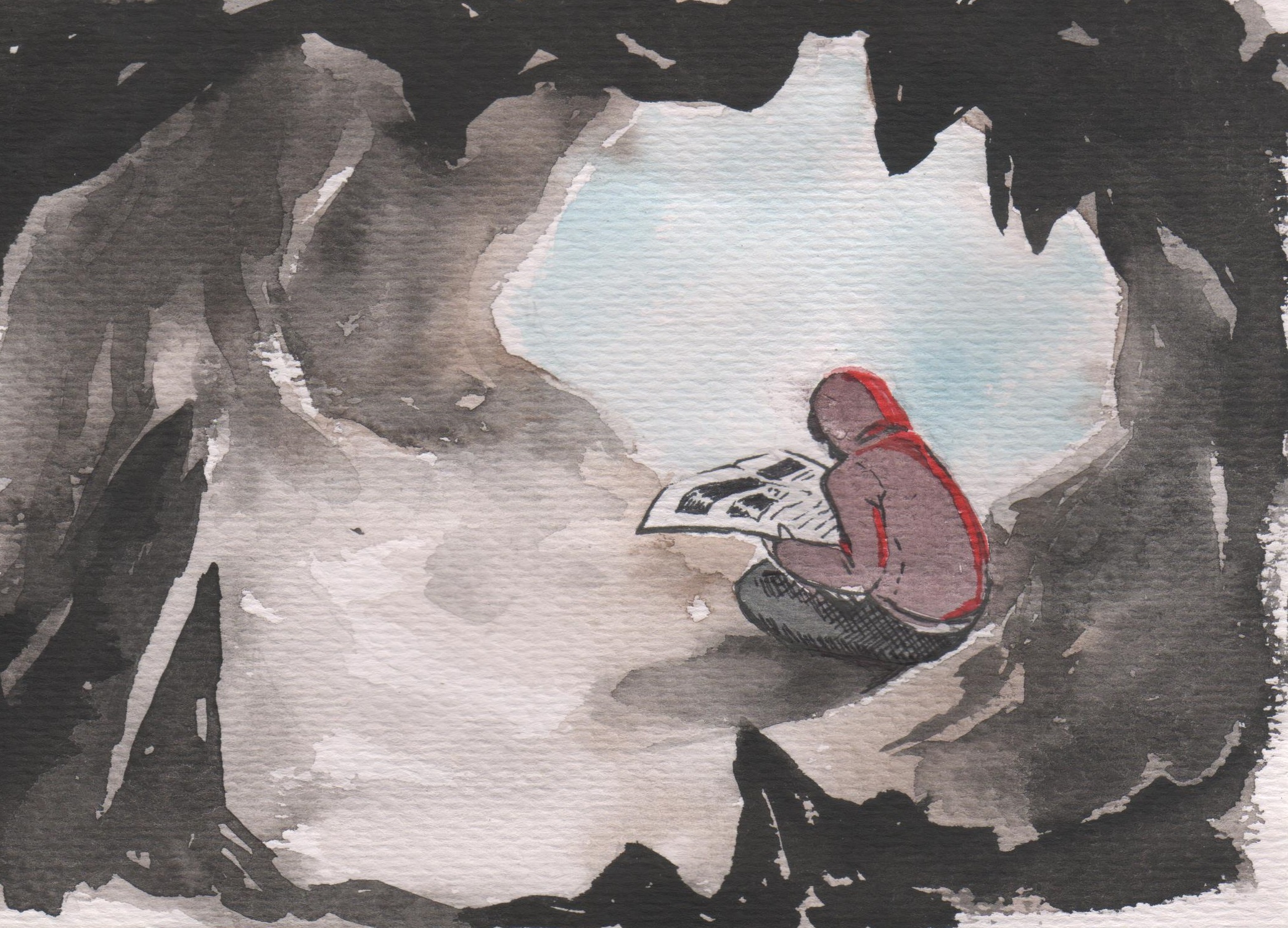
COQUITLAM —  Although he currently resides in a cave a few miles away from civilization, a local man claims that he is still very much on top of all major news and is actually quite well informed.

Thomas Gormley, a 55-year old retiree says he is upset by the almost non-stop condescension he receives when it comes to current issues just because he chooses to live in a cave.

“It’s ridiculous, everyone always thinks that just because I live in a cave I won’t understand their discussions on things like sports or politics but that’s completely untrue,” Gormley told The Peak. “I actually know a lot more than most people even as a cave-dweller.”

Gormley explained that his cave was hooked up with wifi and a cable connection and that he actually spends most of his time researching and absorbing current affairs.
“There’s not much else to do when you live in a cave,” Gormley said. “I’m pretty much always just reading news and trying to avoid bats.”

“There’s not much else to do when you live in a cave, I pretty much just read news and try to avoid bats.”

– Thomas Gormley

While Gormley says he understands where some of the misconceptions about his lifestyle come from, he believes that the stigma against cave-folk like himself needs to stop.

“Yeah, I get it, caves aren’t very modern or hip places to live and I understand that most don’t come equipped with internet connections but still, you are allowed to leave where you live occasionally,” he stated. “If you live in an apartment I’ll accept that you may have knowledge beyond white walls and lighting fixtures.”

“Just because your primary address is a cave, there’s nothing stopping you from going into the city every now and then and picking up a newspaper,” he continued.

“People just want to label you though, I mean, I was born in a barn so I get a lot of shit for that too . . . but just like with the cave thing, it was an orderly barn that made me into a very neat and anal person, which is actually what most barn-babies are like!”

Gormley admits that the chances of stereotypes against people like himself going away entirely is very unlikely but he remains adamant about changing society’s perceptions.

“I just want people to have more accurate prejudices,” he said in conclusion. “Instead of just labeling me as uniformed, think a little more and label me as mentally insane, I mean I live in a cave for godsake and all you want to tell me is that I won’t know who Putin is? That’s ridiculous.”

Tippy Top Ten: Luongo Trade

0

Here are the Tippy Top Ten Silver Linings in the Roberto Luongo Trade…

10. Without @strombone1, Daniel Sedin’s Pinterest will finally get the attention it deserves

9. Discounted Luongo bobbleheads are finally affordable to the working man

8. With slight alterations, Luongo #1 jersey can easily be transformed into a Messier #11 jersey

7. Luongo’s team poker-night can be replaced by a more fun “Wii bowling-night”

6. Cap room should allow Canucks to sign a couple more Sedins   

5. New addition Markstrom will bring in much needed Scandinavian flavour

4. He promised he’d still Skype us at least once a week

3. Probably won’t have to worry about any more Stanley Cup riots

2. There’s one less soul-patch in Vancouver     

1. Hey, at least fan-favourite Mike Gillis is still here  

Shaming Belle Knox: a societal low point

0

WEB-Belleknox-courtesy of XOjane.com

A guy finds out a college peer is a porn star. He tells his fraternity; the news goes viral. Within a couple days, the entire campus knows; a month later, multiple newspaper articles, some national, about her have cropped up. The young woman’s life is changed. She’s glared at and talked about. She’s no longer just another student at Duke University, she is defined by her work as a porn star.

This was the reality for Belle Knox, the actress who first revealed her story anonymously and recently revealed her stage name.

Beyond insulting her, peers of Knox demanded she drop out, or that the university expel her. They equated a person’s profession with their right to attain education.

Civilization has not progressed as much as we would like to think if a culture as enlightened as students at a prestigious American university can, and have, reduced themselves to hate-filled, trash-talking animals at the idea of a porn star studying towards a degree. This isn’t far from using racism or sexism to justify denying the right to an education.

To pay for their education, a person can do whatever they want. Many might be tempted to say that Knox has no one else to blame but herself, but this woman is being shamed for an inherently wrong sexual paradigm that our culture as a whole is responsible for perpetuating.

Millions of people buy into the porn industry, supplying the demand for porn sites and videos. So, why does one’s recreational voyeurism inspire no sense of guilt or depravity, while knowing someone who actually works in the industry provokes an onslaught of acrid name-calling and belligerent threats? Why are the performers criminalized while the ardent customers walk free?

People think they know Knox or “her kind” because they hastily flatten her into just another faceless stereotype. There is a good chance that the vast majority of her insulters have never had a conversation with the woman. There is a difference between prejudice and immorality, and one’s personal moral compass should not dictate another person’s decisions and actions.

Knox is not, as she alleges her peers called her, “a slut who needs to learn the consequences of her actions,” or “a little girl who does not understand her actions.” She’s not stupid, crazy, sick, or naive.

She’s simply an individual with a life, hopes and dreams. She’s an undergraduate of women’s studies and sociology, with aspirations to be a lawyer. No matter how much her peers want it to, working as a porn star does not define her as a person.

So you want to be a travel writer?

0

robin-esrock2012

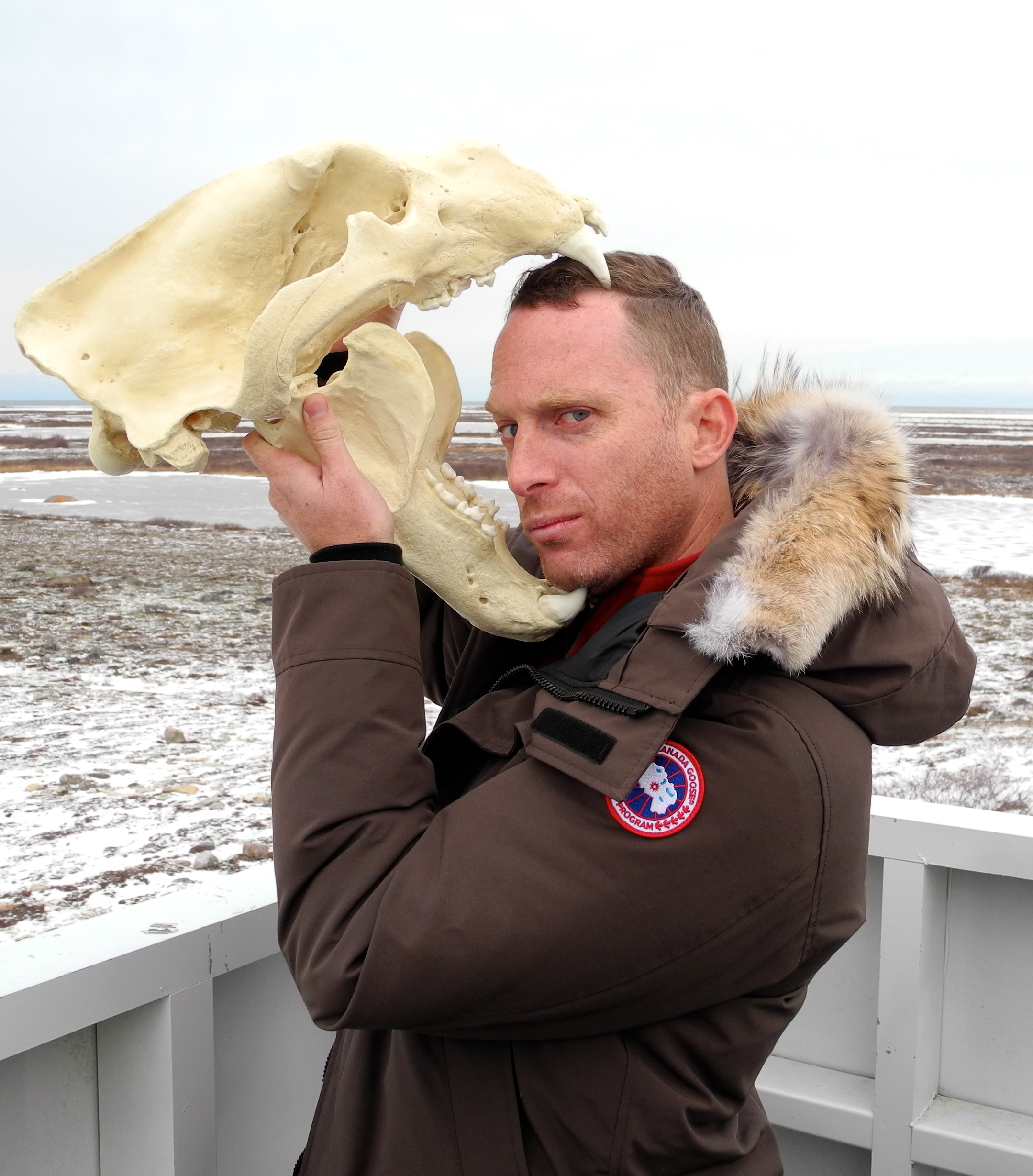
The Peak caught up with seasoned travel writer and Burnaby resident Robin Esrock about his new book, wanderlust, and his upcoming “Adventure Travel Journalism Bootcamp” to take place on March 15 at SFU Vancouver.

The Peak: During your career as a travel writer you’ve hosted the National Geographic series Word Travels and visited more than 100 countries, including unusual destinations like Chernobyl and Papua New Guinea. After adventures like those, what made you want to write The Great Canadian Bucket List — an entire book about Canada?

Robin Esrock: People I met travelling were always asking me about the best things to do back in Canada. In my haste to explore the rest of the world, I’d forgotten about my adopted home. The book would be a fun exercise, not only to discover the best experiences in the country, but also to allow me, an immigrant, to really understand what makes Canada unique. Since The Great Canadian Bucket List quickly became a bestseller, it seems I was not alone.

P: Young Canadians who dream of travel typically set their sights outside their own borders to regions like Southeast Asia and Australia. Do you think Canada rivals these destinations?

Esrock: Canada is effectively 13 countries in one. Each province is unique, with activities and destinations you won’t find anywhere else in the world. I wasn’t sure what I would find, but by the time I was done, I realized there are few nations that can compete with the sheer amount of experiences Canada has to offer.  We might not have the beaches of Thailand, but walk on powder-white Grand Beach overlooking Lake Winnipeg, and you’d think you slipped down a wormhole to Southeast Asia.

esrock-edgewalk

P: How long did the research for The Great Canadian Bucket List take? Did you personally do each of the 115 activities listed in the book?

Esrock: I spent 18 months travelling to every province and territory, usually more than once, and also gathered experiences from previous adventures over the years. Weather, budget, timing and other factors came into play, so in the end I managed to personally tick off 104 of the 115 experiences. I didn’t want to write a dry guidebook, so I pushed all the practical info, with videos, maps and galleries to [the website]. The book is more of a journey, full of characters, observations and quirky trivia.

P: Canadian food doesn’t have much of an international reputation. Did you taste anything on your travels that was uniquely Canadian?

Esrock: The book features uniquely Canadian dishes like beavertails, poutine, and brewis. I tried smoked seal recently, which wasn’t too bad (although wasn’t too great either). You don’t get any more Canadian than the Sour Toe cocktail. It’s a drink served in a Dawson City bar with a real severed human toe. Seriously.

esrock-kayak

P: You credit a car accident with the motivation — and the cash — to start your travels. Any tips for students on how to save money to fund their travels?

Esrock: I received $20,000 for a broken kneecap. When I tell people I cashed in an insurance cheque to travel they assume it was a lot more than that. My budget was $35 a day, and I managed to travel to 24 countries over 12 months. To see the world on limited cash, avoid expensive countries (Australia, Western Europe, Chile) and focus on places like Central America, India, Southeast Asia, Turkey, Eastern Europe. You can live well for $10 a day in India.

Another option is working holiday visas. Lots of Canadians go to the UK and Australia, but you can also get visas to work in places like Latvia, Denmark and Costa Rica.

P: What can aspiring travel writers expect to learn from the “Adventure Travel Journalism Bootcamp?”

Esrock: There will be three working journalists spilling the beans on the reality of the print, broadcast, photography, blogging and social media travel industry. Together with Darryl Leniuk and Jeff Topham, we’ll talk about developing your niche, generating ideas, pitching editors, producing publishable content, press trips, and how to build a sustainable career.  It’s a vast subject that requires far more than an afternoon, but our bootcamp will definitely provide some real-world context for a very dreamy profession.  It’s a tough business to get into, but the perks are tremendous.


Need some inspiration to start planning that summer 2014 Canada road trip? Here’s a one-of-a-kind experience for each province and territory, as mentioned in Robin Esrock’s The Great Canadian Bucket List.  For more ideas and details, visit canadianbucketlist.com.


BC: Snorkel among thousands of spawning salmon in the Campbell River. The best time of year to do this is in August.

Alberta: Play paleontologist while looking for T. rex fossils in Dinosaur Provincial Park. Tours and opportunities to join an excavation are available June to September.

Saskatchewan: Horseback ride along one of the last surviving bison herds in North America at Prince Albert National Park.

Manitoba: Believe it or not, this prairie province is home to one of Canada’s best beaches — Grand Beach. There may not be any palm trees, but the sand is as white and powdery soft as any beach in Thailand.

Ontario: Conquer your fear of heights once and for all by leaning off the edge of the CN Tower — while hooked to a harness, of course.

Quebec: Indulge in the ultimate Canadian foodie experience — a plate of foie gras poutine.

New Brunswick: Get an adrenaline rush by zip-lining across a waterfall at Grand Falls.

Nova Scotia: Enjoy a history lesson and a cold beer at the same time on a tour of the Alexander Keith’s brewery in Halifax.

PEI: Learn how to use a traditional wooden lobster trap then eat what you catch cooked on a boat in the Charlottetown harbour.

Newfoundland: Spend the night in a lighthouse on Quirpon Island and enjoy views of icebergs and migrating whales.

Yukon: Try to strike it rich by learning to pan for gold near Dawson City.

Northwest Territories: Gaze up in awe at the Northern Lights in Yellowknife, one of the best places in the world to witness Mother Nature’s light show.

Nunavut: Get ahead on your schoolwork by reading a textbook outdoors at 2am in the Land of the Midnight Sun.