Home Blog Page 1162

On the bright side

0

WEB-Sedin-flickr-Lauren Zabel copy

Although the Canucks are still realistically out of the playoff picture, they have shown marked improvement as of late.

Scoring, which was hard to come by even in December when the Canucks were winning, has not been the issue recently, with the Canucks scoring three or more goals in many of their last few games.

Alexandre Burrows — who had not scored up until a game against Winnipeg two weeks ago — is scoring nearly every game, perhaps making up for lost time.

This has reignited the first line, along with rookie call-up Nicklas Jensen. Jensen had a slow start in the AHL, but is averaging just under a point a game playing with Burrows and Henrik Sedin. For the first time in a long time, the first line looks like a first line.

In the game against the  Tampa Bay Lightning on March 17, though it ended in a 4–3 loss, the Canucks mounted an impressive third period comeback from 4–1. Perhaps “impressive” is a strong word, but it was only a week or two ago that 2–0 would have been a safe lead against the Canucks.

It should be noted in that game that the comeback was in the third period, after a lackluster first two periods. Previously, the third period was the Canucks’ kryptonite: If they had a lead it would almost surely be surrendered; if they were behind, there was no chance.

The fact that they came back from a sluggish start is promising, in contrast to the 6–1 Dallas whooping in which the Canucks looked like they gave up early.

Even David Booth, who will still likely be bought out this offseason, has been showing a better game, laying hits on the competition making up for his lack of scoring. Also notable is new addition Shawn Matthias who looks like he could be a solid player for the Canucks.

There have still been problems, no doubt. The Canucks are still amazingly inconsistent, the defence seems questionable, there are too many boneheaded penalties, and the pressure seems to be making de facto No. 1 Eddie Lack uncomfortable. Not to mention, the Canucks would be hard pressed to make the playoffs even if they won every one of their games.

But, recently, there has been light. They have been playing decent, entertaining hockey; every game seems winnable, not just some futile exercise. If they started playing like this at the Olympic break, they would likely be in playoff contention, though that’s hardly a silver lining.

I don’t see race, I just see people with bombs in their turbans and people without turbans

0

Written by Gill Smith, TSA

Listen, I know a lot of people think that airport security employees aren’t always the most impartial people when it comes to “random checks” but I’ve got to say that I, for one, do not discriminate based on race, creed, or ethnicity.

The only thing I look at when I see another human being is their turban, that’s it. If they’ve got one, I know they’re carrying a bomb and I won’t rest until they are brought to justice.

You could be brown, black, white . . . hell even purple and I wouldn’t give a damn. I treat every single one of god’s creatures the same, as long as you don’t got a turban on.

Personally, I can’t believe we still live in an age where people are judged on where they were born and not on what type of obviously weapon-concealing headgear they wear.

“Race is just a made-up concept anyway, but it’s a known fact that a turban’s only purpose is to hold explosive devices”

Terrorists can come in all shapes and colours, you know, so it’d be crazy to just single out one group based on something as arbitrary as the country they grew up in.

Race is just a made-up concept anyway, but it’s a known fact that a turban’s only purpose is to hold explosive devices.

So yeah, when I see one of these turban-wearers, I don’t even see what colour they are or what shape their jaw-line is, I just stop them immediately and take them back for three hours of questioning.

I don’t just do it when I’m at work either, even when I’m off-duty I help make our world a little safer and our country a little-less destroyed.

And I’d say I’ve been pretty successful too; I’ve never let a single bomb go off or my watch. Not on a plane, not at the grocery mart, and not even at my favourite Pakistani restaurant, which I always have a few close calls at.

So please, do not judge a man on the colour of his skin . . . just check if he’s wearing a bomb-hat. If we can manage to do that, discrimination will become a thing of the past in no time.

From Crimea with Love

2

iGCy9_CbjQUY

It has been less than a month since the overthrow of President Yanukovych by the Euromaidan protesters, only days after it looked as if hell had broken loose in Kiev, Ukraine, as government forces opened fire on the crowds. The international community thought that the Ukrainian crisis was over. As it turns out, it was only beginning.

As protesters stormed the president’s palatial estate and found overwhelming evidence of his corruption — including personalized brandy, a private golf course (complete with monogrammed golden drivers), and a private zoo — Yanukovych addressed the the nation that had deposed him from across the Russian border, claiming to still be the legitimate leader of Ukraine, and asking for Russia’s assistance in reclaiming the presidency.

While Vladimir Putin did receive permission from the Russian Duma to intervene militarily, he initially contented himself with a massive military exercise on Ukraine’s eastern border, close to some of the cities that had held pro­-Russian demonstrations in response to the Euromaidan protests in Kiev.

The international community thought that the Ukrainian crisis was over. As it turns out, it was only beginning.

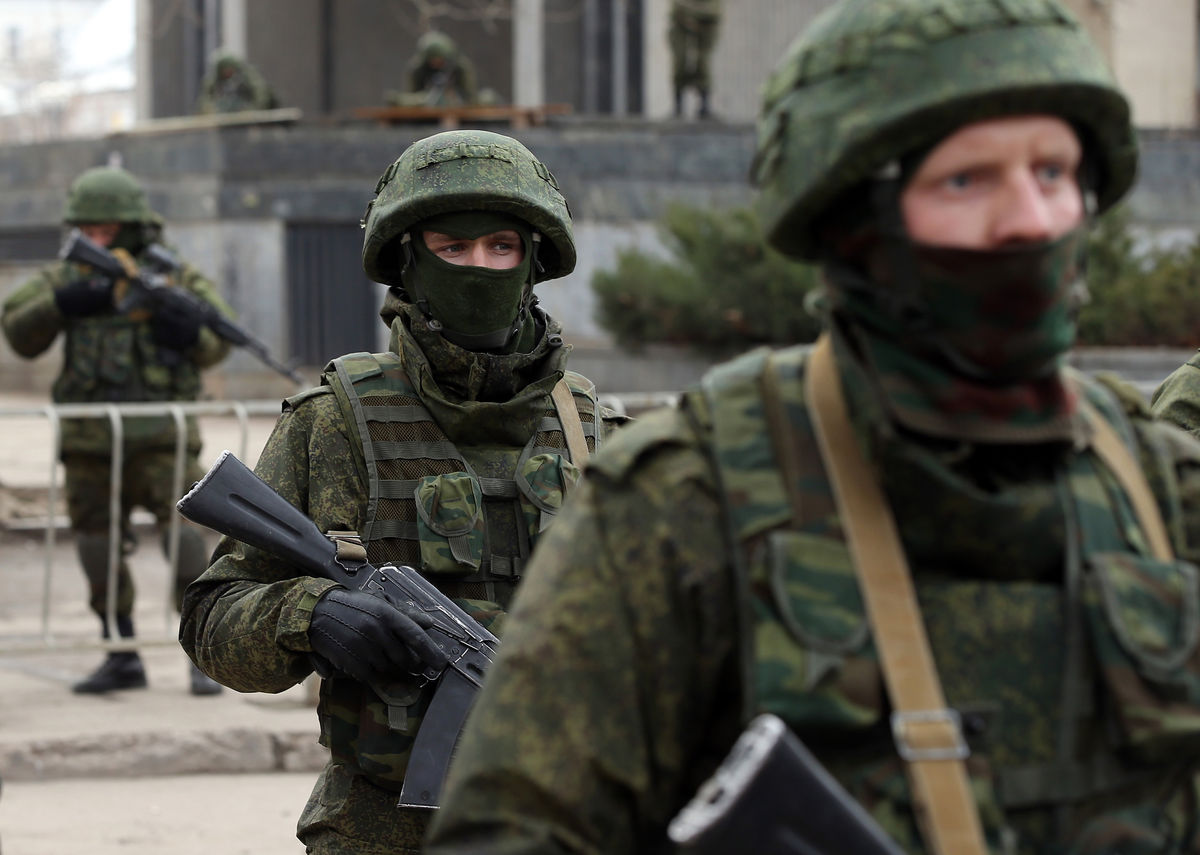
When we in the Western world checked the news the following day, we were shocked to hear reports of uniformed soldiers lacking any national identifiers blockading and seizing control in the Crimea.

Crimea, despite being the home of the Russian Black Sea Fleet, is part of Ukraine, and guaranteed to the nation by a 1994 treaty. Though the Duma denied that these men were Russian military, referring to them as Crimean self­ defence forces, very few in the international community were fooled — many began to refer to this as a Russian invasion of Ukraine. Russian forces stationed on the peninsula by treaty did move out of their bases, but under the pretext of protecting the ethnic Russian population.

With the government in Kiev still reeling from the rapid transition of power, the Russian forces swiftly seized control, with some estimates claiming that close to 11,000 Russian military personnel were on the peninsula and in control. What followed was a brief period of calm, in which the Prime Minister of Crimea announced that they would be holding a referendum wherein the people of Crimea could vote to secede from Ukraine and join Russia.

For reference, the Russian population in the peninsula accounts for about 58 per cent of its total inhabitants.

Despite sanctions from the international community and an attempt by the United Nations Security Council to condemn the referendum and move towards a diplomatic solution (which Russia vetoed), the vote went forward on March 16. When the votes were counted, it was found that almost 95 per cent of those who voted were in favour of Crimea joining Russia. Talk about a majority.

I say “those who voted,” however, because massive irregularities in the referendum are already being reported. According to Vice, who has reporters in the area, many of those who were against secession never received voting information. As if that wasn’t enough, they also have reports that the city of Sevastopol, the capital of Crimea and headquarters of the Russian Black Sea Fleet, had a voter turn out of 123 per cent.

It is no wonder that after the results were announced, Prime Minister Stephen Harper made the following statement: “The so­-called referendum held today was conducted with Crimea under illegal military occupation. Its results are a reflection of nothing more than Russian military control. This ‘referendum’ is illegitimate, it has no legal effect, and we do not recognize its outcome.”

The following morning, Crimea declared its independence, and within hours, Ukrainian symbols were torn down from local government buildings, the local currency was switched to the Russian ruble, and clocks were synchronized with Moscow time. President Putin followed with a recognition of the new republic, a potential first step towards annexation.

In response, Ukraine is preparing for conflict. Volunteers, many of them former participants in the Euromaidan protests, have begun training to supplement Ukraine’s professional army in the event that Russia is not content with merely occupying Crimea. As of this article’s publication, shots have already been fired between Russian and Ukrainian forces. It’s only a matter of time before the conflict escalates, possibly resulting in a full scale war.

Interim President Oleksandr Turchynov compared Russia’s actions with those of Nazi Germany, occupying the Sudetenland in the lead up to the World War II. As a student of history, it is hard to ignore the parallels.

It’s only a matter of time before the conflict escalates, possibly resulting in a full scale war.

Both involve major powers becoming involved in a region of another country populated by members of their ethnic groups, and both Crimea and the Sudetenland are seen as strategically valuable. Both areas were occupied by military or paramilitary forces, and though the Sudetenland was given up in an effort to maintain peace, there was also a referendum held there to ensure that the inhabitants really did want to join Germany. This referendum also passed, with 97.32 per cent in favour of the move.

Putin is also claiming that he has no designs on the rest of Ukraine, but Hitler, in his time, said, “The Sudetenland is my last territorial claim in Europe.”

It was mere months later that the German dictator occupied the remainder of Czechoslovakia, and less than a year later, World War II began. Is history doomed to repeat itself in Crimea?

The Conservatives score another one for Canada

2

Last week, Prime Minister Harper was in Seoul, South Korea, signing another victory in the name of the Conservative government. Specifically, he signed a free-trade agreement with the country, adding to the recent trade agreements with the European Union last October. All of these together are estimated to boost the Canadian economy by around $13 billion.

Many, though, are wondering why the Conservative government is pursuing trade with a large variety of nations, as we have always had a steady and stable partner in the United States. The biggest problem with this is that the strength of our economy was very tightly tied to the strength of the American economy, which could be headed for turmoil in the near future.

One of the reasons for the diversification of Canadian trade is because of this reliance on the United States as a trade partner. As of 2007, 77% of all of our exports went south to our neighbours, leaving very little for us to trade with the rest of the world. As long as the American economy remained strong, we had little to fear. But this situation may not last much longer.

America doesn’t want the construction of the Keystone XL pipeline? Then we’ll sell our oil to China.

According to the Congressional Budget Office, without massive change to the current laws, America’s debt will reach 100% of its Gross Domestic Product (GDP) by 2038, and would continue upward from there. In other words, within the next 25 years, the world’s most powerful economy will collapse, unable to sustain itself any longer. That’s not exactly a train we want to hitch ourselves to.

Diversification of trade allows us to have more of a say in our trading relationships. In a situation where we are solely dependent on the United States for certain resources, they have been able to force us to accept terms we did not necessarily want in order for us to acquire what Canada needs. With a more diverse trade portfolio, we are able to shop around, and find the best deal amongst many nations.

More trading options also allows us a better bargaining chip at the negotiation table, as we have seen in recent years concerning the export of our oil products. America doesn’t want to get on board with the construction of the Keystone XL pipeline? Then we’ll build Northern Gateway and sell our oil to China, something that would have been unheard of in the past, as the United States could have attempted to retaliate for the loss of this vital resource.

These new trade agreements have opened up a wealth of possibilities for the Canadian economy, and will continue to help our economy stay strong in the face of continued economic uncertainty.

Canada is projected to lead the G7 nations economically for the next 50 years, according to the Organization for Economic Co-operation and Development. As we do so, Canada’s economic diversity will help us to remain strong in the future.

Satellite Signals

0

surrey
Surrey

The Surrey Campus Committee, an offshoot of the SFSS, held the first Campus Wide Ideas Exchange event on SFU’s Surrey campus last Thursday.

Open to representatives from all faculties, clubs, departments, and student unions, the event’s purpose was to foster a vibrant campus community by inspiring communication and collaboration between all groups.Main initiatives that emerged were plans for a formal Winter Gala and a commitment to providing more student networking events.


WEB-woodward

Woodward’s

Artistic displays for the enjoyment of all were abound this week. A series called Blackbox held on March 20 and 21 showcased a number of plays written and directed by students. Described as “a bi-weekly stew of blood and guts, and too many tears,” Blackbox demands film students create, rehearse, and perform a show all in just a few weeks. This week’s theme was “We’ll Sleep When We’re Dead.” Students took inspiration from Samuel Taylor Coleridge’s poem to create their mini masterpieces.


vancouver

Vancouver

SFU’s downtown campus hosted a two-day workshop on March 17 and 18 that invited forty BC First Nations representatives to give input on the development of an app that will teach users how to speak a First Nations language.

In attendance were SFU linguists such as Marianne Ignace, who has spearheaded the project with the help of her fellow professors. The app will include data recorded from some of the remaining native speakers of indigenous languages found in BC and the Yukon.

Board Shorts

0

WEB-boardshorts-The Story Lady-Flickr

Soups on!

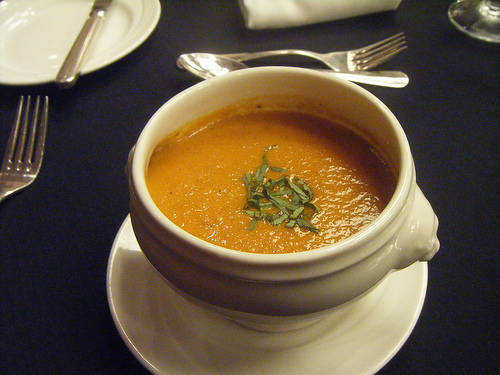
The board approved up to $4,000 from the Space Expansion Fund for the purpose of creating a soup and sandwich station in Higher Grounds. The motion was brought to board by John Flipse, food and beverage services manager.

“We are not making the soup in house like the Ladle, we are rather buying from a wholesaler,” explained Emad Shahid, treasurer. He said the money will be used to purchase all the pots and pans used to “heat up the stuff.”

Build SFU selects SUB engineers

The engineer selection committee recommended to board the approval of three groups as engineering consultants on the Build SFU student union building (SUB) project.

The board approved the selection of Integral Group as mechanical engineering consultants, Fast + Epp as structural engineering consultants, and MMM Group Limited as electrical engineering consultants for the SUB.

This marks the next step in the SUB project as it enters the architectural design development phase. On Thurs., Mar. 20, the architects also presented potential building designs for the student union building and asked those in attendance for feedback.


Highland audio/visual system to be upgraded

The board approved $19,000 plus taxes from the Space Expansion Fund to upgrade the AV system in the lower area of the Highland Pub.

“The plan is to make the lower pub busier than it is right now,” Shahid said. “That could potentially help us to host events that are specific to a number of people that would not take up the entire pub.”

Applied sciences representative Raham SaberiNiaki questioned the $19,000 price tag, but Shahid explained that the company that gave them the estimate was the same firm that installed the AV system in 2010.


2014/2015 Budget

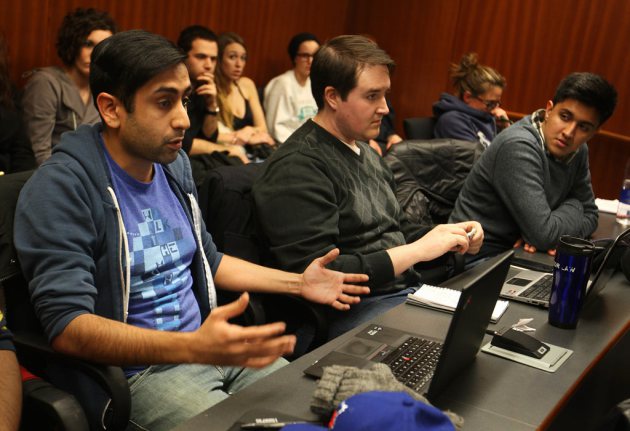
Shahid presented a preliminary budget planning sheet for 2014/2015 to the board, asking for input on variable line items (i.e. those that have flexible budgets). Board members were invited to approach Shahid in the upcoming weeks, with any proposals from board going to FASC for approval.

Once board members have given their final input, the board will bring the proposed budget to students for feedback.

University Briefs

0

council_02a

Students vote “no” to all student government candidates

The University of Windsor Students’ Alliance was recently faced with a peculiar problem — an election with absolutely no winners.

On March 13 and 14, the majority of the University of Windsor students voted ‘No’ or ‘None of the above’ for every candidate, each of whom was uncontested. This movement was led by a student-run group called Vote “None of the Above,” which questioned the legitimacy of an election with no opposition candidates.

As a result, the Students’ Alliance will no longer have an executive or a board of directors once the current term ends on April 30. As it’s too late in the semester to run another election, the current executive is attempting to plan out the summer semester and hoping the full-time staff will be able to oversee most of the day-to-day operations.

With files from The Windsor Star

Ryerson to “bug” the books

Ryerson University students will soon be thinking twice before “losing” a library book. The library is currently planning to implement a new tracking system that would allow them to keep tabs on the exact location of library items.

The library will be labelling items such as books and laptops with Radio Frequency Identification (RFID) chips, which were commonly used to track livestock. Although this project will be costly, librarians claim the new system will be more efficient for both the students and the library staff.

Additionally, they hope it will reduce the number of thefts, which totalled 43 in the 2012/13 school year, and 19 in the last semester.

With files from The Eyeopener

Students bring the love to campus

A team of UBCO students have been collecting pictures of their peers making heart symbols as part of the a “love project” for the 2013/14 year. This project, which was launched at the start of the Chinese New Year, was prompted by the similarities between the Mandarin symbols for “20 13 14” and “love forever.”

The 201314 team has currently compiled 1,037 photographs, just shy of their 1,314-picture goal. By turning the images into a large collage on campus, the students hope to infuse love into their daily lives. Team member Rita Yu said, “Maybe after one day at work the staff is tired, when people see the photo they were smiling so happily in the photo maybe they will try to encourage them and make their day.”

The team hopes the project will grow and spread to other universities across Canada and the world.

With files from The Phoenix

Your guide to the GSS Elections

0

All candidates’ responses have been printed as received. Responses exceeding the given word count have been cut off at the mark, indicated by an ellipsis.


Member and Community Relations Officer

The MCRO is responsible for the public communications of the GSS, including the website, social media and special communications. The MCRO oversees the Society’s member and community development efforts through outreach, workshops, events, orientations and other programming. The position also involves recruiting volunteers, acting as liason with community groups and chairing the GSS Environmental & Social Justice Committee.

1. How would you engage graduate students in society events and activities?

2. The MCRO chairs the Environmental and Social Justice Committee. How would you manage that committee and improve it?

3. How do you feel about the current types/number of events held by the GSS?

WEB-GSS elections-Mark Burnham

Brieanne Olibris

1. As grad students are busy, events need to be easily accessible to them. To achieve this, we must balance the use of our limited resources with bringing desired events to where students are when they are there.

2. Successful efforts facilitated by ESJC are grounded in student needs and interests. Setting a yearly agenda of long-term sustainable programming and project goals would focus and increase the efficiency and efficacy of the deliverables to which it is accountable.

3. The GSS offers a great number of diverse events to students, either alone or in partnership with other groups. This facilitates highly valued mixing between students from different disciplines. However, they are not equally accessible to students from all campuses.


Melissa MacAskill

1. I would like to implement more regularly occurring events and activities. These have potential to be much more successful, because participation grows over time and participants start to unwittingly shape the events with their own collective ideas.

2. As the TSSU steward for my caucus, I have learned a lot about advocacy and awareness surrounding a number of social issues, beyond labour regulations. I will draw heavily on ideas and resources the TSSU provides to effectively serve the . . .

3. The GSS does an excellent job organizing all kinds of events – which all graduate students would know if more of them attended! That being said, there is always room for more creativity and variety, which I would like to . . .

Coordinating and External Relations Officer

The CERO will be the primary representative of the society to government, university administration, and other partners. The position entails being responsible for the long-term and strategic planning efforts of the society and supporting the collective advocacy activities of the GSS.

Devon Cass

This candidate failed to submit their responses to The Peak by the deadline.

Academic and Internal Relations Officer

The Academic & Internal Relations Officer (AIRO) is responsible for overseeing the governance of the society, its committees, council and departmental caucuses. The AIRO is also the primary point of contact between the GSS and the university with regards to academic matters, including the Senate Graduate Studies Committee.

1. How would you keep the society, its many committees, council and departmental caucuses in check?

2. What academic changes might you advocate for on behalf of students?

3. How do you see the relationship between the AIRO, the Senate Graduate Studies Committee, and the university?


Liu Ting (Emma)

1. Effective communication is very important. I would propose to have a discussion group in social media where representatives from aforesaid organizations can post their suggestions and share the updated information. Actual meeting can be held based on needs.

2. Provide more information on research fund and invite some experts from different fields to give public lectures on the current economic and academic trends.

3. The Senate Graduate Studies is the agency of university and AIRO is the agent. The task of AIRO is to bridge the gap between individual member and university as well as to facilitate mutual communication between them.

Mengliu Zhao

1. Officially, by meeting committee and council members, reading caucus meeting minutes. But personally I enjoy networking in different situations, and listen to student’s individual perspectives how the work of GSS and the caucuses can be further improved.

2. I would advocate for more interdisciplinary communications and collaborations. Graduate’s life is challenging, but could also be fun and enjoyable — hopefully I can help more of my fellow grad students to realize that.

3. AIRO shall serves as a bridge between GSS, Graduate Studies and SFU, reflecting more on student’s side that what can be done to further improve the academic environment as the whole community.

SFSS elections heat up

0

WEB-SFSS debates-Evan Chan

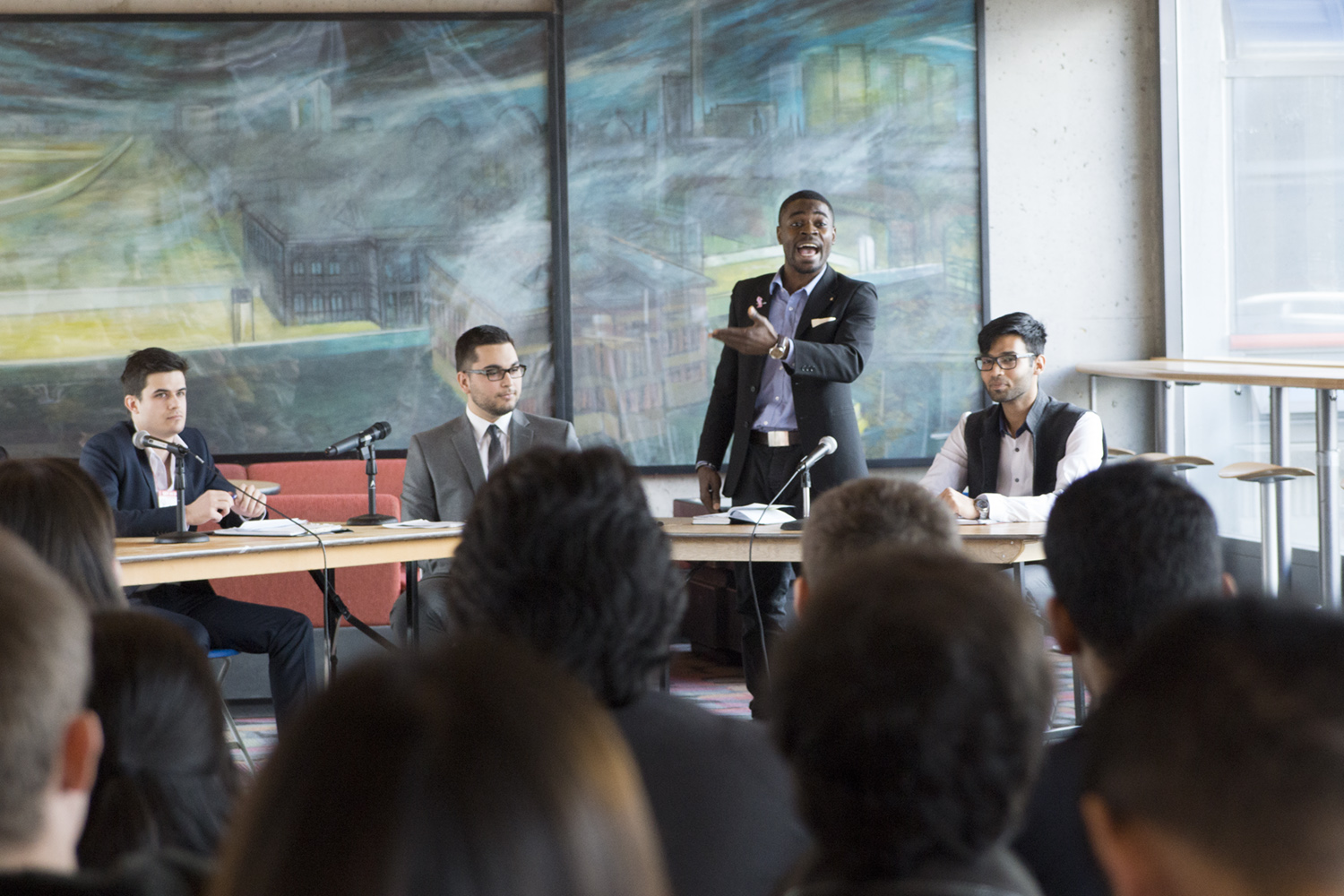
Last week’s SFSS debates kicked off not with a bang, but with a chuckle. At least, that’s what many in attendance were tweeting throughout both the at-large and faculty rep candidate debates held on March 19 and the executive candidate debates that happened the following day.

During what many in attendance — both in the West Mall atrium and via cyberspace — called some of the spiciest and juiciest SFSS debates they’d ever seen, candidates for each SFSS board position faced off in a conversational style debate.

The Wed. debates, held for the at-large and faculty rep candidates, began amiably, with candidates expressing their plans for the board should they be elected. The mood, however, began to turn as the Communication Art and Technology candidates, Natalie Cheung and Shirin Escarcha, took the stage. From that point on, the conversational nature of the debates became more heated, especially between candidates on opposing slates.

This year, candidates with self-proclaimed shared visions for the society joined together to form two different slates: ACE and Move the Mountain. Independent candidates also contributed to the lively dialogue happening on stage.

As the debates ran longer into the afternoon, those in attendance both jeered and cheered for the competing candidates. The battle truly came to a head, however, with the final debate between candidates for at-large reps.

One hot topic was that of the open textbook program, advocated for by candidate Jeremy Pearce. Pearce responded to candidate Humna Ahmad’s question about the program, saying that he has just become involved with it, but feels it is more accessible than giving students more bursaries.

Ahmad replied, “Bursaries are more than just funding textbooks. They’re there to support students’ lives.” After Ahmad cited statistics pertaining to the program, Pearce remarked, “I appreciate you incorporating statistics I gave you at the last debate.”

The tension of the moment was broken by candidate Baqar Hassan, who complimented fellow candidate Rebecca Langmead on her basketball skills.

It seemed the intensity would carry on into the executive debates, which occurred the following afternoon. The four and a half hour long debate went over time, but there was never a dull moment.

The proceedings started off on a light note as the VP, student life candidates introduced themselves. Candidate Kayode Fatoba demonstrated his rapping skills with original lyrics that had the room clapping along.

Topics under discussion pertained to bettering the student experience. Candidates also shared stories of their successes and failures. The idea of transparency was presented and became a recurring topic for the afternoon.


Those in attendance both jeered and cheered for the competing candidates.


“The SFSS is not very open, [. . .] I want to change this. A transparent student society is what we need,” said VP, student life candidate, Blossom Malham. Many candidates restated the claim that many students don’t even know SFU has a student society, let alone what it does.

The most talked about issue during the hour-long VP, finance, discussion was not only how to maintain the budget, but how to potentially increase revenue through avenues such as sponsorship and renting out spaces like the Highland Pub.

Several members from opposite slates argued about the importance of engaging students in SFU culture through throwing events, versus other issues that affect students, such affordable tuition and services like the Health and Dental Plan.

The most highly anticipated conversation of the event was between the presidential candidates. As with the Surrey all-candidates debates, only three out of the four were in attendance. There was much back and forth between opposing slate members, Chardaye Bueckert (Move the Mountain) and Brandon Chapman (ACE).

Bueckert brought up clear policy violations that have occurred in SFSS, while Chapman challenged her on having a negative attitude towards the current board. He said, “You blame the current board for its current situation.”

Chapman spoke to his slate’s mandate of cultivating a stronger sense of community on the principles of accountability and excellence. Bueckert emphasized a strong need for change within the society, saying, “Vote for who is going to represent you best.”

Meanwhile, presidential candidate Alexander Morris says he has a new perspective and a “fresh face” to offer to SFU students. His platform rests on promises of bringing free coffee to students, condensing similarly mandated clubs, and engaging every single member of the SFU community.

The so-called “spicy” debates that took place last week gave candidates the stage, but now the fate of the next SFSS board of directors rests in the hands of undergraduate students. Voting for the positions will take place between March 25 and 28.


Debatable Tweets

At-large and faculty rep candidates debate

@PeakSFU: Betty closing statement: “By voting for Betty, you will bridge the gap between campuses.” #SFSSElection
@MereScientist: @PeakSFU If she’s going to bridge the gap, she should probably figure out which science DSUs are based out of Surrey, first. ^^;;

?@AnDum: “It’s another concert vs no concert year” – me, at last week’s debates #SFSSElection

@the_rianne Mar 19: Something funny over there, guys? #ace2014 #SFSSElection

@bwally_ : You can’t deny that genuine compassion fuelled from Shirin #sfsselection #ACE2014 #somuchenergy

@PeakSFU: Shadnam “You should vote for me because I actually show up for debates.” Akashdeep is absent #SFSSElection

@PeakSFU: Ben for Applied Sciences says he will not talk about what he would do if elected, but teach people new words #SFSSElection

@ChardayeB: I appreciate all candidates speaking, its not easy. Not sure why people in audience are laughing at folks #SFSSElection #movethemountain

@PeakSFU: Jeremy “Why can’t you have your cake and eat it too?” regarding throwing both large and small scale events #SFSSElection

@PeakSFU: Baqar compliments Rebecca on her basketball skills #SFSSElection

@AnDum: Candidates laughing or making fun of other candidates should not be running for office. You make the SFSS look bad. #SFSSElection

@natlamlam: @AnDum You should hv seen their faces when if you’re sitting out there as a candidate. It’s worst than just laughs #SFSSElection @PeakSFU

?@PeakSFU: Political animals, the SFSS candidates begin to chuckle and scoff at rival groups, comfortable in their natural environments #SFSSElection

@ManjotBadesha: I think this year’s #SFSSElection debates have been the most intense.

@PureEm: All of the at large reps have close friendships with the current board. So what new ideas are they actually bringing? #SFSSElection

@PeakSFU: Amir: “I’m not saying I can move the moon. I’m a problem solver.” #SFSSElection
@SheriffdeenM: @PeakSFU well there goes my vote #sfsselection. That thing keeps shining in my face when I’m trying to sleep.

Executive candidates debate

@PeakSFU: Kayode: “You could vote for this, or you could vote for that.” *audience is clapping, Kayode is rapping* #sfsselection

@alia724: These debates are a lot spicier than I remember. #lovingit #SFSSElection

@PureEm: Apparently the SFSS is about to become Groupon. With a student union building #sfsselection

@grahamc604: “What does your march madness bracket look like?” #sfsselection

@natlamlam: @PeakSFU pls tweet more. pleaseeeeee! ustream sucks. ppl are suffering. #SFSSElection

@maxjameshill: @PeakSFU Make sure to ask Alexander what colour the average #SFU Burnaby student is. #SFSSElection

@alia724: There’s a lot of concert talk. The important question here is, WHEN CAN THE SFSS GET A BEYONCÉ CONCERT?!?! #aimbiggerguys #SFSSElection

@JNLLBND: I want a concert everyday #SFSSElection

@PeakSFU: Spotted: Alexander in our favourite bow tie. #dapper #SFSSElection

@PeakSFU: Darwin: “I’ve been doing this for a long time, and I feel very ready. I think this makes me a strong candidate.” #SFSSElection
@SheriffdeenM: @PeakSFU “in other news, Godzilla consults me on his workout regimen.” #sfsselection

@CarlinLeung: Heard that the #ACE2014 sat in the front row of the #SFSSElection debate and laughed at other candidates… #wtf @bchaps99 @SfssElections
@bchaps99: @CarlinLeung It’s been pretty quiet today, however if funny comments are made, the crowd reacts #SFSSElection

@alison_r: Actually kind of wishing I was at the #SFSSElection debate, @PeakSFU makes it sound so fun. #greatjobguys #proud @meliroach @Freyatron

@PeakSFU: Alexander: “Free coffee is about looking into the warmth of someone’s brown eyes.” #SFSSElection
@AnDum: Could use one of Alexander’s free coffees right about now. #SFSSElection

@PeakSFU: Chardaye: “Let’s talk about how all four presidential candidates are white. ” #SFSSElection

@hnguyendon: This #SFSSElection debate is gold. I don’t even go to SFU.

@PeakSFU: Brandon: I think we need to build on the community aspect before we focus on advocacy. #SFSSElection

@PeakSFU: Brandon on financial aid: I think the world is dog eat dog. #SFSSElection
@PeakSFU: Chardaye says to Brandon that students would disagree with the statement that “their need is not real.” #SFSSElection

@PeakSFU: Alexander makes plea that he “really needs this job” not like Brandon, “Mr. Goes to the Yacht Club.” #helpimpoor #SFSSElection
@Comicchild: @PeakSFU I am seriously poor. I’ve eaten cereal for the past week only. Cereal.



Feminism amid online misogyny

0

A woman can wear her hair short for convenience or fashion, but short hair is always making a political statement. This is a sentiment that a Return of Kings article made recently, in an online piece titled “Girls with short hair are damaged.” But rather than someone who chooses to rebel against the suppressive patriarchy, according to the anonymous author, a women’s short hair says that she is bound to be manlier, more aggressive, or simply “damaged,” choosing to do away with this symbol of her femininity and beauty.

Articles such as this are insulting, misinformed, and a testament to women’s oppression in general. But they give me hope that feminists and future feminists can draw strength from such misogyny being laid out so clearly.

Claims made in the article range from disrespectful to downright infuriating. For instance, the author bases a woman’s attractiveness on being “bangable,” only existing to satisfy sexual desires. To girls who think they can “pull-off” short hair, the author says:  “Pulling something off, I often respond, is the equivalent of ‘passing’ a class. Just because you have enough left-over attractiveness to remain bangable after cutting off your hair doesn’t mean you wouldn’t look better with it back on.”

The author continues, “Women have a much stronger copycat instinct than men. While men seek to stand out from the crowd, women aim to stand out in the crowd. Just like women don’t go to the bathroom alone, they don’t go into a style alone.” In one fell swoop, the author implies that gender is equivalent to sex, that women are instinctively sheep, and that women’s intelligence is generally limited to imitating others.

This article is what makes feminists, if we let it.

Comments on this already strongly worded article are equally as disconcerting, with statements such as “Feminism today is about privileged spoiled white girls trying to tell me they are oppressed.” This dismisses women’s issues as being beneath addressing, confirming women’s lower status in society.

The sad reality that this article proves is that we are currently living in a man’s world. Men call the shots; women are still subordinate to them in the workplace as well as the home. Men are paid more than women in general, and often have more opportunities to advance in corporate executive positions.

Yet this article also gives me hope. There wouldn’t be feminists if there weren’t issues to fight for, and this article lays out the issues quite simply. “Girls with short hair are damaged” stands as a sign that prejudice is still rampant in this world and it needs to be stopped.

Articles such as this are what create the responses, like that of New Statesman author Laurie Penny, that prove how informed and fed up women are with this state of affairs.

Until the general public — which, today, has a vehicle for anonymous, insulting, and misinformed articles — realizes that women are more than a hairstyle, all women need to know that these opinions are out there, and all women need to hold their heads high.