Home Blog Page 1105

Vancouver campuses undergo classroom renewal project

0

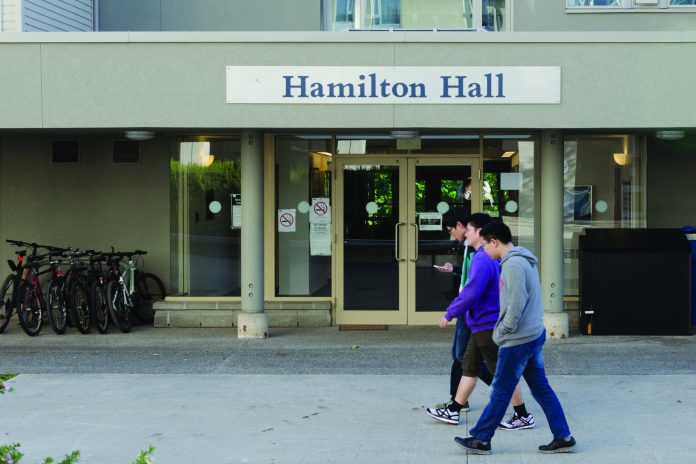
Over the next three years, SFU Vancouver will improve campus classrooms and study spaces at Harbour Centre and other downtown sites as part of a classroom renewal project.

The campus has received $2 million from SFU’s University Priority Funds, which was created in 2011 “to align resources with strategic initiatives,” in order to update spaces at its different sites — Harbour Centre, the Morris J Wosk Centre for Dialogue, the Segal Graduate School of Business, and the Goldcorp Centre for the Arts at the restored Woodward’s Building.

During the first part of the initiative, the project team will focus on Harbour Centre, which opened its doors to SFU students in 1989. “A lot of the classrooms haven’t been changed in 25 years,” said Laurie Anderson, executive director of SFU Vancouver. “It’s time for an infrastructural upgrade to improve what we do in classrooms.”

During the last six months, the project has been seeking input from faculty and students to ascertain how they would change these spaces to become the “best, most optimal learning environment[s].” Anderson explained, “Generally speaking, what people want is more flexible spaces, more colourful furniture, more lightweight so it can move around — something more attractive than your institutional greyness that we tend to have. And as much technology [as possible].”

Anderson is also looking towards the Burnaby Classroom Renewal Project for inspiration. The project, which began in 2011, has already completed significant upgrades in spaces such as the student lounge area located below the Images Theatre.

“We’re trying to learn a lot from what Burnaby has done, because their classroom renewal took a lot of input from different people, lots of students, faculty, and that’s the same that we’ve done here,” Anderson said.

Through this consultation, and combined with research from experts in the learning environment industry, the team outlined three principles to follow when designing the new spaces.

The first involves explicitly acknowledging that learning happens outside as well as inside the classroom. “A lot of the space around here — upstairs, downstairs, all these little places we have — these are centres for learning as well because the [student experience] spills over into the hallways and the lobbies,” explained Anderson.

The second concerns practicality — for example, the implementation of more electrical outlets. Finally, the third principle is the notion of how flexible a space can be. A current example can be found in SFU Harbour Centre’s student learning commons, which feature lightweight, rolling furniture and whiteboards that can either divide the space or be pushed back to open the area to large groups.

Similar features will be implemented over the winter break in four classrooms at Harbour Centre.

Anderson expressed his own excitement for the upcoming changes. “We think [this campus’] scale is such that we can make this a really welcoming place for students to be,” he said. “It has a small university feel, it’s a mini-university setting, and so we want the classrooms to be bright, flexible, attractive; the kind of places people will want to be.”

He feels the classroom renewal project will contribute to making Harbour Centre even more of a scholastic hub in the downtown district. “When this place opened in 1989, you couldn’t get people down here,” Anderson said. “Now, as you say, it’s the exact opposite. You can’t keep them away; everyone wants to have class downtown.”
We must scrap helmet laws to encourage and improve cycling

4

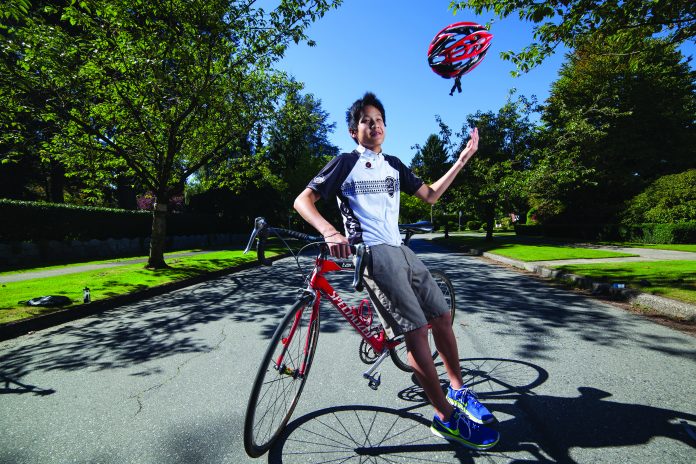
Many consider cycling to be dangerous. While riding quickly on the open road, sometimes difficult to see, cyclists are exposed to the world. One poor decision by a driver or cyclist could result in a serious accident. Good thing they wear helmets, right? Maybe not.

Copenhagen, Amsterdam, New York City, London, Paris, and countless other major cities have one thing in common: cyclists are not required to wear helmets. The result? Increased cycling activity, successful bike-share programs, and improved safety and infrastructure.

Helmet laws remain a significant barrier for cycling adoption. Vancouver’s proposed bike-share program has been stalled for years over the somewhat laughable concept of a helmet vending machine. Such a program is logistically difficult due to the required space, helmet sanitation, stock and replacement.

As a result, expected costs are far greater than they would be otherwise. The cities with successful programs found that mandatory use of helmets would severely limit participation in their bike-share programs. Both tourists and locals find it either too difficult to carry a helmet or balk at the idea of sharing one.

Our helmet laws have caused Vancouver’s proposed bike-share program to be declared dead before arrival, not too different from Melbourne’s results, where its use rates for bike-share programs are half of the target projections. Some cities, such as Victoria, even offered free helmets in an effort to boost their bike-share use rates. Unsurprisingly, it didn’t work.

Both tourists and locals find it either too difficult to carry a helmet, or question the idea of sharing one.

But what about that vulnerable cyclist who shares the road with large, heavy vehicles? Won’t a helmet keep them safe?

Studies on helmet use and injury prevention have continually found one thing: helmets have no discernible effect on reducing cycling injuries or fatalities.

One Canadian-focused study conducted by the University of Toronto’s School of Public Health found no link between helmet use and reduced hospital admissions for cycling injuries. In the event of minor cycling accidents, the head is not often a point of contact; when major accidents occur that do involve the head, the force is usually great enough that a helmet is near useless.

Removing helmet laws will start a positive feedback loop that will improve cycling safety to a far greater extent than mandatory helmet use. If we rescind our helmet laws, more cyclists will be on the road, and when it comes to cycling, there is safety in numbers. The increase in cyclists will raise demand for more bike lanes and driver education. In turn, this will lead to increased perceived safety and visibility of cycling, thereby attracting more cyclists.

Our focus on helmets is backwards; not only does it prevent potential cyclists from riding their bikes, it also removes emphasis from injury prevention in the first place. Instead of working to stop accidents, we are working to reduce head injuries while allowing the rest of the body to be seriously injured in an accident. The focus on helmets also shifts blame to the victim, similar to the broken logic that victims of sexual abuse are at fault if they dress in suggestive clothing.

If you look at the countless studies and real-world examples, I can’t help but hold a strong opinion that modernizing our bike laws is the best way to increase cyclist safety, public health, and the number of cyclists in our cities. This entails making helmets optional — not mandatory — and constructing more bike lanes while increasing efforts to educate drivers.

If we do this, maybe we can finally launch that bike-share program we’ve been long awaiting.

SFU student becomes an ally for artists

0
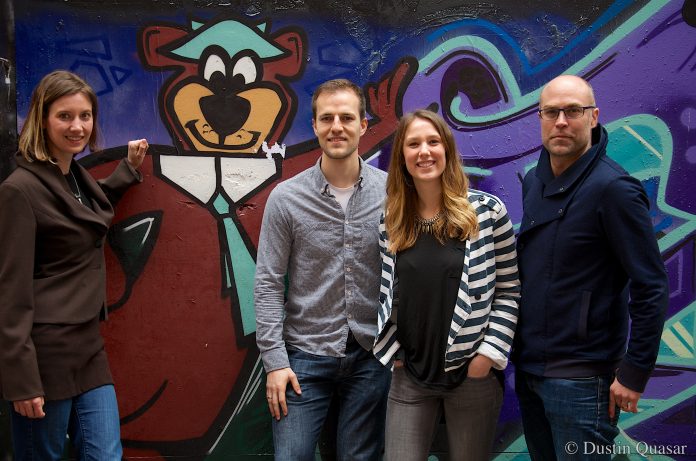
The team of four art admirers collaborated to put together the site.

This week, an SFU business student launched ArtsAlly, an online portal that allows art lovers and creators to buy and sell local art.

Michelle Martin, Beedie School of Business student and the founder of ArtsAlly, hopes that the portal will help Vancouverites make connections, support local artists, and build the local community as well as the local economy.

Through family and friends, Martin witnessed the struggle for artists to sell their art, as well as the competition artists face from department stores that sell cheap, generic, manufactured art. This struggle inspired her to find a more efficient way for artists to connect with a wider community.

“Vancouver has the highest per-capita number of artists in Canada. It is really rich with artistic talent. The challenge is that there are more artists than buyers,” explained Martin.

The online portal puts local art at the fingertips of local art consumers. With ArtsAlly, Martin says Vancouverites will be able to discover local art from their electronic devices, and order that art to their home or office as either a rental or a purchase.

The portal, which already features hundreds of art pieces, does not favour one particular type of art, rather, the pieces featured on the website are chosen based on the quality of the artist’s work.

Nevertheless, Martin acknowledged a regional focus: “Being hyper-local is core to our identity and our group. Artists who capture places we know and are familiar with — such as Stanley Park, North Vancouver, East Vancouver, or the city at night — are things that resonate with me personally and with most buyers as well.”

Even though the art featured on the portal is at the forefront of the initiative, Martin is also keen on building relationships with the artists. She told The Peak that she has a particular interest in working with artists “who take their craft seriously and see their art as a career.”

Martin explained that ArtsAlly is an important new service to the community because it bridges connections between artists, the business market, and art buyers and renters. Vancouver is a progressive city and has a large art culture that has the ability to thrive. Martin hopes ArtsAlly will provide artists with an easy, accessible way to allow their art to do just that.

In the end, Martin acknowledged the creative potential of Vancouverites, reflecting on Emily Carr University’s newest campaign slogan, “Creativity is our greatest natural resource.” She stated, “BC has always been looking at resources and the sustainability of the community. ArtsAlly has the ability to bridge worlds and challenge relationships. My hope is that ArtsAlly will be a part in moving that vision forward, of creativity being our greatest natural resource.”

Satellite Signals

0

WEB-woodwardWoodward’s

The Audain Gallery at SFU Woodward’s will continue to display the Lossless: SFU MFA Graduating Exhibition from September 4 to 27 during gallery hours :Tuesday to Saturday from 12:00 p.m to 6:00 p.m. The show features MFA candidates’ material from the 2014 graduating class of SFU’s School for the Contemporary Arts. Individual exhibits include sculpture, video performances, and installation projects.


vancouverHarbour Centre

Friday night welcomed the public to a free roundtable discussion titled, “Perspectives on the Ukraine Crisis.” The evening, which included leading Canadian and international scholars on Russian and Ukrainian politics, asked questions such as, “What explains the outbreak of violence, and how and why is Russia involved?” and “What are the ramifications for Canadian foreign policy?”

It’s a punderful life

0

Though my reign as The Peak’s humour editor has only spanned a couple of weeks, I’m inclined to say that I’ve been funny for a couple decades now. An official paycheque for my humour is as validating as it gets, but — at least in my mind — throughout life, I’ve always come back to humour as a device.

Humour is a way to meet new people and engage; a way to diffuse awkward situations; a way to cheer someone up and let their happiness osmosis over to me. The point is, I love to joke around and I can rarely go long without making some kind of quip or cackle. My favourite type of humour? Puns.

Puns are frickin’ amazing. They’re like the humour editor of the joke world: it’s hard to take ‘em seriously and sometimes they try a little too hard, but if you lower your expectations and inhale some nitrous oxide, you might just get a laugh out of them.

Though, I’m not saying every pun is worth writing an editor’s voice over. Every time I hear someone make a “camping is in tents” joke, I feel a happiness molecule inside of me die from rolling its eyes too hard. Lazy, overdone puns give the genre a bad name and we should all agree to a 100-year moratorium on them — if everyone who’s heard that joke is dead and gone, only then will it ever again be considered original and funny. Moral of the story: quit making the same fucking joke.

Puns have made some powerful enemies over the years.

As a form of humour, puns rarely get the praise they deserve. Have we become desensitized to the wit that comes with clever wordplay? Is the pun market over-saturated with dad’s one-liners and internet commenters?

Puns have made some powerful enemies over the years. In 2010, Jon Stewart ripped wordplay a new one, in a segment where he called out news sources for distracting from reporting the news by having some kind of pun attached to it. While clever headlines make the news all the more bearable for me, Stewart has a point when you think about how much time went into pun-construction instead of actual journalism.

Even Samuel Johnson, the famous English writer behind such triumphs as A Dictionary of the English Language and The Lives of the Poets, reportedly called puns “the lowest form of humour” — though keep in mind that “Your mom . . .” jokes likely hadn’t been discovered by this point. If humour was a totem pole, puns would probably be the part that’s underground.

I’m saying that puns are my favourite form of humour, but I also think that it’s impossible to create a universal hierarchy to humour. Plenty of people scoff at internet memes because they generally take the same joke or idea and just apply it repeatedly to different scenarios but that doesn’t make them any less funny. Look at knock-knock jokes, for Christ’s sake.

What do I hope to achieve by writing about puns in my once-in-a-semester opportunity to address The Peak’s readers directly? To be perfectly honest, I’m not sure. Maybe I want you to see puns as more than just the early symptoms of a ‘dad sense of humour’ or a funny banner reading along the bottom of the evening news.

Mock puns all you want, but in a world where the highest-rated comedy on television — and by a substantive margin, I might add — is The Big Bang Theory, I’ll get my kicks from somewhere else. It’s all for puns and puns for all.

Letter to the Editor

0

Dear editor,

In response to the counterpoint on “Does Greek life belong at SFU,” from the semester’s first edition of The Peak, I found that both Mr. Arjan Mundy and Ms. Katrina Trask missed the point. Squabbling over the theoretical merits of Greek life is an endless and fruitless discussion.

Firstly, SFU’s ‘ban’ on Greek life doesn’t really matter, at least not in a practical sense. This supposed ban is symbolic, as SFU’s complete lack of enforcement on the school’s current frats and sororities would imply. The reference point that people use for this prohibition was a statement made by the SFU council to state the outcome of a school-wide referendum in 1966: “Fraternities and sororities are not desirable on this university campus.”

To effectively ban fraternities and sororities from physically or even virtually existing, SFU would need to take extraordinary measures, many of which would surely invade students’ privacy. While one may dislike the goings-on of Greek organizations, their existence at SFU is now matter-of-fact.

The frats and sororities at SFU only want two things. The first is for SFU to lift whatever invisible ban has been placed on them. The second is to be able to book some rooms in the Maggie Benston Centre. This second request requires the Simon Fraser Student Society’s (SFSS) involvement, as Greek life requires SFSS recognition as either a club or a constituent group to be allowed to book rooms.

However, the SFSS has a policy mandating that membership to all clubs be inclusive, and this acts as a regulatory hurdle for the official formation of Greek organizations. But fraternities and sororities would be exploiting the very same loophole that many SFU clubs are already exploiting; while membership into the club would be inclusive, participating in the club’s primary activities would be exclusive.

The spirit of this anti-exclusionary policy is also being violated by the Women’s Centre, a constituent group, where I, as a self-identifying male, am not allowed entry (most of the time). So while the spirit of the ‘every club must be open to everyone all the time’ policy sounds good, it isn’t practical — we obviously shouldn’t crack down on the Women’s Centre.

Finally, nobody’s forcing you to join a frat or sorority. People join gender-exclusive organizations like Men’s and Women’s Centres for social support much the same way students join Greek life. The notion of gender-exclusivity actually contributes value to these institutions; isn’t brotherhood the whole point of joining a fraternity?

Greek life is inherently gender-exclusive and that’s largely why people join in the first place. And let’s remind ourselves of something here: fraternities and sororities are not criminal or illegal, they do not impose their opinion or will on others, and they are not motivated by hate. As they don’t violate any of these three stipulations, it really isn’t necessary to forbid Greek life from existing.   

Sure, many people don’t like the type of person who would join a frat or sorority, and maybe I’m one of them. But this is beside the point. The SFSS does not make the world a better place by using red tape to block Greek organizations from booking rooms. And labelling these groups as illegitimate while awkwardly trying to prohibit their existence is neither an effective nor feasible plan.

Sincerely,

Johnny Reginald,

SFU Student

BCTF strike raises post-secondary questions

0
SFU students marched from Burnaby campus to University Highlands Elementary School on Sep. 12 to support BCTF members.

As the BCTF strike keeps students out of the classroom for the third week this fall, the concern now shifts to whether current high school students will encounter difficulties when applying to post-secondary institutions for the 2015 academic year.

A resolution to the dispute between BC teachers and the provincial government remains elusive. The worry is that post-secondary application timelines could be disrupted, potentially leaving BC grade 12 students at a disadvantage relative to their out-of-province peers.

Despite this, Mark Walker, registrar and executive director of student enrolment at Simon Fraser University, has made it clear that BC students will be accommodated.

“Where we are right now in the calendar, it is not really going to cause too much of a problem,” said Walker. “Our application date for next year is October 1, and students can apply whether they are in school or out of school.”

When asked whether the strike might interrupt the submission of grades, Walker responded, “It will become tricky in mid-December when self-reporting of grades would occur. Right now, because we’re in September, it is sort of a wait-and-see [situation]. But if this continues into October, every university will begin thinking about solutions. Depending on what happens, we can deal with deadlines and move things to accommodate the students.”

Dan Laitsch, associate professor of the Faculty of Education at SFU, echoed this sentiment. When asked whether the time spent away from school would negatively impact students’ grades, he told The Peak that the time off will most likely result in a negligible impact.

“In general, I would guess you’re not going to find a particularly substantial impact on students,” said Laitsch. “These [senior] students have had 12 years of schooling; you are not going to lose all that because of a few weeks off.”

He continued, “Yes, it will create a challenge. But at the same time, once the strike is resolved, students will be back in class focused on their work, and the system will accommodate their running needs.”

In response to the question of whether the strike will affect students’ university enrolment, Laitsch said, “I think it will have a bigger impact on the university than it will on the students applying. The universities might have to adjust their timeframes for admissions and such.”

As for what students can do with their current spare time, Walker advised, “You have this time now to really research the universities that you might be interested in going to. Take the time, get on the tours and call the advisors. Tell them you want to talk about your careers, and about programs.”

Similarly, he advised parents to keep their children focused on next year. “Really, there is nothing [the parents] can do about this situation. They can go out and voice their support. But if they are really thinking about their children’s next year, they will start planning right now.”

Board Shorts

0

Convocation Mall renovations

Professor of criminology Ehor Boyanowsky approached the board on Wednesday to discuss the possibility of making renovations to the open space in Convocation Mall. Referencing Burnaby campus’ lack of light during the fall and spring semesters and its potential negative impacts on those with Seasonal Affective Disorder (SAD), Boyanowsky explained how the space could better serve students in the winter months. Improvements could include glass doors which would section off parts of Convocation Mall, along with better lighting, heating, and seating for students.

Open letter on Pearson presentation

The board issued an “Open Letter to the Students of Simon Fraser University” regarding a presentation made by Pearson Publishing Company on July 29 to the SFSS advocacy committee.

During the presentation, Pearson explained that the four largest textbook publishers in the industry were willing to work together to standardize the e-book format to offer students full access to all course material at a lower cost, provided every student pay an automatic fee to the service.

While the board was interested in the possibility of providing a more extensive selection of electronic courseware to SFU students, they ultimately found the proposal lacking due to four factors: it was based on an opt-out rather than an opt-in model; BC already provides free electronic courseware through the BC Open Textbook Program; the program may unduly favour certain publishers over others; and Canvas may make some of the program’s tools redundant.

Concerns arise over empty RHA board

0
The RHA holds elections every March, with the new board taking over on May 1.

Concerns have arisen regarding the current state of the Residence Hall Association (RHA) electoral process and the upcoming bi-elections this fall.

Following the RHA elections last spring, only one candidate was ratified to the RHA board of directors: Brett Payne, Townhouses representative. The remaining nine seats, including that of the president, remain vacant.

According to Payne, both presidential candidates were disqualified after violating RHA bylaws. The only other candidate, who ran unopposed, did not receive the percentage of ‘yes’ votes — 70 per cent — necessary to be elected.

The RHA is a body of students who represent residents living in campus housing. It is responsible for social programming in residences and serves as a link between students and university administration. The board of directors is elected every March by residents, with elected board members holding their positions from May 1 to April 30 of the following year.

Nicholas Page, a student from McTaggart-Cowan Hall, expressed his concerns about the spring election results to The Peak. According to Page, Residence and Housing refused to disclose the results from the last elections; he alleges that they first claimed that these results were private, and later that they did not exist.

When he contacted Zoe Woods, associate director, residence life at SFU, Page said, “She wouldn’t release any of the details on the infractions, saying that candidates had a right to privacy and it would emotionally hurt them, which I think is completely ridiculous. When you run for public office, that’s what you trade off.”

“I’m not asking for what’s in their fridge, I just want to know if they cheated,” Page continued. “The public has a right to know so that they can make the right decisions.”

Woods declined to comment on the issue, but suggested that students with concerns email ResLife.

Page brought his worries to the Simon Fraser Student Society (SFSS) in hopes that the society would aid in conducting the RHA’s next election; in particular, he recommended that the chief electoral officer oversee RHA bi-election proceedings. The board tasked education representative and RHA liaison Katie Bell to speak with the association about the potential for collaboration.

Although the SFSS has no formal ties to the RHA, VP finance Adam Potvin expressed that this is still a student society issue: “I feel like it’s our duty as the SFSS to make sure that no matter where on the school grounds, that elections are being done properly and fairly.”

In his initial email to The Peak, Potvin said, “From what Mr. Page has told me, it seems as if SFU’s tentacles may be engulfing democracy.”

Payne, the sole sitting RHA board member, explained that Bell put him in contact with a previous SFSS electoral officer, whom he hopes will work with the RHA’s new elections coordinator this fall to ensure that all candidates abide by the election bylaws.

“We’re trying to make sure that the election is going be fair and that people won’t be skeptical about how it’s done or who has been helping in it,” said Payne.

With the appointment of an elections coordinator, Payne expects to open the nomination period for the bi-elections sometime during the next few weeks.

Sleater-Kinney: the best band you’ve never heard

0

Never mind the Sex Pistols; forget the Ramones. When it comes to punk rock, there never was a better band than Sleater-Kinney1.

Two guitars and a drum set is all it took for three women from the rainy Pacific Northwest to take the world by storm, one killer guitar lick and passionate, no-holds-barred vocal at a time. Before Carrie got famous as one half of the Portlandia team, before Janet did triple time drumming for Bright Eyes, Stephen Malkmus, and Quasi, before Corin had two kids and went solo — before all of that, we were blessed with just over a decade of music from the greatest band you’ve never heard.

It’s true, Sleater-Kinney came from the same riot grrrl roots as groups like Bratmobile and Bikini Kill. They held true to the DIY ethos and punk spirit of those groups long after they’d graduated those ranks and made it to the big leagues, but the trio always had too much to say to be tied down to any one movement. They could claim fans among all disciplines — metalheads, punk rockers, indie kids and bearded folksters — and they borrowed from all genres in turn, making for a sound that was peerless then and hasn’t been matched since.

It wasn’t just about sending a message and making noise doing so, though Sleater-Kinney were pretty much unmatched on both those fronts. There was also plenty of tenderness there, a beating heart behind all the steel wool. “One More Hour,” maybe their best track (maybe), is the ultimate breakup anthem sung from both sides at once, hinting at a brief romance between singer Corin Tucker and guitarist Carrie Brownstein.

Tucker’s impassioned vocal delivery, one of the band’s signatures (that voice!), kept their approach unique in its raw emotionality, and Brownstein and Weiss’ uncommon rhythm section never let up once.

Of course, it doesn’t hurt that the band never overstayed its welcome. That Sleater-Kinney’s career was short and sweet only adds to their legend; it’s no hyperbole to say they never made a bad record. Seriously. Trying to argue over their best LP with a fellow fan is next to impossible — I mean, how do you choose between the gnawing punk of Dig Me Out and the savage Bush-era indictment of One Beat? What about the messy pre-Weiss assault of Call the Doctor, or that noisy behemoth of an epilogue, The Woods?

In flagrant disobedience of the punk rock rulebook, Sleater-Kinney’s sound only got louder and more immediate with each record — all of their records are great, but none are laid so bare as their final one, and the career-ending tour that accompanied The Woods is still the zenith of Sleater-Kinney’s already astronomical achievements. This is a group that went out on top, unwilling to see themselves fall into anything close to obscurity or mediocrity.

Maybe that’s why their music still hits so hard today. Listening to these records now — and surely again, once Sub Pop re-releases them in the recently-announced remasters due in early October — the aural assaults packed into every vinyl groove are still felt as palpably as they were a decade ago or more. Some bands live on trying to recapture their glory days, and others fizzle out before they’re really able to make a mark.

Very seldom has a band like Sleater-Kinney come around, and for them to have left us such a wealth of amazing, pulse-pounding, fucking life-affirming music is only a testament to how well they still deliver, almost 10 years after their untimely demise.


1 Okay, except for maybe The Clash. But they shouldn’t count, anyway.