Home Blog Page 1100

I would walk 30,000 km

0
That belt is just gonna get higher from here on out.
Andrew Rawicz, a professor at SFU, is committed to walking to and from work every day, rain or shine.

“I still have four more years to reach 40,080 kilometres,” says Rawicz, an engineering science professor at SFU. He doesn’t say this with any hint of exhaustion — in fact, he seems more energetic than ever.

For the past 12 years, Rawicz has made the trek up Burnaby Mountain every single day, hiking to work from his home in Burnaby. Officially, he has clocked roughly 30,000 kilometres to date, and according to him, he’s only four years away from having walked the entire circumference of the earth.

Rawicz is committed to living a green lifestyle, and considers this his “ultimate commute.”

“It’s nothing revolutionary,” Rawicz tells The Peak. He has always been an active individual — having been a weightlifter and a wrestler before teaching at SFU.

Rawicz told The Peak that his commtiment to running to work began back in 2002, and that the final decision was the culmination of a number of different factors. He mentioned developing a bit of friction with the parking administrations, and alluded to the need to lower our use of pollutants, especially those from cars and buses. Eventually all the pieces came together, and one day, he decided to act.

Rawicz is committed to living a green lifestyle, and considers this his “ultimate commute.” He finds hiking so enjoyable that he would “never go back to driving to work.” And why would he? Over the years, his commitment to walking to work has improved his health, reduced his carbon footprint, and saved him a ton of money that might otherwise have been spent on gas, insurance, bus fares, and — yes — parking fees.

Along the way he’s met other active folks and bonded with the local animals. “I met a [black] bear once, a mother bear with [her] two cubs,” Rawicz said.

Rawicz admits he had a difficult time during the first two weeks of his trek; it took him about 55 minutes to walk up the hill and left him sweating for over an hour. Eventually, he was able to reduce his time — and after so many years, he says he barely sweats at all anymore!

Before he began hiking, Rawicz mentions getting infrequent headaches, but has since been the picture of health. “I haven’t been sick in [over] 40 years,” he boasts.

All in all, the trek from his front door to his office is about five kilometres. Rawicz has calculated that on average, walking five days a week with only two weeks off, he travels about 2,500 kilometres each year.

For Rawicz, inhabitants of the Lower Mainland are extremely lucky to have such a beautiful climate for outdoor activity. He stresses that, for those who wish to hike, it’s important to dress appropriately and to be well prepared. He recommends doing supplementary weight training for the upper body, and doing push–ups or chin–ups to avoid back pain. But the key, he says, is in having proper hiking boots — particularly ones that are comfortable and have treads to prevent slippage.

Rawicz notes that exercising and doing physical activities are excellent ways to accelerate the body’s metabolic rate. The brain becomes better supplied with blood, which helps facilitate faster functions and responses. With memory improved and increased efficiency in thinking, the body is capable of doing much more in a shorter period.

“That is why,” Rawicz concludes, “for students, it’s a very good thing.”

In the future, Rawicz hopes to motivate SFU students into taking the initiative to get in shape and increase their physical activity. “There is no better thing than exercise, and particularly cardiovascular exercises [such as] these kinds of hikes,” he says.

As for himself, Rawicz has no plans to quit. Once he has reached his final goal of walking across the earth, he plans to double his distance by sailing across the ocean!

But whether he’s sailing across the world or getting there one step at a time, Rawicz says it’s ultimately about getting into a routine — once that’s set, the body starts adapting. “I think everybody,” he says, “especially when you start young, can adapt to anything.”

Marijuana should not be legalized

82

Talks regarding the decriminalization of marijuana have been around for many years, but only became mainstream in 2000 with the founding of the Marijuana Party of Canada. For the majority of that time, many believed that a change in the drug’s status was a mere pipe dream suited to a fringe group that would never hold any power, real or imagined, in this country.

That belief was shattered when Liberal Party leader Justin Trudeau announced he plans to legalize marijuana if he becomes Prime Minister next year. With that in mind, the question has again arisen: Should marijuana be legalized?

The answer is unequivocally no. Though proponents of legalization point out that there is big money to be made through taxation of the drug similar to how taxes are levied on cigarettes and alcohol — this idea ignores some very basic facts. For starters, marijuana already has an established black market trade which will restrict the amount of tax the government can place on such a product. If store-bought marijuana becomes overtaxed, people will fall back on this already established underground market.

What’s more, since most street marijuana has other drugs mixed into it, one may not get the desired effects that they are used to when using the store-bought products, which may lead them back onto the street even if the pricing is more reasonable.

Teen pot use is linked to a likelihood of incomplete education, suicide attempts and brain damage.

In addition, we are only beginning to discover some of the effects that continual use of marijuana can have on the body. While we may gain funds through taxation, most of that money may very well go right back into dealing with the myriad of health issues that smoking pot can cause. According to the American Lung Association, marijuana contains 33 chemicals that are known to cause cancer, and due to the lack of filters on joints, deposits four times as much tar into the lungs as an equal amount of tobacco.

There is also evidence to show that marijuana use can cause a host of other problems. Recent studies out of Australia and New Zealand analyzed data on close to 4,000 people, comparing those who had used pot with those who had not, and the results were staggering. Researchers found that frequent pot use by teens is linked to a greater likelihood of incomplete education, suicide attempts, and damage to brain development. In addition, they found that certain cognitive functions can suffer permanent damage as a result of frequent use.

This aligns with what other researchers have already discovered — there is a correlation between marijuana use and permanent brain damage, especially during adolescent use, when the brain is developing. Last year, Northwestern University scientists, led by Matthew Smith — an assistant research professor in psychiatry and behavioural sciences — discovered that parts of the brain related to short-term memory “seemed to collapse inward or shrink in people who had a history of daily marijuana use when compared to healthy participants.” So it actually does destroy your brain.

Finally, let’s keep in mind that the reason Mr. Trudeau gave for legalizing the drug was “to keep it out of the hands of our kids,” as if legalizing and regulating the drug will make a difference. As mentioned previously, the black market for pot will always exist, and when I was in high school, nobody seemed to have a problem getting ahold of cigarettes or alcohol, despite their regulation. The potential benefits certainly do not outweigh the risks.

Fires spark on Burnaby and Harbour Centre campuses

0

Authorities are investigating two separate fires that occurred at SFU’s Burnaby and Harbour Centre campuses on the same day last week.

Around noon on September 16, students and staff at Burnaby campus evacuated their classrooms and offices when a small fire erupted in the Convocation Mall parkade.

According to SFU Public Affairs and Media Relations, a campus security officer was the first to discover a vehicle on fire in the Convocation Mall parkade. A heat detector alarm simultaneously notified the Security Operations Centre of the incident.

The security officer deployed a fire extinguisher to contain the fire, while the Burnaby Fire Department responded in time to extinguish the fire before it could damage private property or university infrastructure. The parkade was able to re-open for regular operations approximately 30 minutes after the incident.

Later that same day, students flooded out of SFU’s Harbour Centre campus after a minor fire started on the southwest corner of the building’s roof.

Shortly after 6:00 p.m., students lined West Hastings and West Cordova as fire crews arrived at the scene. Roads were closed to accommodate fire services.

Although the cause of the fire is still unclear, Scott McLean, director of public relations at SFU Vancouver, told The Peak that the incident was dealt with swiftly and without complication.

“Thanks to the quick work of the Vancouver Fire and Rescue Services, along with the Vancouver Police Department, the fire was extinguished and the building reopened at 7:10 p.m., with classes and events resuming at that time,” McLean explained. “The cause of the fire is still being investigated, and there was some slight water damage to four offices on the seventh floor.”

SFU Safety & Risk Services released a statement to The Peak, expressing that while SFU has extensive fire safety response plans in place, it is up to the public to take their safety seriously: “As thorough as these plans are, the critical piece is the community’s reaction and compliance to fire safety guidelines and evacuation, because safety is a shared responsibility.”

Satellite Signals

0

Woodward’s

SFU Woodward’s held a free seminar in the Djavad Mowafaghian Cinema last Wednesday on Vancouver’s reputation as one of the most liveable cities.

‘Healthy cities’ expert Gil Peñalosa led the lecture to inform and educate the public about how Vancouver can maintain its long-term credibility as an extremely liveable city by investing in transportation and preserving the current “quality of life.”

Harbour Centre

The City Conversations series was once again hosted at SFU’s Harbour Centre campus last Thursday — this time around, the dialogue focused on the idea of taxation as a solution to Translink underfunding.

Some argue that imposing a tax on real estate purchases for the purpose of flipping the purchased house could provide funds for Metro Vancouver’s transportation system. The public was invited to discuss the topic with local experts, including SFU’s own City Program director, Gordon Price.

Community engagement pays off for scholastic duo

0

Two first-year SFU students have each been awarded sizeable scholarships for volunteering their time to programs and clubs at their high schools and in the wider community.

Together, Raaj Chatterjee and Nancy Lum received $140,000 in Schulich Leader Scholarships. The award is given to two high school students going into science, technology, or math programs who show academic excellence, leadership, and financial need.

Chatterjee, who received $80,000, is a jazz musician pursuing a degree in mechatronics. In high school, he developed an interest in the environment and sustainability — this interest led him to develop a composting project with his high school and eventually become co-chair of the Surrey Youth Sustainability Network.

Chatterjee said, “It started with my family first. My dad was really active in the community.” After that initial spark, Chatterjee went to leadership and sustainability camps and was inspired by seeing other people contributing in their communities.

Chatterjee acknowledged that it can be difficult to take that first step towards volunteering, mostly due to time restraints, but said, “You need to find something you care about and find friends [who] care about the same thing, and then just start somewhere.”

For Chatterjee, volunteering is about considering the bigger picture. He said, “I aim to make people think deeply about things they have never thought of before.” Namely, environmental issues and sustainable development. 

Lum, who received $60,000, is a kinesiology student who has clocked in over 700 volunteer hours with different clubs and organizations including Karing 4 Kids and Christmas Cheer. Like Chatterjee, Lum was encouraged to volunteer by watching local leaders around her. She said, “It’s really inspiring to be around people who are going out to help others.”

Little did Lum know that by helping others she was also helping herself. She explained, “I was transformed by volunteering.” When pressed about what she meant by this, she said, “When I started volunteering, I was not a confident individual, but over time and through volunteering I was able to build my character.”

She continued, “One of the biggest lessons I learned is that it is good to take opportunities, to challenge yourself, and push your limits. Volunteering is about pushing your efforts.”

Both Chatterjee and Lum have a clear idea of where these scholarships will take them: Chatterjee hopes to design something to help with sustainable development, as well as work and volunteer with the UN and Engineers Without Borders, while Lum wants to go into medicine and hopes to open her own practice where she can continue to help others.

Chatterjee and Lum both emphasized the importance of young people working to make a change in their communities. Lum said, “There is so much more to the school experience than studying and going to class, and a lot of that, for me, came out of volunteering.

“I would really encourage any student who has a little bit of extra time on their hands, and is willing to put themselves out there, to get more involved. The more you put into it, the more you get out of it.”

Healthy wallets make for healthy hearts

0
Initiatives in low income countries could inspire health care strategies that could be useful in Canada.

Despite increased risks, high income countries have the lowest proportional death rate due to heart disease, likely because of their health care systems.

In a study spanning 17 countries, a group of international researchers, including SFU’s own professor of health sciences, Scott Lear, compiled the medical information of over 100,000 participants over an average period of 4.1 years.

They recently published the results in the New England Journal of Medicine found that, despite higher risk for heart disease in high income countries like Canada, there were fewer proportional deaths.

On the other end of the spectrum, low income countries — such as India and Pakistan — had the highest death rates, despite having the lowest risk.

The Peak sat down with Lear to discuss these findings, as well as some of the challenges he faced while conducting the study.

“There’s different resources across the different countries, and then there’s also different cultural contexts besides just translating the forms,” he explained. Despite receiving higher risk scores when factors including smoking, diabetes, high blood pressure, and family history of heart disease were considered, high income countries were better able to combat heart disease and respond to major cardiovascular events.

Lear explained that people who were injured in low income countries were much less likely to take time off work due to the lack of available financial support. “If they stop working, they don’t get paid,” Lear explained.

Based on the rate of prescriptions in high income countries and overall better access to healthcare, the study suggested that the quality of a healthcare system was a strong influence on the quality of life for participants.

“There’s a lot of gaps and inefficiencies in our healthcare systems,” Lear said. “But when it counts, it does work. And so we should be aware of that.”

The study also exposed researchers to different healthcare strategies across the world. Working with limited resources, low income countries have developed strategies to increase the effectiveness of their health care systems.

“A perfect example is, in a number of countries, they use cell phones for providing healthcare [and] interacting with their patients, but we don’t do that. This is extremely cost efficient,” he said. The study found that personalized reminders helped patients play a more consistent role in their own health; treatments became more effective without a significant increase in staffing.

One of Lear’s areas of research involves using cell phones to support patients who are discharged from the cardiac ward of St. Paul’s hospital. Patients would receive reminders to fill their prescriptions, see their family doctor, and for other tasks relevant to their recovery.

Despite the vast differences in health outcomes, Lear does not discount the important lessons we can learn from low income countries. “These are things that these low income countries are doing, and doing well,” Lear said.

University Briefs

0
Canadian university fees are projected to increase by 13 per cent over the next four years.

Costs of Canadian universities to rise over the next four years

School fees at Canadian universities are projected to increase by a university average of 13 per cent from $6,886 this fall to $7,755 over the next four years, according to a report released earlier this month by Canadian Centre for Police Alternatives.

Provincial funding for universities is insufficient, the report said. The resulting funding gap drives universities to push more costs onto students by charging additional compulsory fees on top of tuition.

“What we are seeing are some institutions actually implementing new fees entirely: fees to graduate, for example, or facilities fees,” said Erika Shaker, director of the education project at Canadian Centre for Policy Alternatives.

With files from The Canadian Press

U of T tops Canadian universities on World Rankings list

In this year’s new QS World University Rankings, released on September 16, U of T rose above all other Canadian universities to place 20th. It was closely followed by McGill in the 21st spot.

Overall, 18 out of 20 of Canada’s top-ranking universities — including SFU, which placed 222 — showed strong improvement in their standings; SFU moved up 22 spots from the 2013 rankings.

QS noted that “the strongest indicator for the improvement of Canadian institutions in the past year was that of academic reputation.”

With files from The Montreal Gazette

McGill-led projects awarded Brain Canada grants

Thirty-two projects at McGill University received major grants under the Canada Brain Research Fund. Four projects, led by researchers in the neurological field, were aimed at understanding the functions and dysfunctions of the nervous system and their impact on health.

This research will help to better our understanding of the nervous system and lead to new methods of diagnosis for all types of neurological and mental illnesses.

“The team grants and platforms we are announcing today showcase Canada’s important contributions to the global effort to understand the brain and brain diseases,” said Inez Jabalpurwala, president and CEO of Brain Canada.

With files from McGill University News and Events

UniverCity celebrates 10th anniversary

0
The celebration's events spanned the whole week

This fall, SFU’s UniverCity community celebrated the 10 year anniversary of its development on the east side of Burnaby campus.

Events were held all last week to commemorate the occasion, culminating in a community block party on Saturday, September 20. These included a market, a wine and beer tasting at Club Ilia, and an outdoor family movie night.

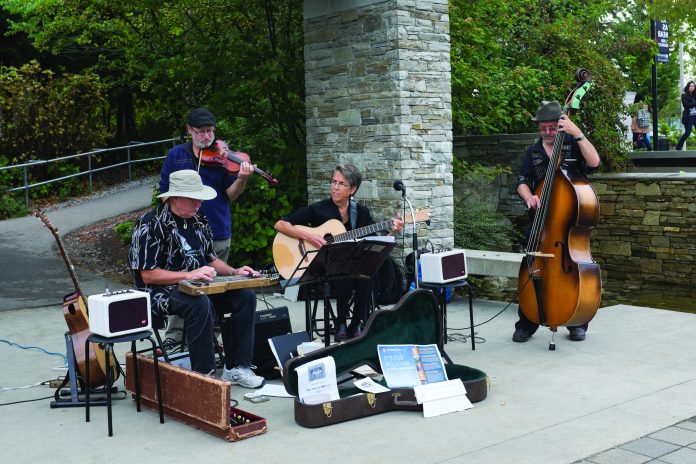
The block party featured musical performances by local buskers and children’s entertainers Bobs n’ Lolo, a birthday cake, as well as activities such as a bouncy castle and rock climbing.

Director of development for the SFU Community Trust Dale Mikkelsen told The Peak that the event was, “largely family focused, [including] a big BBQ put on by Nesters,” all free of charge.

When first considering the area that is now UniverCity, developers had the opportunity to build up to 4,500 homes and also had the option to expand into SFU’s 700 acres of land down the side of Burnaby Mountain.

Mikkelsen explained that through a design process in the late ‘90s, “it was decided that it would create a more vibrant and sustainable community if all those homes were built in a higher density — all on the mountaintop, adjacent to the university.”

He continued, “What we could have had was the typical sort of development of single-family homes and townhouses. Instead, we decided to go for a high density community on a small portion of the land. The big move was converting that almost 700 acres of land into a conservation area.”

Over the past 10 years, UniverCity has grown into a community of about 3,800 residents and several businesses. It boasts its own elementary school — University Highlands Elementary — and an award-winning childcare centre.

Mikkelsen spoke to the significance of these further developments: “One of the biggest successes we’ve had so far is going from just building buildings, to building a community.”

There are plans to develop the next building along University High Street, across from Nesters Market. This new building will provide 30,000 square feet of community space and, like other High Street developments, will have commercial space with residences above.

The next goal of the SFU Community Trust is to develop another residential “phase four” neighbourhood on what is being called the “South Slopes,” located on the east side of Tower Road, south of University High Street — an area that is currently home to only a few closed parking lots.

“That will be a great area because it’s south-facing,” said Mikkelsen. “It will really suit young families. [. . .] We’ll also be establishing a second neighbourhood park down there as well.”

Once these new developments are in place, the SFU Community Trust expects the number of UniverCity residents to increase to just under 10,000 people.

To conclude, Mikkelsen commented on the impact UniverCity has had on SFU as a whole. “You can certainly see how it has changed SFU from feeling like a commuter campus — where it’s just students arriving in the morning and leaving at night — to sort of a more vibrant community,” he said.

“I’ve noticed over the past couple years how SFU and UniverCity are becoming the same place. [. . .] It is really starting to become this cohesive place,” he concluded.

Pet owners should consider the raw food diet

1

Dog and cat owners want what is best for their pets. From exercise to toys and collars, we will do anything to keep our pets healthy and happy. The most important factor for a healthy pet is their diet. In this vein, a new trend is on the rise surrounding what food is best to feed your dog or cat. While many stand by the traditional kibble and wet food, raw pet food diets are steadily gaining popularity due to their healthy nature.

I first came to learn of the raw pet food trend earlier this year when a friend told me that he regularly feeds his Doberman puppy raw meat — within weeks, he noticed that the dog had gained increased jaw strength and bone structure, and was more energetic.

My friend credits these positives to the dog’s diet. Raw food diets are full of vitamins, proteins, and essential fats that can help dogs and cats maintain a healthy lifestyle, reminiscent of their undomesticated ancestors. Wild dogs and cats would seek food for themselves, taking nutrition from small animals and plants, whereas the dry and wet food that we feed pets now is a completely man-made product.

The problem with wet and dry pet food is that we, as consumers, can never be entirely sure of what it contains. However, feeding your pet raw food, which you can be sure has the nutritional benefits that your pet needs, nullifies this doubt.

Raw organ meat contains essential fatty acids that animal’s bodies cannot produce.

For example, raw organ meat contains essential fatty acids which the body cannot produce. Raw meat is also very low in carbohydrates, which are not ideal for pet health but are nevertheless plentiful in both dry kibble and wet food.

Feeding your pet a raw diet does have certain drawbacks, such as the risk that your pet could catch a food-borne illness. Perhaps your pet has the tendency to swallow its food whole, which is especially dangerous if given a raw meat bone. However, a little more care on behalf of the pet owner is all that is needed. Make sure you take care in handling and preparing their meals, and that you really know your pet before beginning them on the raw food diet.

Cost is another possible issue with the raw food diet. While a large bag of dry kibble can feed your dog for a dollar per day, some companies charge about seven times that for two of their raw patties. For a cheaper food source, I would suggest you visit your local grocery store.

Most stores sell raw organ meat for only a few dollars, and you can always discuss the possibility of finding raw meat bones, with your butcher. If time and cost are currently restrictive factors for you, a good option would be to gradually ease your pet into the diet.

As a new pet owner, I have been researching the raw food topic on and off for the past several weeks, and with anecdotal encouragement from friends and from the Internet, I can’t wait to start my Wheaten on this healthy diet.

Feeding your pet raw food is more time consuming and requires a little more owner involvement and supervision. However, when executed well, the benefits outweigh the drawbacks, leaving you with a healthier and happier feline or canine.

Fall Kickoff largest concert yet

0
The stage featured projectors, smoke machines, and a light show

With over 1,750 attendees, the Fall Kickoff concert last Friday was one of the biggest events the Simon Fraser Student Society (SFSS) has ever organized.

The concert was the third event of this kind that the SFSS has put on within the last year. Acts included electronic artists, LuvLyf, DJ Lazy Rich and Paris & Simo, alongside local bands BESTiE and The Faceplants.

The event had been in the works since June, when the SFSS announced that the fall concert would feature both bands and DJs, unlike the previous Fall Kickoff and Spring Sendoff.

As the venue opened up to concert-goers, Shirin Escarcha, SFSS faculty of communications and technology representative, told The Peak, “Set up went really well, prep went really well, and the show is underway.”

At 5:00p.m., the first band, BESTiE, took the stage in front of a small crowd. Following their performance, SFU (and Peak) alumnus Colin Sharp entertained the crowd with moustache jokes and joviality.

“I’m honored to host, and it’s fun to come back and be part of something cool, because when I started the SFSS didn’t throw a lot of big events,” Sharp said. “I’m honestly proud of how far the SFSS has come, so it’s really cool to see this.”

When asked about what he thought of the event so far, Sharp replied, “I’ve been spending a lot of time sitting in the pub drinking whiskey, and so my impressions have been very positive.”

The Faceplants took the stage at 5:45p.m. as more people filed in. Dan Botsch, lead vocalist of the band, spoke with The Peak before performing; “It’s our first time playing [at] any university ever, so this is going to be nuts. We’re so happy to be here.”

Botsch continued. “I think [SFU] is awesome. This is one of our first outdoor shows as well. This is the perfect setting for us.”

The tone of the show shifted when The Faceplants concluded their set and LuvLyf took over. A Vancouverite herself, LuvLyf brought her unique blend of live vocals and electronic music to the stage, transitioning the event from rock show to an electronic dance music (EDM) concert.

Following Luvlyf, Lazy Rich took over for the latter half of the show. A last-minute replacement to the lineup, Lazy Rich was added after Thomas Newson canceled his appearance.

Zied Masmoudi, project lead, assured The Peak that the circumstances were out of the SFSS’ or the artist’s control: “Thomas Newson did send a letter of apology. He [was] really sorry that he [was] not going to be able to play tonight in front of SFU students and he promises he is going to make it up.”

The event concluded with a performance by headliners Paris & Simo, after which concert-goers headed to the Highland Pub’s official after party. DJ competition winner GlideForm kept the party going late into the night alongside DJ Sajjid and Lazy Rich.

Regarding the night as a whole, Masmoudi seemed pleased. “Convo Mall is packed, a lot of people out there are having a lot of fun, sets are going really good so far,” he said. “I have personally seen a lot of talent, which is something that we promised at the beginning of the summer.”