Home Blog Page 110

Protest for Palestine held at SFU’s Employee Appreciation BBQ

0
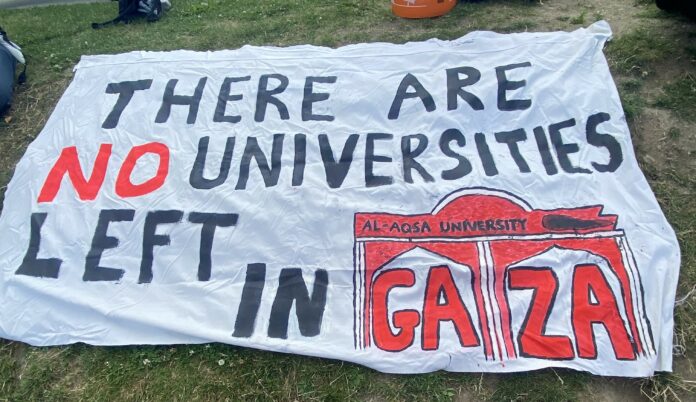
a handwritten banner saying "THERE ARE NO UNIVERSITIES LEFT IN GAZA"
PHOTO: Tam Nguyen / The Peak

By: Tam Nguyen, Staff Writer and Hannah Fraser, News Editor

Content warning: mentions of genocide.

On August 14, SFU held its annual Employee Appreciation BBQ at the AQ Pond to celebrate faculty and staff. Around the start of the BBQ, an independent group of SFU students and staff marched in front of attendees to protest SFU’s continued investment in military arms companies that supply weapons to the Israeli military amid the Palestinian genocide.

A divestment petition from the SFU Faculty for Palestine details SFU’s investment in BAE Systems, Booz Allen Hamilton, and CAE Inc., noting that “the weapons and services of these corporations have collectively facilitated the killing, maiming, or displacement of millions of individuals.” As of March 31, SFU has invested $7.2 million in these companies.

The protest group included individuals from the Simon Fraser Public Interest Research Group (SFPIRG) and The Teaching Support Staff Union (TSSU), who carried banners with messages such as “stop funding genocide” and “divest now / no more delay / 312 days.” After marching from Convocation Mall to the AQ pond, a protester gave a speech and claimed SFU is “not a democratic institution” as the school “continues to ignore [their] demands.” 

“The Board has asked the Finance, Investments, and Property Committee to review the policy and provide recommendations.” — SFU Statement

Students and faculty of SFU have been vocal about the school’s involvement in the genocide, resulting in two Boycott, Divestment, Sanction (BDS) motions passed by the SFU Faculty Association in June. Both these motions indicated that SFU would have to formally commit to boycotting, divesting, and sanctioning the aforementioned companies. SFU agreed to discuss divesting on May 30 but have not made further statements since then. SFU stated that “the Board has asked the Finance, Investments, and Property Committee to review the policy and provide recommendations.” They added that this review will “take place over the coming months and allow for a consultative and transparent process.”    

The protestors stated they were at the BBQ event to demand that SFU condemn the scholasticide in Gaza, divest from the companies supplying military arms to Israel, and keep racialized groups on campus safe. Scholasticide involves the “systemic obliteration of education through the arrest, detention or killing of teachers, students and staff, and the destruction of educational infrastructure.”

This is a photo of a couple of protestors holding up signs in the middle of the AQ pond
PHOTO: Tam Nguyen / The Peak

The Peak interviewed a protestor who shared a concern regarding protestors’ safety at SFU, noting that “SFU has a history of deploying very harsh security tactics and security personnel on students.” The Peak also corresponded with another student protestor who stated that “SFU holding an event to ‘appreciate’ employees is laughable, considering the suppression of Palestinian solidarity and the administration’s reprehensible behaviour displayed in trying to crush the TSSU.” During the TSSU strike in 2023, SFU was found hiring Lions Gate Risk Management Group (LGRM), a private surveillance company, to “build evidence” and file for an injunction against the picket line.

SFU stated that they hired LGRM to help “monitor picket line activity” and note down cases of “behaviour escalation at the picket line that could constitute bullying or harassment or physical safety or assault.” SFU ended its contract with LGRM in March, saying they “will reassess how [they] hire for security contracts in the future.” 

“I’m honestly not surprised by the entire response. I’m disappointed, but I’m not surprised.” — a protestor at the event

At summer convocation, SFU Students For Justice in Palestine (SFU SJP) claimed there was an “unprecedented amount of security during ceremonies.” SFU responded by saying they “introduced a bag check and bag concierge service,” but noted “there was no significant increase in security presence compared to previous years.” 

“I’m honestly not surprised by the entire response. I’m disappointed, but I’m not surprised,” said the protestor. “SFU has made it clear again and again that they don’t really listen to students, or faculty, or staff.” Students and staff have been protesting SFU’s investment in arms manufacturers since November last year, but SFU SJP has been advocating for Palestine on campus since as early as 2022. SFU stated that “the community will be invited to participate in this important conversation within the coming weeks.” 

The protestor shared they chose to protest during the BBQ because they wanted to catch the attention of many people at the event, including senior administrators. The other protestor shared that the BBQ event was “an example of the superficial kindness the administration tries to use as a replacement for actual change.”


SFSS music festival returns after five years

0
a photo of a previous fall kickoff
PHOTO: Courtesy of SFSS

By: Caitlin Kingsmill, News Writer

The Simon Fraser Student Society (SFSS) Fall Kickoff Music Festival is returning to the SFU Burnaby campus for the first time since 2019. The festival will be held on September 20 from 4:00 to 10:00 p.m. at East Parking Lot, with tickets costing between $50–65. The event will feature a musical lineup of artists and DJs, food trucks, and more. 

The Peak interviewed Chitransh Motwani, SFSS vice president of events and student affairs. “We wanted to give students an opportunity to celebrate together, fostering a stronger sense of community and belonging, which has been a priority for us,” he said.

When planning for the event, Motwani said he was inspired by larger music festivals like FVDED In The Park in Surrey and Badlands Music Festival in Calgary, and wanted to offer SFU students a similar experience at a “significantly cheaper price.” The lineup features Troyboi, Wuki, Felix Cartal, Asad Khan, and Seb C.

Motwani said this year’s festival will be the first at SFU to incorporate a variety of third-party vendors that supply food, drinks, and brand activations. He explained that his goal was to cater to a wide audience, ensuring that attendees would remain entertained for all six hours of the festival even if they didn’t know all the musical artists. The festival is being organized in collaboration with Blueprint, a Vancouver-based events company, and The Forum SFU, a student events organization.

“It is definitely a really huge event in terms of manpower.” — Chitransh Motwani, vice president of events and student affairs, SFSS

Over 40 student volunteers assisted with the festival’s marketing and on-campus student outreach efforts. “It is definitely a really huge event in terms of manpower,” said Motwani. He added that an event this size typically takes around six months to organize, but it was already in the planning stages prior to the beginning of his term at SFSS in May of 2024. “But, there was definitely a bit of hurrying in terms of getting things finalized and trying to put everything into place with so many stakeholders.” 

Motwani said some challenges of planning the event included rebuilding a network of contacts that were lost throughout the five-year hiatus. These included contacts within SFU and external contacts for sponsorships and vendors. 

According to Motwani, the SFSS could not host the festival until now as they faced COVID-19 restrictions and “lost an enormous amount of money back in 2019as the last music festival resulted in a deficit. 

“While SFU has been experiencing budget deficits, the SFSS operates independently, and SFU’s finances don’t directly impact our budget,” he said. “We’ve had funds specifically allocated to support large-scale events like this for the student body, and we’ve worked carefully to ensure that we could bring this event back without compromising other student services.” SFU estimated an annual deficit of $20.9 million for the 2023/24 fiscal year and $49.9 million for the 2024/25 fiscal year.

“It has definitely been a challenging ride,” said Motwani. “But, happy to really say that SFU has supported us as much as they can and multiple departments have been helping organize this and bringing back the party to the campus.”

How a beloved Palestinian restaurant planted its roots in Vancouver

0
A painting filled with green, tan, and gold brushstrokes that make buildings with domed roofs. On the outside, two hands hold paintbrushes and paint along the picture.
ILLUSTRATION: Angelina Tran / The Peak, PHOTO: Tam Nguyen/ The Peak

By: Tam Nguyen, Staff Writer

On a sunny Tuesday afternoon, I strolled around the vibrant neighbourhood of Hastings-Sunrise while on my way to meet Tamam and Sobhi Al-Zobaidi, co-owners of Tamam: Fine Palestinian Cuisine. Squeezed among tax offices and banks was the restaurant and its big, yet simple yellow sign. The spacious interior was decorated with acrylic artworks painted by Mrs. Al-Zobaidi and Palestinian flags on the wall. 

Mrs. Al-Zobaidi welcomed me with a hot anise teapot. On the stove behind us, a cook prepared a boiling pot for rice, cabbage, and a quintessential Palestinian dish: mujaddarah. It was such a pleasure to sit down with both of them and talk about who they are and how their restaurant gives back to the Palestinian community here in Vancouver. 

Formerly a visual artist, Mrs. Al-Zobaidi, whom the restaurant is named after, worked in a kids theater back in Palestine. Regarding her magnificent acrylic artworks on the wall, specifically the triptych artwork consisting of  “Noontime in Jerusalem” (2019), Friday in Jerusalem” (2021), and “Full Moon Over Jerusalem” (2023), the self-taught painter noted that her artistry “started developing a taste” after lots of practice.

With training experience in culinary arts at Vancouver Community College, Mrs. Al-Zobaidi cooks with fresh ingredients in reasonable amounts to avoid wasting resources. “People eat food fresh everyday,” she said, also noting that it’s a way of feeling “like you’re eating at home, too.” 

To Mrs. Al-Zobaidi, food brings a great sense of community, as it is a “celebration of gathering people together.” The restaurant has a diverse menu, including dishes like chicken kebab and grape leaves, though they specialize in mujaddarah and freekeh. “These are very Palestinian dishes,” Mr. Al-Zobaidi shared. 

The conversation turned to Mr. Al-Zobaidi. He completed his master’s degree in film at NYU back in the ‘90s and has been writing and publishing articles about Palestinian culture in both Arabic and English since then. His experience of working and living in various NYC neighborhoods, from Brooklyn to Greenwich Village, made him feel as though “the whole city was like an art gallery.” 

“There’s no discussion, no hesitancy, no suspicion. They like the food, then they open up to you. They open up to the story of your food, and your food starts to tell the story. This is how food connects.” — Sobhi Al-Zobaidi, co-owner of Tamam Fine Palestinian Cuisine

Mr. and Mrs. Al-Zobaidi’s story of founding the restaurant started when they arrived here in Vancouver and “noticed how absent” Palestinian culture was in the Lower Mainland. “No art, no food, no fashion, no literature, nothing,” Mr. Al-Zobaidi shared. This is what drove them to open Tamam. Ever since the restaurant opened, they learned that “food is really powerful, a vehicle that carries and transmits culture.” 

For Mr. Al-Zobaidi, food is more powerful than even film and art. Not because of the complex nature, but because “people eat, and they love the food.” 

“There’s no discussion, no hesitancy, no suspicion,” he said of people trying new cuisines. “They like the food, then they open up to you. They open up to the story of your food, and your food starts to tell the story. This is how food connects.” 

Looking around the place, I could see Mrs. Al-Zobaidi decorating the restaurant with cozy lights and wooden furniture to create an atmosphere where it feels like the restaurant is “delivering the culture” to diners, as she puts it. She noted how this medley of cultural goodness is combined “so you can see what is Palestine, what is Palestinian food, what is the cuisine, and what it is coming from.” 

In light of the genocide still ongoing in Palestinian occupied territories, Tamam aims to raise $100,000 in aid to send to the Palestinian community. They have been hosting multiple lunch fundraisers on Sundays, from 1:00 p.m. to 5:00 p.m., where they serve mujaddarah by donation. Up to the present, they have reached $95,000 and are planning to host another fundraising event at the end of September this year. 

When the UBC encampment was still up and running, Tamam restaurant joined the Meal Train team where they cooked for the whole encampment every Wednesday. The UBC encampment sent their deepest appreciation to Tamam for the nourishment they provided with care and love. 

“It wasn’t just giving food for us,” Mr. Al-Zobaidi shared. “It was a mutual support, because we felt not only were we supporting the students, but we felt supported by the students.” 

In this way, Tamam’s “food becomes like a love letter” one that delivers the true message of community. 

Back-to-school isn’t an excuse for mass consumerism

0
Notebooks with pens and scissors on top
PHOTO: Jin Song / The Peak

By: Hailey Miller, Staff Writer

With back-to-school shopping in full swing, many students have participated in the annual shopping spree of stocking up on snazzy supplies, the latest technology, and clothing galore. These days, it’s become a market of wants over needs. Students often partake in back-to-school shopping because it’s widely advertised, but do you really need the latest trends, or are you just buying into mass consumerism? Offsetting your back-to-school carbon footprint will put less strain on the environment and help you save money in the process.

Remember those school supply lists we would get back in elementary school full of everything from a 100-pack of pencils, multiple packs of lined and graph paper, and a dictionary and thesaurus as the cherry on top? These lists were setting us up for consumerism before we even understood what that meant. Who really uses 100 pencils in a single school year? Did you even crack open that dictionary once? According to a report conducted by the Retail Council of Canada, 86% of Canadians participated in back-to-school shopping in 2022 — “with majority of those shoppers spending more than $50.” This level of materialism not only exacerbates environmental waste, but it’s also a waste of your money. 

The trend of back-to-school shopping normalizes unnecessary spending to give us a false sense of productivity. Like any type of consumerism, back-to-school shopping increases waste that ends up in landfills because people automatically throw things away — even if they’re still in good condition — to make room for new supplies. In the US, about 77% of school supplies are wasted each year, and you can imagine how much waste Canadians produce given the 86% that buy into back-to-school. 

Amid the popularity of back-to-school shopping, many students are wanting more ethical and sustainable ways to partake in back-to-school trends. With many people becoming more conscious of their carbon footprints, there’s a growing interest in sustainable shopping. Just because you’re offered a plethora of student discounts on everything from streaming subscriptions to discounted clothes and technology, doesn’t mean you have to use them. Unless you could absolutely use a deal on something you were already planning on buying, you’re still wasting money and fueling consumerism. 

When it comes to school supplies, reuse what you have unless it absolutely needs to be replaced. This goes for technology, pens, notebooks, bags, and so on. For supplies you can’t reuse such as dried out pens and markers, Staples has recycling programs at participating locations. When shopping for new supplies, consider buying pens with refillable ink, recycled paper, or buy gently used products from places like Facebook Marketplace and online student groups. Marketplace is also great for finding gently used (and often like-new) technology such as iPads and laptops if your tech is about to bite the dust. Student groups are great for finding used textbooks that not only save the environment but also your wallet!

To alleviate mass consumerism and engage in more environmentally-friendly means of back-to-school preparedness, we must stop mass consumerism at its root. Remember that reduce, reuse, recycle applies to school supplies as well, and will not only help the environment, but keep you financially frugal, too!

The taxing effects of long transit rides

0
A person (or group of students) on a translink bus/skytrain with perhaps a thinking bubble thinking about how it's been over an hour transit ride to SFU (maybe a clock to signify that they're thinking of passing time?)
ILLUSTRATION: Aliya Nourlan / The Peak

By: Yildiz Subuk, Staff Writer

A long commute can be jarring. It has the ability to disorient and reshape our days. I have experienced numerous headaches and frequent fatigue when I arrive at school or when I get home. I commute from Richmond to the Burnaby campus at least three times a week each semester to attend my classes. Transiting has, over the years, become a routine. Not only do I go to sleep the night before and mentally prepare for school, but I mentally prepare for a long commute the next day as well. The transit time for me is roughly over three hours total. For the past three years I’ve been transiting to campus, and it is only during times of reflection that I notice how much of an impact my commute has on me.

Spending so much of my day in transit usually leaves me needing to decompress. As soon as I get to campus I feel as if I’m too mentally exhausted to get to class. I’d usually arrive a few minutes early and find a space to sit and do absolutely nothing — anywhere I can put my feet up and close my eyes for a few minutes is ideal. After classes end I find myself taking a moment to do the exact same thing, before commuting home. Long commutes bleed into my day. I often feel dizzy or sore, and my head aches from the noise pollution during the commute. When I used to take the R5, the frequent trips on that route often left me with a lingering sense of motion sickness. By the time I got home, I’d feel too exhausted to do anything else. The time I’d spend cleaning my room, going on a run, or interacting with my family, is often taken up by the need to decompress. I am too burnt out to organize all the books scattered around my desk, or fold the ever growing pile of laundry that eventually forms a tower on my chair by the end of the week. Homework becomes a dreadful and endless series of tasks I don’t even want to focus on. I feel frustrated with myself for not having enough energy to do these tasks. I sit in bed, feeling as if I am falling behind. 

Making transit productive has become a goal of mine since my first year. Instead of dreading the commute, I have tried countless times to use it as an opportunity to catch up on certain things. I have finished TV shows, movies, and listened to all sorts of albums as I’d go back and forth from home to campus. Through this, I invested in a good pair of headphones that are comfortable, and have great noise cancelling features. I’ve also started using transit as the perfect opportunity to read. Initially, I’d get a little dizzy trying to read on my way to campus, but once I started listening to audio books and reading at the same time, I managed to get through a lot of novels and nonfiction works. I also began doing my readings for school on transit, reinforcing my pursuit of making my commute time as productive as possible. 

To some extent, these strategies worked. However, I’ve found myself still feeling exhausted and often frustrated with myself. I get irritated with poor scheduling, or feel the need to remind myself that I need to muster up more energy or I will fall behind. Sometimes, while watching or reading), I’m too mentally exhausted or sleepy to pay attention to what I’m doing. The ways I’ve attempted to cope with this “transit tax,” as I call it, help a little, but never quite removes the physical or mental exhaustion once I get home. 

To anyone who has experienced something similar on transit, here are a few solutions I’ve come across from my last three years of lengthy commuting:

1. Allow yourself the time to decompress. 
Many of us have a lot of tasks that need finishing once we arrive home, but there is no point in doing those tasks if you’re already too exhausted. Remember, you just spent an entire day at school — forcing yourself to be productive when exhausted will likely lead to burnout. 

2. Do as much work as you can on campus.
If a long commute means you’ll be too tired to do anything when you get home, attempt to do school work on campus before leaving — it’s easier to focus in a studious environment rather than after a long commute.

3. Catch up on books, TV, and music
If you don’t get too bus sick, try to catch up on your favorite content. Transit is often time that needs to be filled up. Fill it up with something you can enjoy.

4. Take a break from school. 
Let me be clear, I’m not encouraging anyone to skip school. If you have the capacity to take a day off from school from time to time, do it. I have found that, for some classes it is easy to catch up, especially those where the professor uploads notes, or those which require you to do readings. Don’t make this a habit, but use it as an occasional opportunity to rest and take a break. While you may be missing classes, you are saving time by also missing a long commute.

5. Hack your commute. 
Sometimes Google Maps does not give the best routes. Attempt to see if there are other ways you can get from and to campus. Personally, I don’t like to ride the bus for long periods of time, but Google Maps always suggests taking the R5 from downtown to SFU, which can take up to 50 minutes per ride. I’ve found that taking the SkyTrain, which has more connections but takes less time, works way better for me. Also consider sharing a ride with anyone who might leave nearby, who knows, you might end up making a new friend too!

Transit is taxing. Do not feel ashamed for being too exhausted to do anything when you get home, or when you feel the need to take a break from school. Allow yourself room to rest, and acknowledge that a long transit can have a significant effect on your day.

How the Red Leafs fared this late spring season

0
Sprinter Marie-Éloïse Leclair holdng up three fingers while running with a baton in her hand.
PHOTO: Nevaeh Capetillo / SFU Athletics

By: Kaja Antic, Sports Writer

As the summer season comes to a close, it’s time to take a look back on the trials and triumphs the Red Leafs faced these past few months. 

Softball
Overall record: 11–31
Conference record: 6–18

The Red Leafs softball team started their season back in February, going 2–4 at the South Central Regional Challenge in New Mexico. They then went 3–5 from mid-February to early March against non-conference opponents, and carried a losing record at the Stanislaus State Tournament of Champions in California. Against teams in the Great Northwest Athletic Conference (GNAC), the Red Leafs only earned six wins against 18 losses, placing sixth out of the seven competing GNAC softball teams and leaving them on the outside of the playoff picture. Overall, the Red Leafs had a fourth-best .271 batting average, a sixth-best 4.81 earned run average for the effectiveness of the pitchers, and the lowest number of catches in the GNAC, with 1224 throughout the season.

Men’s golf
GNAC Championship results: 2nd
NCAA Division II West/South Central Regional Championship results: T-12th

In April, the Red Leafs men’s golf team punched their ticket to the NCAA Division II Regional Championships with a second place finish at the GNAC Championships. Senior Michael Crisologo earned the top spot in the conference championship with a 13 under par 200 strokes, only one more than the tournament record. The Red Leafs lost the top spot overall to the Western Washington University Vikings, who clinched first in the tournament with eight strokes less than the SFU group. At the NCAA Division II West/South Central Regional Championship, the Red Leafs tied with Colorado State – Pueblo for 12th, with a score of 27 strokes over par, and 29 strokes overall between the two schools and the overall winner, Western New Mexico. 

Women’s golf
GNAC Championship results: 1st
NCAA Division II West Regional Championship results: T-11th

The Red Leafs women’s golf team shined brightly at the GNAC Championships in April, winning the conference title for the second time in two years. SFU carried a 14-stroke difference over Western Washington University, and Freshman Dana Smith earned the individual top spot. Smith carried a two under par, 142 stroke score, setting a new record for the GNAC women’s tournament. At the NCAA Division II West Regional Championship, the Red Leafs tied for 11th with Midwestern State University, with a 50 over par and 914 stroke scorecard.

“The Red Leafs women’s golf team shined brightly at the GNAC Championships in April, winning the conference title for the second time in as many years.”

Outdoor track and field

At the GNAC Conference Championships, the Red Leafs showed up strong. The women’s 4x400m relay team earned first place, while Red Leaf sophomore Jarrett Chong took first place in the men’s javelin throw. As well, senior Megan Roxby won the women’s 1500m run, junior Claire Bosma won the women’s 400m dash, and junior Marie-Éloïse Leclair took the titles for the women’s 100m and 200m dash. In the NCAA Division II Championship, Chong placed 15th in the men’s javelin throw, Roxby placed seventh in the women’s 800m run and sixth in the women’s 1500m run, and Leclair placed seventh and fifth in the women’s 100m and 200m dashes, respectively.

The underappreciated visual poetry of Satyajit Ray

0
a drawing of the director, Satyajit Ray, behind the scenes of a movie set
ILLUSTRATION: Den Kinanti / The Peak

By: Yildiz Subuk, Staff Writer

“What interests me is density, how much can you tell, how telling can you make your images.” — Satyajit Ray  

Satyajit Ray was a Bengali filmmaker, composer, and writer from Calcutta (now known as Kolkata, India). During the early 1950s, Ray was an advertiser interested in telling stories that mattered to him. He had no funding for a film, so he managed to borrow a 16mm camera, gather a crew of amateur actors, and began filming in a village near Calcutta, called Boral. The village was rich with nature, from large fields with the occasional train passing in the background, to illustrious forests and serene ponds, all of which evoke an emotionally-dense reaction just through images. This film would eventually be released as Pather Panchali in 1955, his first feature and the first installment of The Apu Trilogy.

A bildungsroman (which translates to “novel of education/formation” in German) isn’t just a coming-of-age story, but often depicts the psychological changes and influence of society on character during different transitional periods of their lives. According to film critic Terrence Rafferty, The Apu Trilogy is akin to a bildungsroman. It shows the formative years of a young boy living in a village, near the beginning of an industrial era in India, and his transition into an adulthood that extends into fatherhood.

The trilogy begins with the film Pather Panchali, which tracks Apu’s adolescence. A young boy caught up in various adventures, Apu is filled with a burning childlike curiosity. He is deeply shaped by the women in his life (mother, grandmother, and sister). Through the perspective of this curious boy, the audience is exposed to village life in India, filled with hardships and struggles, but also a community with complex bonds and multidimensional love between family members.  

In the second film, Aparajito, Apu is now a teenager, eager to unlock his potential as an academic. His family has moved to the village, and Apu has slowly realized the world is full of loss, and requires a sense of reconciliation and growing spirituality to keep moving forward. Aparajito continues Apu’s story by showing the same boy grown up and transformed by the trauma he faced in the previous film. With Apur Sansar, the third film, Apu is now a grown man who grapples with career choices, love, and fatherhood. Each film shows Apu at a transformative state in his life. A sense of home and existential meaning shifts during each installment of the trilogy, as we see Apu experience heartbreak and loss, but find ways to push forward.

This trilogy explores the complexity of what seems to be a simple story of a working class man. Ray’s films feel wholly unique, not just due to their locations and images, but the approach as well. Visually poetic, each film is composed of almost an overwhelming amount of beautiful shots, capturing characters in different atmospheres and locations. Ray had no access to studios, or even a proper film crew, so he made do with what he had at his disposal. He asked individuals he came across to act in his film. Instead of relying on artificial lighting, he used natural light to his advantage by shooting in interiors that allowed sunlight to a certain extent, or shooting in different parts of the day in different weather conditions. These strategies resulted in atmospherically rich shots, invoking the beauty of natural landscapes.  

Ray’s approach has had such a tremendous effect on numerous filmmakers, from Wes Anderson to Martin Scorcese. Despite his brilliance, his films were not seen by a large Indian audience at the time, due to them being in Bengali (a language not spoken commonly by many Indians at the time). But, in retrospect, his films have stood against the test of time, as Ray received an honorary academy award in 1992 for his work as a filmmaker. With The Apu Trilogy, we are shown shots that tell a story, a portrayal of everyday life, with no words needed for explanations. They’re made by a filmmaker whose approach proves that a film’s timelessness can be found in more than just a large budget and studio.

Welcome to SFU!

0
Notebook with camo pattern with label on the front that reads “SFU’s declassified school survival guide.”
ILLUSTRATION: Sonya Janeshewski / The Peak

By: Tam Nguyen, Staff Writer

Congratulations, your nightmarish high school experience ends with you getting into SFU! Let’s be honest, this is the best-case scenario given that UBC doesn’t want you, and you’re not cool enough for Toronto and Montreal. As a result, Mom finally loves you, and Dad, as usual, isn’t there. 

Now, how will you thrive for the next four years (make it six, actually) of university? Don’t worry, I barely survived my first year and here’s how I did it: 

1. Academic excellence 
Go to Rate My Professors before you impulsively enroll in any courses. As my Viet ancestors said, “Do it wise or do it twice.” 

Don’t get distracted by the comments about which professor gives interesting lectures. What you really need to know is which professor WON’T screw you over with their absolutely off-topic exams and high horse attitude when you ask them for help during office hours.

2. Club days 
First of all, don’t join the Burnaby Mountain toastmasters club. I invested in a new toaster and came with bread and butter just to find out it’s a club for speechmaking (misleading, much?).  If you are in computer science AND a gender minority, join as many support groups as possible; they come in very handy later. If you are, like, cool or whatever, join The Peak!

3. Dorm, sweet dorm
A private dorm room costs $10M per semester and you don’t even have enough space for TikTok dancing to “Diet Pepsi” by Addison Rae. You should look into selling your left kidney right now.

4. Statistical facts about computer science students
The computer science student body consists of 40% San Francisco-Tech-Bro wannabes, 5% Asian they/thems, and 55% apolitical.

5. Cheap groceries 
Go to Nesters Market around the corner, grab anything you want, and waltz right out the door. Just don’t pay; it’s not that deep. Nesters Market also has a pharmacy partnered with Studentcare to provide partially-covered antidepressants you will likely need from attending SFU. How convenient, lucky us!    

6. Cheap eat
The only place that’s worth a dime to eat around campus is Donair Town. For $10, you get a wrap that fills you up till you can leave this cursed place for some actual decent meals.

7. Snow day
Yeah, that’s not happening at SFU. No excuse, gear up soldier, you’re gonna climb up the mountain cause buses ain’t running

8. Pray non-religiously before your course registration appointment
You will NOT get into the course you need to graduate, cause it’s the system, baby! Don’t feel too bad, all the hot girls go through this phase.

9. Friendships
If you can’t find a best friend within five minutes of being on campus, don’t be sad yet. Lectures, labs, and clubs sometimes aren’t the greatest places to make friendssimply we are misanthropists, and it has nothing to do with you. It takes time, so keep searching and you will find your people eventually. 

10. Dating
Girls flock to me cause I’m funny, so I don’t know how to advise people with an average sense of humor. Style your hair better, I think. 

11. Special guests
SFU students and raccoons coexist, so leave them alone when you see them strolling around the AQ. 

12. DO NOT enroll in any 8:30-morning class 
Doing so is a surefire way to ruin your circadian rhythm. But seriously, only people without a life (i.e. MATH 151 and 152 professors) choose that time to teach about integrals.   

13. Student activism 
You want something to change at SFU in terms of the university’s investment approach? Maybe less shares of war contractor companies? Send an email to [email protected]. SFU, Canada’s top university for innovation, is waiting to see what UBC does so they can copy them. 

Hope you find these guidelines useful. And yes, I’m roasting both myself and you, but mostly you. Anyways, enjoy your new journey at SFU, and I wish you best of luck (you’ll need it)! 

Hidden Gems: Vancouver’s best matcha

0
A plain white wall decorated with simple black writing that lists a menu that reads “black (espresso),” “white (espresso+milk),” and “green (matcha+milk).”
PHOTO: Amrit Kamaal / The Peak

By: Alex Ileto, Peak Associate

cowdog coffee
3720 Oak St., Vancouver
Open every day 8:00 a.m.4:00p.m.

With cowdog’s recent rise to social media fame (they truly conquered “brat summer”), this spot may not be a hidden gem, but it’s too good to not shoutout! Their unique line of signature drinks sets them apart from any other café in Metro Vancouver. Switch up your usual matcha latte order and try their sweet strawberry matcha latte or fun and fizzy passionfruit matcha tonic. Say “hello” to the always-friendly owners, make some friends in the inevitable order line (it moves quickly), take a seat to admire their beautiful florals, and treat yourself to a cowdog matcha drink. (P.S. they don’t charge extra for oat milk!) 

93 Coffee
1789 Comox St., Vancouver
Open MondaySunday 8:00 a.m.9:00 p.m.

Don’t let their name fool you because although their coffee is amazing, their matcha drinks are something special. Nestled in Vancouver’s West End, this authentic, family-run Japanese eatery serves up delicious curry rice, omurice, and, of course, matcha drinks galore! The rich quality and subtle sweetness of their matcha drinks makes them one of the best in town. 93 Coffee’s matcha game is truly hard to beat.

Creekside Coffee Factory
3000 Lougheed Hwy. #103, Coquitlam
Open MondaySaturday 8:30 a.m.9:30 p.m. and Sundays 8:30 a.m.6:30 p.m.

I can no longer gatekeep my favourite, go-to Coquitlam café. Their smooth, lime-green matcha lattes are clearly made with care. Pair this classic drink with a freshly baked scone or a grilled chicken sandwich. Craving the matcha without the latte? Grab a scoop of their creamy green tea gelato. With optimal seating, power outlets a-plenty, and life-size teddy bears, Creekside Coffee Factory is the perfect place for a fall study session paired with some great matcha.

Oidé Coffee
1548 W 2nd Ave., Vancouver
Open TuesdaySunday 8:00 a.m.4:00 p.m.

Next time you visit Granville Island, make sure to stop by Oidé Coffee a couple blocks away. Their matcha powder, imported directly from Kyoto, Japan, is whisked to perfection, creating a vibrant green latte. Oidé has managed to eliminate any bitterness from the matcha, bringing out its rich, umami taste. It’s no wonder their matcha has been crowned “the best in town” by many. Did I mention the baristas are latte art experts? So snap a pic, take a sip, and enjoy Oidé.

The CRA revokes charitable status of two organizations supporting Israeli military

0
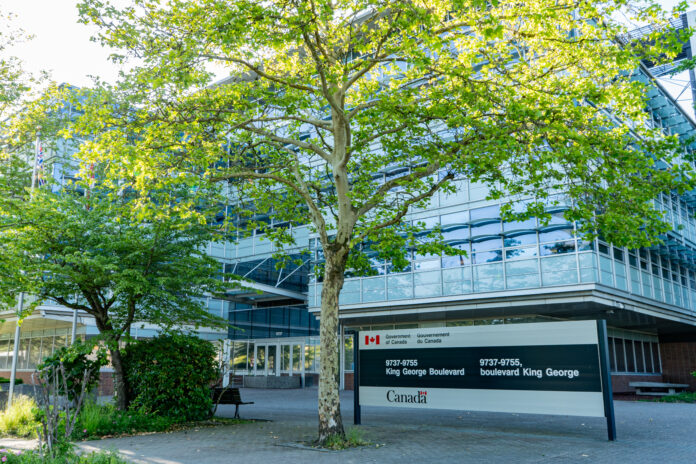
This is a photo of the outside of the Canadian Revenue Agency Building in Vancouver.
PHOTO: Elyana Moradi / The Peak

By: Sofia Chassomeris, News Writer

On August 10, the Canada Revenue Agency (CRA) revoked the charitable statuses of the Jewish National Fund of Canada and Ne’eman Foundation of Canada. Both organizations will no longer be exempt from income tax or receive subsidies as registered charities. This is because they failed to abide by the Income Tax Act

This action follows years of lobbying from activists such as Just Peace Advocates (JPA) for the CRA to conduct investigative audits on charities that have donated to the Israeli military. JPA claims that these organizations have been subsidizing “charity donations going to an apartheid state committing war crimes and genocide” using Canadian tax dollars. The CRA has allowed the Jewish National Fund to do so since 1967, and the Ne’eman Foundation since 2011. The Income Tax Act states that charities cannot issue tax receipts or claim tax deductions for donations that support the armed forces of another country.

In a statement to The Peak, the CRA said, “The confidentiality provisions of the Act prevent the CRA from commenting on specific cases.”

The Jewish National Fund regarded the CRA’s decision to revoke their status as “wrong and unjustified,” claiming they are focused on funding “projects to build the social infrastructure of the land of Israel.” CBC indicates that the CRA made this decision in response to “a complaint” that said the Jewish National Fund “used charitable donations to build infrastructure for the Israel Defence Forces (IDF),” including funding “infrastructure projects on Israeli army, air, and naval bases.”

Just Peace Advocates’ analysis of the Ne’eman Foundation’s tax returns shows that millions of Canadian dollars were also donated to organizations associated with the IDF between 2016–2022. JPA has criticized the CRA’s slow call to action but ultimately applauds the decision. 

The Peak interviewed Dr. Miles Howe, professor of critical criminology at Brock University in Ontario, who has written on the “phenomenon of Zionist Philanthropy” and “the synchronicity of tax-deductible gift-giving with Palestinian erasure.” In his work, he discusses how Zionism promotes and finances the elimination of “Palestinian people from the territorial boundaries of what Zionism conceives of as biblical Israel.” Zionism is a “nationalist movement” aiming to create a “Jewish national state in Palestine.”

“Don’t be intimidated by what initially appears to be a very strong movement against you.” — Dr. Miles Howe, professor of critical criminology at Brock University

Howe said living under occupation includes open-air prison conditions and Palestinians being displaced from 78% of their land. “What possible justification is there for that?” he asked.

Howe’s recent petition to parliament states that these charitable donations “may well be Canada’s most important contribution to Palestinian dispossession.” While the removal of these charities’ statuses is considered by Just Peace Advocates as a “massive shift in how Canada views the Israeli occupation,” dozens of charities continue to make significant annual contributions. The Peak also interviewed Karen Rodman, executive director of JPA, for more insight. 

“Within the movement, it’s easy to say ‘wow, we got a victory!’” Rodman added,“But we don’t usually declare victories very easily, we call them ‘partial victories.’” JPA’s open letter to the Minister of Revenue Marie-Claude Bibeau and Prime Minister Justin Trudeau brings these charities to attention as they continue to “funnel a quarter billion dollars a year to projects in Israel.

When asked about how students can get involved in pro-Palestinian activism, Howe said, “Don’t be intimidated by what initially appears to be a very strong movement against you.” He added, “There’s going to be a need for research, legal action, healing, direct action [ . . . ] and there’s going to be a need for education.” 

On September 5, the International Day of Charity, activists across Canada rallied at CRA offices to get the attention of the federal government and further protest the use of tax dollars in funding a genocide against Palestinians.